



Abstract
Motivated by the change of effective electrical properties grain or phase boundaries, a computational multiscale framework for continua with interfaces at the microscale is proposed. Cohesive-type interfaces are considered at the microscale, such that displacement and electrical potential jumps are accounted for. The governing equations for materials with interfaces under mechanical and electrical loads are provided. Based on these, a computational multiscale formulation is proposed. The coupling between the electrical and mechanical subproblem is established by the constitutive equations at the material interface. In order to investigate deformation-induced property changes at the microscale, the evolution of interface damage is elaborated. The proposed multiscale framework is further examined through various representative boundary value problems so as to identify its key properties.
Keywords
1. Introduction
Every material in nature exhibits heterogeneous behaviour at a certain scale. In a material system, defects such as pores, grain boundaries, phase boundaries, secondary phases and particles can be the reasons for heterogeneity. The effective material response as observed on a macroscopic scale is a manifestation of these microscale heterogeneities. In particular, interfaces can affect the overall response of the material under consideration as illustrated in Figure 1. Experimental findings show, for instance, that grain boundaries may significantly affect the electrical properties [1, 2] such that interfaces at the microscale need to be accounted for in simulations in order to model the macroscopic behaviour realistically.
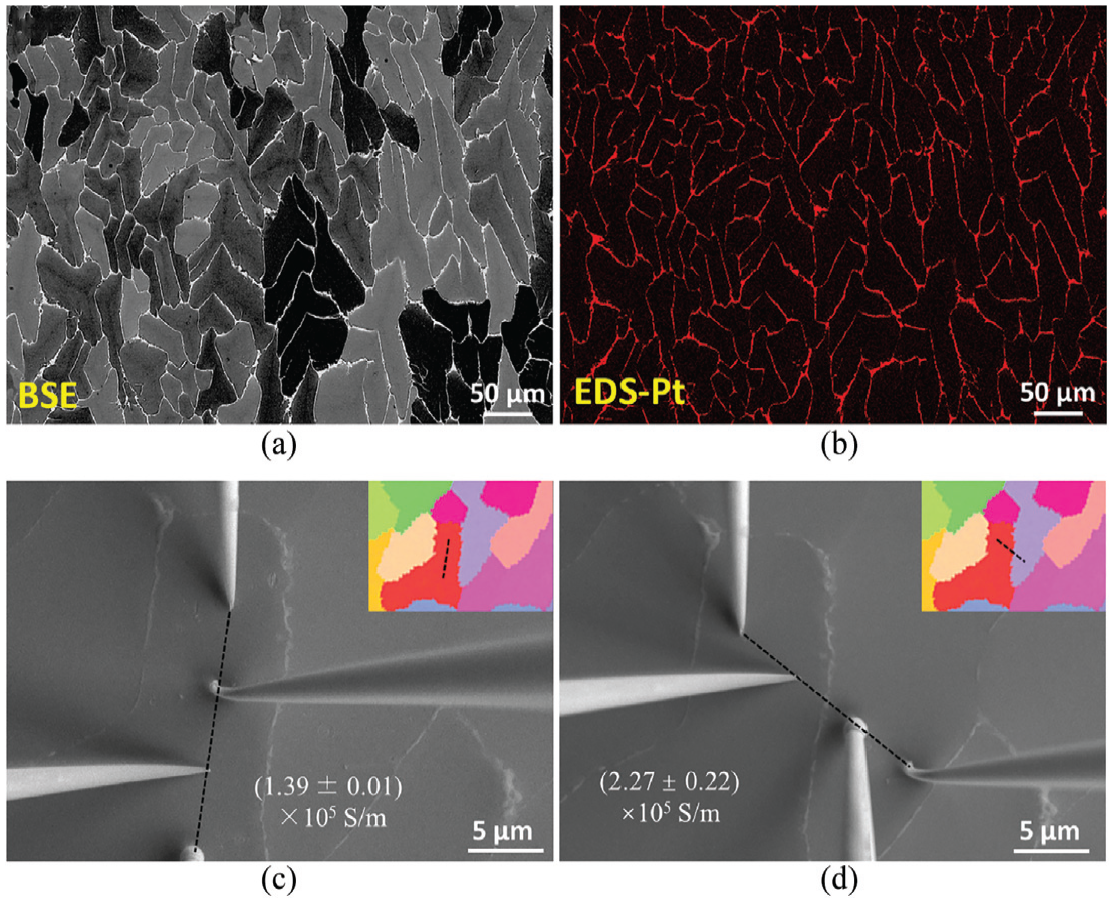
(a) Backscattered electron (BSE) image of a pre-BM NbCo(Pt)Sn sample. (b) Corresponding energy-dispersive X-ray spectroscopy (EDX) map of Pt. Position layout of the four needles used for the local electrical measurements — (c) within the grain interior and (d) crossing a high-angle grain boundary. Source: Reprinted from “Dopant-segregation to grain boundaries controls electrical conductivity of n-type NbCo(Pt)Sn half-Heusler alloy mediating thermoelectric performance” by Luo et al. [2].
Understanding the properties and the behaviour of interfaces is of utmost importance because interfaces can significantly influence the effective constitutive response of the material under consideration. Different interface formulations can be introduced based on the assumed continuity condition of primary and secondary fields. Classic cohesive interface models date back to the seminal works of Barenblatt [3] and Dugdale [4]. In these classic models, traction continuity is assumed, whereas the displacement field may exhibit a jump discontinuity across the interfaces. Moreover, the cohesive interface has been proven to be an essential tool when coupled with the finite element method to model debonding and delamination processes of different materials since established in Hillerborg et al. [5]. An extensive amount of literature has been devoted to the development of this particular type of interface with various contributions focusing on purely mechanical problems [6–10] as well as on coupled multiphysics problems. In particular, thermomechanical coupling has been addressed in Willam et al. [11], Hattiangadi and Siegmund [12], Steinmann and Häsner [13], Fagerström and Larsson [14], and Özdemir et al. [15] and electro-mechanical coupling has been studied in Arias et al. [16], Utzinger et al. [17], Verhoosel et al. [18], Kozinov and Kuna [19], and Kaiser and Menzel [20]. Another type of interface is the elastic interface which dates back to the developments on surface elasticity by Gurtin and Murdoch [21]. Unlike the cohesive interface model, the elastic interface model allows traction jumps across the interface while a continuous displacement field is assumed [22, 23]. More recently, it was shown in [24] that cohesive and elastic interfaces are two extremes of generalised imperfect interfaces that account for discontinuities in both the displacement and traction field [25, 26].
Heterogeneous materials show more complex behaviour compared to their associated constituents. Homogenisation procedures can be used to determine the effective macroscopic properties of a heterogeneous material by analysing the response of its underlying microstructure [27–29]. These methods can be categorised into analytical and computational approaches. Analytical homogenisation typically requires certain simplifications and, in general, cannot resolve complex microstructures which motivates the usage of computational methods [30, 31]. Computational multiscale formulations, on the contrary, allow complex microscale processes to be accurately resolved in multiscale simulations and have successfully been applied over the past years to study multiphysics–multiscale problems, e.g., Miehe et al. [32], Kouznetsova et al. [33], Geers et al. [34], Fritzen et al. [35], Keip et al. [36], and Kochmann et al. [37]. For a comprehensive review of the subject, the reader is referred to Zohdi and Wriggers [38], Geers et al. [39], Schneider et al. [40], and Gierden et al. [41].
Classic mean field analysis techniques have been extended to cohesive interfaces in order to predict the macroscopic response in the case of debonding/dewetting of particles [42–46]. Other than analytical approaches, computational homogenisation methods have been employed in the presence of cohesive interfaces [18, 47–49]. In these methods, multiscale formulations provide the traction-separation relations that are governed by the evolution of microscopic cracks. More recently, the work [50] established a computational multiscale formulation for continua with generalised imperfect interfaces at the microscale and different aspects, such as damage evolution, are discussed [51–54].
The present contribution focuses on establishing an electro-mechanically coupled computational multiscale framework for continua with material interfaces at the microscale. Even though multiscale formulations for electro-active solids have already been elaborated in Schröder et al. [55] and Keip et al. [36], a framework for electrical conductors has been established only recently [56]. In this regard, and based on the cohesive zone formulation for electrical conductors [20], a small-strain multiscale framework that accounts for interfaces at the microscale is developed in the present contribution. The research question thus reads: Can a computational multiscale formulation be developed to capture the effect of cohesive-type (lowly-conducting) interfaces at the microscale on the macroscopic (effective) response of electrical conductors?
This paper is organised as follows: In Section 2, the thermodynamic fundamentals of continua with interfaces are summarised and the constitutive restrictions resulting from the dissipation inequality are investigated. Section 3 deals with the theoretical aspects of the electro-mechanical computational multiscale approach in the presence of cohesive interfaces. Specifically speaking, averaging theorems for the mechanical and electrical subproblems are discussed in Section 3.1, a generalised Hill–Mandel condition is proposed in Section 3.2 and suitable boundary conditions are presented. With the fundamental set of balance equations at hand, a weak form of the problem is derived and a finite element implementation is proposed in Section 4. Section 5 deals with the specific constitutive relations for the bulk and the interface, before representative boundary value problems are studied to demonstrate the capabilities of the proposed framework. The findings are summarised and concluding remarks are drawn in Section 6.
1.1. Notation
Throughout this paper, tensor notation is employed. Let
Superscripts

between the jump and the mean value of quantities at the interface is established.
1.2. Subdomains and interface
Control volume

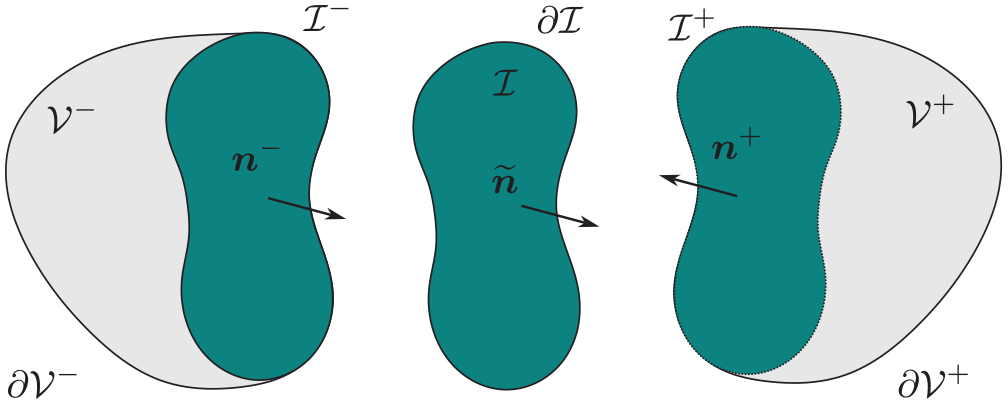
Control volume
2. Continuum thermodynamics
The thermodynamic fundamentals of continua featuring cohesive-type material interfaces in small strain setting are briefly recapitulated in this section. In particular, focus is laid on the mechanical subproblem in Section 2.1, on the electrical subproblem in Section 2.2, and on the balance equation of energy and the dissipation inequality in Section 2.3.
2.1. Mechanical subproblem
The governing equations of control volume

where

and loaded by volume distributed forces

the local form of the balance of linear momentum is obtained as


Under the same assumptions, localisation of conservation of angular momentum gives rise to the classic symmetry condition of the stress tensor

Cohesive zone formulations for small strain settings yield no additional condition regarding angular momentum at the interface.
2.2. Electrical subproblem
The integral form of the continuity equation for the electrical charge for quasi-stationary processes reads

with

where

the local version of the continuity equation for the electric charge is obtained as


The introduction of a scalar-valued electric potential field

where
2.3. Conservation of energy and dissipation inequality
Taking into account mechanical, thermal and electrical contributions, the (quasi-static) balance equation of energy for a continuum with interfaces is given by

where



In the set of equations (14),


where the definitions of the small strain deformation tensor

with

and

In order to derive the dissipation inequality in the form (17), the Legendre(–Fenchel) transformation, relating the internal and free energy densities of the bulk and the interface as


was invoked, where


For the electrical subproblem, the constitutive restrictions for the electric current density read


3. Computational homogenisation
This section focuses on computational multiscale formulations for electro-mechanical problems in the presence of material interfaces at the microscale. The derivations in this section are based on, and a direct extension of, the multiscale framework for materials with interfaces documented in Javili et al. [50] and the work on multiscale methods for electrical conductors [56]. Whereas the focus in Kaiser and Menzel [50] was on purely mechanical problems, the focus in the present contribution is laid on the extension to electro-mechanical coupling. Likewise, material interfaces have not been considered in [56].
Constitutive relations at the microscale are assumed to be known and the objective is to compute the macroscopic response through homogenising the response of the underlying microstructure. In particular, interfaces between different constituents at the microscale are considered and assumed to significantly affect the overall behaviour of the material (see Figure 3). The governing equations at the microscale are solved subject to the assumptions of quasi-statics, quasi-stationary, and negligible body forces.
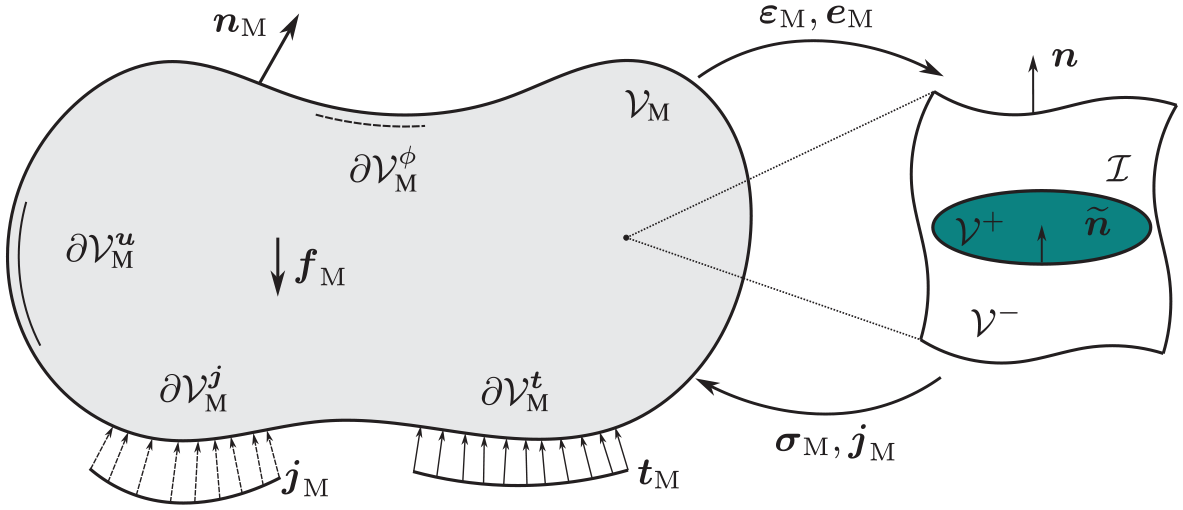
The effective macroscale material response is determined by the underlying heterogeneous microstructure. In each material point on the macroscale, a representative volume element (RVE) that characterises the material microstructure is considered.
3.1. Averaging theorems
Macroscopic quantities are related to their microscopic counterparts through volume averages over the representative volume element (RVE) and additional jump contributions originating from the material interfaces. In particular, it is observed that the macroscopic strain tensor
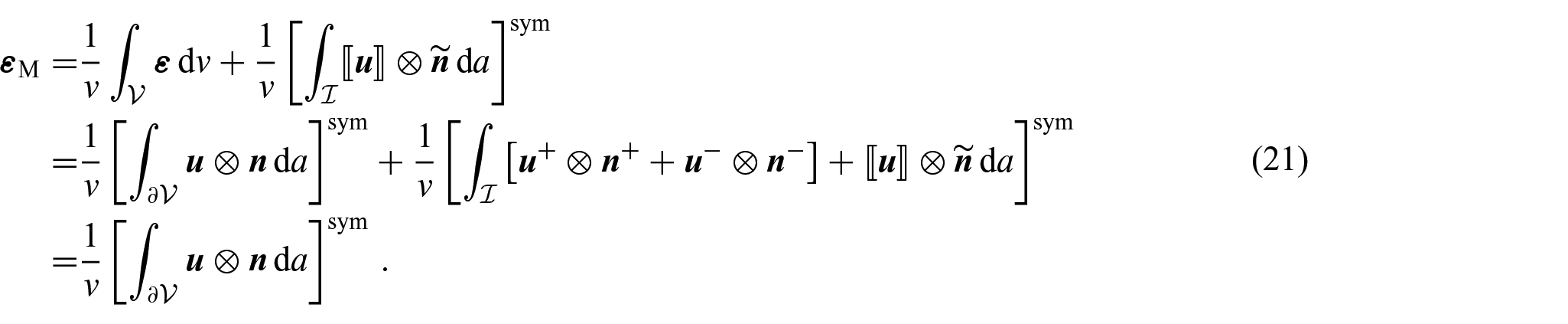
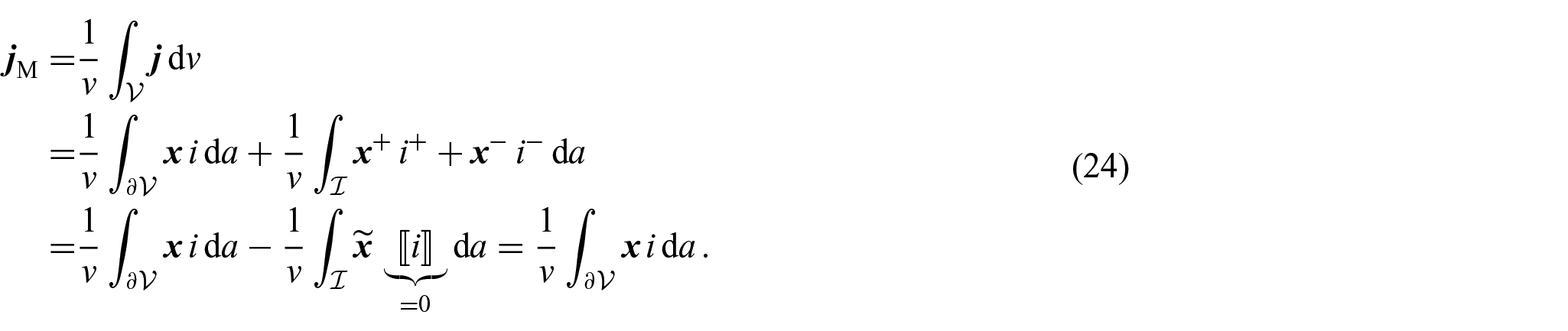
Analogous to equation (21), the effective macroscopic electric field vector

is obtained. In a small strain setting
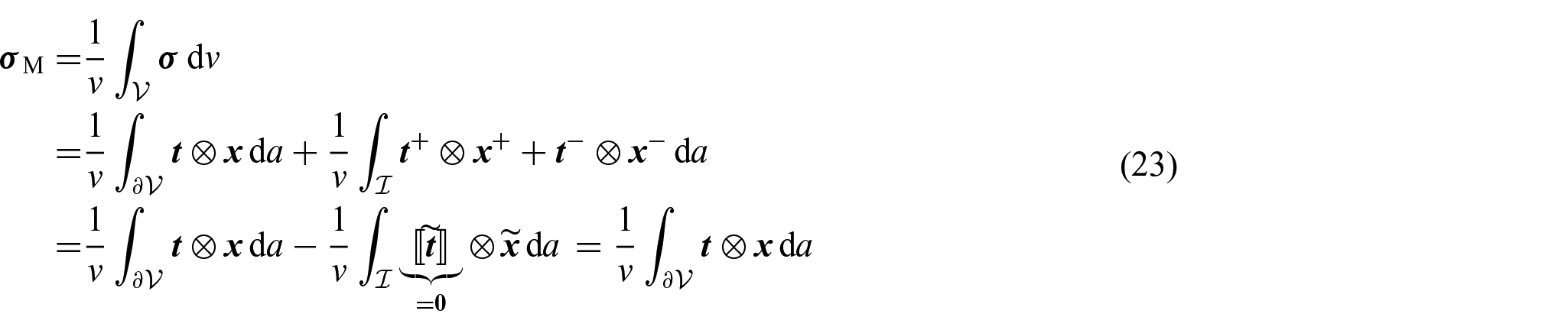
where use was made of equation (6b). Analogously and in view of equation (11b), the effective electric current density results in
3.2. Hill–Mandel conditions
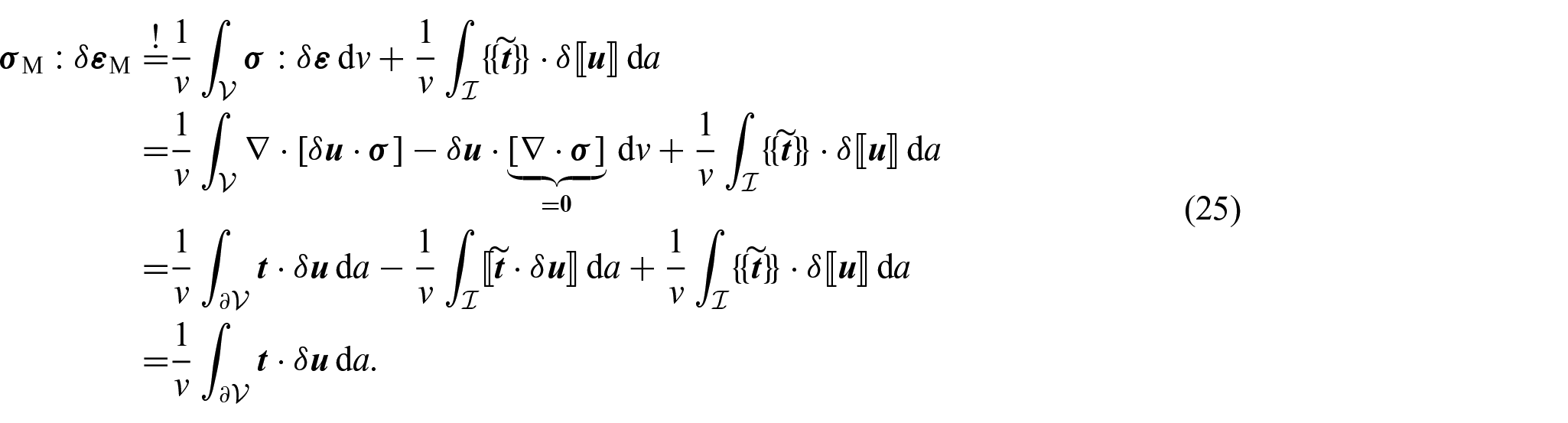
The Hill–Mandel condition, also known as the micro–macro energy equivalence condition, is a criterion used in homogenisation theory to ensure that the effective material properties of a heterogeneous solid are physically meaningful and well-defined. This criterion postulates that the virtual work on the macroscale is equivalent to the average virtual work on the microscale. In view of equation (13), the classic Hill–Mandel condition for the mechanical problem (6) is extended by interface contributions and, by using equation (1), takes the form
Analogous to equation (25), the extended Hill–Mandel condition for the electrical subproblem can be derived as
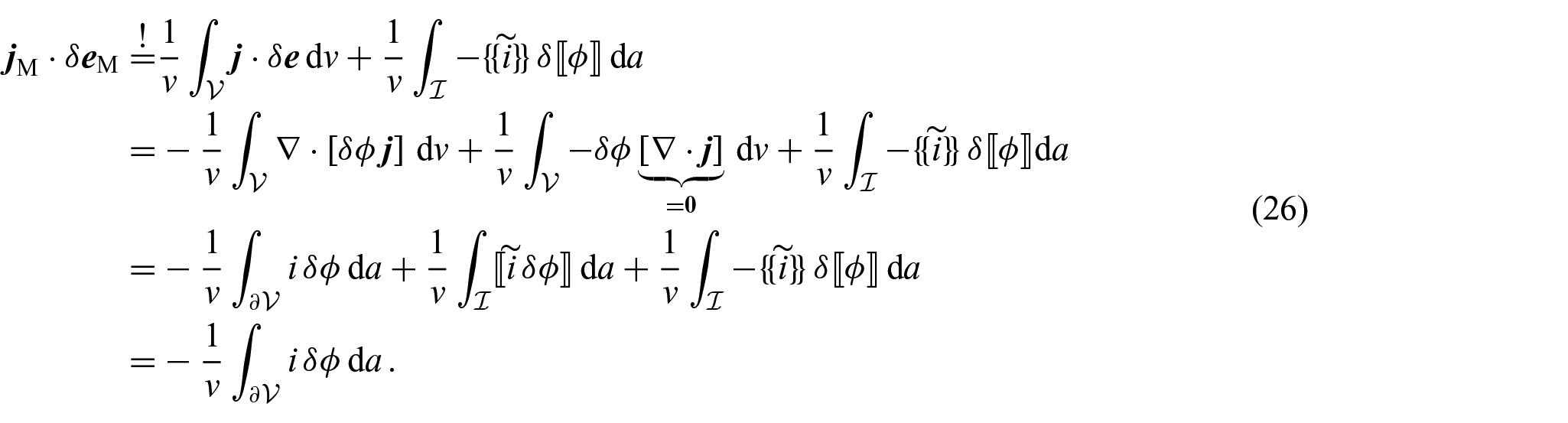
In accordance with Javili et al. [50], the representation of the Hill–Mandel condition are expressed as a surface integral, which remains equivalent to its classic form even in the presence of an interface. This has advantages in computational implementations because existing frameworks and subroutines developed for classic homogenisation, i.e., homogenisation without interfacial contributions, can be applied.
3.3. Affine boundary conditions
Affine displacement boundary conditions are prescribed based on the macroscopic deformation state, namely

The affine displacement boundary condition fulfils the averaging theorem for the macroscopic strain tensor (21), i.e., inserting equation (27) into equation (21) results in

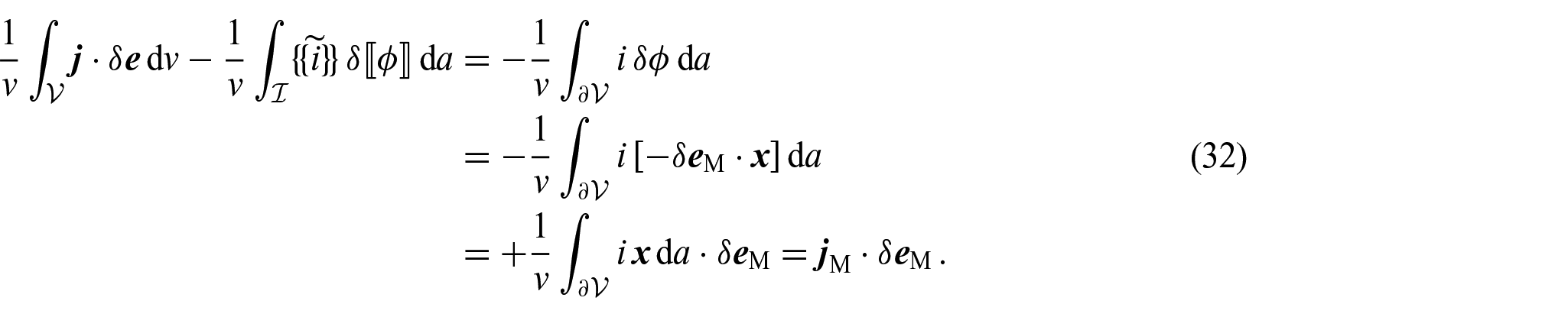
For the electrical subproblem, the particular form of microscopic electric potential field

is chosen. Analogous to the mechanical problem (28), consistency of the boundary condition (29) with the scale-bridging relation (22) is shown by inserting equation (29) in equation (22), namely

By inserting equation (27) into the Hill–Mandel condition for the mechanical problem (25)
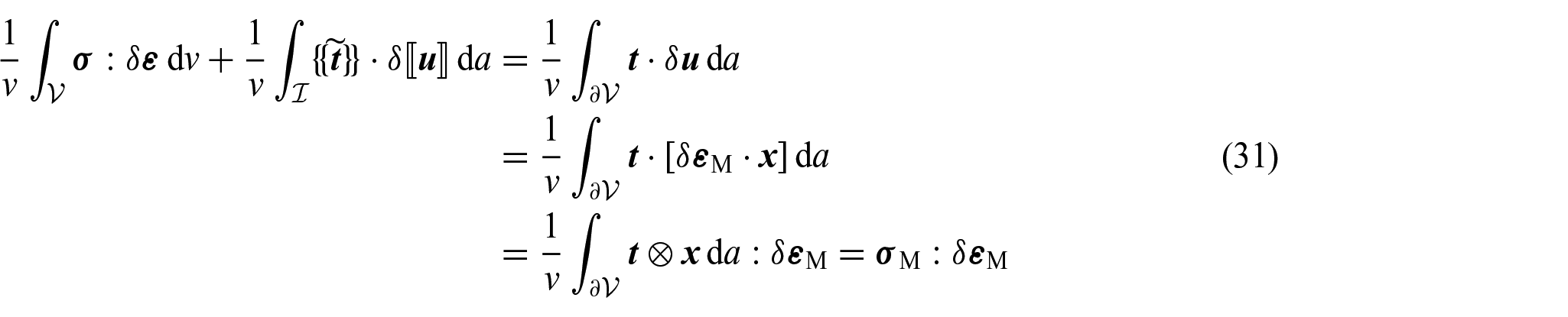
is obtained. Furthermore, inserting equation (29) into equation (26) shows the consistency of the boundary condition (29) with the Hill–Mandel condition for the electrical problem, i.e.,
3.4. Uniform flux boundary conditions
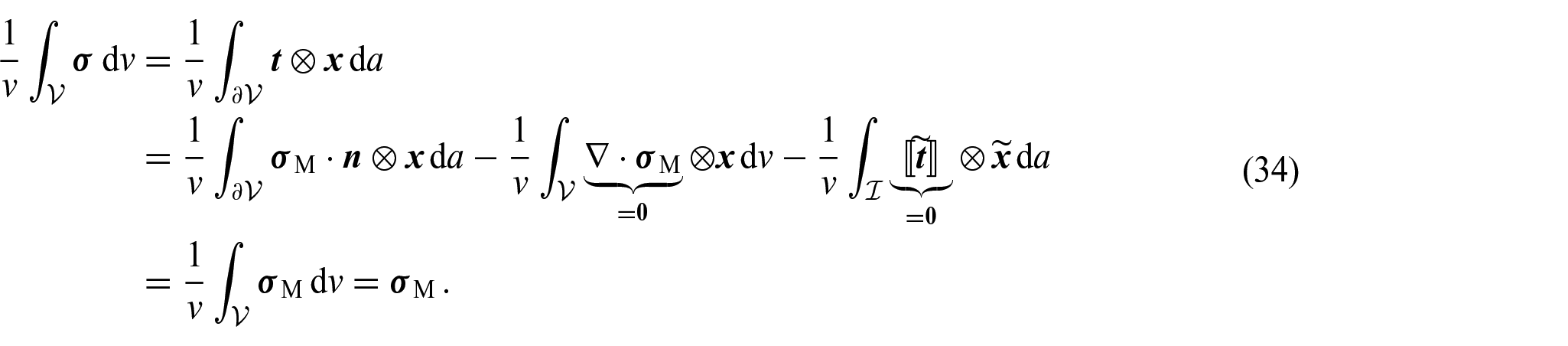
Uniform (constant) traction conditions are prescribed at the boundary of the RVE as

By inserting equation (33) into equation (23), consistency of the uniform flux boundary condition with scale-bridging relation (23) can be shown, namely
Uniform electric current density boundary conditions are given by

By inserting equation (35) into equation (24) and by analogy with the mechanical subproblem, one arrives at
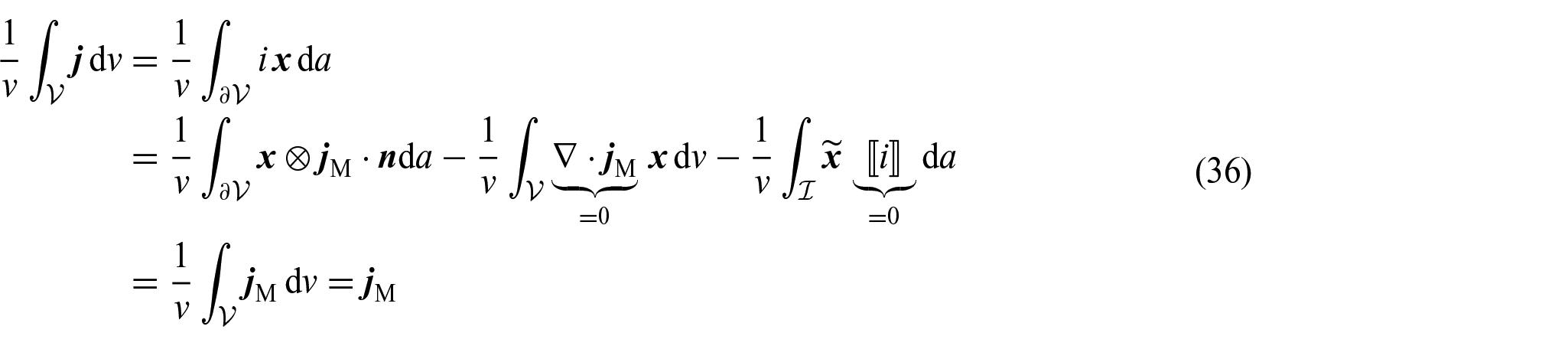
which shows the consistency of the uniform electric current density boundary condition with scale-bridging relation (24). In view of equations (33) and (35), the evaluation of the Hill–Mandel condition for the mechanical subproblem (25) results in

and for the electrical subproblem (26)

is obtained.
4. Finite element implementation
This section addresses the finite element implementation of the proposed multiscale formulation for electrical conductors in the presence of material interfaces. In particular, the focus is on the weak form of the microscale boundary value problem in Section 4.1 before discrete closed-form solutions for the homogenised macroscale fields, and the associated tangent stiffness contributions are derived in Sections 4.2 and 4.3, respectively.
4.1. Weak form of the coupled problem
To derive a weak form of the mechanical problem, equation (6a) is multiplied with test function

and use is made of the divergence theorem and equation (1) to arrive at

By inserting equation (6b) into equation (40), the governing equation for the mechanical subproblem in weak form reads

For the electrical problem, the continuity equation of electric charge (11a) is multiplied with test function

and the application of the divergence theorem together with equation (1)

specifies, in virtue of equation (11b), the weak form

4.2. Homogenisation
The finite element implementation of continua with interfaces is adopted from [20]. The primary fields and test functions are discretised as follows


where

for the Newton iteration step

In the case of periodic boundary conditions, the generalised stiffness matrices and generalised reaction force vectors are substituted by reduced versions that result from enforcing linear constraints between opposing RVE boundaries (see, e.g., Kaiser and Menzel [56]). The proposed finite element implementation uses scale-bridging relations that rely on equations (23) and (24). Accordingly, the discrete versions of the macroscopic stress tensor

and the electric current density vector

are obtained. In equation (48),
4.3. Consistent tangent stiffness tensors
In order to derive consistent algorithmic tangent stiffness operators, the linear system (47) is partitioned into Dirichlet

Solving the second line of the system of equations for

is obtained. For affine and periodic boundary conditions, the kinematic relations are given as


By partitioning equation (50) into mechanical and electrical contributions and after inserting equation (52), the relations

and

between increments in the generalised reaction force vectors at the microscale and changes in
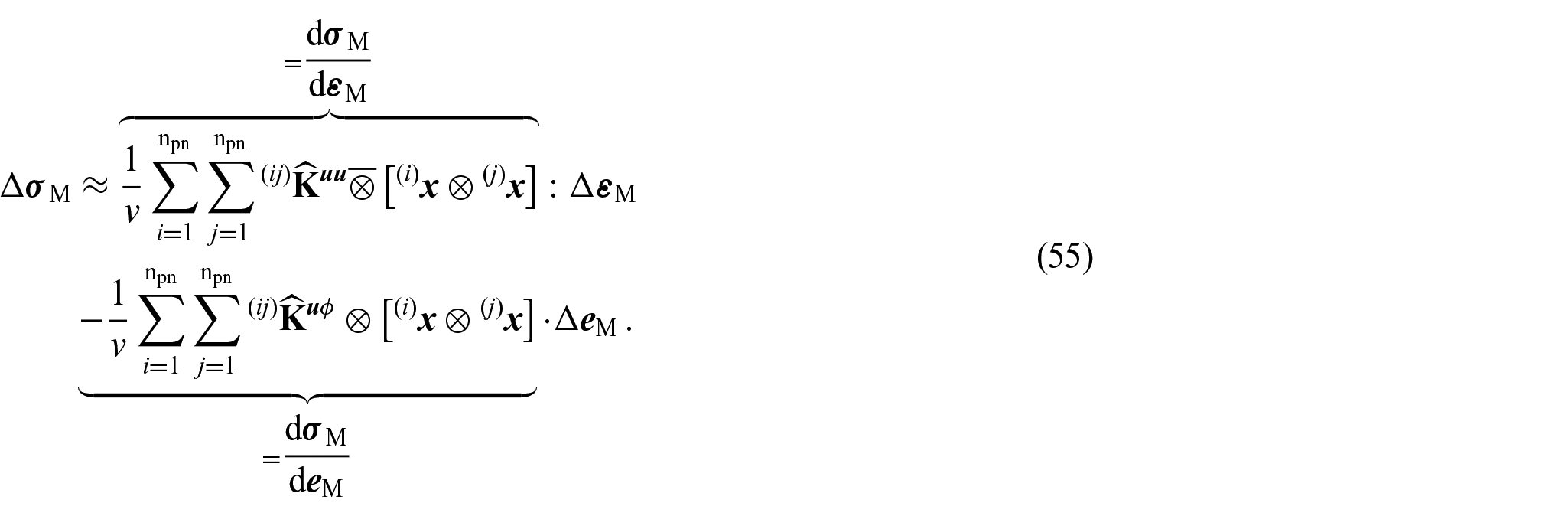
Finally, by inserting equation (53) into the discrete representation of the stress tensor (48), one arrives at
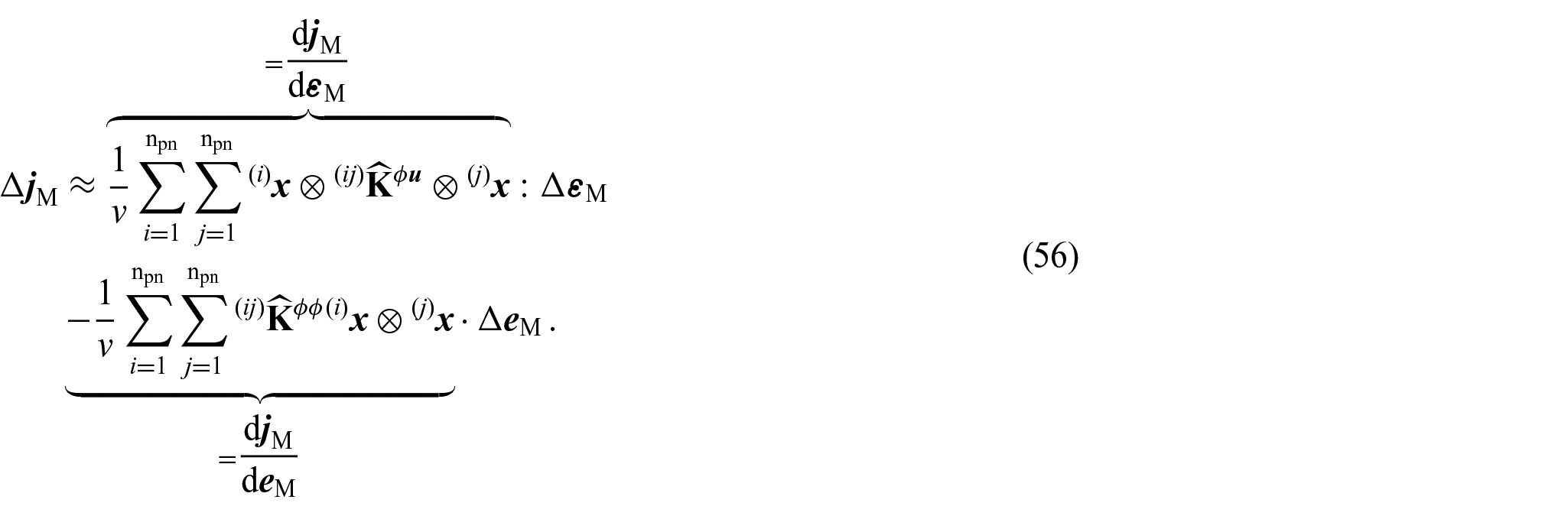
Analogously, inserting equation (54) into the discrete representation of the electric current density vector (49) yields
5. Numerical examples
This section deals with a study of representative boundary value problems. Constitutive relations that are employed in the current work for the bulk and interface are discussed in Section 5.1. In particular, the electrical and mechanical material models are adopted from Kaiser and Menzel [20] for demonstration purposes. An analytical solution for the effective conductivity in a (quasi-)one-dimensional setting is provided in Section 5.2. Various microstructures are studied, and the effective macroscopic conductivity tensors are obtained and compared in Section 5.3. Moreover, the internal length scale is discussed in Section 5.4, and the coupled electro-mechanical response due to mechanically induced microscale damage processes is exemplarily studied in Section 5.5. The specific material parameters are summarised in Table 1, a plane strain setting is assumed, and quadrilateral bulk and linear interface elements are used.
Material parameters used in the analytical solution and finite element–based simulations.

5.1. Constitutive relations
The mechanical response of the bulk material is assumed to be governed by the volume specific Helmholtz free energy density function

In equation (57),

The interface incorporates a model that accounts for brittle damage, along with a linear-elastic material response. More specifically speaking, the area-specific interface Helmholtz free energy density is taken as a function of displacement jump

whereas the interface is assumed to regain its normal stiffness under compressive loadings

The corresponding traction–separation law at the interface

is derived by evaluating equation (19) for equation (59). For the damage evolution, an exponential form of the interface damage variable

is assumed as proposed in Radulovic et al. [57] and Heitbreder et al. [58], where

For the electrical subproblem, a linear relation between the electric field vector and the electric current density vector in the bulk is adopted in accordance with the restrictions posed by the dissipation inequality (20), i.e.,

For the sake of simplicity, an isotropic electrical conductivity tensor is assumed

where

where
5.2. Analytical solution
This section deals with the derivation of a (quasi-)one-dimensional analytical solution for the calculation of the effective conductivity of an RVE with a material interface, see Figure 4. For the electrical problem under periodic boundary conditions with a prescribed electric potential difference

using elementary calculation rules for serially connected resistors in electrical circuits. Accordingly, the effective conductivity of the (quasi-)one-dimensional RVE in the direction of

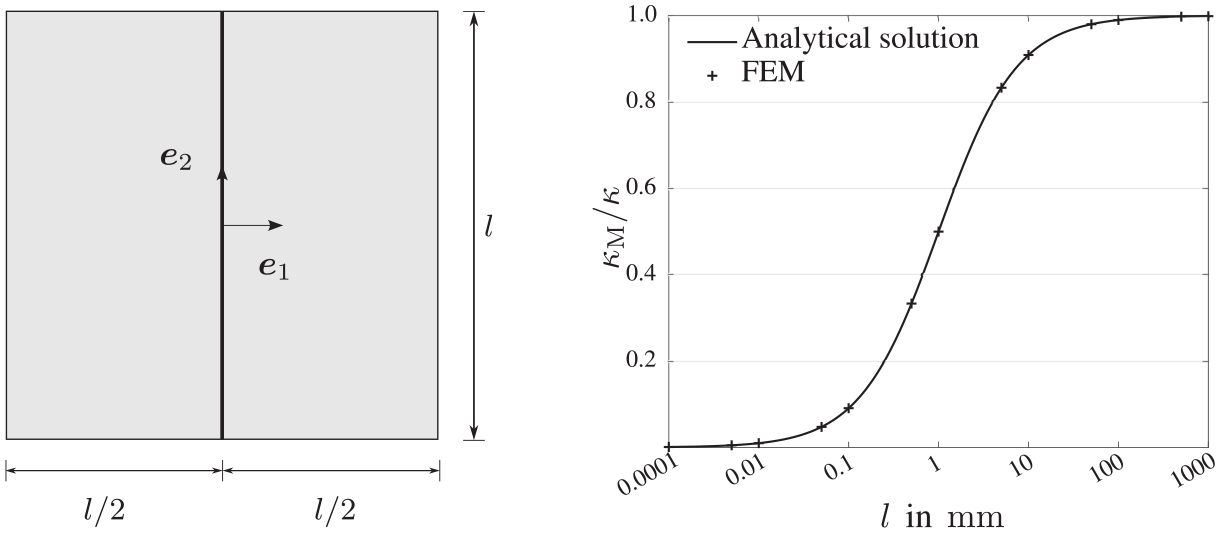
RVE of length
Comparing the analytical (67) and finite element simulation (56) results verifies the proposed finite element framework. Moreover, the simulation results shown in Figure 4 clearly indicate a size-dependent macroscale material response due to the presence of material interfaces at the microscale. This size effect will be studied in detail in Section 5.4.
5.3. Effective macroscopic conductivity tensor
The objective of this section is to demonstrate the use of the proposed electro-mechanical multiscale formulation within a two-dimensional setting. Therefore, effective macroscopic conductivity tensors are calculated for the different periodic microstructures depicted in Figure 5. The results are normalised with respect to the idealised material parameters given in Table 1, i.e.



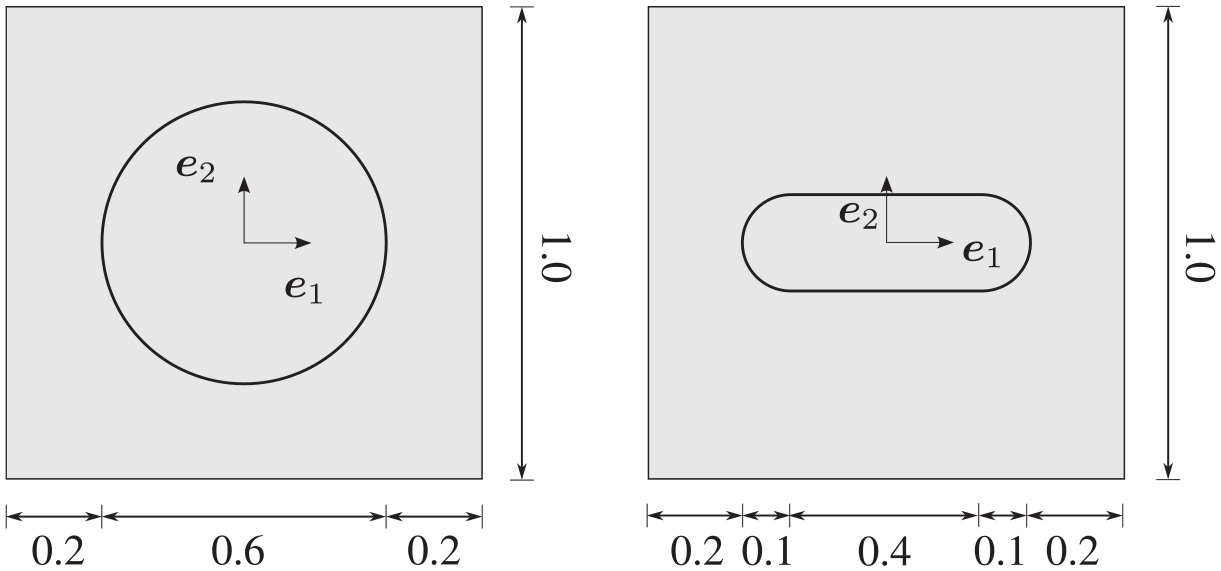
Sketch of different two-dimensional RVEs that are analysed with the electro-mechanical multiscale finite element formulation. The microstructures were chosen in accordance with Kaiser and Menzel [56]. Dimensions are given in
The effective macroscopic conductivity tensors corresponding to microstructures with circular (68b) and groove-shaped interfaces (68c) are compared with the conductivity tensor of an idealised material (68a). The presence of the circular cohesive interface causes a reduction in conductivity of approximately 30%. In accordance with theoretical predictions, the constitutive response remains isotropic. In comparison, the reduction in the 22-coefficient of the conductivity tensor caused by the presence of a groove-shaped interface is significantly higher than the reduction in the 11-coefficent such that the effective macroscopic material response is anisotropic.
5.4. Internal length scale
Classic first-order multiscale formulations do not account for size-dependent material behaviour. In other words, the macroscopic response does not change with respect to the RVE size. To solve this problem, second-order homogenisation methods that incorporate higher-order gradients are developed (see, for instance, Kouznetsova et al. [33]). On the contrary, it was observed in Section 5.2 that by accounting for material interfaces at the microscale, the continuum under consideration is endowed with an internal length scale such that size effects can naturally be accounted for. In accordance with Kaiser and Menzel [20], the internal length scale of the electrical subproblem is introduced as

The ratio of the internal length scale to the RVE size
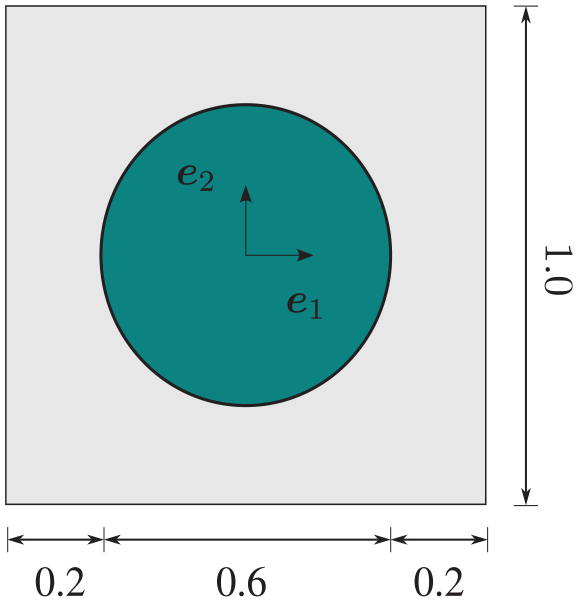
Sketch of two-dimensional multiphase microstructure analysed with the electro-mechanical multiscale finite element formulation. The conductivity of the matrix (indicated by grey colour) and the interface between inclusion and matrix are given in Table 1. The conductivity of the inclusion (indicated by green colour) is chosen as
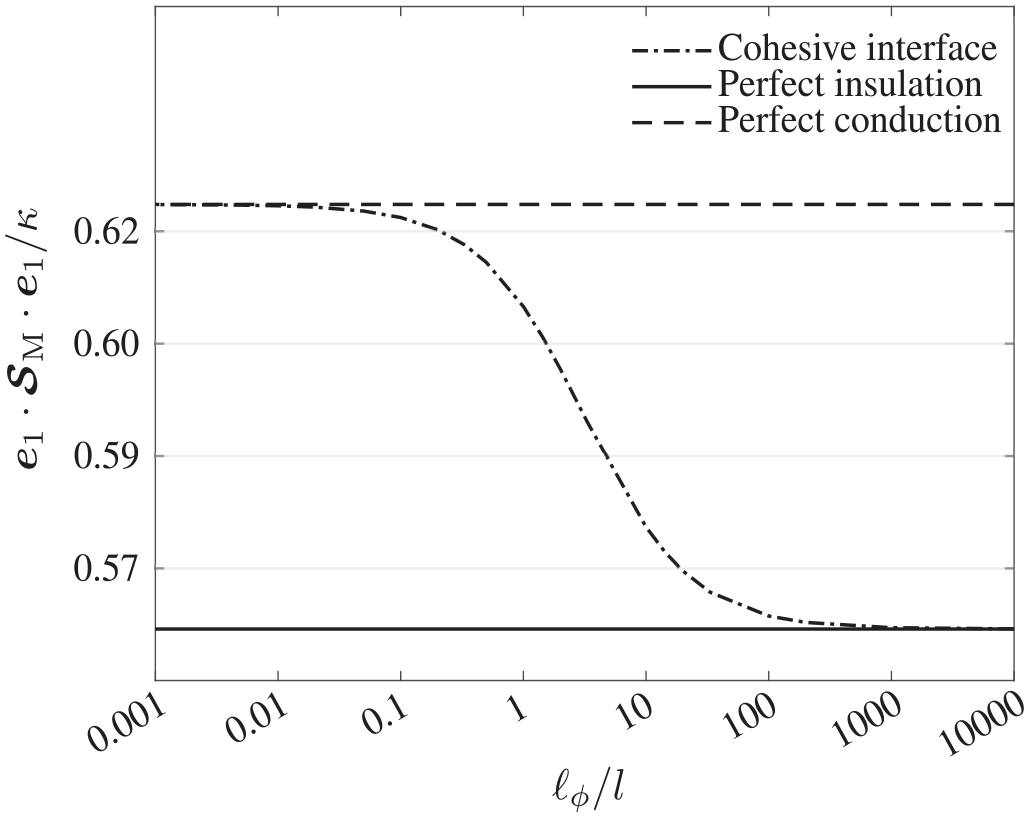
Effective macroscopic conductivity of the multiphase RVE depicted in Figure 6. A size-dependent behaviour is observed with limit cases corresponding to a perfect conduction interface and a perfect insulation.
5.5. Electro-mechanical coupling
This section focuses on the change in the effective macroscopic conductivity tensor due to mechanically induced damage processes at the microscale. An inclusion with low conduction embedded in high conductor matrix is selected for this example. The material parameters

and electrically via

with parameters
The decrease in the
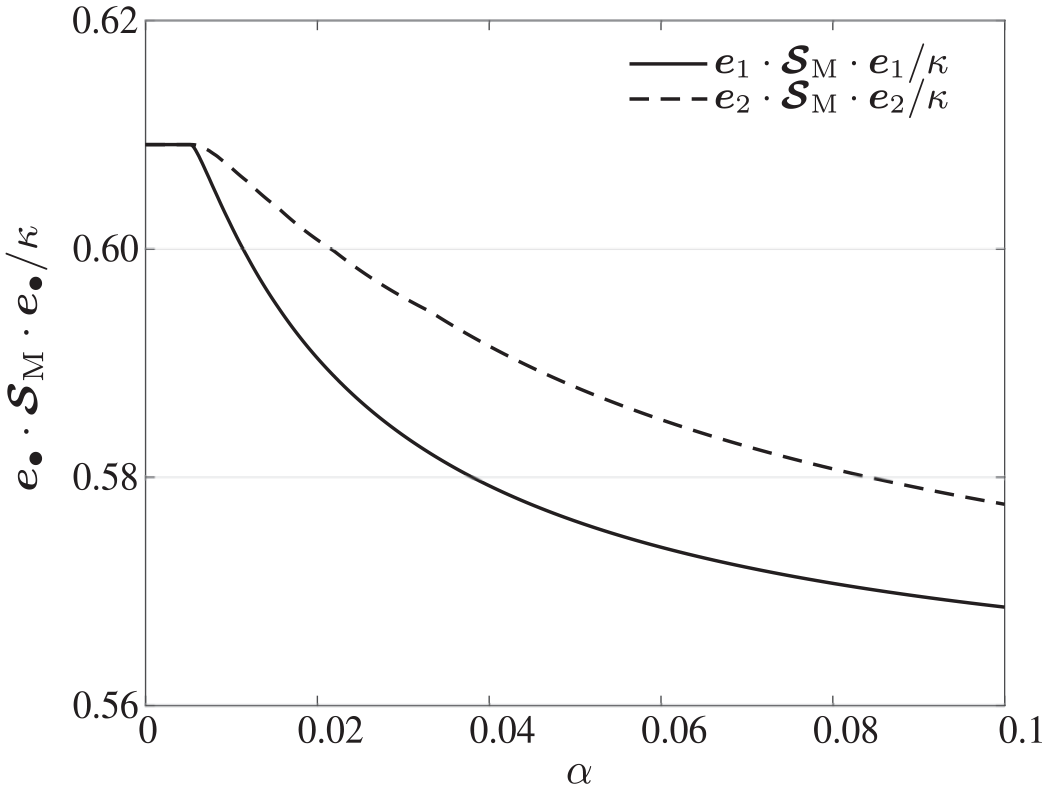
Effective conductivity as a function of prescribed mechanical boundary conditions.
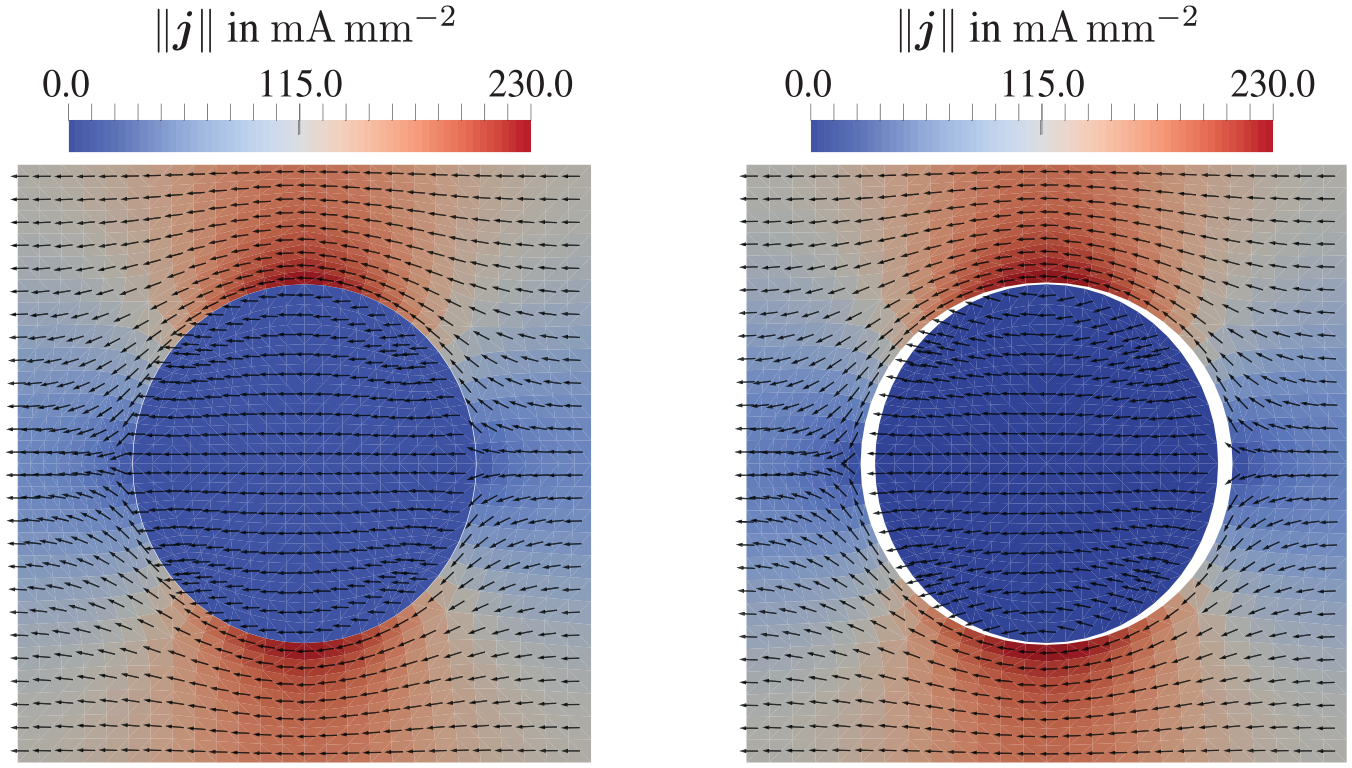
Electric current density field
6. Conclusion
In this work, a computational multiscale formulation for electrical conductors that feature material interfaces at the microscale is proposed and a finite element implementation is discussed. Several numerical examples are studied in two-dimensional settings to show the applicability of the proposed formulation: (1) The finite element results are compared against analytical solutions in order to validate the proposed formulation. (2) Different microstructures are analysed to show the influence of the material interfaces on the effective macroscale conductivity tensor. (3) The characteristic size effect that is associated with the presence of material interfaces is revealed, and it is observed that (as opposed to classic first-order homogenisation approaches) the macroscale response is not independent of the geometric dimensions of the RVE. (4) The influence of mechanically induced interfacial degradation processes on the effective electrical conductivity is exemplarily studied to demonstrate the capabilities of the proposed formulation for coupled problems. In this regard, it is important to note that the constitutive relations used are purely academic at this stage and not based on experimental data. They were selected to show the fully coupled behaviour and the applicability of the proposed framework. The application to experiments will, accordingly, be the focus of future work.
Footnotes
Funding
The author(s) disclosed receipt of the following financial support for the research, authorship, and/or publication of this article: This study was funded by the Deutsche Forschungsgemeinschaft (DFG, German Research Foundation)—Project-ID 278868966—TRR 188.
