



Abstract
Infill density used in additive manufacturing incorporates a structural response change in the structure. Infill pattern creates a microstructure that affects the mechanical performance as well. Whenever the length ratio of microstructure to geometry converges to one, metamaterials emerge and the strain-gradient theory is an adequate model to predict metamaterials response. All metamaterial parameters are determined by an asymptotic homogenization, and we investigate the effects of infill density and pattern on these parameters. In order to illuminate the role of infill characteristics on the strain-gradient parameters, an in-depth numerical investigation is presented for one, widely used case in three-dimensional (3D) printers, rectangular grid.
Keywords
1. Introduction
The usage of additive manufacturing (AM) techniques in different industrial applications has recently gained remarkable momentum, trending in different fields like aerospace, automotive, medical, architecture, and construction. AM techniques fabricate three-dimensional (3D) designs prepared in a CAD software using a layer-wise approach, enabling to manufacture complex parts, which are challenging or even impossible to be realized by conventional manufacturing techniques such as CNC milling, turning, and casting. As many design constraints are eliminated, AM methods have revolutionized the perception of engineers and designers leveraging complexity, creativity, and multi-functionality. Therefore, with their inexorable progress and distinctive properties, AM techniques are currently preferred in many applications as primary fabrication technique [1–4] enabling to introduce new innovative design concepts [5–11].
One of the most significant advantages of AM is that lightweight and topologically optimized parts may be designed and fabricated per its layer-by-layer fabrication approach. In this way, less material is used while providing desired performance and a considerable reduction in waste. For this purpose, during the tool planning process, also referred to as “slicing,” the virtual model (i.e. CAD design) is divided into layers taking heed of infill pattern and infill ratio. Then, each layer is formed accordingly by following the generated tool path, and the part with desired internal structural pattern is fabricated. The infill pattern and infill ratio may vary depending on parts to be printed and expected mechanical performance. Therefore, as AM deals with internal structure without requiring any extra manufacturing steps or equipment, design and fabrication of mechanical metamaterials is emerging in basic research. Metamaterials exhibit tailored, “exotic” properties allowing to design multiscale approaches [12–17]. Therefore, in mechanical metamaterials such as auxetic [18,19] or pantographic [3] structures, the unique overall behavior is obtained by mechanical interaction of microconstituents composing the structure.
Ability of fabricating complex materials with new advanced manufacturing methods has also revealed the need for new mathematical models as the classical ones are not sufficient or practical [20–25]. Indeed, this is an ineluctable fact from a theoretical point of view in a more complex design and manufacturing environment. For this purpose, higher-gradient theories have been extensively developed and investigated in the literature. Briefly, higher-gradient theories assume that the deformation energy may also include higher gradients of displacement field as opposed to the classical theory [26]. Although such theoretical efforts have been made since 1950s [27–33], fabrication of metamaterials showing higher-gradient effects by AM has succeeded to ignite an applied research. Specifically, the recent studies on pantographic structures have epitomized the importance of higher-gradient theories, especially for numerical predictions of such a complex structure. In order to investigate the mechanical behavior of pantographic structures, various higher-gradient models have been proposed [34–38] and examined through experiments [39–44], considering different mechanical phenomena [45–50]. We refer interested readers to the previous works [51–54] on different aspects of higher-gradient modeling.
In this study, strain-gradient modeling of additively manufactured specimens is investigated considering different infill ratios and infill patterns. In order to elicit the strain-gradient model of an additively manufactured specimen, an asymptotic homogenization framework is utilized. The computational homogenization procedure, which is based on the balance of micro- and macro-energies, determines all the constitutive parameters emerging in the strain-gradient theory. Via the determined parameters, simulations based on the strain-gradient model are conducted to investigate the mechanical behavior of the specimen. In this study, we examine the effects of infill ratio and infill pattern on the strain-gradient model and its constitutive parameters. To this end, a specimen with grid infill pattern has been first investigated considering different infill ratios. Then, by keeping the infill ratio fixed, various infill patterns have been studied. The numerical study has been aimed to divulge how strain-gradient parameters and deformation energy related to the strain-gradient terms change due to infill ratio and infill pattern. As a result, insights have been unraveled for design and strain-gradient modeling of such materials.
The rest of the paper is as follows. In section 2, the asymptotic homogenization is presented identifying strain-gradient constitutive parameters in order to provide mathematical preliminaries for the subsequent numerical study. In section 3, the conducted numerical study is presented for the specimen under study. Then, the conclusions are drawn in section 4.
2. Asymptotic homogenization to identify strain-gradient parameters
We follow the asymptotic homogenization approach introduced [55], applied [56,57], and verified [58]. Continuum with a microstructure (microscale) is modeled as a metamaterial equivalent to a homogenized continuum (macroscale) with the smeared out microstructure. At the microscale, expressed in

We use standard continuum mechanics formulation and understand Einstein’s summation convention over repeated indices. Linearized displacement gradients,

By using

We obtain stress and the latter is called Hooke’s law. Since the energy is quadratic, the material law is linear. We use small displacement approach for the homogenization process leading to metamaterials’ parameters. Once the parameters are found, at the macroscale, geometric nonlinearities may be involved using a nonlinear strain measure [59,60]. At the macroscale, we model using the strain-gradient elasticity with the same type of (quadratic) stored energy density

with the usual restrictions as objectivity and positive definiteness [61,62]. A comma notation denotes a partial derivative in

These additional metamaterial tensors,

Displacements or stress may differ, but the energy is the same. This axiom is the starting point for the asymptotic homogenization. For the complete derivation of the governing equations, we refer to Abali and Barchiesi [55], and summarize the algorithm herein briefly. The core idea is to expand displacement field up to the second order, and then find out additional governing equations by coefficients comparison in this expansion in

Once the field

Third equation delivers

By means of

which is used to determine all strain-gradient parameters:

We observe that
3. Numerical implementation and results
All aforementioned governing equations are solved numerically by means of the finite element method (FEM). We use open-source packages known as FEniCS [63,64] and solve the governing equations by generating a weak form for each of them by following the standard variational formulation. We refer to Abali [65] for engineering applications and their implementation by means of FEniCS packages. Standard FEM properties are used, where the field functions are approximated by their discrete counterparts with a compact support. Technically, we span a finite dimensional Hilbertian Sobolev space for trial functions [66]. As known as the Galerkin approach, the same space is used for test functions as well. We emphasize that micro- and macro-scales are both expressed in the same coordinate system, which is an important benefit in the computational implementation. The computational domain is the RVE that is discretized by nodes and their connectivity by elements. This discretization procedure is handled by NetGen algorithms in Salome CAD software.
In two-dimensional (2D) case, for

Trial functions,
A specimen of length
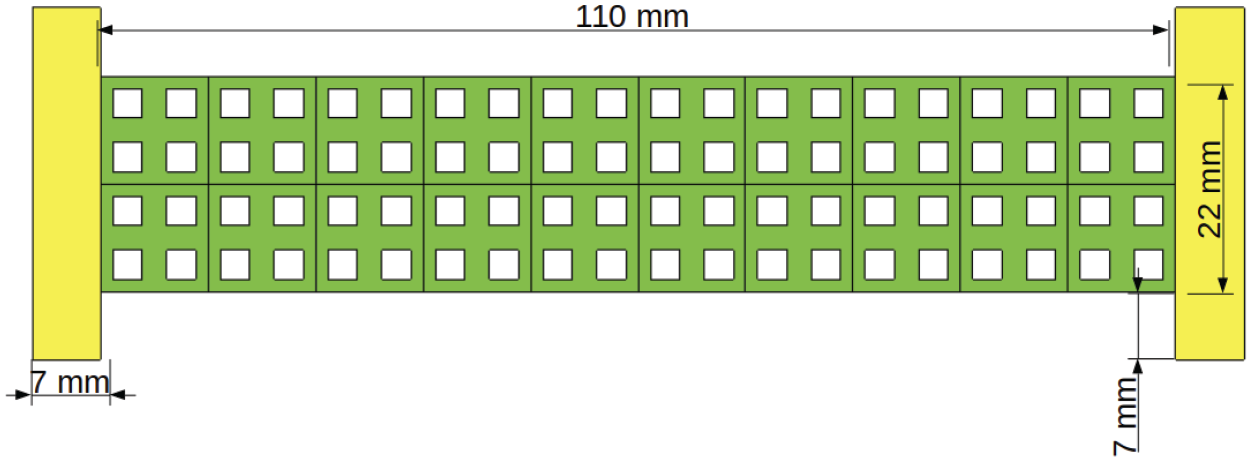
Geometric properties of specimen.
The specimen was first assumed to be designed with grid infill pattern and 40% infill ratio. RVE of the specimen is given in Figure 2, and the asymptotic homogenization procedure is applied to this RVE to extract strain-gradient constitutive parameters.
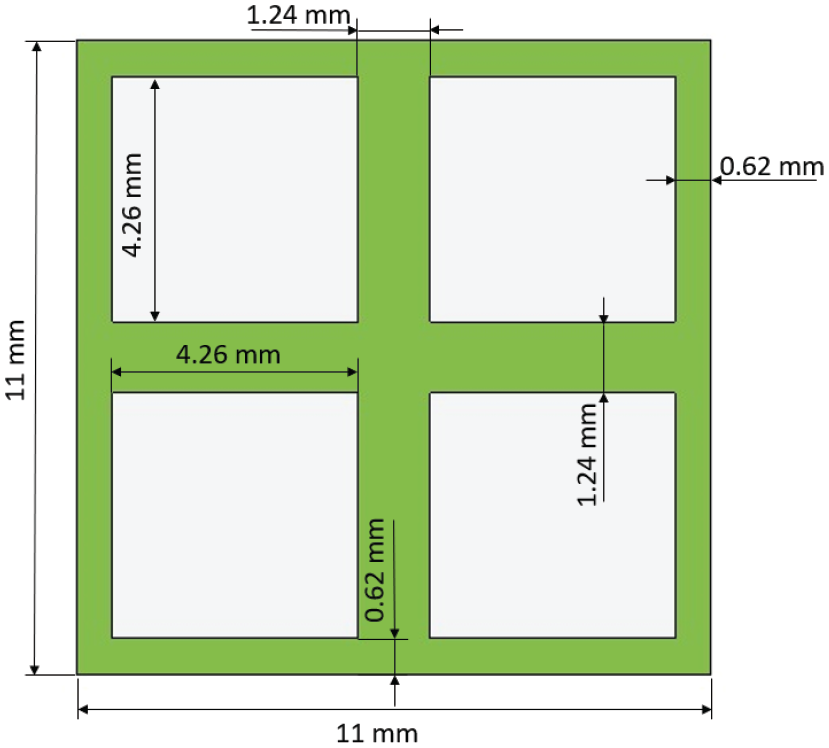
RVE of initial design: grid infill pattern and 40% infill ratio.
We consider this specimen as built by PLA, which is one often used filament type in fused deposition modeling (FDM)-based 3D printers. We utilize Young’s modulus of PLA as
Asymptotic homogenization results in

Homogenized continuum to conduct strain-gradient simulations.
In order to present the parameters, we use Voigt-like notation. Concretely, we use

and

as well as
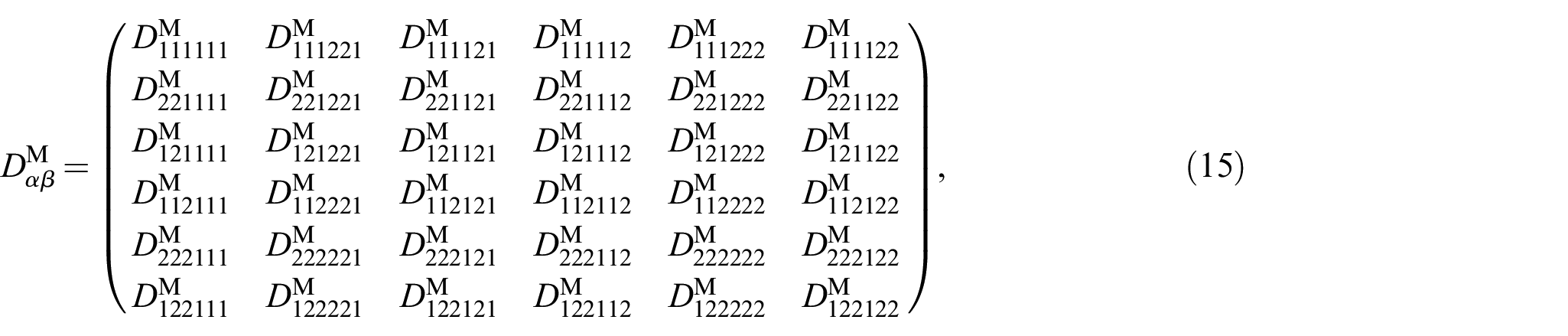
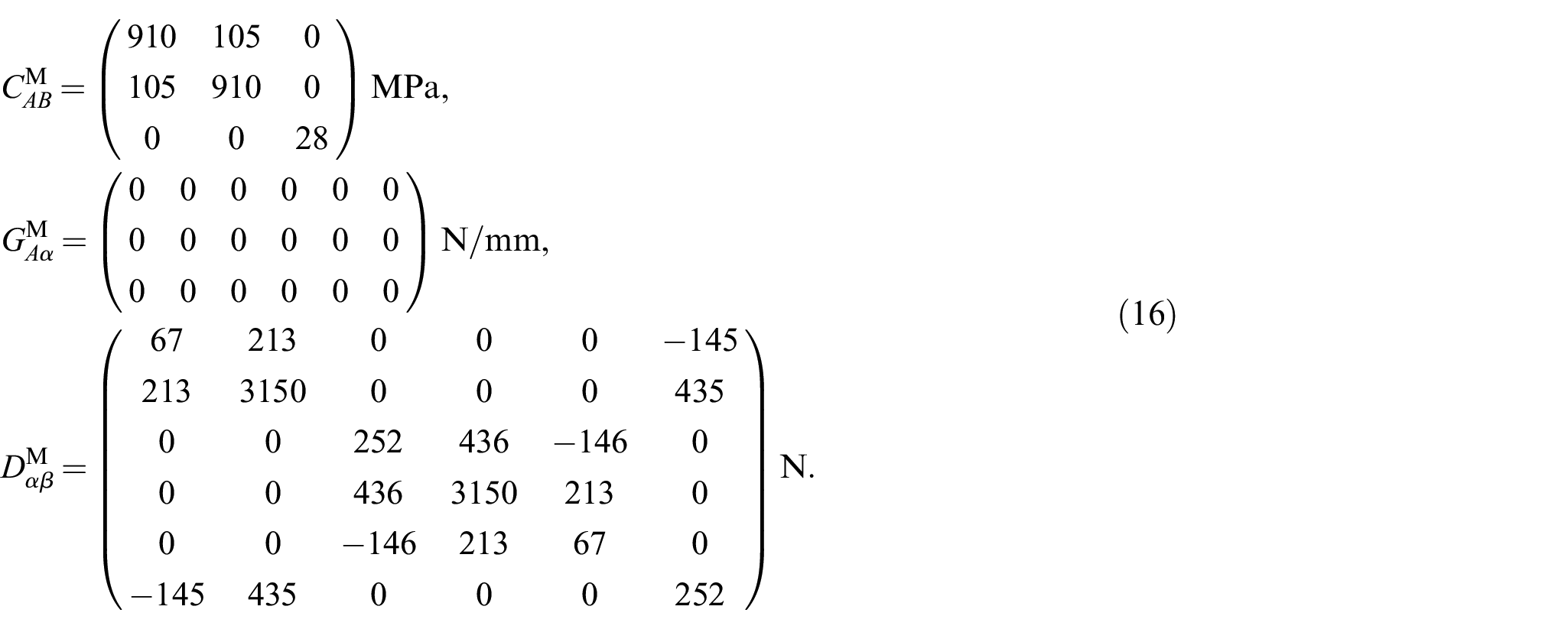
For the specific case of 40% infill ratio, parameters read as follows:
In order to conduct computational asymptotic homogenization procedure, discretization of the target RVE may play an important role, especially for
3.1. Infill density variation
In the first part of the numerical study, the effect of infill density on second-gradient parameters has been investigated, varying infill density from 10% to 100% for the same type of infill pattern to be depicted in Figure 1. For a better visualization, how the infill density manipulates the microstructure, we demonstrate in Figure 4 four different infill ratios for the same RVE as used in the analysis.
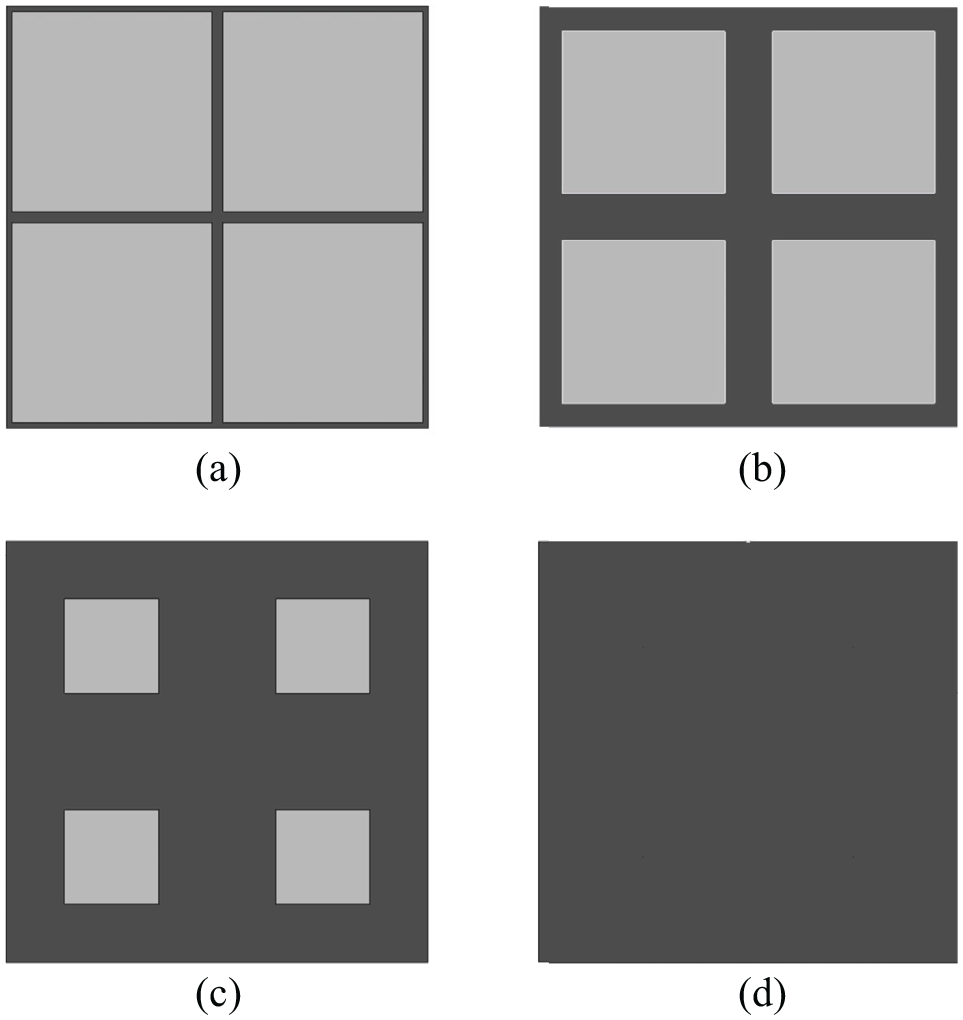
RVE samples in the study of infill density variation. Light gray denotes the void and dark gray symbolizes the PLA material. Obviously, (a) very thin structures in 10% infill ratio are impracticable in engineering design; however, (b) 40% is in common use. Because of reduction in weight, (c) 80% and (d) 100% are seen as “conservative” choices among the 3D printing practice.
With the aforementioned approach, all variations are calculated and we provide an insight in Figure 5, how the constitutive parameters,
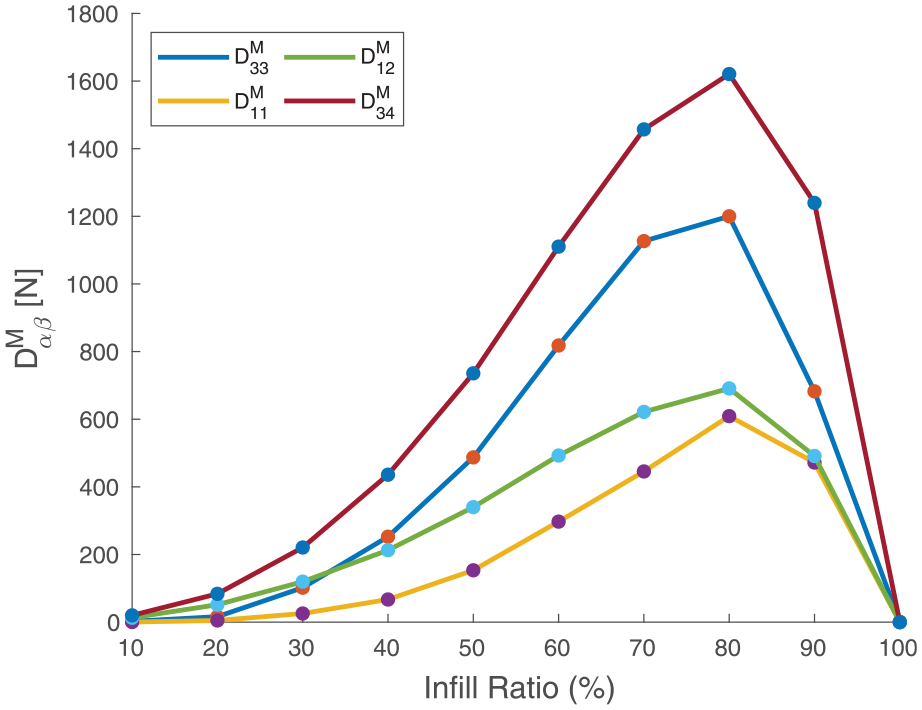
Constitutive parameters
We stress that
In addition, energy due to strain-gradient parameters has been elucidated by conducting simulations with the determined constitutive parameters considering the specimen under shear and tensile tests. We refer to [59,60] for implementation details. For both cases, we divide the energy to a first-order and second-order term and compare them. Specifically, we use equation (4) and write

that reads

since
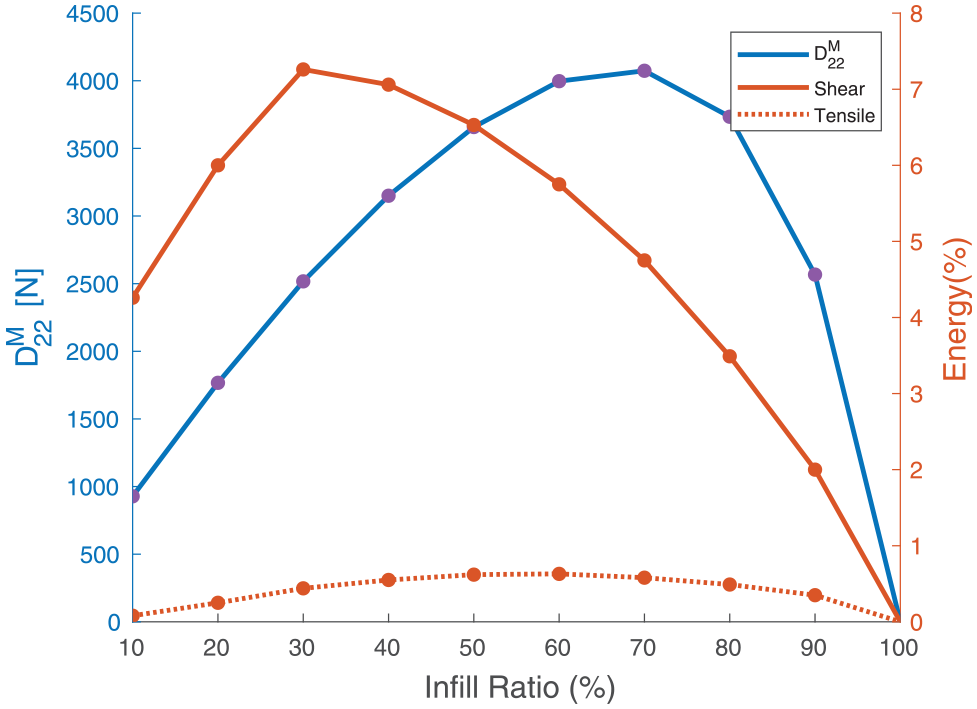
Energy ratio,
Furthermore, the effect of homothetic ratio,
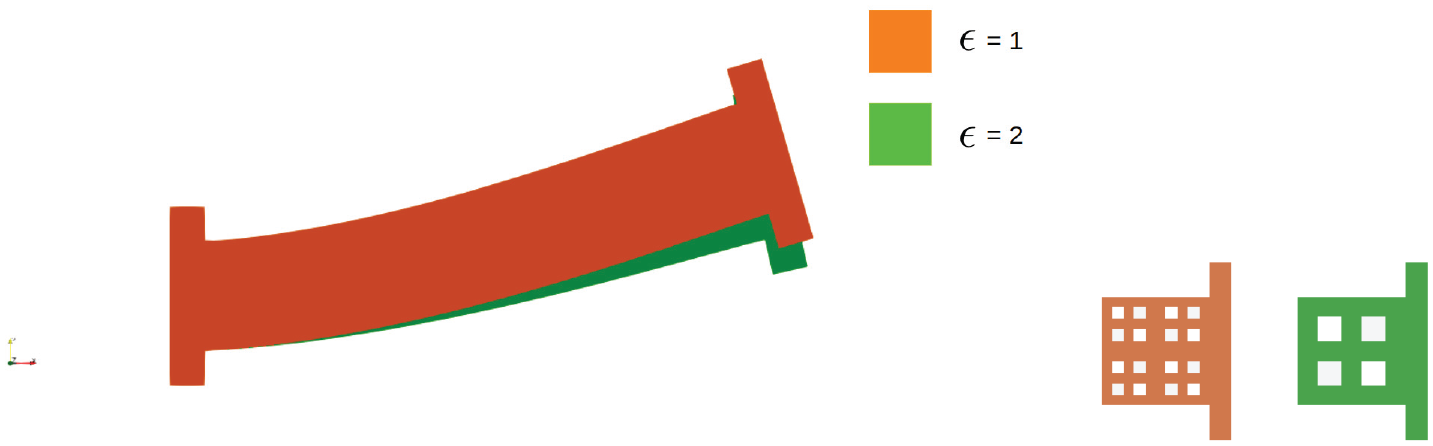
Variation of homothetic ratio and its stiffening effect for a larger microstructure,
3.2. Infill pattern variation
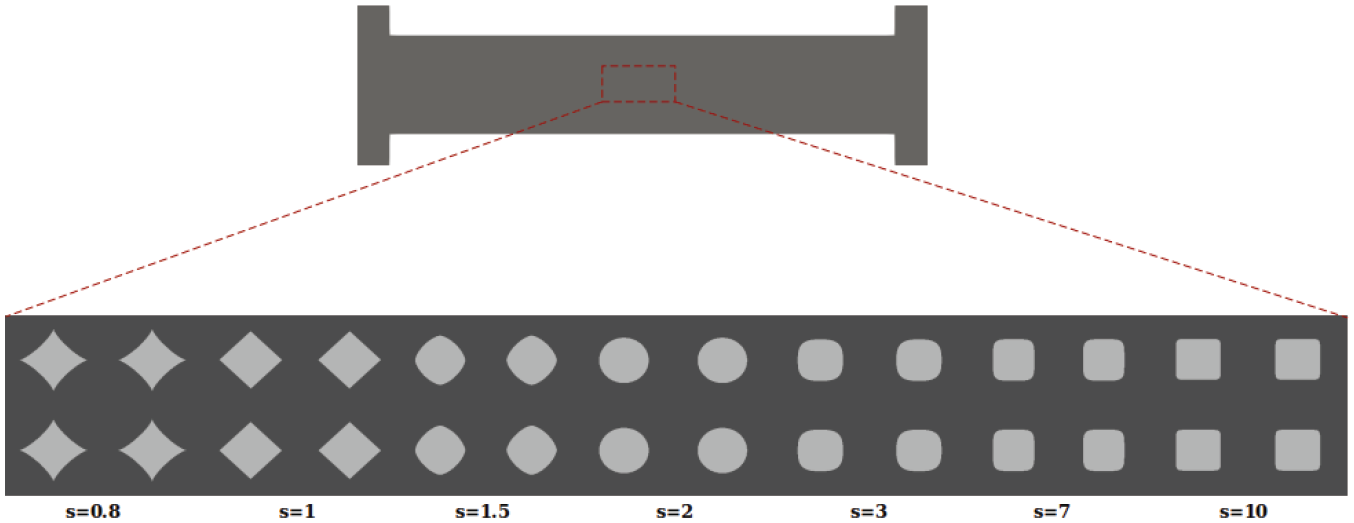
In the second part of the numerical study, the effect of infill pattern on the strain-gradient constitutive parameters has been investigated. To this end, infill pattern has been changed while keeping infill density fixed as ratio 80%. In order to control the form of voids, the following generalized ellipsoid equation [68]:

has been used, where
Parameters characterizing infill patterns.

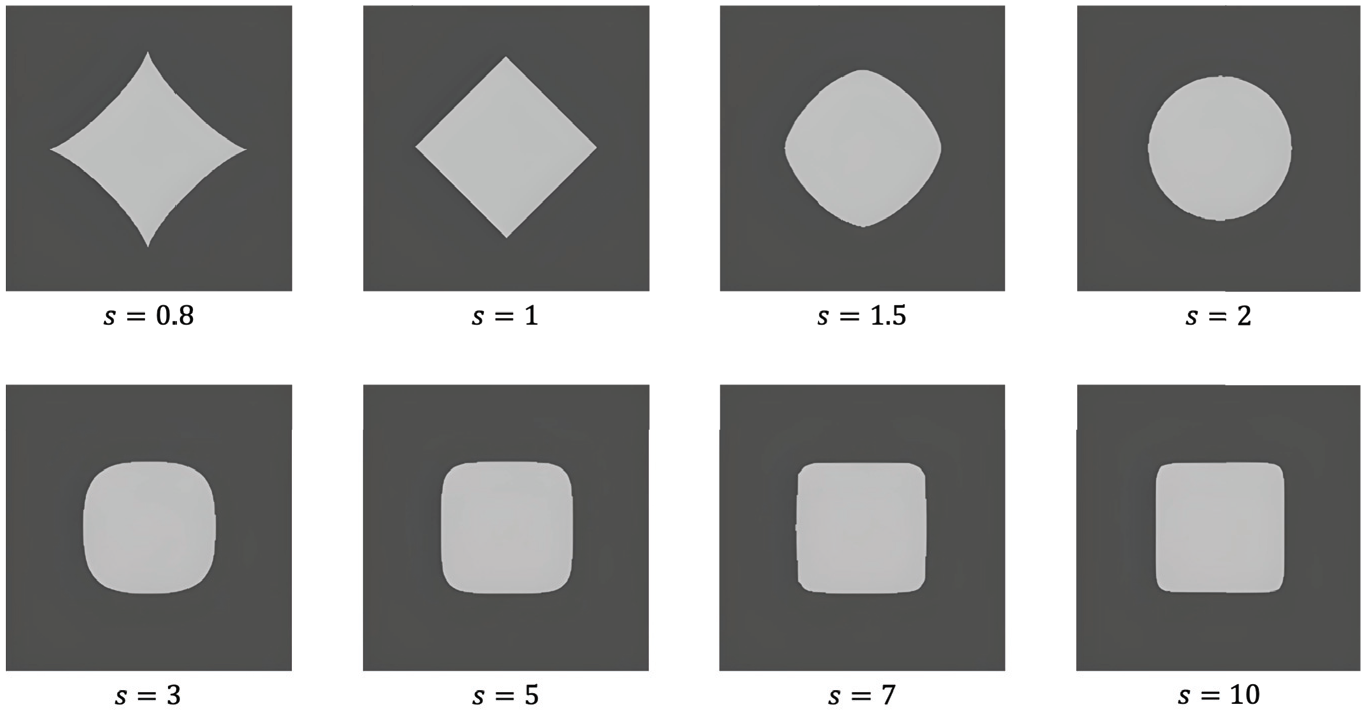
RVEs used in the study of infill pattern variation, variation of one parameter,
In Figure 9, constitutive parameters, namely,
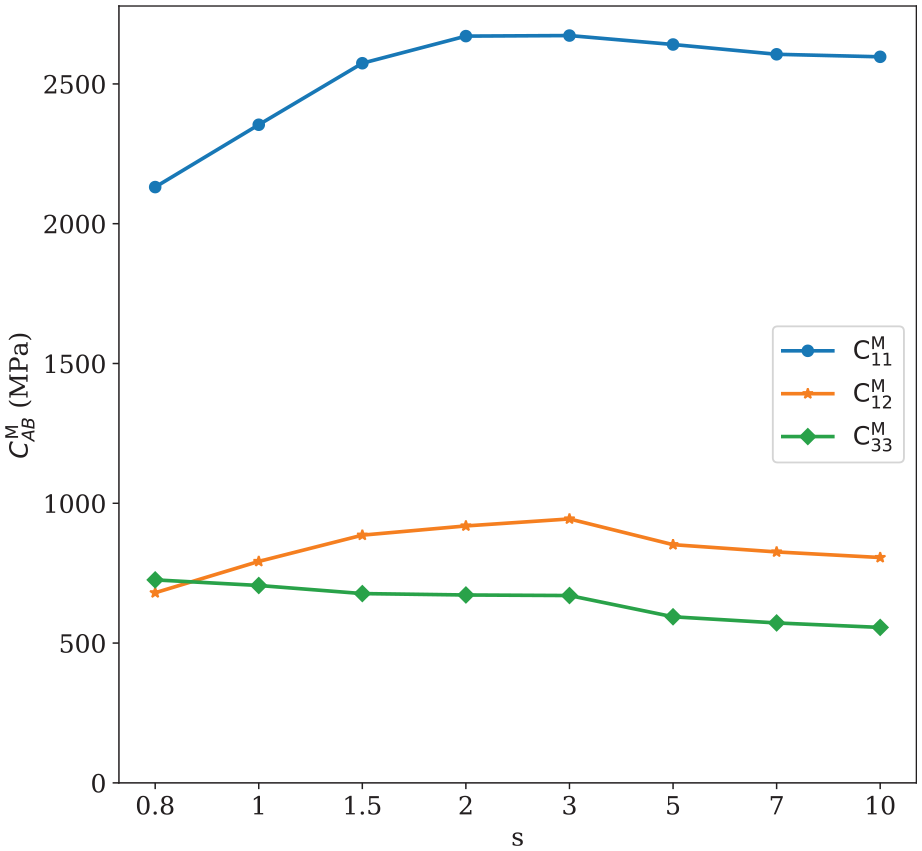
Constitutive parameters
In Figure 10, the constitutive parameters
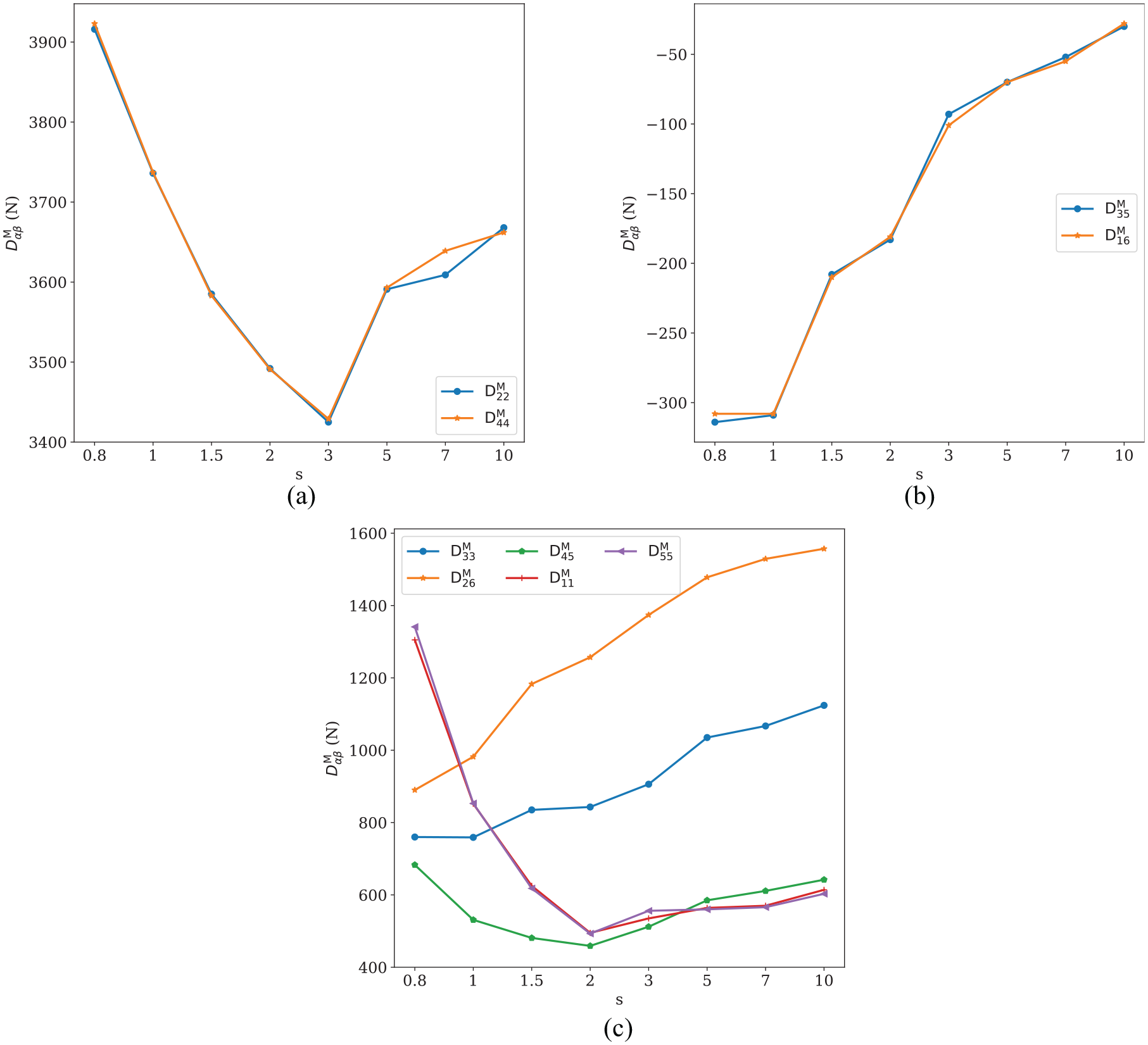
Constitutive parameters
Based on the extended Voigt notation,
In addition, energy due to strain-gradient terms has been calculated for each infill pattern, deforming the specimen under a shear force as before. In Table 2, energy percentages are given for each
Energy ratio,

Moreover, the mechanical behavior of the specimen designed with three different
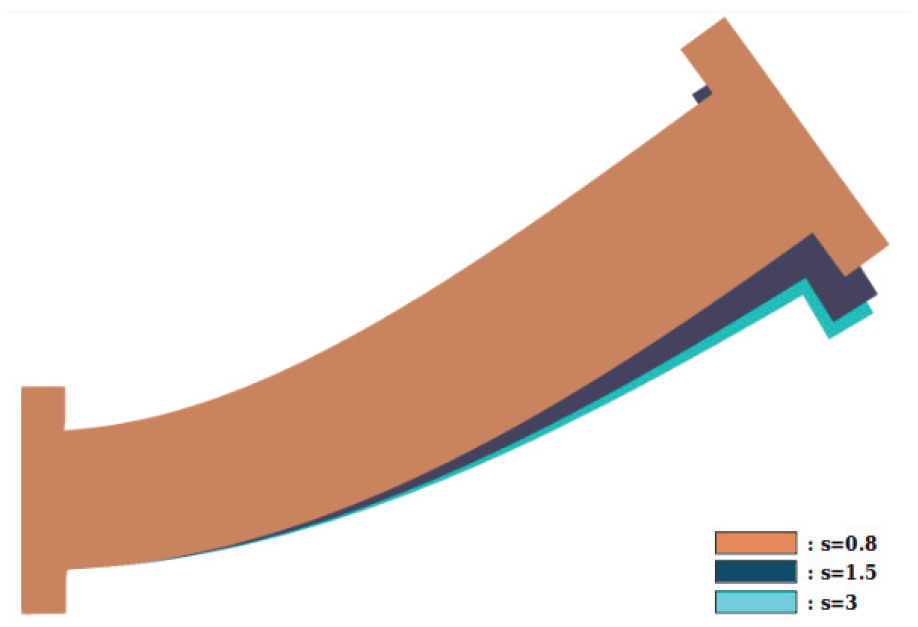
Deformed shapes obtained in shear test for different infill patterns showing the size effect variation regarding infill patterns.
4. Conclusion
Strain-gradient modeling in additively manufactured metamaterials is key for an effective modeling of mechanical response. We focus on different infill characteristics and their relevance in constitutive parameters. In order to identify strain-gradient constitutive parameters, an asymptotic homogenization procedure has been adopted and applied through RVE of each considered infill density and pattern. In the first part of the numerical study, for grid infill pattern, the effect of infill density on the constitutive parameters has been analyzed. Then, in the next part, the effect of infill pattern has been investigated, designing different void shapes parametrized by the exponent term of the adopted generalized ellipsoid equation.
Such studies shed light on the possibilities how to alter the macroscale mechanical response by varying microstructure properties like shape and porosity. We emphasize that the analysis has been carried out by envisioning that a varying infill density and pattern is possible with nowadays manufacturing possibilities. We give a visionary example in Figure 12 cartooning a semi-gradual change in
Functionally graded metamaterial concept as possible tailored material properties to be determined by an optimization algorithm.
Footnotes
Appendix 1
A mesh convergence analysis has been performed to identify mesh characteristics for computational homogenization procedure (Figure 13).
Funding
The author(s) received no financial support for the research, authorship, and/or publication of this article.
