



Abstract
Introduction
The characteristics of ski- and snowboard-related fatalities at Japanese ski resorts remain unknown. We aimed to analyze the characteristics of this in the current study.
Methods
Using the Ski Resort Injury Report data for the 13-y period between the 2011–12 and 2022–23 seasons, we described the characteristics of fatal accidents due to exogenous causes.
Results
Eighty-four subjects (48 skiers and 36 snowboarders) were analyzed. Males accounted for 73 cases of all 84 fatalities (86.9%), including 44 skiers (91.7%) and 29 snowboarders (80.6%). Skiers aged ≥50 y and snowboarders aged 20–35 y had the highest number of fatal accidents (32 and 18 cases, respectively). Regarding location, 26 fatal accidents occurred on slopes, and 58 occurred out of slopes (skiers, 11 and 37 cases; snowboarders, 15 and 21 cases, respectively). Among skiers, head and neck trauma accounted for the cause of death in 13 cases (27.1%) and asphyxiation in 11 cases (22.9%). Among snowboarders, head and neck trauma accounted for the cause of death in 14 cases (38.9%) and asphyxiation in 14 cases (38.9%).
Conclusions
Males, particularly those aged ≥50 among skiers and 20−35 among snowboarders, should be wary of the potential for injuries to the head, neck, and airway when skiing or snowboarding. In this study, traumatic deaths from crashing into trees and asphyxiation from deep snow immersion accidents accounted for approximately half of fatal ski accidents in Japan.
Introduction
In recent years, skiers and snowboarders of various age groups have enjoyed winter sports, and backcountry tours have become popular. Snowy mountains offer a wide variety of activities, and the number of people enjoying these activities has been increasing annually.1,2 Comparing 2013–14 to 2017–18, the number has increased from 49.7 to 54.7 million skier days per year, while the total number of fatalities decreased from 39 to 30. 3 A study that evaluated the rate of fatal accidents in Austria over a 10-y period found that the overall rate of fatal accidents was 0.7 per million skier days. 3 Because skiing and snowboarding activities occur in the wilderness, it is not easy to fully predict accidents; environmental and personal factors play a role in their occurrence. 4
A study conducted in Austria on alpine skiers and snowboarders revealed 0.7 fatalities per 1 million exposure days. 5 Similar rates of skiing fatalities were found in Switzerland and Australia, while the United States increased from 0.5 to 0.7 fatalities per 1 million skier days in this decade.6‐8 In the most recent 10-y study on Austrian ski slopes, the mean and standard deviation of 36.9 ± 7.9 fatalities occurred annually, and the annual incidence of both traumatic and nontraumatic injuries has decreased due to improving ski skills. 3 Traumatic causes such as excessive speed and collisions with objects have been recognized, whereas nontraumatic causes are primarily attributed to sudden cardiac death.3,9,10 Another report from Austria found that an average of 0.4 fatalities per 1 million exposure days were caused by trauma, including avalanches on slopes, collisions, and falls. 1 Approximately 65% of 133 downhill skiing-related deaths are due to trauma from collisions. 11 The most common cause of trauma is head injury, with 46.8% and 40.0% of trauma cases attributed to falls and collisions with objects, respectively. 3 Traumatic brain injury is also one of the leading causes of death; the incidence of head trauma in snow sports is 1.8 per 1 million skier days, with snowboarders 3 times more likely than skiers. 12 Among children, 67% of 149 fatalities were due to traumatic brain injury during downhill skiing. 13 Asphyxiation is the leading cause of cardiac arrests related to avalanches worldwide.14‐18
The characteristics of ski- and snowboard-related deaths in Japanese ski resorts have not yet been studied. This study aims to describe the characteristics of fatal accidents due to exogenous causes at ski resorts in Japan.
Materials and Methods
This study was approved by the Ethics Committee at Kokushikan University (#23010). We officially obtained permission to utilize data from the Japan Association for Skiing Safety, whose Ski Resort Injury Report is published annually on its website. 19 We analyzed the 13-y period between the 2011–12 and 2022–23 seasons.
Data
The following factors were assessed: date, day of the week, age, sex, nationality, type of sport (ski or snowboard), prefecture of ski area (prefecture means a local government area, and there are 47 prefectures in Japan), location (on slope; out of slope, including side of slope, tree run, and off slope), mechanism of injury (fall on a slope; collision with objects, including tree, rock or stone, net, lift pole, or light pole; collision with others, including a skier and snowboarder; fall, including by failure of jump, into a stream and off slope, under cliffs, in tree holes; avalanche; plunge into deep snow or fresh snow; unknown), injured body part, and cause of death. Each item category was obtained from Nunome and colleagues’ study. 20 The exclusion criteria were as follows: accidents occurring in the backcountry and/or outside ski resort boundaries, non-ski-/snowboard-related accidents, suspected cardiogenic causes, and lack of detailed information. Cases found in out-of-slope areas outside the ski area, “backcountry,” were excluded from this study; however, those found in out-of-slope areas within the ski area that did not fit under the category of both sides of the slope or tree run were included in this study as off-slopes.
Statistical Analysis
Categorical variables are shown as number of cases (%). Continuous variables are presented as mean ± standard deviation. Statistical analyses were performed using JMP Pro 17.0.0 (SAS Institute, Cary, NC).
Results
Between 2011 and 2023, 130 deaths were reported. Forty-six cases were excluded based on the following exclusion criteria: 33 cases in the backcountry and/or outside ski resort boundaries, 8 cases that were not ski- or snowboard-related accidents, 2 cases of suspected cardiogenic cause, and 3 cases with lack of detailed information (Figure 1). Therefore, we analyzed 84 cases (48 skiers and 36 snowboarders).
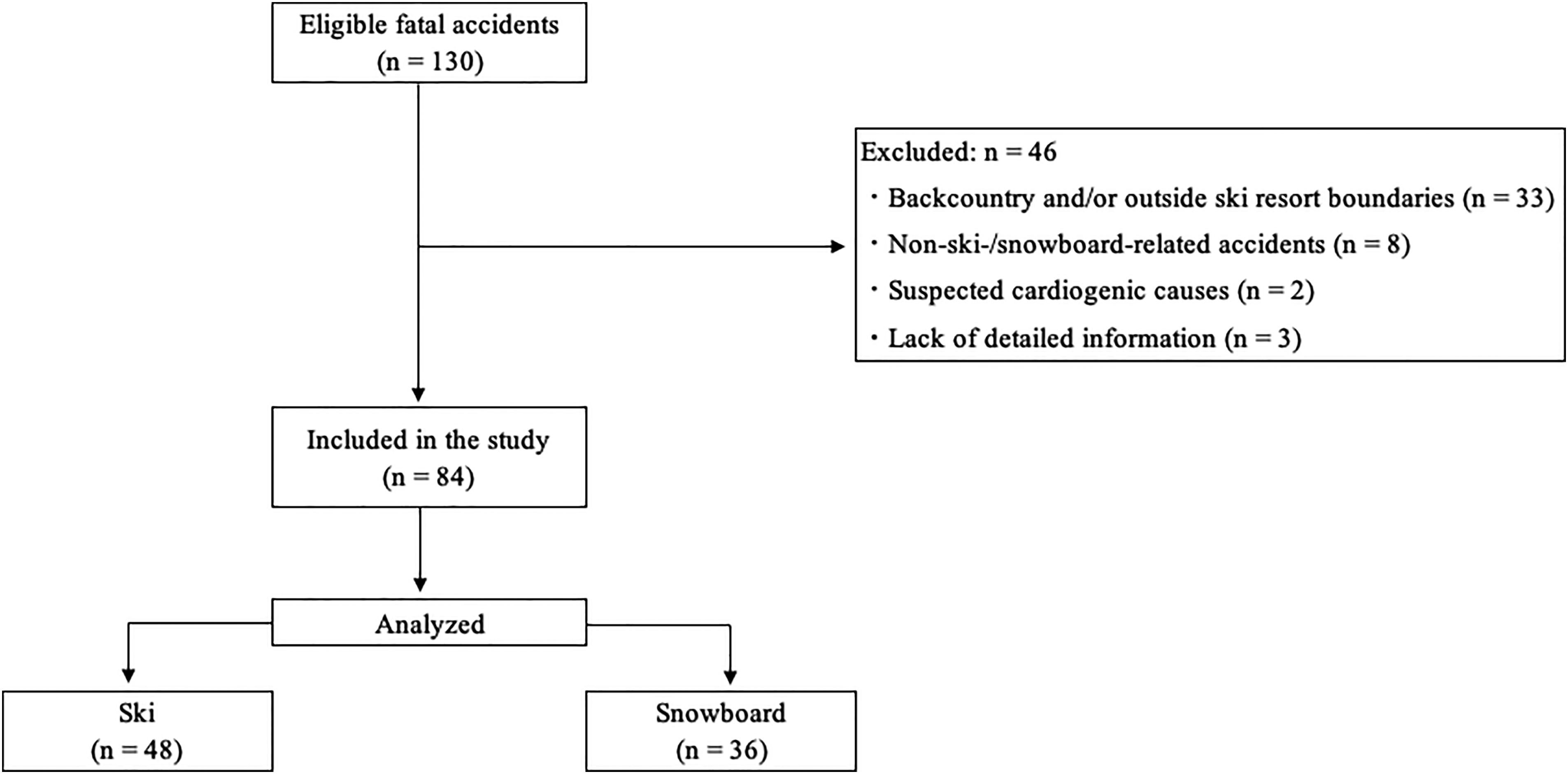
STROBE flow diagram.
Background Characteristics
Regarding nationality, 76 participants were Japanese and 8 non-Japanese. More accidents occurred in December, January, February, and March. Skiers and snowboarders experienced the highest number of fatal accidents in January (25 cases) and February (25 cases), respectively. Most of the fatal accidents occurred on Saturdays (18 cases) and Sundays (14 cases). As illustrated in Figure 2, Nagano Prefecture experienced the highest number of accidents (32), followed by Niigata Prefecture. 19
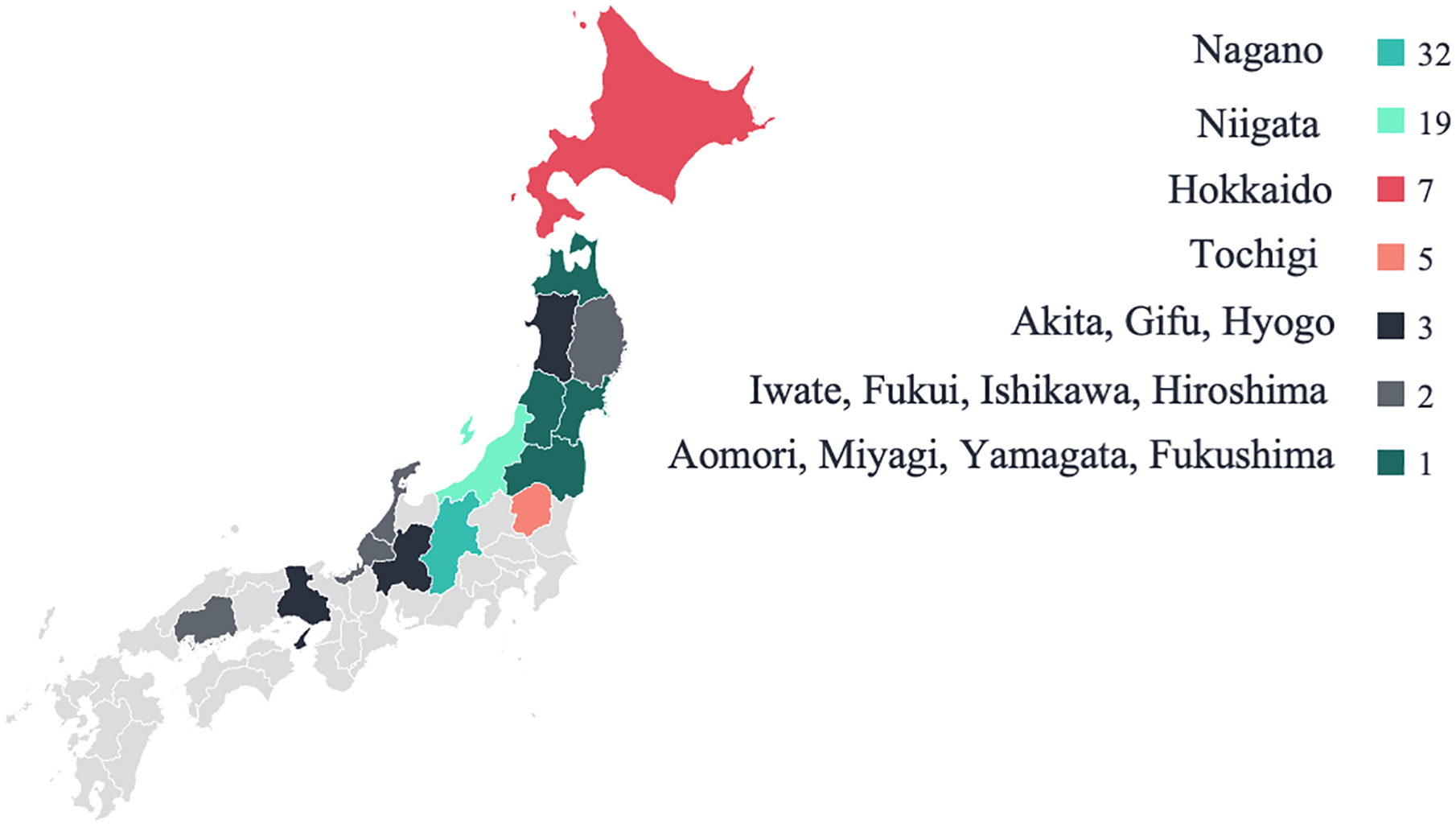
Number of accidents by year and prefecture.
Skier
As presented in Table 1, skiers accounted for 48 cases of all 84 fatalities, with 44 cases of skiers (91.7%) being males and 4 cases of skiers (8.3%) being female. Means and standard deviations in age were 45.6 ± 18.1 years. Skiers aged ≥ 50 y had the highest number of fatal accidents (32 of 48 skiers). Eleven fatalities occurred on the slope, and 37 cases occurred out of the slope, indicating that the fatalities out of the slope were 3 times higher than those on the slope.
Characteristics of fatal accidents due to exogenous causes within ski resort areas in Japan.
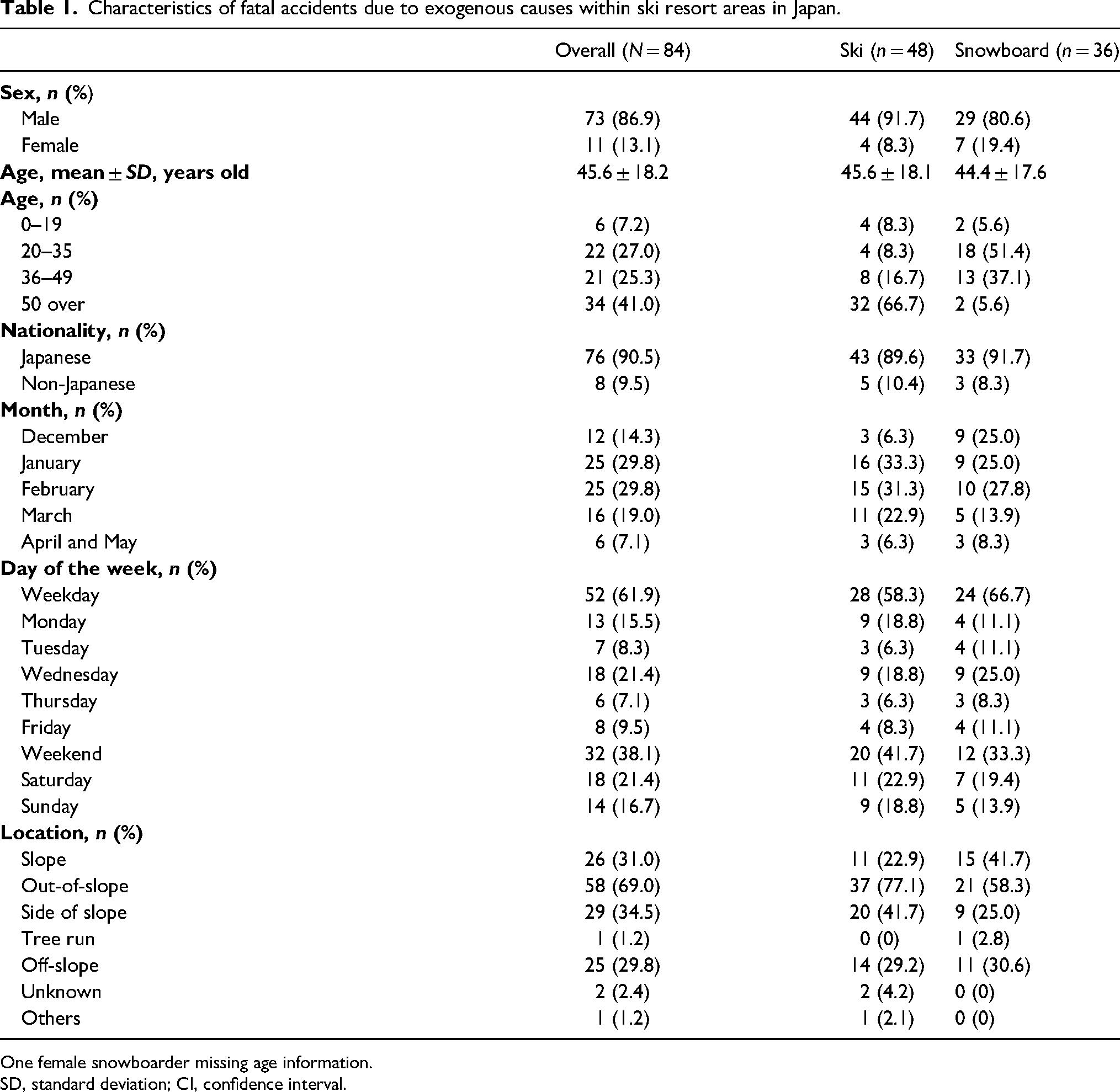
One female snowboarder missing age information.
SD, standard deviation; CI, confidence interval.
Mechanism of injury and cause of death.
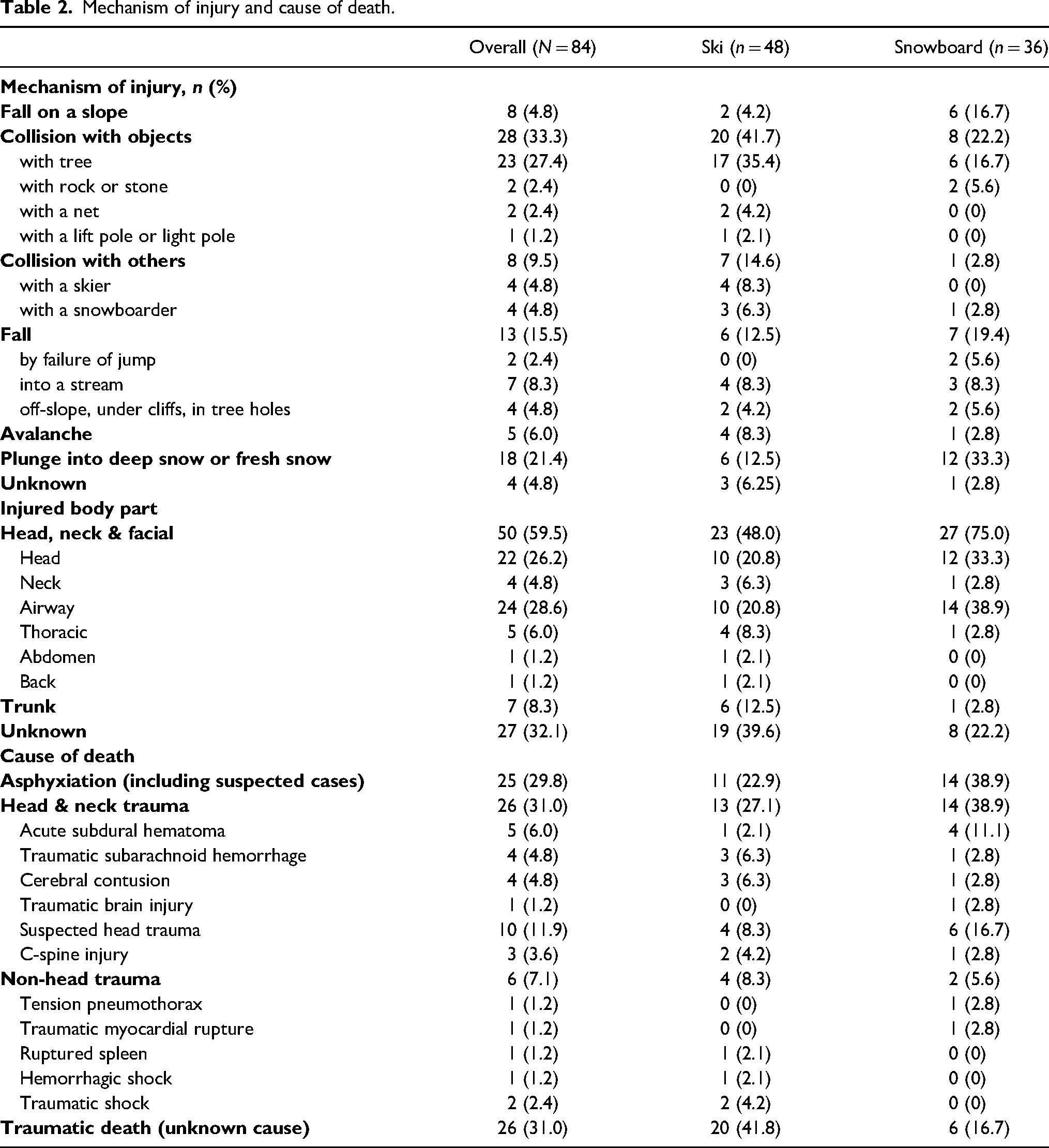
Among skiers, 20 cases were due to collisions with objects (41.7%), making it the most common mechanism of injury; collisions with trees accounted for 17 cases (85%). Additionally, 6 skiers plunged into deep or fresh snow. Head and neck trauma accounted for most of the causes of death with 13 cases of skiers (27.1%), as well as asphyxiation in 11 cases of skiers (22.9%) (Table 2).
Snowboarder
Snowboarders accounted for 36 cases of all 84 fatalities, with 29 cases of snowboarders (80.6%) being male and 7 cases of snowboarders (19.4%) being female. Means and standard deviations in age were 44.4 ± 17.6 y. Snowboarders aged 20–35 y experienced the highest number of fatal accidents (18 of 36 snowboarders). Fifteen cases of fatalities occurred on the slope, and 21 cases occurred out of the slope, indicating that out-of-slope fatalities are 1.4 times higher than on the slopes. Snowboarders are more likely to be involved in accidents both on and out of the slopes.
For snowboarders, 8 cases were caused by collisions with objects. Additionally, 12 snowboarders had plunged into deep or fresh snow, which is the most common mechanism of snowboard injury. Head and neck trauma accounted for most of the causes of death with 14 cases of snowboarders (38.9%), as well as asphyxiation in 14 cases of snowboarders (38.9%).
Discussion
In this study, 84 fatal accidents involving skiers and snowboarders that occurred in the Japanese ski resort area over a 13-y period were examined. Males over 50 y among skiers and 20–35 y among snowboarders experienced the highest number of fatalities. In terms of exogenous causes of death at Japanese ski resorts, we found head and neck trauma in 26 cases (31.0%) and asphyxiation in 25 cases (29.8%). Both skiers and snowboarders should be cautious of trees and fresh or deep snow.
An examination by prefecture revealed that Nagano had the highest fatality rate, followed by Niigata. Both prefectures are easily accessible by the capital city (Tokyo), and many ski resorts exist in areas with heavy snowfall. In particular, in the 2022–23 season, many backcountry accidents occurred in Japan. In backcountry fatal accidents, asphyxiation due to avalanches is known to be the main cause of death. However, in this study, we focused only on fatal accidents occurring within the ski resort area; thus, future studies should address this limitation.
Of skiers, 27.1% had head and neck trauma. In this study, 41.7% of the fatal ski accidents occurred by collisions with objects, and most of those deaths were due to head and neck trauma. In Austria, the number of ski-related trauma cases was 177; males in their 40s were the main injured population, and 40.0% of fatal trauma cases were due to collisions with objects, similar to the findings of this study, 3 which involved 17 ski accidents (35.4%) due to collisions with trees. Similar to our study findings, 53% of accidents were caused by collisions with trees between 1966 and 2003. 20 Currently, it is the leading cause of skier fatalities.
There were 38.9% of snowboarders with head and neck trauma. In this study, 22.2% of the fatal snowboard accidents occurred due to collisions with objects, which was the 2nd highest. Nunome et al found that collisions with trees accounted for a large proportion (30%) of snowboard accidents, whereas 6 snowboard accidents (16.7%) were due to collisions with trees in our study. 20 Rugg et al reported snowboard accidents in Austria; 44 fatal injuries were observed over a 13-y study period, mostly caused by inter-individual collisions, with 33 cases in males. 21 Compared with studies conducted in ski resorts in other countries, our results are similar in that they were more common among people in their 40s, more common among males, and reported collisions with objects as the cause of approximately 40% of all traumatic injuries.
In addition to trauma, asphyxiation is a significant exogenous cause of death at ski resorts. In our study, asphyxiation occurred in 11 skiers and 14 snowboarders at ski resorts in Japan. The high incidence of asphyxiation in our study was because most accidents occurring on the slope or out of the slope side were caused by falling into fresh snow and becoming stuck, leading to asphyxiation. These cases were not caused by an avalanche. Several measures are listed to prevent snow immersion out of the slope at ski resorts. First, a primary prevention measure is to avoid the out-of-slope area. Second, caution should be exercised for deep snow and snow conditions, even if out of the slope. Third, the short time to asphyxiation means that it is recommended to travel in a group with beacons. Even in an area within the ski resort, it is important to use beacons or personal avalanche equipment, and appropriate training would be prudent for those who are off-slope. Fatal accidents can occur even with helmets.3,22 However, because the head and airways are the main body parts affected, helmets and artificial airway pocket devices, such as an avalung or avalanche airbag, should be used to decrease fatal accidents.
A previous Japanese study focused on fatal ski and snowboard accidents that occurred between 1966 and 2003. 20 Males accounted for 76% of 150 fatal ski accidents. 20 Ski accidents were most common in those in their 20s but were also observed in those in their 40s and 50s. 20 Currently, there are more fatal accidents in the population aged 50 years and older among skiers. Those over 50 years old accounted for 66.7% of fatal accidents, but since the population distribution of ski resort users was not able to be determined, it is impossible to discuss whether skiers over 50 y old are at increased risk.
In the study by Nunome et al, males accounted for 82% of 73 fatal snowboard accidents. 20 Most snowboard accidents were observed in those in their 20s and 30s, as snowboarding was not a sport undertaken by many middle-aged and older populations at that time. 20 There were more fatal accidents among snowboarders in the 20–35 y age group. However, because of the continued popularity of riding among young people, fatal accidents are the most common among the 20–35 age group (15 males and 3 females; 51.4%) in snowboarders. However, the 36–49 age group demonstrated the second-highest number of fatal accidents (11 males and 2 females; 37.1%), indicating that young people should be cautious.
Limitations
This study had several limitations. First, the report was created by collecting data from the Japan Association of Ski Safety. Therefore, not all accidents that occurred across the country during the study period were reported. This report was collected only from ski resorts; however, it is the largest snow-related injury and accident report in Japan, collected by collaborating with ski patrollers at each ski resort. In this study, it was not possible to determine the population distribution of ski resort users, making it difficult to determine the denominator and, thus, to determine whether it was an independent risk factor. For example, 52 fatal accidents occurred on weekdays and 32 on weekends. Although it was not possible to determine the population distribution of ski resort users in this study, it can be inferred that more accidents occurred on weekends because there were more ski resort users than on weekdays. Second, we only reported fatal accidents that occurred in ski resort areas, even outside the slopes. Some backcountry accidents outside ski resort areas were not included in this report. Third, data on helmet use were not available. Helmet use was not recorded in this study because data on helmet usage were not available for all cases. Therefore, we could not determine whether nonhelmet use was associated with fatal accidents. Fourth, we could not collect information on the cause of death or EMS transport in all the cases; therefore, many cases had unknown causes of death.
Conclusions
Ski- and snowboard-related fatal accidents in Japan are characterized by most fatal accidents involving the head, neck, and face, leading directly to death. Males, particularly those aged ≥50 y among skiers and 20−35 y among snowboarders, had the highest number of fatal accidents in the population. Both skiers and snowboarders should be aware of traumatic deaths from crashes into trees Dand asphyxiation from deep snow immersion accidents. Our study found a higher tendency toward the former among skiers and the latter among snowboarders.
Footnotes
Acknowledgments

Author Contribution(s)
Declaration of Conflicting Interests
The authors declared no potential conflicts of interest with respect to the research, authorship, and/or publication of this article.
Funding
The authors received no financial support for the research, authorship, and/or publication of this article.