



Abstract
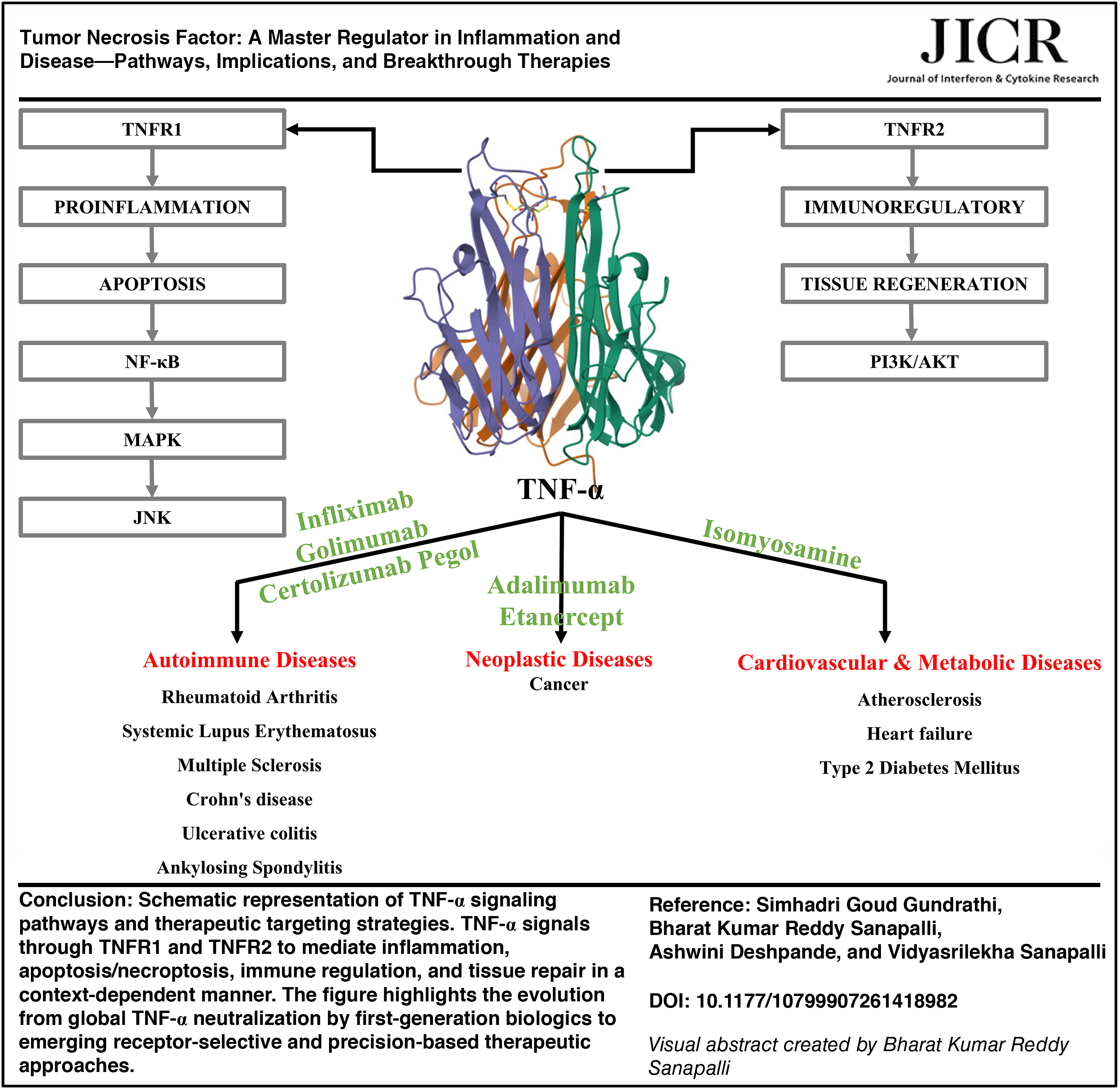
Tumor necrosis factor-alpha (TNF-α), a crucial proinflammatory cytokine, is involved in immune regulation and in the pathogenesis of a variety of chronic inflammatory and autoimmune diseases. TNF-α signaling dysregulation is linked to chronic inflammatory diseases, multiorgan dysfunction, and tissue destruction through activation of TNF receptor 1 (TNFR1)-mediated inflammatory, apoptotic, and necroptotic pathways, while TNF receptor 2 (TNFR2) stimulation promotes immune regulation and tissue repair. Understanding these divergent signaling mechanisms is crucial for augmenting therapeutic interventions. The present review summarizes the molecular structure of TNF-α, compares TNFR1 and TNFR2 signaling cascades, and describes the cytokine’s role in diseases such as rheumatoid arthritis, inflammatory bowel disease, ankylosing spondylitis, multiple sclerosis, diabetes mellitus, atherosclerosis, heart failure, systemic lupus erythematosus, and cancer. We further evaluate clinically approved TNF inhibitors and emergent investigational agents, prominent advances in receptor-selective modulation, and small-molecule TNF suppression. Overall, this review emphasizes the therapeutic potential of selectively targeting TNF-α signaling while preserving essential immunoregulatory functions, offering insights that may support next-generation drug development.
Get full access to this article
View all access options for this article.