




Abstract
Child sexual abuse material (CSAM) production poses a grave and evolving threat, causing revictimization through the circulation of material for years. The availability of online technology has enabled sophisticated methods of CSAM production and police evasion. The aims of this study were to explore the sociodemographic features of those with a history of CSAM production, explore criminal sub-types of those who produce CSAM, and explore the sociodemographic and criminal features of possible sub-types. Men who came to police attention for CSAM production offenses between 2004–2019 in Victoria, Australia (n = 741) were included. A hierarchical cluster analysis revealed two distinct criminal profiles: (1) a group with specialist offense histories, which were sexually focused (n = 455) and (2) a group with a generalist (n = 286) offending history, including sexual and non-sexual offenses. The frequency of CSAM production offenses across the sample period almost doubled with an increasing number of individuals with a generalist criminal history coming to the attention of police, whilst the number of those with a specialist criminal history remained largely stable. Uncovering these two distinct criminal profiles is a pivotal step toward understanding the nuanced characteristics of individuals responsible for producing CSAM.
Child sexual abuse material (CSAM) is defined as material depicting the sexual abuse or torture of a child (or representation of a child in a sexually offensive context), whether through text, audio, or image (still and/or moving), Criminal Code Act 1995 (Cth). The production of CSAM has become an escalating phenomenon despite ongoing law reforms and eradication efforts (Seto et al., 2018). Over the past two decades, reports of CSAM to international authorities have increased by an average of 50% annually (Bursztein et al., 2019; Europol, 2020). The production, access, and dissemination of CSAM has increased due to accessibility of the Internet and associated technologies (Interpol, 2020; WeProtect Global Alliance, 2021). Evolving technology provides an efficient infrastructure for uploading, sharing, storing, and concealment; while fostering widespread anonymous contact among people who offend (Coen & Napier, 2022; Owens et al., 2023). Methods of distributing CSAM, such as peer-to-peer networks, newsgroups, and chatrooms (Mitchell et al., 2011; Wolak et al., 2011) can be accessed via mobile platforms, further expanding geographic reach (Bursztein et al., 2019; Internet Watch Foundation, 2021).
Advancements in internet anonymization, encryption, and hard drive eraser software have obscured CSAM distribution from law enforcement (Australian Criminal Intelligence Commission, 2018); necessitating innovative and robust methods of policing, policy, legislation and research, such as undercover operations into CSAM distribution networks (Bleakley, 2019; Thorn, 2014; U.S. Department of Justice, 2016). Identifying child victims depicted in CSAM remains a significant challenge for law enforcement, with most victims remaining unidentified (ECPAT International & Interpol, 2018). Moreover, CSAM production has gravitated towards younger child victims subjected to escalating abuses (torture, sadism and/or bestiality) underscoring the critical importance of ongoing research to understand and combat this expanding crime (Internet Watch Foundation, 2021; Seto et al., 2018).
The profound and enduring repercussions of childhood sexual abuse (CSA) on its survivors has been demonstrated (Cutajar et al., 2010). Survivors of CSAM production have conveyed that the shame, humiliation, and despair stemming from their exploitation not only persisted but intensified over their lives due to ongoing circulation of the material (Martin, 2015; Salter et al., 2021). This ongoing harm underscores the need for comprehensive understanding and intervention to break the chain of exploitation and support survivors in their journey toward healing and recovery. The harm stemming from the use of artificial intelligence (AI) to generate CSAM can be thought of as a spectrum, as it has been reported to cause serious exacerbation of harm to survivors of CSAM through mass production of a child’s image (“famous” children; Internet Watch Foundation, 2024), to “victimless” CSAM - in the sense that the person in the image does not exist. Even though, there may be no direct victim from the creation of an image, it can be argued that harm is perpetuated broadly by increasing the demand for CSAM. However, as Steel (2024) points out, the impact of new methods of CSAM on victimization is underexplored.
The Changing Nature of CSAM Production
Historically, CSAM production has involved individuals actively involving themselves in the physical contact abuse of children during production (Sheehan & Sullivan, 2010); this is no longer the case. Virtual and morphed CSAM does not require physical access to a child (Owens et al., 2023). Virtual CSAM refers to computer-generated content portraying the sexual abuse or exploitation of digitally created children (Levy, 2002). The advent of deepfake technology (replacing a personal likeness with another) has given way to morphed CSAM. This technique involves superimposing a child’s likeness onto existing CSAM, resulting in a fabricated child victim during both the production and distribution phases, and can be easily automated through the widespread adoption of AI software (Nguyen et al., 2022). This emergence of AI-generated CSAM only intensifies the challenge of victim identification for law enforcement.
Increasingly, individuals can also access, direct, and record the live streaming of a child being abused (Napier et al., 2021). Increasing internet speeds across jurisdictional boundaries have been thought to aid the practice of live streaming (Interpol, 2020; WeProtect Global Alliance, 2021). The same is true for self-generated intimate images, commonly referred to as “sexting.” While legislative amendments have resolved issues related to CSAM production charges against consenting minors (Crofts & Lee, 2013; Lee et al., 2013), studies suggest that a significant portion of self-generated intimate images of young people are harvested and distributed within CSAM networks, often by way of grooming and extortion (Internet Watch Foundation, 2012, 2015; Patchin & Hinduja, 2020).
In this rapidly evolving technological landscape, CSAM production is presenting complex challenges, including the concerning ability to produce such material without direct contact offending. The socio-demographic profile of those who engage in CSAM production and other CSAM offenses may well be a product of the population of individuals who had access to the technologies required to produce, distribute and access CSAM (Henshaw et al., 2018; Tomak et al., 2009). The democratization of digital technology means that low and middle-income peoples have and continue to adopt new technology as it emerges (Chen et al., 2022). These shifts challenge our understanding of who engages in CSAM production offenses, requiring us to expand our knowledge of the characteristics and demographics of a potentially broadening spectrum of offending individuals.
Criminal Diversity and Sociodemographic Features of Individuals Who Engage in CSAM Production
Most published literature focuses on individuals who access or distribute CSAM. The few studies investigating the characteristics of individuals charged with CSAM production suggest a sociodemographic profile that is Caucasian, male, mid-30s, in gainful employment and of relatively middle socioeconomic standing (Cale et al., 2021; Salter et al., 2021; Sheehan & Sullivan, 2010; Wolak et al., 2011). This is in stark contrast to the broader population of individuals who engage in CSA or non-sexual criminal behavior, a high proportion of whom are of diverse ethnicity and relatively lower socioeconomic and educational standing (Aslan & Edelmann, 2014; Merdian et al., 2009; Stiernstromer et al., 2022). Across the studies the profile of the Caucasian, middle class, well-educated, 30-year-old male endures. This profile is also found in samples of individuals who access and distribute CSAM but who do not necessarily engage in its production or CSA (Babchishin et al., 2010; Brown & Bricknell, 2018; Merdian et al., 2009; Seto et al., 2010; Wakeling et al., 2011). While a pattern of socioeconomic characteristics is apparent in the limited literature, the criminal diversity of those who have a history of CSAM production remains less clear.
Earlier research indicated that a minority of individuals arrested for CSAM production offending have a history of violence (18%), problems with drugs or alcohol (20%), and/or commit non-sexual crimes (26%; Wolak et al., 2011). This contrasts to most people involved in criminal activities, who tend to exhibit generalized offending patterns (DeLisi & Piquero, 2011; Gottfredson, 2006). Work on those with a history of various types of CSAM offending (Babchishin et al., 2015; Henshaw et al., 2018) has indicated that antisociality is a risk factor for more broader sexual and non-sexual offending. Antisociality encompasses attitudes and traits indicating a disregard for societal norms and standards; the more antisocial, the higher the rates of criminal offending across various types of offenses (i.e., ‘criminal versatility’; Hanson & Bussiere, 1998; Quinsey, 1986). A further notion that may point to a pattern of offending for those with a history of CSAM production is that of offending specialization, when the individual only engages in similar types of crime. Indeed, specialization has been found in a sample of men convicted of accessing CSAM (Howard et al., 2014) and was evident in a sample of men sentenced for sexual offenses, where 51.2% had no convictions for non-sexual crimes (Wortley & Smallbone, 2014). Whether a structure or spectrum (i.e., groups or smooth variations) can be used to describe the offending history of those involved in CSAM production remains unclear, particularly given the changing nature of production offending and facilitating technologies
There are few published studies of CSAM production in the literature. Wolak and Colleagues (2005) studied 122 individuals who were arrested for CSAM production in the US from July 2000 to June 2021, which was later extended upon by Wolak et al. (2011) who compared the 2000/2001 sample to an additional sample (n = 197) from 2006. Both studies screened out a large proportion of cases in which the victim was not identified, thereby restricting findings to a very specific production cohort. Wolak and Colleagues (2011) reported a decrease in full time employment and those with college or technical training between the groups. There were also changes in offending histories between the groups; with increases in arrests for non-sexual crime and being a registered sex offender. These findings point to lower socioeconomic groups engaging in CSAM production, with more diverse offending behaviors in general over time. However, as this work is quite dated, it remains unknown whether these findings would apply to more recent samples involved in CSAM production.
The Current Study
This study builds on the work of Wolak and Colleagues (2005; 2011) by including the entire population of 741 men in Victoria, Australia, who came to the attention of Victoria Police for CSAM production over a 16-year period (2004–2019). Australian data and local state and Commonwealth legislation was used. The current study aims to: (1) describe the demographic backgrounds and lifetime offending histories of men charged with CSAM production offenses, (2) explore the possibility of CSAM production sub-types based on lifetime criminal history, and (3) describe the associated sociodemographic and lifetime criminal features of any sub-types identified. The aims of this paper were developed once researchers had screened law enforcement data and concluded that the production of CSAM required exploration as a separate topic from other online child sexual exploitation offending. To date the literature indicates that those who engage in CSAM production have been treated as a homogenous group. However, it is unknown whether this profile has remained consistent since the work of Wolak and Colleagues (2005; 2011). To the knowledge of the authors, any latent criminal subtypes of individuals who have produced CSAM have not been explored quantitatively or compared on sociodemographic or criminal grounds.
Method
Design
The current study is part of a broader program of research focused on online child sexual exploitation funded by an Australian Research Council Linkage Project grant (LP180100090) in partnership with Victoria Police, Corrections Victoria, the Australian Institute of Criminology, and Monash University. Data examined in this research were obtained from secondary pre-existing electronic databases that contain criminal records (charges and convictions), the Law Enforcement Assistance Program (LEAP) maintained by Victoria Police, and the National Police Reference System (NPRS) maintained by the Australian Criminal Intelligence Commission. No active participants were involved in the research. The authors take responsibility for the integrity of the data, the accuracy of the data analyses, and have made every effort to avoid inflating statistically significant results. Ethical approval for this research was provided by the Justice Human Research Ethics Committee (CF/20/17580) and Swinbunre Human Research Ethics Committee (20215770–6587).
Sample
The study sample comprised the population of adult males who had received a formal charge or been reported to Victoria Police for suspected CSAM production in Victoria between 2004–2019 (inclusive) based on their LEAP history (n = 741). Individuals may or may not have proceed to court or been convicted for the CSAM production offenses that brought them to the attention of police (this information was not included in the data). Study inclusion required people to have had at least one record for CSAM production in their LEAP history (i.e., lifetime offending) with a processing date between 2004 and 2019. For inclusion in this study, CSAM production was defined as offences involving digitally facilitated creation of CSAM (actioned or attempted). Given the broad definition within Australian legislation, creation of material may occur online or in-person, and may or may not involve real children, see the Appendix for a list of charge descriptions and relevant Australian legislation. Specific details about cases were not available to researchers, such as how images were generated.
Individuals who were suspected of CSAM production when they were minors (under the age of 18 years) but not as adults were excluded as they are treated differently to adults under Victoria and Australian criminal law (Crimes Amendment (Sexual Offenses and Other Matters) Act 2014 (Vic); Richards, 2011). Individuals who did not have any record of CSAM production were excluded and women were excluded. Women were also excluded because patterns and drivers of sexual offending for women tend to differ from men (e.g. Freeman & Sandler, 2008), which would have confounded the results. In total, 6670 individuals did not have an online CSAM production offending history and were excluded from the original 7411 received by Swinburne researchers.
Data Sources and Linkage Procedure
Source of Variables, Their Description and Use.
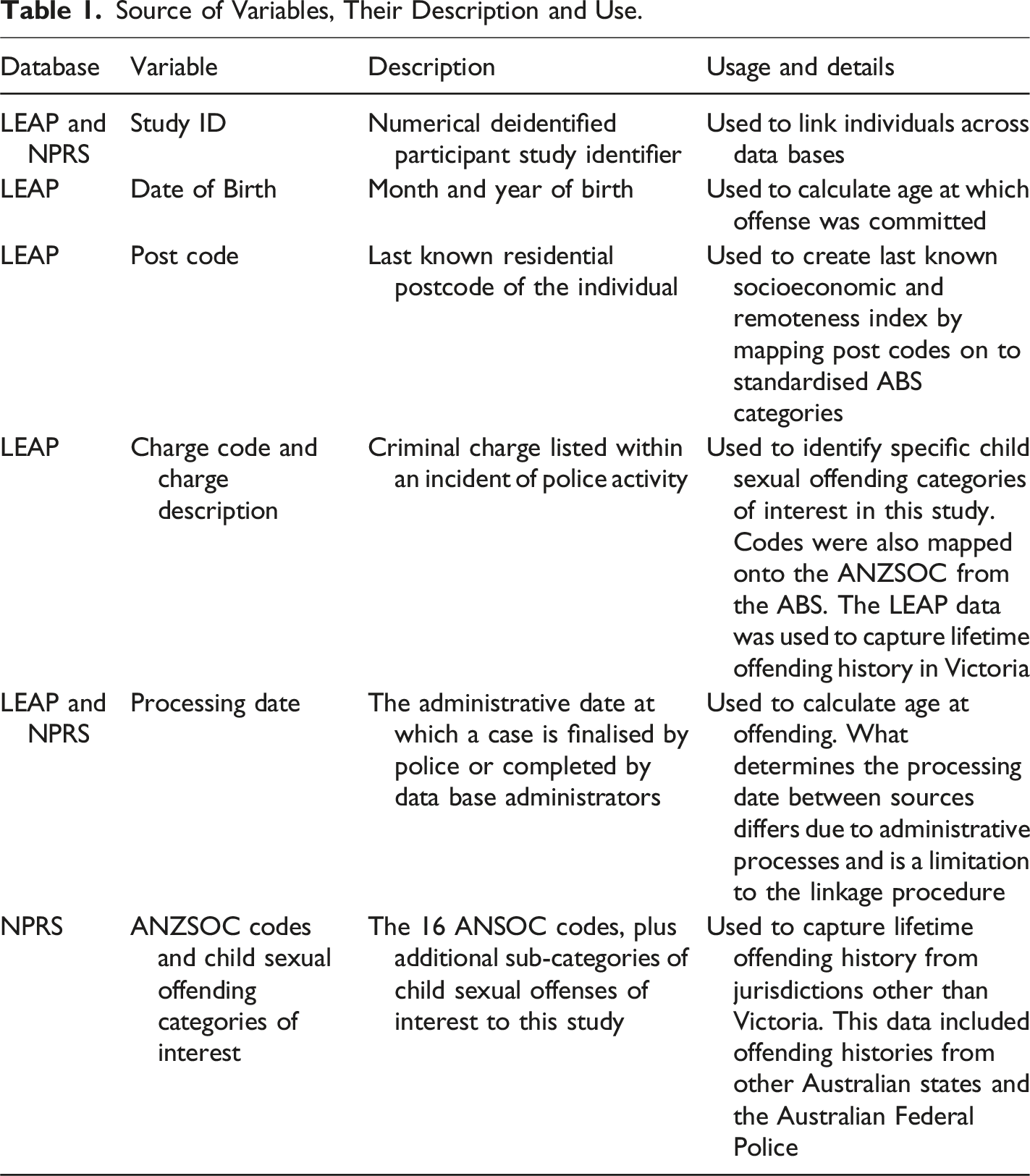
Offense rates from policing charge data are less conservative (i.e., more inclusive) than convictions due to the presence of unproven crimes in the criminal justice system (Lievore, 2004; Payne, 2007). However, not all offenses come to police attention, this is especially true for sexual offenses, where under 19% of sexual assaults are reported and only 1.3% reach court (Gelb, 2007). Thus, court records likely underestimate true offense rates, leaving police data as the most viable approximation available.
To provide context for descriptives, researchers accessed the Australian Bureau of statistics (ABS) state population data which is available to the public on their website (ABS, 2023a, 2023b). Victorian Population demographic summary statistics for Socio-Economic Quintile Indexes for Areas (SEIFA) 2016 and Australian Statistical Geography Standard – Remoteness Area (ASGS-RA) were used.
Demographic and Offense Classification
Demographics
Socio-Economic Quintile Indexes for Areas (SEIFA) 2016
The SEIFA (ABS, 2021a) is a five-level measure of social and economic indicators of disadvantage by geographical region in Australia (1 = most disadvantaged, 5 = least disadvantaged). The SEIFA offers a consistent estimate of socioeconomic index by postcode and thus has become a standard in much Australian public health and criminology research, due to its utility in comparing between sample populations (Allard et al., 2012; Karriker-Jaffe, 2011; Walker & Hiller, 2007). The Australian Bureau of Statistics publishes up to date estimates of the Victorian population by residential Socio-economic Quintile Index by year (ABS, 2023b).
Australian Statistical Geography Standard – Remoteness Area (ASGS-RA)
The ASGS-RA (ABS, 2021b) is a four-level measure of remoteness distribution and relative access to services for every geographic area in Australia based on an overall rank score based on postcode (RA1 = Major Cities of Australia, RA4 = Very Remote Australia). The Australian Bureau of Statistics publishes up to date estimates of the Victorian population by residential remoteness code by year (ABS, 2023a). The ASGS-RA has been used alongside SEIFA and the Australian and New Zealand Standard Offense Classification (ANZSOC) in geographical criminology research to assess crime concentration (Allard et al., 2012).
Offense Classification
Australian and New Zealand Standard Offense Classification (ANZSOC) 2011 (3rd ed)
The ANZSOC is a three-dimension criminal behavior classification standard for the analysis of crime and justice statistics (ABS, 2011). Each level provides greater classification fidelity of the target behavior: Divisions (03 = sexual assault and related offenses), Subdivisions (320 = non-assaultive sexual offenses) and Groups (0322 = CSAM offenses). The ANZSOC is used by Australian and New Zealand police and criminal courts, providing a standardized framework for classifying criminal offenses. A total of 751 unique charges were listed within the data provided by Victoria Police from LEAP and the Australian Criminal Intelligence Commission from the NPRS. All charges were integrated into the broader offense categories, as defined by the ANZSOC.
Sexual Offense Classification
Sexual Offense Categorisation Scheme.
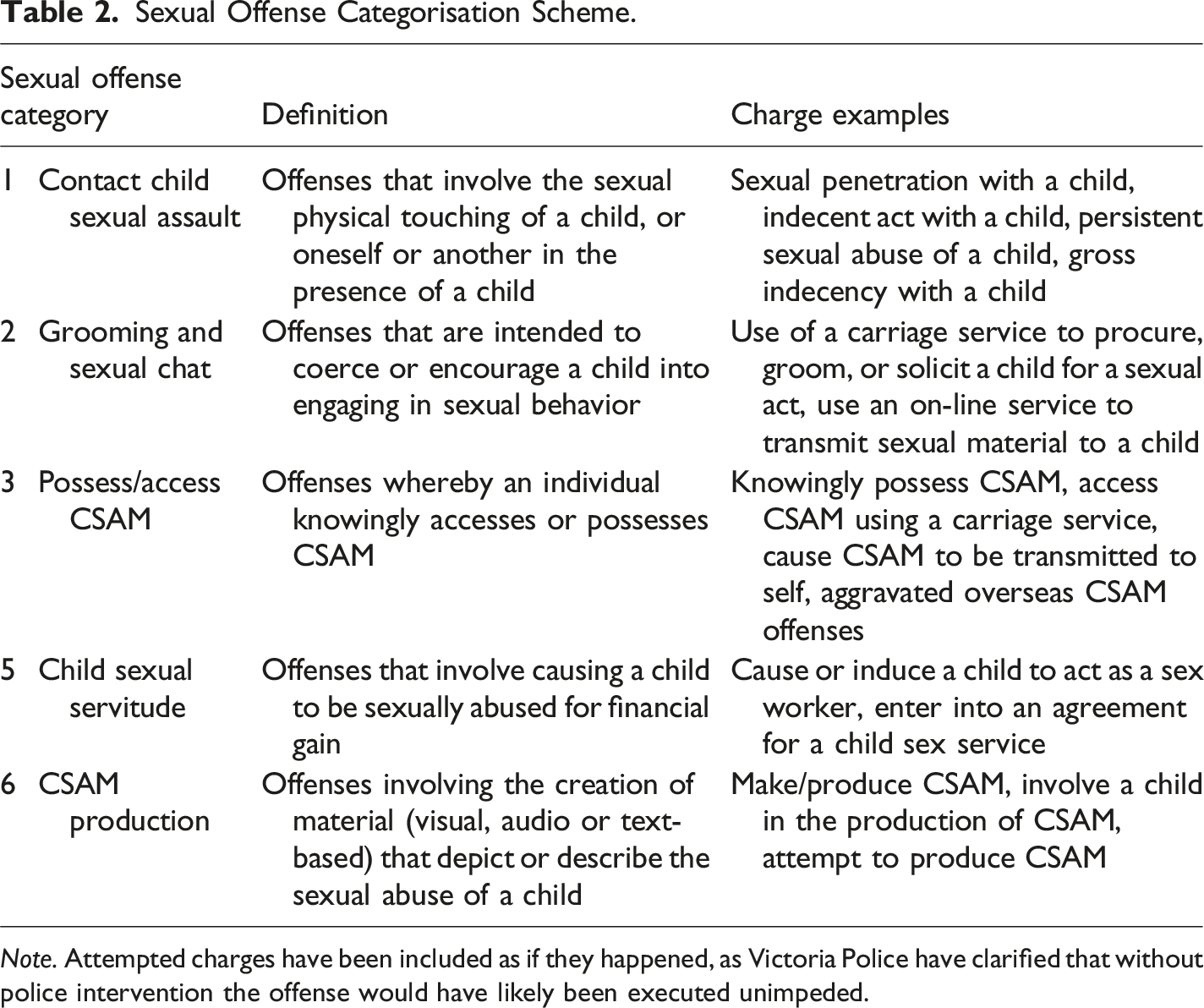
Note. Attempted charges have been included as if they happened, as Victoria Police have clarified that without police intervention the offense would have likely been executed unimpeded.
Data Screening
The data were largely complete across the demographic variables. However, a small number of last known postcodes (i.e., zip codes) were missing (3.37%), which were required for matching socioeconomic index and remoteness area. Investigation of the extracted variables provided no evidence to indicate the missing values were Missing Not at Random. The missingness could not be accounted for by any other variable in the dataset which would indicate that it was Missing Completely at Random rather than Missing at Random. As the missingness of the postcodes was <5% of all cases, a missing value was created and excluded from the relevant Chi-square tests. This technique was applied given it was the most straightforward process, as other techniques (e.g., mean substitution, imputation, expectation maximization, etc.) are equally likely to provide similar results with this level of missingness (Tabachnick & Fidell, 2013).
Data Analysis
To address aim one, descriptive statistics for sociodemographic and lifetime offending characteristics were conducted on the population of males who came to the attention of Victoria Police for CSAM production offenses between 2004–2019 (inclusive). Demographic variables included age at first criminal charge, age at first sexual charge, age at first CSAM production charge, last known socio-economic index, and last known remoteness category. Offending variables included the 16 ANZSOC codes (i.e., offense types), contact child sexual offenses, grooming and sexual chat, possession and accessing CSAM, child sexual servitude and CSAM production.
To provide context and meaning to the descriptive statistics, we compared the sample who have a record of CSAM production to the Victorian population. Chi square goodness of fit tests were conducted to explore whether the CSAM production sample reflects the socioeconomic index levels and remoteness codes of the general population.
To explore the trend in CSAM production over time, (i.e., did CSAM production offending increase or decrease over time in Victoria), a linear regression was performed. Year was entered into the analysis as a continuous independent variable and annual number of CSAM production charges was entered as the dependent variable.
Aim two, to explore the possibility of CSAM production sub-types based on lifetime criminal history, was addressed with a hierarchical cluster analysis using Ward’s (1963) method with the Chi-square distance for count data. To examine whether the diversity and frequency of criminal offending could provide an indication of how many clusters are required to describe the sample, the count of charges for each of the 16 ANZSOC categories from the national offending history of each individual was entered into the analysis. The analysis would reveal any cluster groups based on similar offending histories (Everitt et al., 2001; Kaufman & Rousseeuw, 1990). Ward’s (1963) method employing the Chi-square for count data minimizes the within-cluster variance of cases when merging clusters, which is particularly useful when the variance is expressed as a measure of the count dissimilarity across ANZSOC divisions (Jain & Dubes, 1988; Ward, 1963). The hierarchical cluster analysis retains its robustness as an exploratory statistical technique providing that all included variables are relevant to offending characteristics of CSAM production.
As subtypes were identified in the analyses undertaken for Aim two, Aim three was addressed by describing the associated sociodemographic and criminal features of identified sub-types. Individuals were assigned to cluster membership (specialist and generalist) for further exploration of sociodemographic and offending history features. Chi square tests of independence were conducted to compare the frequency of sociodemographic characteristics between the two clusters.
To address the question of whether the clusters were useful in predicting the frequency of different types of offending, a series of 21 Univariate Negative Binomial Regressions were conducted. The use of a negative binomial distribution was required due to the large number of zero values in the count data. Offending type was entered as the dependent variable and cluster as the predictor variable for all 21 regressions, with a Bonferroni correction used (alpha = .002) as the threshold of statistical significance.
To assess whether the change over time in the number of annual CSAM production charges differ between clusters a generalized linear model with a Poisson distribution, was run. Annual CSAM Production count was entered as the dependent variable, with Year as a covariate and a Year by Cluster interaction as a predictor variable.
Results
Description of Sociodemographic Features and Offending History
Descriptive Statistics for Individuals Known to Victoria Police for CSAM Production Between 2004 and 2019.
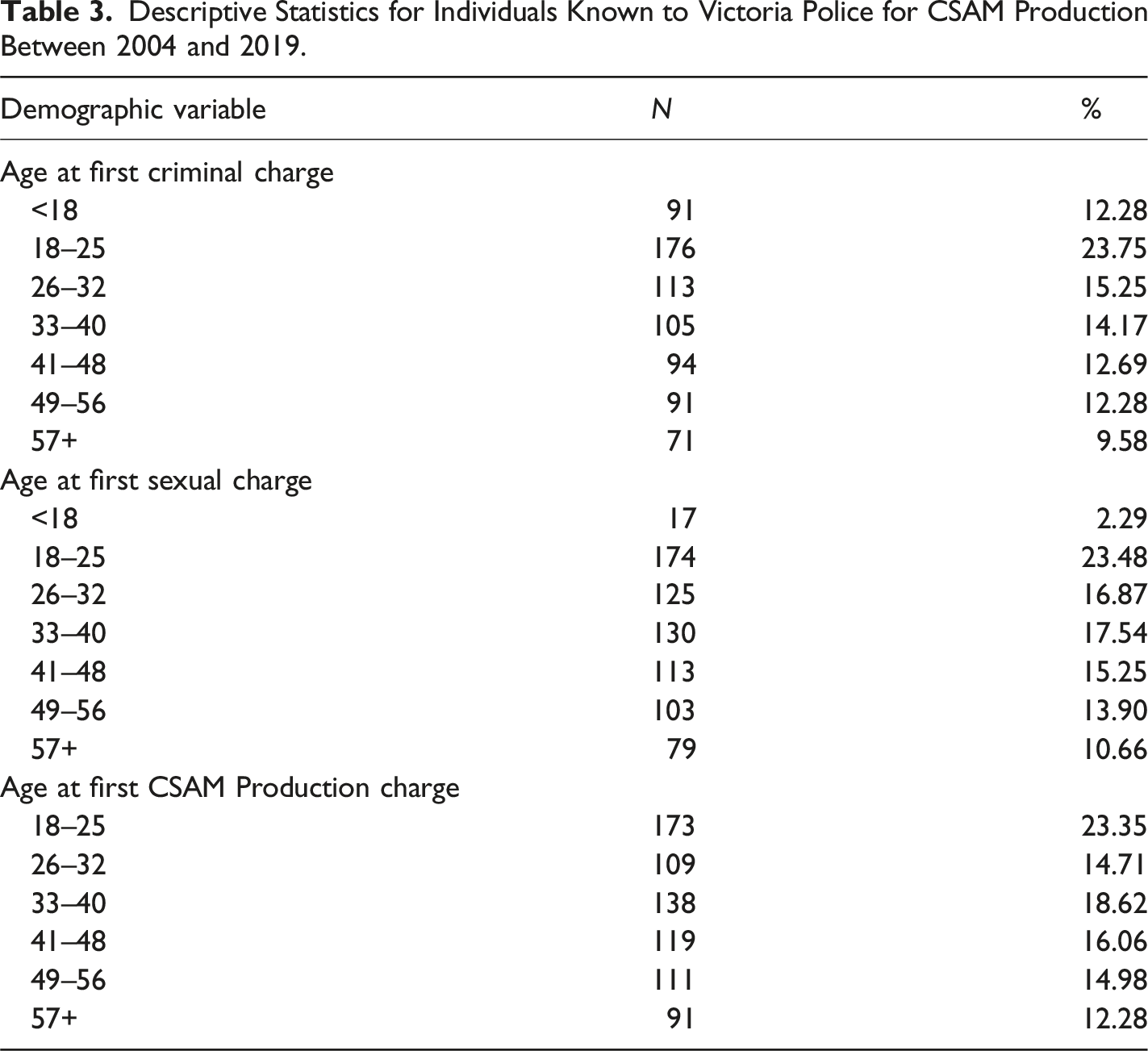
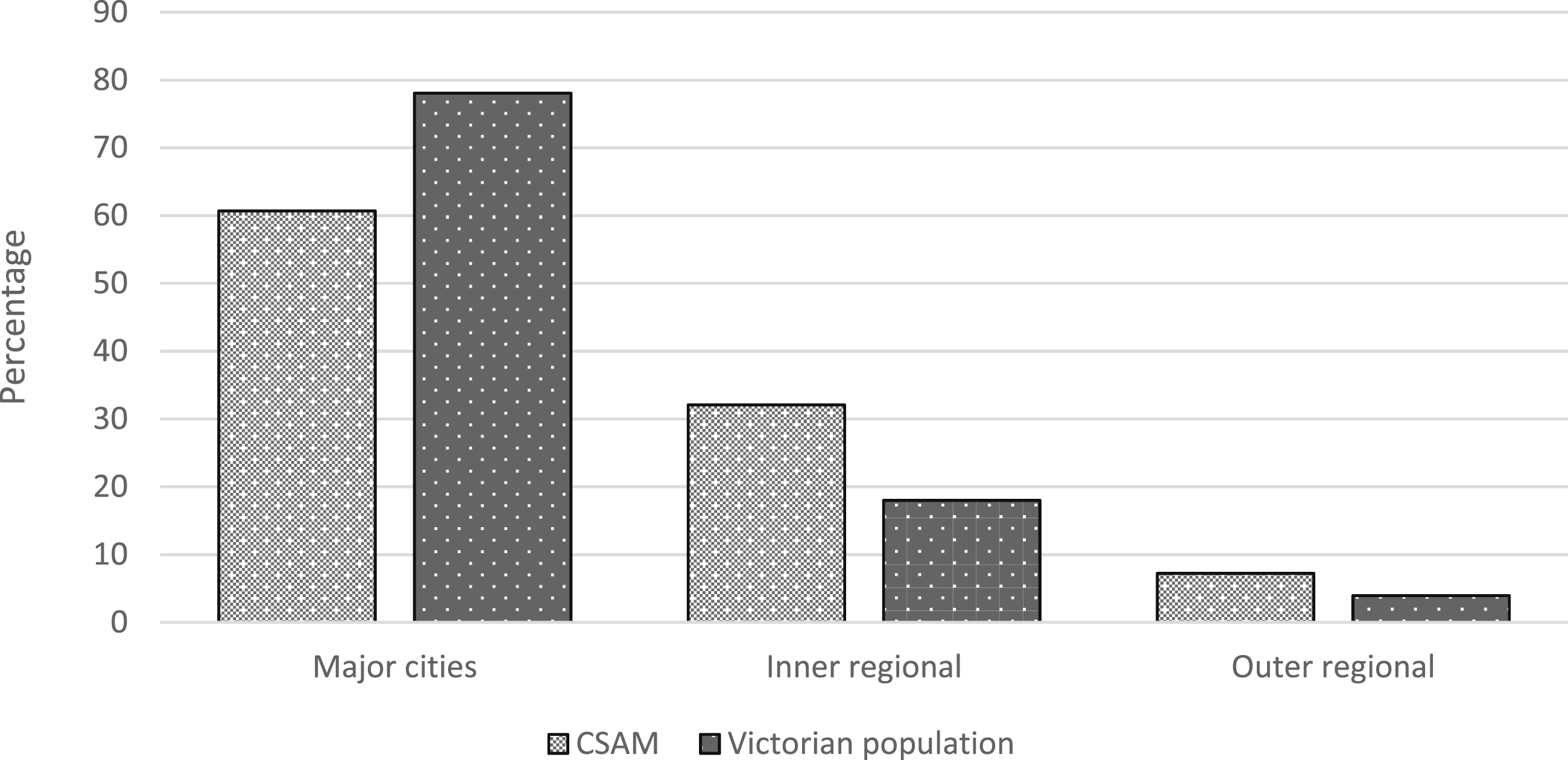
Chi-square Goodness of Fit Tests revealed significant differences between those with a history of CSAM production offending and the general male Victorian population for both socio-economic index (χ2 (4) = 17.89, p < .001) and remoteness code (χ2 (2) = 307.39, p < .001). Those with a history of CSAM production offending tended to reside in the lowest and middle upper socio-economic indexed which was significantly different to the general Victorian population who tended towards the middle and highest indexes (see Figure 1). While those sampled tended to reside in major cities as is the case for most Victorians, a higher proportion tended to reside in inner regional Victoria than the general Victorian population (see Figure 2). Last known socio-economic index of sample vs census population for 2021. Last known remoteness code of sample vs census population for 2021.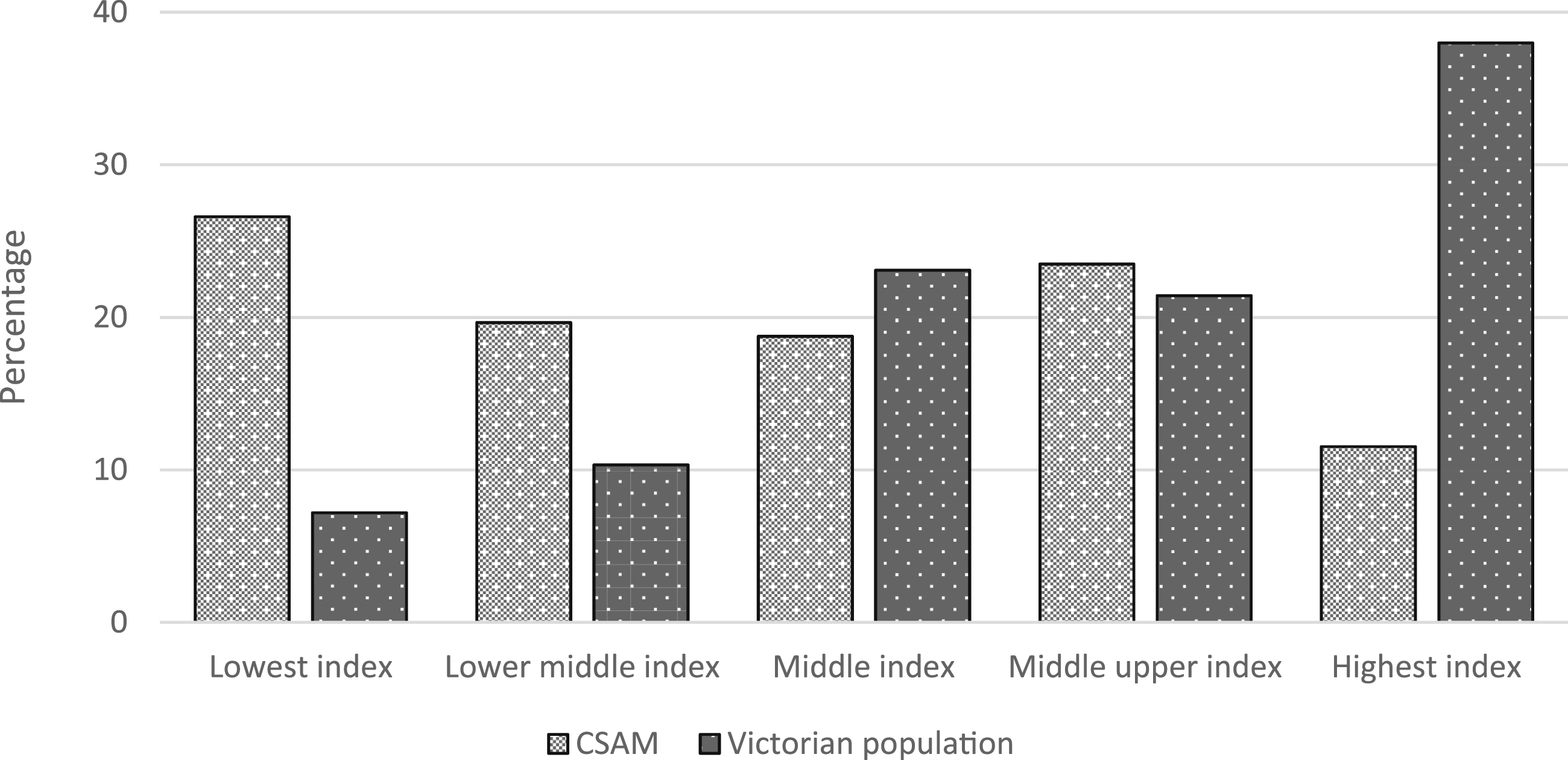
Victoria Police recorded a total of 770 contacts with the sample for CSAM production offending between 2004–2019 (see Figure 3). The influence of time (years) on CSAM production charges (annual CSAM production charge count) was significant (F (1,14) = 10.27, p = .006). Forty-two percent of the variance in annual number of CSAM production charges can be explained by years. For every additional year the number of CSAM production charges increase by 1.05 (t = 3.21, p = .006). Frequency of CSAM production police activity/charges processed by Victoria Police 2004–2019.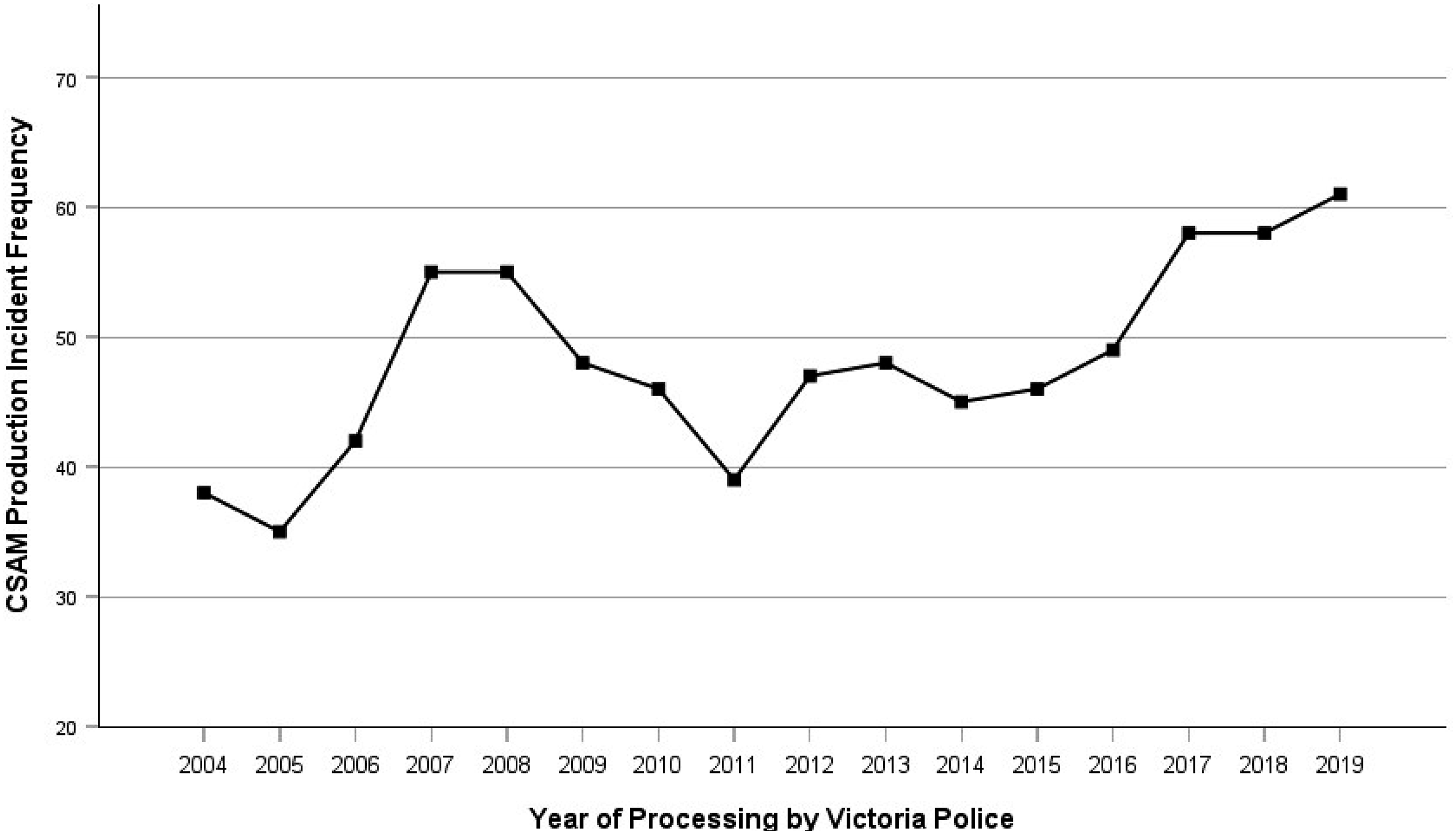
Descriptive Statistics of the National Offending History of Those Known to Police in Victoria for CSAM Production Between 2004–2019.
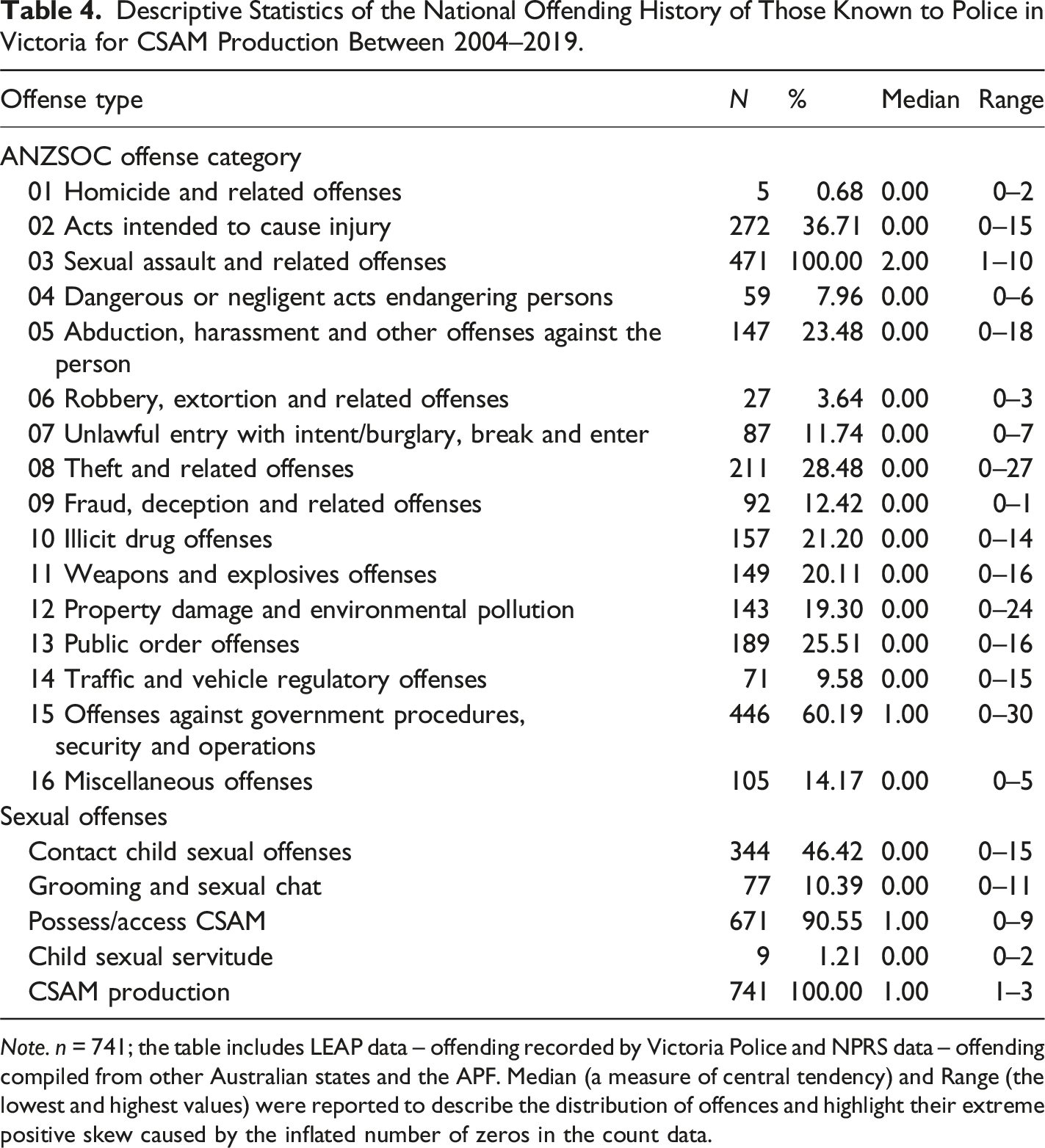
Note. n = 741; the table includes LEAP data – offending recorded by Victoria Police and NPRS data – offending compiled from other Australian states and the APF. Median (a measure of central tendency) and Range (the lowest and highest values) were reported to describe the distribution of offences and highlight their extreme positive skew caused by the inflated number of zeros in the count data.
Most individuals had at least one charge of accessing or possessing CSAM, and just under half had a charge of contact child sexual offenses. A relatively small number of individuals had a record of grooming and sexual chat, or sexual servitude offenses against children. Only nine individuals (1.21%) had CSAM production as their only criminal offense.
Hierarchical Cluster Analysis Based on Charge Count for Each ANZSOC Division
Aim two was to explore sub-types of those who engage in CSAM production. Inspection of the hierarchical cluster analysis dendrogram resulted in two final clusters (cut at 25 rescaled distance) that encompassed all cases in the data (see Figure 4). Whilst a three-cluster solution was investigated (cut at 20 rescaled distance) cluster group membership was largely based on offenses against government procedures, security and operations and did not assist in determining CSAM production typology. A two-cluster solution was preferred as it illustrates the greatest rescaled distance between all other cluster solutions, which represents two groups with the least variability. The two-cluster solution indicated that cluster assignment was dependent on whether individuals have specialist criminal histories (n = 455, the first cluster consisting of those who focused on sexual offending) or generalist histories (n = 286, the second cluster consisting of those who engaged in a broad spectrum of offending types). To explore effects of charge seriousness, time incarcerated and charge count on clusters, a latent class analysis was run with the ANZSOC codes as binary variables. Two clusters were apparent, and the subgroups specialist and generalist could be identified when ANZSOC counts were explored by subgroup membership (see the Supplement Analysis In The Appendix). Hierarchical Cluster Analysis Dendrogram using Ward’s Method Showing Two Clusters. Note: Cluster A = Specialist criminal history, Cluster B = Generalist criminal history.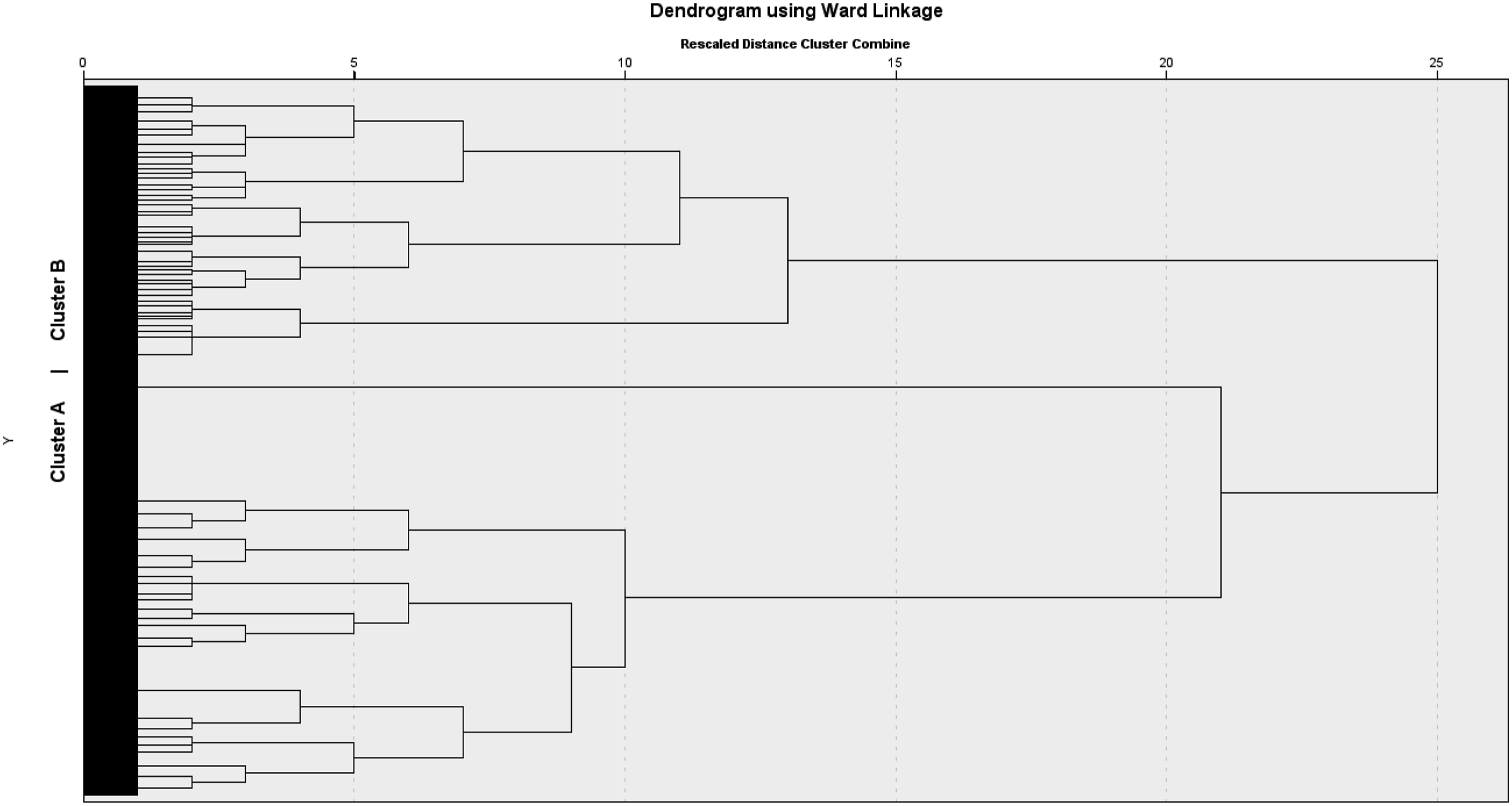
Sociodemographic and Offending History: Comparisons Between Sub-types
Sociodemographic Characteristics Based on CSAM Production Sub-type Membership.
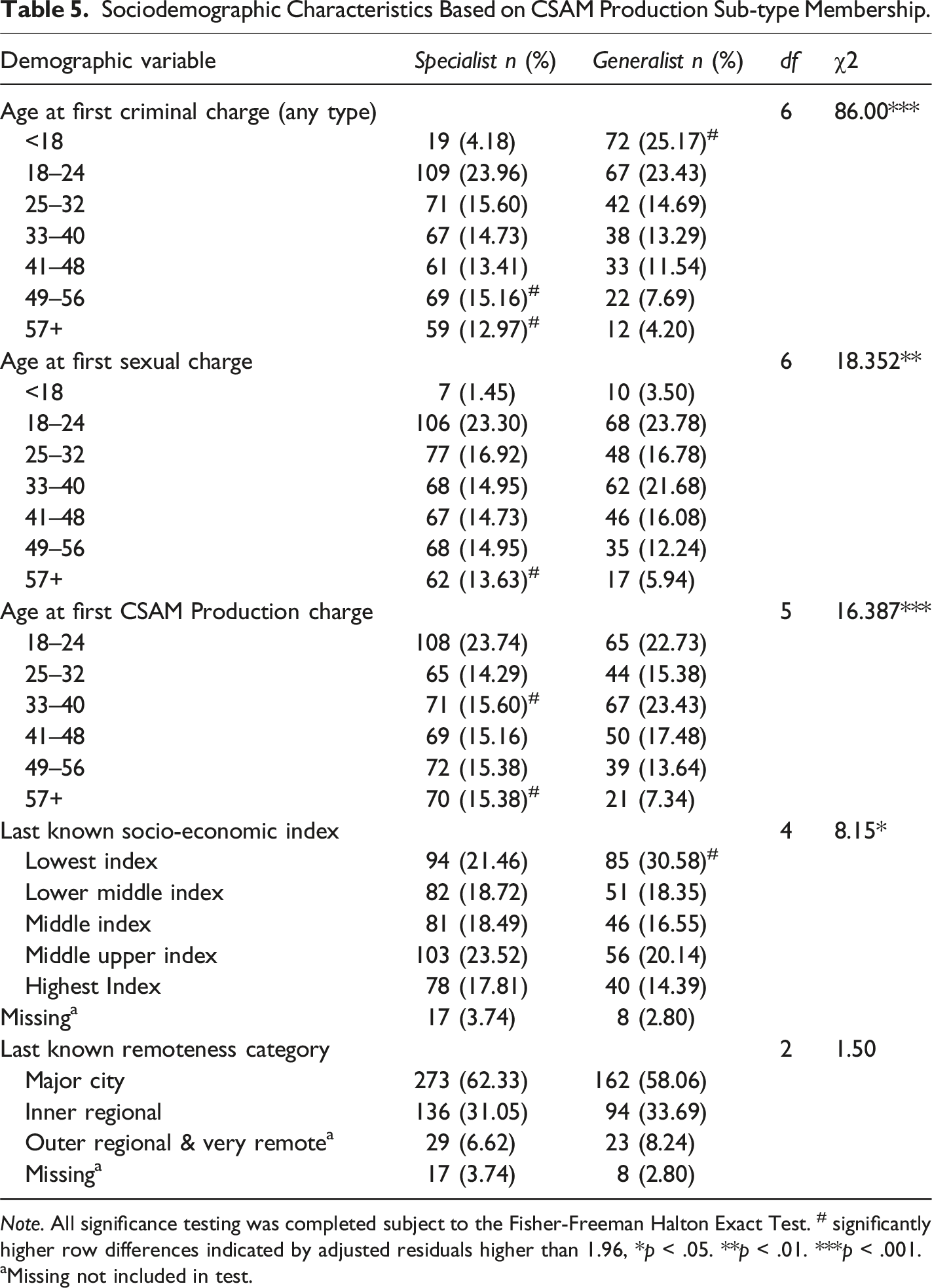
Note. All significance testing was completed subject to the Fisher-Freeman Halton Exact Test. # significantly higher row differences indicated by adjusted residuals higher than 1.96, *p < .05. **p < .01. ***p < .001.
aMissing not included in test.
Testing revealed a significant difference in socioeconomic index based on group membership, those with a generalist criminal history being more likely to reside in the lowest index compared to those with a specialist criminal history. The remoteness location of where an individual resided did not significantly differ according to cluster membership (see Table 5).
Mean Number of Offenses.
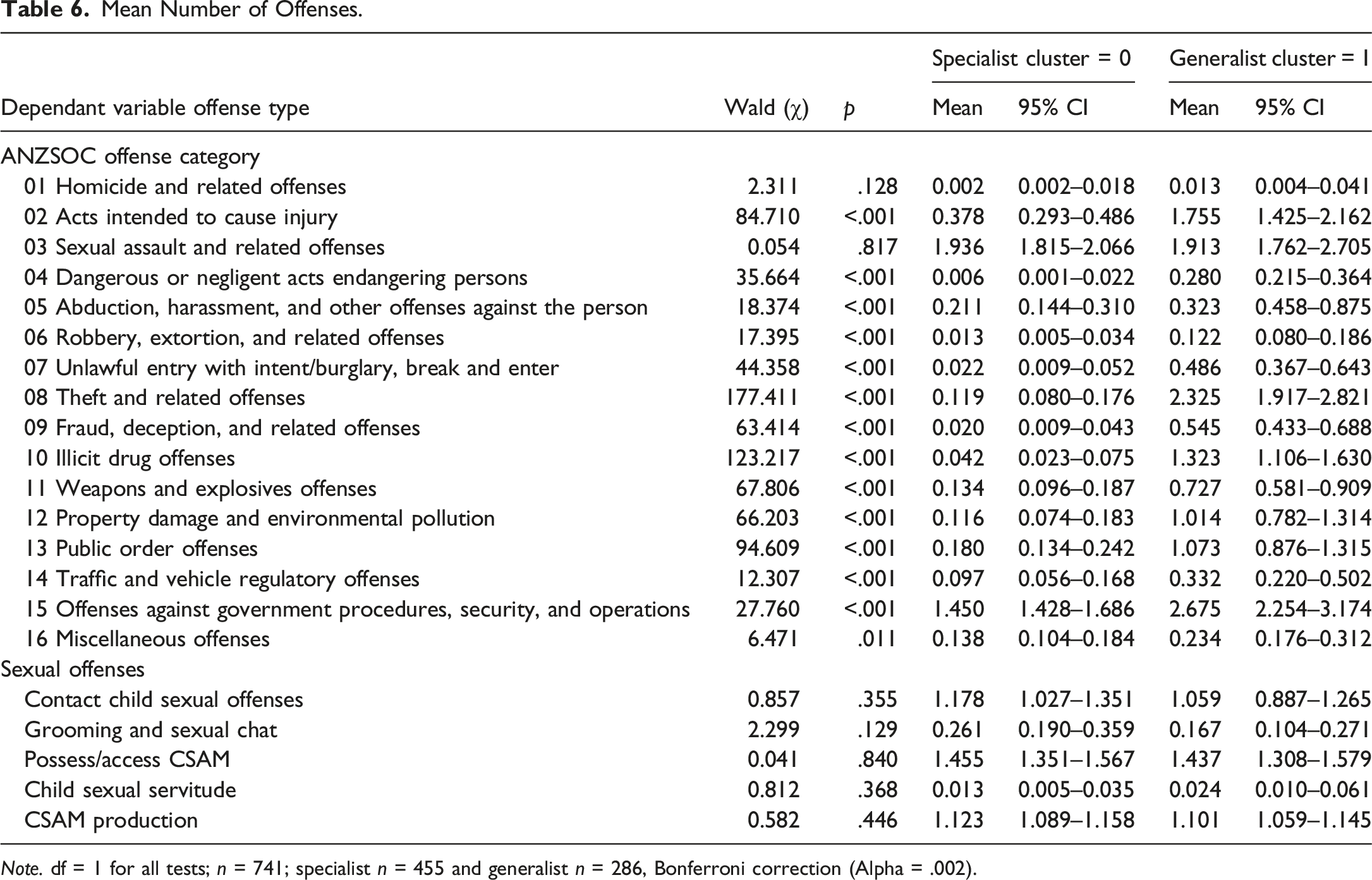
Note. df = 1 for all tests; n = 741; specialist n = 455 and generalist n = 286, Bonferroni correction (Alpha = .002).
A generalized linear model with a Poisson distribution was run with annual CSAM production count as the dependant variable (M = 24.062, SD = 7.636), year as a covariate (2004–2019), cluster (specialist = 0, generalist = 1) as a main effect and the year × cluster interaction. Cluster significantly contributed to the prediction of annual CSAM production charge count (Wald chi-square = 8.029, df = 1, p = .005) in the model, as did year (Wald chi-square = 15.120, df = 1, p < .001). The interaction Year x Cluster also significantly predicted annual CSAM charge count (Wald Chi-square = 7.948, df = 1, p = .005), indicating a steeper slope for generalist than specialist offenders with generalist offenders starting from a lower base in 2004 (see Figure 5). Frequency of CSAM production incidents based on sub-type membership processed by Victoria Police 2004–2019.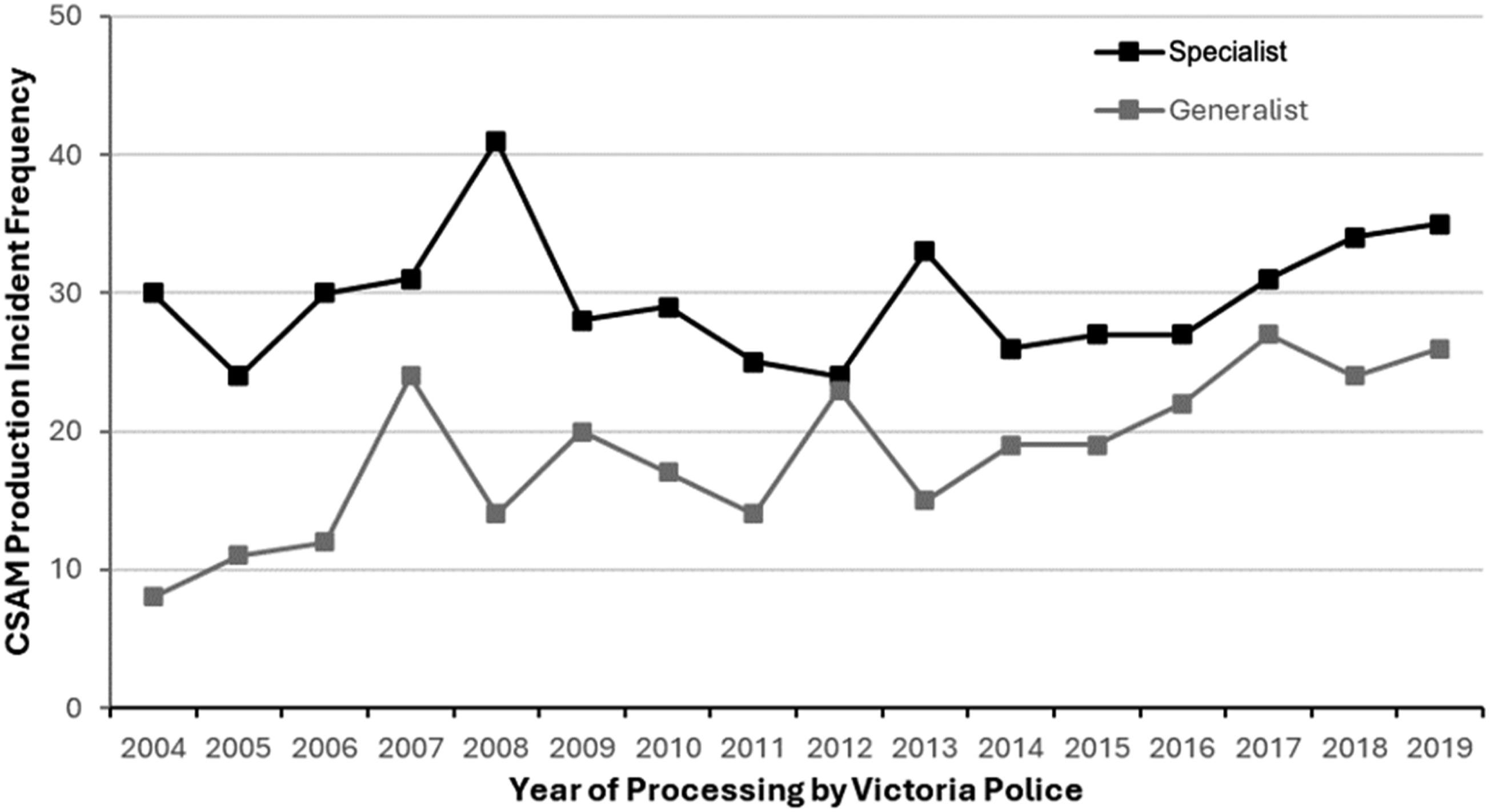
Discussion
This study challenges previous research into CSAM production (Wolak et al., 2005, 2011), which was based on interviews of investigators about individuals arrested for CSAM production in the United States of America. They found that most individuals who engage in this behavior are overwhelmingly middle aged, middle-class men, with low rates of other offending across their criminal histories (Cale et al., 2021; Sheehan & Sullivan, 2010). However, a proportion did fit that criminal and sociodemographic profile which is also shared with individuals who engage in CSAM use more broadly (Babchishin et al., 2010; Bourke & Hernandez, 2009; Brown & Bricknell, 2018; Merdian et al., 2009; Seto et al., 2010; Wakeling et al., 2011). In the current sample, a large proportion were characterized by the lowest socioeconomic index, were younger with regards to their first police contact for CSAM production or sexual offense and had a record of diverse and violent criminal offending, including CSA.
Results revealed that the instances of CSAM production as recorded by Victoria Police have significantly increased between 2004–2019 and reflects increasing online child sexual abuse rates internationally (Bursztein et al., 2019; Europol, 2020). Specific peaks and troughs within Figure 3 were not statistically investigated to reduce the chances of Type 1 errors. However, increased police intervention into CSAM production across this period potentially corresponds with two undercover operations into online CSAM networks by Taskforce ARGOS of the Queensland Police: Operation Achillies (2005–2007) and Operation Artimus (2015–2017; Bleakley, 2019). These operations may be a necessary strategy in combatting the increasingly difficult issue of CSAM production and distribution in the modern age.
Contrary to prior research, which conceptualizes those who engage in CSAM production as one group (Cale et al., 2021; Sheehan & Sullivan, 2010; Wolak et al., 2005), our results showed two distinct criminal sub-types: those who are specialists and those who are generalists, with most individuals belonging to the former subtype. Generalists tended to commit the broadest range of violent and non-violent crimes and in greater frequency. No meaningful group differences were observed based on sexual crimes, pointing to the notion that those engaged in CSAM production also tend to engage in other child sexual abuse activities. Wolak and Colleagues (2011) observed a significant increase of individuals with generalist criminal histories engaging in CSAM production between 2000 (26%) and 2006 (43%). We may be observing a natural continuation of this trend. The confirmation of these two groups over time give support to the specialist/generalist categorization within those who engage in CSAM production (DeLisi & Piquero, 2011; Gottfredson, 2006; Howard et al., 2014; Wortley & Smallbone, 2014).
Unsurprisingly, those categorized in the generalist sub-type tended to commence any criminal offending earlier in life and be less inclined to commit their first offense in later life. Further differences were observed through the specialist sub-type tending to be less likely to live in lower socioeconomic areas when compared to the generalist sub-type. These findings challenge the long-held archetype of the middle-aged, middle-class male who engages in CSAM production and/or access (Babchishin et al., 2010; Bourke & Hernandez, 2009; Brown & Bricknell, 2018; Merdian et al., 2009; Seto et al., 2010; Wakeling et al., 2011; Wolak et al., 2011).
As for the age of first CSAM production charge, those with a specialist criminal history were less likely to be charged with their first CSAM production charge in the 33–49 year age group and more likely in later life. Both sub-groups may be more likely to have access to children during the 33–49-year age group than any other, especially their own children.
Our results show an emergent group of individuals from a lower sociodemographic profile, with more frequent and diverse criminal characteristics entering into CSAM production since 2004. The sub-group of generalists show similar characteristics to those who engage in CSA more broadly (Aslan & Edelmann, 2014; Babchishin et al., 2015; Merdian et al., 2009; Stiernströmer et al., 2022). A review of the studies employed by Wolak and colleagues (2005; 2011) may suggest the generalist CSAM producer sub-type had begun engaging in CSAM production between 2000 and 2006 given the changes in characteristics observed between these two periods. It is suggested that the rapid proliferation of digital technology and changes to the methods of CSAM production over the 16 years of sampling have allowed a younger, more diverse group of individuals, driven by high antisociality, who previously had engaged in CSA, the ability to document and distribute their crimes through the production of CSAM. This explanation of our results not only accounts for what was found, but also for what was not found i.e., types of child sexual abuse was not predicted by the specialist and generalist sub-types.
Implications
It is important to recognize that individuals involved in CSAM production should no longer be considered a largely homogenous group of middle-aged, middle-class men who use CSA as the primary means of CSAM production. While further research is required to replicate and extend the findings of this study, our findings point to the possibility that generalists and specialists possess distinct motivations, risk profiles and criminogenic needs. Based on prior research (Babchishin et al., 2015; Henshaw et al., 2018; Seto, 2019) we might speculate that specialists (the minority of people who produce CSAM) may be more motivated by sexual interests and gratification, while generalists (the majority) may be more driven by a broader pattern of criminogenic needs (e.g. antisocial tendencies and sexual interests). Meaning that criminal justice management, intervention and prevention strategies for the generalist subgroup may require more resources and attention than the specailist subgroup. Further, these decisions could be made earlier, possibly when an individual is reported to police for CSAM production, as their offending history will indicate the indivials need for future services.
Identifying subgroups of those who produce CSAM provides an important opportunity to prevent CSAM production offenses – particularly among those driven primarily by antisociality – through standard management and intervention strategies targeting general criminogenic needs. Should future research replicate the sub-types and differentiating factors identified in this study, closer examinations of the offending trajectories and associated predictors of CSAM production sub-types would be of benefit to prevention efforts.
Strengths, Limitations and Future Research
This study represents a necessary update to the growing body of work examining the individuals who engage in CSAM related offenses (Babchishin et al., 2010; Bourke & Hernandez, 2009; Brown & Bricknell, 2018; Henshaw et al., 2018; Merdian et al., 2009; Seto et al., 2010; Wakeling et al., 2011). Our study adds to the research on the characteristics of the men who produce this content as a group worthy of study (Wolak et al., 2005, 2011). To our knowledge, the current study utilizes the largest and most representative sample of individuals detected for CSAM production across studies internationally. However, the study is preliminary, and several limitations and directions for further research must be noted.
The limitations of secondary law enforcement data have been discussed, and due to the fidelity of the dataset, many socio-demographic variables could not be replicated from previous research: such as marital status, drug, and alcohol use, whether the individual lives with a child, or their employment status, education, and ethnicity. The unclear time point at which postcode was captured and effect of data extraction date on age and duration of lifetime offending may have influenced the findings. Furthermore, this study can only characterize individuals who have come to the attention of police and not the larger majority of individuals who produce CSAM undetected. This study is exploratory, and the finding require replication to improve confidence in them.
This study lays the foundation for psychological research on what motivates specialist and generalist sub-types to produce CSAM. The application and usefulness of the specialist and generalist sub-types to mental health and offender management is recommend for future research. For example, confirming differences in age and important psychological constructs between specialist and generalist sub-types may improve accuracy in risk assessment. Further research should consider exploring whether clusters form around sex – men and women. Women who produce CSAM were not included in this study and potential underlying groups in a female cohort should also be explored.
Conclusion
This study provides an important update to the small body of research on individuals who have produced CSAM (Wolak et al., 2005, 2011). The accessibility of digital technology has altered the way we relate to and connect with one another but has created significant challenges in curbing the online sexual exploitation of children. It is essential that this crime be understood with regards to the changing methods of CSAM production and the diversifying group of individuals who commit these crimes. This exploration into unmasking the men that produce CSAM in our modern age has challenged the persistent profile that these crimes are largely committed by middle-aged, middle-income men who are specialists in their criminal activity. Future research into CSAM production should consider the diversity of individual criminal offending given the democratization of digital technology and the reduced barrier to producing digital depictions of CSA.
Supplemental Material
Supplemental Material - Unmasking the Men Who Produce Child Sexual Abuse Material (CSAM): Criminal Diversity and Sociodemographic Characteristics
Supplemental Material for Unmasking the Men Who Produce Child Sexual Abuse Material (CSAM): Criminal Diversity and Sociodemographic Characteristics by Daniel King, Reneta Slikboer, Marie Henshaw, Denny Meyer and James R. P. Ogloff in Sexual Abuse
Footnotes

Funding
The author(s) disclosed receipt of the following financial support for the research, authorship, and/or publication of this article: The current study forms part of an Australian Research Council Linkage Project (LP180100090) in partnership with Victoria Police, Corrections Victoria, the Australian Institute of Criminology, and Monash University. The views expressed herein are solely those of the authors, and do not necessarily reflect the views of our partners.
Declaration of Conflicting Interests
The author(s) declared no potential conflicts of interest with respect to the research, authorship, and/or publication of this article.
Data Availability Statement
Legal agreements with data providers and ethics approval prohibit the wider sharing of the data analysed in this study.
Supplemental Material
Supplemental material for this article is available online.
References
Supplementary Material
Please find the following supplemental material available below.
For Open Access articles published under a Creative Commons License, all supplemental material carries the same license as the article it is associated with.
For non-Open Access articles published, all supplemental material carries a non-exclusive license, and permission requests for re-use of supplemental material or any part of supplemental material shall be sent directly to the copyright owner as specified in the copyright notice associated with the article.
