




Abstract
Thirty-two forensic persons who have committed sexual offenses against children (FP-SOC), 26 non-forensic persons of whom most have committed sexual offenses against children (NFP-SOC), 14 forensic persons who have not committed sexual offenses against children but have committed other offenses (FP-NSOC), and 53 non-forensic persons who have not committed sexual offenses against children (NFP-NSOC) were instructed to solve a cognitive task, while sexual distractors were presented simultaneously. Behavioral performance and eye movements were measured. FP-SOC and NFP-SOC exhibit same age preference patterns for children and adults, but both groups differ significantly with respect to sexual attentional control. Moderate discrimination accuracy and moderate effect sizes resulted for sexual interest, and good discrimination accuracy and large effect sizes were found for attentional control. Good attentional control in the NFP-SOC, probably reflecting superior sexual self-control and self-regulation abilities, might contribute to a better recognition and control of environmental factors in sexual risk situations, preventing them from being detected and convicted. Otherwise, strong cognitive distortions might serve for them as offense justification. We conclude that those non-forensic persons with sexual offense histories against children (NFP-SOC) with sexual interest in children, good attentional self-control and strong cognitive distortions represent a problematic group which should receive more attention regarding further research but also therapy. Future studies should include more suitable and larger control groups, appropriate instruments to measure independent variables, and investigate whether different classifications of pedophilic interest would be better suited to describe the eye movement patterns of our study participants.
Keywords
Introduction
Measurement of Eye Movements in Forensic Sex Research
Sexual abuse of children has a significant negative impact on the child’s development. A deviant sexual preference, such as sexual attraction to children, is an important factor in etiological models and one of the most important predictors of child sexual offending and recidivism (e.g. Seto, 2018). It is part of several risk assessment instruments, and is included in many treatment programs for persons with child sexual offense histories (e.g., Hanson & Morton-Bourgon, 2004; Nunes & Pedneault, 2020; Olver & Stockdale, 2020). For many years, researchers have been working on the development of empirical approaches to measure sexual interest in children (for an overview see: Carvalho et al., 2020; Jordan et al., 2020; Pedneault et al., 2021). Indirect measures of sexual interest, as one group of these approaches, are defined as those in which the participant is not asked to self-assess the attribute in question (e.g., sexual interest) but the attribute is rather inferred by the researcher based on participants’ responses concerning for example sexual stimuli, such as response latencies (Houwer & Moors, 2010; Schmidt et al., 2015; Snowden et al., 2011). Meta-analyses already have demonstrated that cognitively based indirect measures moderately discriminate between pedohebephilic and nonpedohebephilic men (Babchishin et al., 2013; Pedneault et al., 2021; Schmidt et al., 2017).
Besides these promising indirect approaches, eye tracking has been utilized for the development of deviant sexual interest measures for several years. It is thought, that at least to some extent, attentional processes measured with eye movements, are automatic and cannot be controlled consciously (e.g. Carter & Luke, 2020). Hence, eye tracking should be less susceptible against manipulation, which is important in the context of potential application in forensic context (for an overview of eye tracking approaches see: Carvalho et al., 2020; Godet & Niveau, 2021; Jordan et al., 2020; Vásquez-Amézquita et al., 2023; Wenzlaff et al., 2016). Renaud et al. were the first to demonstrate the potential of eye tracking (and virtual-reality technology) in the assessment of deviant sexual preferences (Renaud et al., 2009). The same research group later showed that eye movements probably could be used to detect faking attempts in penile plethysmography (Trottier et al., 2014, 2019). Applying a passive viewing task, Hall et al. (2014) found that heterosexual persons who have committed sexual offenses against children (n = 13) directed more fixations to the upper body of a female child than male child. In a non-offending control group (n = 13) this gaze pattern was only seen for images of adults (Hall et al., 2014).
Similarly to other attention-based approaches, the initial orientation approach from our group (Fromberger, Jordan, Herder et al., 2012) rests on the information processing concept by Spiering and Everaerd, which assumes that evolutionary important, sexually relevant features of a stimulus are preattentively selected and automatically induce focal attention to these features (Spiering & Everaerd, 2007). In the experimental design, two sexual images out of the two different age categories but with the same gender (e.g., boy/man; woman/girl) are presented simultaneously and the initial orientation response is measured. The initial orientation is operationalized as the fixation latency towards (one of) the stimuli. Using the initial orientation approach, our group found significant shorter fixation latencies for child stimuli among pedophilic forensic persons who have committed sexual offenses against children than among non-pedophilic forensic persons (r = .34) and among non-forensic persons without sexual interest in children (r = .25) (mixed linear model, F(2,77) = 34.44, p < .001). Regarding their age preference index (difference between fixation latency toward child and adult stimuli) pedophilic forensic persons who have committed sexual offenses against children (n = 22) and non-pedophilic persons (n = 60) could be classified with high diagnostic accuracy (Fromberger, Jordan, Herder et al., 2012; Fromberger et al., 2013; Fromberger, Jordan, Steinkrauss et al., 2012). Using the same paradigm, we found that non-forensic individuals with self-reported sexual interest in children did not differ from pedophilic, forensic persons who have committed sexual offenses against children with respect to their orientation response (Jordan et al., 2018). A second approach – the sexual distractor task - rests on the assumption of the sexual content-induced delay (SCID, Geer & Bellard, 1996) that controlled information processing of sexual features which are presented along with a cognitive task interfere with the processing of said task (Jordan, Fromberger, Herder, et al., 2016). Based on the underlying broader concept of a limited attention capacity during controlled information processing (Kahneman, 1973), sexual features and the cognitive stimulus compete for the limited attentional capacity. In the sexual distractor task, subjects have to solve a cognitive task, while sexually relevant and sexually non-relevant distractors were presented simultaneously. In a first study, we demonstrated an age preference effect for individuals without a sexual interest in children or a history of sexual offenses against children (n = 50), but not for pedophilic, forensic persons who have committed sexual offenses against children (n = 22) (Jordan, Fromberger, Herder, et al., 2016). Individuals without a sexual interest in children or a history of sexual offenses against children viewed adult distractors significantly longer than child distractors (repeated-design general linear model, ƞ 2 p = .19), whereas no differences in fixation time were found for pedophilic forensic persons with respect to distractor category.
Applying an experimental paradigm comparable to initial orientation approach, but as a free-viewing task without a specific instruction, Vásquez Amézquita et al. (2019) could only partially replicate the results of Fromberger, Jordan, Steinkrauss et al., 2012. Individuals who have committed sexual offenses against children (n = 18) showed a higher number of first fixations toward child stimuli relative to adult stimuli, compared to individuals, who have committed sexual offenses against adults (n = 16), individuals with non-sexual offense histories (n = 18) and individuals without any offenses (n = 19) (mixed-design general linear model, ƞ 2 p = .220). For late attentional processes, such as the fixation time and number of fixations, a similar tendency was seen, but not for the latency of the first fixation (Vásquez Amézquita et al., 2019). The authors discussed that some participants, especially those who denied their sexual offense, could have manipulated their natural ocular response by fixating only the center of the screen, avoiding or delayed fixating on either stimulus. Hence, it remains unclear whether free passive viewing of sexual stimuli should be superior to approaches with clear task instruction as we used in the initial orientation approach or in the sexual distractor task.
Besides a deviant sexual interest, problems with self-regulation have been identified as important risk factors for sexual (re)-offending (Mann et al., 2010; Seto et al., 2023). Building on Finkelhor’s preconditions model (Finkelhor, 1984) and the general theory of crimes (Gottfredson & Hirschi, 1990), Seto developed the Motivation-Facilitation Model of sexual offending (MFM) (e.g. Seto, 2019). With respect to the facilitation factor he postulated that a sexual offense will be only committed when behavioral control is low and self-regulatory mechanisms fail to suppress the desire to sexually abuse a child (Dillien et al., 2020; Seto, 2019). Within their Integrated Theory of Sexual Offending (ITSO), Ward and Beech described “self-control” constructs, which are included in many theories of sexual offending, as part of (impaired) interlocking neuropsychological functions (Ward & Beech, 2017). Meanwhile, comprehensive, systematic reviews demonstrated deficits on neuropsychological functioning in individuals who have committed sexual offenses against children, especially in inhibitory control functions (Dillien et al., 2020; Turner & Rettenberger, 2020). The inhibitory control functions mentioned in these reviews were measured using common neuropsychological tasks that capture different aspects of inhibition, such as the Color-Word interference Test (Stroop Task) or the Go/No-Go Task. According to Diamond (2013) inhibitory control, as one of the core executive functions, involves being able to control one’s attention, behavior, thoughts, and/or emotions to override a strong internal predisposition or external lure, and instead do what’s more appropriate or needed. These impairments in executive functioning could lead to more self-regulatory deficits thereby increasing the likelihood of committing sexual offenses (Turner & Rettenberger, 2020).
Regarding eye tracking approaches, our aforementioned sexual distractor task provides the opportunity to measure attentional control, which perhaps represents inhibitory executive functions, especially interference control (Diamond, 2013). Working on a cognitive task while being potentially distracted by sexual stimuli, requires control functions to focus on the task. Our group found an impaired attention control in pedophilic forensic people who have committed sexual offenses against children (n = 22) compared to non-pedophilic people (n = 57) (Jordan et al., 2016b).
To summarize, the few studies using eye tracking methodology to measure deviant sexual interest and attentional control, yielded promising results. But further research is needed to optimize experimental designs, find out most fruitful parameters, and enlarge sample size for instance.
Undetected Individuals with Sexual Interest in Children and Child Sexual Offenses Histories
Current knowledge about child sexual offending mostly comes from convicted or incarcerated persons with child sexual offense histories, but the vast majority of sexual child abuse cases remain undetected by legal authorities (Scurich & John, 2019; Stoltenborgh et al., 2011). We do not yet know exactly whether our previous theoretical assumptions, risk factors, and treatment approaches also apply to people who have committed sexual offenses against children but have not been detected (Stephens et al., 2021). However, knowledge about this group of people has grown in recent years. Persons who have committed sexual offenses against children with long detection lags (more than 4 years) seem to have more child victims, including more pre-pubescent and male victims (i.e., a stronger sexual deviance), and are younger at the onset of sexual offending than those caught quickly (less than a month) (Nicol et al., 2022). Based on an analysis of a large archival database with more than 2000 persons who have committed sexual offenses against children, Stephens et al. found a greater self-reported sexual interest in undetected compared to detected persons with offense histories, that is, a greater willingness to admit sexual interest in children. But this differences disappeared if phallometric testing was used to assess sexual interest (Stephens et al., 2021).
Within the scope of the German prevention network “Don’t offend” (Beier et al., 2015; Kuhle et al., 2021), it was found, that there are more similarities than differences between detected and undetected people (Neutze et al., 2012). For instance, a sexual preference for early pubescent and prepubescent children, and sexual preoccupation, known risk factors for sexual offending (Mann et al., 2010), also seem to be risk factors for sexual offending in undetected persons with child sexual offense histories (Kuhle et al., 2017). Within this network, Franque and Briken found neither differences in the rates in the DSM-5 diagnosis of pedophilic disorder, nor in risk factors, and responsivity associated scores at the beginning of a treatment for forensic and non-forensic individuals who have committed child sexual offenses. But, non-forensic persons had a higher amount of responsivity associated resources than forensic clients during treatment (Franqué & Briken, 2021). In addition, non-forensic individuals with a history of child abuse had similar recidivism rates as individuals who had been convicted of a child sexual contact offense (Franqué et al., 2023).
In the course of the collaborating NeMUP research initiative (https://www.nemup.de/), Gibbels et al. (2019) found more similarities than differences between convicted and non-convicted individuals with child sexual offense histories with respect to clinical and neurobiological characteristics. But non-convicted persons with child sexual offense histories reported higher hebephilic/teleiophilic interests compared to convicted pedophilic individuals with more often self-reported sexual interests in prepubescent children (Gibbels et al., 2019). Neurobiological and neuropsychological studies from the same network demonstrated superior inhibitory control functions in nonoffending pedophilic individuals compared to offending pedophilic individuals (Kärgel et al., 2017; Kneer et al., 2019; Massau et al., 2017; Weidacker et al., 2022).
The project “Prevention of Sexual Abuse” (PsM, 2011–2020) was aimed at adults with a sexual interest in children and/or adolescents, including people who fear that they might commit an act of abuse (e.g., because of the presence of sexual fantasies with children/adolescents), people who consume child sexual exploitation material (CSEM), and individuals who have committed sexual abuse. The project was funded by the Ministry for Social Affairs of Lower Saxony, the Asklepios Psychiatric Hospital Goettingen und the University Medical Center Goettingen. In contrast to other projects, it provided treatment to individuals, irrespective of whether or not they were pedophilic or currently prosecuted by the legal justice system (Schulz et al., 2017; for an overview see: Schulz et al., 2013; Wild et al., 2020). In a first pilot study, we applied our above described experimental paradigms to measure sexual interest and attentional control in individuals who participated in project “PsM” (Jordan et al., 2018). In the initial orientation experiment, these individuals demonstrated similar sexual interest in children as pedophilic forensic persons who have committed sexual offenses against children. Whereas in the sexual distractor task, they exhibited significantly better attentional control than pedophilic forensic persons with child sexual offense histories. With respect to these results we assumed a higher capacity for (sexual) self-control and self-regulation in individuals who participated in project “PsM” compared to pedophilic, forensic persons who have committed sexual offenses against children (Jordan et al., 2018).
To summarize, a deviant sexual interest and problems with self-regulation have been identified as important risk factors for sexual (re)-offending of convicted or incarcerated persons with child sexual offense histories (Mann et al., 2010; Seto et al., 2023). We still know too little about undetected people with child sexual offense histories (Stephens et al., 2021). First studies which included persons with child sexual offense histories who are currently not arrested, those with long detection lags, or non-offending individuals with self-reported sexual interest in children, found risk factors which are similar to those found for incarcerated or forensic psychiatric persons with child sexual offense histories (e.g., Franqué et al., 2023; Neutze et al., 2012). For example, there do not appear to be any significant differences in terms of sexual interest in children (e.g., Franqué & Briken, 2021; Kuhle et al., 2017; Stephens et al., 2021). On the other hand, some studies show that undetected persons who have committed sexual offenses against children, or even non-offending persons with pedophilia, have better inhibitory functions than persons who have already been detected and arrested (Kärgel et al., 2017; Kneer et al., 2019; Massau et al., 2017; Weidacker et al., 2022). With regard to impairments of neuropsychological functions, particularly in the area of inhibitory functions, it is assumed that they can lead to more deficits in self-regulation (Turner & Rettenberger, 2020). This in turn can increase the likelihood of committing sexual offenses (Turner & Rettenberger, 2020). On the other hand, one can assume that better inhibitory control functions could have a preventive effect with regard to sexual child offenses. However, better self-control could also help to avoid detection.
As aforementioned, only few studies applied eye tracking technologies to indirectly measure deviant sexual interest and attentional control. In our pilot study, we found a similar sexual interest in children, but a better attentional control in non-forensic persons of whom most have committed sexual offenses against children compared to forensic psychiatric individuals with child sexual offense histories (Jordan et al., 2018). We assume a higher capacity for sexual self-control and self-regulation in those people, which could contribute to them not being detected, or not committing crimes in the first place. To our knowledge, besides our own pilot-study, there is no study which used eye movement in order to compare non-forensic individuals with sexual interest in children and forensic psychiatric individuals with sexual offense histories with respect to deviant sexual interest and attentional control (Jordan et al., 2018).
Aim of the Study
Based on the above discussed research, we were interested in a replication and enhancement of the results of our previous research, aiming at the measurement of deviant sexual interest and attentional control.
Therefore we applied the aforementioned sexual distractor task with an increased sample size compared to our previous studies (Jordan et al., 2016, 2016b, 2018). Furthermore, we used more suitable eye movement parameters, that is, the probability of absolute first fixations instead of fixation latency. It has been argued that early attentional processes may be better indicated by the number of first fixations than by fixation latency, as the first one may be less susceptible to volitional control (Vásquez Amézquita et al., 2019).
First, we asked whether the groups differed in age preference with respect to behavioral and eye movement data. Based on our previous results from the initial orientation paradigm which indicated a similar age preference among forensic and non-forensic individuals with a sexual interest in children, we expected to find similar results in our larger sample on the sexual distractor task as well (Jordan et al., 2018). As can be seen in the method section, most of the people who have participated in the PsM-project are undetected and/or not currently incarcerated individuals who have committed sexual offenses against children. Based on the previously found significantly better attentional control in PsM-participants compared to pedophilic forensic persons with child sexual offense histories (Jordan et al., 2018) and the research findings discussed above, we additionally expected to be able to replicate this result with our larger sample. The long-term objective of our research is the clinical application of our paradigms to support diagnostic and therapeutic processes. We were therefore also interested in how well groups could be distinguished in terms of age preference and attentional control.
Finally, it would be of interest for future applications whether our indirect sexual interest measures are associated with independent indicators of deviant sexual interest, in order to confirm their validity (Nunes & Pedneault, 2020). We exploratively analyzed associations between our eye tracking parameters and different independent variables. In particular, we were interested in three criminological variables, that is, previous convictions, number of victims, the SSPI-Score (Screening Scale for Pedophilic Interest, Seto & Lalumiere, 2001), and cognitive distortions assessed with the MOLEST scale (Bumby, 1996; Feelgood et al., 2009; Rambow et al., 2008). All details for these correlational analyses can be found in the supplemental material S4.
Methods
The authors take responsibility for the integrity of the data, the accuracy of the data analyses, and have made every effort to avoid inflating statistically significant results. We report how we determined our sample size, all data exclusions, all manipulations, and all measures in the study.
Participants
Detailed Characteristics of the Subject Groups: Demographic, Clinical and Criminological Data.
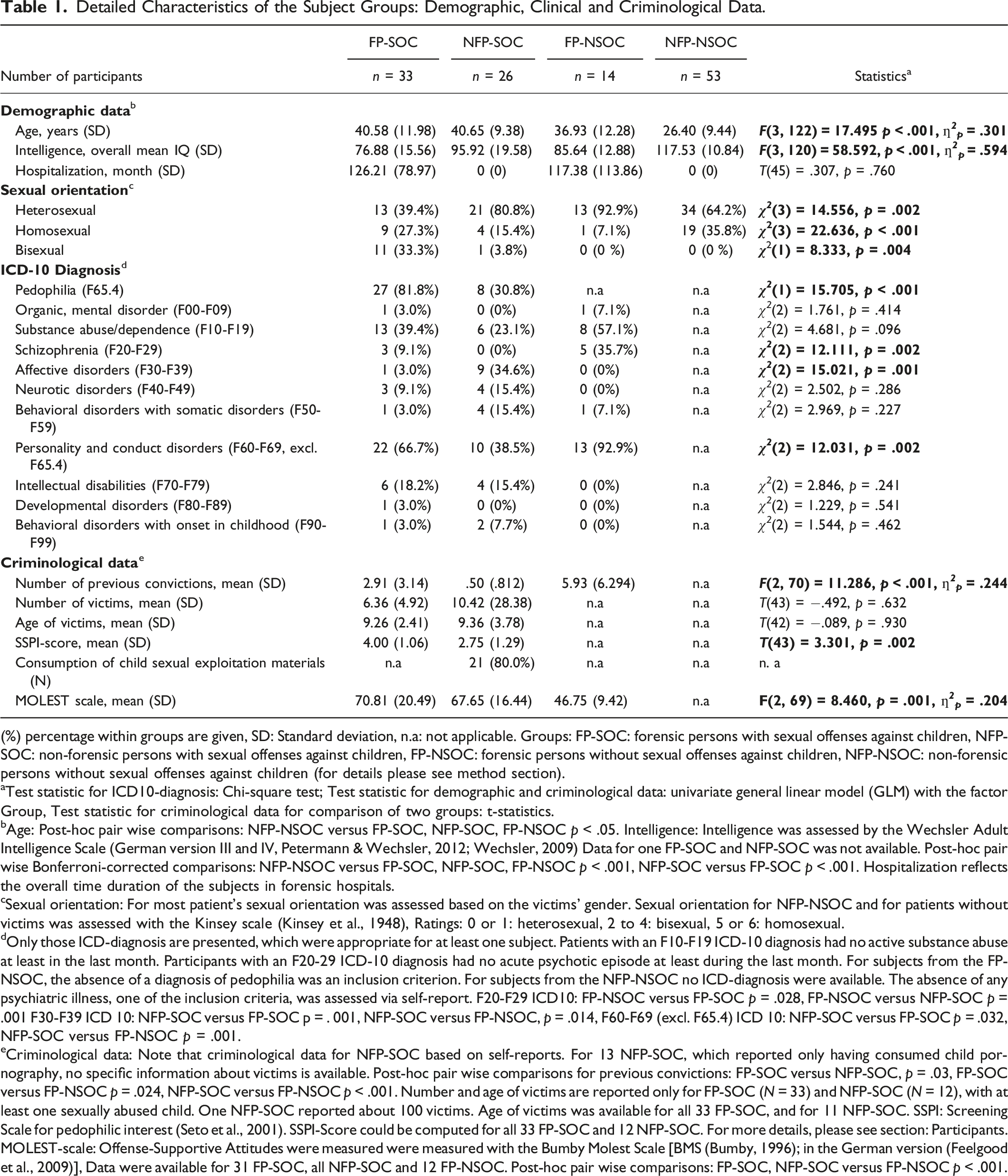
(%) percentage within groups are given, SD: Standard deviation, n.a: not applicable. Groups: FP-SOC: forensic persons with sexual offenses against children, NFP-SOC: non-forensic persons with sexual offenses against children, FP-NSOC: forensic persons without sexual offenses against children, NFP-NSOC: non-forensic persons without sexual offenses against children (for details please see method section).
aTest statistic for ICD10-diagnosis: Chi-square test; Test statistic for demographic and criminological data: univariate general linear model (GLM) with the factor Group, Test statistic for criminological data for comparison of two groups: t-statistics.
bAge: Post-hoc pair wise comparisons: NFP-NSOC versus FP-SOC, NFP-SOC, FP-NSOC p < .05. Intelligence: Intelligence was assessed by the Wechsler Adult Intelligence Scale (German version III and IV, Petermann & Wechsler, 2012; Wechsler, 2009) Data for one FP-SOC and NFP-SOC was not available. Post-hoc pair wise Bonferroni-corrected comparisons: NFP-NSOC versus FP-SOC, NFP-SOC, FP-NSOC p < .001, NFP-SOC versus FP-SOC p < .001. Hospitalization reflects the overall time duration of the subjects in forensic hospitals.
cSexual orientation: For most patient’s sexual orientation was assessed based on the victims’ gender. Sexual orientation for NFP-NSOC and for patients without victims was assessed with the Kinsey scale (Kinsey et al., 1948), Ratings: 0 or 1: heterosexual, 2 to 4: bisexual, 5 or 6: homosexual.
dOnly those ICD-diagnosis are presented, which were appropriate for at least one subject. Patients with an F10-F19 ICD-10 diagnosis had no active substance abuse at least in the last month. Participants with an F20-29 ICD-10 diagnosis had no acute psychotic episode at least during the last month. For subjects from the FP-NSOC, the absence of a diagnosis of pedophilia was an inclusion criterion. For subjects from the NFP-NSOC no ICD-diagnosis were available. The absence of any psychiatric illness, one of the inclusion criteria, was assessed via self-report. F20-F29 ICD10: FP-NSOC versus FP-SOC p = .028, FP-NSOC versus NFP-SOC p = .001 F30-F39 ICD 10: NFP-SOC versus FP-SOC p = . 001, NFP-SOC versus FP-NSOC, p = .014, F60-F69 (excl. F65.4) ICD 10: NFP-SOC versus FP-SOC p = .032, NFP-SOC versus FP-NSOC p = .001.
eCriminological data: Note that criminological data for NFP-SOC based on self-reports. For 13 NFP-SOC, which reported only having consumed child pornography, no specific information about victims is available. Post-hoc pair wise comparisons for previous convictions: FP-SOC versus NFP-SOC, p = .03, FP-SOC versus FP-NSOC p = .024, NFP-SOC versus FP-NSOC p < .001. Number and age of victims are reported only for FP-SOC (N = 33) and NFP-SOC (N = 12), with at least one sexually abused child. One NFP-SOC reported about 100 victims. Age of victims was available for all 33 FP-SOC, and for 11 NFP-SOC. SSPI: Screening Scale for pedophilic interest (Seto et al., 2001). SSPI-Score could be computed for all 33 FP-SOC and 12 NFP-SOC. For more details, please see section: Participants. MOLEST-scale: Offense-Supportive Attitudes were measured were measured with the Bumby Molest Scale [BMS (Bumby, 1996); in the German version (Feelgood et al., 2009)], Data were available for 31 FP-SOC, all NFP-SOC and 12 FP-NSOC. Post-hoc pair wise comparisons: FP-SOC, NFP-SOC versus FP-NSOC p < .001.
Forensic Persons who Have Committed Sexual Offenses Against Children (FP-SOC)
The sample size for forensic persons who have committed sexual offenses against children (FP-SOC) was increased by 11 persons from 22 (Jordan et al., 2016, 2016b) to 33. All FP-SOC have committed sexual offenses against children and have been placed in forensic psychiatric facilities for improvement and safeguarding according to §63 of the German Criminal Code. They had been sentenced to a forensic psychiatry due to having committed a crime in a state of a severe mental disorder and therefore been adjudicated as not or diminished criminally responsible in conjunction with a high risk of criminal re-offense. Inclusion criterion for the FP-SOC group was a mandatory hospitalization under treatment for a child-abuse offense.
Non-Forensic Persons of Whom Most Have Committed Sexual Offenses Against Children (NFP-SOC)
For non-forensic persons with sexual interest in children and/or sexual offenses against children (NFP-SOC) the sample size was increased from 11 (Jordan et al., 2018) by 16 to 26 participants. They were being treated in the outpatient preventive treatment project “PsM”. Out of the 26 participants, 13 (50%) reported only having consumed child sexual exploitation material (CSEM), four (15.4%) reported having committed sexual child abuse, eight (30.8%) reported both, and one reported neither. According to self-reports, seven participants had already been convicted for possession and distribution of materials containing child sexual exploitation and two had been convicted for child abuse. From these people, one was sent to prison, the sentences of the others were suspended on probation. Six of originally 32 participants had to be excluded due to partially missing data (n = 5) or technical problems (n = 1).
Note that comparability of FP-SOC and NFP-SOC was limited concerning sexual offenses. Information of FP-SOC’s offense history was extracted from file records which (in most cases) contained detected cases of child abuse only, but no further self-reported sexual abuse. In contrast, information on offense histories of NFP-SOC was based solely on self-reports.
Forensic Persons who Have not Committed Sexual Offenses Against Children (FP-NSOC)
The sample size for forensic persons who have not committed sexual offenses against children (FP-NSOC) was doubled from seven (Jordan et al., 2016, 2016b) to 14 persons. All FP-NSOC were placed in forensic psychiatric facility for improvement and safeguarding according to §63 and § 64 of the German Criminal Code. They had been sentenced to a forensic psychiatry due to having committed a crime in a state of a severe mental disorder and therefore been adjudicated as not or diminished criminally responsible in conjunction with a high risk of criminal re-offense. Index offenses of this control group comprised homicide, attempted homicide, robbery, attempted rape, predatory theft, and commercial fraud. Inclusion criteria of the FP-NSOC was the absence of a child-abuse offense and any sexual fantasies with children or acting them out. Data of one participant (of originally 15) had to be excluded from analysis due to technical problems.
Non-Forensic Persons who Have not Committed Sexual Offenses Against Children (NFP-NSOC)
Non-forensic persons who have not committed sexual offenses against children (NFP-NSOC) were almost identical to previous publications. Data from most of the 53 NFP-NSOC come from earlier research projects (for details see: Fromberger et al., 2012; Jordan et al., 2016, 2016b, 2018). Data from three participants (of originally 57) had to be excluded from analysis due to technical problems; one participant dropped out of the study. Inclusion criteria for the NFP-NSOC were the absence of any psychiatric illness, the absence of a child-abuse offense and any sexual fantasies with children or acting them out. All information was obtained by self-report. Healthy control persons were recruited using a targeted advertising strategy by placing recruitment notices on bulletin boards in Goettingen.
Stimuli
Sexual stimuli were taken from unclothed versions of the Not-Real-People (NRP) picture set (Laws & Gress, 2004; Pacific Psychological Assessment Corporation, 2004). The images are non-pornographic in that they do not contain explicit sexual poses or sexual activity (n = 64, 16 per category). Male and female stimuli of Tanner stages 1 and 2 were combined to make up the categories “boy” and “girl”. “Woman” and “man” categories comprised Tanner stages 4 and 5. For cognitive stimuli, pairs of three-dimensional mental rotation figures were presented, either identical and rotated (n = 32), or mirrored and rotated (n = 32) (Shepard & Metzler, 1971). Stimuli were taken from a larger stimulus set which was developed by Paschke et al. (2012). For our study, we chose a fixed angular disparity of 80° which was associated with moderate error rates of about 10% in the study by Paschke et al. (2012). To combine mental rotation stimuli and sexual distractors rotation stimuli and distractors were positioned in a way that their center points lay 12° of visual angle apart, assuming a viewing distance of 70 cm. The sides of display as well as the combinations of distractor categories and rotation stimuli were balanced across trials. Every distractor was presented twice in combination with different types of rotation tasks resulting in 128 trials altogether.
Experimental Procedure
Stimulus displays consisted of a horizontal presentation of the mental rotation stimulus and a distractor stimulus out of one of the four categories woman, man, girl or boy (see Figure 1). Subjects had to indicate via button press if they thought the two mental rotation figures were identical or not. Each trial ended either after button press or after 10 s. For more details please see (Jordan et al., 2016, 2016b). Experimental design. Given are examples for each condition. For each mental rotation task one sexual distractor simultaneously was presented, a girl, boy, woman or man. In the experiments, the unclothed version of the stimulus-set was used. For more details see methods section.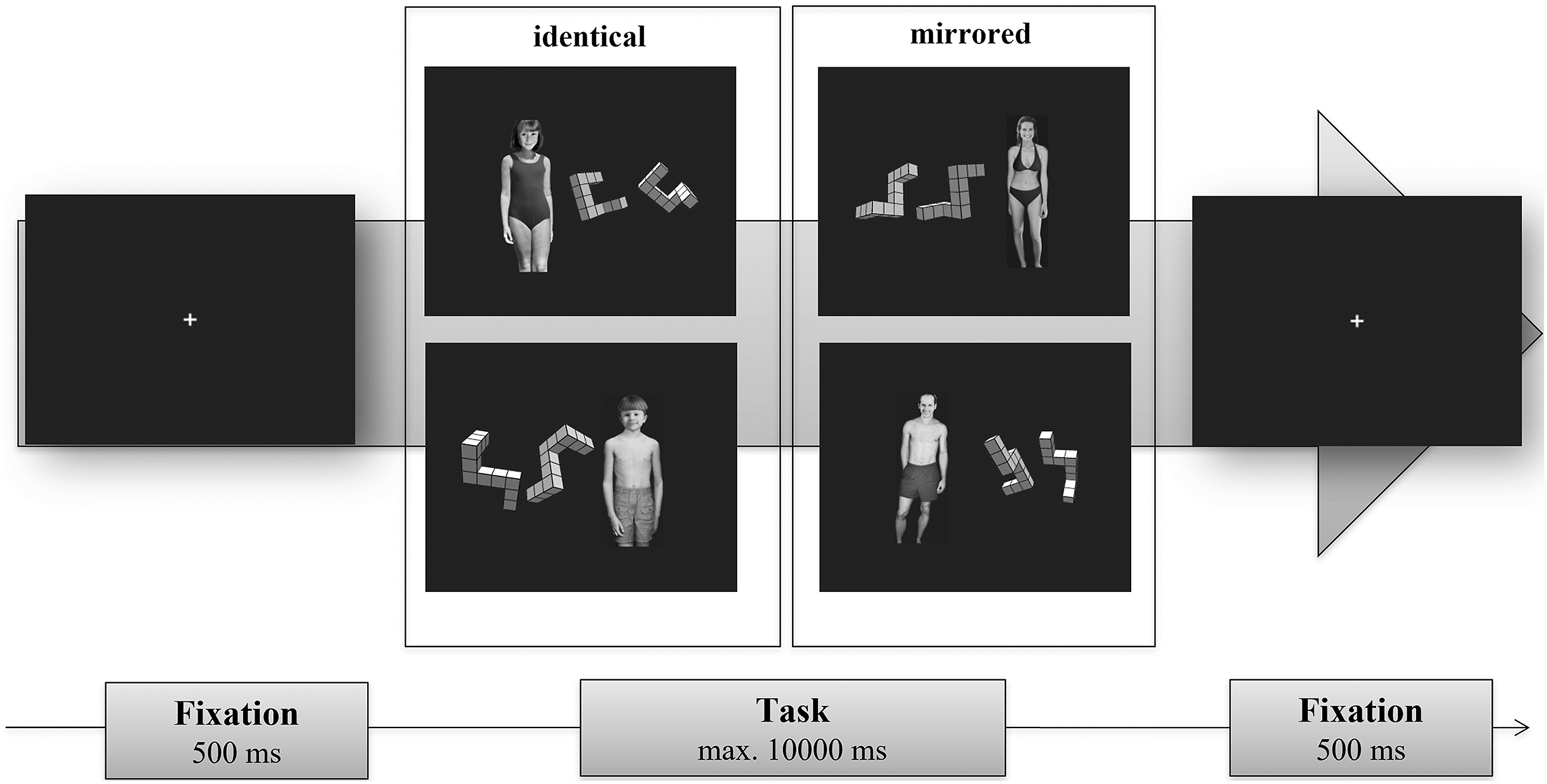
Behavioral Data and Data Analysis
Mean reaction time values (RT) for correct answers and error rate were calculated with respect to sexual distractor categories which were simultaneously presented with the mental rotation stimulus. RT values below 150 ms were excluded from analysis. Even though it is not unproblematic to exclude individual RT-values (Osmon et al., 2018), we still decided to do so. We assume that those values either represent inadvertent button presses or technical errors. Typical reaction times values in mental rotation tasks are well over 150 ms (e.g., Searle & Hamm, 2017).
Eye Movement Measures and Data Analysis
Eye movements were measured using an SMI iView X RED eye tracker (SensoMotoric Instruments GmbH, Berlin, Germany) in combination with an iView X workstation (spatial solution <0.1° of visual angle, temporal solution 60 Hz, gaze position accuracy of <0.4° of visual angle). The method of data analysis was based on previous studies (Fromberger et al., 2012; Jordan et al., 2016b). To identify fixations, raw eye movements were analyzed using BeGaze 3 (Sensomotoric Instruments GmbH, Berlin, Germany). Each pair of mental rotation figures equated to one Area of interest (AOI), as did each image of a woman, girl, boy or man. Dependent variables of interest were the probability of the absolute first fixation in a trial and the relative fixation time. The first fixation in a trial is thought to represent attentional bias owed to early, automatic shifts in attention (Carter & Luke, 2020; Nummenmaa et al., 2006; Vásquez Amézquita et al., 2019). The second eye movement parameter, that is, fixation time, is known to reflect controlled, sustained attention, for example late, mostly top-down endogenous control of attention (Nummenmaa et al., 2006). Fixation time was measured as relative fixation time, that is, the sum of fixation duration of all fixations located within the relevant AOI, divided by the whole presentation time of each task. The latter was restricted either by the response time of the participant or by the maximum presentation time of the task which was 10 s. Analyses were done solely for images which were sexually relevant for participants with respect to gender (Fromberger, Jordan, Steinkrauss et al., 2012; Mokros et al., 2010). We hence included only images of females (girls and women) for heterosexual participants and only images of males (boys and men) for homosexual participants. For bisexual participants, images of both males and females were included. This strategy resulted in two distractor categories for sexual stimuli: child and adult. In order to analyze attentional control processes, eye movements toward sexual stimuli (i.e., sexual distractors) were compared to those toward mental rotation stimuli. Thus, two stimulus types were used in the analysis: sexual distractors and cognitive stimuli. Furthermore, the two group factors were included: Offense (sexual offense against children: SOC, no sexual offense against children: NSCO), and Forensic (forensic: F, non-forensic: NF).
Statistical Analyses
Behavioral data (RT, error rate) were analyzed applying 2 × 2 × 2 [Distractor category (child, adult) × Offense (SOC, NSOC) × Forensic (F, NF)] mixed design general linear models (GLMs). Group differences regarding eye movements were examined applying a 2 × 2 × 2 × 2 [Stimulus type (Sexual distractor, mental rotation figure) × Distractor category (child, adult) × Offense (SOC, NSOC) × Forensic (F, NF)] mixed design GLMs. For significant main effects and interactions Bonferroni-corrected two-tailed post-hoc comparisons were applied. Groups differ with respect to age, intelligence (IQ) and months of hospitalization (see Table 1). Therefore, for all analyses, these variables were included as covariates.
Age Preference Index
An age preference index (API) was calculated for each subject (for details see: Jordan, et al., 2016a). The API was defined as difference between eye movement parameters towards adult and child distractor stimuli, and mental rotation figures respectively. For instance, a higher “API-sexual distractors” for relative fixation time stood for a longer fixation time for adult sexual distractors compared to child distractors. Conversely, a lower “API-mental rotation figures” for relative fixation time for mental rotation figures, stood for a shorter fixation time for mental rotation figures simultaneously presented with an adult distractor compared to mental rotation figures which were simultaneously presented with a child distractor. Similar computations were done for the probability of absolute first fixations. Univariate GLM’s were computed to explore whether the API for eye movement parameters differentiated between groups. ROC analyses were used to investigate whether persons who have committed sexual offenses against children (FP-SOC, NFP-SOC) and persons who have not (FP-NSOC, NFP-NSOC) can be distinguished in terms of their age preference. Cutoff criterion for all ROC-analyses was determined following the approach by Youden (1950). For comparative purposes, Cohen’s d was computed for all indices (Lenhard & Lenhard, 2017).
Attentional Control Index
An attentional control index (ACI) was computed for each subject, that is, the difference between the eye movements toward mental rotation stimuli and toward sexual distractors (for details see: Jordan et al., 2016b). For instance, the “ACI-fixation time-adult” represents the difference between relative fixation time for mental rotation figures with a simultaneously presented adult sexual distractor and relative fixation time for the adult sexual distractor itself. The “ACI-fixation time-child” meant the same differences for trials with child distractor stimuli. A high ACI for the relative fixation time stood for a long relative fixation time for mental rotation stimuli and a short relative fixation time for sexual distractors, thereby a good late attentional control in this task. Similar computations were done for the probability of absolute first fixations. A high ACI for the probability of first fixations represents more absolute first fixations on mental rotation stimuli and fewer absolute first fixations on sexual distractors, and thus a good early attentional control in this task. Univariate GLMs were computed to explore whether the ACI for the eye movements differentiated between groups. ROC analyses were used to investigate whether groups with low (FP-SOC) and high attentional control (NFP-SOC, FP-NSOC, NFP-NSOC combined) can be distinguished. Cutoff criterion for all ROC-analyses was determined following the approach by Youden (1950). For comparative purposes, Cohen’s d was computed for all indices (Lenhard & Lenhard, 2017).
Results
Overview for the Age Preference Index (API) for the Probability of Absolute First Fixation and Relative Fixation Time with Respect to Factors Offense and Forensic. Means, Standard Deviations and Results of GLM Are Given, as Well as ROC-Analyses and Cohen’s d.
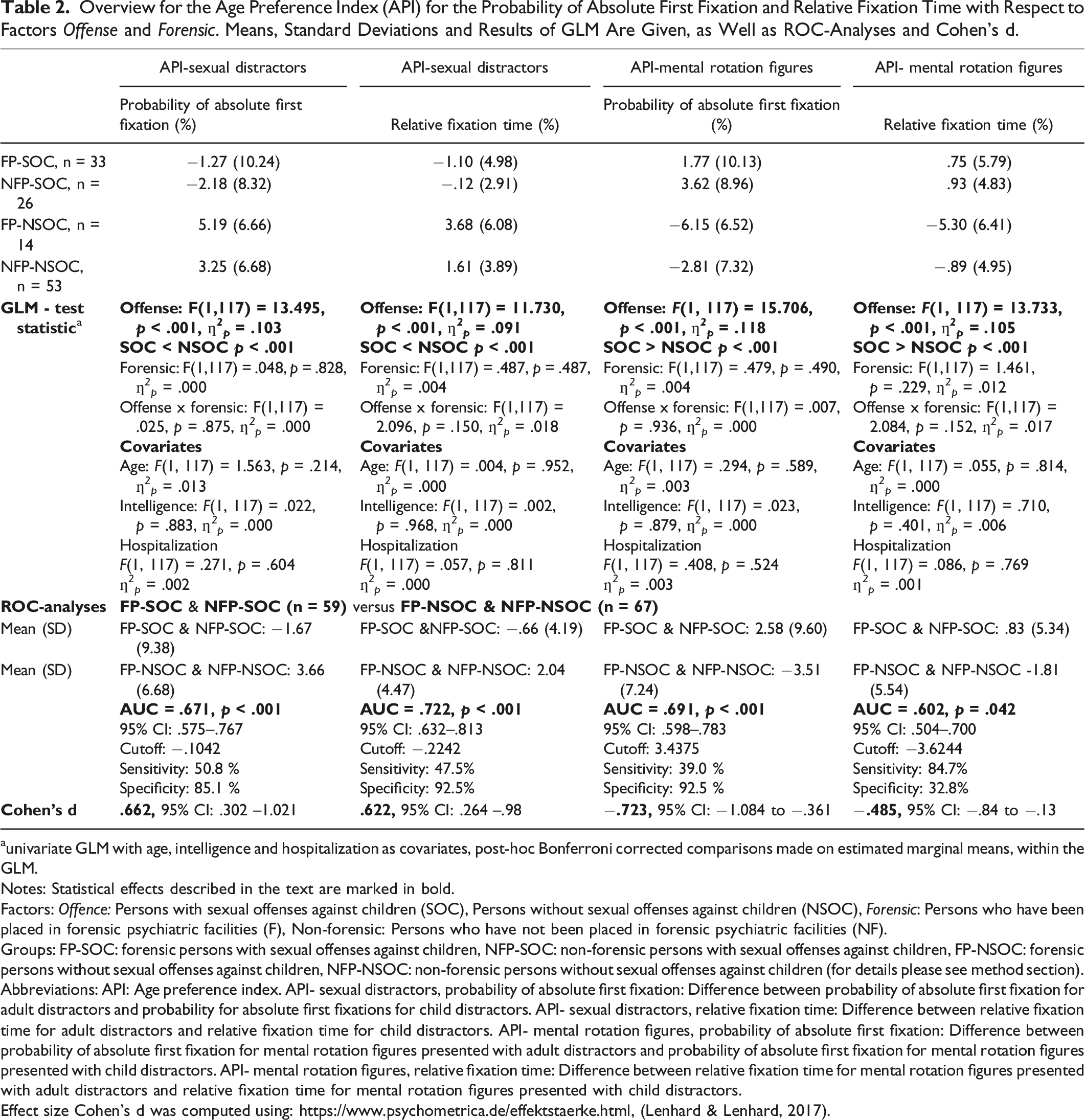
aunivariate GLM with age, intelligence and hospitalization as covariates, post-hoc Bonferroni corrected comparisons made on estimated marginal means, within the GLM.
Notes: Statistical effects described in the text are marked in bold.
Factors: Offence: Persons with sexual offenses against children (SOC), Persons without sexual offenses against children (NSOC), Forensic: Persons who have been placed in forensic psychiatric facilities (F), Non-forensic: Persons who have not been placed in forensic psychiatric facilities (NF).
Groups: FP-SOC: forensic persons with sexual offenses against children, NFP-SOC: non-forensic persons with sexual offenses against children, FP-NSOC: forensic persons without sexual offenses against children, NFP-NSOC: non-forensic persons without sexual offenses against children (for details please see method section).
Abbreviations: API: Age preference index. API- sexual distractors, probability of absolute first fixation: Difference between probability of absolute first fixation for adult distractors and probability for absolute first fixations for child distractors. API- sexual distractors, relative fixation time: Difference between relative fixation time for adult distractors and relative fixation time for child distractors. API- mental rotation figures, probability of absolute first fixation: Difference between probability of absolute first fixation for mental rotation figures presented with adult distractors and probability of absolute first fixation for mental rotation figures presented with child distractors. API- mental rotation figures, relative fixation time: Difference between relative fixation time for mental rotation figures presented with adult distractors and relative fixation time for mental rotation figures presented with child distractors.
Effect size Cohen’s d was computed using: https://www.psychometrica.de/effektstaerke.html, (Lenhard & Lenhard, 2017).
Overview for the Attentional Control Index (ACI) for the Probability of Absolute First Fixation and Relative Fixation Time with Respect to Factors Offense and Forensic, Means, Standard Deviations and Results of GLM Are Given as Well as ROC-Analyses and Cohen’s d.
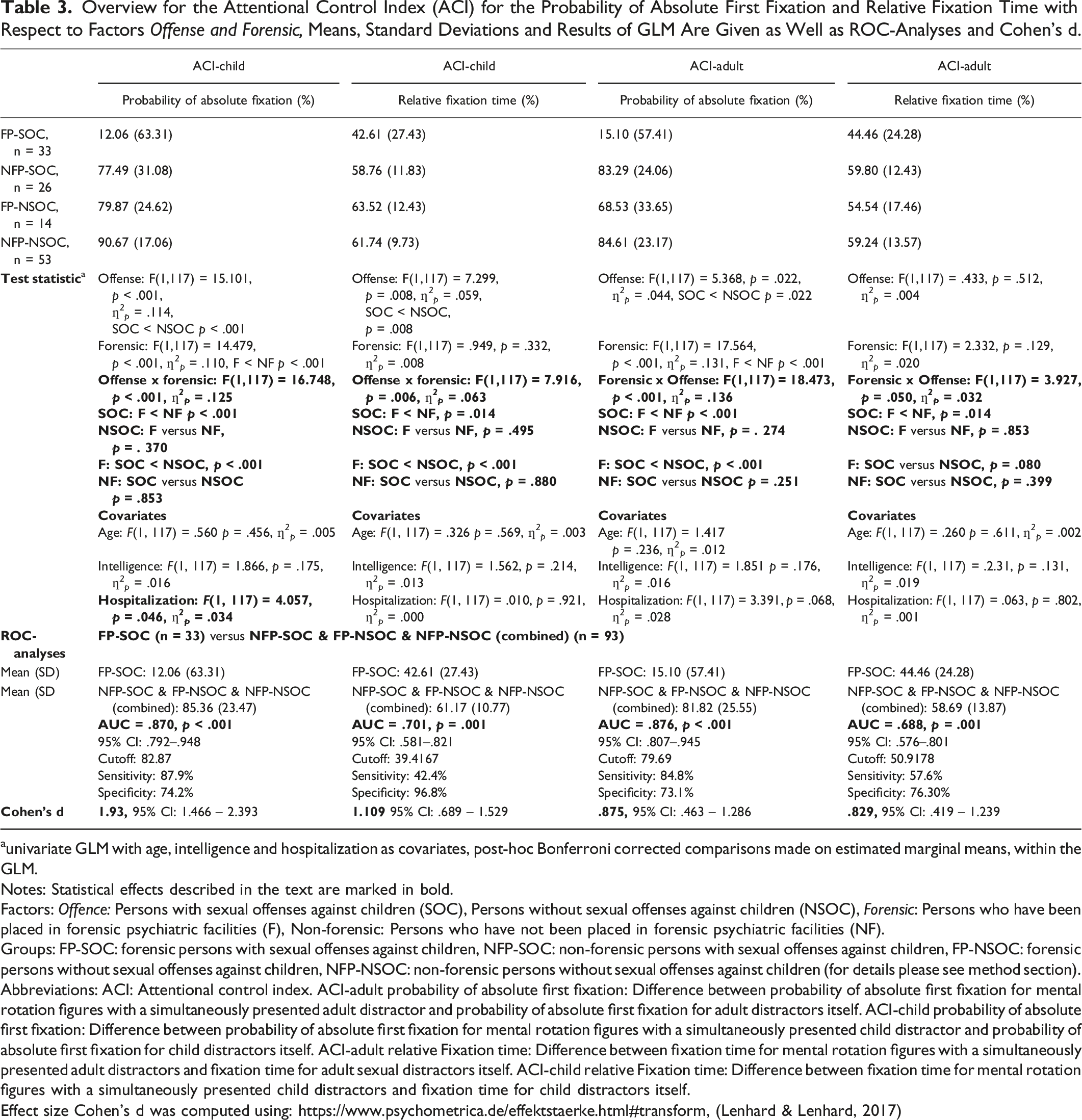
aunivariate GLM with age, intelligence and hospitalization as covariates, post-hoc Bonferroni corrected comparisons made on estimated marginal means, within the GLM.
Notes: Statistical effects described in the text are marked in bold.
Factors: Offence: Persons with sexual offenses against children (SOC), Persons without sexual offenses against children (NSOC), Forensic: Persons who have been placed in forensic psychiatric facilities (F), Non-forensic: Persons who have not been placed in forensic psychiatric facilities (NF).
Groups: FP-SOC: forensic persons with sexual offenses against children, NFP-SOC: non-forensic persons with sexual offenses against children, FP-NSOC: forensic persons without sexual offenses against children, NFP-NSOC: non-forensic persons without sexual offenses against children (for details please see method section).
Abbreviations: ACI: Attentional control index. ACI-adult probability of absolute first fixation: Difference between probability of absolute first fixation for mental rotation figures with a simultaneously presented adult distractor and probability of absolute first fixation for adult distractors itself. ACI-child probability of absolute first fixation: Difference between probability of absolute first fixation for mental rotation figures with a simultaneously presented child distractor and probability of absolute first fixation for child distractors itself. ACI-adult relative Fixation time: Difference between fixation time for mental rotation figures with a simultaneously presented adult distractors and fixation time for adult sexual distractors itself. ACI-child relative Fixation time: Difference between fixation time for mental rotation figures with a simultaneously presented child distractors and fixation time for child distractors itself.
Effect size Cohen’s d was computed using: https://www.psychometrica.de/effektstaerke.html#transform, (Lenhard & Lenhard, 2017)
Age Preference Measured by Means of Cognitive Performance
Results are presented in Figure S1 and Table S1a – S1d. The statistically significant interaction of interest was a three-way interaction: Distractor category x Offense x Forensic. Post-hoc comparisons revealed a clear age preference effect only for FP-NSOC with statistically significant longer reaction times if adult distractors were presented compared to child distractors (Table S1b). The age of the participants had a significant influence on the reaction time. The older participants, the longer were the reaction times (Table S1c). In addition, main effects for both factors (Forensic, Offense) were seen with longer reaction times in forensic persons, and persons without sexual offenses against children compared non-forensic persons, and persons with sexual offenses against children respectively (Table S1b). Group differences with respect to error rates, on the other hand, can apparently be explained by differences in the intelligence (IQ) and age of the participants. Statistical analyses did not yield any significant effects, but a strong influence for intelligence and a small age effect. With higher age and lower intelligence test scores, the error rates were higher (Table S1d).
Age Preference Measured by Means of Eye Movements
Means and statistical results regarding the probability of absolute first fixation in a trial are presented in Figure 2(a) and Table S2a-d. The most important effect with respect to our hypotheses was the statistically significant three-way interaction: Stimulus type x Distractor category x Offense (Table S2b, lower part). Persons with SOC (SOC) directed a lower percentage of absolute first fixations toward adult distractors compared to child distractors, and vice versa for respective mental rotation figures. The opposite pattern was seen for persons without SOC (NSOC) with a higher probability of absolute first fixations toward adult distractors compared to child distractors, and vice versa for respective mental rotation figures. Means and statistical results with respect to relative fixation time are presented in Figure 2(b) and Table S3a-b. Again, results showed a three-way interaction: Stimulus type x Distractor category x Offense (Table S3b, lower part). However, only persons without SOC (NSOC) demonstrated statistically significant longer relative fixation times for adult distractors compared to child distractors and vice versa for respective mental rotation figures. Persons with SOC (SOC) did not show significant age preference effects for relative fixation time. No effects of covariates were found. Interestingly, no effects were found for the factor Forensic. Thus, the history of sexual offenses against children (Offense) was relevant for the age preference but not the status of hospitalization (Forensic). Eye movements in the sexual distractor task with respect to subject group. Mean and standard errors are shown for the probability of the absolute first fixation in a trial (a) and the relative fixation time (b). Groups: FP-SOC: forensic persons with sexual offenses against children, NFP-SOC: non-forensic persons with sexual offenses against children, FP-NSOC: forensic persons without sexual offenses against children, NFP-NSOC: non-forensic persons without sexual offenses against children (for details please see method section).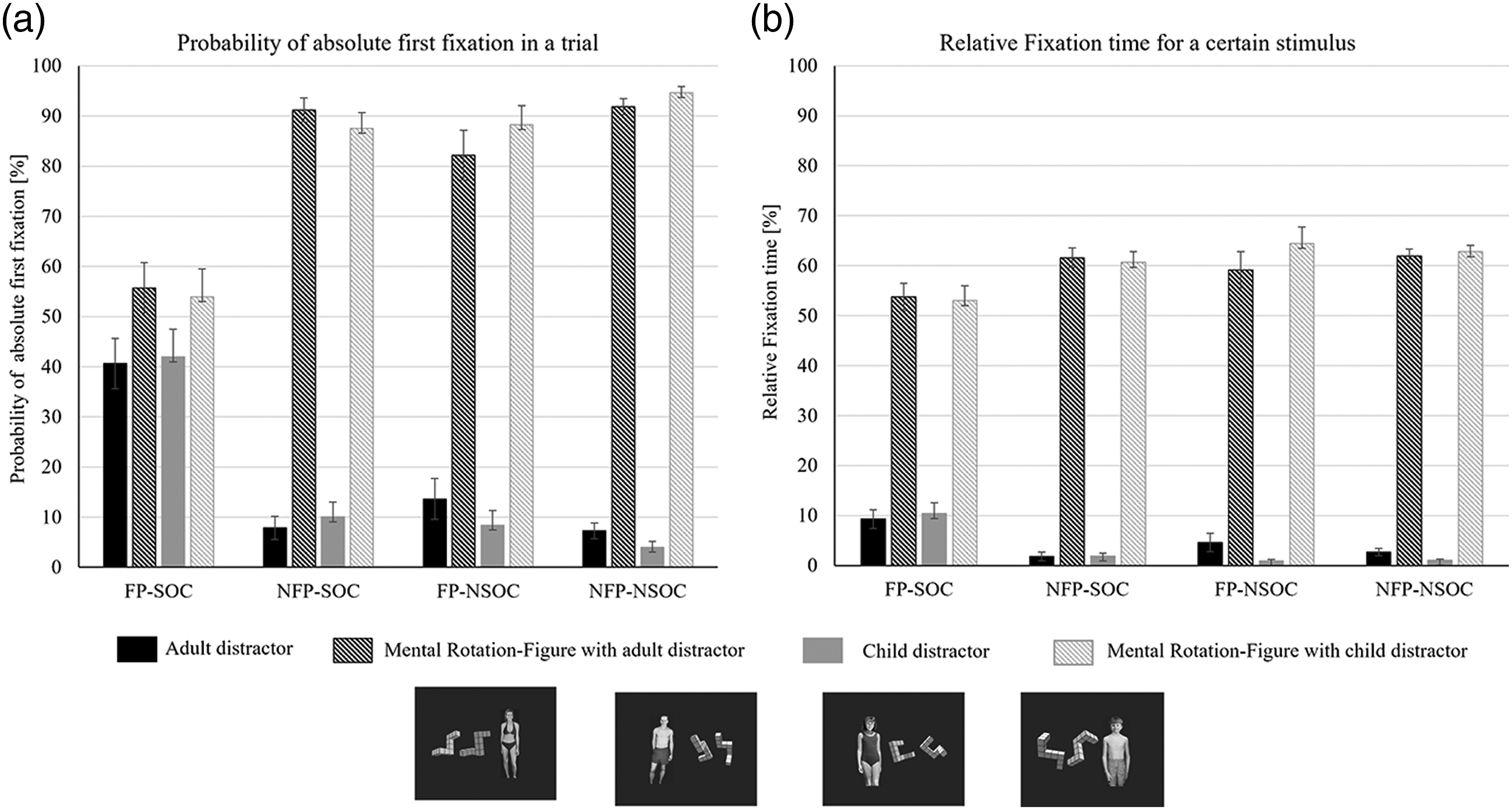
Age Preference Index
Results are shown in Figure 3 and Table 2. GLMs revealed a statistically significant main effect for the factor Offense for all four indices (APIs for two stimulus types and two eye movement parameters). Persons with SOC (SOC) showed lower APIs for sexual distractors compared to persons without (NSOC). They looked at child distractors first more often, and for a higher amount of time than at adult distractors, while persons without SOC (NSOC) looked at adult distractors first more often, and for a longer time than child distractors. The opposite pattern is seen for APIs for respective mental rotation figures. Persons with SOC (SOC) showed higher APIs for mental rotation figures compared to persons without, that is, they looked at mental rotation figures simultaneously presented with a child distractor less often first and for a shorter amount of time than at mental rotation figures simultaneously presented with an adult distractor. The opposite pattern was seen persons without SOC (NSOC). Again, no effects were found for the factor Forensic. Covariates did not have a significant impact. ROC-analyses showed a moderate to good discrimination accuracy between persons with SOC (SOC) and persons without (NSOC). Effect sizes (Cohen’s d) were moderate (see Figure 3, Table 2). Age Preference Index (API). The API is defined as difference between eye movement parameters towards adult and child sexual distractor stimuli, and mental rotation figures respectively. For instance, a high “API-sexual distractors” stands for a higher probability of absolute first fixations toward adult sexual distractors compared to child distractors. The red vertical line illustrates the group division for ROC-analyses, that is, forensic and non-forensic persons with sexual offenses against children (FP-SOC, NFP-SOC), and forensic and non-forensic persons without sexual offenses against children (FP-NSOC, NFP-NSOC). Mean and standard errors are shown. For more details see method section and Table 2. Group abbreviations: See Figure 2. (a) API for probability of absolute first fixation in the sexual distractor task with respect to subject group. (b) API for relative fixation time in the sexual distractor task with respect to subject group.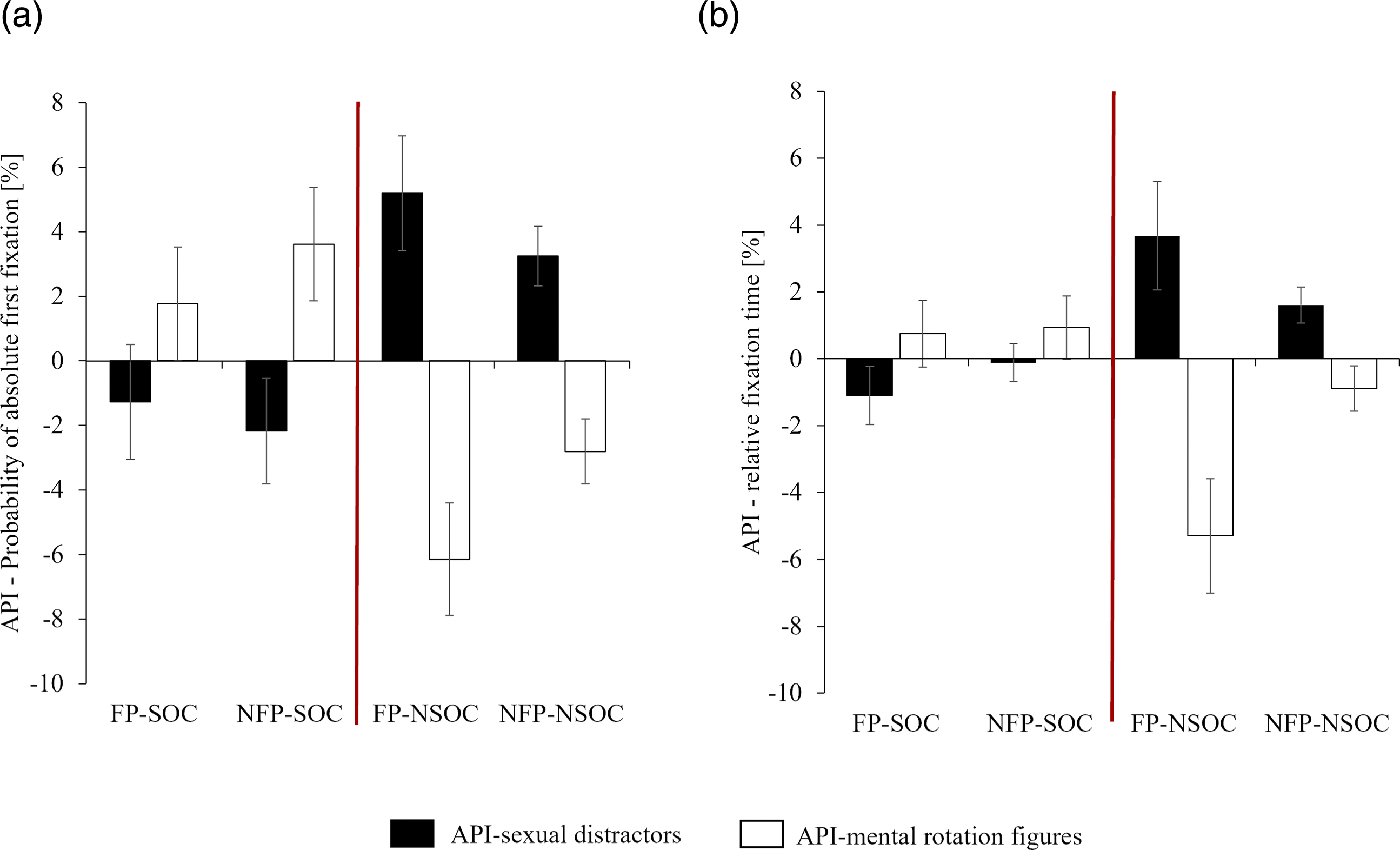
Attentional Control Measured by Means of Eye Movements
Means and statistical results regarding the probability of absolute first fixation in a trial are presented in Figure 2(a) and Table S2a-b. The GLM revealed a statistically significant three-way interaction: Stimulus type x Offense x Forensic (Table S2b, upper part). All groups but the FP-SOC were less likely to look at sexual distractors first than mental rotation figures. Furthermore, forensic persons with SOC (FP-SOC) looked at sexual distractors more often first, and mental rotation figures less often first than non-forensic persons with SOC (NFP-SOC). This effect was not seen for persons without SOC (NSOC). In addition, forensic persons with SOC (FP-SOC) looked at sexual distractors more often first, and mental rotation figures less often first than forensic persons without SOC (FP-NSOC), what was not seen for the non-forensic individuals (NF). No effects of covariates were seen.
Means and statistical results with respect to relative fixation time are presented in Figure 2(b) and Table S3a-b. The most important interaction regarding our hypotheses was a three-way interaction: Stimulus type x Offense x Forensic (Table S3b, upper part). All groups viewed mental rotation figures longer than sexual distractors. Forensic persons with SOC (FP-SOC) viewed sexual distractors longer than non-forensic persons with SOC (NFP-SOC). This was not seen for mental rotation figures. Furthermore, forensic persons with SOC (FP-SOC) viewed sexual distractors longer, and mental rotation figures shorter than forensic persons without SOC (FP-NSOC). This interaction was not seen for non-forensic groups (NF). Covariates did not have a significant impact.
Attentional Control Index
Results are depicted in Figure 4 and Table 3. The most important effect with respect to our hypotheses was the two-way interaction: Offense x Forensic, which was statistically significant for three out of four ACI’s (two sexual distractor categories, two eye movement parameter). No clear effects were found for the “ACI-adult relative fixation time”. Forensic persons with SOC (FP-SOC) showed lower ACI’s than non-forensic persons with SOC (NFP-SOC), which represents a lower attentional control. They looked at sexual distractors more often first and for longer than mental rotation figures compared to NFP-SOC. These effects were not seen for persons without SOC (NSOC). In addition, forensic persons with SOC (FP-SOC) demonstrated lower ACIs, that is, lower attentional control than forensic persons without SOC (FP-NSOC). For non-forensic groups (NF) these effects were not found (Table 3). The covariates intelligence, age of subjects did not have a significant impact. For one eye movement parameter (ACI-child Probability of absolute first fixation) the covariate months of hospitalization had a significant impact: The longer the hospital stays, the lower this ACI (see Table S2c). However, this correlation appears to be mainly due to the differences between the groups: Non-forensic groups with high attentional control (high ACI) had zero months of hospitalization, whereas forensic groups with (partially) lower attentional control (low ACI) showed a wide range of months of hospitalization. Separate analyses for the forensic groups (FP-SOC, FP-NSOC) and for each forensic group individually did not reveal any clear correlations (Table S2d). ROC-analyses showed a moderate to good discrimination accuracy between FP-SOC with low attentional control and the other three groups (combined) with high attentional control. Moderate to large effect sizes (Cohen’s d) were seen (Table 3). Attentional Control Index (ACI). The ACI is defined as difference between eye movements for mental rotation figures with simultaneously presented sexual distractors and eye movements for the sexual distractors itself. For instance, a high ACI-child stands for a longer relative fixation time for mental rotation stimuli and a shorter relative fixation time for simultaneously presented sexual child distractors. The red vertical line illustrates the group division for ROC-analyses, that is, forensic persons who have committed sexual offenses against children with low attentional control (FP-SOC) versus the three other groups with high attentional control (NFP-SOC, FP-NSOC, NFP-NSOC combined). For more details see method section and Table 3. Group abbreviations: see Figure 2. (a) ACI for probability of absolute first fixation in the sexual distractor task with respect to subject group. (b) ACI for relative fixation time in the sexual distractor task with respect to subject group.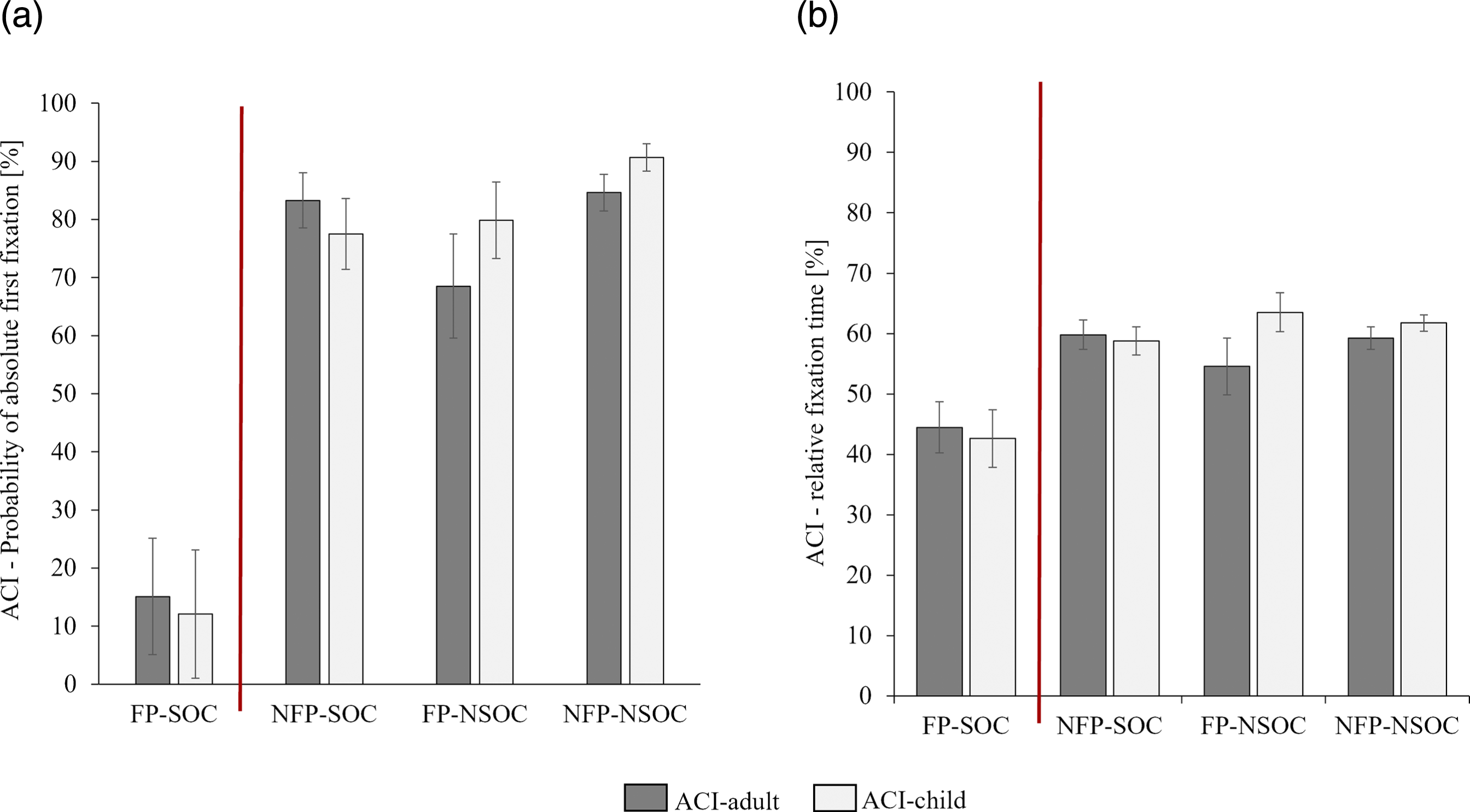
Discussion
The aim of the current study was to measure sexual interest and attentional control in forensic persons with sexual offenses against children (FP-SOC), non-forensic persons of whom most have committed sexual offenses against children (NFP-SOC), forensic persons who have not committed sexual offenses against children, but other offenses (FP-NSOC), and non-forensic persons without sexual offenses against children and without other offenses (NFP-NSOC), using our sexual distractor task. Our results partially support and enhance our earlier research with smaller samples (Jordan et al., 2016, 2016b, 2018).
Age Preference in Terms of Cognitive Performance
Results for behavioral variables only partially support previous results (Jordan et al., 2016, 2016b). Only forensic persons without sexual offenses against children (FP-NSOC) demonstrated a clear age preference with longer reaction times for adult compared to child distractors. This effect was not found in non-forensic persons without sexual offenses against children (NFP-NSOC), which is in contrast to our previous study with almost identical participants (Jordan et al., 2016a). This could be due to our statistical analysis design with two factors and for the entire sample, whereas in our previous study the groups were also analyzed individually (Jordan et al., 2016a). The significant effects of the two factors Forensic and Offense appear to be determined primarily by the forensic persons without sexual offenses against children (FP-NSOC) with the longest response times, which is consistent with our previous study (Jordan et al., 2016a). However, group differences in cognitive performance are more likely to be explained by differences in age and intelligence of our participants than by differences in sexual interest. With higher age and lower intelligence test scores, reaction times and error rates were also higher (a detailed discussion of intelligence and age of participants can be found in the limitation section, and in the supplemental material S1). In conclusion, behavioral variables do not appear to be suitable at present to assess sexual interest in our groups. As proposed in Jordan et al., 2016a, an adoption of task difficulty to individual cognitive abilities could be one approach to overcome these problems.
Age Preference in Terms of Eye Movements
Both, forensic and non-forensic persons without sexual offenses against children (FP-NSOC, NFP-NSOC) demonstrated a preference for adult sexual distractors compared to child distractors. In line with our previous study (Jordan et al., 2016a) this was seen for both early and late eye movement parameters. Forensic and non-forensic persons with sexual offenses against children (FP-SOC, NFP-SOC) showed a small, but statistically significant, preference for child distractors compared to adult distractors, but only in terms of early eye movement parameters. This supports and enhances our previous results with similar age preference toward child stimuli in both groups, measured with fixation latency in the initial orientation paradigm (Jordan et al., 2018). In contrast, in the sexual distractor task, earlier studies did not find an age preference for early eye movement parameters in pedophilic FP-SOC (Jordan et al., 2016a). In the current study, we analyzed the probability of absolute first fixation in a trial, which seems to be a better parameter for early attentional processes than fixation latency. Interestingly, mean fixation latency for this absolute first fixation was about 355 ms for sexual distractors and 420 ms for mental rotation figures (see Table S2e). It is thought that fixation latencies, greater than 200–250 ms are not entirely automatic (Siebold et al., 2011). We assume that, even if the absolute first fixation in a trial is not entirely automatic, it is probably more salience-driven than the fixation latency to a specific stimulus which can occur also later in a trial. On the other hand, no clear age preference was found for relative fixation time as a late, probably better controllable eye movement parameter in both groups with sexual offenses against children (FP-SOC, NFP-SOC), in correspondence with our previous study (Jordan et al., 2016a).
Despite these ambiguous results for both groups with sexual offenses against children (FP-SOC, NFP-SOC) regarding simple eye movement parameters, clear patterns were found for difference indices, that is, the APIs. Both groups showed the expected and similar picture regarding the API’s for early and late eye movement parameters with a preference toward child distractors compared to adult distractors. The opposite picture was found for both groups without sexual offenses against children (FP-NSOC, NFP-NSOC). This leads to significant group effects, moderate effect sizes, and a moderate to good discrimination accuracy, which is also known for other indirect measures of deviant sexual interest (Pedneault et al., 2021). But the size of the difference indices (APIs) is striking, especially for the APIs for the controllable parameter fixation time, but also for the API-sexual distractors for the early eye movement parameter (probability of absolute first fixation), demonstrating a small difference between eye movements to child and adult distractors (see Figure 3). We suggest that both, FP-SOC and NFP-SOC, either preferred to look at child stimuli in comparison to adult stimuli, or preferred looking at both sexual stimuli without preferring adult stimuli. The similar age preference in both groups is not surprising as most participants had committed sexual child abuse or/and consumed child sexual exploitation material (CSEM). It has been repeatedly shown that CSEM-users exhibit a similar or even higher prevalence of sexual interest in children than individuals who sexually abused children (Babchishin et al., 2015, 2018). Research also demonstrated a rather similar age preference in convicted/detected and non-convicted/undetected P-SOC. Stephens et al. (2021), for instance, found relatively few differences between detected and undetected P-SOC, if sexual interest in children was assessed by phallometry or victim histories.
It should be questioned why both, FP-SOC and NFP-SOC did not show a larger age preference for child sexual stimuli, that is, a larger difference between adult and child stimuli. This small age preference towards children was also seen in our previous studies with smaller samples, and also with different experimental paradigms (Fromberger et al., 2012; Jordan et al., 2016, 2016b). It was also observed by other groups applying indirect measures to assess deviant sexual interest (Habets et al., 2022). Firstly, we cannot rule out socially desirable eye movement patterns in FP-SOC and NFP-SOC, especially for late, better controllable eye movement parameters. All participants were informed about the main objective of the study, that is, to measure (deviant) sexual interest, and the rationale behind the sexual distractor task was obvious. Another possible reason could be associated with the definition of these groups. The inclusion criterion for NFP-SOC was a self-reported sexual interest in children, and for FP-SOC a mandatory hospitalization under treatment for a child-abuse offense; but not a diagnosis of pedophilia according to ICD-10 (F65.4). It is estimated that about half of people who have sexually offended against children fulfill a diagnosis of pedophilia (Eher et al., 2019; Seto, 2018). Eighteen out of 26 NFP-SOC, and six out of 33 FP-SOC did not have a pedophilia. Furthermore, none of the pedophilic individuals (except one out of NFP-SOC) were diagnosed as having an exclusive pedophilic preference. All of them except four indicated ever having had an adult (sexual) partner. However, as this information is based only on self-reports, we cannot prove its truthfulness. Nevertheless, at least for some individuals, a certain interest in adults could be assumed. Interestingly, results of a recent meta-analysis indicated that people diagnosed with pedophilia who had sexually offended against children do not have a clear preference for either children or adults (Schippers et al., 2023). Furthermore, there is an ongoing debate about the latent structure of pedophilic interest, that is, whether pedophilic interest should be considered as taxon or as continuum. Recently, McPhail et al. (2021) proposed a trichotomous latent structure that grouped individuals into those with preferential pedophilic interest, those with non-preferential pedophilic interest, and those with no pedophilic interest. One approach for future studies could therefore be to investigate whether these or other proposed classifications of pedophilic interest would be better suited to describe the eye movement patterns of our study participants.
Attentional Control in Terms of Eye Movements
The picture regarding attentional control is completely different from the “age preference picture”. While both, FP-SOC and NFP-SOC demonstrated a similar (small) age preference for sexual child distractors, they differed significantly regarding attentional control for sexual distractors. The higher attentional control especially for early attentional processes (expressed as the “ACI” for the probability of absolute first fixation) in NFP-SOC and both group without sexual offenses against children (FP-NSOC, NFP-NSOC) compared to FP-SOC is in line with our previous findings for smaller samples (Jordan et al., 2018). Moreover, discrimination accuracy was good, and effects sizes were moderate to large. Regarding our group factors Forensic and Offense, an interaction between the two explained group differences with respect to attentional control. Thus, in contrast to the age preference pattern, both the type of offense and the hospitalization status had an influence on attentional control measured in our eye tracking experiment. Similar to our previous studies, covariates intelligence (IQ), and age of subjects did not have a significant impact (Jordan et al., 2016b, 2018).
Forensic individuals with child sexual offense histories (FP-SOC) had some difficulties to allocate their attention toward the cognitive task at an early, more automatic, stage of processing (probability of absolute first fixations). At a later, rather controlled, processing stage (i.e., fixation time), they seemed to improve their attentional control. Although FP-SOC viewed sexual distractors longer than all other groups and their ACI was generally lower than the ACI of the other groups, it did only reach significance for the ACI-child but not for the ACI of adult sexual stimuli. Hence, besides FP-SOC having difficulties to control early attentional processes, they might be able to control their attention at later processing stages. Nevertheless, child stimuli remain to be important distractors for them. With respect to the possible association between executive functions and measured attentional control, we assume that any kind of training, for instance with the sexual distractor task, could improve attentional control in FP-SOC and thus could potentially contribute to changes in self-regulation processes. However, it should be noted that there may be other causes for these problems, such as other mental disorders or anxiety, which should be considered in future studies. In a recent retrospective data analysis with a partially overlapping sample, we found that those few participants with child sexual offense histories who reported high subjective sexual arousal levels while being confronted with sexual stimuli were more likely to be diagnosed with pedophilia and/or affective disorders, and to receive anti-depressive treatment (Jordan et al., 2023).
We were unable to replicate the lower attentional control in non-forensic persons with sexual offenses against children (NFP-SOC) in relation to child sexual stimuli found in our previous study with a smaller group (n = 11) (Jordan et al., 2018). Thus, the twice as large group (n = 26) demonstrated an attentional control as good as control groups independently of the stimulus age. As proposed above, a better attentional control could represent better inhibitory executive functions, especially inference control. We assume a generally higher capacity for (sexual) self-control and self-regulation in this group compared to forensic persons with sexual offenses against children (FP-SOC). Meanwhile it is well known that impaired executive functions, esp. inhibitory functions could lead to more self-regulatory deficits, thereby increasing the likelihood of committing (child) sexual offenses (Dillien et al., 2020; Turner & Rettenberger, 2020). Thus, the good attentional control, probably reflecting superior (sexual) self-control and self-regulation abilities in NFP-SOC might contribute to a better recognition and control of environmental factors in (sexual) risk situations, preventing them from being detected and convicted. The good attentional control in these men also seems to be in line with superior inhibitory control functions in nonoffending pedophilic men compared to offending pedophilic men (Kärgel et al., 2017; Kneer et al., 2019; Massau et al., 2017; Weidacker et al., 2022).
Finally, offense supportive cognitions, measured with the MOLEST scale, seem to be associated with either or both online and sexual contact offending behaviors against children (Paquette & Cortoni, 2021; Paquette & Cortoni, 2021 suggested that among others these offense supportive cognitions may be motivating factors, and therefore relevant risk factors. This is of special interest as our NFP-SOC have a significant better attentional control than FP-SOC, but similar offense supportive cognitions (see Table 1). Thus, cognitive distortions might serve as offense justification, and a good self-control might help to evade detection. From a clinical point of view, this special group of individuals, that is, non-incarcerated individuals with sexual offenses against children, sexual preference for children, good sexual attentional (self-) control and strong cognitive distortions (i.e., offense justification and minimization) represents a problematic group which should receive more attention. Unfortunately, at least in Germany, there is a lack especially in the treatment of this special group. In our view, projects aimed at the prevention of sexual abuse should offer advice and treatment to all individuals with a self-reported sexual interest in children, irrespective of whether or not they are pedophilic or currently prosecuted by the legal justice system.
Limitations
Our study exhibits several limitations. A major limitation concerns the small differences regarding age preference in forensic and non-forensic persons with sexual offenses against children (FP-SOC, NFP-SOC). One reason might be that we did not separate groups according to pedophilia (F65.4, ICD-10). It has been shown, that not only the dimension of the sexual interest in children but also the neuropsychological profile differs between pedophilic and non-pedophilic individuals with sexual offenses against children (for an overview see: Dillien et al., 2020; Turner & Rettenberger, 2020). Regarding our sample, the distribution of pedophilic and non-pedophilic men differed between the groups (82% FP-SOC, 31% in NFP-SOC). Furthermore, in the current study we were mainly interested in differences between forensic psychiatric and non-forensic persons. Therefore, for the current study, we refrain from analyzing data with respect to pedophilia. But future studies, with equally proportion of pedophilia within the groups, should examine whether results change or remain stable. Moreover, it would be of interest whether a classification of participants according to subtypes of pedophilic interest (e.g. preferential, non-preferential pedophilic interest, no pedophilic interest) reveal differences between these groups (McPhail et al., 2021).
Another critical aspect is related to our control groups, especially the group of non-forensic persons without any offenses (NFP-NSOC). This group is statistically significant younger and has higher intelligence test scores than all other groups, which is of importance insofar as we applied a cognitive task. Processing speed decrease with older age (e.g., Salthouse, 1996), and mental rotation performance is positively associated with intelligence (e.g., Varriale et al., 2018). Consequently, our group differences in mental rotation performance are mainly explained by age and intelligence differences between our groups. Ideally of course, the groups should not differ in terms of age and intelligence of participants, especially for cognitive tasks. In order to have more comparable groups we included the forensic control group (FP-NSOC), but with only 14 participants. In our experience, it is quite difficult to get these persons in particular to participate. On the one hand, our eye tracking studies are very time consuming (2–4 hours) and, on the other, many of them have an aversion to take part in a study on sexual interest in children. Interestingly, both the age and intelligence of our participants had little or no effect on the group differences in our participants’ eye movements. But, for at least one parameter, hospitalization status had an impact on attentional control. Hence, those variables should be better balanced between groups, and future studies should include more appropriate and large control groups.
Furthermore, in our study, 42% (31 out of 73) persons from FP-SOC, NFP-SOC, FP-NSOC received any psychopharmacological or testosterone-lowering medication. These medications may have influenced sexual arousal and (sexual) attentional control. Future studies should take this into account, and also include other groups such as people who have committed sexual offenses and are incarcerated in correctional facilities. Interestingly, in a recent retrospective data analysis with a partially overlapping sample, we found no differences between groups with and without psychopharmacological or testosterone-lowering medication in terms of subjective sexual arousal reported before and after the experiment (Jordan et al., 2023).
In addition, forensic and non-forensic participants with child sexual offense histories (FP-SOC, NFP-SOC) differ with respect to criminological behavior (see Table 1). Most NFP-SOC indicated to consume CSEM. For FP-SOC we have taken from files that they had committed hands-on offenses. However, there is a lack of information about CSEM offenses in this group, because we did not ask for that explicitly. Therefore, our group factor Offense might not have characterized our two groups with SOC optimally. Larger groups would be necessary in order to differentiate between offense types. In addition, the SSPI-scale as well as the MOLEST-scale were originally developed for child sexual abusers, but not for CSEM consumers or persons with both types of offenses. Hence, we cannot rule out that both scales do not optimally reflect criminological behavior and offense supportive cognitions in NFP-SOC. To our knowledge, the SSPI-2 scale did not yet exist when the project was launched in 2010. Therefore, we only used the SSPI-scale. The SSPI-2 (Seto et al., 2015) contains a fifth item which asks for child pornography. Recently, Paquette & Cortoni, 2020 presented the internet Sexual Offending (C-ISO) Scale which aims to measure cognitions that support the use of CSEM and child luring activities over the internet. Both, the SSPI-2 and the C-ISO should be included in subsequent studies for an adequate characterization of offense histories and offense supportive attitudes in our groups. Interestingly, our exploratory analyses regarding the associations between eye tracking parameters and independent variables suggest that sexual interest and attentional control measured in our eye tracking task may be associated with independent parameters of criminological behavior, deviant sexual interest and cognitive processes related to sexual child abuse (see supplemental material S4). Future studies should, however, use more suitable instruments to better characterize criminological behavior, and offense supportive cognitions for instance.
Conclusion
With this study we showed that our sexual distractor task is a promising indirect eye movement approach to measure sexual interest as well as sexual attentional control. Earlier results were partially supported and enhanced. Applying a cognitive task, groups could be distinguished with moderate discrimination accuracy and moderate effect sizes regarding sexual interest, whereas good discrimination accuracy and large effect sizes were found for attentional control.
We demonstrated that non-forensic men with sexual offenses against children (NFP-SOC) and forensic psychiatric men who have committed sexual offenses against children (FP-SOC) exhibit the same sexual preference pattern for children and adults. However, both groups differ significantly with respect to sexual attentional control with better attentional control in non-forensic persons (NFP-SOC). Thus, while only the type of offense (SOC, NSCO) had an effect on age preference, an interaction between offense type and hospitalization status (F, NF) explained attentional control in our task.
The good attentional control in NFP-SOC, probably reflecting superior sexual self-control and self-regulation abilities, might contribute to a better recognition and control of environmental factors in sexual risk situations, preventing them from being detected and convicted. Otherwise, strong cognitive distortions might serve for them as offense justification. Hence, we conclude that those individuals with a sexual preference for children, good sexual attentional self-control and strong cognitive distortions (i.e., offense justification and minimization) represents a problematic group which should receive more attention.
Future studies should include more suitable and larger control groups, adequate instruments to measure independent variables, and examine whether different classifications of pedophilic interest would be more appropriate to describe the eye movement patterns of our study participants.
Supplemental Material
Supplemental Material - Similar Age Preference but Different Attentional Control in Mandatory Hospitalized Individuals who Have Committed Sexual Offenses Against Children and Non-hospitalized Individuals With Self-Reported Sexual Interest in Children
Supplemental Similar Age Preference but Different Attentional Control in Mandatory Hospitalized Individuals who Have Committed Sexual Offenses Against Children and Non-hospitalized Individuals With Self-Reported Sexual Interest in Children by Kirsten Jordan, Isabel Müller, Peter Fromberger, Uwe Dobrunz, Ute Franz, and Jürgen Leo Müller in Sexual Abuse
Footnotes
Acknowledgements
We acknowledge support by the Open Access Publication Funds of the University of Göttingen. We would like to sincerely thank all participants for taking part in the study. Special thanks go to clinicians and colleagues for their support with participant recruitment and data collection, especially Nora Frank, Corinna Hofter, Nora Kahnt, Verena Köhler, Rebekka Nemetschek, Tina Schulz, Henrike Steinkrauss, Jakob von Herder, Martina Wernicke, Tamara Wild, Joachim Witzel.
Declaration of Conflicting Interests
The author(s) declared no potential conflicts of interest with respect to the research, authorship, and/or publication of this article.
Funding
The author(s) received no financial support for the research, authorship, and/or publication of this article.

Data Availability Statement
The datasets generated for this study will not be made publicly available. Our data are highly sensitive (deviant sexual interest/child sexual offenses/other offenses) and cannot be anonymized.
Supplemental Material
Supplemental material for this article is available online.
References
Supplementary Material
Please find the following supplemental material available below.
For Open Access articles published under a Creative Commons License, all supplemental material carries the same license as the article it is associated with.
For non-Open Access articles published, all supplemental material carries a non-exclusive license, and permission requests for re-use of supplemental material or any part of supplemental material shall be sent directly to the copyright owner as specified in the copyright notice associated with the article.
