




Abstract
This study investigated the psychiatric, paraphilic, and forensic profiles of men who were convicted of sexual offenses. It also examined childhood trauma exposure in the group with potential paraphilia. The study was performed in the closed prison located in the Istanbul Silivri Penal Institutions Campus. The interview data of 100 men convicted of sexual offenses were obtained from the psychiatric interview notes based on the DSM-5 criteria, the results of the 28-item Childhood Trauma Questionnaire administered to the participants with paraphilia, and the forensic profiles from examination files. It was found that 39% of individuals were drug users and 36% were alcohol users. Considering the crime scenes, 42% of men convicted of sexual offenses committed the offense in their own house. Pedophilia was the most common among men with paraphilia (59%). The victim age was significantly lower (p < .001), and the male victim ratio was higher (p < .05) in the group with paraphilia than in the group without paraphilia. Sexual offenses against children aged 10 years and below and against males may be suggestive of paraphilia and an increased risk of recidivism.
Introduction
Sexual violence against children and adults is a serious public health and human rights issue and is of great concern to society. Various treatments for individuals convicted of sexual crimes have discussed around the world. There is also a lot of discussion in our country about the treatment and rehabilitation of individuals convicted of sexual offenses. Different medical methods and legal regulations from other countries are being analyzed. Unfortunately, there are not enough scientific studies on this subject in Turkey. We can assume that the prevalence of paraphilia in Turkey may be different compared to Western countries for various reasons. Some of these reasons are Turkey’s closed and patriarchal family structure, misconceptions about sexual orientation and gender dysphoria, parenting styles and different prevalence of alcohol and drug use compared to Western countries.
Very few publications have described the characteristics of people convicted of sexual offenses in Turkey. In one of the few studies, 180 men who committed sexual offenses against minors were evaluated. It was reported that the majority of prisoners were between 20–45 years old, primary school graduates, never married, 23.3% had been exposed to sexual abuse, and 23.9% had been exposed to physical abuse (Vural, 2021). In the evaluation of 70 people who were investigated for criminal responsibility due to having committed sexual assaults, it was reported that 80% were single, 87% lived with their families, 52% were primary school graduates, 13% had been exposed to physical violence, and 13% had been exposed to sexual violence (Cantürk & Sermet, 2010). In another study, 59% of people who had been incarcerated with paraphilia were single, 11.1% were married, 6.2% were divorced, and the education level of 40.4% had been in primary school or lower (Taktak et al., 2016).
Considering the crime scenes, people convicted of sexual offenses often preferred survivors’ or acquaintances’ homes or workplaces (Gölge, 2005). It was reported that 32% of the crimes occurred in the defendants’ houses and 27% of the crimes occurred in the victims’ houses (Cantürk et al., 2010). It has been determined that most of crimes occur outdoors or at school/workplace in the group with paraphilia (Taktak et al., 2016).
In a study examining the profiles of men convicted of sexual offenses in prison; while 37% of the men did not drink alcohol at all, 13% of them reported that they drank every evening and 48% of them reported that they drank alcohol occasionally. While the rate of those who stated that they committed the crime under the influence of alcohol or drugs is quite low (15%), the rate of those who state that they did not use any drug while committing a crime is 62%, the rate of those who state that they drink alcohol is 30%, and the rate of drug use before committing a crime is 4% (Arslan et al., 2007). Regarding psychiatric profiles, 27% had intellectual disability and 18% had psychotic disorder (Cantürk et al., 2010). When the psychiatric backgrounds of the people who committed sexual offenses who were referred to the forensic medicine board were examined; 27% of those had intellectual disability, 9.1% of those had psychotic disorder, 7.8% of those had personality disorders, and 1.6% of those had affective disorders. However, 48.5% of the cases have no prior psychiatric diagnosis and have no application for psychiatric treatment (Taktak et al., 2016).
In one of the rare publications about paraphilia from Turkey, it was reported that paraphilic acts were detected in only 307 of the 101,208 case files in which criminal responsibility was claimed by the Forensic Medicine Institute (Taktak et al., 2016). It was found that pedophilia was the most common disorder. It has been reported that 13% of cases have more than one type of paraphilia. The rate of survivors aged 10 years and younger in paraphiliac cases was 69.7% and that 51.8% of the victims were women and 30.3% were men upon review of all paraphiliac cases. It was reported that 47.9% of participants with paraphilia committed crimes against foreigners, and 44.1% against familiar individuals (Taktak et al., 2016). Relevant studies found that 10%–20% of children below 18 years of age were sexually assaulted and that 20% of women were targeted by individuals with voyeuristic and exhibitionist interests (Erdogan, 2010; Taktak et al., 2016).
In the studies carried out in our country, there is not enough data on the history of childhood trauma of individuals convicted of sexual offenses. Therefore, what is known about trauma comes mostly from Western literature. The aim of our study was to determine the exposure to possible childhood trauma in the group of individuals convicted of sexual offenses with paraphilia.
Remarkable results were obtained regarding the evaluation individuals convicted of sexual offenses in terms of childhood trauma. The rate of early childhood sexual abuse among people convicted of sexual offenses is estimated to range from 12% to 35% (Dudeck et al., 2007; Ryan, 2002). Men convicted of sexual offenses with a history of childhood sexual victimization are more likely to have multiple victims and male victims than those without a history of victimization (Leroux et al., 2020). Empirical research also suggests that any form of maltreatment during childhood is associated with an increased likelihood of engaging in sexually compulsive behaviors, even in co-twin control studies (Forsman & Långström, 2012).
Individuals convicted of sexual offenses are more likely to be exposed to sexual abuse (SA) than those convicted of non-sexual offenses, but are not more likely to be exposed to physical abuse (PA). This supports the sexual abuse hypothesis (Jespersen et al., 2009). Childhood SA and emotional abuse (EA) are risk factors for pedophilia, exhibitionism, and other paraphiliac behaviors (Lee et al., 2002). Lee et al. (2002) suggested that SA during early childhood was a strong predictor of pedophilic interest in adulthood. Furthermore, a study by Kenny et al. (2001) showed that abnormal sexual experiences in the early developmental stages increased the risk of sexual offenses in later stages of life.
Explanations regarding the reasons for sexual offenses mostly emphasize the presence of paraphilia and antisocial behaviors. People with paraphilias and antisocial behaviors are considered the riskiest group in terms of perpetrating sexual offenses (Seto, 2019). A study conducted on adolescents found that individuals who committed sexual offenses had a higher rate of paraphilias and a lower rate of antisocial characteristics than those who committed non-sexual offenses (Seto & Lalumière, 2010). The average rates of antisocial behaviors were higher in adult perpetrators of extrafamilial sexual offenses than in adult perpetrators of intrafamilial sexual offenses (Cottle et al., 2001). Adults who offend against extrafamilial victims are more antisocial than those who offend intrafamilial victims (Martijn et al., 2020). There is evidence that individuals who committed offenses against men, younger children, and more than one child have higher average rates of paraphilias (Seto et al., 2003). Pedophilic sexual interests are present in around 30% of adolescents convicted of sexual offenses and 40%–50% of adults convicted of sexual offenses with child victims, depending on the criterion utilized (Seto, 2008). Smallbone and Wortley (2004) reported that 48.1% of those convicted of child abuse had an undiagnosed paraphilic interest. Voyeurism was the most prevalent among paraphilias, and the rate of pedophilia was not specified.
It was suggested that sexual offenses ranked fourth, with an incidence rate that varied between 7% and 35% compared to other offenses in terms of recidivism rates. A review of the study data indicated that 50% of individuals without paraphilias and 40.9% of individuals with paraphilias had previously committed a crime (Marshall & Barbaree, 1990).
A review of survivors’ ages indicated that the median age was 10 years in the group with paraphilia, whereas the same was 17 years in the group without paraphilia. In a study on individuals convicted of sexual offenses against children, the median age of female survivors was 8.6 years and that of male survivors was 10.1 years. It was reported that the rate of male survivors was significantly higher than that of female survivors (Gibbels et al., 2019).
It is important to consider the presence of paraphilic tendencies in predicting recidivism in sexual offenses and to implement medical treatment options in the future. In line with the sociodemographic, psychiatric, and paraphilic data obtained, especially from the West, regulations for the protection of society and rehabilitation of individuals are emerging. In Turkey in particular, insufficient evaluations can be seen due to the lack of epidemiological information on this subject. This study aimed to reveal the sociodemographic, psychiatric, and possible paraphiliac characteristics of men who were convicted for sexual offenses in Turkey.
Methods
The interviews and file reviews in the scope of the study were performed in the L-type closed prison located in the Istanbul Silivri Penal Institutions Campus pursuant to the letter of permission by the General Directorate of Prisons and Detention Houses, Turkish Ministry of Justice, dated 09.09.2013 and numbered 57292265-204.06.03-1182/117249. Silivri (new name: Marmara) Penal Institutions Campus is the most modern and high-tech prison in Turkey and the largest prison in Europe. L-type refers to the level of security, and the crimes of the inmates in the L-type prison include terrorism, sexual harassment and rape, and sexual abuse of infants and children. Silivri Penal Institutions Campus is a medium security prison. Previously held in 2013, these interviews were reviewed again in 2021, along with the relevant files, including the interview notes, and converted into a research paper with permission from the Maltepe University Clinical Research Ethics Committee dated 23/02/2021 and numbered 2021/900/25.
The interviews were conducted by two psychiatrists based on psychiatric examinations performed according to the American Psychiatric Association (APA, 2013) Diagnostic and Statistical Manual of Mental Disorders 5 (DSM-5) criteria. The study was announced in the prison and those who wanted to participate voluntarily were included in the study. 107 out of 450 people volunteered to participate in the study. Data obtained from 100 men convicted of sexual offenses who agreed to participate in the study were included in the evaluation. Each psychiatrist examined 50 participants. Psychiatric examinations, case files, criminal histories, and witness statements were evaluated together. The same two interviewers evaluated all documents in 2021. The sociodemographic data, psychiatric interview notes, and results of the 28-item Childhood Trauma Questionnaire of 22 volunteers with paraphilias were analyzed. Foreign nationals, individuals with intellectual disabilities, and those who were unable to read were excluded from the study. Each participant’s file included an informed voluntary consent form obtained on the interview date. In addition to the interviews, data retrieved from court files and minutes were analyzed. Although alcohol or drug use does not meet the criteria for alcohol/drug use disorder, it represents a risky use for at least 12 months before going to prison. 1. 28-Item Childhood Trauma Questionnaire (CTQ-28): The CTQ-28 is a 28-item scale developed by Bernstein et al. (1994) that includes five subdomains on childhood sexual abuse (SA), physical abuse (PA), and emotional abuse (EA) as well as emotional neglect (EN) and physical neglect (PN), and individuals administered this questionnaire are scored in each subdomain and a combined total score (maximum 25) is calculated. Cronbach’s α values ranged from .79 to .94 in the original study. The validity and reliability of the Turkish version of the scale were assessed by Şar et al. (2012). The Cronbach’s alpha value, which indicates the internal consistency of the scale, was found to be .93 for the group consisting of all subjects. The Gutmann half test coefficient was .97. In this group, the Pearson correlation coefficient was calculated between the score of each question and the mean CTQ score obtained by excluding that question. Except for item 4 (r = .17), all results were above .30 and most were above .50. These results indicate that the internal consistency of the scale is high. The correlation coefficients for the subscores were as follows: Emotional abuse (r = .90 p = .001), Emotional neglect (r = .85 p < .001), Physical abuse (r = .90 p < .001), Sexual abuse (r = .73 p < .001), Physical neglect (r = .77 p < .001), Minimization (r = .71 p < .001). The score ranges for the EA, PA, SA, EN, and PN subdomains were 12–60, 7–35, 7–35, 16–80, and 8–40 points, respectively. The minimization/denial scale scores range from 0 to 3. EN scores were reverse-coded before being summed up. The weighted total score was evaluated between 5 and 25 points and the following formula was used for the calculation: Weighted total score = Total EA/12 + Total PA/7 + Total SA/7 + Total EI/16 + Total PI/8 A higher score indicated increased exposure to childhood trauma. 2. Sociodemographic Data Form: The forms completed by the interviewees were analyzed. The contents of the form included general demographic characteristics, previous crimes, if any, and personal and family history. Statistical Method: Mean, standard deviation, median, minimum, maximum, frequency, and ratios were used as descriptive statistics. The Kolmogorov–Smirnov test was used to analyze the distribution of the variables. The Mann–Whitney U test was used for the analysis of quantitative independent data, whereas the chi-square test was used for the analysis of qualitative independent data. The Fisher test was used in cases where the chi-square test conditions were not met. The Statistical Package for the Social Sciences software package (version 26.0) was used for analyses.
Results
Interview data from 100 male volunteers who were tried and prosecuted for sexual offenses at Istanbul Silivri Penal Institutions were included in the study. Out of the 1371 men who had been incarcerated at Prison No.1 of the Istanbul Silivri Penal Institutions, 450 men were convicted of sexual offenses at the time of the interviews in September and October 2013. Seven out of 107 interviews as well as the relevant psychiatric examination notes in the file were not included in the study because the individuals were diagnosed with intellectual disability.
Sociodemographic and Psychiatric Evaluation Data of Participants With and Without Paraphilia.
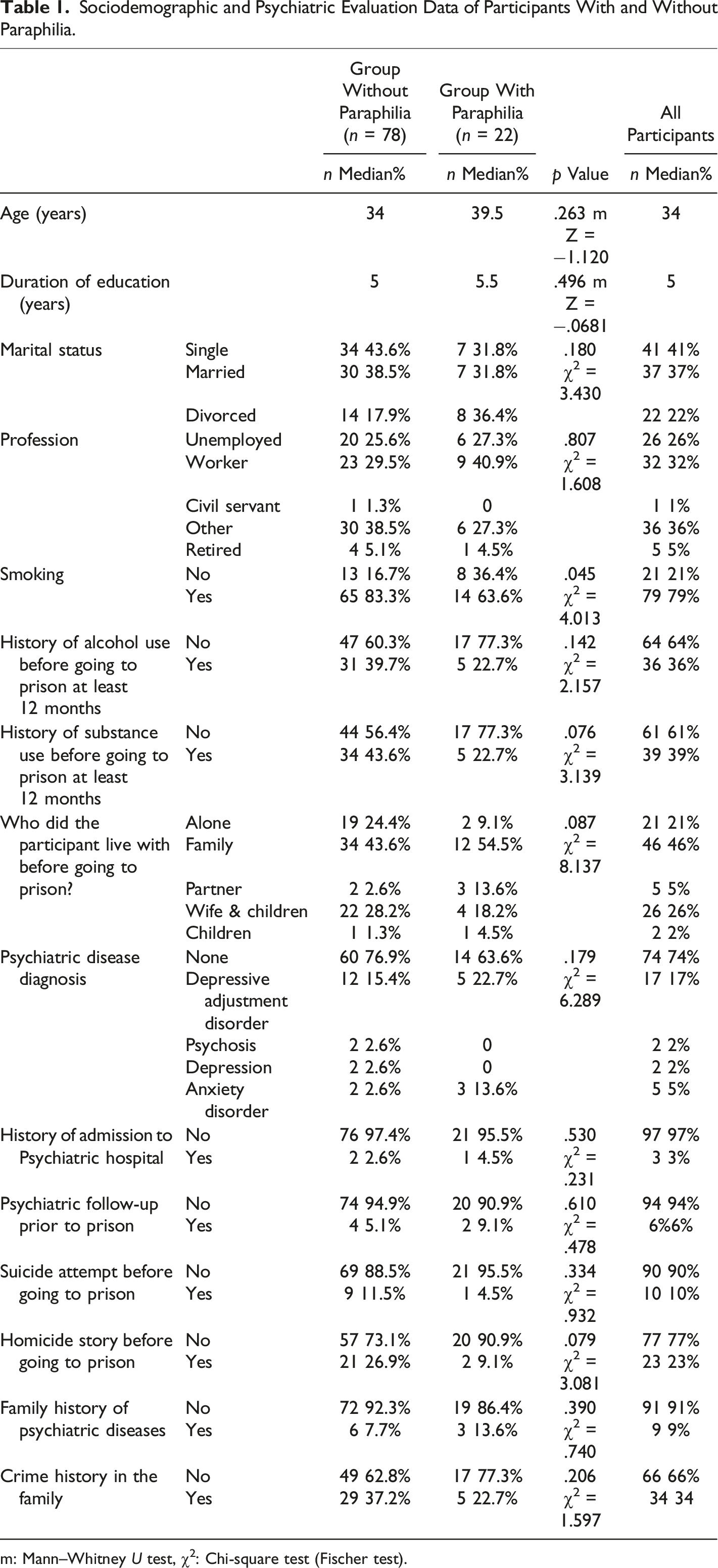
m: Mann–Whitney U test, χ2: Chi-square test (Fischer test).
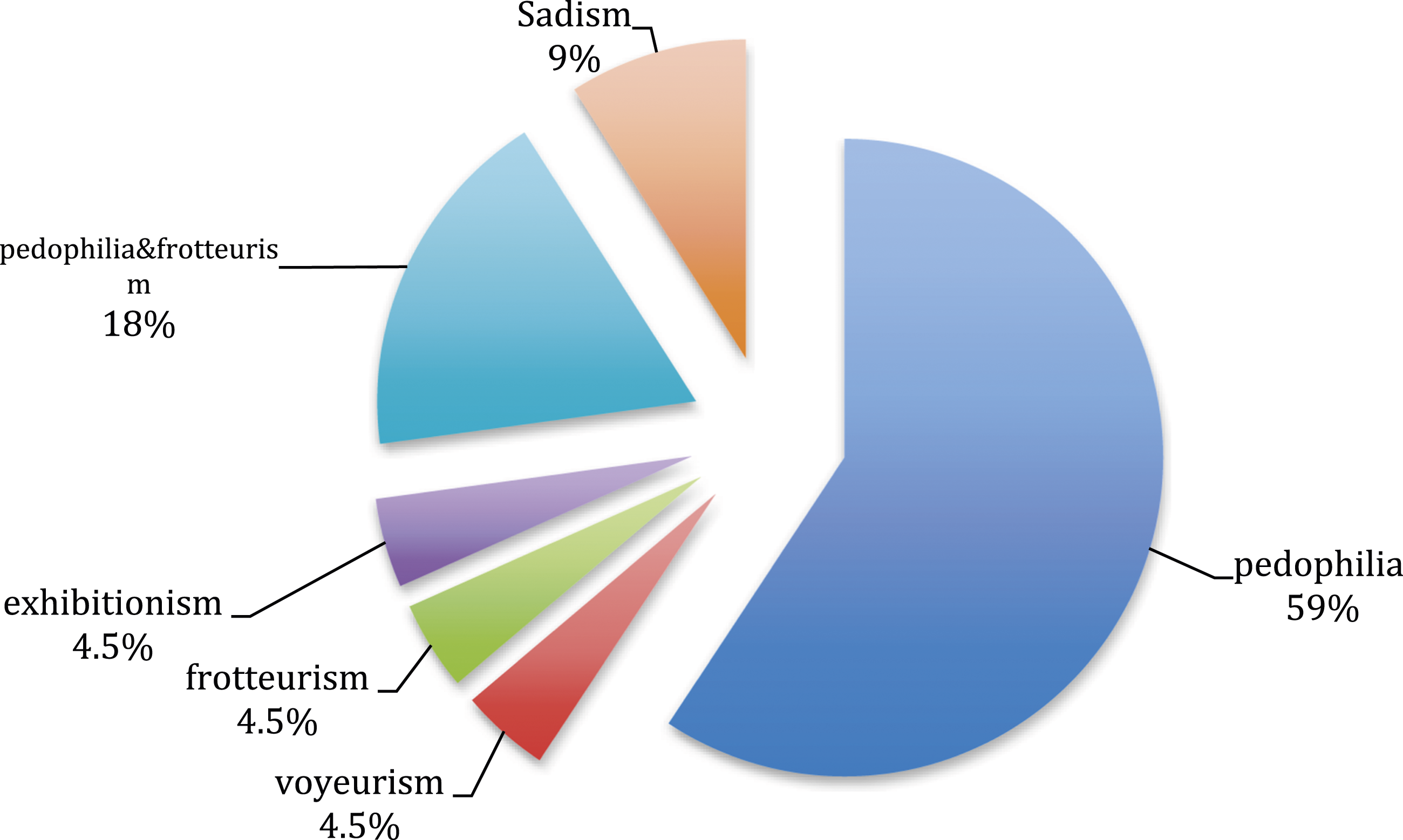
The distribution of paraphilia (n = 22).
The age of the victims in the group with paraphilia was significantly (p < .001) lower than that in the group without paraphilia. The male victim ratio in the group with paraphilia was significantly (p < .05) higher than that in the group without paraphilia. It was found that 84% of the survivors were female and 16% were male among all the participants.
Forensic Information About the Current Crime That the Groups With and Without Paraphilia Were Convicted of.
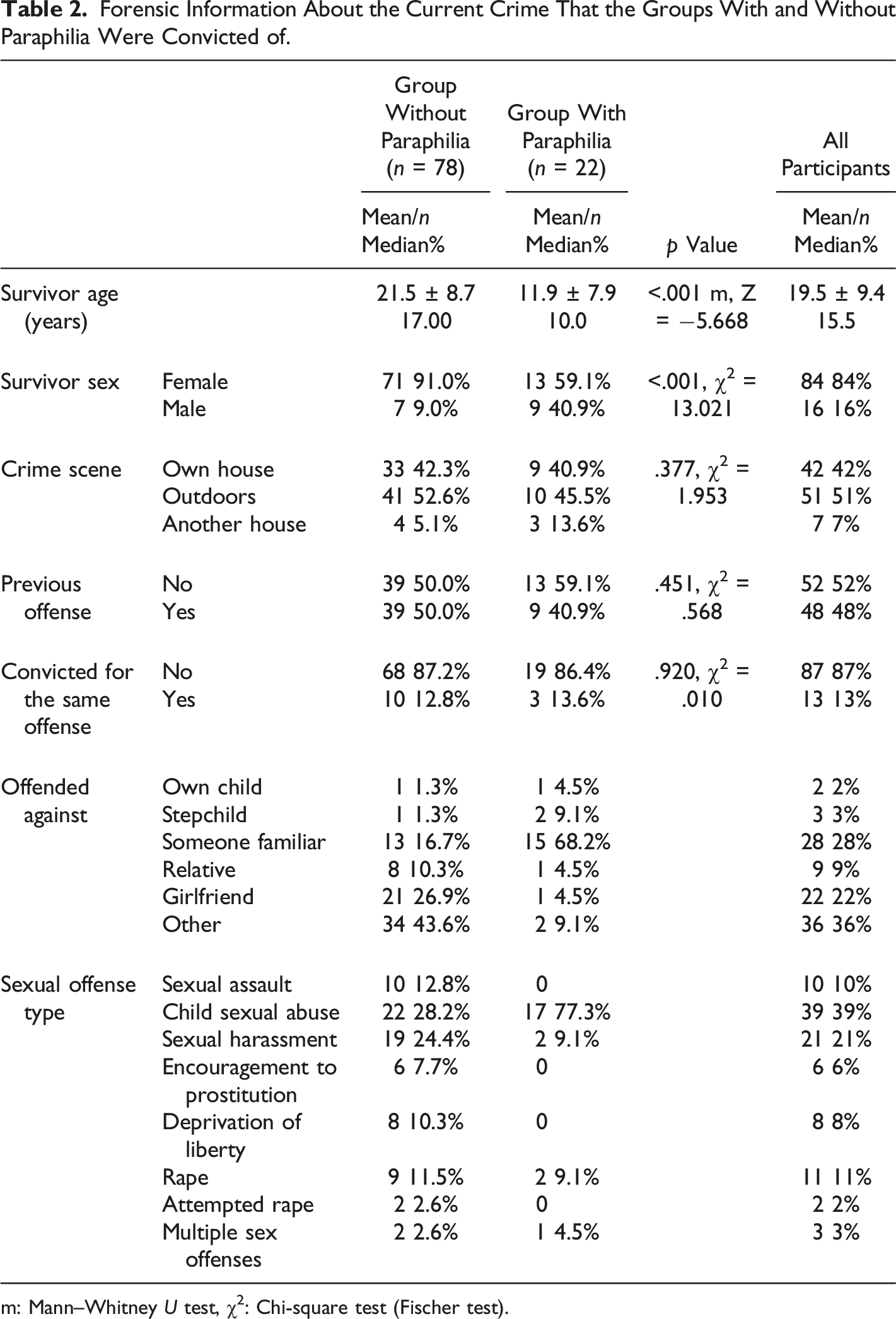
m: Mann–Whitney U test, χ2: Chi-square test (Fischer test).
Childhood Trauma Scale Scores of the Group With Paraphilia.
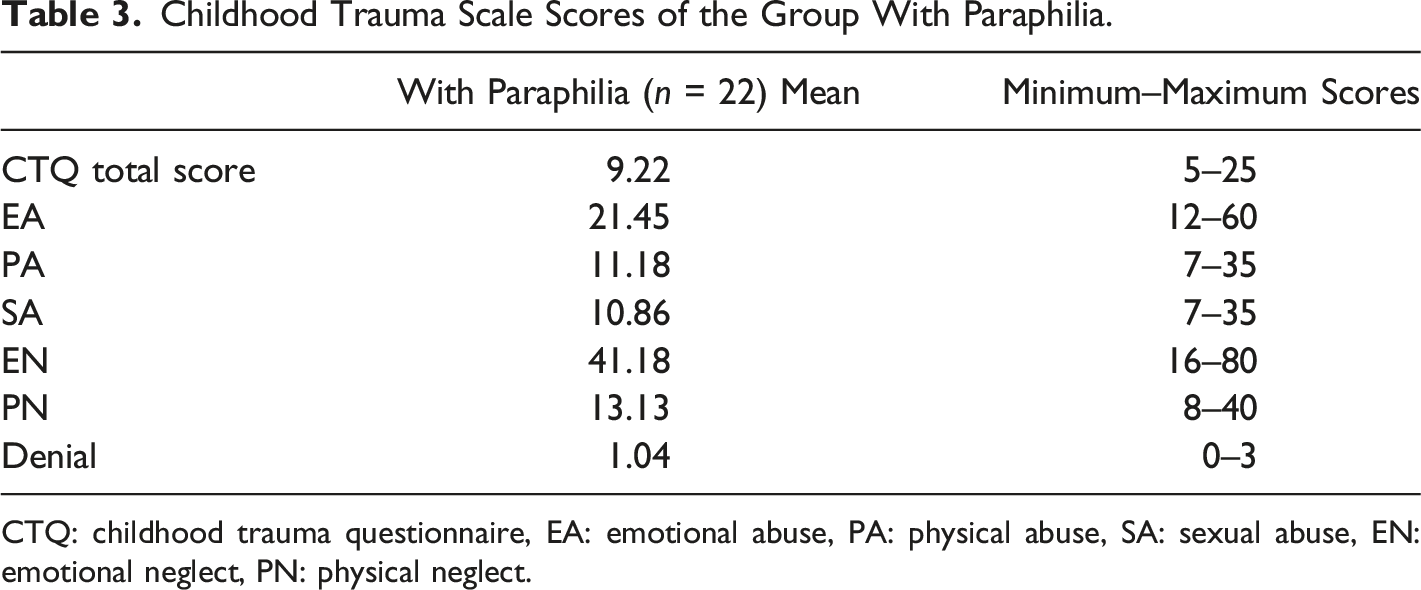
CTQ: childhood trauma questionnaire, EA: emotional abuse, PA: physical abuse, SA: sexual abuse, EN: emotional neglect, PN: physical neglect.
Discussion
Although paraphilia is rare, they pose some risks to society because of their repetitive nature. Most paraphilia cannot be detected because of sociocultural and legal regulations or the nature of the paraphilias. Differences in the definition of some paraphilias in the literature or defining paraphilic behavior as a disorder or just as an interest are difficulties in diagnosing paraphilias in psychiatric examinations.
In the present study, the family structures of men convicted of sexual offenses differ from previous studies (Valença et al., 2015). In the current study, it was found that men who committed sexual crimes were more likely to be married or divorced. This contradiction can be explained by the tradition of the Turkish family structure. Even if people have problems with close partner relationships, their families provide them arranged marriages. The fact that adults are unmarried creates a prejudice in the society that there may be a mental or sexual problem with them. For this reason, families in our country attach great importance to the marriage of their children.
The rate of alcohol and substance abuse during sexual offenses against adults is higher than that of crimes committed against children (Kirk-Provencher et al., 2021). Alcohol abuse appears to be less prevalent in Turkey than it is in the West. Despite this difference between societies, the fact that this difference is not observed here may show the existence of common points in profiles that commit crimes regardless of culture.
In the present study, there is a contradiction regarding the crime scene compared to previous studies (Gölge, 2005; Taktak et al., 2016). It is important in terms of revealing that survivors are familiar with individuals convicted of sexual offenses. Sexual offenses against children committed by relatives or close family friends can lead to dilemmas about reporting to the police. This dilemma was not observed in the present study. Individuals or families can file a complaint if they are subjected to any sexual assault, regardless of their relationship. This awareness can prevent the emergence of new survivors. In order to protect minors from sexual offenses, the awareness of family members should be increased. Also, the minors should be taught about signs of abusive behaviors so that they can report.
The rates for pedophilia and multiple paraphilias in the present study were consistent with the previous rates in both Western and Turkish samples (Smallbone & Wortley, 2004; Taktak et al., 2016; Eher et al., 2019). Therefore, individuals convicted of sexual offenses should be questioned regarding paraphilias. In the presence of any paraphilia, it should be considered that more than one interest might coexist. The comorbidities of pedophilia and frotteurism are not frequently encountered in the literature. While describing this comorbidity, in addition to psychiatric examinations, we evaluated witness statements in case files and the offender’s previous crimes. Touching is one way people show sincerity in Turkey. Under any circumstances, the rule of not touching children in North America does not exist in our culture. You can show affection for a child on the street, even if you do not know the child. However, the touches mentioned in the study were completely different from cultural touches. They are paraphilic contacts that we defined in this study. Based on the previous crimes of prisoners with pedophilia, these touches are not only part of the touches included in pedophilic behavior, but are also part of frotteurism, such as a separate entity.
When the rates of paraphilia were taken into consideration both in Western publications and in the few studies published in our country, a similar rate was found in the present study (Seto et al., 2003; Taktak et al., 2016; Eher et al., 2016). Considering that Turkey is culturally different from Europe and North America, where most research has been conducted on paraphilia, we may interpret that paraphilia is not significantly affected by different cultural, social, and religious situations. It can be said that there are more differences in society’s ability to realize and talk about paraphilia and child abuse.
The mean age of survivors in previous research was similar to that observed in the present study (Gibbels et al., 2019). Adolescents who committed crimes against children were found to have more paraphilic but less antisocial behaviors than adolescents who committed crimes against adults and peers (Ueda, 2017). Consistent with the above findings, in the present study the group with paraphilia committed crimes at a younger age, without gender discrimination, and against familiar people, whereas the group without paraphilia and with antisocial personality traits committed crimes mostly against females, with a median age of 17 years, against unfamiliar people, and their crimes mostly involved aggressive behaviors.
Considering the gender of the victims, although there are twice as many reports of female survivors as of male survivors, it is possible that men were equally victimized but less likely to report a sexual offence (Stoltenborgh et al., 2011). When we consider this situation in Turkey, we reach a similar conclusion. If the boys are the “victims”, it seems more difficult for families to call it a “sexual assault”. The parents of boys often ignore or deny this situation. There is widespread misinformation in society that being gay is a disease or a choice, and that sexual assault can trigger being gay in boys. This denial can also be observed in these false beliefs. Maybe it is a behavior to prevent their boys from being defined as “gay” in the future.
In the current study, the CTQ scale was applied only to the group with paraphilia, and all subscales were found to be higher than the minimum score. One study concluded that PA and SA, as well as male and female caregiver-associated psychological abuse, were associated with paraphilia. The strongest association was observed for SA. Further, it was found that male caregiver-associated psychological and SA factors were strongly associated with child sexual interest (Davis & Knight, 2019). Examination of the study results, together with previous studies, suggests that exposure to childhood trauma may be associated with the development of paraphilia (Jespersen et al., 2009; Kenny et al., 2001; Lee et al., 2002). It was suggested that sexuality should be used as a way of coping in males with a history of childhood sexual victimization. Due to their previous trauma, people may begin to use their existing fantasies as a tool to sexually humiliate or exert power and control over children. Consequently, these behaviors may become paraphiliac in nature (Marshall & Marshall, 2000). If adequate psychological support is provided to survivors of sexual abuse, the formation of new survivors can be prevented.
Diagnosing sadism in sexual offenses is commonly regarded as indicative of a high risk of violent reoffence (Eher et al., 2016). The latent structure of sexual sadism is likely dimensional, placing the disorder at the upper end of a continuum of sexually aggressive behavior (Mokros et al., 2019). There are no pathognomonic symptoms characteristic of sexual sadism that complicate the establishment of a definitive diagnosis (Longpré et al., 2017). There are different definitions in the DSM-5 and International Classification of Diseases (ICD-10). Some researchers have assumed that all violence and infliction of pain are diagnosable as sexual sadism (Frances & Wollert, 2012). On the other hand, Knight et al. (2013) defined both paraphilic coercive behaviors and sexual sadism under the term agnostic continuity. Because the criteria for sexual sadism differ between diagnostic manuals, it is difficult to compare the results from various studies (Marshall & Yates, 2004). In the current study, when we considered sexual arousal from humiliating or damaging another person, we realized that sexual sadism was present in men convicted of sexual offenses with antisocial personality traits. These people evidenced sadism in their sexual behaviors as well as their impulsive and aggressive behaviors. From this perspective, we can say that we have a closer definition of Mokros’s sexual sadism.
Limitations
The present study had certain limitations. The retrospective design of the study and the use of data retrieved from the files may raise questions about the evaluation of individuals. The fact that the interviews were held based on the DSM-5 criteria and that there were no structured interviews could affect the objectivity of the study, especially in terms of diagnosis. To overcome this limitation, especially the potential problems that might have been experienced while questioning individuals regarding paraphilia, paraphilic disorders were termed paraphilias. To overcome researcher bias, the two researchers who conducted the interviews reached the main conclusion by re-evaluating the information of all participants together. Administering the CTQ-28 to volunteers with paraphilia is a limitation. The main purpose of the interviews with sexual offenses in 2013 was to identify and rate possible cases of paraphilia. At that time, there were discussions on the medical castration of individuals convicted of sexual offenses who had paraphilia in Turkey. Therefore, it was only aimed at evaluating childhood trauma in people with paraphilia.
Conclusion
Sexual offenses against children aged 10 years and below and against males might be suggestive of paraphilia and an increased risk of recidivism. Questioning individuals convicted of sexual offenses in terms of paraphilia and childhood trauma may prove to be valuable in protecting public health and safety. Nevertheless, minor survivors should be provided adequate mental rehabilitation opportunities to cope with the effects of psychological trauma.
Footnotes
Declaration of Conflicting Interests
The author(s) declared no potential conflicts of interest with respect to the research, authorship, and/or publication of this article.
Funding
The author(s) received no financial support for the research, authorship, and/or publication of this article.
