




Abstract
Intimate partner violence (IPV) is a pervasive, worldwide public health concern. Risk of IPV may elevate during the perinatal period, increasing maternal and fetal health risks. Trauma- and violence-informed care shows promise among interventions addressing associated mental health sequelae. As a secondary analysis, the purpose of this study was to employ a qualitative arts-based exploration to better understand pregnant women's experiences of trauma and violence-informed perinatal care in the context of IPV. Using an arts-based qualitative methodology, different art forms were used to analyze, interpret, and report data, resulting in a layered exploration to represent phenomena. From this, four themes were reflected in four poetic pieces: Black Deep Corners, Triggering my Thoughts, Breaking through the Brokenness, and Now Perfectly Imperfect. Nine pieces of visual art were created reflecting these themes, creating a layered, embodied, artistic way to empathically explore and translate phenomena.
Keywords
Implications for Practice and Research
Knowledge translation in arts-based forms can be particularly useful when exploring and communicating phenomena where counternarratives and reduction of stigma are necessary. Trauma- and violence-informed care seeks to understand how experiences of intimate partner violence intersect with structural forms of violence (e.g., poverty, racism, sexism, and other forms of discrimination and/or oppression) in the creation of trauma. The strengths of arts-based health research lie in providing holistic and evocative levels of inquiry, raising critical consciousness, cultivating empathy, challenging illicit biases, and opening up dialogue and the advancement of public scholarship.
In Canada, an estimated 44% of women experience intimate partner violence (IPV) in their lifetime (Cotter, 2021). Intimate partner violence is understood as physical, sexual, and/or emotional abuse by an intimate partner within the context of coercive control (Tjaden & Thoennes, 2000). Intimate partner violence is frequently referred to as “the great equalizer” given that socioeconomic status, geographic location, and age are not related to the likelihood of experiencing IPV (Davies et al., 2015; Tjaden & Thoennes, 2000).
However, IPV is a gendered issue. In Canada, women account for 79% of all individuals who experience IPV (Status of Women Canada, 2020), and an estimated 83% of police-reported violence against women is perpetrated by men (Canadian Centre for Justice Statistics, 2016). Police statistics are an underrepresentation of the reality of IPV in Canada, as fewer than one in five people who experience abuse by a spouse report it to the police (Canadian Centre for Justice Statistics, 2016). The gendered impacts of IPV extend beyond prevalence, as women who experience IPV are also more likely to experience injury from abuse and long-term mental illness including depression and posttraumatic stress disorder compared to their male counterparts (Burczycka, 2018; Canadian Centre for Justice Statistics, 2016). Moreover, IPV is typically more lethal for women, as they have four times the risk of IPV-related deaths than men (Public Health Agency of Canada, 2018).
While women are generally more likely to experience IPV, pregnancy exacerbates this risk due to increased familial stress and/or a perceived loss of control by their abuser (Jasinski, 2001). Unplanned pregnancy is a major risk factor for abuse, as in some cases, a previously unabusive partner will become violent during pregnancy (Yakubovich et al., 2018); this abuse usually continues once the infant is born (Best Start Resource Centre, 2021). In Canada, up to 40% of women with children reported that IPV began during pregnancy (Jasinski, 2001). However, this does not suggest that women who experienced abuse prior to pregnancy do not continue to be at risk for violence during pregnancy. Estimates from a systematic review suggest that 0.9–21% of Canadian women who experienced IPV in the past will continue to experience abuse while pregnant (Taillieu & Brownridge, 2010).
The health consequences of experiencing IPV during pregnancy are wide in scope for both mother and infant, including poorer maternal health, poorer maternal nutrition, compromised gestational weight gain, difficulty bonding and/or breastfeeding the infant after delivery, and increased risk of pregnancy complications, premature labor and delivery, low birth weight, perinatal morbidity, substance use, and other adverse birth outcomes, including maternal and/or fetal death (Alhusen et al., 2015; British Columbia Reproductive Care Program, 2003; Daoud et al., 2012; Taillieu et al., 2016). Finally, the mental health consequences of experiencing IPV during pregnancy can increase the risk of maternal depression during pregnancy and postpartum and the risk of suicide (Alhusen et al., 2015). In 2011 in the United States, 54.3% of suicides by pregnant women were attributable to IPV (Palladino et al., 2011). Overall, the mental and physical health impacts of experiencing IPV during pregnancy can be immediate and/or long-term severe physical, cognitive, emotional, and other developmental consequences among mother–infant dyads (Agarwal et al., 2023).
Women who experience IPV during pregnancy are also more likely to delay and/or miss antenatal care appointments compared to women who do not experience IPV, which can negatively impact both maternal and fetal health (Alhusen et al., 2015). Trauma- and violence-informed care (TVIC) seeks to understand how experiences of all forms of violence, not only IPV, intersect with structural forms of violence (e.g., poverty, racism, sexism, and other forms of discrimination and/or oppression) in the creation of trauma (Browne et al., 2018; EQUIP Health Care, 2017). Trauma- and violence-informed care is well suited to the context of IPV given that it is grounded in an equity-, safety-, and strengths-based approach that seeks to empower people, promote healing, and reduce harms (Browne et al., 2018; Department of Justice, 2018). While TVIC has shown great promise in Canadian populations who experience IPV, it does rely on providers’ ability to understand trauma and its associated complexities (Browne et al., 2018). Unfortunately, use of TVIC is limited in health-care settings responsible for perinatal care (Dichter et al., 2018; Wathen et al., 2021). In addition, the widespread stigma that exacerbates the negative impacts of IPV often extends into conventional research that follows the social and psychological traditions that serve to perpetuate such stigma (Link & Phelan, 2001). As such, approaches to inquiry and knowledge translation in these research spaces call for disruption of convention, where diverse and evocative approaches may be more appropriate for complex human situations requiring empathic understandings. One strategy for promoting empathic and compassionate understanding of IPV among health and service providers and the public is the use of arts-based health research (ABHR) methods of knowledge generation and mobilization which include generating knowledge using arts-based research approaches (Leavy, 2019). Previous TVIC-informed ABHR specific to violence have been successful in promoting shared cognitive and emotional understandings of abuse and promoting community awareness and knowledge (Charles & Lowry, 2017; Robson et al., 2018). Importantly, ABHR offers a unique opportunity to transition social understandings of IPV from private spaces to public discourse by amplifying the voices of women with lived experience, to foster dialogue, education, and ultimately, diverse ways of understanding within communities.
Arts-based methods of knowledge translation have been employed extensively in medical education to train observational skills; however, the application of these methods in health-related research and TVIC within the context of IPV is relatively scant despite clear benefits and potential. In a scoping review by Sunderland et al. (2022) on trauma-aware arts-health practices, only one of the 19 included articles was conducted in the context of violence as a traumatic experience. Further, to the authors’ knowledge, only two studies have specifically addressed experiences of violence through the use of ABHR events: one studied intergenerational trauma of Indigenous peoples in Canada (Charles & Lowry, 2017), and one addressed elder abuse among individuals who were LGBT in Canada (Robson et al., 2018).
Descriptions of survival and recovery from IPV using an integrated arts-based approach in the context of women's perinatal experiences have not been explored. Narratives of women's experiences of IPV are an effective mechanism to help understand how women overcome this trauma. This article's qualitative supplemental analysis was embedded within a previously published parent study entitled “PATH: Promoting Attachment Through Healing” (Jackson et al., 2018; Mantler et al., 2022). PATH sought to understand pregnant women's journeys and recovery from IPV utilizing the TVIC lens. Research regarding TVIC-informed ABHR and experiences of IPV during pregnancy have not been documented anywhere in the world, including in Canada. This ABHR project had two objectives: (1) Explore pregnant women's experiences of IPV using a TVIC lens while employing an arts-based qualitative methodology, and (2) document an ABHR community event in Ontario, Canada, to promote understanding of women's experiences of trauma and violence-informed antenatal care and to describe this novel event and its potential impacts on community partners and services.
Research Approach and Methodology
Arts-Based Health Research
Arts-based health research was conceived during the early 1990s and is now a viable methodological genre with utility across many disciplines and health-care sectors (Archibald & Blines, 2021; Leavy, 2015). While ABHR involves an integration of art forms to analyze, interpret, and disseminate qualitative data to assist with effective understanding and meaning making of health-related issues or illnesses (Leavy, 2015; O’Keefe-McCarthy et al., 2020), it can also be used in conjunction with more traditional data collection methods to elicit findings that are not easily conveyed by written or spoken words (Nathan et al., 2023). Beyond analysis, interpretation, and representing of data, ABHR can be a powerful tool for knowledge translation, permitting a broader reach to multiple diverse audiences (Boydell et al., 2016; Lapum et al., 2012; Leavy, 2015; O’Keefe-McCarthy et al., 2020). Knowledge translation in arts-based forms can be particularly useful when exploring and communicating phenomena where counternarratives and reduction of stigma are necessary (Nathan et al., 2023). A case exemplar by Archibald and Blines (2021) demonstrated how ABHR allowed for a material externalization of qualitative research—providing fodder for reflection on the misalignments and awakening of new possibilities for health-care providers in spaces where evidence misalignment exists. In sum, arts-based knowledge translation (ABKT) approaches have been shown to be a powerful conduit to facilitating uptake of information, and subsequent changes across knowledge, attitudes, and behaviors among health-care groups (Archibald & Kitson, 2020).
Arts-Based Embodied Layered Exploration
Emerging themes in the original study warranted conducting a secondary analysis; this occurs when the iterative process of research inquiry of the primary study uncovers new information that calls for a reentry into the qualitative data (Heaton, 2008). As a secondary analysis, we purposely employed a creative approach to evocatively analyze and translate data from the primary PATH study by layering different artistic genres (literary, artistic, and performative representations). This layering was conducted to provide what O’Keefe-McCarthy et al. (2020) described as an arts-based embodied and layered exploration, also known as the ABELE approach.
The verbatim transcripts and associated field notes of the narratives of four pregnant women who experienced IPV were reanalyzed by the team to expand on the emerging themes not fully explored in the parent study. The ABELE approach uses layers of analysis beginning with: (a) qualitative description of the rich narratives of the participants, followed by (b) interpretation using literary techniques in the creation of thematic poetry by the researchers, and (c) representation of the thematic poetry through the medium of visual art created by community volunteers. The last aspect (d) is the performative layer to actively disseminate the poetry and visual art creations (O’Keefe-McCarthy et al., 2020).
Qualitative Description
The secondary analyses were conducted by three members of the research team. Content analysis summarized the informational content of data (Morse & Field, 2015). Participant data were coded and organized into categories and emerging themes. Each transcript was read and analyzed by counting the participant responses and repetitive use of words or metaphors to describe participant journeys with IPV and their recovery, and then coded in terms of the evolving themes (Kleinheksel et al., 2020). Consensus was achieved for any disagreements with iterative team meetings to make decisions regarding accepted codes/categories and themes. Four themes emerged: Black Deep Corners, Triggering my Thoughts, Breaking through the Brokenness, and Now Perfectly Imperfect.
Literary Techniques to Create Thematic Poetry
Poems were created by Sheila O’Keefe-McCarthy to reflect the overarching themes contained in the narratives derived from the qualitative descriptive analysis, using original words, word clusters, and verbatim phrases from the participants (O’Keefe-McCarthy et al., 2020; Pendergrast, 2009; Richardson, 1992). To construct the poems, staying close to the data, the author focused on the similarities and differences in the participants’ use of words and the tone, lyrical cadence, and pauses in the narratives, to structure each poem into stanzas (O’Keefe-McCarthy et al., 2020; Pendergrast, 2009; Richardson, 1992). This iterative creative process occurred with cycles of reimmersion in the data and reflection on the key meanings and understandings as they evolved.
Representation Through Visual Art
Once the poems were written, the author made a recitation and archival recording of them. The research team canvassed community partners (e.g., academics/students who study IPV, women's shelter staff, perinatal nurses, and public health staff) for volunteers willing to create visual art for this project. After providing the volunteer artists with a description of the project, artists who were interested in creating pieces for the event were given the four poems to review and asked to engage with the poetry by writing down their feelings and thoughts in response. Artists were then asked to select one poem as the foundation for their art piece and encouraged to use whatever medium they desired. Following the creation of their work, they provided the team with a brief narrative of how the poem was reflected in and/or inspired their art. All volunteer artists were provided a $100 honorarium to acknowledge their time and contributions and to offset costs of art materials. After the knowledge mobilization activities were completed, the artists donated them to an auction to raise funds for a local women's shelter.
Results
Poems were created that represented each of the four themes: (1) Black Deep Corners; (2) Triggering my Thoughts; (3) Breaking through the Brokenness; and (4) Now Perfectly Imperfect. Nine pieces of visual art were created reflecting these themes. The four poems and artists’ descriptions of their pieces are described in turn.
Theme 1: Black Deep Corners
BLACK DEEP CORNERS
Like, I so want to be a good mom
These Intrusive thoughts, seeping, spreading into my mind, I can’t control it.
Is it my fault I have PTSD !, ….yes, I am not perfect, you- have- to- be- perfect,
I battle and bury my scabs and tear open my scars: up, down, don’t think it…
Thoughts hurt, because….
Women with mental health problems shouldn't be allowed to be moms.
It's so easy to shake a baby.
But-I- so want to be a good mom.
I feel sick, I can’t do this, doubting myself…
I should be able to handle this; “should” is such a bad word.
I should be able to handle this, all these other moms can handle this, how come I can’t handle this….
Black corners, getting bigger- moving in toward me
Engulfed in Huge Fears
Fears of hurting her…
I was afraid to walk through a doorway
because I was afraid that I would accidently hit her head on the wall and that she would die,
and I was afraid…
because it was so weird, but I couldn’t tell anybody that because then I was afraid that they would think I was crazy and because they thought… no, they knew that I would then hurt her,
So, I wouldn’t tell anybody; and I was so afraid.
And I would think these things.
Well, you’re such a terrible mom and I would often think, or I would get into a dark corner because I would think I didn’t deserve… my children… happiness… hope?
Trying not go fall down farther, spinning into-the black cornered hole.
Destroyed……
Shit! I so want to be a good mom.
TRIGGERED!
Two artists selected Black Deep Corners as the poem to inspire their art pieces. Despite the commonality in poem selection, the artists’ descriptions of their pieces and their overarching feelings about the poem differed. One artist described the reasoning behind their color palette and what the various colors represented. This artist described the contrast in emotions throughout the poem—from initial struggles to hope for the future: It was important for me to respectfully hear the mother's struggles while also providing a sense of wonderful things to come. The sky is dark, representing her description of feeling “black corners are getting bigger, moving in.” She speaks about her desire to “so want to be a good mom.” I painted her holding her child's hand as together they fly a bright and vibrant kite to symbolize hope breaking through the dark clouds. Although the kite may seem far away, she holds that within her grasp offering a sense of happiness and hope that she speaks about and is deserving of. [Artist #1] (Figure 1)
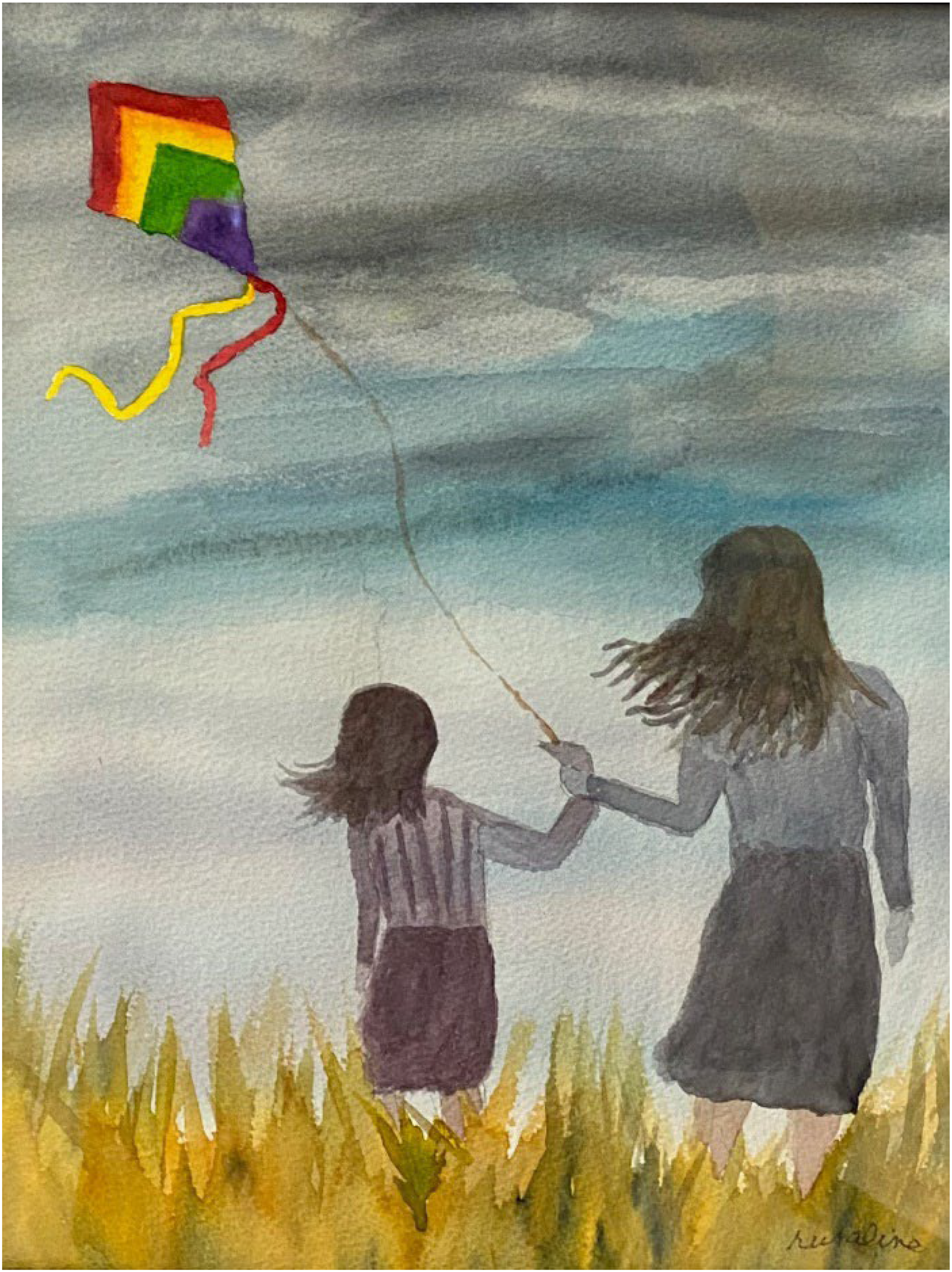
Black Deep Corners, Water Color, Artist #1.
The difference between the poems is the realization that strength and power lie within and the women are harnessing that to show up authentically for their children. You can look at the four poems separately, but if you look at them as a whole, they tell the story of a woman's journey—despite the fact that each poem represents someone different…the journey of struggle, heartbreak, fear, doubt, courage, vulnerability, strength, power, and authenticity unites them. [Artist #2] (Figure 2)
Theme 2: Triggering My Thoughts
TRIGGERING MY THOUGHTS!
Intrusive, so scary, bad thoughts… thoughts clouding around.
Literally I jump from being totally fine to being in my worst state.
My heart beats really, really, fast.
Smells of my disgust, that feeling again, can’t control it, I know what it is…
All fear would come into, over me and Take Me Over….
Fear instantly turning into anger.
I lash out to those I protect.
I can’t get air… breathe- stay calm, struggling to stay calm.
My chest hurts: IT'S COMING…
NO….The freak out moment, NO, NO, NO, NO!
I don’t want to be another Form 1….
Is anybody listening, need help, I can’t…… and then…
Children are being hurt, we-I have to… keep them safe, save them… away from danger…
Vulnerable unprotected children- things invading my thoughts…
FIX IT————AFRAID
I know it is ridiculous, but it doesn’t seem ridiculous at the moment.
TRIGGERS PULL THE TRIGGER.
Two artists selected Triggering My Thoughts as the poem to inform their pieces. While the media used in creating the pieces differed, the pieces were united through the artists’ shared feelings borne from the poem, of being overwhelmed. One artist chose not to describe their feelings about the poem they chose to depict. However, the second artist described how their piece reflected the darkness of the poem with the colors used in their piece, and the prevailing ideas of fear and being consumed by thoughts, they chose to make the inseparable bond of love between mother and child the focus of their artwork: Judgment thrives in unfamiliar environments—as there is no connection to the words we are speaking. The poem addresses this through the mother's concern about others’ words. “I wouldn’t tell anybody, and I was so afraid.” These fears and doubts surround the mother, consuming her thoughts. But the love between the mother and child is more powerful than doubt, it is the centre of their relationship. This bond is shaped by love. [Artist #3] (Figure 3)
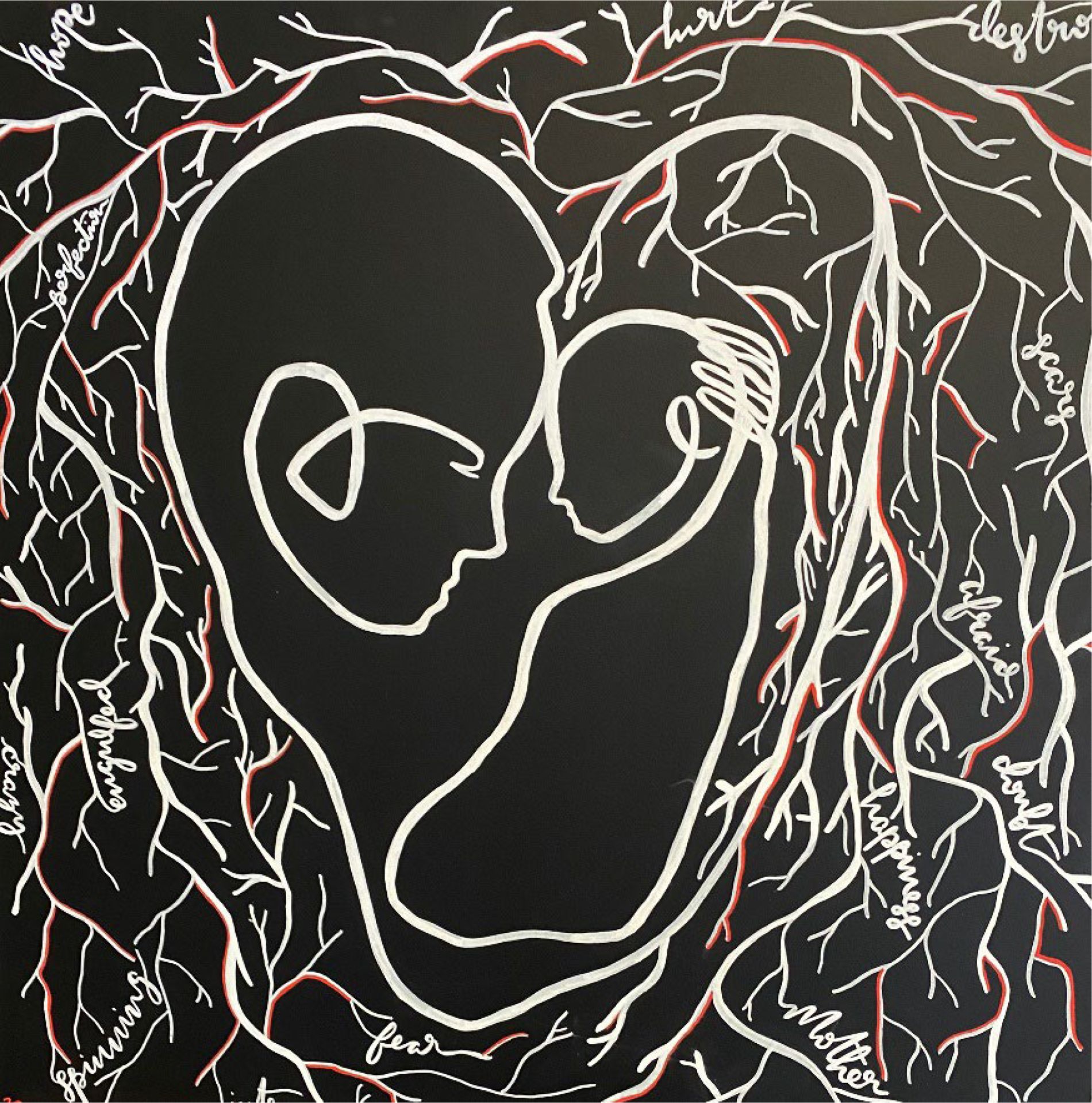
Black Deep Corners, Chalkboard Painting, Artist #2.
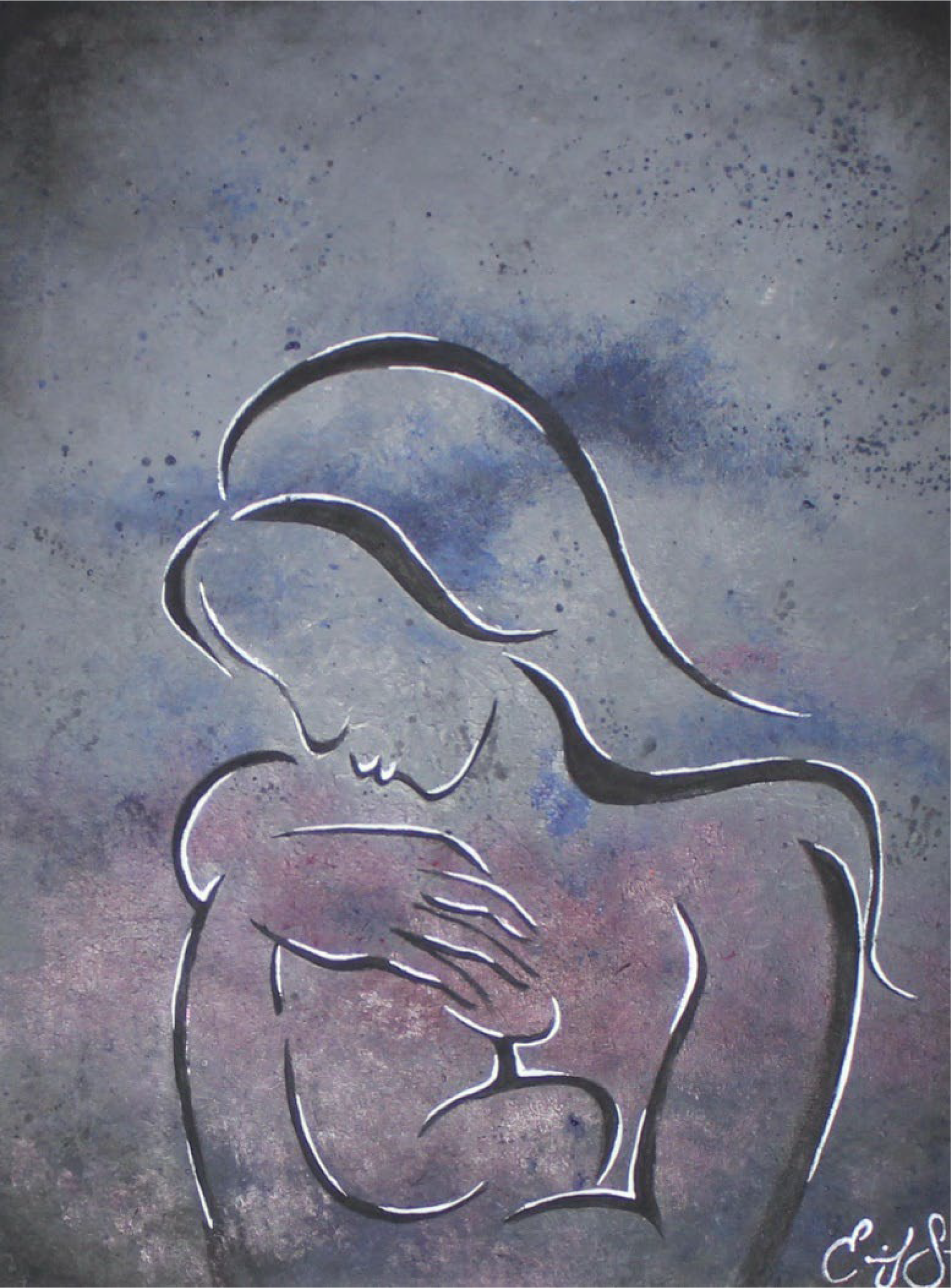
Triggering my Thoughts, Acrylic on Canvas, Artist #3.
Theme 3: Breaking Through the Brokenness
BREAKING THROUGH THE BROKENNESS
I would never have killed myself- I won’t do that, I can’t do that. I know that now.
Hello, I am Beautiful Broken,
because I know that even though today could be hard, tomorrow will be way better, and I realize the strength of what I’ve overcome.
I-AM-MY-STRENGTH.
Dealing with really deep issues, I would often have no idea why I was feeling this way.
Life changing therapy
I actually figured it out which was like, why it was like so breakthrough.
I can tell you,
I’m able to stop it now and then I’m able to figure out what my triggers are before they happen sometimes.
So, then I try to be more accepting of the fact that this is who I am and that it can-no- it will be okay.
This is who I am, it isn’t horrible, but it makes me probably a better mom which sucks that I had to go through all this, but it would
because it just makes me care more.
Beautiful Broken isn’t as Broken as she once Was.
The poem Breaking Through the Brokenness was selected by one artist who created a mosaic to express their interpretation of the poem. This individual highlighted different lines from the poem that stood out to them, describing their personal meaning of each line and how the poem was embedded within their art piece: “Hello, I am Beautiful Broken.” Mosaics are created through a process of breaking ceramics and putting them together again, in new and unexpected ways. “[E]ven though today will be hard, tomorrow will be way better.” The tiles and mosaic surrounding the mother and child in this painting create a hectic atmosphere of chaotic stimuli. But, there is peace in the mother's embrace. “[T]his is who I am and it can, no, it will be okay.” There is growth here too, and sunlight, and color, and love, visible alongside the cracks and brokenness, not despite of it. “[I]t just makes me care more.” [Artist #4]. (Figure 4)
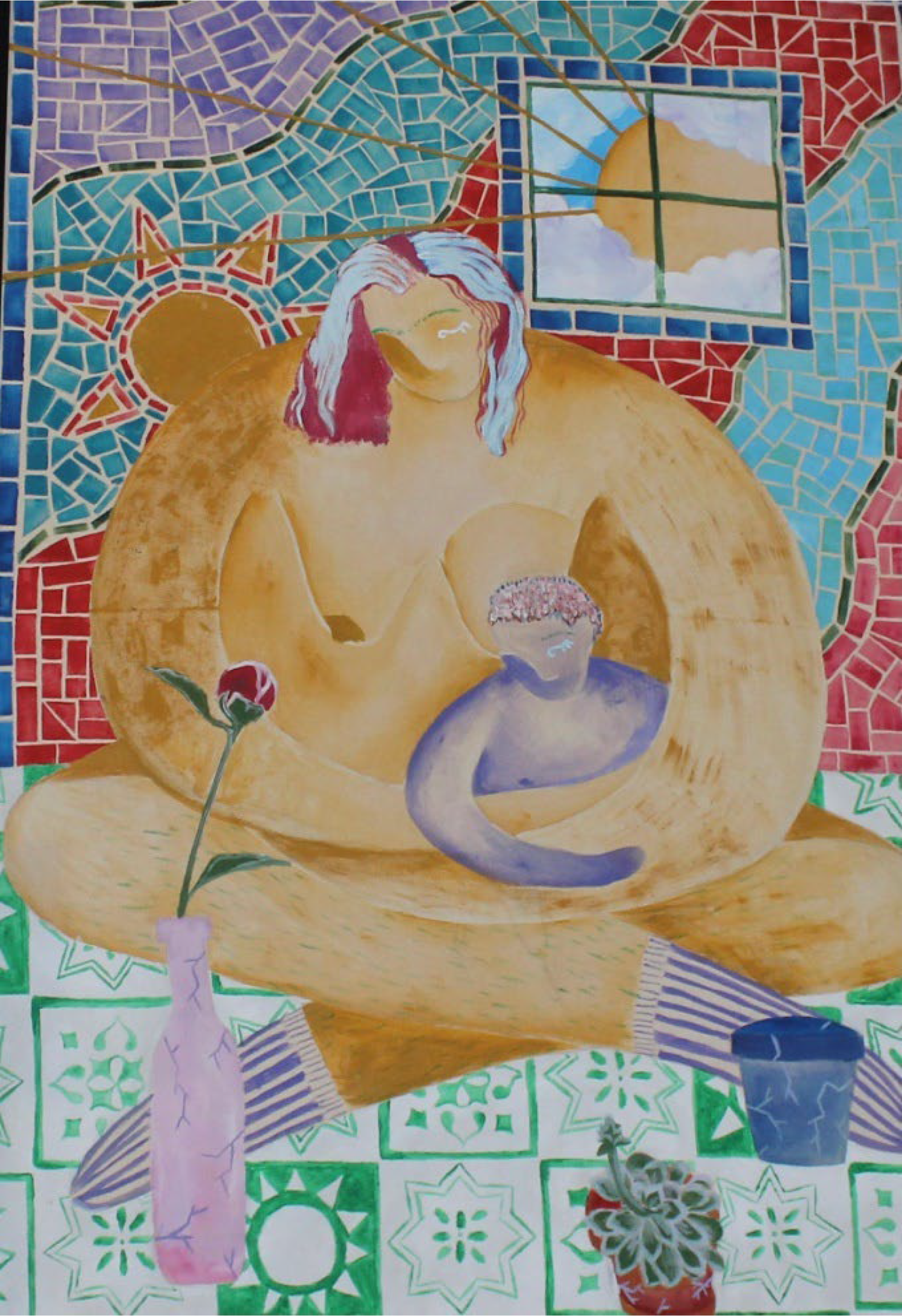
Breaking Through the Brokenness, Mosaic Oil on Canvas, Artist #4.
Theme 4: Now Perfectly Imperfect
NOW PERFECTLY IMPERFECT
Soaring above the black, taking back the power to know and feel my worth,
I have value!
Oh Yes, I am imperfect …which… for me- is just perfect
I have changed.
I know that society does not view me as healthy, competent but:
I- and only I, can only say that about me- Only Me.
Now in the light with dark corners receding, I allow myself to see me as a really- strong woman.
Like if I am in a really good place; I don't feel like a failure as much.
I'm happier and more confident,
I am better and good for my children.
Imperfect-Perfectly
Four artists selected Now Perfectly Imperfect. One individual underscored that the poem reminded them of trees they encountered on a hike, describing the symbolism behind the trees: This painting is of a small grove of aspen trees located in Hafford, Saskatchewan and considered a botanical mystery. The small cluster of aspen trees are “atypical” as compared to usual aspens they do not grow upwards towards the sky; instead, their trunks and branches twist and turn in many directions. Yet they thrive and reproduce seedlings which grow the same way. The words of this poem reminded me of these trees when I first encountered them on a hike. The words “perfectly imperfect” in the poem resonated with me as the trees, just like the mother in this poem may be perceived as imperfect but are, in fact, perfectly so. Just like the straight aspen trees they are strong, providing shelter to the seedlings and those who walk among them and are thriving in the sometimes hostile climate of the prairies. The wooden plank through these trees reflects the healing journey described in this poem where a woman comes to value herself as she is; similarly do these trees. The pathway is open, free of impediments to block one's way. Aspen trees have the Celtic meaning of awareness and transformation. This poem speaks of having changed and being self-aware of one's worth and value. The colors are vivid to depict other aspects of the poem. Yellow signifies optimism and hope; orange is optimistic and uplifting, rejuvenating our spirit; blue symbolizes confidence, stability, faith in who one is at the moment, and has positive effects on the mind and body. Brown is a stable and grounded color that depicts stability and steadfastness—strength. [Artist #5] (Figure 5)
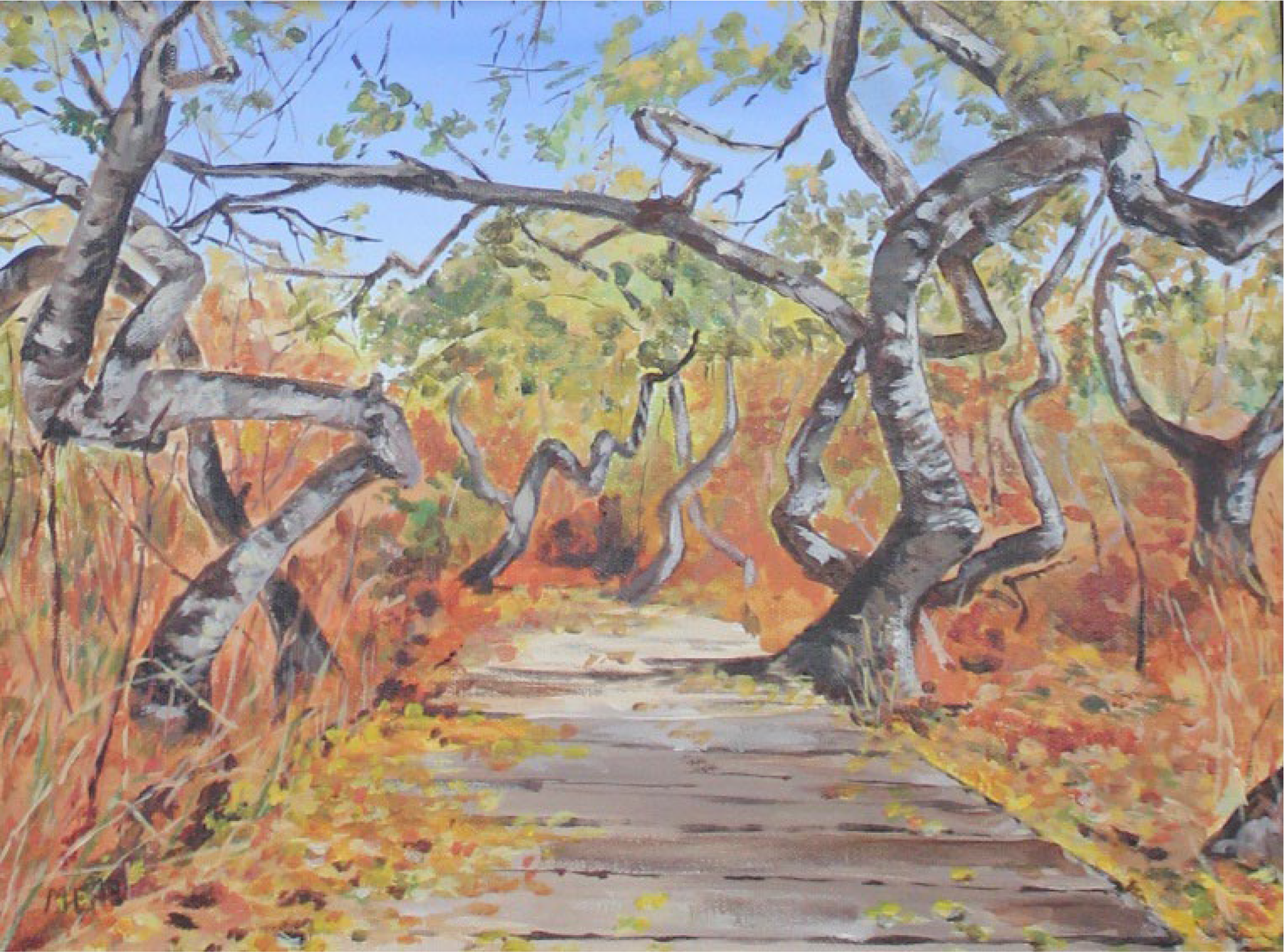
Now Perfectly Imperfect, Acrylic on Canvas, Artist #5.
This art piece embodies a women's ability to acquire self-acceptance in the midst of inner conflict. The motif used in this artwork was inspired by the Japanese art of kintsukorai, where broken pottery is fused back together using gold or precious metals. This style of art is thought to make something that is broken more beautiful through the process of repair. The belief of being beautifully broken is known in Japan as “wabi-sabi,” which loosely translates to mean that things can exist as perfect despite imperfections. The artist believes that “wabi-sabi” is exemplified through the human experience by means of displaying resiliency in the face of adversity—which was emphasized throughout the aforementioned poem. [Artist #6] (Figure 6)
Another artist used color to represent contrast within the poem. This individual described the change in color as the woman's “self-realization,” knowing that her strength and courage came from within. This artist described: Left Frame: The frame on the left represents how she felt before by how society did not view her as “healthy.” This is a pre-realization piece having the “black” floating above her time of struggle. The white and black spiral represents a time on confusion and judgement. The spiral/circle being her as a whole, a woman. This shape stays consistent though out the two pieces. Right Frame: The frame on the right is the main focus of the poem. Here she is soaring above the “black” taking back the power to feel and know ones worth. The corners are receding, to allow herself to see that she truly in fact, is a strong woman overcoming her surroundings. The color change represents the self-realization of herself, being in that better place. For herself, and her children. The main idea of this piece is the change in color and surroundings (her self-realization). Herself as a woman (the circle) stays the same because she was always strong, always good for her children, and always had value. Now that she realized the strength, and confidence in herself, she overcame the black, the struggles, and judgment. She was always perfect and always will be. For her family, and self. No one is in fact perfect. Thus, making her perfectly, imperfect. [Artist #7] (Figure 7) I chose this drawing because I felt it represented the strength of a mother and how she can turn the darkest moments of her life into a strength—that she needs to protect or be better for her children. The first represents the power of a negative force, while the other hand, simultaneously receiving the blow while blocking the negative force, represent the strength and courage of the mother so that her child may remain protected. I chose to add color to this drawing to illustrate how the mother is able to turn a negative experience for herself into something positive for her children by being an even more capable and strong individual than she was before. It is through her imperfections that she is perfect for her children. [Artist #8] (Figure 8)
Performative Layer: Knowledge Mobilization Event
A defining component of arts-based research relates to an “audience” for the work. Arts-based research calls for the researchers to intentionally reach communities beyond the academy; Leavy (2019) stated that this is tied to the moral purposes of social responsibility. A knowledge mobilization event was set up as an embodied journey through the experiences of women who had experienced IPV. Four artistic installations represented the journey the mothers described, from the time before they sought help to after the receiving trauma- and violence-informed antenatal care. Each installation had the art pieces displayed on easels along with the artists’ descriptions and corresponding poems, allowing attendees to travel through the room and experience both the poetry and the art. The poet recited each poem as they moved through the space, representing the mothers’ narrative journeys. This process allowed for the audience to connect emotionally with the poetry before engaging with the artistic interpretations of each piece of writing.
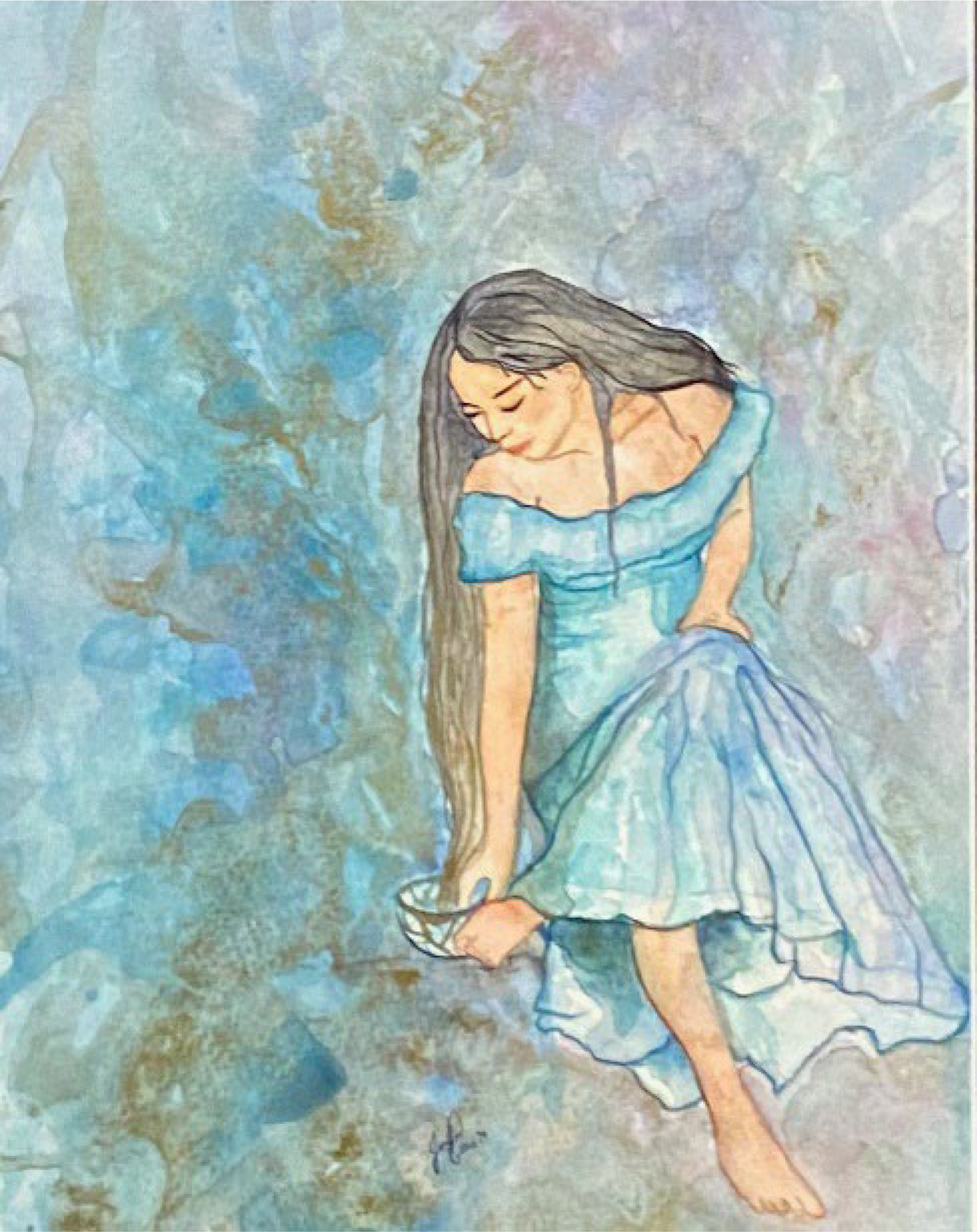
Now Perfectly Imperfect, Water Color, Artist #6.
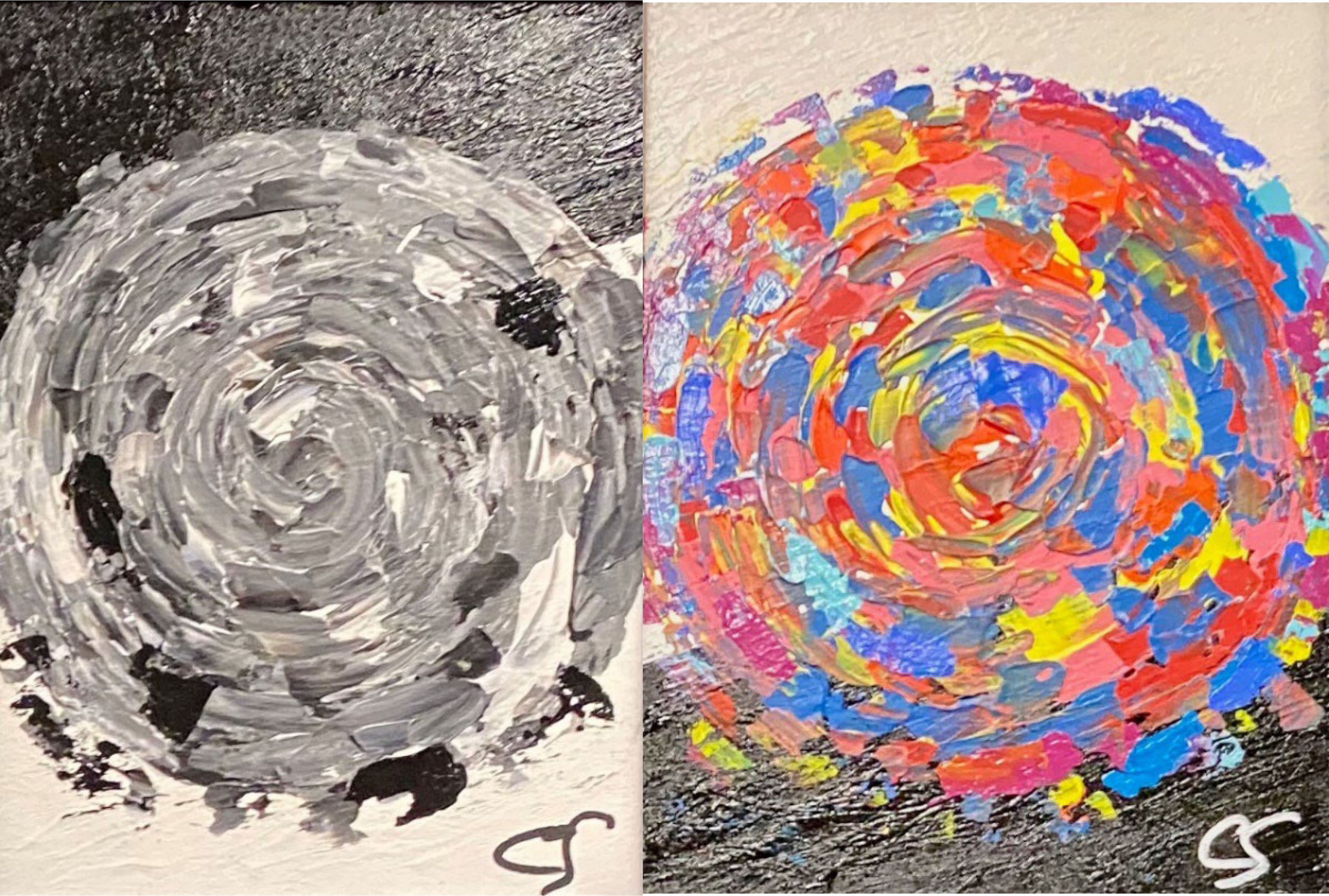
Now Perfectly Imperfect, Oil on Canvas, Artist #7.
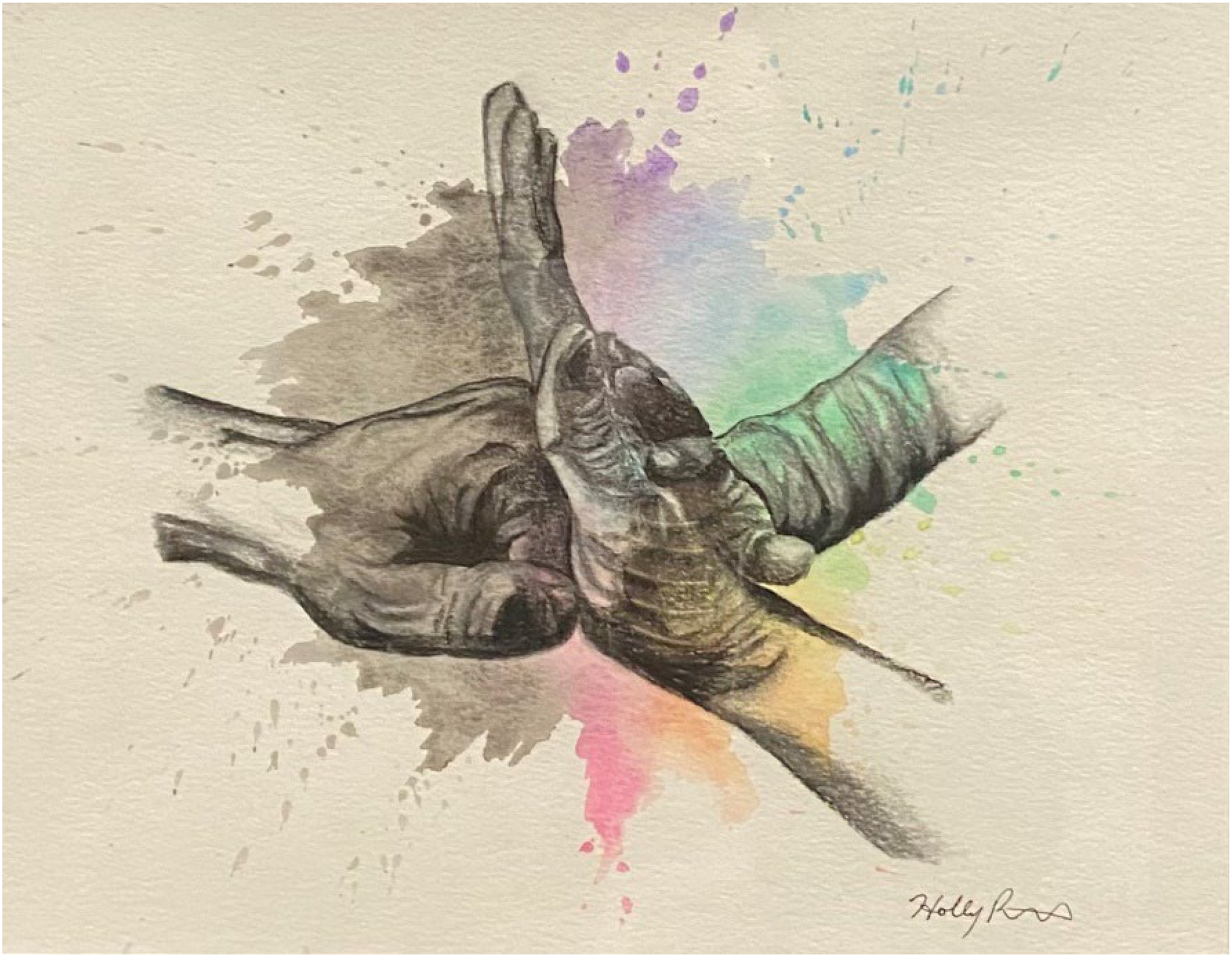
Now Perfectly Imperfect, Water Color, Artist #8.
Approximately 75 people attended this ABHR event in October 2019; diversity of attendees was enhanced by inviting interdisciplinary academics, undergraduate and graduate students, health-care providers, health-care organization leaders, leaders from women's shelters, and the public. Posts from the event were shared widely on Instagram, Facebook, and Twitter, and the event was featured on the Canadian Broadcasting Corporation news outlet. Further, the art installation was featured again in 2020 when the study investigators were invited to a research-creation event organized by the host institution's faculty of music, showcasing the interdisciplinary intersection of art and research. This second event was also shared by a local news outlet.
Informal feedback solicited via email from attendees suggested that the event was effective in meeting the project's objectives in several ways. Our project aimed to promote understanding of pregnant women's experiences of navigating antenatal health care in the face of IPV and to touch attendees in affective and cognitive ways. Attendees described the event as captivating, innovative, and touching. One Registered Nurse shared, The PATH ARTs event captured my attention right from the beginning. It was a new and innovative way to translate knowledge through art and storytelling. Art is subjective and because we were taken along a journey with the different art pieces it had a profound impact on the meaning behind the story that was being conveyed. The PATH arts-based mobilization event was a wonderful example of how research can be translated into art. The research displayed by various art forms was a thoughtful representation of women's transformation from trauma to healing as they navigated the healthcare system. This event was an opportunity to disseminate research that spoke to its members. It was a memorable event that showed the impact these events have when researchers and members of the community come together for a worthy cause.
Finally, another attendee, a doctoral student in nursing, found the event impactful and enlightening; a new way of communicating research: The impact on me was exposure as a graduate student of a new way of disseminating knowledge that I found to be meaningful and complementary to traditional research dissemination strategies. I found the setting to be disarming or I guess I mean to say that I felt that it would appeal to a wider audience beyond academia with potential for greater knowledge translation beyond the stuffy feel of a poster presentation session.
Discussion
Creating awareness and a sense of urgency that focuses on the disparity of health among pregnant women who live through IPV demands a deeper, more penetrating understanding of this lived trauma. Intentional use of an aesthetic method to mobilize this critical knowledge was imbedded within this project. This is the first arts-based embodied layered exploration of the recovery from IPV that uses a provocative knowledge mobilization strategy to make visible women's survival journey. Although this ABHR knowledge translation approach is novel in this specific context of pregnancy and IPV, it is well-established that the use of art in any of the phases of research can make findings more publicly accessible (Boydell et al., 2016; Leavy, 2019). Indeed, a systematic review protocol of arts-based approaches as knowledge translation tools in health care acknowledged that innovative approaches such as arts-based ones can provide a much-needed bridge to narrow the practice-research gap (Scott et al., 2012). Furthermore, research supports that ABHR has the potential to engage multiple audiences and motivate social change (Scott et al., 2012). One example is Reiger et al.'s (2021) study evaluating the impact of an arts-based multimedia knowledge translation assignment on nursing students who communicated research findings to patients. This novel study found that a vast majority of participants in their sample of 242 nursing students reported being satisfied using ABKT to communicate research to their patients and felt that ABKT would be beneficial to their future practice.
The ABELE method was used for this ABHR project to translate scientific knowledge into useful information that can be understood and mobilized by all people and communities. Intimate partner violence is a complex, multidimensional, global problem and its remediation calls for intersectional, multifaceted responses where the establishment and strengthening of partnerships among interdisciplinary agencies, and systems are required (Jack et al., 2023). Traditional knowledge mobilization approaches such as publication in peer reviewed journals and conference presentations may not effectively reach organizational nor systems levels that are needed for such interdisciplinary understandings to produce effective policy changes (Jack et al., 2023). A systematic narrative review of arts-based methodologies used with young people with complex psychosocial needs (Nathan et al., 2023) found that among the 25 included arts-based studies, only half described knowledge translation strategies, and among those, only seven reported using exhibits to engage the broader community with the findings. These findings underscored that while ABHR may strengthen the accessibility of findings to the community, it remains unclear how ABHR influences policy and practice (Nathan et al., 2023). While a diverse group participated in our ABHR event, further research is required to better understand the impact of ABHR as it pertains to policy enhancement and social change to maximize the impact of using such approaches in the context of IPV and pregnancy. While our research and other examples (Reiger et al., 2021; Riches et al., 2018) show the promise of ABHR, the progress of such approaches may be inhibited by inconsistency of methods and outcomes to evaluate these endeavors. A mixed methods by Daykin et al. (2016) of current approaches and experiences of evaluation of the arts and health sector in the U.K. acknowledged that while there is an allure to adopting replicable interventions and standardized evaluation frameworks for ABHR, there is a need for flexibility to allow for diversity of approaches that will not limit the core values of the researchers and stakeholders. Evaluations need to allow for uniqueness and creativity, with a diversity of methodologies and outcomes such as health, well-being, and cultural change.
As a stand-alone paradigm, ABHR weaves together the art-science connection. Its strengths lie in providing holistic and evocative levels of inquiry, raising critical consciousness, cultivating empathy, challenging illicit biases, and opening dialogue and the advancement of public scholarship (Leavy, 2015). Utilization of the ABELE approach provides the ability to expand the depth of inquiry with access to artistic-investigative, illustrative, and dissemination tools to glean and convey a spectrum of social/health-related new knowledges and meanings. All forms of ABHR act to bring science into public scholarship, research that is useful in the promotion of social justice (Leavy, 2015). How do we make research relevant? In this study, we artfully organized the experience of IPV, and women's knowledge and thinking into a story. Their narratives provided an invitation into this experience and a space to share knowledge and recognition of trauma, anxiety, fear, and desolation, as well as resilient recovery, strength, self-actualization, and healing: a human journey. We argue that aesthetic forms of ABHR provide not only an exploration into IPV in this case but a concrete way to apply the tenets of TVIC in understanding this survivorship from IPV. The complex nature of certain health and health-care contexts is strengthening a movement toward innovative approaches to ABHR to reach a broader audience and to effectively communicate shared understandings, to bridge practice and research (Boydell et al., 2016; Scott et al., 2012).
Arts-based health research aims to discover, explore, and describe knowledge or experiences that would otherwise go unrecognized or be inaccessible (Leavy, 2015). The fundamental goal of ABHR is the dissemination and communication of knowledge. Arts-based health research has the potential to bring light to the human dimensions of health and illness by lowering professional and disciplinary barriers, to help increase understanding and awareness. The unique and diverse approaches to mobilizing knowledge in this way create opportunities to engage diverse groups on health-care issues (Parsons & Boydell, 2012). Arts-based modes of knowledge mobilization are uniquely powerful; they engage audiences emotionally, with affective and cognitive impacts (Colantonio et al., 2008). With ABHR growing in popularity, the literature evaluating its impact has also been accumulating. A scoping review by Parsons and Boydell (2012) found promising results: health-care providers reported new or greater awareness of health-related issues and a desire to change practice to better suit patient needs. Wellbery's (2021) paper on why art-science collaborations matter to medicine highlights the potential of ABHR, describing numerous examples of how ABHR opens opportunities for representing phenomena, sparking new insights and awareness within the health domain. For example, work by Dhand demonstrated how crocheted mandalas simplified concepts related to the social connections of patients who experienced stroke. These mandalas were then displayed in the hospital where the research was conducted with hopes they would resonate among stroke patients and their caregivers. In doing so, this art-science collaboration resulted in a new way of envisioning the research while also increasing accessibility of the findings to the public (in Wellbery, 2021).
Limitations
Unfortunately, assessing the impacts of this ABHR project was not an a priori objective and is a limitation of this work. Further development of methods and clarification of outcomes is needed to appraise the impact of ABHR on service providers, policy makers, and the public. Despite the lack of empirical insights into the impact of this ABHR project, informal feedback suggested that the event was well attended and impactful, and was taken up and shared in different ways. Although there is no published research on the impact of ABHR on policy in the domain of pregnancy and IPV, the potential to effectively reach cross-disciplinary audiences in the context of health care have been reported. For example, work by Watfern and colleagues (2023) outlined important outcomes of arts-based research installations such as building relationships, trust, and understanding among individuals, in addition to evaluation of less tangible (but arguably equally important) “ripple effects” resulting in collaborative processes evolving from these installations. While literature remains lacking regarding consistent and effective evaluative approaches to ABHR, Daykin and colleagues suggested that researchers engage in coproduction of arts-based approaches, where research activities are developed through equal and reciprocal cross-disciplinary relationships among interested parties (Daykin et al., 2016).
While the systematic evaluation of ABKT may be currently lacking (Watfern et al., 2023; Boydell et al., 2016), some studies suggest that ABKT initiatives have positive outcomes. Riches et al. (2018) evaluated an art installation aimed at increasing awareness of mental health. Data collected included Twitter (“X”) analytics of participant measures of mood and attitudes toward hearing unusual voices, to improve understanding and empathy regarding psychosis. The findings suggested that participants found the exhibition immersive and effective and that it promoted understanding around mental health issues by raising awareness.
Conclusions
Trauma- and violence-informed care demonstrates great promise among interventions aimed at addressing mental health sequelae among women experiencing perinatal IPV. To increase awareness and promote uptake of TVIC approaches when working with these women, greater awareness is required among health-care and social service providers, decision makers, and the public. This project was the first of its kind in Canada within the context of IPV to integrate an arts-based inquiry and knowledge mobilization community event with a TVIC lens to promote understandings of women's experiences of navigating their perinatal care. While ABHR approaches are gaining a greater role in accepted discourse, this project was the first to integrate several different art forms, including visual art, thematic poetry, and performance, to analyze, interpret, and report qualitative data, resulting in an arts-based embodied, layered exploration to represent phenomena described by pregnant women receiving mental health care secondary to experiencing IPV. This novel approach, with its ABHR event, demonstrated potential impacts on academics, health-care providers, and policy makers. While exploratory in nature, our findings align with current understandings of the potential to engage diverse audiences in affective and cognitive ways through artistic mediums. Further research is required to better understand the ripple effects that ABHR may hold for effectively engaging cross-disciplinary individuals to enact positive policy change at all levels.
Footnotes
The author(s) have no relevant financial interest or affiliations with any commercial interests related to the subjects discussed within this article.
The authors disclosed receipt of the following financial support for the research, authorship, and/or publication of this article: This work was supported by a Western University SSHRC Explore Grant.

Author Biographies