




Abstract
Implications for Knowledge Translation
Health-care professionals should provide effective education initiatives aimed at enlightening families to identify early indicators of substance use disorders and initiate relevant interventions, leading to more successful treatment outcomes. Practitioners must advocate for and facilitate well-structured support programs that address stigma and provide safe spaces for families to share experiences and access relevant resources. Knowledge translation efforts should encourage collaborative engagement between health-care professionals, policymakers, researchers, and community stakeholders. This collaboration can help implement effective educational programs for families, support services, and policy changes regarding SUDs.
Introduction
According to the United Nations Office on Drugs and Crime (UNODC, 2019), 35 million people worldwide are estimated to suffer from drug use disorders, with only one in seven people receiving treatment (UNODC, 2019). The Canadian Mental Health Association (CMHA) estimates that approximately six million Canadians, approximately 21% of the population, will meet the criteria for addiction at some point in their lives (CMHA, 2023). The Canadian Centre on Substance Use and Addiction [CCSA] (2023) reports that substance users have placed a significant burden on the Canadian economy, with the cost increasing from $46 billion in 2017 to $49.1 billion in 2020. Additionally, in 2020, substance use resulted in 73,994 deaths, which is equivalent to more than 200 lives lost per day (CCSA, 2023).
Substance use disorders (SUDs) are a major public health issue and pose a significant threat to society and governments worldwide (CCSA, 2023; Hernández et al., 2022; World Health Organization [WHO], 2023). SUDs are defined as multifaceted conditions characterized by persistent and compulsive use of psychoactive substances despite their harmful and detrimental consequences (American Psychiatric Association [APA], 2024). Substances can include alcohol, cannabis, tobacco, opioids, and other licit and illicit drugs (APA, 2024; Csiernik, 2021).
Despite studies examining the issue of substance use and its implications for family members (Kumar et al., 2022; McCann & Lubman, 2018; Parkes et al., 2022), there is a scarcity of literature synthesizing the experiences and perspectives of family members who live with or support relatives with SUDs. Studies among family members and communities, including people from Australia (Maltman et al., 2020), India (Sapharina, 2020), Mexico (Hernandez et al., 2022), and the Philippines (Yusay & Canoy, 2019), have revealed that as family members continue to support their relatives with SUDs, they also experience significant negative impacts, including stress, difficulty coping with their relatives’ ongoing substance misuse-related behaviors, and concerns for family safety and loss of family relationships (Di Sarno et al., 2021; Muir et al., 2022; Orford et al., 2010).
Studies examining family members, including parents and young people, have reported their lived experiences of high levels of stress related to parental mental health problems, parental substance use, and domestic violence and abuse (Kedzior et al., 2024; Muir et al., 2024). These findings also revealed that parents struggled to parent in very difficult situations and had to employ a range of strategies to minimize their children's exposure to harmful situations and parental risk factors within the home, often without adequate support (Kedzior et al., 2024; Muir et al., 2024). Similarly, studies have shown that family members experience stigma and social isolation associated with their relatives’ SUDs, as well as barriers to seeking help due to the experience of stigma (Corrigan et al., 2006; Kumar et al., 2022; McCann & Lubman, 2018; Parkes et al., 2022). Additionally, research indicates that family members living with individuals suffering from SUDs are at increased risk of developing mental health issues compared to the general population, as highlighted by Shamsaei et al. (2019). Therefore, it is imperative to synthesize this literature to better understand the experiences of family members living with relatives with SUDs to inform policy and practice among family members of diverse communities.
Aim
While there is a substantial body of research on SUDs, a comprehensive synthesis of literature focusing on family members’ experiences has not yet been undertaken. The aim of this literature review was to examine existing literature on family members affected by relatives with SUDs to provide robust evidence that can inform policy and practice, and guide future research. Specifically, this review aimed to explore the experiences of family members who live with or support relatives suffering from SUDs, and to examined factors contributing to SUDs and SUD-related needs.
Method
An integrative review methodology (Whittemore & Knafl, 2005) was chosen, as it is a flexible approach allowing the synthesis of diverse research including experimental, nonexperimental, and qualitative research to be synthesized, to generate a fuller understanding of the phenomenon under examination (Whittemore & Knafl, 2005). The current review was carried out using Whittemore and Knafl's five-step approach: (a) problem identification to ensure a clear statement of purpose; (b) literature search involving the implementation of a comprehensive search strategy to identify all pertinent literature; (c) data evaluation addressing overall methodological quality; (d) data analysis (encompassing data reduction, data display, comparison, and conclusions); and (e) presentation involving synthesis of findings and discussions regarding practice, policy, and research implications (Whittemore & Knafl, 2005; Younas et al., 2022).
Identification of the Problem
While there is a substantial body of research on SUDs, a synthesis of literature within the context of family members’ experiences and perspectives has yet to be completed. Therefore, the current literature review aims to summarize existing literature on the topic to provide robust evidence that can inform policy, practice, and future research.
Inclusion and Exclusion Criteria
Report some element of data related to family members’ experiences of living with or supporting a relative suffering from SUDs; Peer-reviewed and/or gray literature; Published in English; Published between January 2005 and May 2023.
All empirical studies with qualitative and quantitative methodologies were eligible for inclusion. Particular emphasis was given to studies that targeted the experiences and perspectives of family members regarding their relatives suffering from SUDs and access to supportive resources.
Search Strategy
The following scholarly databases were accessed in this review: Cumulative Index of Nursing and Allied Health (CINAHL), PubMed, PsycINFO, Nursing & Allied Health Database (ProQuest), and Scopus. After health sciences librarian consultation, the following keyword search syntax was used: “family members” AND “relatives” OR “individuals” AND “substance use disorders” OR “substance misuse” OR “substance abuse” OR “addictions “AND “family members experiences.” To ensure comprehensive coverage, Google Scholar and gray literature were also consulted to obtain relevant materials. Gray literature is defined as evidence or documents that are not published by commercial publishers, including academic papers, theses and dissertations, government reports, and conference papers (Adams et al., 2016; Paez, 2017). The search for gray literature was conducted by searching the internet on specific organizations’ and government websites and Google search database using relevant keywords such as “substance use and substance misuse” and “family members and addiction and substance abuse” and “relatives and SUDs.” The search for published articles adhered to the recommended guidelines for conducting systematic reviews outlined by the Joanna Briggs Institute (JBI; Page et al., 2021).
Selection Process
The review process involved several phases to ensure a comprehensive and effective selection of articles for inclusion. The initial step consisted of two researchers (authors 1 and 2) independently screening the titles of articles and retaining those that aligned with the selection criteria. The researchers checked the retained articles’ abstracts that required further consideration for full-text screening. They then thoroughly screened all full-text articles and confirmed that the information and records met the inclusion criteria. Discrepancies at each stage were resolved through discussions between the researchers until consensus was achieved. After the full-text screening of the selected articles, the research team discussed and reached an agreement on the articles to be included in the literature review. The whole process was guided by the PRISMA flowcharts, as outlined by Page et al. (2021), to visually represent the systematic review's selection processes (see Figure 1).
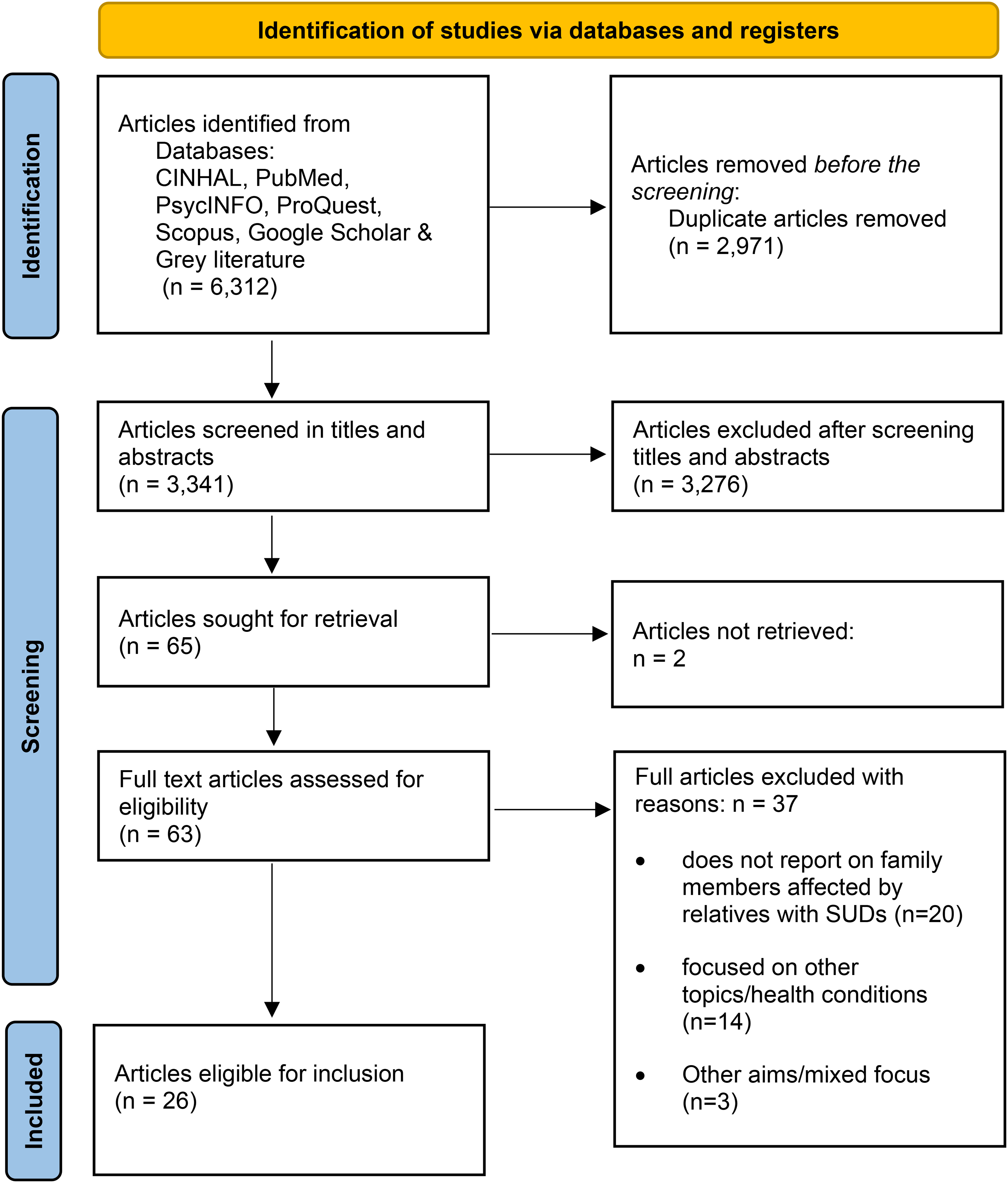
PRISMA flow diagram.
A search across all databases yielded a total of 6,312 articles; 2,971 duplicates were eliminated. The remaining 3,341 articles were screened for eligibility, with 3,276 excluded. Of the remaining 65 articles, two were not accessible. In a comprehensive full-text review of the 63 articles, 37 were excluded, leaving 26 articles eligible for inclusion in this review (see Figure 1).
Data Management and Extraction
Data regarding the study characteristics focused on authors, publication date, the country where the study was conducted, purpose, population, design, and the key findings related to family members’ experiences with their relatives suffering from SUDs. Two researchers independently managed the data extraction process while consulting with the other research team members. Endnote 12 software was employed to organize and maintain bibliographic records (Gotschall, 2021; Toronto & Remington, 2020). This software aided in the screening and reporting process as well as the removal of duplicate articles. The data from selected articles was extracted and managed by the researchers using a matrix table (see Supplemental File 1).
Quality Appraisal
Integrative literature reviews allow for the inclusion of quantitative, qualitative, and mixed-methods research (Whittemore & Knafl, 2005; Younas et al., 2022). During this stage, two reviewers independently evaluated each of the included articles’ quality to determine the trustworthiness of their findings and to ensure no data recording errors existed (Cooper, 1998; Toronto & Remington, 2020; Whittemore & Knafl, 2005).
The reviewers used standardized quality appraisal checklists developed by the JBI to assess studies according to their specific designs, to ensure the trustworthiness, relevance, and quality of published articles (Munn et al., 2020; Page et al., 2021): the Qualitative Research Checklist to appraise qualitative studies, the Analytical Cross-Sectional Checklist to assess cross-sectional studies, and the Systematic Reviews and Research Syntheses Checklist to evaluate review studies (Aromataris et al., 2022). These checklists were employed to determine the quality of the selected studies and make informed decisions about whether to include or exclude them. The reviewers assigned scores to each item as follows: “yes,” “no,” or “unclear,” with “yes” quantified as “1,” and both “no” and “unclear” responses scored “0.” A final score was calculated as the sum of the scores assigned to the criteria. Each study's scores were then converted into percentages to allow the included studies comparison, that is, low quality (0–30%), moderate quality (a score of 40%–60%), and high quality (a score of 70% and above). However, the low-quality studies were also included in the selected studies because of their detailed descriptions of findings, which provided a comprehensive understanding and contributed valuable insights into the experiences of family members associated with their relatives with SUDs. These scores were included in the matrix table under each appraised article.
Data Synthesis
The process of data analysis involved several steps, including data reduction, data display, data comparison, and conclusion drawing and verification (Whittemore & Knafl, 2005; Younas et al., 2022). These steps encompassed identifying patterns within the extracted data and synthesizing and categorizing similar findings into cohesive themes reflecting the state of reviewed literature (Whittemore & Knafl, 2005). Each article was carefully read line by line to examine the main ideas identified in the article, with a specific focus on the aim of the review.
Data Display
The data extracted from each article were transferred into a matrix table that included information about the authors, location of the study, purpose of the study, methods, key findings, and quality rating (Younas & Ali, 2021) to facilitate the visualization, interpretation, and identification of patterns (see Supplemental File 1).
The process of data comparison used an iterative approach, identifying patterns and associations through successive rounds of analysis (Whittemore & Knafl, 2005; Younas et al., 2022). In the stages of drawing conclusions and verification, the reviewers undertook a comprehensive review and cross-validation of the extracted data to guarantee alignment with the source articles and emerging patterns. Additionally, the research team collectively reviewed the findings to ensure consensus on the analytical interpretations.
The resulting findings were categorized into five themes containing 12 subthemes. The themes were: (a) family members’ and caregivers’ experiences of SUDs; (b) impact of SUDs-related aggressive/violent behaviors on families; (c) the dilemmas faced by family members; (d) culture and family stigma related to SUDs; and (e) factors contributing to SUDs, challenges, and support needs.
Results
Characteristics of Retrieved Studies
Of the 26 eligible studies, 18 scored high quality, five moderate, and three low quality. Due to the specific focus and emphasis of these studies, all 26 articles were integrated into the final synthesis of the current literature. These studies collectively covered a broad spectrum of experiences among family members who lived with or provided support to individuals with SUDs (see Supplemental File 1).
The included articles originated from 10 different countries. The majority were conducted in the United States (US) (n = 9); five in Australia (n = 5); three in the United Kingdom (UK) (n = 3); three in Canada (n = 3); and one each from Italy (n = 1); Iceland (n = 1); India (n = 1); Iran (n = 1); Scotland (n = 1); and the Philippines (n = 1). The selected studies employed various methodological approaches, including ethnography, phenomenology, grounded theory, exploratory qualitative, case study, and cross-sectional designs. Five themes containing 12 subthemes captured the experiences of family members of relatives with SUDs.
Themes and Subthemes
Theme 1: Family Members’ and Caregivers’ Experiences of SUDs
This theme drawn from 10 studies shed light on the experiences of family members affected by SUDs. The impact of SUDs was felt by the entire family, including parents, caregivers, children, and spouses of relatives suffering from SUDs.
Subtheme: Impact on Family Caregivers of Children With SUDs
Parents and other caregivers experienced various adversities within their families, including the challenge of detecting signs and symptoms of SUDs, and often confusing these behaviors with developmental changes; it took some parents more than 2 years to fully comprehend their adolescent children's behaviors related to SUDs (Choate, 2011). The extreme stress experienced by parents was a notable aspect, demonstrating the emotional toll of caring for children with SUDs. Nelson et al. (2014) reported that mothers with sons struggling with SUDs faced extreme stress, leading to conflicts arising from their children's SUDs-related behaviors. The demands of parenting their drug-abusing children were noted as very stressful and overwhelming, resulting in strained relationships with extended family, feelings of self-blame, and denial about their children's addiction (Jackson et al., 2007; Nelson et al., 2014; Ólafsdóttir et al., 2020). Similar experiences were noted among parents who expressed anger, shock, and disappointment when their adolescent children were arrested for drug-related offenses (MacNeil et al., 2015). Due to extreme anger, some parents delayed visiting their children in juvenile custody until they could control their emotions (MacNeil et al., 2015). Studies examining the lived experiences of mothers of children struggling with SUDs reported that all these parents, regardless of their age, education, career, ethnicity, and social status, faced numerous difficulties in dealing with their children's SUD-related behaviors (Nelson et al., 2014).
Subtheme: Impact of SUDs on Children
Young children rely heavily on their parents and caregivers for support and guidance. Young family members living with parents who have SUDs are significantly impacted by their parents’ ongoing SUDs, experiencing feelings of neglect, anger, hurt, and physical illness due to the stress and depression related to their parents’ or caregivers’ SUDs (Maina et al., 2021; Ólafsdóttir et al., 2020). Children are affected by parental substance use across all stages of their development, creating barriers to meeting their developmental needs (Lander et al., 2013).
Subtheme: Perceived Impact on Spouses and Other Family Caregivers
Family relationships, including marital relationships, are an important part of family life. However, this aspect of the perceived good life can be negatively impacted by SUD-related behaviors posing a range of psychosocial difficulties for family members, including spouses (Maina et al., 2021; Ólafsdóttir et al., 2020; Sapharina, 2020; Soraya et al., 2022). Sapharina's (2020) study of wives whose husbands were admitted to a psychiatric hospital for alcohol dependance syndrome reported that these wives encountered various difficulties, including physical, emotional, and social distress (Sapharina, 2020); the majority (72.5%) experienced unsatisfactory relationships with their husbands with alcohol dependance syndrome (Sapharina, 2020). Other studies (Maina et al., 2021; Ólafsdóttir et al., 2020; Soraya et al., 2022) indicated how caregivers experienced profound effects associated with their relatives’ SUDs, including broken relationships with loved ones and dismantled family stability and community life. Affected family members expressed a sense of grief and neglect, and mourned the absence of meaningful connections with their relatives affected by SUDs, describing it as a form of social deterioration (Maina et al., 2021; Ólafsdóttir et al., 2020; Soraya et al., 2022).
Theme 2: Impact of SUD-Related Aggressive/Violent Behaviors on Families
Four studies discussed how SUD-related behaviors affect families, underscoring the prevalence of aggressive and violent behaviors associated with SUDs and highlighting the detrimental effects on family dynamics and the well-being of all family members involved.
Subtheme: Violence, Aggression, and Related Behaviors
Families living with relatives suffering from SUDs often endure high rates of violence and aggressive behaviors, including physical and mental violence and threats, among other challenging behaviors (McCann et al., 2017; Nelson et al., 2014; Ólafsdóttir et al., 2020). A study by McCann et al. (2017) involving 31 family members reported that almost 70% of the participants experienced aggressive and/or violent behaviors from their relatives, without appropriate strategies to cope with these behaviors. Family members were constantly vigilant, using careful words and actions to prevent the escalation of these behaviors, demonstrating the challenging and stressful environment many families face when dealing with relatives suffering from SUDs (McCann et al., 2017; Ólafsdóttir et al., 2020).
Subtheme: Negative Impact of SUDs on Families
Various studies examined the psychosocial, behavioral, and physical states experienced when living with individuals suffering from SUDs impacted family members (Ólafsdóttir et al., 2020; Yusay & Canoy, 2019). Whatever their roles as parents, spouses, siblings, or children, the SUD-related behaviors negatively impacted and dismantled the lives of all nuclear and extended family members, including threats, physical violence, and stress-related physical illness (Ólafsdóttir et al., 2020). Children who witnessed violent and other related behaviors were negatively impacted (Ólafsdóttir et al. 2020; Templeton, 2012; Yusay & Canoy, 2019).
Theme 3: Dilemmas Faced by Family Members
This theme was developed from four selected studies that highlighted the dilemmas encountered by family members when caring for and supporting relatives with SUDs.
Subtheme: Conflicting Decisions in Supporting Relatives
The studies shed light on the dilemmas faced by family members, leaving them in a state of uncertainty as they struggled with conflicting decisions and priorities when caring for relatives with SUDs. Maltman et al. (2020) and Jackson et al. (2007) discussed the challenges faced by parents who were unsure whether to keep their children with SUDs at home or remove them, to provide a safe environment for other family members. Parents expressed uncertainty as they felt torn between removing their challenging children from their homes for the safety of other family members and wanting to continue providing family support to them (Jackson et al., 2007). Maltman et al. (2020) stated that parents dealing with the challenges of their adult children's persistent substance use and related behaviors often found themselves caught between two choices: “holding on” or “letting go.” The option to “hold on” provided a sense of empowerment, as parents believed they could influence their adult children's progress toward substance use treatment. However, this choice also imposed significant and continuous stress and strain on the parents. On the other hand, “letting go” often led to feelings of grief, but for some parents, it offered an opportunity to prioritize self-care and focus on their own well-being (Maltman et al., 2020).
Subtheme: The Dilemma of Dual Roles
The studies revealed a dilemma related to dual roles faced by family members. Family members who were providing care both for parents with substance use problems and for their own children felt torn between managing the care of their parents and ensuring the well-being of their children (Hodges & Copello, 2015). Templeton's (2012) study of grandparents who were living with their grandchildren while the parents were dealing with substance misuse revealed that these grandparents faced dilemmas including simultaneously assuming dual roles as parents and grandparents. They also had to decide whether it was appropriate to disclose to their grandchildren the reasons behind their parents’ absence, such as being in rehabilitation or prison (Templeton, 2012).
Theme 4: Culture and Family Stigma Related to SUDs
Eight studies addressed this theme, shedding light on the influence of culture and the pervasive stigma associated with SUDs within families.
Subtheme: The Role of Culture in SUDs
The studies discussed various perspectives on the influence of culture and its significant role in shaping how family members and communities perceive, understand, and respond to SUDs (Arcidiacono et al., 2009; Hernandez et al., 2022; Springer et al., 2005). Arcidiacono et al. (2009) found that family members in Italian communities did not perceive alcohol misuse as a serious problem; these authors emphasized the importance of considering cultural factors when addressing SUDs and designing effective interventions. In other cultural contexts, culturally related interventions have been found to be effective in preventing SUDs. Springer et al. (2005) examined the effectiveness of culturally specific SUD interventions in reducing 30-day substance use across various ethnic groups in the United States, finding that culturally specific programs were significantly more effective, with higher levels of satisfaction and perceived importance, compared to nonspecific programs. These findings support the importance of developing culturally specific programs for SUD prevention among ethnic populations (Springer et al., 2005). A lack of culturally relevant interventions has been found to lead to barriers in accessing substance use-related treatment programs, as they hinder access to essential services and resources for harm reduction programs, consequently exacerbating the risk of SUDs (Nguemo Djiometio et al., 2020).
Subtheme: Family Stigma Related to SUDs
Many families faced stigma in various forms when dealing with SUDs, leading them to keep their problems secret, minimize contact with acquaintances, and avoid discussing their circumstances openly due to fear of people judging them, resulting in social isolation and reluctance to seek help (Brown, 2006; McCann & Lubman, 2018). Family members who were bereaved experienced stigma from various sources, including the police, professionals, media, extended family members, and the wider society. This stigma severely impacted the bereaved individuals, including their grieving and their ability to seek support (Templeton et al., 2016). A study by Corrigan et al. (2006) comparing stigma across three populations (people with schizophrenia, those with drug dependance, and those with emphysema) found that family members of drug-dependent relatives experienced the most stigma and were often blamed for their relatives’ drug dependance (Corrigan et al., 2006). These findings underscore the significance of providing specific support to meet the needs of the entire family, including treatment and counseling, aiming to eliminate social isolation, anxiety, and depression associated with labeling and social stigma (Soraya et al., 2022).
Theme 5: Factors Contributing to SUDs, Challenges, and Support Needs
This theme drew on the majority (a total of 15) of the reviewed studies.
Subtheme: Factors Contributing to SUDs
Lack of awareness and comprehension of the severity of heavy drinking and the potential problems linked with alcohol misuse have been found to be associated with increased substance use and delayed seeking of treatment, thus potentially worsening the complications related to alcohol misuse (Arcidiacono et al., 2009). Additionally, the experiences of societal stigma associated with SUDs may contribute to ongoing substance use, as stigma significantly hinders access to adequate treatment and care for individuals with substance dependance (Brown, 2006; Parkes et al., 2022). Lack of support and barriers to navigating systems to access treatment for their relatives also contributed to the ongoing use of substances (Adam & Kitt-Lewis, 2020)
Subtheme: Barriers and Challenges to Coping
This subtheme describes how many families faced difficulties coping with limited support (McCann & Lubman, 2017, 2018). Family members faced ongoing demands of parenting adolescents who abused drugs, leading to significant stress and feeling overwhelmed (Jackson et al., 2007). Adam and Kitt-Lewis (2020) highlighted several challenges family members continued to face with individuals suffering from SUDs, including the ongoing struggle of coping with the daily difficulties associated with their relatives’ SUDs as well as encountering barriers when navigating the system to access treatment for their loved ones. A study by Sapharina (2020) examined the caregiving distress of 40 women whose husbands were admitted to a hospital for alcohol-dependance syndrome. The majority (72.5%) experienced moderate levels of caregiving distress, with 17.5% reporting mild distress and 10% reporting severe distress. Alcohol-dependance syndrome poses a range of psychosocial difficulties for family members, especially spouses, who encounter various difficulties including physical, emotional, and social distress (Sapharina, 2020).
Subtheme: Identifying Supportive Resources and Strategies
This subtheme underscored the critical need for accessible and timely support resources, including drug-related treatment programs and increased access to mental health providers for family members and their relatives suffering from SUDs (Adam & Kitt-Lewis, 2020; Jackson et al., 2007; McCann & Lubman, 2017, 2018). Other study findings also highlighted the necessity for help related to SUDs, such as improved support systems and the provision of sensitive and nonjudgmental interventions (Haskell et al., 2016). Similar findings recommended increasing supportive resources, such as financial assistance and improving awareness of substance use and its effects on children; other findings emphasized the need for professionals to support and guide family members on how to communicate with children about their parents’ substance use problems (Templeton, 2012). Study findings emphasized the importance of health-care providers supporting family members in developing effective coping strategies to navigate challenges successfully (Sapharina, 2020). Implementing supportive programs that are nonjudgmental to help reduce stigma and promote compassionate treatment and recovery processes was recommended by Hennessy et al. (2022) and Parkes et al. (2022). Soraya et al. (2022) and Parkes et al. (2022) recommended implementing policies, educational programs, and awareness campaigns aimed at addressing and preventing stigma, to enhance access to inclusive and appropriate health-care services that foster harm reduction services for individuals using substances. The need for effective coping mechanisms and support systems to address SUD-related behaviors is evident in the research, emphasizing the significance of addressing the impact of SUDs on family dynamics and well-being (McCann et al., 2017; Ólafsdóttir et al., 2020; Sapharina, 2020). These measures have the potential to positively impact the well-being of family members and improve treatment outcomes for individuals dealing with SUDs (Brown, 2006; Jackson et al., 2007; Sapharina, 2020).
Discussion
This integrative review aimed to synthesize evidence to gain a deeper understanding of the experiences of family members who live with or provide support to relatives affected by SUDs. The awareness of parents and other family caregivers plays a crucial role in shaping the understanding of and response to their relatives’ SUDs. However, the studies revealed that many parents lacked awareness and the ability to detect signs and symptoms of addiction, often attributing their relatives’ behaviors to developmental changes. These findings suggest that delays in recognizing signs and symptoms of SUDs could have far-reaching consequences, hindering timely interventions. This evidence was supported by other studies that reported the importance of timely access to treatment in the early stages of SUDs (Acevedo et al., 2015; Monari et al., 2020; Wiercigroch et al., 2020). The findings highlighting a lack of awareness regarding the detection of early signs and symptoms of SUDs underscored the need for increased education and awareness campaigns targeting parents and caregivers.
Negative impacts on children related to their parents’ use of substances were evident across studies. For instance, young family members living with their parents suffering from SUDs reported neglect, anger, hurt, and shame, suggesting that parents’ use of substances can lead to disruptions in family relationships and create an unpredictable family environment. These factors may contribute to adverse childhood experiences that may persist into adulthood, potentially leading to long-term adverse health outcomes (Barrett et al., 2023; Werner & Malterud, 2016). The review findings also revealed a need for a sufficient supportive environment, which was also reported in previous studies as crucial in the lives of children and their developmental milestones (Wangensteen et al., 2019; Werner & Malterud, 2016)
The review highlighted that aggression and violence within families affected by SUDs were a significant concern. Family members often employ strategies to prevent escalation, demonstrating the extensive impact of these behaviors on family dynamics. The review findings are consistent with previous evidence showing that dealing with someone who uses substances heavily often leads to conflicts, and family members may experience aggression, psychological distress, and even physical violence from them (Hellum et al., 2022; Monari et al. 2024; Richert et al., 2018). Given the potential negative impacts of family breakdowns on the SUDs’ treatment prognosis, there is a need to equip family members with the knowledge and skills to deal with aggression and violence related to SUDs.
Caring for relatives with SUDs poses dilemmas for family members by creating an unsafe environment for siblings. Family members face conflicting priorities, which may have complicated decisions to either support or abandon the relatives with SUDs in order to protect siblings and other family members (Nordgren et al., 2020; Sanatkar et al., 2022). These dilemmas highlight the complex decisions that family members face, underscoring the importance of providing guidance, information, and support to help them navigate these challenging situations (Nordgren et al., 2020; Siljeholm, 2023). The findings call for balanced interventions in providing care and support while maintaining a safe and peaceful environment.
The influence of culture on perceptions and responses to SUDs was evident in the reviewed studies, including how individuals from different cultural backgrounds perceived and addressed SUDs in their specific manners. The findings supported previous evidence that highlighted a need for culturally relevant interventions both to address cultural perceptions of SUDs and to provide effective prevention and treatment strategies (Banks et al., 2023; Metzger et al., 2013; Monari & Taiwo, 2023; Stith et al., 2006). The findings suggested developing interventions that consider cultural contexts to ensure their effectiveness and relevance, and potentially improved outcomes (Banks et al., 2023; Kwok & Tam, 2023).
The experiences of family members across different studies revealed various forms of stigma, from social isolation to self-imposed secrecy and feelings of shame and guilt. The stigma associated with SUDs emerged from the findings as a significant barrier to seeking support and treatment for both individuals with SUDs and their family members. The issue of stigma was previously reported as a hindrance to accessing essential services, which also caused detrimental effects on the mental health, decision-making, and overall well-being of family members (Clement et al., 2015; O'Shay-Wallace, 2019; Tsai et al., 2019). The review findings suggest that addressing stigma is critical in ensuring that families feel empowered to seek support without the fear of judgment, which could positively impact treatment outcomes.
The reviewed studies indicated significant challenges family members face in coping with limited support systems for their relatives with SUDs, including obtaining adequate resources and nonjudgmental interventions to support them and their relatives’ recovery and care. Previous research has demonstrated that family members often struggle to access timely resources and interventions to support their loved ones’ recovery (Kwok & Tam, 2023; Richert et al., 2018). From these findings, it is evident that developing accessible and comprehensive support networks is crucial in assisting family members to develop adaptive coping strategies and maintain their own well-being while caring for their relatives with SUDs. Improved support systems should consider providing sensitive and supportive interventions and a holistic approach to addressing the needs of family members dealing with SUDs (Kwok & Tam, 2023; Siljeholm, 2023).
Implications for Practice, Policy, and Research
The findings of the reviewed studies have significant implications for practice, policy, and research in the field of SUDs and family support. This review underscores a critical necessity for robust educational initiatives aimed at enlightening family members about the signs and symptoms associated with SUDs among families. These programs are crucial in empowering families to identify early indicators and effectively initiate relevant interventions. Such efforts could contribute to timely and more successful treatment outcomes for individuals affected by SUDs. Furthermore, nurses and practitioners working with family members of individuals with SUDs have an opportunity to make a significant positive impact. It is crucial to recognize and celebrate the richness of sociocultural factors that may influence substance use patterns, taking into account the historical and systemic disparities that have contributed to increased vulnerabilities.
This integrative review also sheds light on the issues of social stigma and self-imposed guilt faced by family members in seeking support, indicating the need for, and importance of, well-structured support programs. The findings call for health-care professionals to promote public awareness campaigns to reduce stigma and enhance understanding of SUDs, which could encourage family members and their relatives to seek help without fear of judgment (Kumar et al., 2022; McCann & Lubman, 2018). Moreover, the findings suggest supportive programs that serve as safe havens, providing an environment where families can openly share their experiences and gain access to needed resources. The implementation of supportive programs specifically targeting family members can equip them with the tools and resources needed to navigate the challenges associated with caring for relatives with SUDs and serve as vital components in the overall journey toward healing (Barrett et al., 2023; Parkes et al., 2022; Richert et al., 2018).
From a policy perspective, the findings assert that policymakers must consider the experiences and needs of family members when formulating strategies to address the SUDs crisis. Policies that foster access to support services, diminish stigma, and promote culturally competent initiatives can contribute substantively to a more practical approach to combating SUDs. Additionally, policies are also needed to improve the delivery of health and social care services to individuals with SUDs and to restructure the treatment system.
Limitations
While this review has several strengths, it does have limitations that should be described. First, the majority of the reviewed studies originated in the United States, which limits the cross-cultural generalizability and applicability of the findings, especially when discussing cultural influences in other countries. Second, the small sample sizes in some studies could restrict the representativeness of family members’ perspectives regarding their relatives with SUDs, potentially also constraining the fittingness of the review's findings to different contexts or settings.
Conclusion
This review synthesizes the experience of family members who live with or support their relatives suffering from SUDs, and examines contributing factors and SUD-related needs. The findings emerging from this review underscore the significance of awareness among family members in recognizing signs and symptoms of SUDs, as their lack of early detection could hinder timely interventions. Further, children's experiences of parents’ SUDs can result in adverse emotional outcomes, including feelings of neglect and shame. Cultural influences on SUDs experiences and responses were also evident, necessitating culturally relevant interventions to support families and individuals. Family stigma related to SUDs poses barriers to seeking help and treatment; this finding reinforces the need to develop support systems and resources to assist families with relatives suffering from SUDs. Although a substantial body of literature on family members with relatives suffering from SUDs was conducted in the United States, there is a scarcity of research conducted in other contexts. Therefore, further work in this area from a global perspective is recommended to better inform policy and practice in other communities across the world.
Supplemental Material
sj-docx-1-cng-10.1177_10784535241252169 - Supplemental material for Experience of Family Members of Relatives With Substance Use Disorders: An Integrative Literature Review
Supplemental material, sj-docx-1-cng-10.1177_10784535241252169 for Experience of Family Members of Relatives With Substance Use Disorders: An Integrative Literature Review by Esther N. Monari, Richard Booth, Cheryl Forchuk and Rick Csiernik in Creative Nursing
Footnotes
Acknowledgments
We would like to express our profound appreciation to the librarian at the Health Sciences and School of Nursing at Western University for their expertise and continuous support, especially during times when we required assistance with database searches.
Declaration of Conflicting Interests
The authors declared no potential conflicts of interest with respect to the research, authorship, and/or publication of this article.
Funding
The authors received no financial support for the research, authorship, and/or publication of this article.

Supplemental Material
Supplemental material for this article is available online.
Author Biographies
References
Supplementary Material
Please find the following supplemental material available below.
For Open Access articles published under a Creative Commons License, all supplemental material carries the same license as the article it is associated with.
For non-Open Access articles published, all supplemental material carries a non-exclusive license, and permission requests for re-use of supplemental material or any part of supplemental material shall be sent directly to the copyright owner as specified in the copyright notice associated with the article.
