



Abstract
Introduction
The global rise in cancer incidence has led to an increased demand for antineoplastic agents, intensifying occupational risks associated with drug handling.
Methods
This study aimed to quantitatively assess both surface contamination and cross-contamination on the vials of six frequently used cytotoxic drugs in Türkiye, 5-fluorouracil (5-FU), doxorubicin, etoposide, gemcitabine, ifosfamide, and cyclophosphamide, using a standardized wipe sampling method followed by LC-MS/MS analysis. This study quantitatively assess both surface contamination on 65 vials of six frequently used cytotoxic drugs and cross-contamination on an extended set of 75 vials (including oxaliplatin), using a standardized wipe sampling method followed by LC-MS/MS analysis.
Results
Out of 65 vials, 63.08% were contaminated with the active pharmaceutical ingredient (API), while 49.33% of 75 vials exhibited cross-contamination with other APIs. Notably, contamination was present in 100% of 5-FU and gemcitabine samples, with the highest recorded level reaching 2276.920 ng/cm2 (133199.848 ng/vial).
Conclusions
We explicitly state that this is the first study in Türkiye to assess both surface and cross-contamination on cytotoxic drug vials at a national level. These findings underscore significant disparities in manufacturing hygiene practices and highlight an urgent need for regulatory oversight to mitigate healthcare worker exposure risks. The study advocates mandatory contamination reporting, stricter decontamination protocols, and enhanced batch control measures in drug production facilities.
This is a visual representation of the abstract.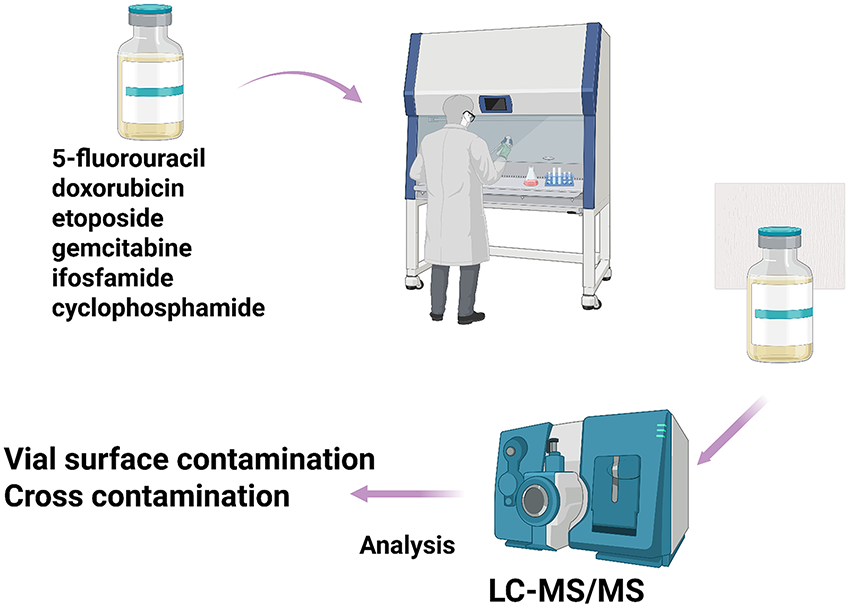
Keywords
Get full access to this article
View all access options for this article.