



Abstract
Australian local government has rarely been the domain where entrenched and polarising cultural disputes play out, and is instead most often associated with the “3Rs”: roads, rates, and rubbish. However, in recent years, a growing number of local councils from across Australia have taken exceptional and unprecedented steps, sometimes in defiance of state and federal governments, to address some of the country's most ideologically contentious issues. Drawing on long-established American urban politics literature on local politics and culture war conflicts, this research note offers an empirical account of the public understandings and perceptions of local government roles in the realm of contentious politics, an area that has not yet been addressed in the emerging Australian literature. Our findings from a representative nation-wide survey (n = 1,350) indicate that a majority of Australians believe that local governments should be involved in matters relating to climate change, Indigenous reconciliation, and LGBTQIA + advocacy.
Australian local government has rarely been the domain where entrenched and polarizing cultural disputes play out. However, in recent years, a growing number of local councils from across Australia have taken exceptional and unprecedented steps, sometimes in defiance of state and federal governments, to address some of the country's most ideologically contentious issues—from same-sex marriage and Australia Day 1 to debates over climate change, refugees, pill testing, and the rights of transgender people. These developments are remarkable not only because the Australian local government is still broadly considered as the “custodians of roads, rates and rubbish,” even though its purview continues to expand from “services to property” to “services to people” (Brown 2008; Dollery, Grant, and O’Keefe 2008; Grant and Drew 2017). They are extraordinary because they stake a claim in what is popularly dubbed as the “culture wars”: a special breed of contentious politics imported from the United States and conventionally employed by national political actors in Australia to stoke ideological divisions for political gain (George and Huynh 2009). Concerned with the big questions of values, ideology, and morality, as well as the nature of the good society, the “culture wars” are typically associated with progressive/conservative divisions and are characteristically heated and polarizing (Davis 2014; Hunter 1991; McKnight 2005). Although Australian local councils have long championed such progressive political causes as women's political franchise and the anti-uranium and nuclear power movement (Dunn et al. 2001; Lavarack and Ryan 2015), never have so many local councils shifted national discourse by tackling these cultural, ideological, and moral controversies as in recent years.
Drawing on long-established American urban politics literature on local politics and culture war conflicts (Brown, Knopp, and Morrill 2005; Palus 2010; Rosenthal 2005; Sharp 1996, 1999, 2005), Australian research has now begun to grapple with the question of whether and how local governments should engage with ideologically divisive issues associated with the “culture wars” (Busbridge 2023; Chou 2021; Greenfield, Moloney, and Granberg 2022; Greenwich and Robinson 2018). In particular, this nascent research has focused on conceptualizing the types of roles that Australian local government can play in governing “culture war” type issues, such as celebrating Australia Day on January 26, as well as examining the various motivating factors driving local council actions (Busbridge and Chou 2022; Chou and Busbridge 2019, 2020).
However, the extent to which the Australian public supports local government taking action over “culture war” type issues has yet to be systematically examined. Indeed, whereas public opinion polling and scholarship have analyzed whether Australians believe that local councils should stick to their traditional remit to service property or be empowered to tackle a broader range of local social issues (IPA 2020; Ryan et al. 2015, there has been virtually no study into public understandings and perceptions of local government roles in the realm of contentious politics. 2 This gap is of critical importance since one of the local government's key functions is to be a seat of local democracy (Aulich 1999; Tan, Morris, and Grant 2016): to be “the voice of the community” (ALGA 2012, 3). Given this, gauging community perceptions on whether local councils should wade into ideologically polarizing issues associated with the “culture wars” offers local government actors and scholars the opportunity to take stock both of what type of services the community values and, more broadly, what role Australian local governments should play in local as well as national political issues.
In this research note, we present the findings from a new national survey of 1,350 respondents who were asked whether acting on contentious issues associated with climate change, Indigenous reconciliation, and LGBTQIA + advocacy should be within the local government's remit. In what follows, we first discuss the empirical strategy and method guiding our survey design before reporting on and analyzing the survey's key empirical findings: that a majority of Australians now believe local government should be engaging in issues associated with climate change, Indigenous reconciliation, and LGBTQIA + advocacy.
Method
The national survey we devised sought to gauge how Australians view the increasingly prominent roles local government has played in three of the country's most divisive contemporary “culture war” issues: climate change, Indigenous reconciliation, and LGBTQIA + advocacy (Foster 2021; Hoffman 2012; Johnston 2022). That more and more local councils across Australia have acted on these “grand issues,” often engaging in more “adversary politics” as they do so, signifies a distinct departure from the conventional understandings of local politics in Australia (Halligan and Paris 1984, 59). Despite this, there has been little research conducted into whether Australians think local government should be engaging in these polarizing ideological, cultural, and moral issues.
Our survey sought to address this gap by asking respondents to consider the extent to which they think local government should be engaging in a range of issues associated with climate change, Indigenous reconciliation, and LGBTQIA + advocacy. This was done to enable respondents to distinguish and disambiguate the various issues and actions associated with each of these broad areas. The issues are as follows:
Climate change Declaring climate emergencies Achieving net zero emissions and 100% renewable energy Lobbying federal and state governments for climate action Australia Day Changing the date of Australia Day from January 26 Recognizing Indigenous perspectives Advancing reconciliation LGBTQIA + advocacy Flying the rainbow flag Supporting LGBTQIA + communities Fostering LGBTQIA + inclusive cultures
While the main objective was to gauge how Australians, in general, perceive local government action on these issues, we also wanted to explore whether there were any differences in opinion when responses were broken down by different demographic variables (age, gender, education, political affiliation, and place of residence). In addition, given the particular salience of these issues for Indigenous Australians, and acknowledging a history of fraught relations between Indigenous communities and local government in Australia (Sanders 1996; Stanford 2023), we also sought to determine whether this group's opinions on the four areas relating to Indigenous reconciliation in the survey differed relative to those of other survey-takers.
In conducting our analysis, we were guided by two related assumptions in the subcultural explanation of the American urban politics literature, especially the literature on governing local culture war conflicts (Elazar 1966; Liescke 1993; Sharp and Brown 2012). The first broad assumption holds that the more progressive the community—that is to say, localities comprised of “large, robust countercultures” and higher populations of younger people, women, individuals holding higher levels of education, and people with more “liberal” political views and secular values—the more likely they are to adopt progressive local policies that champion “new cultural practices” that break with the status quo (Percival, Johnson, and Neiman 2009; Rosdil 1991, 81; Sharp 2002, 870). The second broad assumption flows from the first: given that progressive subcultures are more likely to be in post-industrial urban localities that have replaced goods production and manufacturing economies with knowledge economies, we should expect urban or metropolitan communities to be more supportive of unconventional views that challenge traditional social values than rural or regional communities (Norris and Inglehart 2019; Sharp 2005). Guided broadly by these assumptions, we, therefore, expected individuals holding progressive values (i.e., younger people, women, individuals holding higher levels of education, and people with more liberal political views) would be more supportive of local government engaging in “culture war” type issues relating to climate change, Indigenous reconciliation, and LGBTQIA + advocacy than those with conservative values. Following the second assumption, our broad expectation was that residents of post-industrial localities—which in Australia are primarily limited to urban regions, metropolitan areas outside urban regions, and other major cities (Baum et al. 2002)—should have higher levels of support for local government acting on these “culture war” issues.
Our survey was fielded as an online survey through the reputable survey company, Lucid (which since became part of Cint). Lucid provides access to respondent panels in Australia with hundreds of thousands of adults over the age of 18 who have volunteered to partake in surveys. A random sample of individuals in these respondent panels were invited to take part in the survey, making this the typical convenience sample that can be gathered from online surveys. To ensure that the survey was as closely representative of the national population as possible, the survey included quotas for gender, age, and state/territory of residence, which were based on population weights. These demographic questions were posed first to respondents. Only those who fell into categories where the quotas were not yet filled were able to move on to the survey itself. The resulting sample was 1,350 respondents. The survey was fielded from June 24 to July 3, 2022; this period was determined by quota saturation.
Results and Discussion
Overall, our results painted a clear picture: Australians broadly support local government acting on contentious issues associated with climate change, Indigenous reconciliation, and LGBTQIA + advocacy. As Figure 1 demonstrates, clear majority of Australians were overall supportive of local government action on climate change (80 percent agreement), advancing reconciliation (75 percent), and LGBTQIA + advocacy (64 percent). Even when it came to the most polarizing issues in the list—declaring climate emergencies (75 percent), changing the date of Australia Day from 26 January (50 percent), and flying the rainbow flag (59 percent)—support was either evenly split or evident for most Australians. That said, it is notable that support rose on the less controversial initiatives in the list, such as achieving net zero emissions and 100 percent renewable energy (79 percent), recognizing Indigenous perspectives (77 percent), and supporting LGBTQIA + communities (65 percent).
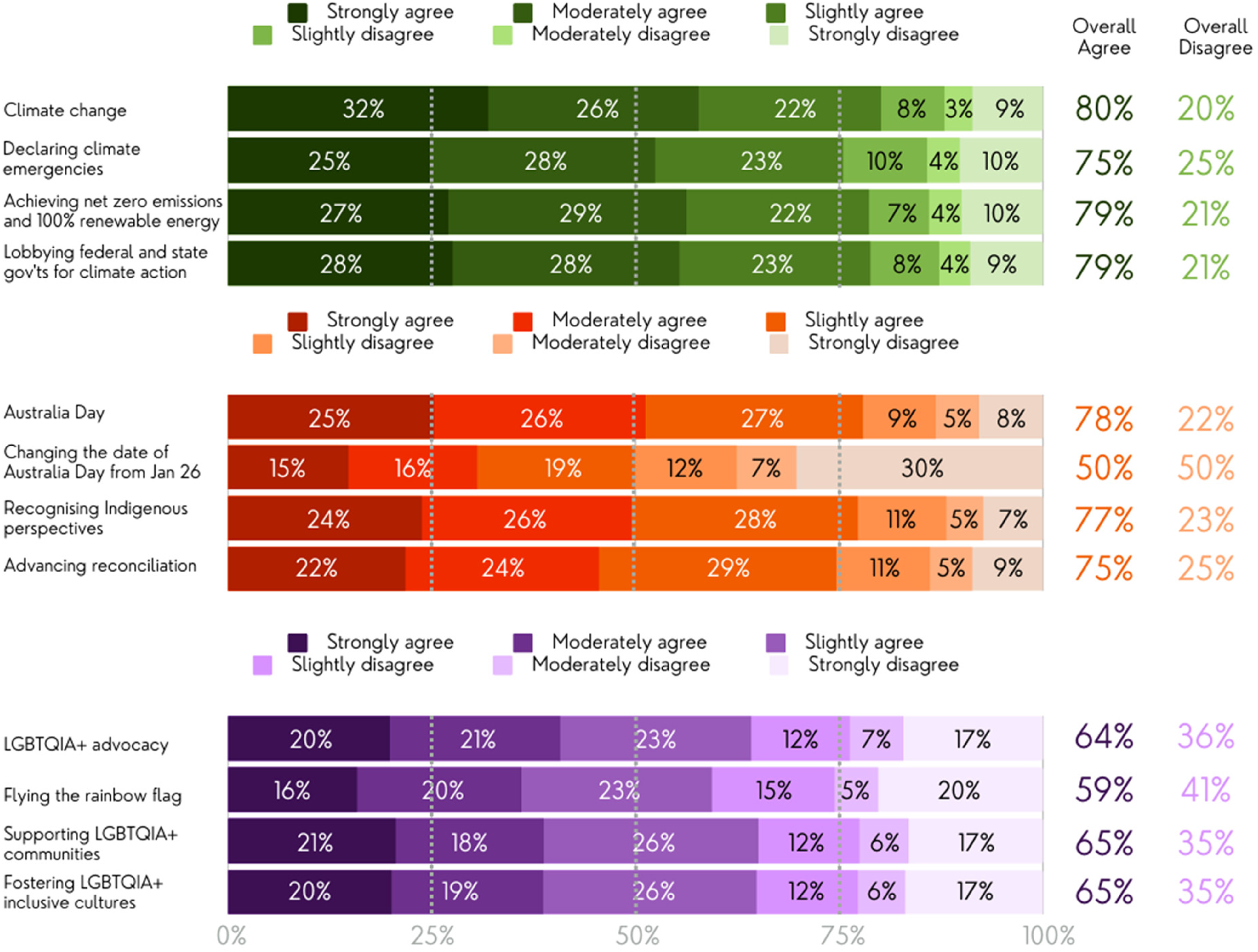
Overall views of Australians on whether local government should be engaging with culture war issues associated with climate change, Indigenous reconciliation, and LGBTQIA + advocacy. Survey question: “In recent years, Australian local governments have often made news for the roles they played in some of the country's most contentious political issues. To what extent do you think local government should be engaging in these issues, in particular in relation to:”
These findings confirm two broad points. First, compared to the issues of climate change and Indigenous reconciliation, our findings see public support for LGBTQIA + advocacy lowest across all areas—with the exception of support for local government changing the date of Australia Day. While this can be read as a lack of relative support among the Australian public for LGBTQIA + advocacy, the better interpretation is that compared to the longer history of local government engagement with climate change and Indigenous reconciliation, action supporting the LGBTQIA + community remains relatively new for local government. Indeed, as an example, it was only as recently as 2016 that the Victorian Local Governance Association included LGBTQIA + issues for the first time in its annual community survey (VLGA 2020)—compared to the decades of work that local councils have done on climate change and Indigenous reconciliation issues. Second, and more significantly, these results confirm that there is now broad community support for Australian local government to deliver a wider and more diverse array of social and political services and initiatives, even on controversial “hot button” issues that are well beyond its traditional remit. Although many local government actors and scholars already maintain that local councils’ scope extend well beyond “mere ‘administrative practice’” (Grant and Drew 2017, 71) to a more “place-shaping” role (Dollery, Grant, and O’Keefe 2008; Ryan et al. 2015), these findings demonstrate that more work is needed to understand how local government can govern contentious issues and the political and financial consequences that can arise as they do. In short, the old “ideological disputes about the parameters of local politics” must now be replaced with a different debate (Halligan and Paris 1984, 59).
When the results are broken by age, gender, education, political affiliation, and place of residence, however, several interesting trends and differences in opinion can be discerned. First, regarding age (Table 1), there was clear evidence that younger cohorts were more supportive of local government acting on these issues, particularly when it came to the most polarizing issues: declaring climate emergencies, changing the date of Australia Day, and flying the rainbow flag. In all three cases, there was at least a 10 percent variation between the youngest and oldest cohorts. More specifically, there are several issues which older people were more likely to disagree than agree that local government had a role in changing the date of Australia Day (72 percent disagree); LGBTQIA + advocacy (51 percent disagree); flying the rainbow flag (59 percent disagree); supporting LGBTQIA + communities (51 percent disagree); and fostering LGBTQIA + inclusive cultures (52 percent disagree).
Views by Age Group.
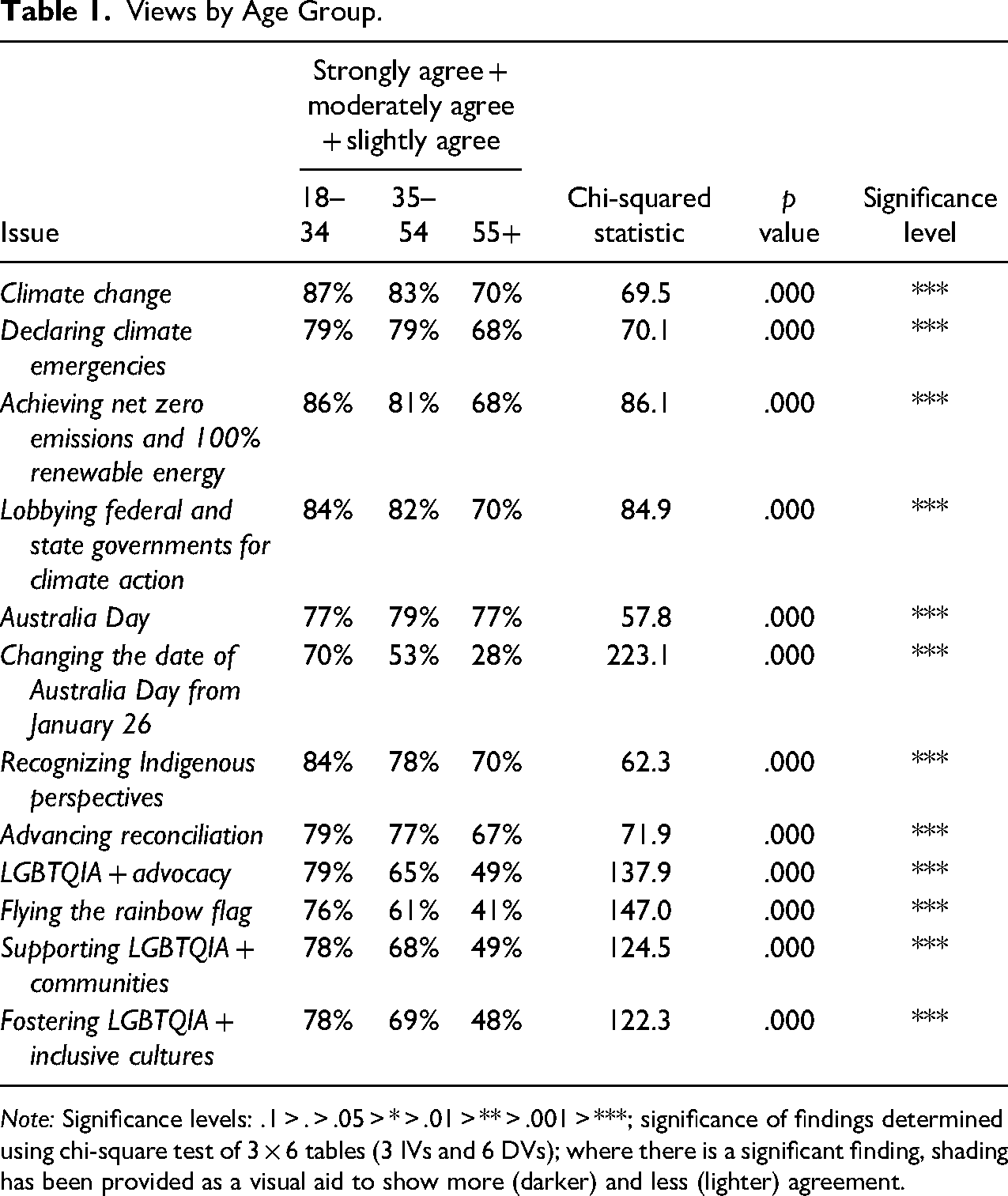
Note: Significance levels: .1 > . > .05 > * > .01 > ** > .001 > ***; significance of findings determined using chi-square test of 3 × 6 tables (3 IVs and 6 DVs); where there is a significant finding, shading has been provided as a visual aid to show more (darker) and less (lighter) agreement.
Second, as we see in Table 2, there are also important differences in opinion between women and men. Although significant that majorities of both women and men believed that local government should engage in these issues (except for changing the date of Australia Day, which was supported by 44 percent of men), it is noteworthy that women were stronger in their support of local government involvement than men in all cases. While beyond the scope of this project, this finding does point to the need for further qualitative studies into gendered engagement with, and expectations of, local government in Australia (Carson et al. 2023).
Views by Gender.
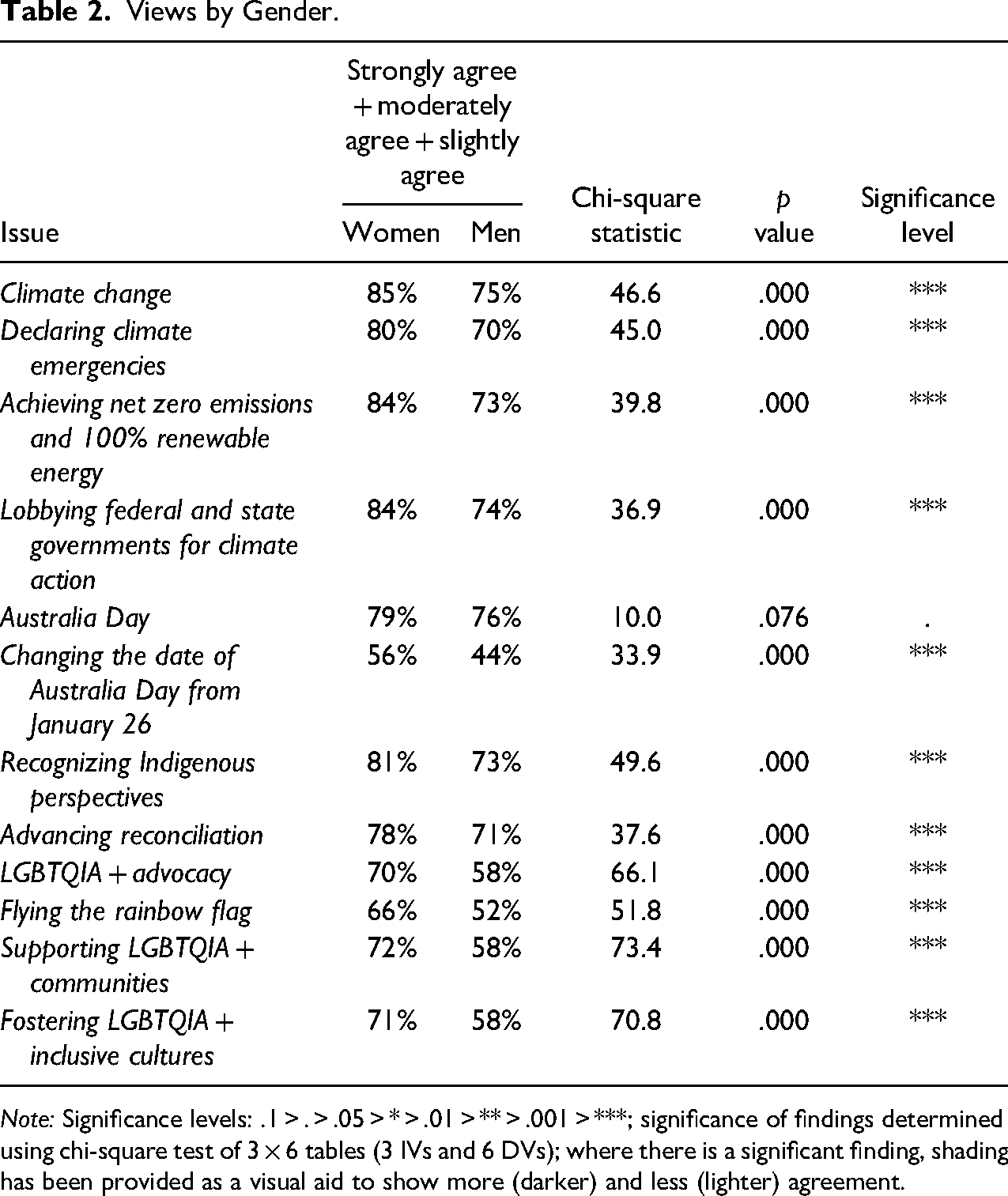
Note: Significance levels: .1 > . > .05 > * > .01 > ** > .001 > ***; significance of findings determined using chi-square test of 3 × 6 tables (3 IVs and 6 DVs); where there is a significant finding, shading has been provided as a visual aid to show more (darker) and less (lighter) agreement.
Third, regarding education levels, our results were more mixed. However, the overall takeaway is that the higher the level of education, the more likely that respondents will support local government acting on contentious issues (Table 3). Specifically, this was the case when it came to the issues of changing the date of Australia Day, LGBTQIA + advocacy, flying the rainbow flag, supporting LGBTQIA + communities, and fostering LGBTQIA + inclusive cultures. It was only in relation to the general issue of climate change where no statistically significant differences in support were found across school, 3 vocational, 4 and university-educated respondents.
Views by Level of Education.
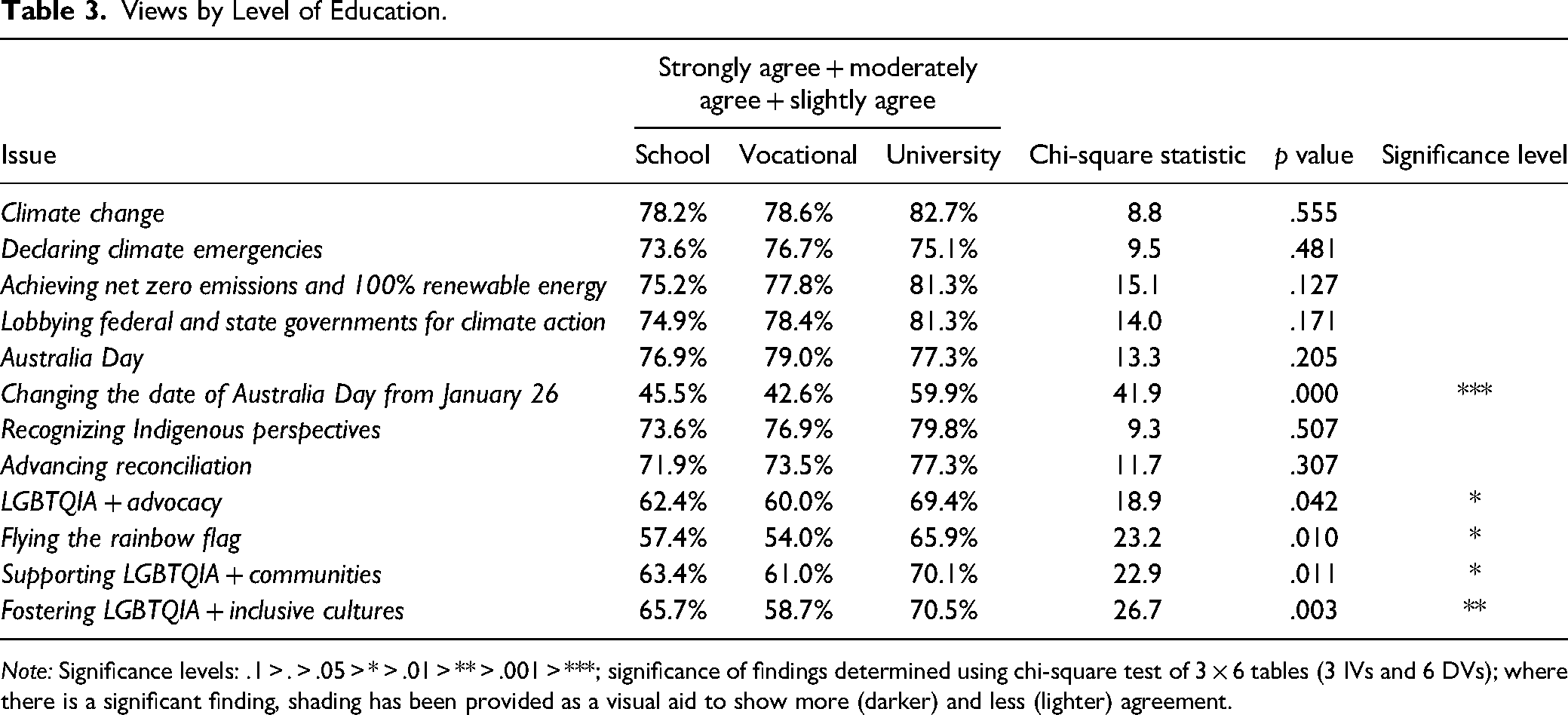
Note: Significance levels: .1 > . > .05 > * > .01 > ** > .001 > ***; significance of findings determined using chi-square test of 3 × 6 tables (3 IVs and 6 DVs); where there is a significant finding, shading has been provided as a visual aid to show more (darker) and less (lighter) agreement.
Fourth, the most politically progressive respondents (i.e., Greens supporters) tended to show significantly more support for local government acting on these issues than respondents with conservative political leanings (i.e., National and Liberal supporters) (Table 4). This was particularly stark on the issue of changing the date of Australia Day. Compared to the 42 percent of Liberal Party supporters who agreed that local government had a role in this debate, 77 percent of Greens Party supporters believed that local government should be taking a stance on this issue—a 35 percentage point difference.
Views by Political Affiliation.
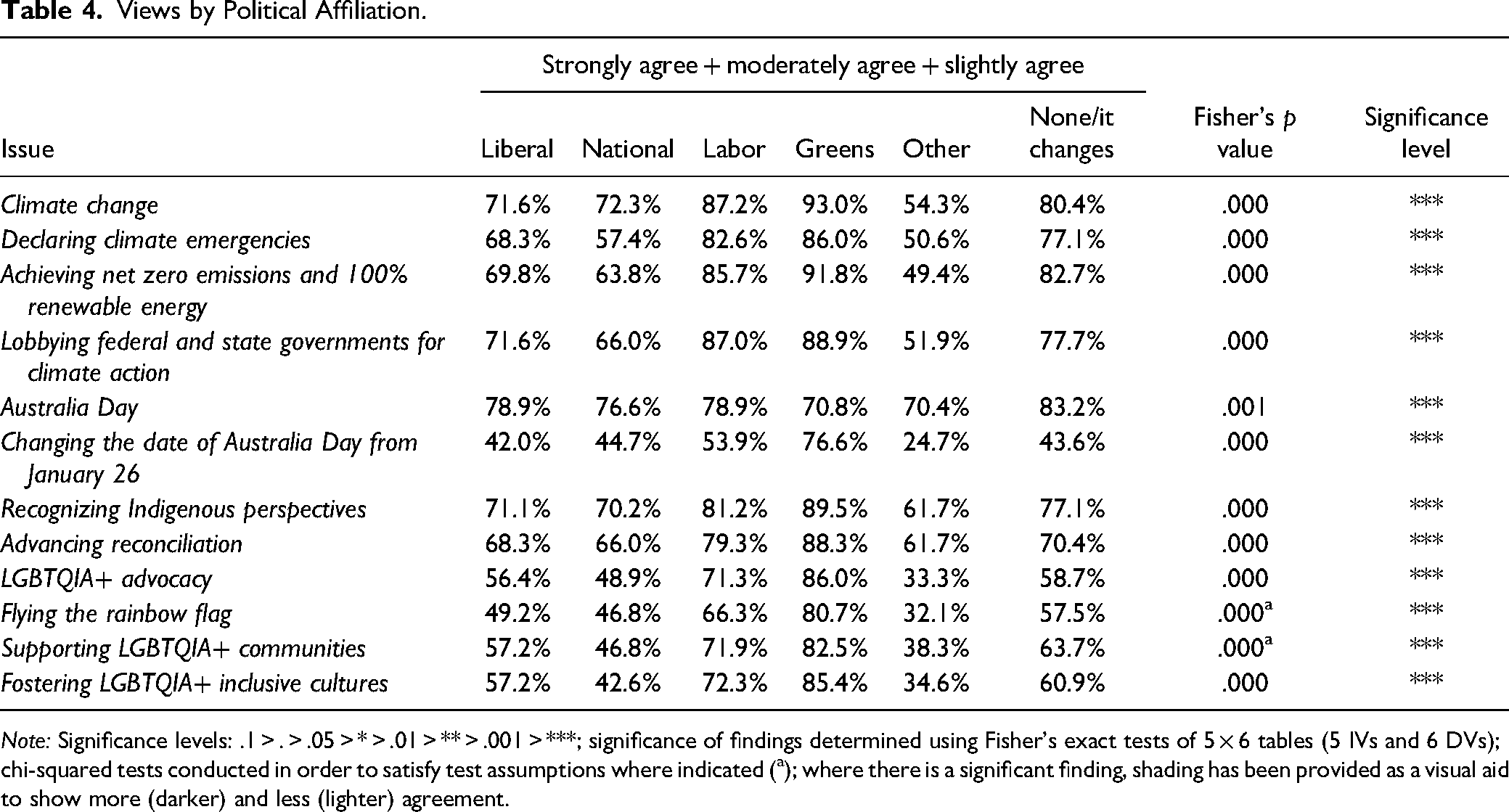
Note: Significance levels: .1 > . > .05 > * > .01 > ** > .001 > ***; significance of findings determined using Fisher's exact tests of 5 × 6 tables (5 IVs and 6 DVs); chi-squared tests conducted in order to satisfy test assumptions where indicated (a); where there is a significant finding, shading has been provided as a visual aid to show more (darker) and less (lighter) agreement.
The fifth variable was revealing in the sense that there were no statistically significant differences of opinion when it came to where respondents lived. The only notable exception was on the issue of changing the date of Australia Day. As Table 5 demonstrates, a slight majority of metropolitan respondents agreed that local government should engage with the change the date issue, while the majority of regional and rural respondents indicated that local government should not engage. The disagreement was particularly stark in the case of rural respondents, where 67 percent disagreed overall.
Views by Place of Residence Type.
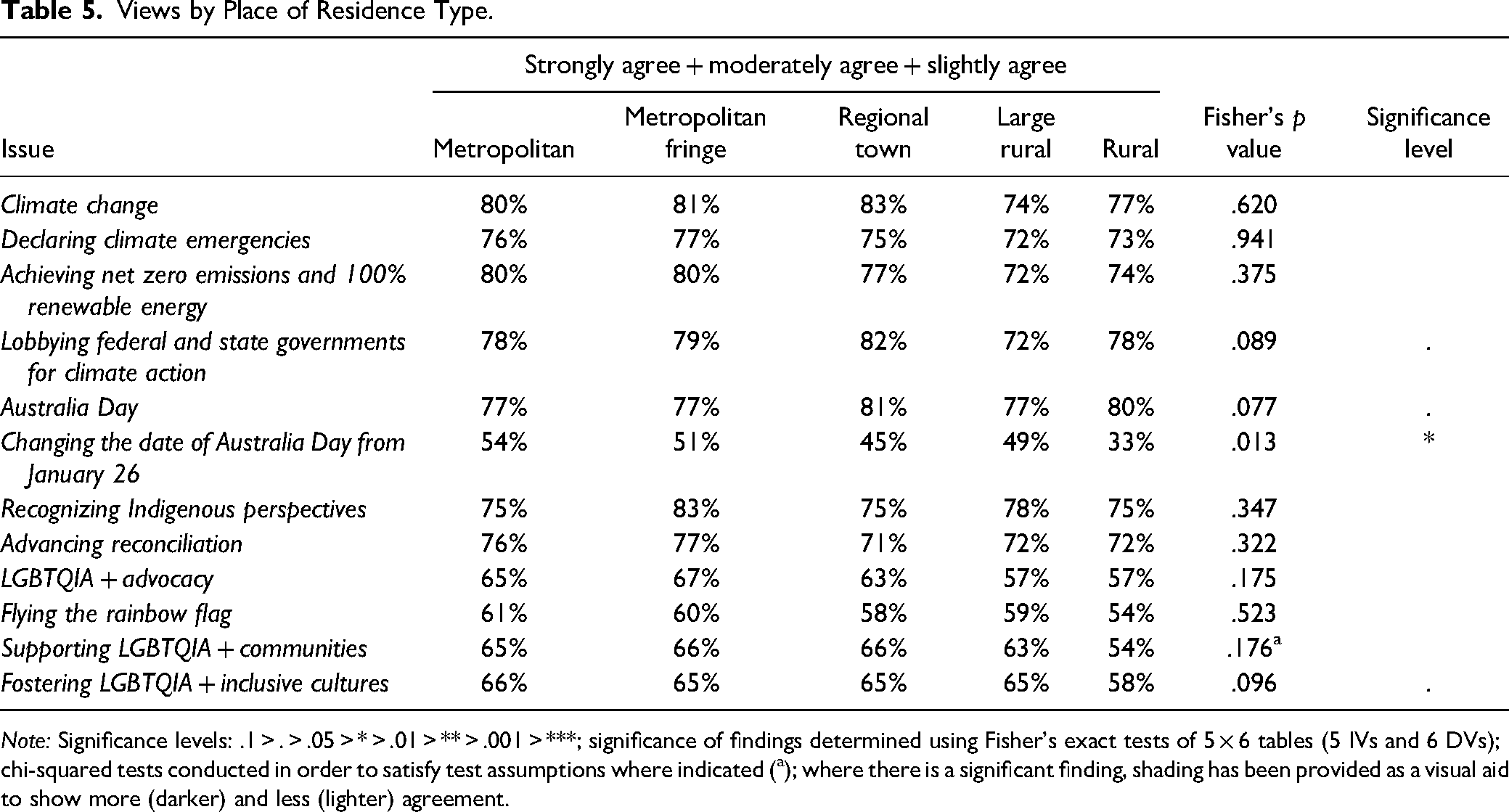
Note: Significance levels: .1 > . > .05 > * > .01 > ** > .001 > ***; significance of findings determined using Fisher's exact tests of 5 × 6 tables (5 IVs and 6 DVs); chi-squared tests conducted in order to satisfy test assumptions where indicated (a); where there is a significant finding, shading has been provided as a visual aid to show more (darker) and less (lighter) agreement.
Finally, we also analyzed the differences in views between respondents who identified as Indigenous (i.e., Aboriginal and/or Torres Strait Islander) versus those who were not. With the exception of the Australia Day issue, we found statistically significant differences between these groups in relation to the remaining three Indigenous reconciliation issues. In each case, Indigenous respondents indicated much greater levels of support for local government involvement. This was particularly notable in relation to the issue of changing the date of Australia Day, where a majority of those who did not identify as Indigenous indicated that they disagreed with local government involvement in the issue (Figure 2).
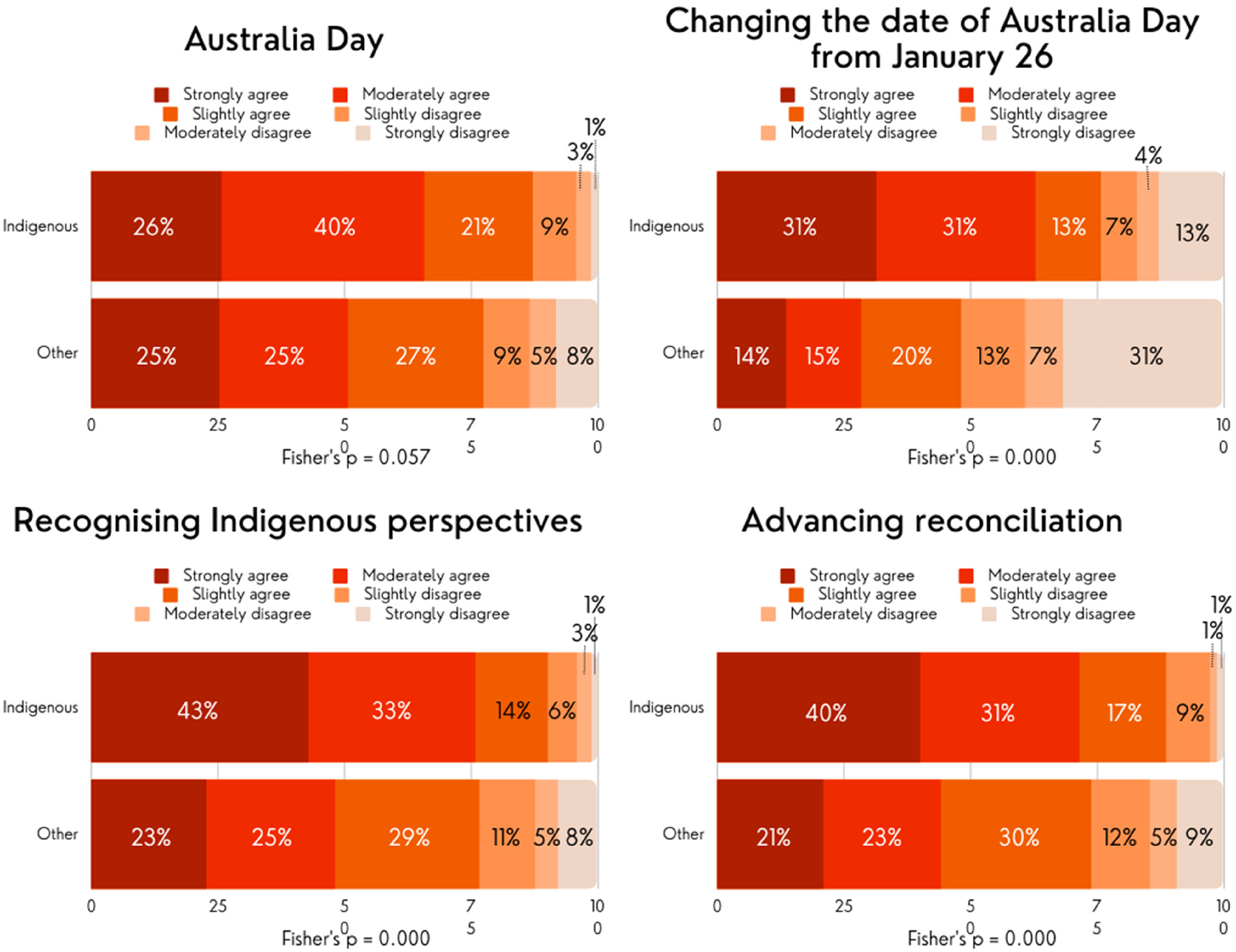
Views on Indigenous reconciliation issues by Indigenous identity. Note: Thirty-seven respondents who indicated “prefer not to say” were removed from this analysis.
When the first four variables are analyzed together, our results broadly confirmed the first assumption that guided our survey: that individuals who possess progressive values (i.e., younger people, women, individuals holding higher levels of education, and people with more progressive political views) are more supportive of local government engaging in “culture war” type issues relating to climate change, Indigenous reconciliation, and LGBTQIA + advocacy. These results back broader research showing younger people, women, the highly educated, and the politically progressive as those who tend to either hold postmaterialist values or embrace new cultural practices (De Graaf and Evans 1996; Hayes, McAllister, and Studlar 2000; Kilburn 2019; Norris and Inglehart 2019; Stubager 2008). The significance of this in the Australian context is that demographic and survey data shows that young people and women are increasingly likely to hold politically progressive values and that younger generations are remaining progressive even as they age (Cameron et al. 2022; Taylor 2023). This, coupled with the increasing numbers of Australians pursuing higher education, especially at postgraduate levels, and a national move to the left at both state and federal levels in more recent years, should see the views captured in our results become more rather than less entrenched (Bongiorno 2022; Hare 2022). As this happens, the ideological and cultural polarization typically embedded in the “culture wars” should become less pronounced—a trend that both our results and other survey studies highlight (Cameron and McAllister 2022; Duffy et al. 2021). For local council actors seeking to extend the scope of their policymaking in these areas, then, these socio-demographic findings should provide the backing to tackle a wider range of social and political issues previously outside the limited remit of Australia's third tier of government.
But whereas our results broadly confirmed the first assumption, our finding that there were no statistically significant differences of opinion when it came to where respondents lived—bar the question of changing the date of Australia Day—contradicts the second assumption. Two key explanations may help clarify this finding. First, notwithstanding the fact that postindustrial areas in Australia have conventionally been confined to urban regions, metropolitan areas outside urban regions, and other major cities (Baum et al. 2002), recent research highlights that Australia's urban/rural divide is not as wide as often perceived (Daley, Wood, and Chivers 2017). Although postindustrial localities remain largely concentrated “towards the centres of capital cities,” Daley, Wood, and Chivers (2017, 3) note that “income growth per person in most regional areas has kept pace with the average in their State over the past decade.” Of course, this is not to say that all regional and rural areas have benefited from Australia's transition to a postindustrial economy. But research does demonstrate that “[e]conomic globalisation has released new drivers of growth into Australia's system of regions” which have seen “the emergence of new, globally focussed, agricultural industries … and changed business models in many parts of the economy,” including in regional areas (Beer 2012, 271). All this to say that the postindustrial/industrial divide in Australia may now be less apparent in an urban/rural divide than in countries such as the United States (Duffy et al. 2021).
The second explanation relates more specifically to local government. Scholarship has shown that Australians living in regional and rural areas often have very different perceptions of local government's role than Australians living in metropolitan areas. Specifically, as Hastings et al. (2016, 175) demonstrate, “[f]or people living in regional areas, it is even more important that local governments play a role in promoting social, community, economic, infrastructure and wellbeing outcomes.” Drawing on the results of their national survey, they found that residents of regional, rural, and remote areas were more likely than urban residents to see the role of local government as extremely important in the key areas of aged care; youth services; strengthening community wellbeing; economic development; promoting the benefits of the local area; transport infrastructure; and health and environment management. This is because, as Bell (2006, 178) once claimed, “[i]n many rural communities, local government is the last man standing. Once the federal or state governments withdraw services, if local government doesn’t step in, no one will.” What this means, in practice, is that many rural residents—and their local councils—increasingly believe that local government “should willingly accept responsibility to provide services of other tiers of government when the opportunity arises” (Hastings et al. 2016, 176)—even, to return to our survey, on more contentious social issues relating to climate change, Indigenous reconciliation, and LGBTQIA + advocacy.
Finally, it is notable that Aboriginal and Torres Strait Islander respondents showed overwhelming agreement that local government should be involved in Indigenous reconciliation issues and stronger overall agreement that local government should be engaging in contentious social issues than their non-Indigenous counterparts. Historically, relations between Indigenous communities and local governments in Australia have been poor, a factor that is at least in part attributable to the ratepayer orientation of local government (Sanders 1996). However, as Sanders (1996) noted at the close of the twentieth century, as Indigenous communities gained greater material resources and greater representation on local councils, there was some evidence that these relations were slowly, if haltingly, improving. That, over two decades later, Indigenous respondents seem to overwhelmingly support the role of local government in reconciliation measures may be a continuation of this trend in improving relations, particularly in the context of the federal government's disastrous, heavy-handed 2007 intervention into Indigenous communities (Watson 2011). With Indigenous communities’ increasing calls for more “ground-up,” community-based approaches to addressing the issues that concern them, local government might be seen as a particularly appropriate forum for addressing issues relating to reconciliation. This is particularly so in the wake of the unsuccessful campaign for Indigenous Constitutional recognition in 2023, which was spurred on by a nation-wide, grass-roots consultation process among Indigenous groups (Referendum Council 2017). Going forward, Indigenous peoples and allies may therefore increasingly connect with and work through local government—particularly those councils and local government associations across Australia that publicly backed the Indigenous Voice to Parliament and affirmed their support for the key principles of the Uluru Statement from the Heart, which are Voice, Treaty, and Truth—to govern their own communities. In comparison to their state and federal counterparts, local government may indeed be better placed to consult directly with Indigenous communities—particularly in the context of remote, linguistically diverse communities (Hill and Alport 2010)—and provide avenues for younger Indigenous Australians to have greater influence (Walsh et al. 2018).
Conclusion
In conclusion, the broad overall finding of our survey was that at least seven in ten Australians now support local government tackling issues associated with climate change and Indigenous reconciliation, and approximately two-thirds of Australians believe local government should advocate for LGBTQIA + issues. The only exceptions to this trend related to the issues of changing the date of Australia Day (which split respondents evenly) and flying the rainbow flag (which was supported by 59 percent of Australians).
The key lesson to draw from this research is that Australians see local government's role in far more expansive terms than has previously been assumed to be the case. Although scholars and practitioners have long recognized that local government's remit is no longer captured by the traditional “roads, rates, and rubbish” discourse, our research shows that increasingly Australians expect more of local government than is even captured by the more expansive place-shaping agenda whereby local councils are empowered to shape local identity, regulate disruptive local behaviors, maintain community cohesion, grow the local economy, and work with private and non-governmental actors (Dollery, Grant, and O’Keefe 2008). As a result of this, we may begin to see more public demand for local government to challenge the long-standing hierarchy in Australia's political system whereby the lower the level of government, the more limited and administrative the politics. While local government powers and functions in Australia have always been something of “a moveable feast” that is “subject to frequent change” (Dollery, Crase, and Johnson 2006, x), these public expectations may see local government change again into something that is potentially quite different from what it has been. As this happens, newer debates will need to take place in Australia about reforming inter-governmental relations, responsibilities, and funding, between local and state and territory governments in particular, to ensure the financial sustainability of local government as it seeks to deliver more, and more diverse, services to the local community.
For now, though, the key discussion arising from our survey findings is what model of local government would best suit Australia in the interim as more local councils move to act on these areas. Our key contention is that while it might be tempting to draw the conclusion that Australians would prefer a more “maximalist” model of local government capable of delivering a wider range of social and political services—given the respondents’ preferences—this would be premature without broader inter-governmental reforms. This is because even though these are increasingly the types of “services that local communities want,” few at present would be “prepared to pay for” them through increased rates (LGI 2006, 12). Given this, our results confirm the previous findings of Dollery, Grant, and O’Keefe (2008, 490), who suggested that a more “optimalist” model—which “marries minimalism (in terms of demands on council resources) with maximalism (in terms of the scope of council objectives)”—remains the most appropriate model as it would allow local government to express and govern the “more fundamental social conflicts and cleavages reflecting class and party” and increasingly identity, that scholars like Halligan and Paris (1984, 59) identified decades ago.
Footnotes
Acknowledgments
The authors would like to thank the three anonymous reviewers for their thoughtful and constructive feedback on this article. We also thank the UAR editorial team for their advice on improving this article.
Declaration of Conflicting Interests
The author(s) declared no potential conflicts of interest with respect to the research, authorship, and/or publication of this article.
Funding
The author(s) received no financial support for the research, authorship, and/or publication of this article.
