



Abstract
This paper examines the nomination of the Williams Avenue YWCA in Portland, Oregon, in the National Register of Historic Places as a crucial event in recognizing and preserving Black heritage within American national history. Our analytical framework combines Black geography and multilevel governance theory (MLG) to examine documents used for the nomination process. We unpack the historic significance of the Williams, illustrating its multifaceted role in Portland's African American community and emphasizing the role of various private and public actors in the nomination process. This analysis reveals that cities play a crucial role in protecting local history and highlights the importance of nurturing connections between cities and other levels of government. Moreover, it illustrates how the documents used for the nomination process are a tool for racial equity and it shows how historic preservation contributes to a more inclusive understanding of cities by celebrating their local, diverse, and pluralistic pasts.
Introduction
This study seeks to explore how Black heritage has been included in preservation policies. We focus on the process of the National Register of Historic Places (hereafter the National Register), a program established by the 1966 National Historic Preservation Act (NHPA) that aims to list the national, state, and local properties considered worthy of preservation (National Park Service 2022). Understanding the process that supports the preservation of Black cultural heritage is crucial for recognizing how cities are honoring their diverse racial heritage, underscoring its importance to all Americans. Our goal is to deconstruct the National Register process to understand what elements support the recognition of a pluralistic past. Being able to identify these elements may facilitate the allocation of resources toward these steps of the process. This research contributes to urban affairs scholarship, which studies inclusive urbanism and the interplay among local, state, and national governments.
The National Register process has played a pivotal role in shaping American national preservation (Fowler 2003). Notably, the inclusion of properties on the National Register reflects how historic significance is defined and valued in the American context (Tomlan 1998). Additionally, the administrative structure that supports the process has fostered collaboration among the different levels of the government and the private sector. Even though this process has drastically shaped the preservation field, only a few studies have examined the process in relationship to Black heritage (McDonald 2004; Schentag 2021). In particular, more attention is needed to understand how both the framing of historic significance and the actors involved are instrumental in this recognition. Drawing from themes emerging from a broad body of literature, including historic preservation practice and theory, heritage studies, urban affairs, urban planning, and public policy, we address this gap by untangling the National Register process for the Williams Avenue YWCA in Portland, Oregon (hereafter the Williams).
The Williams was listed in the National Register in 2020. It was built in 1926 at a time when public spaces were segregated in the city and African Americans needed their own places for social organizations (Davis and Ewers 2019). This building was constructed for African American women, who were active in philanthropic and social clubs but could not join the local YWCA because it was reserved for White women. The value of its listing in the National Register is particularly relevant considering that the City of Portland only started to pay attention to the history of Black heritage in the 1990s, following years of struggles and displacement of the members of the African American community by freeway construction, arenas, and other industrial uses (Gibson 2007; Pearson 2001). We analyze the nomination process of the Williams by asking, How did the National Register's framework capture and evaluate the historic significance of Black heritage? Why were different public and private actors involved—and to what degree—in its evaluation process?
Our objective is not to assess the process but to unravel the elements that allow us to honor a pluralistic past. It is crucial to understand these elements of the National Register process to sustain its ongoing improvement toward celebrating the diverse heritage of cities. Using an analytical framework that integrates critical geography (Summers 2019; Watkins 2013) and multilevel governance theory (Vogel 2007), we examine two primary documents written in preparation for the application to the National Register: the Multiple Property Document (MPD) African American Resources in Portland Oregon, from 1851 to 1973 (Galbraith et al. 2020) and the Registration Form Williams Avenue YWCA (Davis and Ewers 2019). As we further explain in a later section, MPDs and Registration Forms are key sources of information and have been underutilized in the academic context, relegating them to a mere bureaucratic function despite the wealth of information they collected about the representation of the ethnic and racial diversity of American history and its influence on the National Register (Hanson et al. 2022).
We start our analysis with how the preservation discourse has shaped perceptions of historical value so that we can better grasp the emergence of attention on Black heritage. Then we outline the key aspects of the National Register process, highlighting its criteria for evaluation of the historic significance, its benefits, the evolution of its framework, and the actors involved over the years. We continue by introducing the City of Portland and illustrating our sources and analytical framework. The analysis articulates the historic significance of the Williams, representing both Black women's history and civil rights and the connections among different actors that flourished during the nomination process. Our conclusions highlight how the broadening of the historic significance and the cooperation among different levels of government and civil society are instrumental to a racially diverse approach to historic preservation. In particular, cities and their actors play a crucial role in protecting local history, emphasizing the importance of this study of the American preservation system for urban affairs scholars.
Including Black Heritage in Historic Preservation Literature
The United States’ commitment to recognizing its heritage increased dramatically since federal intervention with the enactment of the NHPA. This act asserts that historical and cultural foundations should be preserved as they represent the living part of a community and provide a sense of orientation to the American people. It is worth noting that the term historic preservation in the United States corresponds to heritage conservation in much of the rest of the world (Kaufman 2009). In particular, the NHPA defines historic preservation broadly, encompassing activities such as identification, evaluation, documentation, rehabilitation, and conservation (National Park Service 2018a).
Historic preservation, as a social construct and cultural practice, has evolved over time, shaping in different ways the discussion about historic significance, which guides decisions about what is worth preserving. For many years historic preservation focused on a national canon while neglecting regional variation and community diversity (Lee 1992). During these times, approved landmarks in the National Register strongly correlated with White middle-class and upper-class communities that had the resources (e.g., funding for consultants) or political capital (e.g., requesting a formal historic district) to engage with typical preservation strategies. The predominance of traditionally White built environments, attitudes, and values left a deep void for celebrating other racial and ethnic histories (Saito 2009). Apart from negating that the history of these communities had broader implications beyond their neighborhoods—or had any history worth preserving for that matter—this pattern also illuminated the lack of technical expertise available to these communities, especially in distressed and under-resourced areas. Trends in White-dominated preservation continued to persist well beyond broader social changes that had begun in the 1960s and a growing recognition of social history. It was only in the 1990s that efforts to highlight the diversity of the history of places led to a democratic and inclusive approach to preservation (Hayden 1995).
The attention to local diversity—instead of merely national significance—meant pluralizing the past. This can be done through different conceptualizations, such as assimilation, melting pot, core plus, pillar, or mosaic (Ashworth, Graham and Tunbridge 2007). The National Park Service (NPS) has been embracing the idea of an American mosaic (Stipe and Lee 1987), which enhances ethnic and racial minorities’ histories by highlighting the pluralistic fabric of the country. At the same time, it also reveals some forms of violence perpetrated not only by totalitarian countries but also by democratic ones (Harrison 2010). In particular, it underscores the spatial realities of race (Frank and Petersen 2002). Currently, historic preservation is moving toward eliminating the diversity deficit by not only focusing on “fine things” but also on spatial elements that tell the story of underserved communities. Despite playing an indispensable role in shaping the nation's history and remaining vivid in the memories of those who experienced them, the struggles of underserved communities have been systematically disregarded by those in positions of influence (Kaufman 2009). Some examples of more inclusive preservation practices involve incorporating kinkeeping into preservation efforts, drawing inspiration from everyday lives (Roberts 2020a), and embracing a “homeplace aesthetic” that resonates with the concept of Black freedom (Roberts 2019, 74).
Black heritage started to be recognized thanks to the influence of the civil rights movement in the 1950s and 1960s. The civil rights movement used mass nonviolent action to fight the social oppression endured by Black people around the country (Fairclough 1990; Morris 1999). African American communities gained an increased sense of recognition, changing how local history has been perceived and understood (Lee 2012). Preservationists were relatively silent in the civil rights movement; however, as the 1970s advanced, pioneering preservationists started to work in the streets with people of all races and economic levels (Tomlan 2015). The 1970s were also the years of America's bicentennial, a pivotal event to revisit the nation's history by including its diverse narratives (Rymsza-Pawlowska 2017). For instance, the Afro-American Bicentennial Corporation conducted research for the NPS to identify sites important to Black heritage (Afro-American Bicentennial Corporation 1973). As a result, Black historic sites were included in the list of National Historic Landmarks (Lee 1988). However, it was only in 1991 that the topic of cultural diversity would become an overarching topic at the National Trust for Historic Preservation Conference.
Currently, Black heritage gains attention for the racial struggles linked to place and space. In the United States, urban sites have hidden racial assumptions that assign people of different races to different spaces, causing unequal access to shelter, education, transportation, and employment (Lipsitz 2011). A growing body of literature is uncovering this racist history entrenched in discriminatory policies and government actions (Kendi 2016; Rothstein 2017; Taylor 2021). Black space matters and involves “the process of materially and imaginatively situating historical and contemporary struggles against practices of domination and the difficult entanglements of racial encounter” (McKittrick and Woods 2007, 949). Scholarship brings attention to places and “unsung heroes” that tell the stories of Black heritage from slavery to civil rights (Watkins 2013) and the struggle to recognize Black excellence through the placement of monuments in historic districts (Hodder 1999). This research has also been amplified for the larger public by books that offer tours and traveler's guides to emblematic places in the United States rich with Black history (Douglas 2021; Smith 2021). Attention to Black monuments has also flourished through special initiatives from national funders, such as the Mellon Foundation's Monuments Project. Today, approximately 3,200 properties related to African American history are listed in the National Register (LeGloahec 2021).
Despite progress, scholars emphasize the persistent challenges in comprehending Black heritage. There is a need to amplify Black imaginaries and agency (Bates et al. 2018) while simultaneously addressing the systemic racism embedded in assessment practices (Melnick, Roberts and McGilvray 2021). The identification of the history of Black women proves to be particularly arduous due to substantial gaps in scholarly sources (Dubrow 1992; Giddings 1996). This underscores the importance of ongoing efforts to rectify historical omissions and biases, ensuring a more inclusive understanding of Black heritage in preservation initiatives (Kaufman 2009). Few studies have examined the inclusion of Black heritage in the National Register, highlighting the tension between preserving buildings that do not meet contemporary regulatory standards (Schentag 2021) and the limitations in including intangible heritage (McDonald 2004). We aim to gain a deeper understanding of how the process includes Black heritage. But first, we provide a brief overview of the National Register nomination process.
National Register Nomination Process: Historic Significance and Actors
Historic Significance
The National Register aims “to coordinate and support public and private efforts to identify, evaluate, and protect America's historic and archeological resources” (National Park Service 2022). The NPS—which is a bureau of the U.S. Department of Interior—has administered the National Register since its creation by the 1966 NHPA. This program was started to list properties worthy of preservation not only at the national level but also at the local level (National Park Service 2022). The NHPA authorized the National Register program to serve as a planning tool to identify historic properties that are significant nationally and locally (Banks and Scott 2016; Hardesty and Little 2009). The process of listing a property in the National Register determines its historic significance and assesses its integrity (Hardesty and Little 2009). In order to be listed, a property needs to be included in a nomination process, which requires a successful local-level review before federal approval (Hardesty and Little 2009).
In 1969, the NPS published four criteria for nomination in the Federal Register—the official publication of the federal register concerning rules and regulations—and required that all properties nominated should demonstrate historic significance under one or more criteria (Sprinkle 2014). The four criteria require buildings, sites, objects, districts, or structures to (A) represent an important part of history, (B) be associated with persons significant in our past, (C) embody a construction style of a specific time period, or (D) yield important historic information (National Park Service 1990). A property with historic significance needs to also have enough integrity to be able to convey that significance. Integrity is defined by assessing seven aspects: location, setting, design, materials, workmanship, feeling, and association (National Park Service 1997a). Considering these aspects of historic significance, some scholars have been critical of the four evaluation criteria, claiming that behind objectivity, they have promoted the limited view that characterized early preservation practices (Grant 2016) and that they require nominators to be able to articulate the importance of their place in terms that are compatible with those criteria (Cresswell and Hoskins 2008).
To establish the historic significance, the NPS established a framework for evaluation that has changed over time to reflect the way scholarship would approach the past, with a radical shift in the 1990s that was crucial for the inclusion of Black heritage (Tyler, Ligibel and Tyler 2018). This framework supports research to establish historical contexts within the multifaceted history of the United States. The New American History (1991) by Eric Foner provided the basis for this new historical research (National Park Service 1994). One basic idea was the expansion of the boundaries of historical inquiry to include ordinary people and everyday life (Dubrow 1998; Nash, Crabtree and Dunn 2000). In 1993, a gathering of scholars and NPS professionals convened to reshape the framework to include this broader perspective through eight themes (National Park Service 2018b): peopling places, creating social institutions and movements, expressing cultural values, shaping the political landscape, developing the American economy, expanding science and technology, transferring the environment, and the changing role of the United States in the world community. The new framework does not say what is important, but rather how to study what is important, broadening the system to “memorialize, protect, and interpret places of historic importance” (Hanson et al. 2022, 422). This new approach opened up the opportunity for a more pluralistic representation of the properties listed in the National Register that include Black heritage.
The listing in the National Register offers several potential benefits, which sometimes can also imply some restrictions on the owners. The listing makes properties eligible for government funding and tax incentives, even though it does not necessarily protect property from demolition, alteration, or neglect (Silver 1982; Tyler, Ligibel and Tyler 2018). The benefits can be as mild as receiving a bronze plaque and requiring monitoring before any changes are made to the building, from restructuring to demolition. But benefits also include eligibility for grants and tax incentives and can be a catalyst for private investments (Silver 1982; Stipe 2003). These benefits, however, also imply some owner restrictions, such as compliance with federal standards for any of the four recognized approaches to the treatment of historic properties: preservation, rehabilitation, restoration, and reconstruction. State and local governments can apply even further restrictions, such as protection against relocation (Oregon Heritage 2022a).
Actors
After the changes in the framework that expanded the boundaries of historical inquiry to include ordinary people, the NPS has increasingly partnered with other public and private actors, growing its collaboration with local communities (Fowler 2003). Today, State Historic Preservation Offices (SHPOs) assist federal agencies in the review and comment procedures of the National Register to promote survey activities. State preservation programs existed before the 1966 NHPA, but they were quite scattered (Lyon and Brook 2003). To qualify for federal funding, states require to appoint a state historic preservation officer and prepare a statewide plan for historic preservation. By 1976 all fifty states and territories had a SHPO. Besides oversight of the process, SHPOs help local preservation constituencies, such as local government and citizens. This support includes public education and technical assistance through newsletters, fact sheets, publications, workshops on landmarking and financial incentives, and conferences.
The creation of the Certified Local Government (CLG) programs in the 1980s provided states with a mechanism that assists local communities (Cofresi and Radtke 2003). CLGs were created by amendments to the NHPA that allowed greater involvement of local governments in National Register decisions, granting that their ability to live up to program standards could be recognized and certified: “Requirements include adopting a preservation ordinance, maintaining a historic landmarks commission, contributing updated information to the statewide inventory of historic properties, and reviewing nominations to the National Register of Historic Places” (Potter 2016, 386). CLG programs helped to distribute some of the workload of state offices while expanding their outreach. The results have been a tremendous development of local infrastructure for preservation, including an increase in direct subsidies in the form of loans, grants, and tax incentives and a stronger local network of experts (Tomlan 2015). Scholars have celebrated the creation of CLGs by emphasizing how the protective power is found at the local level, where preservation ordinances, regulations, and incentives are drafted and where property owners interact with government authority (Tyler, Ligibel and Tyler 2018). However, research has also pointed out the shortcomings of CLGs and calls for stronger efforts to recruit and train inclusive leadership (Roberts 2020b).
Analyzing the Nomination Process in Portland, Oregon
Overview
Portland, Oregon, has been a place of struggle for African Americans who have continued to face hostility and the consequences of racial segregation laws in a state intended to be an exclusively White utopia. Black exclusion laws started with the 1844 Provisional Government of Oregon that prevented Black people from settling in Oregon, followed by an exclusion law enacted right after Oregon became a territory. The Oregon Donation Land Act of 1850 provided free land only to White settlers. The 1857 Oregon constitution banned slavery and made it illegal for Blacks to own real estate, make contracts, or vote (Oregon Secretary of State 2023). Those who challenged the exclusion laws gravitated toward urban centers for better employment opportunities. A port city sitting on the Willamette and the Columbia Rivers, Portland was the major destination as the largest city in the state of Oregon.
During World War II, this quiet city became the center of the Kaiser Shipbuilding Facilities, attracting thousands of workers from around the country who transformed the community. Though African Americans were less than 1% of the newcomers, the migration expanded the Black community rapidly (Fryer 2004): “Portland's Black population increased from 2,365 in 1940 to 15,000 by 1946” (Bureau of Planning 1992, 59). Discriminatory real estate practices and redlining forced African Americans to concentrate their residential, economic, and social activities in an area in the city's inner northeast quadrant called Albina, where the Williams is located (Gibson 2007; Pearson 2001). In the 1970s, a major federal urban renewal project for the expansion of the Emanuel Hospital in Albina displaced hundreds of African American families. By the 1990s, 80% of the total African American population lived in Albina; however, they were a minority within their own neighborhood (Bureau of Planning 1993b). The area was perceived as unsafe, which led to the 1993 Albina Community Plan (Bureau of Planning 1993a), a strategy of economic development that included preservation policies attentive to community assets, bringing attention to the history of the local African American community (Redaelli 2020).
After years of government hostility, the City of Portland's Bureau of Planning & Sustainability engaged in research and planning that finally started recognizing the value of Black heritage (Bosco-Milligan Foundation 1998). A series of historic survey efforts started in the 1980s, including the Portland Historic Resource Inventory (1984), The History of Portland's African American Community (1993), Cornerstones of Community (1998), and various independent National Register nominations for the Lewis and Elizabeth Van Vleet House, Otto and Verdell Rutherford House, Rinehart Building, and Vancouver Avenue First Baptist Church. But the real impetus came only in 2017, when the National Association for the Advancement of Colored People (NAACP), a grassroots organization active for civil rights, adopted a national resolution “In Support of Preserving Historic Places that Tell the Full African-American Story” (NAACP 2017). The stimulus for the resolution was the recognition that “in 2010, only 8% of the 87,000 listings in the National Register of Historic Places and 3% of 2,500 National Historic Landmarks represented stories of women and minorities” (Galbraith et al. 2020). Slowly, these documentation efforts brought Portland's Black heritage to the attention of the National Register.
Sources
For our analysis of the National Register process, we utilize two documents that were essential to the nomination process: the MPD Form titled African American Resources in Portland, Oregon, from 1851 to 1973 (Galbraith et al. 2020) and Registration Form Williams Avenue YWCA (Davis and Ewers 2019). MPDs comprehensively address the historic significance and physical integrity of properties: They include historical contexts to delineate a period of significance, associated property types, and identification methods (Hardesty and Little 2009; National Park Service 1996). The MPD is a cover document, not a nomination in its own right, and serves as a basis for evaluating the eligibility for the National Register of related properties (National Park Service 1996). The NPS has included MPDs since 1977, which streamlined the nomination process because these cover forms emphasize much of the context for evaluation, which does not have to be repeated for each nomination (NPS 1996).
Besides historical contexts, MPDs broadly address the physical integrity to capture entire groups of resources and provide a list of property types associated with them: residences, commercial and professional buildings, entertainment venues, religious facilities, civic and social organization buildings, sites, objects, and historic districts. New property types can be recognized only thanks to historical contextualization where “[g]ood historic contexts are widely useful and can be expanded to address previously unrecognized property types or to extend their temporal or geographic parameters” (Hardesty and Little 2009, 26). The delineation of historical contexts brings attention to property types that could not be valued without this updated historical information. To help link a historical context to a specific property, the NPS requires adding to the MPD a list of property types—where a property type is a “grouping of individual properties characterized by a common physical and/or associative attributes” (National Park Service 1999, 14)—which also outlines the requirements to be eligible for registration nomination.
The period of significance of this MPD, 1851–1973, starts with the year Portland was incorporated as a city and ends with the Emanuel Hospital expansion, the renewal project that displaced numerous African American families. This document has been a crucial step for bringing attention to Black heritage that traditionally has not had a strongly documented history, especially in this part of the country (McLagan 2022). It addresses the unrecognized significance and integrity of Black heritage, moving toward embracing what the critical heritage literature described as a grassroots “aesthetic of freedom” (Roberts 2019). The MPDs collected a terrific amount of local history and helped understand a place through the specific historical events of its community. Four other properties in Portland also used this MPD for their successful nomination: Dean's Beauty Salon and Barber Shop, Golden West Hotel, Mt. Olivet Baptist Church, and Mallory Avenue Christian Church (Oregon Heritage 2022b). These examples bring to the forefront how the MPD has functioned as a tool for racial equity (Ewers and Davis 2020).
The final successful step for the listing of the Williams was the approval of the individual Registration Form Williams Avenue YWCA (Davis and Ewers 2019). A property is listed in the National Register after its nomination form is reviewed in several stages (Tyler, Ligibel and Tyler 2018). This form illustrated its significance by applying the NPS's criteria and by demonstrating how it aligned with the period of significance and property type researched by the MPD (Davis and Ewers 2019). The Registration Form provides technical information about a property, but most importantly, it makes the case for its significance, detailing not only its characteristics but also its meaning in a specific time and broader place (National Park Service 1997b). The significance is articulated against the evaluation criteria provided by the NPS and explains the level—local or national—of significance (National Park Service 1997a).
Analytical Framework
We analyze these documents using an analytical framework that combines Black geographies theory (McKittrick and Woods 2007) with multilevel governance theory (MLG) (Vogel 2007). The emergence of a historical approach that pluralizes the past has been crucial for the inclusion of Black heritage in the historic preservation discourse (Ashworth, Graham and Tunbridge 2007; Dubrow 1992; Nash, Crabtree and Dunn 2000). Combining Black geography with MLG, we aim to articulate two aspects in the process of pluralizing the past. First, we aim to examine how the NPS guidelines allowed a piece of a pluralistic history to be captured and to highlight the historic significance of Black heritage through a critical geography lens. Second, we aim to identify the plurality of actors that participated in this process of broadening the memorialization of history resulting in the inclusion of Black heritage.
Using a Black geographic lens enables us to focus on the struggles of inhabiting places that manifest as segregation, gentrification, and displacement and observe the places of “unsung heroes” (Summers 2019; Watkins 2013). Critical geography enhances how Black matters are spatial matters, but they also struggle to assert their sense of place against dominant practices that silence the spatial dimension of their experiences (Hawthorne 2019). The process of disentangling Black space materiality from practices of domination means focusing on characteristics linked to social histories and conditions (McKittrick and Woods 2007, 949). Additionally, the work that uses this lens explores contested sites that challenge the idea of American democracy (Nieves and Alexander 2008). This lens allows us to bring to the forefront local aspects of Black history as fundamental contributions to the national history.
Whereas MLG captures the web of governmental agencies, it also includes the involvement of the private sector considering that the term governance “serves to bridge the public-private borders in the pursuit of the collective interests” (Peters and Pierre 2004, 78). There are vertical and horizontal dimensions in the concept of MLG: the “multilevel” piece refers to the vertical interactions between the national government and the local level, while the “governance” piece refers to the horizontal interactions between government and nongovernment actors (Bache, Bartle and Flinders 2022). In other words, a multilevel governance model enhances the dynamics of a highly pluralistic society (Radin and Posner 2010). Therefore, we consider MLG particularly valuable to unpack how pluralism emerged in the process of the National Register as instrumental to highlighting the diverse history of cities.
The Williams Avenue YWCA and the National Register Process
In this section, we analyze the MPD and Registration Form in the William's nomination process, using the analytical framework combining Black geography and MLG. First, we use the lens of Black geography to examine how requirements for the process of evaluation enhance Black spatial matters represented by the social history of the Williams. Second, we use the lens of MLG to emphasize the role of each government level and civil society.
Black Heritage and Historic Significance
The Williams' listing in the National Register in July 2020 recognizes its historic significance and integrity. The building, commonly known as the Billy Webb Elks Lodge, is in the Eliot neighborhood within the Albina community. It was built in 1926 in the Colonial Revival style (see Figure 1). The period of historic significance is 1926 to 1973, beginning with the construction of the building and ending with the Emanuel Hospital Renewal Project, a major project involving demolitions and new construction carried out in the area.
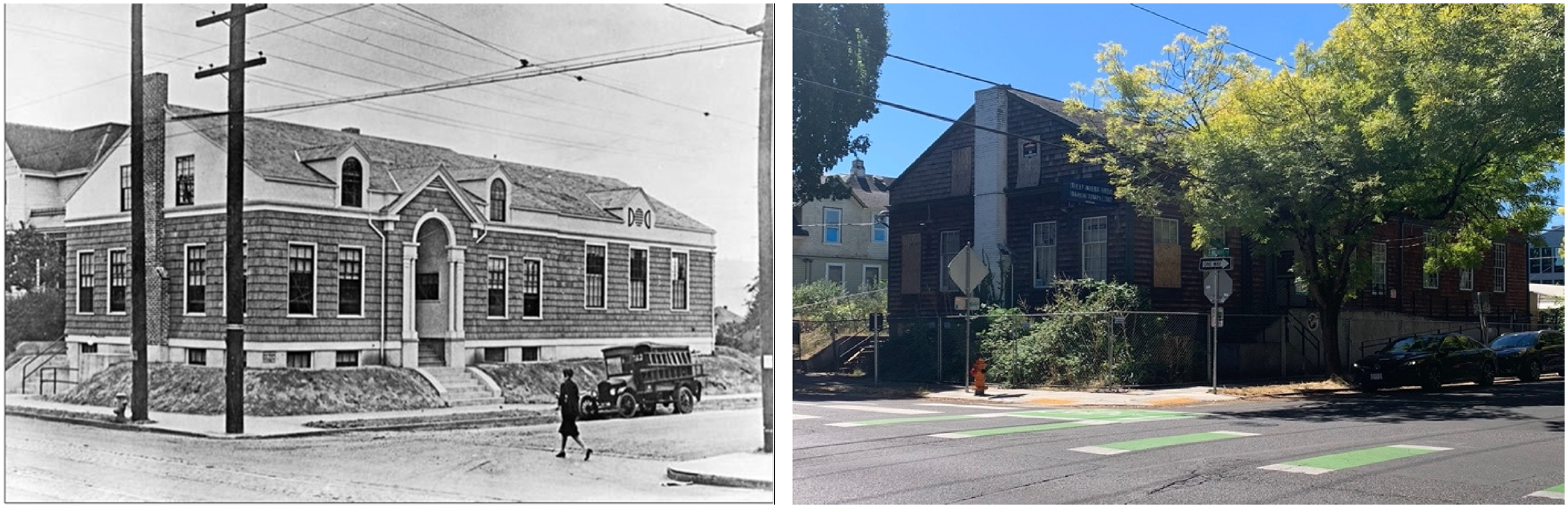
Williams Avenue YWCA. (1) Date Unknown pre 1943 Oregon Historical Society, Org Lot 679, Oregon Black History Project photo collection box 1 folder 12; Negative OrHi 87975. (2) August 16, 2022, Photo by Alexandra May Carson.
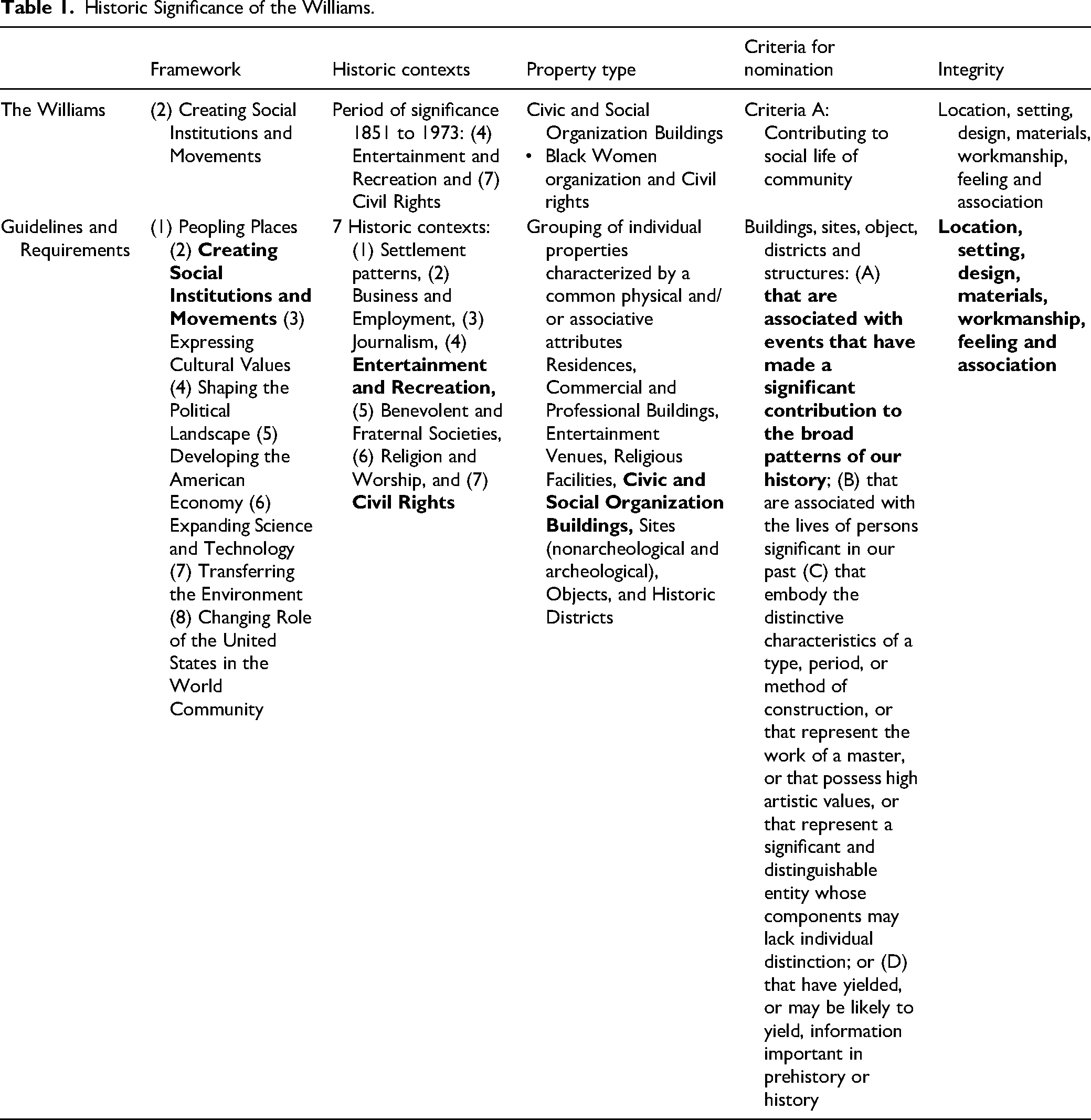
The nomination of the Williams brings attention to the history of African Americans who were not only neglected in Portland, Oregon, but also had to overcome several hostile laws (Gibson 2007; Pearson 2001). The 1993 NPS framework—that, as explained earlier, expands the boundaries of historical inquiry to include ordinary people and everyday life and is shaped by social history—provided eight themes for establishing historic significance and the ones relevant for the Williams are: peopling places, creating social institutions and movements, expressing cultural values, shaping the political landscape. The Williams has been pivotal in creating social institutions and movements, and its recognition is possible thanks to this change in the NPS framework (see Table 1). This process of focusing on characteristics linked to social histories and conditions is a way to disentangle Black space materiality from practices of domination (McKittrick and Woods 2007, 949).
Within these themes of the framework, specific historical information needs to be provided, such as historical context and property type. This information is essential for the nomination of the Williams and has been gathered in the MPD African American Resources in Portland, Oregon, from 1851 to 1973 (Galbraith et al. 2020). This document establishes seven historical contexts relevant to determining the significance of Black heritage: settlement patterns, business and employment, journalism, entertainment and recreation, benevolent and fraternal societies, religion and worship, and civil rights. For each historical context, the MPD provides extensive historical research that helps articulate the significance and characteristics within the local history and larger historical context, especially by those identified by the multiyear community process. The final Registration Form Williams Avenue YWCA (Davis and Ewers 2019) demonstrates the historic significance of the Williams referring to the research presented in the MPD.
The Williams was nominated for registration under the property type civic and social organizations. The MPD also provides a list of property types associated with the historical period that could not be valued without specific historical contexts. At a time when public spaces were segregated, the Williams offered a place for socialization, recreation, and activism. Only a handful of buildings that served as a space for civic and social organization for the African American community remain standing. The Williams also survived the federal urban renewal programs that changed the character of the neighborhood. An individual property can be nominated without needing further historical context by using the property type approach for evaluation. This is because the property falls within the specified period of significance and utilizes the historical context of benevolent and fraternal societies delineated by the MPD. This property type—civic and social organization buildings—is considered important to preserve the history of Black heritage bearing in mind that, in response to discrimination and segregation in Portland, African Americans needed their own places for social organizations and those places would have physical features different from commercial buildings. This building brings to light an uncomfortable history of discrimination that challenges the idea of American democracy (Nieves and Alexander 2008).
The early history of the building is associated with African American women's history. During the early 1900s, the existing YWCA was reserved for White women, so in 1918, following a growing Black population, African American women mobilized an effort to create a “colored branch.” Following a national trend of women's movements in the first part of the twentieth century, African American women in Portland formed “more than a dozen philanthropic and social clubs” (Davis and Ewers 2019, 10). Women had a key role in creating spaces for social life, housing, and education, especially for African Americans and immigrants (Spain, 2002). Other Black YWCAs around the country helped empower women in their communities and combat racism (Som 2019). Black women who migrated to the West Coast had to establish new households, networks, and communities while switching from southern fieldwork to industrial employment (Lamke-Santangelo 1996). Finding a location was difficult for Black businesses, also in Albina, the neighborhood where real estate and mortgage laws segregated African Americans. A group even protested the construction of the Williams and objected to “the construction of any building by negros” (Davis and Ewers 2019, 12).
Given its central location and strong reputation in the Black community, the building became an important meeting place for civil rights organizations during the 1950s and 1960s. The Portland branch of the NAACP established its first headquarters in the basement of the Williams. The organization had been active since 1913—holding meetings in various African American churches—quite involved in issues of discriminatory law. The NAACP's meetings included topics such as “the value of organized opposition, state support for children's education, minority housing accessibility, discrimination within Portland labor unions, and relocation problems facing those displaced by urban renewal programs in inner Northeast Portland” (Davis and Ewers 2019, 20). The Urban League of Portland—which focused on employment challenges of African American shipyard workers and housing discrimination—held various informative events at the Williams. Finally, the Congress of Racial Equality (CORE), an African American civil rights organization fighting discrimination with nonviolent action, also used this building for special events. Today, the Williams remains owned and occupied by a Black organization, the Billy Webb Elks Lodge.
The Williams fulfills criterion A, required by the NPS, because it is associated with the areas of social history, entertainment/recreation, and ethnic/Black heritage for its significance as a community gathering space and as host to a variety of African American social, political, recreational, educational, and civil rights groups (see Table 1). All properties nominated using the MPD as a cover document have historic significance under Criterion A “through their association with the African American experience in Portland” (Galbraith et al. 2020, F-139). “Further, this property is identified as the representative example for Criterion A in the property type, Civic and Social Organizations, as it is one of the oldest extant spaces in Portland constructed specifically for the African American community and has a direct association with multiple prominent African American organizations” (Davis and Ewers 2019, 9).
The Williams has undergone several alterations, but overall, its integrity is satisfactory for the nomination purpose as it “retains all seven components of integrity” (Davis and Ewers 2019, 25). The African American MPD notes that for buildings that are relevant under Criterion A, the most important aspects of integrity are location, association, and feelings. Therefore, physical alterations are not likely to make those buildings ineligible. Most of the changes to the Williams were in the interior, including major alterations to the entry stairs and ramp (that obscured four basement windows) and the retainment of relatively few original finishes. What has been preserved are the wood floors in the lounge and auditorium, the stage, the locker room, and the configuration of the first floor. With regards to the exterior, alternations are limited to window replacement, the addition of shingle cladding at the attic, the replacement of all doors, and partial truncation of the chimney. In 2021, the building suffered a devastating fire ignited by trespassers leading it to be placed on Restore Oregon's List of Most Endangered Places in 2020. Local community groups and funders, such as the Meyer Memorial Trust, have expressed interest in supporting rebuilding efforts. The assessment of its integrity confirmed its eligibility to be listed in the National Register.
With the approval at the local, state, and federal levels of the Registration Form, the Williams was finally listed in the National Register in July 2020. The individual Registration Form demonstrates that the Williams fulfills criterion A—which requires a building to represent events of American history—and retains the necessary aspects of integrity. Additionally, it demonstrates how the building aligns with the period of significance and property type researched by the MPD (Davis and Ewers 2019). The listing brings the building national attention and eligibility for federal government grants and tax incentives. Additionally, it offers protection against changes or demolition without due process, including city approval (City of Portland 2023). There have been instances when the community itself took action to preserve Black heritage from the changes occurring in the neighborhood (Skipper 2015). The listing in the National Register gives even more resonance to the history of the community and brings local Black heritage to national attention.
Indeed, so much more needs to be done to maintain the property from establishing the community involvement in designing the activities that serve a social function to determining who should financially support the maintenance of the property. However, at the same time, we want to highlight how its listing in the National Register is already a significant achievement in the field of preservation that contributes to including Black heritage in the nation's history. The process illustrates what the scholarship of the 1990s was advocating for, such as including a multivocal representation of American history that displays a more democratic process (Hanson et al. 2022). The changes made by the NPS in the framework for establishing historic significance in the 1990s were pivotal to providing a perspective that honors the social history of Black heritage. However, much more time was needed to gather the local history and frame it within the NPS' guidelines while coordinating the chain of actors involved.
Actors and Multilevel Governance
The crafting of a National Register process that leads to the recognition of a pluralistic past implies the involvement of multiple actors: the federal government, the SHPO, the local government, and civic society. The federal government had a leadership role by (1) creating the theoretical premises for a diverse representation and (2) establishing an administrative structure for historic preservation established through the MLG (see Table 2). The premise for an emphasis on diversity is rooted in the framework developed in the 1990s that helped identify the historical context (National Park Service 1994). This framework provided the opportunity to account for histories that have not been recorded before, such as Black heritage. The administrative structure developed alongside the creation of the National Register, SHPO, CLG, and organizations dedicated to local history implemented the framework for collecting that broader history. The process for the determination of significance involves these actors at vertical and horizontal levels, creating the premises for a democratization of historic preservation that represents the multivocality of American history (Hanson et al. 2022; King 2008). However, historic preservation scholarship is still pushing for a more transparent process that guarantees the protection of cultural resources important to diverse stakeholders (Fatoric and Seekamp 2018).
Historic Significance of the Williams.
Actors and MLG.
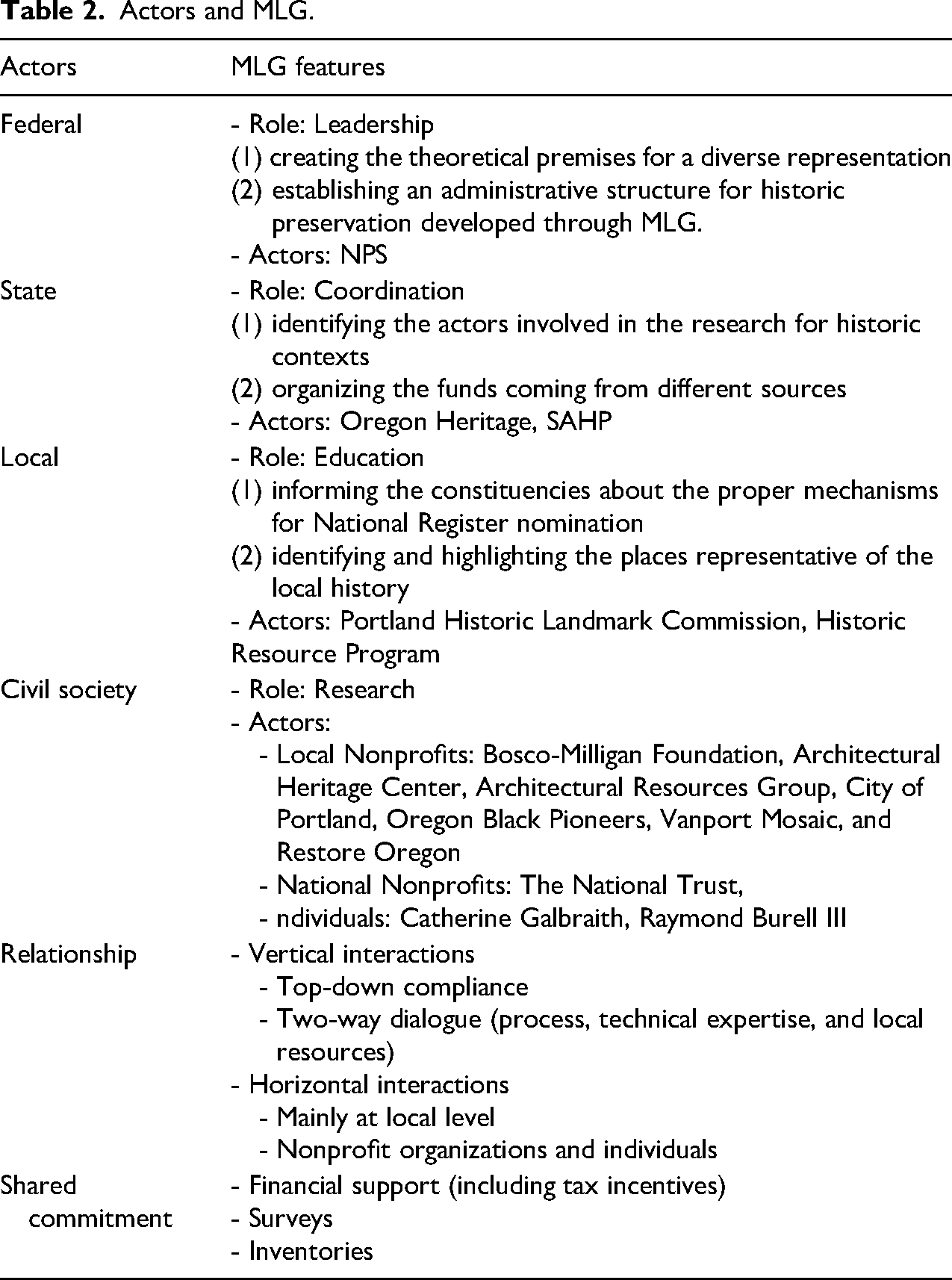
The SHPO, called Oregon Heritage, had a coordination role, which included (1) identifying the actors involved in the research for historical contexts and (2) organizing the funds coming from different sources. Oregon Heritage was established in 1967 and is located within the Heritage Programs Division of the Oregon Parks and Recreation Department (Stapp 2016). The MPD for African Americans in Portland was funded by federal and private funds, coordinated by Oregon Heritage, and granted to the city of Portland (Galbraith et al. 2020, H-173). Within the Oregon SHPO is the State Advisory Committee on Historic Preservation (SACHP), a nine-member committee of governor-appointed individuals with technical expertise in the preservation sector and representing different areas of the state. The main purpose of the SACHP is to review and make recommendations on National Register nominations for the state, and the overall process is informed by the NPS. For instance, the SHPO and NPS staff instruct the SACHP to update processes with PowerPoints and informative brochures, fulfilling the NHPA mandate to distribute practical preservation information to the public (Potter 2016). However, oftentimes state preservationists think that state committees are only clearing projects for development rather than preservation (Stapp 2016). Others claim that the state merely implements programs at a different level of government and does not have a primary role in preservation (Pollard III 1989).
The local government had a twofold educational role: (1) informing and shepherding their constituencies through the proper mechanisms for National Register nomination and (2) identifying and highlighting the places that represent the local history. A double-faceted educational role entails both top-down instruction and bottom-up information. The Historic Resources program, housed within the Planning and Sustainability Bureau of the city, maintains a range of activities, including providing guidance through processes. It carries out surveys mandated by the NHPA and supported by the SHPO, often contracting out to local businesses (Oregon Heritage 2022c). It is the final chain at the end of the process, crucial for the understanding of the diverse history of the United States, as Charles Lee, a long-time preservation officer for South Carolina, said, “American history is the sum of its state and local history” (Cofresi and Radtke 2003, 112). The Portland's Historic Landmarks Commission (PHLC), which is a CLG, must review and comment on all National Register nominations. The PHLC reviewed the documents for the Williams’ nomination and provided suggestions that could enhance some of the stories and places in Portland whose importance to the history of the city was not understood and was also under threat of demolition. Also, the Planning and Sustainability Bureau maintains a historic and cultural resources inventory to guarantee support of underrepresented historic sites and to coordinate compliance with state and federal requirements (City of Portland 2022).
Finally, civic society emerged with a prominent role in research, especially at the local level. The MPD was written by the Bosco-Milligan Foundation, in collaboration with the SHPO staff, Oregon Heritage, and the City of Portland staff. The Bosco-Milligan Foundation has a long history of conducting research on African American cultural resources in Portland. The foundation published a groundbreaking study on the topic called Cornerstones of Community: Building of Portland's African American History (Bosco-Milligan Foundation 1998), in collaboration with the Architectural Heritage Center, the City of Portland, and Architectural Resources Group (Galbraith et al. 2020). Whereas the Registration Form was entirely prepared by the Architectural Resources Group (Davis and Ewers 2019). Other nonprofit organizations quite active in research and advocacy included the Oregon Black Pioneers, Vanport Mosaic, the Portland African American Leadership Forum (PAALF), and Restore Oregon. In particular, two key individuals have had a crucial role in researching and addressing issues related to the African American Heritage in Portland. First, Catherine Galbraith was a strong advocate for architectural preservation in the Pacific Northwest and the founder of the Bosco-Milligan Foundation, which first documented historic places in the African American community in Portland. Second, Raymond Burell III was a passionate historian who spent years researching several buildings in Albina—in particular, the Vancouver Avenue Baptist Church—while partnering with local leaders and nonprofit organizations (Davis and Ewers 2019).
Another instrumental actor is the National Trust for Historic Preservation (hereafter the National Trust). The National Trust was established as a nonprofit corporation modeled after the like-named organization in the United Kingdom and was integral in passing the 1966 NHPA (King 2008). To this day, the National Trust is a driving force and committed advocate for historic preservation. For instance, it created the African American Cultural Heritage Action Fund to support preservation activities for Black heritage (National Trust for Historic Preservation 2022). Over the years the National Trust has established partners at the local level to develop professional approaches, policies, and technical assistance, such as with SHPOs and statewide and local preservation advocacy groups (e.g., Restore Oregon). These partners allow for regional distinctions that affect political processes, institutional variations, and local programming (Velez 2018).
The analysis of this process revealed not only the role of the actors involved but also their relationship with each other which displayed MLG features: the vertical interactions between national government and local levels and the horizontal interactions between government and nongovernment actors (Bache, Bartle and Flinders 2022). The vertical interactions are predominantly in compliance with requirements and regulations. Scholarship has commented before on this relationship, claiming that the NHPA has transformed historic preservation from an academic discipline into an industry that provides regulatory compliance (Altschul 2016; King 2008). However, there is also a dialogue among the governments, involving two-way communication about the process, technical expertise, and local resources. The horizontal interactions mainly take place at the local level, demonstrating the importance of nonprofit organizations and key individuals in retrieving the history of Black heritage. Moreover, while the three levels of government have unique roles, they also share a commitment to some activities, such as surveys and inventories, and a commitment to securing financial support. Each of the actors provides funding that supports all the stages of the nomination process, including the funding of the activities possible as a result of being listed. For example, there may be tax incentives that can be applied to the listed property at the federal, state, and local levels.
Most importantly, this MLG analysis of the nomination process showed how historic preservation mechanisms give voice to American pluralistic culture inclusive of ethnic and racial minorities (Frank and Petersen 2002; Hanson et al. 2022; Radin and Posner 2010). The nomination process, through its layered stages and numerous actors, recognizes the importance of local history at the national level. The national government provided a framework for capturing social history, the state manages the process, and the city identifies the buildings and collects the contextual history. This process has given voices to African American traditions in Portland that were not only underdocumented but also physically destroyed by redevelopment because their value was not seen or honored. A mechanism such as the nomination process shows the importance of an exchange between the different levels of government and civil society to fully embrace the complexity of American history. In particular, the creation of the MPD has been a crucial step for the nomination of singular properties. Through a lively dialogue between scholars—in particular considering their evolving approach to history—communities, and government, historic preservation is leading toward a holistic understanding of American history with all its strengths, degradation, and contradictions.
Conclusions
The nomination of a building representing Black heritage on the National Register is a significant step in celebrating inclusive urbanism and its pluralistic past within the national history. This analysis of the Williams Avenue YWCA in Portland, Oregon, brought to light how by embracing social history the NPS framework opened up the possibility to include Black heritage in the National Register and how this process involved several actors at different government levels. The NPS framework has changed over the years, and only in the 1990s was the inclusion of the different history of the United States adopted, mirroring the influence and changing theoretical perspectives on history. The framework established the basis for the process of nomination to the National Register, whose steps include the collection of information about historical context, property type, and integrity. This process involved different actors whose contribution to the process we unpacked using the MLG. The three levels of government, along with civic society, have worked together to implement a historic preservation perspective that supports ethnic and racial diversity and local variation. The federal government had a leadership role, the state had a coordination role, and the local government had an educational and informative role. Nonprofit organizations and individuals were crucial in advancing the research. Additionally, all parties shared a commitment toward inventories, surveys, and financial support.
The nomination of the Williams to the National Register served as a compelling example of how historic preservation in the United States has become more localized and inclusive, toward celebrating the city's multifaceted history. By unpacking the historic significance and multiple actors that led to the Williams’ listing in the National Register, this analysis showed what elements of the process support a pluralistic past, explaining how historic preservation contributes to inclusive urbanism. The inclusion of a building with deep historic significance for Portland, Oregon's African American community in the National Register signifies the acknowledgment of their struggles through segregation and displacement, emphasizing the crucial role of Black women and civil rights in the city's history. Functioning as a social institution, the Williams holds historical value by representing the social history of Black communities within the realms of recreation, entertainment, and civil rights. Regrettably, this history remained silenced for a long time due to its challenging implications for the idea of American democracy. Moreover, a better understanding of the National Register process is essential to keep fostering a more inclusive and equitable approach to historic preservation. Our framework of capturing pluralism through historic significance and the MLG provides a basis for urban scholars to examine how the contributions of other marginalized groups to American history are acknowledged and valued.
The MPD collected crucial contextual information about understanding Black heritage, serving as a tool for racial equity. In particular, both the MPD and the Registration Form emerged as two valuable sources for research in historic preservation in urban settings, enhancing the need for synergies between public historians and academics. These documents should not be relegated to mere bureaucratic functions but should be used more often for scholarly research due to their extensive documentation of textual, architectural, and material culture. A close analysis of these documents unpacked the process that binds together the actors involved and the way they cooperate in framing American history, assessing what is worth preserving and establishing the mechanisms for protection. Scholars of urban affairs could further utilize these documents as foundational sources to unpack the framing of historic significance and the actors involved in other cities, and to further contribute to the understanding of how preservation policies are pluralizing the past. Moreover, more of this research should be facilitated to allow for recognition of a pluralistic past. Even though the NPS provided an encompassing framework in the 1990s, this kind of research is carried out at the city level.
Although this analysis focused on the elements that elevated Black heritage to be part of the national history, much more needs to be done to preserve the Williams and honor the community it represents. A crucial aspect would be the examination of the participation of the larger community in collecting information about the historic significance and in the conversation with the other institutional actors. Additionally, it would be important to clarify the community's role in creating activities that would continue the pivotal social function of the Williams. Moreover, the inclusion of a property on the National Register does not guarantee automatic protection against demolition, alteration, or neglect. Thus, being nominated to the National Register serves as just one initial measure in the potential preservation of the property, highlighting its significance and value and making the property eligible for federal grants. However, further actions are essential to secure the preservation of Black heritage buildings for future generations. This dynamic raises critical questions about the responsible parties for this undertaking and the strategies for raising funds to support maintenance and restoration efforts.
Overall, this analysis shed light on the pivotal role of cities—including city governments, nonprofit organizations, and individuals—in preserving Black heritage and articulating its historic significance. While the NPS framework embraces a pluralistic past, much of the work occurs at the local level. The analysis underscored how local organizations and individuals contribute to collecting and documenting the community histories. This example can serve as inspiration for activists and preservationists dedicated to safeguarding Black heritage, encouraging them to recognize the value of their knowledge on the federal platform of the National Register. Additionally, by emphasizing the multilevel governance involved in the preservation process, this analysis offered valuable insights for policymakers. It highlighted the importance of nurturing connections between cities and other levels of government, as such collaboration maximizes opportunities for a more inclusive and accurate representation of American collective history.
Footnotes
Declaration of Conflicting Interests
The author(s) declared no potential conflicts of interest with respect to the research, authorship, and/or publication of this article.
Funding
The author(s) disclosed receipt of the following financial support for the research, authorship, and/or publication of this article: This work was supported by the Mellon Foundation (NP-2008-08962, Just Futures Institute); Tinker Hatfield Award, College of Design, University of Oregon.
