



Abstract
This study examines the non-linear process of leaving violent dating relationships among young Iranian immigrant women in Canada. Using a qualitative design, semi-structured interviews with 17 participants were analyzed via reflexive thematic analysis. Framed by Collins’ Matrix of Domination, the research explores how intersecting social divisions shape the leaving trajectory. Findings reveal that aggressors’ coercive control tactics are instrumentalized through cultural scripts of honor, community surveillance, and a transnational distrust of legal institutions. The study concludes that systemic barriers within the migration context complicate relationship termination, necessitating culturally grounded support strategies.
Keywords
Introduction
Dating violence (DV), a pervasive form of intimate partner violence (IPV), involves the misuse of power by a partner or ex-partner against a woman, resulting in a profound loss of dignity, control, and safety (DeKeseredy & MacLeod, 1997). While DV encompasses physical, sexual, and economic abuse, it is often characterized by a feeling of powerlessness and entrapment (DeKeseredy & MacLeod, 1997; Stark, 2007), a state of “coercive control” that deprives young women of their freedom and autonomy (Stark, 2007). This phenomenon is a significant global issue, making young women a particularly vulnerable group (Caridade et al., 2020; Shaffer et al., 2018). Research has consistently shown that aggressors employ a variety of controlling behaviors to exert dominance (Conroy & Crowley, 2021; Fernet et al., 2021), creating a sense of powerlessness and entrapment that complicates the survivor's ability to navigate or leave the relationship (Stark, 2007).
Previous research in the field of leaving violent relationships, particularly within adults and conjugal relationships, has brought to light the vital importance of perceiving this transition as an ongoing and intricate process (DeKeseredy & Schwartz, 2009; Hayes, 2013). This approach is crucial for obtaining a holistic comprehension of the experiences of women facing IPV (DeKeseredy & Schwartz, 2009; Hayes, 2013). Notably, it recognizes the profound impact of social, cultural, and economic constraints that can shape the experience of leaving. Yet, within the context of DV, existing research has primarily explored subjective elements such as commitment, investment, and the quality of alternatives when examining the determinants that influence young women's decisions to either remain in or leave relationships (see, e.g., Edwards et al., 2011; Machia & Ogolsky, 2021). While some research has also delved into structural and social barriers (Korkmaz, 2021; Storer et al., 2021), a unified and in-depth understanding of the interwoven nature of the leaving process remains incomplete.
However, research examining the process of leaving violent dating relationships and the specific barriers young women face in their attempts to leave remains scarce. These multi-layered barriers contribute to a state of entrapment, often resulting in significant hesitation or prolonged ambivalence when young women contemplate leaving violent dating relationships. This lack of in-depth investigation is particularly noteworthy, considering the unique nature of each young woman's experience with various types of violence and control in their relationships, within a particular social and historical context (Collins & Bilge, 2016). There is a persistent gap in understanding the intricate influence of interwoven social divisions, including gender, race, class, immigration status, culture, and religion, on survivors’ experiences. Specifically, the leaving process among young women from diverse cultural, religious, or immigrant backgrounds has received relatively modest scholarly attention, particularly among young immigrant women from the Muslim community (Couture-Carron, 2020).
To address this critical gap, the current study adopts an intersectional feminist perspective to investigate the interplay of various social divisions and coercive control within the specific context of young Iranian immigrant women's lives. This research extends current scholarship by bridging the gap between theoretical intersectional frameworks and the lived realities of the leaving process. It provides an in-depth investigation into the experiences of first-generation Iranian immigrant women in Canada, detailing the structural and interpersonal barriers that hinder their exit from violent relationships. While a previous article focused on the agency and diverse responses of these women (Rahmatizadeh, 2024), the current paper advances the application of the ‘matrix of domination’ by demonstrating how social locations, such as immigration status, religion, and age, create unique forms of entrapment. Ultimately, by detailing these challenges among an understudied population, this research seeks to inform prevention programs and policy, providing a needed case study that enhances comprehension of DV survivorship among culturally diverse groups.
Overview of Iranian Migration to Canada
Iranian migration to Canada is closely tied to the socio-political upheaval in Iran, primarily following the 1979 Islamic Revolution (Rostami-Povey, 2016). This movement is generally characterized by two distinct phases defined by the primary motivation for leaving:
Political Phase (1978–1990): The initial, significant wave of immigration was driven by political instability, persecution, and the societal changes following the Revolution and the Iran-Iraq War (Guruge et al., 2012). These migrants often included members of marginalized groups and the urban middle class.
Economic/Social Phase (Post-1990): Subsequent migration has been predominantly motivated by a desire for better economic and educational opportunities abroad, alongside ongoing political and social oppression (Guruge et al., 2012).
The Iranian diaspora is one of the fastest-growing immigrant groups in Canada. According to the 2021 Census, the population reporting Iranian origins in Canada has grown significantly to 292,865 individuals (Statistics Canada, 2022). The majority of these individuals continue to settle in large urban centers, particularly Toronto, Vancouver, and Montréal (Guruge et al., 2012). Crucially, women account for roughly half of all Iranian migrants. While immigration offers opportunities for independence, the persistence of traditional cultural and religious norms within the community, particularly those related to family honor, gender roles, and premarital relationships, can create a restrictive environment for young immigrant women in the host country (Rostami-Povey, 2016). This cultural tension and the associated community surveillance increase their vulnerability to intimate partner violence (Jamarani, 2012), establishing the foundational need for the current study's intersectional focus.
Literature Review: The Context of Leaving Violent Dating Relationships
Leaving Process in Violent Dating Relationships
The process of leaving a violent relationship typically initiates when women recognize that they are entrapped and decide to terminate it (Hayes, 2013). Researchers have revealed that intimate partner violence (IPV) survivors, prior to definitively ending the relationship, often engage in repeated attempts to leave (Stark, 2007). Consequently, rather than conceptualizing leaving a violent relationship as an isolated event, it is considered a complex and multifaceted process (DeKeseredy & Schwartz, 2009). The results of such studies indicate that the decision to leave is not solely determined by violent experiences alone (Copp et al., 2015; Lyon, 2014; Couture-Carron, 2020).
Apart from various social, familial, and personal constraints, prevailing cultural and societal discourses fulfill a critical role in shaping women's responses to IPV (Copp et al., 2015; Lyon, 2014; Couture-Carron, 2020). It is worth emphasizing that the current knowledge on the leaving process primarily relies on studies involving adults and married women (such as Barrios et al., 2021; Hayes, 2013), due to the scarcity of research dedicated to exploring this process among young women in dating relationships (Copp et al., 2015; Korkmaz, 2021). Although young women in their relationships may not encounter identical structural constraints concerning child welfare, shared material possessions, shared finances, or shared residence, as often observed in married relationships (Lyon, 2014; Korkmaz, 2021), other considerations may shape their experience of the leaving process (Copp et al., 2015; Couture-Carron, 2020; Lyon, 2014). For instance, previous research on DV has highlighted influential factors such as messages regarding gendered expectations, the normalization of violence, peer pressures, and limited formal and informal support (Korkmaz, 2021; Davies, 2019; Lyon, 2014). Moreover, young women's resistance to being perceived as victims (Davies, 2019) could also affect their decision to leave. Furthermore, increasing research on DV among young women indicated that aggressors have instrumentalized gender inequalities and other social divisions to employ coercive control tactics (see, e.g., Aghtaie et al., 2018; Toscano, 2014; Øverlien et al., 2020). Through these tactics, aggressors effectively deprive their partners of autonomy and fundamental rights, effectively trapping them in a violent relationship (Stark, 2007). These dynamics act as significant impediments to terminating the relationship.
Immigration Status and Barriers to Leaving
Extending the focus from general dating dynamics, immigrant women encounter further structural and social obstacles due to their immigration status, which intersect with patriarchal practices that impact women across different ethnicities (Salami et al., 2019; Tabibi et al., 2018). The vulnerability of immigrant women to IPV is markedly shaped by factors such as precarious residency status, limited financial resources, linguistic and cultural incompatibility with social service systems, as well as family and community isolation, as highlighted in previous research (Salami et al., 2019; Tabibi et al., 2018). While these factors have been predominantly explored in the context of IPV among adult immigrant women in marital relationships, they also hold relevance for young women engaged in DV relationships.
Previous research on young immigrant women from specific Asian communities (such as Bangladesh, Bhutan, Nepal, Pakistan, Afghanistan, Sri Lanka, and India) suggests that gender roles and expectations can heighten the risk of isolation and DV, significantly influencing their decisions to leave violent relationships (Couture-Carron, 2020; Mayeda et al., 2019; Mayeda & Vijaykumar, 2015). Cultural values often dictate gender roles through behaviors that maintain the honor and shame system. Within patriarchal families or communities, women are seen as upholders of family honor, leading to a system that exerts control over their lives. This emphasis on preserving family honor contributes to a shame system that rationalizes DV (Couture-Carron, 2020; Mayeda et al., 2019; Mayeda & Vijaykumar, 2015). Within this prevailing value system, a spectrum of actions is perceived as tarnishing the honor of young women and their families, encompassing having a boyfriend, disregarding modesty dress codes, making independent choices regarding a life partner, or seeking autonomy by establishing an independent living (Couture-Carron, 2020; Mayeda & Vijaykumar, 2015). Additionally, engaging in a sexual relationship before marriage poses a significant risk of compromising family honor (Couture-Carron, 2020). This strict control over women's sexual activities and behavior, exerted by both family/community members and the intimate partner, serves as a crucial mechanism of coercive control that perpetuates the manifestation of DV and traps young women in relationships (Mayeda et al., 2019). Furthermore, traces of the prevailing discourse surrounding the leaving process are also apparent in the definition of violence, both within the legal system and society at large (Hayes, 2013). The commonly accepted definition of DV often limits violence in intimate relationships to physical violence alone (Hayes, 2013; Stark, 2007), disregarding the fact that aggressors may utilize various forms of controlling behaviors that deprive women of their fundamental rights, such as “health, safety, bodily integrity, peace of mind, and physical mobility” (Stark, 2007, p. 380). This narrow legal and societal definition of violence can pose challenges for young immigrant women who resist DV and seek formal assistance if their experiences do not align with these limited societal perceptions.
Leaving Process Among Young Immigrant Iranian Women
The exploration of DV and the process of leaving violent relationships among young immigrant Iranian women remains significantly understudied. Existing research in this field has predominantly focused on examining IPV among married immigrant Iranian women (see, e.g., Aryani-Sabet, 2016; Ghaleiha, 2018; Jamarani, 2012; Nikparvar & Stith, 2021). These studies have shed light on the persistence and normalization of IPV within the Iranian community, driven by traditional and patriarchal beliefs. More specifically, cultural and societal pressures place significant demands on women to remain silent about violence, while the associated social stigma compels Iranian women to remain entrapped in violent relationships (Aryani-Sabet, 2016). Previous research indicates that Iranian immigrant women in Western societies, although possessing the legal right to divorce, are frequently dissuaded from exercising this right, a right they were denied in Iran (Aryani-Sabet, 2016; Jamarani, 2012). The perpetuation of cultural and religious beliefs, which prioritize family honor and the preservation of familial unity, even in the host country, may contribute to their reluctance to exercise this right (Aryani-Sabet, 2016; Jamarani, 2012; Nikparvar & Stith, 2021). It should be noted that, apart from patriarchal norms, there are additional barriers that hinder Iranian immigrant women from seeking help, such as language barriers, social isolation, limited knowledge of legal protections, fear, and misconceptions about law enforcement (Aryani-Sabet, 2016; Nikparvar & Stith, 2021). Building upon this existing knowledge base and identifying the critical gaps, the current study focuses specifically on the intersectional barriers faced by young Iranian immigrant women in dating relationships, a population for whom these complexities are currently unknown.
Theoretical Approach: Intersectionality
As an intersectional feminist study, this research was grounded in Collins’ intersectional theory and in a socio-structural perspective. An intersectional feminist approach challenges the primacy of gender, and instead, unveils and emphasizes the intricate interplay of multiple systems of oppression. The intersection of these systems mutually interacts to construct and perpetuate violence against women, profoundly shaping their experiences (Harper & Kurtzman, 2014).
In this regard, Collins introduced the concept of the matrix of domination, aimed at providing a comprehensive framework for analyzing the intricate interconnectedness of various oppressions within society (Collins & Bilge, 2016). Collins recognizes that distinct systems of oppression are integral components of a broader structure of domination, defined by hierarchies of power, inequalities, and societal structures that significantly influence the lived experiences of those who are oppressed (Collins & Bilge, 2016). From this perspective, social divisions are not considered as independent dimensions of stratification, but rather as interconnected and operating simultaneously to shape the lived experiences of marginalized individuals within specific communities and historical contexts. Thus, there is no priority given to one axis of inequality over another (Collins & Bilge, 2016).
The matrix of domination framework is essential for this research because the experiences of young Iranian immigrant women facing dating violence cannot be understood solely through the lens of gender inequality. Their experiences of DV and subsequent barriers to leaving are uniquely shaped by the simultaneous interaction of sexism, cultural expectations, religious norms, and immigrant status. This framework has been successfully applied in previous IPV research to analyze complex oppression facing diverse populations (e.g., Barrios et al., 2021; Hayes, 2013). By adopting this approach, this study ensures a comprehensive analysis that captures how societal structures and individual interactions mutually shape the leaving process for this specific group.
The four interconnected dimensions of power within the matrix of domination are directly applicable to this study and served as the analytical framework for examining the barriers to leaving. The matrix of domination operates through these four interrelated domains of power: structural, disciplinary, cultural, and interpersonal (Collins & Bilge, 2016). The interpersonal domain of power deals with the lives of individuals within a society and how members of that society interact (Collins & Bilge, 2016, p. 19). In this domain, this study discusses various tactics exercised by aggressors to control young women. The cultural domain is defined by the discourse and ideologies in society that justify inequality by naturalizing it (Collins & Bilge, 2016). This domain includes patriarchal ideology and dominant discourse rooted in the religion and tradition of Iranian society that distributes stereotypical messages and gender images, which normalizes and minimizes DV. The disciplinary domain of power considers the regulations that each member of society is subject to, as well as the way in which these regulations are enforced (Collins & Bilge, 2016). In this domain, gender rules and regulations are scrutinized, while family and community members, acting as informal agents, employ various tactics to uphold these gender norms and maintain control over the lives of young women. The structural domain, as described by Collins (Collins & Bilge, 2016), pertains to the way social institutions are structured to continuously perpetuate and maintain the subordination of women. In this research, the focus was on investigating the insufficient awareness regarding social services and available resources for DV, which represents a critical structural barrier.
Methods
Design
The research objective was achieved through the utilization of a qualitative approach, which involved the development of a semi-structured interview guide. The interviews lasted between 60 and 90 min, were conducted in Persian, and were held at a time and location chosen by each participant for their convenience. The interviews explored the cultural, social, religious, personal, and immigration contexts that shaped the participants’ experiences of violence and contributed to their hesitation in leaving a violent relationship at specific times.
Data Collection and Recruitment
After obtaining ethical approval from the University of Ottawa's Research Ethics and Integrity Committee, data collection occurred from February to August 2019 in three Canadian cities: Montreal, Ottawa, and Toronto. The recruitment of participants involved a combination of non-probability mixed sampling techniques, specifically voluntary sampling and snowball sampling. Recruitment efforts targeted community organizations (women's centers, ethnic/religious groups, and universities) and popular Iranian community messaging applications such as Facebook, Instagram, and Telegram.
Eligibility Criteria
Potential participants were required to meet the following five eligibility criteria: 1) be a young woman of Iranian descent; 2) be a first-generation immigrant to Canada; 3) be aged 16 to 29 years old; 4) have experienced violence in at least one non-marital intimate relationship since arriving in Canada within the last five years; and 5) have officially left their violent partner.
Participants
The study included 17 first-generation Iranian immigrant women residing in Montreal (n = 5), Ottawa (n = 7), and Toronto (n = 5). Participants were aged 17 to 29 at the time of the interview (M = 22.6) and had resided in Canada for between two and ten years (Arrivals: 2010–2017). Notably, many participants entered the abusive relationship at a young age, with the age at the start of the relationship ranging from 15 to 22 years (M = 18.4). This early onset of the relationship, often coinciding with the initial years of migration, highlights a specific period of developmental and structural vulnerability.
The final sample size of 17 young women was determined through a balance of research goals and feasibility. While the target sample size was 20 to allow for sufficient variation, data collection ceased when data saturation was reached. As recommended by scholars (Ando et al., 2014; Padgett, 2016), the focus was on flexibility and depth; recruitment ended when no new themes or substantive insights regarding barriers to leaving or the experience of coercive control emerged from subsequent interviews. These 17 in-depth interviews provided rich, thick qualitative data suited to the research objectives.
Table 1 provides a comprehensive demographic profile for each participant. As shown in the table, the sample was highly educated. The university cohort (n = 10) included a doctoral candidate, six master's students (including two in engineering), and three undergraduates. The remaining participants included six college-level individuals (including graduates) and one high school student. Professionally, while most were students, several were active in the labor market in roles ranging from retail and management to technical engineering.
Sociodemographic Profile of the Study Participants.
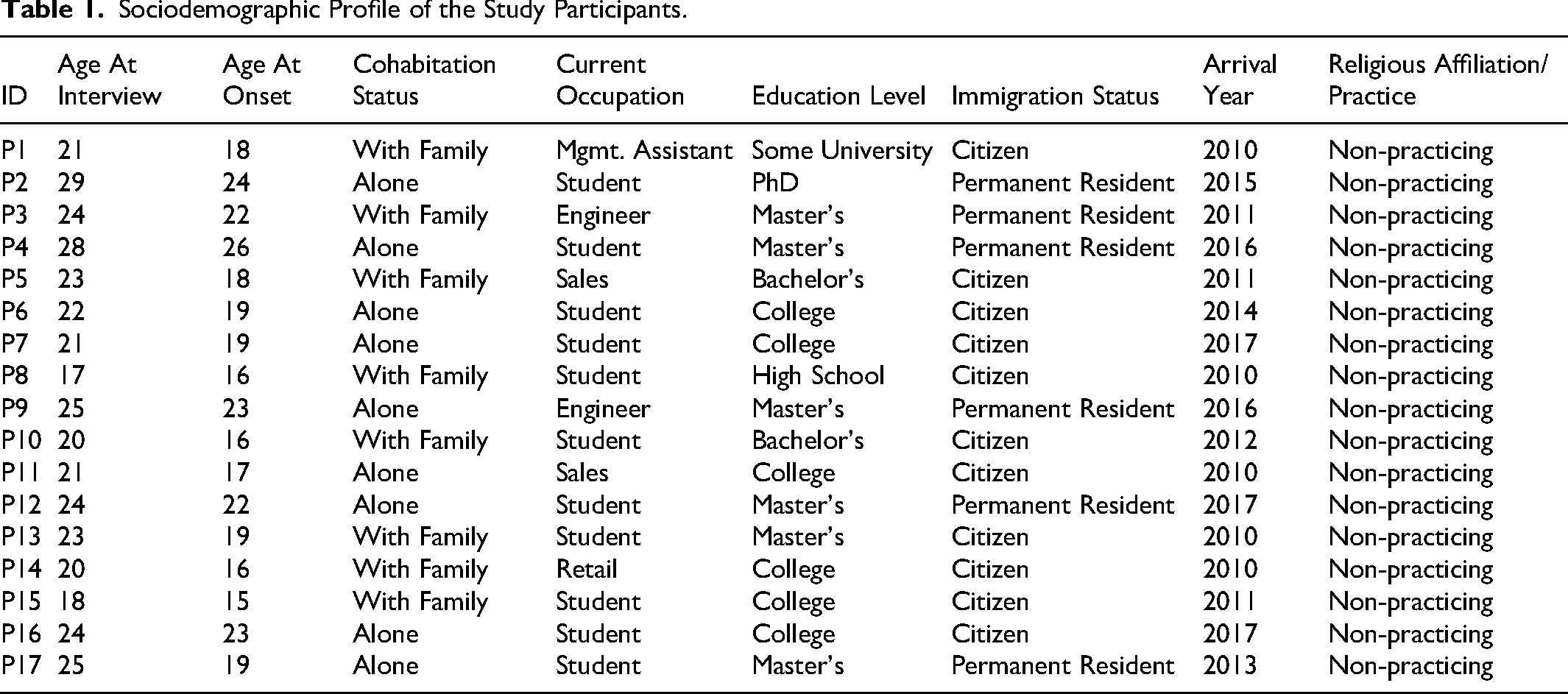
Regarding religious identity, while all participants identified as non-practicing (see Table 1), their personal beliefs varied; six identified as believers in Islam, while the remainder were non-believers. Significantly, seven participants highlighted a history of religious pressure within their families in Iran, a factor that often shaped their perceptions of authority. Most participants identified as heterosexual (n = 15), while two identified as bisexual. None of the participants wore a hijab in the public sphere, reflecting a specific secular presentation within the diaspora.
At the beginning of their relationship, the aggressors’ ages ranged from 17 to 35, with an average age of 25. Relationships duration spanned from four months to five years. While most aggressors were Iranian immigrants, four participants were involved with partners from different nationalities, originating from Italy, Greece, England, and Russia.
Data Analysis
An analysis of the data was carried out using intersectional feminist theory, which was operationalized through the reflexive thematic analysis approach developed by Braun and Clarke (2021). The interviews were managed and coded using ATLAS.ti 8.
The analysis proceeded through two levels of coding: deductive/inductive and semantic/latent, after familiarization with the data through reading and transcription. The process involved continuous refinement of codes and themes in an iterative and recursive process (Braun & Clarke, 2021). Themes were initially identified at the semantic level (concepts directly communicated), and subsequently, deeper, latent concepts were explored.
Crucially, the theoretical framework of Collins’ matrix of domination was applied deductively to structure the analysis of barriers to leaving. The four domains of the matrix were used as an organizing framework to categorize and interpret the emergent themes.
Researcher Reflexivity
This study placed a strong emphasis on maintaining researcher reflexivity, viewing the researcher as an active participant in the co-construction of knowledge. I recognized that my positionality as a member of the Iranian community, sharing an ethnic background, an understanding of Islamic traditions, and familiarity with Iranian cultural norms, offered me a “partial insider” status.
This shared identity facilitated deeper rapport and a unique cultural fluency, allowing me to better navigate the subtle meanings and linguistic nuances in the participants’ retrospective accounts. Throughout the analysis, I remained dedicated to identifying how my own perspectives influenced the interpretation of the data. By engaging in ongoing reflection and peer debriefing, I sought to balance my insider insights with analytical distance, ensuring that the final themes remained firmly grounded in the participants’ authentic lived realities.
Trustworthiness and Ethical Considerations
The study's methodological rigor was established by adhering to standards of qualitative quality and trustworthiness (Tracy, 2010). Credibility was ensured through member checking deep engagement with transcripts in the native language (Persian) for thick description, and continuous peer debriefing with the supervisory committee.
Rigorous ethical protocols were followed due to the sensitive nature of the topic. All participants provided informed consent and were guaranteed anonymity through pseudonyms and the secure storage of data. To mitigate potential distress resulting from recalling past trauma, participants were provided with a list of available local culturally-appropriate mental health and support services in the community following the interview.
Results
The research findings reveal a complex interplay between the active tactics used by aggressors and the broader social and cultural factors that influenced the participants’ trajectories. The results are organized into two primary categories: (1) tactics utilized by aggressors to maintain control and (2) factors influencing the process of leaving a violent relationship.
Aggressor's Tactics to Maintain Control
The data highlighted that aggressors utilized coercive control tactics, such as threats, social isolation, surveillance, and denigration. These tactics, deeply intertwined with gender inequality and notions of family honor, were purposefully designed to entrap young women in violent relationships.
Threats and Exploitation of Honor
Aggressors weaponized cultural and social vulnerabilities through explicit and implicit threats, primarily centering on the exploitation of family honor (aberoo). While this was a universal tactic (convergence), its operationalization differed based on the participants’ age, living arrangements, and life stage. For younger participants who arrived in Canada as children and were living under parental surveillance, threats focused on the immediate disclosure of “secret” relationships to trigger familial policing. Aggressors utilized digital evidence, such as photos taken with consent, to enforce obedience. P14 (20 years old, College graduate living with family) described the intersection of digital surveillance and social threat: “He threatened to publish our photos together as well as nude photos of me… I was terrified my parents would find out.” Similarly, P15 (18 years old, College student living with family) noted: “He would say… I’ll just send one of your photos to your family and you’ll do anything for me.” In these instances, the threat was effective because it instrumentalized cultural norms regarding female chastity to enforce domestic entrapment.
Conversely, for older, more independent participants who arrived as adults (e.g., P2, 29 years old, PhD student), threats were calibrated toward the destruction of professional reputation and future “marriageability” within the diaspora. P17 (25 years old, Master's student living alone) shared: “I believed that since I had sexual intimacy with him, I must marry him… I was really worried about my family's reputation.” Intimidation often intensified after separation, P2, whose partner was Iranian, reported that violence continued for three years post-separation, with the partner vowing to “not allow me to find happiness or marry anyone else”. These differences demonstrate that while the cultural tool of aberoo is constant, its application is adapted to the survivor's specific social location. Aggressors also utilized self-harm to manipulate participants through guilt. As P14 recalled: “He sent me photos of his injuries to show me he had cut or burned himself. It was really disturbing”. This highlights how tactics converge around the victim's sense of responsibility; by alternating between active threats of exposure and the temporary cessation of threats upon compliance, aggressors reinforced a dynamic of obedience.
Social Isolation
Social isolation served as a potent tactic to dismantle the informal support systems, or “reality checkers,” necessary for initiating a separation. The findings reveal that isolation was often a direct result of the aggressor's explicit prohibitions; for example, participants reported being forbidden from maintaining specific friendships simply because the partner demanded it. For younger participants living with family, such as P10, (20 years old, Bachelor's student living with family), this resulted in the immediate loss of peer networks: “Because of his control, I gave up on everything… I lost my friends who could help me get out sooner”.
The data suggests a significant intersection with the aggressor's nationality. Iranian aggressors (the majority in this study) were able to leverage shared community networks to enforce this isolation and maintain control through “community-based entrapment.” This form of entrapment is a type of post-separation violence where the aggressor weaponizes shared cultural scripts and social surveillance, effectively using the community as an informal extension of his monitoring, to ensure that even after physical separation, the survivor remains tethered by the fear of collective judgment. In contrast, participants with non-Iranian partners, such as P4 (Italian partner) or P8 (Russian partner), did not report the same level of community-enforced policing after the relationship ended.
Psychological Denigration and the Erosion of Autonomy
Aggressors utilized constant denigration to dismantle their partners’ self-efficacy, making independence appear functionally impossible. For participants with Iranian partners, this was often tied to patriarchal gender roles and “purity.” P2 (29 years old, PhD student) explained how her partner weaponized notions of chastity to control her: “He continued to blame and humiliate me, saying I did not respect purity and chastity… I think he used that to control me
Factors Influencing the Process of Leaving
The findings shed light on the intricate interplay between social divisions, such as gender, culture, patriarchy, religion, and immigration, that influenced the participants’ experiences.
Cultural Scripts and the Normalization of Violence
The pervasive cultural stereotype of the “good girl” (khanom), which demands modest attire and abstaining from premarital sex, functioned as a primary structural barrier to the recognition of abuse. This cultural script socializes women to prioritize collective virtue and politeness over their own autonomy. For P1 (21 years old, Assistant Manager), this upbringing clouded her perception of the violence: “My mom always taught me the importance of being a “khanom”… So, when I found myself in violent situations, I sort of lost sight of my own feelings. My focus was all on trying to be this well-behaved girl… which made it hard for me to grasp what was really happening around me”. This narrative illustrates how internalizing traditional expectations of “politeness” can act as a cognitive filter, preventing survivors from identifying coercive behaviors as abuse.
Dominant cultural gender stereotypes, such as the notion of male entitlement, further reinforced this normalization. This normalization persisted even among participants with high levels of education and professional aspirations. P9 (25, Master's Graduate) and P3 (24, Master's Graduate) expressed that they felt they lacked the authority to make independent decisions because men were viewed as the natural figures of authority. This suggests that the cultural barrier is structural; it transcends individual levels of education or residency status, functioning as an internalized regulator that disrupts the trajectory toward leaving the relationship.
This entrapment was often cemented by traditional proverbs that rationalize domestic conflict. P1 recalled her grandmother's advice that “conflict within a couple is the salt of life
Pressure to Marry and the Ideal Partner Discourse
Family and community expectations regarding marriage created an environment of reluctance to terminate relationships, where the pressure to wed often eclipsed the reality of abuse. For P17 (25 years old, Master's student living alone), the familial mandate for marriage superseded her own concerns about violence: “My family strongly urged me to marry… So, I didn’t care how violent my boyfriend's behavior was.” This demonstrates how socio-familial pressure to transition to a legal union function as an external entrapment mechanism, effectively de-prioritizing the survivor's physical and emotional security in favor of communal status.
Cultural discourses regarding the “ideal partner”, specifically the constructs of dokhtar baz nabashe (not a womanizer) and ghasd ezdevaj dashte bashe (intending to marry), further masked violent behaviors. These traits often increased the likelihood of entrapment by perpetuating traditional patriarchal roles under the guise of “seriousness.” P2 (29 years old, PhD student, Living alone) shared how cultural expectations masked the early signs of control: “His control over me became suffocating… My close friends told me that being with a guy who was not a ‘dokhtar baz’ [womanizer] and had ‘serious intentions’ was a positive thing… I only thought about his positive qualities.” This experience illustrates how cultural virtues, specifically the value placed on “serious” and faithful men, can create a communal masking effect. In this context, well-meaning social circles, including other women, may inadvertently normalize a partner's surveillance by framing it as a sign of devotion or traditional commitment, thereby delaying the survivor's recognition of coercive control even among highly educated survivors.
Closely linked to this is the discourse of geyrati, which implies a man's tendency to exert control under the guise of “protecting” his partner. This concept effectively blurs the distinction between respectful care and surveillance, serving as a justification for constant monitoring. Remarkably, a significant double standard emerged where aggressors used geyrati to subjugate participants while they themselves engaged in sexual activity with other women. This highlights the manipulative nature of the discourse, where cultural norms of “protection” are weaponized to enforce dominance and create a cultural barrier. These localized cultural meanings reflect the theme of gendered double standards, making it difficult for even highly educated participants like P2 and P17 to reframe protection as a paradoxical mechanism of coercive control.
Family Honor and the Code of Silence
The fear of tarnishing family honor (aberoo) through community rumors or the loss of virginity functioned as an internalized regulator that creates a sense of entrapment. For P17 (25 years old, Master's student living alone), sexual intimacy necessitated marriage to protect familial reputation: “I sort of believed that since I had sexual intimacy with him, I must marry him. I was really worried about my family's reputation getting tarnished.” This narrative illustrates how sexual stigma is weaponized to enforce relationship continuity, transforming a personal choice into a communal obligation.
This fear of gossip, or the judgment of “mardom” (the public), further deterred participants from seeking informal help, as noted by P11 (21 years old, College graduate, Living alone): “When you are part of the Iranian community, there's this constant worry about what people (mardom) might be saying… I didn’t want it to reflect badly on my family's reputation.” The reference to mardom [people/the public] illustrates how rumors serve as a powerful lever of patriarchal social control, enforced by both men and women within the diaspora. In this context, the community, regardless of gender, becomes a collective enforcer of the code of silence, effectively dismantling the survivor's autonomy through inter-gendered social policing.
This pressure extended to formal support systems, where the trade-off between reputation and disclosure prevented help-seeking. P6 (22 years old, College student living alone) explained: “I was worried that if I talked to a psychologist… my family might somehow find out about my sexual experiences. It was more about dealing with the whole topic of sex rather than just the violence.” The participant's experience reveals how the intersection of sexual stigma and the “honor” system allows an aggressor to exploit a victim's profound isolation and the threat of community exposure to impede the linear progression toward relationship termination.
Cultural Definitions of Violence and the Culture of Patience
The participants’ narratives revealed that cultural definitions of violence, which often prioritize physical harm over other forms of abuse, added significant complexity to the decision to leave. Many participants minimized their experiences because the coercive control did not involve severe physical injury. As P1 (21 years old, Assistant Manager) explained: “I didn’t think that if he hurt me psychologically, it meant violence… I told myself that at least I didn’t experience any serious physical violence. I thought that victims of violence had to have bruises and black eyes.” This perspective demonstrates how cultural discourses that narrowly define domestic violence as physical assault led victims to question the legitimacy of their own experiences. This misidentification is especially potent in the initial stages of coercive control, where psychological subjugation precedes physical aggression.
Another significant barrier was the cultural mandate for endurance, where relationships are expected to improve through silence. Within a patriarchal framework that promotes patience (sabr), women are socialized to tolerate abusive behaviors in the hope of future change. P5 (23 years old, Bachelor's degree) shared how this expectation of endurance ultimately failed her: “I believed that by being patient, things would eventually improve… his controlling behavior just kept growing each day. It was like my quietness made him think I was weak.” This experience illustrates how the virtue of “sabr” is instrumentalized to normalize violence. The cultural expectation of patience does not merely dissuade women from seeking help; it emboldens the aggressor, as silence is misinterpreted as submission rather than a strategic effort to preserve the relationship. For younger participants with limited relationship experience, this “culture of patience” acts as a structural anchor that prolongs the state of domestic entrapment.
Immigration Context: Seeking Informal and Formal Support
Immigration status and the duration of residency exert a significant influence on support levels and awareness of resources. For those who arrived more recently or lacked established networks, the loss of social capital created a profound sense of isolation. P16 (24 years old, College student), who arrived in 2017, reflected on how this void influenced her dependency: “The thought of losing him scared me… my main concern was just not feeling alone anymore.” This highlights how the migratory experience can strip away protective peer networks, leaving the aggressor as the survivor's primary social anchor.
Financial instability and a notable lack of awareness regarding Canadian support resources further hindered the leaving process. P16 (24 years old, College student) explained: “The student bulletin doesn’t cover anything about violence… they mainly talk about sexual abuse, there's absolutely nothing about violence in relationships.” This lack of institutional visibility illustrates how educational and social structures fail to provide the vocabulary for relationship violence, leaving participants to navigate abuse without a formal map for assistance.
Participants also held inaccurate information regarding service eligibility, fearing that forced sex within a relationship would not be recognized as a crime. P1 (21 years old, Assistant Manager) shared: “In college, if someone makes you engage in sexual activity against your will, that's considered rape. Being in a relationship, I was afraid that they might not view me as a victim.” This experience demonstrates how survivors, including those who arrived in Canada during childhood, may perceive themselves as falling outside the protection of the law when abuse occurs in a non-marital context.
Finally, a reluctance to engage with the police emerged, rooted in past experiences with the Iranian legal system. P17 (25 years old, Master's student living alone) reflected on this lack of trust: “Could I call the police? All I knew was that you could call the police if violence happened between married couples… maybe because the Iranian police don’t even support women against spousal violence, let alone the boyfriend.” This narrative illustrates ‘transnational legal cynicism,’ a phenomenon where help-seeking behaviors are governed by a ‘mental map’ of legal distrust carried from the country of origin. This distrust, rooted in the gender-inequitable legal systems of the home country, persists as a functional barrier within the Canadian context. Consequently, it creates a significant obstacle to accessing available legal protections, one that remains potent irrespective of the participants’ length of residency in Canada.
Discussion
This study contributes to the understanding of the intricate, non-linear nature of exiting abusive relationships among young Iranian immigrant women. By applying Collins’ (2000) matrix of domination, the research elucidates how social divisions, including gender, age, marital status, culture, religion, and immigration, interweave to create prolonged periods of hesitancy. This multidimensional framework moves beyond individualized explanations to highlight the systemic forces that complicate the decision-making process. The analysis demonstrates that leaving is not a single event but a temporal journey where structural and cultural barriers frequently obstruct the transition toward safety.
Interpersonal Domain: Coercive Control and Entrapment
In the interpersonal context, these findings suggest that aggressors did not deploy tactics in isolation; instead, they instrumentalized patriarchal gender stereotypes and religious frameworks to foster a state of entrapment. This systematic use of cultural scripts to reinforce interpersonal control mirrors observations in previous studies (Couture-Carron, 2020; Mayeda et al., 2019; Ustunel, 2021). However, the nature of this control was often calibrated by the aggressor's nationality; while Iranian partners weaponized notions of “purity,” non-Iranian partners (such as British, Italian, or Russian) utilized cultural racism and religious stigmatization to achieve the same dominance. Threats of physical harm or social exposure intensified the feeling of being “taken hostage” (Stark, 2007) in the relationship, instilling a profound sense of fear in the victims. By strategically limiting or eliminating access to resources and social networks, aggressors isolated young women, effectively entrapping them within the domestic sphere. This isolation functioned as a psychological barrier, restricting the ways participants could communicate their experiences or seek the external validation necessary to affirm the violent nature of their relationships.
In addition to generating a fear of loneliness and a perceived inability to navigate life independently, surveillance and denigration tactics, particularly those performed in social settings, systematically undermined participants’ self-esteem. As evidenced by the diverse social locations in Table 1, this psychological erosion affected participants across the board, from younger college students to highly educated PhD and Master's graduates, suggesting that academic capital does not mitigate the impact of coercive control. This psychological erosion made them highly reluctant to initiate the process of leaving. Indeed, within a framework where male dominance and privilege in the private sphere intersect with broader structures of discrimination and immigration history, aggressors find “authorized” avenues to formulate diverse strategies for control. In this context, interpersonal violence serves as the most immediate layer of the matrix of domination. Here, personal subjugation is not merely an individual conflict, but the direct result of an imbalanced power dynamic that weaponizes cultural vulnerabilities to ensure compliance.
Cultural Domain: Controlling Images and Gender Stereotypes
The cultural domain contributes to the promotion and dissemination of “controlling images” and stereotypical gender messages (Collins, 2000), which normalize and minimize DV while providing means for aggressors to justify their violent and controlling behaviors. These images are tied to hegemonic cultural ideals of femininity that have been institutionalized and perpetuated as typical behaviors, subsequently employed against young women and significantly influencing their daily interactions (Collins, 2000). In this sense, cultural expectations and gender stereotypes shape a specific definition of young Iranian women, positioning them within the family and community framework as representatives of familial honor. This compels them to adhere to patriarchal norms, even in the context of migration, consistent with findings from other studies on young immigrant women from Muslim communities (Couture-Carron, 2020; Mayeda et al., 2019; Ragavan et al., 2021).
Within this framework, young women experienced an ongoing pressure to conform to cultural expectations linked to concepts such as “a good girl,” “early marriage,” or “being khanom.” This created a multi-layered system of control imposed not only by parents and the community but also exploited by the aggressor. The findings indicate that this pressure was pervasive across age groups and educational backgrounds, whether a 21-year-old or a 29-year-old PhD candidate, the internalized demand for “purity” and “politeness” remained a primary barrier to identifying abuse. The findings indicate that young women manifested a reluctance to seek informal support due to prevalent rumors and gender-stereotyped judgments within the Iranian community regarding young women engaged in intimate and sexual relationships, as well as doubts about a family's ability to raise their daughters appropriately. Consequently, the experiences of DV among these young women became inherently secretive, deterring them from accessing appropriate care. As a result, the majority of participants engaged in intimate relationships without parental knowledge, in line with prior research (Couture-Carron, 2020; Mayeda et al., 2019; Ragavan et al., 2021).
Furthermore, the prevailing discourse surrounding the “ideal partner” in the Iranian community, often referred to as “geyrati”, and the stereotypes of masculinity imparted by families and communities posed an added barrier to exiting violent relationships. This environment allowed aggressors to exploit patriarchal beliefs as instruments to dominate and threaten young women. Ultimately, these cultural constructs and prevailing discourses contributed to the emergence and perpetuation of DV by constraining the definition of violence to a narrow, action-oriented understanding. This perceptual narrowing overlooks the myriad tactics of coercive control employed by violent partners, thereby creating cognitive and social hesitancy in the process of leaving.
Disciplinary Domain: Surveillance and the “Informal Morality Police”
According to Collins and Bilge (2016), the disciplinary domain examines how individuals utilize everyday rules, regulations, and public policies to maintain or challenge social hierarchies. This domain relies on surveillance, which prompts self-censorship and the adoption of disciplinary practices (Collins, 2017). The current study delves into the impact of gender rules governed within the Iranian community, such as clothing restrictions, limitations on premarital sex and interactions with the opposite sex, which persist even in the context of immigration (Shahrokhi, 2019; Hoodfar & Ghoreishian, 2012). While these rules are enforced by formal agents in Iran, such as the “morality police” or even executive staff in educational centers such as schools and universities (Shahrokhi, 2019; Hoodfar & Ghoreishian, 2012), this study underscores the active role of “informal agents,” including community members, parents, and peers, who uphold these rules in the diaspora. In effect, family and community members assume the role of the morality police, ensuring that the impact of these gendered regulations remains substantial despite the move to a Canadian context. Crucially, as the participants in this study are all Canadian citizens or permanent residents with varied residency durations (from childhood arrivals like P1/P11 to more recent arrivals like P16/P12), these findings suggest that legal citizenship does not provide a sanctuary from this transnational surveillance.
Notably, the findings reveal that young women's sexual behavior remains under strict surveillance, which perpetuates a position of subordination to men. This control is manifest in the circulation of rumors surrounding sexual relationships and clothing choices, ultimately normalizing the regulation of women's bodies and limiting their autonomy. Parents often adopt surveillance tactics learned from social institutions in their country of origin, contributing to the persistent monitoring of women's lives. Consequently, young women find themselves entrapped in relationships with violent partners to protect their “aberoo” (honor), a phenomenon observed in other immigrant communities from the Middle East and South Asia (Couture-Carron, 2020; Mayeda et al., 2019).
Power relations within the disciplinary field also manifest through “informal social rewards and punishments”, which are distributed and occur in the daily interactions among members of a community (Collins & Bilge, 2016). In this study, these dynamics act as a significant barrier to termination; women who adhere to patriarchal norms are rewarded with social acceptance, while those who deviate face social punishments like isolation, community judgment (rumors), and negative reactions from their families and community members. The data illustrates that these “punishments” were a major concern for participants regardless of their professional status; even highly educated Master's and PhD students (P17, P2) feared the disciplinary reach of the community. Furthermore, participants expressed a fear of heightened parental control following a breakup, which deterred them from seeking help and allowed gender inequalities to persist across the disciplinary, cultural, and interpersonal domains.
Structural Domain: Institutional Barriers and Legal Distrust
The finding that structural domains contribute to DV, where participants lack awareness about formal services and available resources, illustrates how the structural domain creates significant barriers to help-seeking. Consistent with the findings of Couture-Carron (2020) and Heirati (2025), who observed similar patterns among adult Iranian women (aged 36–47), the narratives in this study corroborate a widespread lack of awareness regarding formal DV resources in Canada. In the context of the young women in this study, this can be attributed to the structural inefficiency of prevention programs within universities and colleges that are often not tailored to the specific needs of young immigrant women. Additionally, the prevalence of misinformation surrounding eligibility for assistance highlights how these information gaps function as structural and institutional barriers, impeding immigrant women from accessing vital resources to protect themselves and meet their financial needs. While some of this lack of awareness may be linked to the “newness” of immigration, it is vital to recognize that linguistic barriers, geographical isolation, and financial difficulties are structural constraints that disproportionately affect new immigrants (Baobaid & Ashbourne, 2016; Tabibi et al., 2018).
Furthermore, participants expressed a persistent distrust of the police in Canada, rooted primarily in their previous experiences in Iran. Past encounters with a legal system that criminalizes premarital relationships (Amini & McCormack, 2021) instilled a foundational skepticism toward authority. This “transnational distrust” demonstrates how structural barriers from the country of origin are imported into the diaspora context. As noted by Heirati (2025), this distrust often stems from “traumatic memories” of law enforcement in Iran, which participants then project onto Canadian institutions. For some participants in this study, this skepticism was further solidified by negative encounters with local authorities in Canada, where dismissive treatment or slow institutional reactivity confirmed their belief that seeking formal intervention would be futile. Consequently, the structural domain, manifested through information gaps and the persistence of distrust across borders, creates a persistent institutional barrier that complicates the decision-making process and systematically delays the transition out of the relationship.
Limitations and Future Directions
The findings of this study should be considered alongside several limitations. First, the sample was comprised of young Iranian immigrant women residing in major metropolitan areas in Ontario and Quebec. Therefore, the findings may not be fully transferable to women living in rural regions where access to culturally specific social services is more limited. Additionally, while the use of voluntary and snowball sampling was necessary to reach this sensitive population, it may introduce a self-selection bias, as women who felt more empowered or safe were more likely to participate.
A significant limitation involves the retrospective nature of the data. Because all participants had successfully terminated their violent relationships at the time of data collection, the study is subject to recall bias. However, in qualitative trauma research, this “reflective distance” is often considered a methodological strength. It allowed participants to move beyond the immediate crisis and offer a more analytical, coherent narrative of the structural and cultural barriers they navigated from a position of relative stability and resolution (Fletcher & Ragel, 2021).To address the potential for recall bias in these retrospective accounts, the study relied on member checking to ensure that the final analysis remained grounded in the participants’ authentic lived experiences.
Future research should expand on these findings by including a more diverse range of participants. For instance, a comparative study between first-generation and second-generation Iranian Canadian women could shed light on how the acculturation process and differing levels of community pressure evolve across generations. Furthermore, investigating the experiences of women who are currently in the process of leaving, while maintaining high ethical and safety standards, would provide a more comprehensive perspective on the immediate, real-time barriers that complicate the decision to terminate a relationship. Finally, future studies could explore the role of digital surveillance and technology-facilitated abuse within this specific cultural context.
Implication
The analysis of the data highlights the significance of cultural and religious discourse surrounding gender stereotypes in shaping the experience of DV and the non-linear process of leaving among first-generation young Iranian immigrant women. Though the impact varies, service providers must grasp these discourses and their specific influence on the leaving process. Overlooking these nuances risks compounding challenges for marginalized immigrant families. To provide effective support, health and social service providers ought to extend assistance in a holistic and intersectional context that explores the influence of diverse social divisions on the decision-making and actual transition out of violent relationships. At a systemic level, this suggests an opportunity for institutional frameworks to further incorporate intersectional training and move toward service delivery models that are more responsive to these diverse social realities.
Crucially, the findings suggest that the effectiveness of support could be further enhanced by re-evaluating how settlement and social policies reach young immigrants. Rather than proposing entirely new legal structures, the data highlights the need for existing frameworks to more explicitly prioritize targeted education that corrects the misconception that legal assistance is limited to formal marriage. Outreach efforts could be specifically designed to clarify that Canadian legal protections extend to dating relationships and intimate partner violence regardless of marital status. Such an approach would directly address the “transnational distrust” and legal gaps carried over from the country of origin.
Ultimately, evaluating the adequacy of existing service models is essential to reach young women who fear parental discovery or threats to family honor (aberoo). It may be beneficial for institutional protocols to further strengthen confidentiality measures to protect youth from potential community-based retaliation. By fostering these institutional bridges and offering clear, status-blind support, systems can better align with the lived realities of young women. Such adjustments would not only fortify their sense of security but also support their right to self-determination, helping to transition the individual struggle of leaving into a more systemically navigated path toward independence.
Conclusion
The current study provides a nuanced understanding of the process of leaving a violent dating relationship among young Iranian immigrant women. By moving beyond a singular focus on gender, the findings offer a comprehensive portrayal of how first-generation immigration status, age, marital status, religion, and cultural expectations interweave to shape the trajectory of domestic violence. These factors do not function as direct causes of violence; rather, they form a complex contextual framework that dictates how silence is enforced and how the transition out of the relationship is hindered.
Crucially, this research adopts the perspective proposed by Stark (2007), and emphasized by Hanna (2009), to reframe the analysis of the leaving process. By shifting the question from “why didn’t she leave?” to “why did he do this?” (Hanna, 2009, p. 1460), the focus moves toward the systemic conditions that allow violence to persist. This perspective clarifies that the delay in termination is not an individual failing but occurs because there are different axes of social and gender inequalities that the victim must navigate.
Ultimately, the study utilizes the matrix of domination to underscore that the hesitation to end a violent relationship is a response to a web of intersecting oppressions. Despite the overlapping barriers of the interpersonal, cultural, disciplinary, and structural domains, these young women eventually complete the trajectory toward termination. Their departure represents a complex navigation through a system designed to maintain their entrapment. Recognizing the mechanics of this transition is vital; it shifts focus toward how the leaving process is successfully completed despite the systemic forces working against it. This article concludes by offering concise suggestions for service providers, educators, and researchers to better facilitate this path toward relationship termination.
Footnotes
Acknowledgments
The authors would like to appreciate the participants who cooperated closely with them. Special thanks to Isabelle Côté, my doctoral co-supervisor, for her support and guidance throughout my PhD journey.

Ethical Considerations
This study was reviewed and approved by the University of Ottawa Research Ethics Board (Approval Number: S-10-18-924).
Consent to Participate
Written informed consent was obtained from all participants in accordance with the ethical principles of voluntary participation. Participants were also assured that their information would remain confidential, and that all interviews would be conducted and recorded in a secure and confidential manner.
Consent for Publication
Not Applicable.
Funding
The authors received no financial support for the research, authorship, and/or publication of this article.
Declaration of Conflicting Interests
The authors declared no potential conflicts of interest with respect to the research, authorship, and/or publication of this article.
Data Availability
The data that supports the findings of this study are not publicly available due to ethical and confidentiality considerations.