




Abstract
As domestic and family violence (DFV) grows as a public health concern, effective police responses are critical. Using a mixed-methods approach, we explored the challenges officers face when victims are reluctant to sever ties with perpetrators. Quantitative findings showed officers generally took proactive measures to protect victims, while qualitative data revealed many adopted a victim-centered approach. However, some officers demonstrated limited understanding of the complexities behind victims’ decisions to stay. These findings highlight the need for enhanced training to better equip officers with the knowledge to navigate the multifaceted dynamics of DFV cases.
Keywords
Introduction
Domestic and family violence (DFV) is a pervasive and complex societal issue with significant public health implications due to the extensive and multifaceted harm it inflicts on victims. Victims often experience long-term physical, psychological, and social consequences, including injuries, mental health disorders such as post-traumatic stress disorder, and economic and social marginalization (Australian Institute of Health and Welfare, 2024; Ellsberg et al., 2009; Mechanic et al., 2008; Simmons et al., 2018). Thus, the role of police in responding effectively to DFV incidents is critical, not only in ensuring victims’ safety and enforcing the law but also in shaping their access to justice and support services. Research has highlighted that the current police response to DFV is insufficient to address the complexities of DFV. For instance, in Queensland, Australia, where this current research was conducted, the Special Taskforce for Domestic and Family Violence in Queensland (2015) identified significant shortcomings in the police response to DFV. The taskforce reported that existing policing practices often contribute to the revictimization or marginalization of victims, underscoring the urgent need for reform in how law enforcement approaches DFV cases. In response to the taskforce's recommendations, the Queensland Government (2021) committed to enhancing the police response to DFV by implementing comprehensive education and training programs for police officers, as well as developing clear and effective guidelines for handling DFV incidents. As part of these initiatives, the Queensland Police Service (2021) has now elevated DFV to a high-priority issue within their service.
Despite growing recognition of DFV as a serious crime and the widespread implementation of reforms to enhance law enforcement responses, including dedicated DFV units and mandatory charging practices, police officers frequently encounter significant challenges when responding to DFV-related call-outs. One of the most complex and emotionally charged scenarios for police officers arises when victims express a desire to remain in the relationship with the perpetrator. This circumstance complicates the intervention process, as victims’ reluctance to sever ties with their abusers may hinder legal proceedings or safety measures. Indeed, a few studies have highlighted the frustration and ethical dilemmas faced by police officers in such situations, where they often struggle with the decision of whether to pursue legal action or other interventions without the victim's active cooperation (Diemer et al., 2017; Meyer & Reeves, 2021; Myhill, 2019). This predicament is compounded by the fact that law enforcement personnel are tasked with both protecting the victim and respecting their autonomy, creating a difficult balance between enforcing the law and respecting the victims’ decisions.
In this current research, we aim to examine whether and why police officers alter their course of action when responding to DFV incidents where the victims are willing to maintain the relationship with the perpetrators. Although the existing literature has identified a variety of legal and extralegal factors that influence police responses to DFV incidents, to date, no studies have specifically investigated the impact of victims’ reluctance to sever ties with their abusers on police decision-making. Our research is the first to address this critical knowledge gap in the literature. By utilizing a survey questionnaire that presents police officers with different scenarios of DFV incidents (Islam et al., 2024), we seek to explore how officers’ responses may vary depending on the victim's expressed willingness to continue their relationship with the perpetrator. Our research will contribute to a deeper understanding of the complex decision-making processes involved in law enforcement's response to DFV, particularly in situations where the relational dynamics between victims and perpetrators are complicated by the victim's desire to maintain the relationship. Our findings will offer valuable insights into the challenges police officers face in such cases and will inform the development of comprehensive guidelines and training programs designed to enhance the police response to complex DFV incidents.
Factors Determining Police Response to Domestic and Family Violence
Several factors influence police responses to DFV incidents. This section reviews the relevant literature on this topic. Given the diverse range of determinants, we have adopted the categorization proposed by Dichter et al. (2011), which includes legal factors, extralegal factors, and agency factors.
Legal Factors
According to Dichter et al. (2011, p. 23), legal factors refer to the “factors that have legal relevance in determining a criminal legal case.” In this regard, research indicated that police are more inclined to arrest perpetrators when there is clear evidence at the scene, such as a witness (Buzawa & Austin, 1993; Myhill, 2019). Notably, multiple studies consistently revealed the increased likelihood of arrest when victim injuries are confirmed (Bachman & Coker, 1995; Mason & Petrie, 2021; Phillips, 2008; Phillips & Gillham, 2010; Phillips & Sobol, 2010; Tatum & Pence, 2015). Moreover, perpetrator substance use has been strongly linked to an increased probability of arrest (Jones & Belknap, 1999; Logan et al., 2006). Finally, if the perpetrator is present when police arrive, the chances of an arrest are significantly heightened (Feder, 1996; Hall, 2005).
Extralegal Factors
Dichter et al. (2011, p. 23) defined extralegal factors are those that “do not have legal relevance and, therefore, should not factor into arrest decisions,” such as the demographics of the victims and offenders. Some studies found that male DFV perpetrators are more frequently arrested (Dichter et al., 2011; Lally & DeMaris, 2012), while other research suggested that gender has no significant effect on arrest rates (Ho, 2003; Russell, 2018) or even reported a higher likelihood of arrest for female perpetrators (Durfee, 2012; Hamilton & Worthen, 2011). On the other hand, the gender of the victim appears to be an important factor, with cases involving female victims more likely to lead to an arrest (Dawson & Hotton, 2014). Importantly, the intersection of race with arrest rates further complicates the picture. Mason and Petrie (2021) found that incidents involving Black female victims and White male offenders were no more likely to result in an arrest than cases with White female victims. Conversely, research by McCormack and Hirschel (2021) showed that White victims were generally more likely to result in an arrest, regardless of the offender's race.
Agency Factors
Agency factors to how police departments organize their personnel and allocate resources (Dichter et al., 2011). In this regard, the influence of gender composition within police departments on responses to DFV cases remains inconclusive. Some research has shown that the gender of officers has little impact on how they handle DFV incidents (Stalans & Finn, 2000; Sun, 2007), while others suggested that male officers are more inclined to make arrests (Gracia et al., 2014; Robinson & Chandek, 2000). One significant agency factor is the provision of specialized training. Studies indicated that stereotypes about female DV victims and doubts about their credibility can result in officers responding with less urgency or taking a passive approach (Belknap, 1995; Leung, 2014; Lila et al., 2013). However, officers who receive specific training related to DFV may be more inclined to arrest offenders compared to those without such training (Brennan et al., 2021; Islam & Mazerolle, 2022; Johnson, 2010). Research also suggests that when officers understand that their departments support and reward appropriate actions in DFV cases, particularly making arrests, it increases the likelihood of arrests being made (Johnson, 2010; Johnson & Dai, 2016).
Current Study
Existing research presents a complex picture of police responses to DFV incidents, suggesting that various factors influence how officers determine their course of action. Our study aims to contribute to this body of literature by specifically investigating how and why police officers may modify their responses when the victim expresses a desire to maintain the relationship with the perpetrator. Previous research has shown a link between the victim's preference for arrest and an increased likelihood of the perpetrator being arrested (Berk & Loseke, 1980; Eigenberg et al., 1996; Phillips & Sobol, 2010). These findings suggest that police officers may encounter challenges in situations where victims are reluctant to sever ties with the perpetrator, particularly since DFV often occurs in private spaces and relies heavily on victim cooperation to move forward legally. By examining not only whether police adjust their actions but also the underlying reasons for these decisions, our research will offer new insights for developing more effective guidelines and training programs for law enforcement officers when responding to DFV cases, particularly in situations where victims are hesitant to end their relationship with the abuser.
Methodology
Setting and Sample
The research was conducted within a single state police jurisdiction, which is the third most densely populated state in Australia, with a population of just over five million people (Australian Bureau of Statistics, 2024). Data were collected through an online survey between March and April 2012, targeting a randomly selected, representative group of police officers. The survey aimed to gather information on various aspects of policing DFV, including officers’ perceptions and attitudes toward DFV (Islam et al., 2024). Although the data were collected in 2012, the legal framework and standard police procedures for responding to domestic and family violence in Queensland have remained largely consistent (Queensland Police Service, 2021). While minor procedural updates may have occurred over time, the scenarios used in this study continue to reflect realistic decision-making contexts for police officers. Therefore, the findings remain relevant for understanding policing practices and officer responses to domestic violence.
A total of 1593 officers from different police districts across the state were randomly invited to participate, and 243 officers completed the survey, resulting in a response rate of 16 percent. As part of the study, officers were assigned one of four hypothetical DFV scenarios that depicted a fictional incident and the response of an imaginary officer, Constable Darcy. Officers were then asked how they would respond to a similar situation. A total of 72% of respondents (175 out of 243) answered all the questions related to these scenarios, with the number of responses distributed across them as follows: 47 for Scenario 1, 45 for sScenario 2, 41 for Scenario 3, and 42 for Scenario 4. Chi-square analyses were performed, revealing no significant differences among the scenario groups in terms of gender, age, rank, region, or training background.
Data Collection Methods
The study utilized an online survey methodology, distributing survey packages to the participating officers. These packages contained an introductory letter, a demographic information sheet, and vignettes accompanied by Likert-type questions (see Appendices A and B). The main tools for data collection included these vignettes and a set of 13 Likert-type questions, along with additional supplementary inquiries. Vignettes were chosen for their effectiveness in illustrating specific scenarios, which can yield more accurate and dependable responses than abstract questions (Alexander & Becker, 1978). Research has demonstrated consistency between hypothetical choices made in vignettes and actual decisions in real-world contexts (Hainmueller et al., 2015). Accordingly, vignettes are widely employed in police research (e.g., Saunders et al., 2016).
Four distinct vignettes were developed to investigate the potential responses of police officers in different DFV contexts. Each vignette shared a similar background while detailing a DFV incident involving a male character, referred to as Mr. Hamilton, and a female character, referred to as Mrs. Hamilton. These narratives depicted a conflict that escalated from a verbal argument to physical violence, resulting in visible injuries, such as a red mark on Mrs. Hamilton's face, and significant emotional distress. The four vignettes were constructed to capture variation in both the severity of violence and the victim's willingness to provide a formal statement. Although not a full factorial design, this structure was chosen to strike a balance between analytic value and practical feasibility, avoiding excessive respondent burden while still enabling examination of key decision-making factors.
Officers were randomly assigned to one of the four vignettes. They were instructed to read their assigned vignette and then answer a 10-point Likert-type question, where 1 indicated “unlikely” and 10 indicated “very likely,” regarding their likely course of action in a similar scenario. Additionally, officers responded to several open-ended questions concerning the perceived severity of the vignette. Finally, they were presented with an alternative version of each scenario and asked if their responses or recommendations would change if Mrs. Hamilton were willing to maintain the relationship with Mr. Hamilton or wished to pursue permanent separation.
Ethics Approval
The Griffith University Human Research Ethics Committee approved this research. Participants were informed of the study's objectives and the procedures in place to ensure the confidentiality and anonymity of their personal information before completing the survey.
Analytic Strategy
A mixed methods design was employed to capture the complex responses of police officers to the DFV incidents wherein the victim is willing to maintain the relationship with the perpetrator. The quantitative data were coded and analyzed using SPSS Version 22.0. We calculated the mean ratings from the responses to the Likert-scale questions designed to capture various dimensions of the issue being studied. To identify potential differences in these means across different scenarios, we applied analysis of variance procedures. This method enabled us to assess whether statistically significant differences existed in officers’ mean ratings based on the varying contextual factors presented. Additionally, we conducted Chi-square analyses to explore variations in responses across different scenarios and demographic groups, thereby providing insights into any emerging divergent patterns.
We complemented our quantitative findings with an in-depth analysis of qualitative data. This analysis involved examining the open-ended questions that aimed to clarify officers’ views on DFV incidents where the victim is reluctant to sever the tie with her abuser. For the thorough analysis of police officers’ narratives, we employed thematic analysis. Following the established procedures for thematic analysis outlined by Braun and Clarke (2006), we concentrated on identifying and categorizing recurring patterns of reasoning, which illuminated a detailed overview of the factors influencing officers’ decision-making. NVivo version 14 was used to assist with coding and organizing qualitative data, facilitating a detailed exploration of both commonalities and discrepancies within officers’ narratives.
Findings
Quantitative Data
This section presents the results of the quantitative analysis regarding police officers’ likely courses of action in response to the DFV incidents. These findings will serve as the foundation for the subsequent qualitative analysis, which explores whether and how police officers adjust their responses in cases where the victim is willing to maintain the relationship with the perpetrator.
Sample Demographics
Table 1 presents the demographic and service-related characteristics of the participating officers. The average age of respondents was 38.7 years (SD = 8.5), with ages ranging from 21 to 60 years. Among the participants, 126 were male and 49 were female. Approximately two-thirds of the officers were married (66.3%), and nearly half had been with the Queensland Police Service for more than 10 years. A notable majority of respondents (73.7%) held the ranks of constable or senior constable, and 85.7% had received formal training for responding to domestic violence incidents.
Characteristics of the Study Sample (N = 175).
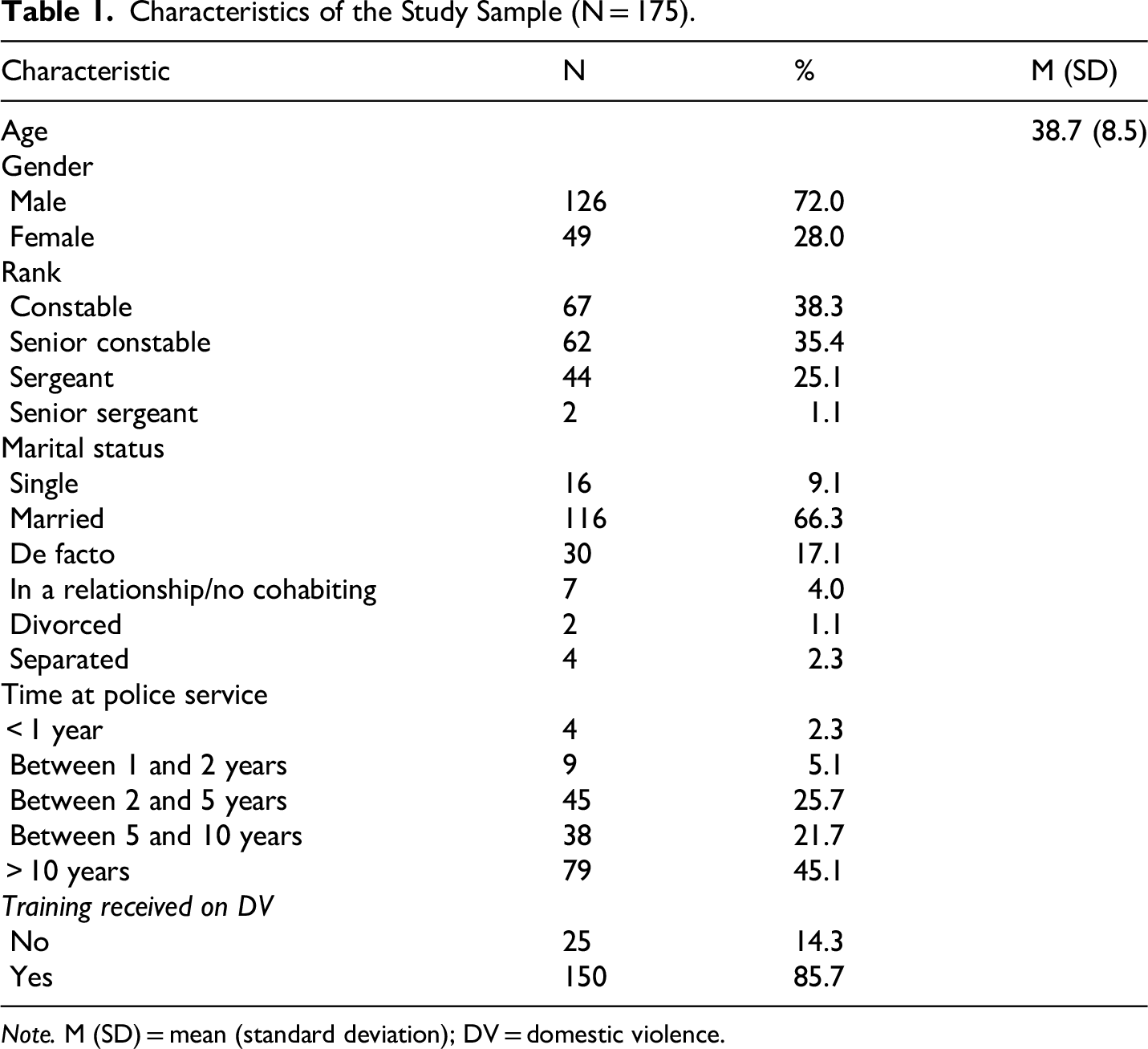
Note. M (SD) = mean (standard deviation); DV = domestic violence.
Officers’ Ratings of the Seriousness of the Scenarios
Regardless of the specific scenario presented (see Table 2), participating officers uniformly recognized the occurrence of DFV, with ratings for each scenario exceeding 9 on a 10-point Likert scale (9.28, 9.07, 9.68, and 9.21). The officers also classified all scenarios as relatively serious, with average ratings surpassing 3 on a 5-point scale (3.09, 3.02, 3.56, and 3.10). Few officers considered any scenario to be “not at all serious” or “extremely serious.”
Officers’ Mean Ratings of the Seriousness of the Scenarios.
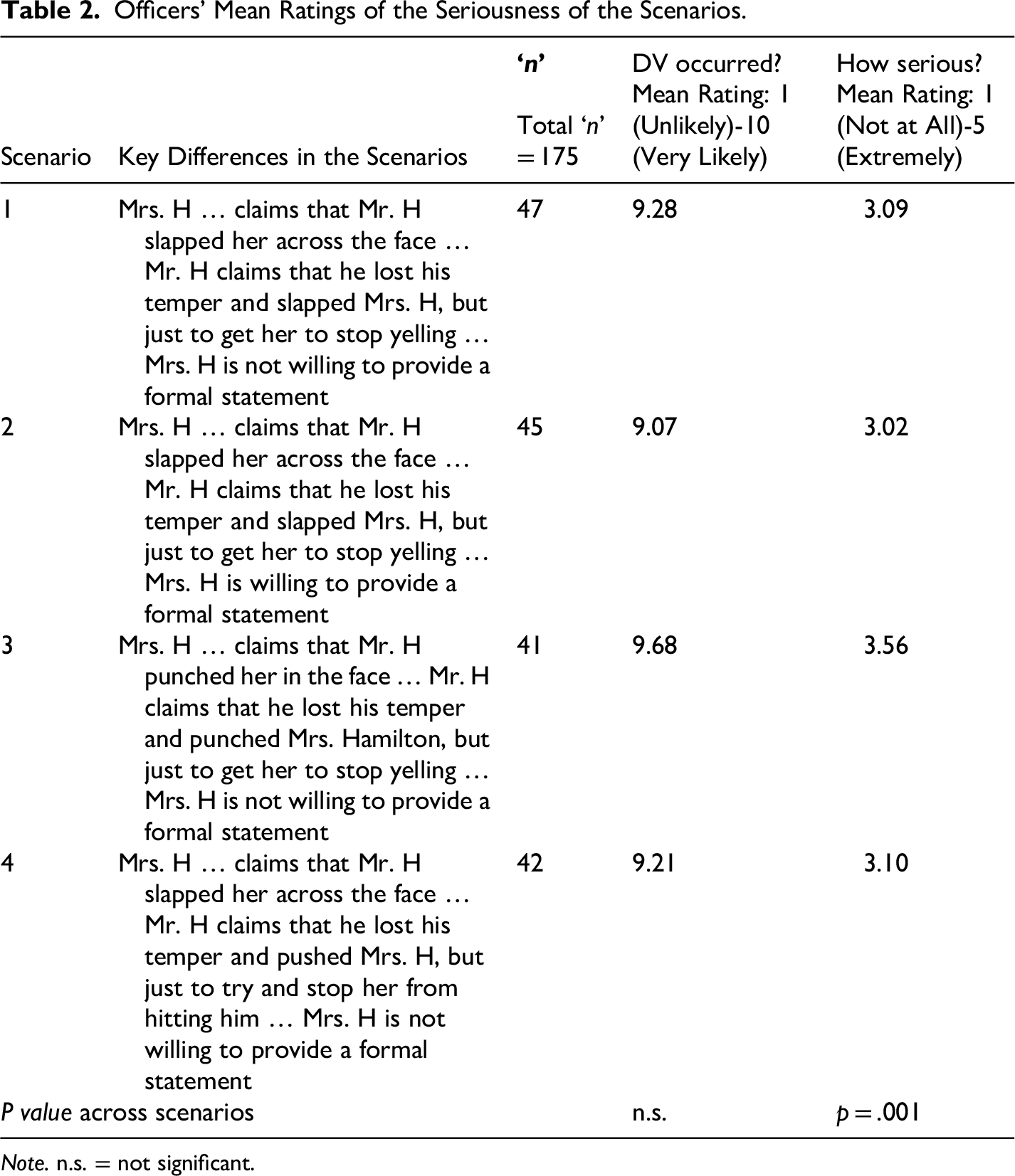
Note. n.s. = not significant.
Officers’ Potential Actions in Each Scenario
Officers were asked to rate their likelihood of taking various actions for each scenario on a 10-point Likert scale, with 1 representing “Unlikely” and 10 indicating “Very likely.” The mean responses for these actions are detailed in Table 3. Significant differences were noted across all four scenarios for two specific actions: initiating an investigation (p = .001) and detaining Mr. Hamilton (p = .019). Officers showed a greater inclination to detain Mr. Hamilton in Scenario 3, which was rated as the most serious, with mean scores of 6.47, 7.33, 8.41, and 6.86 across the scenarios. In terms of initiating investigations, officers were more likely to do so in Scenarios 2 (6.09) and 3 (5.76) compared to Scenarios 1 (3.98) and 4 (4.12). Conversely, officers were generally unlikely to take no action across all scenarios (mean scores of 3.32, 3.13, 2.39, and 2.26) or to recommend that Mrs. Hamilton seek a private domestic violence order (DVO), with scores of 3.57, 2.93, 2.76, and 2.48. They were also hesitant to suggest filing a cross-application for a DVO against both parties (2.19, 3.09, 2.32, and 3.21) or advising Mrs. Hamilton to relocate (4.28, 3.98, 3.78, and 3.71), although these trends were more pronounced in Scenarios 3 and 4 without reaching statistical significance.
Officers’ Potential Actions for Each Scenario [Mean Rating: 1 (Unlikely)−10 (Very Likely)].
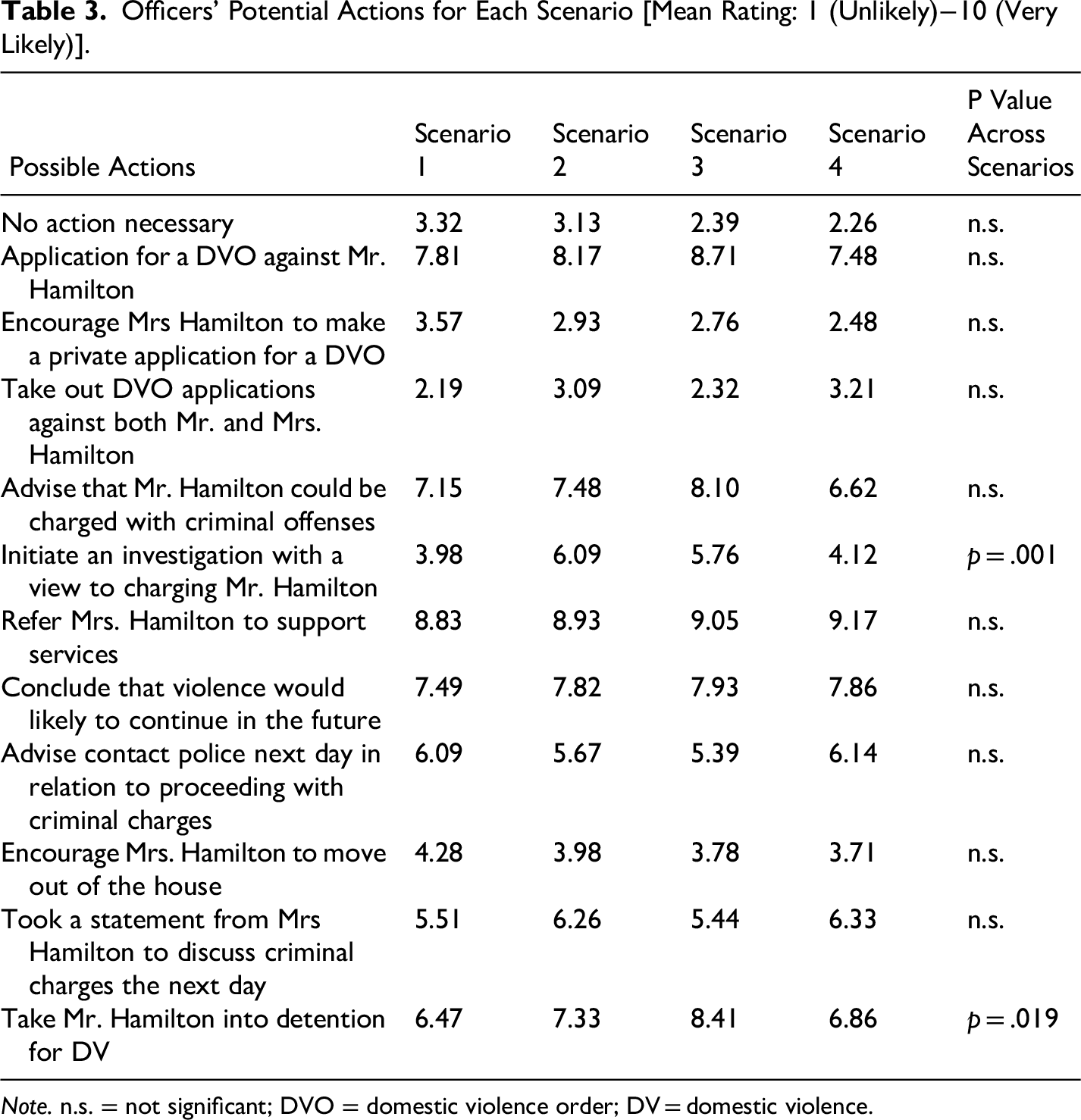
Note. n.s. = not significant; DVO = domestic violence order; DV = domestic violence.
Across all scenarios, officers consistently demonstrated a willingness to pursue a DVO (mean scores of 7.81, 8.17, 8.71, and 7.48) and inform Mrs. Hamilton of potential criminal charges against Mr. Hamilton (7.15, 7.48, 8.10, and 6.62), with slightly increased inclinations in Scenario 3, related to Mr. Hamilton's actions, though not statistically significant. Officers were generally supportive of encouraging Mrs. Hamilton to consider seeking criminal charges (6.09, 5.67, 5.39, and 6.14) and gathering statements for potential charges (5.51, 6.26, 5.44, and 6.33), but again, these results did not reach statistical significance. Notably, officers showed a strong tendency to refer Mrs. Hamilton to support services across all scenarios (8.83, 8.93, 9.05, and 9.17), although this finding was not statistically significant.
Qualitative Data
Building on the quantitative findings, we now address the question of whether and why police officers may alter their responses to DFV incidents when the victim is willing to maintain a relationship with the perpetrator. This section presents results from a thematic analysis of police officers’ narratives in response to the survey's open-ended question: “Please explain why your course of action would or would not be different if the victim were willing to maintain the relationship with the perpetrator.”
Before presenting the results of the thematic analysis, it is important to note that the vast majority of officers (n = 160, 91.4%) reported that they would not change their course of action even when the victim expressed a willingness to maintain the relationship with the perpetrator (see Table 4). This trend was consistent across all scenarios (93.6%, 95.6%, 90.2%, and 85.7%, respectively). As such, the analysis below reflects a consolidated response of police officers across all scenarios. Approximately half of the respondents (n = 94, 53.7%) provided voluntary written responses to the open-ended questions.
The Proportion of Officers Who Agreed/Disagreed with Their Actions Would Differ if the Victim Were Willing to Maintain the Relationship with the Perpetrator.
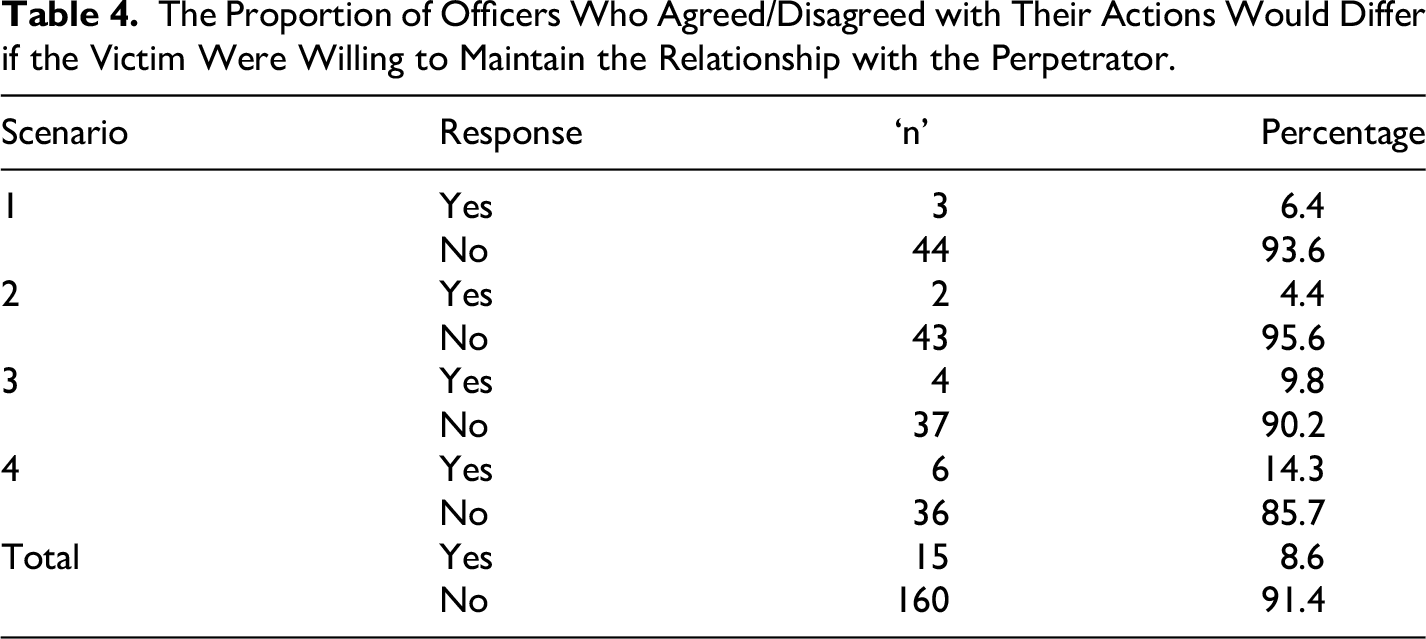
Yet, it is essential to highlight that there was considerable variation in the responses to why they would not change their course of action. Moreover, this was the sole open-ended question focusing on potential changes in response related to the victim's willingness to maintain the relationship with the perpetrator. Consequently, our qualitative analysis is primarily descriptive, which positions our research as exploratory in nature.
Reasons for Changed Responses When the Victim Wanted to Maintain the Relationship with the Offender
Concern for the Victim's Wellbeing
Only a small proportion of respondents (n = 13, 13.8%) indicated that they would alter their course of action if the victim expressed a desire to maintain the relationship with the perpetrator. Yet, it is crucial to note that this change in response would primarily be driven by concern for the victim's wellbeing. These police officers reported that they would offer “relationship advice” aimed at highlighting the potential risks involved in staying in an abusive relationship. Some respondents emphasized the importance of informing the victim about the likelihood of repeated domestic violence incidents. For instance, Officer 69 in Scenario 1 stated, “[I would] explain how many repeat calls for service there are in couples, and from previous experience, it will happen again.” Similarly, Officer 94 in Scenario 1 mentioned providing further advice regarding the cycle of domestic violence: [I would give] further advice in relation to the cycle of domestic violence—we (coppers) all know that it will happen again … We can’t change that though—only the aggrieved can—and by staying in an abusive relationship they are putting themselves at risk and harming their children mentally (Officer 94 in Scenario 1).
Reasons for Unchanged Responses When the Victim Wanted to Maintain the Relationship with the Offender
The majority of respondents who provided answers to the open-ended question (n = 81, 86.1%) indicated that they would not alter their course of action in the hypothetical DFV incident, even if the victim expressed reluctance to sever ties with the perpetrator. Their decision was grounded in three primary considerations: (1) recognition of the fact that DFV had occurred, (2) concern over the potential for reoccurrence of DFV, and (3) respect for the victim's autonomy, but with no influence on legal enforcement.
Recognition of the DFV Occurrence
Eighteen police officers (22.2%) reported that they would not alter their response to the hypothetical DFV incident because they had already detected clear evidence of DFV. For these respondents, the occurrence of DFV was perceived as an undeniable fact within the scenarios, necessitating intervention to prevent further harm to the victim. For example, Officer 93 in Scenario 1 remarked, “DV has occurred with admissions.” This statement highlights the officers’ emphasis on ensuring accountability and protecting the victim once evidence of violence has been confirmed. Further supporting this perspective, Officer 169 in Scenario 3 stated, “[Domestic Violence] Order should still be applied for in this circumstance,” emphasizing the necessity of pursuing a legal response even when challenges arise. Similarly, Officer 178 in Scenario 3 asserted, “She [Mrs. Hamilton] still needs the protection of the DVO [domestic violence order] regardless.” These officers’ responses reflect a professional obligation to act when there is sufficient evidence of DV, prioritizing the immediate safety and welfare of the victim above all else.
Concern About the Potential Reoccurrence of DFV
Ten police officers (12.3%) based their decision on the high likelihood of DFV reoccurring if the victim remained in the relationship. Drawing on past experience with DFV cases, Officer 168 in Scenario 3, for instance, asserted that “[Whether the victim is willing to maintain the relationship with the perpetrator] makes no difference. It would be based on [the] likelihood of repeat occurrence, which would obviously be higher if she [Mrs. Hamilton] is staying [in the relationship].” These respondents recognized that the risk of reoccurrence is significantly elevated when victims continue to have contact with their abusers. Indeed, Officer 73 in Scenario 1 reinforced this concern, stating that “with continued contact, an escalation is possible.” Officer 83 in Scenario 1 further elaborated on this point, noting, “In my experience, once DV has started and escalated, it continues.” Their assessments are informed by their extensive field experience, which consistently reveals patterns of repeat abuse in cases where the victim does not sever ties with the abuser. As such, the officers expressed a proactive approach, emphasizing the need for intervention to prevent the victim from being exposed to future harm.
Respect for the Victim's Autonomy but with No Influence on Legal Enforcement
Approximately half of the respondents (n = 41, 50.6%) indicated that they respect the victim's decision to remain in the relationship with the abuser, acknowledging the importance of the victim's autonomy. However, they also emphasized that the victim's choice to stay would not affect their response to the hypothetical DFV incident, as their primary obligation is to recognize and respond to the fact that DFV has occurred: Proceed with the application. Irrelevant whether she [Mrs. Hamilton] stays or not (Officer 81 in Scenario 1). Mrs. Hamilton is an adult. If she wants to stay it again has no bearing on the evidence available (Officer 147 in Scenario 2). The presence and actions of police relating to DV are not influenced by the fact that an aggrieved person wishes to remain in the relationship (Officer 167 in Scenario 3). DV has occurred. It makes no difference if she stays in the relationship or decides to leave (Officer 208 in Scenario 4).
Despite their respect for the victim's autonomy, these officers recognized the potential risks faced by the victim and felt a professional obligation to offer support. For example, Officer 113 in Scenario 1 stated, “I would explain to her that she is within her right to remain with her husband but advise her that there are support agencies to assist her.” This remark indicates that while they refrain from imposing their views on the victim's relationship, they would be willing to provide information about available resources and support. Furthermore, some officers expressed a clear understanding of their role, emphasizing that they do not possess the authority to dictate the victim's choices regarding their relationship: Most, if not all of them [victims] do. It's not my place to advise someone to leave their partner. I can offer them advice for referrals, and they either take it or not (Officer 109 in Scenario 1). I provide advice, [and it is] their choice on how they act. She [Mrs. Hamilton] may change her mind later after thinking about the advice given (Officer 155 in Scenario 2). Advice given would represent the most sensible option. It is up to the parties whether they listen or not (Officer 179 in Scenario 3). Completing the police application and providing advice/support services is sufficient. I cannot determine that any course of action is better for one person or another, that then becomes a personal opinion (Officer 237 in Scenario 4).
It is essential to note that some police officers (n = 11, 26.8%) expressed nuanced respect for the victim's autonomy to remain in the relationship with the abuser, a perspective that is informed by their pessimistic attitudes regarding the outcomes of DFV incidents. Drawing from their past experiences in handling DFV cases, these officers have come to believe that many victims are likely to return to their abusers, leading to the continued cycle of abuse. This pessimistic outlook is reflected in the remarks of several respondents: The aggrieved usually goes back to the respondent, so I would expect that to happen regardless of her current plans for the future (Officer 114 in Scenario 1). Aggrieved persons will often state that the relationship is over however once they calm down (sober up) the relationship continues (Officer 88 in Scenario 1). Experience finds that most relationships do not end after an incident of domestic violence (Officer 191 in Scenario 3).
Discussion
Responding to DFV incidents presents significant challenges for police officers, as each situation is emotionally charged and often highly complex. Our research focused on one such challenging scenario: the victim's reluctance to sever ties with the perpetrator. Specifically, we investigated whether and how police officers modify their response strategies when the victim expresses a desire to maintain the relationship with the perpetrator. The findings from our study revealed that, despite the victim's willingness to continue the relationship and regardless of whether police officers alter their course of action, the vast majority of police officers would still adopt a proactive approach in responding to hypothetical DFV incidents. This proactive stance is primarily driven by a concern for the victim's safety. Most officers reported that they would provide advice on the high likelihood of DFV reoccurrence and inform victims about the availability of support services, such as shelters or counseling. This finding suggests that police are increasingly prioritizing victim protection, regardless of the complexities surrounding the victim's personal decisions. While this finding is encouraging, our research also uncovered a concerning gap in some officers’ understanding of the nuanced challenges that victims face when deciding whether to leave or stay in a relationship with the perpetrator. A small number of officers exhibited pessimistic attitudes toward the potential outcomes of DFV incidents, reflecting a lack of empathy for the economic, emotional, and psychological factors that can influence a victim's decision-making process. Implications of our findings are discussed below.
Despite longstanding criticism of police handling of DFV incidents, our research highlighted two encouraging areas of improvement in police response to DFV incidents. First, there was a strong consensus among officers regarding the seriousness of DFV incidents and the necessity of timely intervention. This finding aligns with the global trends emphasizing the importance of DFV as a critical policing priority (e.g., Robinson et al., 2016). In the context of Australia, this heightened awareness may be partly attributed to recent legislative reforms and the establishment of specialized police units dedicated to DFV cases (Australian Law Reform Commission, 2010). These systemic changes have played a significant role in shaping police practices by providing officers with clearer mandates for intervention. The combination of enhanced training, legislative changes, and the development of specialized units has likely contributed to this heightened awareness and willingness to intervene in DFV cases (Islam & Mazerolle, 2022), even when doing so conflicts with the victim's expressed wishes. This shift indicates that contemporary policing increasingly prioritizes the prevention of further harm in DFV incidents, recognizing the cyclical nature of abuse and the need for timely intervention.
Second, our research highlighted an increasing recognition among police officers of the need to protect victims, even when victims themselves may be reluctant to pursue separation. In line with the findings of Meyer and Reeves (2021), our research has underscored a broad consensus among police officers that protective measures are necessary for DFV incidents, even when these actions may go against the wishes of the victims. This growing acknowledgement may likely reflect the rising influence of a victim-centered approach in policing DFV cases (Birdsall et al., 2017; Hoyle & Sanders, 2000). Such an approach prioritizes the safety and wellbeing of the victim over other considerations, aligning with contemporary best practices in law enforcement. By adopting this approach, police officers have demonstrated an understanding of the complex dynamics of DFV and the necessity of intervention, even when victims may be reluctant or ambivalent about their circumstances. Such a shift in perspective represents a critical step forward in ensuring the long-term protection and support of DFV victims.
While our research revealed several promising findings, it also identified areas for improvement in police responses to DFV. Specifically, some officers demonstrated a limited understanding of the complexities surrounding a victim's decision to stay in or leave an abusive relationship. Contrary to simplistic assumptions, this decision is often burdened by a complex mix of emotional, psychological, and practical difficulties. Research has shown that a victim's choice to stay or leave can be influenced by a wide range of factors (Heron et al., 2022), including awareness of support services (Estrellado & Loh, 2014), the extent of commitment to the relationship (Lacey, 2010), forms of DFV (Ben-Porat & Reshef-Matzpoon, 2023), and the degree of victims’ self-esteem (Kim & Gray, 2008). These factors can intersect in ways that make the decision to leave an abusive partner highly complex and deeply personal. Given these nuances, it is crucial for police officers to cultivate a more comprehensive understanding of the victim's state of mind, particularly regarding their reluctance to sever ties with the perpetrator despite ongoing abuse. Without this understanding, police interventions may be less effective and potentially alienate victims, who might already feel trapped by their circumstances.
These findings underscore the pressing need for enhanced training that equips officers with the knowledge to appreciate the multifaceted nature of a victim's decision-making process in DFV situations. Such training would better prepare law enforcement to provide informed, empathetic, and effective support that addresses both the immediate safety concerns and the broader social and psychological factors at play.
Limitations and Future Research Directions
This study has several limitations. First, qualitative data were derived from voluntary open-ended responses, meaning that not all participants provided detailed narratives. Therefore, the results may over-represent the views of officers who are more reflective or engaged in the DFV incidents. Second, the sample was drawn solely from a single Australian state, which restricts the generalizability of the results to officers in other regions, where DFV policies and practices may differ. A more comprehensive nationwide survey using face-to-face interviews with randomly selected officers could yield results that are more representative and broadly applicable. Third, while the findings provide valuable insights into police reactions to DFV scenarios, they primarily reflect officers’ tendencies or intentions rather than actual behaviors, as the study relied on hypothetical scenarios. It may be possible that real-world responses could differ significantly from those indicated in vignette-based assessments. Therefore, further research is necessary to explore actual police responses using official data. Fourth, the vignettes focused on incidents involving physical violence and did not consider responses to nonphysical forms of DFV, such as coercive control. Future research should aim to incorporate both violent and nonviolent scenarios to provide a more comprehensive understanding of police responses to DFV. Fifth, although this research suggests that the victim willingness to maintain the relationship with the DFV perpetrator is unlikely to alter the police's course of action, the study did not take into account other circumstantial and contextual factors, such as the presence of children at the scene. Future research should incorporate these contextual variables and explore how different scenarios may shape the relationship between police action and victim willingness to maintain the relationship with the DFV perpetrator.” Sixth, the data were collected more than a decade ago, which may not reflect recent societal and practical changes. Research using more recent data is needed. Finally, the depth of responses varied among participants. While some officers provided detailed explanations, others offered brief or no responses at all. Future studies should delve deeper into the reasons behind police officers’ changing responses to DFV when the victim expresses a desire to maintain the relationship with the perpetrator, as well as examine their attitudes toward DFV more broadly.
Conclusion
DFV remains a serious and escalating public health issue, causing profound physical, emotional, psychological, and economic harm to victims. As public expectations for improved police responses grow, the need for effective and empathetic intervention has become increasingly urgent. Historically, police were often criticized for inaction or inadequate responses to DFV incidents. However, over time, law enforcement practices have shown notable improvement. Our research supports this shift, finding that officers are increasingly willing to adopt proactive measures in hypothetical DFV scenarios, motivated by a genuine concern for victim safety and wellbeing. This trend is promising and suggests progress in how DFV is approached within policing. Nevertheless, our findings also highlight that some officers demonstrated limited understanding of the complex, multifaceted reasons why victims may choose to remain with their abusers, including emotional attachments and fears of economic insecurity. This lack of insight risks undermining otherwise proactive interventions by failing to fully support victims’ needs. Addressing these gaps through enhanced training is essential to ensure police responses are not only immediate and protective but also informed, empathetic, and sensitive to the realities victims face.
Footnotes

Funding
The authors disclosed receipt of the following financial support for the research, authorship, and/or publication of this article: This work was supported by the University of New Brunswick Canada, Muriel McQueen Fergusson Centre for Family Violence Research, the then Key Centre for Ethics, Law, Justice and Governance, Griffith University, Australia.
Declaration of Conflicting Interests
The authors declared no potential conflicts of interest with respect to the research, authorship, and/or publication of this article.