




Abstract
The epidemic of fatal violence against Black transgender women in the United States requires immediate response. We conducted secondary analyses of public databases with 229 documented acts of fatal violence against transgender women; Black transgender women accounted for 78.6%. Significantly more Black transgender women were fatally shot by a gun (p < .001) and killed younger (p = .002) than non-Black transgender women. Perpetrators were identified in 54% of cases, among whom 75% were Black cisgender men. Most Black transgender women (64.6%) had romantic/sexual relationships with the perpetrator. Findings call for violence prevention responses that reduce Black transgender women's vulnerability to violence and engage Black cisgender men seeking intimate relationships with Black transgender women.
Introduction
The epidemic of violence against Black transgender women requires an immediate and targeted public health response. Since 2013, the Human Rights Campaign (HRC) has documented over 200 acts of fatal violence against transgender Americans (Human Rights Campaign, 2020). Specifically, four out of five of those killed are transgender women of color (Human Rights Campaign, 2020). Prior epidemiologic modeling observed that homicide rates among Black and Latina transgender women far exceeded their cisgender comparators (Dinno, 2017). These statistics undercount the true number of transgender women murdered since 2013 due to misgendering in coroner, police, and media reports (Schmidt et al., 2021; Talusan, 2016). Understanding the contexts driving this epidemic of fatal violence is essential for an effective public health response.
We leverage intersectionality as an analytic lens to articulate and investigate the social, relational, and structural contexts that work synergistically to perpetuate acts of fatal violence against Black transgender women. Grounded in Black Feminist Theory, Crenshaw and Collins articulated intersectionality as a tool to guide praxis and liberation by focusing on the interplay between multiple axes of power and privilege that concentrate structural and social harms to explicitly oppress and minoritize communities (Collins, 1990; Crenshaw, 1991). Specific to Black transgender women, anti-Blackness and structural biases (e.g., racism, misogyny, and classism) intersect across the lifespan to produce targeted and synergistic inequities in education, employment, and housing opportunities that amplify exposure to violence and its sequelae of related harms (e.g., overpolicing, incarceration, threat of deportation, trauma-related mental health, and substance use disorders; Wesp et al., 2018; Wirtz et al., 2020).
Emerging research suggests determinants of fatal violence among transgender women include high rates of nonfatal violence, notably intimate partner violence (IPV; NYC Mayor's Office to End Domestic and Gender-Based Violence, n.d.), and exposure to social contexts that increase vulnerability to violence (e.g., homelessness, economic insecurity, and sex work; Forestiere, 2020; Gamarel et al., 2022; Wirtz et al., 2020). For example, transgender respondents reported elevated lifetime histories of IPV (54%) or sexual assault (47%; James et al., 2016), and Black transgender Americans report higher rates of ever being homeless (>5 times the general population) and household incomes under $10,000 (>8 times the general population; Forestiere, 2020). Less research has examined these experiences among Black transgender women specifically despite this group's disproportionate burden of fatal violence (Dinno, 2017; Human Rights Campaign, 2020; Westbrook, 2022). For example, nearly 50% of Black and Latina transgender women experienced a significantly higher prevalence of battery with a weapon compared to White transgender women who had ever experienced an antitransgender hate crime (Gyamerah et al., 2021). While nonfatal firearm assaults among cisgender women aged 18–44 in the United States in 2017 was 0.019% (Olufajo et al., 2021).
Such determinants ultimately place many transgender women into situations such as sex work and romantic relationships that may validate and affirm their identity as women but can also negatively impact mental and physical health, increasing exposure to IPV and HIV (El-Bassel et al., 2022; Gamarel et al., 2022; Wirtz et al., 2020, 2023). Notably, emerging data suggest Black transgender women reported greater engagement in sex work (40%) than any other racial/ethnic group (Garza, 2019). To date, media reports suggest cisgender male intimate partners are the primary perpetrators of fatal violence against transgender women, who killed their partners after discovering they were transgender or from fear of others knowing of their relationship (Schmidt et al., 2021). Findings from a recent qualitative study with transgender women of color in Detroit echo these media reports. Specifically, transgender women described how antitransgender stigma, including stereotypes that sexually objectify transgender women and men's fear of having their relationship or attraction to transgender women “exposed” increased their risk of fatal violence (Gamarel et al., 2022).
Addressing the contexts of fatal violence among Black transgender women is also hampered by government agencies’ failure to systematically assess the prevalence, risk, and protective factors of violence against transgender Americans (Gamarel et al., 2022; Wirtz et al., 2020). Limited federal and state government protections and rapidly expanding antitransgender legislation further provide a permissive structure for individuals to perpetrate violence against transgender Americans. Hate crime legislation in more than 20 states fails to specify protections for transgender Americans, and many states recognize the “trans panic defense” as a valid legal defense, that a defendant was driven to violence resulting from a volatile emotional state after discovering that someone is transgender (American Bar Association, 2013; Forestiere, 2020; USA Facts, 2021). Evidence that law enforcement investigates and prosecutes cases of fatal violence against transgender Americans at the same rate as cisgender Americans is limited (Tourjee, 2015). Media reports suggest that people who kill Black transgender women are usually convicted of lesser charges than those who kill people of other transgender identities (Talusan, 2016), demonstrating intersectional bias in the judicial process. Further, fatal violence may not be investigated as antitransgender hate crimes because police and coroner's offices are not trained to identify transgender victims and family members may withhold their transgender identity from authorities (Talusan, 2016).
To date, information about who is perpetrating fatal violence against Black transgender women in the United States and under what contexts these incidents occur or the extent to which perpetrators have been prosecuted has only been reported by transgender community advocates and the associated press (Boglarka & Berredo, 2017; Garg, 2019; Garza, 2019; Human Rights Campaign, 2020; Jones, 2020; Schmidt et al., 2021; Sonoma, 2022; Talusan, 2016; Tourjee, 2015; Woodstock, 2020). To our knowledge, we provide the first systematic compilation and synthesis of these data to inform a targeted public health response.
Method
Study Design
Using a retrospective cohort design, we conducted a secondary analysis of publicly available databases documenting confirmed acts of fatal violence against transgender Americans from January 1, 2013, to December 31, 2021, which are inclusive of acts of fatal violence against transgender women, transgender men, and nonbinary persons. To inform violence prevention efforts that center Black transgender women who are disproportionally murdered, we purposefully restrict this cohort to confirmed acts of fatal violence against transgender women and compare Black transgender women (inclusive of Afro-Latinas) to non-Black transgender women.
Data Sources and Procedures
The HRC, a national LGBTQ advocacy group, has been documenting the loss of transgender lives to the epidemic of fatal violence since 2013 (Human Rights Campaign, 2020). The HRC publishes this data via annual reports that document the names, race/ethnicity, location of fatality, and known personal history. These reports only contain confirmed cases of fatal violence, acknowledging that there are likely unconfirmed cases in which victims are misgendered not documented in the annual reports. As such, we cross-referenced and augmented these data with other publicly available data sources informed by local advocacy groups, friends, and families of transgender Americans who were killed. These publicly available data sources include Remembering Our Dead and local and national news agencies’ online reports on individual murders (e.g., Baltimore Sun, Buzz Feed, The Advocate). A separate, in-depth, internet search was conducted to systematically identify relevant data sources using the name and date of death for each confirmed case of fatal violence.
The lead author (PH) developed a data abstraction template and guidelines. A task force of San Diego Black LGBTQ Coalition volunteers led data abstraction from all identified publicly available data sources. Notably, this work was led by members of the Black transgender community to ensure the data are interpreted from the data sources and documented in a culturally responsive manner that honors and respects the lives of those we have lost. A second contributing author (RF, LL, and LS) independently confirmed all abstracted data for completeness before analysis. A list of identified data sources is available from the corresponding author upon reasonable request. UC San Diego Human Research Protections Program approved all study-related activities.
Measures
For each act of fatal violence against transgender women, we abstracted the location and documented cause of death, known age at the time of death, race/ethnicity, gender of the victim and perpetrator, and known characteristics of their relationship. All characteristics were abstracted as identified in the publicly identified databases and subsequent individual internet searches. Data on these characteristics were considered missing when responses to these queries were not documented or verifiable in any of the publicly available data sources searched.
We categorized states in which acts of fatal violence occurred based on U.S. Census-defined regions (West, Midwest, South, and Northeast). Cause of death was classified as fatally shot if a firearm was used or fatally stabbed if no firearms were involved, regardless of additional acts of violence documented. All other causes of death involved mutually exclusive forms of violence and were categorized as interpersonal violence (e.g., strangulation, blunt force trauma, drowning), vehicular homicide, methods not specified that resulted in “traumatic injuries,” and community-contested self-inflicted injuries. Community-contested self-inflicted injuries reflect reports from individuals who knew the victim that cast doubt on the legally documented cause of death (e.g., suicide, overdose).
For both transgender women and perpetrators, age at the time of death/murder, race, ethnicity, and gender were abstracted as reported from available data sources (i.e., Black, Asian, and Native American). Regardless of ethnicity, we categorized race as Black (i.e., inclusive of Afro-Latinas), non-Black, or as race not explicitly reported across data sources investigated for this analysis. We presumed the perpetrator's gender described as man or woman to be cisgender unless otherwise noted. This decision was made recognizing the ways in which hetero-cis-normativity in the United States still drives biased social norms that restrict the specification of cisgender identities in media reports as well as the national surveillance systems (Ericsson, 2021). In these contexts, the status labels “man” and “woman” are all too often applied to socially normative constructs of gender in the absence of qualifiers (i.e., omitting the qualifier cisgender), while “nonnormative” constructs are more likely to be qualified in reporting (e.g., specifying the qualifier of transgender; Worthen & Herbolsheimer, 2023).
In cases with an identified perpetrator, we documented if the perpetrator was charged (yes, no) as of September 19, 2022. Relationship status between the victim and perpetrator was classified as (a) intimate partner if any romantic/sexual relationship was indicated in reports, (b) known others (i.e., nonintimate partners including friend, roommate, acquaintance), (c) met online (with no mention related to intimacy specified), or (d) law enforcement (including immigration and customs enforcement agents).
Statistical Analysis
We analyzed contextual data on acts of fatal violence against transgender women descriptively. We examined data on the total number of deaths by each calendar year to examine trends in the total number of transgender deaths over time. Among victims whose race/ethnicity was reported, we conducted Chi-square tests to assess whether characteristics of fatal violence perpetrated against transgender women differed by the victims’ race (Black, including Afro-Latinas vs. non-Black). Multiple perpetrators were identified in 10 acts of fatal violence against Black transgender women, two of which identified a primary perpetrator. In these cases, we included data on the characteristics of the primary perpetrator or where characteristics were homogeneous across all perpetrators (e.g., all were cisgender men). Cases with heterogeneous characteristics across multiple perpetrators are descriptively annotated but excluded from Chi-square analyses. Following observations that the proportion of documented acts of fatal violence against non-Black Latina transgender women substantially increased in 2021, a post-hoc descriptive subanalysis was conducted to summarize the characteristics and perpetrators among this group.
Results
Prevalence of Fatal Violence Against Transgender Women in the United States (2013–2021)
There were 229 documented cases of fatal violence against transgender women in the United States between 2013 and 2021. The majority were Black (78.6%), including Afro-Latinas. Non-Black transgender women were identified as Latina/x (9.2%), White (4.8%), or American Indian/Native American (AI/NA, 0.4%), with no race identified for 16 women (7.0%). The number of documented acts of fatal violence increased in recent years from 25 murders in 2019 to 51 murders in 2021 (Figure 1). More than half of the 229 acts of fatal violence occurred in the U.S. South (57.2%), followed by the Midwest (19.7%), the Western United States (12.2%), and the Northeast (10.9%; Table 1).
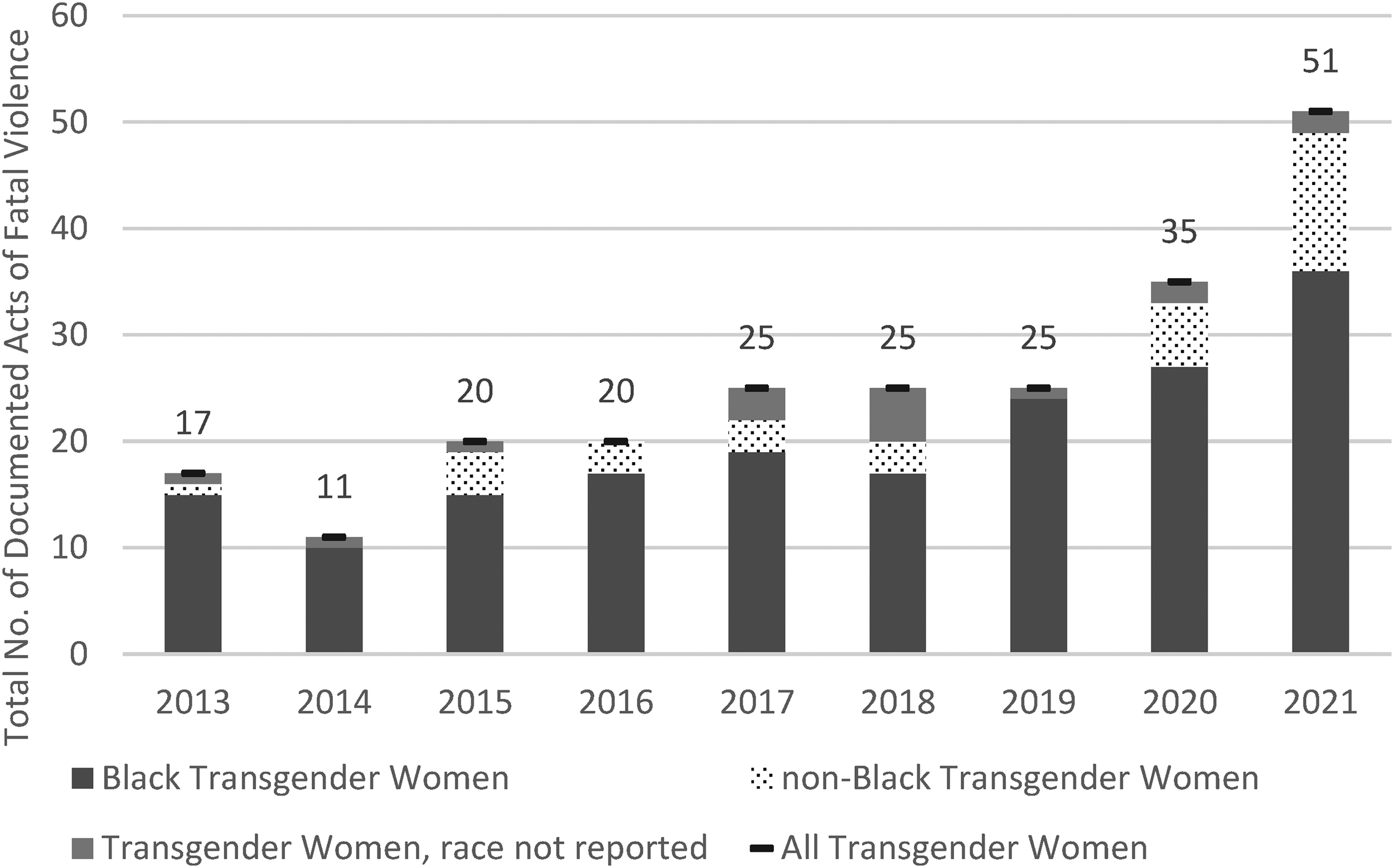
Total documented acts of annual fatal violence against U.S. transgender women by race from 2013 to 2021 (N = 229).
Cumulative Acts of Fatal Violence Against Transgender Women by Race (2013–2021).
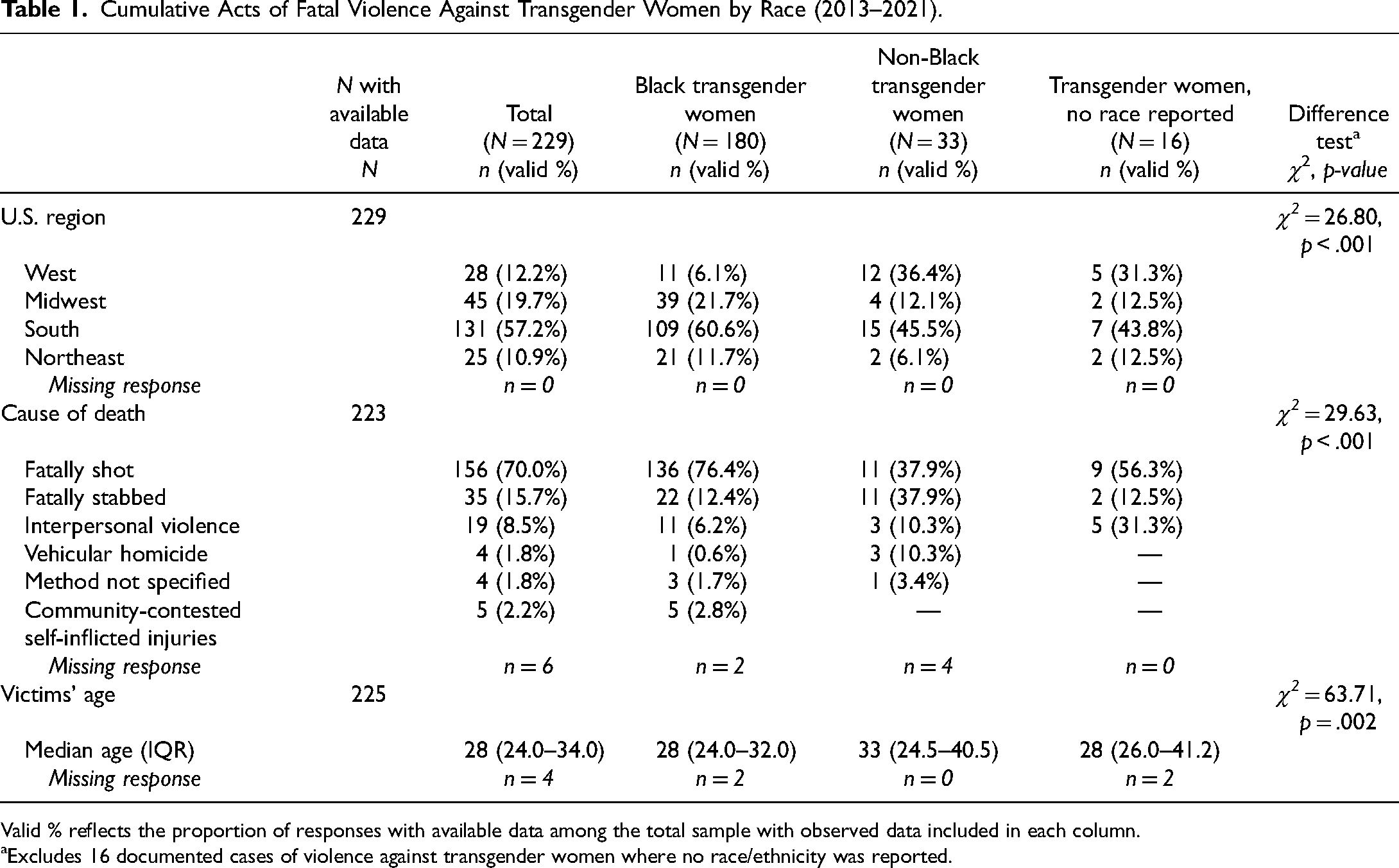
Valid % reflects the proportion of responses with available data among the total sample with observed data included in each column.
Excludes 16 documented cases of violence against transgender women where no race/ethnicity was reported.
Characteristics of Black Transgender Women Killed by Fatal Violence
Black transgender women accounted for 180 (78.6%) of transgender women killed and were significantly different from non-Black transgender women in where in the United States they were killed (χ2 = 26.80, p < .001), how they were killed (χ2 = 29.63, p < .001), and age at the time of death (χ2 = 63.71, p = .002). Among 225 transgender women, the median age at the time of death for Black transgender women was 28 years old (interquartile range [IQR]: 24.0–32.0), significantly younger than non-Black transgender women (33 years old; IQR: 24.5–40.5).
The location of death was reported for all transgender women. A higher proportion of Black transgender women were killed in the South (60.6%) and almost twice as many were killed in the Midwest (21.7%) compared to non-Black transgender women (South 45.5%, Midwest 12.1%). Most Black transgender women killed by fatal violence died in the state of Louisiana (n = 19) followed by Texas (n = 17), Florida (n = 17), Maryland including DC (n = 15), Ohio (n = 12), and Illinois (n = 11; data not shown). Proportionally fewer Black transgender women were killed in the Western United States (6.1%) than non-Black transgender women (36.4%), the majority of whom were killed in Texas (n = 7, 33.3%) and California (n = 4, 19.0%; data not shown).
We documented legally registered causes of death for 223 transgender women. A higher proportion of Black transgender women were fatally shot (76.4%) than non-Black transgender women (37.9%), whereas a lower proportion of Black transgender women were fatally stabbed (12.4%) than non-Black transgender women (37.9%). Proportionally fewer Black transgender women were killed via interpersonal violence (6.2%, n = 11) or vehicular homicide (0.6%, n = 1) than non-Black transgender women (both 10.3%, n = 3, respectively). Only Black transgender women were listed as having died from community-contested self-inflicted injuries (n = 5, 2.8%).
Characteristics of Perpetrators of Fatal Violence Against Black Transgender Women
Perpetrators were identified in 58.3% of the 229 documented cases of fatal violence against transgender women (Table 2). There was no significant difference in cases with an identified perpetrator for Black transgender women (54.0%) compared to non-Black women (69.7%; χ2 = 2.462, p = .117). No differences in perpetrator characteristics were observed by transgender women's race (all p > .050).
Perpetrator Characteristics of Cumulative Acts of Fatal Violence Against Transgender Women by Race (2013–2021).
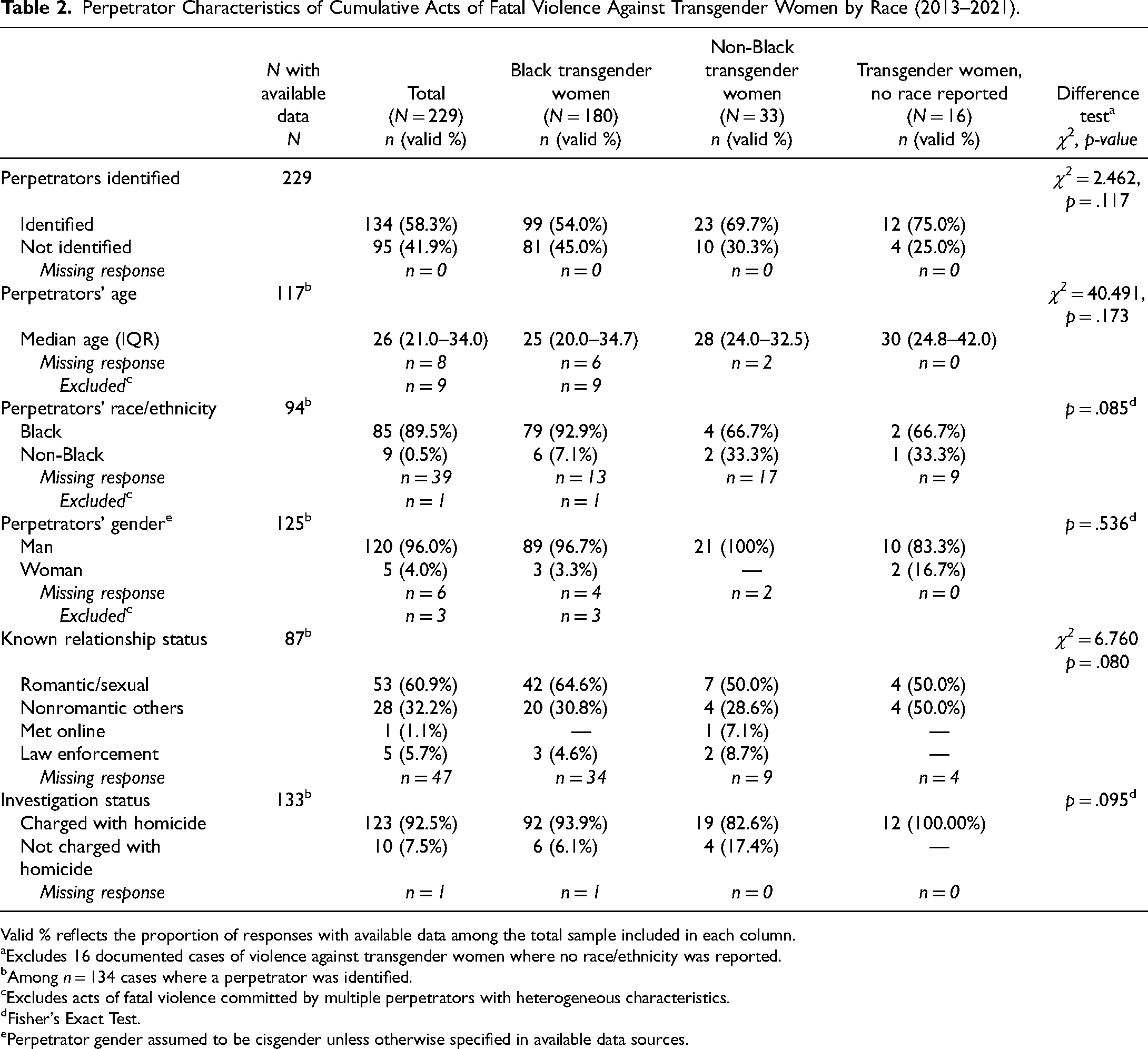
Valid % reflects the proportion of responses with available data among the total sample included in each column.
Excludes 16 documented cases of violence against transgender women where no race/ethnicity was reported.
Among n = 134 cases where a perpetrator was identified.
Excludes acts of fatal violence committed by multiple perpetrators with heterogeneous characteristics.
Fisher's Exact Test.
Perpetrator gender assumed to be cisgender unless otherwise specified in available data sources.
We obtained the perpetrators’ ages in 117 of the documented acts of fatal violence. The median age of identified perpetrators of fatal violence against Black transgender women was 25 (IQR: 20.0–34.7) and 28 (IQR: 24.0–32.5) among non-Black transgender women's perpetrators. Perpetrator race/ethnicity was available for 95 acts of fatal violence, n = 85 (90%) of which were perpetrated against Black transgender women. Of these 85 acts of fatal violence, n = 79 (92.9%) of the perpetrators were Black. Perpetrator race was reported in only six acts of fatal violence against non-Black transgender women, four of whom were identified as Black. Perpetrators’ gender was available for 125 acts of fatal violence, n = 92 (74%) of which were perpetrated against Black transgender women. Of these 92 acts of fatal violence, 89 (96.7%) were identified as cisgender men. In total, nearly 75% (n = 74) of the 99 acts of fatal violence against Black transgender women with an identified perpetrator were perpetrated by Black cisgender men.
Contextual Characteristics of Fatal Violence Against Black Transgender Women
Descriptions of known relationship status were reported in 87 of the documented acts of fatal violence against transgender women (Table 2). While significant differences by race were not observed, the majority (60.9%) with a known perpetrator were committed by someone with whom she was in a romantic or sexual relationship (χ2 = 6.760, p = .080), followed by nonromantic others (32.2%). Fewer acts of fatal violence were perpetrated by law enforcement against Black transgender women (n = 3, 4.6%) and non-Black transgender women (n = 2, 8.7%). We found reports on the investigation status for all but one of the acts of fatal violence against transgender women in which a perpetrator was identified. Slightly more identified perpetrators of fatal acts of violence against Black transgender women were charged (n = 92, 93.9%) compared to acts of violence against non-Black transgender women (n = 19, 82.6%; p = .095).
Descriptive Assessment of Acts of Fatal Violence Against Non-Black Latina Transgender Women
While the total number of documented fatal acts of violence against transgender women increased in 2020 and 2021, 57.2% (n = 12 of 21 total) of non-Black Latina women were killed during this time period. Descriptively, the majority of non-Black Latina women were killed in the U.S. South (52.4%; n = 11) and in the West (33.3%; n = 7), with Texas (n = 7) and California (n = 4) accounting for the largest proportion of murders in these regions, respectively (Table 3). While most were fatally shot (47.4%), compared to Black transgender women, a higher proportion died from other causes (e.g., fatally stabbed 21.1%, vehicular homicide 15.8%). Fourteen perpetrators of the 21 acts of fatal violence against non-Black Latina women were identified (66.7%). Perpetrator race was identified in four cases, among whom all but one was identified as Black, and among the 13 cases in which perpetrator gender was identified, all were classified as a cisgender man. Among identified perpetrators, relationship status was documented in nine cases, among whom five were a romantic or sexual partner. While 78.6% (n = 11 of 14) of identified perpetrators of fatal violence against non-Black Latina had been charged with a homicide.
Descriptive Assessment of Cumulative Acts of Fatal Violence Against Non-Black Latina Transgender Women (2013–2021).
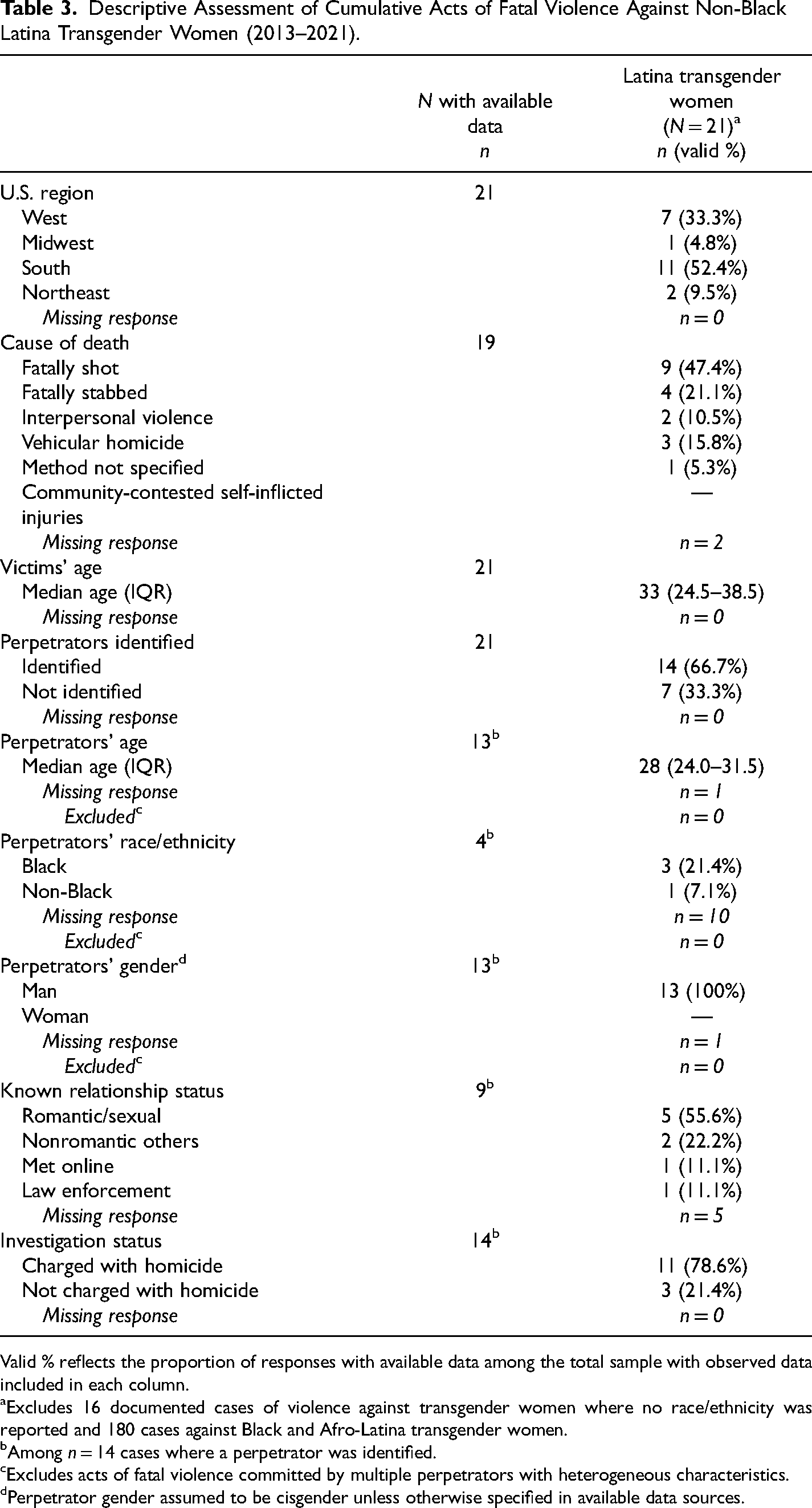
Valid % reflects the proportion of responses with available data among the total sample with observed data included in each column.
Excludes 16 documented cases of violence against transgender women where no race/ethnicity was reported and 180 cases against Black and Afro-Latina transgender women.
Among n = 14 cases where a perpetrator was identified.
Excludes acts of fatal violence committed by multiple perpetrators with heterogeneous characteristics.
Perpetrator gender assumed to be cisgender unless otherwise specified in available data sources.
Discussion
Using publicly available databases, we found young Black transgender women in the Southern and Midwestern United States accounted for the majority of documented acts of fatal violence from 2013 to 2021. Black transgender women are, on average, 5 years younger than non-Black transgender women when they are murdered, building on previous work in Latin America reporting that the life expectancy of transgender women in the Americas is between 30 and 35 years (Inter-American Commission on Human Rights, 2014). Combined with observational studies where transgender women report significantly higher rates of violence in the U.S. South compared to their peers in other parts of the country (Sherman et al., 2024) and report a higher prevalence of violence starting in childhood and across the lifespan, antitransgender violence prevention efforts should begin early in the developmental trajectory (James et al., 2016; Lacombe-Duncan & Olawale, 2022; Smith et al., 2017).
U.S. surveillance data similarly documents that rates of fatal violence against Black cisgender women are higher (6.4 per 100,000) than other racial/ethnic groups except American Indian/Native American cisgender women (6.9 per 100,000), with most murders perpetrated by intimate partners (50.8%) or known others (33.7%; Centers for Disease Control and Prevention, 2022). Recent media reports highlighted fatal violence, largely perpetrated by gun violence, has more rapidly increased among Black cisgender women than any other racial/ethnic group, with the greatest increases occurring in the Midwest and South (Beckett & Clayton, 2022). Direct comparisons are not possible as nationally representative studies and surveillance systems do not systematically and appropriately document transgender identities (Stotzer, 2009, 2017; Westbrook, 2022).
Similarly, we observed that fatal gun violence was significantly higher among Black transgender women. This suggests that structural factors may produce more lethal environments permissive of violence against Black transgender women which may partially explain observed regional differences. Most Black transgender women were murdered in states with well-documented racial income inequality (Vivid Maps, 2020), punitive laws that criminalize sex work (USA Facts, 2021), and more gun-friendly legislation (Morris, 2020). These states do not identify transgender as a protected status in hate crime legislation, and most have antitransgender laws under consideration that explicitly target transgender youth (USA Facts, 2021).
Taken together, the emergence and persistence of such legislation perpetuate and concentrate the harms of structural disadvantage within communities shaped through historical anti-Black practices (e.g., slavery, segregation, redlining, police violence, inequitable distribution, and quality of healthcare services; Bailey et al., 2021). These findings align with recent research on structural intersectionality, which examines how structural racism, structural sexism, and income inequality independently and jointly shape health inequities in the United States that most consistently affect Black women (Homan et al., 2021). Similar to our findings, Homan et al. (2021) also observed geographic variability, identifying greater exposure to structural racism in the Midwest and Northeast, where Black communities are more geographically isolated, compared to greater exposure to structural sexism in the South and higher income inequality in states with large metropolitan populations (e.g., Texas, California, New York, Florida). These structural-driven health inequities include gun violence, which has only recently been acknowledged as a public health crisis by the CDC (Cohen et al., 2021). For example, the historical legacy of redlining geographically concentrates policing, educational, and income inequities that amplify gun-related violence in Black communities in the United States (Poulson et al., 2021), while higher Black homicide rates were observed in states where White residents hold greater racial resentment towards Black residents (Unnever et al., 2023).
Addressing structural inequities is key to protecting Black transgender women. Research on Black transgender women underscores the deleterious effects of unemployment, incarceration, and stressful life events, including physical violence (Gyamerah et al., 2021; Rouhani et al., 2021; Russell et al., 2021). Yet, higher education and greater food and housing security were associated with higher resilience among transgender women engaged in sex work where vulnerability to violence remains high (Russell et al., 2021), and stronger community connections improved help-seeking and mental health among Black transgender women who had survived violence (Sherman et al., 2022).
Violence prevention and response efforts must also focus on cisgender community members perpetrating antitransgender discrimination and victimization (Arayasirikul et al., 2022; Gamarel et al., 2022). When a perpetrator was identified, we observed that most fatal acts of violence were perpetrated by young Black cisgender men with whom Black transgender women had a romantic or sexual relationship. Still, one in three perpetrators of fatal violence against Black transgender women were known nonintimate partners, reflecting prior observations that antitransgender discrimination in obtaining housing, employment, and healthcare place transgender women in environments that amplify their vulnerability to violence independent of intimate partners (Arayasirikul et al., 2022; Wirtz et al., 2020). Data on perpetrators’ age, race, gender, and types of relationships with transgender women is an important contribution to these analyses and should inform tailored violence prevention efforts.
These findings should not be interpreted to mean that Black cisgender men are more prone to violence than other potential perpetrators. The lack of differences in perpetrator's age, race, and gender between Black and non-Black transgender women may speak more to the role of structural racism and antitransgender stigma in how young Black men are socialized to define and respond to threats to masculinity (Sherman et al., 2022); reflecting a critical issue for future research. Qualitative work with transgender women of color identified rejection of cisgender men's sexual advances and possible public disclosure of their relationship as two contexts that escalate their risk for fatal violence (Gamarel et al., 2022). Violence prevention research engaging Black cisgender men should focus on dismantling stereotypes that sexually objectify and dehumanize transgender women and rebuilding constructions of masculinity and responses to perceived threats in these contexts (Gamarel et al., 2022).
Further, we observed a stark increase in acts of fatal violence against non-Black Latina transgender women in recent years, signaling a need for violence response services and future violence prevention research with this population as well. Our findings note that over half of these murders occurred in the Southwestern United States, namely in the states of Texas and California suggesting structural factors related to xenophobia and migration status might intersect with transphobia to amplify vulnerability to acts of fatal violence in this region (Abubakar et al., 2022; Samari et al., 2021; Viruell-Fuentes et al., 2012).
Limitations
Our secondary analysis of publicly available databases has several limitations. First, we likely undercount the prevalence of fatal violence due to gender misclassification in media, police, and coroner reports (Schmidt et al., 2021; Talusan, 2016) and potentially lower media coverage of murdered Black transgender women than non-Black transgender women (Osborn, 2022). We enhanced the rigor of our methods by conducting an independent internet search for supplemental reporting on each act of fatal violence by individuals who are culturally sensitive to how misclassifications are reported and coauthors trained in research methods. Second, our data are not nationally representative (Stotzer, 2017; Westbrook, 2022), observational, and cannot infer causality between perpetrator characteristics and contexts associated with acts of fatal violence against Black transgender women. Third, caution is needed when interpreting study findings, given the extent and nonrandom nature of missing data, and assumptions made when available data lacked specificity in reporting (i.e., assuming cisgender identities when only “man” and “woman” gender identities were reported in the available data). We note the extent of missing data related to perpetrator race and other characteristics may reflect nonrandom bias related to underreporting of crimes committed by White/non-Black perpetrators (Police Disproportionately List Black People as Hate Crime Attackers, 2021). Expanding national violence and hate crimes surveillance to capture noncisgender identities is needed for future prospective analysis of causal factors (Wirtz et al., 2020). Finally, generalizability of our findings is limited to the United States as they are bound to the legacy of structural racism, specifically anti-Blackness, and how misogyny shapes gendered social norms and antitransgender stigma within U.S. communities.
Implications
An immediate and targeted public health response is needed to address the epidemic of fatal violence against Black transgender women in the United States, which requires addressing social, relational, and structural contexts that synergistically amplify Black transgender women's vulnerability to violence. Leveraging intersectionality as a tool for praxis and liberation, the experiences and leadership of Black transgender women must be centered on multilevel responses that target overlapping systems of oppression (Earnshaw et al., 2022; Smith et al., 2022). For example, extant violence surveillance systems and workforce capacity must expand data collection to accurately and systematically capture transgender and gender-diverse identities. Hate crime and antidiscrimination legislation must reach all 50 states to reduce disparities in housing and employment that necessitate an overreliance on sex work among Black transgender women. Targeted policy research and advocacy coalition building may further advance efforts to reduce violence-related harms in schools, healthcare, housing, and employment and advance linkages between violence prevention and related public health response systems with Black transgender communities (Gabehart & Weible, 2023; Human Rights Campaign, 2023; The White House, 2021).
Current violence prevention efforts should expand to address the dynamics of Black masculinity and reduce antitransgender stigma within Black cisgender communities. Notably, the CDC's IPV prevention resource, last published in 2017, identifies evidence-based interventions that teach healthy relationship skills and disrupt developmental pathways toward IPV but fails to identify how to tailor evidence-based strategies to racial/ethnic or gender-diverse communities disproportionately affected by IPV (Niolon et al., 2017). Conversely, the 2022 Cities United Report on community programs to reduce violence and related consequences among young Black men in America reviews multiple community- and systems-level strategies but fails to address violence reduction efforts in the context of intimate partners, sexism, homophobia, and antitransgender discrimination (Chandler, 2017). Research on how to normalize romantic relationships with transgender Americans and reduce antitransgender stigma as a threat to Black masculinity into existing evidence-based violence prevention interventions such as Safe Dates or emerging technology-enhanced interventions are needed (Emezue et al., 2023; Foshee et al., 2004), as is research on nonstigmatizing strategies to effectively identify and engage with cisgender Black men attracted to or in relationships with transgender women (Gamarel, Sevelius, Neilands, et al., 2020; Gamarel, Sevelius, Reisner, et al., 2020).
Finally, Black transgender communities need to be equipped with the resources and culturally responsive workforce to support Black transgender women in overcoming experiences of violence. While experiences of violence are underreported among Black transgender women and interventions to mitigate overpolicing and fears of violence from police and immigration enforcement are needed (Wirtz et al., 2020), increased violence screening in healthcare or service settings that are more likely to serve transgender women may help to increase linkage to culturally responsive services (Das et al., 2022; Maclin et al., 2024; Peitzmeier et al., 2021; Sales et al., 2021). Similar to research with violence-affected cisgender women, research tailoring interventions that increase housing and economic security (e.g., rental assistance/vouchers, microfinance, or cash transfers) among Black transgender women may serve to mitigate vulnerability to and the subsequent impact of violence-related harms (Andermann et al., 2021; WHO, 2009). Additional research by Sherman et al. (2024) has identified strategies to enhance safety planning and adapt “danger assessments” among transgender women to help identify risks associated with increased lethality in interactions with intimate and sexual partners (e.g., dependence on a partner for housing/income, being harmed or threatened with a weapon in the past, partner hiding your relationship status from others).
Conclusions
This study provides the first systematic compilation and synthesis of publicly available data to characterize the context and perpetrators of fatal violence against Black transgender women in the United States. Our findings underscore age, geographic, and gun-related fatal violence disparities among Black transgender women are rooted in intersecting systems of oppression. Multilevel public health responses are needed to target the systems and structures that amplify resource insecurity among Black transgender women and develop violence prevention responses to engage Black cisgender men seeking intimate relationships with Black transgender women.
Footnotes
Acknowledgments
Pamuela Halliwell would like to thank the volunteers who were part of the taskforce for compiling this data: Paige Coe, Lauren Lahn, Mallery Jenna Robinson, Kimberley Dunkley, and Carmen Conroy. Most were allies and advocates of the community and were amenable to understanding the importance of this work being led by Black Trans and nonbinary individuals.
Declaration of Conflicting Interests
The authors declared no potential conflicts of interest with respect to the research, authorship, and/or publication of this article.
Funding
The authors disclosed receipt of the following financial support for the research, authorship, and/or publication of this article: Dr Smith’s effort for this research was supported by the California HIV/AIDS Research Program (Grant Nos. H24PC7790, H23PC6237, and H21PC3601) and the National Institutes of Health (Grant No. R01 MH123282).
