




Abstract
Intimate partner violence (IPV) is a pervasive concern among Latina women that requires accessible and culturally appropriate services for survivors, including programs to support parenting in the context of IPV. Evaluations of such programs are sparse, limiting understanding of how agencies can best serve Latina survivors who are parents. We conducted a feasibility study of a parenting group for Latina IPV survivors that included an analysis of administrative data, focus groups with program participants (n = 17), and interviews with facilitators (n = 4). Findings center on demand, acceptability, implementation, and recommendations. Overall, the program was well received, and results include suggestions to enhance the program.
Intimate partner violence (IPV)—physical, psychological, sexual, and economic abuse against or between current or former intimate partners—is a significant global health and human rights issue that disproportionately affects women (Conroy et al., 2024; Cunningham & Anderson, 2024; Johnson et al., 2014). In the United States (US), Latina 1 women constitute a large and growing percentage of the population at a high risk of experiencing IPV. Findings from the 2016–2017 National Intimate Partner and Sexual Violence Survey suggest that approximately 42% of Latinas in the US have experienced contact sexual violence, physical violence, or stalking by an intimate partner during their lifetime (Leemis et al., 2022). Research further suggests that different forms of abuse (e.g., physical, sexual, psychological, and economic) co-occur and, in some relationships, may be used by perpetrators as part of a general pattern of coercive control (Graham et al., 2024; Stark, 2018). A recent study of different forms of IPV victimization found that in addition to physical, sexual, and emotional IPV, Latinas experience a wide range of abusive and controlling behaviors, including reproductive coercion, economic abuse, technology-facilitated abuse (i.e., coercive control using technology), and institution-related threats (e.g., threats of being reported to child services or immigration; Jiwatram-Negrón et al., 2023).
IPV victimization is associated with a plethora of negative outcomes for survivors, including a range of physical (e.g., gastro-intestinal, HIV/STIs) and mental health (e.g., depression, PTSD) concerns as well as financial and housing insecurity (Breiding et al., 2017; Dillon et al., 2013). IPV can also negatively impact children both directly, by increasing stress reactivity and disrupting attachment to caregivers, and indirectly, through its effects on caregiver mental health and family functioning (Fong et al., 2019). Children's IPV exposure may include involvement in an IPV incident (e.g., the child intervenes or is harmed), directly witnessing different forms of violence perpetrated against a parent (e.g., physical, sexual, emotional), or being indirectly exposed by observing consequences of IPV incidents (e.g., bruising, crying) or being aware of its occurrence and ongoing tension despite not directly witnessing the abuse (Holden, 2003). Children exposed to IPV against or between their caregivers are at an increased risk for experiencing a variety of academic, behavioral, physical, and mental health challenges (e.g., Bender et al., 2022; Berg et al., 2022; Cage et al., 2022; Felitti et al., 1998; Howell et al., 2021).
Latina IPV survivors in the US are especially vulnerable to the negative consequences of IPV given sociocultural, institutional, and structural barriers to accessing and engaging in service utilization, which exacerbates the risk of experiencing further violence and worse outcomes (Valdovinos et al., 2021). Sociocultural barriers include cultural norms, limited knowledge of available services and systems, and social isolation (O’Neal & Beckman, 2017). Latina IPV survivors also face institutional barriers such as unstable residency, lack of linguistically and culturally appropriate services, and anti-immigrant sentiments that may surface in the discriminatory attitudes and behaviors of providers, as well as structural barriers related to poverty, education, and health insurance (O’Neal & Beckman, 2017).
For Latinas experiencing IPV in the context of motherhood, the harmful sequelae of IPV on survivors may negatively impact access to caregiving resources and social support and deplete the emotional resources needed to parent to their full capacity. Further, the negative consequences of IPV for children may exacerbate the emotional and mental health challenges of parenthood, suggesting a particular need for parenting support (Jones-Harden et al., 2021; Stein et al., 2022). Parenting interventions for people who have experienced or are experiencing IPV (referred to as “IPV parenting interventions”) have been found to improve maternal mental health, parenting, and child well-being (Austin et al., 2019; Romano et al., 2021). However, there is a dearth of research on the development and evaluation of IPV parenting programs for Latina survivors, particularly Spanish-speaking survivors. To address this gap, the current study examines the feasibility of a community-developed parenting program for Spanish-speaking Latina IPV survivors.
Intimate Partner Violence and Parenting
There are several theoretical and empirically supported pathways through which IPV may spill over into parenting. First, research suggests that parenting may be used as a target of violence by perpetrators who overrule or criticize their partner's parenting skills or tell them they are a “bad mother” (e.g., Fogarty et al., 2021). These behaviors may lead mothers to have less confidence in their parenting role and their relationships with their children (e.g., Renner et al., 2021). Second, research has found that IPV often leads to high levels of maternal stress and adverse mental health, which can negatively affect the parent–child relationship (Sousa et al., 2022). For example, prior studies have demonstrated that maternal depression mediates the relationship between IPV victimization and mothers’ increased use of negative disciplinary practices as well as lower levels of warmth and nurturing (Sousa et al., 2022). Third, as noted by Renner and colleagues (2021), the negative health impacts of IPV “can leave women exhausted, with limited energy to be present for their children” (p. 2192), thereby impacting their ability to be the parent they desire to be for their children.
Importantly, theory and extant literature also indicate heterogeneity in the impacts of IPV on parenting. A systematic review on IPV and parenting found that some mothers engage in “compensatory” behaviors in response to their children's IPV exposure (Sousa et al., 2022). For example, Sturge-Apple et al. (2014) found evidence that some mothers are able to “compartmentalize” interpartner conflict, providing high levels of warmth and positive parenting despite experiencing high levels of IPV. Consistent with these findings, Scrafford and colleagues’ (2022) qualitative study with IPV-exposed mothers and providers identified a number of parenting strengths, including increased compassion, nurturance, and attachment. Other research further suggests that mothers experiencing IPV employ numerous—often “invisible”—protective strategies to keep their children safe, both physically and emotionally (Buchanan et al., 2015; Hamby, 2013; Wendt et al., 2015). These strategies include (a) shielding their children from their partner's violence and abuse, (b) addressing their children's holistic needs, and (c) attempting to establish a sense of normality and consistency in their children's lives (Wendt et al., 2015). This research stresses the need to recognize the complex and challenging contexts in which women experiencing IPV are forced to parent and suggests the importance of identifying and centering survivors’ parenting strengths while recognizing potential parenting challenges.
Limited research has focused on the mothering experiences of Latinas, specifically, in the context of IPV; however, existing findings similarly suggest that Latina mothers experiencing IPV are not a homogeneous group. For example, in a study of Central American immigrant mothers, Jones-Harden et al. (2021) found that IPV was positively associated with harsh-intrusive parenting among mothers with high levels of parenting stress. However, for mothers with low parenting stress, IPV was positively associated with sensitive-engaged parenting.
Evaluations of Parenting Support Interventions for Latina IPV Survivors
Community-based agencies and researchers have sought to address the parenting needs of survivors and the well-being of their children through the development, provision, and evaluation of IPV parenting interventions (Austin et al. 2019). However, limited research has been conducted to develop or evaluate parenting support interventions that explicitly address the unique experiences, challenges, and strengths of Latina IPV survivors. A recent systematic review of culturally adapted parenting support programs identified only one program for Latina mothers exposed to IPV (Schilling et al., 2021). The Moms Empowerment Program (MEP)—a 10-week parenting group program originally developed for English-speaking mothers exposed to IPV—was adapted for Spanish-speaking Latinas by (a) translating the program and having it facilitated by fluent Spanish speakers, (b) offering culturally appropriate food, and (c) adding cultural content focused on generational issues, gender, immigration, and raising children in the US (Clark et al., 2018a, 2018b; Galano et al., 2017; Stein et al., 2021). Research examining the effectiveness of MEP with Latina mothers has demonstrated reductions in mothers’ depressed affect (Stein et al., 2021), PTSD symptoms (Galano et al., 2017), and IPV victimization (Clark et al., 2018b), as well as improvements in physical health (Clark et al., 2018a). Other research using single-case designs to evaluate parenting interventions with Latina survivors reported improvements in parenting stress, parenting efficacy, and child-parent interactions (Mariñez-Lora & Cruz, 2017; Morales et al., 2015).
Current Study
Research suggests that IPV parenting programs can enhance parenting as well as maternal and child well-being (e.g., Austin et al., 2019; Romano et al., 2021). Despite growing research efforts and promising findings for Latina mothers who experience IPV, more research is needed that examines the feasibility and effectiveness of community-based IPV parenting programs for Spanish-speaking Latina mothers as well as identifies key components and implementation strategies. Such research and related findings can inform IPV community-based agencies considering the prioritization, development or adaptation, and implementation of parenting programs for their Latina clients.
To address these knowledge needs, our team conducted a feasibility study in collaboration with a community-based IPV agency that developed and implemented an IPV parenting program for Spanish-speaking Latina mothers (described below). Feasibility testing is recommended early in intervention development to ensure an intervention is ready for a rigorous pilot test, particularly in areas lacking evidence-based practices. This exploratory study is guided by four feasibility focus areas described by Bowen et al. (2009): (a) demand, (b) acceptability, (c) implementation, and (d) practicality. Demand refers to interest in a new program and the extent it is used by targeted individuals. Acceptability concerns whether the program is perceived as appropriate and satisfactory to both those delivering and receiving the program. Implementation examines if the new program can be delivered as intended, and practicality determines whether it can be delivered with existing organizational resources.
Informed by these focus areas, our team conducted an exploratory, qualitative feasibility study of a parenting program for Spanish-speaking Latina mothers to answer the following three research questions: (1) What is the need for and/or interest in the parenting program (demand)? (2) Is the parenting program and content acceptable to Latina mothers and providers (acceptability)? and (3) Is the way the parenting program is delivered feasible for Latina mothers and providers (implementation/practicality)?
Method
This paper draws on administrative, focus group, and individual interview data to examine the feasibility of a parenting group for Spanish-speaking Latina IPV survivors. The parenting program (described below) was initially implemented in 2019 and facilitated three times that year with three different cohorts of Spanish-speaking Latina mothers. Administrative data were drawn from the 2019 program data. Focus groups and individual interviews were facilitated with program participants and facilitators involved with the parenting program during 2019. All research procedures were reviewed and approved by the University of North Carolina at Chapel Hill's Institutional Review Board (#19-0759).
Community-Developed IPV Parenting Group for Latina Mothers
This feasibility study focused on a culture-specific IPV parenting program for Spanish-speaking Latina mothers developed by a community-based IPV agency in a Southeastern US state. The agency identified the need for this program based on survivors’ service requests and providers’ experiences serving and partnering with Latina survivors. Latina service providers at the agency then developed the support-based parenting program for Spanish-speaking Latina mothers who had experienced or were experiencing IPV based on their expertise working with the target population and existing literature in three areas: (a) IPV parenting programs, (b) Latina parenting programs, and (c) the parenting needs of Latina IPV survivors.
The IPV parenting program—which seeks to support mothers in their healing and parenting journey—consists of eight 90-min, weekly sessions delivered by two Latina IPV advocates using the agency-developed guided curriculum and a group modality with 6–10 participants per group cohort. Sessions cover the following eight sequential topics: (a) maternal parenting and identity, (b) parenting and IPV, (c) child development and IPV, (d) parenting challenges and discipline, (e) navigating communication between parents, (f) strengthening the connection between mothers and their children, (g) navigating stress and emotions, and (h) healing and self-care. Each group begins with a light meal, and childcare and transportation are offered to reduce barriers and enhance accessibility.
Program Participant Eligibility and Recruitment
Spanish-speaking Latina mothers who had previously or were currently experiencing IPV were eligible to participate in the parenting program. IPV agency staff compiled a list of prior, current, and new clients who seemed to meet the eligibility criteria and contacted these clients to screen for eligibility and assess comfort discussing IPV and parenting in a group setting. The staff member would then invite eligible candidates to join the group.
Research participants
All of the Spanish-speaking Latina mothers who participated in the parenting program during its first year of implementation (i.e., 2019) were eligible to participate in the feasibility study. Toward the end of each parenting group, program facilitators shared that a team of researchers from the local university were conducting a study to learn about the parenting group and how it could be improved. The program facilitators shared logistical information regarding the upcoming focus groups and provided potential participants with the research team’s contact information. Three focus groups were organized by parenting group cohorts, ensuring that focus group participants already knew each other and were comfortable discussing issues related to IPV with one another. Childcare, meals, and transportation were offered to ease the burden of research participation and participants received a $30 gift card in appreciation of their time.
Program facilitators
All of the program facilitators involved with the parenting program during its initial year of implementation were eligible to participate in the feasibility study. The parenting group coordinator provided the research team with contact information for each of the program facilitators. The Principal Investigator then individually emailed each of the program facilitators with information about the study to determine their interest in participating in an in-depth interview. Individual interviews were used to ensure participants felt fully comfortable expressing their perceptions of and experiences with the parenting program.
Data Collection Procedures
The study examined three forms of data: (a) administrative data (i.e., program attendance data to assess adherence), (b) focus groups with former program participants, who also completed a brief demographic questionnaire, and (c) in-depth individual interviews with program facilitators.
Program participant focus groups
Three focus groups, representing the three distinct parenting group cohorts, were cofacilitated by two members of the research team using a private space at the agency implementing the parenting program. Each focus group was facilitated in Spanish and held at a convenient date and time closely following the completion of the corresponding parenting group. Verbal consent was obtained at the beginning of each focus group. One researcher used a standardized, semistructured guide comprising open-ended questions and prompts to facilitate the focus group, while a second researcher took detailed notes. The focus group guide was developed in partnership with leadership from the community-based agency based on the study aim and guiding research questions. Overall, the guide focused on examining the feasibility of the parenting program and included questions on (a) recruitment and attendance; (b) curriculum content and delivery; (c) program goals and perceived impact; and (d) program strengths, challenges, and recommendations.
At the end of the focus group, participants were invited to complete an optional demographic questionnaire with questions pertaining to their age; education; employment; access to income, transportation, and childcare; relationship status; and children. All focus groups were digitally recorded. The audio files were promptly transcribed by a transcription company and then reviewed for accuracy by a member of the research team.
The focus groups included four to seven participants in each group, with discussions ranging in length from 54 to 66 min (M = 59 min). Of the 20 Latina mothers who attended the parenting program during its initial year of implementation, 17 (85.0%) participated in a focus group. Table 1 presents program participant demographic characteritics. Participants ranged in age from 26 to 50 years old, with a mean age of 37.71 years (SD = 6.69). Of the 16 participants that provided information regarding education, four (25.0%) had not completed high school, six (37.5%) had completed high school or attained their GED, three (18.8%) had completed some college or technical school, two (12.5%) had completed college or technical school, and one (6.3%) reported as never having been to school. The majority of participants were employed either full-time (n = 4, 23.5%) or part-time (n = 10, 58.8%), and reported access to childcare (n = 6, 54.5%), income (n = 11, 78.6%), and transportation (n = 13, 86.7%). Fifteen of the women (88.2%) described themselves as divorced, separated, or single at the time of the focus group. Participants had between one and four children total (M = 2.65, SD = 1.06). The children's ages ranged from 1 to 32 years. Nine participants (52.9%) had children five years or younger, eight (47.1%) had children between 6 and 12 years old, eight (47.1%) had children between 13 and 17 years old, and four (23.5%) had children 18 years or older. Notably, many of the women had children in multiple age groups.
Program Participant Demographic Characteristics (N = 17).
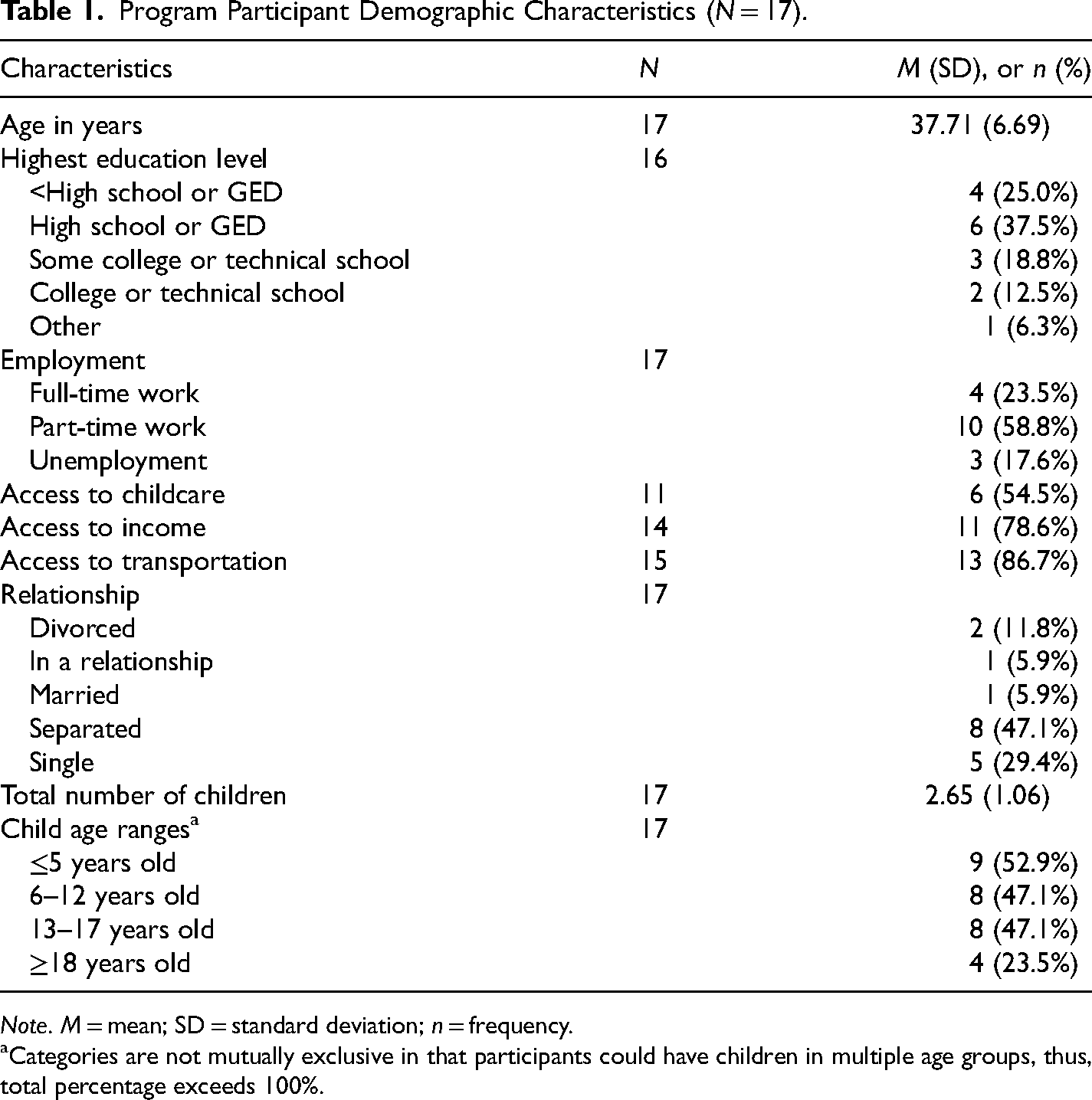
Note. M = mean; SD = standard deviation; n = frequency.
Categories are not mutually exclusive in that participants could have children in multiple age groups, thus, total percentage exceeds 100%.
Program facilitator interviews
Individual interviews were conducted in Spanish and virtually using Zoom by a member of the research team at a date and time convenient to each participant. Verbal consent was obtained prior to commencing each interview. The interviews were facilitated using a standardized, semi-structured interview guide composed of open-ended questions and prompts regarding the feasibility of the parenting program. The interview guide included questions regarding: (a) overall satisfaction and perceived impact; (b) program implementation; (c) curriculum content; and (d) program strengths, challenges, and recommendations. The research team member facilitating the interviews took detailed notes to supplement audio recordings of the interview discussions. The audio files were transcribed by a transcription company and checked for accuracy by a team member. All four providers who facilitated the parenting program during its initial year of implementation participated in an interview. Interview discussions ranged in duration from 26 to 53 min (M = 37 min).
Data Analysis
The focus group and interview transcripts were imported into ATLAS.ti (Version 9.1.7.0) and independently analyzed by two research team members using a content analysis approach (Assarroudi et al., 2018). The two coders first read through all the transcripts while creating project memos to capture ideas regarding potential categories, codes, and questions for the team (Assarroudi et al., 2018). The coders then developed a preliminary codebook informed by Bowen and colleagues’ (2009) feasibility framework, the guiding research questions, the focus group and interview guides, and the project memos. The two coders used the codebook to independently review and code each of the transcripts while remaining open to categories and codes that emerged inductively from the data. As each transcript was reviewed and coded, the coders met to (a) compare their codes, (b) discuss coding discrepancies and reach consensus, and (c) refine and update the codebook as necessary. Once all of the transcripts were coded, analysis consisted of creating tables to categorize, hierarchically sort, and summarize the codes using representative quotes (Assarroudi et al., 2018). Strategies used to enhance rigor included (a) involving multiple coders, (b) using negative case analysis to search for invalidating and conflicting perspectives, and (c) leaving an audit trail to document coding decisions.
Demographic and administrative data were analyzed in Stata 16.1 (StataCorp., College Station, TX, USA). Demographic data were analyzed using univariate statistics to describe the program participant study sample, whereas administrative data were analyzed using univariate statistics to examine aspects of program demand.
Results
Demand
Participation
A total of 40 women were initially recruited into one of three cohorts of the Latina parenting program by staff at the community-based IPV agency. Of these, 20 women enrolled in the program (cohort 1: n = 6; cohort 2: n = 7; cohort 3: n = 7). Across the three cohorts, the number of women at each weekly session ranged from three to seven (M = 4.83, SD = 1.05, Mdn = 5.00), and the number of sessions attended by each woman ranged between one and eight (M = 5.80, SD = 1.70, Mdn = 6.00). Notably, one woman attended only the first session before dropping out, and only two women attended all eight sessions.
Challenges and supports
Program participants and facilitators both noted that challenges to participation often included life situations that occasionally made it difficult to attend the program, including work or illness. Facilitators also shared that for women in ongoing IPV relationships, the IPV situation itself could pose challenges to participation. One stated, Since they were just getting started with acknowledging the violence process and cycle and the abuser was at home, sometimes they wouldn’t go to the group, because I imagine the abuser was there, stalking them, draining their energy, they were afraid.
Program participants echoed this fear. One program participant said, “We’re always afraid, ‘What if my husband sees that I’m entering that place?’ I used to park the car over there and I came by walking. So sometimes we have fear.” Other barriers to participation included concerns around confidentiality, limited energy, shame, and limited prior group experiences (e.g., “I didn’t know what to expect…When they called me, I was like ‘Should I go, should I not go?’”). Lack of clarity regarding the purpose of the group may have also posed a challenge. In one of the focus groups, several participants described confusion around the main focus of the group program and whether it was IPV or parenting.
Factors that enabled participation included childcare, food, and transportation supports (e.g., gas cards). Reminders also stood out as critical. One facilitator noted, “Friendly reminders always worked for me because well, it's once a week, so a lot can happen during a week…and clients also told me, ‘Thank you for sending the reminder, because I had forgotten.’” Participants also discussed enjoyment of the group as a reason for continued attendance and engagement, as many stated that after attending the group they wanted to keep coming back. Facilitators also shared that the program participants’ children enjoyed coming for childcare and would sometimes urge their moms to attend the group.
Participant needs influencing demand
Participants shared that Latina mothers experiencing IPV often need support in the areas of (a) information, (b) connection, and (c) well-being— three main targets of the parenting program, which may influence demand. Both program participants and facilitators discussed the need for information related to IPV and parenting, as well as information on child-services and related resources. One program participant stated, “We are looking for help for our kids, more than for ourselves.” Program participants and facilitators also mentioned the need for connection and space to talk about IPV and parenting-related issues that might arise during the week. A program facilitator mentioned, “They always wanted to talk so the conversation always turned to the situation they were bringing.” The importance of meeting with a group was also highlighted, given a general desire to experience human connection with others of similar experiences. One program participant shared, “I wanted to come to learn about other people’s situations, who were going through the same thing…And to look for support, because sometimes you feel alone.” Participants also discussed the importance of addressing mothers’ well-being, including anxiety, difficulty sleeping, emotion regulation, stress, and trauma symptoms.
Acceptability
Overall satisfaction
Overall, both program participants and facilitators expressed satisfaction with the IPV parenting program for Latina mothers. Expressing a sentiment shared by many, one program participant stated, “I loved everything. It was all super great.” Moreover, program participants and facilitators described the parenting program as appropriate for Latina mothers with experiences of IPV and stressed that the program addressed an important area of concern—parenting in the context of IPV. One facilitator noted, “[There are] not many curriculums out there focused on domestic violence and the parenting role. So that was valuable.” Program participants echoed the importance of a program where Latina survivors could learn about IPV and parenting, and particularly voiced satisfaction with the ability to learn about these topics with and from other Latina mothers who shared similar experiences regarding IPV, culture, and parenting. The following program participant quotes capture this sentiment: “Besides the teachers in the group there were also teachers in our group teaching with their experiences, and I learned a lot from them,” and “It went really well because we were all connected in a certain way, with the same problems…for me, it was excellent.” A program participant mentioned, It didn’t matter if I was tired or my daughter was crying or throwing a fit, I went to all the other seven meetings. And it's very gratifying because I know that I can count on all of you. I can call you and that I can count on the support, someone to listen to me.
Cultural relevance
Participants highlighted the ways in which the parenting program addressed the topic of culture both directly and indirectly. Facilitators noted that the first program session directly addressed Latino culture through content focused on identity. For example, as part of that program session, the group discussed how parenting is shaped by cultural values consistent with familismo, which refers to the importance of “…attachment, loyalty, and reciprocity among members of the nuclear family and among extended family members” (Guilamo-Ramos et al., 2007, p. 18). The program also centered strengths and challenges of being a Latina immigrant mother in the US using discussion prompts focused on differences in childcare expenses, health practices, school systems, and social support; social expectations; and unique traditions and family practices. Facilitators also stated that program participants would bring up issues related to Latino culture indirectly throughout the various sessions (e.g., “Though not intentional in the other sessions, it did come up organically from the [program] participants,” “We did look at it tangentially in each of the sessions”).
Moreover, program participants brought up issues related to Latino cultural factors such as gender roles during the study focus groups and connected these cultural factors to other topics covered by the curriculum. For example, one program participant discussed elements consistent with marianismo (i.e., norms around Latinas being virtuous, subordinate, and self-sacrificing) and how Latina mothers tend to put their families and children before their own well-being when stressing the importance of the parenting program session on self-care: “We forget about ourselves, and we’re only concerned about our children's well-being, our children's health, making sure they don’t miss school, making sure they’re doing well emotionally. But we forget we also need to be doing well.” Another participant mentioned machismo, its prevalence in Latino culture, and how this cultural factor was addressed by the parenting program: I think that mainly in our culture there's a lot of machismo…And I think we’re always taught that the woman is responsible for the house and children and everything. And you have to do what the husband says. The husband just works and mainly we’re growing up with that bad idea that a woman has to always do what he says. I think all this has helped me to open my eyes and see the equality between a man and a woman.
Program content
All of the parenting program sessions and topics were described as helpful (e.g., “All of the topics were very good …They all helped us”). Nonetheless, a couple were also described as challenging. Specifically, a few program participants shared that, initially, the topic of self-care was difficult. One program participant stated, “That’s the one that was the hardest for me. Because you’re so busy with so many things…we all blanked.” The other topic described as challenging was child development, namely because of the wide age range of the program participants’ children. Program participants and facilitators recommended finding ways to ensure that content on child development was targeted to specific and different stages of development (e.g., breakout groups and activities, handouts with information based on children’s ages).
Program participants also voiced the need for additional content on other traumatic experiences, including child-to-parent abuse, other forms of family violence, and experiences of family dysfunction while growing up. One participant shared, “It would be a good idea to touch on subjects like that, for those of us women who come from broken, dysfunctional families … I think it's a cycle that leads us to end up in certain toxic relationships.” Program participants and facilitators also highlighted the need for more content on supporting children and helping them heal, as well as parenting after leaving an abusive relationship. Reflecting the importance of addressing the needs of children, one facilitator suggested providing programming to children who accompany their mothers to group. Program participants and facilitators also recommended adding more content on emotion regulation, managing anxiety, and community resources. Lastly, facilitators suggested expanding the content on culture to include more information on identity, social and cultural norms (e.g., beliefs related to family violence), and cultural strengths.
Program impact
Program participants shared a number of positive life changes attributed to participating in the IPV parenting program. Program impacts described by participants were categorized into four areas: (a) parenting, (b) IPV, (c) connection and social support, and (d) well-being. Notably, although program participants attributed a number of life improvements to the IPV parenting program, they also recognized that “healing is a process” and that they and their children still needed time as well as additional supports and resources to continue healing. One program participant stated, “I don’t know if everyone has reached the point to where their kids have healed, but I know that if we haven’t gotten there, we will get there…me and my girls are in the process.” Other participants shared this perspective and also highlighted the importance of putting into practice what they learned from the IPV parenting program: “They did give us the tools, now it’s up to us to do the homework and implement everything that we’ve learned.”
Parenting
Program participants shared that after attending the program they had a better understanding of child development, as well as new parenting knowledge and skills. Program participants also noted improvements in their parenting behaviors, including their communication, nurturance and warmth, patience, and use of positive reinforcement and praise. The following quotes highlight these changes in parenting knowledge, skills, and behaviors: I feel like I’ve given [my children] more support, instead of yelling. Like today, my son had a test today, and he couldn’t sleep yesterday. I hugged him. Other times I would have gotten furious. But I told him everything was going to be okay and if he didn’t pass, then he’d go to summer school, that there's still a solution. And all of [what I learned] really stayed with me…it really does work.
In addition, program participants reported an overall improvement in their relationships with their children and their sense of self-efficacy as parents. One program participant shared. “I feel like my relationship with my daughter improved 100%.” Another commented, “I didn’t even know how to be a mom…I didn’t even know how to treat the kids or how to talk to them? And what they talked about here, well, that has helped me.”
Intimate partner violence
Program participants mentioned having more knowledge about IPV (e.g., IPV dynamics, abuse tactics, and characteristics of healthy relationships) and its impact on children. One program participant stated, “It helped me because I could realize how [IPV] affected not only my self-esteem, but also my children’s self-esteem.” Another program participant described learning about how her daughter’s stomachaches were likely manifestations of anxiety related to IPV exposure. Moreover, several program participants mentioned that they left the abusive relationship either while attending the program or shortly after (e.g., “They helped me feel very comfortable when they helped me to take the decision and take the next step for the separation”).
Connection and social support
Program participants shared that they developed true friendships with the other mothers in the group, helping them expand their social support system and feel more connected. One program participant shared, “I told them, even if the group doesn’t continue and it’s over…they can call me…and I’ll be there for them if they call me.” Facilitator participants described witnessing this program impact. One facilitator noted, “All of them started developing like a friendship bond. They would go get coffee, just them. They started getting together on the weekends. They started making friends among themselves.”
Well-being
Program participants shared that the program helped to enhance their well-being. The following quotes are illustrative of general improvements to well-being: “I’m overcoming what’s going on…this has served as therapy for me,” “I was in a hole with no light or anything like that, but coming to the group helps a lot.” Program participants and facilitators also noted improvements in self-esteem and the ability to set boundaries. One program participant stated, “I feel more confident. And I still have many things to work on, but I know that I won’t accept anyone who makes me feel worthless.”
Implementation and Practicality
Program logistics
Group size and space
Participants expressed that the IPV parenting program group size was appropriate. Facilitators and program participants generally noted that the group size should remain small (i.e., 6–8, no more than 10) so that everyone can share and there would be sufficient time to cover the curriculum content. Program participants found the location to be acceptable, though noted that it might be far for some survivors. One facilitator shared a preference for casual seating versus having participants sit around a table.
Timing and duration
The group met once a week for 8 weeks from 6:30 p.m. to 8:00 p.m. One facilitator mentioned that the timing of the group was intentional, noting that 6:30 p.m. was selected to provide program participants enough time to leave work, pick up their children, and arrive ready for group. Program participants echoed that the program timing was appropriate. However, program participants and facilitators also noted that the session duration of one and a half hours was not enough and that the time would go by fast. Program participants mentioned wanting more time to talk about their experiences and process their emotions. One program participant stated, “Sometimes we were just starting, and it was finishing. We just started feeling intense emotions, and we wanted to [talk about it to release that emotion], so to do that, this time isn’t enough.” Facilitators also highlighted not getting through all the session content and sometimes asking program participants to read the remaining content at home. However, several participants shared not feeling comfortable or safe taking materials home because of their abusive partners and requiring more time to review the relevant content during group. Program participants and facilitators also noted that eight sessions were not sufficient.
Program participants and facilitators alike suggested adding or extending sessions and offering time for informal connection at the end of each group session. However, participants recognized potential limitations of these recommendations, including potential participants seeing it as too great of a commitment, being exhausted by the end of the night (e.g., “We would like it to be longer, but at the same time, by 8:00 p.m. I was exhausted”), and challenging on school nights. To counter these concerns, a program participant suggested scheduling the program on Friday evenings, whereas a facilitator recommended offering an open follow-up group for graduates of the program to continue meeting and supporting one another.
Program delivery
Program approaches and strategies
Program facilitators described the IPV parenting program as a psychoeducational group and highlighted the incorporation of mindfulness practices. Facilitators and program participants also mentioned the use of written materials (e.g., handouts on supporting children exposed to IPV) and homework, which consisted of journaling, practicing new skills, and engaging in self-care. One facilitator elaborated, “[There’s] always a homework. And [we] also gave them a notebook to journal. The homework every session was focused on self-care. Do at least one thing for you or try to apply something we learned about today.” A facilitator shared that in the last session focused on self-care, the women are provided a small self-care gift. While the program was described as comprehensive, facilitators and program participants noted that at times there was a need to pull in additional information to address group concerns or for facilitators to make referrals to outside services.
Facilitation
All of the facilitators noted the importance of co-facilitation, namely, having two facilitators run group together. To manage the group—attending to both content and program participants’ needs—it was noted that having two facilitators was critical as situations might arise that necessitate a facilitator to step out of the group.
Further, both facilitators and program participants identified a number of characteristics and skills necessary for delivering an IPV parenting program for Latina survivors. The participants noted facilitators should be charismatic, compassionate, flexible, fluent in Spanish, female, kind, knowledgeable about IPV, nonjudgmental, positive, professional, respectful, supportive, and validating. Being a mother and identifying as Latina (all the facilitators were Latina) were identified as potentially helpful characteristics, but participants shared that it would be more important for facilitators (a) to really care about helping participants and (b) to practice from a place of seeking to learn from participants. A facilitator shared, “Good chances for participants to connect with someone who look like them, are Latina, Spanish is first language, also immigrant…but not a guarantee. The guarantee is the cultural humility piece to create safe space for the participants.”
A number of facilitation skills were also discussed by both facilitators and program participants. Strong communication (e.g., ability to communicate difficult content and present unclear information in various ways) and active listening skills as well as the ability to make people feel safe and comfortable were identified as important by facilitators and program participants. Facilitators also noted the need to (a) make decisions quickly, (b) scan the room and know what is needed in a given moment, and (c) not be afraid to join participants in their pain. For example, one participant noted that facilitators are like “magicians.” The participant explained that facilitators need to be able to quickly process everything that is happening in the group at a given moment, and then use that information to make decisions to ensure the effectiveness of the group—both in terms of meeting the goals of the group (e.g., getting through content) and the needs of the group members (e.g., addressing distress, providing space for processing). Participants explained that facilitators need to know when it is necessary to pivot and redirect the group conversation, and when it is necessary to allow the group to go in a different direction.
Strategies to manage participation
The facilitators and program participants described several strategies to encourage participation while maximizing the limited group time. For example, both facilitators and program participants discussed the use of participation cards. One facilitator shared, “Well, green card, okay, keep talking, orange, start closing your idea, and red, someone else needs to participate. That worked well for me.” Facilitators felt this helped reduce the need to interrupt participants, and program participants mentioned that it encouraged participation among those who tended to speak up less in group. Program participants also shared recommendations based on their experiences in prior groups. One program participant suggested providing time for quieter participants to think before engaging in the group discussion. Several others recommended holding initial sessions outside to increase group rapport, thereby helping participants feel more comfortable sharing with one another. Another participant suggesting beginning each session by asking all participants to talk for 5 minutes about anything. She explained this could encourage participation from quieter members.
Related to participation, facilitators also discussed the importance of balance. That is, facilitators recognized the need to balance covering the curriculum content and allowing the women time to discuss and process their experiences. One facilitator mentioned that they would start each group session with time for connection and checking-in. In addition to helping provide the necessary balance and time for emotional release, the facilitator explained that this also helped ensure participants who arrived late would not miss any important content. Another facilitator noted that participants often wanted to tell their story at various points throughout the 8-week group. This facilitator recommended taking this into account and providing time during the first session for participants to tell their story.
Discussion
This exploratory study examined the feasibility of a community-developed IPV parenting group program for Spanish-speaking Latina mothers. In particular, the study investigated program demand, acceptability, and implementation/practicality. Overall, study findings suggest that this culturally specific and community-developed parenting program is feasible and has potentially promising effects on a number of key areas including parenting, IPV knowledge, social support, and well-being. Nonetheless, recommendations were provided to further enhance the program and its delivery.
Demand
Centrally important, findings from this study highlight an interest in and the need for group IPV parenting programs among this sample of Latina mothers. Nonetheless, both the quantitative and qualitative findings highlighted challenges to full participation in the parenting program as only a few of the enrolled program participants attended all of the group sessions. Challenges to participation included concerns about the abusive partner learning of their participation, limited energy, and shame—echoing prior research on barriers to seeking and engaging in IPV services more broadly (e.g., Robinson et al., 2021). In particular, existing research has documented how IPV stigma—including internalized stigma (e.g., self-blame, same), anticipated stigma (e.g., fearing reactions from family, friends, and providers), and cultural stigma (e.g., judgement, blaming, minimizing)—can impact help-seeking (Crowe & Murray, 2015; Overstreet & Quinn, 2013). As evident in the findings, experiences with IPV stigma related to shame may also impact whether and how survivors engage in group programming like the parenting program evaluated in the current study. To address feelings of shame, acknowledging that participants might have complex feelings about their experiences during the enrollment process could aid in reducing internalized messaging and related barriers. Concomitantly, programming could benefit from content that helps facilitators and participants navigate and mitigate stigma, including program material that reaffirms participants’ efforts to engage in care for themselves and their families.
The findings also suggest that, when deciding whether to enroll in the program, some participants did not fully understand the purpose of the parenting group (e.g., expressing confusion regarding whether it was focused on IPV, parenting, or parenting in the context of IPV) or how confidentiality would be addressed in the group context. Challenges were more pronounced for those who had never participated in an IPV-related group program, and thus had limited prior experiences to inform expectations for this particular IPV parenting group. These findings underscore the need to attend to the recruitment and enrollment process to ensure potential participants clearly understand what to expect from the program in terms of (a) the program's aim, structure, and content, (b) typical group norms and approach to facilitation, and (c) efforts to safeguard privacy and confidentiality. Previous research has similarly recommended that agencies provide clear and comprehensive information about their parenting program to potential participants prior to enrollment (Berry et al., 2019). Similar to prior research, this study also identified the importance of providing childcare, refreshments, and transportation to address logistical barriers to participation and foster a welcoming and comfortable environment (e.g., Berry et al., 2019). Sufficient program funding is necessary to provide these supports and eliminate stressors that may impact participation.
As noted above, the IPV parenting program was directly aligned with three pressing needs described by study participants: (a) information, (b) connection, and (c) well-being. Of these, connection emerged as salient. Although all three needs were identified as important, the need for connection cut across all aspects of feasibility (i.e., the need for connection came up when talking about demand, acceptability, and implementation/practicality). This is not surprising given research documenting IPV survivors’ experiences of isolation, particularly among new immigrants (e.g., O’Neal & Beckman, 2017), as well as research highlighting the importance of connection and support for non-Latina and Latina survivors alike (e.g., Paphitis et al., 2022). Moreover, prior IPV research has stressed the importance and intentionality of using a group modality to address the need for connection by bringing together people with similar experiences and providing space for discussion and relationship building (e.g., Paphitis et al., 2022). Given this study finding as well as prior supporting research, it is possible that IPV parenting programs for Latina survivors may not be as effective without this key element. Future research is needed to determine if using a group modality is in fact a core component of the intervention.
Acceptability
Study findings suggest the IPV parenting program was acceptable and might have promise for improving parenting, IPV knowledge, connection and support, and well-being. Prior research on other IPV parenting programs, including those involving Latina mothers, have also found positive outcomes related not only to parenting (including parenting stress and efficacy) but also experiences of IPV and both mental and physical health (e.g., Clark et al., 2018b; Galano et al., 2017; Stein et al., 2021). Given the exploratory nature of the current study, future research employing more rigorous designs is needed to evaluate the efficacy of this IPV parenting program for Latina mothers and determine the most effective mode(s) of delivery. For example, a future study might examine differences in knowledge, parenting, and well-being over time for participants who receive this IPV parenting program compared to those who receive a different low-cost delivery program (e.g., app-based delivery of psychoeducation, referral, and resources).
Although the findings revealed participants found the program content to be helpful, acceptability might be further enhanced by (a) including additional content related to supporting children, parenting after leaving an abusive relationship, managing emotions; (b) offering a child-focused component; and (c) providing individually tailored referrals for needed services. Moreover, both program participants and facilitators stressed the acceptability of the program's culturally-specific content, as well as the need for more assets-based content connected to culture and cultural values. This finding is in line with research discussing the importance of culture-specific services and intervention components (Schilling et al., 2021; Serrata et al., 2020).
Participants connected the program content to cultural values and beliefs consistent with familismo and marianismo. Research sometimes takes a deficit versus holistic perspective when examining such cultural factors despite evidence suggesting that some aspects of these cultural values and beliefs serve as protective factors (e.g., Cano et al., 2020). Taken together with literature on the protective role of cultural identity (Yip et al., 2019), it is imperative that parenting programming for Latina IPV survivors consider ways to connect culture-specific elements to stories of resilience and strength. For example, the findings suggest some participants initially struggled with content on self-care because of beliefs related to marianismo and putting their children first. When connecting this challenge to cultural beliefs, it would be important to recognize how participants’ behaviors related to marianismo have helped keep their children safe and healthy, while also conveying the relationships between self-care, maternal mental health, and child well-being. Thus, highlighting how engaging in self-care is essential for ensuring their children's well-being and therefore congruent with aspects of marianismo.
Implementation and Practicality
Findings suggest that program participants and facilitators found many aspects of the program's delivery to be feasible. Such aspects include (a) the program's approach and strategies (i.e., psychoeducation, mindfulness, written materials, and homework); (b) logistics related to group size, location, and timing; (c) the use of cofacilitation; and (d) the facilitators’ personal characteristics and skills. These particular aspects of the program's design and approach closely align with a diverse range of evidence-based psychosocial interventions that address IPV and associated risks (e.g., HIV, substance use; Danzo et al., 2023; Peragallo Montano et al., 2019); further strengthening evidence for the implementation and practicality of this IPV parenting group for Latina mothers.
Importantly and similar to other group-based IPV interventions, study findings highlighted challenges to being able to adequately deliver the program content while also attending to program participants’ difficult situations and need for connection, processing, and discussion (e.g., Alvarez et al., 2016). Therefore, the need for connection and space to talk about personal and emergent experiences with IPV and parenting serves as both a participant need influencing demand for the program as well as an implementation barrier to delivering the program content as designed. Challenges to delivering program content are critical to consider given the impact on program dosage (i.e., some group cohorts may receive more or less dosage of the program). IPV parenting programs for Latina mothers should consider (a) including time in the curriculum for connection, processing, and discussion, and (b) attending to these important constructs and elements in program materials (e.g., program manual, conceptual model, theory of change). Although this particular parenting program did include time in the curriculum for fostering connection at the beginning of each session, study findings stress the need for more dedicated time.
Despite an overwhelming demand for more and longer sessions, many program participants were unable to attend all of the program sessions. Together with the findings presented above regarding having limited energy and time, these findings suggest the need to identify creative ways to deliver content and address the aims of the IPV parenting program without increasing burden for participants or the service organization offering the program. For example, it might be possible to leverage technology to assist with providing informational content to maximize opportunities for discussion when meeting in-person as a group. Such an approach might also allow for tailoring content given different needs and experiences (e.g., children’s ages, prior traumas, type of IPV [e.g., intimate terrorism, situational violence], whether the person is currently experiencing IPV, whether the person is coparenting with an abusive ex-partner). A systematic review of web-based and mHealth interventions for primary, secondary, and tertiary prevention of IPV victimization found high levels of feasibility and acceptability for these interventions (Anderson et al., 2021). Moreover, an evaluation of chat and text services delivered to survivors of intimate partner and sexual violence found that this service approach facilitates access to needed connection, resources, and education in a self-paced manner (Wood et al., 2022). As community-based IPV organizations have become more comfortable using technology to deliver services as a result of adaptations made in response to COVID-19 regulations, technology may offer a feasible solution to addressing the parenting needs of survivors in sustainable ways. Notably, such adaptations should be made in community with Latina survivors to ensure appropriateness, cultural relevance, and safety.
Community-based IPV organizations may also consider offering a low-cost, long-term, open-ended support group that Latina survivors could join after completing one of the organization's short-term, close-ended group programs. Such an option would offer those group members wanting additional support a dedicated time and safe place to meet. Prior research has identified the need and value of long-term support groups for Latina survivors, in terms of fostering both community and healing (Montalvo-Liendo et al., 2022; Page et al., 2021).
Limitations
Findings should be considered in light of study limitations. Although ground rules and specific language regarding maintaining privacy during the focus groups were discussed, program participants might have felt uncomfortable being fully honest given that confidentiality cannot be guaranteed in group settings. Program participants might have also had concerns sharing negative experiences because of their relationship with the service agency. To minimize these concerns, focus group facilitators explained that our research team was separate from the service agency and that we would not disclose the identity of study participants. Additionally, it is possible that the standardized guided did not include all relevant questions. To address this concern, the guide was reviewed by staff at the partnering agency and revised based on their feedback. Notably, we were unable to examine why some mothers initially recruited into the parenting program chose not to enroll; an important consideration for future research.
Conclusion
The current exploratory study demonstrated the feasibility of a community-developed, culture-specific IPV parenting program for Latina mothers. The promising findings are critical given the dearth of interventions for Latina mothers that focus on both IPV and parenting and suggest the need for additional intervention development, delivery, and research in this area. There is a clear need for further research on the effectiveness of this and other similar community-developed programs. Future research should examine and test these programs on diverse groups of Latinas in a range of settings (e.g., rural, urban) as Latinas are not a homogeneous group and different subpopulations might experience unique needs, challenges, and contextual factors. Ultimately, funding should be made available for strength-based and culture-specific parenting interventions for Latina survivors, as well as for implementation strategies and research focused on bolstering these efforts. It is also important to note that although this study focused on a parenting support program for Latina mothers who had or were experiencing IPV victimization, there is also the need for more programs and related research focused on caregivers enacting violence.
Footnotes
Acknowledgments
The authors wish to acknowledge the study’s participants and staff of Compass Center. They also acknowledge Madison Furgurson for her help with this research.
Declaration of Conflicting Interests
The authors declared no potential conflicts of interest with respect to the research, authorship, and/or publication of this article.
Funding
The authors disclosed receipt of the following financial support for the research, authorship, and/or publication of this article: The project was supported by the National Center for Advancing Translational Sciences (NCATS), National Institute of Health, through Grant Award Number UL1TR002489. The content is solely the responsibility of the authors and does not necessarily represent the official views of the NIH.
