




Abstract
Consent, or lack thereof, is paramount in instances of sexual violence among college students. The current study assessed the impact of the Consent Matters campaign on Canadian undergraduate students’ (N = 799) attitudes toward sexual consent, perceived behavioral control in obtaining consent, use of indirect methods of obtaining consent, as well as recall of the campaign materials. Results indicate no significant impact of the campaign on student attitudes and beliefs regarding sexual violence and consent but do indicate students hold strongly positive attitudes toward consent. Recommendations for future campaigns and evaluations are discussed.
Introduction
College and university campuses across North America face high rates of sexual violence. Of the 636,000 self-reported incidents of sexual assault in 2014 in Canada, post-secondary students represented 41% of all reported victimization events (Government of Canada, 2019). A more recent assessment suggests that rates are currently high across Canadian post-secondary institutions, with approximately 71% of students experiencing or witnessing unwanted sexual behaviors in 2019 (Burczycka, 2020). Broadly, sexual violence refers to any sexual activity that occurs without freely given consent (CDC, 2023). More specifically, sexual violence encompasses a wide range of behaviors, including sexual assault, sexual exploitation, sexual harassment, indecent exposure, and threats of sexual violence to achieve a goal (e.g., threatening to spread rumors if the individual does not have sex with the perpetrator), voyeurism, and the distribution of sexually explicit images of a person without their consent (Basile et al., 2009).
Students who experience sexual violence or harassment face physical risks, and high rates of negative mental health outcomes, including clinically significant levels of depression and anxiety, much of which can be long lasting (Carey et al., 2018). Students are also at risk of negative academic outcomes (Banyard et al., 2020). For example, a survey of 3,977 university students indicated that experiencing an abusive relationship, sexual assault, or harassment was a significant predictor of having to drop a class, being unable to complete assignments, and a decrease in grades (Kaufman et al., 2019). This research is consistent with the findings of a systematic review of 13 studies; those who experienced sexual assault were more likely to drop out of school, have a lower GPA and decreased academic performance, and experience self-regulation-related learning problems (e.g., test anxiety; Molstad et al., 2023).
Sexual consent and sexual violence share a direct link given that the presence or absence of consent determines the occurrence of violence (Jozkowski & Peterson, 2013). As such, sexual consent has become a key target of sexual violence education efforts. To address the problematic levels of violence for college students, many institutions have implemented prevention and intervention strategies such as poster or media campaigns, large group presentations, small group workshops, and online resources (e.g., websites, online education modules) (Griffin et al., 2017). The present study investigated the impact of a sexual consent awareness campaign on student attitudes toward sexual consent among Canadian university students.
Risk Factors for Sexual Violence Among Post-Secondary Students
Young people in college environments are at particularly high risk of sexual violence. Some suggest that universities have historically perpetuated cultures supportive of sexual violence, particularly at institutions where organizations such as athletics or fraternities/sororities encourage gender segregation and traditional gender roles (Franklin et al., 2012; Griffin et al., 2017). The perpetuation of traditional gender expectations often promotes an environment of hypermasculinity, in which male power and aggression over women are normalized, fostering attitudes supportive of sexual violence (Franklin et al., 2012). University is a period of transition, with young adults being exposed to new freedoms, social groups, and access to new environments and social settings, including those where alcohol, marijuana, and illicit substances are available (Skidmore et al., 2016). Alcohol and other substance use is one of the strongest risk factors for experiences of sexual violence; substance use impairs judgment and decision making, increasing the risk of both violence perpetration and victimization (McGraw et al., 2022; Ray et al., 2021). More specifically, alcohol has been reported to increase sexual desire, risk-taking, and aggression, and decrease inhibitions and the ability to properly interpret social cues and norms (Abbey, 2002; Cooper, 2002). Alcohol also contributes to a “hook-up” culture in which frequent, often impaired, sexual activity is encouraged, further contributing to opportunities for sexual violence (LaBrie et al., 2014). The multiple environmental risk factors present on university campuses pose a unique risk to the student population.
Additionally, marginalized groups experience disproportionate risks of violence or harassment; these groups include racial or ethnic, sexual, and gender minorities. Among undergraduates from six Canadian universities, Indigenous students were found to experience significantly higher levels of sexual harassment in comparison to their non-Indigenous peers (Dion et al., 2022). With respect to sexual identity, college women who identified as a sexual minority experienced higher rates of sexual assault (McGraw et al., 2022). Furthermore, gender and sexual minority students experience significantly higher levels of trauma symptoms compared to their cis-gender peers (Paquette et al., 2021). These findings indicate that efforts to prevent and respond to sexual violence must be inclusive of individual differences in student populations.
Changing Campus Culture and Environment
In addition to addressing knowledge and behaviors among students, shifting social norms and attitudes regarding sexual violence in the campus environment is critical. To do so, social marketing campaigns may be an effective method; generally speaking, such campaigns aim to modify knowledge, attitudes, and behaviors regarding a specific topic, often to prevent or mitigate negative effects (Anker et al., 2016). Campus-based social marketing campaigns can include a variety of components, such as flyers and posters distributed across campus spaces, promotional products, campus events, online resources, and interactive social media components (e.g., Hovick & Silver, 2019; Ortiz & Shafer, 2019; Thomas et al., 2016). Campaigns are able to reach a wide audience through a primarily passive and cost-effective method of delivery and may be a feasible option for college campuses (Bridges et al., 2015; Irvine-Collins et al., 2023).
Social marketing campaigns address various aspects of sexual violence, including targeting general knowledge and awareness of the issue (e.g., Hust et al., 2017), bystander education (e.g., Borsky et al., 2018; Cares et al., 2015), and sexual consent (e.g., Hovick & Silver, 2019; Ortiz & Shafer, 2019). Consent, or lack thereof, is paramount in instances of sexual violence, and efforts to educate students and increase consent-positive and antisexual violence attitudes have become increasingly common in post-secondary settings (Johnson & Hoover, 2015; Untied & Orchowski, 2013). Although a variety of prevention and awareness efforts have been implemented, many refer to the need to obtain consent without specifying a definition of consent or what is required to have adequately obtained consent (Muehlenhard et al., 2016). As such, a focus on consent-specific education is required for a comprehensive prevention approach to sexual violence and changing the campus environment.
Understanding Sexual Consent
The sexual consent process can be nuanced and nonlinear with a high risk of miscommunication or misinterpretation (Graf & Johnson, 2021; Humphreys, 2007; Johnson & Hoover, 2015). Although there is a general consensus that sexual consent involves the willing agreement of all parties to engage in sexual acts (Graf & Johnson, 2021), certain elements can complicate the process. Most of the accepted definitions of consent require affirmative agreement that is freely given, with silence or lack of resistance not considered consent (Beres, 2014; Muehlenhard et al., 2016). However, affirmative agreement can be given verbally or nonverbally, directly or indirectly; nonverbal and indirect methods are generally the most common but are more likely to be misinterpreted or misunderstood (Muehlenhard et al., 2016). In instances when an individual is communicating using nonverbal behaviors or indirect statements, their partner's inference of consent may be inaccurate (Muehlenhard et al., 2016).
Contributing to how an individual interprets their partner's cues are sexual scripts and understandings. Sexual scripts guide the expectations and behaviors of individuals in sexual situations and can influence the interpretation of behaviors or cues (Johnson & Hoover, 2015; Jozkowski & Peterson, 2013). These scripts become problematic when two partners do not share the same script or if the script is based on rape myths or other problematic assumptions (Muehlenhard et al., 2016). Research has found that when asked about consent, many college students uphold beliefs that adhere to traditional sexual scripts or traditional views of women's sexuality (Johnson & Hoover, 2015; Muehlenhard et al., 2016). For example, Jozkowski and Peterson (2013) found that students viewed men as initiators, with women responding to requests for sex. Given that scripts and beliefs can guide students’ behaviors, they may negatively impact the process of effectively communicating consent or non-consent (Jozkowski et al., 2017).
Sexual Consent Awareness Campaigns
Evaluative research concerning sexual consent awareness campaigns is emergent, though the limited existing results show positive findings regarding campaign impacts on attitudes and beliefs. For example, Ortiz and Shafer (2019) evaluated the “Define Your Line” campaign, which aimed to increase awareness about sexual violence and consent and encourage a “campus-wide conversation” (p. 451). Surveys were administered to 992 American undergraduate students; results suggest that participants were more knowledgeable about sexual assault, had more positive attitudes toward obtaining sexual consent, and had greater intentions of obtaining sexual consent after campaign exposure. Similarly, Hovick and Silver (2019) investigated the impact of the “Consent is Sexy” poster campaign; sex-positive messages were used to encourage consent and sexual communication. The study involved 284 undergraduate students, finding that those who recalled the campaign had more positive attitudes toward sexual communication and greater perceived behavioral control compared to those who did not recall the campaign.
Importantly, existing findings regarding the effectiveness of sexual violence prevention and intervention programs are almost exclusively based on studies conducted in the United States. Canada and the United States differ on many characteristics, including campus culture (e.g., less pervasive sorority and fraternity, and varsity athletics influences in Canada) and sexual violence prevention legislation (e.g., Canada does not have federal legislation such as Title IX requiring sexual violence policies or prevention efforts). While sexual violence prevention programs generally demonstrate success with college students in the United States, generalizing these findings to students at Canadian universities may not be appropriate. U.S.-based programs are developed and implemented for an American student target population, and as such, certain elements may not be as applicable to Canadian students due to nuances in cultural differences. The current study contributes to the literature regarding the impacts of campus-based sexual consent awareness campaigns, as applied in a Canadian context.
The Consent Matters Campaign
The Consent Matters campaign is an annual sexual violence prevention campaign at Simon Fraser University (SFU), first implemented in 2016 and managed by the Sexual Violence Support and Prevention Office (SVSPO). The campaign is predominantly passive, focused on digital and print materials with one or two interactive events, and targets students with the goal to foster a culture of consent, care, and respect at SFU. Consent Matters aims to raise awareness about sexual violence in the university community through three objectives: (a) inform the student community about sexual consent, (b) offer strategies in how to say no and how to hear no, and (c) increase awareness about the supports and services provided by the SVSPO.
Program Components
Posters
Posters were displayed on three SFU campuses 1 for 5 days (Sept. 20–24, 2021). The five posters were stylized as conversations using speech bubbles, and each poster included an example of “how to say no” and “how to accept no,” featuring the concepts of “ask, listen, and respect.” See Figure 1 for example posters. A total of 650 color posters (size 11 × 17 inches) were distributed by SVSPO staff to different campus units to display (e.g., Student Services, Graduate and Postdoctoral Studies), faculties and departments (e.g., Faculty of Health Sciences, Department of Psychology), and partners (e.g., SFU Athletics, Health and Counselling, SFU Women's Centre).
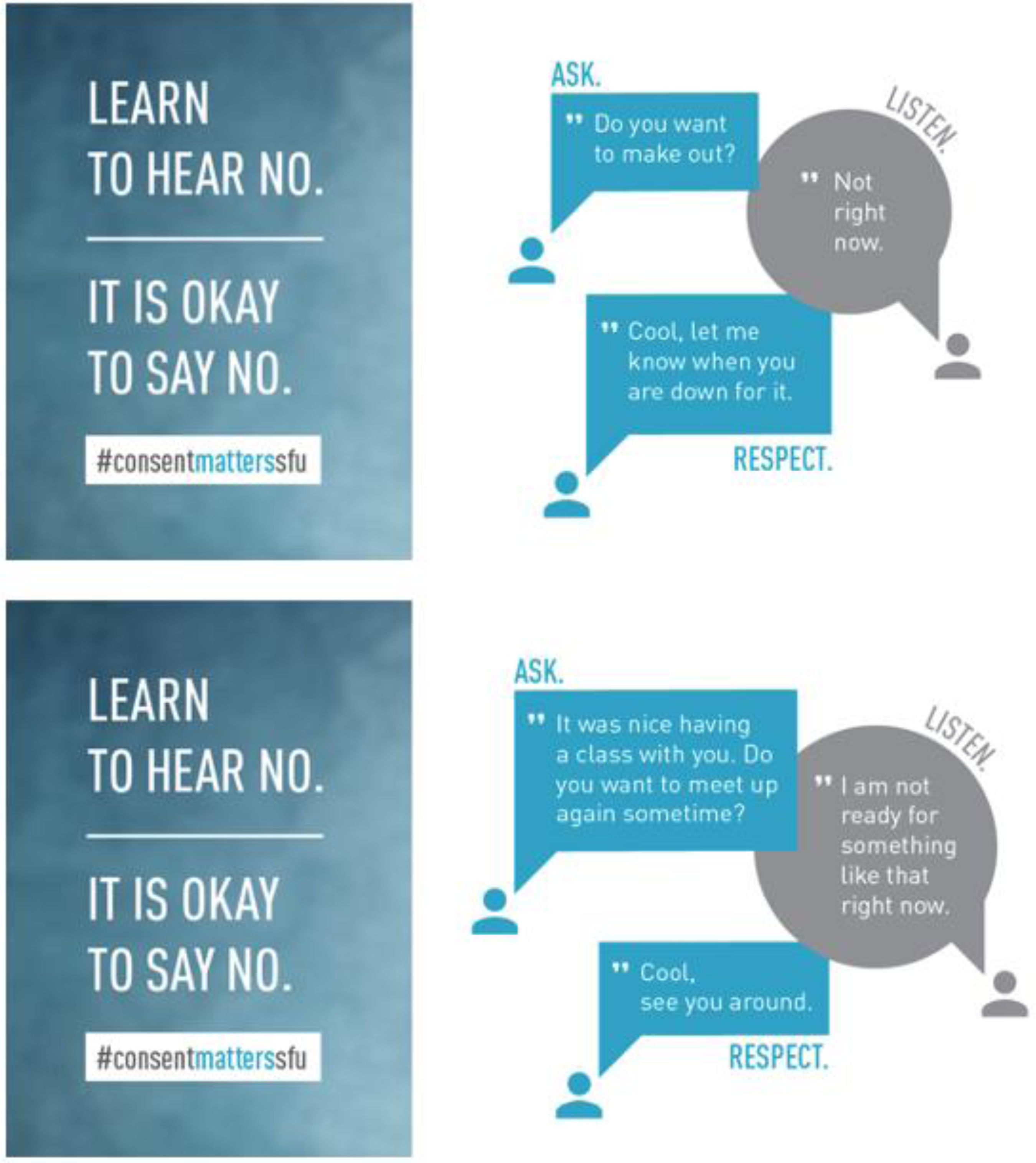
Consent matters posters.
Social Media Posts and Featured Hashtag
Digital images were distributed via the SVSPO Facebook and Instagram channels and SFU institutional and partner channels (e.g., SFU Athletics). Images were posted throughout the same 5-day period and thereafter remained on the @SFU.SVSPO and the @activebystandersfu Instagram and Facebook accounts. To encourage student engagement, posts also included the featured hashtag of #consentmatterssfu.
Highlighted Blog Post and Virtual Keynote Speaker
An article was posted on the SVSPO webpage that discussed the complexities of sex and power (“Are tea and consent simple?”). A virtual event, “Saying no with ease, clarity, and kindness,” was hosted by the SVSPO via Zoom. The event featured a conversation on refusing and accepting refusals of consent, guided by questions submitted by the SFU community (e.g., “How do I know how to say no without being selfish?,” “How does gender conditioning impact consent?,” “What is the right thing to do when someone says no? What if anger occurs?”).
Method
The Consent Matters campaign evaluation was designed to assess exposure, effectiveness, and reactions to the campaign posters based on the SVSPO's campaign dissemination strategy. The study examined campaign impacts on undergraduate students registered in 100- and 200-level courses.
Data Collection
A cross-sectional survey was administered to students 2.5–3.5 weeks following the week-long campaign. The sample consisted of students enrolled in a total of 14 classes across Criminology (n = 7), Political Science (n = 5), English (n = 1), and Sociology (n = 1) departments. Twenty course instructors were contacted by the Principal Investigator with a request for 20 min of class time to administer the survey, and 14 instructors agreed to participate in the study.
During class time, a research assistant introduced the study using a standardized oral script that reviewed the study purpose, explained voluntary participation and anonymity of responses, specified the 10-min time frame for survey completion, and described the $5 coffee incentive for participants. Consent forms and questionnaires were then distributed.
Measures
The surveys included a series of 21 questions assessing the level of campaign exposure, reactions to and recall of campaign materials, demographic and individual characteristics, and attitudes and beliefs toward sexual consent.
Campaign Exposure. Students were asked if they recalled seeing posters or digital messages on the topic of consent for sexual behaviors. Responses were scored as 0 (none), 1 (once a week), 2 (several times a week), and 3 (once a day or more).
Campaign Recall. Participants were tested on their recall of the messages presented in the posters and/or digital images; responses were coded dichotomously based on whether the message reported was correct or incorrect/respondent did not recall.
Demographics and Individual Characteristics. Students also reported on age, gender identity, race/ethnicity, year in university (1st to 5th year or above; dichotomized to 1st year vs. 2nd year and above), international student status (international vs. domestic), whether they were born in Canada (yes vs. no), their current relationship status (committed relationship vs. single/casually dating), current living situation (SFU residence, family home, off-campus alone, off-campus with roommates; dichotomized to lives in family home vs. outside family home), frequency of alcohol use (number of days per week; dichotomized to zero days vs. 1 or more days), and if they followed any SFU social media accounts.
Sexual Consent-Related Attitudes. To assess attitudes related to sexual consent, three modified subscales of the Sexual Consent Scale-Revised (SCS-R; Humphreys & Brousseau, 2010) were utilized. Each item was scored on a 5-point Likert scale ranging from Strongly Disagree to Strongly Agree. 2 The first subscale was the 8-item Positive Attitudes toward Consent subscale (PAC). 3 Example items include “I feel that sexual consent should always be obtained before the start of any sexual activity” and “Before making sexual advances, I think that one should assume ‘no’ until there is clear indication to proceed.” Higher scores indicate more positive attitudes toward and acceptance of consent.
The 7-item subscale assessing (Lack of) Perceived Behavioral Control to obtain sexual consent from a partner (PBC) was also used and was modified 4 from the SCS-R. Example items include “I would have difficulty asking for consent before having sex with someone because it would spoil the mood” and “I feel confident that I could ask for consent from a new sexual partner.” Lower scores indicate greater perceived behavioral control.
The last measure of sexual consent attitudes was the 5-item 5 Indirect behavioral Approach to Consent (IAC). Example items include “Typically, I communicate sexual consent to my partner using nonverbal signals and body language” and “I don’t have to ask or give my partner sexual consent because my partner knows me well enough.” Higher scores indicate higher acceptance and usage of indirect methods of obtaining consent.
Campaign Reactions. Student reactions to information in the posters (5 items) and digital posts (5 items) were assessed with a series of statements such as: “The message taught me new information about gaining consent,” and “I liked the poster.” Responses were scored using a 5-point scale (Strongly Disagree to Strongly Agree). One open-ended question asked for suggestions for improvement to the posters and/or digital images.
Analytic Approach
Attitudes and Beliefs Regarding Sexual Violence, Consent, and Communication
Each of the Humphreys and Brousseau subscales (PAC, PBC, and IAC) was assessed for internal consistency and reliability using Cronbach's alpha. Acceptable values of alpha typically range from 0.70 to 0.95, with values indicating suitable reliability between scale items (Tavakol & Dennick, 2011). Across both samples, total alpha values for the three subscales ranged from 0.73 to 0.86, indicating strong internal consistency between individual scale items. Scores for each participant on each scale were calculated using the mean. Participants were excluded from scale-level analyses if they had 20% or more missing data on any given scale; missing data were limited to 20% to minimize potential bias across the mean scores (Parent, 2013). As such, scale data were considered complete if participants were missing data for no more than one item per scale (i.e., a participant's score was calculated if they answered at least 7 of 8 items on the Positive Attitudes Toward Consent scale). If participants were missing data for more than one item on a given scale, they were excluded from analyses on that scale. Based on this threshold, four participants (0.5%) had incomplete data on the PAC scale; six (0.7%) had incomplete data on the PBC scale; and 21 (2.6%) had incomplete data on the IAC scale.
To assess the differential impact of campaign exposure on the three subscales, independent samples t-tests were conducted. 6 While multivariate models were intended, initial bivariate analyses resulted in primarily nonsignificant outcomes. As such, multivariate models were not conducted subsequent to the t-tests. To further investigate the impact of the campaign on the three attitudinal subscales, subgroup analyses were performed to test for interactions between the level of campaign exposure and respondent individual characteristics. Variables included gender identity (man vs. woman), 7 racial/ethnic identity (White vs. ethnic minority), year of study (1st year vs. 2nd year and above), alcohol use (none vs. one or more days per week), or relationship status (single/casually dating vs. in a committed relationship). Subgroup comparisons were conducted using two-way Analyses of Variance (ANOVA); almost all assumptions were met, including homogeneity of variances. However, all three subscales were highly skewed. 8 Given the lack of significance at the bivariate level, multivariate tests were not conducted. All statistical analyses were completed in Stata/BE 17.
Message Recall
Bivariate analysis was used to examine the relationship between campaign exposure and message recall accuracy. As the variables were categorical, outcomes were assessed using Pearson's Chi-squared tests; given Pearson's Chi-square is unable to accurately determine an association with small sample sizes (Kim, 2017), Fisher's exact test was used if the cell count was fewer than five observations.
Comments and Suggestions
Narrative responses regarding comments and suggestions for improvement were assessed qualitatively using thematic analysis. One author assessed the open-ended responses to identify commonalities in topics and develop the initial set of emergent codes. The responses were then reviewed a second time in detail and the codes were applied. A second author then reviewed the data to validate the coding. Any discrepancies were noted and discussed between authors until an agreement was met. These codes were then synthesized into the final thematic results (Braun & Clarke, 2006). Coding was completed in Excel.
Results
Descriptive Results
Sample Characteristics
Surveys were administered in 14 undergraduate classes (N = 1,733) across two campuses. A total of 865 students, completed surveys, representing a 50% response rate. An additional study was being conducted simultaneously in campus residences; due to possible exposure to additional posters, the 66 participants living in campus residences were dropped from the sample. The final analytic sample was 799 undergraduate students; the demographic characteristics of the respondents are presented in Table 1.
Sample Characteristics (N = 799).
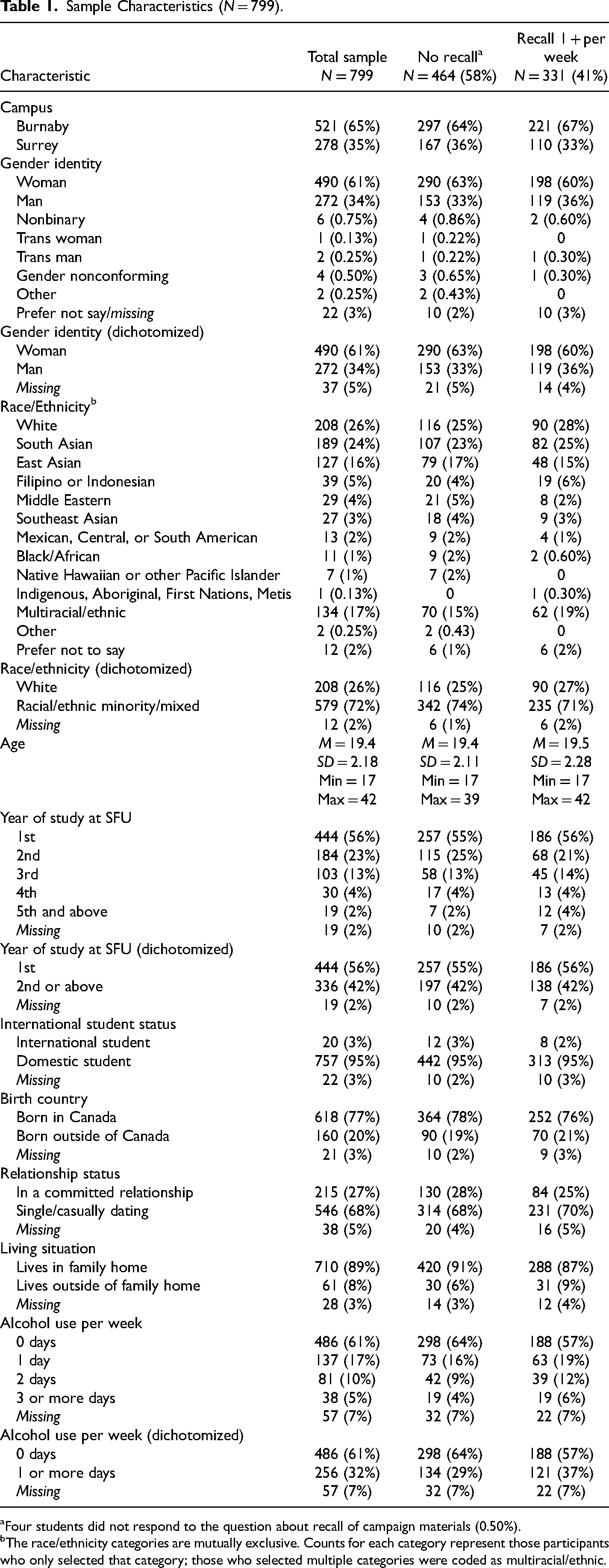
Four students did not respond to the question about recall of campaign materials (0.50%).
The race/ethnicity categories are mutually exclusive. Counts for each category represent those participants who only selected that category; those who selected multiple categories were coded as multiracial/ethnic.
Participants were predominantly women (n = 490; 61%), and 1st-year students (n = 444, 56%), with 23% in 2nd year (n = 184), and 19% in 3rd year or higher (n = 152). The mean age was 19.4 (SD = 2.2), ranging from 17 to 42 years. Most participants (n = 579, 72%) identified as having an ethnic/racial minority or mixed ethnicity/race background, and 26% of participants identified as White (n = 208). Only 20 participants (3%) were international students, and 160 (20%) noted they were born outside of Canada. The sampled classrooms were not randomly selected; characteristics are not representative of the overall SFU undergraduate population and are thus more reflective of the lower division social sciences student population.
Regarding participants’ relationship status, three-quarters reported being single or casually dating (n = 546, 68%), while 215 were in a committed relationship (27%). Approximately 89% of participants were living in their family home (n = 710), while 8% (n = 61) had other living arrangements (e.g., with roommates off campus, alone off-campus, or with an intimate partner). Most participants reported consuming no alcohol in a typical week (n = 486, 61%), 17% drank alcohol 1 day per week (n = 137), 10% drank 2 days per week (n = 81), and 5% drank 3 or more days per week (n = 38). Given that alcohol consumption tends to be prevalent in university environments (Skidmore et al., 2016), the low rates of alcohol use in the current samples are surprising. As many participants were under the Province's age of legal majority (19 years) it is possible they were concerned with reporting underage drinking, or perhaps were genuinely adhering to legal restrictions and refraining from underage alcohol use.
Positive Attitudes Toward Establishing Consent (PAC)
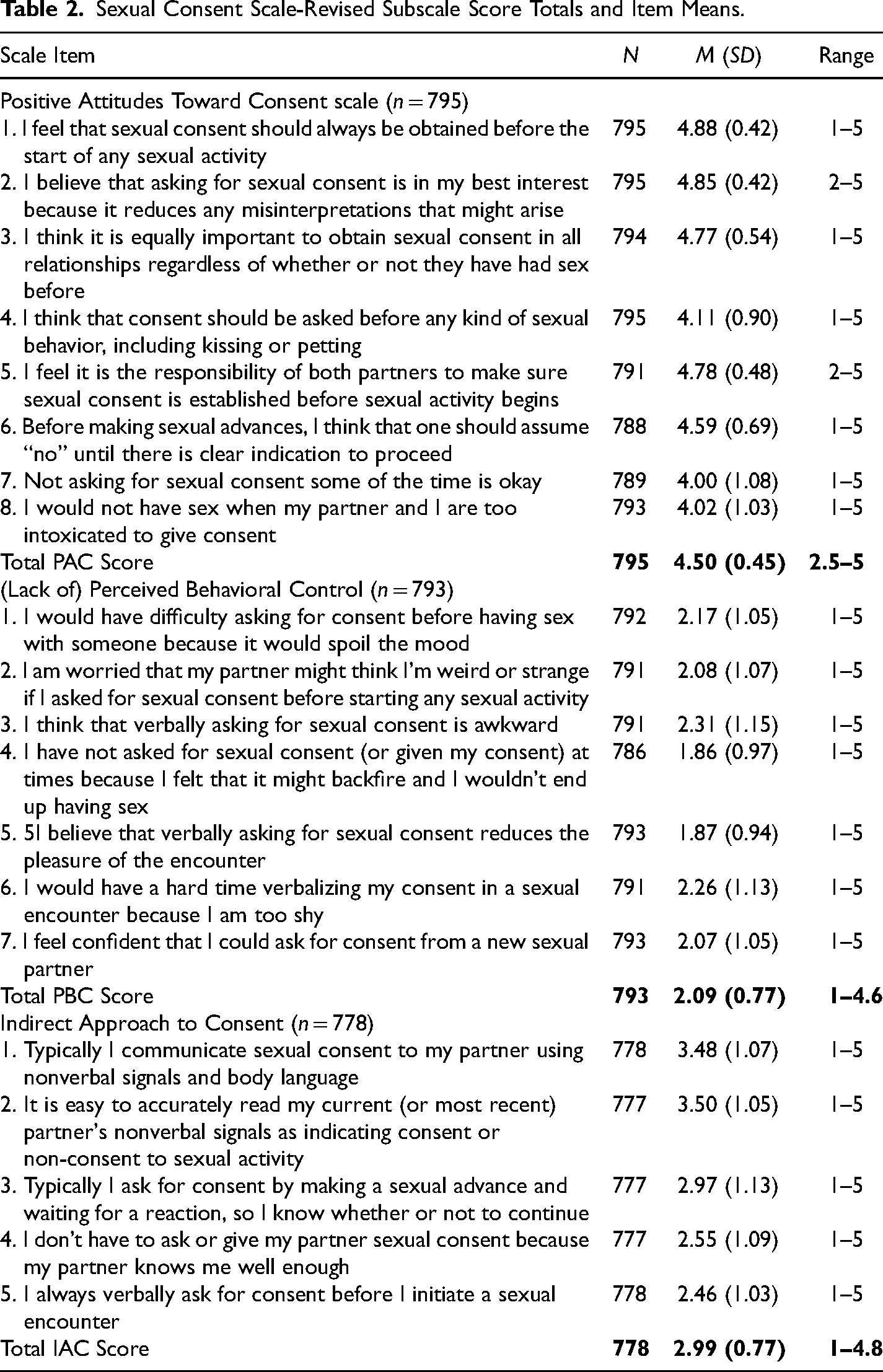
The 8-item PAC subscale was assessed based on complete data from 795 participants (99.5% of the sample; Table 2). Item means were high and ranged from 4.00 to 4.88; participant mean scale scores ranged from 2.5 to 5, with an overall mean of 4.50 (SD = 0.45). These findings indicate that most students believe obtaining and establishing consent during sexual activities is necessary and important. Additional analyses found that women had more positive attitudes toward obtaining consent than men (t = 4.59, p < .001), and students who identified as an ethnic minority had more positive attitudes than those identifying as White (t = 2.58, p < .05).
Sexual Consent Scale-Revised Subscale Score Totals and Item Means.
(Lack of) Perceived Behavioral Control (PBC)
The PBC subscale had complete data for 793 participants (99.2% of the sample). Mean scores on the individual scale items ranged from 1.86 to 2.31, with an overall mean of 2.09 (SD = 0.77), suggesting some mixed perceptions and overall moderate levels of perceived control with regard to obtaining consent. Further, women were found to have greater perceived control in obtaining consent than men (M = 2.26, SD = 0.75; t = −4.68, p < .001) and those in committed relationships also exhibited greater perceived control in obtaining consent than those who were single or casually dating (t = −4.26, p < .001).
Indirect Approach to Obtaining Consent (IAC)
The 5-item IAC scale had complete data for 778 participants (97.4% of the sample) and a mean score of 2.99 (SD = 0.77). Participant scores on the five individual items were relatively moderate, with item means ranging from 2.46 to 3.50. These data suggest that students use both indirect and direct methods of obtaining consent, but that indirect methods are more common. Additionally, women were found more likely to use indirect methods than men (t = 2.03, p < .05). Those in a committed relationship were also more likely to use indirect methods than those who were single or casually dating (t = 8.02, p < .001).
Campaign Exposure
Participants reported if and how often they recalled viewing the Consent Matters campaign materials while the campaign was active on campus. Overall exposure was minimal, with 464 participants (58%) reporting they did not see the campaign at all. Approximately 31% recalled seeing the materials once a week (n = 249), while just over 11% saw the materials more than once a week (n = 82). Given the distribution, this measure was dichotomized as no recall (58%) vs. recall one or more times per week (42%) for use as a treatment proxy in analyses.
Recall Accuracy
Participants were presented with an open-ended question regarding the specific messages conveyed by the campaign materials (e.g., “It's okay to say no”). In total, 349 participants responded, with only 6% (n = 22) correctly recalling any of the campaign content (Table 3). The vast majority of participants were unable to accurately recall the campaign (n = 327, 94%). Message recall accuracy was also examined in the context of campaign exposure; Fisher's Exact test revealed no significant relationship between recall accuracy and how often students viewed the campaign (p = 0.094). This is not unexpected given the low number of correct responses.
Message Recall Accuracy by Campaign Exposure (n = 349).
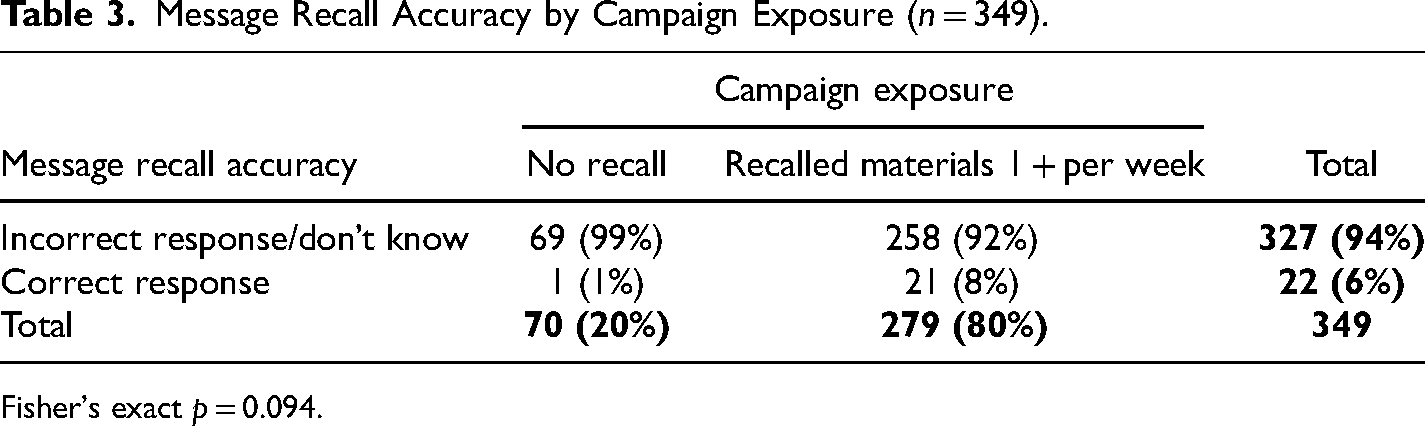
Fisher's exact p = 0.094.
Campaign Impact on Attitudes Toward Sexual Violence, Consent, and Communication
Positive Attitudes Toward Establishing Consent (PAC)
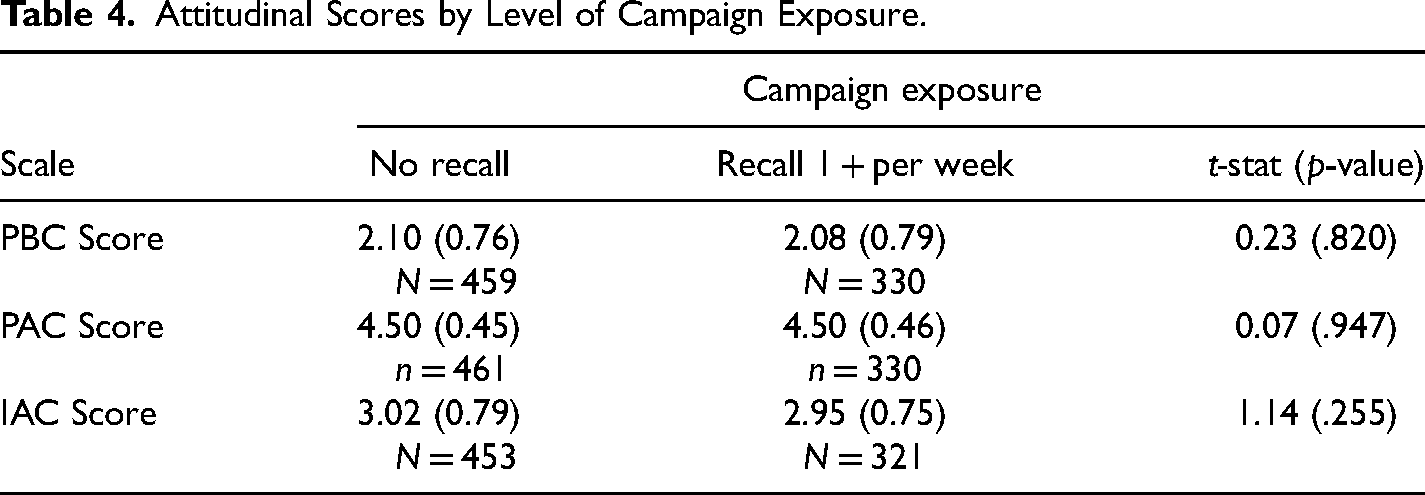
No significant difference on the PAC scale was found between respondents who recalled and those who did not recall the campaign materials; mean scores are presented in Table 4. Two-way ANOVAs were used to assess potential interactions between campaign exposure and gender identity, ethnicity, year of study, alcohol use, birth country, or relationship status. No significant interactions were found for any of the investigated variables, indicating no differential campaign impacts on PAC scores by subgroups of respondents. Full results are available upon request.
Attitudinal Scores by Level of Campaign Exposure.
(Lack of) Perceived Behavioral Control (PBC)
The impact of the campaign was examined based on the level of campaign exposure, with no significant differences found in total scale scores between those who reported seeing campaign materials and those who did not. Subgroup analysis revealed no significant interactions between campaign exposure and gender identity, ethnicity, year of study, alcohol use, birth country, or relationship status with respect to PBC scores.
Indirect Approach to Consent (IAC)
No significant differences in total IAC scale scores were found between those who recalled seeing the Consent Matters campaign and those who did not. Campaign impacts were further investigated via subgroup comparisons across levels of campaign exposure; no significant differences were observed for those who reported any campaign recall versus no recall based on gender identity, ethnicity, year of study, alcohol use, birth country, or relationship status.
Student Reactions to Campaign Materials
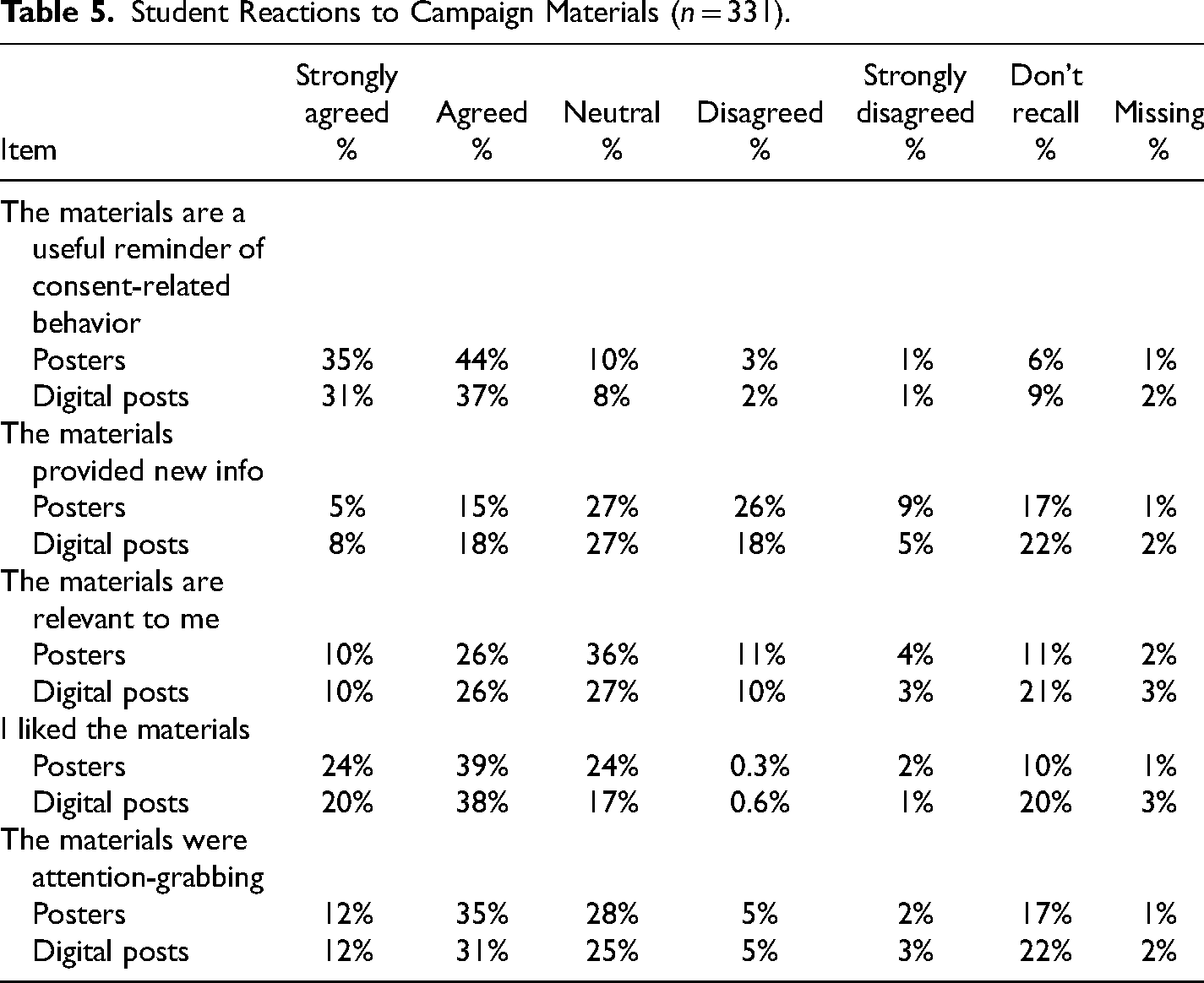
Participants were asked a series of questions regarding their perceptions and opinions of the Consent Matters campaign materials (Table 5). Responses of only those participants who reported seeing the campaign materials are discussed herein (n = 331).
Student Reactions to Campaign Materials (n = 331).
Campaign Posters
Most students agreed/strongly agreed that the posters are a useful reminder of consent-related behavior (n = 263, 79%). Approximately 20% of participants reported that the posters provided new information, though 115 disagreed/strongly disagreed with that statement (35%). Most students liked the poster (s) they saw (n = 208, 62%), and nearly half of the respondents agreed/strongly agreed that the posters were attention-grabbing (n = 157, 47%). Last, one-third of the respondents agreed that the posters were relevant to them personally (n = 118; 36%).
Digital Campaign Materials
Participants’ perceptions of the digital campaign materials were also assessed; respondents generally reported positive feelings, with 226 indicating that the materials were a useful reminder of consent behaviors (68%). Most respondents felt neutral (n = 88, 27%), or disagreed (n = 78, 24%) with the statement that new information was provided, suggesting that many respondents may have already been aware of the consent-related information presented by the campaign. Additionally, over half of the participants reported that they liked the materials (n = 192, 58%); 140 students also felt the materials were attention-grabbing (43%), though 83 (25%) felt neutral toward the visual aspects. Finally, approximately one-third of the participants agreed that the materials presented messages that were relevant to them (n = 121, 37%).
Student Comments and Suggestions for Improvement
Of the 799 participants, 533 provided a response to the question asking for additional comments or suggestions for the Consent Matters campaign. A series of four primary themes were identified throughout student responses. See Table 6 for a summary of themes.
Summary of Qualitative Themes for Comments and Suggestions.
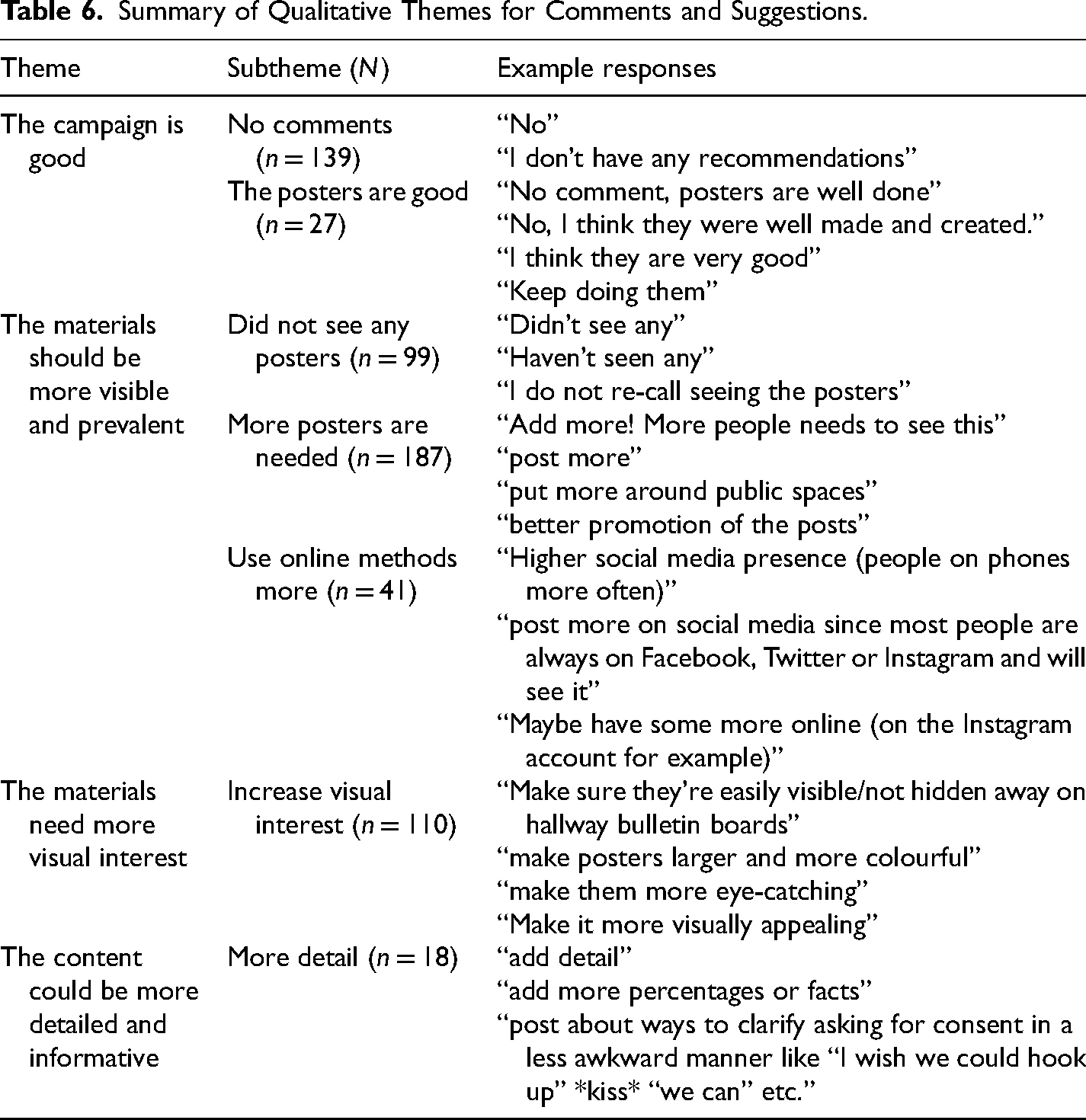
The Campaign Is Good. A large number (n = 139) of responses referenced not having any comments or suggestions, while 27 comments specified that the materials and messages did not need any changes, e.g., “…they are fine the way they are right now,” “No, I think they were well made and created,” and “No. It was informative.” These responses suggest that those who noticed the campaign materials appreciated what they presented.
The Materials Should be More Visible and Prevalent. Many respondents offered constructive feedback, with the most common suggestions being related to the visibility or presence of the posters. For example, 99 respondents said they had not seen any posters, while 187 respondents implied they saw posters but that more were needed. Several respondents offered more general suggestions, such as “post more,” “put more around public spaces,” or “better promotion of the posts,” while others offered more specific suggestions for where to display posters (e.g., bathrooms, building entrances, classrooms, and dining spaces). These responses indicate that students were not being reached to the extent intended by the distribution pattern and frequency of the campaign posters.
Other suggestions included more frequent dissemination via e-mail and social media (n = 41). Students likely spend a considerable amount of time online and, as such, may be more likely to consume digital campaign materials. For example, comments included: “post more on social media since most people are always on Facebook, Twitter, or Instagram and will see it,” and “Maybe have some more online (on the Instagram account for example).” Although the campaign materials were posted on multiple university-run social media channels, results suggest that online avenues could have been better utilized.
The Materials Need More Visible Interest. Relatedly, 110 responses suggested increasing the campaign's visual interest. Several comments implied that the Consent Matters materials were difficult to notice among the many other posters and materials promoted on campus. For example, “Make sure they're easily visible/not hidden away on hallway bulletin boards” or “Make them eye-catching and easily distinguishable from other posters.” Many said to make them more “attention-grabbing” or “visually appealing,” while others suggested making the posters more colorful, larger in size, and using larger font/text (e.g., “Make posters larger and more colourful,” “Using colourful colours to attract attention from others”). Students face many print materials across campus spaces, and as such ensuring visibility of the campaign posters is critical for consumption.
The Content Could Be More Detailed and Informative
Discussion
Campaign Recall
The present study assessed the impact of the Consent Matters sexual consent awareness campaign on undergraduate students’ attitudes and beliefs regarding consent. Results indicate moderate levels of campaign exposure among participants, with approximately 41% of participants having viewed the materials at least once. Regarding overall campaign exposure and message recall accuracy, no significant effect was found. Although the relationship was not significant, more participants who recalled seeing the campaign at least once could not remember the campaign messages or incorrectly remembered the message.
Campaign Effects
When comparing those who recalled exposure to the campaign materials and those who did not (regardless of the accuracy of their recall), no significant impact of the campaign was observed on any of the three scales regarding consent-related attitudes and behaviors. Campaign impact was further examined via subgroup comparisons to determine if consent-related attitudes differed based on respondent characteristics across levels of campaign exposure. Across all three attitudinal scales, no significant differences were found between men and women, White students vs. those identifying as an ethnic minority, 1st-year students and students in 2nd year or higher, students who did not drink alcohol vs. those who drank at least 1 day per week, those born in Canada vs. those born outside of Canada, or students who were single vs. in a committed relationship. The lack of significant findings indicates that the campaign was not successful at influencing consent-related attitudes and beliefs among students.
The nonsignificant outcomes may be related to several factors. It may be that young people have been adequately exposed to the notion of consent, are aware that consent is necessary for all sexual interactions, and are likely to indicate that they intend to obtain and respect consent boundaries. This may be particularly relevant given the study sample; all participants were sampled from social science classes, a general demographic that may be more familiar with consent-related concepts or be exposed to such concepts in their classes. Additionally, the specific consent scenarios presented in the campaign materials may already be familiar to students, as opposed to presenting new or more nuanced situations that may arise. As evidenced by the positively skewed PAC scale means across all participants, as well as many individual items means, students may already hold positive attitudes toward obtaining consent and aim to practice responsible consent behaviors during sexual interactions. This may explain the lack of difference in consent-related attitudes based on campaign exposure (PAC scale). However, the more moderate outcomes for perceived behavioral control and indirect approaches to consent (PBC and IAC scales) suggest these consent-supportive attitudes may not translate in a more practical sense. When directly involved in sexual activity, it may be difficult to execute consent-positive behaviors despite accepting the importance of obtaining consent ahead of time. This hypothesis is consistent with findings of other sexual violence prevention program evaluations, which suggest that attitudes/beliefs and behaviors do not change in tandem; attitudes are often easier to change compared to behaviors (Wright et al., 2020). Consent awareness campaigns may serve as important reminders regarding consent but may not be necessary for changing attitudes and beliefs given the high level of support that already exists. Rather, efforts should shift to focus on modifying behaviors.
Alternatively, possible measurement limitations may exist with respect to the SCS-R. The scale was last validated in 2010 by Humphreys and Brousseau; since that time, there has been an increase in sexual consent and sexual violence prevention-related campaigns and programs across university campuses and in the media (Johnson & Hoover, 2015), as well as increased criticism regarding how consent is traditionally conceptualized (Hermann et al., 2018). Rather than a static decision based on the absence of “no,” consent is now more widely defined as an ongoing, affirmative process (Glace et al., 2021). As such, how students think about consent may have shifted since the scale was last validated, and updated items may be needed to better assess current consent-related attitudes. Additionally, several items on the subscales primarily address direct and explicit consent and are highly skewed at the individual level. This is unexpected, as direct verbal consent is likely not explicitly obtained in every sexual encounter; participants may have interpreted the scale items as asking about obtaining consent overall, and conflated direct and indirect methods of obtaining consent, thus inflating their scores. Nonetheless, the SCS-R is widely regarded as one of the more prominent measures of sexual consent attitudes throughout the literature, is commonly used, and has been found to be well correlated with other sexual consent measurement tools (Glace et al., 2021; Shafer et al., 2018; Walsh et al., 2021).
Additionally, the Consent Matters campaign was only active for a short, 1-week period, with physical posters removed at the end of the campaign (though digital posts remained indefinitely). One week may be especially limiting given the campus context; SFU is primarily a “commuter” school with a comparatively small student residence population. It is not uncommon for students to be on campus solely for classes, limiting the time spent traveling throughout campus spaces. One week does not provide copious exposure time or opportunities for those students who only spend a few hours on campus per week. It may be that greater campaign exposure is necessary for significant changes in attitudes. For example, Ortiz and Shafer (2019) observed significantly positive changes in consent-related attitudes; however, no impact occurred between baseline and 6-week measures. Significant changes only occurred at 21 weeks of exposure, suggesting that longer exposure and exposure to multiple campaign elements were necessary for significant impact. The Consent Matters campaign may require a longer implementation period, with greater reach across campus, to incur notable effects.
Relatedly, the campaign uses primarily passive methods of information dissemination via physical posters and online posts. Students are faced with large amounts of information in their daily campus experiences, through various posters, advertisements, digital screens, class materials, etc., in addition to their online consumption via social media and other online activities, with each source competing for their attention and focus. As such, media campaigns alone can only effect students to a certain extent; additional avenues of education and experiential training are important for providing opportunities to actively learn and practice the intended concepts and skills (Gavin et al., 2021). Using both passive and active methods of education may increase the likelihood of successfully modifying student attitudes and behaviors.
Additionally, the most common suggestion provided by participants was in reference to the visibility and presence of the campaign materials across campus. A core factor of awareness campaigns is exposure and consumption of the materials. Campaign materials cannot have an effect if the target population does not see them; increased presence of materials may lead to greater impacts (Carlyle et al., 2022; Ortiz & Shafer, 2019). Despite SVSPO staff distributing 650 posters, in addition to daily social media posts, many students reported not seeing any of the materials, while others indicated they did see some but felt they were infrequently displayed. These results are consistent with the lack of posters observed by the study authors along the main, high traffic campus concourses. The majority of the posters were located within more secluded, individual departmental areas, which are less frequented by students. It may be that individual department staff did not display all provided posters (if any). The posters that were displayed were not very large and often did not stand out among other signage; participants also noted that the poster materials had limited visual interest and could be more “attention-grabbing,” and could also benefit from providing more detailed or specific information. Even if students walked by the materials, the poster designs and content may not have been sufficient to attract their attention to the extent necessary for the retention of the information. Additionally, campaign materials were not presented on digital screens due to technical issues. These factors likely contributed to the lack of exposure and attention directed to the materials, preventing a greater reach and impact of the campaign.
Limitations
The current study may have been impacted by an additional consent awareness campaign that was active during the current study period (“…Is not Yes”). This campaign was developed by the BC Ministry of Advanced Education and Skills, and, as a public institution, SFU was required to participate (SVSPO staff, personal communication, October 2, 2022). SVSPO staff had no control over when and where the campaign was implemented. As we were unaware of the additional campaign at the time, we did not include a manipulation check within the survey to ensure the participants were referring to the correct campaign. However, further assessment of qualitative participant responses suggests only a small portion of participants (n = 19) were directly recalling the government campaign as opposed to the Consent Matters campaign. 9
Issues of social desirability may also have been a concern. Research has found that individuals tend to underestimate socially undesirable behaviors and overestimate socially desirable behaviors (Davis et al., 2010; King, 2022). Given the prevalence of consent education and sexual violence prevention efforts (Griffin et al., 2017; Johnson & Hoover, 2015), many students are likely aware that consent is necessary, regardless of whether they actually execute responsible consent behaviors in their own sexual interactions. Participants may have responded to reflect these expectations, rather than reflecting their own personal attitudes and behaviors.
Finally, the post-test only research design also poses limitations, with no baseline measures of participant attitudes and beliefs. As discussed, scale scores were highly skewed, with participants reporting favorable scores across attitudinal measures. Without a baseline comparison, we are unable to determine if these outcomes are due to the campaign, or if respondents already possessed consent-positive attitudes before campaign exposure. However, the use of a proxy comparison group based on no campaign recall lends support to the evaluation findings. Comparing those who did recall viewing campaign materials and those who did not provides a pseudo measure of no campaign exposure; this would suggest that differences found between the two groups are likely to be related to the campaign, despite lacking true baseline data.
Conclusion
The Consent Matters Campaign has been a key component of campus-wide efforts at SFU to prevent sexual violence and create a culture of consent, care, and respect. The evaluation did not find significant campaign impacts on attitudes and beliefs regarding sexual violence and consent; students who reported exposure to campaign materials reported similar attitudes as those who did not report exposure. The evaluation did indicate, however, that SFU students hold strongly positive attitudes toward consent; limitations of the measurement instrument (i.e., a ceiling effect) may have precluded an assessment of small changes in attitudes—or student attitudes may be sufficiently positive and do not currently require an adjustment. Future campaigns should consider examining existing campus attitudes before launching a campaign, to ensure student needs are being met and capitalize on attitudes students already hold.
Footnotes
Acknowledgments
We thank the BC Ministry of Public Safety and Solicitor General for funding this research and appreciate the enthusiasm, helpfulness, and support of the staff at the SFU Sexual Violence Support & Prevention Office (CJ Rowe, Belinda Karsen, and Paola Quiros-Cruz). In addition, we thank all SFU faculty who allowed us to administer surveys during class time, the 12 research assistants in the School of Criminology who assisted with survey administration, and we gratefully acknowledge all students who took the time to participate in the surveys.
Declaration of Conflicting Interests
The authors declared no potential conflicts of interest with respect to the research, authorship, and/or publication of this article.
Funding
The authors disclosed receipt of the following financial support for the research, authorship, and/or publication of this article: This work was supported by the BC Ministry of Public Safety and Solicitor General (grant number CRRP_2020-21_09).
