




Abstract
Researchers have demonstrated associations between use of pornography and sexual objectification of women. We examine whether self-reported preference for degrading pornography moderated the relation between use frequency and sexual objectification of others. Participants were 1,342 heterosexual women and men residing in the United States. In women and men, pornography use frequency was associated with the sexual objectification of others, even after controlling for interest in generally explicit content. In men, interest in degrading pornography content significantly predicted sexual objectification of women. Our results suggest greater pornography use is associated with greater sexual objectification of others, across a variety of content categories.
Pornography portrays uncensored sexual activity. Despite often being studied as a homogenous group, pornography conceptually fall into subtypes. Two of the most common distinctions made by researchers are pornographic media that include degrading, sexist and/or violent content (degrading pornography) and pornographic media that are nonviolent, nondegrading, and nonsexist portrayals of consensual sex (Senn & Radtke, 1990). Fisher and Barak (2001) defined degrading pornography as sexually explicit material that “degrades, debases, and dehumanizes people, generally women, in a fashion that endorses such degradation” (p. 313). Research examining these two categories of media generally finds significantly stronger negative associations between degrading pornography and attitudes supportive of violence against women and sexism compared to the associations between generally explicit (but not overtly violent or degrading) pornography and these variables (Allen & Emmers-Sommer, 1995; Allen et al., 1995; Skorska et al., 2018). Research suggests that women, in particular, are interested in and have positive responses to explicit materials, but not to degrading pornography (Ezzell et al., 2020; Senn & Radtke, 1990). Relatedly, researchers have demonstrated associations between men's pornography use and the sexual objectification of women (e.g., Peter & Valkenburg, 2009). However, it is unclear if this association is moderated by a preference for degrading content. In this study, we examined that question directly: Does the association between pornography use and sexual objectification of different-sex persons vary depending on relative interest in degrading (vs. explicit but not degrading) content?
Pornography
Pornography use, especially violent or degrading pornography use, has been associated with negative views about women, rape myth acceptance, sexism, aggression, and dominant behaviors during sex. A meta-analysis of 16 experimental studies found exposure to pornography increased acceptance of rape myths, with a small effect (Allen & Emmers-Sommer, 1995). Studies that specifically compared rape myth acceptance when participants were exposed to violent pornography compared to nonviolent explicit materials suggested a stronger effect of violent pornography exposure. A second meta-analysis of 33 experimental studies found a small, significant effect of exposure to pornography in the lab and laboratory aggression (Allen et al., 1995). The effect between pornography use and aggression was strongest for violent pornography and degrading pornography. However, exposure to nonviolent pornographic materials was associated with a decrease in laboratory aggression. In correlational studies, higher use of pornography is associated with greater endorsement of rape myths (e.g., Maas & Dewey, 2018; Mundorf et al., 2007). A meta-analysis of nine survey studies found a small, significant association between men's pornography use and attitudes supportive of sexual violence (Hald et al., 2010). A second meta-analysis of 17 correlational studies found a small-to-medium association between self-reported pornography use and history of sexual aggression perpetration (Wright et al., 2016). A study of German men found interest in degrading pornography and pornography use were associated with a desire to try or having actually engaged in sexually dominant acts, including spanking, slapping, choking, ejaculating on someone's face, ass-to-mouth sequence, and penile gagging (Wright, Sun et al., 2015). And a study of Korean men found interest in degrading pornography was associated with asking a partner to role-play behaviors men had seen in pornography (Sun et al., 2015).
Depictions of women as sexual objects for a presumed male gaze and depictions of women as the targets of (men's) sexual and physical aggression are often components of top-selling and frequently downloaded/consumed pornography. Content analysis finds that verbal and mild forms of physical aggression are common in popular pornographic films; these acts are most often perpetrated by men and directed at women (Bridges et al., 2010). One study of internet pornographic videos found sexual objectification of actors was common, although the specific form of objectification differed by gender (Klaassen & Peter, 2015). For instance, over half of the analyzed videos showed close-ups of women's body parts while less than one-fifth showed close-ups of men's body parts. Over three-fourths of the analyzed videos showed men orgasming but only one-sixth showed women orgasming. On the other hand, close-ups of women's faces were included in over half of the videos while only one in eight videos showed close-ups of men's faces. The researchers argue that pornography sexually objectifies both men and women; however, the form and context of objectification can have differing implications. Pornography often focuses on close-ups of body parts and uses a “point of view” (or POV) camera angle, one that aligns the viewer with the sexual gaze of the (usually male) actors (Gonzo pornography, n.d.). More frequent inclusion of close-ups of women's bodies and faces can encourage the viewer to identify with the male actors in the scene, potentially reinforcing the broader phallocratic scripts embedded in the content.
Sexual Objectification
The idea of women as sex objects, whose worth is determined by how they can be of service to men, is captured in objectification theory. Sexual objectification is defined as “the experience of being treated as a body (or a collection of body parts) valued predominantly for its use to (or consumption by) others” (Fredrickson & Roberts, 1997, p. 174). Research suggests women are more likely to be sexually objectified than men in interpersonal interactions and in media representations, especially (although not exclusively) in pornography (Zhou et al., 2021). Sexual objectification is associated with negative consequences for the objectified, including an internalization of one's worth as limited to what one can offer others through one's body (known as self-objectification), low self-esteem, increased sense of shame, depression and anxiety, and reduced ability to enjoy being mindful and present (Fredrickson & Roberts, 1997; Miles-McLean et al., 2015; Szymanski et al., 2011). Although the bulk of work on sexual objectification has focused on objectification of women, research with men confirms similar negative impacts of self-objectification (Lindberg et al., 2006; McKinley, 1998; for a review, see Moradi & Huang, 2008).
Recent advances in objectification research by cognitive scientists suggest that factors such as a focus on the physical features of people and sexually suggestive posturing (more so than revealing clothing) are associated with a denial of the objectified person's full humanity and morality (Bernard & Wollast, 2019; Bernard et al., 2019). Sexual objectification is also implicated in other negative and harmful typifications of the objectified and denial of empathic consideration, including holding negative views about women and rape myth acceptance.
Pornography Use and Sexual Objectification
Why might pornography use be associated with sexual objectification? Social learning theory (Bandura, 1969) and sexual scripts theories (Simon & Gagnon, 1986; Wright, 2011) suggest the following. Media provide teaching tools to consumers, educating them about what is expected in certain situations. When these situations are focused on sexual interactions, consumers learn sexual scripts, or guidelines for expected practices and rules for behaving. When consumers find themselves in sexual situations, they are likely to rely on these sexual scripts to guide their real-life behavior (Wright, 2011). Sexualized media in general, and pornographic media in particular, reflect and reinforce a constructed “reality” about the worth of women and men that focuses on their physical attributes. The more media people consume that sexualizes women and men, the more likely they are to internalize those messages and to endorse similar sexualization beliefs.
Research on pornography use finds it is associated with sexualizing and sexist attitudes and behaviors, supporting theories of social learning. In a survey of male undergraduate students, Mikorski and Szymanski (2017) revealed a significant positive correlation between pornography use and sexual objectification of women. Further, sexual objectification was significantly positively associated with engaging in sexually harassing behavior (including grabbing women's genitals against their will) in the past year. In an experiment, researchers found men randomly assigned to view sexually objectifying media subsequently reported significantly lower empathy for a hypothetical victim of sexual assault than men who viewed neutral films (Milburn et al., 2000). Seabrook et al. (2019) found that the objectification of women was one mechanism through which pornography was associated with sexist attitudes and behaviors supportive of violence against women. And Wright and Tokunaga (2016), in a survey of male undergraduate students, found greater use of pornography was associated with greater sexual objectification of women and endorsement of rape myths. Similar associations have been found in research on adolescents and young adults in the Netherlands (Peter & Valkenburg, 2007) and in Japan (Omori et al., 2011). In an experimental study of 98 college women, exposure to sexually explicit centerfold images (compared to less explicit images) increased participants’ acceptance of objectification of women by men, both immediately following the experimental manipulation and 48 hours later (Wright, Arroyo, et al., 2015). Pornography use is not only associated with sexualization of women—sexualization of men and self-objectification have also been observed. For example, Szymanski et al. (2019) found sexual minority men's use of pornography was associated with greater sexual objectification of other men, and Nowatzki and Morry (2009) underscore the links between girls’ and women's exposure to sexualized media and their attitudes and behaviors about their own bodies (self-objectification) and objectifying notions about other women.
The association between sexualized media use and sexualized attitudes and behaviors is true even for media that fall short of explicit pornography. For example, a large-scale cross-sectional study conducted in Austria, Belgium, Spain, and South Korea, including data from 300 early and middle adolescents ages 12 to 16 from each country, revealed that higher use of social media and women's magazines seem uniquely related to adolescents’ engagement in self-sexualizing behaviors, especially for teenage girls (Trekels et al., 2018). According to Ng (2017), social media have significantly amplified girls’ sexualization as they are rewarded online with likes and followers. Ramsy and Horan (2018) discovered that seeking social media attention was the strongest predictor of posting self-sexualizing photos, which received more likes than neutral photos. Women who posted more sexualized images also tended to have more followers, thus validating/reinforcing their behavior.
Temporal analyses of pornography use and beliefs in women as sexual objects suggest that pornography use often precedes negative attitudes toward women rather than vice versa. For instance, in a longitudinal survey of 962 Dutch adolescents, Peter and Valkenburg (2009) found time-one exposure to pornography was a stronger predictor of time-two attitudes objectifying women than time-one objectifying attitudes was of time-two pornography use, suggesting consumption of media that includes sexually objectifying portrayals of women (and men) may influence subsequent sexually objectifying attitudes. In previous research, it remains unclear if the associations between pornography use and sexual objectification is a function of the frequency of use without regard to content, or if a preference for pornography with content themes of degradation and objectification may be more specifically driving this association. Prior work (Senn & Radtke, 1990; Zhou et al., 2021) and social learning theory suggest sexual objectification will be more likely if the media being consumed is portraying/endorsing objectifying messages. It may be the case, then, that a preference for sexually explicit but not overtly degrading and dehumanizing content may not be associated with sexual objectification, while a preference for degrading pornography is. To date, studies have not adequately considered the differences content preference may make. The current study seeks to address this gap in the literature.
Purpose
This cross-sectional survey study of heterosexual women and men examined how pornography use frequency related to sexual objectification of different-sex others, whether interest in degrading content moderated the relationship, and whether interest in degrading content predicted sexual objectification of others above and beyond interest in explicit materials generally. The study expands prior research demonstrating associations between pornography use and sexual objectification of women in a few ways. First, we examined whether self-reported preference for degrading pornography content moderated the relation between pornography use frequency and sexual objectification of others. Second, we examined sexual objectification of men by women, and of women by men (instead of only focusing on sexual objectification of women). Third, we tested the robustness of these associations by controlling for interest in sexually explicit media generally, which can serve as a proxy for higher sexual interest or sex drive.
We hypothesized: (H1) greater frequency of pornography use would be positively associated with sexual objectification of different-sex others; (H2) greater interest in degrading pornography content would be positively associated with sexual objectification of others; (H3) pornography preference would moderate the association between frequency and sexual objectification of others, such that frequency of use would be more strongly associated with sexual objectification of others in participants who had a stronger interest in degrading pornography content; and (H4) the relationships among the variables would not be fully explained by a general interest in sexually explicit content. We expected similar results for men and women, but analyzed them separately because each was asked slightly different (gender-specific) questions.
Method
Participants
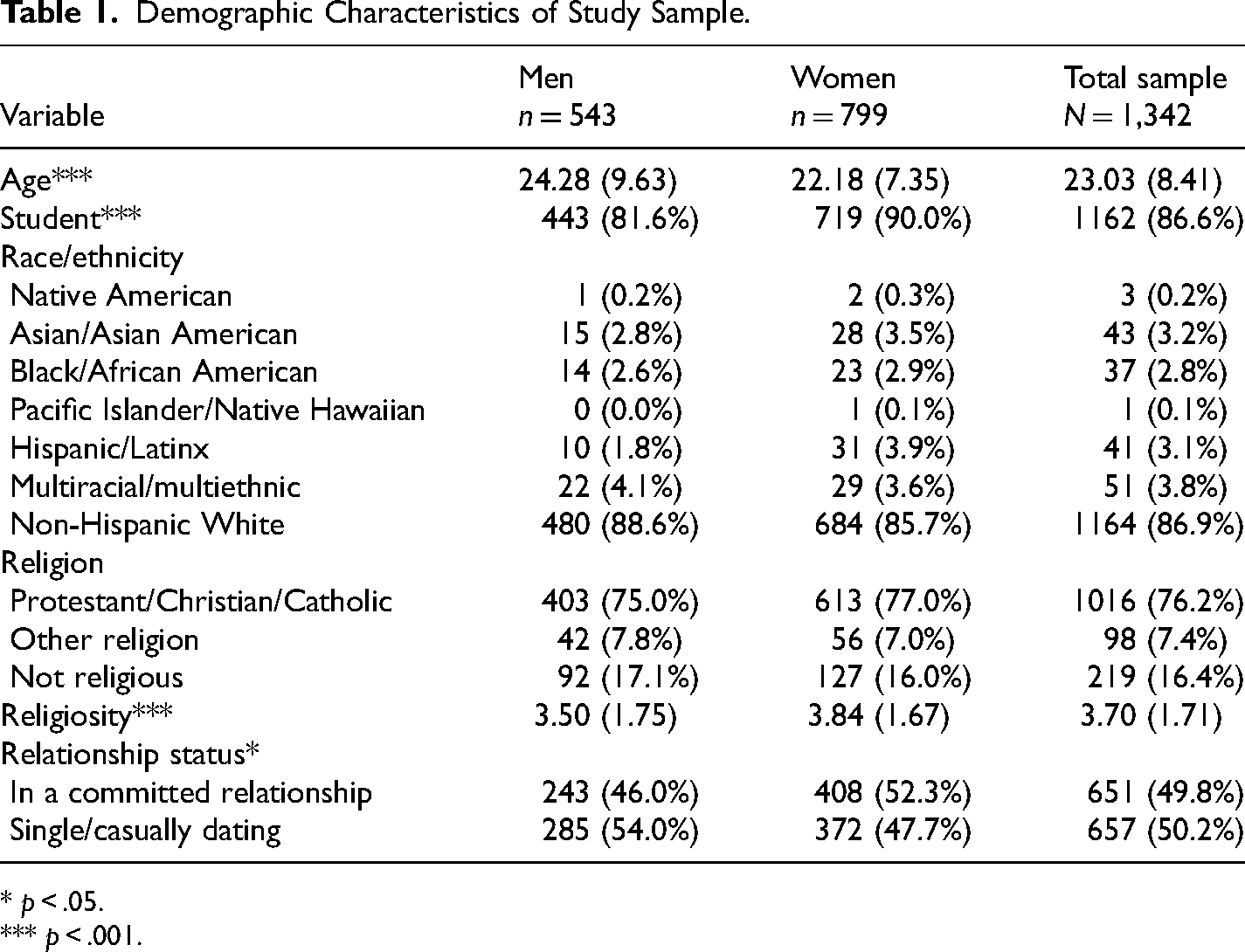
Participants were drawn from a larger study on culture and sexuality in sexually active heterosexual adults (Sun et al., 2016). A total of 1,342 US participants were included in the sample for this study (543 men and 799 women). Demographic characteristics are presented in Table 1. The sample was largely of college students, primarily non-Hispanic Whites, and the majority were Protestant, Christian, or Catholic. Approximately half of the participants reported being in a committed relationship. Compared to women, men were significantly older, less likely to be a current student, less religious, and less likely to be in a committed relationship.
Demographic Characteristics of Study Sample.
* p < .05.
*** p < .001.
Measures
Pornography Use Frequency
We felt it was important to capture the diverse ways men and women are viewing pornography, so we included two items to assess pornography use frequency. The first asked how often participants used pornography for masturbation; the second asked how often they used pornography but not for masturbation. Responses were coded on a 0 (never) to 7 (daily or almost daily) scale and averaged to form a total pornography use frequency score. Higher scores indicated more frequent use of pornography. The two items were significantly correlated, r = .387, p < .001.
Sexual Objectification of Different-Sex Others
We developed four questions assessed sexual objectification of men by women, and another four assessed sexual objectification of women by men. Items were worded similarly to those by of the body evaluation subscale of the Sexual Objectification Scale (Kozee et al., 2007; e.g., Staring at breasts while talking with someone). For objectification of men, the questions were: when I see an attractive man, I imagine how he looks naked; when I am talking to an attractive man at work or at school, I tend to check out his groin area; when I pass by an attractive man, I tend to check out his butt; and I fantasize about having sex with attractive male strangers I encounter. For objectification of women, the questions were: when I see an attractive woman, I imagine how she looks naked; when I am talking to an attractive woman at work or at school, I tend to focus on her breasts; when I pass by an attractive woman, I tend to check out her butt; and I fantasize about having sex with attractive female strangers I encounter. All responses were coded on a 1 (strongly disagree) to 6 (strongly agree) scale. Responses to the four gender-specific items were averaged to compute a total score, with higher scores indicating greater sexual objectification of different-sex members. Both the sexual objectification of men (α = .808) and the sexual objectification of women (α = .807) scales demonstrated good internal consistency reliability.
Interest in Degrading Pornography and Nondegrading Pornographic Content
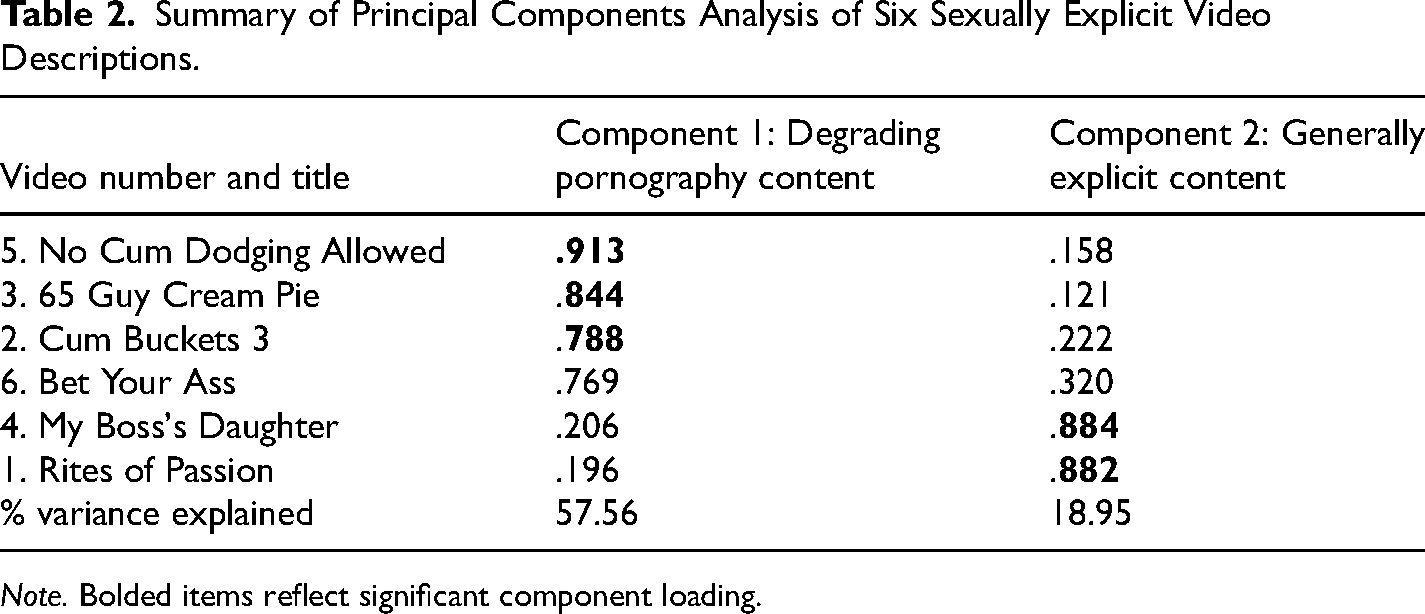
Interest in degrading pornography and nondegrading sexually explicit content was assessed by asking participants to read a list of pornography movie titles and brief synopses (see Appendix; see also Sun et al., 2016). These titles and descriptions were obtained from Adult Video Network's list of top-selling/top-renting pornographic films. The researchers selected six titles that they felt captures the breadth of pornographic film titles and descriptions—that is, titles were selected by the research team to be varied in degrading content. Participants viewed six video titles and descriptions, then rated how interested they would be in watching each of the movies on a 1 (not at all interested) to 9 (very interested) scale. A principal components analysis with orthogonal rotation revealed responses to these six movie titles fell into two distinct components: interest in degrading pornography content (video titles 2, 3, and 5) and interest in generally explicit content (videos 1 and 4) (Table 2). Video 6 loaded on both components (factor loadings ≥ .32) and was therefore excluded. Two total scores were computed by averaging the video titles that significantly loaded on each component, with higher scores indicating greater interest in that type of sexually explicit content. Both scales demonstrated adequate internal consistency reliability (degrading pornography content α = .852; generally explicit content α = .787).
Summary of Principal Components Analysis of Six Sexually Explicit Video Descriptions.
Note. Bolded items reflect significant component loading.
Demographic Characteristics
In addition to these primary study variables, participants responded to questions assessing their gender (male = 0, female = 1), sexual orientation (heterosexual = 1, all others were screened out of the survey), age (in years), race/ethnicity (Native American, Asian or Asian American, Black or African American, Pacific Islander or Native Hawaiian, Hispanic or Latina/o, Multiracial or multiethnic, White, or other), religion (not religious, Buddhist, Protestant, Catholic, Christian, Hindu, Islam, Jewish, other), religiosity (religious faith is important for me, rated on a 1 = strong disagree to 6 = strongly agree scale), and relationship status (not in a relationship, in a relationship but not monogamous, in a monogamous relationship but not living with my partner, living with my partner but not married, married, other). For relationship status, the first two categories (not in a relationship and in a relationship but not monogamous) were combined into a “not in a committed relationship” category, and the monogamous, cohabiting, and married categories were combined into a “committed relationship” category.
Procedure
Participants in six locations across the northeastern, southeastern, and mid-southern regions of the United States were recruited through university and community email announcements, posted flyers, and college courses, inviting them to participate in a study of culture and sexuality. Interested participants were directed to an online survey hosted on SurveyMonkey, a secure web-based survey platform. Participants first viewed a consent form explaining the purpose of the study and study eligibility, then completed a series of measures. In addition to the measures described above, participants answered questions about their sexual history, sexual satisfaction, and sexual behavior (results for these other research findings can be found in Sun et al., 2016). Following survey completion, participants received a full debriefing and were entered into a raffle to win one of three cash prizes (one $100 prize and two $60 prizes). In addition, participants at some research universities were awarded course credit. Total participation time was approximately 30 minutes. All study procedures were approved by all participating university institutional review boards.
Analytic Approach
Descriptive statistics and data visualizations (histograms, density plots, bivariate scatter plots) were computed for all study variables. Because interest in degrading pornography content and generally explicit content showed significant positive skew, both variables were log transformed. The primary aims were evaluated using two hierarchical multiple regressions, one for women and one for men. Each regression included pornography use frequency entered at the first step (H1), the log-transformed interest in degrading pornography content variable entered at the second step (H2), the interaction of pornography use frequency and log-transformed interest in degrading pornography content variable entered at the third step (H3), and the log-transformed interest in generally explicit content variable entered at the final step (H4). All predictors were mean centered. Examination of Durbin–Watson statistics and tolerance and variance inflation factor values confirmed there was no multicollinearity among the variables. Examination of residual distributions and Q-Q plots confirmed no violation of assumptions of normality among the residuals. Models were evaluated at each step using an F statistic and individual predictors were evaluated using a t statistic.
Results
Descriptive Statistics
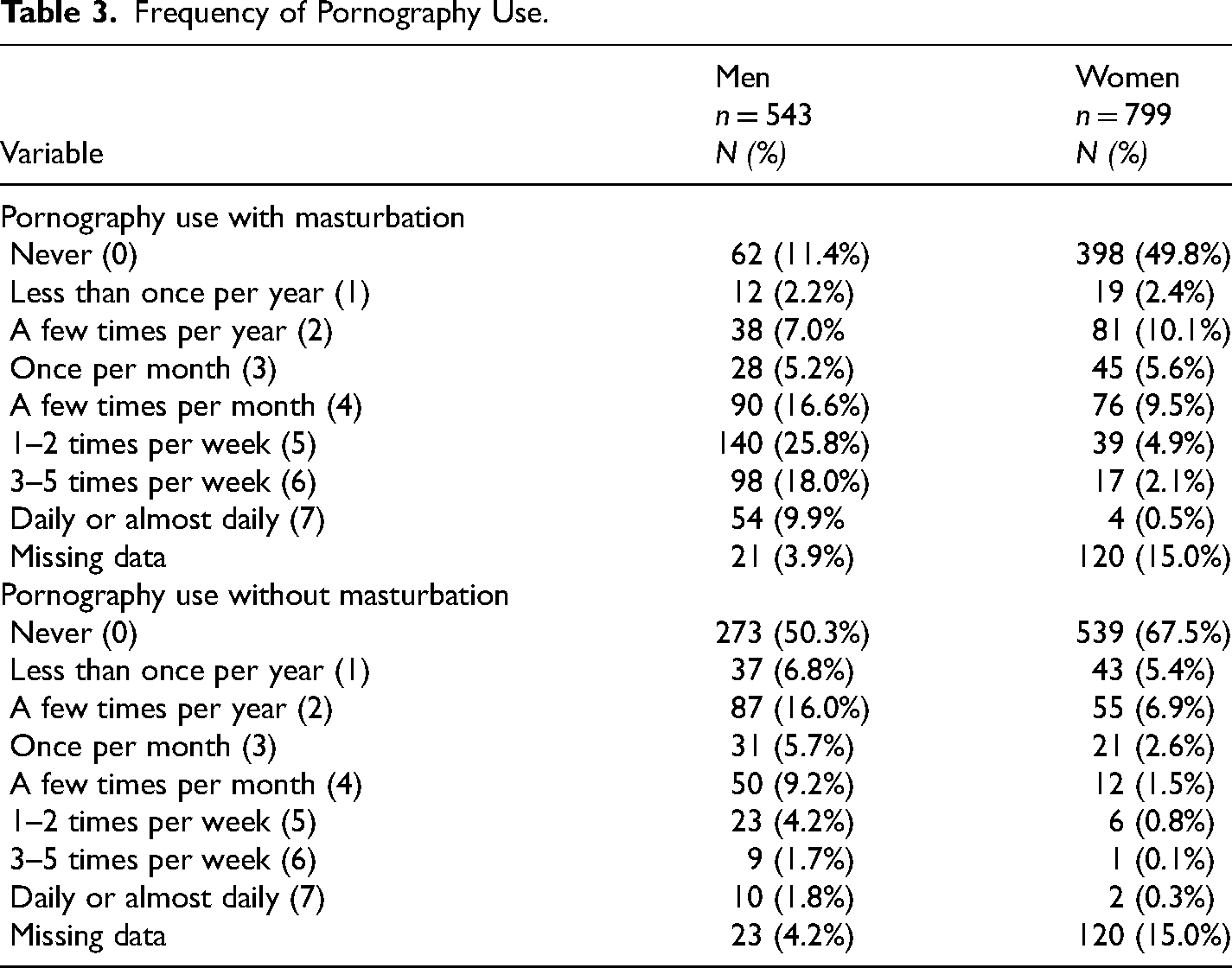
Descriptive statistics for study variables are presented in Tables 3 and 4 (all in untransformed form). The modal frequency of men's use of pornography for masturbations was one to two times per week, while in women the modal frequency was never (Table 3). In both men and women, pornography use without masturbation was infrequent (mode = never). Men's sexual objectification of women corresponded with an average score of “slightly agree,” while women's sexual objectification of men corresponded with an average score of “slightly disagree” (Table 4). In general, men and women demonstrated a lack of interest in degrading pornography content. Men expressed more interest than disinterest in generally explicit content, while women's interest was more equivocal. Bivariate correlations revealed significant positive associations between all study variables in both men and women (Table 4).
Frequency of Pornography Use.
Bivariate Correlations Among Study Variables by Gender.
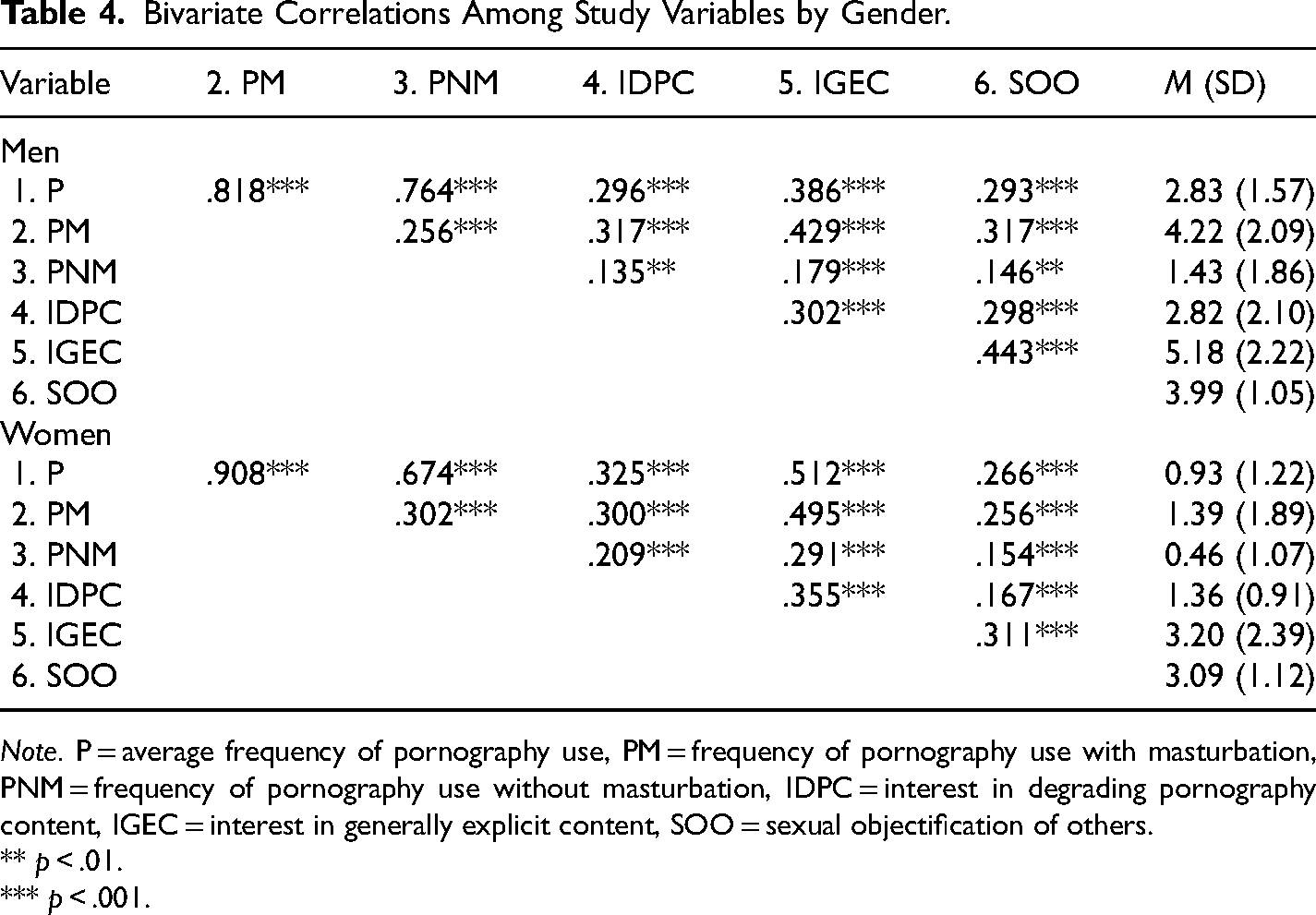
Note. P = average frequency of pornography use, PM = frequency of pornography use with masturbation, PNM = frequency of pornography use without masturbation, IDPC = interest in degrading pornography content, IGEC = interest in generally explicit content, SOO = sexual objectification of others.
** p < .01.
*** p < .001.
Hypothesis 1
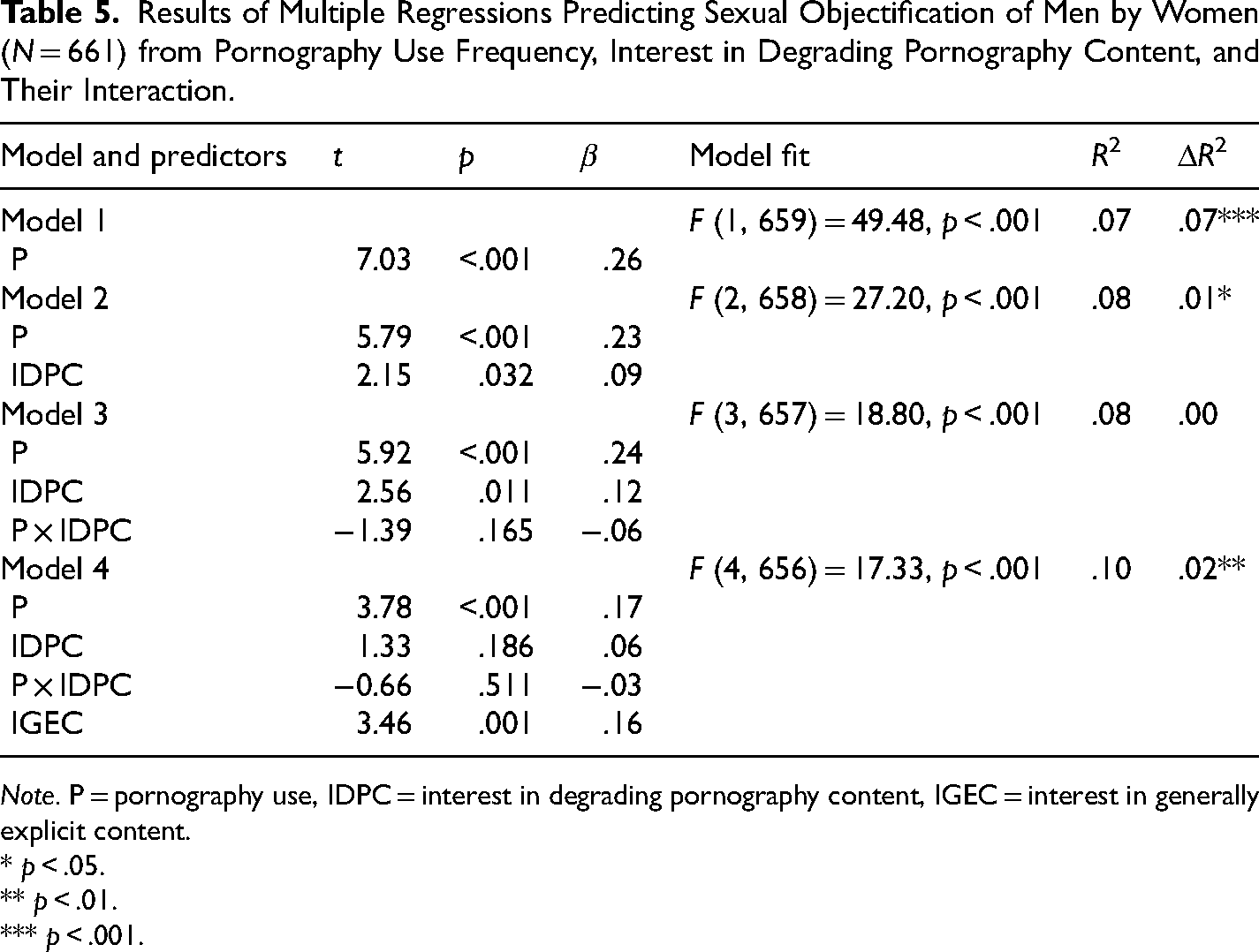
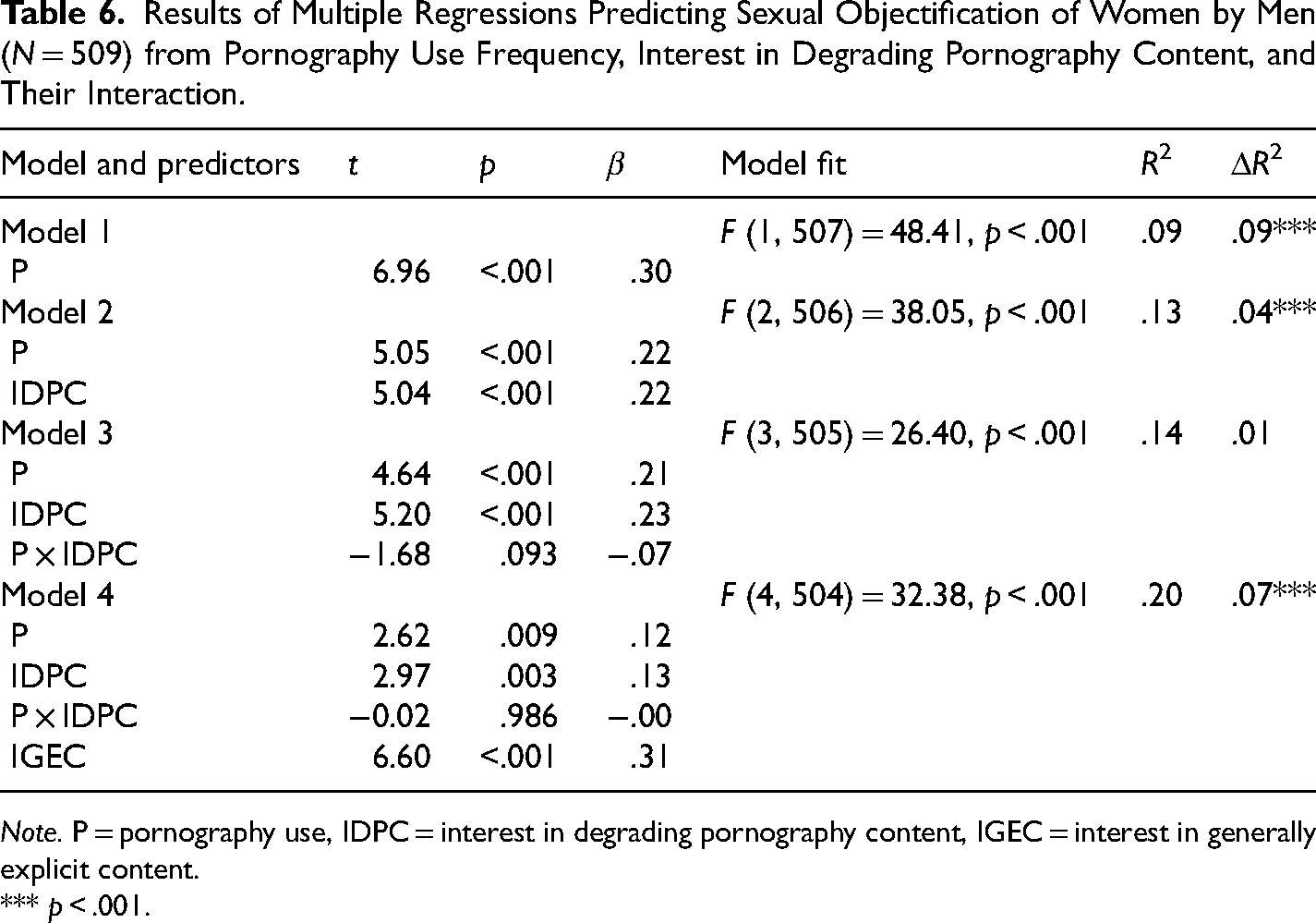
Consistent with the first hypothesis, higher pornography use frequency was associated with greater sexual objectification of different-sex others in both women (Table 5) and men (Table 6). In women, pornography use frequency explained 7% of the variance in sexual objectification of men scores. In men, pornography use frequency explained 9% of the variance in sexual objectification of women scores. These correspond with a small to medium size effect (Cohen, 1988).
Results of Multiple Regressions Predicting Sexual Objectification of Men by Women (N = 661) from Pornography Use Frequency, Interest in Degrading Pornography Content, and Their Interaction.
Note. P = pornography use, IDPC = interest in degrading pornography content, IGEC = interest in generally explicit content.
* p < .05.
** p < .01.
*** p < .001.
Results of Multiple Regressions Predicting Sexual Objectification of Women by Men (N = 509) from Pornography Use Frequency, Interest in Degrading Pornography Content, and Their Interaction.
Note. P = pornography use, IDPC = interest in degrading pornography content, IGEC = interest in generally explicit content.
*** p < .001.
Hypothesis 2
Consistent with the second hypothesis, interest in degrading pornography content significantly predicted sexual objectification of men by women after controlling for pornography use frequency, explaining an additional 1% of the variance in sexual objectification of men scores (a small effect). Also, interest in degrading pornography content significantly predicted sexual objectification of women by men, after controlling for pornography use frequency. Interest in degrading pornography content explained an additional 4% of the variance in sexual objectification of women scores, corresponding with a small effect.
Hypothesis 3
Contrary to the third hypothesis, there was no significant interaction or moderating effect between pornography use frequency and interest in degrading pornography content when predicting sexual objectification scores for either women or men.
Hypothesis 4
In women, pornography use frequency and interest in generally explicit content both significantly predicted sexual objectification of men scores, while interest in degrading pornography content did not. The final model with all predictors explained 10% of the variance in sexual objectification of men scores, corresponding to a medium effect. Consistent with the fourth hypothesis, in men both pornography use frequency and interest in degrading pornography content remained significant predictors of sexual objectification of women scores, even after controlling for interest in generally explicit content. Interest in generally explicit content was a strong, significant predictor of sexual objectification of women scores. The final model with all predictors explained 20% of the variance in sexual objectification of women scores, corresponding to a medium to large effect.
Discussion
Pornography use has been generally associated with higher rates of sexual objectification in both cross-sectional (Mikorski & Szymanski, 2017; Omori et al., 2011; Peter & Valkenburg, 2007; Wright & Tokunaga, 2016) and longitudinal (Peter & Valkenburg, 2009) surveys, as well as in experimental studies (Milburn et al., 2000). However, many prior studies have failed to include objectification of men (not just of women) and have not considered how the diverse types of pornographic materials people prefer might differentially relate to objectification of others. In our study, we addressed both limitations of prior work by including a gender diverse sample of heterosexual men and women, measuring objectification of different-sex others, and measuring interest in degrading pornographic content. We replicated prior work suggesting pornography use is associated with objectification of others. We also found a direct association of interest in degrading pornography content with objectification of others, but no evidence that the association between pornography use and objectification of others was stronger in people who preferred degrading pornography content. Finally, we found the associations between pornography use and objectification of others remained after controlling for general interest in explicit content.
Echoing previous work with men, but extending it to heterosexual women, in the current study the sexual objectification of different-sex others was predicted by pornography use frequency. The extension to women matters given the reality that women's objectification of men has historically been understudied. In part, this reflects broader, cultural phallocratic frames of sexuality that deny, minimize, and/or penalize women's sexual agency (e.g., Fetterolf & Sanchez, 2015; Maxwell & Aggleton, 2013; Wade, 2015). But women are sexual agents. And, although there exists an imbalance in the objectification of women (by men) and the objectification of men (by women) across mainstream pornography content (Bridges et al., 2010; Klaassen & Peter, 2015), the reduction of another human being to a body/thing to be used can be understood as harmful (Fredrickson & Roberts, 1997; Haslanger, 2012; MacKinnon, 1989; Stock, 2015) and is worthy of analysis.
Further, drawing on the important contributions of feminist scholars in highlighting the differences between explicitly degrading pornography and nondegrading pornography (see Senn & Radtke, 1990), the current study finds that interest in degrading pornography content explained variance in objectification above and beyond pornography use frequency. Consistent with social learning theory and sexual script theory, pornography use frequency predicted objectification of different-sex others in both men and women. Pornography in general focuses on men and women as instrumental objects of sexual gratification, but degrading content in particular puts objectification of others (especially women) at the forefront of the storyline. The video descriptions that indexed interest in degrading pornography content used words such as being “reamed,” “drenched,” and used direct and potentially vulgar terms to describe sexual acts such as ass-to-mouth, cum shots/loads, cocks, and anal sex. In contrast, the video descriptions that indexed interest in generally explicit content referred to cunnilingus, fellatio, body licking, and gorgeous bodies that were hard to resist. It is possible that people who found more uncensored descriptions of sexual actions interesting are also people who objectify others. That is, there may be an association between interest in degrading content and objectification that is not strictly related to pornography use but a more general way of seeing different-sex others—a more utilitarian approach to relationships.
Contrary to our expectations, we did not find a significant moderating effect of interest in degrading pornography content on the association between pornography use frequency and objectification of different-sex others. Instead, each variable exerted a main effect on objectification, with increases in either variable relating to increases in objectification of women. We see a few possible explanations for our findings. First, in general popular pornographic content has some implicit, even if not explicit, degradation. For instance, one of our films indexing interest in general sexual content described a sexual encounter in which an employee is unable to resist the sexual appeal of his boss's daughter—a title that hints at an age (and therefore power) difference. Accordingly, it is possible that because most pornographic content has some measure of degradation, interest in explicitly degrading content was not potentiating the association between pornography use frequency and objectification. Second, in general participants in our study did not find degrading pornography content to be of high interest- Average scores for both men and women were in the bottom third of the scale and we found significant positive skew in the variable. Finally, our measure of interest in degrading pornographic content is not equivalent to a measure of degrading content in the pornography people actually watch—it is possible people were interested in degrading content but in practice typically view explicit materials that are not as degrading. Measuring content of pornography actually consumed by participants will be important in future studies.
A critique of research on the effects of pornography use has been a relative lack of attention to sex drive. Recent studies that have assessed sex drive find it is positively associated with pornography use frequency (e.g., Leonhardt et al., 2021), although we found no studies examining sex drive and sexual objectification of others. We attempted to address this critique by including a variable of interest in generally explicit content in the final step of our models. When we did so, we found frequency of pornography use continued to be associated with objectification of different-sex others in both men and women. In men (but not women), interest in degrading pornography also continued to be associated with objectification of others. As such, we do not think that sexual objectification of others is simply a proxy for high sex drive. Instead, we see it as a relational stance one takes with respect to others: Are relationships utilitarian and instrumental—that is, are they focused on what one can personally gain from this other person? Or are they focused on humanism—that is, someone's worth for their own sake? It would be interesting for future studies to incorporate measures of relational perspectives on the links between pornography and objectification.
Limitations and Future Directions
The findings of our study are limited by several factors. Our data were cross-sectional in nature. Although pornography use tends to precede engagement and interest in sexual behavior (Peter & Valkenburg, 2007; Ward et al., 2015; Wright, 2012), we could not determine the temporal ordering of our variables. In addition, our research participants were heterosexual, primarily college-aged men and women, residing in the United States, and largely non-Hispanic White. The generalizability of our results is therefore limited. Future studies should consider extending these findings using more diverse samples and exploring longitudinal designs.
We did not provide our participants with a definition of pornography in the survey. Therefore, we are not sure of what kinds of media people would have considered in their responses. While a shared understanding of pornography as sexually explicit videos on pornography websites and in pornographic magazines or movies is likely, some participants may also have considered explicit comic books, erotic novels or stories, lingerie advertisements, or even sexual health reference materials. Future studies may wish to more clearly define “pornography” when assessing frequency, especially given there are gender differences in preferences for types of explicit media (e.g., Chadwick et al., 2018).
Our measure of sexual objectification was unique compared to previously used measures in that it (a) assessed sexually objectifying behaviors rather than attitudes, and (b) assessed women's sexual objectification toward men rather than toward other women. While items are consistent with items assessing sexual gaze and objectification behaviors (e.g., Hollett et al., 2022; Kozee et al., 2007), this measure did not undergo stringent validation procedures. Given our measure of sexually objectifying attitudes was similarly associated with pornography use and gender, as previous studies have concluded, our study provides some preliminary evidence of the measure's validity. Nonetheless, further evidence regarding the psychometric properties of this measure would be welcomed.
Conclusions
In young heterosexual people, pornography use is common (Grubbs et al., 2019). Decades of research on pornography use reveals it is largely motivated by pleasure-seeking and related to intrapersonal and interpersonal variables, including a more instrumental view of sexual interactions (for a review, see Grubbs et al., 2019). Our study adds to this literature by demonstrating that higher pornography use frequency is associated with the sexual objectification of different-sex others, even when controlling for interest in degrading pornography content and a general interest in sexually explicit media content. It may be that pornography use both reflects and reinforces a utilitarian versus relational view of potential sexual partners.
Footnotes
Appendix
Instructions: Here is a list of popular pornographic movies. The titles and brief synopses contain graphic and sexual language that was taken from the DVD covers and reviews. Please indicate how interested you would be in watching each of these movies (1 = not at all interested, 9 = very interested).
Declaration of Conflicting Interests
The authors declared no potential conflicts of interest with respect to the research, authorship, and/or publication of this article.
Funding
The authors received no financial support for the research, authorship, and/or publication of this article.
