




Abstract
Successful intimate partner violence (IPV) safety, advocacy, and intervention programs require recruitment and retention of persons of experience and commitment. To examine lived experiences of IPV advocates working in transitional shelter programs for women exiting IPV relationships, focus group discussions of 15 transitional housing and IPV shelter caseworkers were analyzed using the Colaizzi seven-step phenomenological method of analysis. Several themes emerged through the analysis, including historical, intergenerational pathways to IPV work and unity in sisterhood with IPV clients. The seven-step Colaizzi method is presented with examples of how each Colaizzi step yields an understanding of what motivates and sustains IPV caseworkers.
Keywords
Intimate partner violence (IPV) shelters are a critical resource for women experiencing IPV. IPV impacts over one-third of women in the United States and is associated with significant individual and societal costs (Basile et al., 2022). IPV includes behavior “in a romantic relationship including current or former spouses or dating partners” (Leemis et al., 2022) such as physical violence, sexual violence, stalking, psychological aggression, and cyber violence (Breiding et al., 2015; Pineda et al., 2022). IPV survivors may require housing and economic resources in order to maintain safety when exiting IPV relationships. When transitioning out of violent relationships, IPV shelters provide a safe space for many IPV survivors to gain support including housing, financial, educational, and job retraining resources (Kulkarni, 2019; Perez et al., 2012). In the United States, there are nearly 2,000 active programs serving victims of IPV (Violence, 2020). Additional services offered by IPV shelters include emergency shelter and transitional housing support, children's support or advocacy, court accompaniment or legal advocacy, transportation, and support/advocacy related to mental health (Lyon et al., 2008; Robinson et al., 2020). IPV transitional housing programs, in particular, have been identified as a critical component of IPV shelters, as this longer-term infrastructure affords survivors stability and safety while rebuilding their lives following IPV. Transitional housing programs receive funding from the US Congress via the Violence Against Women Act (Sacco, 2019).
IPV shelters and transitional housing programs depend on advocates or IPV caseworkers to guide survivors to resources to enable their successful skill development for safe transition to independent living (Robinson et al., 2020). Indeed, IPV caseworkers play an integral role in ensuring clients receive services and retain personal autonomy (Folgheraiter & Raineri, 2012). Despite the importance of IPV caseworkers in the administration and provision of support for IPV survivors utilizing shelter and transitional housing services, little is currently known about caseworkers’ path to their profession and retention in their field. Social workers and advocates working with IPV survivor populations have been found to suffer from high rates of work-related stress, burnout, and turnover. Research has largely focused on stress or difficulty encountered by caseworkers in their profession, including the impact of the traumatic nature of their clients’ experiences and often limited resources available to them. For instance, a recent study of IPV shelter workers found that a majority of respondents reported that they believe they have a positive influence on their clients’ lives but are simultaneously frustrated by their work (Brown et al., 2020). In addition, several studies have been conducted focused on factors related to burnout for IPV caseworkers, such as secondary traumatic stress (Slattery & Goodman, 2009) and compassion fatigue (Kulkarni et al., 2013). A recent qualitative study with 12 domestic violence advocates found significant turnover among staff at shelters (Philyaw, 2021). This study also found that domestic violence advocates faced challenges in practicing self-care to reduce the harmful burden of stress. Other qualitative studies have examined workplace culture's impact on turnover. Merchant and Whiting (2015) interviewed IPV advocates and concluded that less supportive workplace cultures were associated with increased rates of turnover and increased discussions of necessary macro-level change in the field. Researchers in the United States and Canada found that IPV service providers struggled with distrust of systems when advocating for gender minority or immigrant clients (Merken et al., 2023). Quantitative studies have also examined burnout and turnover among IPV caseworkers. A study of n = 236 caseworkers found that unmanageable individual caseloads and insufficient supervision resulted in increased secondary traumatic stress symptoms and turnover (Kulkarni et al., 2013); these findings were echoed in other studies which underscore the importance of workplace culture and organizational support (Grant, 2014; Slattery & Goodman, 2009). In another study with IPV advocates working with South Asian IPV survivors, authors reported that funding concerns and quick turnover issues among staff decrease the quality and quantity of services provided by agencies (Murugan et al., 2023). However, extent research has not included an emphasis on the recruitment and retention of IPV caseworkers, despite the impact on both caseworkers themselves and the clients they serve.
Research in social work and related fields has recently expanded to include a focus on positive psychology constructs such as resiliency and positive psychological capital (Luthans et al., 2004). A recent mixed-method study with social workers found that positive psychological capital, defined as a psychological resource that encapsulates resiliency and hope for the future, was protective against adverse working conditions such as long hours and high demands (Ho & Chan, 2022). Social workers in this study with increased psychological capital were found to have higher job satisfaction and positive affect when compared with lower psychological capital peers. Other positive psychology inquiries in social work and “helping professions” have found that emotional resilience and retention are associated with reflective ability, emotional intelligence, social confidence, and social skills (Grant & Kinman, 2014). However, research has not yet examined how personal histories of IPV caseworkers may influence their professional journey to the IPV advocacy field and their retention in those positions.
The present study addresses this important gap in the literature by focusing on the lived experiences of caseworkers with a positive psychology lens by examining what brought them to the IPV field and their retention in their positions. To adequately recruit and retain the caseworkers required for successful transitional housing programs and to foster women and their children's maximum well-being, we sought to learn from the caseworkers the pathways that led them to IPV work, the enablers that sustain them to do the work, and the supports that allow them to remain in their positions despite the difficulties associated with their work. The present study utilized focus groups with IPV caseworkers from several transitional housing programs and IPV shelters in Houston, Texas. Focus group questions focused on IPV caseworkers’ journey to IPV work and their motivation to stay in the IPV field. Qualitative data were analyzed using the Colaizzi method of phenomenology (1978) to capture the caseworker's description of their lived experiences in the IPV field. The steps of Colaizzi analysis are described in detail to demonstrate the value of qualitative, phenomenological inquiry in describing and evaluating the subjective experience of the participants included in this study. The present study will help to fill an important gap in the literature to better understand how IPV caseworkers came to the field and why they stay despite its challenges.
Method
Design
This study used the Colaizzi seven-step method of phenomenological analysis and focus group data to explore IPV caseworkers’ journey to IPV work and their motivation to stay in the IPV field. Colaizzi emphasizes the need for flexibility in phenomenological research—as the “pursuit” of a phenomenon requires a deep and throughout exploration of meaning (Colaizzi, 1978). Each of the seven steps utilized in the analysis is described throughout the manuscript. Focus groups were utilized in this study to encourage interaction between study participants and elicit conversational responses. While individual interviews allow depth of topic discussion, qualitative focus groups have been found to produce a wider range of ideas and views than captured through individual methods (Guest et al., 2017).
Procedure
Participants were recruited via emails sent directly to IPV shelter and transitional housing groups asking if they would be interested in participating in a focus group about their work in IPV. Informed consent was obtained at the time of study participation. All study procedures were approved by the Institutional Review Board (IRB). A total of 15 caseworkers from seven separate organizations participated in one of two focus groups (n = 7 and n = 8, respectively). Participants received a $40 gift card as compensation for their time.
The two focus groups were conducted in person by one of the investigators and transcribed by trained research assistants. All data were deidentified and analyzed collectively by the research team. Focus group interview questions were semistructured, open-ended, and included “What was your journey to this (IPV) work?” and “What keeps you going in this (IPV) work?” Focus group questions were aimed at capturing subjective, lived experience of IPV caseworkers and used prompts to flexibly steer the topic toward research aim.
Data Analysis
Study analysis utilized Colaizzi's seven-step phenomenological method of qualitative data (Figure 1; 1978). The qualitative analysis was conducted manually. The first step of Colaizzi's method is to read and reread the transcribed interviews to obtain a full sense of the words that the participant shared during the focus group. While the aims of the research project were set in the interview questions, no a priori determinations were made regarding phenomena. Step 1 was performed by all of the authors.
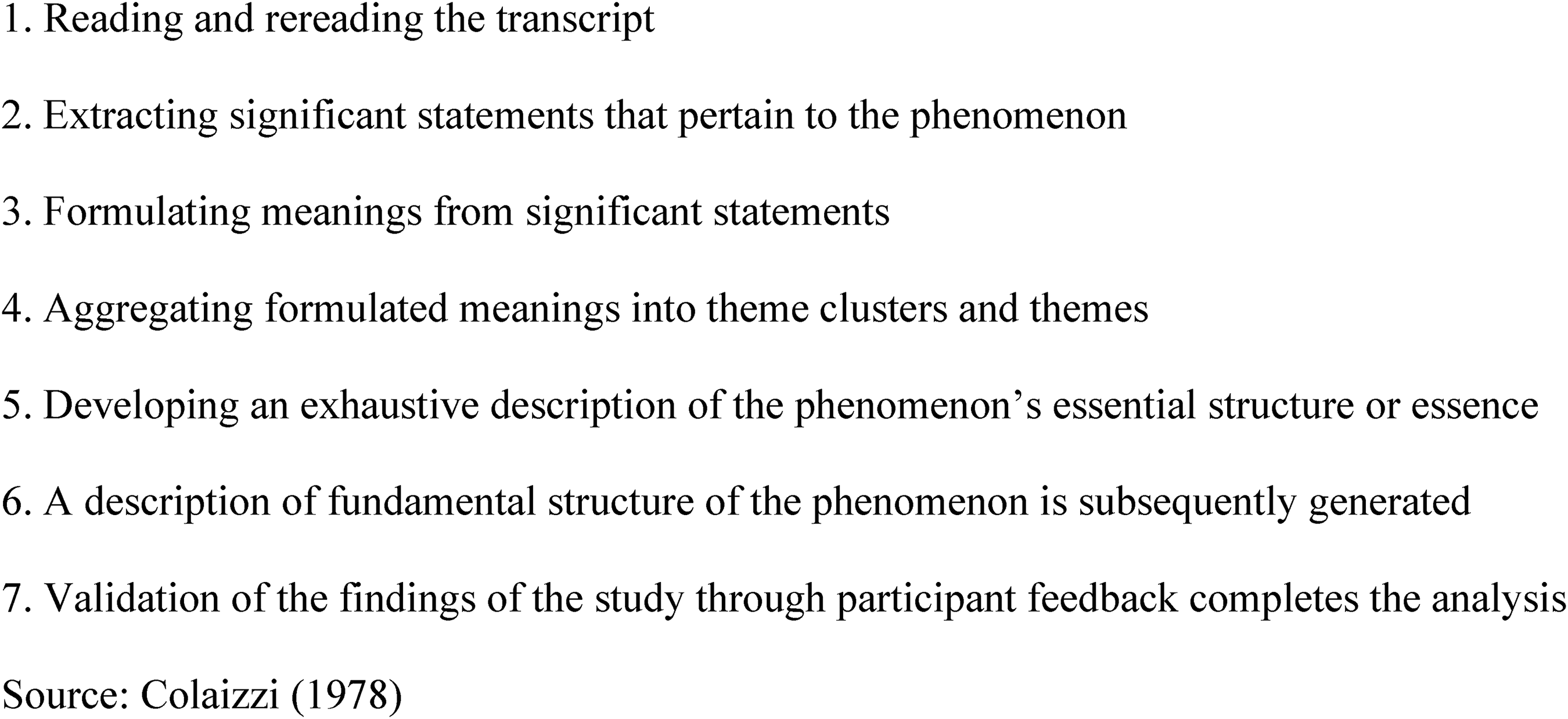
Seven-step data analysis method.
Step 2 of Colaizzi's method is to extract significant statements that pertain to the phenomena. Significant statements are all statements contained in the interviews of direct relevance to the phenomenon under study (Morrow et al., 2015). All significant statements were carefully extracted to retain their context. Each statement was associated with the deidentified label given to them (Person A), along with the line number and page number from the source material. For this study, the study aims included the path to IPV work and the motivation to stay in the field. Therefore, statements regarding either of those two aims were included as significant statements. This step was performed by the first author and second author and verified by the other authors.
Step 3 of Colaizzi's method is to formulate meaning from significant statements. The meanings were carefully considered for each statement. Analysis includes interpretation of the direct words given by the focus group participant. Colaizzi emphasizes staying those to the phenomenon and requires effort to remove the coder's own interpretation or biases. Although Colaizzi's method recognizes that complete bracketing (removal of the coder's own biases) is never truly possible. Formulation of meanings was performed by the first author and second author and verified with the other authors to capture multiple interpretations for each significant statement.
Step 4 of Colaizzi's method is to aggregate formulated meanings into theme clusters and themes. Similar formulated meanings with common ideas or themes were grouped together based on observations of the text to create cluster themes. Related cluster themes were then aggregated to create themes. Coders were mindful to not inform theme clusters or themes by any theoretical basis or external knowledge in accordance with Colaizzi's emphasis of phenomenology in the text. After the themes were extracted, each transcript was reread again to determine accuracy and authenticity of the themes with the overall text of the participants. Thematic analysis was performed by the first author and second author.
Step 5 of Colaizzi's method is the development of an exhaustive description of the phenomenon, fully encompassing the themes created in Step 4. All themes, cluster themes, formulated meanings, significant statements, and transcripts were reviewed again in order to examine any contradictions and nuances in the phenomena. The first author developed the exhaustive description, and the full authorship team reviewed and validated description of the phenomena.
Step 6 of Colaizzi's method is to remove any redundant or misused information, in order to distill the essence of the phenomena. The production of the essential structure of the phenomena incorporates the fundamental components of the themes. The first author performed this step.
Step 7 of Colaizzi's method is to validate the exhaustive description and fundamental structure of the phenomena. Themes and the fundamental structures were presented to a subset (n = 4) of the original participants to ensure the validity and authenticity of the analysis. Consistent with the procedure of the Colaizzi method, a subset of focus group participants was included in the validation step (Colaizzi, 1978). The first author and second author performed this step with the participants. This meeting took place virtually and participants received a $20 gift card as compensation for their time.
Results
Illustrating the Colaizzi Method
After reading and rereading the text (Step 1), significant statements were extracted from the text (Step 2) which were related to the two research aims: “What brought you to work in IPV?” and “What keeps you going?”. Meanings for significant statements were formulated individually by coders but discussed and finally determined collaboratively in an iterative process. For example, the significant statement “I knew in high school I wanted to be a social worker” was represented by the formulated meaning that this participant has had a long-standing passion and “lifelong work with IPV.” See Table 1 for examples of formulated meanings from significant statements.
Formulated Meanings From Significant Statements.
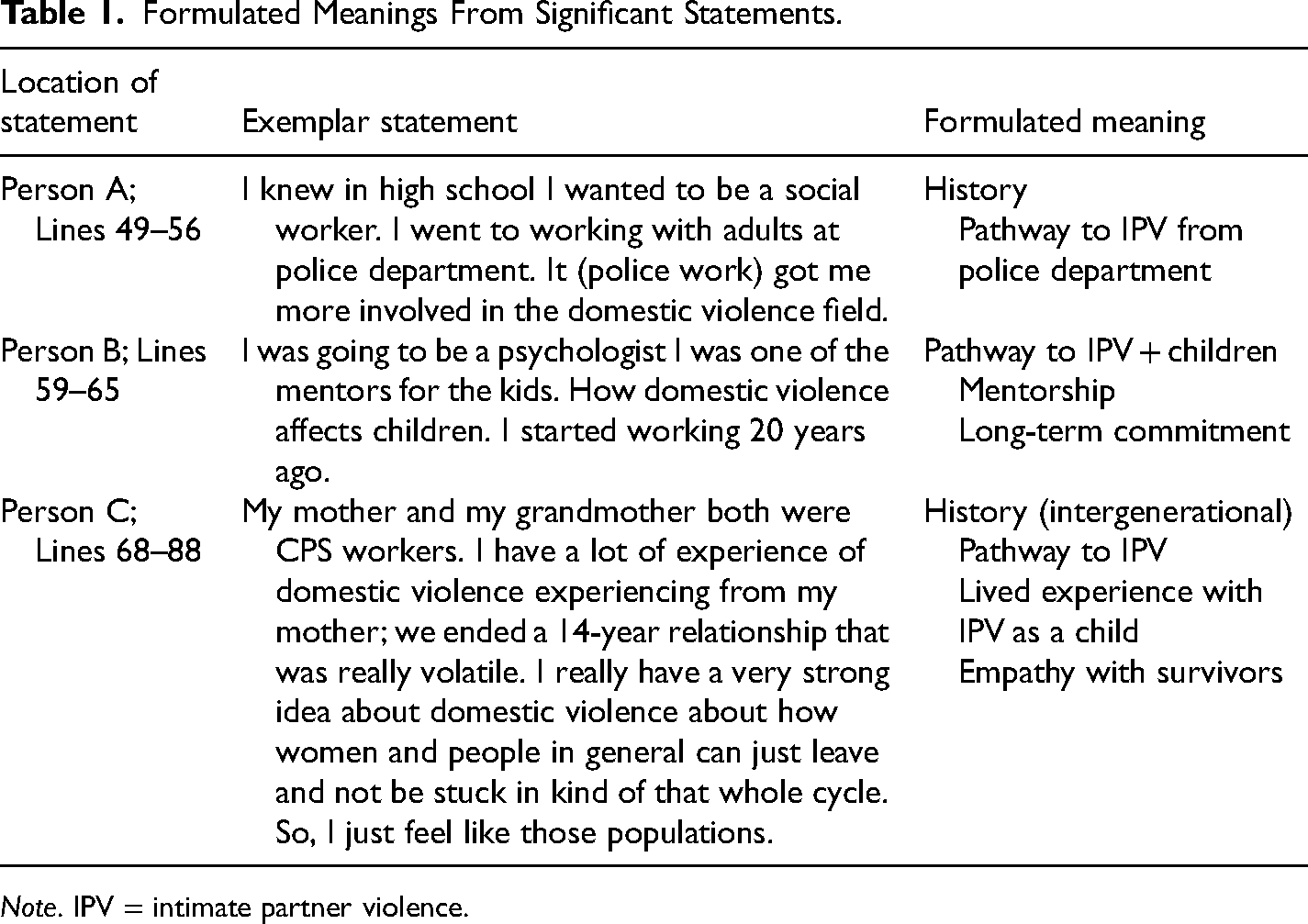
Note. IPV = intimate partner violence.
Following the construction of formulated meaning for significant statements, meanings were aggregated into cluster themes based on common content and expression. Related cluster themes were incorporated into themes via iterative discussions between the first author and second author, as well as with the full authorship group (Step 4). For example, significant statements describing long-term experiences with IPV in both personal and professional domains (since childhood, for multiple decades) with formulated meanings “lifelong experiences with IPV” were aggregated to create the cluster theme “historical pathway to IPV.” Cluster themes of “historical pathway to IPV” and “Intergenerational pathway to IPV work” were aggregated to the emergent theme “Historical Intergenerational Pathway to IPV work.” This theme captures both the long-standing passion and knowledge of IPV personal experiences and work of the participants but also the family and mentorship connections that brought them to the IPV field. See Table 2 for examples of cluster themes and Table 3 for thematic analysis.
Constructing the Theme Clusters.
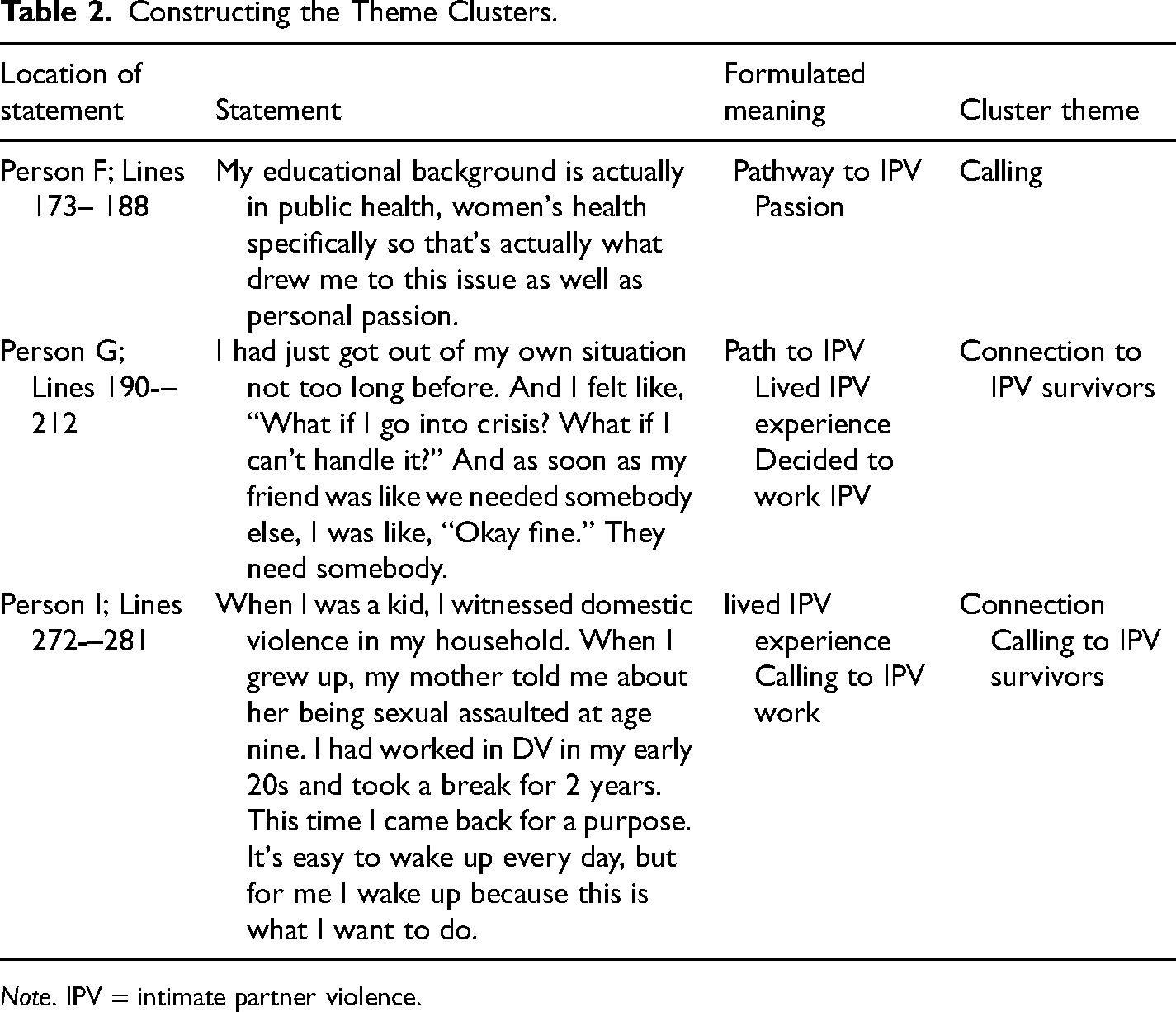
Note. IPV = intimate partner violence.
Integrating Thematic Clusters into a Theme.
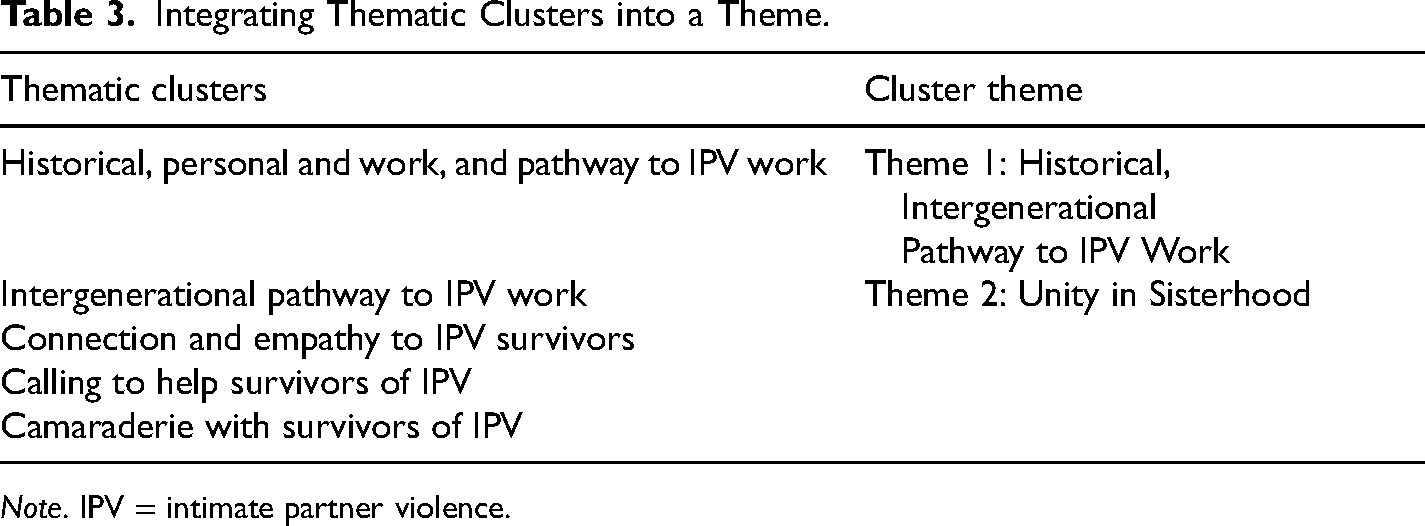
Note. IPV = intimate partner violence.
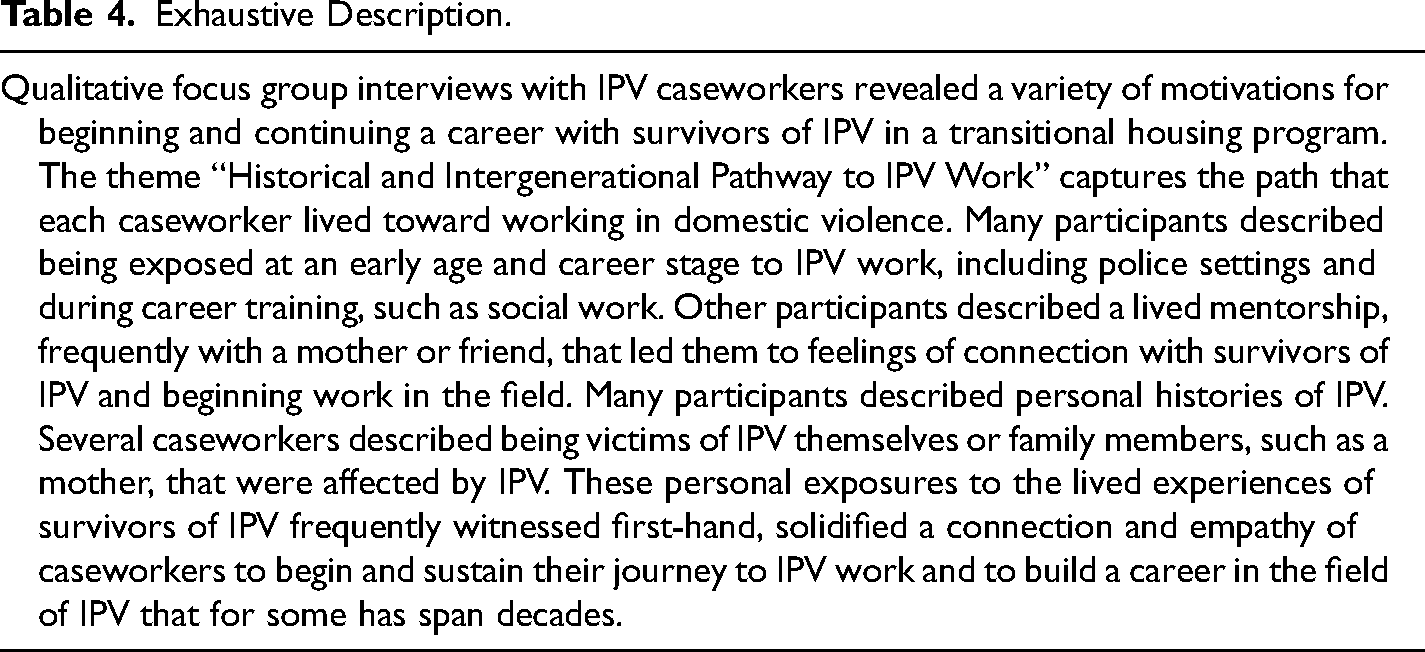
An exhaustive description was developed to fully encompass the phenomena observed in the focus group transcripts in this study (Step 5). The full transcripts, significant statements, formulated meanings, cluster themes, and themes were reviewed again. An excerpt of the exhaustive description is included in Table 4.
Exhaustive Description.
The essential structure of the phenomena was developed by removing any redundant or misused information in order to distill the essence of the phenomena (Step 6). This essential structure was then presented by the first author and second author to a subset of participants (n = 4) from the focus groups for validation (Step 7). Each participant indicated that our qualitative findings rang true for her and her experience. When asked whether each participant saw herself and her story in our findings, each participant indicated that she did.
Findings
Participants described long-standing passion for and personal connection to their work in with survivors of IPV. Many participants described meaningful experiences in their early lives that influenced their career paths. They also described the reinforcing personal satisfaction and connection to their work that retains and sustains them throughout difficult work with their clients. The subjective experience and individual history of each participant informed their experiences with both finding their path to IPV work and their journey and determination to remain in their position.
Theme 1: Historical, Intergenerational Pathway to IPV Work
The theme “Historical, Intergenerational Pathway to IPV Work” captures the path that each caseworker took to be exposed to working in IPV advocacy. Many participants described being exposed at an early career stage to IPV work including in forensic settings or during training. For example, Person A described a long-standing interest in social work and her professional journey from working with children to adults. Person A: I’ve known since high school I wanted to be a social worker, so I originally wanted to work with children, but then I wanted to do something different. So, I went to working with adults at [redacted] Police Department. That was interesting. It got me more involved in like the domestic violence field.
Other participants described a formative and important mentorship that led them to begin work in IPV. Person C described an intergenerational family history of IPV work and Child Protection Services.
Person C: “My mother and my grandmother both were CPS workers.”
Still other participants described personal histories impacted by IPV. Several caseworkers described being victims of IPV themselves or family members that were affected by IPV.
Person E: “I remember lots of times going through hard things and domestic violence with my mom. I feel like I want to be that person that I needed.”
Person G: “When I started off with social work … I had just got out of my own situation not too long before. And I felt like, ‘What if I go into crisis? What if I can’t handle it?’ And as soon as (I learned that a position was open), I was like, ‘Okay fine.’ They need somebody.”
These personal exposures to the critically important work of IPV caseworkers were integral to the participants’ journey to IPV work and their passion for beginning a career in this field.
Theme 2: Unity in Sisterhood
The theme “Unity in Sisterhood” captures participants’ words relating to the connection they described feeling with their clients which drew them to IPV work. Many IPV caseworkers included in this study provide a large variety of support and service to their clients including connecting them to support with housing, childcare, medical care, and legal aid, among serving their other needs. Many participants shared feelings of wanting to empower their clients to find strength and success despite their difficult circumstances. Person D described the personal and familial connection she feels to her clients in empowering them: Person D: I have come from a generation of women; strong black women—like my grandmother. We have this strong bond of women that have empowered them and have encouraged them … if you can be that voice and say, “This is something that you can do yourself”.
Other participants described feelings of walking alongside their clients through their trauma and progress, resulting in a feeling of connection and camaraderie with their clients because of their shared experience. Person D describes her experience of feeling “the same” as her clients and drawing on parallels between her life and her clients’: Person D: So even with the clients that I serve, I mean, I’m not any better than them, you know because we compare our lives, you know “I deal with that too, I’ve dealt with that as well.” So just coming from a place of being who they are, who we are. So we are all the same, just different paths in life.
Person A describes how her own experience informs her work as an IPV advocate: Person A: …being that constant person for them. I think that's what I get out of it. in my life, I can remember times where I needed to speak to someone or I needed someone to lean on, and there was no support and I know how that feels, so making sure they don’t feel that while I’m their case manager.
This theme builds upon the “Historical, Intergenerational Pathway to IPV Work” theme, as several participants described wanting to empower their clients due to their shared experiences and backgrounds. Participants described their self-reflection and social justice orientation in working to empower their clients who had experienced violent abuse. Person A discusses the privilege she observes in her own experience and the social justice orientation of seeing her clients as “five steps behind” due to inequality, before they entered an IPV relationship: Person A: I grew up kind of sheltered, and just seeing some of the things I took advantage of, and just knowing basic things that other people didn’t have the opportunity [to have]. It just makes me sad, like you know, just acknowledging the privilege that I had and seen… Seeing how they may never have that. It's going to be a really long journey for them. Especially since we are getting them right after they are exiting their relationship. There's a lot rebuilding that needs to happen. They were already five steps behind before that relationship, and it's supporting them and healing and also advancing their goals.
Several participants described the long-term change they observe in working with clients while they “walk the journey” together with them, including setting and achieving goals. Person A describes how she meets the client where they are at on their journey: Person A: I may think that “Ok, you need to get your GED and then start the CNA program and get a job and move forward.” And they are just like, “No, I just need a job right now. I just want to—I finally have a roof over my head. It's stable, I don’t have to do anything for it.” to a certain extent. They just want to maintain and be—just be for a little bit. Um, and that's kind of hard for me because I’m like “No! Achieve your goals” and they’re like, “This is my goal”.
Person E discusses how she shares in her clients’ accomplishments and celebrates their steps toward their goals: Person E: I think a lot of—for me what I do is—you know, like… Like their families and things tend to see progress in those big things. You know like you got a job, you finished a certification, or something big. And a lot of time with the clients, especially in the beginning, like the big thing—it may not be the big thing. Their successes may be that they took a shower four times this week, you know. And so, um, you know like reminding them of those when you feel like they’re not making progress and celebrating those little things until they become the bigger things. Um, so I think, I feel like…for me, I do a lot of that. I feel like that's what we do.
Participants also reflected on the long-term change they observe in the coping skills they are able to instill in their clients which they feel will the clients will carry with them long after they are out of the transitional housing program. The social justice and service orientation that participants describe significantly contributes to their ability to stay the course in their careers. Person F describes the importance of building progress that will maintain after the clients leave her service: Person F: “This is how you can manage that depression and anxiety. Because those skills are going to stay with them forever even after I’m gone, so that's what I want to do.”
Discussion
We analyzed focus group data from IPV caseworkers discussing their lived experience in their career paths in IPV. Focus group topics focused on what brought them to the IPV field and what keeps them going in their positions. Phenomenological qualitative data analysis was utilized to extract themes using the seven-step Colaizzi method. Two major themes emerged, the first centered on the historical, intergenerational path to IPV work that study participants described, and the second emphasized the unity in sisterhood with IPV survivors that caseworkers discussed. Both of these themes allow valuable insight into how quality persons can be recruited and retained in this essential field of IPV case management.
Phenomenological analysis revealed that caseworkers’ journeys to the IPV field had remarkable similarities, even across the diverse group of caseworkers present in the focus group and the array of IPV organizations they represented. The themes of historical, intergenerational paths to IPV and unity in sisterhood underscore the significance of mentorship and personal connection to the field, as well as the connection that caseworkers feel and experience with their clients. This is vital, novel information that lived experience of IPV as a child or personal experience with IPV can influence career paths to work with survivors of IPV. While exposure to IPV constitutes a traumatic stress environment (Vu et al., 2016), this study points to a potential long-term path to working with IPV survivors associated with long-term fulfillment and career satisfaction. We additionally found that the motivation to stay working in the IPV field despite challenges was that caseworkers feel a significant connection and passion for working with the survivors. The experience of the caseworker working with a survivor and seeing progress in their lives, as well as the connection they may see to their own experience, is an important motivator to staying in the work.
These findings increase the understanding of IPV caseworkers’ path to IPV work and the motivations they identify to keep them going in the field despite its challenges. Qualitative data analyzed in this study point to potential mechanisms by which retention and recruitment of IPV caseworkers can be improved. Mentorship programs within IPV organizations may be one possible method of further strengthening camaraderie and unity of dedication to IPV survivors. Mentorship models may be able to leverage protective factors of lived experience and connection with IPV, as well as connection with others in the field. Consistent with a meta-analytic review's recommendations for retention in social work (Mor Barak et al., 2001), our findings support the idea of increased training to support job-related self-efficacy. Specific recommendations from Mor Barak et al. include peer-support groups and mentorship matching with new employees and more experienced colleagues (2001). A systematic review of interventions to increase retention among social workers identified organizational and administrative factors as most effective, such as availability of supervision and support from colleagues (Webb & Carpenter, 2012). Burnout and retention are significant issues for IPV caseworkers and IPV organizations serving survivors, so the findings of this study may be utilized by organizations seeking to improve caseworker retention to emphasize protective and preventative factors in order to increase retention.
This study fills an important gap in the literature, emphasizing IPV caseworker retention and recruitment utilizing phenomenological qualitative data analysis. However, this paper also possesses several areas that could be strengthened. Focus groups were conducted with a mix of rehousing program and IPV shelter caseworkers; other IPV practitioners/advocates’ perspectives will be helpful in gaining knowledge about the field as a whole. Further research should focus on strategies to emphasize these protective factors to fully leverage the findings of this study and translate them into practice. Additionally, while focus groups are high-quality sources of qualitative data due to their ability to draw a wide range of ideas and opinions, the nature of data is less controlled than individual interviews. Indeed, it is possible that one or several people could dominate the discussion, or other individuals may not have felt comfortable sharing their views. Still, we believe focus group data collection represents a strength of this study. Finally, while we believe these findings accurately reflect the data we collected with IPV caseworkers, it is possible that these experiences may not generalize to other IPV agencies or fields.
IPV caseworkers fulfill an essential need in the service of IPV survivors. Their demanding position, which is often associated with high traumatic stress exposure and burnout, must be better understood in order to improve the support and services they receive. This paper describes personal, long-standing connections of IPV caseworkers to the IPV field and the individual connection they experience with their clients. These strengths may be harnessed by future researchers or clinical providers to improve the support of IPV caseworkers in order to reduce burnout and identify persons who represent these personal connections to the field. Utilizing the themes that emerged in this study will result in a more supported IPV caseworker and a longer and more rewarding career for advocates working in IPV.
Footnotes
Acknowledgments
We wish to thank the IPV caseworkers who generously shared their time and expertise with us. We also acknowledge all IPV caseworkers with gratitude for their unflagging efforts toward the safety and well-being of women.
Declaration of Conflicting Interests
The authors declared no potential conflicts of interest with respect to the research, authorship, and/or publication of this article.
Funding
The authors disclosed receipt of the following financial support for the research, authorship, and/or publication of this article: this work was supported by the Eunice Kennedy Shriver National Institute of Child Health and Human Development (grant number R01HD102436).
