




Abstract
This mixed-method pilot study examined the application possibilities of a virtual courtroom to support survivors of sexual violence who may experience courtroom-associated distress. Female sexual violence survivors (n = 13) who had testified in court following victimization entered an interactive virtual courtroom replica. Their reactions were measured quantitatively and qualitatively. The virtual courtroom evoked both subjective and physiological stress. Participants perceived the virtual reality environment as similar to the real-life courtroom. Most reported negative experiences from interacting with the criminal justice system. The virtual courtroom is a possible future strategy to support survivors when reporting violence to the justice system.
Sexual violence includes any unwelcome sexual activity or attempt toward a person, often involving physical or psychological coercion (American Psychiatric Association, 2013). Sexual violence has been associated with multiple negative health outcomes such as depression (Kim et al., 2017), anxiety (Choudhary et al., 2012), and posttraumatic stress disorder (PTSD) (Kessler et al., 2017). Moreover, sexual violence is the most frequent cause of PTSD among women (Chivers-Wilson, 2006; Kessler et al., 2017).
Different forms of sexual violence are criminalized in law, but only a minority of survivors report it to the police (Mulder et al., 2020; Spohn & Tellis, 2012), and only a few of reported cases proceed to court, especially cases of rape (Krahé, 2016). Reasons for not reporting sexual violence to the justice system can vary and may include the relationship with the perpetrator, worries about interactions with the police, lack of social support, and various negative emotions (Jones et al., 2009). Survivors may also use a variety of strategies to neutralize the violence and rationalize non-reporting, such as by denying that the perpetrator had criminal intent, that no serious injury took place, or that the survivor may be at least in part to blame (Weiss, 2011). However, people may also be reluctant to report such crimes because they fear revictimization by the criminal justice system (Patterson et al., 2009; Rich & Seffrin, 2012) and more specifically, may fear going to court (Jones et al., 2009).
Survivors of sexual violence can experience the criminal justice process in different ways. Sometimes, survivors feel a sense of agency and empowerment when pursuing legal justice (Konradi, 1996; Laugerud, 2020). However, appearing in court and answering questions about the violence with the defendant present can be stressful and some survivors report experiencing the criminal justice process as retraumatizing (Konradi, 1996).
In most sexual violence cases, the survivors’ testimony is a particularly important source of evidence and vital to the successful prosecution of the case (Haskell & Randall, 2019). However, stress and anxiety can impact attention and decision-making (Robinson et al., 2013). Furthermore, adrenal hormones involved in the stress response negatively impact memory (de Quervain et al., 2003), particularly emotional memory (Kuhlmann et al., 2005), as traumatic memories often are. These cognitive skills are relevant to survivors’ testimony, which relies on memory, as well as on sustained attention and decision-making when listening to and answering questions from both the prosecutor and the defense lawyer. Factors that interfere with these cognitive processes, such as stress and anxiety, can therefore shape survivor recall and how well they can answer questions convincingly. Survivors are often aware that they need to manage their emotions when in court, both to feel in control and to be able to convincingly express themselves (Konradi, 1999).
Using Technology to Support Survivors of Sexual Violence
New technology has enabled the use of virtual reality (VR) for sexual violence survivors (Ólafsdóttir et al., 2019). VR is a computer-generated audiovisual technology where a head-mounted display system produces sensory information, and a tracker is used to update the image and sound depending on participants’ position and orientation (Freeman et al., 2017). Virtual reality can be employed in multiple ways in the courtroom, to explain evidence to judges and jurors, to help with identifying suspects, or to help prepare experts for the courtroom (Bailenson et al., 2006). Virtual reality can be used to support sexual violence survivors who are testifying in court, as users can experience novel or stressful environments before facing them in real life (Freeman et al., 2017). Virtual reality exposure therapy provides a promising alternative to real-life exposure and can be helpful for those too anxious to face the fearful stimulus in real life (Kothgassner et al., 2016). Virtual reality exposure therapy effectively treats clinical conditions, such as PTSD (Difede et al., 2006) and several phobias (Anderson et al., 2005; Rothbaum et al., 2006). Moreover, meta-analyses have shown large effect sizes compared to control groups and no significant differences from in vivo exposure (Carl et al., 2019; Emmelkamp et al., 2020). However, less is known about the utility of VR to address stressful life situations, such as testifying in court following sexual violence.
The success of virtual reality exposure therapy depends on evoking psychophysiological stress, providing the opportunity for habituation (Diemer et al., 2014; Kothgassner et al., 2016). The stress reaction is triggered by changes in the autonomic nervous system, which involves the sympathetic and parasympathetic divisions (Rudd & Yates, 2018). The stress-related responses of the autonomic nervous system involve three main protective behaviors: Fight, flight, and freezing. The fight-or-flight response involves elevated heart rate associated with sympathetic dominance, while the freeze response is associated with parasympathetic dominance and decelerated heart rate (Roelofs, 2017). The ultimate response varies and is dependent on which division of the autonomic nervous systems is dominant at the time. Both accelerated heart rate (Kudielka et al., 2004) and decelerated heart rate (i.e., bradycardia) have been observed in humans in response to stressors (Noordewier et al., 2020). Some VR environments elicit psychological and physiological stress reactions (Kothgassner et al., 2016; Sigurvinsdottir et al., 2021) and stress responses to VR can habituate after repeated exposure (Jönsson et al., 2010). However, not all VR environments designed for virtual reality exposure therapy produce stress reactions, and findings are conflicting on what sort of reactions are essential for VRET to work (see Diemer et al., 2014 for a review).
Icelandic Criminal Court Procedures
In Icelandic courtrooms, survivors encounter one to three judges, a prosecutor, the survivor's legal rights protector, the defendant, the defense lawyer, and a court secretary. A judge first addresses the survivor, who is then asked questions by the prosecutor, followed by questions from the defense lawyer. The survivor and the accused do not directly interact but are in the same space and sitting not far from each other. Before the year 2018, the standard was for three judges to sit each court hearing at the district court level, which has been amended to one today. This is a result of the amendment of Article 3 of the Laws on Criminal Procedure no. 88/2008, stating that three judges should decide on a case when the punishment might be severe or the case has a substantial public interest. When complainants are under the age of 15, they testify in facilities specially designed for children which usually takes place at the so-called Children's House. Here, the child is asked questions by a specialist from the Children's House. The judge, the child's legal rights protector, the prosecutor, the defense attorney, and a children's rights representative sit in another room and follow the interaction on a TV screen. They can then direct questions to the child via the specialist who conducts the interview. 1
The Icelandic legal system has characteristics that may impact survivors who come into contact with it. First of all, the system was previously described as inquisitorial, but is today largely based on adversarial principles, tempered by the inquisitorial notion that the aim of the criminal justice procedure is to shed light on the case to reveal the substantive truth. The principle of free evaluation of evidence is used and there are generally no rules on the admissibility of evidence, meaning that both the prosecution and defense counsel can introduce anything into evidence they find to be relevant to the case, unless the judge explicitly decides otherwise, unlike common law countries. Moreover, there is no jury system in Iceland (Antonsdóttir, 2018). In contrast to the adversarial legal systems in the common law countries, these aspects are considered favorable for complainants in cases of sexual violence as they are more freely able to give their testimony, the court room atmosphere is considered less antagonistic, and they are not subjected to possible jurors’ biases. In serious offenses, such as sexual violence, complainants have the right to the services of a legal rights protector paid for by the state. The role of the legal rights protector is to provide information and legal assistance to the complainant and help her or him to file a private compensation claim as a part of the criminal case.
Second, in Icelandic criminal cases, the complainant has the legal status of a witness. Sexual violence survivors are generally unsatisfied with this arrangement in what they consider to be their own case and have frequently reported a lack of support, information, and participatory rights in the criminal justice procedure (Antonsdóttir, 2018). This has led to the recent strengthening of the rights of complainants’ of serious offenses, such as sexual offenses, although their formal legal status remains the same, i.e., as witnesses (Law no. 61/2022). However, the participants in this study experienced the criminal justice procedure before these legislative changes were enacted. Before the legislative amendments, complainants had more limited rights to access information during the criminal investigation stage. They also had less participatory rights during the court procedures than they have now.
Third, even though the main rule of Icelandic law is the public nature of court hearings, according to Article 70 of the Constitution of the Republic of Iceland, court practice for sexual offenses has developed such that court hearings in such cases are generally closed. This has been allowed under Article 10 of the Law on Criminal Procedure, no. 88/2008, where a judge can decide, if necessary, to close the court hearings based on one or more of a set of criteria; either of his or her own volition or upon request from the prosecution, the accused or the injured party. 2 In fact, concerns about public exposure is one of the reasons women may be reluctant to report violence to the police (Jones et al., 2009). Before the legislative amendments, complainants did not have the right to sit in closed court hearings and observe the proceedings after giving testimony (Antonsdóttir, 2019). Now, however, complainants have the right to sit in court after giving their testimony, and their legal rights protector has the right to submit additional evidence and ask additional questions from the accused and witnesses after questioning by the prosecutor and the defense lawyer.
Finally, in standard courtroom procedures, the only person familiar to the survivor in the courtroom, apart from her or his legal rights protector, is the accused. However, according to Article 123 of the Laws on Criminal Procedure no. 88/2008, the judge may, in accordance with a demand by the prosecutor or a witness, decide that the defendant should exit the room while the witness is questioned if the judge considers that the presence of the defendant could be particularly difficult for the witness and influence the testimony. 3
Current Study
The current study is a pilot project of an ongoing study examining the utility of an interactive VR replica of the most frequently used courtroom in sexual violence cases in Reykjavik, Iceland (see Ólafsdóttir et al., 2019). We first sought to establish whether the virtual courtroom would meet the preconditions for exposure to be effective. Emotional reactivity was assessed quantitatively, with repeated distress ratings and heart rate reactivity. Based on previous studies showing that VR stimuli can evoke stress reactions (Kothgassner et al., 2016) and that the courtroom experience is stressful (e.g., Hutschemaekers et al., 2019; Parsons & Bergin, 2010), we hypothesized that the virtual courtroom would elicit subjective distress and physiological stress among sexual violence survivors who have previously testified in court.
Sexual violence relates to the subsequent development of PTSD (Kessler et al., 2017). Therefore, it is important to examine stress reactions in relation to PTSD symptoms as this group might benefit from enhanced treatment, prolonged exposure, and early interventions (Shalev, 2009). We therefore hypothesized that participants with PTSD would show enhanced subjective distress (Banducci et al., 2017; Pineles et al., 2013) and altered heart rate responses to the virtual courtroom (Lanius et al., 2010) compared to those without PTSD.
Participants’ experience of the actual and virtual courtroom was further assessed qualitatively, with in-depth interviews following the VR stimulus to better understand their appraisals of the virtual courtroom.
Method
Participants
A total of 16 participants enrolled in the study, which was conducted between December 2020 and June 2021. Two participants canceled their participation beforehand, and one did not meet the inclusion criteria. Therefore, the final sample (n = 13) consisted of female sexual violence survivors aged 20–48 years (M = 31.62, SD = 8.24), although the heart rate data were missing from two participants. Participants were recruited through advertisements at Reykjavik University, social media, and associations working with survivors of sexual violence, such as advocacy organizations and women's shelters. The inclusion criteria required participants to be at least 18 years old and to be sexual violence survivors who had testified in their own criminal case. The purpose of recruiting participants with prior court experiences was to establish whether the VR environment would be similar to being in that situation in real life. Other groups could also give valuable input on the VR environment, such as survivors of sexual violence who have not been to court themselves but would like to prepare for that future situation, which we explore in another study (manuscript in preparation). No compensation was offered for participation in the study, although all participants were offered a free session with a clinical psychologist. Ethical approval was received from the National Bioethics Committee in Iceland (VSN-20-061).
Data Collection and Measures
The PTSD Checklist for DSM-5 (PCL-5)
The PCL-5 was used to assess current PTSD symptoms. PCL-5 is a self-reported checklist containing 20 questions answered on a five-point scale (0 Never–4 Very frequently). The items were slightly modified to reflect symptoms associated with the sexual violence (e.g., how much individuals were bothered by: “Repeated, disturbing, and unwanted memories of the sexual violence”) for the past month (Weathers et al., 2013). Possible scores range from 0 to 80, and the cut-off value for PTSD has been suggested to be 31–33 (Bovin et al., 2015). The PCL-5 has excellent psychometric properties (Blevins et al., 2015; Bovin et al., 2015) and high internal consistency in the current study (α = .94).
Subjective Units of Distress Scale (SUDS)
The Subjective Units of Distress Scale (Wolpe, 1969) was used to assess the subjective intensity of distress before, in the beginning, and the end of VR. The scale is a self-report measure that requires participants to indicate their level of distress on an interval scale from 0 (No distress) to 10 (Extreme distress). The scale has been found to be a valid measure of both physical and psychological distress (Tanner, 2012).
Interview
Interviews with open-ended questions were conducted based on prior literature examining the effects of the courtroom experience for sexual violence survivors. Care was taken to formulate the questions in an open way, allowing participants to describe their own experiences and reactions. Participants were asked how they felt directly after using VR, and to describe both positive and negative experiences with both the VR and real-life courtrooms. Questions were posed in a neutral way and when relevant, participants were asked to give examples of negative and positive experiences, to ensure that a balanced view of the VR would be elicited. Participants were also asked whether they would suggest any improvements to the VR environment and if they believed the technology could be useful in this context in the future. Each interview took approximately 20 min, and all interviews were recorded and transcribed.
Apparatus
HTC Vive Pro
A virtual reality head-mounted display connected to a high-end desktop PC running Steam VR was used. It produces fully immersive graphics and sounds of a first-person experience. Moreover, it provides a room-scale stage up to 3 × 3 meters with head and hand-held controller tracking, allowing the participant to walk around and have contact with physical objects at fixed locations that are also present in the virtual environment, such as tables and chairs. The device uses two high-resolution (1440 × 1600 pixels) displays to render a clear stereoscopic image at refresh rates over 70 frames per second. The device also has built-in headphones that playback sounds positioned in 3D space. During the development of the virtual courtroom, several technical factors that are known to cause discomfort for users were carefully addressed and monitored. This includes tracking quality, image quality, and display framerate. All these factors lie within or surpass optimal operational ranges provided by best-practice VR guidelines (Yao et al., 2014).
Virtual Courtroom
An interactive virtual reality replication of a specific courtroom frequently used for sexual violence court proceedings was developed by Statum in cooperation with the chief judge and the deputy chief judge of the court (Figure 1). The courtrooms used for sexual offenses across the eight district courts and one appeals court in Iceland have a similar setup but vary in size. This could have some implications for the experience of sexual violence survivors, who may enter a situation which is similar to, but not identical to the virtual courtroom. In fact, the courtroom that the virtual courtroom was modeled after was on the smaller side, which a survivor in a subsequent study remarked was beneficial, because it meant that she was preparing for the worst-case scenario in terms of having to sit close to the accused (manuscript under review). The virtual courtroom includes six virtual persons typically present in sexual violence cases in the district court, including a simulated defendant and a judge that briefly interacts with the survivor. The virtual persons exhibit some motion to appear alive and can glance at each other or the survivor. When the survivor begins talking, all of the virtual characters look directly at the survivor. The development and initial evaluation of the VR courtroom has been reported elsewhere, with users showing no evidence of discomfort related to the VR technology and a strong sense of being present in the room (see Ólafsdóttir et al., 2019).
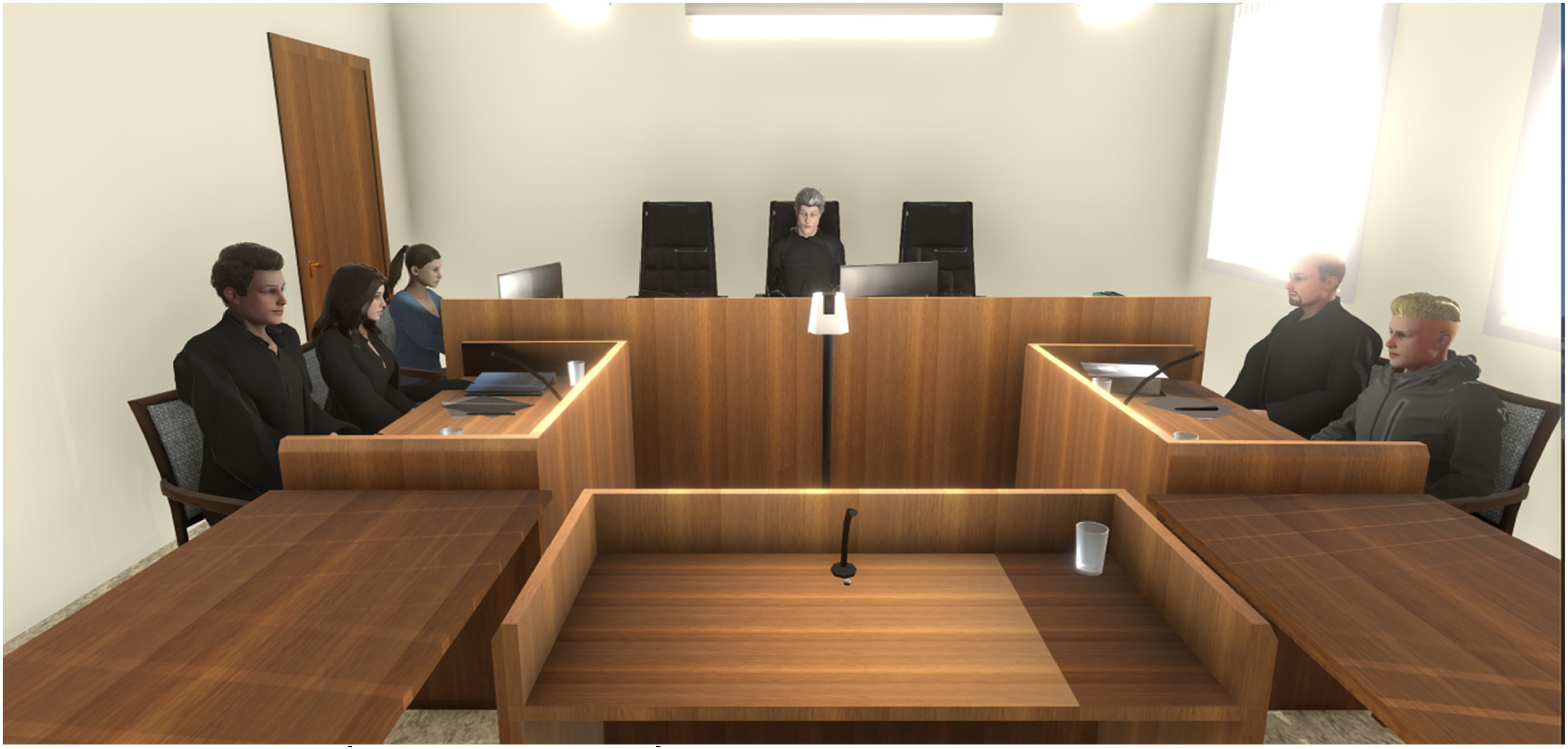
The virtual courtroom from the survivor's perspective.
Caretaker Wireless Wrist Monitor
Heart rate reactivity was measured with the Caretaker system. The Caretaker is an U.S. Food and Drug Administration and Conformité Européenne approved non-invasive device that allows for continuous beat-by-beat monitoring using a finger sensor (Caretaker, 2020).
Procedure
The study was conducted at a dedicated VR lab facility at Reykjavik University. First, all participants signed an informed consent. Next, the Caretaker wireless wrist monitor was applied, and baseline measures were recorded for heart rate. Subsequently, participants were asked to fill out questionnaires on a laptop computer. Before the VR, participants were asked to estimate how distressing the experience would be on a ten-point Likert scale from zero (no distress) to ten (extreme distress). Distress was rated again at the beginning and end of VR. After receiving information about the VR, participants were guided to the VR tracking area and assisted in putting on the head-mounted display and headphones. Once the virtual courtroom was activated, participants stood in the courtroom doorway and were asked to walk toward the witness stand and have a seat. The seating arrangement was identical to a district courtroom in Reykjavík (Figure 1), with the complainant's legal rights protector, prosecutor, and secretary on the left-hand side. The judge was sitting in an elevated position across from the participants and the defense attorney along with the defendant on the right-hand side. The participant's first task was to listen to the judge and answer questions regarding their name, address, and social security number, and then the participant had to state the reason why they had to attend court. This is an accurate simulation of an in vivo court room procedure as complainants in court are given considerable freedom to explain what happened to them in their own words in court without much or any interruption as per the legal principle of free admission of evidence which informs Icelandic criminal law. This is, however, where the VR simulation ended as the subsequent court room procedure of the complainant being questioned by the prosecutor and the defense attorney had not yet been developed. After the VR, participants were assisted in taking off the head-mounted display. Participants then filled out more questionnaires, and an in-depth interview was conducted. Participation took approximately 60 to 90 min for each subject. All data gathered were not identifiable.
Data Analysis
Quantitative Data Analysis
The heart rate measurements were averaged into six variables: A three-minute baseline measurement, the period during the first questionnaires, the beginning of VR, the VR interaction, the end of VR, and the final questionnaires. Participants were also divided into groups based on whether they met a cut-off score of 33 for PTSD as measured in this study (Bovin et al., 2015). Heart rate reactivity was analyzed with a mixed-design 2 × 5 analysis of covariance (ANCOVA), with groups (PTSD vs. not) as the between-subjects variable and five time points for heart rate during the session, controlling for baseline measures. A 2 × 3 mixed-design analysis of variance (ANOVA) was then conducted to compare differences in subjective distress across three times (before, during, and after the VR task) with groups (PTSD vs. not) as the between-subjects variable. Boxplots were used to test for outliers. Kolmogorov–Smirnov and Mauckley's tests indicated that the assumptions of normality and sphericity were met for all data analysis (P > .05). As these are preliminary findings based on a small sample, an alpha value of 0.1 was employed to avoid type 1 errors, as may be appropriate for small-scale clinical studies (Thiese et al., 2016). All data were analyzed with IBM SPSS Statistics for Windows, version 26.0.
Qualitative Data Analysis
Thematic analysis (Braun & Clarke, 2012) was chosen for the qualitative analysis as it offers an adaptable approach and helps identify meanings within the data. Thematic analysis was used to code the data from interviews with open-ended questions through the following phases: (1) familiarizing oneself with the data set, (2) generating initial codes, (3) searching for themes, (4) reviewing potential themes, (5) defining and naming themes, and (6) producing the final report. In interviews with open-ended questions, the initial codes were developed by a researcher and then reviewed by the research team until a consensus was reached. The analysis had a deductive focus (Saldaña, 2021), as it was focused on answering the research questions of how realistic the VR environment was, whether it evoked any emotions, what prior experiences participants had with the justice system, etc. However, information was also allowed to emerge from the text inductively (Saldaña, 2021), as participants were asked open-ended questions and had a variety of responses to them, which was especially the case with suggestions for technical improvements and how the VR courtroom could be used in the future.
Results
Of 13 participants, nine participants (69.2%) scored above the cut-off score for PTSD and scores ranged from 20 to 76 (M = 50.62, SD = 18.72). Valid heart rate measures were obtained from 11 (84.6%) participants. Eight (72.7%) participants with valid heart rate data met the PTSD criteria.
Distress in the Virtual Courtroom
Figure 2 shows subjective discomfort ratings and heart rate before, during, and after the VR session. A two-way repeated measures ANOVA with pairwise comparisons was conducted to determine the effects of the VR task on distress. Subjective distress increased over time, evidenced by a significant main effect of time on distress ratings, F(2, 22) = 26.53, P < .001, η p 2 = .71. Distress ratings were significantly higher at the end of VR compared to estimated distress, Md = −2.75, 95% CI [−3.79, −1.71], P < .001, and reported distress at the beginning of VR, Md = −2.82, 95% CI [−3.84, −1.80], P < .001. However, there was not a significant difference from estimated subjective distress to distress rated at the beginning of VR, Md = 0.07, 95% CI [−0.78, 0.92], P = .860.
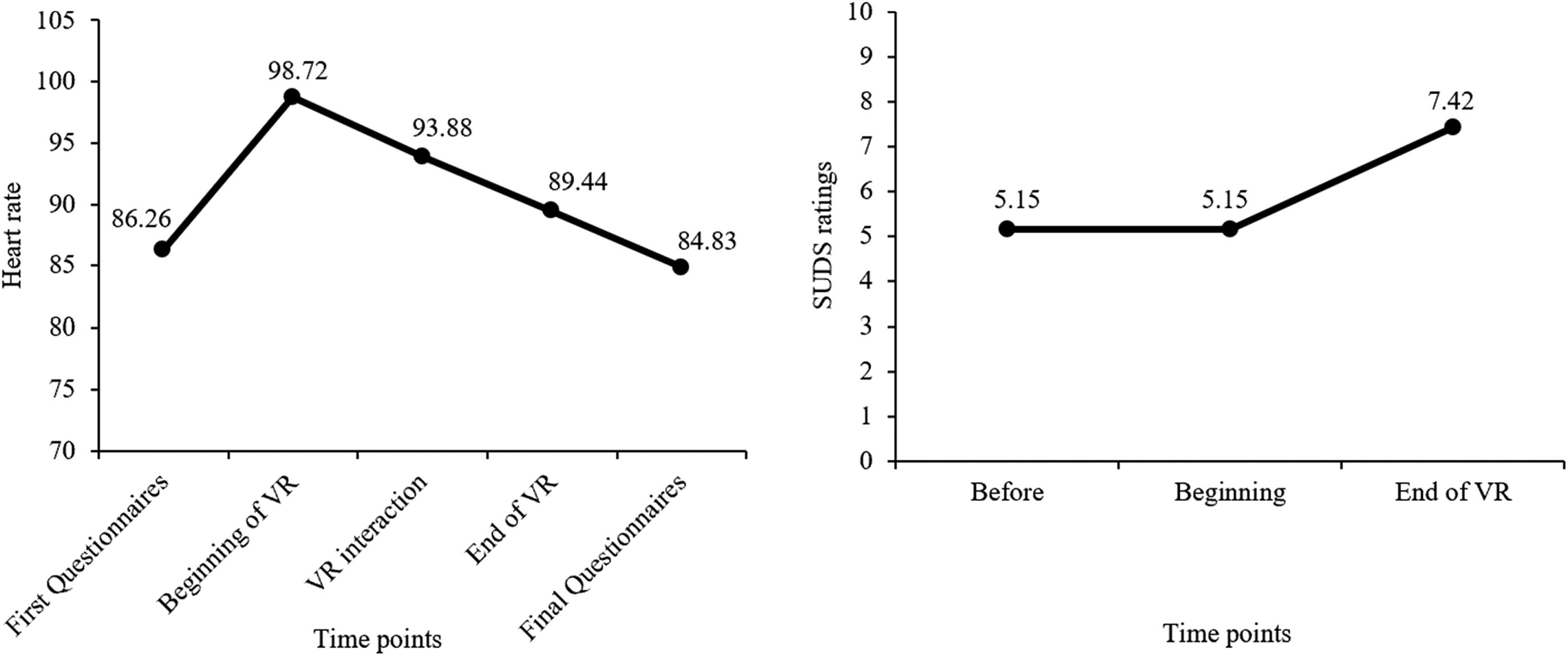
Changes in heart rate and subjective discomfort units of distress ratings (SUDS) over time for the whole sample.
Heart rate measures were analyzed with a mixed-design ANCOVA, controlling for baseline measures. Heart rate changed significantly over time, as the main effect of time was significant, F(4, 32) = 3.56, P = .016, η p 2 = .31. Table 1 shows that there was a significant increase in heart rate from the first questionnaires to the beginning of VR, followed by a significant decrease from the beginning to the end of VR (Figure 2).
Pairwise Comparisons for Heart Rate Across Time Points.
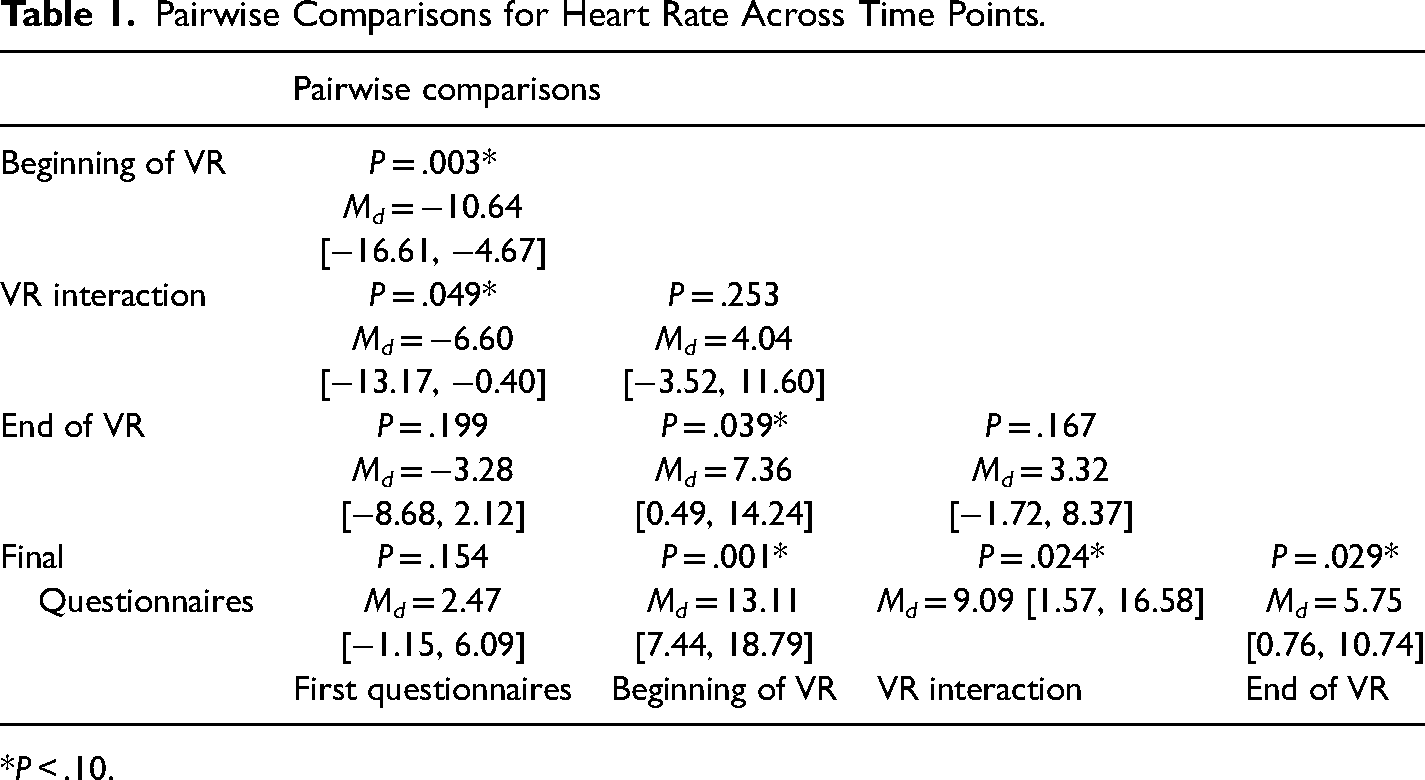
*P < .10.
Between-Group Comparisons
The main effect of PTSD on distress ratings was not significant, F(1, 11) = 0.47, P = .508, η p 2 = .04. However, there was a significant interaction between PTSD groups and time on subjective distress, F(2, 22) = 6.23, P = .007, η p 2 = .36, suggesting that the those who met the PTSD criteria reacted differently to the VR compared to those who did not. Participants who met PTSD criteria reported greater subjective distress for the first two time points than those below the cut-off score, but similar distress at the third time point (Figure 3). This shows that participants with PTSD were initially in more distress, but that the virtual courtroom was successful in evoking distress, regardless of PTSD status.
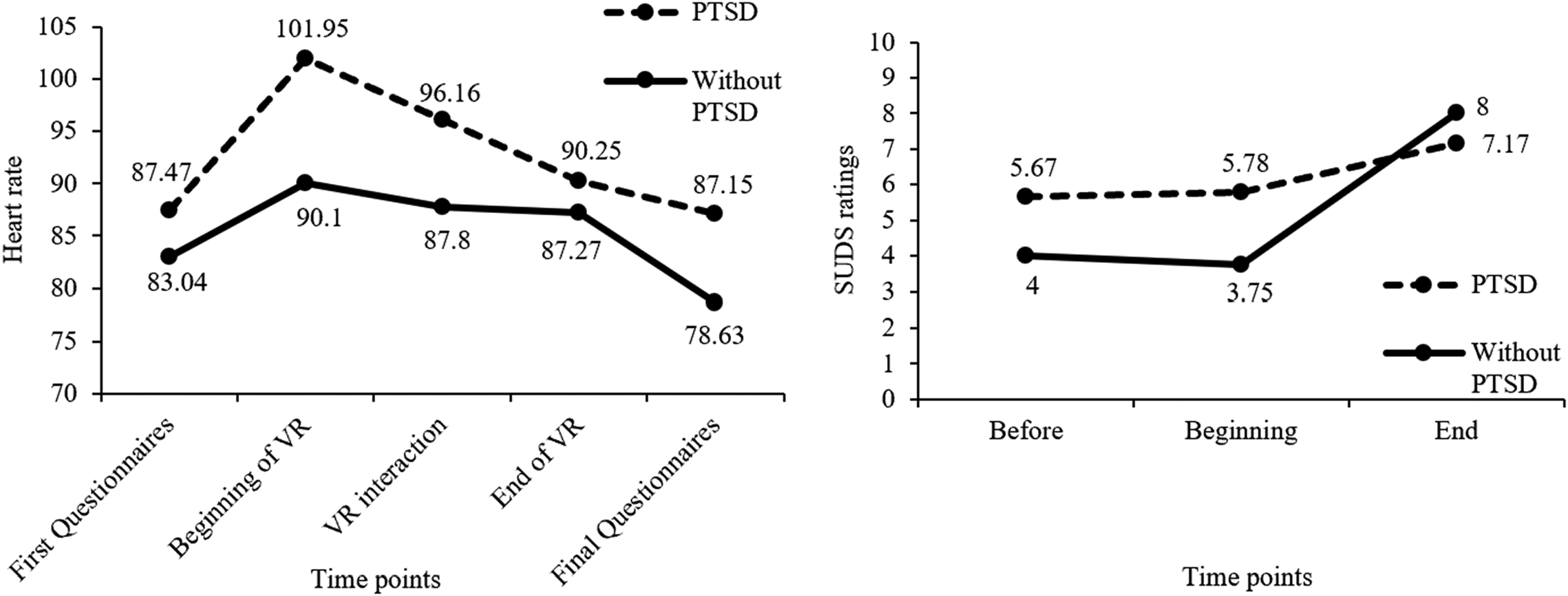
Changes in heart rate and subjective discomfort units of distress ratings (SUDS) for participants with and without PTSD.
The interaction between PTSD groups and time on heart rate was not significant, F(4, 32) = 0.91, P = .472, η p 2 = .10. However, the main effect of groups was significant, F(1, 8) = 4.05, P = .079, η p 2 = .34, indicating that the PTSD group reported elevated heart rate across time points (Figure 3).
Thematic Analysis
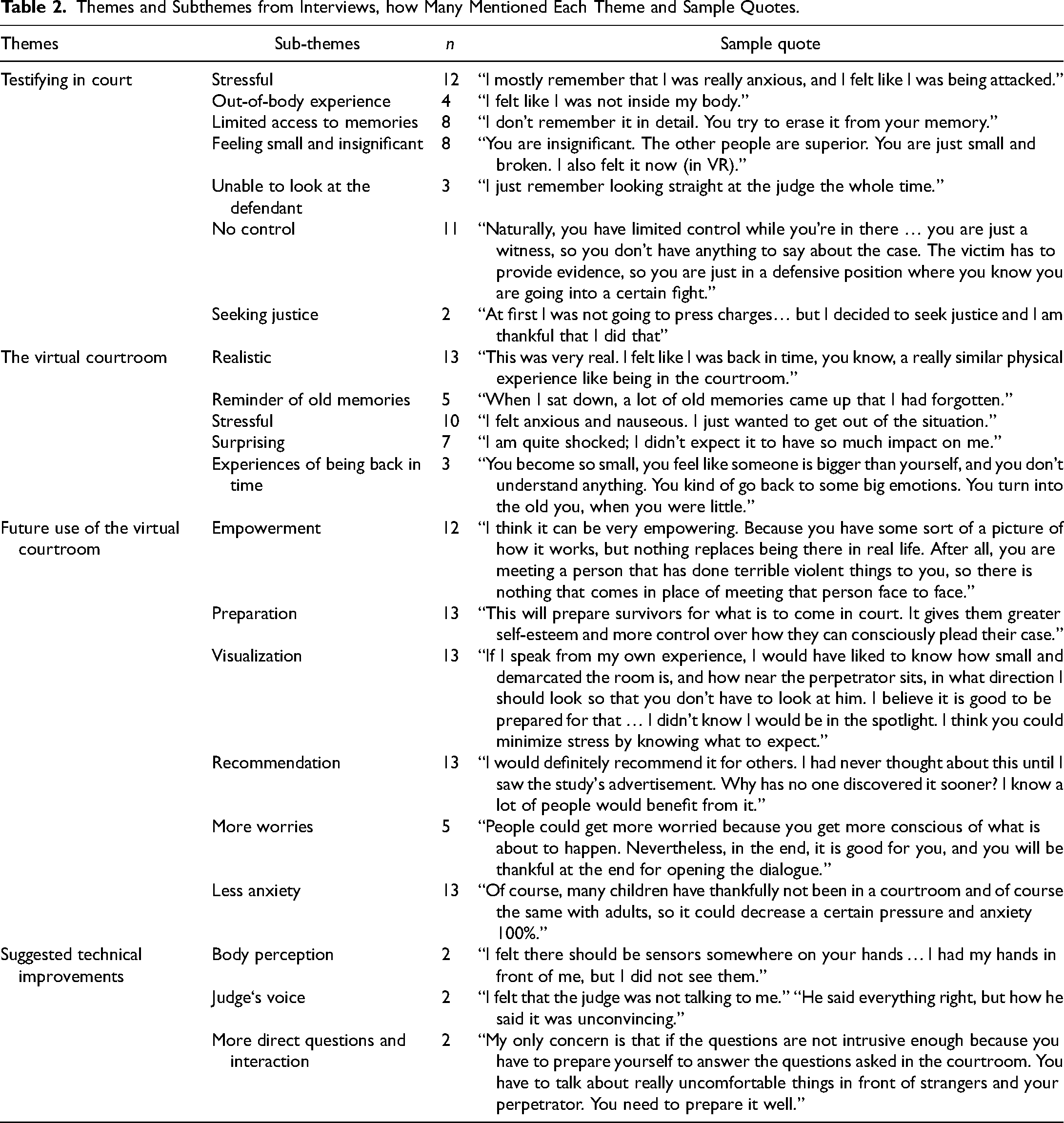
An analysis of narrative responses generated four main themes, outlined below and seen in Table 2, along with subthemes and illustrative quotes.
Themes and Subthemes from Interviews, how Many Mentioned Each Theme and Sample Quotes.
Theme 1: Experiences of Testifying in Real-Life Court
Most of the experiences reported by participants of the real-life court were negative. These themes included that the court hearing had been stressful, that they had an out-of-body experience, they had limited access to memories, feelings of being small and insignificant, not being able to look at the defendant, and having no control. However, some of the participants described a positive aspect of seeking justice, such as making the accused listen to what they had to say in court.
Theme 2: Experiences of the Virtual Courtroom
Generally, the virtual courtroom was perceived as realistic, and participants reported experiencing distress and the evocation of old memories. Five subthemes were identified: Realistic, reminders of old court memories, stressful, surprising how impactful it was, and experiencing being back in time.
Theme 3: Future Usage of the Virtual Courtroom
All participants were positive toward the utilization of the virtual courtroom for sexual violence survivors preparing for court. Seven subthemes were observed: Empowerment, where using the VR could be empowering in itself by providing a better idea of how the courtroom will look and work, even though nothing will actually replace the feeling of being there in real life. Preparation was also mentioned as an important future use, where survivors may feel more in control and able to explain their story. Connected with this was also visualization of the room and tips of knowing where to look if the survivor wants to avoid looking directly at the accused. Participants also mentioned the possible emotional impact of using VR to prepare, which might lessen anxiety for some, but could contribute to more worrying for others by making the experience more real. Overall, the participants recommended offering this to survivors who would be interested in using this in the future.
Theme 4: Suggested Technical Improvements
These included that the VR courtroom would feel more realistic if the defense attorney asked survivors direct questions, if participants could see their own bodies, if the judge's voice could be more engaging, and if the appearance of the defendant could be modified, such as by changing their hair color, height, etc.
Discussion
The purpose of the present study was to evaluate the utility of the virtual courtroom for sexual violence survivors who need to testify in court. This is the first empirical study exploring the possible applications of the virtual courtroom.
Psychological and Physiological Distress
The current study showed that the virtual courtroom elicited subjective distress and heart rate reactivity among sexual violence survivors who had testified in court, consistent with studies on other virtual environments (e.g., Kothgassner et al., 2016). Heart rate increased significantly from the first questionnaires to the beginning of VR, possibly reflecting anxiety and flight-or-fight response in anticipation to the VR. This was followed by a significant decrease in heart rate by the end of VR. This may seem contradictory, as greater distress was accompanied by lower heart rate, but this could be interpreted as a freezing response (Roelofs, 2017) as subjective anxiety has been associated with freezing responses (Schmidt et al., 2008). Accordingly, prior studies have found threatening social stimuli to elicit freezing responses in humans (Noordewier et al., 2020). Since freezing is an active period that aids in identifying appropriate actions to deal with a stressor (Lang et al., 2000; Riskind et al., 2016), it may be associated with a greater threat. In summary, these results show that the virtual courtroom could be used for conducting exposure therapy to minimize anxiety, as the VR did elicit psychological and physiological stress. However, a more in-depth full-scale study is needed to better understand this phenomenon.
Stress Reactions Between PTSD Groups
Participants with PTSD reported greater subjective distress before and at the beginning of VR but similar distress as participants without PTSD by the end of VR. However, on average, subjective distress between these groups did not differ. This was unexpected, as prior research has linked PTSD with enhanced emotional responses (Banducci et al., 2017; Pineles et al., 2013). For heart rate, participants with PTSD had significantly higher overall heart rate, in line with research associating PTSD with elevated heart rate in response to stressors (Pineles et al., 2013). Therefore, participants with PTSD may need more treatment or prolonged exposure to minimize cardiac stress (Bourassa et al., 2020; Shalev, 2009). However, contrary to the subjective distress ratings, the VR elicited similar heart rate reactivity for both groups.
These findings suggest some discrepancies between subjective measures and cardiac reactivity. As participants with PTSD displayed higher heart rate across all time points, they may have underestimated their distress at the end of VR. One possible explanation could be that those with PTSD experienced dissociation at the end of VR, which is associated with emotional numbness (Bryant, 2007). Therefore, it is important to monitor participants during exposure and ensure access to effective coping recourses after exposure, irrelevant of self-reported distress. These results suggest that the virtual courtroom could be used effectively as a method of exposure for both groups. Still, perhaps a small sample and the unequal group sizes limited statistical power to find a significant difference. Thus, replications with larger sample sizes are essential to test this hypothesis further.
Qualitative Findings
Thematic analysis of the interviews revealed that participants generally had a negative experience of testifying in court. Most participants reported a lack of control during their court proceedings, perhaps partially due to their legal position as a witness in their criminal case with limited informational and procedural rights (Antonsdóttir, 2019). Participants frequently reported that they had felt small, insignificant, and stressed during their court hearings. Many of them had trouble remembering what had occurred in the courtroom due to stress and expressed out-of-body experiences, consistent with previous research on courtroom stress (Hutschemaekers et al., 2019). Furthermore, some of these descriptions refer to symptoms of dissociation (Bryant, 2007), indicating that the courtroom experience may have been traumatizing, either directly or based on its association with the violent event. Sexual violence survivors may therefore need better support, which is in line with prior findings on survivors’ experiences of the criminal justice procedure (Antonsdóttir, 2018; Hutschemaekers et al., 2019). However, participants also reported that seeking justice was important to them, even though the process was difficult (Konradi, 1996).
Participants reported that the virtual courtroom was realistic, a core condition for virtual reality exposure therapy to be effective (Freeman et al., 2017; Mousas et al., 2018). This is beneficial, as technology limitations, such as lack of realism and simulator sickness, are one of the main reasons virtual courtrooms may face problems (Bailenson et al., 2006). However, these do not seem to be issues faced by the participants of this study. Most participants described the virtual courtroom experience as stressful, further supporting the quantitative results and potential utility for virtual reality exposure therapy. Moreover, some of the reported descriptions refer to symptoms of PTSD in response to a traumatic event (American Psychiatric Association, 2013; Banducci et al., 2017), further implying that the courtroom experience is traumatizing. Therefore, exposure therapy may work to reduce the effects of these symptoms. Many participants reported that the VR courtroom was a strong reminder of old memories, and some descriptions referred to flashbacks, a core symptom of PTSD (Brewin, 2015). Thus, the virtual courtroom could also be intensely distressing. Therefore, exposure to the virtual courtroom should be delivered in conjunction with other therapeutic interventions to prevent extreme emotional reactions and aversive consequences, such as future avoidance (Taylor et al., 2003). Participants suggested several technological and practical improvements for the virtual courtroom which must be taken into consideration and improved in the future.
Additionally, participants described that the intervention could minimize anxiety, although some felt that it could increase worrying for some individuals. If survivors experience high stress levels in the virtual courtroom, it could make them more conscious of the process and enhance their worries. Therefore, further research is needed with participants who have not testified in court to rule out any adverse consequences of using the virtual courtroom. Overall, the participants described that using a virtual courtroom before going to court would be empowering, although nothing could compare to the in vivo experience. Furthermore, all participants stated that they would recommend the virtual courtroom for sexual violence survivors preparing to testify in court, indicating positive attitudes toward using VR for therapeutic and empowerment purposes.
Limitations
The primary limitation of the present study was a small sample size, limiting statistical power and the generalizability of these findings. Another limitation concerns the possibility of response bias, a conscious or subconscious tendency for participants to give the response they believe is desired by the researcher (Monette et al., 2013). Furthermore, three participants had testified while under the age of 18, thus not appearing in a typical courtroom hearing. An all-female sample also raises questions about the generalizability of the findings, as previous work has shown gender differences in emotional reactivity to VR (Mousas et al., 2018), and females may have different biological and psychological responses to stress (Verma et al., 2011). Also, any VR study needs to consider that participants may be experiencing the “novelty effect” where people may find VR in general arousing and exciting, rather than the particular context being studied at any given time. Future studies need to address this effect, for example by introducing a neutral VR environment before the courtroom, allowing participants to habituate (Huang et al., 2021). Finally, these results may not resemble an accurate diagnosis of PTSD as this study utilized a self-report measurement, and no clinical diagnosis was made. Finally, the current sample was quite homogenous, and future work should explore these effects in the light of diversity as it applies to factors such as socioeconomic status, race, sexual orientation, and more. Not only could diversity have an impact on people's experiences with courtrooms, but justice systems also differ by country and region in ways that may impact survivors. As a result, the need for the virtual courtroom, as well as reactions to it, are likely to depend on a multitude of factors which need to be examined further in the future.
Another consideration is that the current study was a pilot study, intended as a first test of the technology with knowledgeable users, to demonstrate the ability of the VR environment to evoke the real-life experience and associated emotions. As a result, the VR environment was not fully formed in terms of how survivors could expect to interact with the different individuals present, such as the defendant and their attorney. However, if using the VR courtroom to prepare survivors for court in real life, it would be better to ensure that the VR interactions resemble the real-life interactions as closely as possible, to give survivors a clear idea of what they could expect.
Despite these limitations, the current study has several strengths. This is the first study to examine sexual violence survivors’ stress reactions to the virtual courtroom. Furthermore, by controlling for baseline cardiovascular activity, the effect of confounding variables such as fitness levels (Luque-Casado et al., 2013), smoking, obesity, sleep problems, and alcohol dependence (Dennis et al., 2014) were minimized. Another major advantage of the current study concerns the breadth of information collected, providing a comprehensive approach to participants’ appraisals and stress reactions in the virtual courtroom with the qualitative findings adding insight to the quantitative results (O’Cathain et al., 2007).
Implications and Future Directions
More research is needed to validate and improve the generalizability of these findings. The current study suggests that the virtual courtroom might induce similar feelings as the actual courtroom, which may be necessary to treat distress following the courtroom experience. The virtual courtroom appears to meet the preconditions for virtual reality exposure therapy (e.g., Diemer et al., 2014; Freeman et al., 2017), and future studies should examine habituation with repeated exposures.
Future research on this topic could also consider the VR courtroom as preparation for real-life courtroom, as many participants of this study described could be helpful. This intervention could therefore meet the needs of sexual violence survivors who commonly report a lack of support and information (Antonsdóttir, 2018; Hutschemaekers et al., 2019). Possibly, the application of the virtual courtroom before trial could minimize courtroom stress and lessen the adverse effects of stress on attention, decision-making (Robinson et al., 2013), and memory (de Quervain et al., 2003; Kuhlmann et al., 2005). This could improve survivors’ testimony, which is an essential piece of evidence in sexual violence cases (Haskell & Randall, 2019). Future research could also address the complex negative emotions associated with the courtroom, such as fear of negative reactions from others.
Using the VR courtroom to help prepare survivors for court in real life raises some ethical considerations, such as the impact of the VR courtroom itself on witness testimony. Defense attorneys might argue that the survivor has been coached and the testimony inappropriately influenced. However, the current participants were only asked for their name and why they were there, without any feedback on their responses, making it difficult to argue that coaching has taken place. Outside of the VR context, witness preparation by attorneys (without coaching) commonly takes place, because witness testimony is often the most important piece of evidence in a trial. The attorneys are not tampering with the testimony itself, but trying to reduce the fear of witnesses before going to court and allowing them to practice presenting their narrative in a clear and convincing manner (Boccaccini et al., 2003).
In another study, Konradi (1996) interviewed 32 female rape survivors who had participated in the prosecution of their cases. She found that most survivors (90%) engage in preparation strategies before going to court, to be able to control both their reactions, as well as the situation at hand. These include rehearsal, either alone, or with supportive relatives and friends, and visualizing the courtroom, preparing statements, and answering likely questions. Survivors who rehearsed felt more confident talking about the rape and had a clearer sense of what they wanted to say. Another strategy is role research, where survivors gathered information about the legal process and what kind of interactions they could expect in the courtroom. Collecting this kind of information can serve to increase the confidence of the survivor and make sure that the testimony is framed in a helpful way for the legal case (Konradi, 1996). The virtual reality context could meet these needs by giving an opportunity to rehearse, to get more insight into the expected interactions in the courtroom and for survivors to manage their emotions better.
Witness preparation before trial reduces anxiety and increases confidence (Boccaccini et al., 2003) but many sexual violence survivors still find the courtroom process distressing (Hutschemaekers et al., 2019; Parsons & Bergin, 2010), so other interventions, such as a virtual courtroom could help address this issue (manuscript in preparation). Indeed, a very recent case study based on the same VR courtroom showed that a survivor who entered the VR environment five times before going to real-life court reported lower distress and a greater sense of control than at the initial VR session. Even so, giving testimony was still difficult for that survivor. The judgment in that case remarked that the survivor's testimony had been clear and convincing (manuscript under review). Repeated courtroom preparation is therefore unlikely to completely alleviate any distress before going to court, but could make survivors feel better and more in control. In theory it could be possible that a survivor would appear too calm for the court to see the testimony as credible, but given that some survivors may freeze when confronted with trauma, this could speak more to the importance of educating the judge or other legal professionals on this matter.
The Law on Criminal Procedure no. 88/2008 in Iceland states that witness testimony should be based on that person’s own perception, and not the opinion of others. Attorneys should also present everything that is relevant to the case and should guard the rights of their client (including making sure that no false information is put forward). This presentation seems to be in line with (Boccaccini et al., 2003), where attorneys need to prepare their clients before court, without influencing their testimony. The VR courtroom could be seen as an extension of this framing, where survivors may use the VR technology to practice and to become familiar with the environment. Future iterations of this VR courtroom therefore need to take care not to coach survivors on what answers to give, but to focus on providing survivors with a useful space and questions that might be relevant to their case.
It would similarly be helpful to examine whether distress levels differ with and without the defendant's presence. If stress levels are lower without the defendant present, it may positively affect survivors’ attention and memory. This may support the authorization of the judge to decide to have the defendant leave the room while survivors give their testimony.
Furthermore, as some situations evoke such fear that people may not be willing to enter them in vivo (Cardoş et al., 2017; Rothbaum et al., 2006), the use of the virtual courtroom might encourage sexual violence survivors in seeking justice. However, if survivors are only exposed once and experience high levels of stress, it may discourage them from proceeding to court. Although evoking stress is crucial for exposure to work, excessive stress could have negative consequences. Therefore, sessions should be monitored by a competent therapist and should be delivered in conjunction with therapeutic interventions. In addition, participants should be equipped with effective resources to cope with the emotional reactions evoked by the exposure. The safety and tolerability of exposure to the virtual courtroom will have to be determined by future research examining the outcomes of repeated exposures and therapeutic interventions.
Finally, future work will involve developing the virtual courtroom further, in line with suggested improvements, such as being able to see one’s own hands. Beyond that, further interactivity, and customization, such as being able to adapt people's appearance, holds great potential for the technology and will thus be explored.
Conclusions
Despite its limitations, this small-scale study can be viewed as a first step in assessing the utility of the virtual courtroom for sexual violence survivors. The real-life courtroom experience was generally negative, emphasizing that sexual violence survivors need better support and preparation. Although the generalizability of the current study must be determined by future research, quantitative results suggest that the virtual courtroom meets the preconditions for virtual reality exposure therapy to be effective. The virtual courtroom could therefore support survivors, either after negative court experiences, or to help prepare for a future testimony. Future studies are needed to examine habituation to the virtual courtroom.
Footnotes
Author Note
The authors would like to thank the members of the company Statum (Edit Ómarsdóttir, Hafdís Sæland and Helga Margrét Ólafsdóttir) for conceiving of and creating the virtual reality environment. The authors would also like to thank the Icelandic National police commissioner, Sigríður Björk Guðjónsdóttir, and staff member of the National Police commissioner's office, Rannveig Þórisdóttir, for assistance and support during this study.
Declaration of Conflicting Interests
The authors declared no potential conflicts of interest with respect to the research, authorship, and/or publication of this article.
Funding
The authors disclosed receipt of the following financial support for the research, authorship, and/or publication of this article: This work was supported by the Icelandic Gender Equality Fund.
