




Abstract
Research on pornography use and sexual coercion has provided inconsistent results. One explanation for this is the lack of a valid, reliable, and comprehensive measure of pornography use. This study seeks to address this need by developing a comprehensive pornography use instrument consisting of four domains identified in research: type of pornography used, sexual scripts, habits, and compulsivity. A sample of 324 college men was used. Results of the study yielded factor structures for these domains and evidence of reliability and validity. Findings present the initial development of a pornography use instrument that could improve research in this area and aid practitioners in treatment and supervision decisions.
The use of pornography has become nearly ubiquitous in the past decade. Research has consistently indicated that most individuals have been exposed to or used pornography at some point in their life and this is most apparent among young adults (Brown & L’Engle, 2009; Romito & Beltramini, 2011). Along with this influx of pornography users comes an increased concern for the potential effects of pornography consumption. One such concern involves the association between pornography use and sexual coercion. Research in this area has revealed inconsistent results, with some meta-analyses indicating there is a significant association across studies (Wright et al., 2016) and others indicating there is not (Ferguson & Hartley, 2022). In addition, aggregate rates of sexual violence have not followed rates of pornography use in a linear pattern (Diamond et al., 2010), along with risky sexual behaviors, like condom usage, number of partners, and age at first intercourse (CDC, 2021). This indicates that the relationship is more complex than has been previously assumed. Some researchers have identified confounding factors in this relationship, such as hostile masculinity and sexual promiscuity (Baer et al., 2015; Kohut et al., 2021), while others point to the way in which pornography use has been measured in research. First, studies that have revealed a significant association (Marshall et al., 2021a, 2021b; Ybarra et al., 2011) highlight domains of pornography use that should be considered when examining this association, which include the type of pornography used, sexual scripts, habitual factors, and compulsivity. One recent systematic review revealed that studies typically omit most of these domains, focusing only on frequency of use, which prevents a more complete understanding of the relationship between pornography use variables and outcomes (Marshall & Miller, 2019). Finally, researchers typically use author-generated (their own) items, rather than previously established instruments, which has led to definition and operationalization inconsistencies in the inclusion of these domains.
There are currently a handful of instruments designed to assess aspects of pornography use that are available to researchers, but these instruments have a number of limitations that may preclude practitioners and researchers from using them, as highlighted by a recent systematic review (see Marshall & Miller, 2019). The pornography consumption questionnaire (PCQ; Hald, 2006), the online pornography survey (OPS; Seigfried, 2007), the sexually explicit media questionnaire (SEMQ; Wryobeck & Wiederman, 1999), and the exposure to sexual materials questionnaire (ESMQ; Frable et al., 1997) each provide the assessment of some combination of relevant aspects of pornography use, but none of these instruments assess all relative domains and have very limited psychometric qualities demonstrated since their development. More recent instruments have established reliability and validity, but these instruments are narrower in their focus, only assessing motivations of use (Pornography Consumption Inventory; Reid et al., 2011) and compulsive use (Cyber-Pornography Use Inventory; Grubbs et al., 2010; Problematic Pornography Use Scale; Kor et al., 2014; Compulsive Pornography Consumption; Noor et al., 2014).
The narrow focus or lack of established psychometric qualities may explain why many researchers use author-generated items in lieu of previously validated instruments. The current study will seek to address this gap in the research by describing the development and initial psychometric properties of a comprehensive problematic pornography use instrument. The proposed instrument will assess domains found to be related to sexual coercion, which include the type of pornography used, sexual scripts, habits, and compulsivity. The development of these constructs will be guided by the operationalization of these domains in previous research, and the findings and limitations of these studies. Results of the study will provide initial reliability and validity of this new instrument and further direction for the assessment of pornography use moving forward.
Literature Review
Research on Pornography and Sexual Coercion
Frequency of Use
One of the most common methods of operationalizing pornography consumption is by focusing on frequency of use. A recent meta-analysis by Wright and colleagues (2016) found that, across the 17 studies included in their analysis, frequency of use was significantly related to sexually coercive behaviors for males and females. These studies demonstrated this relationship in samples of college students, the general population, and samples of individuals who have sexually offended. While frequency has been found to be associated with sexual coercion in many studies, some indicate that frequency may be less important to assess, relative to other aspects of use. Kingston and colleagues (2008) found that frequency of pornography use was only related to sexual recidivism in individuals who were already at a high risk of sexually recidivating. Furthermore, recent research indicates that other habitual factors, such as number of modalities (i.e., internet, magazines, videos, etc.) used to view pornography, are more strongly related to sexual coercion than frequency of use (Marshall et al., 2021a). This indicates that a complete operationalization of pornography use habits should go beyond only assessing the frequency of use.
Type
Besides the frequency of use, the type of pornography consumed is the most common way for researchers to assess pornography use. This finding has been demonstrated across samples of adolescents (Seto et al., 2010; Ybarra et al., 2011), college males (Foubert et al., 2011), and individuals who have been sexually offended (Kingston et al., 2008). Contrary to their findings regarding frequency of use, Kingston and colleagues (2008) found that the use of “deviant” pornography predicted recidivism among individuals who had been sexually offended, regardless of their risk to reoffend level. These findings indicate that type should be assessed when examining the relationship between pornography use and sexual coercion. Less evident to researchers is what type of pornography is the most important to assess. For instance, Kingston and colleagues (2008) included child pornography and violent pornography in their definition of “deviant” pornography. Seto and colleagues (2010), as well as Ybarra and colleagues (2011), measured the use of violent pornography and operationalized it as pornography where someone is visibly hurt. According to Wright and colleagues (2016), some studies simply ask whether someone views “violent pornography,” rather than asking content-specific questions. Individuals may not define the pornography they view as violent, regardless of whether someone appears to be in pain in the pornography they are viewing. Thus, the questions asked about pornography use, and the perception of the questions asked, have both caused problems in understanding the true relationships between pornography use and sexual coercion. This highlights the need for content-specific questions assessing the type of pornography used (Marshall & Miller, 2019).
Sexual Scripts
While less common than the frequency of use and type of pornography consumed, researchers have begun to examine how sexual scripts adopted from pornography are related to sexually coercive behaviors. According to this perspective, scripts comprise conventions used by individuals to inform sexual behavior, interpersonal sexual interactions, and individual sexual desires or fantasies (Morrison et al., 2015). Tomaszewsha and Krahe (2016) examined how sexual scripts adopted from pornography use influenced adolescents’ opinions regarding sexually coercive behaviors. Findings from the study indicated that scripts adopted from pornography, which the researchers referred to as “risky sexual scripts,” were significantly related to increased acceptance of sexually coercive behaviors. During a later study, Tomaszewsha and Krahe (2018) examined whether these same “risky sexual scripts” were related to self-reported sexually coercive behaviors and found that respondents reporting higher levels of “risky sexual scripts” had significantly higher odds of committing sexually coercive acts. Finally, a study conducted by Marshall and colleagues (2021b) examined the utility of the sexual script theory in explaining the relationship between pornography and sexual coercion and built upon previous research by assessing all three levels of scripts described by Simon and Gagnon (1998). These levels of scripts are described as cultural, interpersonal, and intrapsychic (see Simon & Gagnon, 1998). Results of the analysis indicated that pornography use did have an indirect effect on sexual coercion through sexual scripts. In addition, indirect effects were found between the levels of scripts, such that pornography use was not directly related to sexual coercion but was indirectly connected if the individual adopted intrapsychic and interpersonal scripts through their pornography use. These findings provide further support for the sexual script theory and warrant future examination of the role that sexual scripts play in the relationship between pornography use and sexual coercion.
Other Variables
While the largest portion of research has focused on frequency, type, and sexual scripts, there are other variables of interest that have been found to be significantly associated with sexual coercion. First, Marshall and colleagues (2021a) examined the number of modalities used to view pornography and found that individuals who used more than one modality were significantly more likely to engage in sexually coercive behaviors. In particular, individuals who used the internet and some other modality, such as books, movies, or magazines, were significantly more likely to engage in sexual coercion. These researchers posit that this variable may serve as a proxy for investment in use, which was a stronger predictor of sexual coercion than the frequency in their study. Another important habitual factor to consider is the age at first exposure to pornography use. Mancini and colleagues (2012) found that earlier exposure to pornography was related to an increase in the humiliating/violent nature of sexual offenses committed in a sample of individuals who had been sexually offended, and that decreased age at first exposure was related to lower ages at index sexual offenses (Mancini et al., 2014). Finally, Gonsalves and colleagues (2015) found that increased scores on a measure of compulsive pornography use were related to an increase in self-reported sexual coercion. These variables have found support in a few studies and do provide implications for pornography use assessment. Namely, the measurement of pornography use should go beyond frequency use and consider investment, history of use, and compulsivity.
Current Study
Literature on pornography use and sexual coercion has provided some insight into variables that should warrant the attention of researchers attempting to assess the association between pornography use and sexual coercion. Because of the lack of a validated, reliable, and comprehensive pornography use instrument, consistent and sound approaches to assessing several important domains of pornography use, will be difficult to attain. This highlights the purpose of the current study, which will provide an initial psychometric assessment of four domains of pornography use on a comprehensive pornography use instrument. The items developed for the instrument assess several domains of pornography use that coincide with the existing research (e.g., type of pornography used, sexual scripts, habits, compulsivity). As pornography use continues to become more commonplace in society, and as age at first use is reported as younger each year, the demand for a valid, reliable, and comprehensive pornography use tool will increase. Results of this study will provide the initial psychometric assessment of such an instrument.
Methodology
Sample and Procedure
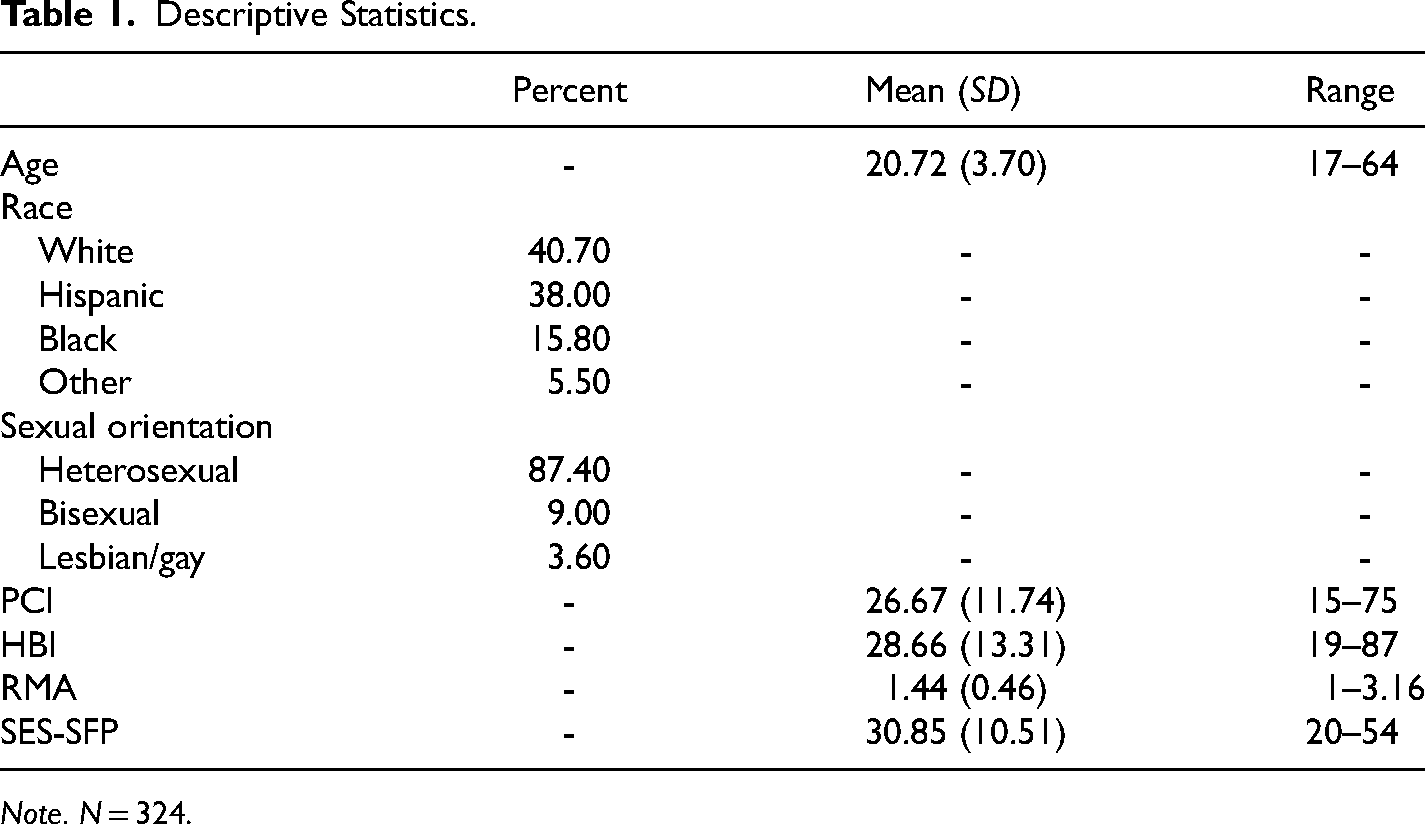
The sample for this study consisted of 324 undergraduate men enrolled in criminal justice courses at a university located in the Southern United States. Demographic details for the sample can be found in Table 1. The average participant age was 20 years old and the racial breakdown of the participants in the sample consisted of White (40.7%), Hispanic (38.0), Black (15.8), and those who identified as “other” (5.5%). As for sexual orientation, the sample was comprised mainly of those who identified as heterosexual (87.4%), followed by bisexual (9.0%) and homosexual (3.6%).
Descriptive Statistics.
Note. N = 324.
Data for this study were collected using two methods. First, paper and pencil surveys were collected by soliciting respondents participating in large auditorium criminal justice courses. Students were briefed about the purpose of the study and provided with informed consent forms. Furthermore, students were notified of the sensitive nature of the items contained within the survey and provided with contact information for resources, should any respondents experience any negative emotions from participation. Because the study took place in a large auditorium, researchers were able to adequately separate participants to ensure privacy for responses. In addition, faculty in the auditoriums and the researchers were able to monitor the room to ensure that the privacy of students was not violated. Students who did not wish to participate in the survey were given an alternate activity to complete in class during the session, so students who did not consent were not submitted to any scrutiny. The second method involved the solicitation of criminal justice students enrolled in various courses through email notifications to complete the research protocol online. As with the paper and pencil participants, potential respondents were provided with the same informed consent form. Data from the paper and pencil surveys were coded and entered into SPSS by the authors of this study. Surveys from participants who were solicited through email completed their survey in Qualtrics. Independent sample t tests were run between the participants gathered through these two methods and results indicated that they did not differ significantly across demographic information, as well as scores on the 248-item survey and the validation measures. All data collection efforts received approval from the Institutional Review Board of the institution where data were collected.
Measures
Comprehensive Assessment of Pornography Use Tool (CAPUT; Marshall, 2021)
To begin the development of the instrument, 248 items were written within four domains of interest: type of pornography used, sexual scripts from pornography, pornography use habits, and compulsive pornography consumption. The development of items for this measure involved several approaches. Considering the absence of a validated and reliable comprehensive assessment of pornography use, the type, sexual script, and habitual scales were developed through examining the operationalization of these concepts in previous research.
For instance, behaviors identified by Fritz and colleagues (2020) as aggressive acts in their content analysis of mainstream pornography were referenced in the development of items for the type scale. Additionally, research examining degrading or humiliating sexual acts was referenced for item development (Bridges et al., 2016; Sun et al., 2016). Items assessing the use of child pornography were developed through consultation with a treatment provider for individuals who have been sexually offended. Studies examining sexual scripts (Tomaszewska & Krahe, 2016, 2018) were referenced for the development of sexual script items, as well as the conceptualization of the levels of scripts developed by the authors of the sexual script theory (Simon & Gagnon, 1998). Research assessing multiple aspects of habits, such as frequency of use, investment, duration of use, and history of use were referenced for items assessing pornography use habits (Anisimowicz & O'Sullivan, 2017; Harper & Hodgins, 2016). While no valid and reliable instrument has been validated to assess the previously discussed dimensions of pornography use, there are several instruments that have been developed to assess compulsive pornography consumption. To write the items for this dimension of the instrument, original items were developed to assess constructs identified in previous research, which include negative emotions stemming from use and pornography use as an avoidant tactic (Bothe et al., 2018; Reid et al., 2011). Response options for all the items were (a) not true of me, (b) rarely true of me, (c) sometimes true of me, and (d) always true of me.
Validity Measures
To assess the initial validity of the domains, additional instruments were included in the questionnaire that assessed the following constructs: the pornography consumption inventory (PCI) is used for concurrent validity, and the hypersexual behavior inventory (HBI), rape myth acceptance (RMA), and sexual experiences survey-short form perpetration (SES-SFP) are used for convergent validity. Descriptive statistics for each of these instruments can be found in Table 2.
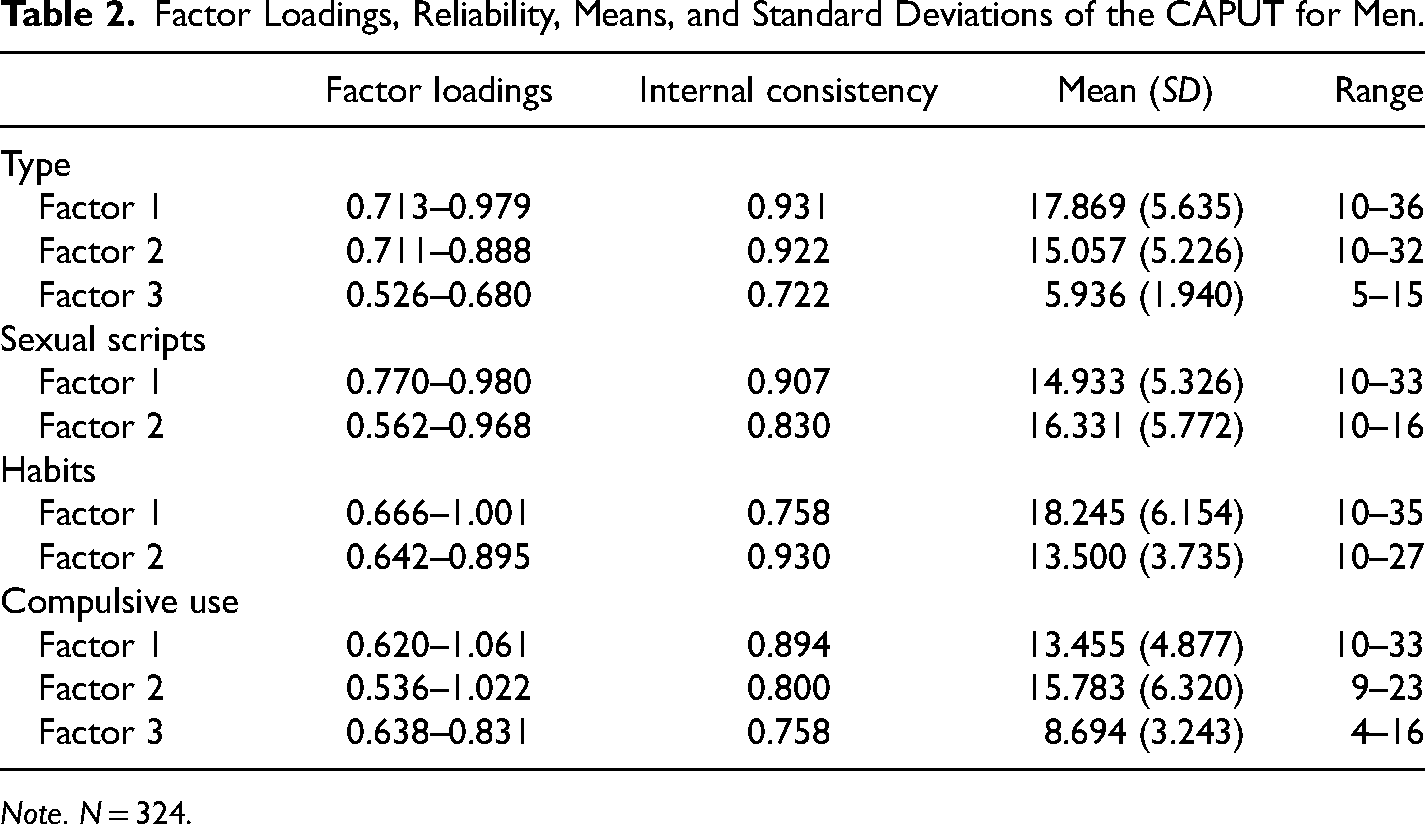
Factor Loadings, Reliability, Means, and Standard Deviations of the CAPUT for Men.
Note. N = 324.
PCI. The PCI was developed by Reid and colleagues (2011) for the purpose of assessing an individual's motivation for pornography use. Motivations assessed in the PCI include emotional avoidance, sexual curiosity, excitement seeking, and sexual pleasure. These four motivations are assessed using 15 Likert-type items with the following response options: (a) never like me, (b) rarely like me, (c) sometimes like me, (d) often like me, and (e) very often like me. In the current study, the PCI demonstrated excellent internal consistency (α = .94).
HBI. The HBI (Reid et al., 2011) is a measure of hypersexual behavior that is comprised of 19 Likert-type items that assess three factors: consequences, control, and coping. Response options to the items include (a) never, (b) rarely, (c) sometimes, (d) often, and (e) very often. In the current study, the HBI demonstrated excellent internal consistency (α = .95).
RMA scale. The RMA scale (Lonsway & Fitzgeralds, 1995) is a 19-item instrument containing items that assess commonly held rape myths, such as “Many rapes happen because women lead men on” and “When women talk and act sexy, they are inviting rape.” The 19 items contained within the instrument are Likert-type items with the following response options: (a) strongly disagree, (b) disagree, (c) agree, and (d) strongly agree. In the current study, the RMA scale demonstrated excellent internal consistency (α = .93).
SES-SFP. The SES-SFP (Koss et al., 2007) assesses four types of sexual behaviors, that range from fondling/removing clothes, to oral, vaginal, or anal sex. For each of these behaviors, respondents are asked whether they enlisted five different tactics to engage in those sexual activities, which are: telling lies or threatening to end the relationship, verbally attacking the person, taking advantage of an incapacitated state (i.e., alcohol or drug use), threatening physical harm to them or someone who is close to them, and using physical force. In addition, respondents are asked if they enlisted any of these tactics to obtain that sexual activity in the past 12 months and since they were 14 years of age. Respondents can answer these 40 items by stating that they did not engage in that tactic, that they did it once or twice, or that they did it three or more times. Only items assessing the use of tactics over the previous 12 months will be used for the current study.
Analysis Plan
Before analyses were conducted, items were removed based on the following criteria.
First, to address multicollinearity concerns, a polychoric correlation matrix for each dimension of pornography use was run. Highly correlated item pairs (r > .8) were identified and removed based on the following criteria. First, when highly correlated item pairs were identified, the items were flagged for removal. When flagged items were found to be highly correlated with multiple items, they were removed from the model. If neither item correlated highly with other items, the item that most closely resembled another item in terms of content in the dimension was removed. The correlation threshold of .8 was used based on the suggestion of previous research (Field, 2013). Removal based on this criterion resulted in the exclusion of 20 items from the type dimension, with the majority of items coming from the items designed to assess the use of child pornography, 13 items from the compulsive pornography use dimension, 10 items from the sexual scripts dimension, and 14 items from the habits dimension.
Next, items where 90% or more of respondents endorsed “not true of me” were removed due to an inadequate amount of variance. The method used for this approach was in line with previous research highlighting best practices for collapsing response categories with low endorsement rates (DiStefano et al., 2021). Removal based on this criterion resulted in the exclusion of six items from the type domain, three items from the sexual script domain, and six items from the habits domain. After item removal for the men, there were 56 items assessing type of pornography, 52 items assessing sexual scripts, 41 items assessing habits, and 27 items assessing compulsive use. Items where endorsement of response categories fell below 10%, were collapsed so that each response category contained at least 10% of the sample.
Kaiser–Meyer–Olkin (KMO) and Bartlett's Test of Sphericity were then used to assess the appropriateness of factor analysis for each domain. Exploratory factor analysis (EFA) models for the type of pornography used, sexual scripts, habits, and compulsive use were run in Mplus Version 8, using the weighted least square mean and variance (WLSMV) adjusted estimators based on a polychoric correlation matrix, due to the ordinal nature of the data (Li, 2016). The Geomin rotation method was used to address the anticipated correlations between the derived factors. Items with low factor loadings (<.40) and items that had moderate-to-high loadings on more than one factor were removed and the models were rerun without them included (Tabachnick & Fiddel, 2018). If factors retained more than 10 items, only the 10 highest loading items were retained, to ensure that only the strongest items would remain, and the length of the instrument would be reduced. If a suggested factor contains fewer than four items, they will be removed, due to recommendations by previous research (Izquierdo et al., 2014). Parallel analysis using the raw data permutation program, due to the non-normal nature of the data, was run in SPSS using the program written by O’Connor (2000) to provide additional criteria for factor retention. This was determined by observing when the actual eigenvalues of the data dropped below the eigenvalues of the data simulated in the models. Finally, internal consistency of the factors was assessed using Cronbach's alpha and validity was assessed by examining the correlations between the factors and the validity measures.
Results
Exploratory Factor Analysis
KMO and Bartlett's Test of Sphericity were run for each of the four dimensions of pornography use prior to factor analysis. For all dimensions, results from these analyses indicated that factor analysis was appropriate, with the KMO exceeding 0.8 for all dimensions and significant alpha levels for Bartlett's Tests of Sphericity (p < .001) for all dimensions. Factor loadings and descriptive statistics for each factor can be found in Table 2.
The first EFA examined the factor structure of the type items. Results indicated that a three-factor solution fit these data best, with the three factors accounting for 54.02% of the total variance in the items. The factors were as follows: factor one contained 10 items assessing the use of pornography with physical aggression and humiliation, factor two contained 10 items assessing the use of pornography containing coercion and younger individuals, and factor three contained five items assessing the use of pornography with extreme violence. The next EFA examined the sexual script items. Results indicated that a three-factor solution fit these data best, with the three factors accounting for 54.66% of the total variance. The factors were as follows: factor one contained 10 items assessing individual fantasies and the extent to which an individual believes pornography is an accurate depiction of sexuality, factor two contained 10 items assessing acting out activities seen in pornography and using pornography to learn about sex, and factor three contained two items assessing an individual's propensity to control the sexual acts in which they engage. The third factor was not used in subsequent analyses, due to the factor only retaining two items that did not have a theoretical justification within the domain of sexual scripts.
The third model examined items assessing pornography use habits. Results indicated a three-factor solution fit these data best, with the three factors accounting for 60% of the total variance. The factors were as follows: factor one contained 10 items tapping into the specific frequency of pornography use, factor two contained 10 items assessing use of pornography outside of the home and keeping pornographic materials, and factor three contained two items assessing initial first exposure to pornography. The third factor was not used in subsequent analyses, due to the factor only retaining two items. The fourth model examined compulsive use of items. Results indicated a three-factor model would fit these data best, with the factors accounting for 63.91% of the total variance. The factors were as follows: factor one contained 10 items assessing the use of pornography as an avoidance tactic, factor two contained 9 items assessing negative emotions stemming from pornography use, and factor three contained 4 items condoning pornography use.
Internal Consistency and Reliability
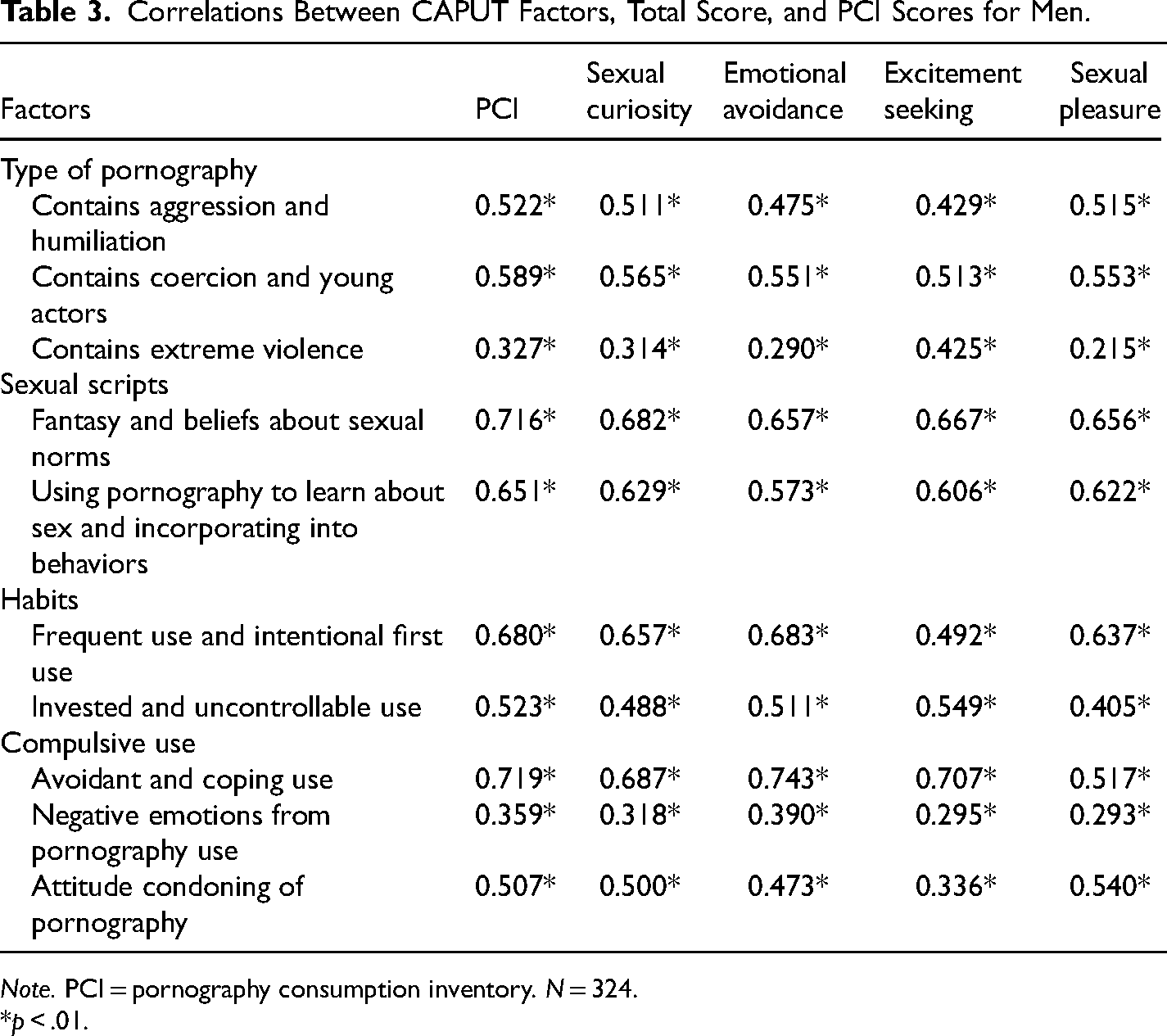
Internal consistency was assessed by calculating Cronbach's alpha for each of the derived factors (see Table 2). All the factors demonstrated at least acceptable internal consistency. Validity was assessed by conducting correlation analyses with the validation measures. Results revealed significant associations between all the factors and the total score on the PCI, as well as the individual factors (see Table 3). The strength of the correlations indicates that most factors for the CAPUT were moderately associated with the total score of the PCI, as well as the individual factors. There were weak correlations found between factor one from the type domain (aggression and humiliation), and emotional avoidance and excitement seeking. Factor three from the type domain was weakly associated with the total score and all individual subscales from the PCI. The first factor of the habits domain (frequent use and intentional first use) was weakly correlated with the excitement-seeking subscale and the second habits factor (invested/compulsive use and unintentional first user) was weakly correlated with the sexual curiosity and sexual pleasure subscale. Factor two from the compulsive use domain (negative emotions from pornography use) was weakly correlated with the total score of the PCI and all subscales, while the third factor (attitude condoning of pornography) was weakly correlated with emotional avoidance and excitement seeking.
Correlations Between CAPUT Factors, Total Score, and PCI Scores for Men.
Note. PCI = pornography consumption inventory. N = 324.
*p < .01.
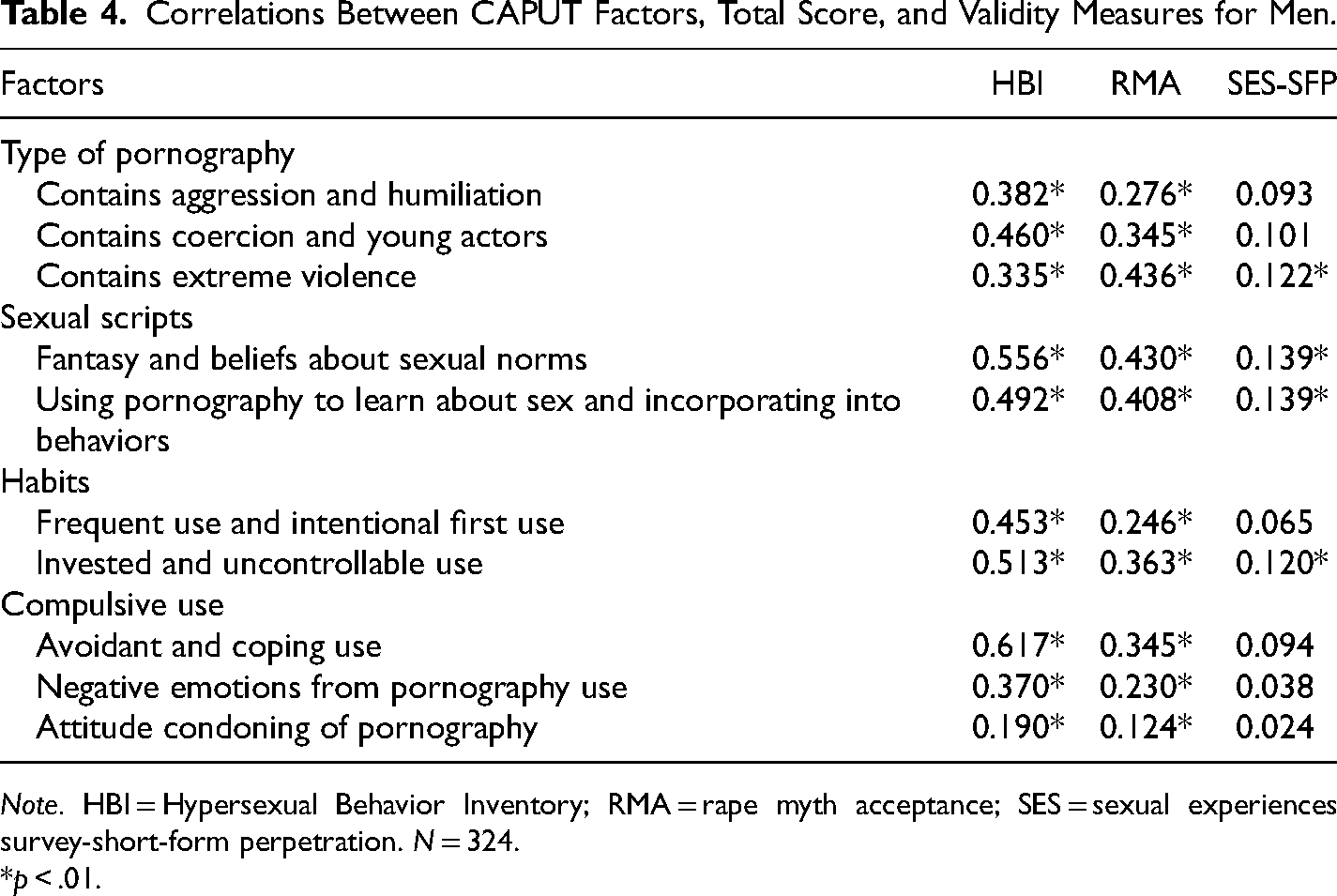
The next form of validity to be assessed was convergent validity. Results of the analysis can be found in Table 4. All the factors were significantly correlated with scores on the HBI and the RMA, and these ranged from small to moderate in magnitude. Factor three from the type domain (extreme violence), both factors from the sexual script domain, and the second factor from the habits domain (invested and inappropriate use) were significantly correlated with the SES-SFP, though the magnitude of the correlation was small.
Correlations Between CAPUT Factors, Total Score, and Validity Measures for Men.
Note. HBI = Hypersexual Behavior Inventory; RMA = rape myth acceptance; SES = sexual experiences survey-short-form perpetration. N = 324.
*p < .01.
Discussion
Previous studies examining pornography use and sexual coercion have provided valuable insight, but have been limited methodologically by a lack of a validated instrument designed to assess all pertinent aspects of pornography use. The lack of such an instrument could explain why studies have demonstrated mixed results and little understanding of why this relationship exists for some pornography users and not others (Ferguson & Hartley, 2022; Wright et al., 2016). Considering these gaps in research, the purpose of the current study was to conduct an initial psychometric assessment of four domains of pornography use identified in previous research. The questionnaire developed for this study contained items assessing type of pornography used, sexual scripts derived from pornography, habitual factors, and compulsive pornography consumption.
Pornography Use Construct Development
The first set of analyses in the current study assessed the factor structure of the items contained within the four distinct domains of pornography consumption. This was accomplished by conducting EFA models and parallel analyses. Three factors for type, two factors for sexual scripts, two factors for habits, and three factors for compulsive use were derived.
Type
The factors derived from the type items yielded a factor containing items assessing use of pornography with aggression and humiliation, a factor containing items assessing use of pornography with coercion and young actors, and a factor containing items assessing use of pornography with extreme violence. While several items were written to assess use of child pornography, it should be noted that a factor assessing use of this type of pornography was not found. Because so many individuals answered “not true of me” for these items, they were either removed for low endorsement rates or multicollinearity concerns. This does not mean that this domain of pornography use should not be assessed. Factor structure for these items may better be suited for samples of individuals who have sexually offended, to ensure that enough variance in the items would be present to conduct the proper analysis. The derived factors, however, provide some insight on how to assess the type of pornography used moving forward.
The first implication that can be derived from the factor structure is that there is a distinction between more minor forms of aggression, such as hair-pulling, choking, slapping, and spanking, and more severe forms of aggression that result in visible injury or harm. More minor forms of aggression have been found to be common in pornography (Fritz et al., 2020), alongside other acts, such as ejaculating on an actor's face (Klaassen & Peter, 2015). While hypothesized to represent humiliation in the current study, these items loaded onto this measure of aggression. Items assessing more violent types of behaviors are loaded onto a separate factor. For researchers looking at assessing violent pornography, it may be advantageous to differentiate between more minor forms of aggression that are common in pornography and extreme forms of aggression. This approach has been used by previous researchers (Seto et al., 2010; Ybarra et al., 2011), who specify violent pornography as involving one actor visibly hurting another actor, and the results of the factor analysis support this approach.
Rather than loading onto distinct factors, pornography containing coercion or lack of consent loaded onto a factor with items assessing the use of pornography with actors that are made to look like they are young. While these items were originally designed to capture coercion/lack of consent and use of pornography containing individuals who look young, the derived factor seemed to assess pornography containing specific fantasies or role-playing situations, such as pornography containing stepparents, bosses, or teachers. In these instances, often a person of power uses their authority to coerce an individual into sexual activity, and these commonly involve a younger and impressionable individual with an older authority figure (i.e., stepparents, teachers). A content analysis of internet pornography labeled “teen” revealed that most male actors in these videos were in some sort of profession or role, such as a teacher, employer, or agent (Vannier et al., 2014). These findings coincide with this factor, which includes younger, though of legal age individuals, as well as coercion from an authority figure.
Scripts
The factors derived from the script domain revealed two factors. This was contrary to the hypothesized factor structure, with items designed to assess cultural scripts, interpersonal scripts, and intrapsychic scripts. Derived factors included a factor assessing fantasizing about engaging in the sexual activities they view in porn and a second factor assessing the incorporation of pornographic material into their sexual activities. First, in Marshall and colleagues’ (2021b) path model incorporating cultural, interpersonal, and intrapsychic scripts, the model that best fits the data did not include cultural scripts. This was hypothesized to either be because cultural scripts were not pertinent to the relationship between pornography use and sexual coercion, or that the measure was an incomplete measure of the levels of scripts. Results of this study support the former explanation. Second, rather than coinciding with the cultural, interpersonal, and intrapsychic scripting process described by Simon and Gagnon (1998), the factors in this analysis may represent Wright's (2011) theory 3A theory of sexual scripts, which stands for acquisition, activation, and application. From this perspective, factor one would involve the acquisition and activation of scripts, through fantasizing about sexual behavior and learning about sex from the use of pornography, and factor two would involve the application of sexual scripts in an individual's own sex life.
Habits
The factors derived from the habits domain revealed two main factors. The first assessed specific frequency of use (e.g., weekly, daily, monthly) and peer-pressured initial exposure and the second with items assessing pornography use that was so frequent it became problematic, investment in pornography use, and coerced first exposure. The first derived factor contained items assessing specific frequencies of use that mirror the operationalization of frequency in previous studies (e.g., weekly, daily, monthly), while the second factor assessed investment (e.g., keeping pornographic material on your smartphone or computer, sharing porn with others on the internet) and items assessing a pornography habit that was so frequent it caused problems (e.g., using porn at work, relationship issues). Rather than two distinct factors assessing the frequency of use and investment, the second factor that contained investment items seemed to tap into a pornography use habit that sacrifices one of the A's in the “triple A engine” of internet pornography use. Keeping pornographic materials and using the material in public places sacrifices anonymity. Marshall and colleagues (2021a) suggest that investment could be tapping into this concept and the factor structure of these items provides support for this assertion. Thus, rather than just assessing investment in pornography use, researchers may also be interested in assessing habitual factors that sacrifice the anonymity that is typical for an individual who, even with some mild frequency, views internet pornography. What is less apparent, is how the initial exposure items figure into the first factor. Previous research has indicated that earlier exposure to pornography use is associated with increased frequency of use later in life (Rousseau et al., 2021; Willoughby et al., 2018), but less is known about the nature of the first exposure (e.g., intentional, coerced) and how this relates to latter pornography use.
Compulsive Use
The first derived factor for compulsive use assessed avoidant pornography use, the second assessed negative emotions associated with use, and the third assessed beliefs condoning pornography use. Factors one and two aligned with the hypothesized factor structure, with items specifically designed to assess avoidant use and negative emotions loading onto their respective factors. The third factor was not hypothesized but made theoretical sense; a scale of items assessing beliefs condoning the use of pornography. Researchers have identified that often religiosity, not the frequency of pornography use, leads to feelings that an individual is addicted to pornography (Grubbs & Perry, 2019). This is likely due to an individual's religious convictions regarding the morality of pornography use. To assess compulsivity, it may be advantageous for researchers to include items assessing not just negative emotions and avoidant use, but whether individuals believe it is okay to use pornography. Since self-perceived compulsivity seems to be tied to religiosity and the resulting shame or guilt from pornography use, assessing individuals’ moral convictions about pornography may aid in understanding an individual's actual compulsive use of pornography.
Initial Psychometric Properties of the CAPUT
The final set of analyses provided support for the internal consistency and validity of the domains on the instrument. This was demonstrated through acceptable to excellent internal consistency revealed in Cronbach's alpha values, and significant correlations between the factors and the validity instruments. The results assessing relationships between the CAPUT factors and scales on the PCI support the concurrent and discriminant validity of the measure. For example, the strong association between the CAPUT avoidant or coping use factor and the emotional avoidance factor from the PCI provides support for the concurrent validity of this factor. The weak relationships between the CAPUT negative emotions factor and all the pornography use motivations assessed on the CPI indicate discriminant validity. If negative emotions arise around pornography use, an individual would not highly endorse motivation, whether it be sexual arousal or excitement seeking, to use pornography.
CAPUT factors were significantly related to hypersexual behaviors, rape myths, and endorsing any use of sexually coercive behaviors in the past. The strongest relationships between the CAPUT factors and the HBI were found between the first script factor (fantasy and beliefs about sexual norms) and the second habits factor (invested/pre-occupation with frequent use). This association provides support for the concurrent validity of these specific factors. For scripts, casual sex and risky sexual behaviors are commonly depicted in pornography (Carrotte et al., 2020). Similarly, HBI assesses a range of sexual behaviors that indicate a lack of control over one's sexual behavior, and the items on the second habits factor tap into that construct but focus on the use of pornography. Items on the factor assessing use of pornography containing extreme violence, as well as the sexual script factors, were most strongly correlated with RMA among the men. The questionable negotiation of consent in pornography has been documented in previous research (Willies et al., 2020), thus, the significant association of the sexual script factors with RMA provides further support for the concurrent validity of these factors. Finally, the use of pornography containing extreme violence coincides with the anti-women sentiments expressed in RMA, thus, this significant association is a demonstration of concurrent validity.
The significant relationships between the CAPUT factors and the SES-SFP provide further evidence of validity. Use of pornography containing extreme violence, both sexual script factors, and the second habits factor (invested and inappropriate use) were significantly related to increased engagement in sexual coercion. These findings coincide with previous studies highlighting the importance of violent pornography use (Kingston et al., 2008; Seto et al., 2010; Ybarra et al., 2011), sexual scripts (Marshall et al., 2021b; Tomaszewska & Krahe, 2018), and investment (Marshall et al., 2021a, 2021b). In addition, these findings support the idea that the relationship between pornography containing aggression and sexual coercion may be contingent on the level of violence and aggression contained in the pornography being used.
Limitations
The first limitation involves the sample. This sample consisted of college men gathered from a rural college in the Southern United States and the results may not generalize to a community population or another college sample from a different region. While the sample may limit generalizability, researchers have noted that the most frequent users of pornography tend to be men in the college-age range (Regnerus et al., 2016), so a sample containing college men could be ideal for the development of a problematic pornography use instrument. The next limitation involves the self-report nature of the instrument. While researchers have identified self-report approaches as the most appropriate for assessing pornography use and reducing social-desirability bias (Regnerus et al., 2016), the nature of these items does lend themselves to the potential of upwards biasing influence on the correlations between measures. Removal of items with extremely low endorsement rates was completed to address these issues, but because of the inherent nature of self-report data and these concerns, the results should be interpreted with these concerns in mind. Further development of the instrument should involve creating “faking good” scales, where items specifically meant to detect respondents who are affected by social desirability can be included.
The next limitation involves the self-report measure of prior sexual coercion used for the current study. The instrument is designed to measure a large portion of sexually coercive acts and the tactics used to engage in them, not all of which fall under illegal behaviors. These include lying to someone or verbally pressuring someone to engage in sexual activities. This is not to condone lying or pressuring someone into engaging in sexual activities, but rather, to acknowledge that this assessment should not be viewed as a measure of criminal behavior; it is a measure of the spectrum of sexually coercive behaviors. Some scholars have found that pornography use may be more strongly related to acts of verbal coercion, rather than physical coercion (Wright et al., 2016), so for the purpose of the current study, it was appropriate to use a measure of sexual coercion that assessed a wider variety of sexually coercive behaviors. Related to the measures, an additional limitation was the overall lower scores on the criterion validation scales. Future research may consider including samples of justice-involved individuals, and more specifically, individuals who have been sexually offended, in order to utilize samples with more variance on the validity measures. The final limitation to address involves the cross-sectional nature of the study. Because of the cross-sectional nature of these data, the ability to draw any implications for temporal order in the relationship between pornography use and sexual coercion is limited. Future studies are warranted to examine the predictive validity of the CAPUT. The purpose of the current study was to begin the development and psychometric assessment of a problematic pornography use instrument, so a cross-sectional sample was considered appropriate.
Conclusion
As pornography use continues to become more commonplace among individuals in our society, and as individuals are using pornography at younger ages, the need for a valid and reliable comprehensive measure of pornography consumption is paramount. There is no shortage of claims regarding the unintended negative consequences or benefits of pornography consumption, but these claims must be accepted with a dose of skepticism until a psychometrically sound and comprehensive assessment of pornography consumption is developed. This study provided initial results of a psychometric examination of one such measure spanning the dimensions of pornography use identified in previous research. While the assessment shows promise, future research is warranted to provide further evidence of the factors contained within it and the refining of the items that comprise it. Specifically, cross-validation studies and examinations of the efficacy of the instrument among more diverse populations are needed. The ability to consistently operationalize constructs related to pornography use will significantly increase our ability to understand important relationships between pornography use and sexual behavior and obtain more informative thresholds to better inform when pornography use becomes problematic.
Footnotes
Declaration of Conflicting Interests
The authors declared no potential conflicts of interest with respect to the research, authorship, and/or publication of this article.
Funding
The authors received no financial support for the research, authorship, and/or publication of this article.
