



Abstract
This study investigates factors related to the decision to (a) arrest or (b) mediate in domestic violence (DV) situations—nonmutually exclusive but highly differing decisions chosen a priori as being outcomes of interest. The sample included three types of professionals handling domestic violence cases in China: (a) Women's Federation (WF), (b) police, and (c) judicial personnel. The participants (n = 817) responded to a vignette describing a DV incident. Logistic regression revealed that legal, organizational, and attitudinal factors were associated with decision-making and varied by group. The findings suggest training and detailed instructions on handling DV.
The rapid economic growth in mainland China since the implementation of the Open Door Policy in the late 1970s has brought with it significant social progress, including the improvement of women's rights and victims’ protections (Kuo et al., 2021). To better protect victims of domestic violence (DV), China passed its very first Anti-Domestic Violence Law (hereafter the Law) in December 2015, and the Law officially took effect on March 1, 2016. The passage of this Law marked significant progress in the legal protection of DV victims in China.
The Law consists of six chapters and clearly defines DV as both physical violence and frequent or intensive verbal violence against family members (Chapter 1.2). It also stipulates the principal goal of the Law (Chapter 1), DV prevention strategies (Chapter 2), DV disposition (Chapter 3), the use of protection orders (Chapter 4), and legal liabilities of various parties involved in either committing or handling DV (Chapter 5). According to the Law, various social organizations, governmental departments, and criminal justice agencies should collaborate closely with each other when handling DV incidents. However, the effect of the Law, especially whether and how the Law affects those involved in handling DV cases, remains unknown (Kuo et al., 2021). Scholars have also expressed doubts about the effectiveness of the Law in preventing and reducing DV (Jiang, 2019; Sun et al., 2022).
According to the Law, both criminal justice agencies and noncriminal justice organizations may handle DV incidents. It is believed that noncriminal justice organizations (i.e., community organizations) play a crucial role in “assisting victims, preventing further violence, and educating the public” (Sun et al., 2022, p. 5). For example, the All-China Women's Federation is a major national-level nongovernmental organization advocating for the rights of women in China. The Women's Federation (WF) at the local community level is often the first to be informed of a DV incident and is the de facto organization responsible for supporting victims of DV (All-China Women's Federation, 2013; Sun et al., 2022). Only DV incidents involving serious injury or reported to the police are handled by criminal justice agencies, namely, the police, the prosecutors’ offices, the courts, and the correctional system.
Finkelhor (1983, p. 195) declared that “serious philosophical difficulties divide the professional communities over how cases of DV should be handled.” Although this statement was made nearly 40 years ago, it still rings true today. Given the differences in training, work experience, and DV exposure, professionals involved in handling DV incidents often hold different perceptions of and attitudes toward DV, and they might also have different views on how these incidents should be handled. For example, the work of WF members often involves assisting victims of DV and mediating DV cases, whereas the work of criminal justice professionals focuses on law enforcement and criminal sanctions. Past research conducted in Australia, China, Hong Kong, and the United States has found evidence of such differences among professionals handling DV cases (Cooper et al., 2008; Home, 1994; Johnson et al., 1994; McMullan et al., 2010; Tang et al., 2002). It is therefore essential to systematically explore differences in how professionals view and handle DV incidents, both overall as well as in country specific contexts, including in mainland China and especially after the enactment of the Law.
Literature Review
Factors Influencing Decision-Making in Domestic Violence Cases
Discretionary decision-making by professionals may be unavoidable because it is likely unrealistic to expect a full enforcement of any law (Goldstein, 1963). This may especially be the case in DV incidents, given the complexity and dynamic of each unique situation (Walker, 1993; Wang et al., 2020). A plethora of research has explored a wide range of factors that influence the decision-making of professionals, especially police officers who are involved in handling not only DV but also other criminal cases. This research has examined factors that are environmental (e.g., racial composition and crime rate of a neighborhood), situational (e.g., injury of a victim and an offender's attitude toward the officers), organizational (e.g., supervisor support, job training, and education on relevant laws), and officer-based (e.g., officer demographics, work experiences, and attitudes) in relation to police discretion during officer–citizen encounters (Brooks, 2015).
It has long been established that, using either official police data or self-report survey data, there is a predominance in the importance of situational factors, such as victim injury, victim's preference, and offender's presence, over other factors in police decision-making (e.g., Federa, 1999; Tasdoven & Kapucu, 2013). Recently, an increasing number of studies have also investigated officer-related factors such as personal attitudes and preferences, and organizational support, on individuals’ decisions to arrest, mediate, or intervene in DV cases (e.g., Johnson & Dai, 2016; Sun et al., 2022; Tasdoven & Kapucu, 2013; Zhao et al., 2018). Officers are part of larger organization and their personal preferences, attitudes, and law enforcement decisions may be largely shaped by organizational objectives and priorities (Johnson & Dai, 2016). Thus, it is imperative to explore the influences of both individual attitudes and organizational factors on police decision-making in DV cases.
Research has also discovered significant impacts of officers’ perceptions of gender roles, their personal views on DV, and supervisor support on individual officers’ reactions to DV (Johnson & Dai, 2016; Sun et al., 2022; Tasdoven & Kapucu, 2013; Zhao et al., 2018). For example, Sun et al. (2022) found organizational and individual factors, especially attitudinal variables, to be relevant in addressing discretionary decision-making by police in DV cases in China. Specifically, stronger organizational backing and better knowledge about laws increased the police officers’ willingness to intervene in DV cases (Sun et al., 2022). Meanwhile, a higher level of tolerance of violence and belief in gender equality reduced the officers’ willingness to intervene in DV cases (Sun et al., 2022). Despite these informative findings, the study did not examine the differential effect of these variables on specific police intervention strategies including mediation, sanction, separation, and warning.
Both organizational and individual factors might also apply to the decision-making of other professionals who deal with DV cases despite differences in their respective work (Heffernan et al., 2014). Building on Sun et al. (2022) research, the present study goes a step further to explore legal, organizational, and attitudinal factors in the DV decision-making of community and criminal justice professionals in China.
Professional's Decision-Making in China
Criminal justice professionals especially exercise considerable discretion when handling DV incidents. For example, even in some American states that emphasize pro-arrest policies in circumstances showing probable cause of domestic abuse (Hinerfeld, 2020), police nonetheless exercise high levels of discretion when handling DV (Buzawa & Buzawa, 2003; McMullan et al., 2010; Sun, 2007; Wang et al., 2020). In China, because of the deeply embedded Confucian doctrine of social harmony and the fact that the Law does not mandate making an arrest in cases of DV, the professionals handling DV incidents exercise even greater discretion than their American counterparts (Wang et al., 2020). Relatedly, prior research shows that traditional societal notions of family privacy might influence law enforcement and judicial personnel to embrace a hands-off policy, which in turn, may lead to mediation as a recommended way to address DV (Kaye & Knipps, 1999; McMullan et al., 2010).
Despite the progress on gender equality made in the past two decades, China remains a male-dominated society under Confucian doctrine. Confucian doctrine emphasizes the role of women as good daughters who obey their fathers before getting married, good wives who obey their husbands after getting married, and good mothers who obey their sons if widowed. Such creeds, to a certain extent, define women as men's personal belongings and justifies violence against them (Wang et al., 2020; Zhao et al., 2018). Because of the culturally formed principle of “good virtue” (Mandarin: 三從) that has been followed by Chinese women, DV incidents are generally not reported to the police, and even if reported, they are often handled through mediation to maintain social harmony (Jiang, 2019; Wang et al., 2020; Zhao et al., 2018). The traditional postulates of “not washing one's dirty linen in public” (家醜不外揚) and of “even an upright official finds it hard to settle a family quarrel” (清官難斷家務事) are still followed by many Chinese people. As a result, conducting mediation rather than making arrests has become the preferred method of handling DV in China.
Furthermore, discretion is justified when relevant laws are vague, which gives professionals leeway in handling DV cases (Brooks, 2015). The Law stipulates, “After public security authorities receive a report of DV, they shall promptly dispatch police, stop the DV, and follow the relevant provisions in investigating and gathering evidence, assisting victims in receiving medical care, and evaluating injuries” (Chapter 3, Article 15). Although the Law requires that the police respond promptly to DV, it does not specify under which circumstances the police should arrest the offenders and forward the case to the judicial authorities for further processing. Even if cases are forwarded to the prosecutor's office and the court, it is possible that they will be resolved using mediation. Thus, the police as well as the prosecutors and judges exercise great discretionary power when handling DV incidents. Most likely, their preference to conduct mediation rather than make arrests is in accordance with the conventional idea of “saving and repairing the marital relationship” and “maintaining social harmony” (Jiang, 2019).
Regarding mediation by the WF, the Law stipulates that “the people's mediation organizations shall mediate family disputes in accordance with the law to prevent and reduce the occurrence of DV” (Chapter 2, Article 10). In December of 2019, the All-China Women's Federation (the nation-level WF) and the Ministry of Justice jointly published the Guidelines on Marriage and Family Conflict Mediation Work (trial) (婚姻家庭糾紛調解工作指南[試行]). According to the Guidelines, People's Mediation Committees on Marriage and Family Conflict (at county level or above) receive guidance directly from the local WF, the judicial administrative authorities (e.g., the Bureau of Justice administration, which oversees the work of prisons, people's mediation, notarial services), and the court. The WF can either independently or jointly (with other people's mediation committees) organize committees to mediate marriage and family conflicts and report to the local judicial administrative authorities (Chapter 3, Section 1.1). Although the members of the WF can choose to report or hand over DV cases to the criminal justice system, mediating family conflict has become the main task of the WF.
Professionals’ Perceptions of and Responses to Domestic Violence
Western studies
Similarities and differences exist in the decision-making of community and criminal justice professionals. Several research studies have compared perceptions of DV across different groups of professionals, including both community and criminal justice professionals, with the aim of increasing interagency collaboration (Cooper et al., 2008; Home, 1994; Johnson et al., 1994; McMullan et al., 2010). These studies have found significant differences in how social and legal systems respond to DV. Johnson et al. (1994) observed that criminal justice professionals were more likely than social service professionals to endorse a justice system approach in handling DV; social service professionals were more likely to view DV as a social problem. Home (1994) reached a similar conclusion in his comparative study of police and social workers’ perceptions of wife abuse. The differences between the views of police and social workers revealed in these studies might be explained by social service and criminal justice systems holding “different goals, cultures, values, and working methods” (Cooper et al., 2008, p. 295). Social service professionals tend to take a social casework approach to DV because they are more concerned with victims’ rights and social justice; criminal justice professionals tend to take a legalistic approach because they emphasize enforcing the law and maintaining community order and safety (Cooper et al., 2008; Johnson et al., 1994).
Chinese studies
A literature search yielded four articles on police intervention in DV cases in mainland China (Sun et al., 2022; Wang et al., 2020; Wu et al., 2020; Zhao et al., 2018), and two articles comparing public service professionals’ (including social workers and the police) perceptions of violence against women and wife abuse in Hong Kong (Tam & Tang, 2005; Tang et al., 2002). No research has explored decision-making among WF members or judicial staff in China in relation to DV.
The first group of four articles examined police intervention in DV cases. Zhao et al. (2018) and Wang et al. (2020) used data obtained from 520 police officers to explore factors that might influence police officers’ decision-making. The findings suggest that attitudinal variables, such as pro-feminist attitudes, individual perceptions of the role of police, and preference for low level of intervention in DV cases influenced the police officers’ decision on whether to make an arrest. Sun et al. (2022) and Wu et al. (2020) examined the effect of organizational factors on police interventions in DV cases using data collected from two Chinese provinces. Roughly consistent with the two former studies, the authors found that Chinese police officers are less willing to act when they have a higher degree of tolerance for violence and less supportive attitudes toward an active police role in handling DV incidents. At the organizational level, the stronger the perceived supervisory support and the better the knowledge of the Law, the more willing the officers are to intervene in DV incidents (Sun et al. 2022; Wu et al., 2020).
The two studies that compared public service professionals’ perceptions of violence against women and wife abuse were conducted in Hong Kong (Tam & Tang, 2005; Tang et al., 2002). Tang et al. (2002) surveyed 2,308 Chinese public service professionals including community professionals (i.e., clinical psychologists, social workers, and nurses) and agency professionals (e.g., medical doctors, police officers, and lawyers). The findings suggest that the interplay of demographic (i.e., educational attainment), attitudinal (i.e., attitudes toward women), and cognitive (i.e., perceived negative effects of violence against women) factors influence how professionals assign responsibility to victims and perpetrators of violence against women. Community professionals tend to assign a higher level of responsibility to both victims and perpetrators compared with agency professionals. The study by Tam and Tang (2005) surveyed 71 social workers and 74 police officers in Hong Kong regarding their perceptions of gender roles, their endorsement of wife abuse myths, and their preferred definitions of wife abuse. Social workers and police officers were found to hold different attitudes toward DV. Compared with social workers, police officers held more conservative attitudes toward gender roles, endorsed more myths about wife abuse, and favored more restrictive definitions of wife abuse.
Overall, the studies conducted in Hong Kong and China as well as the studies conducted in other parts of the world have found variations in public service professionals’ attitudes toward DV and violence against women. In mainland China, however, such studies are still lacking despite efforts to explore the effect of individual and organizational factors among police officers.
Current Study
Building on the extant literature, this study extends the understanding of DV in China in several ways. First, it is one of the first systematic explorations of responses to DV among both community and criminal justice professionals—two key professional groups that are rarely approached by researchers investigating DV in mainland China. Previous research on DV in mainland China has often utilized college students to study the general public's attitudes toward DV and toward police response to DV cases (Sun et al., 2022; Zhao et al., 2018). How different professionals perceive and handle DV incidents has received little scholarly attention due to the “strenuousness of collecting data” from such groups (Sun et al., 2022, p. 2). The inclusion of both members of the WF and criminal justice professionals (the police, prosecutors, and judges) makes it possible to systematically explore the attitudinal and behavioral similarities and differences across different groups of professionals who are likely to be involved in handling DV incidents. Second, previous research conducted in Hong Kong and other parts of the world indicates that professionals exercise discretionary power when handling domestic incidents, and their discretion can be influenced not only by legal factors but also by a wide range of organizational and attitudinal factors. Limited research has been conducted to explore the effect of these factors on the decision-making of professionals in mainland China. Third, although the enactment of the Law signifies important progress in legal protection for DV victims, it remains unknown whether the Law influences the behaviors of professionals who have been or will be involved in handling DV incidents. A cursory review of the relevant literature uncovered only one study investigating the effect of the Law on police officers’ willingness to intervene in DV (Sun et al., 2022; Wu et al., 2020).
The current study makes use of a vignette that depicts a DV case involving a female victim and a male offender to explore the professionals’ decision-making in DV. The inclusion of a female victim is consistent with what has been found in previous national reports and studies that DV is likely still a gendered phenomenon in China. For example, the All-China Women's Federation reported in their third Survey on the Status of Chinese Women (SSCW) in 2010 that 24.7% of Chinese women experienced some form of DV in their lifetime (Project Group of the 3rd SSCW, 2011). Scholarly research using the third SSCW database indicates that DV is probably still a gendered crime with more women being the victims. This is especially the case for physical and sexual DV (Ma, 2013; Xiao & Feng, 2014; Yang et al., 2019). For example, the work of both Ma (2013) and Xiao and Feng (2014) found that the lifetime prevalence of physical violence for female and male was 5.4% and 2.5%, respectively. For sexual violence, the lifetime prevalence rate was 1.7% for women and just 0.3% for men. The rates reported may be underestimated given the cultural background that may prevent women from disclosing their victimization in a survey (Yang et al., 2019).
Using vignette data from an economically well-developed province in China, the present study aimed to answer the following two research questions. First, are there differences among professionals’ recommendation to use arrest or mediation in a situation of DV? Second, how do professionals’ (a) perceptions of legal and organizational support and (b) attitudes toward DV and women relate to their recommendations to use (a) arrest or (b) mediation in a situation of DV? Recommendations to arrest or mediate are not mutually exclusive, or partitioned, but are also not consistently simultaneously endorsed. Thus, broadly, this study was a priori interested in exploring both outcomes alongside each other.
Methods
Participants and Survey Procedures
The data were drawn from a cross-sectional survey of social service professionals including both community (i.e., WF members) and criminal justice personnel (i.e., police and judicial personnel) in an economically well-developed and populated coastal province in Southeastern China. The province covers close to 180,000 km2 (i.e., 69,498 mi2) and had a population of approximately 126 million in 2020 (National Bureau of Statistics, 2021). With the assistance of local authorities at the community and criminal justice institutions, research participants were recruited through a nonprobability sampling method across multiple cities in the southern province. A total of 817 people participated in the self-report survey across four types of profession: (a) 286 WF members, (b) 191 police officers, (c) 286 prosecutors’ offices staff members, and (d) 54 court professionals. After data cleaning, the responses from 683 (83.6%) participants were retained for statistical analysis. Those that were designated to be excluded in the analyses were those found to (a) have not answered a majority of the survey questions, (b) have answered questions such that the respondent unvaryingly selected the same response, or (c) had multiple instances of inappropriately selecting ≥2 responses to a single question. Considering the small sample size of court professionals and the fact that the Chinese constitutional definition of judicial authorities covers both the prosecutors’ offices and courts, the prosecutor and court samples were combined into the judicial personnel sample in the present study.
The self-report survey instrument was developed based on the extant literature and revised by the research team following an internal review and a pretest administered to a small group of prosecutors. The survey was then administered to the respondents from August to October 2018. All participants were informed of the purpose of the study, and they were told that their participation was voluntary. The researchers and research assistants distributed the survey to all available WF members, police officers, staff at the prosecutors’ offices, and court personnel. The participants completed the paper-based survey in private rooms with guidance from the researchers or trained research assistants. The survey took approximately 40 min to complete, and all the responses were collected on site immediately after the respondents answered all the questions. All survey procedures were approved by [BLINDED].
Measures
Dependent variables
Given their descriptions of concrete situations, the use of vignettes in opinion surveys is considered to produce more valid and reliable measures of respondents’ opinions than the use of simpler abstract questions (Alexander & Becker, 1978). The vignette used in the current study was originally designed by Saunders (1995) and later adopted in a study conducted in China (Zhao et al., 2018). It was specifically chosen to be relatable to the Chinese stakeholders to facilitate item response and reduce measurement error. The outcome variables, arrest and mediation, were both taken from the vignette specifically chosen for the current study and measured as dichotomous variables. The vignette is as follows: You arrive at the scene of a family disturbance, the third such call to this family in about two months. The woman has a broken nose and numerous cuts and bruises on her face and arms. She is crying and says between her sobs, “He came home drunk and started accusing me of spending too much money on myself. When I said I wouldn’t discuss it when he was drunk, he started hitting me.” Immediately, the husband says she is lying and tells you angrily, “Our fights are none of your business. She deserved what she got and she knows it too.”
Arrest and mediation
The respondents were asked to rate their tendency to make an arrest and conduct mediation using two separate items that were not mutually exclusive. For both variables, the respondents rated their tendency from 0 (0.0%) to 10 (100.0%). Due to the high skewness of the dependent variables, two dichotomous variables were created. The responses indicating propensity >50.0% were coded as “1 = high.” Otherwise, they were both coded as “0 = low” to indicate low propensity ≤50.0%. Preanalysis checks found a nonsignificant low correlation (r = .08) among the two items.
Independent variables
There were two groups of six independent variables: (a) legal and organizational support (n = 1) and (b) knowledge about and attitudes toward DV (n = 5).
Legal and organizational support
The respondents were asked whether the enactment of the Law had made handling DV cases an important part of their work and whether it had increased the involvement of their agencies or organizations (e.g., training on handling DV incidents). Specific statements included the following: “The Law has made anti-DV an important part of my work or has increased the work of the WF/criminal justice agencies”; “My work unit organized anti-DV activities after the enactment of the Law”; and “My work unit included handling DV cases into its job training after the enactment of the Law.” Each of the three items were rated on a five-point scale ranging from 1 (“strongly disagree”) to 5 (“strongly agree”). A higher mean score across the responses indicated a higher level of legal and organizational support. Diagnostic checks found that the Cronbach's α internal consistency coefficient of the scale was 0.77, 0.71, and 0.74 for the WF members, the police officers, and the judicial personnel, respectively.
Knowledge about and attitudes toward DV
The second group of variables examined the respondents’ knowledge about the Law and their attitudes toward DV and women. Five variables dealt with knowledge and attitudes related to DV: (a) familiarity with the Law, (b) tolerance of DV, (c) traditional views on handling DV, (d) pro-arrest attitudes in relation to DV, and (e) conservative attitudes toward women. These variables have frequently been used in previous research on DV in China (e.g., Sun et al., 2022; Tam & Tang, 2005; Tang et al., 2002; Zhao et al., 2018).
Familiarity with the law was measured by the following statement: “Generally speaking, I am familiar with the Law.” The response options ranged from 1 (“strongly disagree”) to 5 (“strongly agree”), with higher scores indicating a higher level of familiarity with the Law.
Tolerance of DV was measured with a five-item scale (Chu & Sun, 2014). The five statements included the following: (a) “A husband may beat his wife if she is unreasonable and starts the argument/fight first”; (b) “Abused women tend to be those who fail to fulfill a wife's responsibilities”; (c) “If a spouse or partner is unfaithful, it is okay to have physical conflicts with him/her (such as pushing, grabbing, and beating)”; (d) “A person who refuses to have sex with his or her spouse or partner may be beaten”; and (e) “Occasional physical conflict helps maintain marriage or intimacy.” The response options ranged from 1 (“strongly disagree”) to 5 (“strongly agree”). Cronbach's α for this scale for the three groups of professionals all exceeded 0.85. A higher mean score indicated a higher level of tolerance of DV.
Traditional views were also measured with a five-item scale. The respondents were asked to rate the following statements from 1 (“strongly disagree”) to 5 (“strongly agree”): (a) “In most cases, DV should be handled by a third party, such as social workers and the WF members, instead of by the police”; (b) “Police intervention does not help solve DV”; (c) “Police intervention in DV cases makes things worse”; (d) “Police priority is to fight against crime instead of handling DV”; and (e) “Even an upright official finds it hard to settle family disputes.” Cronbach's α for this scale was 0.79, 0.82, and 0.80 for the WF members, the police, and the judicial personnel, respectively. A higher mean score indicated stronger support for traditional views on handling DV.
Pro-arrest attitudes in relation to DV were measured with a four-item scale derived from previous studies (Chu & Sun, 2014). The respondents were asked to rate the following four statements from 1 (“strongly disagree”) to 5 (“strongly agree”): (a) “DV should be viewed as crime”; (b) “Arresting DV offenders is a good policy”; (c) “Arresting DV offenders can serve as a deterrent for the offenders”; and (d) “Police should arrest the abuser even if the victim does not want them to.” Cronbach's α for this scale was 0.87, 0.82, and 0.77 for the WF members, the police, and the judicial personnel, respectively. A higher mean score indicated stronger pro-arrest attitude.
Finally, conservative attitudes toward women were measured with a nine-item scale that originated from Spence et al.'s (1973) Attitudes toward Women Scale (AWS), which has been tested or used in many previous studies (e.g., Nguyen et al., 2013; Saunders, 1995; Zhao et al., 2018). The original AWS was shortened because of factor analyses and internal reliability checks for the current Chinese samples. Examples of the statements included the following: “Women should worry less about their rights and more about becoming good wives and mothers” and “A woman should not expect to go to the same places or have quite the same freedom of action as a man.” The respondents were asked to rate their level of agreement from 1 (“strongly disagree”) to 5 (“strongly agree”). Cronbach's α exceeded 0.87 for all three samples. A higher mean score indicated a more conservative view of women.
Sociodemographic and work-related control variables
Sociodemographic variables included gender (1 = male, 0 = female), marital status (1 = married or formerly married, 0 = other), educational attainment (1 = junior high school degree, 4 = postgraduate degree), and age measured in years. In addition, the statistical models controlled for two work-related variables: (a) how many years the respondents had been at their current work (in years) and (b) whether they had experience handling DV cases (1 = yes, 0 = no).
Statistical Analysis
Analyses began by summarizing all variables with appropriate descriptive statistics (i.e., mean [M], standard deviation [SD], frequency [n], percent [%]). To determine whether differences existed by type of professional, a series of bivariate tests was performed: (a) two-sided Pearson's χ2 tests for group comparisons of categorical variables and (b) one-way analysis of variance (ANOVA) omnibus tests for comparisons of ordinal variables. Next, a series of multivariable logistic regression models, as appropriate given the dichotomous dependent variables, was estimated to determine the association of the six independent variables with the (a) tendency to arrest and (b) tendency to mediate dependent variables after controlling for sociodemographic and work-related characteristics. These single-level models produced adjusted odds ratios (ORs) and accompanying 95% confidence intervals (CIs) and p values to determine independent variables’ associations. Also, the models estimated pseudo R2 values to determine the models’ ability to explain the variance in the dependent variables, with higher values being superior. Statistical significance was defined as p < 0.05 throughout.
Results
Descriptive Statistics
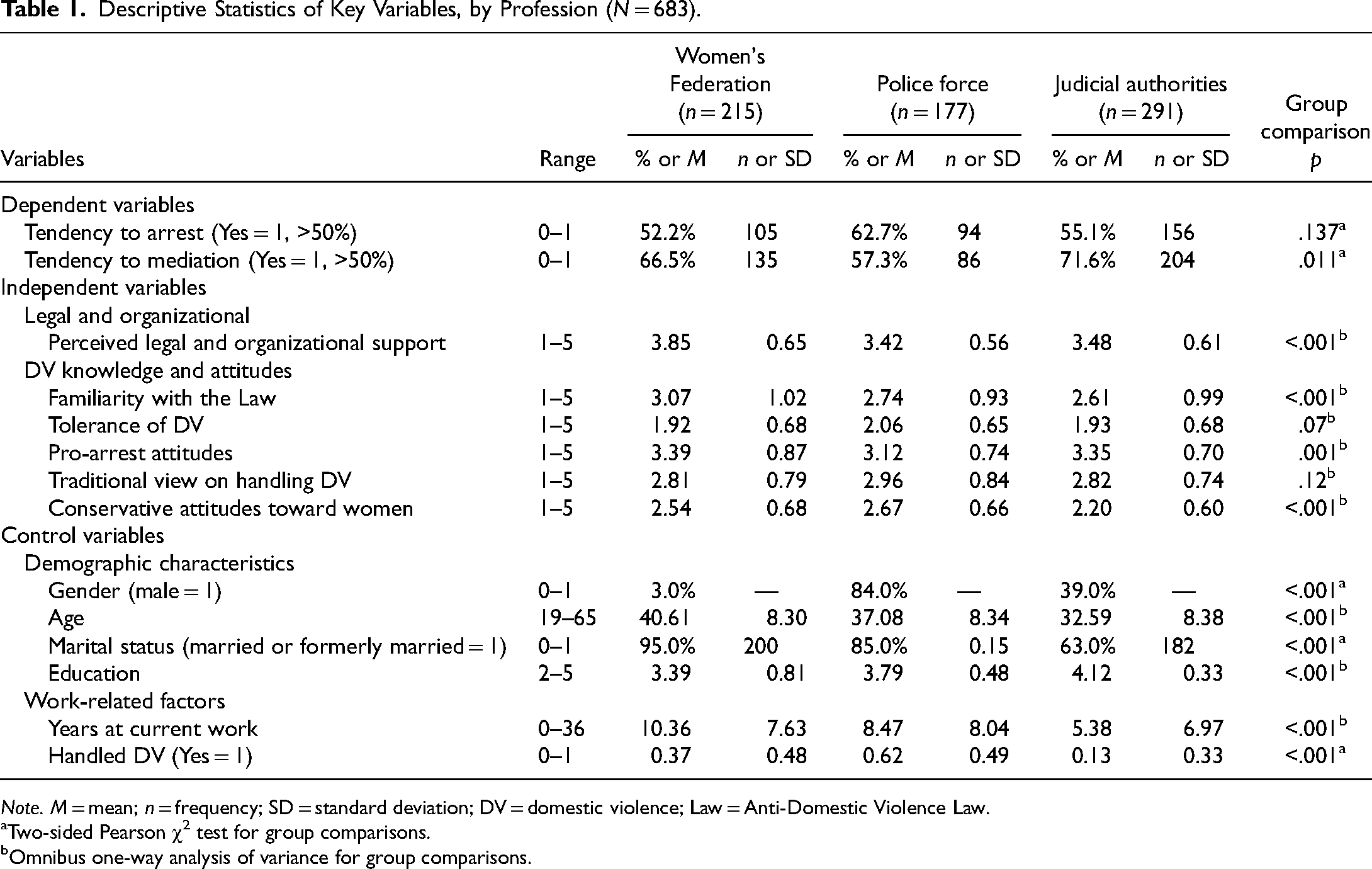
Table 1 presents descriptive statistics of the overall sample and professional subgroups. The descriptive statistics indicated that females accounted for the large majority of both the WF members (97%) and the judicial personnel (61%) whereas most police officers (84%) were male. Of the three groups of respondents, the WF staff were more likely to be older (M = 41 years), married (92%), and less educated (M = 3.39, senior high school education); the judicial personnel were relatively younger (M = 33 years), less likely to be married (59%), and better educated (M = 4.12, some college or bachelor degree); the police officers were in the middle among the three samples with regard to their age (M = 37 years), marital status (76%), and educational attainment (M = 3.79). In addition, most police officers had experience handling DV cases (62%), but only 37% of the WF personnel and 13% of the judicial personnel had such experience. The WF members had worked the longest number of years at their current work (M = 10.36), followed by the police officers (M = 8.47) and the judicial personnel (M = 5.38).
Descriptive Statistics of Key Variables, by Profession (N = 683).
Note. M = mean; n = frequency; SD = standard deviation; DV = domestic violence; Law = Anti-Domestic Violence Law.
Two-sided Pearson χ2 test for group comparisons.
Omnibus one-way analysis of variance for group comparisons.
Regarding the decision of whether to arrest the male offender or mediate the case, more police officers preferred to arrest the offender and more judicial personnel preferred mediation. About two-thirds (62.7%) of police officers and slightly more than half of the WF members and the judicial personnel suggested arresting the male offender. Most of the judicial personnel (71.6%) expressed a preference for mediating the case, followed by the WF members (66.6%) and police officers (57.3%).
The mean scores on the independent variable items were on the scale of 1–5. On average, the three groups of respondents were not very familiar with the Law, with the WF having the most familiarity (M = 3.07). The WF members also had the highest perceived level of legal and organizational support for their work (M = 3.85) and the strongest pro-arrest views (M = 3.39). The police officers were slightly more tolerant of DV (M = 2.06) and preferred a more traditional way of handling DV, where a case is handled by a third party outside of the police (M = 2.96) than the other groups. All three groups expressed a low level of support for conservative attitudes toward women although the police officers (M = 2.67) expressed more support for such attitudes than the other two groups of professionals.
The bivariate tests generally found important differences among the dependent, independent, and control variables across the three groups of professionals, thus indicating a professional group-based stratified approach to the multivariable model analyses would be preferred.
“Tendency to Arrest” Logistic Regression Models
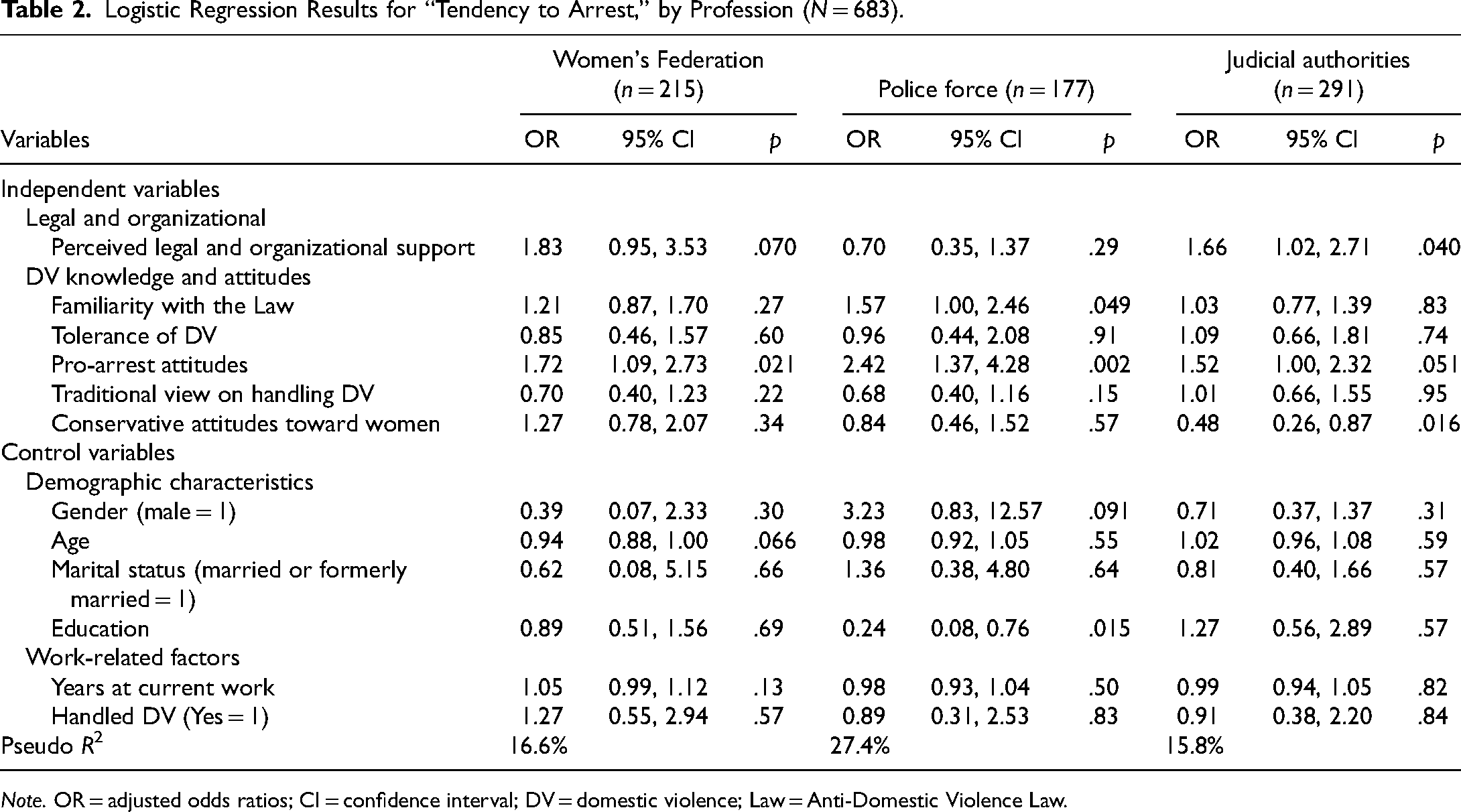
Table 2 presents the results of the logistic regressions on the tendency to arrest the male offender by the three professional groupings. All three models were statistically significant, and the models were able to explain 16.6%, 27.4%, and 15.8% of the variance (R2) in the tendency to arrest among the WF members, the police, and the judicial personnel, respectively. After controlling for demographic characteristics and work-related variables, perceived legal and organizational support was demonstrated to have a significant effect on the decision to arrest the male offender among judicial personnel only (OR = 1.664, p < 0.05). Judicial personnel who perceived stronger support from the Law and their organizations were more likely to suggest the arrest of the male offender.
Logistic Regression Results for “Tendency to Arrest,” by Profession (N = 683).
Note. OR = adjusted odds ratios; CI = confidence interval; DV = domestic violence; Law = Anti-Domestic Violence Law.
Familiarity with the Law was shown to have a significant effect on police decisions to make an arrest; officers who were more familiar with the Law were more likely to arrest the male offender (OR = 1.571, p < 0.05). Pro-arrest attitudes were demonstrated to have a significant effect on the decision to arrest among WF members and police officers. Specifically, WF members and police officers who believed in the deterrent effect of an arrest were more likely to suggest the male offender be arrested (WF OR = 1.723; police officers OR = 2.417). The third significant attitudinal variable, conservative attitudes toward women, reduced the tendency to arrest the male offender among the judicial personnel only (OR = 0.478, p < 0.05).
Only one of the demographic and work-related variables had a significant effect on the decision to arrest among all three groups of respondents. Specifically, police officers with higher educational attainment were less supportive of arresting the offender compared with officers with a lower level of educational attainment (OR = 0.238, p < 0.05).
“Tendency to Mediate” Logistic Regression Models
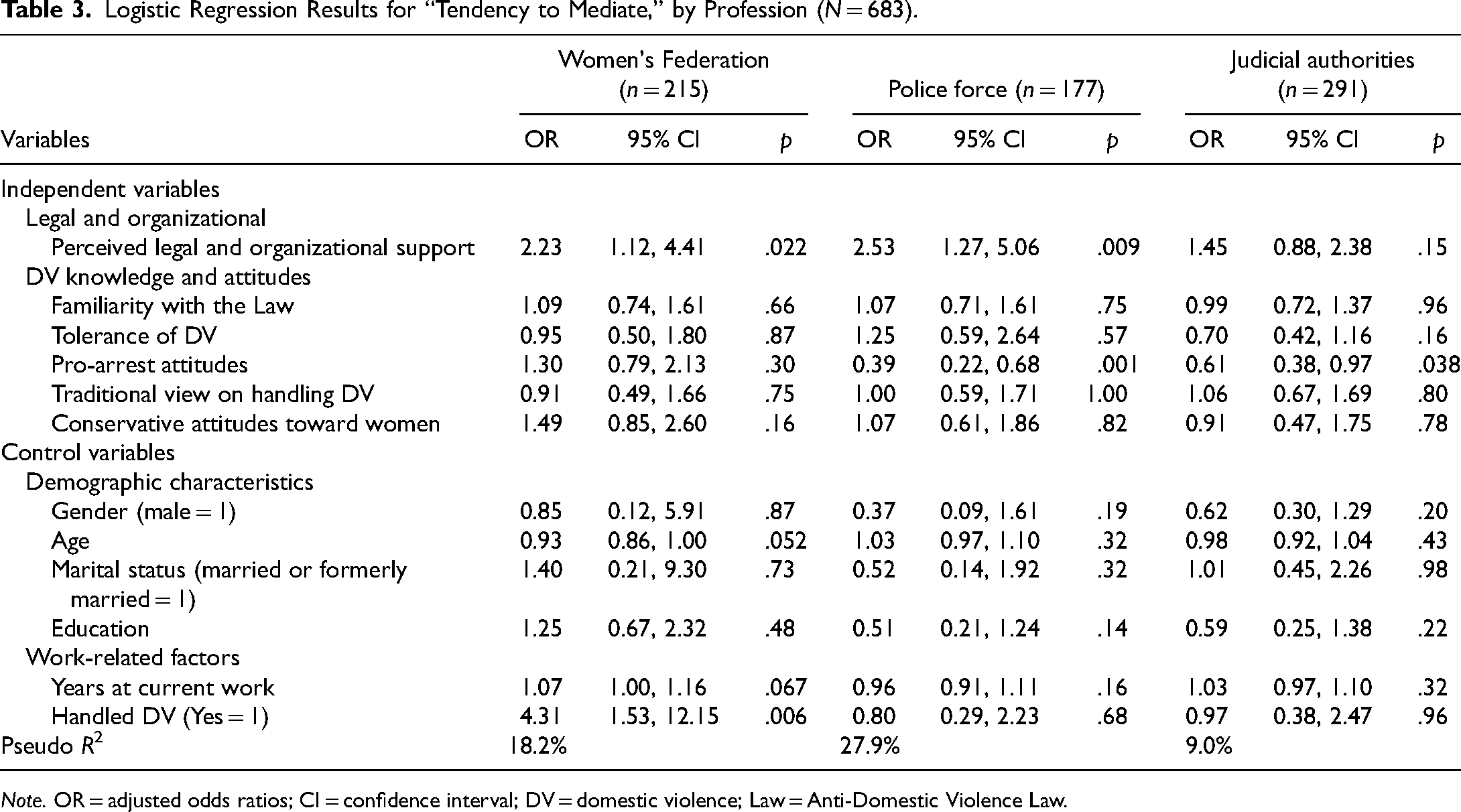
Table 3 contains the results of the logistic regressions on the tendency to mediate a case by the three professional groups. All three models were statistically significant, and the models explained 18.2%, 27.9%, and 9.0% of the variance (R2) in the decision to mediate, respectively. After controlling for demographic characteristics and work-related variables, the perceived legal and organizational support was demonstrated to have a significant effect on the decision to mediate for both the WF members and the police. Specifically, WF members and police officers who perceived stronger support from the Law and their organization were more likely to suggest mediation than the ones who perceived less support (OR = 2.225, p < 0.05 for the WF members and OR = 2.532, p < 0.01 for the police officers). Pro-arrest attitudes were significantly associated with the tendency to mediate for both police officers and judicial personnel. Police officers and judicial personnel who believed in the deterrent effect of an arrest in DV cases were less likely to suggest mediation (OR = 0.385, p < 0.01 for the police officers and OR = 0.610, p < 0.05 for the judicial personnel).
Logistic Regression Results for “Tendency to Mediate,” by Profession (N = 683).
Note. OR = adjusted odds ratios; CI = confidence interval; DV = domestic violence; Law = Anti-Domestic Violence Law.
Only one of the demographic and work-related variables had a significant effect on the decision to mediate among all three groups of respondents. Specifically, WF members who had the experience of handling DV cases (OR = 4.307, p < 0.01) were more likely to suggest mediation than the other WF members. There was no significant effect of the demographic and work-related control variables on the tendency to mediate a case among police officers and judicial personnel.
Discussion
In contrast to other countries, in particular the United States, where DV incidents with clear evidence of the victim's injuries often result in the arrest of the offender (Phillips & Gillham, 2010), in this study, slightly more than half of the WF members and the judicial personnel and no more than two-thirds of the police officers suggested arresting the offender in the vignette case. Meanwhile, more than 70% of the judicial personnel, two-thirds of the WF members, and more than half of the police officers preferred traditional mediation methods in handling the case. These findings indicate that although the Law has improved the legal protection of DV victims, both the community and criminal justice professionals may not be acting on or recommending the practice of arresting the offender to protect the victim and deter future offenses against women. The fact that the police officers demonstrated a stronger tendency than the other two groups to arrest the offender and that the WF members preferred to mediate the case might be explained by the law enforcement nature of police work and the social service goals of the WF (Cooper et al., 2008). Furthermore, the results showed that more respondents in the judicial personnel group than in the other two groups preferred to mediate the case, indicating that some judicial personnel are likely to take the hands-off approach and refer a case to a third party for mediation.
The results of the logistic regression analyses suggest that legal and organizational support influenced the decision to arrest the offender or mediate the case. Such support generally increased the likelihood of both arrest and mediation among the three groups of professionals except for the tendency to arrest among the police officers and the tendency to mediate among the judicial personnel. This finding is, to a certain extent, consistent with Sun et al.'s (2022) study, which found that organizational backing via supervisory support increased police officers’ overall intervention in DV cases in Jiangsu and Hunan provinces in China. The present study provided further evidence to support the effect of organizational support on different intervention strategies, such as arrest and mediation, among not only the police officers but also other professionals involved in handling DV in China.
Although police officers who perceived a higher level of legal and organizational support did not show a greater tendency to arrest the DV offender, their familiarity with the Law increased such tendency. This may be explained by the Law's stipulation on police officers’ responsibility to stop the violence, collect the evidence, and assist the victim upon receiving a DV call (Chapter 3, Article 15). Meanwhile, the finding that legal and organizational support did not significantly increase judicial personnel's decision to mediate might be explained by the content of the Law or the training that judicial personnel received about the Law. Generally, only a small portion of serious criminal cases find their way to the court (Walker, 1983). Although this is also the case for DV, the Law has increased the court involvement in dealing with DV. The Law contains a whole chapter (Chapter 4) on protection orders that courts can issue to DV offenders. If an offender violates the order, resulting in serious harm to another person, or if the DV case is so severe that it constitutes a criminal offense, the people's court can hold the offender legally responsible for his crime. If the violation of protection order is not serious, the court can issue a warning to the offender and impose a fine of less than RMB1,000, or detain the offender for less than 15 days (Chapter 5, Article 34). In summary, the Law has increased the involvement of the courts in holding offenders accountable, but lacks stipulation on judicial mediation in DV cases. This might help explain the nonsignificant effect of legal and organizational support on judicial personnel's decision to mediate the case.
Although legal and organizational support was found to influence the decision to arrest the offender or mediate the case, discrepancies exist between the law in theory and in practice regarding legal and organizational job training. The Law clearly states that relevant governmental departments at county level or above, judicial authorities, and the WF should make anti-DV a part of their vocational training (Chapter 2, Article 7). Further descriptive analyses of the data, however, demonstrated that only members of the WF tended to agree with the following statement: “My work unit has made anti-DV part of the job training according to the Law” (i.e., 3.60 on a scale ranging from 1 to 5). The mean scores obtained for this statement from the police and the judicial personnel were 3.19 and 3.16, respectively. Such findings indicate that, on average, criminal justice professionals were not very sure if their work unit had made anti-DV a part of the job training. This is confirmed by a 4-year evaluation report about the enforcement of the Law (March 1, 2016–February 28, 2020) published by Beijing Weipin Equity Organization, a nongovernmental organization advocating for women's rights. This report found that 4 years after the implementation of the Law, only 46.9% of relevant provincial-level organizations, including provincial-level WFs, and government agencies, including criminal justice agencies, had organized job trainings on anti-DV, and most of the training activities (81.25%) were carried out within 3 months after the Law took effect. Furthermore, the main purpose of the trainings was to introduce the Law, and they lacked detailed instructions for frontline staff on how to deal with DV (Xia & Feng, 2020). The report highlights that both governmental and organizational attention to DV faded shortly after the Law took effect. Such recommendations underscore the importance of efforts to increase awareness of and involvement in DV incidents among the justice system as well as other relevant governmental and nongovernmental organizations. Such integration might be achieved through persistent efforts to increase public awareness of DV and through mandatory job trainings or more intensive job trainings providing detailed instructions to the frontline staff who deal with DV.
The present study also found that a pro-arrest attitude consistently increased the tendency to arrest the offender across all three groups of professionals and decreased the tendency to mediate the case among both the police officers and the judicial personnel. In addition, conservative views on women reduced the likelihood of arresting the offender among the judicial personnel, a group of professionals who were younger and received a higher level of education than the other two groups of professionals. The findings suggest that the professionals’ attitudes play a crucial role in dealing with DV. To limit or constrain the influences of attitudinal factors, it might be helpful to provide structured guidelines or policies for the respective professionals handling DV incidents. Relevant research conducted in the United States has found that such guidelines or policies may not only help reduce DV incidents but also better protect the victims of DV by utilizing appropriate strategies and services (Cook et al., 2014; Deans et al., 2018; Tatum & Clement, 2007).
In mainland China, well-structured guidelines that can be used by various stakeholders nationwide involved in handling DV cases are lacking. A search of DV-related guidelines published in mainland China resulted in three guidelines or handbook including the Guidelines on Marriage and Family Conflict Mediation Work (trial) (GMFCM) jointly published by the All-China Women's Federation and the Ministry of Justice in 2019, the Guide for Hearing Marriage Cases Involving Domestic Violence (GHMCIDV) drafted by the Supreme People's Court's Research Institute for Applied Legal Studies in 2008, and the Police Handbook for Prevention and Control of Domestic Violence (trail) (PHPCDV) as a product of a program activity carried out by All-China Women's Federation, Ministry of Public Security, and UN Women in 2013. The three guidelines/handbook were either not specifically designed for handling domestic violence (e.g., the GMFCM and GHMCIDV) or only temporarily experimented in a small scale (e.g., the PHPCDV was experimented in only one county in Gansu and Sichuan province, respectively) long before the Law was in effect in 2016 (e.g., two of them were published in 2008 and 2013, respectively). The review of these guidelines, along with the findings from this study, suggest that a well-structured, up-to-date set of national guidelines for handling and responding to DV incidents could help ensure appropriate responses to DV, as well as help various stakeholders throughout China collaborate with each other.
Limitations
Although the findings are informative, the present study has methodological limitations that future studies should take into consideration, particularly when investigating professionals’ decision-making in relation to DV. First, the vignette used in the present study was not intended to be all encompassing of DV incidents in China or any place for that matter. Second, due to the nonprobability sampling method, it is unclear how well the respondents represented their professional group given that data do not exist regarding the population characteristics of these professionals in China. In short, the sample may not be fully representative, and, thus, findings may not be fully generalizable. Third, prosecutors and judges might exercise discretion differently. Due to the small sample size of the court personnel, the two groups of judicial professionals were examined as one group in the present study. In addition, the legal and organizational support was measured as a broad concept tapping into the legal support and organizational training and activities on DV according to the Law. Future research should develop a more comprehensive measure to examine legal and organizational support. Finally, the choice of statistical models was driven by the necessity of dichotomizing the two dependent variables due to high levels of skewness in the sample. Future research on other samples should consider whether the relationships might be more appropriately examined using linear, or other, models.
Conclusion
Notwithstanding these limitations, the present study is among the first systematic explorations of responses to DV among both community and criminal justice professionals in mainland China. Methodologically, it provides “proof of concept” that can be used with both larger and probability samples in a non-Western cultural context, mainland China. The findings on a hypothetical situation suggest that all three groups of professionals may tend to exercise their discretionary power when handling DV incidents. Although it is unrealistic and perhaps undesirable to eradicate the use of discretionary powers altogether, their excessive use might undermine the legitimacy of governmental organizations, including the criminal justice system (Goldstein, 1963; Vinzant & Crothers, 1998; Wang et al., 2020). Accordingly, this study underscores the importance of professionalizing responses to DV in China, including by requiring intensive training about the Law, as well as developing detailed instructions on how DV cases should be handled to reduce or limit the influence of personal attitudes in decision-making processes.
Footnotes
Author’s Note
Christopher J. Wretman is also affiliated at Wretman Research, LLC, Hillsborough, NC, USA.
Declaration of Conflicting Interests
The author(s) declared no potential conflicts of interest with respect to the research, authorship, and/or publication of this article.
Funding
The author(s) disclosed receipt of the following financial support for the research, authorship, and/or publication of this article: Funding for the original data collection was provided by the University of Macau (MYRG2019-00104-FSS & MYRG2018-00094-FSS).
