




Abstract
Domestic violence against women increased during COVID-19 lockdowns. This inaugural study examined the content of Australian government online portals, for women seeking support and help for domestic violence, during the 2021 COVID-19 pandemic. This mixed methods study incorporated four phases: a search; measurement of portal quality standard using DISCERN; enumeration of portal items; and a qualitative exploration of portal text. Australian governments must continue to work alongside domestic violence services as we found some portals were better than others. Continued review, revision, and funding are needed to meet the demands associated with this evolving public health emergency.
Keywords
Introduction
Domestic violence perpetrated against women increased globally during the COVID-19 pandemic (UN Women, 2020; Viero et al., 2021). COVID-19 lockdowns provided the ideal environment for perpetrators to increase control over their victims. Stay-at-home policies implemented to control the spread of COVID-19, forced victims of domestic violence to be at home with their perpetrator 24 hours a day, enabling the perpetrator to monitor them continually, and prevent them from accessing support (Hanrahan & Cornish, 2022; Pfitzner et al., 2020; Viero et al., 2021). As the violence against women intensified alongside the COVID-19 pandemic, it was labeled by the United Nations as a shadow pandemic (Hanrahan & Cornish, 2022; UN Women, 2020).
Australia has not been immune to this pandemic within a pandemic (Boxhall et al., 2020). Indeed, a recent online survey of 15,000 Australian women found around 1 in 20 (4.6%) reported experiencing violence by their current or past cohabiting partner. Just under two-thirds (65%) reported that the violence either commenced or increased alongside the COVID-19 pandemic (Boxhall et al., 2020). Relative to other age groups, young women aged 18–24 reported the highest prevalence rates across all types of domestic violence (Australian Institute of Health and Welfare, 2021). Additionally, a recent survey of two-thirds (n = 166) of Australian practitioners in the state of Victoria, reported COVID-19 lockdowns had resulted in an increase in the severity and complexity of violence against women. Perpetrators were also reported to employ new strategies around the fear of contracting COVID-19 (Pfitzner et al., 2020), to further isolate women.
Traditionally, healthcare providers were the gatekeepers to information around people's healthcare needs (Wrigley Kelly et al., 2021). However, the last decade has seen a move away from this traditional model of healthcare and gravitation toward online information (Wrigley Kelly et al., 2021). Indeed, pre-COVID-19 Australian women were found to regularly use online resources to access health information (Maslen & Lupton, 2018). This change has been exponential, contributing to an increase in the quality and amount of online healthcare content (Goldberg et al., 2011).
Internet searches around the topic of domestic violence increased during COVID-19 lockdowns. A large innovative study examined the impact of the pandemic on domestic violence across 11 countries, using a Google search intensity index of topics related to domestic violence. Search intensity increased by nearly a third after COVID-19 lockdown, with larger effects of search intensity identified as increasing numbers of individuals stayed at home (Berniell & Facchini, 2021). Additionally, an online American survey performed early in the pandemic, examined the safety concerns of 53 individuals who had experienced domestic violence. Results revealed that two-fifths perceived their safety had decreased, with the most common support strategy used being to employ social media to connect with others (Wood et al., 2021).
Throughout the COVID-19 pandemic, online health information has been used extensively to mitigate the impact of the virus (Wrigley Kelly et al., 2021). Early in the pandemic, there was recognition of the unfolding crisis of this domestic violence shadow pandemic (Hanrahan & Cornish, 2022; Pfitzner et al., 2020; UN Women, 2020) and a push for policy-makers to provide online interventions to mitigate its impact (Jeyaraman & Chandan, 2020). Consequently, many government services globally (UN Women, 2020), including those in Australia rallied to support women and their children online (Boxhall et al., 2020).
This study aimed to provide a focused examination of the content found within government online portals for women seeking access to support and help for, domestic violence in each state and territory across Australia, during the COVID-19 pandemic. We also sought to assess the quality of information within these portals
Methods
This research employed mixed methods and was performed in four phases. Phase one was a search strategy to identify the online portals. Phase two examined the quality of the selected portals. Phases three and four employed summative content analysis (Blackwood et al., 2019; Hsieh & Shannon, 2005). In phase three, quantitative analysis was undertaken to enumerate the presence of specific items within the portals, such as certain words. During this stage, the visual and auditory content were also examined. Finally, phase four utilized qualitative content analysis to explore the portal text using thematic analysis. Ethics approval was deemed unnecessary as the research utilized information that was freely available and in the public domain. While the research was not strictly classified as a synthesis of the literature, the Preferred Reporting Items for Systematic Reviews (PRISMA) was adhered to Moher et al. (2009).
This comprehensive examination was undertaken between July 2021 and February 2022. When the study commenced on the 16th of July, the Australian Broadcasting Corporation reported that 46% (12 million) Australians were in lockdown in an attempt to contain the Delta variant of COVID-19.
The Research Team
Ten of the research team had responded to an online advertisement uploaded on “govolunteer.com.au” by “The Action Research Centre” (actionresearchcentre.org.au) asking for volunteer research assistants to work on a domestic violence project. This new, nonprofit, grassroots organization uses a lead researcher, to coordinate volunteer research assistants interested in refining their research skills while working on a project that drives dialogue and social change around domestic violence.
The team was based across four Australian states and three time zones, being in New South Wales, Victoria, Queensland, and Western Australia. They were ethnically diverse and consisted of three males and eight females, with varying indirect and direct lived experiences of domestic violence. Two members of the team had a PhD, three had undertaken a Masters, and six had an undergraduate degree. The topics of qualifications included Pediatrics and Child Health, Public Health, Law, Psychology, Criminology, Cyber Security, Radiography, and Theology. Researchers were aged between 21 and 58 years old. Communication and weekly meetings were organized through an online platform.
Phase One: Search Strategy
Identification and screening
Our search criteria included online portals, which were defined as a website or web page providing access to other sites. The definition of a website was a set of web pages located under a single domain name produced by a single organization. Definitions were developed following brainstorming with the research team.
To identify portals, an internet search in English was performed in “Google” using the search term “women” and one of the following: domestic violence; domestic abuse; domestic assault; family violence; family abuse; family assault; sexual violence; sexual abuse; sexual assault; partner violence; partner abuse; partner assault; intimate violence; intimate abuse; intimate assault; emotional violence; emotional abuse; and emotional assault.
The search was conducted in conjunction with the name of each Australian state and territory (e.g., Australian Capital Territory, New South Wales, Northern Territory, Queensland, South Australia, Tasmania, Victoria, or Western Australia). Finally, only online government portals ending with “.gov.au” were selected. As most searches resulted in 10 pages, for consistency only portals identified in these pages were considered.
A data extraction tool was developed in Excel, to collate portal information (title and uniform resource locators [URLs]) for each state and territory. To reduce individual bias, the risk of missing a portal, or recording incorrect portal information, each state and territory was searched independently by two researchers (Higgins et al., 2021). The resulting 16 databases (two for each state and territory) were transposed into an Excel Pivot Table and the duplicates were deleted.
Eligibility and inclusions
The research team met weekly over a month, to brainstorm and reach consensus in relation to the exclusions. Finally, a copy of the information contained within the included portals was saved to ensure the same data was utilized for phases two, three, and four of the research.
Phase Two: Quality Assessment
The DISCERN tool was utilized to measure portal quality (Charnock et al., 1999). This validated tool judges the quality of written consumer information by scoring 16 questions (each with a score of 1–5), divided into three sections: the reliability of the publication (eight questions); the quality of information on treatment choices (seven questions); and an overall rating (one question). In 1999, when DISCERN was developed, consumer information was published in a paper format. With most consumer information now accessed online, the tool continues to be utilized by researchers to assess online consumer information (Blackwood et al., 2019: Murray et al., 2019). Furthermore, comparisons to other established validated tools, have highlighted DISCERN's worth (Cuan-Baltazar et al., 2020; Wrigley Kelly et al., 2021).
The authors of the tool (Charnock et al., 1999), acknowledged that subjectivity is required to rate some criteria. Indeed, to mitigate this issue the tool has “hints” to consider embedded throughout. Additionally, the DISCERN handbook (Charnock, 1998) offers numerous scenarios to illustrate how to best score each question. Therefore, to reduce subjectivity around interpretation and provide further clarity in relation to scoring, we decided to set the DISCERN questions within the context of our study. Although no evidence was identified in the peer-reviewed literature to assist us with this quest, an online study in a preprint platform was identified. This guided interpretation for each DISCERN question around the context of their research aim (Prabhune et al., 2021). Using both the DISCERN handbook (Charnock, 1998) and the above study (Prabhune et al., 2021) as a framework, four members of our team worked together to interpret each DISCERN question within the context of our study (Table A1).
To reduce bias and increase inter-coder reliability, each portal was scored independently by two team members (Higgins et al., 2021). DISCERN hints were primarily used to elicit a score, with the context set for our research topic (Table A1) subsequently used as needed. Differences in scoring were debated between partner researchers, with the final agreed scores for each portal, uploaded into SPSS for analysis.
Neither the DISCERN handbook (Charnock, 1998) nor the original peer-reviewed paper (Charnock et al., 1999) provides detailed guidance on how to interpret the total DISCERN score. The handbook mentions scores can range from 16 to 80, with a higher score indicating a higher quality standard. A study detailing the descriptive statistics of 97 websites (Weil et al., 2014), suggested scores may be interpreted as follows: very poor (<27); poor (27–38); fair (39–50); good (51–62); and excellent (63–75). However, the above study excluded the score for the final question. To ensure the reliability and validity of the tool, we assessed the quality standard of the portals using the scores for all 16 questions.
Phase Three: Quantitative Data Collection
A data extraction tool was developed in Excel to obtain information on portal structure, the visual and auditory content, and five selected words identified following a search of the literature. For example, the word “safe” was chosen as keeping women safe from physical and psychological harm was identified as a core value of most public health domestic violence campaigns. Furthermore, “safe word” campaigns were being launched during the COVID-19 pandemic to facilitate discreet requests for domestic violence assistance via telemedicine appointments and the internet (Bradley et al., 2020). Additionally, a Canadian advertising agency was devising and subsequently launched “Safe Home.” This program enabled individuals at risk of domestic violence to choose three customized, individualized safe words. When Google smart speakers picked up any of these safe words, an automated message was sent to a domestic violence hotline triggering a request for help (Google, 2022).
To test the feasibility of the tool and identify potential problems with its use, piloting was undertaken independently by two team members who each reviewed three domestic violence portals. These contained infographics, a video, and a voice recording and were independent of those selected in our search strategy.
The following issues were identified and addressed during piloting: recording how the URL for domestic violence was identified within the portal; removing the need to record the number of links into the portal; adding the availability of an after-hour phone contact; refining the words associated with “advice”; noting the gender of voice recordings; and adding the option to select a computer-generated voice.
The final data extraction tool consisted of three Excel tabs. The first collected information relating to portal structure: how the URL for domestic violence was identified; portal safety (e.g., presence of a quick exit button and how to delete search history); access to a translation service; the availability of after-hour services; the number of pages (Yale University, 2022) utilized within the portal; and the number of links out of the portal. This was proceeded by enumeration of the words support, assistance, advice, help and safety, and their suffixes.
The second tab recorded how information within the portal was displayed (Catalan-Matamoros & Peñafiel-Saiz, 2019) with a focus on photographs and infographics. The position (top, middle, or bottom and left, central, or right) was recorded, with photographs also assessed in terms of gender and infographics in terms of their shape, color, and content.
The third tab extracted information pertaining to recordings and videos. Their position on the page (top, middle, or bottom and left, central, or right) was noted. Furthermore, the theme and gender the recordings and videos were assessed and the voice recordings evaluated as young, old, or computer generated.
For consistency, the first page of a portal was the URL of its entry page for domestic violence. Only the first three levels of a portal were considered for enumeration. Additionally, to reduce individual error and the risk of extracting incorrect portal information, two team members (Higgins et al., 2021) assessed each portal independently. If differences in enumeration occurred between partner researchers, the portal was reassessed until a resolution was reached. The resulting data was uploaded into SPSS for analysis.
Phase Four: Qualitative Data
Braun and Clarke's six steps of thematic analysis (Braun & Clarke, 2006) were utilized to explore portal content for women seeking access to support and help for domestic violence. This widely used analytical method was chosen as it incorporates a stepped process to develop meaningful themes from written text (Braun & Clarke, 2006). Ten team members analyzed a cross-section of the text within the portals saved in phase one, ensuring the text within each portal was reviewed independently by at least three members.
Statistics
Quantitative analysis
Portals were placed into three groups for analysis. Those specifically designed to address domestic violence and those designed by legal and police entities. The DISCERN scores from each portal were utilized to assess the quality standard between the three groups (specifically designed, legal, and police portals). A one-way ANOVA of variance (Heiberger & Neuwirth, 2009) was performed, with a Bonferroni corrected posttest t-test, utilized to indicate significant differences between the groups.
Categorical data extracted in phase three were analyzed using frequency distributions, with continuous data summarized as means, medians, interquartile ranges, and ranges. Univariable group comparisons were conducted using Chi-square tests for categorical outcomes. An independent samples t-test (Cvetković et al., 2022) was employed to compare the means of the legal and police portals to the specifically designed portals. To examine the significant difference between groups and check homogeneity of variances, Levine's test for equality of variances was utilized (Kim, 2015). p-Values <.05 were considered statistically significant.
Qualitative analysis
The saved text from the portals in phase one was analyzed using Braun and Clarke's six steps for thematic analysis (familiarization with the data, initial coding generation, searching for themes based on the initial coding, review of the themes, theme definition and labeling, and report writing) of thematic analysis (Bradshaw et al., 2017; Braun & Clarke, 2006). Deconstruction of the text revealed patterns and parallels throughout. During the analysis, the team met weekly over 2 months to discuss, negotiate, define and refine the themes, and sub-themes and their definitions. Analysis continued until we achieved data saturation.
Results
Phase One: Search Results
Searching identified 4,227 results, initial screening subsequently removed 3,726 as they were duplicates. The remaining 501 results were examined for eligibility. Over the next month, the team met weekly to brainstorm a further 478 exclusions, leaving 23 portals for inclusion (Figure 1) and analysis. At least one portal was identified in every Australian state and territory (Table 1).
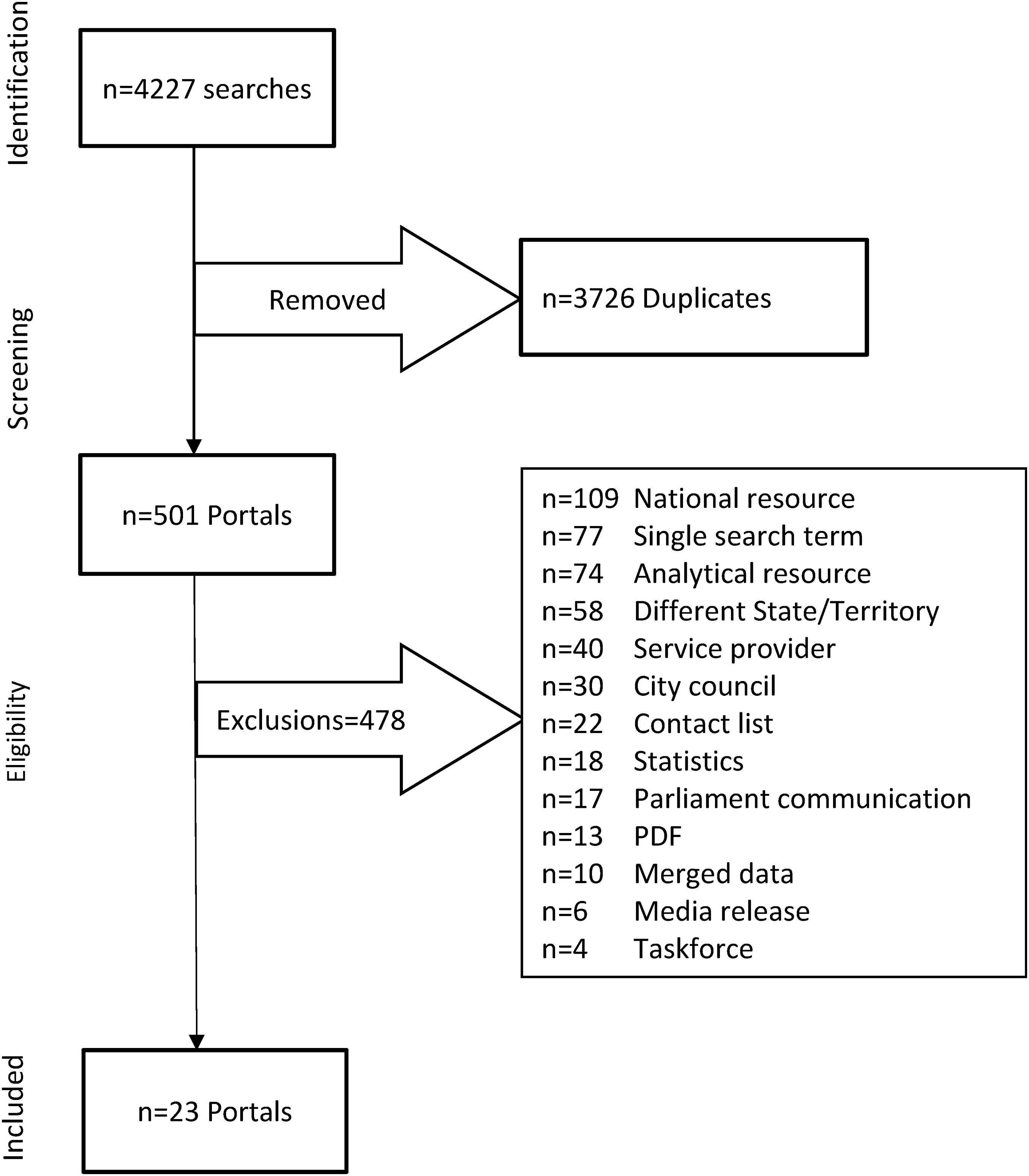
Portal Search Strategy.
Selected Australian Government Domestic Violence Portals.
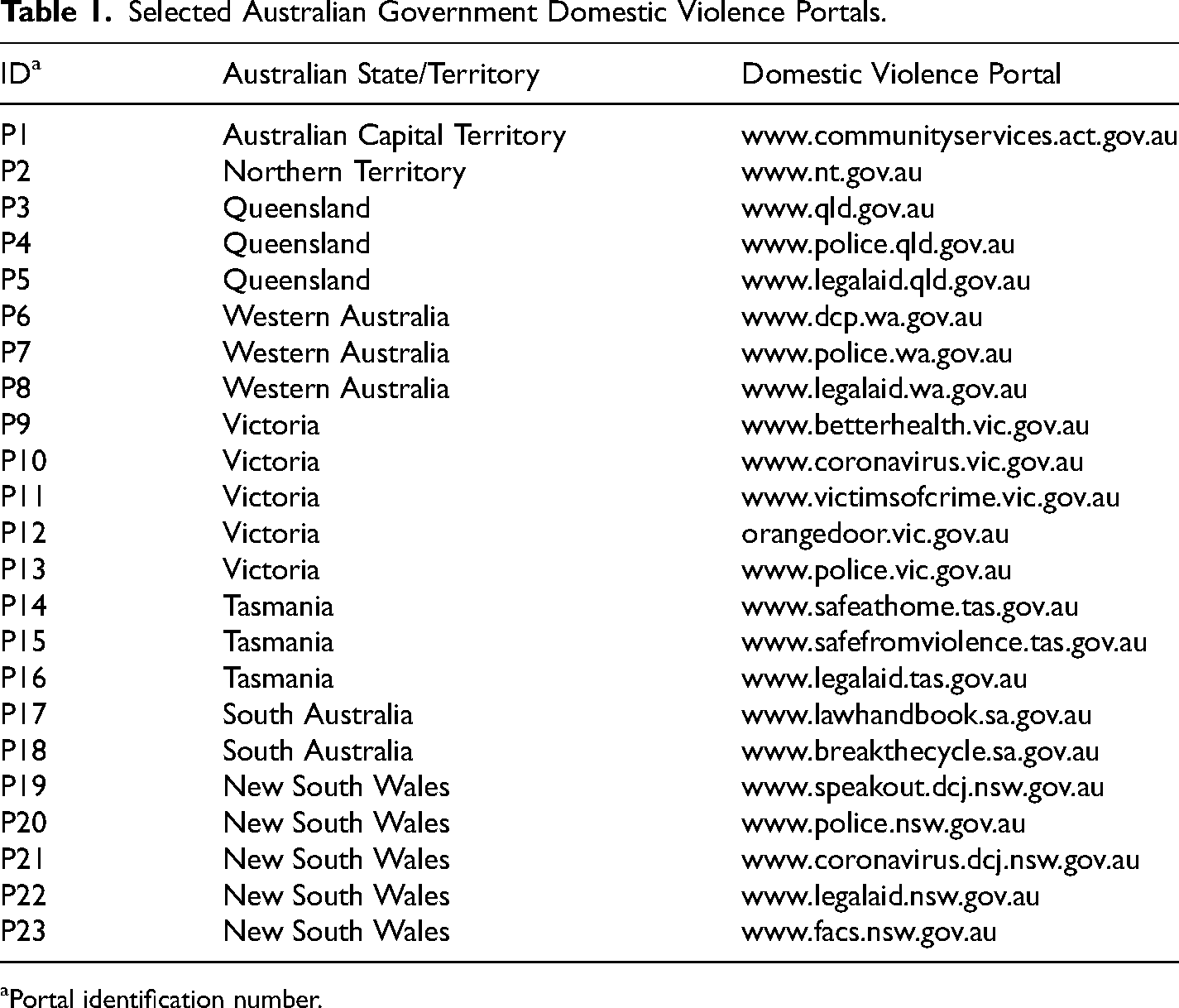
Portal identification number.
Phase Two: Quality Standard Results
The mean DISCERN score for specifically designed domestic violence portals was 50.2, with the score for legal and police portals being 36.5 and 36.75, respectively. A one-way ANOVA of variance using the total DISCERN scores for specifically designed, legal and police portals was significant (p = .005), with a Bonferroni corrected posttest t-test assuming equal variances, finding specifically designed portals had a significantly higher mean DISCERN score than the legal (p = .012) and police (p = .033) domestic violence portals (Figure 2).
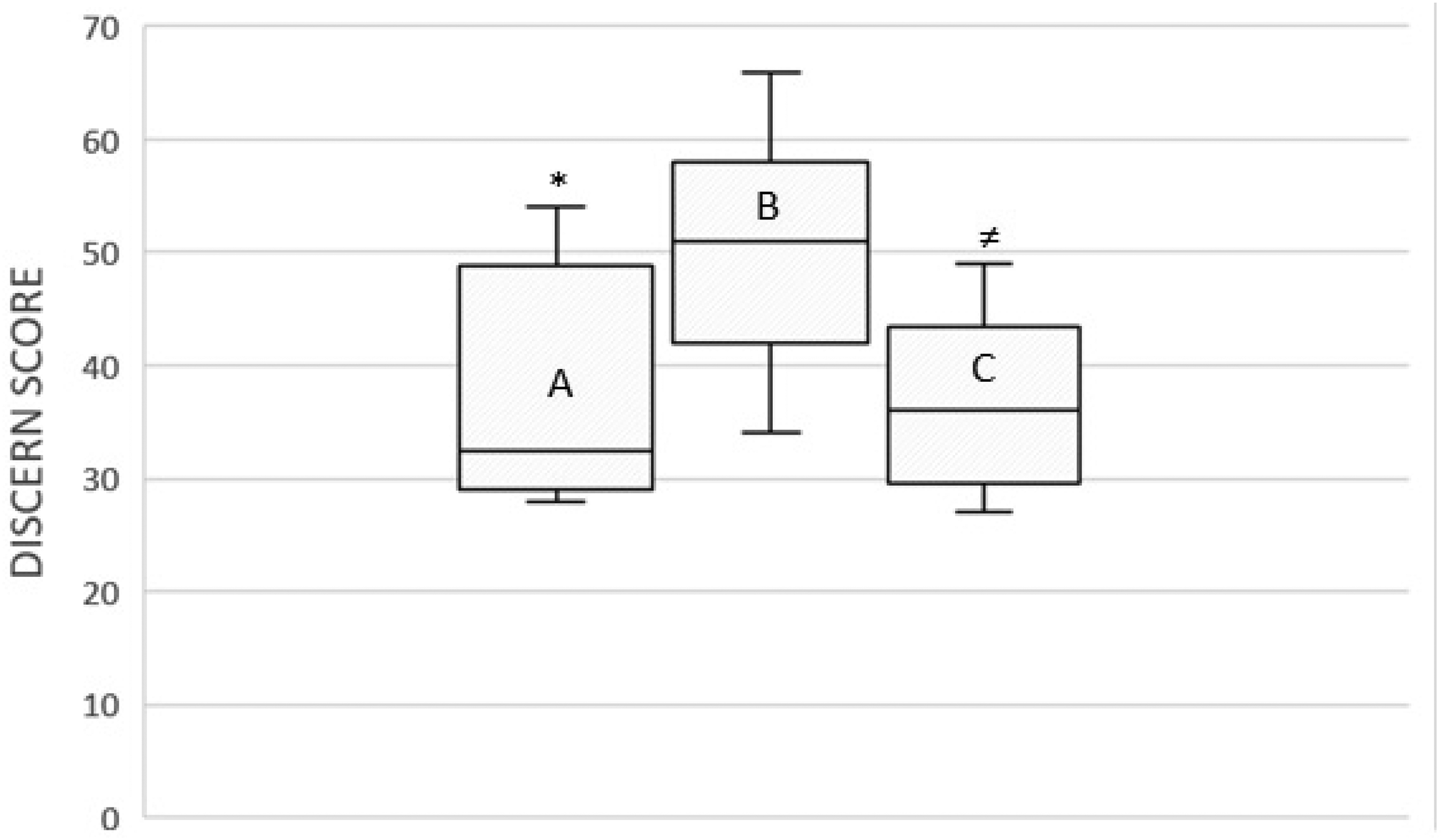
Descriptive and Significant Differences Between the Quality Standard of Domestic Violence Portals. A = police portals, B = specifically designed portals, C = legal portals.
Phase Three: Quantitative Results
Structure of portals
Analysis of the specifically designed, legal, and police domestic violence portals found the majority (78.3%, 18 of 23) had a quick exit button, with most (60.9%, 14 of 23) providing information on website safety and how to delete browser history. Around half (52.2%, 12 of 23), the portals did not offer a translation service, but most (69.6%, 16 of 23) offered an after-hours service. Domestic violence information could be accessed via the main screen of most (65.2%, 15 of 23) portals, with the majority (78.3%, 18 of 23) also providing this access through the portal's search bar, and 43% (10 of 23) offered both search methods. The date the portal was last updated and was provided by the overwhelming majority (87%, 20 of 23) of portals.
Legal and police portals were significantly more likely than specifically designed portals to have two pages or less (100% vs. 57%, p = .030) of domestic violence information, with none of the legal and police portals providing more than two pages of information. Portals contained a mean of 75 links out to external domestic violence supports and services, with legal and police portals having a mean of 65 links out and specifically designed portals having a mean of 86.
Wording within portals
Specifically designed portals were significantly more likely to use support words compared to legal and police portals (df 15.123) = 2,615, p = .019. The mean number of support words used by portals was 56, with specifically designed portals having a mean of 80 support words compared to legal and police portals which had a mean of 18.
Specifically designed portals were also more likely to use safe words than legal and police portals (df 14.423) = 2.190, p = .045. The mean number of safe words used by portals was 51, with specifically designed portals having a mean of 73 safe words compared to legal and police portals which had a mean of 18. There was no difference in the mean number of assist, advice, and help words which were 11, 19, and 56, respectively.
Visual and auditory content of portals
No significant differences were identified between the legal, police, and specifically the legal, police, and specifically designed portals in terms of the position (horizontal or vertical and left right or central) of the visual and auditory content.
The majority (14 of 23, 60.9%) of portals contained an infographic, with the mean number of infographics within these portals being 3.93. In total, there were 55 infographics. Infographics were rectangular (48 of 55, 87.3%), colored (44 of 55, 80%), and contained either text (29 of 55, 52.7%), text and an image (22 of 55, 40%) or an image (4 of 55, 7.3%).
Just over half (13 of 23, 56.5%), the portals contained a photo, with the mean number of photos being 2.69. In total, there were 35 photos, with specifically designed portals containing fewer photos (13 of 35, 37.1%) than legal and police portals (22 of 35, 62.9%). A quarter (25.7%) of the portals used images of women only.
Two-fifths (9 of 23, 39.1%) of portals contained a voice recording, with the mean number of recordings being 1.89. In total, there were 17 recordings, with legal portals containing more (11 of 17, 64.7%) recordings than specifically designed portals (6 of 17, 35.3%). None of the police portals contained recordings. The overwhelming majority (15 of 17, 88.2%) of recordings were male. Most recordings were middle-aged (11 of 17, 64.7%) with the remainder (6 of 17, 35.3%) being computer generated making an age assessment problematic. Eleven recordings imparted various legal information including how to access legal aid, restraining orders, domestic violence orders, and court documents. The six recordings from specifically designed portals read snippets from their portal page (n = 4) and communicated information for women with disability (n = 2).
Just under half the portals contained a video (10 of 23, 43.5%), with the mean number of videos being 2.7. In total, there were 26 videos, with specifically designed portals containing the majority (21 of 26, 80.8%). Half the videos (13 of 26, 50%) contained individuals of both genders, with similar numbers of videos containing only females (5 of 23, 19.2%) or males (4 of 26, 15.3%). The topics of the videos were diverse covering: domestic violence (n = 5); family violence (n = 4); children (n = 3); legal advice (n = 3); support (n = 3); and disability (n = 2). Change, equity, housing, intervention, respect, and sexual assault were all covered once.
Phase Four: Qualitative Results
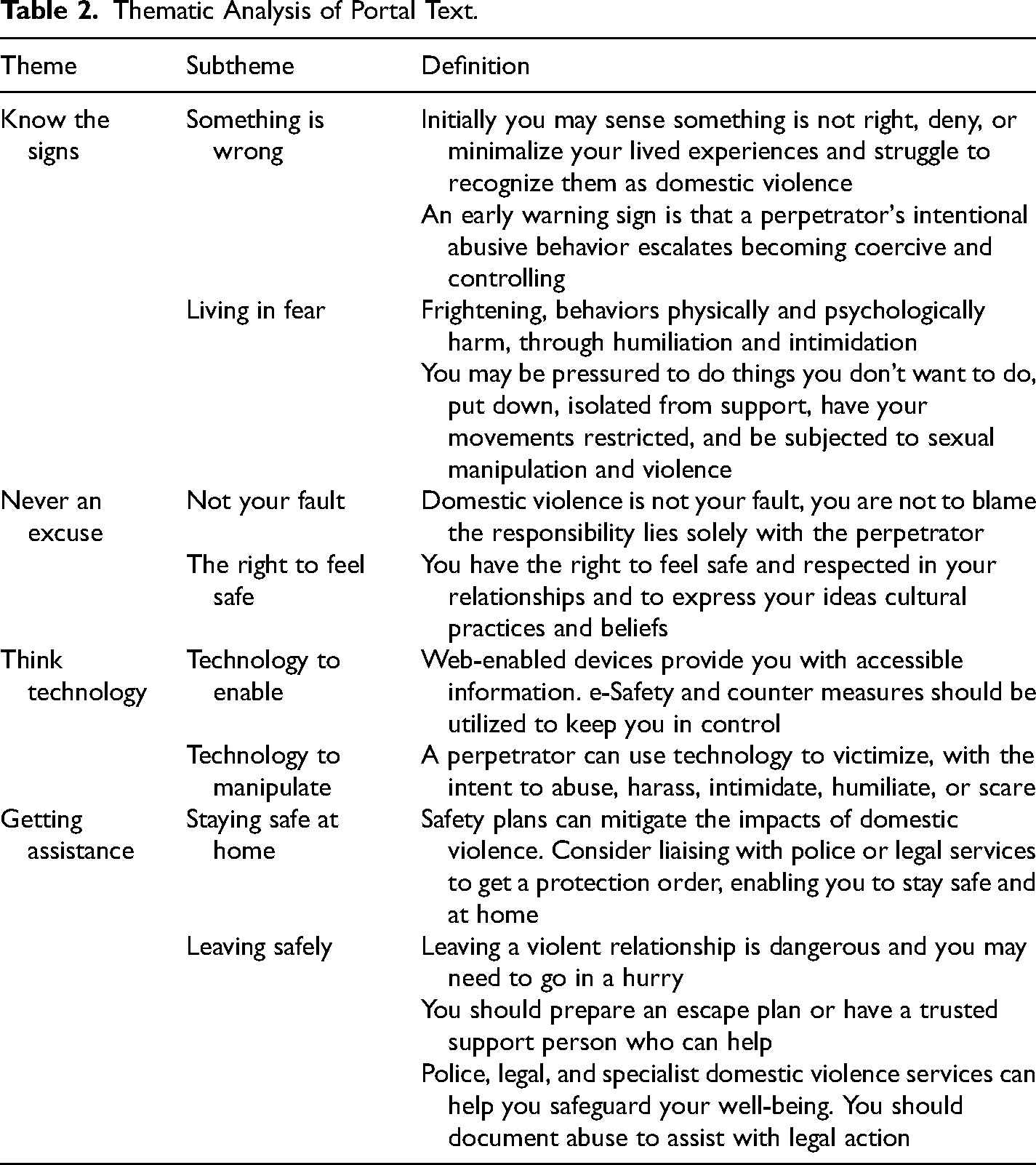
Exploration of the text within the portals provided insight into how the information for women seeking access to support and help for domestic violence was provided. Findings are supported with direct quotes from the portals. A coding system was devised based on the portal identification number allocated in Table 1 (P1–P23) and whether the portal was a specially designed (S), legal (L), or police (P) portal. This was displayed as a postfix placed adjacent to each quote and provided transparency to the quote source. Analysis revealed information was conceptualized as four main themes: know the signs; never an excuse; think technology; and getting assistance (Table 2).
Thematic Analysis of Portal Text.
Know the signs
The theme “Know the signs” alerted women to the early warning signs and escalating pattern of domestic violence. It encompassed two subthemes: “Something is wrong” and “Living in fear.”
Something is wrong. This subtheme encouraged women not to deny or minimalize their lived experiences. It alerted women to the fact that “in some circumstances, it (domestic violence) may be difficult to distinguish” (P15:S) and that “often there are no obvious signs. Sometimes you may just have a sense or feeling that something is wrong in a relationship” (P15:S). Women were cautioned that “many clients (women) struggle to understand their personal experiences as family violence” (ID16:L).
Women were warned this pattern of behavior evolves into “escalating levels of abuse and violence” (P20:S), where a perpetrator uses “intentional and systematic use of violence and abuse to control, coerce or create fear” (P6:S). Coercive control was described as “a pattern of acts to maintain control over the victim's behavior, or to have them suffer emotional or physical torment” (P20,S), with the intention to “dominate and control” (P18:S).
Living in fear. This subtheme focused on the message that “Everyone deserves to live free from fear and violence” (P13:P). Other portals explained how perpetrators “create fear” (P6:S), through “behavior which results in physical, sexual and/or psychological damage, forced social isolation, economic deprivation, or behavior which causes the victim(s) to live in fear” (P7:P).
Another portal overtly described how this fear was generated through physical violence such as “being shoved, hit, kicked, slapped, punched, pinched, grabbed, hair-pulled, bitten, strangled” (P18:S), expanding their definition to include intimate violence such as “unwanted touching or kissing, forcing or demanding sex, forcing unprotected sex” (P18:S). “Reproductive abuse—not being in control of whether you want to have a baby or not” and “image-based abuse—being forced to look at pornographic images or films, or having sexual photos taken without your permission” (P23:S) were also described. It was noted, “consent” (P15:S) was a central component of intimate violence, which was “often part of a larger pattern of coercive control in a relationship” (P15:S).
Never an excuse
This theme drew women's attention to the fact domestic violence was not their fault and that the responsibility lay solely with the perpetrator. It also impressed that women have the right to feel safe and respected in their relationships. It encompassed two subthemes: “Not your fault” and “The right to feel safe.”
Not your fault. Clarity was provided around the fact domestic violence “violates the human rights of those affected” (P1:S) and involves “the exploitation of power imbalances” (P20:P). The clear message was that “there's never an excuse for violence” (P19:S) and although women “may think that the abuse and violence is your fault … it isn’t. It's never your fault” (P23:S). This sentiment “It's not your fault” (P12:S) was reiterated.
Women were counseled they should not be made to “feel as though you are to blame” (P18:S), and that only the perpetrator is “responsible for their abusive and violent behavior” (P15:S). The message “that the violence is not your fault. The responsibility is always with the person using violence and being abusive” (P23:S), was echoed across other portals.
The right to be safe. Women were told not only did they have “the right to be safe” (P23:S), but they “deserved to be safe” (P3:S; P12:S; P13:P) and “respected” (P13:P). The importance of feeling “safe” (P3:S; P10:S; P12:S; P13:P, P23:S) in a relationship was discussed by many of the portals. Women were also “assured that you have the right to feel safe, access medical support and maintain contact with friends and family” (P10:S). This portal also placed their counsel, within the context of staying safe during the COVID-19 lockdown, with women being told they “have the right to leave the house and won’t be fined if you do so” (P10:S). Advice was also given around the signs of a healthy relationship including “feeling respected, safe, able to talk openly and even disagree with someone, like you are in control of decisions about your money, body, relationships and that you’re free to follow your cultural practices, religion” (P23:S).
Think technology
Technology was mentioned in some context by all the portals, not only because web-enabled devices were utilized to access the portal information, but also because e-safety and counter measures were important considerations when using technology. Women were cautioned that perpetrators could use technology to victimize, with the intent to abuse, harass, intimidate, humiliate, or scare. This theme incorporated two subthemes: “Technology to enable” and “Technology to manipulate.”
Technology to enable. Women were prompted to think about e-safety. “We use technology to work, socialize, exercise, bank, shop and travel, but who else has access to our information?” (P3:S). “Connecting online is essential while many of us are at home, but it's important to be aware of potential risks with the technology” (P4:P). Women were invited to learn about “online safety issues such as cyber abuse, cyberbullying, image-based abuse, offensive or illegal content, sexting, social engineering, social networking and unwanted contact” (P3:S) and asked to “take the technology check-up to help put you in control” (P3:S).
Other portals were more direct. “e-Safety and counter measures should be utilized to keep you in control” (P20:P). Warnings were given about passwords. “Change passwords, especially for your email and other online accounts, such as online banking. Choose new passwords that would be difficult for your abuser to guess” (P23:S). Useful tips included advice to “Turn off the location tracker on your mobile phone … Increase privacy settings on social media … and always log off or sign out” (P20:P). Women were also reminded that while the “Quick exit button at the top of this page will exit you from the Victoria Police website quickly. It does not remove your browser history” (P13:P).
Technology to manipulate. “Technology-facilitated abuse encompasses a range of behaviors where technology is used to control, abuse, harass, punish, bully, stalk, impersonate, scare, threaten, coerce and/or exploit a victim-survivor” (P15:S). It also “can include a partner or ex-partner checking the websites you visit or using technology in other ways to control or harass you … this may also include tracking your phone, reading your personal messages or pretending to be you online” (P19:S).
A distinction was made between a “partner or ex-partner checking the websites you visit” (P23:S) and image-based abuse which occurs when: Intimate, nude, or sexual images are distributed, or threatened to be distributed or shared, without the consent of those pictured. This includes real, altered, and drawn pictures and videos. Image-based abuse may also be referred to as “revenge porn”, or “non-consensual sharing of intimate images.” (P15:S)
Women were advised that both that these behaviors “may constitute the offence of stalking, intimidation or revenge porn” (P20:P).
Getting assistance
This theme encouraged women to consider a safety plan if they were thinking about getting assistance. Engaging with legal, police, and specialist domestic violence services was encouraged to safeguard women's well-being. This theme incorporated two subthemes: “Staying safe at home” and “Leaving safely.”
Staying safe at home. Women were reassured, “there are confidential support services available to you, and information in other languages” (P18:S). Women were encouraged to consider a “safety plan” (P22:L; P23:S) to enable them to stay safe in their home and advised if they were not ready to report the violence perpetrated against them “or do not want to involve the police, you can still get help. Talking to a trusted person, like a counsellor” (P11:S). If they were ready to report the violence, they could “apply to have a Restraining Order taken out against the person concerned” (P7:P) so they could stay in their home. Various programs were proffered working alongside the legal and police services to “help you plan for your safety at home and at court” (P22:L) and “to remove the perpetrator (the violent partner) from the family home so that you and your children can stay safely where you are” (P23:S).
Leaving safely. Women were given a clear message “DO NOT tell your abuser that you want to end the relationship or even that you’re thinking about it. The period just before and just after breaking up can be the most dangerous for you and your children” (P23:S). Therefore, to safeguard their well-being women were encouraged “to devise a safety plan that you can use if you have to leave suddenly” (P9:S). This advice “about safety planning” (P13:P) included helping them “contact the police, courts or lawyers” (P19:S) and lists of “supports available and safe places” (P21:S) to stay including “emergency accommodation to keep victims safe” (P13:P). Women were also reassured that while it “may be very difficult to reach out for help during the pandemic” (P10:S), they did “not have to stay in an unsafe home” (P10:S). Clarity was provided around the fact that “evidence of the abuse is important, especially if you’ve been keeping to yourself and haven’t told anyone of the violence and abusive behaviors. Having a record of the abuse will also help any legal action in the future” (P23:S), such as “a domestic violence protection order” (P5:L).
Discussion
This study identified 23 Australian government online portals for women seeking access to support and help for domestic violence, during the 2021 COVID-19 pandemic. Compared to legal and police portals, specifically designed portals had a higher mean DISCERN score (quality standard) and were more likely to use derivatives of support and safe words. None of the legal and police portals provided more than two pages of information. Furthermore, qualitative analysis of the text within the portals revealed four main themes: know the signs; never an excuse; think technology; and getting assistance.
While other studies have used DISCERN to compare the quality of online information during the COVID-19 pandemic (Jayasinghe et al., 2020; Portillo et al., 2021), none examined the quality standard of domestic violence information within government portals. This makes our study unique. Studies have explored how the public viewed domestic violence during COVID-19 lockdowns through analyses of Australian social media platforms, concluding these avenues are useful for sharing information about services and assistance; but the quality standard of these platforms was not assessed (Usher et al., 2021). When DISCERN was used to assess the quality standard of COVID-19 information within Google, Yahoo, and Bing, they were reported to be low to moderate (Jayasinghe et al., 2020). Additionally, an Irish study assessed the quality of online information on COVID-19, finding government websites had a lower mean DISCERN score than those produced by other organizations (Wrigley Kelly et al., 2021).
Our findings suggest that it might be prudent not to group government portals together when accessing their quality standard, as we found legal and police portals had significantly lower mean DISCERN scores than specifically designed domestic violence portals. We surmise the main reason for this difference was that the legal and police portals contained a number of foci, including domestic violence whereas the specifically designed portals sole focus, was domestic violence. However, two other mitigating factors may also have had an impact on the quality standard. Specifically designed domestic violence portals were more likely to use derivatives of support and safe words. While the divided focus of the legal and police portals meant none had more than two pages of domestic violence information, specifically designed portals generally did. It is difficult to discuss these findings within the context of the current literature, as limited rigorous evidence exists examining the association between domestic violence COVID-19 lockdowns. Indeed, a recent rapid critical review of the published data on this topic identified just 42 publications, with the minority (n = 17) classified as academic (Viero et al., 2021).
Global (UN Women, 2020) and Australian (Australian Institute of Health and Welfare, 2021; Boxhall et al., 2020; Pfitzner et al., 2020) government organizations have strived to provide current definitions of domestic violence, as it has evolved within the context of COVID-19. Indeed, our analysis revealed portals conveyed thorough and contemporary definitions of domestic violence, ensuring women “know the signs,” whether they are insidious, just knowing “something is wrong” or overt in that the victim is “living in fear.”
Early in the pandemic, online systems and gold standards to support victims were purported to be lacking (Emezue, 2020). While we found no evidence to support an online gold standard, we did find that software programmers and designers appeared to have risen to the challenge of meeting the needs of this vulnerable cohort, with Australian government services rallying to support women online (Boxhall et al., 2020). As the domestic violence crisis became apparent, Australia established a “COVID-19 Family and Domestic Violence Task Force” (Ertan et al., 2020; Shepherd, 2020). This enabled finances to be rapidly deployed to support the urgent need for online helplines and links to services that were available 24 hours a day (Ertan et al., 2020). Indeed, we were encouraged to find the portals we reviewed contained a mean of 75 links out, with almost 70% offering an after-hours service.
While the healthcare system has responded to the domestic violence crises that has unfolded alongside lock-downs to control the spread of COVID-19, with innovations in telehealth (Zero & Geary, 2020) caution needs to be taken as it is difficult to ensure the perpetrator is not present (Neil, 2020). There has been a call to provide online information which may help bypass this issue, with concern voiced early in the pandemic that security measures must be in place around the use of this technology (Jeyaraman & Chandan, 2020).
We found security measures were interwoven throughout the portals. Most contained information on erasing browser history, with the majority having a quick exit button. Our thematic analysis also found women were encouraged to “think technology,” not only from the viewpoint e-safety but also because perpetrators could use technology to victimize. Additionally, our theme “getting assistance” advised that safety plans can mitigate the impact of domestic violence and counseled that liaising with legal, police, and specialist domestic violence services helps safeguard well-being whether you choose to stay in your home or leave.
Limitations
A few issues may limit the impact of these findings. Despite undertaking a thorough and comprehensive search strategy, we may not have identified all the government online portals for women seeking access to support, and help for, domestic violence in each state and territory across Australia. Furthermore, as we limited our search to one-time point in the pandemic we may not have been reviewing the most contemporary data. We only investigated the number of links out within each portal, not their content. Future studies may find it useful to establish the content of each link, as this may help build a picture of the types of services available and the accuracy of information provided. This information would be especially valuable for women in marginalized communities, such as those with a disability and Aboriginal and Torres Strait Islander women. While our findings can serve as a baseline to assist others, it is likely that similar research in other jurisdictions would generate different results. However, we believe research in other settings is essential to develop a gold standard for the provision of online information for this vulnerable cohort.
Conclusion
This inaugural study is unique in that it is the first study to employ a number of rigorous methods to explore Australian online government portals for women experiencing domestic violence during the COVID-19 pandemic. We were encouraged to find a year into the COVID-19 pandemic, online government portals were available for women seeking access to support and help for domestic violence in every Australian state and territory. There is no doubt that Australian governments should continue to work to alongside the services in their states and territories to improve these online portals, as we found some were better than others. This will take continued resources in terms of review, revision, and funding to meet the increased demands associated with this evolving public health emergency.
Footnotes
Declaration of Conflicting Interests
The author(s) declared no potential conflicts of interest with respect to the research, authorship, and/or publication of this article.
Funding
The author(s) received no financial support for the research, authorship, and/or publication of this article.

Author Biographies
Appendix 1
Guideline to Evaluate DISCERN Within the Context of the Study.
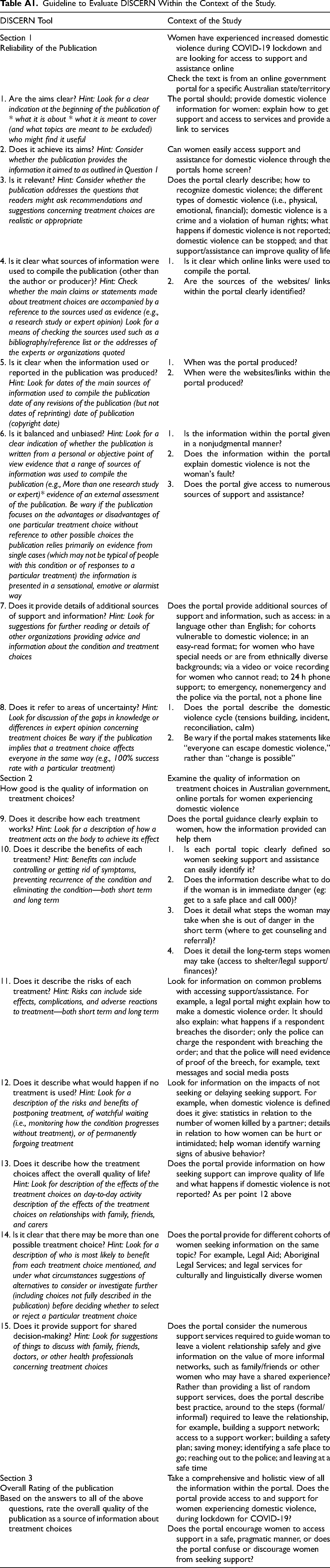
| DISCERN Tool | Context of the Study |
|---|---|
| Section 1 Reliability of the Publication |
Women have experienced increased domestic violence during COVID-19 lockdown and are looking for access to support and assistance online Check the text is from an online government portal for a specific Australian state/territory |
| 1. Are the aims clear? Hint: Look for a clear indication at the beginning of the publication of * what it is about * what it is meant to cover (and what topics are meant to be excluded) who might find it useful | The portal should; provide domestic violence information for women: explain how to get support and access to services and provide a link to services |
| 2. Does it achieve its aims? Hint: Consider whether the publication provides the information it aimed to as outlined in Question 1 | Can women easily access support and assistance for domestic violence through the portals home screen? |
| 3. Is it relevant? Hint: Consider whether the publication addresses the questions that readers might ask recommendations and suggestions concerning treatment choices are realistic or appropriate | Does the portal clearly describe; how to recognize domestic violence; the different types of domestic violence (i.e., physical, emotional, financial); domestic violence is a crime and a violation of human rights; what happens if domestic violence is not reported; domestic violence can be stopped; and that support/assistance can improve quality of life |
| 4. Is it clear what sources of information were used to compile the publication (other than the author or producer)? Hint: Check whether the main claims or statements made about treatment choices are accompanied by a reference to the sources used as evidence (e.g., a research study or expert opinion) Look for a means of checking the sources used such as a bibliography/reference list or the addresses of the experts or organizations quoted |
Is it clear which online links were used to compile the portal. Are the sources of the websites/ links within the portal clearly identified? |
| 5. Is it clear when the information used or reported in the publication was produced? Hint: Look for dates of the main sources of information used to compile the publication date of any revisions of the publication (but not dates of reprinting) date of publication (copyright date) |
When was the portal produced? When were the websites/links within the portal produced? |
| 6. Is it balanced and unbiased? Hint: Look for a clear indication of whether the publication is written from a personal or objective point of view evidence that a range of sources of information was used to compile the publication (e.g., More than one research study or expert)* evidence of an external assessment of the publication. Be wary if the publication focuses on the advantages or disadvantages of one particular treatment choice without reference to other possible choices the publication relies primarily on evidence from single cases (which may not be typical of people with this condition or of responses to a particular treatment) the information is presented in a sensational, emotive or alarmist way |
Is the information within the portal given in a nonjudgmental manner? Does the information within the portal explain domestic violence is not the woman's fault? Does the portal give access to numerous sources of support and assistance? |
| 7. Does it provide details of additional sources of support and information? Hint: Look for suggestions for further reading or details of other organizations providing advice and information about the condition and treatment choices | Does the portal provide additional sources of support and information, such as access: in a language other than English; for cohorts vulnerable to domestic violence; in an easy-read format; for women who have special needs or are from ethnically diverse backgrounds; via a video or voice recording for women who cannot read; to 24 h phone support; to emergency, nonemergency and the police via the portal, not a phone line |
| 8. Does it refer to areas of uncertainty? Hint: Look for discussion of the gaps in knowledge or differences in expert opinion concerning treatment choices Be wary if the publication implies that a treatment choice affects everyone in the same way (e.g., 100% success rate with a particular treatment) |
Does the portal describe the domestic violence cycle (tensions building, incident, reconciliation, calm) Be wary if the portal makes statements like “everyone can escape domestic violence,” rather than “change is possible” |
| Section 2 How good is the quality of information on treatment choices? |
Examine the quality of information on treatment choices in Australian government, online portals for women experiencing domestic violence |
| 9. Does it describe how each treatment works? Hint: Look for a description of how a treatment acts on the body to achieve its effect | Does the portal guidance clearly explain to women, how the information provided can help them |
| 10. Does it describe the benefits of each treatment? Hint: Benefits can include controlling or getting rid of symptoms, preventing recurrence of the condition and eliminating the condition—both short term and long term |
Is each portal topic clearly defined so women seeking support and assistance can easily identify it? Does the information describe what to do if the woman is in immediate danger (eg: get to a safe place and call 000)? Does it detail what steps the woman may take when she is out of danger in the short term (where to get counseling and referral)? Does it detail the long-term steps women may take (access to shelter/legal support/finances)? |
| 11. Does it describe the risks of each treatment? Hint: Risks can include side effects, complications, and adverse reactions to treatment—both short term and long term | Look for information on common problems with accessing support/assistance. For example, a legal portal might explain how to make a domestic violence order. It should also explain: what happens if a respondent breaches the disorder; only the police can charge the respondent with breaching the order; and that the police will need evidence of proof of the breech, for example, text messages and social media posts |
| 12. Does it describe what would happen if no treatment is used? Hint: Look for a description of the risks and benefits of postponing treatment, of watchful waiting (i.e., monitoring how the condition progresses without treatment), or of permanently forgoing treatment | Look for information on the impacts of not seeking or delaying seeking support. For example, when domestic violence is defined does it give: statistics in relation to the number of women killed by a partner; details in relation to how women can be hurt or intimidated; help woman identify warning signs of abusive behavior? |
| 13. Does it describe how the treatment choices affect the overall quality of life? Hint: Look for description of the effects of the treatment choices on day-to-day activity description of the effects of the treatment choices on relationships with family, friends, and carers | Does the portal provide information on how seeking support can improve quality of life and what happens if domestic violence is not reported? As per point 12 above |
| 14. Is it clear that there may be more than one possible treatment choice? Hint: Look for a description of who is most likely to benefit from each treatment choice mentioned, and under what circumstances suggestions of alternatives to consider or investigate further (including choices not fully described in the publication) before deciding whether to select or reject a particular treatment choice | Does the portal provide for different cohorts of women seeking information on the same topic? For example, Legal Aid; Aboriginal Legal Services; and legal services for culturally and linguistically diverse women |
| 15. Does it provide support for shared decision-making? Hint: Look for suggestions of things to discuss with family, friends, doctors, or other health professionals concerning treatment choices | Does the portal consider the numerous support services required to guide woman to leave a violent relationship safely and give information on the value of more informal networks, such as family/friends or other women who may have a shared experience? Rather than providing a list of random support services, does the portal describe best practice, around to the steps (formal/informal) required to leave the relationship, for example, building a support network; access to a support worker; building a safety plan; saving money; identifying a safe place to go; reaching out to the police; and leaving at a safe time |
| Section 3 Overall Rating of the publication Based on the answers to all of the above questions, rate the overall quality of the publication as a source of information about treatment choices |
Take a comprehensive and holistic view of all the information within the portal. Does the portal provide access to and support for women experiencing domestic violence, during lockdown for COVID-19? Does the portal encourage women to access support in a safe, pragmatic manner, or does the portal confuse or discourage women from seeking support? |