




Abstract
This article considers several plays by European playwrights that focus on cases of female genital mutilation, with the goal of raising awareness among their communities of the practice itself, the reason it exists or persists, and the consequences it has had on the lives of the women who have undergone it. The plays discussed are “Kubra” by Dacia Maraini (2016); Little Stitches by Bahar Brunton, Karis E. Halsall, Isley Lynn and Raúl Quirós Molina (2014); and Cuttin’ It by Charlene James (2016).
The World Health Organization (WHO) defines female genital mutilation (FGM) as “all procedures that involve partial or total removal of the external female genitalia, or other injury to the female genital organs for non-medical reasons” (WHO, 2020). 1 FGM is in fact usually practiced for social and cultural reasons, all connected to ideals of femininity and acceptable sexual activity: the removal of body parts considered impure will make a girl clean and increase her marriageability; the partial closing of the vagina in some types of FGM is thought to reduce women's libido, thus ensuring premarital virginity and avoiding extramarital sexual activity (WHO, 2020). The WHO estimates that “[m]ore than 200 million girls and women alive today have been cut in 30 countries in Africa, the Middle East and Asia where FGM is concentrated” and that each year 3 million girls risk undergoing female genital mutilation (WHO, 2020). Immediate complications of FGM include severe pain, excessive bleeding, fever, infections, shock, and even death. Long-term consequences include urinary, vaginal and menstrual problems, pain during intercourse, increased risk of childbirth complications and new-born deaths, as well as psychological problems, such as depression, anxiety, post-traumatic stress disorder, and low self-esteem (WHO, 2020). Thus, it has been internationally recognized that FGM constitutes a violation of the human rights of girls and women (Equality Now, n.d.).
Because of migration from countries where it was part of a cultural tradition, FGM is presently also being performed in Europe, North America, and Australia (WHO, n.d.). Hence, FGM has also come to the attention of Western governments, which have criminalized the practice, and of the international press, which ever more frequently reports on the rise in cases and yet the lack of prosecutions of family or community members who requested or organized the practice (Equality Now, 2019; Kamali-Nafar, 2018; Summers, 2018). Such reports have in turn garnered the attention of several European theater practitioners, who although not part of the culture that promotes FGM, have decided to create plays to raise awareness among their audiences about the practice itself, its painful and traumatic consequences on the survivors, and the fact that FGM is being performed in Western countries as well. This was the case of British theater producer and actor Melissa Dean, for example, who in 2014 decided to put together Little Stitches, four short plays regarding FGM, after reading an article in The Guardian denouncing the practice in Great Britain (Cavallaro & Kennedy, 2021, pp. 227–228).
British playwright Charlene James, on the other hand, became aware of FGM after watching activist and FGM survivor Leyla Hussein's 2013 documentary The Cruel Cut. However, James’ attempts to share her newly acquired knowledge with other people in ordinary conversation were not successful: “I simply couldn’t accost people, trap them in a corner for twenty minutes and bombard them with detailed and graphic information about the horrors I’d seen and read about FGM. I had to find another way to speak about it – and that way would be through writing this play” (Faber, 2016).
Melissa Dean and Charlene James are but two of the European theater practitioners who, while not belonging to FGM-practicing groups and while aware of issues of cultural sensitivity, have chosen to collect voices from the survivors and, through those voices, present cases of FGM in their work. These playwrights have aimed for “shared ethics of engagement,” that is, “a commitment to actively engage with others through representational acts” (Pickering & Kara, 2017, p. 299), working and speaking with FGM survivors, validating their voices, and empowering them to share their stories. The explicit purpose of the plays, which originated from the conversations between playwrights and FGM survivors, was to raise awareness of the practice itself, open a space for discussion, and communicate on an emotional level with theater-going audiences who may have been unaware of the practice. The playwrights’ hope was that such awareness, discussions, and emotions would provide a public forum for the survivors’ voices, improve the existing support systems, and advocate for curtailing the practice.
Among the many published and unpublished plays that have been staged in the last several years around the topic of FGM, I have chosen to discuss Dacia Maraini's “Kubra,” which places an FGM survivor, now an adult, center stage; the four plays which make up the show Little Stitches, by several authors, which look at the bystanders, the women accomplices of the practice, the health practitioners, in addition to the FGM survivors themselves; and Cuttin’ It by Charlene James, which focuses on teenagers. 2 After a brief summary of the individual plays, I will discuss the ways in which these European theater practitioners have aimed to raise awareness of the practice and support for its elimination through different aspects of their theater works: their use of survivors’ stories, the performance style they chose to convey these stories, their post-performance discussions, and relationships with their audiences.
The Plays
“Kubra” (2016)
Beginning with her feminist plays of the 1970s, Italian writer Dacia Maraini has often raised her voice to denounce gender-based violence (Mandolini, 2018; Standen, 2011). Thus, in 2004, she received an invitation to create a theater production as part of an Amnesty International campaign against violence against women and girls. Passi affrettati [Hurried steps], a play made up of several sections, each based on an episode of violence against a woman or a girl happening in different parts of the world and throughout different socioeconomic groups, was meant to be performed only once, in Rome in 2005, but was soon re-staged by many professional and amateur casts, in Italy and abroad (Cavallaro, 2018, p. 151).
After Paris, Valencia, London, and Zurich, in November 2016 Passi affrettati—with the English title Hurried Steps—was performed in Sydney, premièring a new piece set in Australia, “Kubra,” whose protagonist was submitted to FGM as a child. 3 Like all other sections of Passi affrettati, which are based on real-life local events (Cavallaro, 2018, 151–152), Maraini created “Kubra” from something that actually happened, a trial that took place in the New South Wales Supreme Court in 2015 against members of the Dawoodi Bohra Shia Muslim community. A former midwife and the mother of two girls were convicted of performing FGM on two sisters, aged about 7 at the time. A community leader was found guilty of being an accessory after the fact, in what newspapers defined as a “landmark case” (Safi, 2016). 4
In line with the news items of the Sydney trial that she had received, Maraini set her Australian story in a judicial environment, with the protagonist Kubra, now a 25-year-old woman, giving testimony in front of a female judge regarding the violence inflicted on her when she was 7. Thus, “Kubra” inserts itself both in the harrowing series of different forms of gender-based violence depicted in Passi affrettati and in the courtroom tradition of conflicting narratives. The other voices in the piece belong to a female academic and a female journalist. The fact that all the voices in the story are those of women, as opposed to all the other Passi affrettati stories where men inflicted violence on women, also highlights the fact that the perpetrators in Kubra's case were all women: the mother who was aware, the grandmother who organized the procedure, the two women who held Kubra down, and the woman who performed the cutting.
In addition to the agony inflicted at the time on her young body, and on the continuing pain experienced during intercourse, Kubra denounces the betrayal of trust committed by those who were supposed to care for her, those who claimed to act for her own good—in particular, her grandmother who had always protected her. Kubra's grandmother had later justified the procedure explaining that “it was the tradition, for our own good, our only identity in a strange and hostile country” (Maraini, 2021, p. 92).
Because of its connection with cultural traditions, and out of respect for others’ beliefs, some segments of Western society may refrain from condemning FGM. 5 And, in fact, in the play, a female journalist contests the court's judgment stating that a truly democratic country should respect the beliefs and traditions of other cultures. The journalist also accuses Kubra of betraying her people. But Kubra has the last word, claiming instead that her family betrayed her, and asking that in the future no girls be forced to submit to mutilation. FGM, Maraini suggests in this play, is not an issue of cultural relativism, but rather one of human rights (d’Arcangeli, 2021, pp. 100–101).
Little Stitches (2014)
While Maraini's Passi affrettati consists of short sections that look at various forms of violence against women and girls, Little Stitches is made up of four short plays all based on the issue of FGM. 6 “When you read newspaper articles on FGM, they are just figures and statistics,” explained Karis Halsall, one of the four authors. “We wanted to look at the impact on the individual that such a horrific act can have and explore that, not just from the perspective of survivors but from the perspective of people who have worked with survivors” (Ellis-Peterson, 2014).
Little Stitches opened in theaters in London in August 2014 followed by free-admission readings in local city libraries (Gate Theatre, 2014). 7 Each of the four pieces focuses on characters who are affected by FGM in distinct circumstances, moving from the periphery of the problem to its heart (Cavallaro & Kennedy, 2021, pp. 234–235).
Sleight of Hand, by Isley Lynn, comprises interlinking monologues from a teacher, a postal worker, a flight attendant, an ice cream van driver, and a street cleaner. All were people who could have realized there was something wrong in the situation they witnessed in the classroom, the street, or the airplane; however, they preferred not to meddle and ignored a little girl's signs of distress as she was taken to Africa during the school holiday for a special ceremony. As in the magic trick referred to in the play's title (Lynn, 2014), they could not see what was going on even when it was happening in front of their eyes.
Where Do I Start?, a verbatim play by Raúl Quirós Molina, is extracted from testimonies of activists and health workers collected by the author. With voices intersecting, the three protagonists talk about their experiences of trying to stop FGM; they list the painful, even fatal consequences of FGM on women's health; and they name the many countries in which it is practiced—including the United Kingdom. It is at this point that the fourth protagonist, Felicity, whose voice takes up most of the second part of the play, recounts her memories of the day she was cut. Unlike Kubra's experience, a procedure done in hiding and with no preparation, Felicity tells how she was looking forward to the event, a special day in which she and the other girls received candy, lemonade, and pretty dresses. Lika Kubra, however, Felicity remembers the smells, the pain, and the screams. And again like Kubra, Felicity wonders about the role her family members played in the event, especially her mother, who considered it normal. Felicity appears to have made peace with her family, but is concerned about the repercussions she may experience, if it became known that she had spoken publicly regarding FGM—as, in fact, had happened to Kubra during her trial.
In Dancing Feet by Bahar Brunton, two women take care of girls who have just been cut. As the spectators listen to celebratory singing and dancing in the next room and smell the Dettol used as disinfectant, the women congratulate the first “clean cut girl” of the day who is lying “on a makeshift gurney, her eyes closed, legs bound and signs of blood seeping through the sheets” (Brunton, 2014). The protagonists try to cheer the silent girl up, while also reporting on the significance of their own cutting. The women alternate between the joy of the ceremony, the pride of the cutting, and the negative consequences of the operation—until the end, when they realize that for this girl the cutting has proved fatal. Nevertheless, there is no time for tears. They must ready themselves for the next “new lady” coming their way.
Mutant, by Karis E. Halsall, the last play of Little Stitches, includes motifs from the previous three pieces: the school environment, with the unaware teacher during the last day of term; the mother and the aunt who, stone-faced, assist in the cutting; the smells and the pain, “stale smoke and hot metal”; and the betrayal felt by the young protagonist Safa. The new element in Mutant is the voice of a doctor, who recounts the first time he had to deal with a cut woman giving birth, and how her much older husband “made it very clear to me, that if I didn’t make the post-natal adjustments he was expecting. Then. I mean” (Halsall, 2014). The flower-shaped birthmark that Safa mentions and the doctor refers to suggests that the audience is hearing different moments of Safa's story: once a vivacious girl, an insightful student, she was cut so that she would be ready for marriage. She was unable to pursue her dream of going to university but was married young, with her husband controlling her body even within the medical environment. The last line of the play—“We can’t just pretend that this isn’t happening” (Halsall, 2014)—is a reminder for the audience that the cases of Felicity, Safa, and the other “new ladies” staged within Little Stitches are in fact based on true stories, and that FGM affects women in the Western world as well.
Cuttin’ It (2016)
While Kubra and Felicity, now grown up, recount an experience that happened in their childhood, Charlene James’ Cuttin’ It, which premiered in London in 2016, presents a rather different scenario. 8 In this play, the audience comes to understand that FGM is happening now, under the eyes of the two protagonists, Muna and Iqra. The stage directions describe both lead characters as “fifteen years old, born in Somalia,” but while Muna grew up in England with her family since the age of 3, Iqra immigrated to England as an orphan refugee when she was 10 (her family having died during the war) and she still has a strong Somali accent (James, 2016, p. 9). She now lives with an “aunt,” who “does work with the Somali women in the community” (James, 2016, p. 38) and sometimes requires her to stay home from school to help. In addition to the same national origin, English class, and bus route, the two teenagers also share the experience of having had FGM as a child.
As the play develops, Muna is concerned that her little sister is nearing her seventh birthday, and that it may be her turn to be cut. She is reassured when her mother tells her that they have no money to take the little girl to Somalia, as they had done with Muna on her seventh birthday. The progress of the play feels a little like the resolution of a mystery, in which at the end all the pieces of a puzzle fall into place. Muna (and the audience) discover that instead of a birthday party, as promised, Muna's little sister has been taken to a place where illegal FGM is to be performed. That place is Iqra's apartment. Iqra's aunt performs the cutting. And Iqra helps. As in the first scene when Muna is too late to catch a bus to school, in the end, she is too late to prevent the cutting. Her little sister and the other girls appear to her as “tiny bandaged bodies like casualties of war” (James, 2016, p. 53), which in turn connects to Iqra's memories of losing her family members in the war.
Many elements of the play resemble the stories of Kubra, Felicity, and Safa, from the smell of “antiseptic and stale blood” (James, 2016, p. 50), to the hands pinning down the young screaming children and the betrayal felt by the victims against their mothers. However, while in “Kubra” and Little Stitches opposing views on FGM are expressed by people of different generations or origin, in Cuttin’ It these opposing points of view are expressed by two teenagers who otherwise have the same tastes in music and sweets. When Iqra states: “It is not about being right or wrong. Who are we to question it? It is just what has to happen,” Muna simply replies “Who are we not to question it?” (James, 2016, p. 42).
Questioning the traditional practice of FGM is exactly what Charlene James’ play is trying to do. With its teenage protagonists and minimal staging requirements, it seems particularly suited to raise the issue for discussion among younger audiences (Brennan, 2020).
Based on a True Story: The Playwrights’ Work
In addition to the overriding theme of FGM, a characteristic that links these plays is their reliance on personal stories, as related in newspaper articles or by the survivors themselves, as a way to give voice to the survivors and to provide truth, authenticity, and cultural sensitivity. After reading the aforementioned Guardian article and being struck by the topic, Melissa Dean started attending FGM events and contacted FGM organizations and charities, with a double purpose: to be put in touch with FGM survivors that she and the writers could interview, and to receive advice on how to approach the topic of FGM with sensitivity. The four Little Stitches writers also had the support of activists Leyla Hussein, who shared her personal story and documentary, and Dexter Dias QC, who clarified the reasons for the continued existence of the practice (Cavallaro & Kennedy, 2021, pp. 230–232). Raúl Quirós Molina chose a verbatim style for its Where Do I Start?, and while he used the words of the people he interviewed, the stories and words were mixed so that it would be impossible to identify the sources (Cavallaro, 2021, pp. 250–251). 9
The experience of Dr Chaudhry in Karis Halsall's Mutant is remarkably similar to that of a doctor in the United Kingdom who was accused of performing FGM on a woman post-partum, with his words in the play—“This is a quibble about a couple of stitches and it is a complete distraction” (Halsall, 2014)—lifted directly from an interview published in the Guardian in 2015 about that same case (Laville, 2015). Like the real-life physician, the doctor in Mutant admits to not having had training in treating FGM survivors, thus implicitly accusing the health system of a systemic failure while at the same time advocating for better training.
As mentioned earlier, Dacia Maraini based “Kubra” on reports she received from Sydney producer Olivia Brown, which presented the same scenario: the girls did not know what was going to happen and, had they known, most probably would never have agreed (d’Arcangeli, 2021, pp. 99–102). 10 Some of the lines of the play draw on newspaper reports of the 2015 Sydney trial: for example, the protagonist said that one of the women holding her whispered: “Imagine you are a princess in a lovely garden. You are small, you are beautiful, there are flowering trees all around you, there is a stream with scented water flowing. Can you smell the perfume of the water, soft as silk?” (Maraini, 2021, p. 92), which corresponds to what one of the young girls in the Sydney case reported: “The person who did it told me to close my eyes and imagine a place I like […] She told me to imagine I was a princess in the gardens […] so I wouldn’t feel it so much” (Jabour, 2015). The name of the protagonist, Kubra, was in real life the name of the midwife on trial for performing the cutting (Safi, 2016). Even the character of the journalist possibly came from a TV interview which was among the material sent to Maraini, where a journalist put questions to both an activist against FGM and to an FGM survivor who considered the practice an honor (Kennedy, 2021b, p. 123).
Charlene James reported reading articles about FGM happening in Britain, talking to women from diasporic communities in the school where she was working and thus coming to an understanding that FGM often becomes an important practice to preserve a community's tradition (Urwin, 2016).
The fact that all the authors researched the topic and talked with FGM survivors is important because none of them come from a country where FGM has been practiced as part of a local tradition—all of them were born or raised in Europe. Their participation in the FGM discussion could be considered the intrusion of a well-meaning European intellectual into the cultural affairs of others. The writers have in fact been aware of this risk. Raúl Quirós Molina stated that the biggest challenge of an FGM play is that “the people who write about them didn’t suffer FGM or know of anyone who had. […] That's why it is so important to do your research and talk to people and put your opinions away as much as you can” (Cavallaro, 2021, p. 251). Karis Halsall shared similar sentiments when she wrote: “Initially, I was worried about sounding like I was preaching about the cultural practices of other communities. However, the more research I did and the more people I met affected by it, the more I was convinced that this was child abuse and people needed to be educated on what was happening” (Cavallaro, 2021, p. 256). Charlene James also called FGM an example of child abuse that should be confronted, despite cultural differences (Urwin, 2016), but recognized that “[w]hen you’re going into a community that's not yours… You have to get that awareness out without saying to a community ‘you are wrong’” (Brooks, 2016).
Dacia Maraini tackled the issue by referring to a large international meeting for women's rights held in 1995 in Beijing, 11 in which not only Western women brought forth the issues of women's freedom, but also Indian and Muslim women, women from developing countries who said: “We are against these traditions that mortify, humiliate and punish a woman's body. We believe that there must be some values that concern the civil rights of women all over the world, values that respect the integrity of a woman's body, and that such values should be universal.” Thus, Maraini concluded, FGM is one of these cases where cultural relativism should not be considered, as the respect for the integrity of a human body should be a universal value (d’Arcangeli, 2021, pp. 100–101). All these playwrights, in sum, have been aware of the issue of cultural relativism and have endeavored to work with FGM survivors (directly, in the case of Charlene James and the authors of Little Stitches; indirectly, through Sydney producer Olivia Brown, in the case of Dacia Maraini) in order to give an ethical representation of their voices. At the same time, they vowed to preserve their sources’ anonymity, so that those FGM survivors who chose to share their stories with them would not suffer negative consequences from within their community.
The Female Protagonists
Even though FGM often originates in men's refusal to marry uncut girls or in fathers’ request that their daughters be cut to increase their marriageability (Varol et al., 2015), 12 the practice itself is usually performed by women on little girls with the support of mothers, grandmothers, and aunts. Thus, these FGM plays present a prevalence of female protagonists, often from different generations and varied backgrounds, who express contrasting points of view on the practice.
The voice opposing FGM usually comes from an adult FGM survivor—Kubra, Felicity from Where Do I Start?, Sufa from Mutant, and Muna from Cuttin’ It—who remembers the past traumatic experience of the cutting, and talks about the continuing difficulties in the present (pain during urination, menstrual periods, and intercourse; low self-esteem; problems in intercultural relationships). Interestingly, their tale often begins with memories that are not related to FGM; Kubra recalls her childhood spent playing with other little girls. Sufa is a happy teenager looking forward to the summer holidays, with a crush on a neighborhood boy. Through these joyful memories, the playwrights attempt to describe the innocent and trusting nature of the characters, which will be shattered when they are subjected to the cutting. Furthermore, the childhood games or the adolescent crush are intended to bring about an empathetic connection from the spectators with their female protagonists, well before the audience learns about FGM, an experience that most European theatergoers do not share and cannot possibly understand. As Charlene James put it for her play, “The audience have to love and be invested in the characters by the time the laughter stops and they are taken towards [the play's] devastating end” (Faber, 2016).
Some of the playwrights, on the other hand, have chosen instead to attribute to their female protagonists’ memories of a traumatic past that goes beyond the cutting. Felicity remembers the war, “a road with piles of dead bodies on the side” (Quirós Molina, 2014), and her arrival in a refugee camp, from which her family was flown to the United Kingdom. Iqra compares the algebra problems which she is asked to solve in her maths class to the real problems she has already faced in her young life: her home demolished, her family brutally killed in front of her. Thus, the authors of Little Stitches and Cuttin’ It seem to suggest, FGM is not the only traumatic experience that some Western audiences do not share with the female protagonists—but again, these painful memories create a current of sympathy for the protagonist that precedes and goes beyond the FGM trauma.
Possibly to help Western audiences understand the reasons, complex history, and continued use of FGM, most playwrights have also included in their plays a character who supports the continuance of the practice as a well-established cultural or social custom. Once again, the voice belongs to a woman. The two women in Dancing Feet consider the day of the cutting to be joyous, a celebration of the young girls becoming “clean,” their bodies freed from impurity, their minds from lascivious thoughts: “A lady, ready for your gentleman. […] A clean cut girl [who] is worth more to her husband than a messy minx.” They further consider the procedure part of their sociocultural identity: “This is done as it has always been done, and it must carry on. Otherwise who are we?” (Brunton, 2014). Kubra reports the words of her grandmother about the importance of preserving the community's cultural tradition, especially in a new country, and is aware of the social importance of FGM in her ethnic group: “If she doesn’t have it done a girl can’t get married” (Maraini, 2021, pp. 92–93). While all these voices seem to belong to an older generation, attached to its customs, Charlene James shows that even younger women may still believe in the need—or at least the inevitability—of performing the practice, when Iqra states that it may be “better for [Muna's little sister] that she gets cut now rather than later” as later it will be more painful: “It is much better when they are young” as in any case “it has to be done” (James, 2016, pp. 40–41). The reason, once again, is one of identity: “We do it because it is our culture. We have done it for so long. It is who we are. It has to happen” (James, 2016, p. 45). Furthermore, in “Kubra” Maraini has also added the voice of an outsider, a Western female journalist who supports the practice not as part of her own background, but out of respect for other people's beliefs and traditions: “Each culture has its own dignity, its own truth, and we shouldn’t condemn those who remain faithful to an ancient tradition,” she states (Maraini, 2021, p. 96).
A further aspect connected to the plays’ female protagonists is that most FGM survivors have mixed feelings toward the family members who organized the procedure without their knowledge or their approval. Dacia Maraini noted that the fact it is mothers, aunts, and grandmothers who want FGM performed on their little girls makes the situation even more terrible. And while they do not do it out of viciousness, they still destroy the future of the little girl, out of a desire to keep their place within their community and make the girl fit within the same community (d’Arcangeli, 2021, p. 100). Maraini's Kubra, in fact, first talks about her feelings of betrayal: “more than anything else I felt betrayed by my grandmother. I hated her for what they were doing to me.” Later, she also talks of her ability to forgive yet at the same time speak the truth: “I’m not asking for anybody to be punished, deep down in my heart I understand them and I forgive them, but I’m asking for justice, which is something different” (Maraini, 2021, pp. 93–96). Iqra, who has now witnessed many cuttings, notes that “the look between mother and daughter afterwards is always one of betrayal and guilt” (James, 2016, p. 50). Felicity realizes that her mother had her submit to FGM because she thought she was helping her future life: “My mum never thought she was doing a bad thing […] she had had it done to her, and she was normal, and her mum as well, and so on. It was completely normal to her” (Quirós Molina, 2014). Safa wonders if her mother, who cares for her lovingly as she recovers from the procedure, ever regrets the decision to have her daughter cut, which is something that she herself would have gone through: Mum carries me back and forth from my bed […] She bathes me in warm salt water So I don’t get infected. She sings to me, Brushes my hair behind my ear […] I wonder if she ever suffered like me. I wonder when she hears my howls in the night If she ever thinks twice. (Halsall, 2014)
Finally, it is significant that all the young survivors of FGM whose stories are staged in these plays belong to diasporic communities, who cling to the practice as a way to preserve their cultural identity and safeguard their daughters from Western customs that they consider promiscuous (Zuccalà, 2016). Consequently, however, the young women who have been subjected to FGM find no support from their classmates, teachers, or health professionals. The recently cut girl in Dancing Feet is instructed to never mention the event when she returns to her Western city. Muna feels that Iqra will be the only person who can understand her anguish about her little sister's birthday: “I jus’ wanted to… […] talk to someone who knows. Someone who understands.” (James, 2016, p. 39). Health professionals, such as Dr. Chaudhry in Mutant, lack training on how to best help FGM survivors. Migrant survivors, therefore, Maraini concluded, suffer for the added burden of living FGM as something to hide, to be ashamed of—a long-term, humiliating violence (d’Arcangeli, 2021, p. 103).
The Performances
The performance styles of “Kubra,” Little Stitches, and Cuttin’ It reflect several common characteristics of the plays as well: their source from actual, violent events; their wish to give voice to and empower the survivors; and their goal to raise awareness and communicate emotions within the audiences.
Dacia Maraini requests that Passi affrettati, in Italy and abroad, be performed by a group of actors, each standing in front of a lectern, wearing everyday clothing and bearing no props, “witnessing to the audience the drama of real stories that occurred to real people” (Di Paolo, 2010). “It is as if [the actors] were inside and at the same time outside of the story,” Maraini explained, adding that their detachment is necessary to present such painful material (d’Arcangeli, 2021, pp. 99–100). The actors (usually three women and two men) perform all the roles in each section: not only perpetrators, victims, and survivors, but also police officers, activists, and narrating voices. These additional voices situate the story in time and space, narrate moments of extreme violence, or break the theatrical conventions by giving statistics to the spectators (Cavallaro, 2017, p. 145), who then alternate between the sympathy created by each specific episode of gendered violence and the indignation caused by the continued recurrence of such violence in the world. The ending of each section may be signaled by a light change or a short musical piece. No scenes or gestures are expected as part of the performance, making it suitable to be staged in non-theatrical spaces or by non-professional actors.
Explaining the reasons for this stylistic choice, Maraini has referred to the oratorio, the polyphonic musical compositions of semisacred themes which originated in the Baroque period (Cavallaro, 2018, p. 152). Furthermore, the choice of not staging the violence itself rejects our current voyeuristic culture, underlying the gravity of the violence rather than providing a traumatic visual representation (Murrali, 2016, p. 9). The 2016 Sydney première of “Kubra” followed this same style; however, as the cast included only three actors that were female, one of the male actors took the voice of the otherwise designated female journalist. Director Nicolette Kay used music excerpts from Pieces of Africa, by seven African composers, as a bridge between the sections, to accompany the emotional journey of the audience (Kennedy, 2021b, p. 125). (Figure 1)
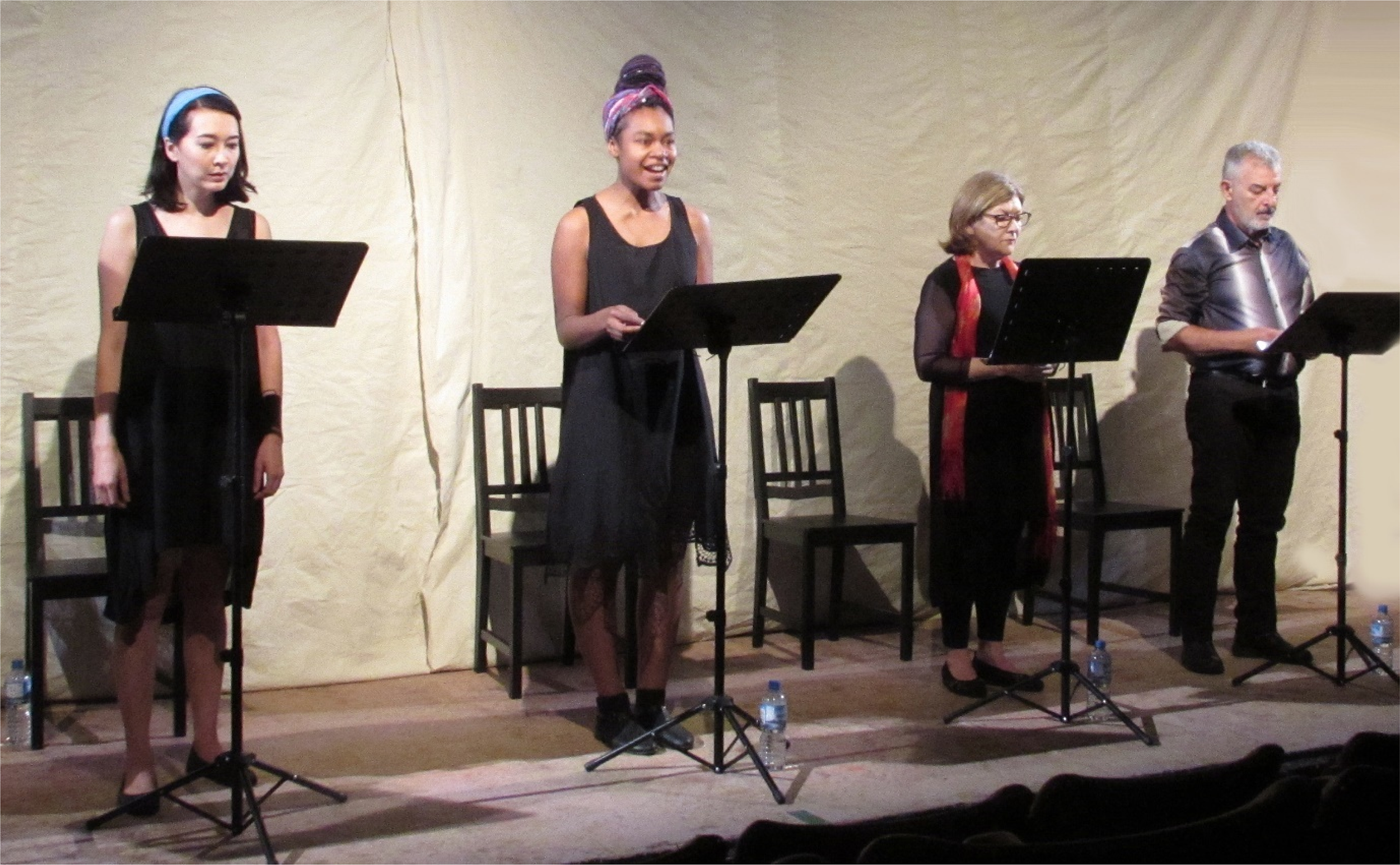
From left: Bodelle de Ronde, Emele Ugavule, Olivia Brown, and Lex Marinos in Dacia Maraini's Hurried Steps. Image by Geoff Sirmai, www.sirmai.com.au (NIDA Playhouse, Sydney, 25 November 2016).
In the same way that in Passi affrettati all the actors play different roles in each segment of the play, the five actors cast to stage Little Stitches had to perform different roles in each play as well—from five in Sleight of Hand to only two speaking characters in Dancing Feet. Dancing Feet was also the only one of the four plays to have any sort of movement, as the two protagonists, the women who take care of cut girls, get into the mood of the celebrations and begin to dance. The rest of the plays were far more static, with characters speaking their lines solely to the audience, neither interacting with the other characters nor seemingly even aware of their presence on stage.
To give an evolving sense of space, the stage designers created a steel construction, a sort of a cage that compartmentalized the stage and also gave an impression of the constrictions to which FGM survivors are subjected. Strips of neon lights suggestive of airplane gangway lighting (as in the first play a little girl travels to Africa to be subjected to FGM) were suspended from the cage, their dimming effect varying the atmosphere throughout the performance. Some parts, such as pieces of carpets, were used and then removed to vary the texture and feel of the different pieces as well (Cavallaro & Kennedy, 2021, pp. 237–239). “It was as if the stage was deconstructing as we were moving towards the end,” explained director Alex Crampton (Cavallaro & Kennedy, 2021, p. 238). (Figure 2)
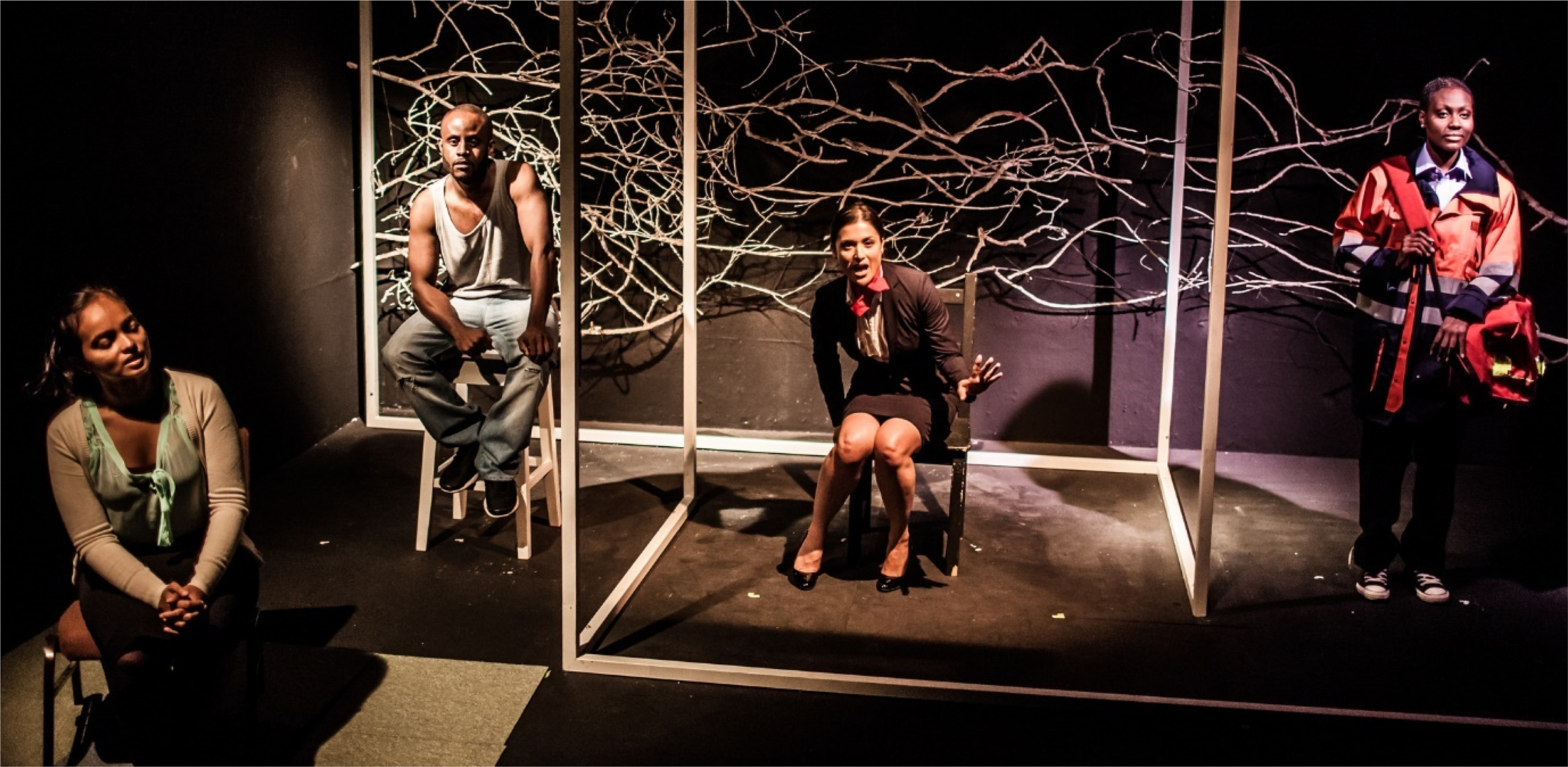
From left: Shalini Peiris, Chin Nyenwe, Daphne Alexander, and Stephanie Yamson in Isley Lynn's Sleight of Hand. Image by John Wilson, www.wilson.co.uk (Theatre 503, London, 21 August 2014).
The soundscape, which included the roar of airplanes and the chatter of a school, also contributed to the sense of a journey, from the periphery of the problem (the bystanders in Sleight of Hand) to the heart of the matter (young Safa, cut at home after her last day of school in Mutant). Staging, music and light choices, in sum, Crampton concluded, constituted “a long, slow, reverse-collapse into that last play,” ending on “the girl herself: we are in the moment of her coming home from school and this thing is going to happen. So we move through a journey in time and perspective, from the periphery, to something that might be happening, to that person in that moment. We were taking the audience on that journey” (Cavallaro & Kennedy, 2021, pp. 238–239). On the other hand, when Little Stitches was taken to libraries or community spaces, there was no staging, just five chairs, all actors sitting, in a performance focused on the words of the plays only (Cavallaro & Kennedy, 2021, p. 239).
The staging of Cuttin’ It has changed according to the year and space where it was produced. Photos from the 2016 and 2020 productions show the presence of steps (Brennan, 2020; Saner 2016), which refer to both the top and bottom parts of the bus which the two protagonists take to school, and to Iqra's home (where the elevator is constantly out of order)—the many steps which Muna breathlessly runs up in her attempt to stop her sister's cutting. (Figure 3)
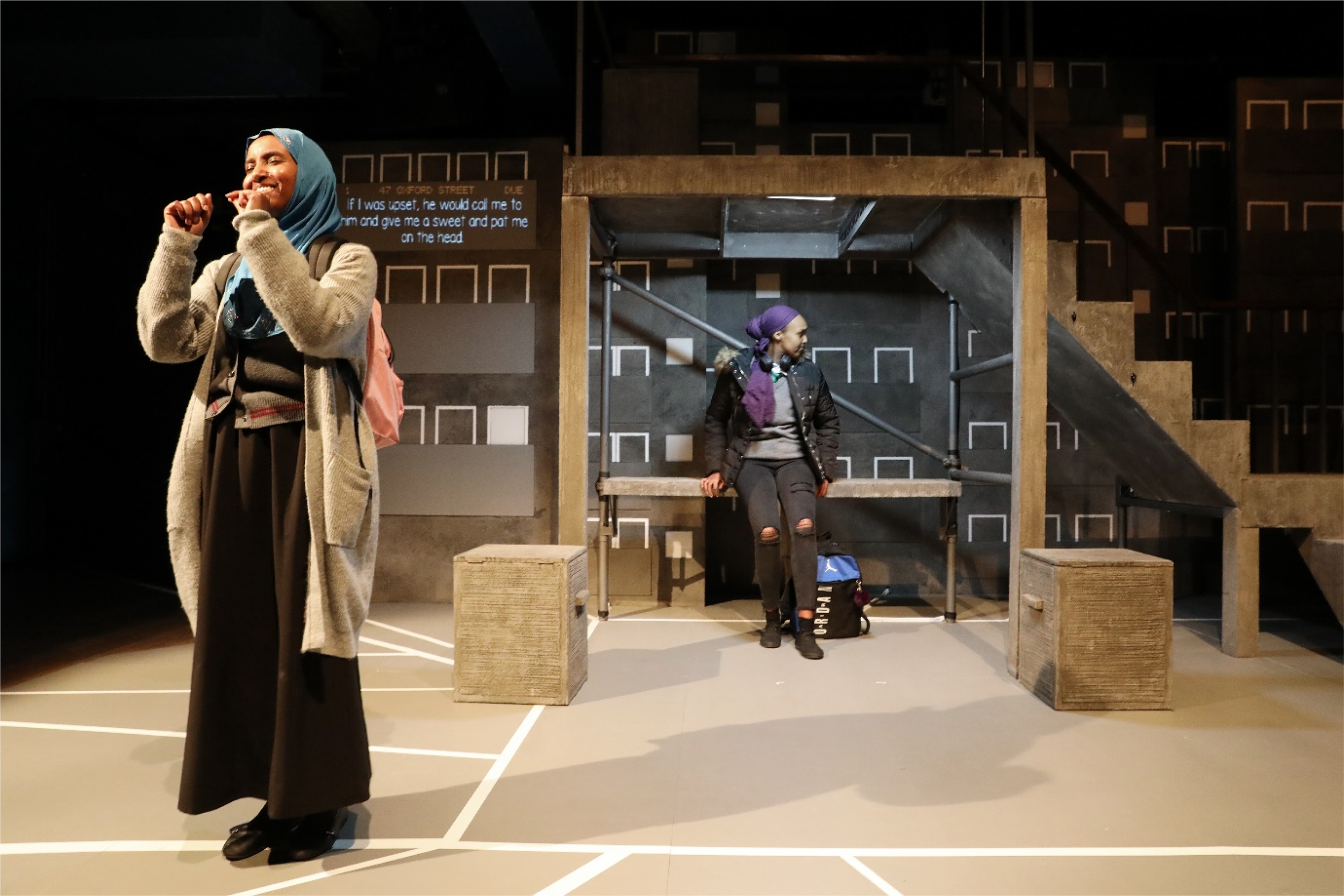
From left: Hermon Berhane and Asha Hassan in Charlene James’ Cuttin’ It. Photo by Anneka Morley (Royal Exchange Theatre, Manchester, January 2020).
After the 2016 season, Cuttin’ It went on a tour of several UK schools in 2018. Anastasia Ossei Kuffour, who was assistant director in the first staging and directed the school tour production, wanted the set to reflect what she considered the main point of the play, “two girls looking for friendship and their lives colliding and intertwining.” The team responsible for the school stagings thus created a minimalistic set that looked like two boxes connecting. At the beginning, each girl was in her own box. As the play progressed, however, they moved around and—eventually—entered the other's space. The set also aimed to highlight those foreboding elements that appeared throughout the text—the destruction of the house, the pieces of broken glass on which children might get cut—which underlined the vulnerability of the protagonists even in spaces where they were supposed to feel safe. The lighting emphasized the elements of the painful cut between the two spaces, as well as the contrast between the warmness of the budding friendship between the two teenagers and the brutality of the custom they were subjected to (Young Court, 2018).
The Post-performance Talks
One further element these FGM plays have in common is that they included a post-performance discussion with a panel of experts in which members of the public had the opportunity to ask questions regarding the issues discussed in the play and receive information about the work that support organizations may be offering. Since its first performance in 2005, Dacia Maraini has asked that any performance—professional or amateur—of Passi affrettati be accompanied by a post-performance Q&A session, either with herself, if she is attending, or with a panel of experts or support providers regarding the issues presented in the play, in case the performance has caused a resurfacing of past traumatic experiences (Cavallaro, 2018, p. 153). Director Nicolette Kay has found that Passi affrettati can provoke disclosures either immediately after the play, or later on, so it is important to have support providers during the post-performance discussion (Kennedy, 2021b, pp. 126–127). The staging of “Kubra” within a non-professional performance of Passi affrettati in Australia created the most questions among the audience, not because spectators had an experience to share, but possibly “because of the discomfort that the scene elicits in the audience,” according to director Ainsley Burdell (Kennedy, 2021a, p. 137).
The post-show talks for Little Stitches in the theaters were led by activists Dexter Dias, a human rights lawyer, and Leyla Hussein, the director of the documentary The Cruel Cut which originated Charlene James’ interest in the FGM issue (Cavallaro & Kennedy, 2021, pp. 242–243). When Little Stitches was staged in public libraries, producer Melissa Dean conducted the post-show talks, during which members of the audience usually asked why and where FGM was being practiced, if it was a Muslim issue, and what could be done to stop it. Teachers would often ask more specific questions on signs they should recognize, such as, for example, a student's new avoidance of P.E. activities, or what to do if a teacher suspected that one of their students had or would have FGM (Cavallaro & Kennedy, 2021, pp. 243–244). James's Cuttin’ It 2018 school tour included a pre-show workshop with the students followed by a post-show Q&A led by FGM and women's health specialists (Royal Court Theatre, 2018).
The Audiences
“When people think of FGM they picture girls in Africa or faraway countries with flies around their eyes,” stated Charlene James, but “it's not: it's happening here. […] She could be your neighbour, she could be a child's friend, someone you work with” (Brooks, 2016). James’ Cuttin’ It, like “Kubra” and Little Stitches, staged by professional groups in professional theaters in London and Sydney, aimed above all to raise awareness among Western viewers, to give them an idea of the extent and the closeness of the FGM practice.
Talking about the reactions of the spectators at Little Stitches, Melissa Dean reported: “I think audiences weren’t sure what to expect. Certainly a couple of the newspaper reviewers said they were expecting to be slapped in the face with information, but surprisingly for them, found that they weren’t, that they got involved in the human drama, and were captured by it” (Cavallaro & Kennedy, 2021, p. 242). Olivia Brown, who produced the first staging of “Kubra” in Sydney, agrees that an emotion shared in theater touches the audience more deeply than information and statistics: “you can ‘know’ about [FGM], but once you are touched by the subject emotionally, in the theatre, you really begin to understand. Become aware. And care. I suppose that has to do with the power of theatre” (Cruikshank, 2016 as cited in Cavallaro 2018, p. 164).
Beyond the local theater with its habitual attendants, however, some of these plays were also staged in nontraditional settings, hoping to attract audiences that would be more closely affected by FGM. During its 2018 school tour, Cuttin’ It supplied a resource pack for educators which covered both the technical aspects of the play, and the emotional response and disclosures that the play could draw from its viewers (Young Court, 2018). Little Stitches was also brought to public libraries in sections of London where FGM-affected communities live. The library stagings brought mixed results, however, as they did not have the participation of women from the affected communities, women who (ideally) would have realized the sort of trauma FGM provokes on young girls (Cavallaro & Kennedy, 2021, p. 241).
On the other hand, those FGM survivors who did attend the performances of these plays usually had a positive response to the stories put on stage. Mutant's author Karis Halsall remembers “one survivor speaking with Leyla [Hussein] and me at the end of one performance. She said that it was uncanny how much she saw her younger self in the Safa character. I wanted to make survivors feel seen, heard and valued, so this feedback meant a lot to me” (Cavallaro, 2021, p. 257). FGM survivors and anti-FGM activists who attended performances of Cuttin’ It commented positively on James’ play and agreed on the need to bring the discussion of FGM into the public, so that survivors of the practice would not feel too isolated in British society (Saner 2016). The Sydney performance of “Kubra” also received positive feedback from FGM survivors and campaigners who “were deeply moved by the Kubra story and grateful to have their experiences brought into the open” (Kennedy, 2021b, p. 126).
Conclusion
FGM is a difficult topic to discuss—and to bring to the stage. Passi affrettati director Nicolette Kay noted that “in the communities where it's performed, it's a huge issue for people to talk about it at all, and especially for other people outside the community to talk about it” (Kennedy, 2021b, p. 122). A further issue that may thwart open discussion is that the legislation criminalizing the practice in the United Kingdom, for example, means that an FGM survivor may not be willing to disclose her situation as her parents would face prosecution (Brennan, 2020). While well aware of the sensitivity of the topic, the authors of “Kubra,” Little Stitches, and Cuttin’ It decided to bring FGM to the attention of Western theatergoers in cities where FGM may be performed within migrant communities, to make them aware of the existence of the practice in their country and of the need to support its survivors. Dacia Maraini has insisted that it is a writer's duty to “create awareness, […] to shed light on the dark aspects of reality,” so that his or her audiences will then decide how to appropriately respond (d’Arcangeli, 2021, pp. 97–98). FGM is probably practiced in her native Italy, she added, but not much information is available on the topic—which is why she decided it should be included in Passi affrettati, together with other examples of violence against women and girls (d’Arcangeli, 2021, p. 102).
The response from habitual theatergoers seems to have been very positive: spectators, Alex Crampton remembers for Little Stitches, “walked out of the theatre with more knowledge and understanding and maybe more inspiration and desire to understand it further” (Cavallaro & Kennedy, 2021, pp. 245–246). Furthermore, by taking their plays to schools (Cuttin’ It) and public libraries (Little Stitches), or allowing for the play to be performed by non-professional casts (Passi affrettati), these theater practitioners have shown an interest in including in the FGM conversation people who are not among the usual theatergoers, possibly even members of FGM-practicing communities. In fact, education on the physical and mental health consequences of FGM seems to play a bigger role than legislation in convincing community members to no longer have their little girls cut (Berer, 2015), especially if such education is discussed with affected communities before it is implemented (Williams-Breault, 2018, p. 229). 13 Theater, in particular, has proved to be a powerful tool to advocate for and effect social change, even regarding FGM, for its capacity to touch both understanding and emotions (UNFPA Arab States, 2018). But the messenger matters, and it is essential that a message to stop FGM comes from respected and trusted voices from within the communities (Ali et al., 2020; Lien et al., 2013).
The authors of “Kubra,” Little Stitches, and Cuttin’ It did not address themselves directly to the communities where FGM is practiced, but rather tried to start a conversation about FGM among theatergoers in European and Australian cities where FGM is being performed. Drawing on interviews with actual FGM survivors, they collected and highlighted in their plays the voices of women who still suffered the consequences of the practice and advocated for its abandonment. Their purpose was to make the voices of the survivors heard and validated and impart knowledge, sympathy, and a desire for action among people who had very little knowledge of the practice and may have not realized how close to home it was. “So did it make a difference?,” wondered Little Stitches director Alex Crampton, who immediately answered her own query. “There was a difference; it created differences in how people felt. Whether it was enough, I guess, is another question” (Cavallaro & Kennedy, 2021, p. 246).
Footnotes
Declaration of Conflicting Interests
The author(s) declared no potential conflicts of interest with respect to the research, authorship, and/or publication of this article.
Funding
The author(s) received no financial support for the research, authorship, and/or publication of this article.
