




Abstract
This article shows how representations of women labeled as mentally ill in photography in Italy have been framed and marked by forms of violence, and how they continue to shape perceptions of women. It argues that the Italian case is a particularly interesting and revealing one, and that such images need to be viewed in the context of the shared status of photography and psychiatry as contemporarily “modern” inventions that have played important roles in reinforcing or contesting violent and institutionalized systems of surveillance and oppression of women.
This article explores photography as an important medium for understanding how women with mental disorder diagnoses have been represented in Italy from the late nineteenth century on. It seeks to investigate the roles the medium has played in reinforcing or undermining the systematic marginalization of women in Italy with mental disorders and the structural violence to which they have been subjected, particularly within the country's system of manicomi or psychiatric asylums. I focus on women since, in a society that categorizes people with psychiatric diagnoses collectively as “not normal” and therefore Other, women (along with LGBTQ+ people, disabled people, and ethnic minorities) with mental disorder diagnoses are doubly victims of this existential violence, in that they are already and ineluctably outside a norm historically defined as white, heterosexual, male, and able-bodied. Roy Richard Grinker (2019) describes how the stigma of being female in early nineteenth-century Europe led to the extreme essentializing of women as “other” and a new understanding of the sexes as fundamentally separate and opposed. As a result, it became “even easier for experts to fix stereotypes of femaleness, including a tendency to associate women with mental illness,” and in turn to “associat[e] mental illness with women” (p. S59). Furthermore, since the nineteenth century and well into the twentieth, representations of women with mental disorders were almost always framed and marked by forms of violence. Such images need to be viewed in the context of the shared status of photography and psychiatry as contemporarily “modern” inventions with interconnected scopic regimes that play an important role in either reinforcing or contesting violent systems of surveillance and oppression of women. The nineteenth-century invention of mental illness in the context of the post-enlightenment invention of the female as a separate and inferior category of the human species and the ongoing marginalization of women with mental disorder diagnoses are influenced and shored up by imagery that produces and reproduces gender norms, articulating and patrolling the boundaries of the so-called “normal” in a process that continues to the present day. 1
This article argues that nineteenth-century iconographies of madness and psychiatric diagnoses were strongly influenced by cultural assumptions shaped by and in turn shaping visual media, connecting into an iconographic tradition which continues to influence visual representations of mental distress or disorder in women. As Traue et al. (2019) write, the image's “double capacity to overdetermine cultural orders as well as to pierce the boundaries between surveilled systems of knowledge calls for a methodological double placement of the image: that is, both as an instance of discourse, and at the same time as a transgression of discourse” (p. 329). Visual representations of women with mental disorder diagnoses therefore provide an invaluable resource for understanding the connections between the ways in which these women have been made visible or invisible and their often-violent erasure from public life.
Although the history of representations of women with mental illness diagnoses in Italy is not well known in anglophone contexts, Italy is a particularly interesting case to consider in relation to these issues. This is first of all because the newly unified Italy of the 1860s and 1870s very quickly bought into late nineteenth-century quasi-scientific explanations of women's inherent instability and vulnerability to mental disorders both medically and culturally, and did its best to document them visually via the new visual medium of photography. 2 Second, the extreme nature of its “asylum problem” and the gender biases inherent in the asylum system make for especially resonant social and cultural responses to that problem. Third, the Italian psychiatrist Franco Basagalia's remarkable movement throughout the 1960s and 1970s to dismantle the manicomio (asylum) system in the belief that “Liberty is therapeutic” would have profound implications for women, as would the so-called “Basaglia” Law 180 of 1978: avant-garde legislation to dismantle the system and replace it with community-based services that Tom Burns (2019) describes as “the most radical mental health legislation ever passed” (p. 19). The goals of this movement were also imbricated in interesting ways with contemporary socially militant forms of visual communication. Finally, the ongoing influence of the long-standing and often violent iconography of “madness” and the status of the manicomio as a still powerful “lieu de memoire” continue to shape visual representations of women and mental health disorders in Italy, and offer insights relevant to understanding the links between gendered violence and constructions and representations of female “madness” in other contexts (Nora & Kritzman, 1996).
Women, Visual Cultural Stereotypes, and the Manicomio
As Linda Reeder (2012) explains, in post-Unification Italy, “Italian psychiatry aligned itself with the growing positivist movement, reaching out to experts in anthropology, psychology, sociology and criminology who also believed in the power of science to fix pressing social, economic and political problems” (p. 193). Almost from its invention photography was closely associated with positivist psychiatry, which used the medium both to “guarantee scientific knowledge” through its supposed objectivity and classificatory power and to fuel “the illusion that it was able to control mental illness through mental hospitals” (Manzoli, 2004, sec. 3). Over the course of the late nineteenth and particularly the early twentieth centuries manicomi or asylums (like prisons) came to be considered part of what it meant to be a “modern” nation and large numbers of them were set up across Italy, with an 1865 law stating that all Italian provinces must have one. Grinker (2019) notes that: [m]ental illness—the notion of a distinct group of abnormalities of thought and behavior—is a distinctly modern invention […]. The unseemly history of mental illness, including the growth of horrific asylums, illustrates the vital role classification played in the simultaneous emergence of mental illness and stigma. (p. S56)
By the early years of the twentieth century, there were 124 psychiatric asylums in Italy, but no law regulating them. Law 36 was therefore passed in 1904 and remained in effect until the passage of the so-called “Basaglia” Law 180 in 1978. Law 36 drew a clear connection between mental illness and the risk of social harm, and saw Italian asylums take on an increasingly repressive and marginalizing role to avert the danger to society supposedly posed by those with mental illness diagnoses. More and more people began to be committed, and the number of institutions continued to increase. Law 36 gave psychiatry a clear mandate for social control and gave asylum directors extensive powers over the destinies of those housed in their institutions. This had particular implications for female patients, since as Martina Starnini (2015) notes, early psychiatry was firmly rooted in a patriarchal society that set out “to punish deviant female behaviours.” At the same time, she points out that many of the symptoms displayed by female patients displaying such “deviant behaviours” can be read as “the more-or-less unconscious expression of women's physical rebellion against that same oppressive society” (pp. 8–9).
From the mid-nineteenth century on, as Pazzaglia (2019) writes, “mental institutions began to function as places in which to legally confine all those people who were considered threats to society” (p. 13). The Italian numbers show increasing patterns of confinement from this period onward. By 1874, 12,210 Italians were in psychiatric institutions, and by 1899 this number had increased to 36,931 (Reeder, 2012, p. 193). Law 36 had decreed that Italians with mental illness must be committed to an institution “when they are dangerous to themselves or others, or arouse public scandal and cannot be conveniently guarded and treated except in asylums.” 5 All it took for this to occur was a claim that a person was “dangerous” or a source of “public scandal,” and a medical certificate signed by the local public safety authority presented to a magistrate. There were no age limits and children of any age could be declared dangerous and confined (Sartori, 2014, p. 13). In practice, this meant that large numbers of orphans and children with developmental delays were locked up as dangerous “lunatics.” Homosexuality, prostitution, sex outside marriage and melancholy were all considered sufficient evidence of a failure to conform to societal norms that counted as “public scandal” and justified forced confinement in a psychiatric institution. By 1914, the number of asylum inhabitants had risen to 53,000, in 1922 it was 62,000, and by 1941—after almost twenty years of the fascist regime—it was more than 95,000. 6 At the time of the “Basaglia” Law 180 in 1978, there were still more than 89,000 people in Italy's 98 asylums. Right up until that time, within their walls, patients had no civil rights, they were stripped of dignity, and torture, violence, and suicide were so common that as John Foot puts it, they were considered “too normal to even cause surprise or comment” (2015a, p. 20).
Italian criminologist and physician Cesare Lombroso (1835–1909) played a significant role in the origins of this situation. He regarded himself as the founder of modern scientific psychiatry, which was deeply influenced by his belief that mental illness and “delinquency” were hereditary and that women were biologically inferior to men. Pazzaglia (2019) explains that Lombroso was not only “the first to connect criminality to the biology of the individual” but “also the first to make explicit the link between madness and criminality” (p. 13). His theories of biological determinism continued to be influential under fascism, and he is considered the father of the criminally insane asylum, a system that in Italy would be strengthened and expanded under fascism and ultimately evolve into the “judicial psychiatric hospitals” that were only definitively closed after the passing of law 81/2014, with the last patient finally transferred in 2017. Lombroso's use of photographs to support his theories also reflects how the medium's history intertwines with those of psychiatry and criminology. Although Lombroso was not himself a photographer, Nicoletta Leonardi's work on his photography collection has amply demonstrated his extensive interest in and use of photographs (2015). 7 As Federica Manzoli (2004) points out, with the flourishing of criminology in late nineteenth-century Italy, psychiatric photography added to its primarily classificatory, pedagogical, and diagnostic purpose an identificatory and coercive function that was comparable to that of a “Wanted” poster (sec. 3). This institutional “mug shot” approach (first invented by Alphonse Bertillon in France in the 1880s) to the photography of people with mental disorder diagnoses would change very little in Italy until as late as the 1960s (Smith, 2018, p. 31).
In his L’uomo delinquente (first published in 1876 and republished multiple times; translated into English as Criminal Man), Lombroso (1889) finds evidence of criminal delinquency in the physiognomies of men and women represented in photographs and prints taken from photographs, arguing that they prove “we can say that the criminal type was confirmed by the impartial testimony of the sun” (pp. 189–190). Photography appears here as one of a range of modern “impartial,” scientific approaches, including psychiatry itself, whose heavy intellectual, iconographical, and ideological baggage is disregarded in favor of a belief in its objectivity as a scientific tool deployed in the service of the state. Yet sets of images with captions such as “Revolutionaries and Political Criminals—Mad and Insane,” are all too revealing of that baggage. Resistance to the state and criminality are conflated and made visible through the physiognomic “evidence” provided by photographic technology. Similarly, Lombroso saw photography as a tool in the scientific arsenal to help “prove” women's supposedly innate vulnerability to degeneracy (see Figure 1). This is made even more explicit in the work he later co-authored with his son-in-law Guglielmo Ferrero, La donna delinquente: la prostituta e la donna normale (Criminal Woman: The Prostitute and the Normal Woman, 1893). As Barbara Spackman explains, “[i]n La donna delinquente it becomes clear that even the normal woman has but a precarious existence. Normal femininity must be a perfect mirror-negative of masculinity, a negative mirror image rarely discovered” (1989, p. 23). In the case of men, Lombroso had earlier argued for the close relationship between genius and madness in his 1864 book Genio e Follia (translated into English as The Man of Genius in 1891), contending that Goncourt had been right to say there were no women geniuses, since when women were geniuses they were men (qtd. in Spackman, 1989, p. 23).
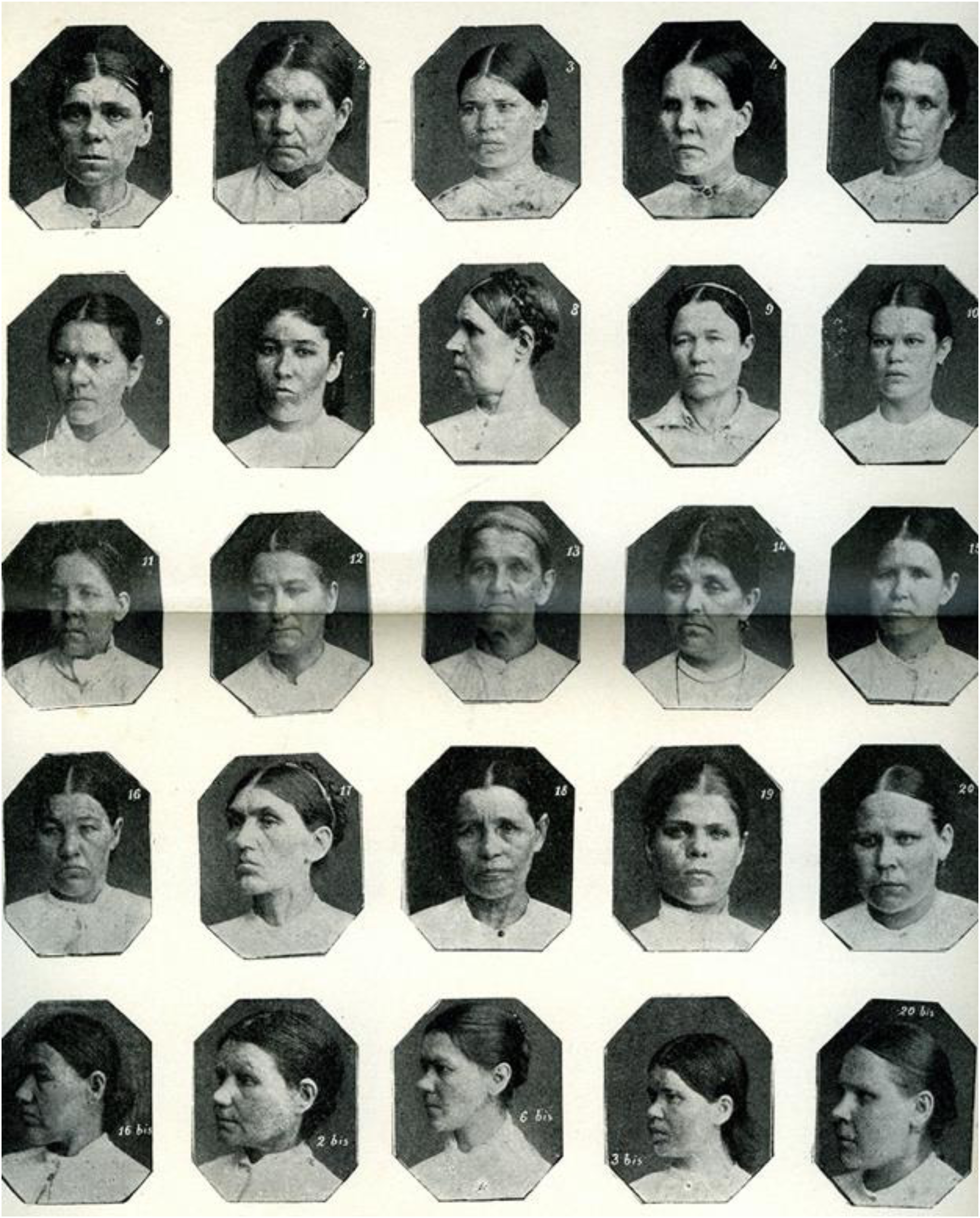
Types of Russian Delinquent Women, From Cesare Lombroso's Criminal Man (Public Domain).
As John Tagg (1993) argues in his well-known essay on photographic records and the growth of the state in the nineteenth century, the images held in the archives of state institutions come to constitute: [a] vast and repetitive archive of images […] in which the smallest deviations may be noted, classified and filed. The format varies hardly at all. There are bodies and spaces. The bodies—workers, vagrants, criminals, patients, the insane, the poor, the colonized races—are taken one by one: isolated in a shallow, contained space; turned full face and subjected to an unreturnable gaze; illuminated, focused, measured, numbered and named; forced to yield to the minutest scrutiny of gestures and features. Each device is the trace of a wordless power, replicated in countless images, whenever the photographer prepares an exposure, in police cell, prison, mission house, hospital, asylum, or school. (p. 64)
Lombroso's photographic collection embodies precisely this replication of “wordless power,” although as David Horn (2015) notes, it was intended not so much to classify and identify individuals but rather to allow for a “semiological or diagnostic reading” designed to categorize and identify forms of deviance and markers of danger (p. 20). Lombroso's collection includes numerous photographs sent to him by directors of asylums around Italy as physiognomic and photographic “proof” of the mental and moral states of their patients and their collective characteristics.
Leonardi (2015) cites one example from around 1877 sent to Lombroso by psychiatrist and anthropologist Enrico Morselli, Medical Director of the Santa Croce Asylum in Macerata (Figure 2). The photograph is labeled “Madaro, Francesca of Lecce, aged approximately 50. Lypemania [abnormal tendency to deep melancholy] and voluntary mutism. Physiognomy typically expressive of psychic pain” (p. 45). Francesca's bowed head, deeply troubled expression, and folded arms are characteristic of photographic representations of patients diagnosed with “melancholy” in this period. Her slumping, sad figure conforms to the diagnostic visual stereotypes that informed psychiatric practice at this time, but which in fact stretch back to far older iconographies, such as representations of melancholy like Albrecht Dürer's 1514 Melencholia I (Figure 3), which Sander Gilman (1982) noted as a key iconographical precedent for more contemporary representations of melancholy and depression in one of his pioneering works on the history of stereotypes (p. 2). Chronic melancholy was a common diagnosis for late nineteenth-century women, particularly unmarried women in their late twenties or older, in whom it was seen as a scientifically demonstrable response to their inability to form a lasting attachment to a man (Reeder, 2012, p. 197). This despite the fact that in many cases these women were victims of sexual violence and/or domestic abuse. 8
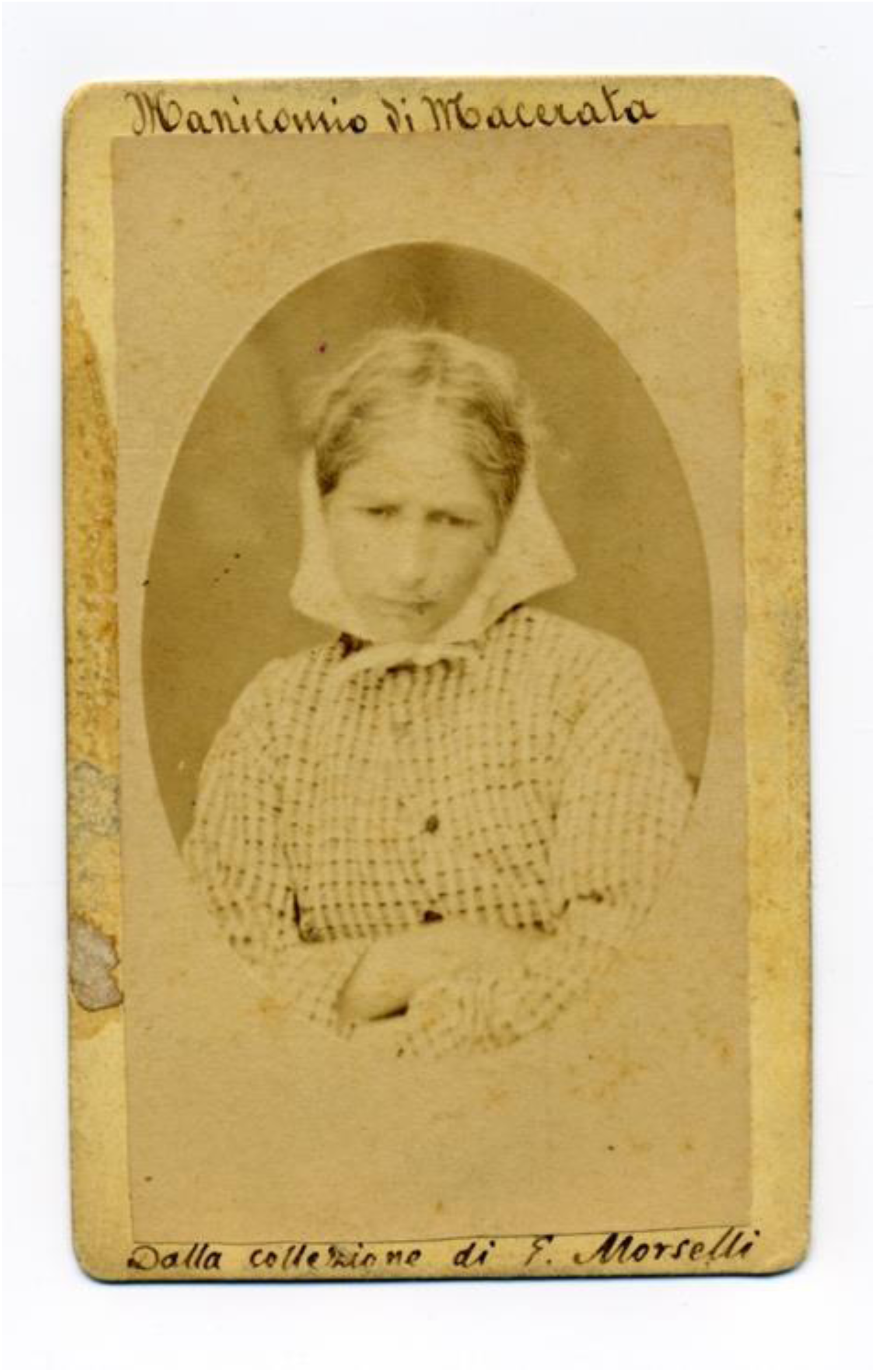
Francesca Madaro, of Lecce, c. 1877, Collection of Psychiatrist and Anthropologist Enrico Morselli, Medical Director of the Santa Croce Asylum, Macerata.
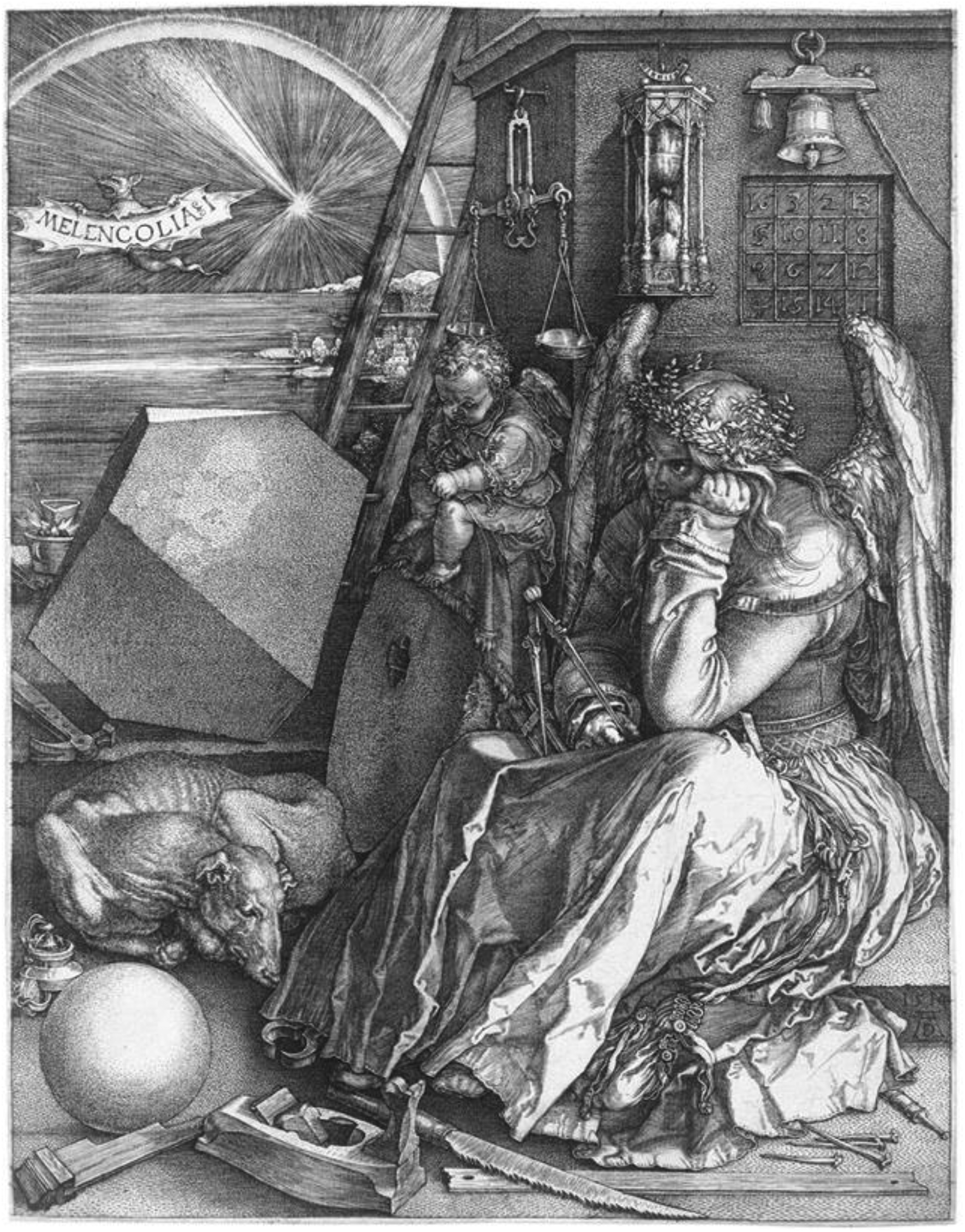
Albrecht Dürer, Melencholia I (Germany, 1514), Engraving (Minneapolis Institute of Art, Public Domain).
Such gendered notions of mental health and illness and the suppression of the impact of gendered violence were echoed in and reinforced by literature and popular culture across Europe. Representations of women as inherently prone to hysterical and neurotic symptoms were widespread. As Annamaria Pagliaro (2019) points out, it was common for Italian male authors to write of women in these terms, as, for example, in the late nineteenth-century novelist Federico De Roberto's description of women as “all a bit hysterical and child-like” (p. 100). Similarly, the great divas of the Italian silent screen provide examples of popular representations of women as hysterical, irrational, unbelievable, and unstable.
9
As Maria Bambina Crognale (2018) explains: [w]oman, in early twentieth-century culture, was represented by way of cultural stereotypes, including that of the docile, subordinate victim and that of the aggressive and reckless delinquent with masculine traits. Both models subjected her to a form of dominion and control. In the first case, by the man, father and husband, because she was incapable of looking after herself, in the second case, by institutions, since she was dangerous and outside the law. (p. 10)
While Mussolini's regime embarked on significant changes to the healthcare system overall, Piazzi et al. (2011) note that “no interest whatsoever was shown in upgrading psychiatric care” (p. 256). At the same time, the regime oversaw a massive expansion of what was considered “deviant” and therefore cause for confinement in a psychiatric institution. This came to include women who did not conform to the fascist ideal of exemplary wife and mother, as exemplified in popular women's magazines of the period, such as the illustrated monthly Rivista delle Famiglie (Family Magazine). It also included people who were identified as homosexual and men who did not conform to fascist ideals of male virility, political opponents of the regime, and ultimately anyone considered suspiciously “different” or politically inconvenient. The Italian Penal Code was changed by a bill introduced in 1926 requiring all patients in psychiatric institutions to be registered in the criminal records book (Piazzi et al., 2011, p. 257). Matteo Petracci (2014) and others have demonstrated that the regime committed thousands of men and women to psychiatric institutions not because of any genuine pre-existing mental distress but rather as a form of political repression of people who were or were perceived as anti-fascist. This expansion of the definition of “madness” took place at the same time as the introduction of electroshock or electroconvulsive therapy (ECT), itself invented in Italy, and led to many thousands of people being subjected to it unnecessarily (Piazzi et al., 2011, p. 258). As Bonnie Burstow (2006) notes in an article that reconsiders electroshock through a critical feminist lens as both “a form of violence in general and a form of violence against women in particular,” this misplaced and violent use of ECT was inflicted disproportionately on women (p. 373).
Annacarla Valeriano (2017) has demonstrated that under fascism women were admitted to psychiatric institutions at an unprecedented rate. She points out that medical and media records from the twenty-year period of the regime show that “discourses around women who were different were not a novelty introduced by fascism but were rather employed ideologically over the course of the ventennio to delimit female deviance and contrast with it a public image of femininity ready to carry out tasks and duties in the common interest” (Introduction). In other words, it represented a “reinvention of female identity” carried out by the regime “with the explicit desire to insert women into a wider project of spiritual and moral education, to transform them into organically productive cells, subjects capable of interacting harmoniously with the apparatus of the state, fusing themselves into it like perfectly synchronized cogs.” Hospitals for the “mentally ill” therefore became not only a means of managing and controlling so-called “abnormality” but also “one of the places in which a policy of surveillance that annulled individual rights in the name of public order could be put into effect.” Women who refused to conform to the regime's ideals of womanhood were committed to psychiatric institutions “to be reeducated through the discipline of the lunatic asylum in order to bring their behavior back within the boundaries of a biologically and socially constructed normality.” This desire to enforce “biological normality” became fundamental to fascist health policy, which from 1927 onwards hinged upon the “defense of the race” and worked to realize “demographic policy goals through the removal from society of those whose hereditary moral and physical mental instability meant that they could only find a place in locations—like the lunatic asylums—designated for treating the most unruly behaviors and for curing deviant instincts” (2017, Introduction). Valeriano makes clear the innate violence on which this system relied to discipline its inhabitants. Images such as the 1938 photographs from the archives of the Paolo Pini ex-psychiatric hospital in Milan published by Manzoli (2004), which show their female subjects apparently held forcibly in position in front of the camera, suggest the coercion that was necessary simply for the making of the photographs, let alone for the ongoing containment and control of the women subjected to internment within the institution (p. 3).
The asylum system expanded dramatically under a health system that had been fundamentally reorganized in the service of the regime's demographic policy goals, and that saw a constant increase in the number of psychiatric patients throughout the twenty years of fascism. Valeriano notes that between 1927 and 1941, the number of patients grew from around 60,000 to almost 95,000. She shows that within these institutions, women who had rejected motherhood, rebellious and/or sexually active girls, or women simply seen as having strong or difficult personalities were incarcerated and often characterized according to much older pathological types, such as the definition of the hysteric of nineteenth-century French neurologist and anatomical pathologist Jean-Martin Charcot. Women in desperate need of support and assistance, such as victims of sexual violence or war, were condemned to often violent confinement in psychiatric institutions. Women's mental distress was seen as something disruptive and potentially violent that had to be (violently) suppressed, rather than as a sometimes entirely rational response to an unbearable reality.
The official visual representation of these women echoed this categorization. It did so via the disciplining of the subject enacted by forms of photography designed, in Alan Sekula's (1989) words, “to establish and delimit the terrain of the other, to define both the generalized look—the typology—and the contingent instance of deviance and social pathology” (p. 345). An image from the exhibition Valeriano curated with her colleague Costantino Di Sante, entitled I fiori del male. Donne in manicomio nel regime fascista (first shown in 2016), shows precisely this form of disciplinary photography (Figure 4).
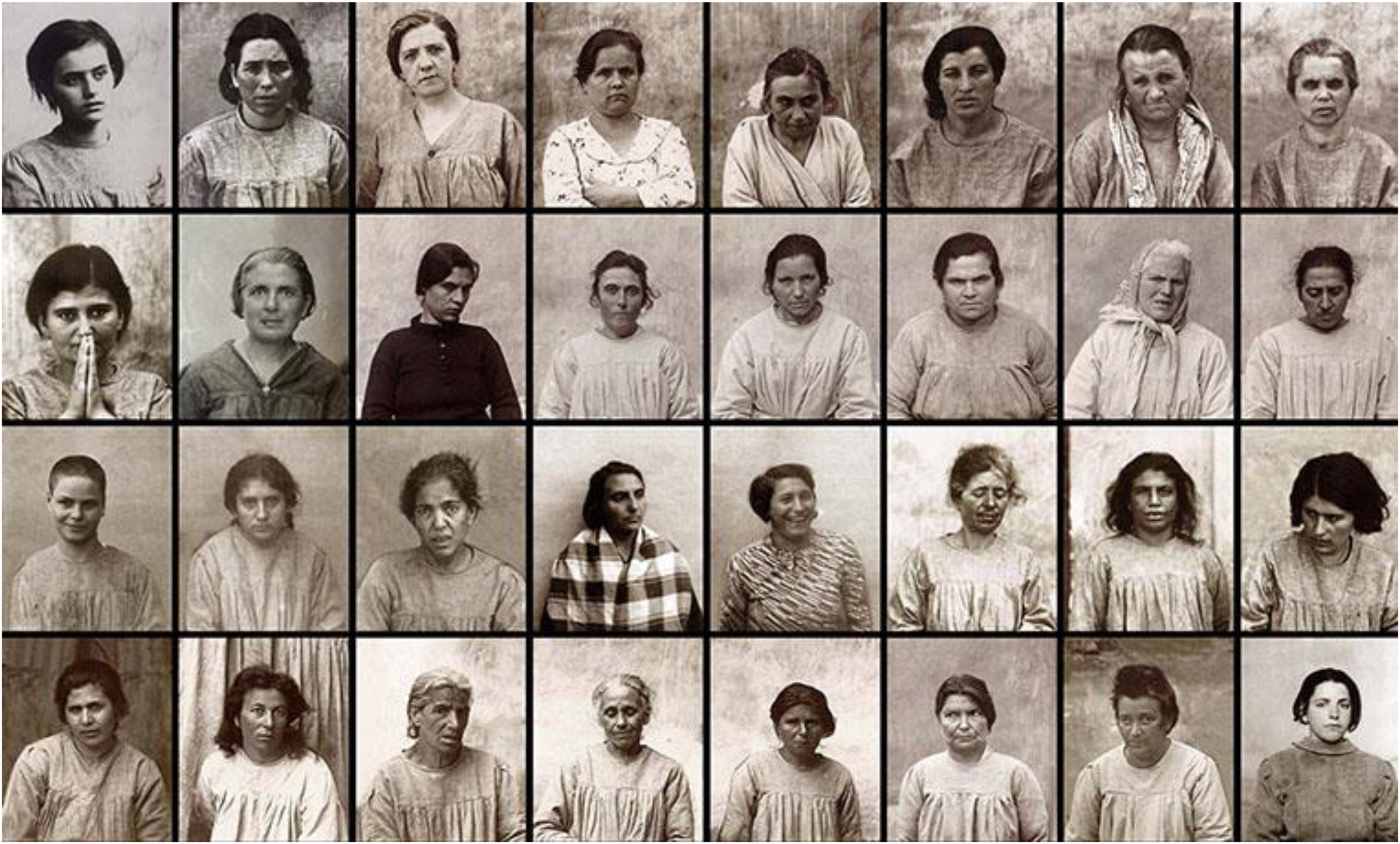
Clinical File Photographs of Women in the Asylum of Sant’Antonio Abate di Teramo, 1930s.
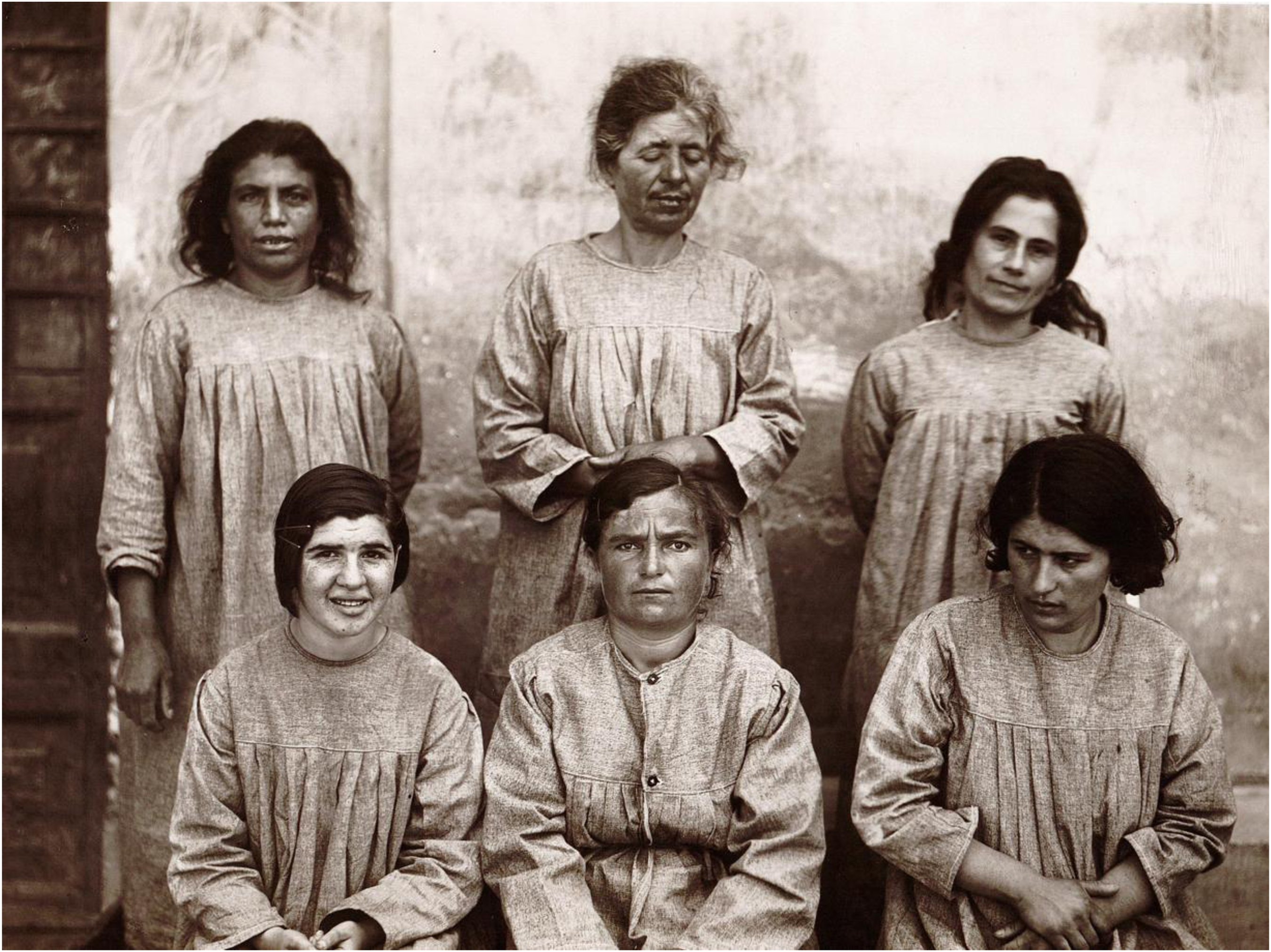
Women in the Asylum of Sant’Antonio Abate di Teramo, 1930s.
It is interesting to compare Figure 4, with its ordered array of apparent mug shots, with the image from which some of these clinical file photographs were taken, Figure 5.
The second image is in fact the point of origin from which some of the photographs in the first image have been cropped, an extraordinarily vivid and haunting picture in which the individuality of the six photographic subjects returns and resists, even as the coercion and containment of the asylum asserts itself in the insistence on the school-photo-like pose and the close, blank wall behind them. The women's contrasting gazes, distinctly different expressions, features, and physiques all mark them as individual, living human beings in a way that recalls Roland Barthes’ (1981) famous description of the power of the photographic punctum, that unexpected non-linguistic encounter with an aspect of the photograph, the “accident which pricks me (but also bruises me, is poignant to me)” (pp. 26–27). The violence done to the photograph in cutting it up and packing up the fragments as so many clinical summaries of symptoms of disorder serves as a reminder of the literal violence visited upon its subjects. The list of symptoms Valeriano and Di Sante reproduce in the exhibition makes clear the oppressive and brutal nature of these women's containment. They include everything from “loquacious” and “incoherent” to “nymphomaniac,” “noisy,” “red in the face,” and “flirtatious”—diagnoses which would seem ludicrous if their results had not been so tragic (Valeriano & Di Sante, 2016).
Images of Female “Insanity” in Post-War Italy
These stereotypes and tropes, which reflected and reinforced fascism's brutal oppression of women, had lasting impacts on the treatment of women with mental disorder diagnoses that would continue to resonate long after the fall of the regime. As Italy gained distance from the fascist period and the immediate aftermath of war, female mental illness continued to be portrayed according to fascist and prefascist models both inside and outside the walls of the asylum. Yet as Italy enters the social upheavals of the 1960s, the notion of mental disorder as being simultaneously a symptom of a “sick” society and its institutions (particularly that of the family) and a means of critiquing them becomes increasingly important.
10
It is in this period, as Alessandra Diazzi and Sforza Tarabochia (2019) point out, that: On the one hand, movements critical of psychiatry questioned its medical nature and accused it of being a cause of social and mental alienation rather than the solution that it claimed to be. On the other hand, psychoanalysis started to investigate alienation as a constitutive characteristic of subjectivity rather than as an ailment to be cured. (p. 2)
Basaglia was director of the psychiatric hospital at Gorizia and from the 1960s on led the radical psychiatry movement in Italy that sought to fundamentally change the practice of psychiatry in Italy. He has been described as “a towering figure” who was “arguably the most innovative and influential European psychiatrist since Freud” (Mosher & Cox, 1991, p. 85). Basaglia and his team and the influence of the European anti-psychiatry movement more broadly had an impact on visual representations of mental disorders in this period. 11 Yet it is above all in documentary forms—photographic, cinematic, and televisual—that a new focus on the experience of psychiatric patients and the work of Basaglia and others who shared his view that “liberty is therapeutic” begins to produce a significant shift in the representation of mental illness, and a new focus on the violence of the psychiatric institution rather than the purported danger of the psychiatric patient comes to the fore.
The work of a number of photographers, along with filmmakers and other visual artists, is remembered in Italy as having played a significant role in enlisting public and political support for the passage of the “Basaglia” Law 180 in 1978. This was the watershed law that made Italy the first country in the world to abolish non-criminal psychiatric hospitals. The law was the culmination of almost 20 years of work to reform psychiatric treatment in Italy and the historian Norberto Bobbio famously described it as “the only real reform” in Italian history (cited in Foot, 2015a, p. 261). The encounter between Basaglia and psychiatrists like him with non-expert photographers, directors, and artists who nevertheless shared a common ideology and desire for change was a fruitful one. As Manzoli (2004) argues, this “encounter between two cultures” can be described as one between “a group of socially militant photographers [who] decided to use their cameras to cover psychiatric institutions from a different point of view and make them the focus of their communicative work for the first time ever” and “a group of psychiatrists [who] realised that communication could play an important role in the attempt to change the public's image of insanity as well as the image conferred to mental hospitals by positivist psychiatry.” 12
Key examples are Carla Cerati and Gianni Berengo Gardin's photographs in the book Morire di classe (Dying Because of Your Social Class) (1969), edited by Basaglia and his wife Franca Ongaro Basaglia, and Luciano D’Alessandro’s (1969) Gli esclusi: Fotoreportage da un’istituzione totale (The Excluded: Photo-Reportage from a Total Institution). 13 John Foot (2015b) has questioned some of the claims made for the role of photography and argued in relation to Morire di classe that the book had a greater impact on perceptions of the possibility of a more militant role for photography than on the closure of the asylums (p. 32). Others, such as Alvise Sforza Tarabochia (2018) and Maddalena Carli (2015), have argued for the contemporary and ongoing significance of these photographers’ representations of mental illness and internment. Carli (2015) states that Basaglia and his allies “made photography one of their main allies, overturning its function of individual and social stigmatization and converting its visual impact into a potent tool of protest, capable of speaking to the public and bringing into view the distant, obscure and threatening universe of psychiatric internment” (p. 101). Images such as Figure 6, by Carla Cerati, illustrate this rejection of photography's history as a tool of institutional categorization of typologies of deviance and assertion of its potential as a “tool of protest.” The images collected in works such as Morire di classe undoubtedly constitute a profoundly distressing album of marginalization, violence, and abuse, and one that contributed to making visible spaces that had been deliberately marginalized and obscured. Once an identificatory and coercive tool in the service of oppressive institutions, the new photography asserted itself as an ally in the dismantling of those same institutions.
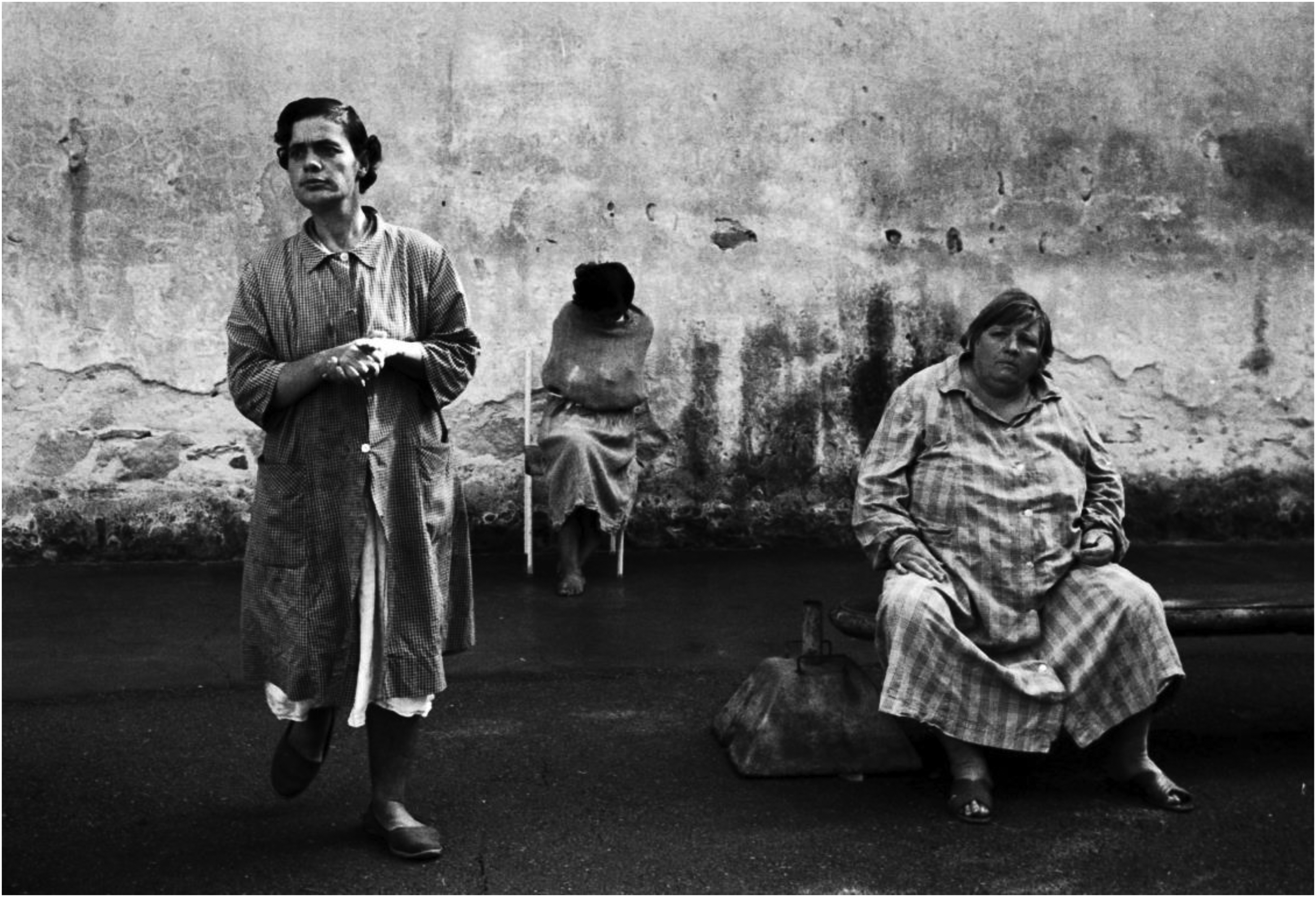
Photograph by Carla Cerati, From Morire di classe (Einaudi, 1969).
Documentary films also focused on the process of de-institutionalization. These include the Italian state broadcaster RAI television documentary on Gorizia presented by Sergio Zavoli, (1968, screened in 1969) I giardini di Abele (The Gardens of Abel) and the 1975 documentary Matti da slegare (Fit to be Untied)—a play on the Italian expression “matti da legare” (fit to be tied) and the earlier theatrical work by Dario Fo, (1954) Sani da legare (Well Enough To Be Tied)—directed by Silvano Agosti, Marco Bellocchio, Sandro Petraglia and Stefano Rulli and filmed for the council of the province of Parma. In relation to these, David Forgacs draws an interesting distinction between what he sees as the limits of photography in representing the experience of the psychiatric institution in Morire di classe and the possibilities that film offers in a documentary like Matti da slegare to give voice and agency to the people interviewed. Forgacs (2014) argues that “photography, even when accompanied by the kind of contextual material supplied in Morire di classe, can provide a view of people with mental illness but it is an inadequate medium for providing an understanding of them, or even of the nature of their institutionalization” (p. 372). Cerati herself noted the limitation of the camera, for example, in terms of its inability to capture repetitive gestures or the sounds of the patients’ voices. On the other hand, in her view “the impact of a still photo is much greater than that of those moving images which we view every day without noticing it on the small screen” (cited in Foot, 2015b, p. 230).
Despite the visual power and ideological heft of the images and their ongoing role as themselves “lieux de memoire” in the Italian visual imaginary of the manicomio, Forgacs and Foot's analyses raise important questions about the perspectives shown in socially conscious photographs of psychiatric patients made in the late 1960s, the degree of choice patients had about how they were presented and the extent to which the images reinforce or undermine stereotypes of mental illness. Foot (2015b) goes as far as to argue that the choice to focus on representing the old conditions of the asylum rather than the changes Basaglia and his colleagues had brought about in the lives of patients meant that Morire di classe ultimately “‘re-victimized’ them, in order to serve the needs of the movement” (p. 24). Forgacs and Foot express a long-standing anxiety about the “dangers” of photography: pre-empting Roland Barthes’ discussion of the photographic punctum and Susan Sontag's exploration of the notion of the photographic act itself as an act of violence, the Italian sociologist Franco Ferrarotti had written as early as 1957 that “in every photograph that is authentic, not purely escapist or aestheticizing, there lies the pain of a wound inflicted on the unitary body of the living by a trick” (cited in Marra, 2001, p. 38). 14 The representation of vulnerable people in particular always risks this wounding, and yet the bind facing those wanting to dismantle Italy's psychiatric institutions was that of how to represent their horrors without revictimizing their inhabitants. As Sforza Tarabochia (2018) writes, many of the scholars who have analyzed Morire di classe from this perspective “seem to put the photographer in the impossible position of choosing between a complete involvement with the subject and a scopophiliac gaze” (p. 50). He suggests instead that “an ethical stance […] characterizes the gaze of the photographers and their personal involvement with photographed reality,” and “permeates the aesthetics and assemblage of the photo essay,” whose main focus is the “unmasking” of “the reality that was structurally and ideologically hidden behind the walls of the old asylum” (p. 52).
A key role of photography and film for Basaglia and his companions was to document both preexisting conditions and contemporary changes within the institutions to provoke outrage and a desire for further change to all such institutions. As Basaglia & Basaglia Ongaro (1969) wrote in the introduction to Morire di classe, every change they introduced was aimed at “unmasking the violence of the psychiatric institution” (p. 3). In their view, the psychiatric institution as it had previously existed had a primary but hidden social and political function: that of control. In other words: the mentally ill are not only the object of the violence of an institution entrusted with defending the sane from madness, nor only the object of the violence of a society that rejects the mentally ill, but are as well the poor and disinherited who, precisely due to their lack of bargaining power to oppose these forms of violence, fall definitively into the power of the institution tasked with controlling them. (Basaglia & Ongaro Basaglia, 1969, n.p.)
While the violence of the institution was at the forefront of Franco Basaglia's mind from the very beginning, it was Franca Ongaro Basaglia (influenced by Phyllis Chesler's seminal work on women and madness, first published in 1972 and in Italian in 1977) who was among the first to point to the specific, gendered aspects of this violence. Forgacs notes that “[i]t was not till the 1970s, when feminists began to mount a critique of patriarchy separate from the class-based politics of the left, that women's situation gained visibility as a distinctive issue, also in a mental health context” (Forgacs, 2014, p. 225). Photography and film played an important role in promoting the literal visibility of the issue, but they were also inevitably burdened by the heavy iconographical baggage of gendered representations of madness.
In her account of two stays in the Centro Donna Salute Mentale in Milan in 1998, the author Fabrizia Ramondino (2000) described how the image of women psychiatric patients as “raving” or clutching at bars was still common, thirty years after the closure of the manicomi. She described these recurring images as “retrograde,” and noted the need for new forms of representation of women's mental disorders and of psychiatric clinics, which reflected the changes that had occurred and the realities of contemporary psychiatric treatment (p. 293). More than two decades later, the ongoing issues of stigma and discrimination still haunt the representation of women with mental illness diagnoses in Italy, as in many other countries, and hamper efforts to overcome the historical legacy of what Chesler (2018) described as patriarchal psychiatry's tendency “to diagnostically pathologize what might be a totally normal human response to trauma” (n.p.) and to create a more inclusive and empathetic response to those dealing with mental disorder. A spate of recent initiatives, films, exhibitions and books on the experiences of women in Italy's psychiatric institutions bears witness to the ongoing significance of the manicomi as key lieux de memoire in Italy and of the painful history of the violent oppression of women labeled as mentally ill both within and outside them. 15 They also show that the visual representation of women and mental illness continues to have an impact on how women's responses to violence and discrimination are interpreted at a societal level, and on how women experiencing mental distress are treated.
In their beautifully made web doc, Matti per sempre (Mad Forever), which seeks to give voice to psychiatric survivors, Maria Gabriella Lanza and Daniela Sala (2017) note that while people with mental disorder diagnoses in Italy are no longer separated from the rest of society by barbed wire fences or walls, other forms of exclusion remain. Law 180 abolished the idea that psychiatric patients needed to be forcibly committed as a “danger to society.” It reaffirmed their human rights and their rights as citizens and ended their forcible separation from the rest of society. Nevertheless, the Ospedali Psichiatrici Giudiziari (judicial psychiatric hospitals) were only legislated out of existence by a series of laws between 2012 and 2014, with the last one finally closing in April 2017. Making their web doc in that year, Lanza and Sala noted that most psychiatric departments in Italian hospitals were still closed to the public and one in ten psychiatric patients still physically restrained (n.p.). As Carta, Angermeyer & Holzinger (2020) note, resourcing for community care did not significantly increase with the closure of the institutions, and it remains very unevenly distributed across the peninsula, with significant under-resourcing particularly in the south. Tellingly, popular images of the “mentally ill” often remain frightening and othering, still suggesting those with a mental disorder diagnosis are likely to be at least an embarrassment and at worst a danger to themselves and/or those around them.
Entering phrases such as “malattia mentale donne” (mental illness women) or “depressione donne” (depression women) into the images search engine for www.google.it brings up a host of contemporary stock photographs of women looking desperate and alone, heads bowed and/or clutched, with bar-like shadows, and in black and white, or gloomy blue and green-toned colors. For every more nuanced representation of the lived experience of mental distress, a dozen stock images of women's mental disorder, distress, or depression reiterate the baleful, head-clutching images that populate institutional archives stretching back to the nineteenth century and that Ramondino complained about in the late 1990s. What is more, a number of these images are from stock photography shoots also used in stories about domestic abuse. 16 No matter what the written stories accompanying them might say, such images imply that women's mental illness and violence against women are both fundamentally problems about individual women, to be dealt with at the level of the individual, and divorced from the structural inequalities and oppression women collectively endure. 17 This oppressive visual legacy adds insult to injury, perpetuating pernicious sexist stereotypes of women as intrinsically unstable and unreliable that continue to have devastating impacts on their lives.
Footnotes
Declaration of Conflicting Interests
The author declared no potential conflicts of interest with respect to the research, authorship, and/or publication of this article.
Funding
The author received no financial support for the research, authorship, and/or publication of this article.
