




Abstract
This paper aims to estimate the prevalence of client-perpetrated violence against female sex workers (FSWs) in Bogotá and to understand what structural and environmental factors are associated with such victimization. The project used secondary data from interviews with 2,684 FSWs. Multivariable binary logistic regression was used to test for associations with client-perpetrated violence. Findings reveal that factors such as experiencing police harassment and social stigma were positively associated with client-perpetrated violence. Situational factors such as providing services in motels, hotels, on the street, and in cars were also associated with increased odds of becoming a victim of violence.
Introduction
The United Nations states violence against women and girls is one of its most urgent human rights violations to target (United Nations, 2020). Violence against female sex workers (FSWs) is a significant subset as it affects women globally at the intersection of many layers of vulnerability. A meta-analysis of 42 studies concluded that anywhere between 45% and 75% of FSWs experience workplace violence in their lifetime, and studies asking about recent experiences find 32% to 55% had experienced client-perpetrated physical or sexual abuse in the past 12 months (Deering et al., 2014). Such victimization is vital to address in its own right but has implications for long-term health outcomes as well; a longitudinal study in the United Kingdom found that compared with estimated mortality for non-FSWs from ages 15 to 44 in Greater London, FSWs of this age group were 12.15 times more likely to die a violent death (Ward et al., 1999).
However, it is not an inevitability that FSWs will experience violence. Instead, there are different levels of risk associated with various structural and environmental features of FSWs' working lives. For example, there are ample studies that correlate structural factors such as the criminalization of sex work with increased prevalence of violence against sex workers (Anderson et al., 2015; Erausquin et al., 2011; Odinokova et al., 2014; Platt et al., 2011; Shannon et al., 2009). Further, the literature on correlates of violence has identified a difference in victimization between indoor and outdoor sex work (Footer et al., 2019; Odinokova et al., 2014; Shannon et al., 2009). It is therefore vital to understand what these correlates are, to make policy and practical recommendations to reduce this violence.
Violence against FSWs is a particularly relevant issue in the Latin American context. Although sex work is not criminalized in any country in the region, ambiguities in the interpretation of the legislation have enabled both institutional and client-perpetrated violence against this population to persist. A study with 5,222 FSWs in 13 countries in Latin America and the Caribbean revealed that 18% had been physically abused and 39% had been sexually abused by clients (RedTraSex, 2018). Yet, apart from this study, not much of the research focusing on violence against FSWs is based in Latin America. Of the 42 studies reviewed in a meta-analysis on correlates of violence against FSWs (Deering et al., 2014), only one came from this region. Although in recent years new studies on FSWs in Mexico (Cepeda & Nowotny, 2014; Semple et al., 2015; Ulibarri et al., 2010, 2015) and Brazil (Lippman et al., 2010) have emerged, further research on violence against sex workers in other Latin American countries may contribute to understanding the causes of violence against this population in this region. In particular, the case of Bogotá, Colombia is further interesting because it is a location where sex work is explicitly decriminalized and has a zoning strategy in place.
Therefore, to contribute to the literature on violence against sex workers furthering research in the Latin American context, the present study explores the case of Bogotá. We make use of environmental criminology and structural determinants frameworks to understand what structural and environmental factors are associated with experiences of victimization in this population. We analyze data from face-to-face surveys with 2,684 FSWs conducted in 2017, focusing on client-perpetrated physical and sexual violence. We explore macrostructural factors such as legislation to decriminalize sex work, stigma, and migration, alongside environmental factors in line with the previously identified indoor–outdoor distinction of workplace location, such as brothels, motels, streets, and cars. Our results serve to better understand how different factors affect the vulnerability of sex workers to client-perpetrated violence, providing an evidence base for interventions that might contribute to reducing violence against FSWs.
Correlates of Violence Against FSWs
Violence against FSWs is a global phenomenon with many implications for sex workers’ mental and physical well-being. Reducing violence against sex workers can also have an impact on reducing HIV transmission (UNAIDS, 2014). Not only is reducing violence against FSWs a public health concern but also human rights issue. Recently, organizations such as the World Health Organization (2019), Human Rights Watch (2019), and Amnesty International (2016) have advocated for decriminalized models of sex work to reduce human rights abuses, such as violence, against this population.
However, not all FSWs will experience violence, and much research has focused on various factors that protect or increase the risk of victimization. To understand these factors, we make use of both the structural determinants framework (Anderson et al., 2015; J. F. Blanchard & Aral, 2010; Deering et al., 2013; Shannon et al., 2008, 2009, 2015) to conceptualize the role of macrostructural and community factors, and environmental criminology approach to identify environmental features associated with FSWs’ work-related activities that may provide opportunities for victimization.
The structural determinants framework understands sex work as a complex adaptive system where the interplay of structural dimensions along with community, individual, and interpersonal factors produce risk and protective determinants (Shannon et al., 2014). In particular, we look at macrostructural factors such as legislation and public policy on sex work, police harassment, migration, geographical, sociopolitical, and cultural aspects that might shape a sex worker's experience, and community factors, in particular, any social stigma associated with sex work.
Specific macrostructural factors have been associated with violence in previous work. Legislation around criminalization is one of these, which has been associated with an increased risk of violence against sex workers mainly from the police but also clients (Erausquin et al., 2011; Odinokova et al., 2014; Platt et al., 2011; Shannon et al., 2009). In India, 81% of FSWs that had reported client-perpetrated violence, had been previously arrested, and police arrest increased the odds of client physical or sexual violence (Erausquin et al., 2011). A study on the association of legislation on sex work and violence found that repressive police practices were associated with an increased risk of client-perpetrated sexual and physical violence across nine studies and 5,204 participants (Platt et al., 2018). A more recent study in Baltimore found that for each additional act of police harassment that FSWs reported, they had 1.3 times more chances of experiencing client-perpetrated violence (Footer et al., 2019). A study in Canada shows that sex workers had lower estimates of confidence in the police than other Canadians (Benoit et al., 2016). This study also revealed that sex workers thought it was unlikely that police would treat them fairly. Stigma was central in explaining these police abuses. Instead of targeting the activity of sex workers the police focus on the identity of sex workers increasing the risk of police harassment against this group. These studies appear to indicate that in an environment of criminalization, FSWs may experience more violence. However, to date, very few studies on the correlates of violence against FSWs have been produced in places where sex work is decriminalized or legalized. Many places where there are legalized regimes have dedicated “tolerance zones.”
Tolerance zones refer to a policy approach whereby certain (usually urban) areas are designated to permit sex work (Van Doorninck & Campbell, 2013) These areas have been associated with a reduction in crime and harm. For example, in the Netherlands, drug-related crime and sexual assaults both decreased in areas adjacent to tolerance zones (Bisschop et al., 2015). Similarly, Cepeda & Nowotny (2014) found that venues located in “zonas de tolerancia” on the USA–Mexico border were slightly more secure to those outside the tolerance zones because police, bouncers, or bar employers were more accessible in case any situation arose. However, not all studies support tolerance zones; the most comprehensive of such studies (Farley, 2005), which includes more than 854 interviews with sex workers in nine countries concluded that there is no significant improvement in mitigating the risk of violence by working in legalized zones.
Another macrostructural factor that several studies found predicted client-initiated violence against FSWs is being a migrant. In a study in China, Vietnamese and Thai sex workers had significantly lower scores of client-perpetrated violence than their Mainland Chinese counterparts (Choi, 2011). Another study in Canada showed that migrant sex workers were less likely to report prior coercion (1.84 vs. 12.73%) or recent exposure to client violence (19.02 vs. 45.79%) (Goldenberg et al., 2015). These studies indicate that despite common representations of this population as more vulnerable to violence, and often associated with being victims of human trafficking and sexual exploitation, foreign sex workers are not always more at risk of violence than domestic ones or may feel less safe reporting crimes for fear of deportation.
The second dimension of factors is associated with community organization and FSWs empowerment. Specifically, gender inequality (Cepeda & Nowotny, 2014) and social stigmatization of sex work (Ganju & Saggurti, 2017) are previously identified risk factors while group membership (Bhattacharjee et al., 2013) and power within a collective (A. K. Blanchard et al., 2013; J. F. Blanchard et al., 2005; Ulibarri et al., 2010) are factors that might protect FSWs from violence. A study in India found that FSWs who participated in programs that fostered community empowerment were less at risk to become victims of client-perpetrated sexual and physical violence (A. K. Blanchard et al., 2013). Another study in India with 68 transgender sex workers revealed that stigma and client-perpetrated violence were associated with higher risks of contracting HIV (Ganju & Saggurti, 2017). In comparison, work in India investigating experiences of FSWs working as Devadasi, a culturally and religiously accepted form of sex work in this country, where sex work is otherwise criminalized and socially unaccepted, were less likely to report client-initiated (13.3%–35.8%) and police violence (11.6%–44.3%) during the past year than non-Devadasi FSWs (Blanchard et al., 2005). This reduction in violence was attributed to both the fact that the Devadasi are more likely to live in rural populations and that their customers were locals of the places where the services were contracted. The literature on community-level factors seems to indicate that despite the legal regimes, access to support networks, cultural norms, and stigma can also have an association with violence against FSWs.
Finally, we acknowledge that FSWs work in different environments. We make use of an environmental criminological framework to understand how these different situational contexts might create or block opportunities for victimization. The central premise of this perspective is that the situational components of the context in which crime happens play a causal role in crime occurrence (Cornish & Clarke, 2008). In particular, we suspect that different routine activities associated with different FSWs practices will create different levels of intersections between the three essential elements: a motivated offender, a suitable target, and the absence of a capable guardian (Cohen & Felson, 1979; Felson, 1987). The most common workplace routine activity distinction made within sex work is of those FSWs who work indoors versus outdoors (on the streets; Ciacci & Sviatschi, 2016). Indoor sex work can include massage parlors, saunas, brothels, strip clubs, and escort sex work as well as services that occur in the sex worker or clients’ homes and at hotels or motels. Most studies show that working outdoors is riskier than working inside (Carlson et al., 2012; Church, 2001; Odinokova et al., 2014; Semple et al., 2015; Shannon et al., 2009). A study in the United Kingdom showed that 81% of FSWs working outside experience client-perpetrated violence, while 48% of those working inside reported it (Church, 2001). In Russia, another study showed that street sex work was a strong predictor of police coercion (Odinokova et al., 2014).
In contrast, a study on Nevada's brothels (Brents & Hausbeck, 2001) indicates that FSWs there report low rates of violence: only one out of 48 women interviewed expressed that they had experienced client-perpetrated violence. Strategies such as intercoms and panic buttons in rooms and other factors such as thin walls and the presence of other workers in the building help sex workers feel more secure. Brothel keepers can call the police without fear of punishment, which facilitates reporting violent clients. Further, the decriminalization of indoor prostitution has been associated with reductions in sex crimes outdoors (Ciacci & Sviatschi, 2016; Cunningham & Shah, 2016). Besides the location of work, the mode of contacting clients also has an effect; allowing FSWs to solicit online (which enables transitioning indoors, screening, and improved matching with clients) reduces violent victimization (Cunningham et al., 2017). Alschech et al. (2020) also found that workers who advertised their services online reported lower posttraumatic stress than those who provided services in brothels.
It is further likely that not all outdoor or indoor locations will be the same. Environmental criminology would suggest that crime (such as violence against FSWs) would concentrate in space and time (Eck & Weisburd, 2015; Felson, 1995). Indeed there is evidence to show that sexual violence in general, is not randomly distributed in space (Beauregard et al., 2005, 2010; Ceccato, 2014; Ceccato et al., 2017).
To sum up all of these factors, Sanders argues that the combination of three factors determines violence against sex workers (Sanders, 2016) First, environmental factors such as spaces where sex workers provided their services and contact their clients. Secondly, the legal regimes that states have in the treatment of sex work and how these regimens are implemented, and thirdly, social status and stigma that impact the way society perceives sex workers.
The Current Study: The Case of Bogotá
According to the Bogotá Observatorio de Mujeres y Equidad Género 2017, there were an estimated 7,094 sex workers providing services in the capital city of Colombia (Alcaldía Mayor de Bogotá, 2018). In their characterization of paid sex, this organization found that persons who provide sexual services in the city are a heterogeneous population spread across Bogotá's different municipalities.
In Colombia, sex work was decriminalized by Constitutional Court ruling 620/1995 (Sentencia T-620/1995, 1995). Some sex workers’ labor rights were also recognized by a later ruling of this same court (Sentencia T-629/2010, 2010). In 2002, Colombia's capital city, Bogotá, devised the Zonas Especiales de Servicios de Alto Impacto (ZESAI) strategy which delimits land used for bars, clubs, motels, striptease clubs, and brothels to six zones in the city (Alcaldía Mayor de Bogotá, 2000). Out of the six zones, only one, Mártires, has implemented the sex work zoning strategy (Chacón, 2019). This means it is possible to study the victimization of FSWs who work within this tolerance zone and those who do not.
Despite sex work being a decriminalized form of labor, sex workers are still being harassed by police in Bogotá. This is the case of a group of 15 women that in January 2016 were violently removed from La Mariposa square in the locality of Santa Fe and then detained for presumably being sex workers (Dávila Contreras, 2016). The women sued the police for harassment and their case is evidence that the Police are using other articles in the Police Code to detain women that they believe that, because of their physical appearance and location, could be doing sex work (Dávila Contreras, 2016). For example, articles 42 to 44 of the National Police Code which started operating in 2016, establish that sex workers should be delimited to specific hours and areas that will be defined by each city (Código Nacional de Policía y Convivencia. Ley 1801 de 2016, 2016). With these articles, the police are provided with the justification to remove, detain, and fine sex workers that they consider are not working in the right places or at the right times.
Bogotá has a strong presence of migrant FSWs from Venezuela (Ramsey & Sanchez- Garzoli, 2018). These women are being discriminated against and ostracized by Colombian sex workers as a result of many myths that circulate about their negative impact on the local sex market (Chacón, 2018; Restrepo, 2018). They are being accused of charging less and therefore making it harder for the locals to compete. This representation coincides with other studies that link foreign sex workers with different forms of stigmatization usually imposed by local sex workers (Choi, 2011; Platt et al., 2011; Ward et al., 2004). However, Venezuelan migrant workers are given working permits in Colombia, and FSWs are entitled to the same benefits as Colombian ones. This legislation to regularize migrants’ status could contribute to reducing the risk of them becoming victims of violence. It is also possible that exaggerated perceptions of the vulnerability of migrant sex workers could lead to a misrepresentation of this group's reality (Choi, 2011) and homogenization of the sociodemographic profiles and working conditions of a diverse population under the label of “migrants.”
There is also a presence of general community-level stigma experienced by FSWs in Bogota. Studies on sex work legislation in Colombia have identified paradoxes in legal instruments that, on the one hand, protect sex workers’ rights, and on the other, deny sex work as an acceptable way of living. For example, Asdrúbal Ávila (2016) and Nieto Olivar (2010) identify that the 1995 ruling that decriminalizes sex work uses language that stigmatizes this population by creating tolerance zones to contain sex work as if it was an epidemic. Furthermore, Cepeda and Nowotny (2014) argue that cultural interpretations of gender roles reinforce the stigma against sex workers in Latin America. These interpretations are linked to the Catholic figure of the Virgin Mary and portray women as self-sacrificing, asexual, and accepting of violence from men. In this respect, the presence of stigma against sex workers in Bogotá could be associated with violence against this population.
Finally, not much is known about environmental factors associated with violence against FSWs in Colombia, and by exploring whether the indoor/outdoor distinction exists here and whether there are any spatial patterns in victimization, we can begin to contribute to a knowledge base on this important problem in a Latin American context.
To properly understand the role of these factors in the victimization of FSWs, we will consider the following questions:
Is there a difference between FSWs working in Zonas de Servicios de Alto Impacto and not in these areas in self-reported victimization? Is there an association between self-reported police harassment and client-perpetrated violence? Is there a difference between migrant FSWs (either Venezuelan or Colombian FSWs who are not from Bogotá) and locals in self-reported victimization? Is feeling stigmatized in the community associated with self-reported victimization? Do FSWs working in different types of locations experience different levels of self-reported violence? Does this follow an indoors/outdoors distinction?
Further, we consider two types of victimization outcomes: client-perpetrated physical and sexual violence. These two types of violence against FSWs are often studied together (Deering et al., 2014).
Methodology
Data
Our data comes from a survey conducted by the Bogotá Women's Observatory, administered to 2,749 persons doing paid sex in Bogotá. The semistructured survey instrument includes 117 questions about respondents’ demographic information, health issues, paid sexual activity, history of sexual and physical violence, and living conditions (Alcaldía Mayor de Bogotá, 2018). Using multistage cluster sampling, respondents were recruited from 186 locations out of the total 285 known locations where paid sexual activity takes place in the city. These points were visited twice during the two months of data collection that started in October and ended in December 2017. Seven hundred respondents were interviewed on the street, while 1925 were interviewed inside brothels. 1
It should be noted that where the offense was reported may not correspond to where the offense occurred, especially in cases of client-perpetrated violence. These cases might have occurred in the clients’ homes, the street, or a motel, which could be located in a different municipality than the one where the FSW was interviewed. This is a limitation of the data analyses and will be considered in the discussion.
Statistical Modeling and Analyses
The dependent variables of interest were self-reported experiences of client-perpetrated physical and sexual violence in the past 24 months prior to being interviewed. These were coded for each survey respondent as experienced or not experienced. We use binary logistic regression to analyze the relationship between the factors identified above and these outcomes.
All significance tests are two-sided with 95% confidence intervals. Following most of the literature on correlates of violence against FSWs (e.g., J. F. Blanchard et al., 2005; Choi, 2011; Footer et al., 2019; Zhang et al., 2013), the results will be presented in adjusted odds ratios (AOR) for multivariable models. This will allow for comparability with other studies that use similar correlates.
Independent Variables
To answer each research question, a set of correlates were added to models with client-initiated sexual violence and physical violence as outcome variables. These were coded as yes/no answers for each respondent and include:
Macrostructural factors: Works at Mártires ZESAI, reported police harassment in the past 24 months, is from Venezuela, is Colombian but not from Bogotá. Community: Feels stigmatized by her community. Environmental: Contacts clients by telephone, contacts clients online, contacts clients inside brothels, contacts clients on the street, provides services in brothels, provides services in hotels or motels, provides services inside the clients’ homes, provides services on the streets and in cars. Control: Factors relating to FSW individual characteristics as well as client profiles, were added as control variables. These are FSWs age and education; also, the number of clients per night, payment per client, and years in sex work. Client profiles include providing services to clients with mental disabilities, physical disabilities, older adults, underage, females, or clients in prison.
A power analysis was conducted to determine the sensitivity of the odds ratios given a sample size of 2,684 participants, with a 13% prevalence of exposure and a power of 1. The results of this test indicated that with this sample size the expected detectable odd ratio ranges from 0.0001 to 1,000,000.
All statistical analyses were done in R (R Core Team, 2018). The SPSS file was downloaded using foreign (Bivand et al., 2020). Statistical analysis and visualization were done using lme4 (Bates et al., 2014) and sjPlot (Lüdecke, 2017). Maps were done using the tmap package (Tennekes, 2018). Other packages that were used to sort and model data were from tidyverse (Wickham & Wickham, 2017) and the power analysis was done using epiR (Stevenson et al., 2020). 2
Results
Descriptive Statistics
Out of the 2,749 persons surveyed, this study will only use responses from female participants (n = 2,684). We define FSWs as both cis (n = 2,615) and trans women (n = 70) surveyed and excluded cis males (n = 53) and trans males (n = 11). One participant from Peru was also excluded as she was the only person who was not of Colombian or Venezuelan nationality.
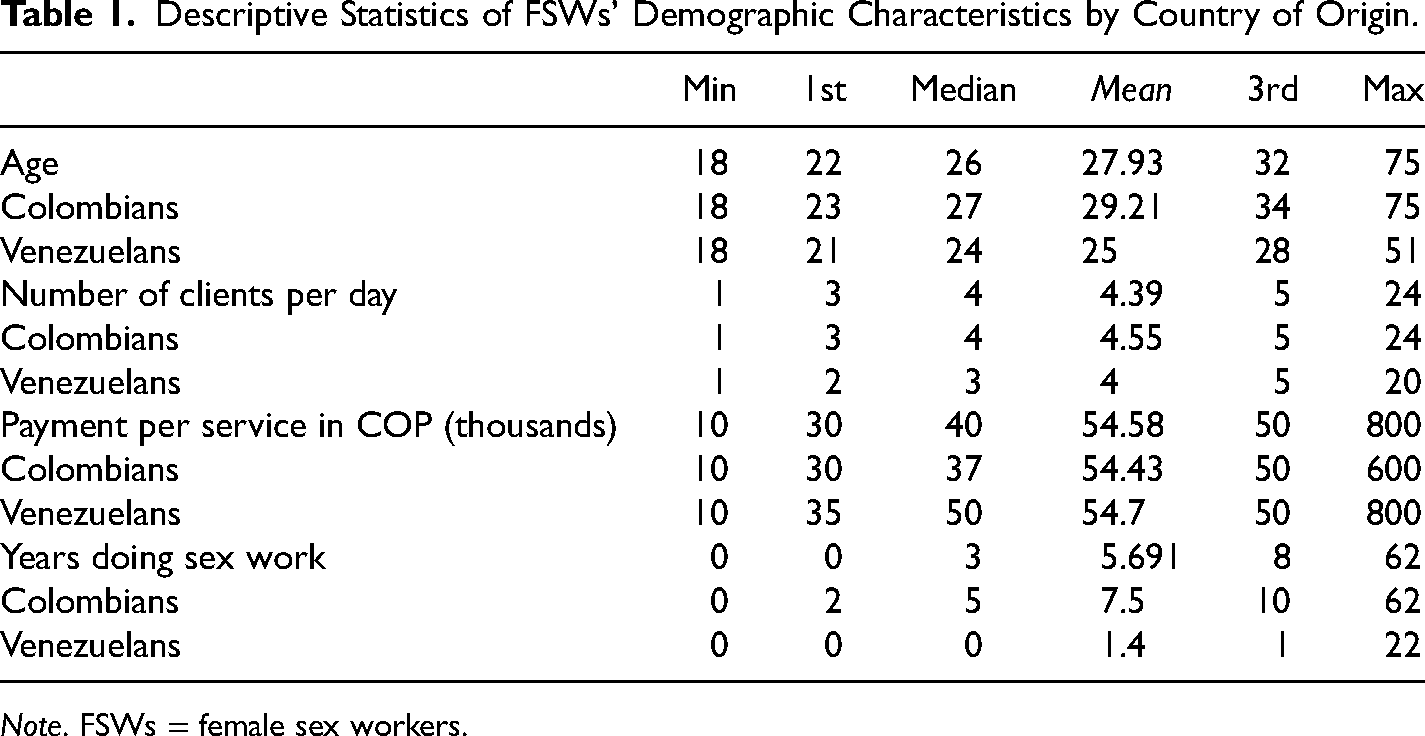
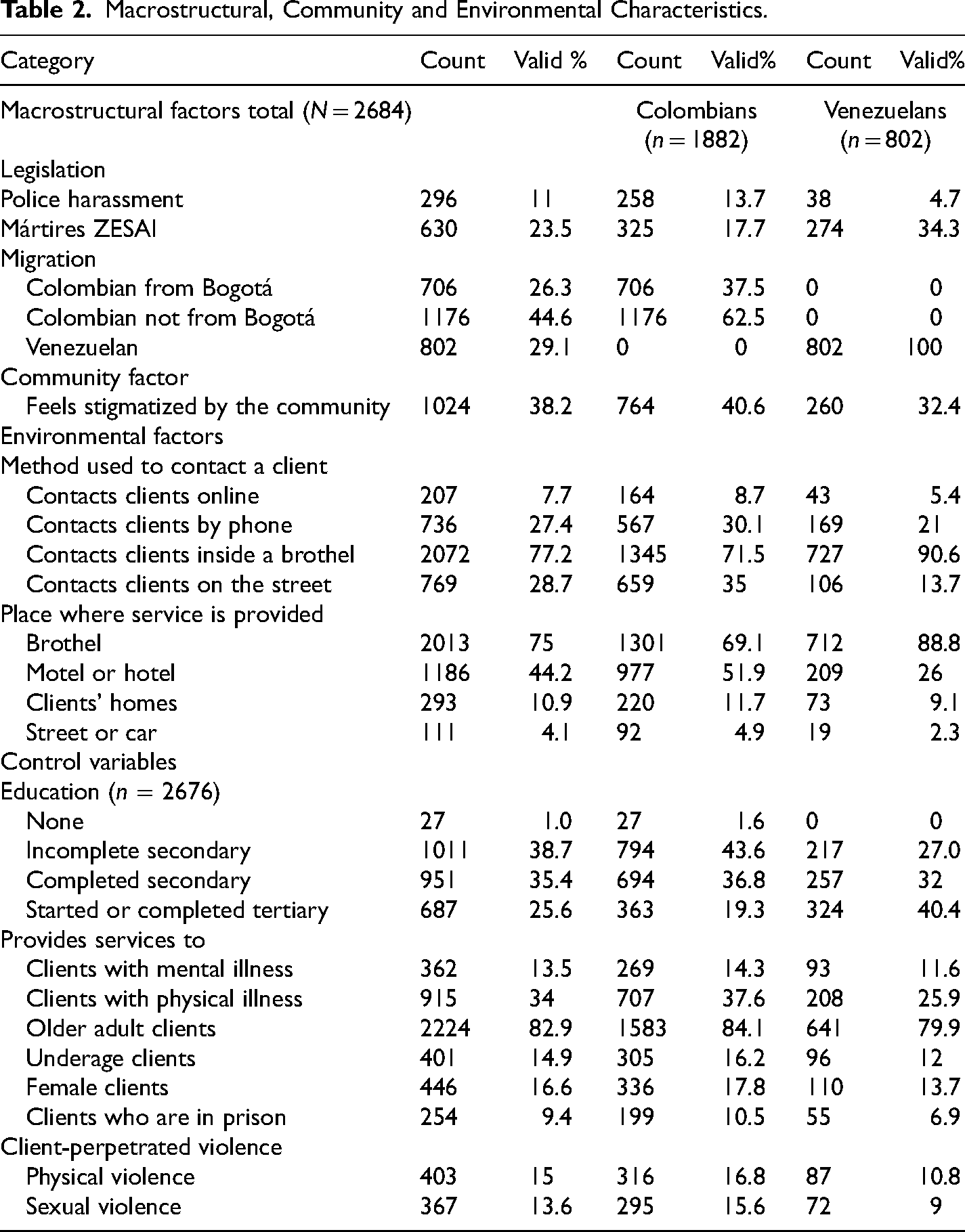
Table 1 presents some demographics of the population which will be used as control variables. Table 2 presents descriptive information on the macrostructural, community level, and environmental factors of FSWs in Bogotá as well as other variables that will be used as control. Regarding experiences of victimization, out of the 2,684 FSWs surveyed, a total of 539 (20%) reported either client-perpetrated sexual or physical violence. The highest prevalence of violence reported was client physical violence with 403 (15%) counts closely followed by 367 (13.7%) counts of client sexual violence. Out of the reported cases of client-initiated sexual and physical violence, 231 cases reported both physical and sexual violence by clients, but no question directly requested information on whether these two occurred at the same time. Table 3 also reveals the differences between Venezuelan and Colombian sex workers concerning reports of client-perpetrated violence. While 9% of Venezuelans reported sexual violence, 15.8% of Colombians did. This is similar to client-perpetrated phyisical violence, where 10.8% of Venezuelans self-reported while 16.8% of Colombians did.
Descriptive Statistics of FSWs’ Demographic Characteristics by Country of Origin.
Note. FSWs = female sex workers.
Macrostructural, Community and Environmental Characteristics.
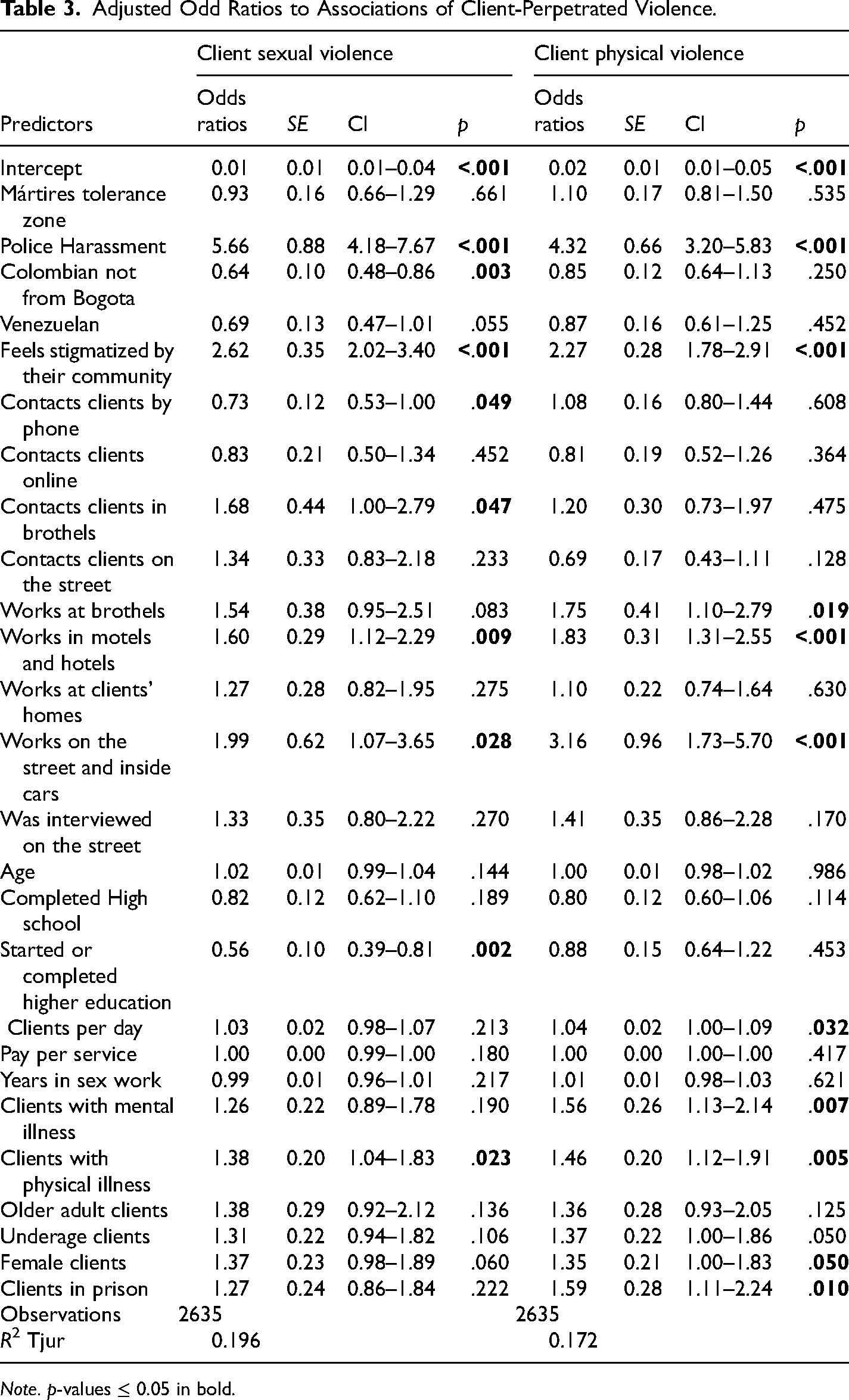
Adjusted Odd Ratios to Associations of Client-Perpetrated Violence.
Note. p-values ≤ 0.05 in bold.
Another interesting result, which is not revealed in the tables, is that while 16(22%) of trans women reported sexual violence, 351(13.4%) of cis women reported this type of violence. With regard to physical violence, 21 out of the 70 trans women reported being victims of clients (30%), which is twice as much as the percentage of reports from cis women (14.6%).
To understand the prevalence of violence against FSWs known to officials, we considered the rates from official reports from the Bogotá Metropolitan Police and the Colombian Institute of Forensic Medicine. There is a variation between the number of police reports filed and the number of forensic exams performed. This could be attributed to the fact that not all sexual assault forensic exams yield sufficient evidence for the police to open a case. Reports do not specify who the perpetrator was; because of this, it cannot be established that they are client-perpetrated.
In both data sets, we can see vast underreporting when compared to the survey data. In the 24 months between 2016 and 2017, there were only two cases of sexual violence against FSWs reported to the police and 27 sexual assault forensic exams performed. In our survey, 367 FSWs reported being victims of client-perpetrated sexual violence in the same period. Regarding physical violence, 15 cases were reported to the police and 18 to the Colombian Institute of Forensic Medicine, while 403 cases were in the study reported in this same period.
Correlates
Results for two multivariable logistic regression models (one for client-perpetrated sexual and one for physical violence) for each of the research questions will be presented in the following section. While it is common to include all independent variables in a single model and interpret the coefficients as estimates of effect size between these and the dependent variable, doing so can lead to mistaken interpretations of these estimates in line with “Table 2 fallacy” (Westreich & Greenland, 2013). To avoid this, we build a separate model for each variable. Further, we emphasize that we are not modelling causal relationships, these models are indicative only of associational relationships.
Tolerance Zones
Table 3 shows the results of the model to test the differences in victimization between sex workers active inside the Mártires Zona de Servicios de Alto Impacto and those who are in different parts of the city. Based on these results, it can be said that sex workers who provide services in the Mártires ZESAI were neither more nor less likely to become victims of client-perpetrated sexual violence (AOR = 0.93, p = .661) or physical violence (AOR = 1.10, p = .535) than those who do not.
Police Harassment
To better understand the extent to which police harassment was associated with client-perpetrated violence against FSWs, a model including this variable was fitted for both types of violence. Results reveal a high positive association between police harassment and client sexual violence (5.66, p < .001) and physical violence (4.32, p < .001).
Migration
To test differences between migrant sex workers (either Venezuelan or Colombian FSWs who are not from Bogotá) and locals in self-reported victimization, a model using two dichotomous variables one if the sex worker was from Venezuela and the other, if she was a Colombian but not from Bogotá, were added as explanatory variables. Results indicate that being Venezuelan is a protective factor for client sexual violence (AOR = 0.69, p = .055). Being an internal migrant was also a protective factor for sexual violence (AOR = 0.64, p = .003), but neither group was associated with reduced odds for physical violence.
Stigma
Whether the respondent felt stigmatized by her community is also associated with experiencing victimization of both types. As with reporting police harassment, feeling stigmatized has a high association with both types of violence. Odds for becoming a victim of client sexual violence (AOR = 2.62, p < .001) are slightly higher than becoming a victim of client physical violence (AOR = 2.27, p < .001) for those who felt stigmatized by their communities as opposed to those who did not report discrimination.
Environmental Correlates
Finally, we look at the relationships between cilent-perpetrated violence and working in various locations (indoor or outdoor) and methods for contacting clients. Results from the model confirm existing literature that providing services in the street and in cars is associated with an increase in both sexual (AOR = 1.99, p = 0.028) and physical violence (AOR = 3.16, p < .001). Surprisingly, however, providing services in hotels and motels is also associated with an increase in the risk of client sexual violence (AOR = 1.60, p = 0.009) and client physical violence (AOR = 1.83, p < .001). As well, those sex workers who provided services inside brothels had higher associations with client physical violence (AOR = 1.75, p = .019) than those who did not. Contacting clients by phone was a protective factor for client sexual violence (AOR = 0.73, p = .049) but contacting clients online did not yield significant results.
Discussion
In this study, we sought to explore the association between macro and community-level structural, and environmental factors and client-perpetrated physical and sexual victimization of FSWs in Bogota, Colombia, using the results of a city-wide self-report survey. One interesting, yet unexpected, finding from this study is that there was no significant association (neither positive nor negative) between FSWs who were interviewed at the Mártires tolerance zone and victimization. These results contribute complexity to the discourse around the safety of FSWs working in tolerance zones. As explained previously, while in some places zoning has proved extremely beneficial in reducing reports of sexual abuse, rape, and drug-related crime (Bisschop et al., 2015), others believe that “zoning restrictions are among the more powerful mechanisms for separating and isolating prostitution from the rest of the community” (Brents & Hausbeck, 2001). More than a strategy to protect sex workers, the zoning policy could also be used to marginalize and further stigmatize people working in paid sex. In this case, we found no difference between those interviewed in this zone or other areas in their experience of victimization.
In fact, only about a quarter (22.8%) of the sex workers who were interviewed in the study were located inside the Mártires ZESAI, which is the one regulated tolerance zone in the city, but the rest are spread all around Bogotá, with no municipality reporting 0 counts (Figure 1).
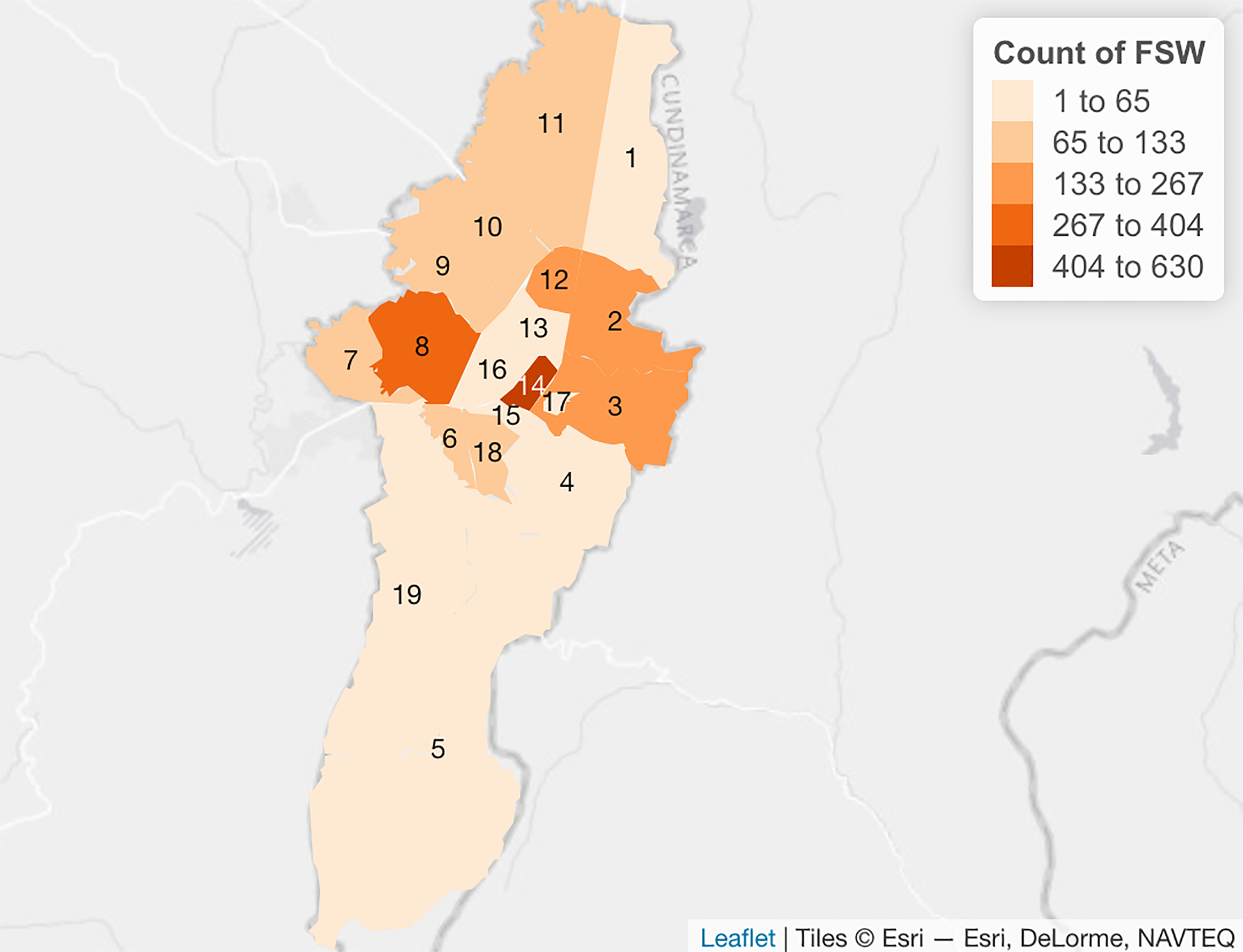
Count of FSWs interviewed per municipality.
Figure 1 shows that the zoning strategy, which delimited six municipalities where this activity could be realized, has not been very successful in its purpose of isolating sex work in the city. This may be due to many reasons. For example, Weitzer (2014) found that in Europe, the success of the zoning strategy depends on multistakeholder actions that guarantee constant supervision. Missing supervision may have a role to play in Bogota as well.
A limitation of the data is something to note here; the location where each sex worker was interviewed may not be the only place she works. In the case of identifying those sex workers who operate outside of the tolerance zone, this is not an issue, however, when tying victimization to working in the tolerance zone, it is possible that those interviewed in Mártires worked outside of it as well. It is not clear either if the place where the particiapnt was found conicided with the place where she was victimised. However, on the whole, there is still no support for any link between tolerance zones and increased safety.
These results may be related to the argument that such zones may facilitate stigma. Some argue that the Colombian Constitutional Court ruling that legalizes sex work frames tolerance zones as a way to avoid places where sex work occurs (Sentencia T-620/1995, 1995). 3 This definition assumes sex work is an undesirable epidemic that must be contained (Asdrúbal Ávila, 2016; Nieto Olivar, 2010). It is possible that these strategies further stigmatize FSWs by relegating them to places that might put them more at risk of violence. The interrelation between the macrostructural legal mandate to isolate and contain these zones may interrelate with the stigmatization of FSWs in Colombia. In fact, we find that self-reported experience with such stigma is positively associated with victimization.
One reason why stigma against FSWs persists in Bogotá could be attributed to gender expectations derived from machismo (Cepeda & Nowotny, 2014; Giraldo, 1972). Machismo is a cultural imaginary present in Latin America that encourages the performance of exaggerated masculinity in men, which has been associated with not only higher rates of violence against women but a justification to excuse it (Giraldo, 1972). According to the results of this study, feeling stigmatized seems to be the strongest predictor of client-perpetrated violence and police harassment. This social stigma could also be contributing to FSWs in Bogotá being exponentially more vulnerable to violence than other women in this city. The female counterpart of machismo is marianismo (Cepeda and Nowotny, 2014). Deriving from the Virgin Mary, marianismo sees women as the embodiment of purity and virtue. This concept also encourages women to stay taking care of the home and children while the husband works. Because of this, through the codes of machismo and marianismo, FSWs could represent a gender nonconforming group, as women who not only use their sexuality as a means of income but also leave the home at night to work, and as such violence against this group could be seen as a justifiable action because of their behavior.
Another interesting finding is that despite the media reports about the difficult working conditions of Venezuelan sex workers in Colombia (Chacón, 2018; Restrepo, 2018), migration both from Venezuela and from other parts of Colombia to Bogotá seemed to be negatively associated with victimization in almost all cases. This reflects international findings, such as Choi (2011) who found that migrant sex workers in Macau experienced less client-perpetrated violence because they worked more inside and Mainland Chinese worked more on the streets. In this sample, while 34% of Venezuelans work inside the tolerance zone, 18% of Colombian do so. Inversely, while 33% of Colombians reported contacting clients on the street, only 13% of Venezuelans reported doing so. Another reason that explains why migration could be a protective factor is because of the National government's strategy to regulate the working status of Venezuelans in Colombia (Documento Conpes 3950: Estrategia Para La Atención de La Migración Desde Venezuela, 2018). Contrary to immigration agents in other countries whose primary job is to find and detain irregular migrants, more so if they are sex workers, agents of the Colombian Migration Agency along with municipal workers in Bogotá are tasked to approach Venezuelan sex workers and inform them of the procedure to legalize their status in the country. Also, as part of the strategy to assist migrants from Venezuela, FSWs are given information sessions on how to access healthcare, and psychosocial and legal support (Barreta, 2018). In a structural decision by the Colombian government that favors migrant assistance over border security, the macrostructural factor of migration along with the fact that Venezuelans provide services in safer spaces and speak the same language as Colombians may provide a protective effect on the risks that could arise from being a migrant sex worker in Bogotá.
The results of this study may also help dispel myths about Venezuelans doing paid sexual activity in Colombia, which include that they charge much less than Colombian sex workers and that they are making it difficult for Colombian FSWs to compete (Chacón, 2018; Restrepo, 2018). As Table 1 shows, the mean payment per service is the same for both groups of( COP 50,000 ($16 USD) ). In fact, Venezuelans have a higher median (COP 50,000 vs. COP 37,000 per customer) and the highestearning sex worker in the sample is from Venezuela and earns on average 800,000 COP ($271 USD) per service. Reports that Venezuelan sex workers in Bogotá have worse working conditions could be an overrepresentation and homogenization of the conditions of this population. This said it should also be noted that this study did not include the voices of those persons who are being exploited in the sex industry and cannot express it.
Although there is evidence in this sample that many sex workers encounter violence, exploitation, and discrimination, most of the persons who were interviewed in this study were not being coerced, or their freedom of movement was limited at the moment of the interview or 24 months prior to it. This means that the sample does not include most of the reported cases of Venezuelans and Colombians that are victims of human trafficking for the purpose of sexual exploitation in Bogotá. While this was not the purpose of this study or the characterization survey where the data comes from, we suggest further work to explore this area and the differences between Colombian and Venezuelan sex workers. This distinction should be made because migrant sex work and sexual exploitation are often grouped into the same category, which may produce misrepresentations of both very distinct experiences. With regard to Venezuelans doing paid sex in Bogotá, it can be concluded that based on the responses from 802 women of this nationality, their trajectories are not much different from their Colombian peers. Despite being Colombians or Venezuelans, almost 40% of the sample felt that they were discriminated against by their community because of the work that they did.
This said, it is possible that a desirability bias may also explain the lower numbers of Venezuelan migrants reporting client-perpetrated violence. Being foreign, Venezuelans may feel less comfortable than local sex workers in reporting negative experiences to interviewers that they consider may work for the authorities. Cultural differences in interpreting what violence entails between groups of Venezuelans and Colombians are unlikely to explain why Venezuelans report less victimization than Colombians because of the geographic and cultural closeness between both countries. However, it should be noted that what constitutes violence does vary from sex worker to sex worker, making this a limitation for quantitative studies on violence against sex workers. Since quantitative data may not be reliable to better understand these differences in interpretations of violence, qualitative research on this subject is highly recommended.
Relatedly, police harassment was also positively associated with victimization. This finding corresponds with a study on Vancouver's brothels, which found that macrostructural determinants such as policing practices derived from criminalization and licensing requirements that targeted brothels contributed to increasing sex workers’ risk of violence (Anderson et al., 2015). It also corresponds with reports such as the case of the 15 sex workers who were detained in the municipality of Santa Fe, which also had one of the highest rates of client-perpetrated violence in Bogotá. The case of the 15 sex workers demonstrates how the Code of Police was used to bypass decriminalization and justify detaining sex workers. Since city-specific legislation on zoning and times where sex work can be done is vague, police are free to interpret the 42nd article of the Code freely which can result in increasing police harassment against this population. As this case shows, decriminalizing sex work is not enough in procuring the rights of sex workers as there may be conflicting legislation that could be used to harass and further stigmatize this population.
Finally, considering environmental factors associated with situational elements of working activities of FSWs, we did not so clearly find the difference between indoor and outdoor work and victimization such as in previous research. Instead, we find that certain types of indoor locations may actually be associated with increased victimization. For example, while we did find on-street work positively associated with victimization, we found the same for working in hotels/motels. This could be related to hotels/motels sharing more environmental characteristics with “outdoor” locations than “indoor” locations as conceptualized in previous work. Or the difference in victimization may be a result of where our data comes from. Outdoor crimes are seen by more, and so have a high impact and higher reporting, whereas indoor crimes are the opposite (Felson & Eckert, 2017), but since we have self-report data, we may gain insight into the “indoor” victimizations just as much. Future work should explore more specifically the situational factors associated with victimization in these types of locations to better understand the mechanism behind this and consider situational intervention measures such as the safety features of the brothels (Brents & Hausbeck, 2001). Although unlike Cunningham et al., (2017) and (Alschech et al., 2020), we do not find support here for the protective nature of contacting clients online, we did find that contacting clients on the phone was a protective factor for sexual violence confirming. However, we note that our study is observational and associational, and further work should explore this more.
Conclusions
This article explored the extent of client-perpetrated violence against FSWs in Bogotá and its associated factors. It developed statistical models to better understand the interaction between macrostructural and community-level factors such as legislation, migration, social stigma, and police harassment as factors that might contribute to explaining why this violence occurs. It also tested associations with workplace environmental factors such as how FSWs contacted their customers and where they provided their services. Individual factors such as age, age when started sex work, and drinking habits were also included in the models to understand how the interrelation of these determinants can impact workplace safety.
Our study found that, despite the high prevalence of violence against sex workers, sex work is not a risk in itself, but the dynamic interplay of macrostructural, community and environmental factors with interpersonal and individual ones generate structural determinants that can increase the risk or protect FSWs from violence. In the case of the 2,684 women in Bogotá, the judicial decisions that guarantee sex workers’ rights in Colombia could be interpreted as a macrostructural protective factor against violence, yet the language in them may perpetuate a feeling of stigma, which we found to be positively associated with victimization.
This study also found that despite the legal model of decriminalized tolerance zones, violence may persist in these. Overall, zoning strategies could be beneficial when managed as a multistakeholder initiative in specific areas of the city, but when used to marginalize sex workers, they may have adverse effects in reducing levels of violence against this population or no effect at all. Instead, a multiagency approach, which also aims to challenge patriarchal structures may be a way of generating the structural changes that are needed to tackle ideas derived from interpretations of gender such as machismo and marianismo.
Validating sex work as a legitimate form of labor is another strategy that can challenge the stigma associated with those who procure this service, which as this study finds, had a high positive association with self-reported victimization. It is also crucial to acknowledge the heterogenous experiences of sex workers and allowing for the possibility that some chose to do sex work over other income-generating activities and should have the right to do so in a safe environment. This environment can be created by generating transformations inside the economic, legal, and cultural structures that foster the stigmatization and justify violence against sex workers.
Like many other regions, we find that contacting clients and working on the street is associated with increased victimization, but also working in hotels, motels, and brothels, which indicates there should be a more nuanced exploration of the venues where FSWs work, to identify situational and environmental correlates of victimization.
Overall, we have only begun to grasp the complexities of the victimization of FSWs in Colombia. Our study serves to lay the groundwork for and promote further understanding and exploration of the distinct patterns of violence against women in Latin America and builds evidence for both situational and structural interventions to reduce victimization in such contexts.
Footnotes
Declaration of Conflicting Interests
The author(s) declared no potential conflicts of interest with respect to the research, authorship, and/or publication of this article.
Funding
The author(s) received no financial support for the research, authorship, and/or publication of this article.
