




Abstract
Post-separation for domestic violence (DV) survivors is known to be a period of heightened risk of domestic homicide. Evidence points to increased rates of DV during the Covid-19 pandemic, with specific challenges in help-seeking from DV services, yet studies that capture this qualitatively are still emerging. This UK study investigated the experiences of 21 separated DV survivors (all women) during the Covid-19 pandemic. Inductive, thematic analysis highlighted participants’ psychological distress, isolation, fear of Covid-19 transmission, and detachment from support networks. The findings reflect the interconnected nature of adversities experienced by DV survivors and the exacerbation of these due to the insidious, multifaceted, and synergistic impacts of DV and the pandemic.
Background
Domestic violence (DV) is characterized as any occurrence or pattern of behavioral control, violence, or abuse, experienced by those who are or have been intimate partners or family members (United Nations, 2021). This may include, but is not limited to, physical, emotional, psychological, sexual, and financial abuse. Abuse conducted by an intimate partner or former partner is defined as intimate partner violence (IPV) (World Health Organization [WHO], 2021), often used synonymously with the term interpersonal violence. For the year ending March 2020, the Crime Survey for England and Wales determined that women were significantly more likely than men to be victims of DV with a respective prevalence rate of 8.1% versus 4.0% (Office for National Statistics [ONS], 2020). The ONS survey reported that the victim was female in 74% of DV-related crimes. The WHO (2021) estimated that globally, 27% of women aged 15–49 years have suffered physical and/or sexual IPV at least once in their lifetime.
The commonality of female victimization can be attributed to the interactions of interpersonal and structural factors reinforced by institutionalized power relations between women and men (McFeely, 2014). While heterosexual cisgender women are the largest group victimized by DV, emphasis on female victims and male perpetrators incorrectly portrays DV as a heterosexual issue (Donovan & Barnes, 2017). Promoting a heteronormative narrative minimizes the diversity of abusive experiences. The discourse surrounding DV must acknowledge the intersectional nature of abusive experiences, shaped by individual, familial, and sociocultural factors influencing one's access to resources and decision making (Barrios et al., 2020). Reference to abused individuals as “victims” perpetuates stigmatization, depicting individuals as helpless (Dunn, 2005). Use of the term “survivor” reduces such connotations and instils a sense of empowerment. In this paper, we use the term “survivor” with reference to survivors of DV.
Individuals confined within abusive relationships are often criticized for delaying separation or opting to remain with their partner (Storer et al., 2018). The perception of separation as an indisputable route to safety is somewhat skewed. Separation may decrease the incidence of abuse, improve mental health, and enable financial independence; however, this experience is not generalizable to all survivors (Estrellado & Loh, 2016). Separation does not ensure the cessation of abuse and is recognized as a risk factor for intimate partner homicide (Abrunhosa et al., 2020; Zeoli et al., 2013). Forty-one percent (37/ 91) of women killed by a male partner in the United Kingdom in 2018 had separated or initiated separation at the time (Femicide Census, 2018). The risk of post-separation abuse (PSA) is perpetuated by the incidence of pre-separation abuse; individual factors include income, psychotic disorders, substance abuse, and accessibility permitted by residential proximity, custodial arrangements, and court proceedings (Brownridge, 2006; Douglas, 2018). PSA may include harassment, intimidation, stalking, and physical and emotional abuse. Stalking is defined as an intentional pattern of intrusive behavior generating anxiety (Logan & Walker, 2016). Acts of PSA masquerading as demonstrations of romance, remorse, or reconciliation are identified as the “charm offensive” (Humphreys & Thiara, 2003). Technology-facilitated abuse refers to PSA conducted in the form of surveillance, repeated calling, or texting (Brown et al., 2021; Markwick et al., 2019). Perpetrators may continue victimization through legal platforms, and this is termed “paper abuse” (Miller & Smolter, 2011).
Levels of depression, anxiety, and post-traumatic stress disorder (PTSD) are elevated among survivors (Chandan et al., 2019; Ferrari et al., 2016). Additionally, lingering feelings of attachment and loss of the wife-mother role contribute to a sense of identity disruption (Estrellado & Loh, 2016). Degradation of self-esteem and detachment from support networks cause reduced self-efficacy and loneliness (Lin-Roark et al., 2015). Women may assume the role of single parent and economic provider generating concerns regarding economic stability, altered parenting responsibilities, and child welfare (Anderson & Saunders, 2003; King et al., 2017). Loss of economic resources following separation and the consequences of previous economic abuse may exacerbate economic instability and psychological distress (King et al., 2017). Psychological response to the aforementioned stressors is variable. Sufficient availability of coping resources can improve separation outcomes for survivors; coping resources include self-efficacy, material resources, and structural and interpersonal support (Sauber & O’Brien, 2017).
Global reports indicate an upsurge of DV following the Coronavirus disease 2019 (Covid-19) outbreak (van Gelder et al., 2020). This upsurge is attributed to the exacerbation of DV risk factors, proximity, psychological distress, economic instability, and depletion of social networks (Bradbury-Jones & Isham, 2020; Van Gelder et al., 2020). There has been a paucity of literature examining the experiences of survivors during the pandemic, although empirical findings are beginning to emerge. In the quantitative analysis by van Gelder et al. (2021), an online survey was conducted to assess the impacts of Covid-19 on DV survivors. Participants evoked concerns regarding health, safety, financial instability, and access to resources. The small sample size of 53 limits the ability to extrapolate results to a larger group (Wood et al., 2021). A recent review by Brooks et al. (2020) identified the psychological consequences of quarantine addressing anxiety, depression, and PTSD. Sabri et al. (2020) conducted qualitative research with unseparated immigrant survivors during Covid-19. Participants experienced detachment from community support, restricted provision of DV services, and ineffective virtual adaptations. Bracewell et al. (2020) reported on stalking victimization during Covid-19, utilizing existing literature and semi-structured interviews with survivors and practitioners. Results demonstrated increased vulnerability of survivors and continuation of stalking behavior. Ravi et al. (2021) conducted a qualitative study evaluating survivors’ experiences during Covid-19. Participants discussed positive and negative aspects of isolation, varying experiences of support and the escalation of abuse, mental health issues, and adverse life circumstances. Existing literature advocates for further research regarding the specific needs of DV survivors, the impact of Covid-19, the continuation of stalking, and the development of culturally tailored care (Bracewell et al., 2020; Ravi et al., 2021; Sabri et al., 2020; Wood et al., 2021). Ravi et al. (2021) call for future studies examining the impact of IPV and Covid-19 on children and the impact of public health emergencies on survivors and their role as caregivers. At present, qualitative studies reviewing survivors’ experiences during Covid-19 are just emerging. Moreover, the studies that explore this from the perspective of post-separation survivors are missing. Insights are predominantly from non-empirical sources, such as the editorial by Bradbury-Jones and Nikupeteri (2021). This study therefore addresses a research and literary gap, aiming to direct a spotlight on the experiences of this group of DV survivors.
Method
Research Design
A qualitative study was conducted and reported here, in alignment with COREQ guidelines (Tong et al., 2007). This study was a part of a larger, mixed-methods evaluation of a DV intervention in the United Kingdom. The qualitative component answered questions about the intervention itself, but we also had ethical permissions to ask the participants about their experiences in the context of the pandemic. The aim was to understand the experiences of separated DV survivors during the Covid-19 pandemic. Data were collected via 21 semi-structured, qualitative telephone interviews. The interviews were conducted by two female members of the research team (CB-J and SZ).
Sampling and Recruitment
The study was conducted within the West Midlands, a large urban conurbation in the United Kingdom. This is also the geographical location of the study team. Participants were recruited using purposive sampling. Purposive sampling requires the identification of information rich cases with potential to provide relevant and diverse data pertinent to the research questions (Braun & Clarke, 2013). The potentially sensitive nature of the subject necessitated careful participant selection, hence the suitability of purposive sampling (Merriam & Tisdell, 2015). Recruitment was through an advocate educator (AE) who was employed as a part of DV support service that all women had accessed. An AE is a specialist DV worker, situated in a local DV service and trained to provide emotional and practical support for patients who have DV experiences (IRIS, 2018). The role of an AE in our study enabled the identification and recruitment of participants based on the criteria detailed in Table 1.
Inclusion and Exclusion Criteria.
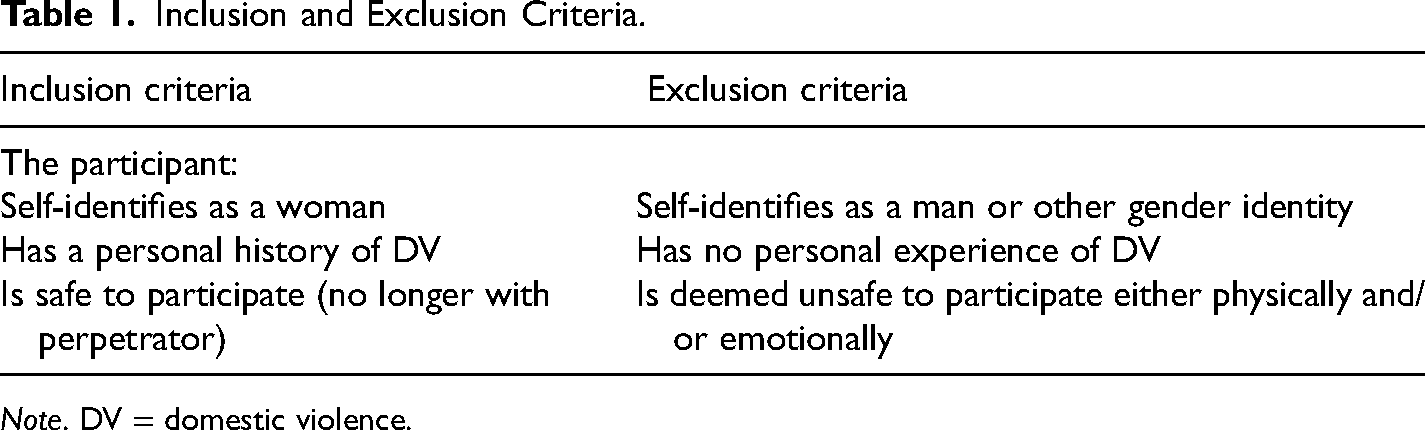
Note. DV = domestic violence.
All women identified by the AE as potential participants were provided with an information leaflet and consent form. The information leaflet outlined the rationale behind the study, the selection criteria, the participant role, the withdrawal process, the research process, and the subsequent use of collected data. Women who expressed interest in participation completed the consent form and provided the AE with personal contact details, which were forwarded to the research team. Recruitment was conducted to the point of data saturation, whereby responses were repetitive and new insights were not forthcoming; this was evident within the transcripts and confirmed by the research team (Patton, 2014). Twenty-one participants were recruited. Participants were able to withdraw from the study and remove their data at any point prior to two weeks post-interview. No women withdrew from the study. Credentials, role, and contact details of the research team were provided within the information leaflet. Women were able to contact the researchers at any point with questions or concerns; no contact was made between the research team and participants following interviews.
Data Collection
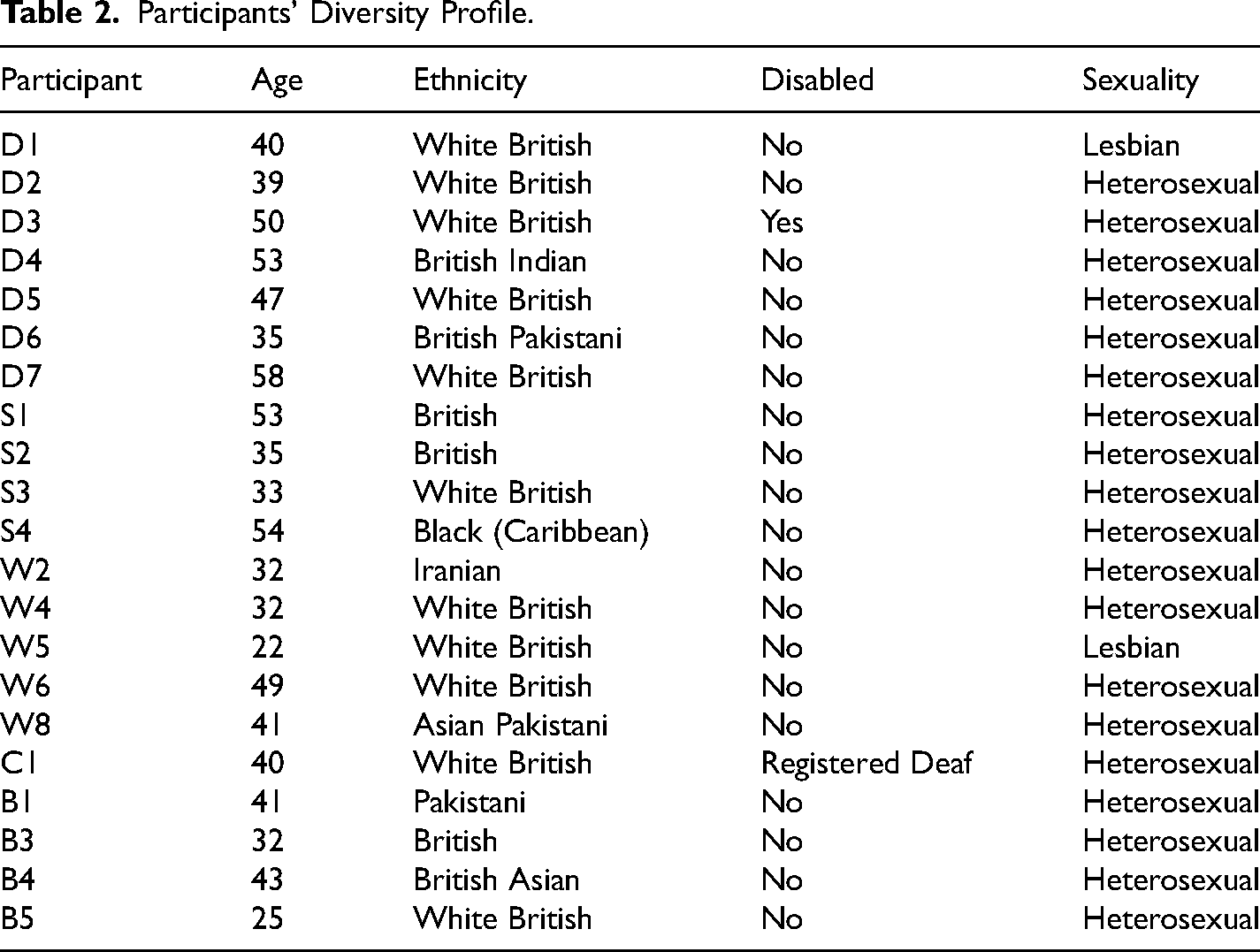
Qualitative, semi-structured telephone interviews were all audio-recorded. Participants were asked to reflect on their experiences of accessing support for DV in the context of the pandemic. The interviews included prompt questions that were used reflexively to explore the impacts of lockdowns and isolation in the pandemic. Individual interviews were conducted to create a comfortable environment for sensitive conversation. Interviewers had no prior relationship with the participants but were able to build rapport, maintain respect, and establish an atmosphere of comfort, security, and equity, thus facilitating open discussion (Saldana, 2015). Field notes were taken by interviewers to maintain contextual detail for the purpose of analysis and interpretation (Tong et al., 2007). Participants were interviewed on one occasion each between June and July 2020 following a topic guide (which was not pilot tested). Interviews were undertaken in English with the exception of one interview in Urdu. Audio-recorded interviews conducted in English were transcribed verbatim by a professional transcription service registered with the University of Birmingham as a supplier. The Urdu recording was translated and transcribed verbatim into English by an Urdu speaking member of the research team (SZ). The interviews were between 15 and 60 min duration. To capture the diversity of our sample, demographic information was obtained verbally as presented in Table 2. We did not collect extensive demographic information because we did not want to risk participants feeling exposed and/or threatened. However, during the interviews, participants shared information about their lives and families that helped to augment the demographic profile. For example, the women had varied timelines post-separation, with some having been separated for several years, but for most, the separation was within the past two years. Almost all participants reported that they were in a current relationship with someone other than the person who had perpetrated the DV and all but one, were parents. We could not elicit a clear impression of whether participants had all engaged with DV services before the onset of the pandemic. We do know, however, that for several women who took part, access to DV services had been long term and repeated, reflecting the nature of DV itself.
Participants’ Diversity Profile.
Data Analysis
We used the six-step process of Braun and Clarke (2013) to thematically analyze the anonymized transcripts and generate the findings. Inductive thematic analysis is a flexible analytical technique, generating a detailed yet critical interpretation of data, beneficial for the examination of different participant perspectives thus applicable to our varied sample (Braun & Clarke, 2013). One study team member (RD) undertook the initial analysis using NVIVO12. The analytic process began with familiarization (Braun & Clarke, 2013). Familiarization was achieved by repeatedly reading the transcripts. Transcripts were imported and coded according to Saldana's two-cycle process, categorizing, and integrating data as an initial form of analysis (Saldana, 2015). Reflections regarding coding choices and emergent patterns were documented under the memo function of NVIVO12. The first author (RD) identified initial codes, which were reviewed and discussed with another team member (CBJ). Coding was performed with an iterative approach. Iterative cycles involved discussion of codes and techniques of constant comparison, whereby interpretations were compared with raw data to assess the consistency and accuracy of codes, thus contributing to the validity of data (Patton, 2014). Coding and analysis were conducted simultaneously to develop concepts and explore interconnections. Research credibility was enhanced by investigator triangulation performed by SZ, confirming the validity of defined themes and introducing innovative perspectives (Nowell et al., 2017). To achieve dependability and confirmability, an audit trail was established, comprising notes taken under the memo function of NVIVO12 and the lead author's use of a reflexive journal. The journal was utilized as a reflexive aide utilized by RD to document her potential influence on the research process and on the study findings, thus enhancing the chance of achieving credibility (Tong et al., 2007).
Ethics
This study is based on the analysis of primary data for which ethical approval was provided by the University of Birmingham (Reference ERN_18-1242). Consent: Oral consent was obtained from participants; this was recorded at the beginning of each interview. This was translated by the Urdu speaking team member [SZ] for the single Urdu speaking participant. Confidentiality: Participants were numerically coded by SZ, thereby anonymizing participants and maintaining confidentiality. Transcripts were provided in an anonymized format, redacting information by which the participant may be identified. Data protection: Interview recordings and transcription documents were stored on an encrypted hard drive and uploaded to a password protected account. Printed copies of the transcripts were shredded following analysis.
Findings
Concepts identified within the data were organized thematically and were combined, separated, or discarded entirely before the five finalized themes were confirmed as: “mental health impacts,” “financial precariousness,” “access to services,” “post-separation parenting,” and “intersecting impacts.”
Mental Health Impacts
This theme reviews the psychological consequences experienced by survivors brought about by the abuse itself and how these were exacerbated by Covid-19. Sixteen participants reported detriment to their psychological wellbeing. Experience of PTSD was reported by five participants. Flashbacks reignited experiences of past abuse and were triggered by sudden noises. Nightmares disturbed sleeping patterns thus disrupting daily life. Fourteen participants suffered with anxiety. Safety concerns and child welfare were identified as predominant sources of anxiety. Eleven participants reported depressive behaviors associated with isolation from support networks, degradation of self-esteem, and lack of self-care. Four of the 11 acknowledged previous suicidal ideation and suicide attempts. The overwhelming fear is that my children would be taken into care. (Participant B4)
I couldn’t function, my day would consume of just literally staying in my room, sometimes I would have a panic attack going outside. (Participant W8)
I suffer from anxiety, and that's just something that's recent and, like the times where he'll threaten, or if I think that he's going to turn up somewhere. (Participant D4)
Participants acknowledged the predominant causes of psychological distress: past IPV, separation, Covid-19 transmission, financial instability, child welfare, the loss of child custody, impeded access to services, reduced interpersonal support, and the threat or occurrence PSA. Covid-19 aggravated existing causes of psychological distress; this is addressed in other themes. Covid-19 introduced additional sources of anxiety regarding viral transmission, health concerns, safety concerns, and negative information within the news and media. Anxiety resulted in insomnia for some participants and caused strain on their appetite, thus adding to the decline of personal wellbeing. I'm worried about the vulnerable people in my life … I’m constantly worried when I when I'm out. I'm worrying, in case I pick it up and pass it on. (Participant D1)
I struggle listening to news, it does affect me in a lot of aspects when you sit there and you visualise your own life – how it was, and then you put the lockdown together. (Participant D6)
Since the lockdown has eased, it's made me weary and some days I’ll go to leave the house and I physically cannot even open the front door. (Participant W4)
Fifteen participants reported degradation of self-esteem associated with past DV. Lowered self-esteem disrupted participants’ self-efficacy by reducing their ability to make decisions, assert themselves, or acknowledge their needs to facilitate personal development. This perpetuated a decline in psychological wellbeing. I’m still finding myself second guessing and struggling to make decisions for myself because all that was taken away from me. (Participant S1)
Loneliness was reported by five participants. Causes for loneliness were identified as separation, loss of child custody, and detachment from informal support networks (friends and family). Participants appeared to mourn the loss of their role as a partner and feared they were unprotected or unable to secure future companionship. Participants acknowledged that separation was the correct decision; however, their emotions were complexified due to the influence of residual affection for their former partner. Covid-19 restrictions minimized access to formal and informal support networks, relegating interactions to technological formats. Loneliness was, therefore, intensified by isolation. It [lockdown] was absolutely horrendous. I was working from home, I wasn’t seeing anybody …I had my friends by the phone … but I’d just come out of a relationship where I had somebody here all the time…suddenly not having anybody there…. There were times when I just sat and cried, because I was so lonely. (Participant S4)
One participant identified as a non-English speaking spouse from overseas of a British citizen, experienced an intensified feeling of loneliness due to separation, isolation from overseas support networks, and inability to develop further support networks within the United Kingdom due to the enforced Covid-19 restrictions. I am not safe at all. I do not have my parents or my siblings here, then I would have had their support … I have no one other than my three children. (Participant B1)
Financial Precariousness
Eight participants reported the experience of financial instability. Sources of financial instability included economic abuse, gambling, and loss of secondary household income. The consequences of financial instability were identified as inability to afford basic necessities, relocation, inability to finance legal support, and increased burden of financial responsibility. Relocation distanced survivors from formal and informal support networks and contributed to the sense of identity disruption and isolation. Inability to finance legal support disadvantaged one survivor as she was forced to represent herself in court, leading to an undesirable outcome. All eight survivors experienced mental health difficulties. Loss of productivity was described by one participant as a result of psychological trauma, illustrating the causal and consequential relationship between financial instability and psychological trauma. Financial instability was triggered or aggravated by Covid-19, furthering psychological distress. Covid-19 disrupted employment opportunities for certain participants. Participants stated that the onset of national lockdown increased the demand for unpaid work. Unpaid work included childcare, cooking, cleaning, and home-schooling. Limited childcare facilities due to Covid-19 restrictions caused concern as some participants were unable to work from home and could not afford to take time off. I want to study, to further my career, I want a secure future for my children and I have to do that by myself, it's really tough to be on your own with children. (Participant D2)
I was in a lot of financial debt because of the relationship, I never had money because she was very dependent on me. (Participant S4)
My husband had left me with £200 in my account, I had nothing. I couldn't afford to get a solicitor. So, I represented myself in court, we didn’t have the correct representation. (Participant D4)
Access to Services
Eleven participants addressed the adaptation of DV services in response to Covid-19 and the subsequent impact on access and quality of care. Individuals appreciated the ongoing support but felt that telephone conversations restricted communication with service providers. One participant was hesitant to seek support during the pandemic, unable to discuss personal trauma with a person she had never seen, exemplifying the importance of a client-advocate relationship. I had therapy on the phone but I wasn’t comfortable talking to someone I’ve never seen and spoken to so I wasn’t really getting anywhere with that. (Participant W8)
We have phone calls every now and again … we don’t have long chats because it's harder over the phone … we don’t have contact now because of Covid-19. (Participant W5)
Participants faced difficulty contacting medical professionals due to the extended telephone queues resulting from Covid-19 adjustments. Inability to contact healthcare professionals was recognized as a further source of anxiety and a deterrent of care-seeking. It takes me a lot of time to get myself together to make a phone call…trying to make an appointment with the GP is a struggle some days. (Participant W8)
One Urdu-speaking participant stated that language barriers impeded her communication with healthcare professionals, legal services and DV specialists. Her efforts to learn English were disrupted by Covid-19. Disrupted communication with service providers exacerbated anxiety, hindered recovery, and prolonged inconvenience. The participant was identified as spouse from overseas of a British citizen. Unfamiliarity with the healthcare system further impeded access to services. Due to Covid-19 everyone is working from home and nothing is open. I am unable to learn English…. Everywhere I go it is causing me a problem. (Participant B1)
Conversely, one participant was unable to disclose her experiences in person or over video call due to self-consciousness and therefore benefitted from telephone counseling. Because I'm a very self-conscious person in every respect and I actually found it better …I could express better without them seeing me. (Participant D1)
Post-Separation Parenting
This theme addresses survivors’ experiences and perceptions of post-separation parenting and how this was impacted by Covid-19. Three participants stated that their parenting abilities had improved following separation as they were no longer undermined by their former partner and able to parent according to their will, bettering the mother–child relationship. Sixteen participants expressed concerns regarding the wellbeing of their children, and this was identified as a cause of anxiety. Sources of concern were identified as interactions between child and abuser; the prospect of losing custody battles with abusive fathers; and the risk of children being taken by social services. Three mothers expressed guilt stating that they had failed their children and were poor role models. Guilt was associated with the involvement of child services and failure to separate at an earlier date, thus prolonging children's exposure to the abuser. Participants acknowledged the limited availability of childcare services due to Covid-19 and the subsequently increased burden of unpaid care work. However, five mothers valued the lockdown as they were able to devote quality time to their family and strengthen relationships. One participant used the additional time to educate her children regarding the subject of abuse. During discussions, her children were able to disclose previous DV, allowing both mother and child to heal personal trauma. I am now the parent I want to be rather than the parent I was forced to be. (Participant B4)
Covid-19 has been the biggest blessing in my life…I can educate the children. We talk about what feels right and wrong… they are telling me things that happened to them, my eldest is angry with me because he thinks I didn’t protect him. (Participant B4)
Intersecting Impacts
Perpetrators showcased adaptive and persistent strategies to conduct PSA. Women experienced anxiety regarding personal safety and safety of their children. Stalking behaviors were reported by four participants. This included technology-facilitated abuse. Perpetrators were aware that participants were in constant possession of their mobile phones, thus enabling abuse in an effortless, instantaneous, and repetitive format. One participant's daughter received a disturbing call from the perpetrator recalling past events of abuse in intense detail, causing her significant distress. This exemplifies technology-facilitated abuse and the use of children to facilitate post-separation contact. The participant goes on to discuss repeated phone calls and text messages from the perpetrator, requiring her to block his phone number. My daughter had a troubling phone call because, on the one occasion he couldn’t get hold of me, he phoned her up and he was absolutely paralytic. (Participant S1)
Because he came around, he was ringing … I’ve blocked him on everything … I didn’t realise I had to block him off certain things, so I was still getting messages- but now I’ve blocked him off everything. (Participant S1)
Legally enforced child contact arrangements provided consistent vulnerability to PSA. This was reported by five participants. The first quote below articulates the paradoxical post-separation position occupied by mothers, whereby child contact necessitates the unmonitored presence of an abuser. Mothers expressed internal conflict between the desire to protect their children and the importance of a paternal relationship. For this reason, many women were unable to sever contact with their abuser. The court order says I must ensure that they [their children] can have contact with him … he just doesn’t know how to parent … it's controlling behaviour, they are his possession. That makes them feel uneasy, they’ve all got anxiety. (Participant B4)
If he left us alone, I’d be getting over him by now, but it's like he doesn’t want us to forget. (Participant D7)
What do I do, let an abuser see his [non-biological] son, or do I get him out of his life all together? I decided that I wasn’t going to allow it because I don’t think he's a good role model but I felt I was robbing him of father. (Participant D2)
Stalking behaviors and acts of PSA often masquerade as demonstrations of romance (Humphreys & Thiara, 2003). This is identified as the “charm offensive” and was reported by five participants. This is a form of coercion, as perpetrators’ intentions are concealed behind romantic or remorseful gestures. Participants reported attempts at reconciliation in the form of apologetic phone calls or text messages, gifts and promises of improved behavior. Due to the nature of the “charm offensive,” participants were unable to distinguish the actions as abusive causing confusion and perpetuating ambivalence. When I first changed the lock, he came around the back and got the baby to open the window and he was talking to me through the window saying, “…I love you … we can work this out, this hasn’t got to be the end.” And then all of a sudden, his face contorted, and he went, “well, it was over a long time ago, wasn’t it?” (Participant S1)
He's tried several times to reconcile saying that he's stopped drinking… he said he's changed, but when he doesn't get his way, he switches. (Participant D4)
Perpetrators conducted “paper abuse”; needlessly prolonging legal proceedings, filing frivolous lawsuits and making false accusations of child abuse (Miller & Smolter, 2011). Participants with children appeared particularly vulnerable to “paper abuse” as perpetrators repeatedly disputed custody arrangements and visitation rights. Two participants reported that abusers gathered evidence to create false allegations against their parenting abilities. This is recognized as custody stalking. Perpetrators utilise custodial proceedings as a vehicle for retaliation, aiming to restrict care time between mother and child, jeopardizing the relationship of mother with her child (Elizabeth, 2017). Participants argued that court systems had limited understanding of DV and were therefore utilized as a mechanism to prolong abuse. Participants expressed frustration, fear and anxiety caused by “paper abuse.” Covid-19 delayed legal proceedings, lengthening the emotionally taxing experience of “paper abuse.” My children's father has put in allegations to the court against me and has taken the children off me, temporarily … I’m going through court again. He's going for full custody - again. We just go back and forth through the court. (Participant S2)
Conversely, three participants expressed a feeling of safety during the national lockdown. Fears of PSA were partially alleviated as lockdown measures provided a sense of security. Perpetrator's actions were somewhat limited by government regulations, and neighbors were likely to be at home and could provide aid if necessary. Social distancing requirements provided additional security during legally enforced child contact arrangements. Lockdown, I felt a lot safer … I knew if he pulled up and started harassing me, everybody would probably be in their home, so I’d have help. (Participant S1)
The court order says that [their children] must have contact with him… [social] distance means that he's not doing the things that he used to …they feel safer. (Participant B4)
Discussion
This study captured the unique experiences of DV survivors during the pandemic. In line with this, researchers were able to identify aggravation or development of mental health conditions; financial instability; the complexities of post-separation parenting; impeded access to DV and medical services; and PSA. Participants reported increased levels of anxiety, depression, loneliness, and PTSD. Existing literature elucidates a causal connection between DV and severe emotional distress (Sauber & O’Brien, 2017). Data were collected from 147 female survivors of IPV. Psychological, physical, and economic abuse were predictive of PTSD and depression. The causal mechanism between IPV and psychological detriment can be rationalized by the Conservation of Resources (COR) theory (Hobfoll, 1989). This theory postulates that traumatic events influence psychological health by means of resource loss. Resources include interpersonal support, financial means, and work-related assets. Survivors are at increased risk of resource loss as abusers may disconnect survivors from financial resources and interpersonal support. This is concurrent with the results of our study as participants listed the following stressors: financial instability, child welfare, the loss of child custody, impeded access to services, reduced interpersonal support, and the threat or occurrence PSA. Concerns regarding the destructive and unpredictable nature of Covid-19 perpetuated anxiety. In other studies, Covid-19 has been found to exacerbate financial instability, subsequently furthering distress (Nicola et al., 2020). This is reflected within our study findings.
Participants experienced reduced accessibility, quality, and, in some cases, effectiveness of care. This is consistent with the report by Gulati and Kelly (2020) identifying staffing constraints, redeployment of healthcare staff, and reduction of personal contact as consequences of Covid-19. Participants argued that communication was impaired during technology-facilitated consultations, thus lessening the patient–advocate relationship, reducing quality of care, and deterring help-seeking. This is consistent with recent literature reporting reduced effectiveness of technological adaptations and limited resources to engage in virtual services (Sabri et al., 2020). A worsened patient–advocate relationship may correspond to poor outcomes for survivors (Hughes, 2017). Conflicting evidence from Hassija and Gray (2011) supports videoconferencing as an effective platform to deliver support as survivors are less exposed to stigma; this was articulated by one participant. Participants expressed the feeling of loneliness, consequential to separation and intensified by isolation as documented by Goodman and Epstein (2020). Structural inequalities and institutional failures amplify the negative impact of loneliness for marginalized survivors (Goodman & Epstein, 2020). This is reflected within the account of a participant identified as a non-English-speaking, migrant woman of color; isolated from overseas support networks, and unable to secure support networks within the United Kingdom due to Covid-19 restrictions. Language barriers impaired communication with service providers, thus diminishing the effectiveness of care and impeding access to public health information. This reflects the insufficient distribution of translated healthcare resources and institutional failure to communicate effectively with migrant women of color (Barrios et al., 2020).
Findings elucidate the complexity of post-separation parenting acknowledging the coexistence of improved parenting techniques in the absence of an abuser and a sense of guilt associated with their children's exposure to abuse; this is consistent with recent literature (Fogarty et al., 2020). Exposure to or experience of abuse reaps numerous negative health consequences for children (Zeoli et al., 2013). Internal conflict regarding paternal involvement perpetuates anxiety as mothers fear the consequences of parent alienation (Holt, 2016). Literature documents the impact of DV on the mother–child relationship reporting the deterioration of communication and development of conflict (Katz, 2019). The amendment of relationships is regarded as an integral component of the post-separation period (Lapierre et al., 2017). This is reflected within our findings as participants utilized the lockdown period to devote quality time to their children and amend the mother–child relationship. This is reinforced by a recent qualitative study reviewing the impact of Covid-19 on family life, acknowledging strengthened family relationships (Evans et al., 2020).
Three women reported that quarantine measures offered an additional layer of protection from their abusers. This conflicts with existing literature and the accounts of other participants. Bracewell et al. (2020) rejects the notion that Covid-19 is a time where victims are less accessible to their stalkers. This concurs with the results of our study; PSA was reported by 11 participants. Participants experienced harassment, technology-facilitated stalking, “paper abuse,” and the “charm offensive.” Confinement within homes increases surveillance opportunities as survivors are more easily located (Bracewell et al., 2020). Loss of employment provides perpetrators with increased time to escalate their behaviors. Stalking behaviors include the sending of unwanted messages, repeated phone calls, surveillance, threats, and physical assault (Logan & Walker, 2016). Perpetrators employed what has been referred to as the “charm offensive” (Humphreys & Thiara, 2003). Cyclical patterns of abuse and remorseful or romantic gestures facilitate traumatic bonding, a psychological phenomenon whereby abused individuals develop a bond with their abuser. Traumatic bonds increase likelihood of adverse mental health outcomes, reduced self-esteem, reconciliation, and perpetuation of trans-generational cycles of abuse (Lin-Roark et al., 2015).
Bracewell et al. (2020) confirms the continuation of technology-facilitated abuse during lockdown. Technology-facilitated stalking allows perpetrators to conveniently maintain and escalate PSA, creating patterns of control that are psychologically harmful (Brown et al., 2021). Technology allows perpetrators to erode boundaries between public and private, thus creating a sense of omnipresence (Markwick et al., 2019). Nikupeteri (2016) analyzes the emotional experiences of Finnish women stalked by their former partners. Fear and insecurity were recorded as the predominant emotional experience. Mertin and Mohr (2001) report a significant and positive correlation between PSA, anxiety, depression, and PTSD, with participants in their study recounting experiences of “paper abuse” inflicting financial burden, power exertion, and forced contact. This is reflected in the findings of our study. Child contact arrangements facilitated the unmonitored presence of an abuser enhancing vulnerability to PSA, disrupting psychological recovery, and compromising parenting ability (Elizabeth, 2017). Limited awareness of PSA within legal systems facilitated the occurrence of “paper abuse.” Few participants acknowledged the continuation of abuse as PSA or sought professional aid to combat PSA. This indicates reduced professional and public recognition of PSA and subsequently decreased help-seeking behavior. Reduced recognition of PSA and inadequacy of structural support is affirmed within recent literature (Zeoli et al., 2013).
Implications
Existing literature documents the judicial tendency to minimize the impact of DV on mothers, regarding the perpetration of abuse as irrelevant to parenting (Zeoli et al., 2013); this is reinforced by our results. Judicial recognition of paper and technological abuse as a legitimate form of PSA is essential to enable prevention and management. Mandatory assessment is required to ascertain the risk of further abuse in the context of post-separation father–child interactions. Findings demonstrate the financial implications of DV, exacerbated by Covid-19. Financial, housing, occupational, and childcare support is paramount to fulfil long-term survivor needs. In response to the structural negligence of separated survivors, DV service providers must devise individualized safety plans targeted at incidents of PSA including risk stratification, de-escalation approaches, escape strategies, and partnership with support networks to promote long-term safety. DV service adaptation to Covid-19 was deemed less effective by participants. Services require formal evaluation and reformation to improve quality of care. Non-technological service adaptations are necessary for those with resource constraints or alternative preference. Service providers must acknowledge heterogeneity among survivors and ensure the provision of translated resources to combat institutionalized exclusion and deliver client-centered care.
Limitations and Future Research
The sample demographic was restricted to one region of the United Kingdom, and thus, the transferability of the study findings is limited by the context in which the study took place. Telephone interviews prevented the identification and analysis of paralinguistic features, perhaps reducing the quality of data. That said, it may be that more women participated because of the flexibility and accessibility of the remote form of data collection. The study sample was mainly heterosexual, mainly white-British, non-disabled women. Further research could utilize an intersectional analytic approach, acknowledging the heterogeneous experiences of survivors in terms of protected characteristics.
Conclusions
Financial instability, psychological distress, detachment from support networks, and PSA are associated with poor health and social outcomes for survivors (Anderson & Saunders, 2003). Emerging literature suggests that Covid-19 may exacerbate such issues, causing detriment to survivors. This study supports this developing body of knowledge. Survivors experienced deteriorated mental health, aggravated by concerns surrounding isolation and viral transmission. Covid-19 reduced employment opportunities and hindered career advancement, thereby aggravating or instigating financial strain. Participants addressed the complexity of post-separation parenting and expressed concerns regarding child welfare. Perpetrators showcased persistence and adaptation as PSA was conducted through stalking behaviors, technology-facilitated abuse, and “paper abuse.” Covid-19 reduced accessibility, quality, and effectiveness of DV and medical services, perpetuating psychological distress and elevating vulnerability to PSA. Our research acknowledges the interconnected sources of adversity experienced by survivors and the insidious multifaceted impact of Covid-19, making a valuable contribution to the literature in this emerging field and assisting the development of effective support.
Footnotes
Acknowledgments
The authors would like to thank the women who gave up their time to take part and to share their experiences.
Declaration of Conflicting Interests
The author(s) declared no potential conflicts of interest with respect to the research, authorship, and/or publication of this article.
Funding
The author(s) disclosed receipt of the following financial support for the research, authorship, and/or publication of this article: This work was supported by the West Midlands Violence Reduction Unit, UK (grant number: 579925),
