




Abstract
Given the potential for retraumatization among survivors of sexual violence engaged in research, we aimed to provide pertinent knowledge and exemplification of the integration of trauma-informed practice to research with survivors. Grounded in trauma-informed care, we discuss the need for trauma-informed research, drawing upon experiences and data from a longitudinal case-control study on sexual violence. Through trauma-informed research settings, we can improve research experiences for survivors of sexual violence, as demonstrated by positive experiences of participants in The THRIVE Study. By meeting the needs of survivors, researchers can increase participation while maximizing the research quality and advancement of research.
Introduction
Engagement of survivors of sexual violence in research is vital to continued progress toward understanding the acute and chronic impacts of sexual violence. Yet, survivors’ participation in research may warrant unique considerations, particularly given growth in understanding of the experiences of survivors of trauma in health care and as research participants in recent years (Campbell et al., 2010; Carlson et al., 2003; Cromer et al., 2006; Deprince & Freyd, 2004; Jaffe et al., 2015; Sikweyiya & Jewkes, 2012). This includes the increased understanding of the physiological and psychological ramifications of trauma throughout the lifespan, the needs of survivors following violence, and the potential for revictimization. At its core, research, medical, and public health services require iterative consideration for the safety and well-being of participants and patients, and the standard of beneficence to which researchers and practitioners are held should continue to be heightened as the understanding of the needs of participants and patients grows. With this in mind, practitioners have developed “trauma-informed care” (TIC) or “trauma-informed practice,” in which the experiences of patients are taken into consideration and adapted to, in order to account for the lasting impacts of trauma (Reeves, 2015). Integration of such practice in medical care and other support services allows for higher quality care and better health outcomes (Kelly & Garland, 2016; Reeves, 2015; Scheer & Poteat, 2018; Wilson et al., 2015). It is likewise necessary to reconsider the interactions of trauma survivors with research, and the obligation to undertake research that is trauma-informed. Resultingly, the aims of this paper are (a) to discuss the need for TIC in research interactions with survivors of trauma, and specifically survivors of sexual violence; (b) present and discuss the results of extensive trauma-informed protocol development and implementation (trauma-informed research [TIR]) for engaging survivors of sexual violence in research through the lens of The THRIVE Study, a biobehavioral study of survivors of acute sexual violence; and (c) present and discuss the results of an endline “Exit Survey” to evaluate the experience of participants with a history of sexual violence over their enrollment in The THRIVE Study.
Trauma and Sexual Violence Trauma
Individuals who experience traumatic events, including elder abuse, domestic violence, sexual abuse, ethnoviolence, and combat trauma, among others, may experience long-term adverse physical and psychological effects (Helms et al., 2012; Raja et al., 2015; Tansill et al., 2012; Thoits, 2010).
Survivors of trauma have more frequent interactions with health care systems due to the morbidities associated with trauma (Reeves, 2015). At each interaction with the health care system, trauma plays a role in an individual's engagement and experiences with health care, particularly in respect to the potential for retraumatization (Raja et al., 2015; Reeves, 2015). Retraumatization in this context is defined as “a process of reexperiencing traumatic stress as a result of a current situation that mirrors or replicates in some way the prior traumatic experiences (e.g., specific smells or other sensory input; interactions with others; response to one's surroundings or interpersonal context, such as feeling emotionally or physically trapped)” (Substance Abuse and Mental Health Services Administration [SAMHSA], 2014b, p. xviii). Fear of retraumatization may cause health care avoidance among survivors of trauma, and exacerbate negative psychological states associated with seeking care (Reeves, 2015).
In the United States, sexual violence continues to be a pervasive traumatic experience. According to the 2011 National Intimate Partner and Sexual Violence Survey, approximately 20% of U.S. women have experienced an attempted or completed rape within her lifetime. Far more- approximately 44%- experienced other forms of sexual violence, including sexual coercion and unwanted sexual contact (Breiding et al., 2014). In reality, these national statistics likely underestimate the true prevalence of sexual violence. Community samples report significantly higher rates, particularly for women of color (Basile et al., 2015, 2016; Cavanaugh et al., 2014; Draughon et al., 2014; Hazen & Soriano, 2007; Stockman et al., 2014). Young women are likewise at higher risk, with 40% of first rapes occurring before the age of 18, and 79% before the age of 25 (Breiding et al., 2014). Women with these experiences are also at high risk for repeat victimization, with research suggesting that two out of three individuals who experience sexual violence will be revictimized (Classen et al., 2005). Particularly at-risk populations include sexual minority men and women (López & Yeater, 2018; Walters et al., 2013) and trans or gender non-conforming individuals (James et al., 2016; Matsuzaka & Koch, 2018), who face increased rates of violence compared to their heterosexual and cisgender counterparts. While the burden of sexual violence among men in the United States is notably lower than among other groups, approximately 2% have experienced attempted or completed rape, and 23% have experienced non-rape sexual violence, with young men and racial and ethnic minority men at higher risk (Breiding et al., 2014).
People who have experienced trauma from sexual assault report significantly worse psychological and psychopathological outcomes compared to those without experiences of sexual assault, those without experiences of trauma, and those with experiences of non-sexual assault trauma (Dworkin et al., 2017). Such outcomes include worse post-traumatic stress disorder, depression, suicidal ideation and attempts, mood disorders, obsessive-compulsive conditions, and substance use disorders (Dworkin et al., 2017). Compounding this, the potential for retraumatization in the context of clinical care settings is of particular concern for survivors of sexual violence (Reeves, 2015). In health care and clinical research settings, in which survivors of violence may be asked to undergo physical examinations, including of the genitals, retraumatization can occur. Furthermore, the interpersonal dynamics of a physical exam may unknowingly employ similar tactics to those of an abuser, including being told to relax, or being made to feel restrained (Reeves, 2015). The potential for retraumatization is being increasingly, though insufficiently, addressed in clinical health care settings (Becker-Blease, 2017; Reeves, 2015).
TIC
Due to the adverse effects of trauma and potential for retraumatization, practitioners in recent years have begun to implement the principles of “TIC” or “trauma-informed practice.” TIC is derivative of Trauma Theory, which postulates that traumatic experiences that are not processed will manifest physiologically (van der Kolk, 1994). Physiological alterations may occur in response to stimuli both associated and unassociated with the original trauma and may be difficult to identify or anticipate (van der Kolk, 1994). Responsively, elements of a trauma-informed approach in health and social service systems have been defined by the SAMHSA. The SAMHSA guidelines include: (a) realizing the widespread impact of trauma exposure, (b) identifying how trauma may impact patients, families, and staff in this system, (c) responding by applying this knowledge into practice and institutional policies, and (d) preventing retraumatization (Center for Substance Abuse Treatment (US), 2014; SAMHSA, 2014a). These practices have been employed increasingly in recent years in clinical and support service contexts (Becker-Blease, 2017; Reeves, 2015), and contextually tailored frameworks to aid in the operationalization of TIC have been developed, including by Elliot et al. (2005).
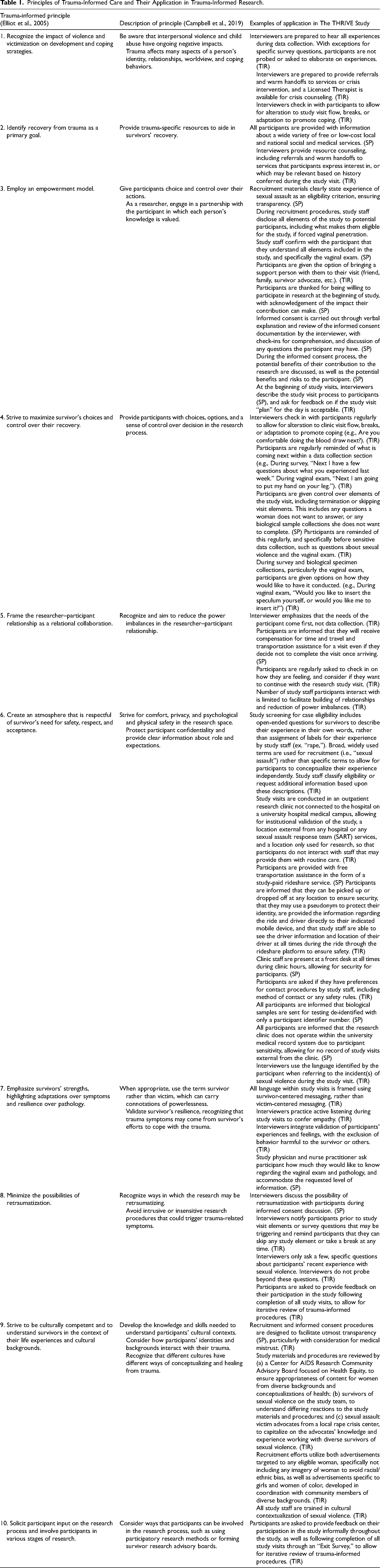
Elliot and colleagues presented a framework for application of TIC with women who have experienced trauma and co-occurring disorders (2005). Specifically, the authors propose principles of TIC be operationalized in interactions with survivors of trauma, including: (a) recognize the impact of violence and victimization on development and coping strategies; (b) identify recovery from trauma as a primary goal; (c) employ an empowerment model; (d) strive to maximize survivor's choices and control over their recovery; (e) frame the researcher–participant relationship as a relational collaboration; (f) create an atmosphere that is respectful of survivor's need for safety, respect, and acceptance; (g) emphasize survivors’ strengths, highlighting adaptations over symptoms and resilience over pathology; (h) minimize the possibilities of retraumatization; (i) strive to be culturally competent and to understand survivors in the context of their life experiences and cultural backgrounds; and (j) solicit participant input on the research process and involve participants in various stages of research (Elliot et al., 2005).
In 2019, Campbell et al. brought attention to the lack of application of TIC to research on sexual violence, particularly in a systematic manner, and built upon the principles of TIC proposed by Elliot et al. in 2005. They highlighted the need to transition from research on TIC to research utilizing TIC, and called for researchers to shift to integration of trauma-informed principles into research practice (Campbell et al., 2019). This call echoes and urges operationalization based on the wealth of research available on the positive impact of trauma-informed services both generally and among survivors of sexual violence (Kelly & Garland, 2016; Reeves, 2015; Scheer & Poteat, 2018; Wilson et al., 2015). Survivors of violence who perceived greater application of TIC in their services report more empowerment and emotional regulation, and lower social withdrawal, which in consonance with lower shame lead to better mental and physical health outcomes (Scheer & Poteat, 2018). Likewise, interventions have successfully employed tenants of TIC to improve participant health outcomes among female survivors of interpersonal violence (Kelly & Garland, 2016). As such, the use of trauma-informed principles in research settings with survivors of violence should be strongly considered, as should the systemic application thereof.
Approaches have been suggested for the engagement of survivors of sexual violence in research, with an emphasis on qualitative or survey research, including the employment of feminist research methods, such as active listening and the establishment of trust in the relationship between a participant and researcher (Campbell et al., 2009, 2019). However, to our knowledge, no literature has been published on the operationalization of principles of TIC in a clinical research setting, and particularly to biobehavioral research inclusive of invasive clinical health care examinations. Given this gap, we seek to describe and discuss the application of principles of TIC to a clinic-based biobehavioral research study on susceptibility to HIV among acute cisgender female survivors of sexual violence.
Method
The THRIVE Study
The THRIVE Study is a longitudinal case-control study of adolescent girls and women between the ages of 14 and 45, living in San Diego County, California. Detailed methods of The THRIVE Study have been previously described (Stockman et al., 2020). In brief, The THRIVE Study aims to understand the association between sexual violence and HIV acquisition through direct and indirect pathways. These pathways include disruption of physical barriers in the cervical-vaginal environment and associated inflammation, or alterations to hormonal pathways controlling immune reactions in the vaginal environment and systemically. These pathways may allow for increased ease of HIV infection upon exposure (Campbell, Baty, et al., 2008). Additional factors may increase HIV susceptibility in adolescent girls, such as immaturity of the cervical-vaginal environment, high STI incidence and prevalence, and hormonal fluctuations due to irregular menstrual cycles (Ghosh et al., 2018). Women are recruited for The THRIVE Study through community organizations, a local rape crisis center, and utilizing physical flyers in community locations and social media advertisements. Women who are eligible to enroll in The THRIVE Study have experienced either consensual vaginal sex with a male partner within the last month (controls), or forced vaginal penetration perpetrated by a male within the last month (cases) (both criteria expanded from two weeks in initial study development). The THRIVE Study is enrolling 120 girls and women, with 30 participants enrolled in each of the following categories: adolescent controls (aged 14–19), adult controls (aged 20–45), adolescent cases (aged 14–19), and adult controls (aged 20–45). Women of all backgrounds are eligible to participate; however, recruitment strategies emphasize populations underrepresented in sexual violence research. Women interested in assessing their eligibility can contact study staff through email, phone call, or text message. Potential participants are informed of the purpose of the study, study procedures, and risks and benefits; those who provide consent to be screened are given the option of screening over the phone with a study staff member, or self-completing a digital screener. For participants who choose to enroll, after providing written informed consent, women attend a series of three study visits over the course of three months; at each they are asked to complete an interviewer-administered survey, undergo a blood draw, and receive a cervicovaginal exam including the collection of vaginal swabs for reproductive tract infections (including sexually transmitted infections) and collection of cervicovaginal lavage (CVL) fluid, used to assess immune alterations in the vaginal environment. Participants then self-collect three saliva samples a day for three days, to assess the cortisol awakening response (CAR). Participants are provided with $50 in compensation for each in-person study visit, and $35 upon receipt of the at-home saliva samples, for total compensation up to $255. Additionally, all participants receive information on local free or low-cost medical and social services and resources, as well as individualized counseling on resources of interest to the participant. To facilitate enrollment and retention, participants are provided with transportation assistance in the form of either a public transportation day pass or complimentary rides to and from study visits through a rideshare service. Saliva samples are picked up from participants at a location of their choice. All procedures are approved by the University of California San Diego Institutional Review Board.
Operationalization of TIR
Prior to study implementation, we undertook the development of expansive protocols and trainings to operationalize TIR in The THRIVE Study. To illustrate the use of these protocols, and demonstrate a systematic application of principles of TIC to research, we utilized the same principles of trauma-informed services for women proposed by Elliot et al. (2005), in coordination with the suggested interpretation of each principle suggested by Campbell et al. (2019), and employing tactics derived from feminist research methods (Campbell et al., 2009, 2019). These protocols include precautions and safety planning throughout every element of The THRIVE Study to maximize participant choice and control, emphasize empowerment and validation of experiences, provide services and referrals to the extent possible for a non-intervention research study, and avoid retraumatization of women choosing to participate. Protocols were developed in coordination with research team members who identify as survivors of sexual violence, and revised based on review by survivors and survivor advocates at a local rape crisis center.
The THRIVE Study Exit Survey
Participants enrolled in The THRIVE Study are given the opportunity to complete an optional “Exit Survey” following completion of their participation. The exit survey captures participants’ experiences with recruitment and participation in the study and is completed through an online survey on REDCap. Participants provide consent, complete the survey, and receive $5 compensation for their time. Regarding participation in the study, three questions are asked to assess experience with the current research: (a) How did you feel about your participation in The THRIVE Study? (Very Positively, Somewhat Positively, Neither Positively or Negatively, Somewhat Negatively, Very Negatively); (b) How did your participation in The THRIVE Study compare to your participation in other research studies (Much Better, Somewhat Better, Neither Better or Worse, Somewhat Worse, Much Worse); (c) Did participating in The THRIVE Study change how likely you are to participate in other research studies? (Yes, More Likely to Participate, Yes, Less Likely to Participate, No, Did Not Change). Finally, participants were provided with space to provide qualitative explanation for their ratings, what they liked about participating in The THRIVE Study, and what they did not like about participating in The THRIVE Study. For analytic purposes, we classified women as having had a past-month experience of forced or threatened vaginal penetration perpetrated by a male (“case” participants), having experienced a pressured, threatened, or forced first sexual experience (nonconsensual sexual debut; among case participants, no past-month experience of sexual violence was a first sexual experience/sexual debut), and having ever experienced sexual violence (inclusive of the two former categories).
Results
Protocols created for The THRIVE Study were mapped onto the framework developed by Elliot et al. (2005) with the description of each principle provided by Campbell et al. (2019) in Table 1. Protocols considered to be standard practice are denoted “SP,” contrasted with protocols considered to be additionally trauma-informed, denoted “TIR.”
Principles of Trauma-Informed Care and Their Application in Trauma-Informed Research.
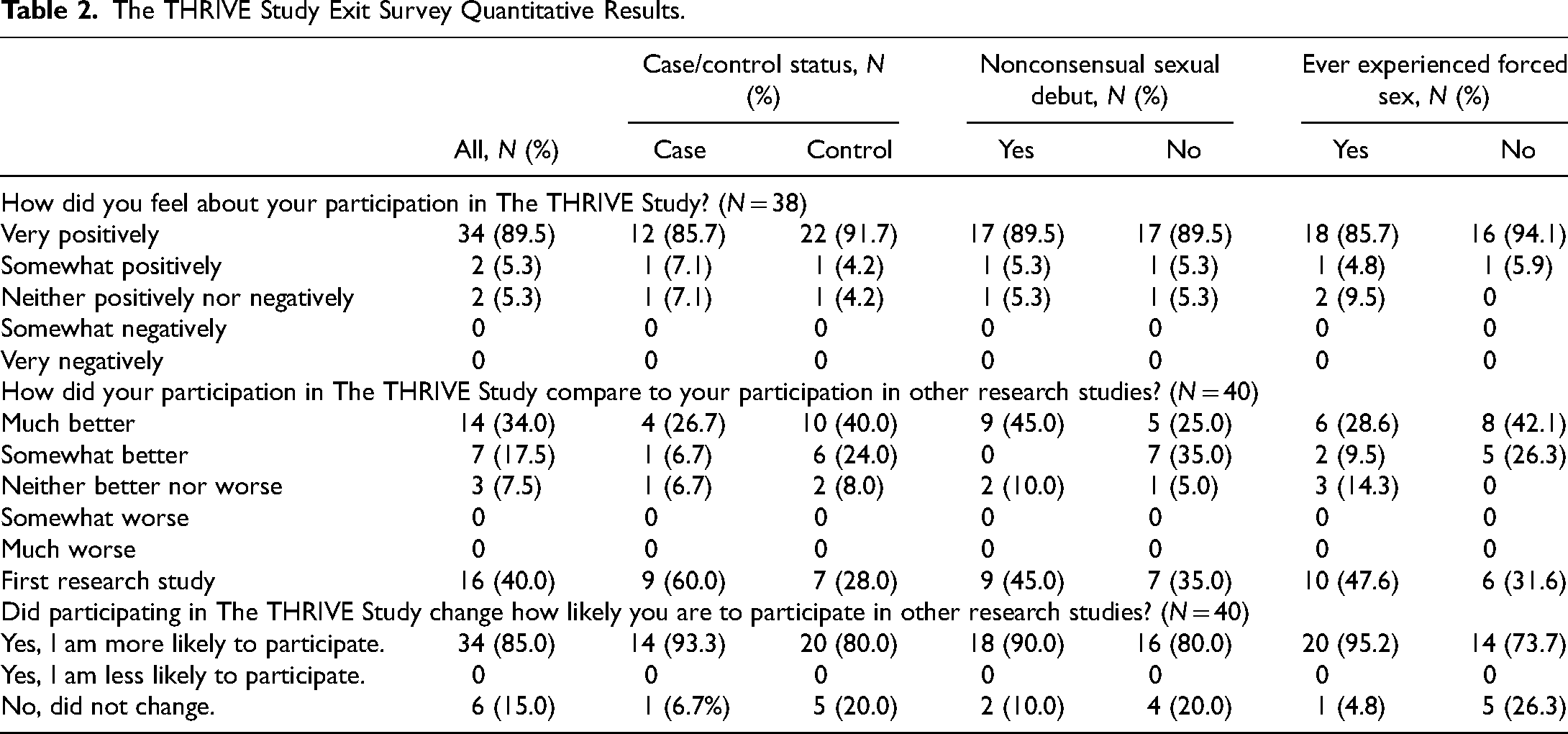
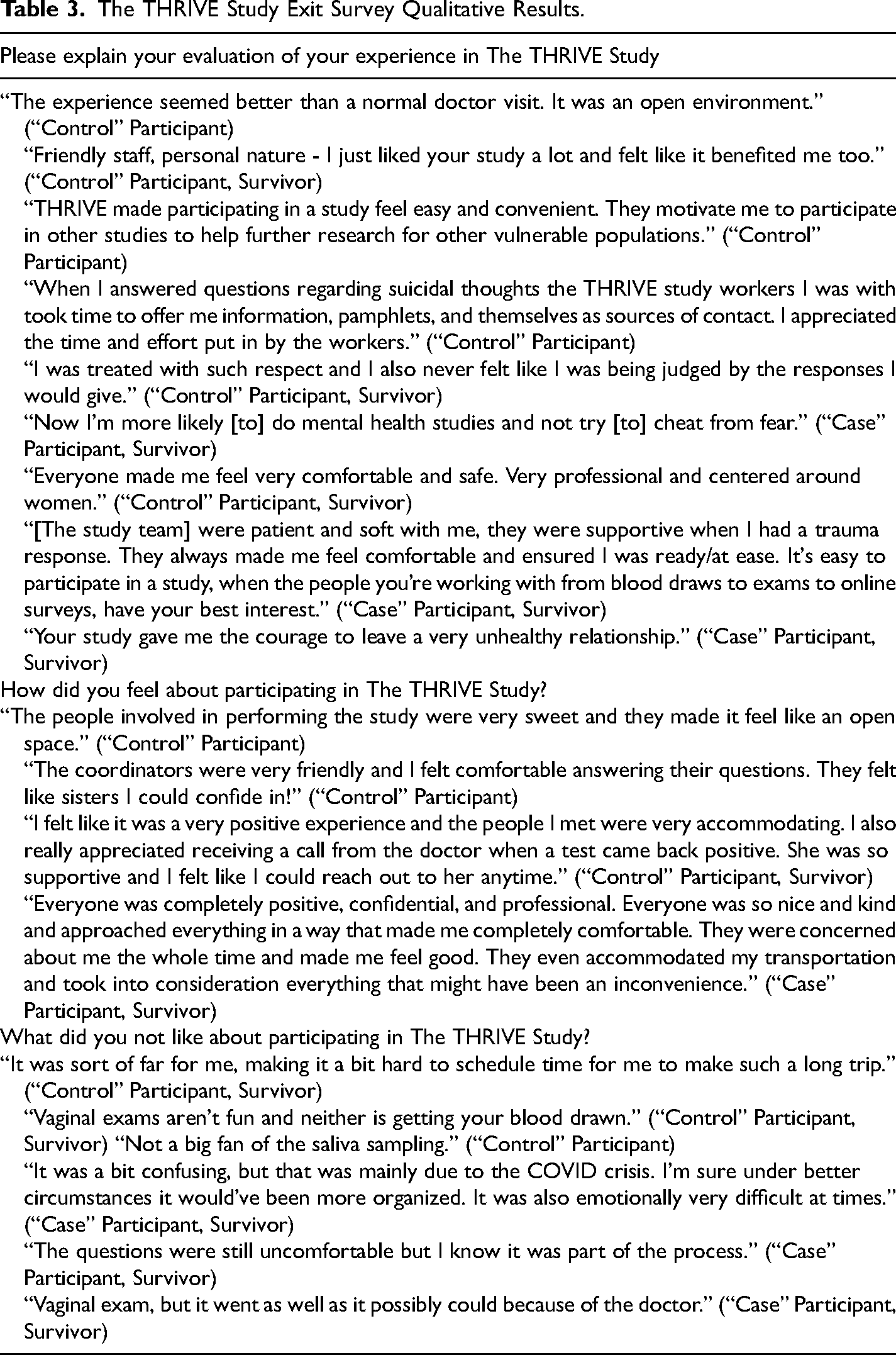
Quantitative findings from the Exit Survey are presented in Table 2, and contextual qualitative findings presented in Table 3. Of all participants invited (N = 64; of 67 total participants, 3 were administratively withdrawn, 1 is actively enrolled), 40 participants completed the Exit Survey (61.5%). Exit Survey respondents were racially and ethnically diverse, with a mean age of 25.6 (SD: 7.7). Participants reported that they felt very positively about participation in The THRIVE Study (89.5%), that participation in The THRIVE Study was a better experience than other studies they had participated in (87.5% among those with previous study experience), and that they are more likely to participate in other research studies after partaking in The THRIVE Study (85.0%).
The THRIVE Study Exit Survey Quantitative Results.
The THRIVE Study Exit Survey Qualitative Results.
These results were mirrored among women who had experienced sexual violence. Among survivors of recent sexual violence (“cases”), over 90% felt positively about their experience, while the same was said by almost 95% of women who experienced a nonconsensual sexual debut (pressured, threatened, or forced first sexual experience), respectively. No past-month experience of sexual violence was reported to be a first experience of sexual violence; therefore, these groups are neither mutually inclusive nor mutually exclusive. Among women who had ever experienced nonconsensual sexual activity, 90.5% felt positively. Similarly, cases, survivors of nonconsensual sexual debut, and survivors of forced sexual activity endorsed that participation in The THRIVE Study was better than participation in other studies and shared that they are more likely to participate in other research because of their experience in The THRIVE Study. Notably, no participants responded that they had a negative experience while enrolled in The THRIVE Study, that their participation in The THRIVE Study was worse than their participation in other studies, or that they were less likely to participate in other research due to their participation in The THRIVE Study.
Discussion
The present article provides review of the need for integration of TIC into research with survivors of sexual violence, as well as the methodological process of operationalizing TIC in biobehavioral research, and evidence of the positive experiences of survivors of sexual violence during their participation. Such an example may provide insight and guidance for the operationalization of trauma-informed practices in other research studies. While the current application is in regard to survivors of sexual violence, TIR could be operationalized in the context of research with survivors of any type of trauma, given adequate consideration for trauma-specific sequelae. Similarly, subgroups of survivors of trauma, including racial and ethnic minorities, may be well served by appropriately culturally adapted TIR.
Acceptability of Research with Survivors of Sexual Violence
Engagement of survivors of sexual violence in research has prompted prior discussion given the sensitivity of populations and invasiveness of research (Burke Draucker, 1999; Jaffe et al., 2015). There is ample evidence for the acceptability of engagement in research for trauma survivors (Griffin et al., 2003), and research has found that survivors of sexual violence who participated in research on the topic reported benefits from their participation (Campbell, Adams, & Patterson, 2008; Campbell et al., 2009, 2010; Jaffe et al., 2015). This acceptability is echoed in the current THRIVE Study Exit Survey findings, with the vast majority of participants, both survivors of sexual violence and women who have not experienced forced sex, endorsing their experience as very positive. Previous research found that participants who did not benefit from research participation typically did not experience any additional distress, or only experienced small amounts of non-extreme distress (Campbell, Adams, & Patterson, 2008; Campbell et al., 2009; Carlson et al., 2003; Deprince & Freyd, 2004; Jaffe et al., 2015; Sikweyiya & Jewkes, 2012). This too is supported in the current findings in that no participants reported negative experiences, and fewer than 10% of participants with experience of forced sexual activity had a neutral experience. Engagement of survivors in the acute aftermath of trauma has also been found acceptable to research participants (Griffin et al., 2003). Indeed, “case” participants in The THRIVE Study reported positive experiences, and an increased likelihood of participating in other research studies. Even with the possibility of distress caused by participation, trauma research has found that participants perceive research on their traumatic events to have greater importance and a greater cost–benefit ratio compared to research on other topics (Cromer et al., 2006; Deprince & Freyd, 2004), consistent with our qualitative findings. While participants acknowledged discomfort (both emotional and physical), but at an acceptable level, as two “case” participants noted: “The questions were still uncomfortable but I know it was part of the process” and “[the] vaginal exam [was uncomfortable], but it went as well as it possibly could because of the doctor.”
Despite the wealth of previously published research and the current findings, there may be unknown risks to survivors of sexual violence during engagement with research that impact acceptability. Additionally, given the diversity of survivor experiences, risks and perceived risks may be variable among participants. Particularly, the difficulties of participating and the risk of retraumatization may not outweigh the perceived benefit of contribution for a given participant. As such, it is the imperative for the researcher to allow for individual choice in research participation, in which each potential participant conducts their own perceived risk-benefit assessment. This requires the minimization of coercion financially or from interpersonal sources. Furthermore, transparency and openness regarding the research process and the role of participants are vital to an informed decision about participation, including not only the informed consent process, but repeated check-ins and repetition of participant rights. This served as a guiding principle in the operationalization of TIR in The THRIVE Study, to protect individual choice.
The theorized operationalization of TIR requires the expansion of the role of researcher to encompass provision of validation to participants, with understanding of their trauma history and ramifications of those experiences, such as through active listening (Campbell et al., 2019). Feminist research methods have long advocated that expressions of empathy and humanity are within the bounds of the researcher (Corbin & Morse, 2003; Janice et al., 2008). In previous research, survivors have indicated that such methods are appreciated and create a more positive experience (Campbell et al., 2009); these sentiments were reflected in the qualitative findings from the Exit Survey. As a “control” participant stated, “The coordinators were very friendly and I felt comfortable answering their questions. They felt like sisters I could confide in!” However, there remain concerns that expansion of the traditional research role could introduce bias in results, which traditional research methods have sought to avoid by having interviewers remain neutral.
Given the sensitivity of the topic of sexual violence, and stigma associated with it, underreporting is a persistent problem faced by researchers. Validation, acceptance, and empathy of experiences of sexual violence could create a social desirability bias toward disclosure of events of sexual violence, regardless of actual experience, overestimating the reported burden of sexual violence. However, reporting of events that have not happened is rare (Ferguson & Malouff, 2016), while reporting of events that have happened is thought to be well below the actual incidence and prevalence, due to persistent stigma, mistrust of establishments, fear, lack of acknowledgement by the survivor, and difficulty of measurement (Bagwell-Gray et al., 2015; Cohn et al., 2012; Wilson & Miller, 2015). As such, it is unlikely that any pro-reporting bias due to a small number of individuals misreporting experiences of sexual violence would correct beyond the anti-reporting bias due to the vast number of women not reporting true events.
Of further benefit and importance, the practices of active listening, establishment of trust, and empathy may serve to increase reporting even external from research, by challenging the common social desirability bias that pushes toward practices of non-reporting (Bagwell-Gray et al., 2015; Cohn et al., 2012; Wilson & Miller, 2015). Such bias is evidenced by the low prevalence of reporting and service-seeking post-sexual violence (Amstadter et al., 2008; Campbell et al., 2001; Ullman, 1996, 2007; Ullman & Filipas, 2001). A neutral response from interviewers may serve to reinforce a perceived societal stigma against that experience and affirmative response, promoting underreporting. Validation of experiences impresses upon participants the acceptability of an affirmative response and may decrease underreporting; these approaches have also been suggested for use with survivors of sexual violence previously (Campbell et al., 2009, 2019). As one “case” participant noted, after participation, “Now I’m more likely [to] do mental health studies and not try [to] cheat from fear.” Given these considerations, departure from traditional “neutral” research methods was judged acceptable in the operationalization of TIR, and feminist research methods were used as a guiding model.
Finally, the application of TIR demonstrates how research stands to benefit greatly from the integration of principles of TIC. Qualitative work has suggested that survivors of sexual violence may be more willing to participate in research when they are cared for and their needs are met through that research (Campbell et al., 2010). It logically follows that they may also be more likely to share these positive experiences, leading to increased recruitment from their social networks and communities. Participant reengagement, as well as assistance in recruitment of other survivors through social networks, is highly valuable given the documented difficulties of recruiting sensitive populations such as survivors of sexual violence (Campbell et al., 2010; Edwards et al., 2014; Gidycz et al., 2008). Additionally, prevention of retraumatization (Reeves, 2015) and more positive experiences attributable to trauma-informed and feminist practices (Campbell et al., 2009) may increase retention in research with sensitive populations (Daykin et al., 2018), which is a noted difficulty (Campbell, Adams, & Patterson, 2008). The THRIVE Study exemplifies this. To date, the study has retained 92.0% of “case” participants (data not shown). Displays of empathy and understanding associated with TIC may contribute to more trust in the researcher-participant relationship (Campbell et al., 2019; Elliot et al., 2005), possibly allowing for increased ease of disclosure of trauma and more accurate reporting rates from participants. This may also be extrapolated to the larger population of research participants, who may also benefit from and find more acceptable a paradigm of TIR. Of vital importance is the recognition that researchers need participants in order to gather data to inform intervention and program efforts to better serve survivors of violence and trauma. Those with negative experiences or neutral experiences in research may be less likely to engage with studies, much as trauma survivors may avoid health care (Reeves, 2015). Logically, the opposite may also be true; when survivors have positive experiences in research, they may be more likely to participate in other research. Among participants in The THRIVE Study, this was found to be correct and impactful. Compared to their “non-exposed” counterparts, survivors of sexual violence were more likely to report an increased likelihood of future study participation, across survivorship categories.
Lessons Learned
The experience of developing and implementing protocols for potentially invasive research with survivors of sexual violence was undertaken in an intentionally iterative manner, as the research team learned how to better engage and support participants. While protocols were developed in consultation with survivors of sexual violence and survivor advocates, we could not anticipate all needs and best practices, and we learned valuable lessons from our participants (Table 4). Two elements of the protocol were found to be vital to appropriate engagement with survivors. The first of these was intensive training of staff members interacting with participants. In addition to ethics and good conduct of research training, staff members completed a multi-day course on Mental Health First Aid, seminar-style training on TIC, thorough review of written protocols for the study, shadowed study visits conducted by a senior staff member, and then conducted visits in the presence of a senior staff member for feedback and support. Only after the completion of this sequence were staff members scheduled for study visits one-on-one with participants. Information provided in this training series allowed staff members to reduce distress and streamline study activities for participants. Additionally, support was provided to staff to process their experiences with survivors.
Lessons Learned in The THRIVE Study: Comparison to Standard Practice and Application Within the Research Process.
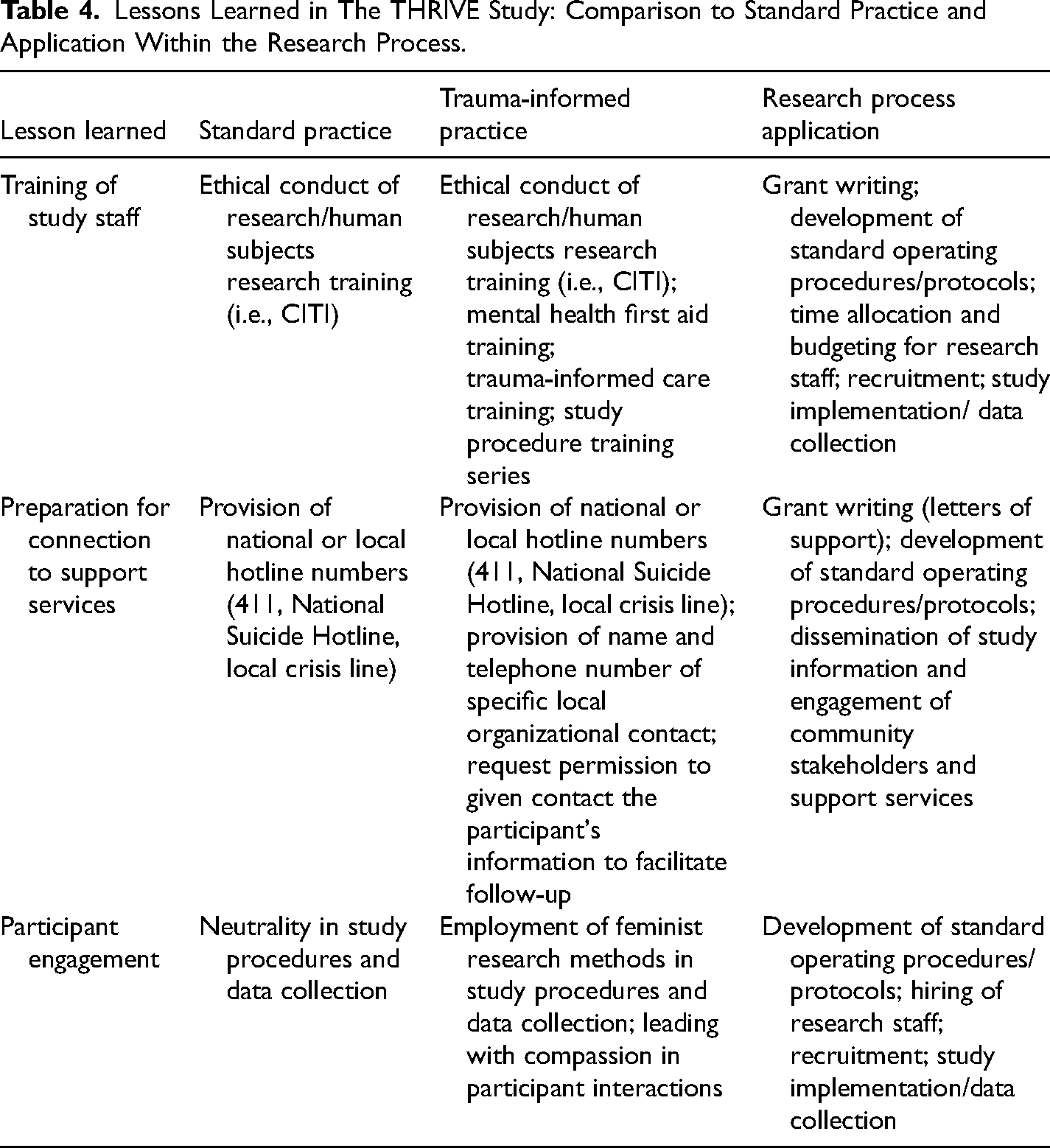
Secondly, extensive preparation of resources and the ability to facilitate connections directly to individuals at support service organizations was essential for supporting survivors who enrolled in the study. Most survivors had not sought formal support after their sexually violent experience; this resulted in their study interaction being the first opportunity for them to be connected to support services. Needs were diverse, including housing support and nutritional support, in addition to connection to mental and physical health care. The preparation of documentation of available resources prior to the onset of the study, and having staff well acquainted with the resources, allowed for customized responsiveness to participants’ needs. Furthermore, participants communicated appreciation for the provision of contact information for individuals at organizations, rather than general phone lines, reducing the need to navigate administrative pathways.
Even with these preparations, the research team learned repeatedly that the needs of survivors are diverse, and no individual reacts the same way to experiences of sexual violence. Acknowledging this, it became evident that the individuals conducting research, including investigators and staff, had to lead with compassion and understanding. No amount of training or ability to refer equated to a better experience for survivors, only a more informed experience. This is in line with approaches previously suggested for engaging survivors in research, including the use of active listening and building trust with participants (Campbell et al., 2009, 2019). Identifying staff members who were able to be respectfully, appropriately, and caringly responsive to all participants, and particular survivors of sexual violence, was paramount to the success of survivor engagement efforts.
Conclusion
The body of evidence of the positive impact of TIC throws into juxtaposition the possible negative effects of interacting with traditional care, and more pertinently, traditional research. Specifically, retraumatization and additional distress, though rare, may be caused by such participation (DePrince & Chu, 2008; Deprince & Freyd, 2004; Jaffe et al., 2015; Sikweyiya & Jewkes, 2012). As the field of trauma research discovers less harmful and non-harmful ways for survivors to participate in research, there is a risk of violating the standard of non-maleficence with the continuation of “traditional” and non-trauma informed methods as the standard of care. It is on this basis that health service fields have moved toward integration of TIC, and so too must health research. TIR is an avenue for this integration.
Given the significant need for the adoption of TIC in research settings that engage survivors of trauma and the increased potential for retraumatization associated with clinical research involving physical examinations, the current article demonstrates the application of TIC to the clinical research setting, which we refer to as TIR. Without the participation of survivors of trauma in research, improvement of experiences, promotion of healing, and facilitation of prevention efforts cannot be accomplished. This underscores the necessity of awareness and promotion of survivor engagement and experience. Trauma-informed care is a method of doing so; as such, TIR is a path to better and continued research.
Footnotes
Declaration of Conflicting Interests
The author(s) declared no potential conflicts of interest with respect to the research, authorship, and/or publication of this article.
Funding
The THRIVE Study is supported by the National Institute of Allergy and Infectious Disease (NIAID Grant #R01AI128803). J.K. Stockman is also supported by NIMH R34MH122014. We acknowledge the San Diego Center for AIDS Research (Grant #P30AI036214), the San Diego CFAR Disparities Core Advisory Board, and the Center for Community Solutions for their contributions and support in the implementation of the THRIVE Study. The content of this article is solely the responsibility of the authors and does not necessarily represent the official views of the National Institutes of Health. We thank Melanie Barker for her contributions to the paper. Finally, we extend our sincere appreciation to the participants for their contributions to the study. The authors have no conflicts of interest to disclose.
