




Abstract
Increasingly, qualitative researchers are considering the more-than-humans that Euro-Western social science largely has ignored. But if social science research methods were made for humans, how does one include everything else? In this article, five scholars describe the methodological steps they each have developed. We explore the role of onto-epistemology as an analytical tool to understand relationships between people and food-producing plants in Toronto migrant gardens; the technique of multimodal noticing used to account for animal agency in fieldwork with women who raise small livestock in Egypt; the use of time as a methodological tool to study human–plant relations in German commercial orchards; a methodological praxis that works with posthuman disability studies to become-with a disability event-assemblage; and how to operationalize the notion of ontological multiplicity in ethnographic fieldwork in a case study of a river in Mexico. These ways of conducting research may lead to innovative responses to complex global challenges.
Introduction
It is often observed that the doing of more-than-human research is hard, even confusing (Bell et al., 2018). More-than-human approaches—sometimes called posthumanist, New Materialist, or multispecies—hold the ontological position that all things other-than-human should be included in knowledge production. These approaches hold that the human is not the center of the universe but rather one actor among countless others with whom our species lives in relation. This has long been a common assumption in many Indigenous knowledge systems (see, for example, Little Bear, 2000; Rosiek et al., 2019; TallBear, 2011; Todd, 2016; Wright et al., 2012). Within Euro-Western knowledge traditions, scholars such as Barad (2007), Braidotti (2018), Haraway (2013), and Deleuze and Guattari (1988) have made an ontological case for including more than just humans in research praxis starting in the latter half of the 20th century. These theorists have gained in prominence, and scholars in a range of disciplines have written about the more-than-human methodologies they have employed in a variety of contexts (Elton, 2021a; Bastian et al., 2017; Bradshaw, 2022; Fournier, 2020; Fox & Alldred, 2023; Hamilton & Taylor, 2017). Still, a gap persists between theory and methodology in Euro-Western academic traditions, and many questions remain about the doing of qualitative research with more-than-humans. We have observed that it can be a challenge, particularly for junior scholars, to navigate the complexities of working in scholarly contexts that have not included more-than-humans. So, how does one include these more-than-human things and beings in critical qualitative research?
Thus, our group of five scholars each details the research methodologies we have used to engage with nonhumans in our research assemblages. We work with vegetable-producing plants in Canada (Elton), small livestock in Egypt (Fikry), apple trees in Germany (Peselmann), a river in Mexico (Sanchez-Pimienta), and disability assemblages in Canada that include autistic, nonverbal humans, neurotypical humans, communication devices, and the environment (Menon). In this article, we use vignettes to illustrate how we have conducted qualitative research with the more-than-human. We detail methodological steps and analytical devices (Eakin & Gladstone, 2020) employed in various stages of our research projects, that others may draw on to account for the more-than-human in their work, or use to build other methodologies. In our vignettes, we are explicit about our methodological choices, making visible the theoretically informed decisions we have made in data generation, analysis, and in communicating the research. In the concluding discussion, we draw out the methodological similarities in our approaches to offer others an example they could follow. We hope that in describing our research practices, we will pull the curtain back on what is often the behind-the-scenes workings of researching with more-than-humans.
Existing Traditions of More-Than-Human Knowledge
Including more-than-humans in research has been an essential component of various “turns” in the social sciences, such as the more-than-human turn, plant turn, animal turn, posthuman turn, New Materialist turn, relational turn, ontological turn, and so on. The preponderance of these so-called “turns” reflects the fact that up until the last decades, plants and animals were the domain of natural scientists, rocks belonged to geology, and microorganisms to fields such as the medical sciences and epidemiology. In the social sciences, the academic gaze largely has placed the human in the center of the frame and considered all other things as the backdrop to human action. But we wish to stress that these “turns” to the more-than-human are not an innovation. Rather, this inclusive perspective has long been part of ontologies of Indigenous peoples in North and South America, as well as people in Asia, Oceania, and Africa. This is why Nayar labels what is called posthumanism today as Euro-American posthumanism (Nayar, 2023). Thus, we situate the work we do in the context of these long-standing ways of knowing outside of the Euro-American sphere.
It bears to mention here too that the idea that humans are the only species who can do research is a conceit of Euro-American thought. Deborah Bird Rose (2013) challenges the exclusive claim that (many) humans make to research by recounting the words of a Ngiyampaa man in an essay. She writes of an elder named Steve, who contested the view that humans are the only species who can gain expertise through research. She quotes him as saying “. . . when you fall asleep, eh, them ants they’ll crawl all over you. They’ll bite you, or sometimes they don’t but them ants might be carrying out their research then, on you.” We are reminded that not only do more-than-humans research, too, but that there is a lot more to knowledge production that we have yet to learn.
The push to include the more-than-human in Euro-American posthumanism is partially motivated by the polycrisis and the colonial present. Bastian et al. (2017, p. 2) in the introduction to their book Participatory Research in More-Than-Human Worlds write that they are “driven by the need to take environmental devastation seriously, and to develop research methods that might better support more sustainable ways of living together.” It is reasoned that when Euro-Western scholarship does not even notice the more-than-human, solutions to the existential problems facing society today are elusive. Also missing is a deep understanding of their origins. Writing the more-than-human into the story is thus often both ontological and political. As Denzin (2015, p. 35) puts it, “There is no one way to do interpretive, qualitative inquiry. We are all interpretive bricoleurs stuck in the present working against the past as we move into a politically charged and challenging future.” Thus, it is urgent for qualitative researchers who wish to contribute to nonanthropocentric approaches to knowledge creation to explore different methodologies to investigate with the more-than-human.
An Overview of More-Than-Human Methods
More-than-human research methods are often transdisciplinary, although many scholars draw from anthropology in particular. Multispecies ethnography—or more-than-human ethnography—is a methodology that decenters the human and considers all the other things and beings that a human lives in relation to as participants and co-creators of the research (García, 2019; Locke & Muenster, 2015; Ogden et al., 2013). For example, Anna Tsing’s (2015) The Mushroom at the End of the World explores capitalism’s impacts by following the matsutake mushroom, a delicacy in Japan that grows in disturbed forests. With this work, Tsing develops the now frequently cited analytical concept “arts of noticing,” which Fikry takes up in vignette #2. Multispecies ethnographies have considered humans in relation to animals, insects, plants (Fikry, 2023; Chao, 2022; Govindrajan, 2018; Kavesh, 2020; Parreñas, 2018), and also lifeforms in Colombia that may be described by nonlocals as extraordinary or fantastic beings, such as the fieras that inhabit rivers and jungles (Ruiz-Serna, 2023). This methodology that decenters the human is used beyond anthropology in education (Pacini-Ketchabaw & Nxumalo, 2015), and public health among other fields.
Beyond multispecies ethnography, a range of methods have been devised to challenge the nature/culture dualism and the mind/body divide. For example, embodied research invites the knowledge producer to use all the capacities of their body to open up to the more-than-human. This includes sensory methods that have scholars tasting, smelling, hearing, and seeing anew (Jordan, 2010). A sensory approach rejects the idea that we can think only with our Descartian brain, an organ that is perceived in a Euro-Western ontology to exist as distinct from the body. Rather, an embodied approach embraces the fact that the head is part of the body, and therefore, the brain cannot be separated from it; bodily sensations make for valid research data. For example, Flint (2022) uses sound and the act of listening to theorize the relationship between lawn maintenance on an American university campus, White supremacy, and questions of place and belonging in walking interviews with students. Gillespie (2016) uses emotion in her study of cows at a cattle auction. Her emotional response to the pain she witnesses when a mother cow and calf are separated illustrates how the more-than-human researcher can draw on empathy. Other methods include employing technology to capture what a person cannot see, such as photography or audio recording (Myers, 2017). Bradshaw (2022) developed a methodology to collaborate with microbes as active participants in their work.
Scholars of the so-called “ontological turn” take a different methodological approach. 1 They too trouble the nature/culture divide in social sciences, embracing “ontological multiplicity” that Law and Joks (2019) defined as the possibility of different enactments of the real to converge and contest or align with one other. For instance, de la Cadena (2015) conducted ethnographic fieldwork and archival work in the Peruvian Andes with two renowned Indigenous healers, Mariano and Nazario Turpo. Her work describes how the mountainous landform called Ausangate in Peru is enacted as a “mountain” in the dominant ontology, whereas it is an “apu” or “earth-being” in Quechua worlds. The difference between a mountain and an apu is significant, for a mountain is a passive object of so-called Nature, whereas Ausangate as an apu is a leader that can defend itself. The ontological turn makes visible the way ontology and epistemology, and thus, methodology are bound up. The way one would research a mountain is different from the way one would research with an earth-being. For this reason, scholarship in the ontological turn may help to make visible power struggles around what can count as “real” and how dominant ontologies can attempt to erase others (Law, 2015).
These approaches to methodology have informed the work that we each have conducted.
Vignettes: The Doing of More-Than-Human Research
Vignette #1: Onto-Epistemology as a Launching Point
There was a mystery plant in the allotment plot. It was about 30 cm high with a thick, single stem and a bush shape with many clusters of pointy leaves. In nearby plots grew squashes, beans, tomatoes, chili peppers, garlic, and more plants whose leaves and stems were as familiar to me as faces of old friends. I grew up with plants and know many domesticated and wild edible ones as an intergenerational gardener and settler Canadian on my dad’s side. But this plant shared no traits with those I knew—leaf shape, stem size, form. It was a mystery to both research assistants, too. They had their own plant knowledge. Jannatul grew up in Bangladesh tending to a garden. Aminah had run a small organic farm in Ontario and learned about some plants from her mother’s family from the Philippines and others from her father, from Iran. We didn’t meet the gardener of that particular plot and a neighbor didn’t know the plant either, nor did two plant identification apps.
The puzzle brought to the surface a dilemma in our research into allotment garden agrobiodiversity in an inner suburb of Toronto. We aimed to decenter the human and consider plants as equal participants in gardens and thus the research. Yet, interspecies differences limited what we as human researchers could know—as others have observed about research with plants (Myers, 2015). A main goal of the project in summer 2023 was to document the biodiversity—and associated culinary diversity—of plants cultivated in gardens where I had previously researched (Elton, 2021 a & b). I had found some plants there originated in ecosystems of other countries and were adapting to Toronto conditions, such as bottlegourd (Elton, 2024). Now, we wanted to know more about plants from the southern hemisphere growing in Toronto. The first step was for Aminah to document what was growing by observing the plots and noting what she saw. Her focus was on the plants, centered in the research, as opposed to the gardeners.
Here lay the puzzle, incarnated by the mystery plant but also present with all the plants. Because we couldn’t speak “plant” and the plants can’t speak human languages, it was challenging to know what grew without talking to people. From observing a plant, if you know what to look for, you can identify a squash or a bean. You can tell if it is happy in the sun by looking at its leaves, or whether it needs water. You can observe when it blossoms, how it fruits—or not—and its various stages of growth. However, it turned out we couldn’t really know a plant when we centered it to the point of decentering the human so that the gardener was out of our frame. In decentering the human, we lost sight of the relationality of being—the human–plant relationships that enable our understandings of plants. We were left with questions. What is this variety? Where did it come from? Why is it here and how is it used? Importantly, what is a garden plant without its social context and relationship with other beings? Thus, this project highlighted the significance of onto-epistemology in understanding human–plant relationships.
Plants are often conceived of as relational beings, their agency best understood as a collective rather than individual (e.g., Marder, 2012; Elton, 2021 a & b, 2023)—a corn field versus a stalk of corn, for example. The garden is a site where plant collectives co-create space and place with humans (Power, 2005). The blending of ontology and epistemology into the term “onto-epistemology” captures the idea that one cannot separate something that happens from the observation of the thing that is happening. Barad is often credited as the first to coin the term onto-epistemology, inspired by her work in quantum physics; however, others have noted that Indigenous ways of knowing have long understood reality and knowing to be inseparable (TallBear, 2011). What onto-epistemology means for understanding plants in the garden is that one cannot separate the knowing from the thing.
On one hand, this means that in decentering the human, you cannot stop being human—more-than-human inquiry in the social sciences does involve humans. To decenter the human to the point where they are outside of the frame led me back to the same ontological place I’d sought to abandon: the idea of a “nature” that exists out there as separate from the human. On the other hand, if we accept that “matter and meaning are inextricably fused” (Fox & Alldred, 2016, p. 19), then as a researcher, I should pay attention to both the materiality of the plant (its tastiness, its leaf shape, its smell) and the way these material characteristics are understood through human–nonhuman relationships and then how they produce a plant as food, medicine, weed, and so on. The bound-up-edness of plant and meaning reflected the inseparability of nature/culture, human/more-than-human, and other binaries of Enlightenment thought. The mystery plant highlighted the relationality of knowing and the process of inquiry as one that is constantly coming into being. It illustrated how, in doing research, we make choices that bring into being a version of reality. Onto-epistemology as a methodological tool helped me to recognize that I, and everything else in the garden—and, well, the entire world—“slip-slide into each other” (Bennett, 2010a, p. 4). This (following Jackson & Mazzei, 2016) asks me as researcher to recognize the vitality of all things and also to see that the things of the garden are “not entirely reducible to the contexts in which (human) subjects set them” (Bennett, 2010a, p. 5). The plant’s vitality and story, on one hand, exist in relation to the human but also extend beyond what I as a human can ever know—or to a context in which I don’t even matter.
Onto-epistemological awareness has helped me to explore the micro- and macro-politics of human–plant relations in gardens and produce supply chains (Elton, 2021 a & b, 2023). It has allowed me to see the political effects of plant agency, as it was manifested through relationships; the interspecies interactions produced the political effects. When I tried to document agrobiodiversity in the garden and centered the plant, as opposed to the relationality of plants and people, I was reminded of the inseparability of humans from, well, everything—plants, air, soil, knowledge, and inquiry. Methodologically, this awareness helps other-than-human inquiry to reconcile with the ever-unfolding relationality of being on this planet and see materiality “as a continuum of becoming” (Bennett, 2010b). While I considered these onto-epistemological questions after fieldwork concluded, engaging with this awareness earlier in the process might help other researchers seeking to make meaning with more-than-humans in this world.
Vignette #2: Practical Tips on the Arts of Multimodal Noticing
After indulging in cold watermelon slices on a particularly humid July afternoon, Magda asked me not to throw the white rinds and green peel in the garbage bin. I asked why, as she stared back at me with a subtle surprise: “Don’t you know, Noha? Watermelon rinds and peels are one of the chickens’ favorite snacks. Especially in this summer heat.” A short welcoming lady in her late 50s with small brown eyes that nearly disappear as she smiles, Magda is one of the key interlocutors with whom I conducted ethnographic fieldwork in Al-Daqahliyya governorate on the Nile’s Delta in Egypt. Most women living in this town rear food animals in their homes for their household sustenance. These animals include chickens, ducks, geese, goats, and pigeons, all on rooftops or in courtyards. Magda and I took the watermelon rinds and peels and headed to the courtyard. Once we opened the door and stepped outside, the ducks and chickens rushed toward her. Quacks got louder, and bodies squeezed against each other once Magda began throwing the rinds and peels on the ground. She laughed and looked back at me. “See how much they love watermelon? They won’t run that quickly or excitedly if it’s any other food,” she continued.
This ethnographic moment brings to life several methodological concerns. My research explores women and their food animals, particularly how they navigate their relationships through/between caring and killing (Fikry, 2023). As such, both women and animals are key actors and protagonists in my project. While it was relatively easy to participate with the women as they cared for, and killed the animals, talking with them and poking them with questions, it was far more challenging for me to engage with animals. I felt that we lacked a common language. I cannot ask animals whether they really like watermelons. I cannot conclude (by myself) whether they are hungry, and I cannot decipher most of the changes that might occur in their bodies or behaviors along the course of their lifetimes on the rooftops. It was the collaboration with women like Magda that helped me to gain some insight. Unlike me, Magda and other women like her, live with animals, rearing them for the duration of their lifetime. Magda and all my female interlocutors can easily decipher when an animal is hungry, sick, or satiated. I thus shifted attention to women to teach me how to observe animals and understand them as best as I could.
About two days into fieldwork observing animals, I found myself struggling with writing about them. I wondered, how do we write about more-than-humans in our fieldnotes? How do we observe them to begin with? These questions invite engagement with the methodological choices of more-than-human ethnography. Reflecting on the prefix anthropos in anthropology, Anna Tsing (2016) asks whether we can live in this regime of humans and yet exceed it through noticing and learning from more-than-humans (p. 16)? Luckily, her answer is a hopeful yes, although this affirmative requires a set of new methodological tools that re-orient us to “world-making projects” that include more-than-humans (pp. 21–22). Among these tools is what Tsing calls “arts of noticing,” a shifting of attention to other beings, their livelihoods, and their varying temporal rhythms that complicate and transcend humans. While Tsing accounts for the multimodality of these arts of noticing through engaging in moments of tasting, cooking, and smelling mushrooms, she provides little methodological guidance on how we can use this tool in different contexts or with different species. As such, I developed from the “arts of noticing,” a set of techniques that I found useful and that can be applied in different contexts. In other words, arts of multimodal noticing, as I develop them here foreground the visual, visceral, sonic, haptic, and multisensory qualities of more-than-human worlds while giving more attention to the different ways in which we can harness this noticing in our field sites. These techniques do not cancel out or undermine the usual ethnographic methods; rather, as Swanson (2017) argues in her research on Pacific Salmon, multispecies ethnography requires an “amplification” of our range of attention and an expansion of our methodological tools to expand to the more-than-humans we live with (p. 96). In what follows, I provide a few steps that helped me take note of more-than-humans in my field site.
First, I began by asking basic questions about the animals, which likely seemed naive to someone who had such intimate relationships with more-than-humans. I would ask Magda and my interlocutors about animal behavior. For example, I asked why a duck had not rushed to eat like the rest of the birds, why turkeys stood far from the other animals once food was served, or how different a couple of ducks were from the rest of the batch. In asking these questions, I gradually began noticing more subtle differences between species and between animals of the same species. Next, I recorded and took note of any bodily changes in the animals: Weight, poop color/texture, sounds, and overall levels of activity. From these observations, I began understanding that birds got diarrhea often and that diarrhea was a shared fear among women because it usually signaled that they had fed the animals something off or that was bad for them. More importantly, if women didn’t try to cure diarrhea quickly, many animals ended up dying because of water loss. Recording bodily observations allowed me to gain confidence to take part in feeding animals more regularly. Participating in feeding, in turn, helped me to gain the animals’ “rapport” to so speak. While most animals would initially run away or walk in the opposite direction whenever I stepped into the rooftop or courtyard, they gradually habituated my presence, accepted food that I served them, and grew less intimidated by my presence. Finally, using the camera of my mobile phone, I relied on the pictures and videos I took of the animals to observe their movements throughout the mornings, afternoons, and evenings. I began noticing that turkeys would stand on a wooden ladder leading into the house at sunset, for example, a favorite spot so to speak. I also began noticing skirmishes taking place between particular animals, and this noticing helped me later discuss similar tensions in more detail with Magda. With the presence of pictures and videos, it became easier for me to follow and understand Magda’s description of particular animals as troublemakers, naughty, spoiled, or lazy. With the presence of pictures and videos and revisiting them during writing, it became easier for me to follow animals’ movements, behavior, and growth while growing more aware of their presence as key actors in my project.
Together these techniques, developed from Tsing’s concept, constitute what I call multimodal noticing. These techniques helped me to generate a wealth of fieldnotes, photos, and videos that enabled me to center more-than-humans in my analysis. Rather than focusing solely on how animals become meat, focusing on more-than-humans as key actors allowed me to situate these animals in wider food chains. It allowed me to explore the intimacies that they share with humans through household leftovers or illnesses, such as diarrhea. Shifting attention to more-than-humans in our field sites is challenging our species’ limitations but more importantly the limits of our disciplinary tools and methodological training. Multimodal noticing embraces, magnifies, and highlights the multisensorial elements through which more-than-human lives unfold. Whether it is pictures, videos, or shifting to animal waste, multimodal noticing is an entry point to complicating our methodological toolkit in the social sciences (Figure 3).
Vignette #3: Looking for Vegetal Agency in Apple Orchards
“It Is a Chilly October Morning
Together with Adam and Pawel, seasonal workers from Poland, I am standing in constant drizzle in one row of an apple plantation in the Alte Land in Northern Germany. We pick the cold and wet fruits as carefully as it gets with frozen-stiff fingers: the stem must remain attached, but no leaves, twist out the apple, but do not tear it! No one feels like talking, we work side by side in silence. Klaas, the farmer and owner of the orchard comes by on his tractor bringing some more empty boxes. He also looks exhausted. The now 6 weeks of harvest have left their marks on everyone. Instead of cracking jokes, he urges us to hurry. We need to finish. Adam is going to stay 10 more days before his new job on a construction site in Sweden starts. Pawel needs to return in time to his family and his regular job back in Poland. Right now, we are picking “Kanzi” apples, a Belgium club variety that can be sold at good prices—but only if the fruits meet the long list of the club’s quality criteria. These are a high sugar level and a deep red coloration. Klaas hopes that we still get the forecast sun hours this afternoon and tomorrow. That would give fruits that have not reached the proper color yet a little bit more time. But the apples must also not be harvested too late. He cuts a fruit open: You see, if they stay on the tree too long, they develop brown spots on the calyx and the stem pit. The fruit inspectors at the cooperative and at the retailer would notice this immediately. This fruit, however, has bright flesh. He gives me a slice to try. It is juicy, sweet and crispy—to me, it feels just right. (Fieldnotes, Mid-October 2023)
Research Interest: Vegetal Agency in Apple Orchards
This fieldnote was written while I was carrying out my ethnographic research on human–plant relations at commercial fruit farms in the Alte Land in Northern Germany. Adapting my field stays to the vegetal rhythms of the apple trees and the work routines on the plantations, I conducted participant observation for more than 2 years—on and off stays mostly during the pruning and harvest season—and interviews, along with sensory walks (Luggauer, 2019; Vasilikou, 2018). These were conducted alone or in company with farmers or agronomists. I also analyzed contemporary and historical agricultural and pomological literature. My research interest lay in the interactions of humans, apple plants, and other more-than-human beings and entities that make up the complex assemblage of growing apples within a capitalist agri-food system. In particular, I am interested in how vegetal agency emerges in a plantation and how its political effects are a form of “vegetal politics” (Head et al., 2014). In Human–Plant Studies, the relational agency of plants is often identified in (human) perceptions and responses to plant time expressed in their growing cycles (Elton, 2021a, 2023; Brice, 2014; Pitt, 2024). Jeremy Brice (2014) suggests that paying attention to “people’s way of reckoning the passing of time can thus draw attention to the relations through with nonhuman beings come to make a difference” (p. 947). Here, I explain how I have used the concept of plant time as a methodological step to make visible the political agencies of plants in a German apple orchard.
Attuning to Plant Time
As an apprentice (Pitt, 2015, 2017), I accompanied and worked alongside “skilled practitioners” (Ingold, 2000)—farmers and seasonal workers. I tried to cultivate and train my senses for the vegetal expressions and changes in the plant body they were able to perceive, well aware that their skills were often the result of yearlong practices (Krzywoszynska, 2016). I took inspirations from posthuman multisensory methods that suggest “tuning into our own senses equips us better for the sort of posthuman, species-inclusive ethnography we advocate” while a “disembodied, ‘sense-less’ research works to maintain normative assumptions about rationality located in mind/body dualisms” (Hamilton & Taylor, 2017: 112; see also Gibson, 2018). Tuning into my senses helped me to be attentive to the plantation’s different soundscapes, that changed depending on the time of the day, as well as season. Furthermore, I used my senses to develop a sense of place, to understand viscerally the spatial organization of the plantation. Working in the orchard enabled me to see, for instance, where grass and weeds were allowed to grow and where they were not, or where the deer who ate from the orchards at night hid during the day. To attune to plant time, I focused among other things on the ripening of fruits. Farmers measure the stark–sugar ratio or the density of the fruit flesh to assess ripeness but also use their senses. Here, employing Hayward’s concept of “fingeryeyes” was very helpful. In this haptic–optic methodological approach, seeing, feeling, sensing, and touching slide into each other (Hayward, 2010, p. 282). When picking an apple, I sensed how it lay in my hand while checking the red pigmentation, the size, and weight, all in accordance with variety’s characteristics and their individual plant time. Taste was not always a reliable criteria, as some apples develop their flavor only in storage. Other sources of data to check for ripeness, thus illuminating plant time, included the feeling for how firmly the apple was still attached to the tree and the plopping sound that was made when the fruit was properly picked. However, to translate these different sensual and embodied sources of information gained by the repetitive movements of picking into data was partially challenging. Besides written notes I used voice recordings where I could record or even imitate sounds difficult to verbalize, such as the different plopping.
Multiple Enactments of Time
Being involved in the work routines at the plantations—and stepping out of it at times—allowed me to grasp the “multiple enactments of time” within the assemblage of apple production which “coexist and interfere with one another” (Brice, 2014; 950). Besides the vegetal growing cycles, there are also the legally defined (human) working hours and breaks, the time slots that seasonal workers are available on site and the availability of machines and storage space. All these need to be carefully choreographed by the orchard manager. Within these multiplicities of temporalities, the relational nature of vegetal agency and its political effects became obvious, for instance, in the partial modifications of labor law in regard to maximum working hours during harvest season or—even more clearly—during the COVID 19-pandemic with a partial repeal from the national travel restrictions for seasonal workers (see also Elton, 2023). What I have tried to show here is how plant time as part of multiple more-than-human temporalities can be used as a methodical–theoretical avenue to the relationality in more-than human assemblages within vegetal agencies emerges and sets (political) effects.
Vignette #4: A Three-Part Methodological Praxis for a Disability Event-Assemblage
On a sunny Saturday morning in the fall, I walk into a special needs school in a small city in Ontario. My destination is a windowless little room referred to simply as “Room 2.” The room contains a small rectangular table, three chairs, and a fluorescent light overhead. I am here to tutor my student Griffin 2 in Mathematics using a combination of verbal speech, a letterboard (Figure 1), and an AAC tablet (Figure 2). Griffin is 14, nonverbal, and carries a label of Level 3 autism spectrum disorder (ASD) or nonverbal autism. We met approximately 14 months earlier. When I walk in, Griffin grabs the one chair in the room with arms, wedges himself into a corner between the table and the wall, and wedges another chair between me and him. I say, “Good morning, Griffin.” Griffin’s mother wishes me a good morning and asks him to say “hi.” Griffin looks away from me and passes his hand over his letterboard. His mom looks at me, smiles a little ruefully, and I smile back. She then leaves the room. Griffin is now stroking the rubber handles of his AAC device while facing the wall and rocking his body from side to side. I approach the table and ask Griffin if he is ready to begin his lesson. He signs “yes” using ASL (American Sign Language), and we begin the lesson (Figures 4, 5).
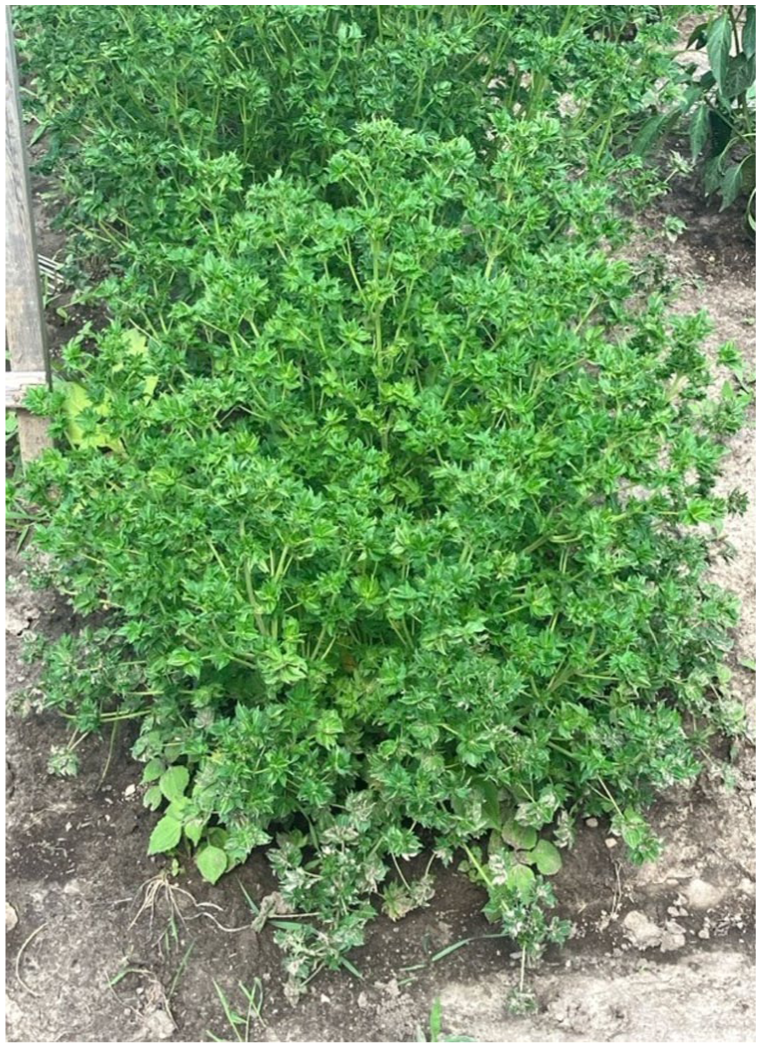
The Mystery Plant That Provoked Ontological Thinking.
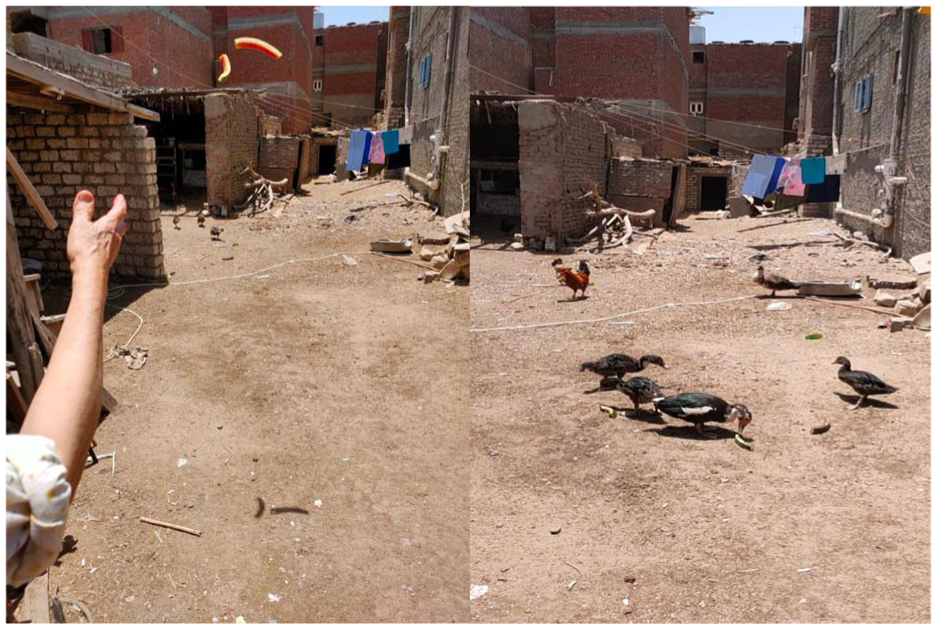
Ducks Eating Leftover Watermelon Rinds.
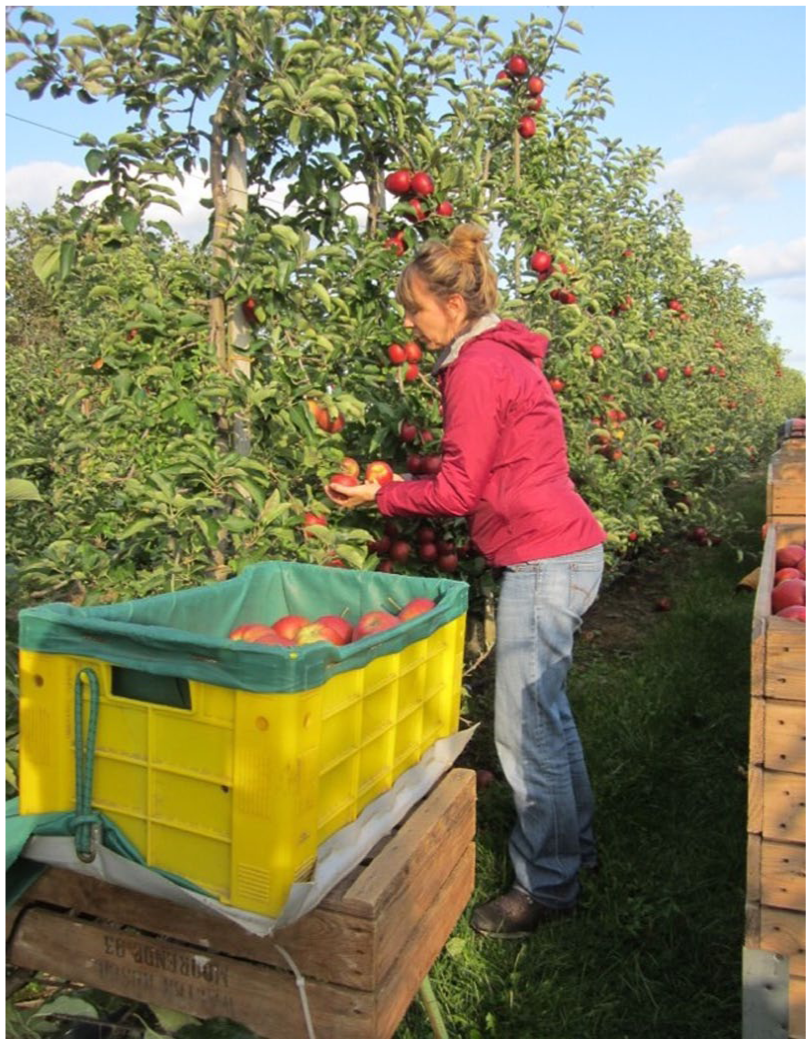
In the Apple Plantation.
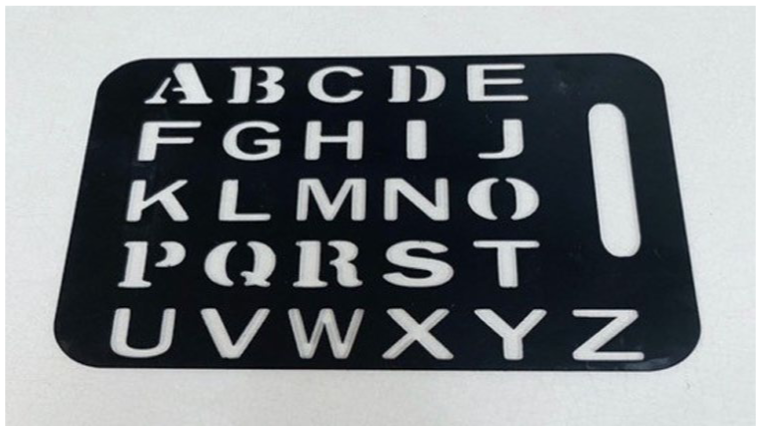
A Letter Board.
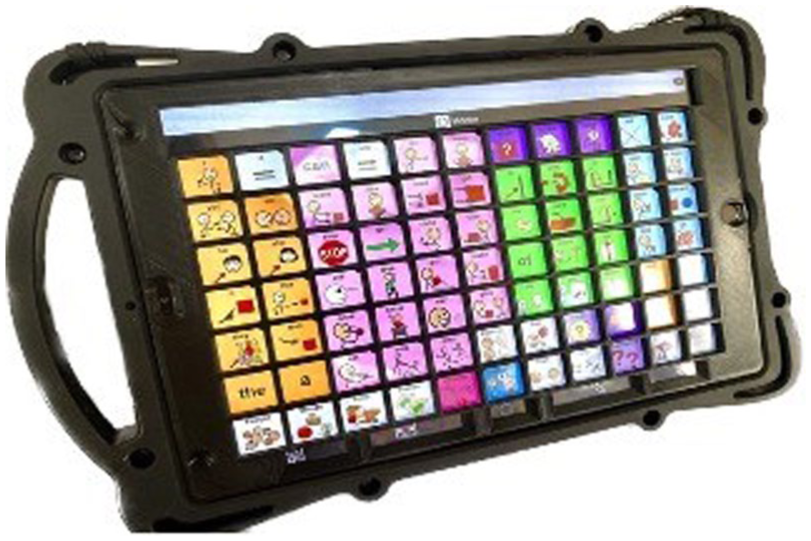
A Tablet Displaying the Screen of an AAC Software.
My own research, which explores autism and autistic nonverbal communication within a critical disability framework, may not immediately appear to present any obvious invitation to posthumanist thought. 3 More than once, the reaction I have received has been, “Posthumanism? With disabled, vulnerable humans?” This is understandable. When so much political work has been done around the human and his or her/their rights, on what basis can the human be decentered? But that is putting the cart before the horse. Before questioning posthumanism and its applicability to disability, one must question who this mythical human is. And one must question this because the idea of a more inclusive humanism does not seem to have worked all that well. Despite three decades of disability activism, disabled people are still routinely dehumanized (Albrecht et al., 2001). Disability is still defined in reference to what the able-bodied can do. For instance, in the context of my work, communication technologies are regarded as mere remedial prostheses intended to help a less-than-human body become “more human” (Williams et al., 2008). But what if we reject the idea of “more human” to explore the idea of the “more-than-human?” Posthumanist thought (Barad, 2007; Deleuze & Guattari, 1988) offers a potentially productive space for disability in general and autism in particular. In this space, disability has a chance to become-with, because ideas of normative humanity itself have been transformed, stepping away from a singular disabled (dehumanized) human to a relational assemblage within which this human is located.
The challenge, however, is in the doing. Recognizing these connective assemblages as agential in co-shaping the conditions of our lifeworlds calls for a different methodological approach—an approach in which both methodologies and methods must be reconceptualized to consider all the affective parts of such assemblages as relevant research participants. It is to reconceptualize the idea of selfhood as not a singular, stable entity but as a relational one. Not relational as in an interaction of pre-existing entities but relational at an ontological level. We need new possibilities for research-creation, and indeed, we need new possibilities for writing. As I write this, I am aware that the “I” in this paragraph is woefully inadequate. How, then, might we begin to trace the contingent becoming of agencies, and how do we account for the shades and spectrums of such agencies in doing research? I describe below three processual steps that may help.
Begin by Asking Different Questions
Deleuze and Guattari (1988) propose the concept of a monist or flat ontology and the idea of affective assemblages. All entities, whether material or semiotic, have the same ontological status. But if there is no immutable essence, how then do contingent bodies or ideas “matter?” This is where Deleuze and Guattari (1988) turn to the idea of capacities. In other words, ask not what bodies are; ask instead what they do. Human bodies and all other material, social, and abstract entities are part of relational affective assemblages, having no ontological status other than that produced through their relationship to other similarly contingent bodies, minds, and ideas (p. 231). In a research project on autistic humans who use technology(ies) to communicate, myself as a researcher composed via relation—via bundles of becoming with a neurotypical and a neurodiverse human, a technological device, and a nonhuman sentient being. Applied to autistic communication, a posthumanist approach allows me to look at communication not just as a product of an individual human communicator, such as Griffin. Instead, this approach considers the relationships, networks, systems, and assemblages that make a communicative event(s). Engaging with the concept of affective capacities permits a move away from the question of what communication is (with its allied corollary of “repairing” all non-normative communication as close to an imaginary ideal as possible) toward one that grapples with what autistic communication can do. Some concrete questions that can help translate the theoretical framework’s essence into observable phenomena include Who-what is acting?; What are they doing?; Are some actors more or less potent than others?; and Who-what is excluded?
Second, Map the Event-Assemblage
This processual step is vital to a methodology that draws on posthumanist thought. Decentering the human subject as transcendent and determinant requires paying attention to the usually invisibilized human or nonhuman actors in the assemblage, such as in my vignette. I am attentive to the room in which we sit, the letterboard that Griffin holds, autistic and nonautistic bodyminds, as well as to experiences, affects, and discourse; as well as to experiences, affects, and discourse; attention to both the actors in the assemblage and the events taking place within the assemblage are critical to problematize the idea that communication emerges as a discrete event only from a single human with its corollary of communication as faulty and in need of fixing. However, my approach does not suggest that a decentering of the human only to replace them with an assemblage. Drawing on Deleuzo-Guattarian thought (Deleuze & Guattari, 1988), I ask, what if we problematize the idea of the subject entirely? Thus, my methodological approach asks what would happen if we focused not on a human or even an assemblage of actors but on “event-assemblages.” A question that now arises is how we instrumentalize this attentiveness. I propose below my third processual step.
Attend to Micro-Practices
Karen Barad (2007) writes about agency as not being an attribute that someone or something has but as something that is enacted through the intra-actions of actors in an assemblage (p. 127). Taking this idea of agency as my starting point, I ask how communication might look, sound, and feel if we followed the invitation of agency beyond humans. Building on my point above, I ask what we would uncover if we considered communication not just as an immanent feature of Griffin. What if we paid attention to a phenomenon (in this case communication) as a series of constantly shifting uneven events co-produced out of the intra-action (Barad, 2007) of the agencies possessed by the actors in the assemblage such as Griffin, me, the chair, the room, the table, the weather, and the board. Mapping a complex of micro-practices—for instance, how we sit, our positions, the rhythmic movements he employs, touch, the role of an ask or demand (such as my greeting), the letterboard, the act of reading, the sound of my verbal speech, and the materiality of writing—can allow us to trace how the materialities and material actors are implicated in the way these micro-practices are performed.
The processual steps described above have helped analyze how a “problematic” assemblage of communication “becomes” and helped resist humanist, oppressive, and disembodied research processes that seek to isolate and categorize individual communicative acts as deficit-laden. More broadly, however, I hope that the bringing together of critical disability studies and posthumanist thought can contribute to the empirical and methodological body of work that draws on posthumanist thought, sparking new methodological moves that take into account the more-than-human.
Vignette #5: Analyzing the Ontological Multiplicity of the Santiago River
The Santiago River is one of the most polluted in Mexico, with over 700 enterprises discharging pollutants into its waters. People in the surrounding municipalities of El Salto and Juanacatlán have been organizing for over 20 years to force the government to work toward restoring healthy living conditions for humans and more-than-humans in this area. I conducted my dissertation work in partnership with a local land-defense collective called Un Salto de Vida (A Leap of Life), which I was part of from 2009 to 2012, when I was an undergraduate student living in the neighboring Zapopan municipality. Un Salto de Vida was formed by people of El Salto and Juanacatlán in 2006. Initially, they wanted to reduce pollution and restore hunting game and later adopted a wider range of priorities, including reforestation, community organizing, and legal defense of the territory against development projects.
As a scholar, I have explored how Un Salto de Vida’s activities may contribute to fostering the health of humans and ecosystems. In my doctoral dissertation, I was profoundly interested in a claim I heard from Sofia Enciso, a Un Salto de Vida member: that the river the government talks about in their policies is not their river. While governmental action seemed to enact the Santiago River as a water container and carrier, Sofia argued that the Santiago River cannot be properly accounted for without considering its relationships with the local forests, creeks, animals, and ways of living. It is precisely this broader relationality that I am exploring through my academic work.
When looking for conceptual tools for making sense of what happens in El Salto and Juanacatlán, I found the notion of “ontological multiplicity” (Blaser, 2021) could help me to convey how different sets of practices enact the Santiago River in divergent ways. With my experience being part of Un Salto de Vida and my doctoral fieldwork, I set myself to analyze the relationships between certain enactments of the Santiago River and environmental health. Following the advice of one of my committee members, I sketched what the Santiago River’s ontological multiplicity might look like. I found this recommendation helpful because writing can serve as a form of data analysis that helps you organize and communicate your preliminary interpretations (Eakin & Gladstone, 2020).
In my first attempt at conveying the ontological multiplicity of the Santiago River, I decided to use photographs and data-informed poems. My goal was to seek input from Un Salto de Vida members in a way that was open to multiple interpretations instead of obtaining feedback on a single interpretation crafted by me (see below).
Figure 6 conveys some of the different versions of the Santiago River I had noticed people in El Salto and Juanacatlán discuss. For instance, I have seen young people in the area say they thought the Santiago River had always been polluted. In contrast, older adults frequently share stories of the ecological paradise their communities used to be. The coming together of these versions of the Santiago River had important world-making effects. Indeed, younger community members have told me that hearing older adults’ stories of the Santiago River has mobilized them to organize toward stopping pollution. This approach to conveying the ontological multiplicity of the Santiago River seemed helpful for local discussions on the value of intergenerational activities. However, I realized that this account of ontological multiplicity did not help me engage with the misalignment between governmental and community action that first captured my attention and that I wanted to discuss in my dissertation.
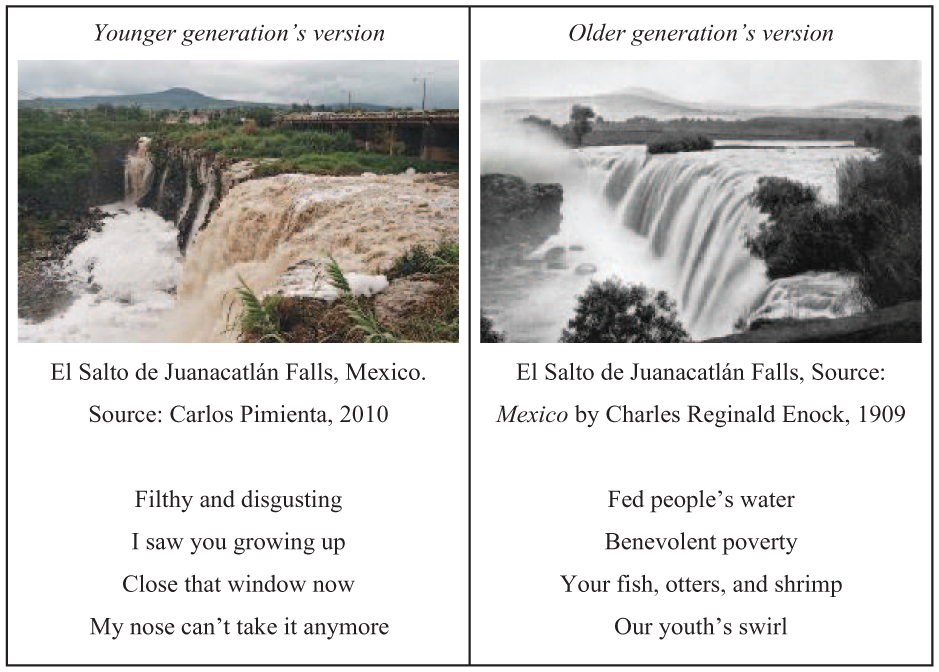
Conveying Ontological Multiplicity through Photography and Poetry.
In my second attempt at using writing as analysis, I experimented with ethnographic storytelling to convey moments in which I saw different versions of the Santiago River affect each other, contesting the type of action that was needed to support human and more-than-human life in this watershed. The following story resulted from such exercise.
Story 1. Where Are the White Fish?
One day, my co-researchers invited me to an event with community and scientific presentations about the Chapala Lake, from which the Santiago River originates. One of the presentations discussed water quality in Chapala Lake according to select pollutants. The presenter stated that water quality was safe for recreational use, according to the guideline levels of the five chosen pollutants. The finding pleasantly surprised me, as I expected to hear that the water quality was poor. When all presentations finished and the Q&A period began, Enrique Encizo—one of the founders of Un Salto de Vida—visibly upset, asked, “If you’re telling us that the river is clean, then where are the white fish we used to catch when we were younger? Where are the other animals and plants that used to inhabit this lake?”
Crafting this story has been a helpful entry point to discuss power relationships between scientific and community knowledge in relation to human and more-than-human health. While scientific research is often privileged over community knowledge, Story 1 helps illustrate that there may be instances in which scientific knowledge—in this case, on the enactments of water quality in the Santiago River watershed according to the presence or absence of selected pollutants—may not lead to action toward promoting the eco-social conditions that local communities strive for.
I have shared Story 1 (orally and in writing) as a preliminary finding of my dissertation research in community and academic settings. In community settings, Un Salto de Vida members have told me that this type of research could help them describe what ecological reparations should look like from the perspective of their collective—which is now further guiding my data collection and analysis. Moreover, when presenting this story in academic settings that privilege biomedical thinking, I have kept in mind an insight well-established in the ontological turn that research stories not only describe worlds but also contribute to enacting them. For this reason, I have used this story to intervene in the field of public health and make a case for more careful consideration of community knowledge in environmental health research and practice.
Concluding Discussion
In our work, we have found that theorizing more-than-humans is often not enough of a guide for how to research with them. Thus, this article sheds light on how we have conducted our research, highlighting analytical devices that are potentially transferrable to multiple research contexts, and that could be adapted to multiple posthuman/more-than-human traditions.
The researcher is part of the research assemblage: A starting point for our respective approaches is that we all have placed the researcher into the research. We consider ourselves as part of the research assemblage and use this positioning as a tool. This is what Eakin calls the creative presence of the researcher who makes meaning through relating and thinking: “Findings are not found, they are constructed by the researcher” (Eakin, 2018). Whereas the Cartesian mind splits reason from the rest of the world, we attempt to mend this fissure—or at least to challenge it to the best of our abilities and within the limits of each of our own ontologies. Thus, we use not only our theory-informed powers of observation but also our bodily senses to make meaning from what we see, hear, smell, feel, practice, and then we wonder about it. Fikry and Peselmann have engaged with the senses in their meaning-making with animals and apple trees. Menon considers the presence and tactile agency of material objects in producing affects, attachments, and relations. Sanchez Pimienta has written poetry in an act of sense-making while Elton draws on her plant knowledge that she brings to the study, and that of her research colleagues, as well as interactions with (and without gardeners) to consider the mystery plant.
Research is relational: Another characteristic that draws our research together is that our approaches are fundamentally relational. As Elton discovered in the vegetable garden, the thought that one could study more-than-humans by themselves, in isolation from everything else, is only possible if one assumes a substantive ontology composed of discrete objects. Rather, in relational ontologies, relationships are key to understanding the objects, things, systems, and beings we encounter in our work. The posthumanist perspective argues that the observer or subject is relational or inherently involved in who or what is being observed (object), making it impossible to maintain a clear distinction between the two. Humans, therefore, are seen as irrevocably extended into the networks they inhabit, blurring the lines between subject and object—it is our relationship with something that makes it what it is, including in the research. Thus, we underline that these more-than-human methodologies do not cancel out the human but in fact help us as researchers to be more receptive, reactive, and open to engaging with more-than-humans. Furthermore, by decentering normative accounts of what it is to do research, the more-than-human approach enables one to question normative accounts of the human itself. Following the lead of Rosi Braidotti (2018), who urges us to reconsider the “missing peoples” (pp. 49–51), referring to those who have been historically marginalized or excluded from traditional notions of the “human,” the vignettes of this article illustrate how we have come to research assemblages that include the participation of people whose knowledge and ways of being have been devalued by ablest, sexist, and racist assumptions (e.g., subaltern migrant gardeners, working and lower-middle class women, autistic children, people impacted by pollution).
Reflexivity: While our work shares these approaches, each one of us has come to our projects from a different standpoint. We are born and educated in four different countries in four different continents; three of us from the Global South and two of us from the Global North. In the tradition of the critical paradigm, we have engaged in reflexivity and considered how these personal histories and experiences have shaped our own research trajectories and the analyses that we make. Reflexivity in qualitative research is a critical practice that involves researchers continuously examining how their own subjectivity, experiences, and context influence aspects of the research process. However, we also note that the notion of self-reflexivity has been questioned by posthuman researchers (Smartt Gullion, 2018), for it assumes self-transparency and a “fixed position” on the part of the researcher (Haraway, 2013). Rather than trying to craft a “reflection” of the researcher, scholars like Barad (2007) invite people to diffract into the new, and account for how they are changing through the research assemblage. This can be observed, for example, in Elton’s shift from looking at plants as beings in isolation, to plants as parts of networks of relations or assemblages. Thus, in doing posthumanist work, we agree with Smartt Gullion (2018) that considering our standpoint is important, but it needs to be done within the context of the research assemblages that are co-constituting us.
This article is not meant to offer a comprehensive account of all different ways of doing more-than-human research. Instead, we wanted to show how we have worked with more-than-human research methods in various stages of our projects, from clarifying our onto-epistemic assumptions, constructing data with plants and animals, paying attention to time, or writing our preliminary research stories within the different assemblages that we are part of—gardens, households, food chains of production, rivers, and communication. Our hope is that others can try things out too and join us in muddling along. Other aspects of this form of research that we could not explicitly elaborate in this article include the operationalization of the axiological components of a given research design. It would be generative to make explicit what values are important in a research project and make sense of how to ensure that process and outcomes align with them. Fundamentally, we have found it important to remain open to change in the research process and also to embrace the not knowing—not knowing if this is good or not, right or not, or even going to work out. Also, we found it important to accept not knowing what is going on with the more-than-humans with whom we exist in the research assemblage. At all times, we, as researchers, have been guided by the belief that recognizing the agency and importance of nonhuman actors in our research endeavors has the potential to generate more holistic and sustainable responses to the ever-increasing complexity of global challenges.
Footnotes
Acknowledgements
This article began as a workshop conducted at the Centre for Critical Qualitative Health Research (CQ) at the University of Toronto, a community of researchers who are committed to methodological innovation in qualitative research. Elton’s garden research in partnership with Aminah Haghighi was part of a Toronto Metropolitan University 2023 Undergraduate Research Opportunity Grant. The fieldwork Peselmann describes is part of her research project “Äpfel handeln. Eine Multispecies Ethnographie ländlicher Ökonomien”/ “Becoming with Apples. A Multispecies Ethnography in Rural Economies” (2022–2024), funded by the Deutsche Forschungsgemeinschaft (DFG, German Research Foundation) – Project number 469261901. Menon’s doctoral work on autistic communication is funded by the Social Sciences and Humanities Research Council of Canada (2022-2027), the generosity of the Burstow Award for Activism from the Margins (2022-2024) and the Center for Global Disability Studies at the University of Toronto (2023).
Declaration of Conflicting Interests
The authors declared no potential conflicts of interest with respect to the research, authorship, and/or publication of this article.
Funding
The authors disclosed receipt of the following financial support for the research, authorship, and/or publication of this article: Funding for the five different research projects described in this article came from Toronto Metropolitan University, the Deutsche Forschungsgemeinschaft (DFG, German Research Foundation), the Social Sciences and Humanities Research Council of Canada, the Burstow Award for Activism from the Margins, the Center for Global Disability Studies at the University of Toronto, Vanier Canada Graduate Scholarship, the Pierre Elliott Trudeau Foundation Scholarship, and the Wenner-Gren Foundation.
