




Abstract
The current global push toward decolonization requires critical consideration of how qualitative inquiry risks reinforcing colonial practices when indigenous ethics are less applied and marginalized voices are less heard. Decolonizing qualitative inquiry requires researchers to rethink power dynamics and skillfully and reflexively navigate insider–outsider positionalities. This article draws lessons from an ongoing field research process with a research advisory group (RAG) which resulted in participant-friendly methods, ethically sound research, and trustworthy analysis. A key argument is that the close involvement of a RAG guided by the Umunthu values of relationship and sharing, presents an opportunity for achieving decolonial practice. When marginalized voices are (re-)centered through a RAG, the participatory aspect of participatory approaches can be embodied.
Introduction
Recently, there is a slow but growing trend among decolonial and/or participatory researchers to engage with advisory groups in studies with minoritized and vulnerable communities (Johnston-Goodstar, 2012; Sime, 2008). Scholars like Yvonne Bulk and Collins (2024) and Bukamal (2022) note the lack of research on the experiences of insider–outsider researchers, highlighting a gap in understanding the value of advisory groups in these emic/etic situations. Furthermore, there is little exploration of Afrocentric ontology, such as Umunthu, for enhancing qualitative research, particularly in Global South 1 contexts (Marovah & Mutanga, 2023; Seehawer, 2018). Stanton (2014) critiqued research practices that “distance and objectify study participants” and in so doing reproduce colonization; and instead proposed “Decolonizing Community-Based Participatory Research” (p. 576). Echoing this, Love and McDonnell (2024) called for the need to confront the absence of marginalized voices. Welcoming marginalized voices is essential, as “power and voice are intimately related” (Gordon, 2017, p. 1336). Despite progress in addressing power dynamics at the intersections of gender and race (Crenshaw, 1991, 2013), ethico-onto-epistemologies from the Global North 2 still dominate (Keane et al., 2017; Nguyen, 2018). Few studies have examined the ethical implications of excluding voices (Robson, 2018); nor have many scholars drawn out best practices and lessons from indigenously produced knowledge and research relationships that have welcomed othered voices (Johnston-Goodstar, 2012). This article contributes to addressing this gap by advocating for research advisory groups (RAGs) to achieve ethically sound, community-driven research, balanced power dynamics, and trustworthy analysis by answering the following questions:
To what extent do researchers working with marginalized communities in the Global South recognize their outsider positionality? And if they do,
How can a RAG support them to reflexively navigate an outsider positionality?
This paper discusses how a RAG can support researchers navigating insider–outsider positionality and power dynamics, achieve the participatory aspect of participatory research (Marovah & Mutanga, 2023), and uphold ongoing indigenous ethics through an Umunthu framework.
Decolonizing Lived Experiences Research Practices in the Global South
The history of Westerners unethically seeking out discoveries on native lands that are indigenous to Global South populations has from the onset been driven by Western fascination, profit acquisition, and exploration of people of color (Johnston-Goodstar, 2012; Thambinathan & Kinsella, 2021). Cooms et al. (2022) defined colonization as “dismantling and marginalizing ‘a people’ to establish and maintain the colonizer’s control and profit” over them (p. 4). While colonial conquests are founded on political and economic origins, qualitative research also risks reinforcing colonial practices when indigenous ethics are less applied and Global South voices are less heard (Nguyen, 2018; Seehawer, 2018). This supports Thambinathan and Kinsella (2021) who asserted that “for those who have been oppressed by colonization, research is a dirty word” (p. 9). Therefore, research with previously colonized populations necessitates a researcher’s sensitivity, reflexivity, and critical examination of colonial legacies, particularly when making methodological and ethical decisions shaping relationships between the researcher and the research community. This article conceptualizes decolonization as the undoing of colonization involving a reversal of the impact of power domination (Cooms et al., 2022; Meekosha, 2011), hence the reference to “(re-)centring” voices as a way of acknowledging efforts required in qualitative practices toward power reshuffle and toward including voices of the owners of their lived experiences in decision-making as part of ethical conduct (Thambinathan & Kinsella, 2021).
When it comes to indigenous ethical conduct, the concept of indigeneity introduces “nuance and complexity” (Cyprian, 2023, p. 284). While the general understanding of indigenous is broadly connected to native land occupancy (Cyprian, 2023; Weaver, 2015), however, if solely defined by occupancy, qualifications of indigeneity can echo colonial classifications about the occupants. For example, Weaver (2015) pointed out that skin color is a colonial categorization ascribed to indigenous people, where darker skin is traditionally associated with indigenous identity. This is contentious for African people with albinism who have phenotypically lighter skin. When African indigeneity is labeled through colonial ways, it is not only divisive and exclusive, but it also neglects the wealth of lineage—both genealogical and ontological (Cyprian, 2023), and the diversity of ethnic groups, culture, and histories that define indigenousness within and beyond geographical space.
Western Eurocentric voices and views have largely colonized decision-making and set ontological and epistemological standards in research. Adopting Afrocentrism advances a decolonial agenda since it de-centers European worldviews by centring African perspectives, values, and knowledge-making systems (Cyprian, 2023). The advantage of Afrocentrism has been its ability to bring to the fore voices, knowledge, and ethics that were othered within Eurocentric viewpoints (Marovah & Mutanga, 2023). However, some scholars critique Afrocentrism for its essentialism, homogenization, and exclusion of intra-groups within and beyond the African and diaspora community. For instance, African Feminist perspectives critique Afrocentric schools of thought for upholding patriarchal gender norms that value and prioritize some social groups over others based on factors such as sex, age, dis/ability, religion, or ethnic group (Manyonganise, 2015). While additional scholars (Kayange, 2018) have critiqued the over communal presentation of African philosophy for failing to acknowledge individualism. In light of the power dynamics that influence research choices, applying a critical lens to decolonize the homogeneity presumed by Global North ontologies onto Southern bodies is critical (Nguyen, 2018). Agreeing with this, I argue further that colonization also has implications for how Global South researchers project northern ontologies about southern bodies thus contributing and continuing colonial cycles instead of breaking them. Therefore, when building relationships with marginalized groups, a critical and decolonial lens is required by all researchers—even those with a Global South positionality.
With critical consideration and the intention of not reproducing colonization, the understanding of Afrocentric in this article draws from Cyprian (2023) and Seehawer (2018) by emphasizing a decolonial position that restores African values, indigenous knowledge, and perspectives, particularly for research with African communities. As Seehawer (2018) and Cyprian (2023) noted, I share the perspective that decolonization does not entail an absolute rejection or replacement of Western views with an exclusive centering of African perspectives, as such an approach could itself perpetuate neocolonial tendencies. I am of the view that research about African lived experiences—within the continent and the diaspora—should favor Afrocentric perspectives and values of the indigenous communities. In doing so, as Mbaye (2023) suggests, decolonization through Afrocentrism can offer “alternatives to the colonial systems of representation that still operate as reference points in defining literature, art, and aesthetics” (p. 16).
The current article draws lessons from field research in Malawi done with a RAG of persons with albinism. This article also contributes to discourses on:
(i) Indigenous ethical practice for research in Africa by emphasizing context-relevant values of the Afrocentric theory called Umunthu; and
(ii) The supportive role of a RAG in a researcher’s reflexive work of navigating power dynamics and a dual insider–outsider positionality when conducting research in Africa.
The arguments herein build on the work of Johnston-Goodstar (2012), Seehawer (2018), and Nguyen (2018) who put forward that marginalizing Global South voices in research decision-making is an output of colonial implications on southern bodies and indigenous assimilation.
Umunthu Ethics
Umunthu is a Malawian ethical theory that values social interconnectedness and community belonging (Mfutso-Bengo & Masiye, 2011). It is a sister philosophy to Ubuntu (Hovde, 2019) which has been widely translated to mean “I am because we are” (Bradbury-Jones et al., 2018; Seehawer, 2018). There is a growing discourse among decolonial scholars that favors Ubuntu philosophy in advancing decolonial practices (Chinkondenji, 2022; Kayira, 2015; Marovah & Mutanga, 2023; Seehawer, 2018). Despite the shared struggle against colonial agendas in Africa (Ndlovu-Gatsheni, 2013), Ubuntu has its uniqueness from Umunthu, the Chichewa 3 dialect, that specifically reflects Malawi’s pre-colonial, colonial, and postcolonial history. Malawi is a south-east African country with a history of former British colonial reign dating from the 1800s when Malawi’s colonial name was Nysaland (McCracken, 2012). The postcolonial Umunthu philosophy (Kayange, 2018) bears legacies stemming from British occupation in Malawi (1891–1964) which decentred the reality of indigenous humanity. Alternatively, Umunthu centers “munthu”—the Chichewa word for human—thus, making humanity and humanness essential (Kayange, 2018). In this article, Umunthu serves as a theory for understanding the communal oriented ethical values of natives who are indigenous to Malawi, but its application can also be extended to the wider Bantu 4 community (Bradbury-Jones et al., 2018; Kayange, 2018). The concept of indigenous in this article refers to the original inhabitants, value systems, and knowledge-making practices of Malawi, and emphasizes the importance of respecting, including, and recognizing their voices and ownership.
When applied to research ethics, Umunthu implies collaborative and relational approaches in decolonial research agendas (Seehawer, 2018). Consequently, Umunthu fosters an approach of shared decision- and knowledge-making between the researcher and the research community. Supporting this, Chinkondenji (2022) highlighted that collaborative relationships governed by Umunthu values are about dignity, respect, and mutual reciprocal benefits for the groups involved. This is why methods in participatory action research (PAR) have often been employed by scholars applying the Umunthu philosophical lens (Marovah & Mutanga, 2023; Seehawer, 2018). Furthermore, given the Afrocentric roots of Umunthu (Chinkondenji, 2022; Kayange, 2018), indigenous ethics and knowledge is a strong output of this philosophy (Bradbury-Jones et al., 2018). This resonates with previous research on African persons with albinism, such as an earlier study by Bradbury-Jones et al. (2018) in Uganda, which applied Ubuntu to ensure that Western ontologies do not silence African indigenous knowledge. In the current article, Umunthu was applied as the study’s ontological grounding and guided ethical conduct.
A Study With Children and Young Persons With Albinism in Malawi
This article shares ethical lessons from a qualitative study aimed to explore lived experiences and factors shaping a sense of belonging for children and young persons with albinism in the central and southern regions of Malawi. Albinism is a rare hereditary condition causing a lack of melanin, resulting in white hair and skin (Inena et al., 2020). Globally, about 1 in 20,000 people have albinism, but in sub-Saharan Africa, particularly in countries like Tanzania and Malawi, the rate is higher at 1 in 5,000 to 7,000 (Imafidon, 2018; Tambala-Kaliati et al., 2021). In Malawi, persons with albinism are recognized as people with disabilities owing to the visual impairments that accompany albinism (Franklin et al., 2018); however, categorizing disability solely on the physiological elements is contentious for its adverse effects on social practice (Mswela, 2018). Therefore, where albinism is discussed in relation to disability in this study, disability accounted for both biological and social factors as recommended through the Nordic Relational Model (Langørgen & Magnus, 2018). In addition, the participants had the final say on whether they identified as disabled or not.
While the prevalence of albinism is higher in Malawi (1 in 7,000 to 10,000) than the global rate (Tambala-Kaliati et al., 2021), persons with albinism only comprise less than 1% of Malawi’s total population of over 18 million people. Therefore, they are a significant minority group whose voices are crowded out from societal participation and even disability policy (Franklin et al., 2018). As a condition, albinism is not well understood at the community level, consequently, incorrect myths and superstitions characterize the daily lives of persons with albinism. For example, a long-standing belief is that persons with albinism do not die, they simply disappear or their body parts are useful in witchcraft rituals as lucky charms (Baker et al., 2010; Brocco, 2015; Dapi et al., 2018; Masanja, 2015). Uptake of such beliefs perpetuates harmful actions toward persons with albinism such as abduction, mutilation, and even murder (Amnesty International, 2016). This has maintained persons with albinism as a deeply othered 5 group who are stigmatized and discriminated against because of social misrepresentations (Imafidon, 2018). Several studies in Africa have provided evidence that there has been a sustained othered representation of persons with albinism in society, culture, and research (Braathen & Ingstad, 2006; Imafidon, 2018; Munyere, 2004; Udah & Singh, 2019). Considering the levels of power structures and long-standing systems of othering, it was ethical for this study to duly include the voices of persons with albinism in key decision-making processes, as opposed to reinforcing existing exclusionary patterns that silence them.
As mentioned earlier, this study was ethico-ontologically grounded in Umunthu. Epistemologically, this study was set within sociological phenomenology (Aspers, 2009; Neubauer et al., 2019) and methodologically the study adopted a qualitative approach. The field research took place from March to June 2023. Decisions concerning the data collection for this study were informed by a RAG. With the help of the RAG, 48 children and young persons with albinism participated in the pilot study (n = 4) and the main study (n = 44). Parents and friends (n = 25) and key informants (n = 12) of the children and young people also took part in interviews. Data was generated by the children and young people during participatory workshops and one-on-one interviews. The workshops applied vignettes, focus group discussions (FGD), and participatory visual methods (PVM), namely participatory drawing (n = 38) and poetic inquiry (9 poems); see Images 1 and 2.
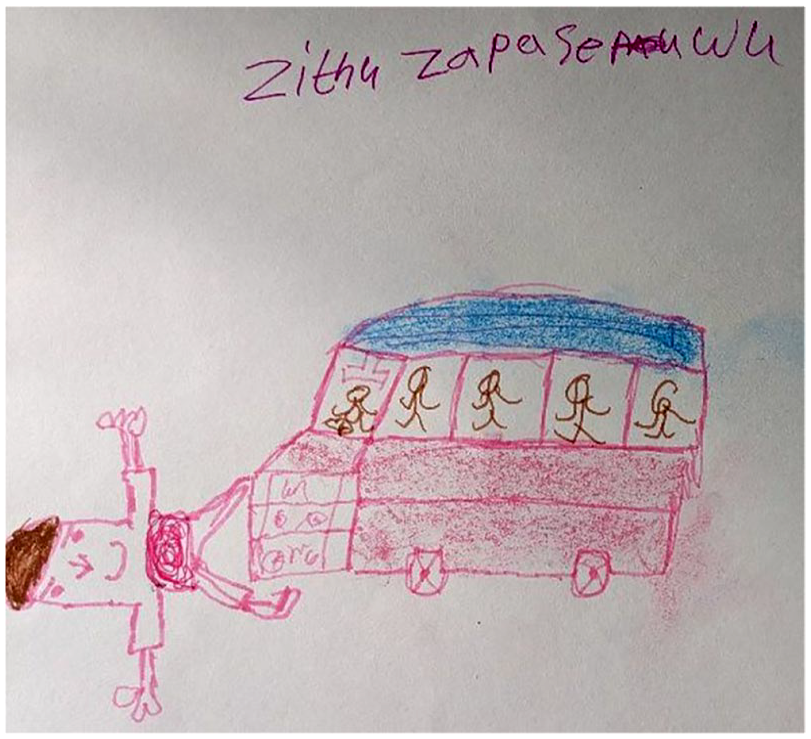
Drawing by a 12-year-old Boy with Albinism.
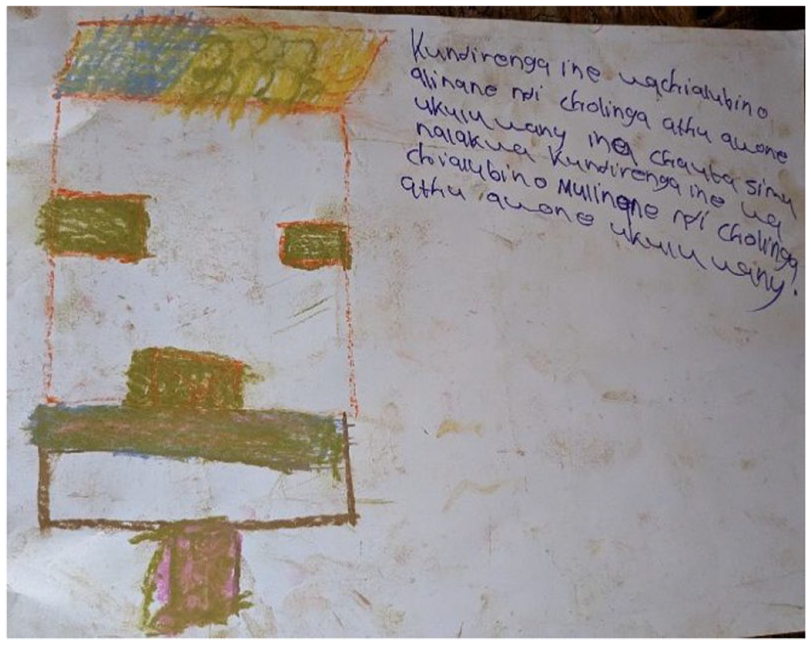
Drawing and Poem (in Chichewa) by a 16-year-old Girl with Albinism.
All drawings and poems were co-analyzed with children and young persons with albinism who assigned their own captions to them. Once initial code labels and themes were thematically grouped (Braun & Clarke, 2022), two validation workshops were conducted—one with children and young persons with albinism and another with the RAG.
Research Advisory Group
Successfully conducting research “with and not on” (Cook, 2020; Vaughn & Jacquez, 2020) a minoritized community in the Global South requires Umunthu philosophical values of relationship, sharing, and respect (Seehawer, 2018); thus entailing reshuffling of power dynamics in orthodox researcher-and-participant relationships (Marovah & Mutanga, 2023). This agenda for decolonial research relations led to my choice of a RAG of persons with albinism to inform study decisions. Prior to engaging the RAG or commencement of field research, I sought and was granted ethical approval for this study through two university research ethics committees (REC) in Malawi (UNIMAREC P.12/22/209) and the United Kingdom (UEC22/88). As part of the ethical procedure, I supplied the RECs with the RAG terms of reference (ToR) and gained the RECs clearance to engage a RAG. I also informed both RECs about plans to compensate the RAG for their involvement, and it was the Malawian REC who guided me in determining how much the minimum monetary compensation could be, considering the commitment of the RAG and the context of the study. Accordingly, the two RECs ultimately provided governance of this research (Robson, 2018), and the RAG’s involvement in this study did not override the REC authority.
To establish this RAG, I approached the Association of Persons with Albinism in Malawi (APAM)—an organization dedicated to advocacy, community sensitization to demystify stigmatic beliefs, and development programs to improve the lives of persons with albinism across Malawi. Initially, I held one-on-one and group meetings with key members of APAM in early March 2023. Given that my study focused on the lived experiences of children and young persons with albinism, my membership criteria for the RAG were as follows: persons with albinism who work professionally with children and young persons with albinism in Malawi. In addition, RAG members had to be based in the Lilongwe district where the study was primarily being coordinated. While these criteria may seem broad, they are actually specific since only a small group of people meet them. This is due to the limited number of organizations or government bodies with people with albinism, as well as safeguarding concerns associated with working with children and young persons with albinism. To clarify expectations of the RAG, I developed ToR that welcomed participatory approaches such as commitment to a long-term participatory relationship which involved attending several research meetings for shared learning and indigenous knowledge.
The RAG was set up at the end of March 2023 and comprised of four Malawians—three were men with albinism, one was a woman with albinism, and one was a man without albinism. All were professionals working with APAM and government bodies.
Researcher Positionality
I am a Malawian woman who is an early career researcher currently based in the United Kingdom for the past 3 years. Prior to this, I was born and raised in Malawi where I gained field research experience with Malawian adolescents at risk such as pregnant and parenting adolescents, girls with lived experiences in child marriage, women and girls facing sexual and gender-based violence, and girls’ overcoming barriers to education. I am the founder of a nonprofit organization in southern Malawi focused on girls’ education and mentorship in peri-urban and rural schools. I have a native fluency in spoken and written Chichewa. These all shape my insider positionality in the current study, especially my native Malawian identity and upbringing (Yvonne Bulk & Collins, 2024). Having said that, I also recognize my outsiderness in this study—I am not a person with albinism. Working with the RAG was helpful for my reflexivity and negotiation of my outsider identity throughout this research.
Navigating Insider–Outsider Positionality
Yvonne Bulk and Collins (2024) defined “insider research” as “the researcher is doing research on, with, or for, a person, group, or community with which they share characteristic(s) that are relevant to the research” (p. 568). In this instance, I shared relevant characteristics such as race, nationality, ethnicity, and language. As an indigenous researcher, unlike Western researchers conducting inquiry in Malawi, these characteristics gave me the advantage of establishing trust more naturally since I am aware of the social norms and know how to respect our local values (Kalinga, 2019, p. 270). Yet simultaneously, being Malawian also means I am aware of the sociocultural complexities of research with children and young persons with albinism. Social inequalities faced by persons with albinism in Malawi such as experiences of othering, colorism, harmful beliefs, and safeguarding issues complicate the lived experiences of persons with albinism. Therefore, engaging a RAG of person without albinism became more than just a participatory approach, but also a way to center voices from the margin and acknowledge my outsiderness (Bukamal, 2022).
This sparked internal reflexive dialogue within me about power dynamics and positionality. For example, my years of qualitative field research experience and my status as a postgraduate researcher affiliated with a UK institution, made me feel like an expert in this field. Yet, returning to my home country and working with a RAG of persons with albinism made me more aware of my outsider positionality and hence, realizing I was less of an expert than the academy had made me believe. In this study, my outsiderness centered around my exclusion from the social complexities facing persons with albinism, which privileged me, yet also in some cases positioned me as less suited to make decisions affecting children and young persons with albinism. This issue posed as a threat to trust as demonstrated by a question that I was asked in the first group meeting with the RAG when one member inquired:
Why do
This was a valid question, and it weighed heavily coming from a person with albinism to a researcher without albinism like me. In that moment, I felt my outsider status outweighed our shared characteristics. This highlights how even indigenous researchers must earn trust in their communities; speaking the same language does not guarantee access (Kalinga, 2019). Likewise, my Western academic influences distanced me even more from insider circles in the community. Beals et al. (2020) explained this as an “emic/etic divide”:
It is this tension between the center and the margin that students of ethnographic research enter when their own ethnic, gendered, or classed identities collide with those of academia. At these times, many emerging researchers find themselves grappling with notions of emic (insiderness) and etic (outsiderness) and negotiating where they sit, as insiders or outsiders, in the life-worlds of their research subjects. (Beals et al., 2020, p. 593)
Reflecting over these made the duality of my insider–outsider positionality more apparent, and prompted me to approach trust building as an ongoing process. Bukamal (2022) highlighted that immersing such reflexive awareness is important. This consciousness is particularly required in qualitative inquiry which is shaped by how the researcher views themself, as well as how the research community views the researcher (Johnston-Goodstar, 2012).
The RAG and study participants viewed me as an insider–outsider. Our RAG meetings, conducted mainly in Chichewa, reflected shared contextual knowledge, such as respecting community ethical standards and relying on the RAG for decisions affecting children and young people with albinism. This strengthened ethical choices, for example, RAG members highlighted nuances I had overlooked, like accommodating visual impairments by using larger fonts for consent forms and information sheets. The RAG also guided safeguarding considerations about interview and workshop locations. Their insider knowledge, rooted in their own lived experiences as persons with albinism in Malawi, was invaluable to the study.
Negotiating Power Dynamics
As mentioned above, the RAG consisted of four persons with albinism, mostly men. One member, holding a leadership role in APAM, was well-informed about the association’s structure, programs, and relevance. His personal lived experience and connection to the community built strong trust within the community of Malawians with albinism. When establishing the RAG, as part of power sharing, I invited him to select RAG members based on his deeper community knowledge. He recommended colleagues from APAM who worked with children with albinism. This created a RAG composition that reflected internal power dynamics influenced by gender, age, albinism, leadership, lived experience, and professional expertise.
As Kalinga (2019, p. 271) explained, as a Malawian researcher “[unlike] external research partners . . .[we] understand the complex set of social codes and mores that govern indigenous researchers.” Therefore, in my case, balancing social considerations with equitable decision-making power became integral to my negotiation process. For instance, the unspoken social expectation was that RAG members were to respect the one with leadership authority. And despite, my research expertise, being the youngest, meant older members were considered wiser since that is the norm for “elders” in African societies (Mbele, 2004). In addition, “gender politics as expressed in . . .Malawian society, [means] women are considered as naturally different and dependent on men” (Kayange, 2018, p. 61). These intersectional issues challenge equitable power and voice, especially since the RAG only had one woman with albinism.
My reflexive work as a Malawian researcher, of considering and re-considering the situatedness of social norms, power, and positionality, was complex. Drawing from Umunthu to untangle the politics of intersectional social locations that complicate community engagement, means centring the munthu (human or humanness) as an equalizer. This is a launchpad for leveling hierarchies while being aware of and challenging the social factors that get in the way of that humanness (Manyonganise, 2015). Regarding the RAG, welcoming the participation, voice and inclusion of each RAG member as valuable voices, quickly became paramount. I provided ToRs to clarify the RAG’s participatory values—relationship, indigenous knowledge, and shared learning—and to outline expected roles that welcomed each member’s involvement in refining data collection tools, supporting the pilot study, informing participant recruitment, advising research decisions, and monitoring and evaluating the field research processes. In practice, the RAG member’s voices added different insider expertise. For example, drawing from her professional everyday experiences as a woman with albinism working with children, she helped improve the rephrasing of questions in the data collection tools to be more applicable to children. Nevertheless, this is not to imply that power dynamics and social norms vanished—but the ToRs and RAG’s pre-existing collegial relationship helped minimize their impact. Generally, I observed the RAG’s keen engagement and a sense of their ownership of the study. However, one RAG member remained disengaged and hardly participated, thus demonstrating that there are indeed unspoken but very present internal power dynamics that complicate research with the community, even for native researchers and irrespective of ToRs.
Negotiating Access Through Local Ethics Channels
Valuing the safety of children and young persons with albinism led me to ensure that, in addition to the two REC approvals that I had secured before commencing field research, I also sought approval from the local District Education Management office and Malawi Police Research Unit, so that I did not bypass accountability to and relating positively with the local systems (Seehawer, 2018). Once I had written approval from the local systems, it opened up access to schools and communities. The RAG guided the selection of schools for this study, and when I visited the schools, I first had to establish relationships with the teachers and head teachers before I could access the children and young people. These relationships were maintained, because I returned to schools at the end of the fieldwork period to hold a validation workshop and give donations to the schools as an appreciation for welcoming me. Such extra efforts could have been taken for granted or overlooked by non-Malawian researchers who are not well-versed with the local context and language. However, being a Malawian researcher and having the participatory agency of the RAG, added more intentionality to rightly aligning the study’s ethics and decisions toward honoring the indigenous context and existing channels. Seehawer (2018) describes this as “establishing personal relationships following local protocol” (p. 459).
Eventually, the RAG played a significant part in my ability to gain access, recruit, and build rapport with children and young persons with albinism by suggesting I include local songs and dance in the participatory workshops. So, I planned for this by recalling some of the games I had played before. One is called “do as I do” where participants form a circle with someone in the middle dancing and singing the words “do as I do.” Those in the circle follow by singing and doing what the one in the middle of the circle is initiating. In practice, during the participatory workshop, I also invited the children and young people to co-lead by teaching me the local games they are currently playing. Some involved dance and songs in Chichewa. Seehawer (2018) describes this as an Umunthu-centered practice of “community-based, relational and participatory” efforts (p. 453). Adapting the participatory workshops this way informed by the RAG, and it was beneficial in gaining relational buy-in and rapport with children and young persons with albinism as an outsider. In this way, the degree to which the RAG’s suggestions were taken up to shape the research processes was non-tokenistic—substantive rather than superficial or symbolic—unlike tokenistic participation where communities are at the table yet are “discontent, which is rooted in a history of exploitation” (Kalinga, 2019, p. 271). Yvonne Bulk and Collins (2024) are of the view that both insider and outsider research have their position and importance in qualitative inquiry. In agreement with this, I experienced that reflexive outsiderness reckoning filtered through insider voices (i.e., RAG), “build[s] on the epistemology of the research participants . . . [to inform] an agenda that contributes to their own purposes” (Seehawer, 2018, p. 453).
Ongoing Indigenous Ethics Achieved the Umunthu Way
Umunthu principles center on humility, relationships, and togetherness (Kayange, 2018). Given that ethics is complex (Nordtug & Haldar, 2024), embodying these principles in this research called for an ethical approach that was ongoing as opposed to once-off. Similarly, Sime (2008) discussed ethics with young people in participatory research as being an “ongoing” process to ensure that they had agency throughout a study. Nordtug and Haldar (2024) pushed the discussion further by situating ethics as a reoccurring practice and thus as part of the analytic process in qualitative inquiry. Recognizing that ethical issues arise before, during, and after field research (Nordtug & Haldar, 2024; Sime, 2008), calls for reflexive choices and community relationships that also endure before, during, and after field research (Images 3 and 4).
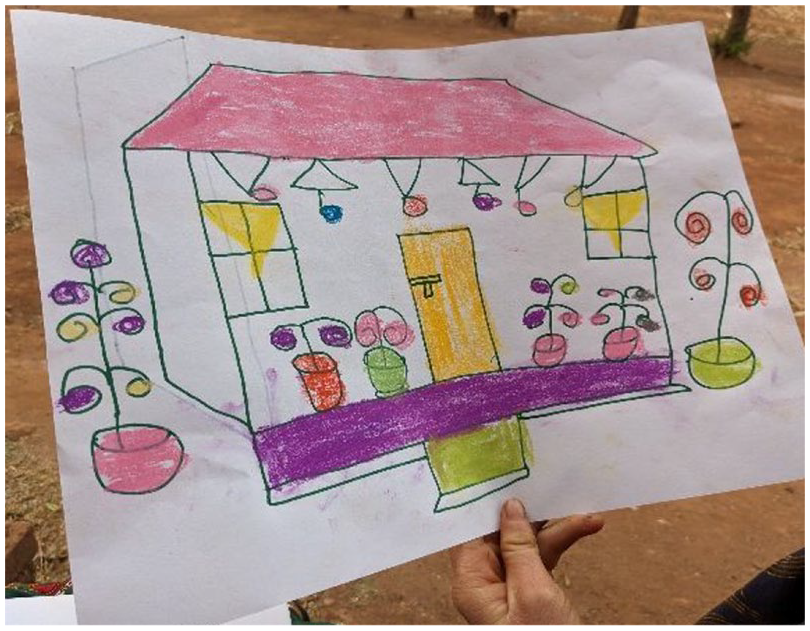
Drawing by an 18-year-old Girl with Albinism.
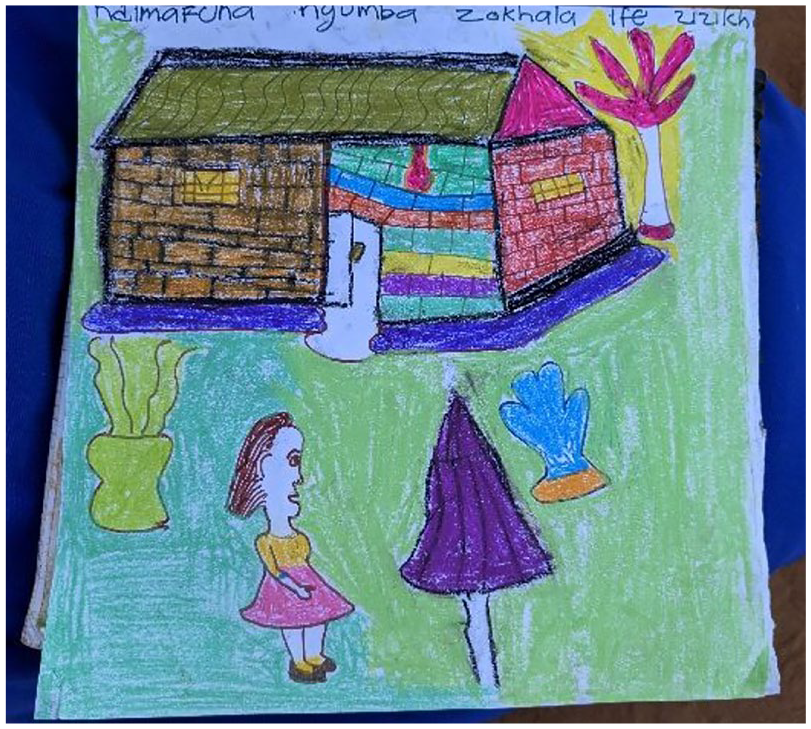
Drawing by a 19-year-old Girl with Albinism.
In the current qualitative study, data was gathered in three stages. A participatory workshop with children and young persons with albinism was the first, followed by one-on-one interviews with them. Third, interviews with a friend or family member chosen by the children and young people were conducted. During all stages, the participants could exercise agency. For instance, in stage one, participants chose how and what knowledge they co-produced in the study. They had the choice to generate knowledge either through participatory drawing or poetic inquiry—some chose both. While participatory and creative methods are assumed to be less intimidating (Cook, 2020; Literat, 2013), they do not always cater for empowerment or agency if participant’s choice about how they engage in the study is limited. Ensuring the participants had the ability to choose was my way of upholding the Umunthu ethics of respecting agency. In stage two, participants decided who in their social network they wanted to invite to take part in stage three of data collection. Being sensitive to children and young persons with albinism as a marginalized community was a power dynamic that also informed my ethical approaches. For instance, because the majority of the participants were under the age of 18, two levels of consent were necessary as required by the Malawian REC. I obtained signed consent from a parent or a caretaker alongside assent from the child too. Leaving room for agency was an ongoing endeavor, since this study allowed participants to opt out even after data was collected by requesting their interviews, drawings, or poetry be excluded from the study if they wished to do so at any time even after data collection. This way, they were not coerced to take part in this study.
Welcoming the participants to build relationships with myself as the researcher and with each other as participants was also important in this study because children and young persons with albinism in Malawi are typically isolated and excluded from social participation (Lynch & Lund, 2011; Tambala-Kaliati et al., 2021). In addition, a sense of shared co-creation was central because as Marovah and Mutanga (2023) pointed out, just because a study is applying creative visual methods, it does not mean it is participatory research. What made the current study participatory was the participant’s voices being amplified in a “togetherness” approach to knowledge production within a shared space and discussion setting. Thus, the ethics of disclosure and anonymity needed to be navigated within a participatory group setting. I did so by applying the Umunthu principle of togetherness and sharing (Marovah & Mutanga, 2023). Therefore, limitations to anonymity in group settings were minimized by empowering the participants with the same level of trust that I as the researcher communicated I would give to them. In other words, we established a shared trust and co-responsibility that the participants would maintain each other’s anonymity, just as the two RECs required that I do for the children and young people. Unlike colonial ethical practices which thrive on making decisions for minoritized groups and in so doing undervalue their autonomy (Marovah & Mutanga, 2023), this way of building trust by sharing responsibilities with participants sheds light on indigenous ways of relating as an opportunity for a shared ethics that places the well-being of the research community in their own hands as much as it does in the hands of the researcher.
Embodying the Participatory Aspect of Participatory Research
According to Marovah and Mutanga (2023), not all research that calls itself participatory is in fact “participatory.” Concurring with this, Stanton (2014) argued that to participate, one must work together with other participants. In the current study, working together called for the power dynamics to enable co-creation and valuing voices. When research decisions and procedures disregard the needs and values of the research community, regardless of how “participatory” it may have been labeled, issues of power are contested (Johnston-Goodstar, 2012). Owing to a consciousness of power issues, the current study took steps to ensure that persons with albinism through the RAG, embodied more than just a tokenistic label. As a result, the opinions and firsthand knowledge of the RAG were included from the beginning to the end of the field research processes, including the pilot study. In practice, participation was embodied by the RAG playing a vital role in determining the location and timing of the pilot project, and they were also actively involved in recruiting the pilot study participants.
Furthermore, when the pilot study was subsequently conducted, two RAG members accompanied me to the study site and conducted two interviews with guardians. In parallel, I facilitated a participatory workshop with four children and young persons with albinism, followed by a one-on-one interview with a girl with albinism. Altogether, four children, three parents, and one aunt participated in the pilot research overall. The pilot study was implemented at a primary school in a rural area of central Malawi, in Lilongwe district. The RAG chose this particular location because, according to them, it has one of the highest populations of persons with albinism in Lilongwe. I was unaware of this knowledge, but the RAG knew of it well because they are part of the community and APAM often worked in that area to provide services supporting persons with albinism there prior to the study. The RAG also felt more comfortable with the study engaging with children at a school since this was a safe place with reliable authority present such as head teachers and teachers that the children and young persons with albinism were familiar with. Furthermore, the school provided us with classrooms to conduct workshops and interviews, which was crucial in having enough shelter from the sun—a necessity for children and young persons with albinism because of their low melanin levels. This collaborative community approach between the school, RAG, participants, and teachers, all working together toward the success of the pilot, represented a shift toward upholding “community members as knowledge holders” in research (Thambinathan & Kinsella, 2021, p. 4). Thambinathan and Kinsella (2021) argued that such meaningful inclusion of the community is a transformative praxis.
Once the pilot study was completed, we convened a RAG meeting at a separate location to go over the study instruments and make any necessary revisions. This meeting resulted in more accurately translated study concepts and the inclusion of appropriate terminology about how to address persons with albinism in the local language. More so, from this meeting, decisions were made on how to proceed with participant recruitment strategies based on learnings from the pilot study. The atmosphere of the RAG meetings was welcoming and were all hosted in a manner that aimed to flatten power hierarchies so that each member knew that their contribution was heard and acted upon. This is important since Sime (2008) advocated for non-tokenistic involvement if a study works with a RAG. At a much later stage of the participatory field research journey, two members of the RAG were invited for a data validation workshop. In this joint session, the RAG as important stakeholders to this study, reviewed and prioritized the initial code labels that emerged from the data and clarified some of my research assumptions regarding the preliminary findings. It was a crucial pre-analysis step in ensuring that the study and data analysis met the needs and expectations of the research community. Cook (2020) clarified that participatory research ought to include the voices of those whose lived experiences are the subject of study. Furthermore, beyond institutional ethics, Love and McDonnell (2024) emphasized “relational ethics” as a suitable practice for qualitative inquiry. I found that this participatory principle was achievable through the engagement of a RAG.
One cannot discuss participatory research without acknowledging time as a limitation (Stanton, 2014). Similarly, participatory collaboration with the RAG, in this study, involved a lot of time. For instance, the RAG member had to sacrifice time to take part in this study; and sometimes attended group calls via WhatsApp in the evening. Participatory and decolonial researchers should respect participants’ time by considering appropriate ways to honor their involvement and work in the research process. In the current study, acknowledging and appreciating the RAG member’s efforts and time invested in the study entailed compensating their mobile data and travel expenses included in an honorarium allowance for each RAG meeting that they gave time to attend. The Malawian REC provided guidance on the amount for this honorarium allowance.
Discussion and Conclusion
Previous authors (Bukamal, 2022; Johnston-Goodstar, 2012) have underscored the need for researchers working in the Global South to be aware of the colonial patterns in their work, regardless of their own gender, race, or ethnicity. Navigating an insider/outsider identity has implications for qualitative inquiry. Furthermore, the complexities of ongoing ethics (Nordtug & Haldar, 2024), and pursuing indigenous knowledge-making practices through participatory methods can become messy. Insider positionalities have challenges, such as insider subjectivity holding taken for granted assumptions (Yvonne Bulk & Collins, 2024), but excluding insider voices altogether is not the best practice either (Johnston-Goodstar, 2012). In the study presented above, I drew out key lessons about insider voices through the engagement of the research community having a say in research decisions that concern them. When qualitative inquiry centers voices of people with lived experiences by engaging them through a RAG, the participatory aspect of participatory approaches is embodied (Marovah & Mutanga, 2023). Umunthu-informed research helps (re-)center historically silenced voices in decision-making through the involvement of a RAG, benefiting researchers working with minority communities, regardless of positionality (Bukamal, 2022). Rather than valuing insider over outsider positionalities, leveraging relational capital via a RAG acknowledges the challenges of dual positionalities, including power dynamics and social norms. Masking outsiderness to gain community buy-in is unethical, as insiderness does not guarantee automatic access to the community.
A key argument in this article is the need for participatory research to exemplify participation beyond the standard application of visual and creative methods (Marovah & Mutanga, 2023). Decolonizing participatory methodologies requires non-tokenistic community involvement. As shown in this study, a RAG supports this by promoting indigenous ethics and collaboration. Persons with albinism co-organized the pilot study and participant recruitment, ensuring community needs were met—such as printing materials in large fonts. This co-creation process helps address overlooked needs and allows indigenous voices to define safeguarding boundaries (Johnston-Goodstar, 2012) since, even Global South researchers like me are subject to outsider dilemmas when conducting research in their native countries (Kalinga, 2019). Previous studies have further suggested that failing to acknowledge colonial legacies places researchers, including Global South scholars, at the risk of reproducing othering and colonial practices in research (Cooms et al., 2022; Ghai, 2012). This supports Parameswaran (2001) who argued that non-Western researchers’ studying phenomena in their own countries present consequences for postcolonial research. Alternatively, the decolonial outputs of indigenous ethics achieved through Umuntucentric reconstructions (Chinkondenji, 2022) have the potential for less damage-centered relationships and narratives (Tuck, 2009). In other words, Umunthu principles present emerging opportunities for navigating the challenges of indigenous ethics with marginalized communities.
Footnotes
Acknowledgements
I sincerely acknowledge the Association of Persons with Albinism in Malawi (APAM) for their invaluable roles in this study as a research advisory group and gatekeepers. They actively participated with a strong sense of ownership, supporting the recruitment of participants and informing other field research decisions.
Declaration of Conflicting Interests
The author(s) declared no potential conflicts of interest with respect to the research, authorship, and/or publication of this article.
Funding
The author(s) disclosed receipt of the following financial support for the research, authorship, and/or publication of this article: This research was conducted as part of a PhD study funded by the Commonwealth Scholarship Commission from 2021 to 2025.
Ethical Approval
The University of Strathclyde (UEC22/88) and University of Malawi ethics committee (UNIMAREC P.12/22/209) granted approvals for this study. Further local-level approvals were granted by the District Education Manager Lilongwe Rural West and the Malawi Police Services Research and Planning Unit.
Informed Consent Statements
All data, including drawings and poems, were anonymized to ensure confidentiality. Participants provided assent along with their guardians’ consent obtained in a written and signed form for publication. All participants were fully informed about the study’s purpose, procedures, potential risks, and their right to withdraw at any time.
