




Abstract
Focusing on walking-encounter-ings for thinking-doing-imagining qualitative research otherwise, and composed as a series of intermezzo image-text-riffs, this article enacts artful inquiry as a mode of radical empiricism. It considers what walking-encounter-ings enable as sensorial-embodied-affective inquiry; how they prompt curious and creative experimentation; and how they may release speculative possibilities to imagine alternative nows and better/different futures. Theoretically grounded in feminist materialist praxis, concept-ing, and postcritical inquiry, and empirically inspired by Berlant and Stewart’s The Hundreds, our walking-encounter-ings are intermezzo collaborations with the world which aim to disturb, intervene in, and unsettle boundaries between research and everyday life.
Walking the Meanwhiles in Meantimes
Bad news keeps coming: compulsory redundancies here; voluntary redundancies there; people leaving; people getting ill and on long-term sick leave; friends with burnout, stress, anxiety; colleagues working all hours to get work done. A systemic slide into cognitive capitalism where what matters can be counted in crude numbers on a graph: grant income; article outputs; teaching volumes. You are (NOT) your H-index. Only the university system insistently tells you are—and it’s sad, disheartening, dispiriting. Twisted targets turn and drag, keeping you running on the spot. A snapping of vines; a sapping of veins; a sagging of spirit. Mean times.
Meanwhile
You can build from the space where you are not entirely crushed.
And find freedom And
Writing requires composition and repetition.
And doing this together And
[In] the expanded time for untangling fresh extensions.
And breathe in, grow, open, amplify, diffuse, stretch, unfurl, and breathe out And
On an impulse you watch . . . writing the present . . . commitment . . . the thick of them . . . gravity.
Feet moving onward; movings and meetings And
Not knowing until later . . . what’s nothing, what’s an extraordinary or ordinary touch.
Walking as coasting with moments and matterings And
Meanwhile
Walking life’s unfoldings happenings And. (Berlant & Stewart, 2019; Guyotte et al., 2020)
Intermezzo-Image-Text-Riffs
Take a walk and another and another and on and on. Walking in all weathers, I can see my lifetime piling up. Reaching from my feet to the stars to the soil’s softness and the earth’s dark core. In walking-encounter-ings for thinking-doing qualitative research otherwise, the mundane matters. Material moments as humans-nonhumans-air-atmosphere-light-weather align and choreograph mood and tone infusing your body. A felt sense-ing in a heartbeat and then gone, as affects pulse in relations of middling and muddling through. Intermezzo encounter-ings: circling, pushing-off from, returning-to, encouraging them to thrill and thrum us. Somehow yet unknown.
Walking the Meanwhiles in Meantimes.
A proposition and a decision: to make-with, to actively open ourselves to encounterings in walkings, and to do something speculatively, “art-fully” with them. Anticipation’s fires, freedoms, and fears. Art-full academics? A new mode of bodily, sensory, and speculative becoming hails us; its welcomes and dis/comforts link and sync us in a together-ing endeavor. To compose, dis/compose, play ourselves and our writings anew, invitational intermezzi choreographies of disruption and interruption. Receptivity’s relationalities propose experimentations intermezzo: image-text-riffs unfurling and curlicue-ing new aesthetic enactments, unbidden and unforeseen just moments ago. To work with the heat of a proximity that echoes, extends, or hesitates into forms of life. Yes! (Barad, 2007; Deleuze & Guattari, 1987; Fairchild et al., 2022; Koro et al., 2022; St. Pierre, 2013)
Routines
She almost missed her train. Daydreaming and walking across the car park. She left home at the same time as always, the traffic was not that bad, the routine was the same but somehow she got to the platform with only seconds to spare before the train departed. Bodies and time enmesh experiences, daydreaming, slowing down, searching. Breathing fast from the rush, she finds her phone, takes a picture of the sunrise, now and gone. Snap. Normally her body measures time better. Today’s skies offer a brightness in the daily commute, a moment of stillness before a more busy onrush (Fairchild, 2024; Rautio, 2024).
Intermezzo-Image-Text-Riffs.
Routines.
A Soft Warm Weight
Dog’s nose close to grass. The perfect spot. Crouch, extrude, then off walking again. Hand grasping inside the compostable bag, quick bodily bend, grabbling, picking up, and tying. Carrying. A soft warm weight in hand. Heading uphill, slow sniffs along the way, recreational anger unleashed at the gated Collie over the road, round to the right, down the steps, weeds aplenty for foraging in, home, breakfast, and sleep. Morning walk: movements crafted in the body over 19 years, in the daily intricacies of multiple human-dog encounters, intermezzo walks providing ballast against the marshy margins, manic excitements, or machinic repetitions of academic labor. Routine daily comforts beloved and needed by dog-humans everywhere. Each walk is entirely new, even when walking the same route. How many of these little black bags have I carried over the years? (Bissell, 2009; Taylor, 2017)
A Soft Warm Weight.
Loose Ends, Rabbit Holes, Walking-Riffing, Art-ing
Inspiration comes as a flash, in the middle, when doing something, writing, thinking or walking somewhere. We riff when walking moments take us down rabbit holes, following burrows and tunnels, wondering where we’re going, Berlant and Stewart’s book The Hundreds our companion. We riff with their cue: write a series of speculative interventions, each piece being 100 words (or multiples of 100 words), each hundred a composing world-making, an evocative choreographing artful inquiry. We walked as an encounter-ing, riffing, and art-ing as free radicals entangled in sensorial-embodied-affective modes of artful inquiry for thinking otherwise. Attentive to a momentary condensing of arbitrary mundane loose ends as we are caught up in their orbit. Walking, riffing, breathing, encounter-ing, creating, art-fully experimenting. We wrote, photographed, drew, painted, unsettling the boundaries of research and every-day life. Berlant and Stewart invoke us to: Write down all of the resonances the ordinary holds for you, its senses, practices, accidents, things. Set a timer: otherwise you’ll never get to any other kind of exercise (Berlant & Stewart, 2019; Kuby & Aguayo, 2019; Taylor, 2016).
Loose Ends, Rabbit Holes, Walking-riffing, Art.
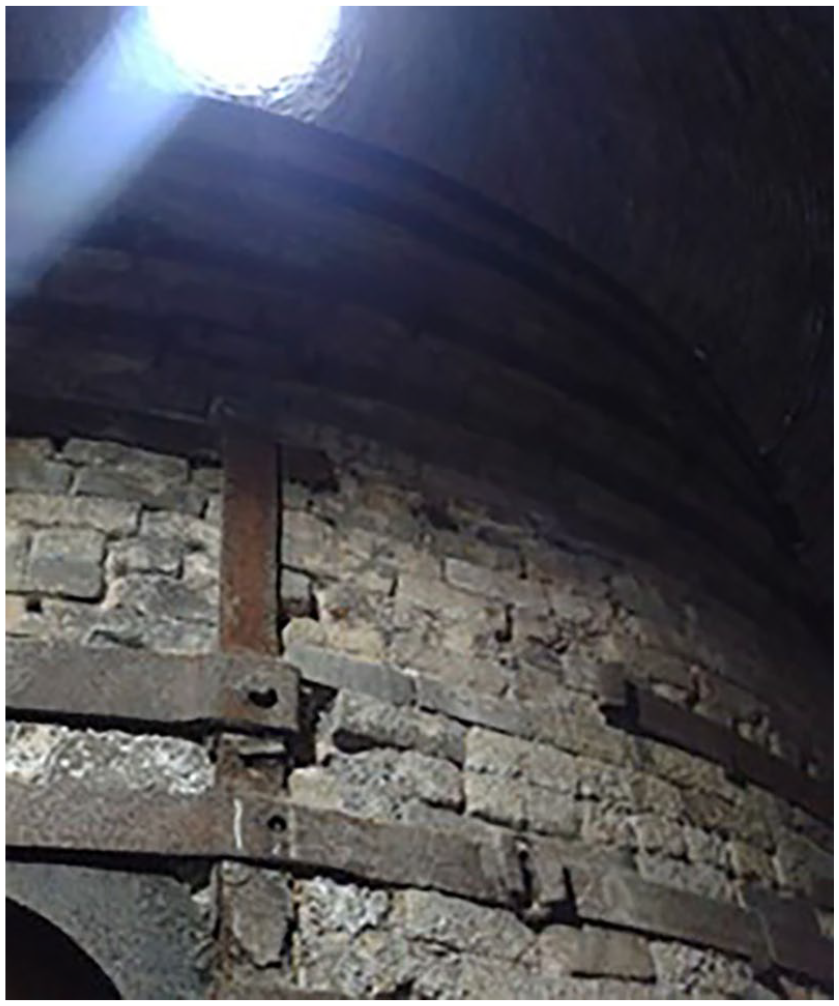
Do Things, Movement, Pattern, and Concept, Make Tracks for Potential Sync
Like our companions in The Hundreds, we are interested in the elaborate strange logic of the world. Being in the scene that is pulsating, not separating what’s out there or in us. Like our companions, we look for points of precision where something is happening. This helps us develop and shape artful inquiry as an embodied experimental practice of/for thinking and doing. Our walking-encounterings were motivated by curiosity, comprising playful, uncertain, experiments of/with worldly relations; our subsequent writings moved in the in-between spaces of image-text to see what emerged. Our co-compositions are not critical accounts of, or authoritative comments “on” or “about.” Rather, they refuse such claims of power and, in doing so, seek to challenge scholarly norms. They aspire, instead, to enact a mode of curiously-kindly postcriticality. As artful inquiry, the livingness and relationalities of our intermezzo-image-text-riffs try to align words to the conceptuality of ordinary things [to] make theory descriptive. This is theory doing something else, becoming-otherwise, becoming-animated, becoming-passionate, becoming-engaged, rather than being critical, judgmental, distanced, disdainful.
Intermezzo-image-text-riffs as situated and relational artful inquiry practices enact a processual concept-ing as a means to trace new movements, possibilities and imaginaries for walking sympoietically. They may be anarchives—lines of potential, occurrences of phenomena, diffractive and immanent thinkings-doings in new dimensions, forging relations, and always on the move. They may enact a sort of feminist praxis in their orientation to a frequency of resistance to power’s claims and holds. Riffs are movements. A melodics of how things go on. Intermezzo is where things may pick up speed and may slow down, but are always in motion.
A note: our citations’ are italicized relations. Our artful inquiries, walking practices and intermezzo-image-text-riffs adopt similar citation practices to Lauren Berlant and Kathleen Stewart (2019). We acknowledge author’s scholarship/ideas via direct quotations in italics but, like The Hundreds, no page number is used, citations have been placed at the end of each intermezzo-image-text-riff, and the full reference is in the end reference list. However, we are also accompanied by remembered phrases and words that burbled-bubbled as we wrote: our writing allusively hails Whitman, Keats, Haraway, Talking Heads, Emily Dickinson, Deleuze and Guattari and and and the words come and go. Citations are dilations (Bennett, 2010; Berlant & Stewart, 2019; Fairchild, 2017; Fairchild et al., 2022; Koro & Fairchild, 2024; Murphie, 2016; Taylor et al., 2022, 2023).
Do things, movement, pattern, and concept, make tracks for potential sync.
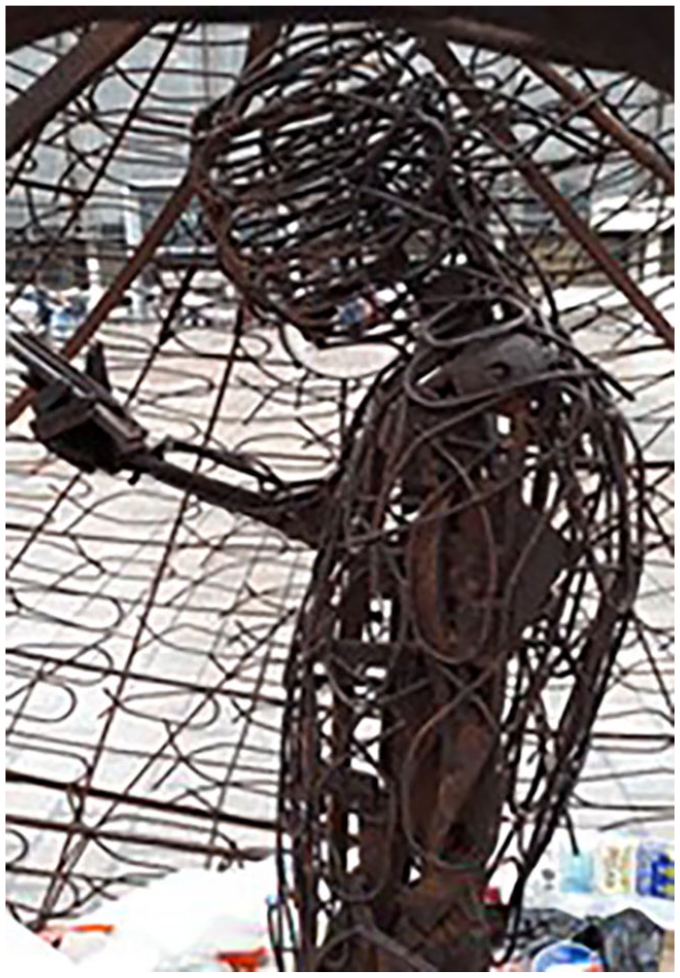
Random Hellos
You take a walk and another and another. Daily walks. You meet and greet other walkers with “hellos” and smiles. Brief conversations and connections on windy hills, woody lanes, and urban streets. Now and again, you notice others’ gait and posture—hips a bit misaligned, sloping shoulders, a right leg that swings out wider than the left, one fist clenched tight while the other hand hangs loose. You wonder how your body appears to others. Aging has meant coming to inhabit your own body more kindly. A tending to with greater care. A skinly and expansive comfortableness. Molecular warmth (Lefebvre, 1991, 1992).
Random Hello’s.
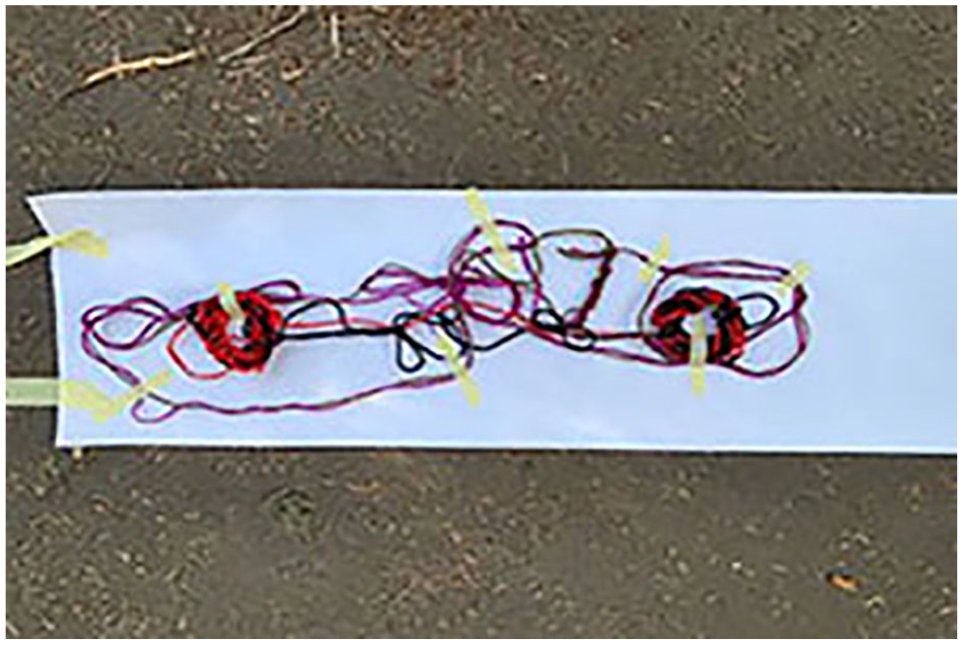
Chalk Streams
The location of a chalk stream can’t always be predicted. Sometimes, they follow well-worn paths; other times, they appear when least expected, trickling down the sides of pathways, bubbling up in gardens, seeping through tarmac, clear and cold, acidic and mineral-rich, free from sediment. Chalk streams rise from underground springs in landscapes that have a chalk bedrock. There are 220 chalk streams in England, 85% of them in south and east England. For chalk streams, the rock strata and weather are the enabling constraints—the amount of rain that has fallen, the height of the water table, and the composition of the landscape. Like the chalk stream, our walking-encounter-ings were produced by enabling constraints. We walked physically, metaphorically or drawing on (dredging) our rememberings of events. Unexpected things infused our bodies.
Things and somethings caught our eye, bothered us. We walked, we sat, we wrote. Sometimes, we photographed them; other times, we drew or painted as we breathed. Inspired by them. For the first 10 days becoming affective bodies becoming image-text-riffs. Tuning our senses, noticing happenings, objects, and materialities. Connected but writing separately and then uploading to a Google document.
The chalk stream re-appeared, we followed it, walking with a concept that was drawn from a bag each morning and shared in texts. We bubbled up, following new pathways, open to the unexpected, writing and assembling more image-text-riffs.
Next was crafting the paper, shaping the image-text-riffs, thinking about order—what resonates?—deleting ones where the stream had dried up, where the babbling and bubbling had ceased and the words had lost their sparkle. Cosseting others a little where words seemed to angle toward other words and where words hankered for a different image. Adding, moving, deleting, we shuffled and shaped the paper in a to-and-fro series of try-outs, a pondering of perhaps this or that’s, of what if we move this here—what happens? After somesuch writing-workings the paper seems to settle; it relaxes and seems comfortable. Ah, at least for now (Bennett, 2010; Berlant & Stewart, 2019; Manning & Massumi, 2014; Taylor & Benozzo, 2023).
Chalk streams.
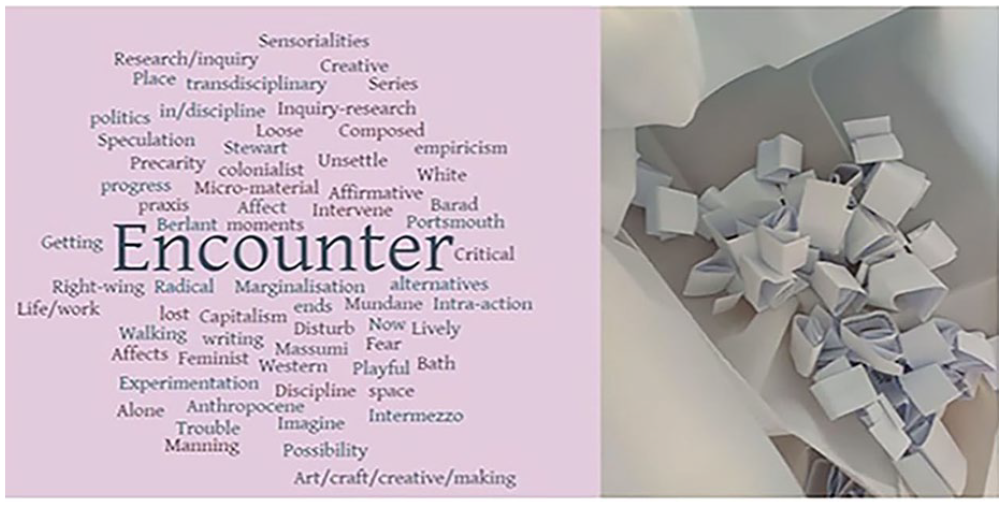
Elective Affinities
Atlantic flight, a tiring heat, a sweaty back, the rucksack cutting into her shoulders, wrists aching from dragging the too large case. Stuffed with stuff, just in case. In case what though? A nervous nagging, fizz of excitement, shiver of apprehension. Her moving feet remember this city. Three years ago, her first visit felt like coming home. She walked: her feet sensing elective affinities. Sheffield-Chicago. Cities of the North: cities of cold, wind, and rain; cities of rapidly changing hues and weathers, gray-blue and blinding sunlight; cities vibrantly embracing and vividly fending off the hammerings of postindustrialism. Walking living cities (Dickinson, 1964; Weber, 1985).
Elective Affinities.
Long Walk to Freedom
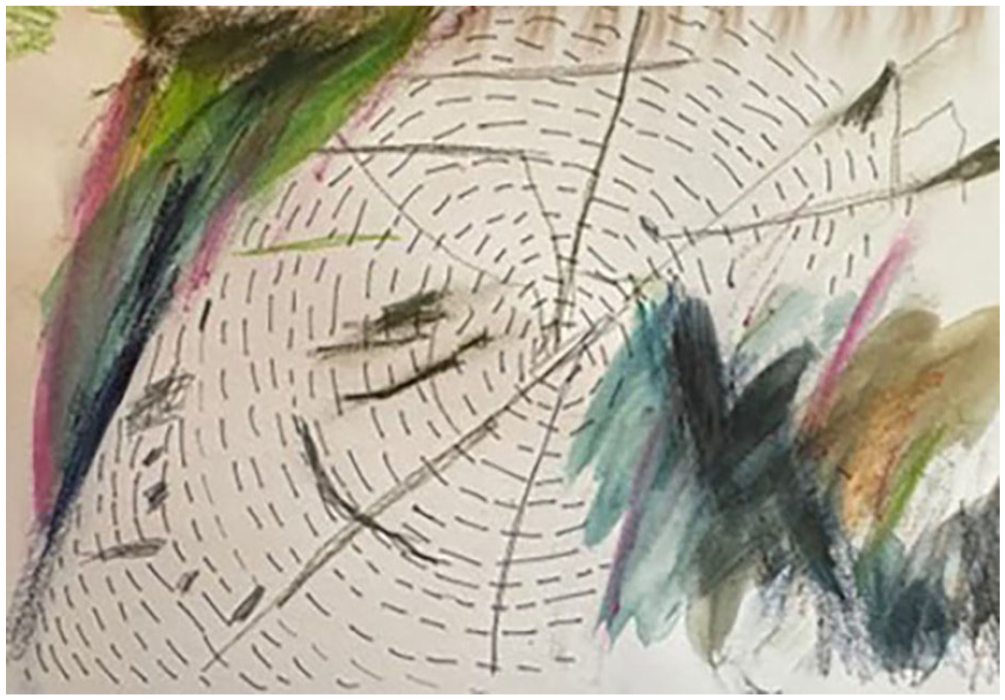
11 February 1990. In my memory, he walks past a long single-story white block toward the open gates of Victor Verster prison. In a dark suit, walking with measured pace, the sun screaming hot, cameras positioned outside watch him approaching. I watch and the world watches. I spend hours searching for this on Google, on mainstream news channels, and then on specialist history sites. I find the walk in front of the cars with his wife, the line of cars moving past crowds gathered at crossroads and along streets, the speech at Cape Town City Hall, with a 100,000 people in the Grand Parade grounds (Amandla! Amandlas! i-Afrika, mayibuye!, trans. Power! Power! Africa it is ours!), lines of police, people dancing, waving the flag unbanned only the week previously. No record of the walk I remembered. Nothing. Does it exist somewhere else? Other than in the neurons and synapses that fire as I call this cherished memory back? The memory remains, as do the words—freedom, justice, racial equality—and the words those words call to—dignity, respect, and humanity. Thirty-four years later, South Africa led the case at the ICJ against another regime. Genocide; apartheid. Still a long walk to freedom.
Long Walk to Freedom.
(Inspired by Charite by Ange Dakouo).
Walking-Encounter-ings for Thinking-Doing Qualitative Research Otherwise
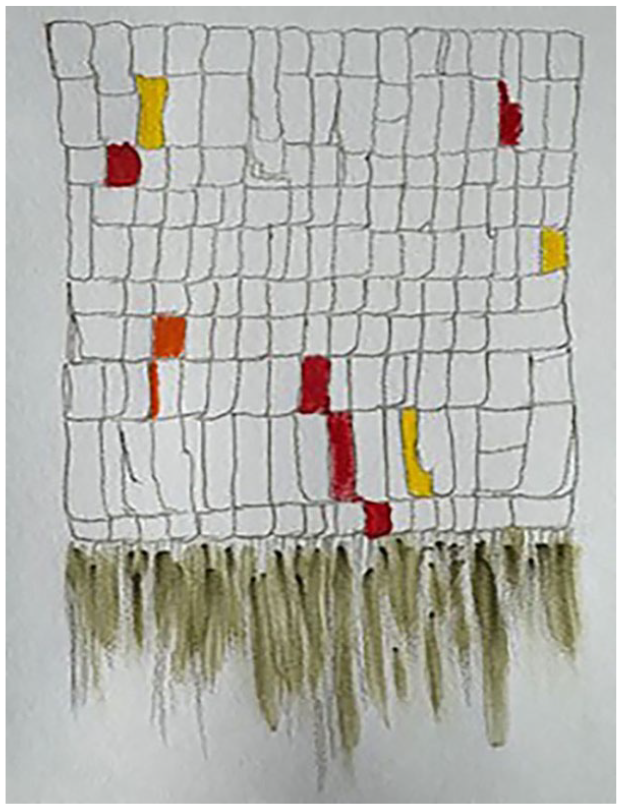
The Call for Papers for this (this!) special issue looks interesting. We “meet” across emails—shall we do this, yes ok, what next? It feels good to be writing together again, we have done this before but this is a chance to try some new things out. We start to think, compose, and plan, across different locations and geographies but in the same time zone. Doing things differently has been a part of us for many years, we have worked with others and in collectives, practice-ings and knowledge-ings aimed at, and oriented to, disturbance and unsettlement. Working in liminal spaces has been a conscious choice, we don’t “fit” the traditional academic order of things, we are un/disciplined. We get asked “what does this mean?” We are told ‘I don’t understand! How is this relevant?’
But it is.
There are more expansive worldviews, more traditions, long legacies, inheritances and knowledges that have been silenced, ignored and discounted in the quest for “the right answers.” So things stay the same, answers come and answers go, some answers stick and get stuck, regulating, normalizing particular ways of knowing, policing boundaries and borders, saying whose words, thoughts and deeds are valid and whose are not. Academic knowledge remains boxed in disciplinary boxes.
Thinking-doing artful inquiry as qualitative research otherwise is a counter-offensive to the normative, opening possibilities to attune bodies to the attenuations of climate change, global conflict, poverty, rising right-wing politics, global capitalist imperatives, White, Western colonialist “progress” narratives. It offers a call to be more capacious in our inquiry and praxis. It hails us to think with relationality, interconnectedness, entanglements, cuts, connections, and concepts. With humans, nonhumans, materialities, things, spaces, places, bodies of all kinds. All manner of becomings. Messy and entangled doings. Nonlinearity and uncertainty. Artful inquiry practices, playful possibilities, and speculative encounter-ings.
Difficult times call for new ways to think and do research and inquiry. How might creative, speculative walking-encounter-ings produce possibilities to imagine alternative nows and better/different futures? What is the traction of radical empiricism in the enclosure of the AcademicUniversityMachine? How can our research make a difference? Practice-ing hope suggests a starting point, at least (Barad, 2007; Fairchild et al., 2022; Jackson, 2015; Jones & Hoskins, 2016; Koro et al., 2022; St. Pierre, 2013; Todd, 2016).
Walking-encounter-ings for Thinking-doing Qualitative Research Otherwise.
Concept-ing: Playful
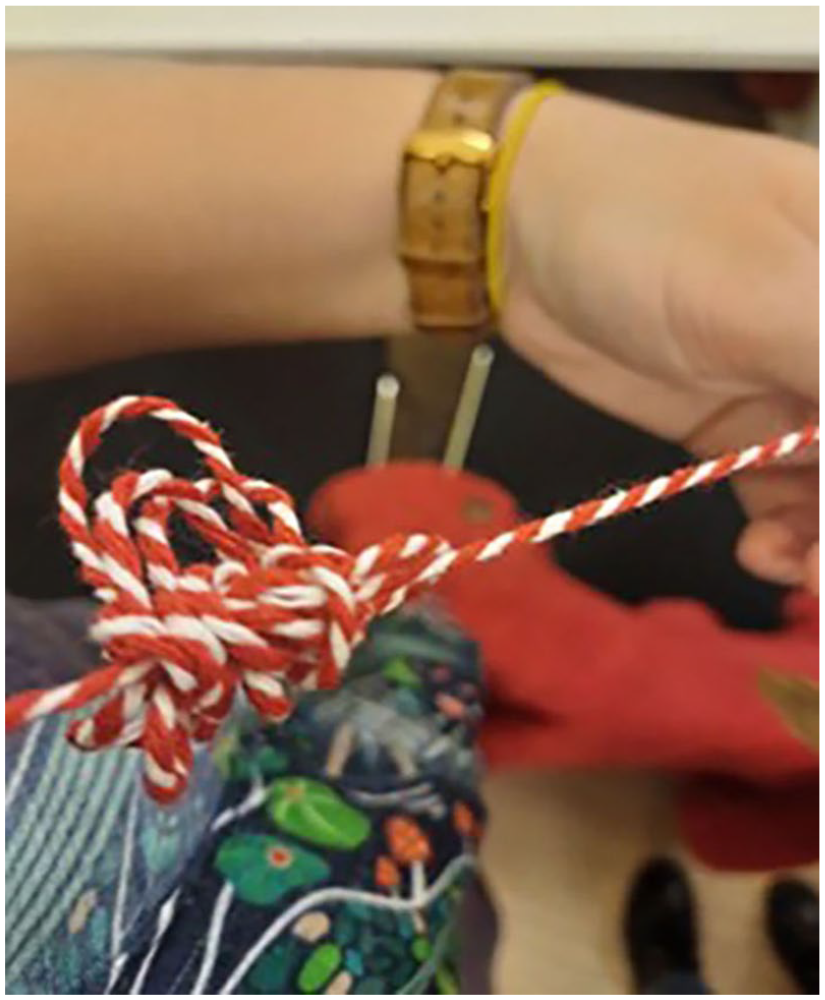
A walk, a dog, a ball, a path, field, wood, and time. This is where and how I learnt to play again. Education bends bodies out of shape, and often breaks them. Sitting’s stiflements school bodies at 5. At 18, lecture seats distort posture. At 50, immobile bodies hunch over computer screens, academic crash and crunch. Play’s uncanny artfulness unhinges you: movement with air, light, sky, grass, trees. Muscles strengthening; spine lengthening; energy expanding. The playfulness of animal politics, its logic of mutual inclusion, lures a knowing necessity. A now-ing of doing, string-ing, making, creating, collaborating, entangling. Bodying’s ludic gestures (Massumi, 2014; Shaviro, 2008; Taylor, 2017).
Concept-ing Playful 1.
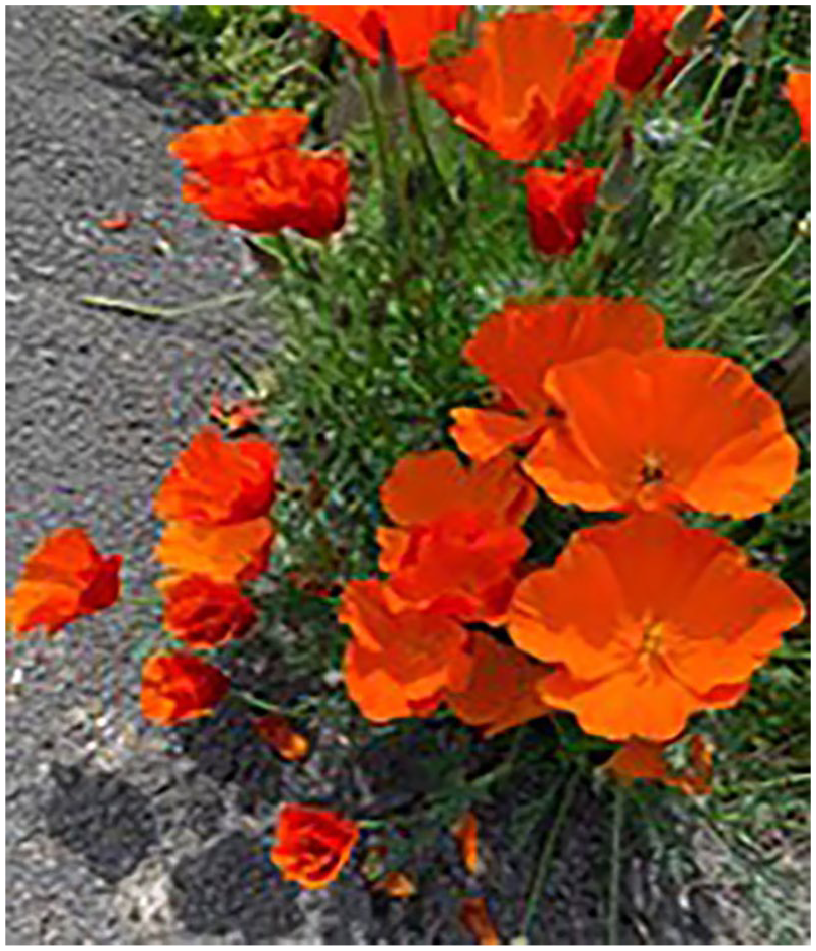
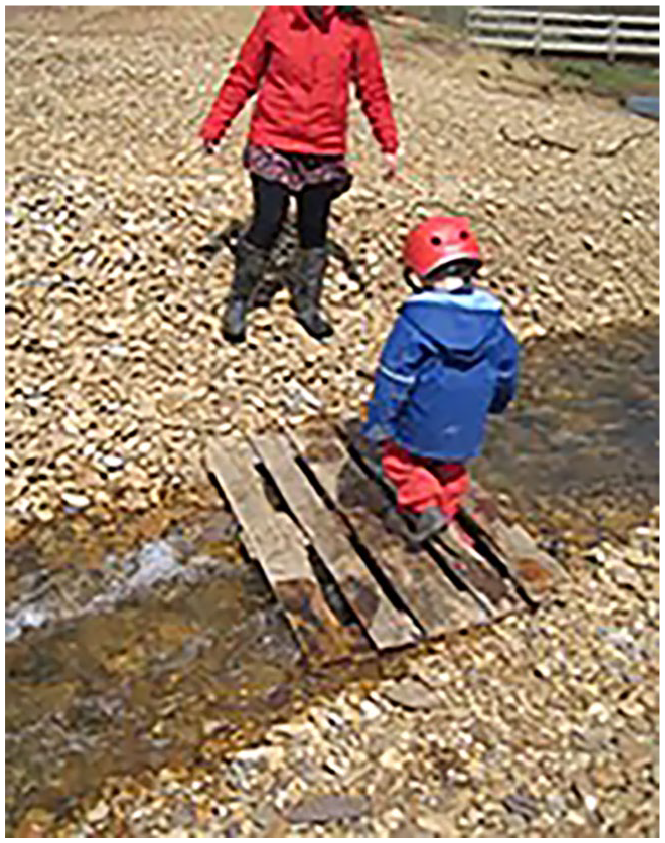
As adults, there are different expectations of what might be playful, play is something for children. Slip back in time to doctoral research, walking with early childhood teachers and young children toward the beach. The children ran in front of us to the shingle, fossicking on the shoreline. They find a wooden pallet that must have come from a ship delivering cargo. This is dragged to a stream that runs into the ocean. “Look! a bridge!” “Let’s run across it!.” The sea crashes, the wind sighs: we throw stones, picnic on the beach, play on the bridge (Fairchild, 2017).
Concepting playful 2.
Rainy Particularities
Day at work Walking on campus Misty rainy morning Soft grey light Water puddling quietly On grey concrete Mossy cracks seeping Familiar Bath weather Wet, wetter, wettest Wetness of kinds Unknown else where Softest warm mizzle Mizzle not drizzle That’s lemon cake You’re thinking of. This rain hangs in the air Not falling As if resting Momentarily And waiting patiently To caress Your face And hands A hanging mizzle That bides its time To embrace you With watery softness A tender and kindly dampness As soft as an old dog’s belly As gentle as a lover’s hand. Familiar as kin.
Rainy Particularities.
Riffing/Refrain/Ritournelle
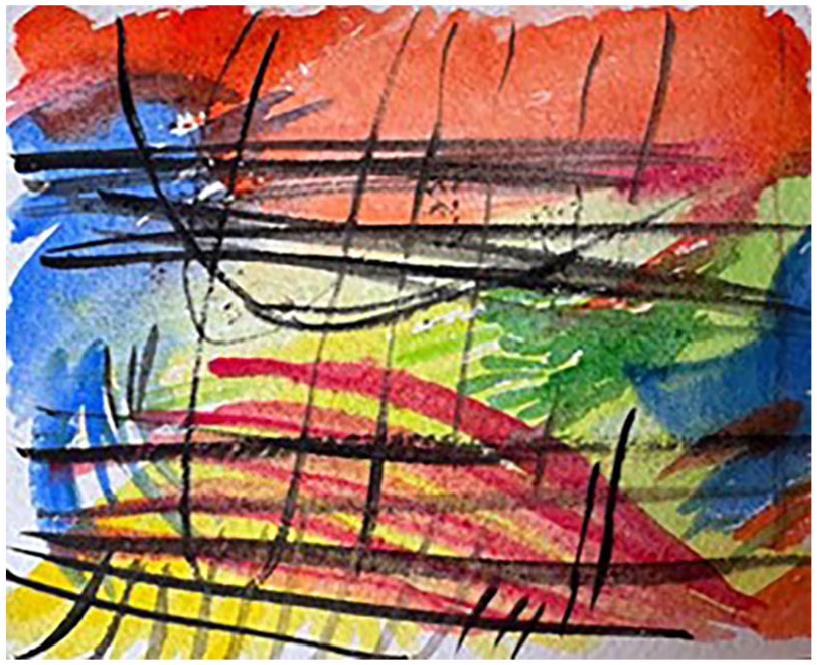
Riffs and refrains are aesthetic; they trace movements and moments, a chorus, choreographing interruptions and repetitions. Eat, sleep, walk, repeat. Habit geographies. Bodily routines. Animal migrations. Sunrise and moonrise. Image-text-riffs. Becomings, doing and knowings and un/becomings, un/doings, and un/knowings. We don’t walk or think in lines (don’t step on the crack or you’ll fall and break your back), we walk-with affective intensities. Researching, inquiring, living, and concepting: riffing artful encounter-ings that embody research as sensory, affective, relational, political practice. That takes us up; that takes us off. Somewhere else.
Write 100 words about something. A something that comes to matter through footsteps and body-movement in place-spaces around and about us and in times now and to come. Mundane everyday matterings, apparently inconsequential but not. Our companions accompany us in text and spirit: affective resonances; elective affinities. Intermezzo here-and-now. Our images do not anchor our text’s meaning. How could they and why would anyone think they should? Our images are tendencies toward encouraging meaning to swell, to draw, to itch, to catch, to annoy perhaps. Intermezzo. Encounters in-among the spaces in-between. Not what it means, but what it does (Barad, 2007; Deleuze & Guattari, 1987; Fairchild, 2021; St. Pierre, 2011; Taylor et al., 2023)
Riffing Refrain Ritournelle.
Not All Walks
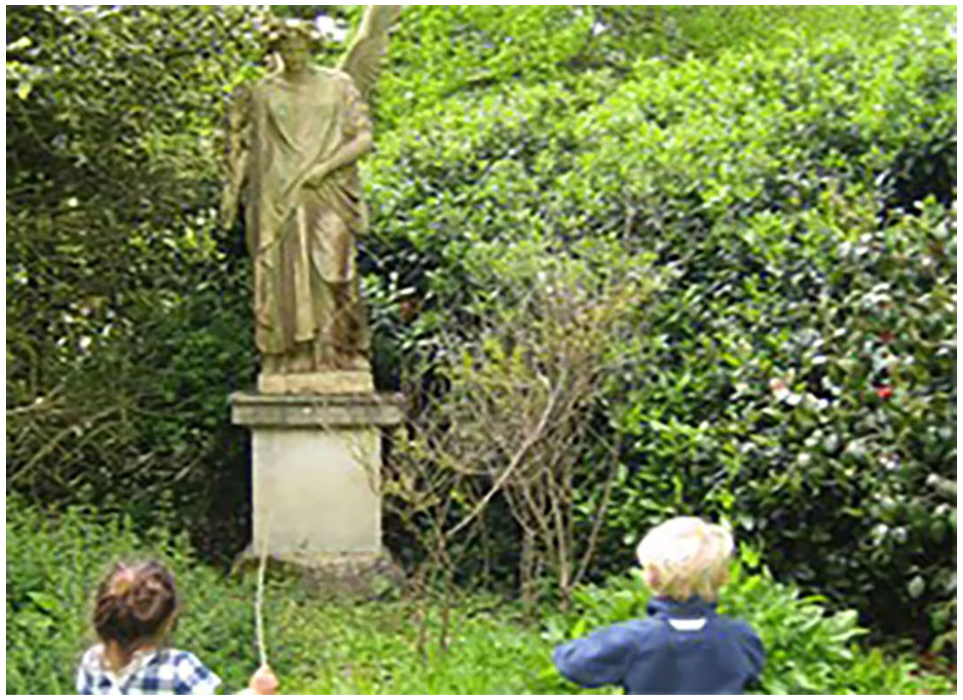
Taking a walk is not accessible to all. Babies become crawlers, crawlers become toddlers, toddlers become walkers. How inclusive are places and spaces for people with mobility issues, or people with disabilities, or people in wheelchairs, or mobility scooters? Walking can be a luxury for people who cannot leave their own homes. Those who are elderly, those who have agoraphobia, those with anxiety, those in hospital, those in prison. Those living in conflict hotspots and war zones, those living in fear of death or being maimed. These things we need to remember. Taking a walk is not accessible to all.
Not All Walks.
(Image inspired by Hayes, 2020).
Waves
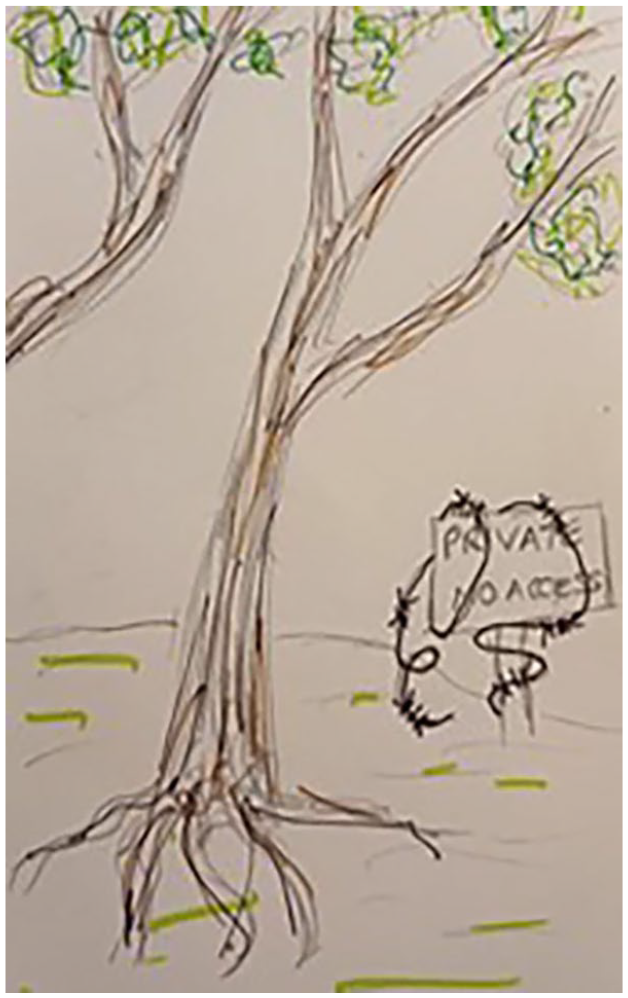
Commuter train pulls into the station, doors open, waves of bodies exit, bodies surge forwards flowing along the platform. Groups of schoolchildren, workers, shoppers and day trippers ebb and flow, pulses of bodies washing over the platform. Toward the exit barriers the flow is held back, the barriers form a dam as the waves become eddies—bodies spinning round to chat, tutting at the slowness of the ticket machine. On the other side of the barriers the waves fill the station concourse, chattering children pulse through the station doors, jostling commuters, shoppers, and day trippers. Calm descends. . .until the next train (Murdoch, 1978; Woolf, 1931).
Waves.
Concept-ing: Radical Empiricism
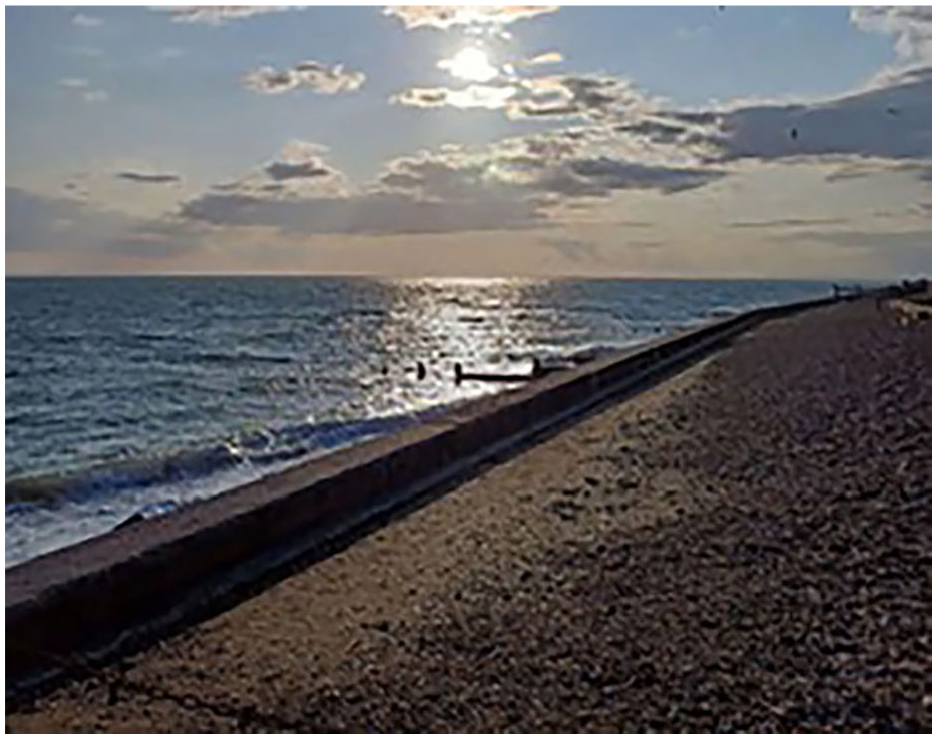
Scholars begin to wonder if postqualitative research has created its own enclosure; whether it has become little more than a happy pasture for those who wish to “read” and “experiment” and “invent” in ways playful, curious and creative, and do so in the service of an all-encompassing by poorly-defined uncertainty. Is this enough, they ask? Is this postqualitative parkland, this island of misfit toys (ouch) now only for those in-the-know, for those happy to be labeled as postqual-ists and able to spot each other a mile away? Has postqualitative research become little more than a space where careers are burnished, idols are revered, and where saying “matter matters” (how could it not?) merely (re-) produces us as serviceable cogs in a neoliberal system which thrives on endless re-territorialization of transgression? (Koro, 2021; Wolgemuth et al., 2022)
Concept-ing Radical Empiricism 1.
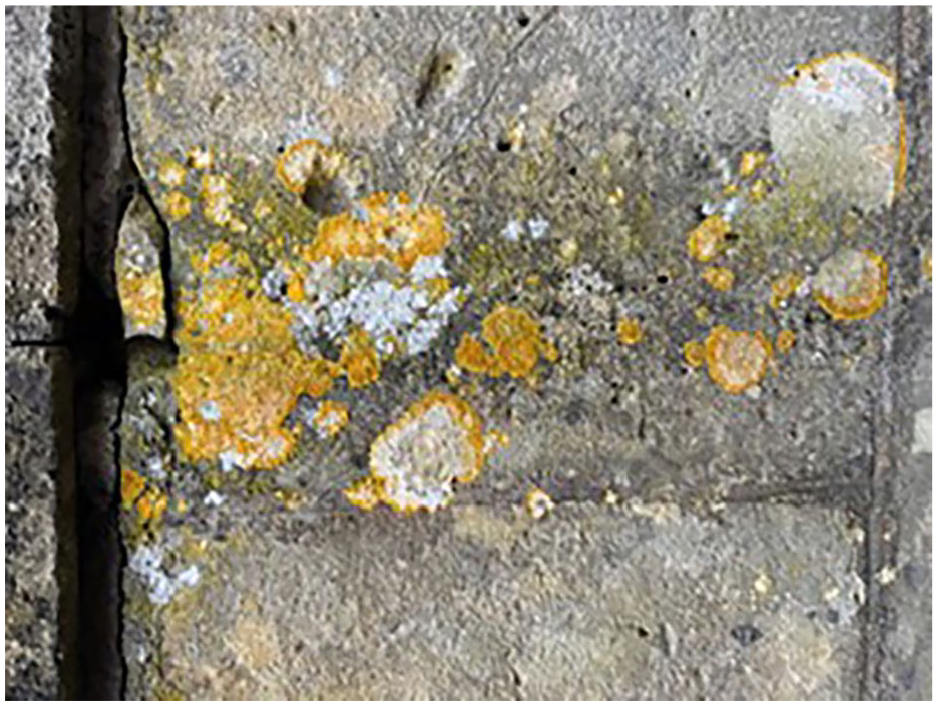
The image of thought is not static; it is a moving, changing process of differentiation. Radical empiricism harnesses new conditions of possibility (concepts) that are not based on experiences but are created via collective assemblages of objects, bodies, spaces, materials, and experimentation. Postqualitative inquiry does not come with a recipe or road map of “how-to-do-it,” offering freedom to create and experiment to push the AcademicUniversityMachine out of shape, perhaps even undermine it. The image-text-riffs we have developed in this paper are a/our mode of artful inquiry—they are affective bodyings that aim at a relational transdisciplinarity, moving beyond representation (Deleuze, 1994; Fairchild et al., 2022; Manning & Massumi, 2014)
Concept-ing Radical Empiricism 2.
Wanderings
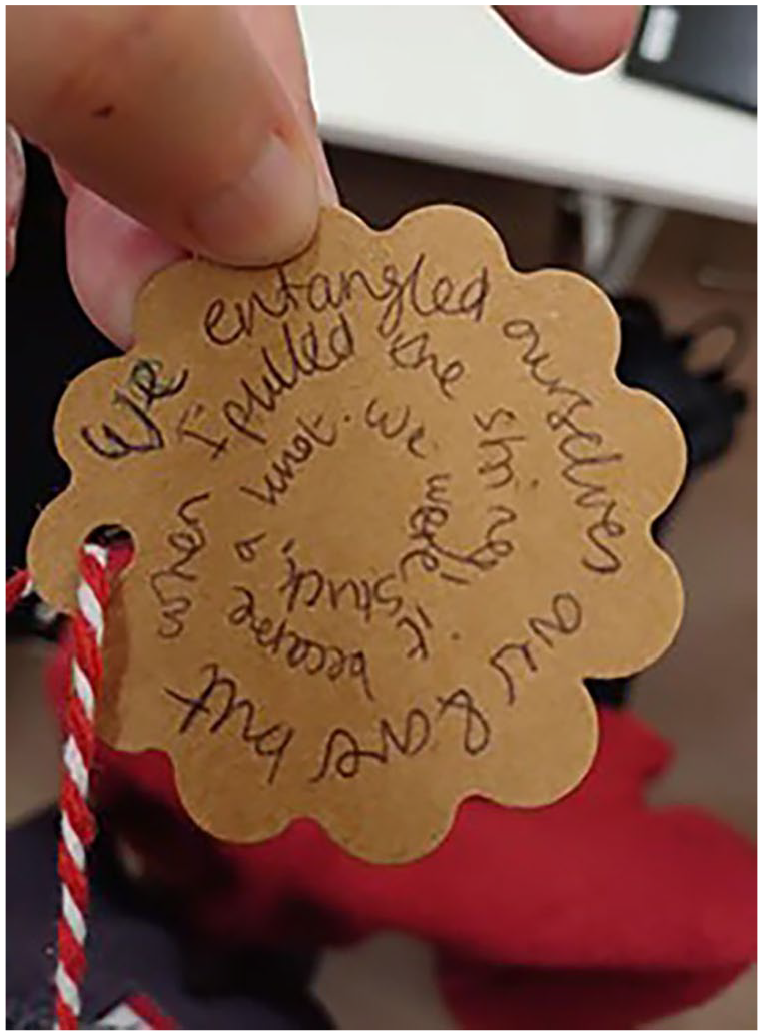
Taking a path less trodden, wandering without a destination, getting lost on unfamiliar pathways brings disruption and disturbance. Striding to a destination, knowing the way, having a map, being clear on how to get there—brings familiarity and (ontological) security. Are we happier knowing the way? Or might the dis/comfort of wandering new unknown paths make us livelier? There is something useful about letting go and getting lost. Breaking from the normal routine and the well-known pathways can allow you to wander somewhere new, produce new experiences, map new encounters. Why not try it sometimes? Or even right now? (Deleuze & Guattari, 1987; Lather, 2007)
Wanderings.
Concept-ing: Now
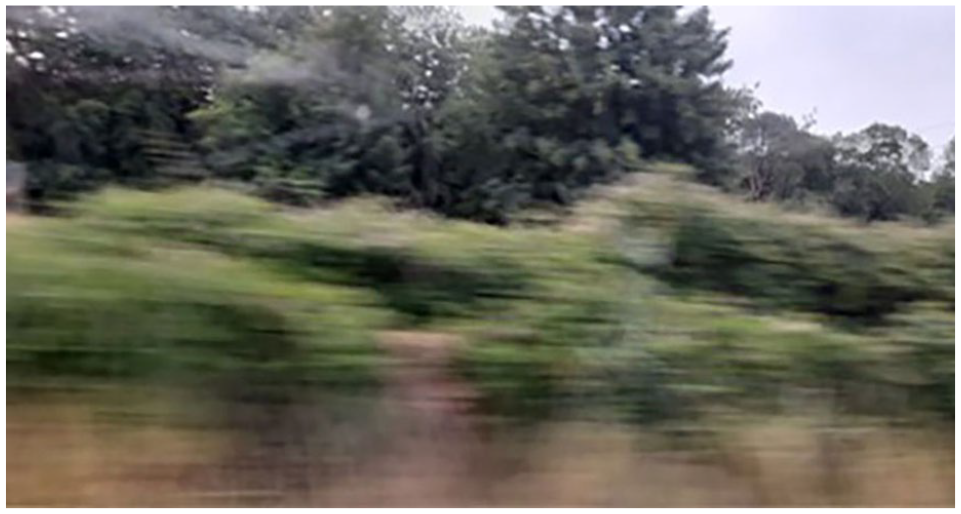
In the now, Aaron Bushnell sets himself on fire outside the Israeli Embassy in Washington DC. In the now, starving, parentless children in Gaza forage for survival among rubble, 30,000 (and now more) dead. In the now, I walk down the hill from my house to an event on art and ecocide at the local art college. In the now, Ukraine offensive and counter-offensive. In the now, ignored and unheard, people in Kenya, Nigeria, Ethiopia and Somalia are suffering extreme hunger. In the now, the Javan rhino, Amur leopard, and Sunda Island tiger are at extinction’s sharpest edge. The weight of the now.
Concept-ing Now 1.
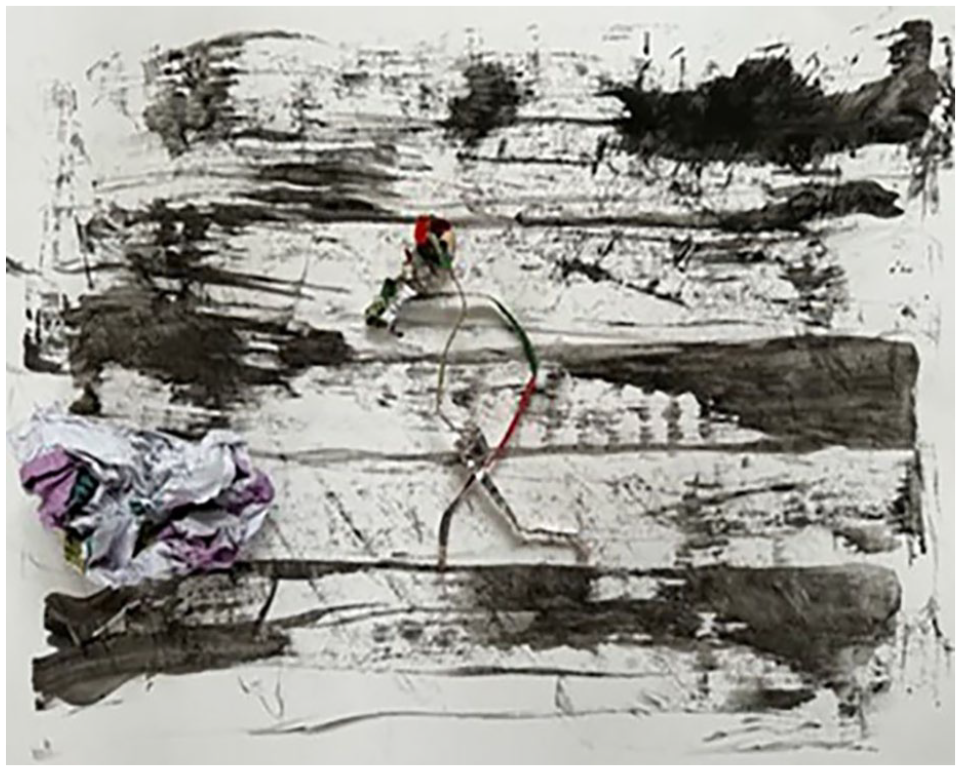
The weight of the now. How to be response-able for and to the now, how to feel its heft and harms fully, and struggle for something better? How to endure, and live, and feel, and do and know when the weight is sometimes too much to bear? How to not buy into glib academic discourses of futurity? How to feel-know now as a hopeful hopelessness and hopeless hopefulness, knowing it is also all we have. Nows are entangled dynamic knots and assemblages. Now is to join forces to compose and change (past-future-present) nows through small, tenacious activities of care-full connections.
Now is a presumptuous word defined as at the present moment in time, the way to draw attention to a point, as a consequence of a fact, or something that is fashionable or up to date. Now suggests doing something with immediacy. Walking-with-now demands a present-ness and an awareness of what is going on around the walker. How can we live-with/in-now without thinking of the past and future. In 2024 the world is a troubled place with poverty, illness, war, climate change, and habitat destruction a prominent feature of daily life and discourse. Life is fast; everything seems accelerated, traveling with a malign velocity, and we need a new kind of politics to decelerate it. Walking-with-now-in relations of slower care and kindness suggests a starting point. Walking-with-now is where we are at this moment, a moment experienced differently depending on the specificity of the now we are part of. Walking-with-now-in-relations can prompt us to attend to the heritages, lineages, and legacies that have got us here. It can push us to think in more speculative, capacious, generative ways of more equitable futures beyond the current imaginaries of ecological collapse, species extinction, genocide, famine, and inequality (Barad, 2007; Deleuze, 1985; Noys, 2014).
Concept-ing Now 2.
Rhythms Interrupted
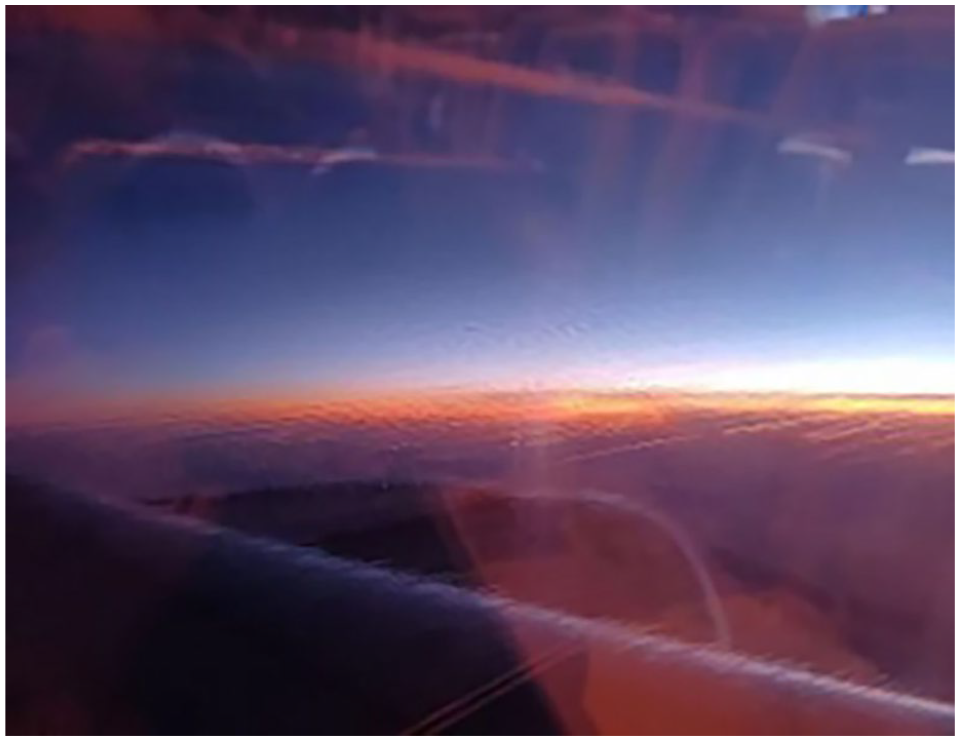
Seven miles away the power station closed down, turned off the pumps (too costly now) and the canal died. The fish decayed in stagnant water and the swans deserted. The fishing boats dried out beached on mud. Algae bloomed. The remaining water stank and shriveled. Maxie cried and then raged at the sight: this is capitalism, right here, extract, decimate, move on, leave trash, don’t care what’s lost or dies. Walking this water was woven into Maxie’s history. Kids walking it with cold drinks on hot summer days. Walking it with her father, heartbroken years later, when he couldn’t walk (Lefebvre, 1992; Stewart, 2007).
Rhythms Interrupted.
Walking With Tender Buttons
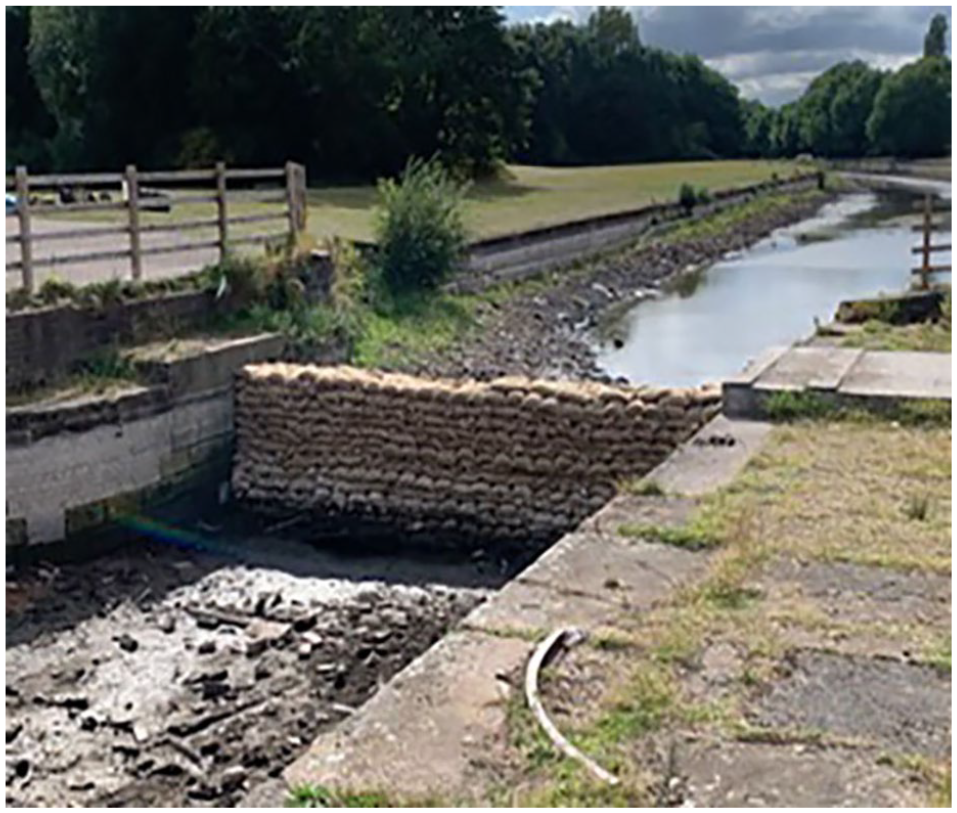
Out of walking comes greenness and out of greatness comes a hurry like seeking, out of a mouth comes curiosity, out of decisions comes tender zebras. In which case the direction akin to a blue way of becoming is an object hailing velcro and is it disconcerting, no not at all, something here so fundamental to be considered and feel a lively reality weirdly, and Alice, it is utterly lovely to have a purple sharpness not to green but to spike again. In the everyday color the middle of a tiny spot and nearly bare. A forsaken Monday finds a cracked delicious (Stein, 1914).
Walking with Tender Buttons.
Long Walk
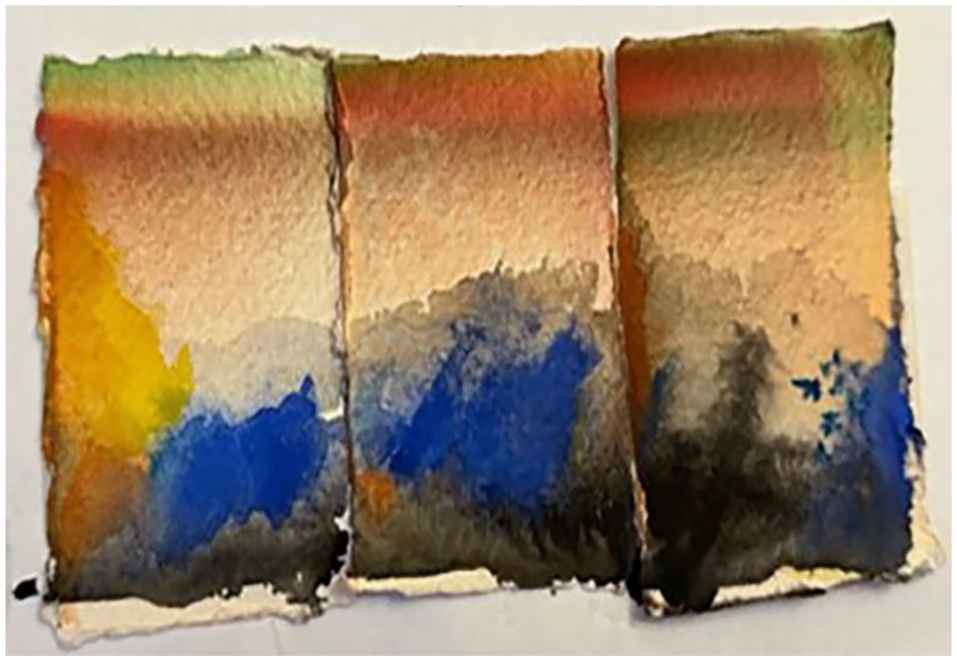
Bodies walk the long way around. Every walk traveling into the body someways. Settling into the muscles, into the skin, tautening flesh, firming sinews, expanding breathing capacities. Weather patterns on hands and face. Learning slow listening each spring as birdsongs vibrate the tympanic membrane. Tiny bones! Feet move onwards encountering ground of all sorts, adjusting balance instantaneously, an occasional stumble a sensory jarring. Walking mouths open, sea salt, snow melt, acrid traffic. The Human Genome Project has found taste receptors throughout the body. My left thigh has a liking for Tofu. Walking bodies are sensory refrains, melodies’ affinities, and weighty shapings (Lefebvre, 1992; McCormack, 2013; Stewart, 2007).
Long walk.
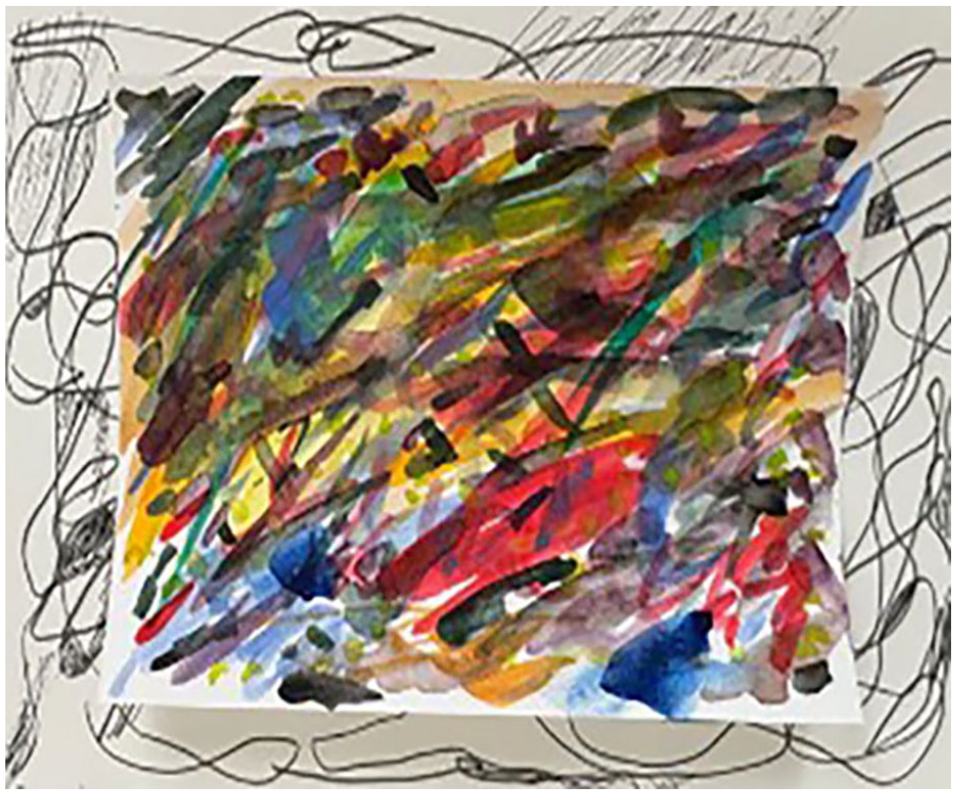
Concept-ing: Intermezzo
In-between. In the middle. Interbeing. Picking up speed. Intensive slowing down. The nth dimension.

Hic et nunc in Latin. Here and now in prosaic English. Connections, insertions, interludes and diversions. Paths to otherwheres, or erewhon, or to and, and, and in the endless multiplicity of assemblages that are co-composed in walking-moving practices. One foot in front of the other. Or backwards. Or to the side. Walking meanwhiles as dwelling places, swelling places for watery-windy gurglings, bubblings, maybes, and possibles. Music heard and unheard, felt under the skin, in heartbeats, pulsebeats, blood refrains, and veining rhythms. Walking-sensing-knowing. Energies-pervadings-pass(age)ings. Transversal touchings. Accumulations-divergences-freedoms (Butler, 1872; Deleuze & Guattari, 1987):
In the middle is where life speeds up Intermezzo, that which is between But what is happening at the edges In the interstices, the gaps, the interruptions? (Deleuze & Guattari, 1987)
Concept-ing Intermezzo 1.
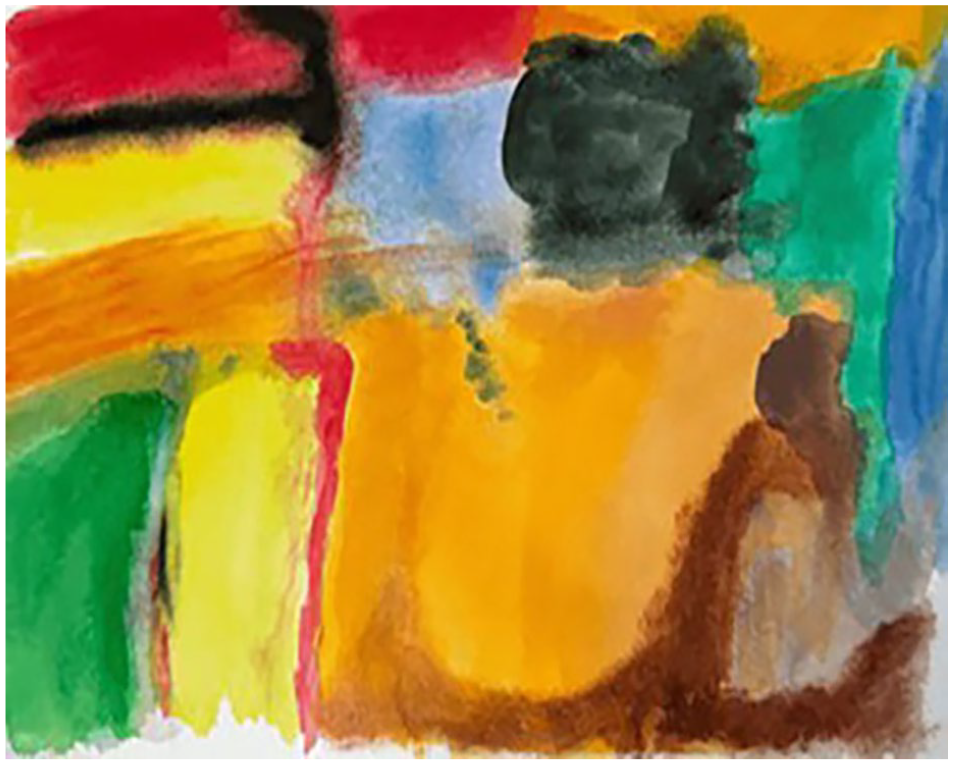
Concept-ing Intermezzo 2.
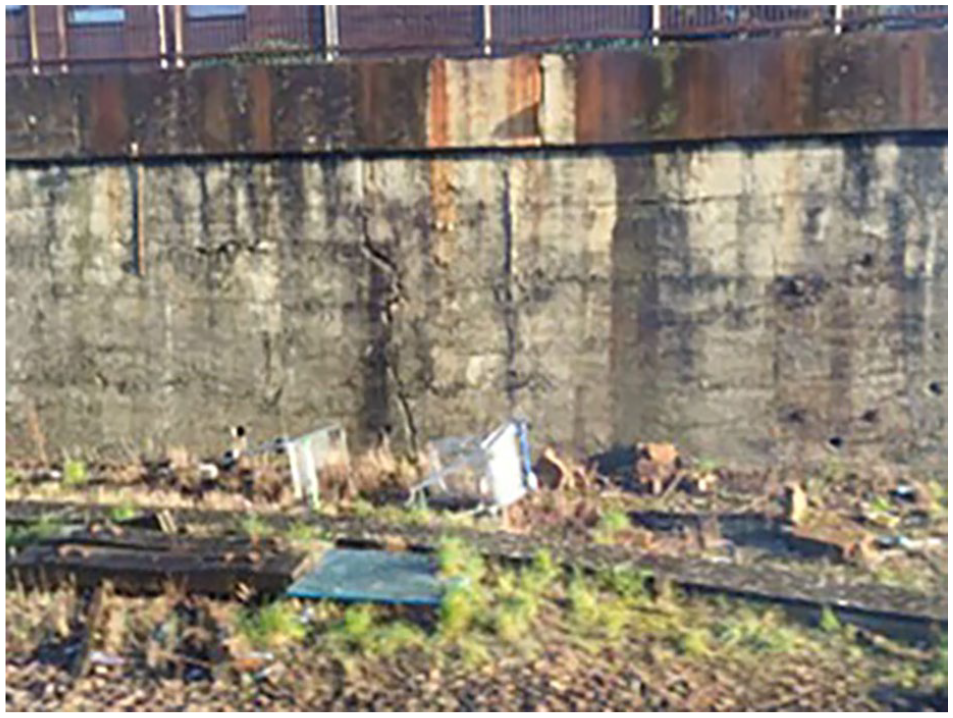
Walking-With Trees
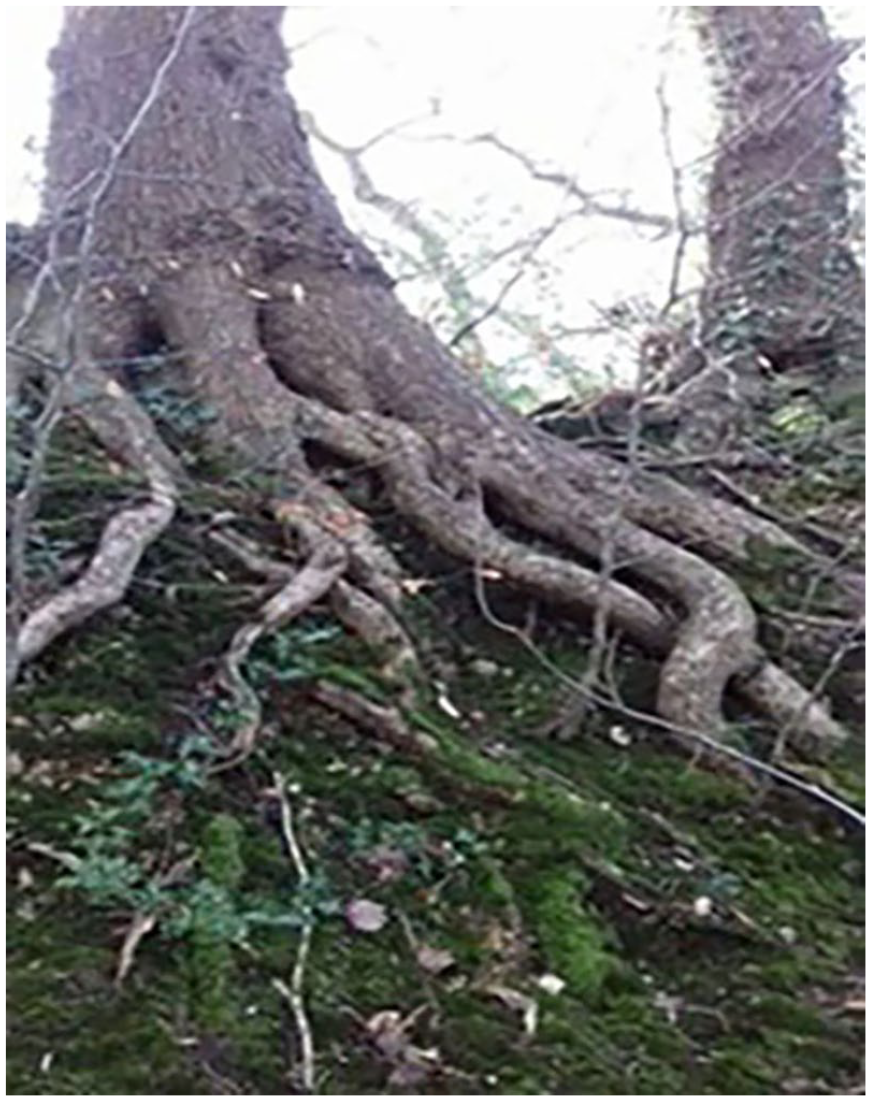
What happens on a forest walk? Do you notice the trees that surround you? Leaves rustling, branches creaking. Trees have a wide expanse of roots extending two to four times the diameter of the trees’ crown. Scientists have discovered trees are connected via a complex underground network. These hyphae of mycorrhizal fungi networks link trees by joining adjacent tree roots together. The “wood wide web” warns trees of impending attack from insects or pathogens, they transfer nutrients between trees. How do they sense deforestation? How do they feel when a companion tree is being cut down? Are we even listening? (Angrish, 2022; Kohn, 2013; Simard, 2021)
Walking-with Trees.
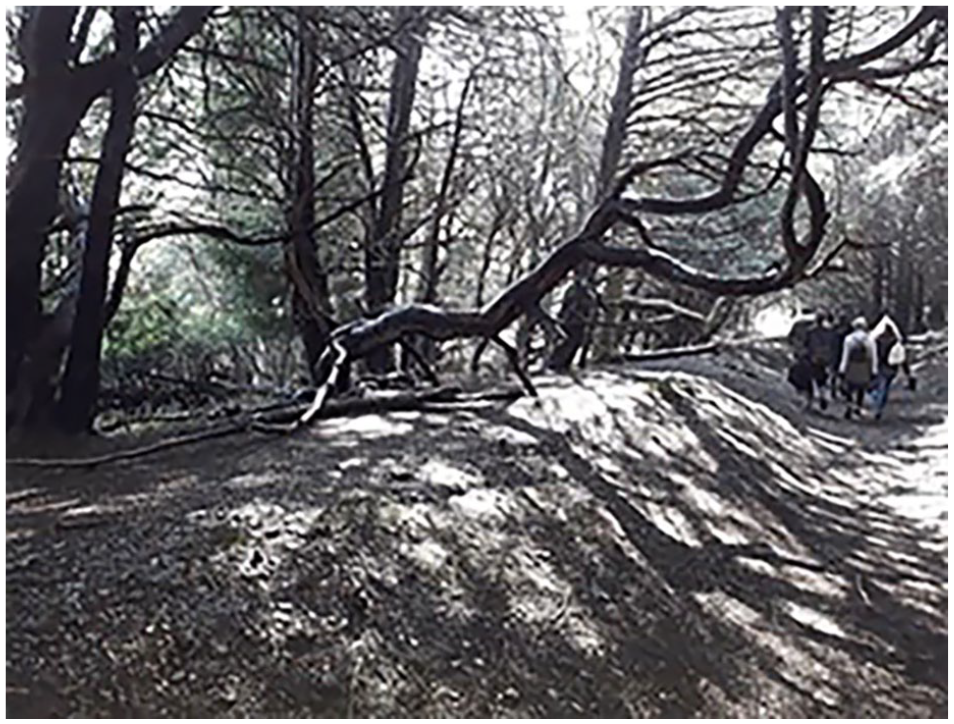
Concept-ing: Feminist Praxis
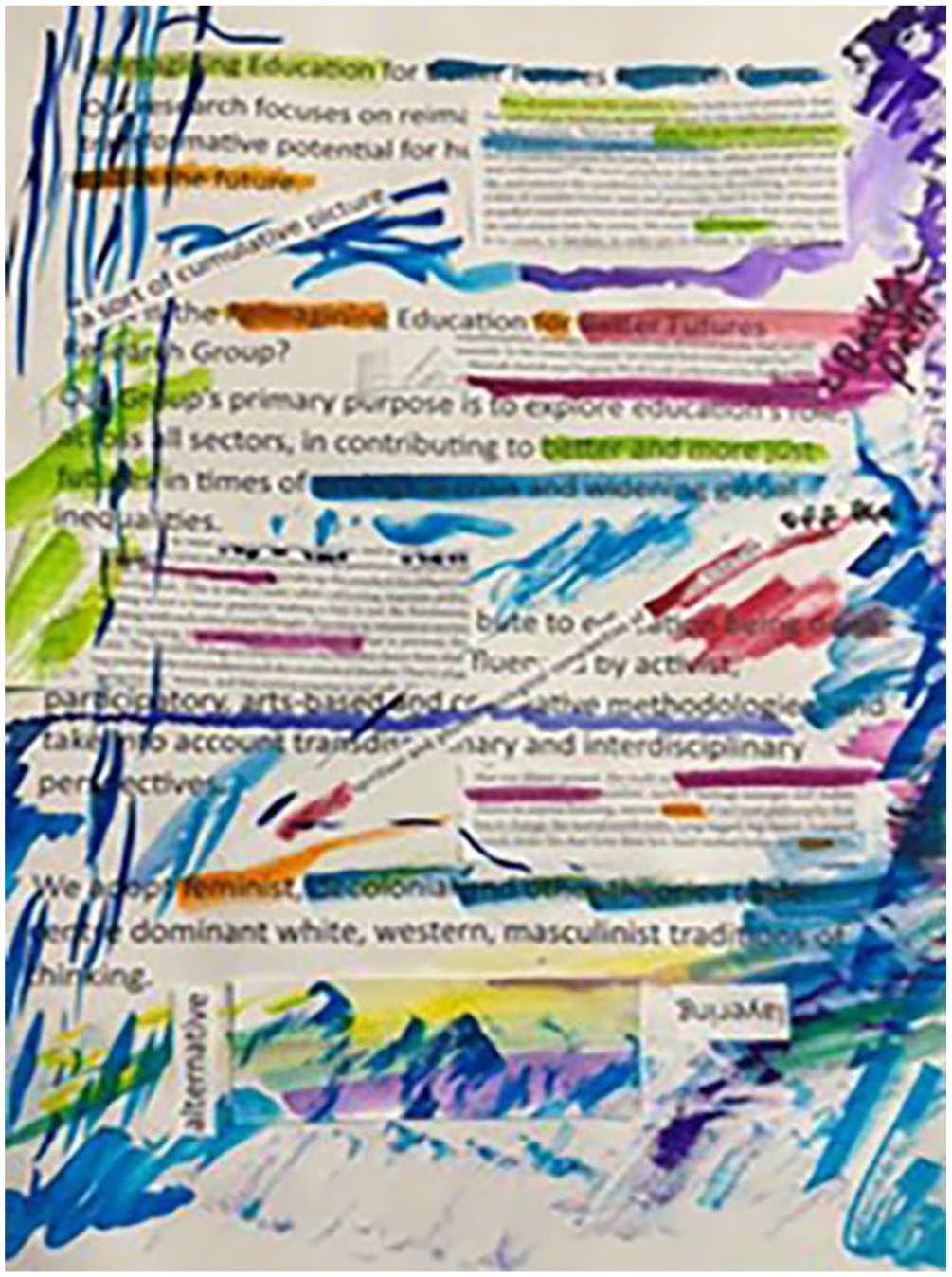
Walking. A long institutionally-bland corridor. The unknown bowels of a building. Are we in the right place? Panicky mild claustrophobia grips. I’m in a never-ending-corridor-with-closed-door-dream. A colleague phones. ‘We’re here, are we in the right place? Where are you?’ Relieved laughter seeing each other through an open door. Here together for an arts-based workshop. Painting with data to explore resonances in our new research group. Breathe in. Hospitable patternings. Improvised productions. Entangled worldings. Ongoing. Posthumanist feminist materialist praxis: an embodied politics which is a knowing which is a thinking which is a doing which is a changing. (Alaimo & Hekman, 2008; Haraway, 2016)
Concept-ing Feminist Praxis.
Un/Concludings: Living a Precarious Posthumanist Feminist Life
Precarious times? Berlant and Stewart say: Everywhere you went there was love and other kinds of dispossession. They wonder what tethers us; they know that what you leave behind you continue to carry with you somehow and someway; and they ponder the world’s harshness and insane cruelty and the care and kindness and love that continues in-among and alongside the everyday banality and ordinariness and beauty of the meanwhile. The now is the only time we really have. The unbearable lightness and stifling heaviness of being and becoming, of living our convictions in the now no matter how hard this seems.
Un concludings Living a Precarious Posthumanist Feminist Life.
We have written our intermezzo-image-text-riffs from our walking-encounter-ings as a means of and for thinking-doing artful inquiry and qualitative research otherwise. They have been written in-among the growth of totalitarian politics that sow fear and division where, in the United Kingdom, a (very) limited right to protest against injustice via peaceful marches is being further curtailed. They have been written in-among times of rampant global femicide, climate change, habitat degradation, and an over-reliance on fossil fuels. Our image-text-riffs aim at a political, academic praxis that draws upon Donna Haraway’s mutated modest witness—to be more immodest in a world that is not always respectful and decent. A mutated modest witness is aware of the relationality in the world, plays cat’s cradle of collective work, pays heed to diffractive patterns that summon up different worldly possibilities, crosses transdisciplinary borders, is imbued with situated knowledges that avoid the God trick view from above.
As mutated modest witnesses the artful inquiry of our image-text-riffs are a mode of intermezzo loitering in the meanwhile, a wandering with fragments to cut through silences, and a theorizing and concept-ing to rupture the masks of power. Our image-text-riffs are glancing and slanting occasions for exploring the now to release speculative possibilities regarding better ways to live in-relation in precarious times. We can be irreverent, intense, critical, care-ful, and justice-focused. We can generate the fuel to try, to hope (Berlant & Stewart, 2019; Haraway, 2018; Osgood, 2019).
Footnotes
Declaration of Conflicting Interests
The author(s) declared no potential conflicts of interest with respect to the research, authorship, and/or publication of this article.
Funding
The author(s) received no financial support for the research, authorship, and/or publication of this article.
