




Abstract
This article outlines an innovative method involving an Instagram private chat group with participants from around the world. We illustrate how qualitative methods and arts-based methods in an asynchronous online environment can be useful across disciplines. We analyze the experience of running a two-month-long discussion about reading bestselling fiction with an international group of 16 Gen Z readers to foreground key potentialities of the method. We argue that the flexibility, co-production, and transnational critique aspects in the research process allow researchers to employ a feminist research methodology leading to rich experiences for both the participants and the researcher(s).
Keywords
This activity was exhausting! [. . .] This was the first time ever where I was really specific about what I read and my brain can’t handle it  [crying with laughter emoji] I’ve been through 150+ titles and around 4 bestseller lists. It was difficult to pick just one, I want to read them all! (I should do this more often) (Momo, 23 years old, India)
Momo, a keen book reader, posted this comment in a private Instagram chat group in May 2021. She was describing her experience of a task that we had invited a group of young adult readers to undertake: namely to select a work of bestselling fiction in English published since 2019, describe the process of selection within the group chat, and then go on to review the selected book on a social media platform of their choice. As researchers of readers and contemporary cultures of reading online and offline, we were not entirely surprised by Momo’s dedication to researching her book choice, although we were delighted by her passionate commitment to it, impressed by the amount of effort and time she invested, and grateful to her for sharing her ideas and feelings about it. There are other ways in which Momo’s comments suggest why our Instagram private chat group method exceeded our expectations as feminist researchers and long-term collaborators who have been employing mixed and multiple methods of various types for over 20 years.
First, as Momo’s mix of text and emojis indicates, using a function of a social media platform like Instagram enables research participants to employ—and for researchers to collect—natural conversation, albeit of a type inflected by the affordances of the platform and the social dynamics of the online group (Barbala, 2022; Bucher & Helmond, 2018). Momo was part of a group of 16 readers aged between 19 and 26 years all of whom were familiar with Instagram, and more particularly with Bookstagram, which is the name given to activities around reading and book cultures on that platform. By the time they were selecting their book to read and review, the group had established a sufficient level of trust to share their frustrations and challenges with finding a bestseller using online and offline sources of information and recommendation. Trust in part arose due to the extended temporal aspect of this method because we ran the group across two months. Second, Momo’s activity as a researcher is highlighted in the aforementioned quotation. Inviting the readers to do creative tasks and make reviews and to share their process and thoughts on them within an online group that was operating asynchronously created the conditions for elements of co-production in the research that we were doing about reading bestsellers. Third, Momo was living in India, while we were located in Canada (thousands of miles apart from each other), with other group members joining the chat from 13 other different countries in the northern and southern hemispheres. Using the chat group function on Instagram to bring research participants together enabled the formation of an international group and to have discussions that would, as the pun in our title suggests, go around the world in an Insta(nt).
In this article, we argue that combining qualitative methods and creative, arts-based methods in an asynchronous Instagram private chat group generates rich opportunities for co-production of research findings. We will conceptualize and illustrate three specific potentialities of this method—flexibility, co-production and transnational critique—in the following sections. Although there are several practical, ethical, and technological benefits to using this particular function of Instagram for qualitative research that we will identify, we believe that these three potentialities in particular lend themselves to feminist research praxis. Emerging from our employment of the Instagram group method rather than from our explicit design of it, these three aspects underline how other scholars might adapt and adopt our method. First, however, we elaborate how our methodological and feminist intellectual commitments informed our decision to innovate this method and discuss how making as a method shaped the outcome of the Insta group. We then situate our understanding of multimodality and affordances within our immediate fields of reading studies and book history, as well as fields and disciplines beyond it.
Background
We have been investigating readers and their practices together for nearly 20 years. One of us was trained in literary studies, and the other in communication studies. Both of us bring to our projects a foundation in feminist research, especially feminist standpoint theory (Harding, 2016; Hill Collins, 1997, 2009; Smith, 1993). Through the various projects we have undertaken together, we have drawn upon textual and empirical methods that are typically employed within our original disciplines, but we have also experimented with others. These range from turning a dataset into an app for readers (Fuller, 2021) to adapting the participatory method of Story Circles (Kurtz, 2014) to enable readers to share negative experiences of reading (Fuller & Rehberg Sedo, 2019). Throughout, our methodological orientation has remained steady.
Our “worldview” or “paradigm” (Creswell & Clark, 2017; Lincoln, 1990; Patton, 2014; Rossman & Rallis, 2011) has always been social constructivist in that we see society “as existing both as a subjective and an objective reality” (Andrews, 2012). However, we are deeply concerned about issues of power inequities in social formations and processes, which leads us to adopt ontological and epistemological views that consider different ways of being and knowing. As Fuller (2004) wrote, “The imperative for the researcher to shuttle back and forth between theory and practice is informed by the main project of standpoint theory: identifying new ways of knowing, particularly those generated from the lived experience of non-ruling groups” (p. 9). The axiological underpinnings of our research methods have always been ethical, but it was not until the Reading Bestsellers project (2019–22) that we actively embraced “transformative axiological assumptions” (Mertens, 2009, 2018; Mertens et al., 2009), in which researchers prioritize social transformation. We, ourselves, did not set out to make grand societal changes, but as we discuss in the following sections, our international group of Gen Z readers helped us to confirm and analyze inequities that we see in contemporary book culture.
Our research is located within reading reception studies, an interdisciplinary field in which researchers concern themselves with what readers do with the material they read. In most studies, the “material” are books in their various forms, that is, codex, digital, or audio, and might be fiction, nonfiction, or other genres. Our work often takes a Book History perspective, which has been described by Leslie Howsam (2016) as “an ‘interdiscipline,’ an intellectual space where scholars practicing different disciplinary approaches and methodologies address the same capacious conceptual category” (para. 30). This approach allows us to think about the “capacious conceptual category” of books and their readers from a critical perspective. For example, book historians have an expansive view of what constitutes the act of reading, while understanding reading acts to occur in specific historical, socio-cultural, and material contexts that require both contextualization and analysis. Moreover, within contemporary book studies, scholars recognize that many readers are located in a post-digital era where both digital and analogue media are co-extensive (Andersen et al., 2014; Dane & Weber, 2021), although structural inequities mean that access to media is unevenly distributed around the globe. Local and global contexts are both important to our understanding of the consumption of books and the ways that readers use them.
Since Book History as a field is an interdiscipline, scholars investigate a wide range of reading and writing technologies using various combinations of methods. When studying readers’ responses in both online and offline environments, a useful framework for thinking about how reading and writing acts and technologies shape each other comes from the perspective of critical media literacy (Funk et al., 2015). First, we recognize that texts—which in the case of our Reading Bestsellers project included books, platforms, and reading responses—are not neutral, but rather they are social constructions. Second, languages, genres, codes, and conventions are specific to different platforms and are made evident through textual and visual analysis. Third, readers will negotiate the meanings they make of their reading, which reflects their cultural literacy and readerly capital, 1 and/or reputation management, and self-representation. Fourth, researchers problematize “the process of representation to uncover and engage issues of ideology, power, and pleasure” (p. 8). Finally, research requires careful analysis of the business models that shape the books, the social media platforms, and the readers’ responses.
Making as a Method for Reading Research
Employing arts-based methods as part of a qualitative research design and practice is a strategy that has been developed by, among others, visual anthropologists and sociologists (Pflaeging & Stöckl, 2021; Pink, 2001; Pink & Abram, 2015; Strand et al., 2022), scholars working with children and young adults (Farmer & Cepin, 2017; Lenters, 2018; Moula et al., 2022), and feminists engaged in action-based participatory research (Kurtz, 2014; Lury & Wakefield, 2012; Nachman et al., 2024). Examples of arts-based methods include inviting research participants to take photographs that they then talk about with the research investigator and may also curate together for a group exhibition presented to their community (Palmer & Furler, 2018). Other arts-based methods include small or large group-focussed activities such as making zines (Poletti, 2019) or Story Circles, a process that involves developing oral or written stories from issues, themes, or experiences within an existing (often site-specific) community group (Crocker, 2020; Kurtz, 2014). As Snyder and Turesky (2023) note, “Many examples of arts-based research (ABR) exist in which the arts are used for either data collection or data representation. Less developed is the use of arts during the data analysis phase in qualitative research” (p. 559). Their use of improvised dance and music to “dance the data” demonstrates how that gap might be addressed. Most scholars who use arts-based methods to collect or represent data are doing so because they want to grant agency to the research participants by offering media and modes of expression that will enable them to articulate their experiences and knowledge. Using creative ways of representing and examining an experience can hold a space for participants in which different types of life experience and ways of knowing can be expressed (McIntosh, 2010; Snyder & Turesky, 2023; Strand et al., 2022). Arts-based methods can also help to address other insights from feminist research praxis such as power inequalities between researchers and participants (Beckman, 2014; Wilkinson, 1998), recognizing that knowledge is embodied (Barbour, 2004; Rhee, 2020), and valuing how the act of creating a photograph, zine, or story might facilitate the articulation of that knowledge because of how the “expressive qualities of the arts . . . awaken[s] and convey[s] meaning” (Barone & Eisner, 2012, cited in Snyder & Turesky 2023, p. 559).
For us as researchers of contemporary readers and cultures of reading, making as a method of research has taken several forms. These include an adaptation of the Story Circles method (Fuller & Rehberg Sedo, 2019; Pink & Abram, 2015); collaborating with a digital developer to make an app that presented data about readers’ lives but also encouraged the user to add their own reading life story to it (Fuller, 2021); and an ambitious project in collaboration with a poet and a games designer with a class of schoolchildren that combined creative writing, leisure reading, and digital game-making (Fuller, 2023). Since the act of reading involves many interior processes (cognitive, imaginative, and embodied) that are often difficult for a person to articulate and for researchers to access, offering participants a means of examining their reading experiences and reading habits creatively and/or self-reflexively mitigates some of the challenges of data collection (Fuller & Rehberg Sedo, 2019). This is why we asked the Instagram group members to undertake creative tasks. Imagining a book challenge that they would like to invite other readers online to do and requiring that they make a book review of their chosen work of bestselling fiction on a social media platform of their choice were two elements of our research design where making something encouraged some aspects of an otherwise interiorized reading process to be expressed and shared. We would add here an important caveat and context. For readers who are familiar with the visual, audio, and textual repertoires used by influencers and participants within online communities such as those formed through Bookstagram or BookTok, the affordances of specific social media platforms potentially offer creative modes of expression in an online modality. However, the repertoires of post-making that have become normalized within book communities online are heavily mediated and highly stylized (Alarcon, 2020; Branagh-Miscampbell & Marsden, 2019; Reddan, 2022; Thomas, 2021). As we have argued elsewhere, readers who use social media for information about books and for social reading quickly learn how to enact types of review as genres of social action (Fuller & Rehberg Sedo, 2023b). In other words, the content of what is made can be very repetitive because it mimics the language and form of established communicative practices. However, the process of making content can be analyzed as a communicative genre that meets (or fails to meet) exigencies and user expectations. Another way of understanding what is made by research participants within our Instagram group, then, as feminist standpoint epistemologists underline, is as situated knowledge that is located within specific social structures and made within group contexts.
The Insta Group Method
After receiving ethical research clearance from both our universities, the participants for the Instagram group were recruited using convenience sampling procedures. We ran unpaid ads on various social media platforms and sent individual e-mail requests to international colleagues working as regional liaison officers of the Society for the History of Authorship, Reading and Publishing, which is a scholarly association that we belong to. They shared our invitation directly with their undergraduate and masters’ students. We ensured that we distributed the recruitment information to locations within both the northern and southern hemispheres. Our invitations explicitly invited readers of all genders to contact us and stated that because Black, Indigenous, and people of color are under-represented in anglophone research on contemporary readers and reading, we especially welcomed their participation. We subsequently hosted an extended discussion for eight weeks (May–June 2021) inside a private Instagram group with 16 avid readers aged 19–26 years from 13 different countries living on five continents.
The design for the group method was a “mashup” of research methods but mostly of qualitative modes we had previously used to investigate adult leisure readers (e.g., Fuller & Rehberg Sedo, 2012, 2013) and children’s reading practices (Fuller, 2023). We took cues from our past research experiences to combine aspects of semi-structured interviews, focus groups, and participatory narrative inquiry (Fuller & Rehberg Sedo, 2019; Hine, 2015; Kurtz, 2014) alongside an ethos of “making with” as a mode of co-production for research (Fuller, 2021). In other words, we designed the Instagram group so that participants would not only “chat” about predetermined questions that we posed to them but also would have the opportunity to undertake tasks and creative activities that would draw upon their knowledge of books and recommendation cultures. These activities would also enable them to use their imaginations and sustain their interest over a two-month period. In addition to the group chat, we also asked the participants to complete an online questionnaire that was very similar to the one we used in the first phase of the project. Participants were compensated for their time in two ways: We paid for a copy of the book that they chose to review, and for those who completed the eight weeks, we provided a book gift certificate to a bookstore in their locality to the value of $100 Canadian.
Researching Readers and Bestsellers: The Insta Group Method Within a Mixed Methods Project
The research project that inspired the Instagram private chat method was a three-phase, three-year endeavor focused on how readers choose, share, and respond to bestsellers. We were given the parameters of investigating bestselling fiction in English by colleagues who were editing a series of short books examining the writing, publication, adaptation, and reception of bestsellers. 2 Our methods were determined by our previous research experience. Since we always put readers, their opinions, and their practices at the center of our research design, the first phase of research consisted of an online questionnaire that collected data about readers’ genre preferences, their opinions and associations with the term “bestselling fiction,” and their preferred ways of finding out about books both online and offline. The second research phase involved qualitative interviewing with three social media influencers who were active on Bookstagram and/or BookTube, with an emphasis on how they understood the recommendation work that they were doing, their motivations for doing it, and their commercial and cultural relationships with sponsors including various agents (e.g., publishers, marketing specialists) within the book industry. The third phase of research involved working directly with a group of readers to explore with them if and how they used online and offline sources of book recommendation, as well as their selection and interpretive practices involving bestselling fiction. At first, we had envisaged doing this third phase of work on Tumblr, a social media platform that is popular with fans of various media, including books, television, and film (Tiidenberg et al., 2021). However, the readers who responded to the first phase of our research in February–March 2020 indicated that Instagram was a more likely choice for those looking for information about which book to read next. As we noted earlier, Instagram’s private chat group function offered us a way of bringing together a diverse group of participants from various regions of the world all of whom identified as readers. By this third phase of empirical work, our guiding research question had become: What is it like to be a reader not just in a transmedia age, but in an era where old and new media, online and offline practices, co-exist? This question, combined with our feminist book history methodology, encouraged us to include making as a method for reading research within the design and practice of this third research phase. It also brought our critical attention to multimodal reading practices and platform affordances.
Multimodality
Multimodality is a concept common to several fields of inquiry including, but certainly not limited to, education (Lenters, 2018; Mora et al., 2022), library and information sciences (Merga, 2021; Singh et al., 2021), and media and communication studies (Arda & Akdemir, 2021; Pauwels, 2005; Pflaeging & Stöckl, 2021). Simply put, multimodality conceptualizes the several modes through which a human actor communicates: gestural, visual, audio, spatial, and linguistic (Serafini, 2012). Not all modes are necessarily engaged during each and every one of our communicative acts. A contemporary reader, for example, might share their ideas about a book face to face with a friend or member of their book club. In doing so, they will use either spoken words or sign language (linguistic), body language (gestural), and if they are a hearing person, sound (audio) will be part of the communication. In this example, the spatial and visual dimensions of multimodality may be unengaged or not foregrounded—unless the readers pull out a codex book or an e-reader to point to the cover or a specific page of the text. What this example illustrates is that multimodal communication is situational: We use the modes that best convey what we want to communicate in the moment, but this is also inflected by our bodies’ abilities and the linguistic systems that we know. Reading a book can also be conceptualized as a multimodal act that engages several modes of communication and that requires various competencies including functional literacy and familiarity with the device containing the textual content whether that is a codex, e-reader, or smartphone. These aspects of the reading act underline how reading is always a social practice in the sense that it requires an “infrastructure” that provides education, material reading matter, and technologies (Long, 2003, p. 8). Reading is a social practice regardless of whether a reader shares their thoughts and reading experiences with another person. This is true even as a person reads a text silently while sitting alone in a room or outdoors in a corner of a park. In fact, Roger Chartier (1992), an influential theorist and scholar of Western European book history, pointed out that “reading is always a practice embodied in gestures, spaces, and habits” (p. 51), a conceptualization of reading that engages its dependence on multimodality. In the field of book history, therefore, we recognize that multimodal reading as a communicative act is nothing new (Fuller & Rehberg Sedo, 2023a, pp. 5–7; Ouvry-Vial, 2019). Access to technologies, reading materials, and literacies do, however, differ during specific periods of time, and access to these assets has never been globally equitable.
In the third decade of the 21st century, we can intensify our concept of multimodality with reference to the modes of reading that some readers can engage with both online and offline; the variety of devices on which they read, and the multimodal features of many digital texts (e.g., a BookTok typically consists of sound, moving image, and written text, while the user needs to tap and swipe to play it). By the time we reached the third stage of empirical research for our Reading Bestsellers project, we had identified these three dimensions to multimodality and had articulated a hypothesis that the contemporary reader who engages with reading practices and recommendation cultures online and offline was a multimodal reader cubed, or MMR3. In designing our Instagram chat group method, we wanted to create the conditions in which our participants could discuss their experiences of being a MMR3 in a transmedia era. When we made our detailed week-to-week schedule of questions and activities, we also hoped that some of the latter might prompt the participants to show us how they were MMR3 and consumers of various media.
Affordances
Affordance is a term that was initially employed by J. J. Gibson (1979) within the field of biological sciences to describe an action possibility formed by the relationship between an agent and its environment (Bucher & Helmond, 2018). Subsequently the idea of an affordance was taken up by architects and designers (Norman, 1988) and eventually by practitioners and scholars working in computer science, especially with reference to human-computer interaction when designing interfaces, for example (Gaver, 1991; McGrenere & Ho, 2000). Nowadays, affordances is a widely used, almost colloquial term, but for research involving human participants, it is helpful to recall Gibson’s (2014) conceptualization, which draws the researcher’s attention to how the form of objects shapes perceptions about possible actions and uses of them and the reality that these uses are learned. Readers of codices, for example, understand how to find and use the printed text within the covers of the book, but no one is born with this knowledge. The codex has other design affordances that enable optional actions such as flicking through the pages or placing a bookmark or finger in certain places in the text, but its material affordances can also be adapted by the user if they need a doorstop, fuel, or insulation material. E-readers are designed to mimic many affordances of the codex, deliberately so, because humans who read are likely familiar with physical books prior to their encounters with digital ones, although for Generations Z and Alpha, that is not necessarily the case.
Crucial to our Instagram method and its facility to enable readers to demonstrate aspects of their multimodal reading acts and habits was the medium and platform where we gathered our group. More particularly, we understood that the different affordances of social media platforms like YouTube, Instagram, and Facebook—all online spaces where readers discuss books or which they use to find their next book to read—shape how a reader enacts multimodal reading. Moreover, because social media platforms are about making connections with other users and other content through features like hashtags, hyperlinks, and tagging, they lend themselves to studies of social reading online, or socially networked reading (Thomas, 2020, 2021). Once we had completed our initial analysis of our questionnaire data, we decided that Instagram was the social media platform that we should use. Not only was Instagram—or rather Bookstagram—popular among our questionnaire respondents as a resource for finding reading recommendations and/or creating short review posts about specific books, but one of its features was the private chat group. The affordances of the private chat group include low-stakes responses such as “liking” or otherwise responding to a comment via an emoji and the ability for the user to scroll back and forth (up and down in spatial terms) through the conversation. Other affordances of Instagram that enable potential user actions are the facility to upload a photo, easily cross-post to another social media platform owned by Meta such as Facebook, and share a link to a post or video on another platform like YouTube or TikTok.
Prior to the pandemic, we had decided that working with a group of readers on a social media platform where booktalk and recommendation culture occur would be optimal. Of course, we had no idea back in November 2018 that this decision would turn out to be so fortuitous! By the time our Instagram group was formed in April 2021, everyone involved had more experience of online communication than we could ever have anticipated, thanks to our involvement in remote university teaching, and the need to rely upon text messaging and other chat applications for everyday communication with friends and family during periods of lockdown when face-to-face meetings were forbidden or severely restricted. What our readers had developed was a sophisticated skill set with regards to asynchronous textual communication and online interaction within a closed group. While these skills eased our research process in many respects, it was also important to us to be able to offer participants opportunities to be self-reflexive about their use of social media with regards to their reading practices and to do so in ways that were creative and beyond the scope of everyday online communication.
Analysis
In our analysis of the Instagram group method, we emphasize three of its potentialities that could be enhanced in future iterations by other researchers, before turning to a brief concluding discussion that outlines some of the limitations we encountered.
Flexibility
The Instagram group is a flexible method in practical, ethical, and technological terms. It is also far more cost-effective than a multisite field work project involving extensive travel. Creating a private chat group on Instagram is as easy and fast as creating a private group on any communication platform. Once we had our participants in place, we invited them—using their chosen account/pseudonym—to the group. We tried to set the tone of the group by naming it “HavingFunWithReadingResearch.” As soon as the group was formed, the young readers came in according to where they lived.
Our own communication as collaborating researchers is challenged by a three-hour time difference, but the members of our group were spread out over 13 countries and 19 time zones. Those who were in North America began participating as soon as we opened the group; others very soon thereafter. We began with a short welcome—“Welcome to our private discussion space! We are thrilled that you’ve decided to participate in our reading project.”—and by posting the following guidelines for the group:
Be kind.
Confront ideas, not people.
Check the group chat at least every 48 hours. You don’t always have to participate in the discussion, but you might want to!
Keep anything you share within the group private and confidential to the group.
If you post outside the group in relation to group activities, ensure that you haven’t shared anything personal that you learned within the private group.
Please feel free to add anything you think is important to these guidelines.
While nobody added to the list, we did receive a “like.”
These guidelines were created, in part, by our “everyday ethical work” (Banks, 2016) in which we seek to do good work by doing good research that attends to the participants and our relationships with them. The preliminary discussion guide, along with our sampling procedures and the survey questions, was approved by both research ethics boards of our university. Our discussions with the readers reflected an ethics of care whereby we practiced continuous reflexivity through email and virtual meetings with each other and worked to build trust and mutual respect with the participants through transparency and sharing of our own life stories and reading practices.
The flexibility inherent in an asynchronous Instagram group was facilitated by the young readers’ comfort of learning in online environments and their digital literacy of the platform (Rini et al., 2022). Their familiarity with community norms of readers—what we have theorized as genres of social action—(Fuller & Rehberg Sedo, 2023b) became evident within the first week of discussions. After introductions that included pictures of the readers with their pets or favorite social hangouts, the conversation turned to book recommendations without any prompt from us. In this way, the readers became co-producers from the start. Our first predetermined question was based on years of working with readers; readers like to talk about what they are reading with other readers: “What are you reading right now, everyone? I’m almost finished with The Night Watchman by Louise Erdrich. She’s one of my favourite authors. It’s the story of a Native community in my home state of North Dakota in the 1950s.” As is partially illustrated in Figure 1, the dynamic of the group was solidified by the end of the first week with their sharing of favorite books and finding similarities, while also discovering titles they had never heard of before.
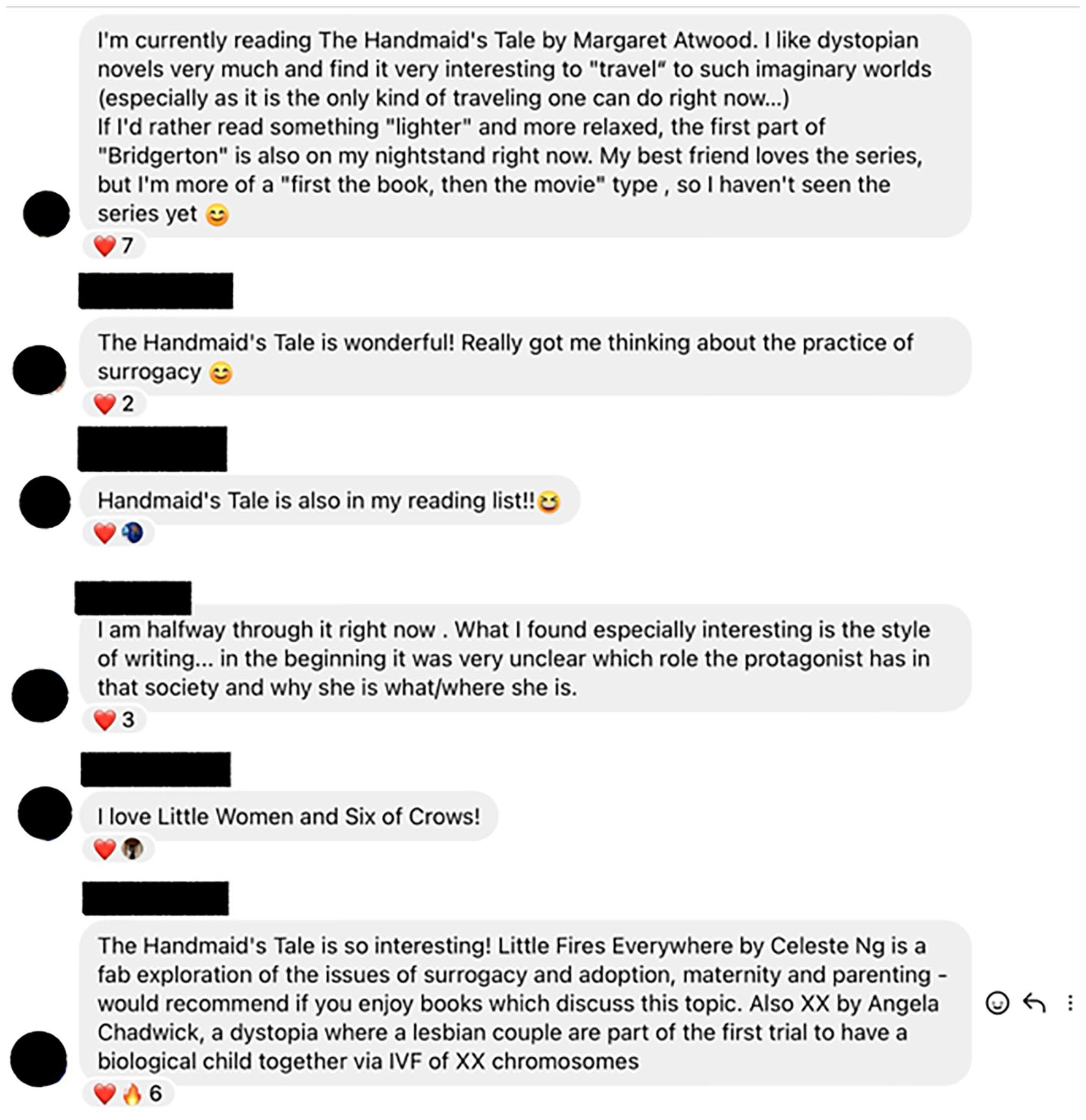
Early Discussions Illustrate the Exchange of Ideas and Knowledge.
This exchange between Bella, @chooks, frau_lehrerin, and Alfia Putri illustrates recommendation culture in online book spaces and also highlights the attributes of MMR3.
Because the participants were familiar with the text, video, and photography affordances of Instagram, they shared the “material book” and their own reading practices in ways that would not be possible if we were together in a room. For example, when one of us asked at the beginning of Week 2 whether the readers have any “quirks” about reading, such as being the first one to read a new book, the young people were quick to share responses, some of which are illustrated in Figure 2.
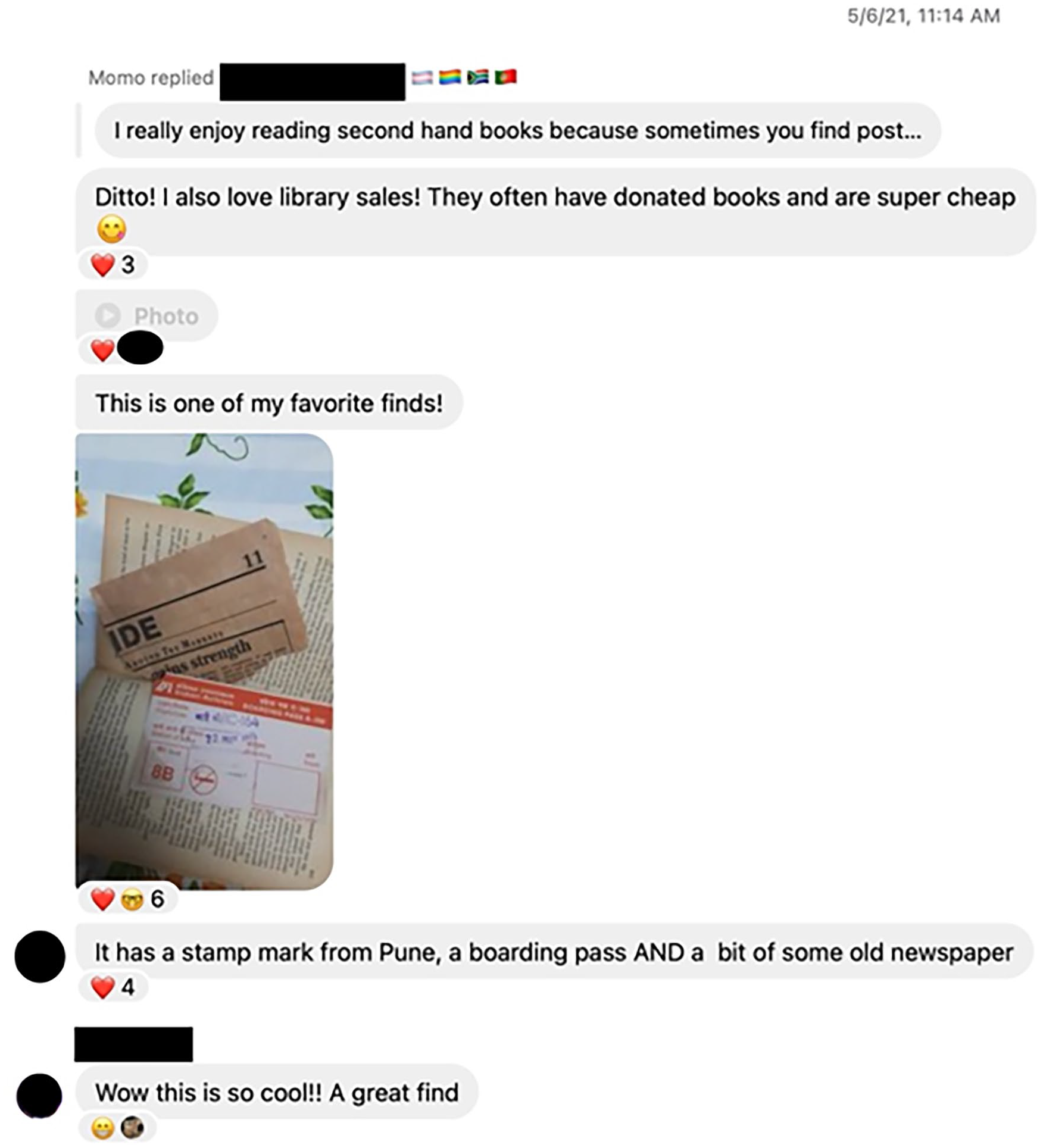
Boarding Pass Find in a Book.
In this image, Azul shares a photo of a used book they purchased. The conversation that follows illustrates not only the connection between Azul to the previous book owner but also to the members of our Instagram group. The joy of shared readerly identification (Pressman, 2021; Rodger, 2019) was evident in subsequent posts that week.
Not only do we see instances of multimodal practices among the readers in Figure 3, but we can interpret their delightful reactions through their use of emojis. Because we saved the discussion, we can reflect and comment on it here; had we been together in a room, the richness of this discussion might have been noted, but the nuances of it might have been lost.
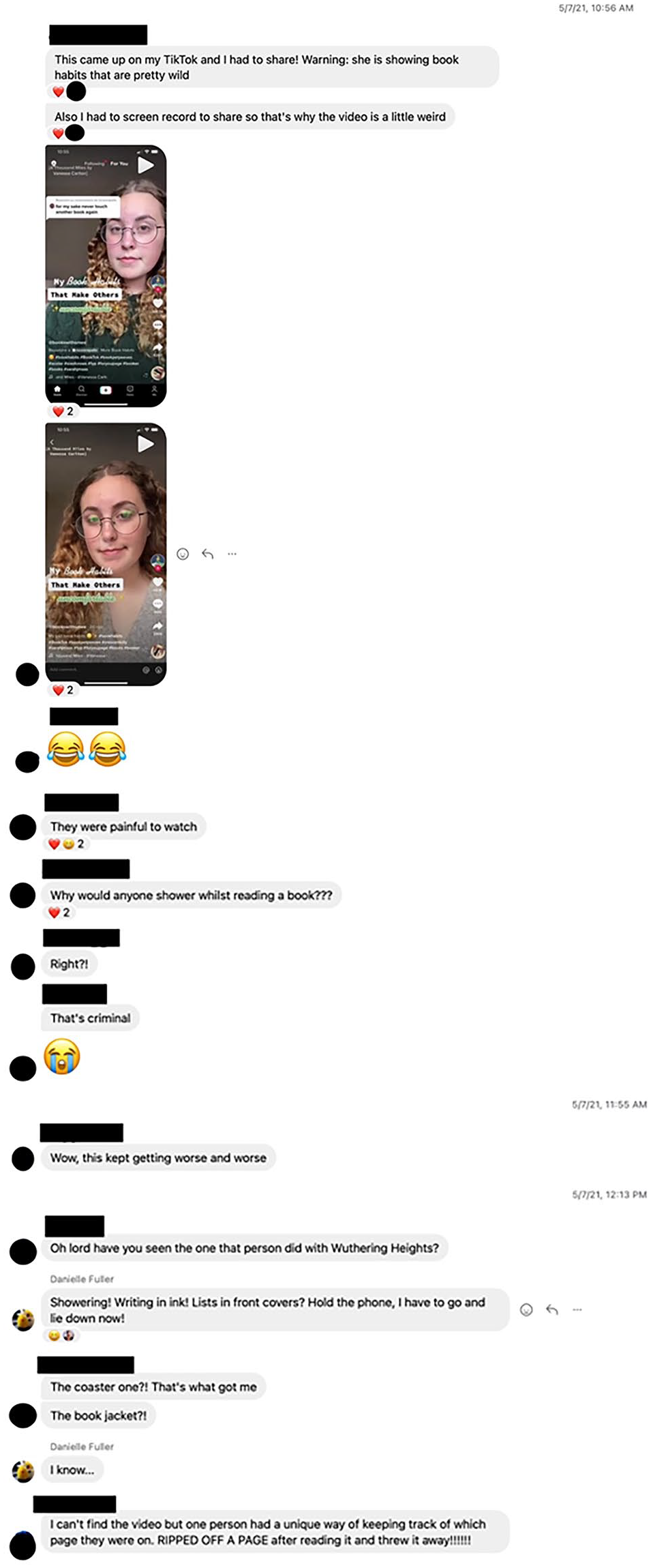
Reading in The Shower Post Share and Response.
Co-Production
The parameters that often make a “bestselling fiction” are not universal. (Momo, 23 years old, India)
One of the surprising but generative aspects of the Instagram chat group method was how it allowed participants to push back against the assumptions and constraints of our project’s original commission. While we had been invited by our colleagues to research how readers engage with bestselling fiction published in English, our group of young adult readers were quick to query what counted as “bestselling.” By the time they were researching which work of bestselling fiction they were going to review during the third and fourth weeks, they were actively searching out definitions of “bestsellers” and sharing articles that discussed how bestseller lists are compiled. Figure 4 illustrates our directive.
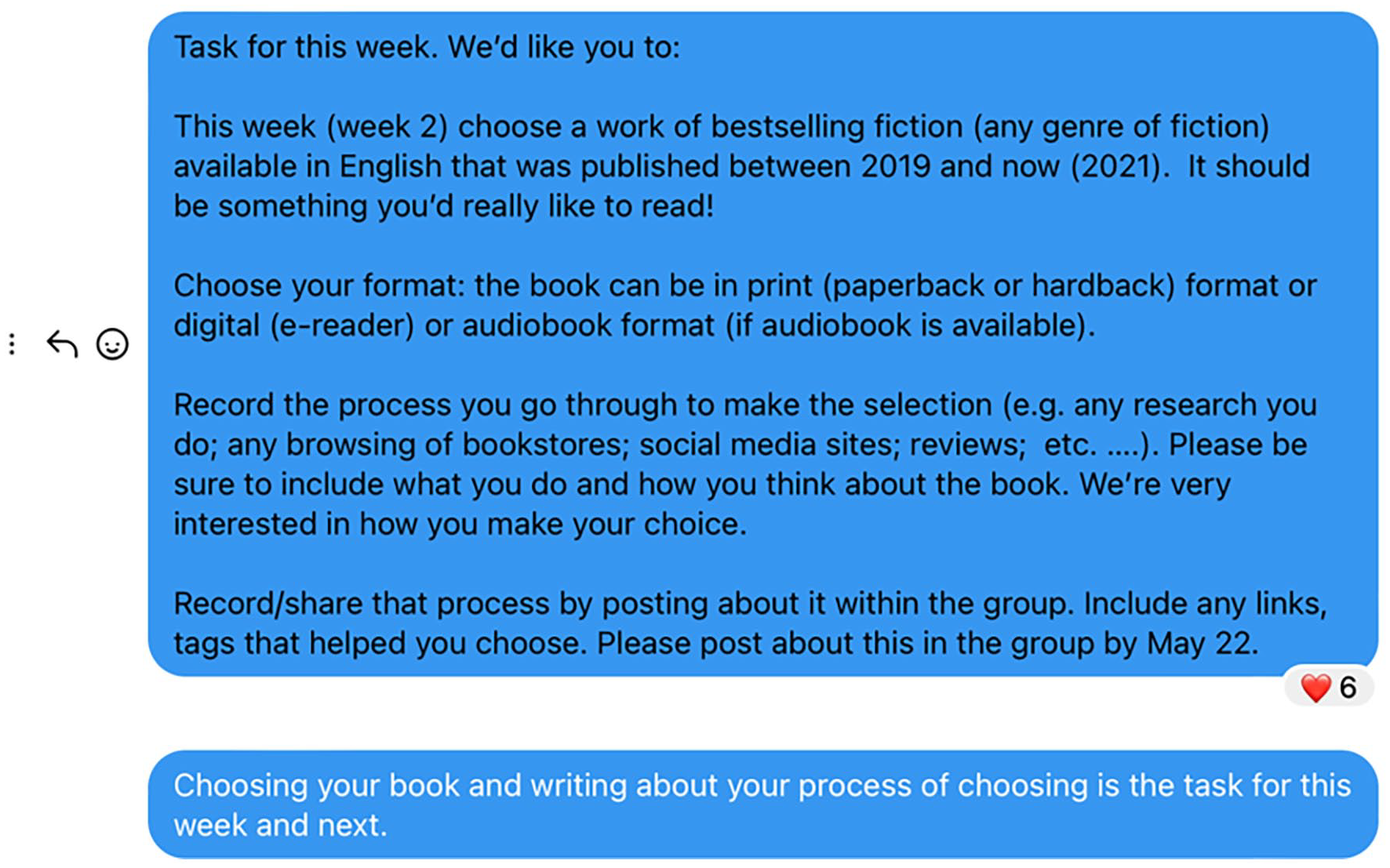
Each Week We Provided Direction for the Readers. This Was Our Ask for Finding a Bestseller to Read.
Their enthusiastic engagement with the task of selecting a book to review was partly a result of their common interests as keen readers who were accustomed to navigating online and offline recommendation sources, from friends’ suggestions to those of their favorite influencers. In other words, they behaved like MMR3 but also as a group who had established their own communicative dynamic. The affordances of the Instagram private chat group, such as the time to establish how to converse with each other and the ease with which images and links could be shared, also contributed to the conditions in which our readers became researchers, as is illustrated in Figure 5.
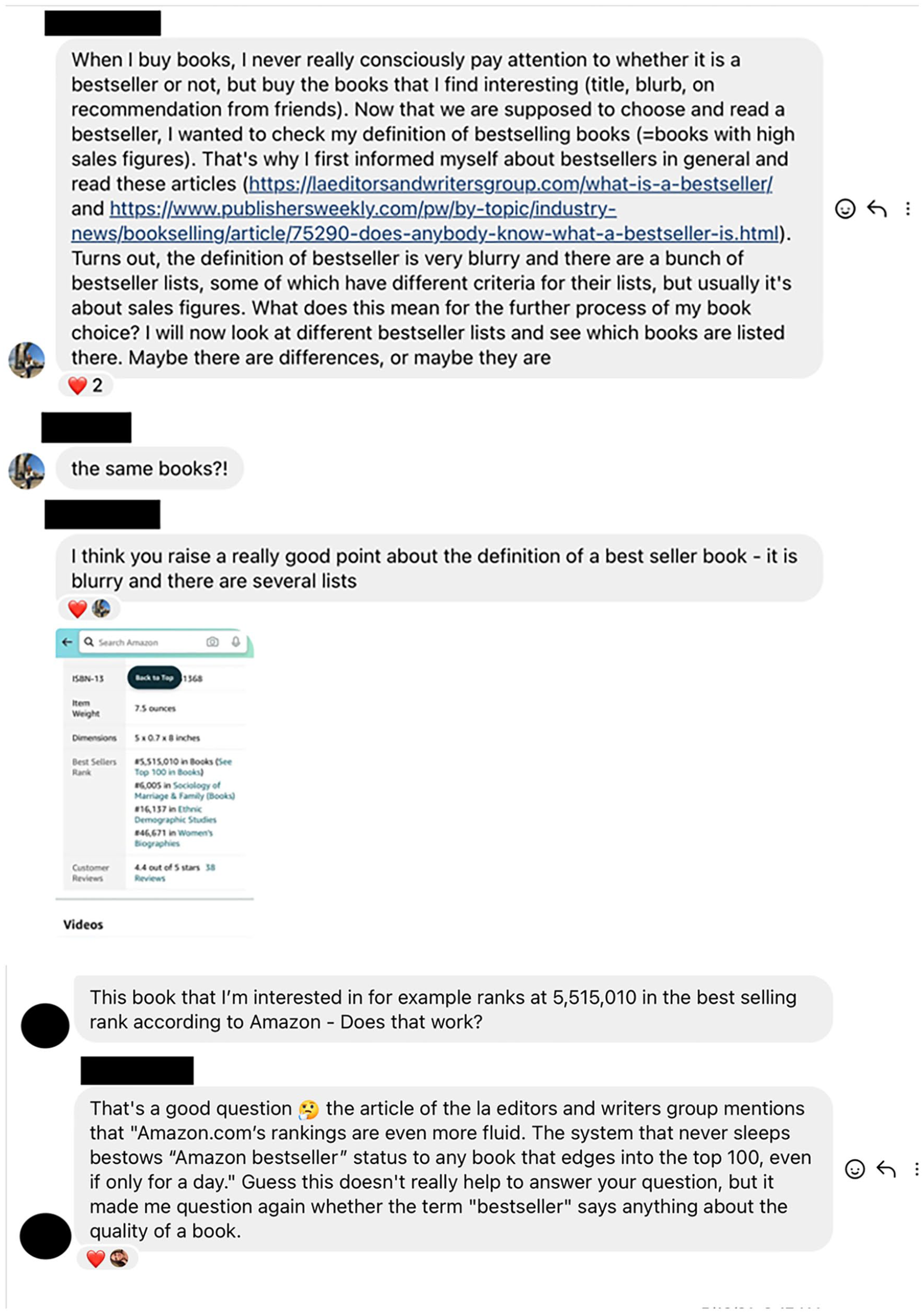
Readers Become Researchers.
Affordances, multimodality, and our decision to combine discussion questions with creative activities thus came together to enable elements of co-production. We identify co-production as a potentiality of the Instagram group method that emerged from the research process, rather than an element that we deliberately designed. As such, we believe that this method could be successfully employed for research where co-production of research with participants is an explicit intention.
There are some elements of our design that encouraged group members to query the terms of our project and, ultimately, lead to us shifting the focus of our analysis and conceptualization of reading recommendation cultures (Fuller & Rehberg Sedo, 2023a, pp. 66–72). We had pursued a feminist praxis through aspects of our research method design, and these are replicable and adaptable for any researchers engaging with a group who, while they do not know each other, share common ground through a leisure pursuit or life experience. At the very beginning, as noted earlier, we established explicit guidelines for how to participate in the group safely and privately; we also encouraged participants to use pseudonymous Instagram accounts and gave them a choice about how they would like to be named in any written accounts of the project. The guidelines for the group (quoted above) included respecting each other’s lived differences and opinions. We had deliberately chosen a platform with a function (the private chat group) and affordances (e.g., the ability to select and reply to a specific comment) that made it easy for participants to listen to and respond to each other, rather than simply responding only to our pre-prepared questions or to our responsive prompts. These participant-centered elements are well-established within feminist research in the social sciences (Herron, 2023), but they do not inevitably lead to co-produced research. However, when employed online within a platform function that enables privacy, and within a generous time-frame, research participants are under less pressure to produce responses than is the case with qualitative methods such as interviewing or in-person activities that might form part of action-based participatory research projects. Working asynchronously and across time zones sets a much slower pace for conversation than is typical for an in-person focus group or participant workshop, for example.
The slower pace also gave us, as researchers, the opportunity to think more carefully and reflexively about how we could best respond to the insights and interests discussed within the group. By the seventh week of the eight-week time span, 13 of the readers from our group of 16 were still participating in the private group chat, and they had shared their book reviews on their preferred platform, which ranged from posts on Goodreads to a video on YouTube. While these reviews provided intriguing data that we could analyze to understand how readers learn and reproduce specific popular genres of online reviewing (Fuller & Rehberg Sedo, 2023b), our participants’ reflections on their processes of book selection directly informed the questions that we posed to them in the final week. They may not have seen themselves as co-producers, but their comparison within the group chat of ways in which they encountered the dominance of the anglophone publishing industry as they sifted through lists of bestselling fiction, reader reviews, and influencers’ posts looking for books that spoke to their ethical and political concerns inspired us to ask, “Do you see yourself and/or your culture and community represented in bestselling fiction that is published in English? If not, where do you find the books that do that especially well?” The readers’ thoughtful responses to this question became central to our critique of the ways that book industry agents and online spaces of reading recommendation cultures reproduce Whiteness, underline the dominance of English, and promote a relatively narrow range of representations in terms of book content. They also illustrate a further potentiality of the Instagram chat group method when it is employed with geographically and culturally diverse participants: the generation of in-group transnational critique.
Transnational Critique
When we recruited the young adult readers to the Instagram group, many of them expressed their excitement about meeting people from around the world. Given that the group ran in May–June 2021, it is perhaps easy to understand why a group of 19- to 26-year-olds might feel especially motivated to connect with and talk to other readers through a piece of research with an international dimension. Many participants had experienced multiple periods of pandemic lockdowns; strict travel restrictions were still in place for most of them, and two group members were international students who had been unable to return to university to study in-person. In addition to providing an opportunity for group members to exchange ideas and reading recommendations, the Instagram group, in common with the effects of reading for pleasure, offered a window of escape from daily routine as well as the chance to learn about new places and cultures (Garner, 2020; Radway, 1991; Schweickart & Flynn, 1986). There were also ethical, political, and intellectual aspects to the transnational dimension of the group that emerged through what we have conceptualized elsewhere as various forms and practices of responsiveness (Fuller & Rehberg Sedo, 2023a, pp. 54–80). Our question about the politics of representation in bestselling fiction in English, quoted earlier, not only picked up on these practices and on issues raised by the group, it was also inflected by the economic and legal structures that guide the flow of capital and the movement (or not) of physical books across political borders (Fuller & Rehberg Sedo, 2023a, pp. 69–71). To put it succinctly, where and how you obtain bestselling fiction in English depends on your geographical location, access to technology, and your income. Group members responded to the question in ways that articulated various social identities that were significant to how they understood themselves, and they also indicated their positionality in relation to these structural conditions. Finding aspects of your culture in fiction often means turning to books published in a language other than English and/or published by an independent company located outside of transnational multimedia conglomerates like Bertelsmann. For example, see Figure 6 for the response of Mauritian reader @bookswitadybug, who was a student in Canada.
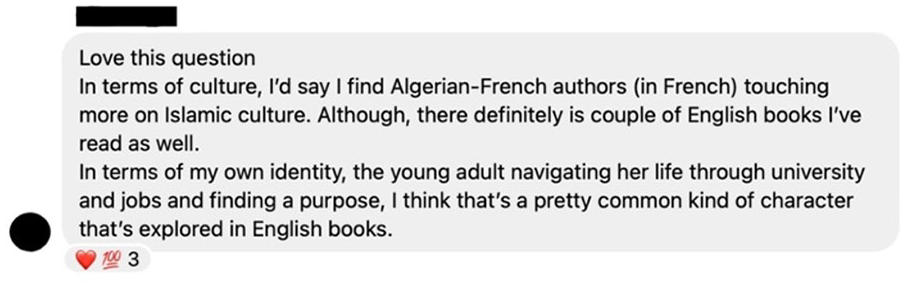
One Response to “Do You See Yourself and/or Your Culture and Community Represented in Bestselling Fiction That Is Published in English? If Not, Where Do You Find the Books That Do That Especially Well?”.
See Figure 7 for the comments of Momo who lives in India.
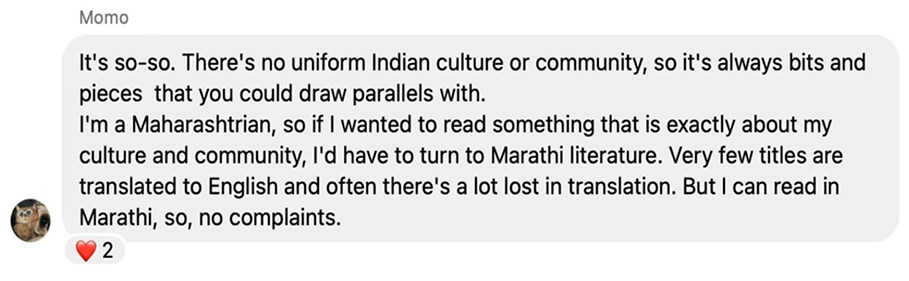
Momo’s Response to “Do You See Yourself and/or Your Culture and Community Represented in Bestselling Fiction That Is published in English? If Not, Where Do You Find the Books That Do That Especially Well?”.
These critical commentaries, when set alongside the economic conditions noted earlier, demonstrate the complications bound up in the term “transnational.” As Annette Hill (2018) reminds us, “the transnational is a messy overlay of local, national and global, or intra-regional flows” (p. 34). Some of these “messy overlays” and their effects on representation were identified by the Gen Z readers. LPK, who is Australian, reiterated some of the production and circulation aspects of bestsellers in English that various group members had encountered while selecting and locating a book to read and review. Illustrated in Figure 8, she also foregrounded how prize cultures sponsored by agents and organizations in the industrialized northern nation-states and “white media” outlets like the New York Times wield their cultural and economic capital in ways that favor writers of Indian descendent living in the global north:
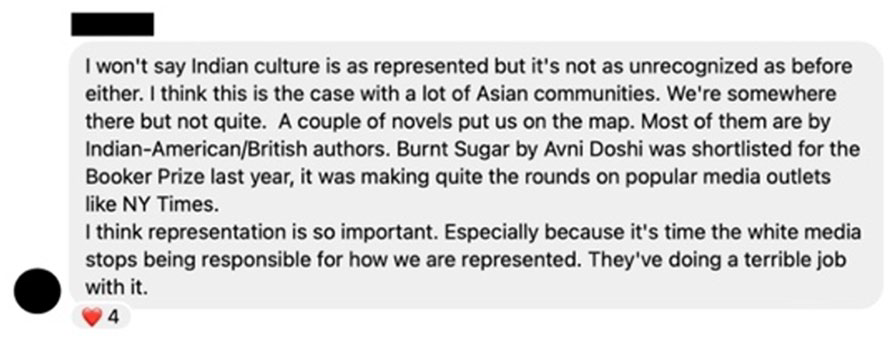
LPK’s Response to “Do You See Yourself and/or Your Culture and Community Represented in Bestselling Fiction That Is Published in English? If Not, Where Do You Find the Books That Do That Especially Well?”.
As different group members contributed their experiences and analyses to the thread, their phrasing became bolder and more overtly critical. They abandoned qualifying phrases like Momo’s “so, no complaints” and instead addressed some of the ways that “white media” does “a terrible job.” Alfia Putri wrote, “Honestly I think my culture [Chinese Indonesian] is very very underrepresented in English fictions. English fictions are mostly based in the US or maybe England”; while Ikra wrote about Western ignorance regarding Bangladeshi culture: “I don’t think my culture is represented in English best-selling books, many of the Western people still think of my country as a part of our neighbor India which is completely wrong.” These readers took cues from each other in terms of how to express themselves, but also, it appears that they become empowered by each other’s commentaries. It was notable as well that the group members kept direct responses to the emojis “likes” and “100%,” rather than writing expressions of agreement or asking questions: a practice within the modality of a group chat that literally allowed each comment to stand out in its own space on the screen. As facilitators of the group, we also maintained a low-stakes presence during this period via emoji responses and the occasional repetition of the question to enable those joining and reviewing the chat several times zones after it had begun to understand the discussion topic.
What this example demonstrates is the potential of the Instagram private chat group method to enable a transnational analysis to develop among the participants in ways that protect private and personal details, and avoid algorithmic interference, while revealing some of the specificities of their localities, community, and cultural identifications. Moreover, the feminist praxis of careful listening and of creating a space in which research participants can express opinions and experiences that may or may not coincide with each other can be facilitated and even enhanced by the affordances and functionalities of the platform.
Conclusions: The Benefits, Challenges, and Potential of an Instagram Chat Group Method
We have presented the richness of our method in a manner that might suggest that there were no challenges, but as in any method, that is not the case. While the extended time frame of eight weeks created the opportunity for group bonding, which resulted in more discussion than we would have received in a one- or two-hour interview or even via group interviews, some participants contributed more than others despite our direct and repeated prompts. The allotted time allowed us to be more creative and varied in what we asked the group to think about and to do, but that data needed to be monitored, managed, saved, and analyzed. During the two months the group was active, they were mostly very active. It was sometimes a challenge to stay on top of the conversation and to follow the threads. By the end of the eight weeks, we had a lot of data: 240 pages of text and images. We did an electronic backup of the conversation but later discovered that there is no software readily available to scrape data from a private Instagram group. That meant that we cut and pasted all of it manually, which is a time-consuming endeavor. During that phase, and in subsequent analysis, we found that some of the links the readers used to illustrate a point had disappeared.
Using low-cost and relatively eco-friendly social media platforms for research allows for asynchronous international participation across time zones, and the readers could be as participatory as they chose since we only required that they complete the questionnaire, choose a book, and review it. How often they checked the group chat and how they chose to engage with it was more flexible. We should note, however, that we lost three participants during the project: One was in China and did not have easy access to Instagram; two others became too busy with school responsibilities to finish the eight weeks.
As we mentioned earlier, we were keen to include Black, Indigenous, and people of color in our group because their perspective as readers is under-represented in scholarly research about leisure reading. Similarly, we sought to encourage and include readers of all genders. We explicitly stated these goals in our ads, invitations to participate, and in social media recruiting. This focused recruitment worked; our group was an all gender, multiracial, and multilingual group.
The latter point needs to be nuanced. We ran the group in English, and so we were replicating the cultural imperialism of English by using it as the lingua franca for the conversation. This may also have informed our failure to recruit any participants from South or Central America. In addition, our participants were all university educated because of our recruitment strategies. It is possible that our participants were more likely than non-university-educated readers to introduce critiques of literature, media, and the politics of representation into the group chat. However, reader practices on BookTok and Bookstagram, where these topics also occur, are arguably as much an influence on Gen Z readers as a person’s university training. Still, we believe that this method could also work well for groups of people brought together around specific genres or media or a particular topic or issue; it could certainly be conducted in languages other than English, and maybe could work bilingually. Arguably, it works especially well with Gen Z participants, many of whom have grown up using a mixture of digital and analog technologies.
In spite of the restrictions we have outlined here, we would encourage colleagues to adopt and adapt the Insta group method, not least because of the three key potentialities that we have identified earlier. Co-production could be centered in research design with participants playing a more active role in shaping the questions and tasks and suggesting arts-based elements from the very beginning. Transnational critique could be furthered through explicit prompt-making from the researchers, while the flexibility afforded by the elements such as the two-month time span, low-stakes participation, asynchronous engagement, and technological affordances of Instagram offers opportunities for researchers to be imaginative about how they work with their participants. Although our Insta group consisted of young adults, researchers working with adults or teenagers could find the method to be useful. While the Insta group approach is especially suited for researchers in media studies, communications studies, and social media studies, we believe that qualitative researchers working out of any discipline or field could adapt the method successfully.
We want to end by communicating how fun it was to “meet” and work with this group of Gen Z readers. Their enthusiasm for the research process itself, their eagerness to meet other readers from around the world, and their passion for books brought an energy to the asynchronous chat. Meanwhile, the common ground that people from 13 countries found around the politics of representation and inclusion, and the contrast of this to their perspectives on local and global politics, made for an intriguing, informed, and wide-ranging set of discussions. For us as researchers conducting the Reading Bestsellers project, at a time when international travel was not possible, the group chat method meant that we were able to go “around the world in an Insta” in the company of avid young adult readers.
Footnotes
Acknowledgements
The authors want to thank Amy Thurlow for reading a draft of this article and providing solid feedback. The authors are also grateful to the Qualitative Inquiry anonymous reviewer for their careful reading, helpful feedback, and astute questions.
Declaration of Conflicting Interests
The author(s) declared no potential conflicts of interest with respect to the research, authorship, and/or publication of this article.
Funding
The author(s) disclosed receipt of the following financial support for the research, authorship, and/or publication of this article: Internal research assistant funds were provided by Mount Saint Vincent University.
