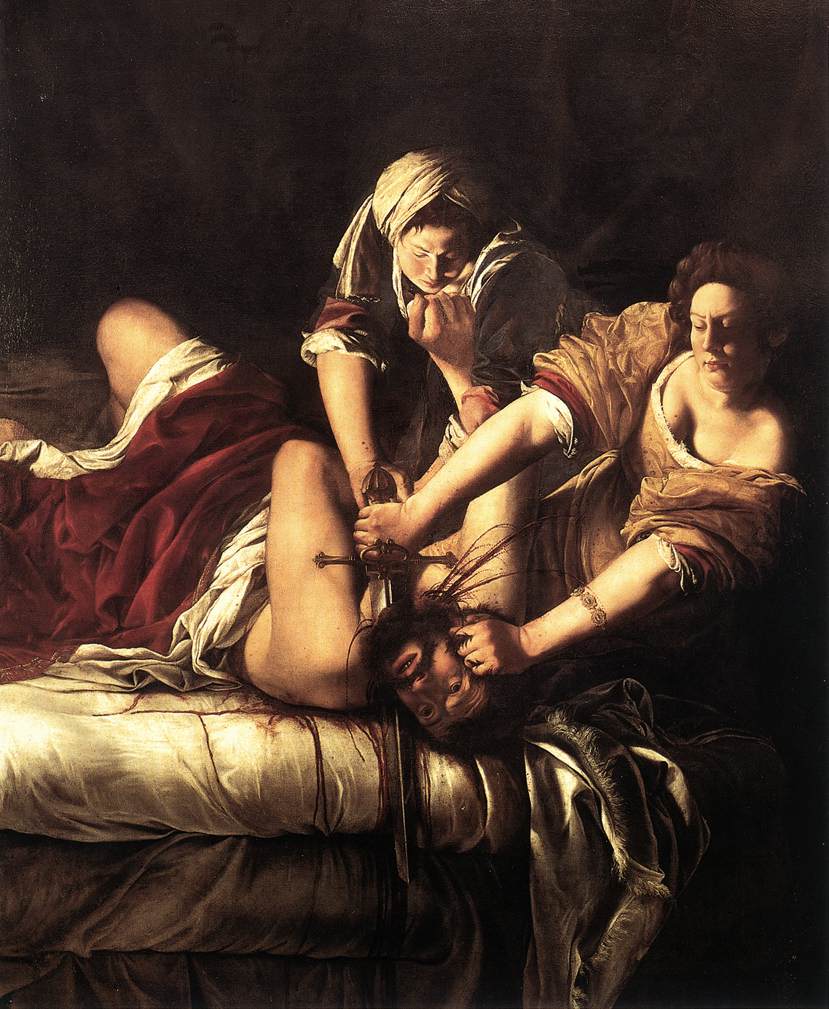
The present assemblage (agencement) is derived from Deleuze’s ideas and affect theory. It is comprised of concepts and affects fueled by art to point toward an education without organs and with the goal of dismantling institutional structures, processes, and ideas. In this assemblage, concepts are used as method to produce a language text and an oil painting that is drawn from the Baroque and intended to realize affects and sensations.
BaradK. (2007). Meeting the universe halfway: Quantum physics and the entanglement of matter and meaning. Durham, NC: Duke University Press.
5.
BayerA.GregoriM. (2004). Painters of reality: The legacy of Leonardo and Caravaggio in Lombardy. New York, NY: Metropolitan Museum of Art.
6.
BenjaminW. (1998). The origin of modern German drama. New York, NY: Verso. (Original work published 1963)
7.
BennettJ. (2010). Vibrant matter: A political ecology of things. Durham, NC: Duke University Press.
8.
BennettJ. (2015). Systems and things: On vital materialism and object-oriented philosophy. In GrusinR. (Ed.), The nonhuman turn (pp. 223-240). Minneapolis: University of Minnesota Press.
9.
BergsonH. (2005). Creative evolution. New York, NY: Cosmio. (Original work published 1911)
10.
BiestaG. (2007). Why “what works” won’t work: Evidence-based practice and the democratic deficit in educational research. Educational Theory, 57(1), 1-22.
11.
BogueR. (2007). Deleuze’s way: Essays in transverse ethics and aesthetics. Burlington, VT: Ashgate.
12.
BuchananI. (1997). The problem of the body in Deleuze and Guattari, or, what can a body do?Body & Society, 3(3), 73-91.
13.
BuchananI. (2015). Assemblage theory and its discontents. Deleuze Studies, 9, 382-392.
CooleD.FrostS. (Eds.). (2010). New materialisms. Durham, NC: Duke University Press.
19.
CostelloL. (2015). Portraiture and the ethics of alterity: Giacometti vis-a-vis Levinas. October, 151, 62-77.
20.
CulpA. (2016). Dark Deleuze. Minneapolis: University of Minnesota Press.
21.
CvetkovichA. (2012). Depression: A public feeling. Durham, NC: Duke University Press.
22.
DebordG. (1988). Comments on the society of the spectacle. London, England: Verso.
23.
DeleuzeG. (1986). Cinema 1: The movement-image. Minneapolis: University of Minnesota Press. (Original work published 1983)
24.
DeleuzeG. (1988). Spinoza: Practical philosophy (HurleyR., Trans.). San Francisco, CA: City Lights Books. (Original work published 1970)
25.
DeleuzeG. (1989). Cinema 2: The time-image. Minneapolis: University of Minnesota Press. (Original work published 1985)
26.
DeleuzeG. (1991). Bergsonism. New York, NY: Zone Books. (Original work published 1966)
27.
DeleuzeG. (1992). Expressionism in philosophy: Spinoza. New York, NY: Zone Books. (Original work published 1968)
28.
DeleuzeG. (1992). Postscript on the societies of control. October, 59, 3-7.
29.
DeleuzeG. (1993). The fold: Leibniz and the Baroque. Minneapolis: University of Minnesota Press. (Original work published 1988)
30.
DeleuzeG. (1995). Negotiations: 1972–1990. New York, NY: Columbia University Press. (Original work published 1990)
31.
DeleuzeG. (1997). Essays critical and clinical (SmithD. W.GrecoM. A., Trans.). Minneapolis: University of Minnesota Press. (Original work published 1993)
32.
DeleuzeG. (2000). Foucault (HandS., Ed. & Trans.). Minneapolis: University of Minnesota Press. (Original work published 1986)
33.
DeleuzeG. (2003). Francis Bacon: The logic of sensation. Minneapolis: University of Minnesota Press. (Original work published 1981)
34.
DeleuzeG. (2004). The logic of sense. London, England: Continuum. (Original work published 1990)
35.
DeleuzeG. (2006). Nietzsche and philosophy. New York, NY: Columbia University Press. (Original work published 1962)
36.
DeleuzeG.GuattariF. (1986). Kafka: Toward a minor literature. Minneapolis: University of Minnesota Press. (Original work published 1975)
37.
DeleuzeG.GuattariF. (1987). A thousand plateaus: Capitalism and schizophrenia. Minneapolis: University of Minnesota Press. (Original work published 1980)
38.
DeleuzeG.GuattariF. (1994). What is philosophy?New York, NY: Columbia University Press. (Original work published 1991)
39.
DeleuzeG.GuattariF. (2000). Anti-oedipus: Capitalism and schizophrenia. Minneapolis: University of Minnesota Press. (Original work published 1972)
40.
DerridaJ. (1987). The truth in painting. Chicago IL: University of Chicago Press.
41.
DerridaJ. (1996). Archive fever: A Freudian impression. Chicago, IL: University of Chicago Press.
42.
DerridaJ. (2011). Voice and phenomenon: Introduction to the problem of the sign in Husserl’s phenomenology. Evanston, IL: Northwestern University Press. (Original work published 1967)
43.
EakleA. J. (2007). Literacies spaces of a Christian faith-based school. Reading Research Quarterly, 42, 472-511.
44.
EakleA. J. (2008). Museum literacy, art, and space study. In LappD.FloodJ.HeathS. B. (Eds.), Handbook of research on teaching literacy through the communicative and visual arts (pp. 177-186). Mahwah, NJ: Lawrence Erlbaum.
45.
EakleA. J. (2015). Bodies with and without organs: The literacies of a true crime sex and violence drama. In EnriquezG.JohnsonE.KontovourkiS.MallozziC. (Eds.), Literacies and the body: Theories and research on teaching, learning, and embodiment (pp. 221-235). New York, NY: Routledge.
46.
FoucaultM. (1972). The archeology of knowledge (Sheridan SmithA. M., Trans.). New York, NY: Pantheon. (Original work published 1971)
47.
FoucaultM. (1977). Discipline and punish. New York, NY: Vintage Books. (Original work published 1975)
48.
FoucaultM. (1994). What is an author? In FoucaultM. (Ed.), Aesthetics, method, and epistemology. Vol. 2: Essential works of Foucault, 1954-1984 (RabinowP., Ed. & HurleyR.et al., Trans.) (pp. 205-222). New York, NY: The New Press. (Original work published 1969)
49.
FreudS. (1924). The passing of the Oedipus complex. International Journal of Psycho-Analysis, 5, 419-424.
GoffmanE. (1974). Frame analysis: An essay on the organization of experience. Cambridge, MA: Harvard University Press.
52.
GoldsteinC. (1988). Visual fact over verbal fiction: A study of the Carracci and the criticism, theory, and practice of art in Renaissance and Baroque Italy. Cambridge, UK: Cambridge University Press.
53.
GowingL. (1977). The logic of organized sensations. In RubenW. S. (Ed.), Cezanne: The late work (pp. 55-72). New York, NY: The Museum of Modern Art.
54.
GroszE. (2010). Feminism, materialism, and freedom. In CooleD.FrostS. (Eds.), New materialisms (pp. 139-157). Durham, NC: Duke University Press.
55.
GrusinR. (2015). The nonhuman turn. Minneapolis: University of Minnesota Press.
56.
GuattariF. (1995). Chaosophy: Texts and interviews 1972-1977 (LotringerSylvère, Ed.). New York, NY: Semiotext[e].
57.
GuattariF. (2000). The three ecologies (PindarI.SuttonP., Trans.). London, England: Continuum.
58.
HarawayD. (1987). A manifesto for cyborgs: Science, technology, and socialist feminism in the 1980s. Australian Feminist Studies, 2(4), 1-42.
59.
HaskellF. (1980). Patrons and painters: A study in the relations between Italian art and society in the age of the Baroque. New Haven, CT: Yale University Press.
60.
HibbardH. (1983). Caravaggio. New York, NY: Harper & Row.
61.
HusserlE. (2012). Ideas: General introduction to pure phenomenology (KerstenF., Trans.). Boston, MA: Nijhoff. (Original work published 1913)
62.
ItoA. (2013). The promise of painting: Spectres of the Baroque in contemporary painting. Journal of Visual Art Practice, 12(1), 65-75.
63.
KaprowA. (1966). Assemblage, environments and happenings. New York, NY: Abrams.
64.
KaufmanE. (2012). Deleuze, the dark precursor: Dialectic, structure, being. Baltimore, MD: Johns Hopkins University Press.
65.
KirshA.LevensonR. S. (2000). Seeing through paintings: Physical examination in art historical studies (Vol. 1). New Haven, CT: Yale University Press.
66.
LambertG. (2004). The return of the Baroque in modern culture. London, England: Continuum.
67.
LordJ. (1985). Giacometti: A biography. New York, NY: Macmillan.
68.
MacLureM. (2006). The bone in the throat: Some uncertain thoughts on baroque method. International Journal of Qualitative Studies in Education, 19, 729-745.
69.
MassumiB. (2015). Politics of affect. Cambridge, UK: Polity.
RubinW. S. (Ed.). (1977). Cézanne: The late work. New York, NY: Museum of Modern Art.
79.
SchoenfeldA. H. (2006). What doesn’t work: The challenge and failure of the What Works Clearinghouse to conduct meaningful reviews of studies of mathematics curricula. Educational Researcher, 35(2), 13-21.
St. PierreE. A. (1997a). Circling the text: Nomadic writing practices. Qualitative Inquiry, 3, 403-417.
82.
St. PierreE. A. (1997b). Methodology in the fold and the irruption of transgressive data. International Journal of Qualitative Studies in Education, 10, 175-189.
83.
St. PierreE. A. (2006). Scientifically based research in education: Epistemology and ethics. Adult Education Quarterly, 56, 239-266.
84.
St. PierreE. A. (2013). The posts continue: Becoming. International Journal of Qualitative Studies in Education, 26, 646-657.
VenturiL. (1937). The early style of Cezanne and the post-impressionists. Parnassus, 9, 15-18.
87.
WallinJ. J. (2010). Rhizomania: Five provocations on a concept. Complicity: An International Journal of Complexity in Education, 7(2), 83-90.
88.
WarwickG. (2006). Caravaggio: Realism, rebellion, reception. Cranbury, NJ: University of Delaware Press.
89.
WellekR. (1946). The concept of Baroque in literary scholarship. The Journal of Aesthetics and Art Criticism, 5, 77-109.
90.
WoutersS. (2015). The influence of happenings on the performative displays of subcultures. In DhoestA.MallietS.HaersJ.SegaertB. (Eds.), The borders of subculture: Resistance and the mainstream, (pp. 55-69). London, England: Routledge.




.jpg)
