



Abstract
This study explores the intermedia agenda-setting of the U.S. gun control movement in 2018, with a specific focus on the role of activism/advocacy media and ephemeral websites in shaping the movement discourse in news outlets. Structural topic modeling and cross-lagged correlation analyses of the Facebook URLs Share dataset show that activism/advocacy media played an important role in proposing unique agendas and aligning them with other news outlets. Meanwhile, ephemeral websites were prone to containing conspiratorial information, which could have been purposive to influence the movement. The study provides empirical insights into how various media actors interact to shape social movement discourses.
Keywords
Media publicity is integral to advance social movement-related knowledge among the general population. As Rucht (2004) pointed out, “for social movements . . . getting public attention and support is a major mechanism through which social and political change may be affected” (p. 200). As some contemporary social movements have shifted their focus from big policy changes to “small victories” to “chang[e] hearts and minds” of networked publics (Hunt & Gruszczynski, 2021, p. 1027), getting public attention has increasingly become an end goal of the movement.
Establishing presence and setting talking points in media coverage have been key for a social movement to gain supportive public attention. In the past, mass media publicity had a paramount influence on defining public discourses of a social movement (Klandermans & Goslinga, 1996). While it still remains an indispensable task to set mainstream media discourses in favor of the movement agendas, the dynamics of getting public attention have become far more complex in today’s digital environment (González-Bailón et al., 2013).
This study explores how social movement agendas converge, or diverge, across various digital information actors in today’s hybrid media ecosystem. Specifically, this study focuses on the roles of two types of alternative media—activism/advocacy media and ephemeral websites—in shaping social movement discourse. First, activism/advocacy media are directly operated by social movement or counter-movement agents and thus represent activists’ agendas in the purest form. The strategic alignment between the agendas built by activism/advocacy groups and the agendas salient in regular news coverage has been necessary to mobilize public consensus (Klandermans & Goslinga, 1996; McKeever et al., 2023). Despite the importance, few studies have systematically examined the agenda alignments between activism/advocacy media and news media.
Second, we focus on ephemeral websites in response to concerns about the increased false information and disinformation circulating through social media and political websites (Bennett & Livingston, 2018). We define ephemeral websites as transient online publishers that exist for a duration too short “to retrospectively rebuild” the public discourse (Bastos et al., 2021, p. 866). Cahill and Chalut (2009) found that many ephemeral websites have been operated temporarily for “spamdexing,” which intend to inflate links to certain webpages to enhance search engine optimization and marketing efforts. Considering that ephemeral information actors have been strategically deployed to manipulate public opinion during significant political events (Bastos et al., 2021), they can have a disruptive influence on shaping public discourses related to gun politics.
The empirical context of this study is a recent gun control social movement in the United States that began in 2018, known as March for Our Lives (MFOL). Once being characterized as a “missing movement” (Goss, 2006), the gun reform movement has gained vibrancy with the rise of MFOL and has resulted in substantive policy impacts, such as the U.S. Centers for Disease Control and Prevention (CDC)’s official statement of gun violence as “a serious public health threat” ( CNN, 2021 ) and states passing at least 180 gun violence prevention laws (March For Our Lives, 2023). The landmark protest organized by MFOL in 2018 is one of the largest and most successful examples of youth-led activism in American social movement history. These visible successes for resource mobilization (e.g., protest turnouts) and pressuring on political opportunity structure (e.g., passing gun reform laws) were achieved against the backdrop of sustained public discourses on gun controls. That is, MFOL activists have sought not only policy changes but also “small victories” (Hunt & Gruszczynski, 2021, p. 1027) of perceptual changes to reimagine gun culture and public safety (marchforourlives.com/policy).
This study examines MFOL-related public discourses in the hybrid digital news environment, based on the intermedia agenda-setting theory (Harder et al., 2017; McCombs, 2005). In the following sections, we define the roles of activism media and ephemeral websites in building and setting media agendas of social movement and introduce the methodological approach to utilizing Meta’s Facebook URLs Share dataset (Messing et al., 2020). This dataset is a massive database that archives every web link publicly shared at least 100 times on Facebook. We then present empirical evidence of intermedia agenda-setting among activism/advocacy media, ephemeral websites, and existing forms of news media. Finally, we discuss the study’s contributions.
Literature Review
Gun Reform Movement: MFOL
While gun control has been a controversial topic in America for some time, public discourses about it have become increasingly heated in recent years. A series of high-profile mass shootings has heightened public awareness of the need to prevent gun violence, but public opinion that responds to such episodic events tends to be fickle. Rather, the long-standing public discourses and debates about gun policy in recent years are largely attributed to the MFOL movement. The firsthand cause of the movement was a mass shooting incident at Marjory Stoneman Douglas High School (MSD) in Parkland, Florida, on February 14, 2018. In the aftermath of the shooting event, MSD students and community members organized collective efforts, such as contacting politicians and hosting town hall meetings (including the debate nationally broadcast by CNN), that led to the rise of large-scale hashtag activism (e.g., #EnoughisEnough, #NeverAgain), a national walkout, and offline demonstrations nationwide. Synergizing earlier efforts to prevent gun violence, such as the Million Mom March (Wallack et al., 2003) or the Brady United campaign (Merry, 2016), MFOL has achieved substantial policy impacts, setting the tone of today’s gun politics in America. As of this writing in 2023, the MFOL activism is still ongoing, with “over 450 sibling marches nationwide [in 2022], over 20 state laws [being] passed, and the first federal gun safety law [passed] in nearly past 30 years (MFOL, 2023, p. 7).”
Making Movement Publicity in Networked Media Environments
Spreading the word of a social change such as the gun reform movement to a broader audience with informed points of view has relied on mass media coverage. For example, Klandermans and Goslingas (1996) highlighted the importance of strategic media relations during the Disability Allowance Reform movement in the Netherlands: “(activists) meticulously prepare ready-made documents that journalists can use (if they wish) in the preparation of their news items. All this is, of course, aimed at influencing media discourse” (p. 324). Their statement (1996) mirrors activists’ “agenda-building” processes, in which various stakeholders provide journalists with “information subsidies” to influence media agenda construction and subsequent public opinion (Berkowitz & Adams, 1990, p. 723; Kiousis et al., 2009). In other words, the agenda-building function is essential to media agenda-setting, focusing on the question of who sets the media agenda.
Today’s hybrid digital environment has unveiled far more complex processes of making media discourses by diversifying informational actors who collaborate, compete, and disrupt the process of public sensemaking (McCombs & Valenzuela, 2020; Meraz & Papacharissi, 2013). In the digital era, political actors such as politicians and activists have used various forms of social media and digital formats to influence media coverage as well as public opinions (Parmelee, 2014). By establishing their own websites and managing social media presence, they have greater control over the content they intend to convey and communicate directly and instantaneously with their audiences (Lee & Xu, 2018). Such direct communication aids movement organizers substantially because “even carefully prepared press conferences do not guarantee that (organizers’) viewpoints make it into news discourse” (Klandermans & Goslinga, 1996, p. 337).
Movement organizers’ use of digital media has been widely studied. Activists have strengthened social capital by expanding weak ties of different identities that would come together against a common enemy (Mundt et al., 2018). Social media has enabled personalized as well as organizational sharing of resources and messages (Bennett & Segerberg, 2012), providing activists with “public commons for free speech” unavailable elsewhere (Khamis & Vaughn, 2012, p. 157). More importantly, emerging media has served as vehicles of meaning-making by creating networked narratives for social justice and change (Jackson et al., 2020). In other words, the digital environment has served as a space for symbolization beyond simply being an online version of offline activities.
That said, digital environments have simultaneously exposed activists to reactionary challenges to the movement’s authenticity. For example, in authoritarian regimes, state actors have imposed digital constraints by removing the social accounts of key activists, deploying counter-activism propaganda, shutting down digital platforms altogether, or “doxing” activists (Youmans & York, 2012). As Youmans and York (2012) argued, “social media tools that facilitate protest can also be used . . . to dampen and disrupt opposition” (p. 323). Furthermore, the information-rich environment can lead to heterogeneous understandings of social movement goals, unwittingly deterring sympathizers—let alone the public—from developing a collective identity (Freelon et al., 2016; Mundt et al., 2018).
Making News Agenda in an Intermedia Environment
The agenda-setting theory explains why social movement organizers strive so hard to align with media discourses. The theory suggests that the public depends on the media to estimate the importance of public issues (McCombs, 2005; McCombs et al., 2014). Especially, research on intermedia agenda-setting has uncovered the process of constituting issues, attributes, and networks of agendas among different types of media (Valenzuela et al., 2017). With the advent of social networks, most intermedia agenda-setting studies have focused on the relationship between traditional news outlets and social media conversations (e.g., Groshek & Groshek, 2013; Sayre et al., 2010).
These studies have found, on the one hand, that social media influences news coverage in traditional media. On the other hand, traditional media remain essential in shaping news discourse and are vital for setting the agenda of social media. For example, Harder et al. (2017) found that news websites and Twitter were the fastest to carry news stories about the Belgian 2014 election campaign, while newspapers and television played particularly important roles in reinforcing or legitimizing agenda-setting in the broad media landscape. Conway et al. (2015) also examined intermedia agenda-setting effects between legacy news coverage and Twitter feeds during political campaigns, finding a symbiotic relationship between the two. Su and Borah (2019) studied Trump’s announcement of withdrawing the United States from the Paris Agreement, finding that newspapers influenced Twitter before the announcement was made, whereas Twitter conversely influenced newspapers within 5 days after the announcement. Valenzuela et al. (2017) examined disaster news, finding a reciprocal yet asymmetrical relationship between the agendas of journalists on Twitter and television news: Television news were more likely to adopt the agendas from Twitter.
Intermedia Agenda-Setting in Social Movement Contexts
Some studies have applied agenda-building and intermedia agenda-setting theories to examine how social movements’ agendas are constructed and transferred in the hybrid media environment. For example, Srisaracam (2017) conducted a content analysis of Facebook, Twitter, news websites, and television media reports on three social movements, suggesting that social media have played an essential role in generating public debates and mobilizing social movements via three steps: raising awareness, driving public debates, and calling for actions. Liu (2016) used social network analysis to examine the intermedia agenda-setting effects between mainstream media and social media during the Occupy Wall Street movement. It found that mainstream news media were still vital agenda-setters both in their native forms and through their social media presence.
More recently, Hunt and Gruszczynski (2021) explored how social media interacts with traditional media to cultivate public attention on the Dakota Access Pipeline protests (NoDAPL). The authors (2021) examined how traditional news coverage and social media engagement predicted public attention to this issue, measured through Google search trends data. It found, although traditional media had leading effects, social media also influenced on gaining public attention. Su (2023) employed a computational approach to investigate network agendas, elite U.S. newspapers, and Twitter users set for the 2020 Black Lives Matter (BLM) movement and used Granger causality to test the intermedia agenda-setting effects. The study found that both platforms had similar agendas yet with different narrative tones, and there was a significant reciprocity between the mainstream media and social media, even though the former had a more substantial impact on the latter.
Some studies have considered social media as a homebase for contemporary activism and examined its agenda-building function by examining issue salience between social media and mainstream news content (Lee & Xu, 2018; Parmelee, 2014). Similarly, public relations activists have engaged in activities like pitching stories to journalists and amplifying their presence on social media platforms to increase the likelihood of shaping social discourse and influencing traditional news agendas (McKeever et al., 2023).
It is important to note that media publicity of a social movement occurs as part of “framing alignment processes” in which activists strive to align their talking points with what news outlets would deliver to the general public about the movement (Snow et al., 1986). Therefore, the spillage of agendas between activism/advocacy actors and news coverage should be an important point of inquiry for comprehensive understanding of social movement’s publicity. Despite that, there has been limited research exploring the role of social activists as agenda-builders and the way they interacted with media agendas on shaping public understanding of social movements. To fill the gap, this study examines to what extent the agendas of activism/advocacy media have aligned with those set in other news outlets. Accordingly, we propose two research questions:
Ephemeral Websites in Intermedia Environment Online
The open infrastructure of digital networks has rapidly evolved into an increasingly opaque information ecosystem. Many forms of disinformation, misinformation, and polarized hate speech have been assisted by inauthentic accounts that display hyperreal online identities and work to amplify certain messages (Bastos & Mercea, 2019).
One notable characteristic of such inauthentic activities is that they often belong to transient accounts that would be deleted, suspended, or shut down more swiftly than conventional accounts (Boichak et al., 2021). Due to the lack of a need for establishing a stable audience base, these actors tend to prioritize the publication of quick-and-dirty content that serves temporary purposes (Marwick & Lewis, 2017; Toraman et al., 2022). Once the strategic periods such as political campaigns conclude, these actors typically vanish.
Automated social media accounts are well-known examples of ephemeral information actors (Bastos & Mercea, 2019; Boichak et al., 2021). For example, social bots have been operated as an army of fake accounts that inflate the visibility of a “seed” content, a process that is referred to as false amplification, facilitating the spread of misinformation or hyperpartisan views, and artificially manipulate public attention to news agendas (Boichak et al., 2021; Kwon et al., 2022). Toraman et al. (2022) showed a substantial number of automated accounts were temporarily created and deleted shortly during or after the BLM protests; those deleted accounts were more prone to tweeting misinformation and hate speech than longer tenured user accounts.
While much work has paid attention to ephemeral accounts in social media, very few studies have examined how and to what extent ephemeral web publishers that exist in a broader media ecosystem disrupt—or assist—the intermedia processes. Ephemeral websites are often strategically created to inflate a certain content’s PageRank to optimize its Search Engine result (Cahill & Chalut, 2009). Furthermore, some literature has pointed out that ephemerality is often a hallmark of problematic websites like fake news sites. For example, Bastick (2021) found that “elusive and ephemeral nature” is inherent in fake news sites because these sites are mandated to rapidly respond to the development of detection technologies and “changes in zeitgeist” (p. 7). Xu et al. (2018) compared the domain age between fake and real news sites, showing that fake news sites have much shorter lifespans (about 2–3 years on average) than real news sites (over 20 years on average). Many of short-lived websites have been found to amplify hyperpartisan news agendas: For example, studies examined the interactions among fake news, fact-checkers, and online partisan media in the online new media landscapes, finding that fake news sites had a two-way interaction with online partisan media, while fact-checkers did not influence any news media’s agenda overall (Guo & Vargo, 2020; Vargo et al., 2018).
Contrary to the discussions surrounding ephemeral information actors within the literature of disinformation/misinformation, other lines of research have noted the strategic utility of ephemeral digital artifacts in the process of collective actions (Coleman, 2015; Nadegger, 2023). However, there remains the lack of research on their reactive impact on the overall dynamics of social movement, with the exception of Richardson (2020), who criticized the demise of protest journalism due to the increasingly ephemeral nature of protest-related digital content.
Regardless of whether they promote pro-movement’s narratives or reactive narratives, the deployment of ephemeral web publishers expands the array of less-than-authentic information actors. Surprisingly, the literature has largely neglected the influence of ephemeral media on the overall process of shaping media discourse about social movement. Considering the recent disinformation actors exploiting ephemeral websites and social media accounts to amplify their messages during political campaigns, there is a possibility that a similar mechanism is at play, aiming to disrupt public attention toward social movements. Accordingly, we propose the following questions regarding ephemeral websites:
Methodology
Data Collection and Processing
Facebook URLs Share Dataset
Because it is impossible to retrieve every web content about an issue that has existed on the Web, we focused on a subset of digital materials that gained certain public attention. The Meta’s privacy-protected, Facebook URLs Share dataset (Messing et al., 2020) has been appropriate to meet this objective.
On the one hand, Facebook has played a significant role in contemporary social movements, with MFOL organizers actively utilizing regional public pages or groups on Facebook for promotion and mobilization. Besides, the dataset archives web page links that have been publicly shared at least 100 times, ensuring that the analyzed web pages have made a notable contribution to the public’s awareness of MFOL. This dataset contained information such as the original full URL, parent domain, timestamp, web page title (similar to a news article headline), and blurb (similar to a news article lead) (see Table A in the Online Supplemental Materials).
Data Filtering and Preprocessing
We retrieved MFOL-related URLs using 55 keywords or phrases compiled by snowballing news searches in NextUni, reflecting the MFOL, gun violence, and gun control politics (e.g., “gun AND activist,” “NRA,” “school AND shooting”). We set the time window from February 14, 2018, the day of the Parkland shooting, to the end of 2018. We also read the titles and blurbs of a 5% random sample of URLs stratified by week and found that a search with the keyword “protest” would retrieve URLs about all worldwide protests in 2018. To minimize false-positive cases, we retrieved URLs using “protest” only in February and March, while during other times, we deleted this keyword. Finally, our dataset contained 32,141 unique URLs from 3,332 domains.
Content Analysis of Media Types
We manually categorized 3,332 parent site domains into six media types (Kappa = .811). Building on the study by Vargo and Guo (2017), the media types included traditional media (or affiliates), online partisan media, online nonpartisan media, activism/advocacy media, social media, and ephemeral websites. Traditional media encompassed mainstream media supported by offline-based newspapers, television, and broadcasters, as well as websites affiliated with media conglomerates like USAToday and McClatchy. Online partisan websites referred to platforms publishing news with clear partisan preferences (e.g., huffpost.com, redstate.com), while nonpartisan media websites provide information without political affinity (e.g., cnet.com, lifehacker.com). Activism media were online sites run by activism organizations or groups advocating certain social issues (e.g., nratv.org, change.org). Social media include news aggregators, portal sites, and social media platforms (e.g., yahoo.com, reddit.com). Ephemeral websites represented a newly defined media type, referring to webpages that were deleted or no longer available as of summer 2019 (e.g., americantouch.us, pscp.tv). We used the Wayback Machine to examine the homepages of the deleted URLs, many of which displayed characteristics similar to news publisher or advocacy sites. Unclassified URLs were excluded from further analyses.
Agendas Identification (RQ1 and RQ3)
Structural Topic Modeling
To address RQ1 and RQ3 regarding similarities or differences between agendas set by activism/ephemeral media and those set by other media, we identified agendas by using structural topic modeling (STM). STM has been employed in examining digital content in various media formats, including newspapers (Roberts et al., 2013), social media content (Kwon et al., 2019), dark web sites (Kwon & Shao, 2021), and other types of articles and reports (Milner & Tingley, 2015).
STM inductively identifies distinctive topic groups, which we consider as representations of various aspects of a given issue such as the MFOL movement. Depending on what aspects of the issue are prominent, the salient topics can influence how the public perceives MFOL, particularly whether their perception aligns with the intentions of the social movement organizers. In other words, topics resulting from STM represent “attributes” or “second-level” agendas of MFOL (Kiousis, 2005). Therefore, we use the term “topic” and “(attribute) agenda” interchangeably hereafter.
Initial Manual Review
STM requires a researcher to command how many topic groups to be generated. Following steps from previous topic modeling-based research (e.g., Kwon et al., 2019; Shao et al., 2023), we first conducted a stratified random sampling of 5,000 URLs (15% of the sample) and manually reviewed them to get an initial idea of how many topics might emerge. The review process was inductive: Each member of the team read through the samples individually and discussed together to reach consensus that the number of distinctive topics should be in the range between 10 and 15.
Model Search Across Numbers of Topics (K)
We combined each URL’s title and blurb to unitize them together into a “document” and preprocessed them by using the NLTK package in Python. Then we employed STM using the R package stm (Roberts et al., 2019). We utilized the searchK function in stm to determine the optimal number of topics (K) emerged from our dataset. Drawn upon the manual review of sampled URLs, we experimented with six models with different K parameters ranging from 10 to 15. We selected “K = 14” for the final model based on four statistical criteria, including held-out likelihood and semantic coherence and residuals (see Figure A in the Online Supplemental Materials).
Validation of Optimal K
To validate the representativeness of the 14 topic groups as distinctive agendas about the MFOL movement, we once again went through manual reviews of the stm modeling outputs including the list of most associated words (see Table 1; Table B in the Online Supplemental Materials) and the list of 100 most relevant documents per topic. By reviewing these outputs, we found that one topic group consisted mostly of uninterpretable YouTube links and had no obvious relation with the MFOL or overall gun politics. We excluded this group and focused on the rest of the 13 topic groups in our further discussion.
Theme and Description of Each Topic (Attribute Agenda), Listed in the Order of Topic Salience.
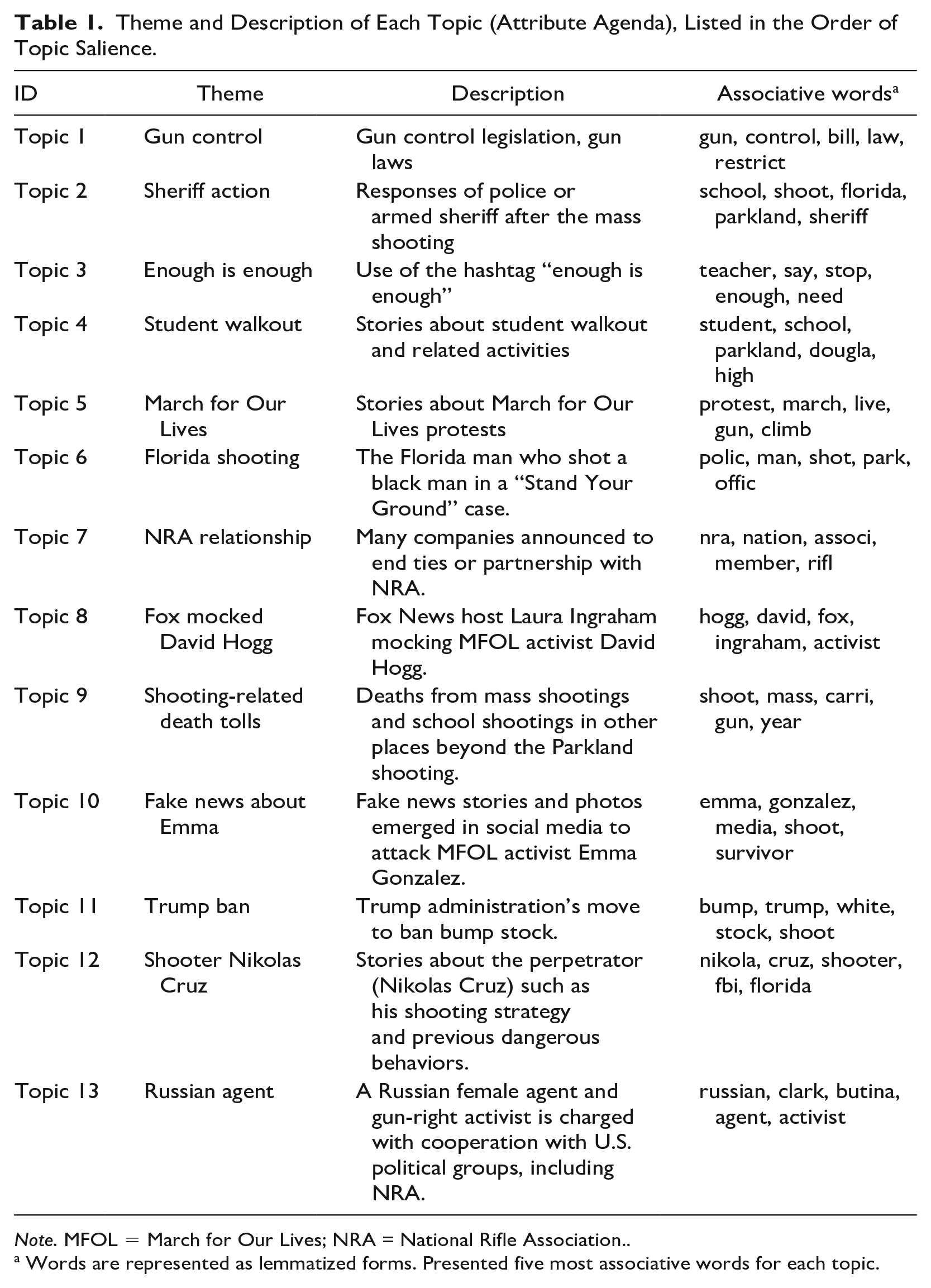
Note. MFOL = March for Our Lives; NRA = National Rifle Association..
Words are represented as lemmatized forms. Presented five most associative words for each topic.
Statistical Tests
We used logistic regression (Roberts et al., 2019) to address how different the distribution of agendas, represented by topic probabilities, was between the focal media type (i.e., activism media and ephemeral websites) and other media types, using the estimateEffect function in stm. Given that the covariate of each agenda is categorical, we plotted the mean differences between a pair of media types with 95% confidence intervals (C.I.), in which zero indicated the equal group mean.
Intermedia Agenda-Setting Effect (RQ2 and RQ4)
Cross-Lagged Correlation
To address RQ2 and RQ4 about whether activism media (ephemeral websites) significantly influence agendas of other news outlets and platforms, we ran a series of cross-lagged correlation (CLC) tests on the topic modeling outputs. CLC is based on Spearman’s rank-order correlation to examine the potential causal direction between two variables given a specific time lag (Lopez-Escobar et al., 1998). Since a simple comparison of correlation coefficients ignores synchronous correlation and autocorrelation (Cui & Wu, 2017), the Rozelle-Campbell baseline is set as a critical value for predicting CLC while considering the other two types of correlations (Rozelle & Campbell, 1969). Previous research (Han et al., 2017) showed that the RC baseline should be applicable for Spearman’s correlation tests. That is, a significant CLC between two factors exists when the correlation coefficients are above both the significance level and the value of the Rozelle-Campbell baseline, suggesting a possibility of agenda-setting effect between media A and B, given a time lag (Su & Borah, 2019).
Selecting Temporal Cycles
Considering that news coverage typically has temporal cycles of several weeks at best (Chyi & McCombs, 2004; Kwon & Moon, 2009), we examined intermedia agenda flows within the first few-week window, rather than taking the entire data period. Specifically, we focused on the first 8 weeks immediately following the trigger event (i.e., the Parkland shooting), between February 14, 2018, and April 17, 2018. During this period, public attention to the shooting case and the organizing efforts for MFOL events were at their peak. Following the procedure taken by Su and Borah (2019), we selected 20 days as a time interval, dividing the 8 weeks into three time points.
Generating Topic Rank-Order Data
We took multiple steps to convert the document-level stm modeling results into the media types’ rank-order data format. First, we output the gamma matrix that consisted of topic proportion scores for each topic per document. We pulled data within the temporal cycles (from February 14 to April 17) from the original gamma matrix. Second, we merged this matrix with the list of manually categorized media types to identify which document (and its respective topic scores) belonged to which media type (Ntradi = 6,495 documents; Nonlin = 3,952; Nnon = 2,963; Nactiv = 1,321; Nsoci = 2,691; Nephe = 642). Then, we split this dataset into three periods and averaged each topic’s proportion scores for all documents of each media type within a given time period. Finally, we used the average scores to rank-order media types. By undertaking these steps, we finally converted the document-level stm modeling result (i.e., topic score matrix) into the media types’ rank-order data. The rank-ordered data were used for CLC tests to examine the intermedia agenda-setting effects between successive temporal cycles (e.g., from Time 1 to Time 2).
Results
Descriptive Analysis
The number of URLs shared on traditional media (Ntradi = 12,042) was the largest. Online partisan websites, nonpartisan websites, and social media also served as influential news sources for sharing MFOL-related URLs (Nparti = 6,394; Nnonparti = 5,724; and Nsocial = 4,162, respectively). Conversely, the numbers of URLs shared by activism websites and ephemeral media were lower (Nactivi = 2,558 and Nepheme = 921, respectively). Regarding parent domains, traditional media had the most diverse website domains (Ntradi = 1,083). Compared with online partisan websites (Nparti = 292), nonpartisan websites (Nnonparti = 960) had more unique domains. Activism media and ephemeral media had some number of unique domains (Nactivi = 601; Nepheme = 262), and social media had the least number of domains (Nsocial = 60) among the six media types.
Topic Modeling Results
Temporal Trends of Agenda Salience
Each topic represents an attribute agenda of the MFOL (see Table 1). We utilized the estimateEffect function in stm that runs a regression modeling to estimate a given topic’s (or agenda’s) proportion in a document as a function of temporal variable (daily). An estimated topic proportion ranges from 0 to 1, with the sum of the topic proportions across all topics for a document being one (Roberts et al., 2019).
The salience of most agendas peaked between February and early March. Some topics, including Topic 4 (“student walkout”), Topic 5 (“March for Our Live”), Topic 7 (“NRA relationship”), and Topic 12 (“Nikolas Cruz”) were especially salient in the early phase of the observed time, while their salience dropped rapidly over time. Meanwhile, several topics showed abnormal tendencies. Topic 11 (“Trump ban”) has shown a gradual upward trend, peaked in November, and maintained the upward trend. Topic 1 was steadfast, with the most attention received from October to November. Other topics, like Topic 2 (“sheriff action”), Topic 9 (“shooting death”), Topic 10 (“fake news about Emma”), and Topic 13 (“Russian agent”) were not the most prominent agendas, yet their presence was steady across the observed period. For the graphical display of temporal trends, see Figure B in the Online Supplemental Material.
Comparison of Agendas by Media Types (RQ1 and RQ3)
RQ1 (and RQ3) asks how activism media (and ephemeral websites) differently set their agendas compared with other media. We set activism media (and ephemeral websites) as the reference group and examined whether topic proportions within the category of activism media (and ephemeral websites) differed significantly from those within other media types. We ran estimateEffect to plot and contrast topic saliences for two different media (e.g., activism media versus traditional media).
In response to RQ1, activism media contained protest-specific topics—specifically Topics 1, 3, and 5—more than the other five media platforms. Meanwhile, Topic 4 was either less salient in activism media or not different compared with other platforms, suggesting that student walkout events may have not been a direct outcome of activists’ organizing efforts.
Interestingly, the agendas in activism media were differentiated the most from traditional and online partisan media. Compared with traditional media, activism media focused more on follow-up activities after the shooting event (e.g., Topics 3 and 5) and discussing it from a societal perspective (e.g., Topics 1 and 9). Traditional media websites, conversely, reported more episodic and instant stories about the shooting case (e.g., Topics 2, 6, and 12). Compared with activism media, online partisan media paid more attention to agendas related to political affairs, for example, “Trump ban” and “NRA relationship,” as well as some unverified information about iconic activists, such as Emma González and David Hogg. Overall, Topics 2, 8, and 10 were less salient in activism media than other types (Figure 1).
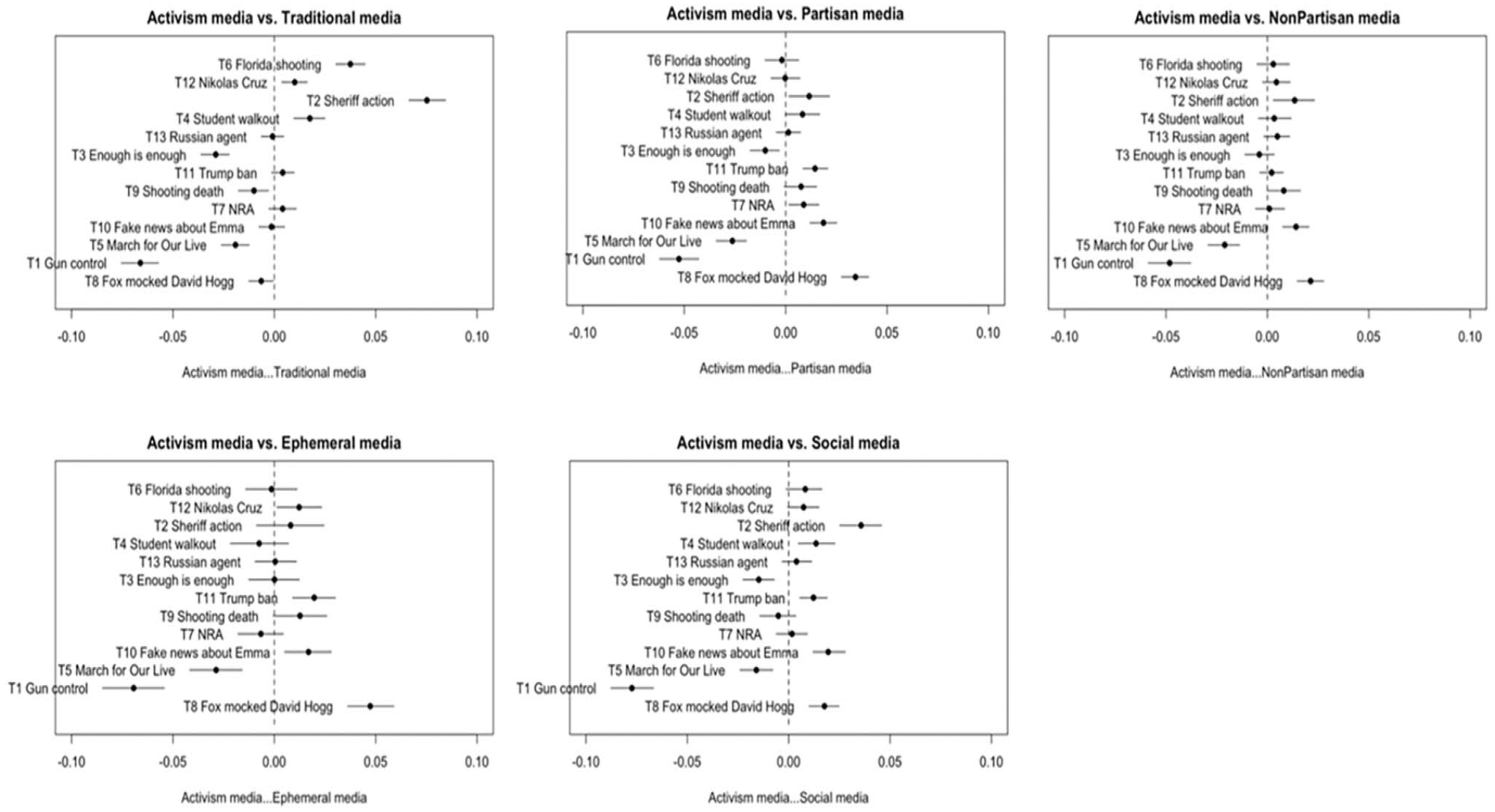
Topic Comparison Between Activism Websites With Other Media Platforms.
In response to RQ3, the most salient topic for the ephemeral websites in comparison to the other media types was disinformation about activist David Hogg (Topic 8). The topic about Trump’s ban for bump stock (Topic 11) also had a more significant proportion within the ephemeral media category. On the other hand, Topic 6 (Florida shooting) and Topic 1 (gun control) were less salient in ephemeral websites than other media types. Meanwhile, several agendas directly resonated with the gun control movement activities (Topic 3, 4, and 5), and they were not significantly different between ephemeral media and other media types.
Compared with traditional media, conspiratorial topics such as Topics 8 and 10 and the shooting death tolls (Topic 9) were more salient in ephemeral media. Compared with social media, ephemeral media showed less salience in reporting instant stories about the shooting case (Figure 2).
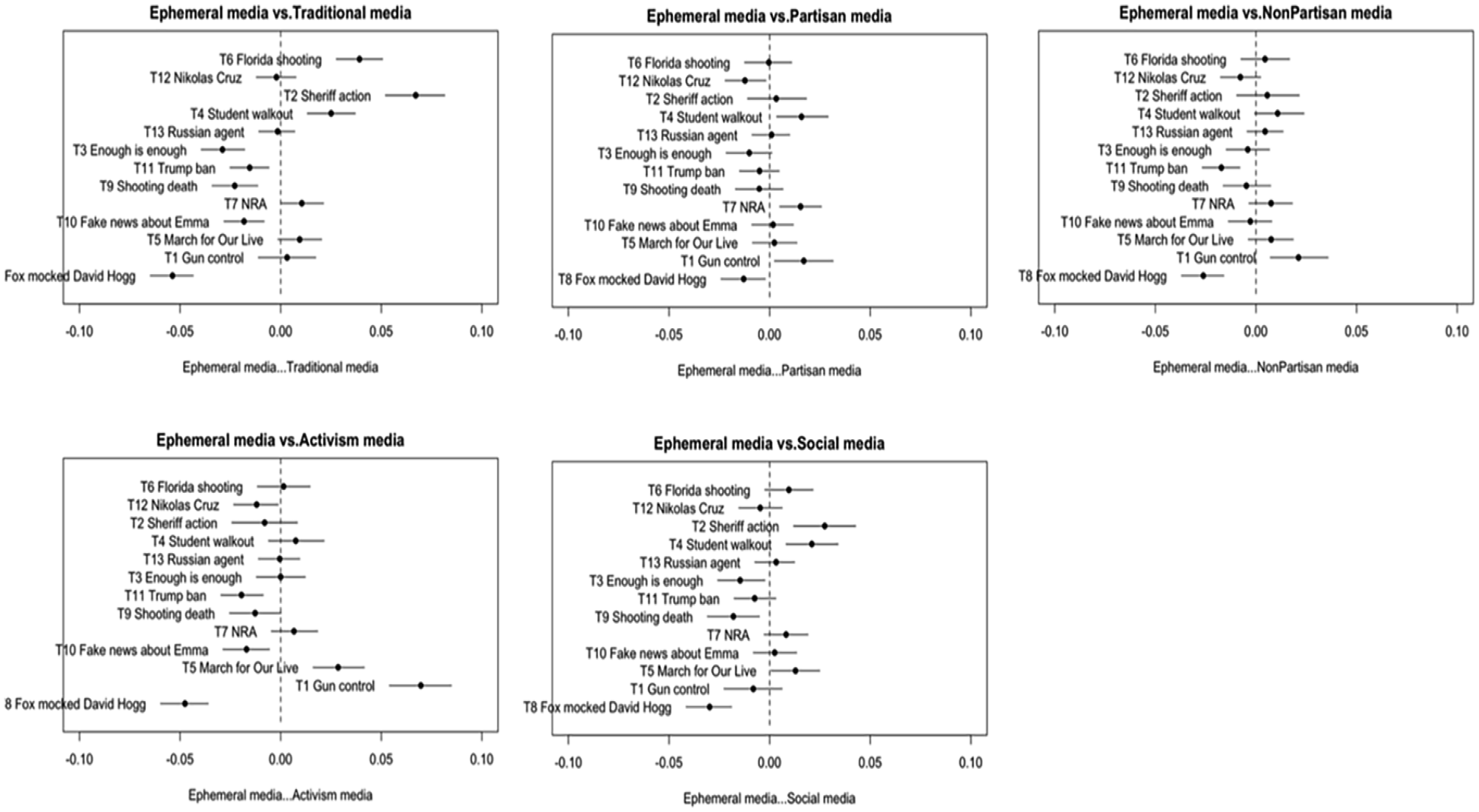
Topic Comparison Between Ephemeral Media With Other Media Platforms.
Cross-Lagged Correlation Results
Description of Rank Orders During the First 8 Weeks
In general, topics of MFOL-related movements (Topic 1, 3, and 5) were the most salient in Time 1 within the activism media category, while they showed a decreasing trend toward Time 3. Meanwhile, conspiratorial topics about activists (Topic 8 and 10) emerged more saliently in Time 2 and Time 3 than in Time 1. For ephemeral websites, topics about sheriff action and shooting death (Topic 2 and 9) used to be more salient in Time 1 but became less salient later. Topics related to gun control movements (Topic 3 and 5) and disinformation about activists (Topic 8) moved up the rank in the ephemeral media in the later week (Table C in the Online Supplemental Material section).
Correlation Analysis Among Other Media Types (RQ2 and RQ4)
RQ2 asked how the activism websites influenced or were influenced by other media platforms. The activism media at Time 1 was statistically correlated with other media at Time 2, including traditional media (r = .731, p < .001), partisan media (r = .824, p < .001), nonpartisan media (r = 758, p < .01), social media (r = .687, p < .05), and ephemeral websites (r = .824, p < 0.01), and all correlation coefficients exceeded the RC baseline values (Table 2). Conversely, the other five media’s earlier agendas did not significantly correlate with activism websites’ later agendas, and the correlations did not exceed the baseline values. This indicated that there were significant unidirectional intermedia agenda-setting effects from activism media to the other five media types from Time 2 to Time 3.
The Cross-Lagged Spearman Correlation Coefficients Between News Media Platforms: From Time 1 to Time 2.
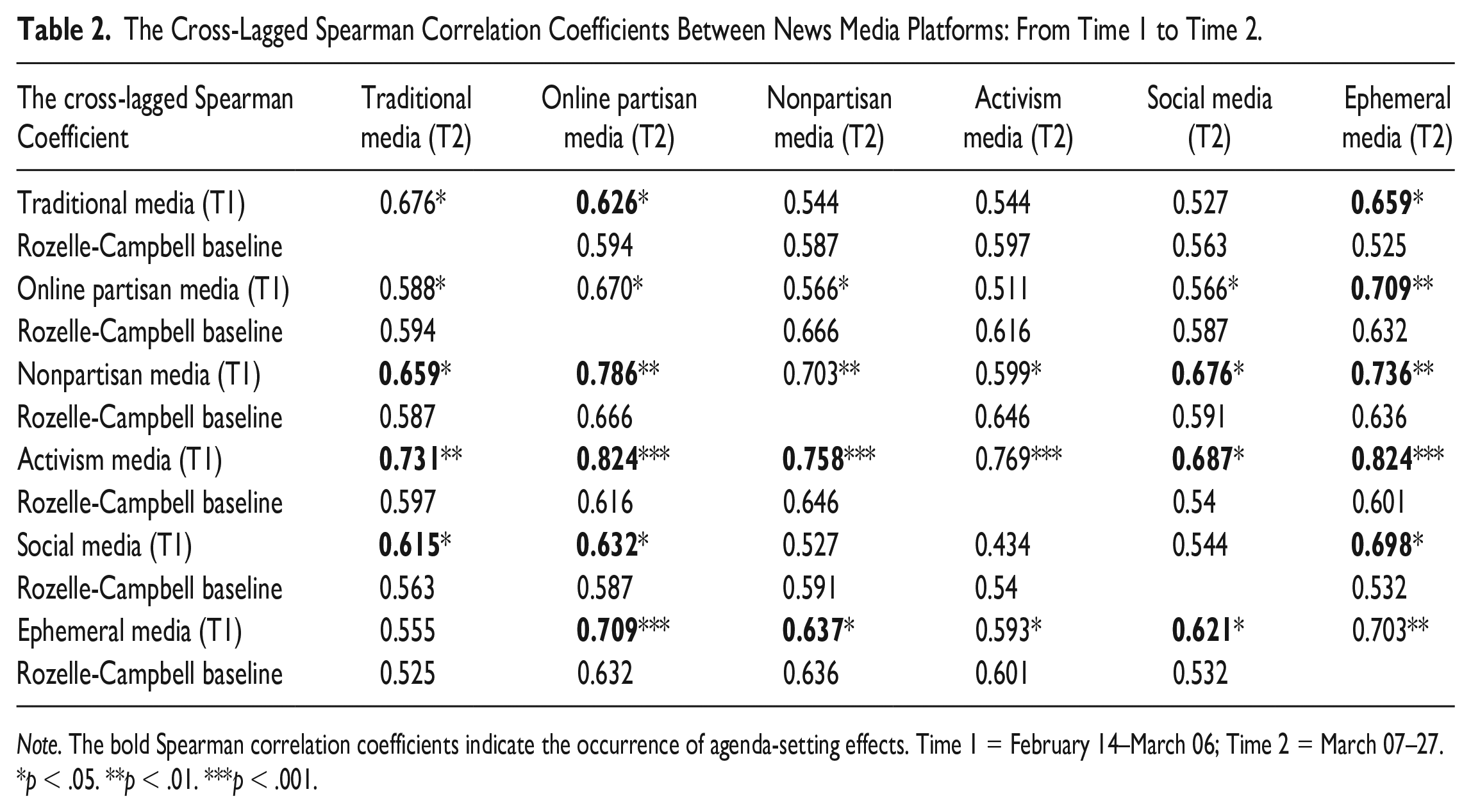
Note. The bold Spearman correlation coefficients indicate the occurrence of agenda-setting effects. Time 1 = February 14–March 06; Time 2 = March 07–27.
p < .05. **p < .01. ***p < .001.
When it comes to the second cross-lagged situation, the activism media at Time 2 were significantly correlated with the other five media at Time 3 (Table 3). Meanwhile, the correlations between other media types at Time 2 and activism media at Time 3 were also significant (r = .654, p < .05; r = .769, p < .01; r = .819, p < .01; r = .758, p < .01; r = .747, p < .01). All CLC coefficients exceeded the RC baseline values. This indicated that there were significant reciprocal intermedia agenda-setting effects between activism media and the other five media from Time 2 to Time 3.
The Cross-Lagged Spearman Correlation Coefficients Between News Media Platforms From Time 2 to Time 3.
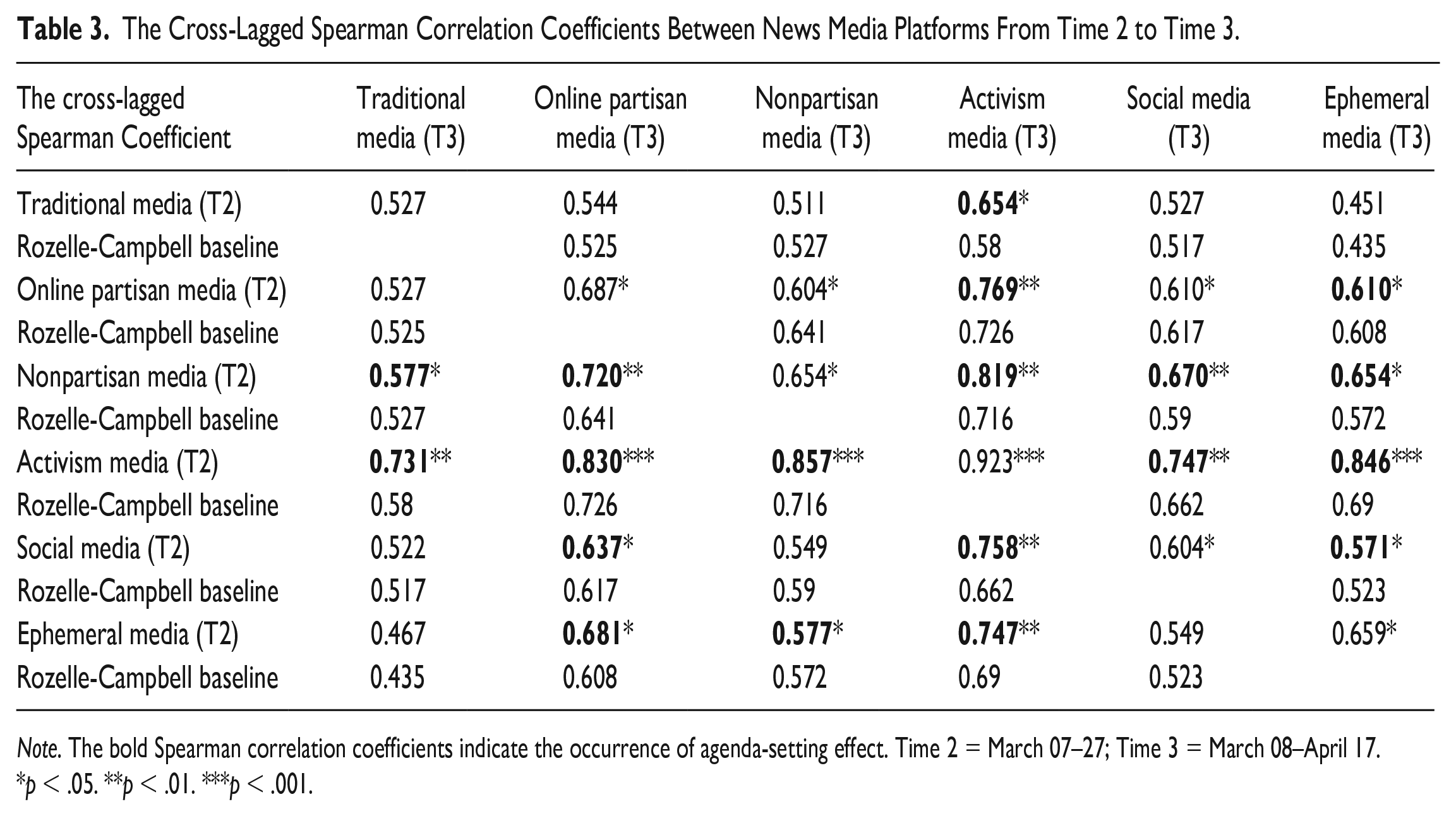
Note. The bold Spearman correlation coefficients indicate the occurrence of agenda-setting effect. Time 2 = March 07–27; Time 3 = March 08–April 17.
p < .05. **p < .01. ***p < .001.
Next, RQ4 asked about how ephemeral websites influenced or were influenced by other media. From Time 1 to Time 2, ephemeral websites’ later agendas were significantly influenced by the earlier agendas of other media; traditional media (r = .659, p < .05), online partisan media (r = .709, p < .01), nonpartisan media (r = .736, p < .01), activism websites (r = .824, p < .001), and social media (r = .698, p < .05), exceeding the RC baselines (Table 2). Among them, three media types—online partisan media, nonpartisan media, and social media—showed reciprocal agenda-setting relationships with ephemeral media. That is, ephemeral media at Time 1 were also significantly correlated with them at Time 2 (r = .709, p < .01; r = .637, p < .05; r = .621, p < .05, respectively), exceeding the RC baseline values. This suggests that ephemeral websites’ agendas were reciprocally correlated with the agendas of online partisan media, nonpartisan media, and social media, while the agendas of traditional media and activism media had a unidirectional influence on ephemeral websites’ later agendas at Time 2.
In the second cross-lagged stage, ephemeral websites had reciprocal correlations with online partisan, nonpartisan, and activism media. Social media at Time 2 was significantly correlated with ephemeral websites at Time 3 (r = .571, p < .05; Table 3); while the correlation between ephemeral websites at Time 2 and social media at Time 3 was not significant. We found that social media influenced ephemeral websites unidirectionally. There was no significant intermedia agenda-setting effect between ephemeral websites and traditional media from Time 2 to Time 3.
Figure 3 summarizes the results of intermedia agenda-setting paths among six media platforms from Time 1 to Time 3. Overall, this study found that, from Time 1 to Time 2, activism websites played agenda-setters for other media. However, in the second cross-lagged situation (Time 2 to Time 3), other media agendas also significantly influenced activism media agendas. While ephemeral websites’ agendas were influenced by traditional and activism media in the first cross-lagged situation (from Time 1 to Time 2), the ephemeral websites become detached from traditional media yet developed reciprocal relationships with other media types in the second cross-lagged situation (from Time 2 to Time 3).
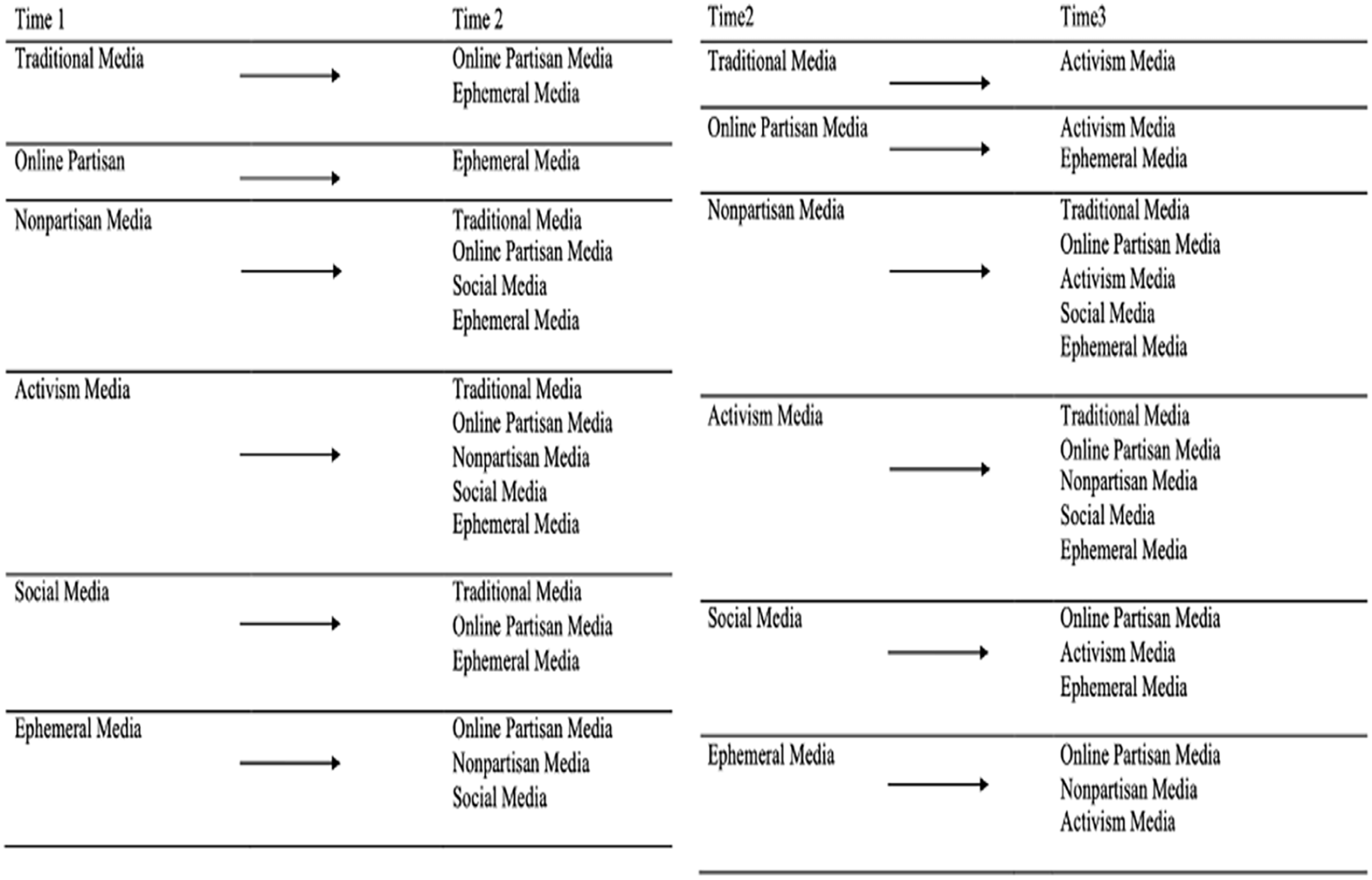
The Paths of Intermedia Agenda-Setting Effects Between Media Types.
Discussion and Conclusions
This study explores the formation, transfer, and exchange of social movement agendas in the contemporary intermedia ecosystem. We examine the intermedia relations between activism media and other news types, additionally taking into account the influence of ephemeral media as alternative agenda-setters. Activism media online not only amplifies social movement organizers’ role as information subsidies for journalists reporting on social changes but also facilitates direct communication with the public (Mundt et al., 2018). Ephemeral websites can be a product of strategic maneuvers to either mobilize public attention or weaponize narratives to delegitimize social change efforts. These websites are created and then quickly deleted, becoming enigmatic and peculiar components of the online media environment (Bastos & Mercea, 2019). We investigate the role of these websites in shaping media discourse surrounding a social movement.
The study focused on the U.S. gun control movement, specifically the MFOL campaign, as its empirical context. Drawing on intermedia agenda-setting theory and analyzing the Meta’s Facebook URLs Share dataset, we compared gun control–related agendas across different media during MFOL. Two research questions, RQ1 and RQ3, explored the specific attributes of agendas related to MFOL in media discourses and the degree of alignment in agenda salience across different media types. We found significant differences between the agendas promoted by activism media (and ephemeral websites) compared to other media types. Activism media primarily focused on specific protest events and gun control policies, whereas ephemeral websites were more likely to contain conspiratorial narratives about the MFOL. The salience of these agendas was notably higher in activism media and ephemeral websites, respectively, than in conventional news media systems such as mainstream media, partisan outlets, and social media/news aggregating platforms. To examine the spillover of agendas between media types, RQ2 and RQ4 were formulated. The flow of agendas was dynamic and reciprocal, reflecting the characteristics of the current networked news environment. Particularly noteworthy was the significant reciprocal relationship between activism media and ephemeral websites, indicating that the proliferation of inauthentic media content can alienate genuine messages of social movements from the broader intermedia agenda-setting processes.
This study makes several contributions. Foremost, it expands the intermedia agenda-building/setting theory by conceptualizing alternative media actors engaged in setting media and public agendas. In this study, we consider activism media as part of the intermedia system and provide evidence of their contribution as an agenda-builder, thus enriching our theoretical understanding of making social movement discourses.
In addition, this study introduces ephemeral websites as another type of agenda-setters. The reciprocal intermedia effects observed suggest that the activism media’s effort to publicize gun politics agendas can be undermined and disrupted by ephemeral websites in the current online environment. The prominence of conspiratorial stories in ephemeral media contents indicates their contribution to amplifying misinformation and influencing public opinions. It is also worth mentioning that the ephemeral websites’ agendas were reciprocally impacted by other media agendas, reflecting the complex and intertwined nature of social movement discourse. These findings align with previous research on deleted or suspended social media accounts, which have highlighted their threats in contaminating public opinions (e.g., Boichak et al., 2021; Toraman et al., 2022). By shedding light on the complexity and disorderliness of social movement’s public relation in today’s opaque online media ecosystem, this study adds to our understanding of the challenges faced in shaping intermedia discourses of social movement.
By introducing two alternative media factors in the agenda-building and agenda-setting of social movements, this study broadens the applicability of agenda-setting theories to activism research in the digital era. Several scholars (Earl & Garrett, 2017) have called for using communication theories to systematically examine the communication processes underlying social movements. This study addresses this call by embracing a hybrid, dynamic, and intertwined conceptualization of information and media actors.
Methodologically, this study leveraged a novel data source, Meta’s URLs-Share dataset, to test intermedia agenda-setting effects. Unlike previous studies that relied on retrieving online content with unknown audience reach, this dataset provided comprehensive data while ensuring some level of content reach to the public. Furthermore, the use of computational content analysis (i.e., STM) enhances the methodological toolkit for intermedia agenda-setting research. While previous research has employed predefined content analytic schemes to identify agenda salience among different media types (e.g., Hunt & Gruszczynski, 2021), recent studies have begun to utilize inductive approaches such as topic modeling, especially for large-scale data (e.g., Su, 2023). This study expands on these efforts by demonstrating the utility of STM as an analytic framework to inductively identify agendas and statistically compare their intermedia salience.
Finally, this study offers some insights for activism communities on effectively promoting their agendas in the hybrid media environment. Our findings indicate that social activists’ strategic efforts are to some extent challenged by disruptive information operations carried out by counter-movement actors, thereby influencing the tone and impact of protest-related agendas in other media and the public. The activities of ephemeral websites can contribute to disrupting the agenda-setting effects of activism media by amplifying false and hateful narratives targeting activists. As a result, responding to such narratives becomes crucial, as they can potentially overshadow genuine agendas for social change. Given today’s increasingly complex and opaque online environment, social movement organizers should adopt tactful approaches in addressing rumors, misinformation, and hate speech. Dealing with these challenges effectively should be seen as an essential aspect of their media publicity strategies in the contemporary marketplace of ideas.
This study has some limitations. First, our data were public URLs obtained only from Facebook (now Meta). This does not guarantee the representativeness of our dataset for every web content that contributed to the emergence of public discourse surrounding MFOL. Second, we compared agendas between media by their topic salience, also known as substantive attributes (Su et al., 2020); however, we did not compare the affective attributes of those media’s news coverage. Furthermore, we set only 2 months as the time window for time-lagged correlation tests. Although these 2 months were the most active period for media reporting of MFOL, more cross-lagged relationships could have occurred throughout the entire period of observation. Nonetheless, it is one of the first studies to examine the roles of activism media and ephemeral websites as agenda-setters of a social movement. This study helps to fill the gaps in social change research by demonstrating the importance of activism media (especially in the early stage of the movement) and the potential of ephemeral media in shaping social change discourses in the networked media environment.
Supplemental Material
sj-docx-1-jmq-10.1177_10776990231217740 – Supplemental material for Gun Control Agendas in Networked Digital Environment: An Intermedia Comparison Between News Outlets, Activism Media, and Ephemeral Websites
Supplemental material, sj-docx-1-jmq-10.1177_10776990231217740 for Gun Control Agendas in Networked Digital Environment: An Intermedia Comparison Between News Outlets, Activism Media, and Ephemeral Websites by Qian Li, Chun Shao, Shawn Walker and K. Hazel Kwon in Journalism & Mass Communication Quarterly
Footnotes
Acknowledgements
The authors acknowledge and disclose the use of ChatGPT for the purpose of proofreading the article. The authors affirm that all statements presented in this article have been written by the (human) authors. The authors express gratitude to the exceptional former studen Tanush Vinay for assisted the earlier phases of data collection and preprocessing, as well as to the anonymous reviewers who provided insightful feedback.
Declaration of Conflicting Interests
The author(s) declared no potential conflicts of interest with respect to the research, authorship, and/or publication of this article.
Funding
The author(s) disclosed receipt of the following financial support for the research, authorship, and/or publication of this article: This project was supported by the Social Science Research Council (Social Media and Democracy Research Grant) and the Institute for Social Science Research at Arizona State University (The Seed Grant Initiative).

Supplemental Material
Supplemental material for this article is available online.
Author Biographies
References
Supplementary Material
Please find the following supplemental material available below.
For Open Access articles published under a Creative Commons License, all supplemental material carries the same license as the article it is associated with.
For non-Open Access articles published, all supplemental material carries a non-exclusive license, and permission requests for re-use of supplemental material or any part of supplemental material shall be sent directly to the copyright owner as specified in the copyright notice associated with the article.
