




Abstract
Amid the proliferation of multiplatform social media use and fake news, the ongoing debate about social media’s impact on news engagement and selective exposure remains inconclusive. Drawing on a representative sample of 17 countries (N = 34,633), the present study examined the association of country-level media systems, individual-level fake news concerns, and multiplatform news use with news engagement and selective exposure. The multilevel analyses revealed (a) an overall positive association between multiplatform social media use and news engagement, (b) the role of fake news concerns on the formation of echo chambers, and (c) the role of state intervention in mitigating individuals’ news engagement in a multiplatform landscape.
Keywords
Social media platforms are an increasingly essential source of news, accounting for a significant portion of people’s information sourcing. According to Newman et al. (2022), social media sources account for 51% of people’s news consumption. Given this prominence, investigations of the patterns and effects of social media news usage are conceptually and practically valuable for researchers, policymakers, and social media users alike. Notably, the prevalence of multiplatform social media use is particularly significant in the context of the integrated polymedia landscape and the emergence of personalized media repertoires (Madianou, 2014). With people increasingly utilizing multiple social media platforms for information acquisition and engagement, as highlighted by Lelkes (2020), investigating the impact of multiplatform social media use on news engagement and selective exposure is crucial for gaining a comprehensive understanding of social media dynamics.
However, previous research on the effects of multiplatform social media use has often been confined to “mono-national” case studies, with few researchers making global comparisons. Hence, the significant role of country-level media systems in shaping individuals’ news engagement might be ignored. Comparative analyses, as highlighted by Hallin & Mancini (2004), highlight variations and similarities that can assist concept formation and causal inference. Therefore, revisiting the question of the effects of social media on news engagement and selective exposure through comparative analysis is imperative for gaining deeper insights into the topic.
Meanwhile, scholars have raised concerns regarding the proliferation of fake news and its detrimental effects. Social media platforms, given their ability to facilitate the rapid and extensive dissemination of information, can inadvertently contribute to the virality of misinformation. This proliferation of misinformation and disinformation can make it challenging for individuals to distinguish between credible and fake news, potentially impeding their ability to engage effectively in democratic processes (Lee, 2019).
The aim of this study was to fill these research gaps by comprehensively examining how country-level media systems (the press market, political parallelism, journalistic professionalism, and the role of the state) and individual-level fake news concerns are associated with multiplatform social media news use, news engagement, and selective exposure. Based on a representative sample of 17 democratic countries and multilevel analysis using Brüggemann et al. (2014) typology of media systems, this study offers insights into the positive effects of multiplatform social media news use on news engagement and addresses concerns about how fake news promoting selective exposure.
Multiplatform Social Media News Use and News Engagement
Social media has become an essential facilitator of people’s news engagement, which involves individuals engaging with news by commenting, sharing, and posting while making their actions visible and subject to responses from others in their online social network (Chan et al., 2019). In particular, multiplatform social media news use is prevalent because various social media platforms create diverse opportunities for individuals to consume news. By multiplatform social media news use, I refer to the various social media platforms on which people seek information or communicate with others in their daily lives. As highlighted by Auxier and Anderson (2021), a sizable portion of Americans use social media platforms, such as Facebook and Instagram. In the current study, nearly half of the citizens relied on social media as a news source, with individuals accessing news content from multiple social media platforms (Appendix, Table 1S).
As individual social media platforms have distinct affordances, such as information density, immediacy, and interactivity (Kim, 2019), individuals’ information acquisition and engagement may change when they use multiple social media platforms (Lelkes, 2020). Moreover, as social media users frequently switch platforms to acquire different news information and engage in different news consumption, polymedia (Madianou, 2014) or multiplatform connectedness (Wu-Ouyang, 2023) emerges, which is central to studies of news engagement.
In particular, researchers have argued that the decentralized architecture of multiple social media platforms facilitates individuals’ ability to share, comment on, and engage in discussions about news (Diehl et al., 2019). According to the diversity and democratic culture theory (Lei, 2011), the internet offers a vast amount of diverse information, which reduces transaction costs, enhances information dissemination, makes it difficult for powerholders to hegemonize the internet sphere, and thus increases individuals’ news engagement. In other words, the magnitude of individuals’ news engagement is influenced by the number of social media platforms they employ for their media interactions. Chan et al.’s (2021b) empirical study provided evidence that multiplatform social media news use and connections with news organizations and journalists on social media positively contributed to increased social media news engagement in seven democracies. In addition, according to Oeldorf-Hirsch (2018), the act of seeking news on social media amplifies levels of news attention—a behavior that tangibly manifests as active engagement with news content.
Although the literature is dominated by “mono-national” case studies (Esser & Vliegenthart, 2017), the findings provided insight into the relationship between multiplatform social media news use and news engagement when considering country-level differences. Therefore, this study formulated the following hypothesis:
Selective Exposure in a Multiplatform Social Media Environment
Selective exposure refers to the subjective tendency of individuals to consume content from like-minded sources that align with their preferences, interests, and beliefs (Stroud, 2011, p. 32). Thus, news exposure is not merely a function of the quantity of information consumed, but also the content’s relevance and resonance with an individual’s cognitive state. Selective exposure is essential in news consumption, as it can give rise to echo chambers and may contribute to political polarization, in turn preventing individuals from engaging in political participation and undermining democratic values (Iyengar & Hahn, 2009; Mutz & Mondak, 2006).
Scholars have argued that in a polymedia environment, social media contributes to selective exposure because either the algorithmic recommendations or the user-driven customizations (Dylko, 2016) serve as filter bubbles, allowing individuals to surround themselves with like-minded content and perspectives (Terren & Borge-Bravo, 2021). According to Dilliplane (2011), if people are primarily exposed to news from like-minded sources, they may become trapped in their current knowledge, preventing them from benefiting from exposure to more diverse perspectives and engagement in political issues (Matthes et al., 2019). Traditional media fragmentation research suggests that reliance on specialized news sources can lead to audience fragmentation (Tewksbury & Rittenberg, 2012). Furthermore, exposure to homogeneous viewpoints also fragments social media users into different groups, contributing to polarization (Dilliplane, 2011; Kim & Chen, 2016; Valenzuela et al., 2011).
However, studies have found that evidence of social media promoting echo chambers is rather limited (Dubois & Blank, 2018). Classic political communication scholars (e.g., Lei, 2011; Mutz & Mondak, 2006) have examined the internet’s capacity to provide valuable opportunities for individuals to encounter diverse viewpoints, fostering democratic demand and facilitating positive political change. According to the diversity and democratic culture theory (Lei, 2011), the internet’s significance goes beyond an increase in the sheer quantity of information; it potentially offers a diverse range of information that can contribute to the promotion of democratic values. In particular, the proliferation of various social media platforms provides a wide range of diverse information, promoting multiple perspectives, facilitating the dissemination of diverse information, and posing challenges to dominant powers aiming to exert control over the digital sphere. Empirical evidence provided by Goel et al. (2010) suggested that online social networks can provide a significant diversity of information—greater than expected.
Brundidge (2010) argued an inadvertency thesis in the online public sphere, suggesting that individuals may unintentionally encounter heterogeneous discussions or exposure. Kim and Chen (2015) empirically supported the idea of inadvertency by demonstrating that social media use to obtain news positively contributes to online engagement through network heterogeneity. In a later study, Kim and Chen (2016) further validated the positive mediating effect of cross-cutting exposure on the relationship between social media use and online engagement while rejecting the mediating role of selective exposure.
Particularly in a multimedia environment, Dubois and Blank (2018) argued that as individuals use a range of platforms, they have greater opportunities for exposure to diverse content and opinions, thereby reducing the likelihood of echo chambers, suggesting that the prevalence of echo chambers in a diverse media environment might be overstated. Recent research has also shown that the effects of echo chambers may not be universal due to individuals’ significant amounts of incidental exposure to counter-attitudinal content on social media (Fletcher et al., 2020), which can increase active news engagement on social media (Chen et al., 2022).
As this study was conducted in a multiplatform social media environment based on the diversity and democratic culture theory (Lei, 2011), which emphasizes diverse information on the internet, the researcher assumed a negative relationship between social media use and selective exposure. In other words, the assumption was that due to the plurality of multiplatform social media news use, individuals may have increased exposure to diverse information, providing them with more opportunities to encounter perspectives that differ from their own, which may potentially influence their contribution to democratic culture. Therefore, the following hypothesis is proposed:
Fake News Concerns
Concerns about fake news have escalated to become a prominent public issue, surpassing concerns about crime, climate change, and immigration (Mitchell et al., 2019). Fake news refers to “fabricated information that mimics news media content in form but not in organizational process or intent” (Lazer et al., 2018, p. 1094). Studies have pointed out that fake news on social media is novel and spreads faster and more broadly than truth (Vosoughi et al., 2018). As the crucial feature of fake news is “mimicking news,” people with low news efficacy and literacy may easily be misled and engage in fake news stories (Chan, 2022). Previous work has predominantly concentrated on how individuals receive and why they are willing to distribute fake news (e.g., Valenzuela et al., 2019). However, there has been less investigation into people’s attitudes and concerns regarding fake news, despite its potential influence on people’s engagement with news and new authentication. Notably, research has discovered a positive association between fake news concerns and news-related activities, such as news authentication, the recognition of genuine news, and efforts to check the accuracy of news (Chan, 2022; Chan et al., 2021a). This emphasis on fake news concerns is significant due to the ongoing debate surrounding the scale of fake news within the information ecosystem (Allen et al., 2020) and the extent to which people share fake news (Nelson & Taneja, 2018). Consequently, examining the level of concern about fake news can provide valuable insights into the impact of social media on news engagement and exposure.
Studies found that active social media users are likely to believe misinformation or engage in more misinformation-sharing behavior if they perceive that the information fits with their existing knowledge (Tsang, 2021; Valenzuela et al., 2019). This behavior can be explained by motivated reasoning theory, which holds that individuals’ information processing tends to be self-reinforcing (Kunda, 1990). Chaiken et al. (1996) defined this self-reinforcing process as defense motivation, which is people’s desire to hold beliefs consistent with their existing self-concepts or worldviews. As people’s information processes tend to reach desired conclusions that reaffirm their existing knowledge and assumptions, they may intentionally believe and share like-minded misinformation. This argument is also congruent with the classic selective exposure paradigm, which argues that defense motivation is the default mode of media reception (Winter et al., 2016).
Based on social media users’ motivation to defend themselves against the proliferation of fake news, there may be a joint dynamic effect of fake news concerns and multiplatform social media use on news engagement and selective exposure. In particular, multiplatform social media users with heightened fake news concerns may be further motivated to engage in news consumption by screening out irrelevant or misinformation content, unfriending or unfollowing certain accounts, or sharing and commenting on like-minded posts to reinforce their existing perspectives. Such proactive engagement contrasts with mere news avoidance (Chan et al., 2021a). Empirical studies have also shown that selective exposure to like-minded information can increase individuals’ engagement with the news (Sunstein, 2017).
Concurrently, the defensive motivation underlying these behaviors may inadvertently foster a filter bubble effect, potentially leading multiplatform users to experience heightened selective exposure (Dylko, 2016). Therefore, it is conceivable that fake news concerns and multiplatform social media use have joint effects on news engagement and selective exposure. Based on H1/H2, the following assumptions were made:
Comparing Media Systems
The theoretical framework of the four dimensions of media systems—the press market, political parallelism, journalistic professionalism, and the role of the state—has become a powerful tool for guiding comparative communication research. Numerous scholars have applied this framework to investigate news-related and political communication, revealing variations in the political role of media across different media systems (e.g., Baumgartner & Bonafont, 2015; Fletcher et al., 2020). Political parallelism refers to the degree to which journalism is viewed as a component of political advocacy (Brüggemann et al., 2014). Fletcher et al. (2020) argued that European countries with high levels of political parallelism are likely to experience higher levels of news audience polarization than countries with democratic corporatist media systems.
With the rise in digital journalism and fake news concerns, scholars recognized the need to consider the impact of internet-led changes on classic media systems typology (Benson et al., 2012; Hallin & Mancini, 2017). The widespread use of social media platforms provides individuals with greater opportunities to engage with public issues and express their views across multiple platforms, which inevitably intersect with the media systems to which they are exposed on a daily basis (Mattoni & Ceccobelli, 2018). Meanwhile, as media systems vary across regions, these differences can shape the information environment and influence the prevalence and impact of fake news within a society (Vu et al., 2023). Empirical research has indicated that digital technologies can facilitate both diverse and liberal information dissemination as well as increased polarization. For example, new economies may encourage more sensationalistic and light news in countries with high journalistic professionalism and political parallelism, such as Denmark, but enable more polarization in polarized pluralist systems with low political parallelism and strong state intervention, such as France (Benson et al., 2012). Powers and Benson (2014) also found that country-level media systems influence online media. They argued that online news is likely to exhibit higher external pluralism (i.e., increased diversity resulting from a greater number of media outlets and the distinctions between them) in liberal democracies, such as the United States but not in countries with already high levels of external pluralism, indicating that the democratic consequences of online media may be limited. These findings suggest that country-level media systems play a significant role in shaping opinion climates, which in turn influence individuals’ social media environments and their patterns of selective exposure.
As most of the literature on the role of social media is highly ethnocentric and has largely examined individual-level media exposure (Esser & Vliegenthart, 2017), comparative research can elucidate variations in media contexts and thereby facilitate concept clarification, prediction, and causality (Hallin & Mancini, 2004). Echoing the call from Chan et al. (2021b), comparative studies can adopt multilevel methods to better explicate the influence of media dimensions on social media; I, therefore, applied these media system dimensions to a multilevel analysis.
To incorporate the characteristics of media systems into the current study, I employed Brüggemann et al. (2014)’s quantified typology of the press market, political parallelism, journalistic professionalism, and the role of the state (public broadcasting, ownership regulation, and press subsidies). In particular, Austria, Germany, Switzerland, and the United Kingdom belong to the Central type of countries with strict ownership regulations and strong public broadcasting but low levels of press subsidies. Denmark, Finland, Norway, and Sweden are in the “Northern” cluster, with inclusive press markets, high journalistic professionalism, and low political parallelism and ownership regulation. The most polarized pluralist countries are Southern types of countries (Greece, Spain, Italy, and France) and have the highest political parallelism but the lowest journalistic professionalism and press markets. Belgium, the Netherlands, Ireland, the United States, and Portugal constitute Western types of countries that have high journalistic professionalism and political parallelism but low public broadcasting and press subsidies.
Quantitative validation and replication using qualitative comparative analysis have demonstrated that Brüggemann et al. (2014) typology is robust (Buchel et al., 2016), and recent researchers have used aspects of the typology in their studies. For example, Fletcher et al. (2020) adopted measures of political parallelism to examine the relationship between cross-platform news and polarization in 12 countries, while Chan et al. (2021a) adopted four unidimensional aspects of media systems to investigate the roles of news fatigue on news avoidance in 16 countries. However, to the author’s knowledge, no study has examined the relationships among social media use, selective exposure, and news engagement in all 17 countries based on Brüggemann et al. (2014) typology. In addition, I also applied the multidimensional concept of the role of the state (i.e., public broadcasting, ownership regulation, and press subsidies) to the study, acknowledging the varying strengths of state intervention across these dimensions (Brüggemann et al., 2014). Consequently, the following research question was formulated, and the conceptual model is depicted in Figure 1:
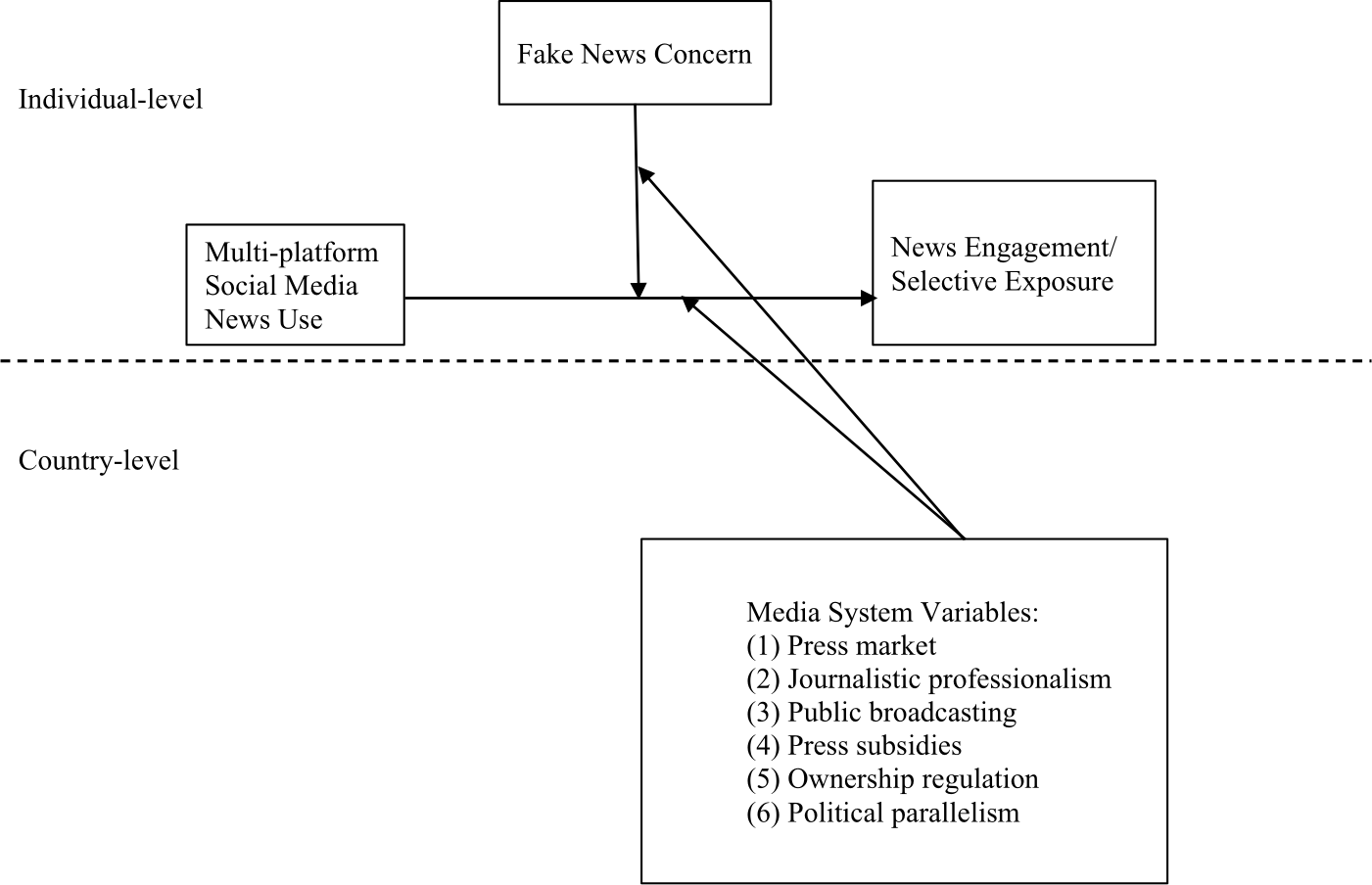
Conceptual Infographics of Variables Predicting News Engagement/Selective Exposure.
Method
Sample and Country Selection
Data for this study were collected from the 2021 Reuters Institute Digital News Report (DNR, Newman et al., 2022), which was conducted by YouGov and the Reuters Institute for the Study of Journalism at the University of Oxford. Quota sampling was employed by age, gender, and education based on census or industry data for each country. A weighting strategy was applied to ensure that the sample was generally representative of the internet population. 1 Following Brüggemann et al. (2014) typology of Western media systems, this study included 17 countries: Austria, Germany, Switzerland, the United Kingdom, Denmark, Finland, Norway, Sweden, Belgium, the Netherlands, Ireland, the United States, Portugal, Italy, France, Greece, and Spain. The final sample consisted of 34,633. The descriptive table can be found in Supplemental Appendix Table S1/S2.
Multiplatform Social Media News Use
This concept was measured by asking participants to select the social media platforms they had used in the past week for finding, reading, watching, sharing, or discussing news. In each country survey, a list of 19 to 24 popular social media platforms was provided. To ensure balanced distribution, the top eight platforms for news usage were identified for each country. For instance, in Austria, the top eight social media platforms were Facebook (31.2%), WhatsApp (22.1%), YouTube (20.9%), Instagram (11.6%), Snapchat (6%), Facebook Messenger (5.3%), Twitter (4.8%), and Telegram (3.9%). Scores of these platforms were added to form a cumulative index of multiplatform social media news use (M = 1.08, SD = 1.27, min = 0, max = 8).
News Engagement
Following prior studies that employed DNR data (e.g., Chan et al., 2021b), the news engagement scale was measured using seven statements regarding commenting, talking, and discussing. Sample items included “Comment on a news story in a social network (e.g., Facebook or Twitter)” and “Talk online with friends and colleagues about a news story (e.g., by email, social media, or messaging apps).” Responses were aggregated to form an index (M = 0.96, SD = 1.34).
Selective Exposure
Adapted from Brundidge (2010), participants indicated the frequency with which they encountered news coverage that aligned with their political views, gender, social and economic class, race/ethnicity, and residency (1 = “not enough,” 2 = “about the right amount,” and 3 = “too much”). Answers were averaged to create a selective exposure scale (M = 1.88, SD = 0.35, α = .73). 2
Fake News Concerns
Following Chan et al. (2021a), the respondents were asked to indicate the extent to which they agreed with the statement “Thinking about online news, I am concerned about what is real and what is fake on the internet” on a 5-point scale ranging from 1 = “strongly disagree” to 5 = “strongly agree” (M = 3.54, SD = 1.01).
Control Variables
Eight control variables were included as covariates: gender (female = 51.83%), age (M = 48.04, SD = 16.44, age range = 18–99 years), education (M = 5.98, SD = 1.88, 1 = “I did not complete any formal education” to 10 = “doctoral or equivalent level degree”), social media as a news source (yes = 46.3%), news interest (M = 3.72, SD = .91, 1 = “not at all interested” to 5 = “extremely interested”), political interest (M = 3.14, SD = 1.12, 1 = “not at all interested” to 5 = “extremely interested”), internet frequency (M = 7.06, SD = 1.18, 1 = “less often than once a week” to 8 = “more than 10 times a day”), and news frequency (M = 7.68, SD = 1.72, 1 = “never” to 10 = “more than 10 times a day”).
Country-Level Factors: Media System Dimensions
The measures for six media system dimensions (the press market, political parallelism, journalistic professionalism, public service broadcasting, press subsidies, and ownership regulation) were adopted from Brüggemann et al. (2014). Composite numbers of z-scores for all four dimensions of the media systems in 17 nations were derived from the same sample of Western countries as in Hallin and Mancini’s (2004) classic media system typology (the z-scores are shown in Table 1S). These dimensions had strong internal correlations with each other (Table 1). For example, journalistic professionalism had a strong correlation with political parallelism (r = -.87, p < .001) and the press market (r = .59, p < .05). Chan et al. (2021a) also applied this method but focused on 16 countries with four unidimensional measures.
Zero-Order Correlation Matrix of Key Variables.
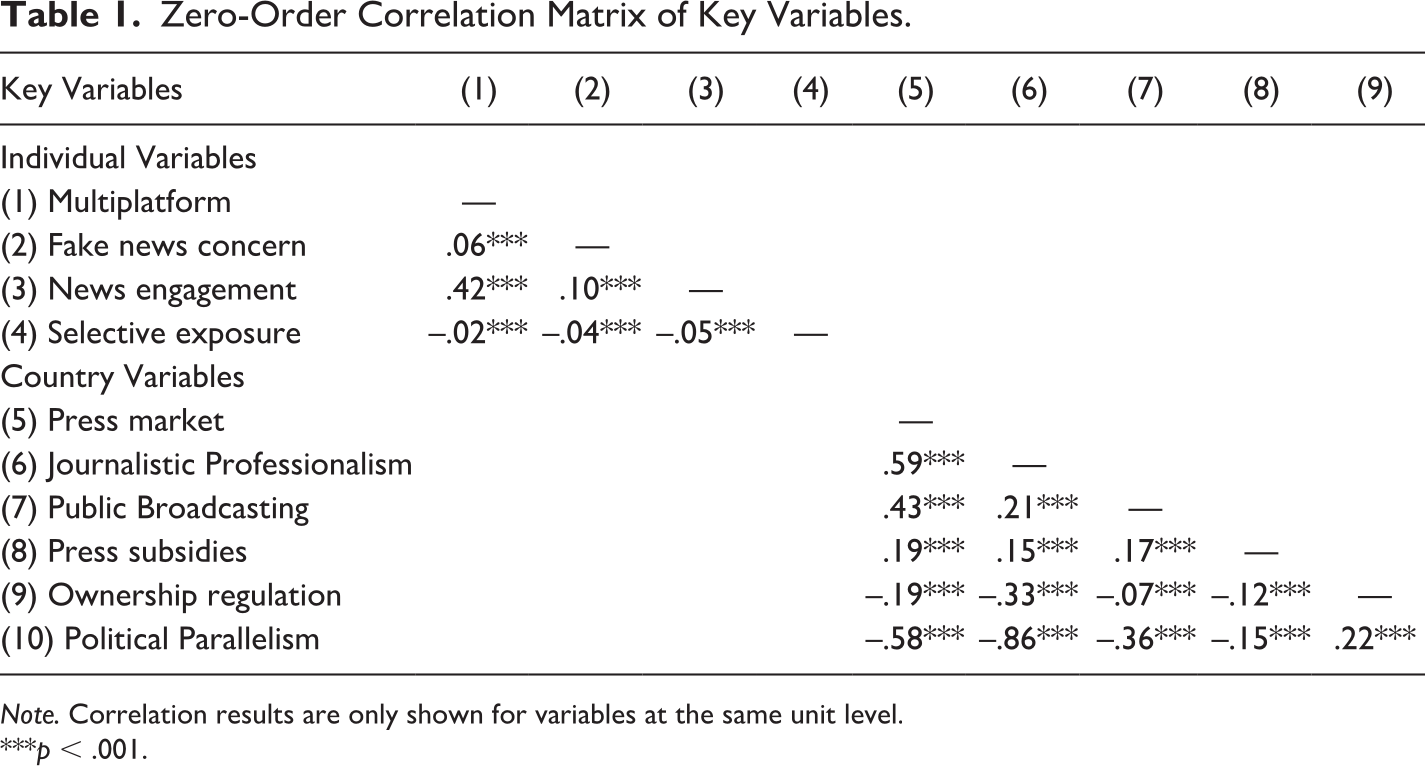
Note. Correlation results are only shown for variables at the same unit level.
p < .001.
Analysis and Results
A correlation analysis was initially conducted to examine the relationships among individual-level variables. Table 1 shows that multiplatform social media news use and fake news concerns had weak to moderate relationships with news engagement and selective exposure, respectively.
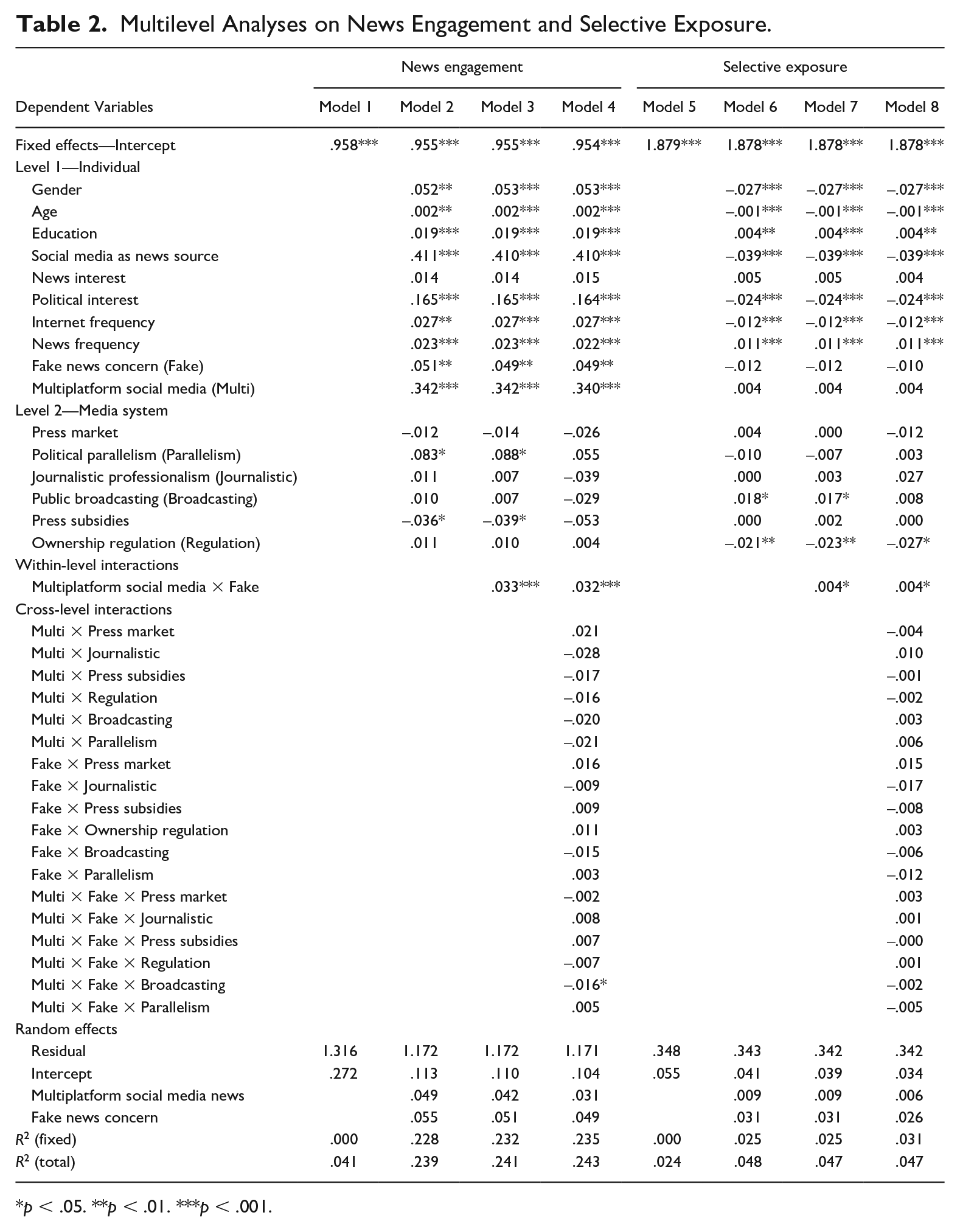
Multilevel modeling (MLM) was then conducted. As shown in Table 2, the null baseline models (Models 1 and 5) were both significant, suggesting differences in news engagement and selective exposure across countries. The intraclass correlation coefficient (ICC) showed that the between-country variation was 4.4% of the total variance for news engagement and 3% for selective exposure. 3 All variables were then grand mean-centered for easier interpretation of the following results.
Multilevel Analyses on News Engagement and Selective Exposure.
p < .05. **p < .01. ***p < .001.
All country- and individual-level factors were then entered into the models. Model 2 demonstrated that multiplatform social media news use (b = 0.34, p < .001) and fake news concerns (b = 0.05, p < .01) were significantly associated with news engagement, supporting H1. Model 6 showed that multiplatform social media news use was not linked to selective exposure (b = 0.00, p = .24) and did not support H2. An examination of media systems across countries revealed that higher levels of public broadcasting (b = 0.02, p < .05) and lower ownership regulation (b = −0.02, p < .01) were related to selective exposure, while higher political parallelism (b = 0.08, p < .05) and lower press subsidies (b = −0.04, p < .05) contributed to news engagement.
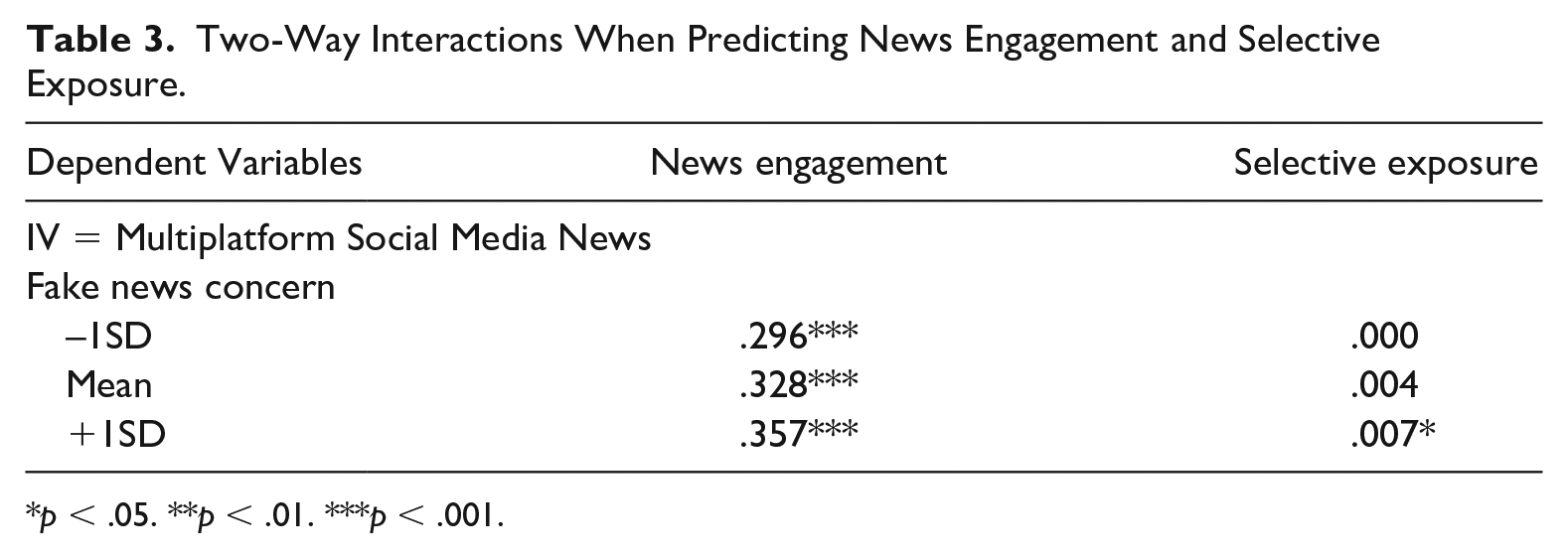
To examine the moderating roles of fake news concerns (H3) and media system dimensions (RQ1) on social media effects, I added several two-way and three-way interactions to the model. Tables 3 and 4 summarize the slope analyses results. The Johnson–Neyman plots of the interaction effects are shown in Supplemental Appendix Figures S1–2.
Two-Way Interactions When Predicting News Engagement and Selective Exposure.
p < .05. **p < .01. ***p < .001.
Cross-Level Interactions Across Media System Dimensions When Predicting Selective Exposure (With Multiplatform Social Media News Use as Predictor).
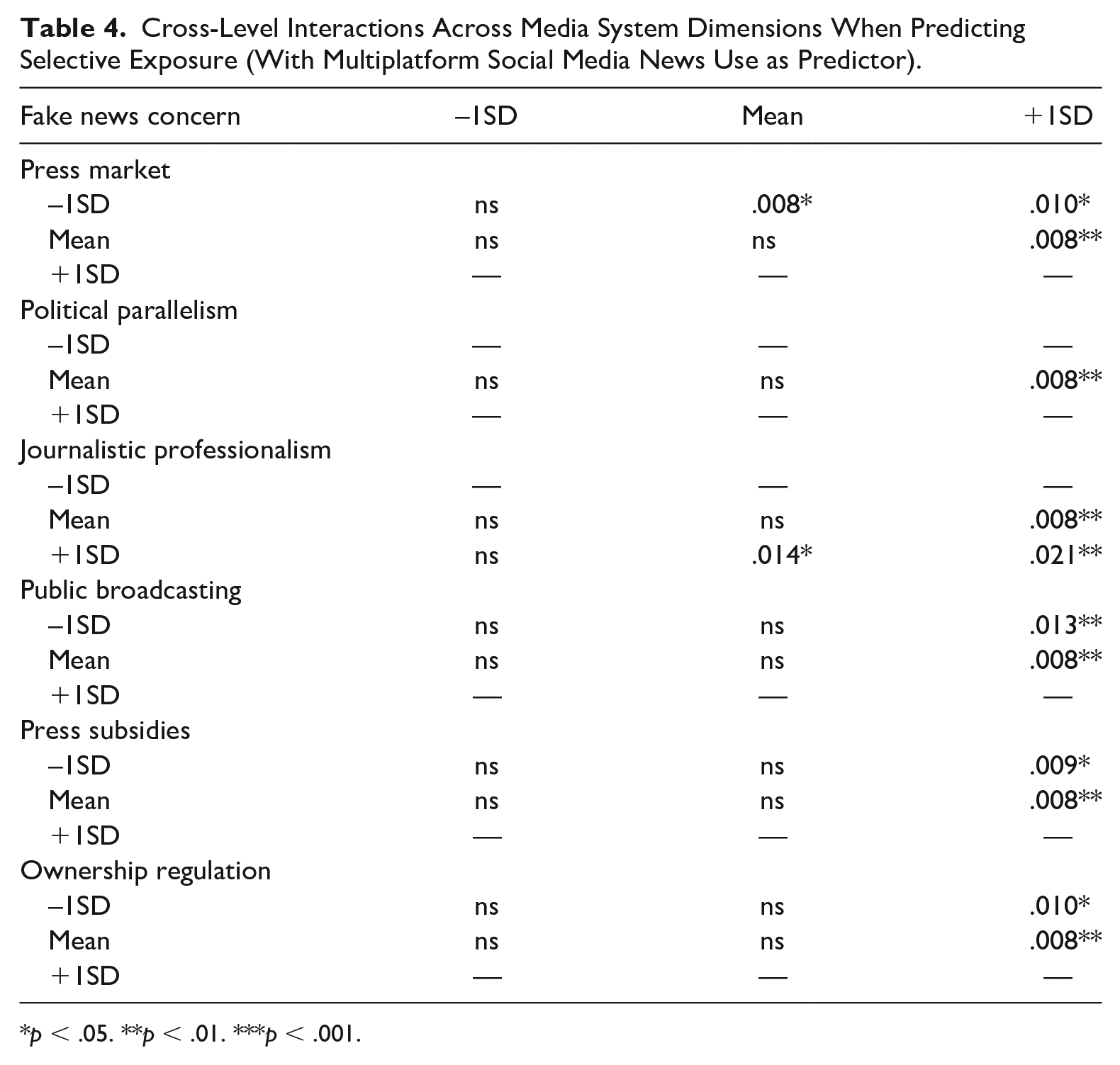
p < .05. **p < .01. ***p < .001.
MLM Explaining News Engagement
Model 3 showed that fake news concerns accentuated the relationship between social media use and news engagement (b = 0.033, p < .001), supporting H3a. Figure S3 illustrates the divergent positive contributory moderation typology and shows that with increased fake news concerns, multiplatform social media use was associated with higher social media engagement.
The cross-level interactions further showed the moderating roles of media system dimensions on individual-level relationships. For explaining news engagement (Model 4), one three-way interaction between multiplatform social media news use and fake news concerns was significantly different across varying levels of public broadcasting (b = −0.016, p < .05). Figure 2 shows the visualizations for high and low levels of public broadcasting, according to the convergent contributory moderation typology (Table S3 indicates the slope analyses) of Holbert and Park (2020). 4 This indicated that the moderating role of fake news concerns on the positive relationship between multiplatform social media news use and news engagement was more noticeable at lower levels than at higher levels of public broadcasting. In other words, under conditions of low public broadcasting, such multiplatform social media news use increased news engagement more than fake news concerns. 5
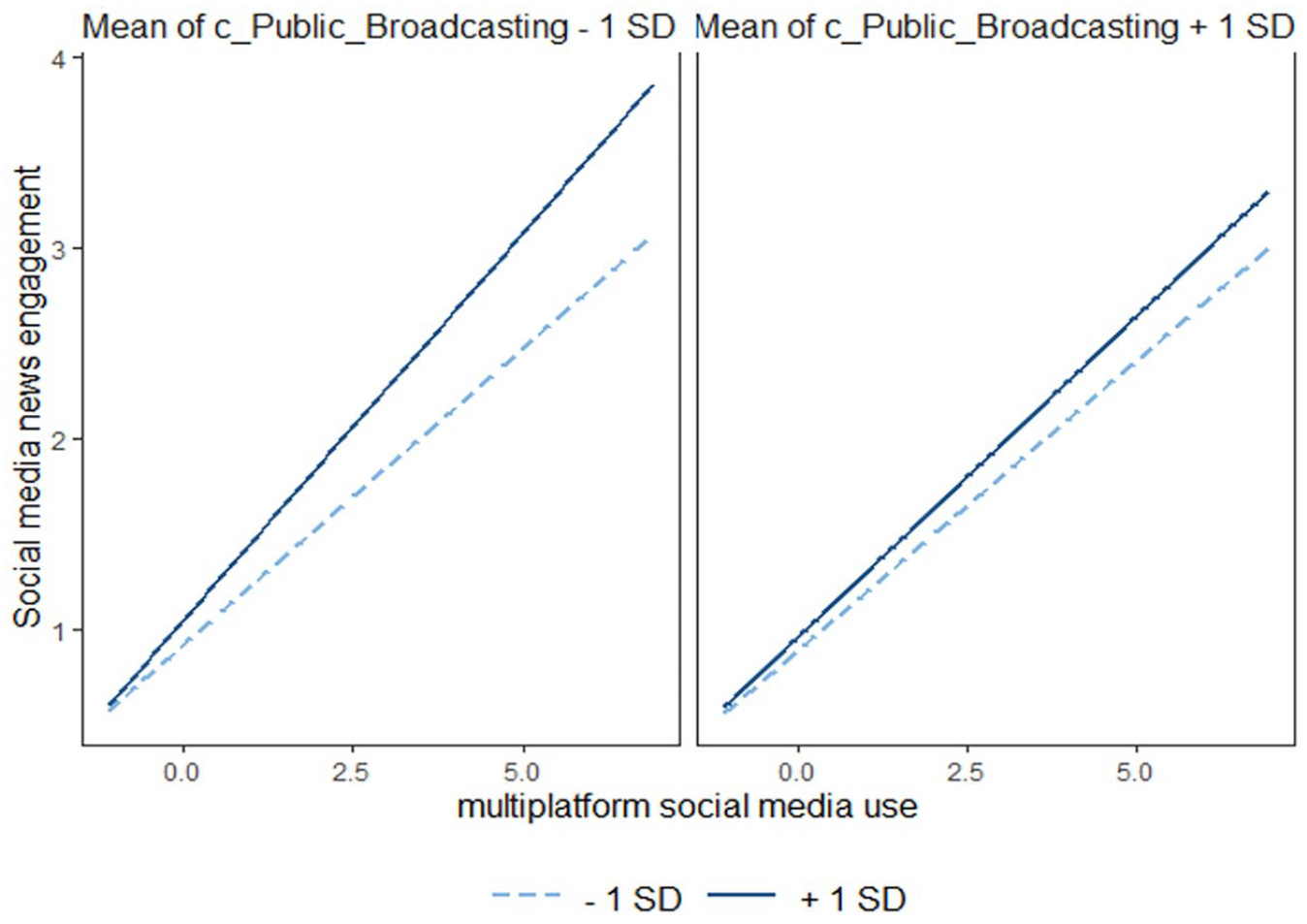
Three-Way Interactions Plots Predicting News Engagement With Multiplatform Social Media News Use as Focal Independent Variable and Fake News Concern as First Moderator.
MLM Explaining Selective Exposure
As seen from the within-level interactions (Model 7), the interaction effect of multiplatform social media news use and fake news concerns on selective exposure was positively significant (b = 0.004, p < .05), supporting H3b. Although previous analyses did not reveal a direct relationship between multiplatform social media news use and selective exposure, the two-way interactions illustrated that the relationship was significantly isolated under certain conditions. The slope analysis (Table 3) further showed that the positive relationship was only significant at higher levels of fake news concerns (+1 SD), indicating contingent moderation. This suggests that when people are more concerned about fake news, their increased news use on multiplatform social media is associated with selective exposure. Figure 3 visualizes the interaction plot.
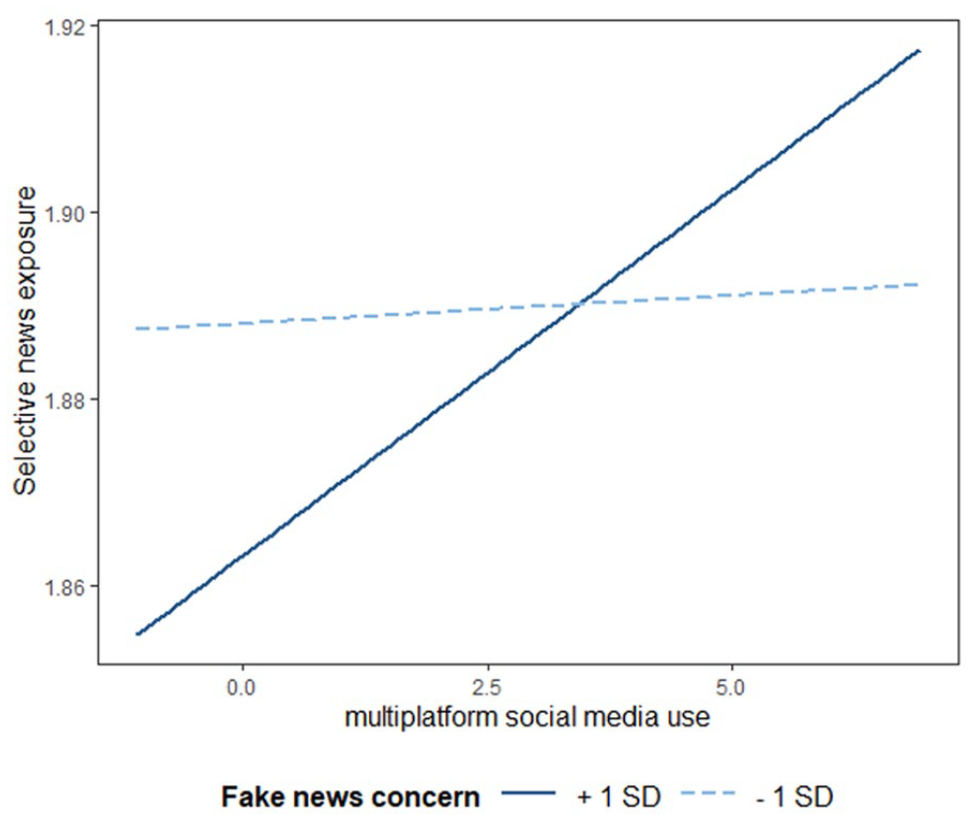
Two-Way Interactions Plots Predicting Selective Exposure With Multiplatform Social Media News Use as Independent Variable and Fake News Concern as a Moderator.
When considering country-level factors, although Table 2 shows no overall significant cross-level interactions, the multilevel nested model comparison (χ2 = 32.95, p < .01), the changed R 2 (from .025 to .031), and the subsequent slope analysis (Table 4) further indicated that, for certain media systems, the effect of fake news concerns and social media use on selective exposure could be significant, which was a strategy for testing effective moderation supported by scholars (Mustillo et al., 2018). Specifically, the results showed that for media systems with weaker press markets, public service broadcasting, press subsidies, and ownership regulation, but higher journalistic professionalism, the impact of fake news concerns on social media use resulted in higher news selective exposure.
In summary, three patterns emerged from these analyses. First, although the direct relationship between multiplatform social media news use and selective exposure was not significant, the effect could be significant if people’s fake news concerns reached a high level. This is intriguing, as it suggests that a moderator at a certain level (high fake news concerns) made the original null relationship significant, which is compelling for theory building (Holbert & Park, 2020). Second, the abovementioned relationship can be strengthened for media systems with small press markets, limited state intervention, and higher journalistic professionalism. Third, under conditions of low public broadcasting, multiplatform social media news use increases news engagement more than fake news concerns. These findings have important implications.
Robustness
Several alternative analyses were conducted to examine the robustness of the results. First, the researcher exchanged the key variables. The MLM results indicated a lower model fit and insignificant relationships. Specifically, the relationship between selective exposure and multiplatform media use (b = 0.05, p = .17), fake news concerns, and multiplatform media use (b = 0.00, p = .76), and the interaction effects through fake news concerns became insignificant (b = 0.00, p = .59), whereas the relationship between news engagement and multiplatform media use decreased from .34 to .29.
Second, the same analyses were conducted with Reuters DNR 2022. 5 As this questionnaire did not contain selective exposure questions, only news engagement as a DV was examined. The results showed that multiplatform social media use for news was positively linked with news engagement (b = 0.33, p < .001), while fake news concerns accentuated this relationship (b = 0.02, p < .001). Similarly, a significant three-way interaction with the same valence was found among social media use, fake news concerns, and the role of the state (ownership regulation, b = −0.013, p < .05).
Discussion and Conclusion
Based on a representative sample of 17 democratic countries, this study contributes to the ongoing debate about the democratic effects of multiplatform social media news use at the country level. This empirical investigation of the relationships among multiplatform social media news use and news exposure and engagement using individuals’ fake news concerns and country-level media system dimensions presents an overall positive perspective on the democratic impact of social media on news outcomes. In addition, it sheds light on the influence of fake news concerns in shaping echo chambers and the role of state intervention in mitigating individuals’ news engagement within a multiplatform media environment.
The first major finding of this study supports the argument that in the polymedia landscape, multiplatform social media news use has a positive influence on news engagement, consistent with previous research (Chan et al., 2021b; Diehl et al., 2019; Lelkes, 2020) and the theory of diversity and democratic culture (Lei, 2011) which suggests that diverse information can contribute to democratic culture. The study highlights that the decentralized structure of numerous social media platforms provides individuals with greater opportunities to engage in diverse news-related activities. Moreover, heightened concerns about fake news can be a catalyst for multiplatform users to intensify their involvement in news consumption across various platforms. This increased engagement is a self-reinforcement response that prompts users to take certain actions, such as filtering out irrelevant or misleading content, dissociating from specific accounts, and actively participating through sharing and commenting on posts in harmony with their beliefs.
The second major finding pertains to country-level media systems. When considering media systems, the three-way interaction showed that the increased scale of public broadcasting attenuated social media’s effect on news engagement as fake news concerns increased. This finding is noteworthy, as public broadcasting is a significant form of state intervention (Brüggemann et al., 2014), and it emphasizes the importance of publicly funded media. This result suggests that in Western countries with minimal state intervention in public media, such as the United States and the Netherlands, fake news concerns amplify the effect of multiplatform news use on news engagement to a great extent, whereas in countries with powerful public broadcasting, such as Denmark and Germany, the impact of fake news concerns fades. The results showed that fake news concerns are heightened in countries with more liberal media systems than in countries with strong state intervention, suggesting two alternative explanations.
One possible explanation aligns with the political economy explanation of state intervention (Mosco, 1996), which holds that proper state intervention is beneficial for the press market in controlling misinformation. In countries with strong public broadcasting systems, better legal and copyright protection reduces the spread and scale of fake news. Consequently, people in these countries may be less concerned about fake news and, therefore, less motivated to engage in news-related behaviors such as news authentication. In countries with liberal systems, such as the United States, low state intervention in press markets may lead to an abundance of misinformation, leading individuals to engage in news-curating behaviors such as commenting, sharing, or blocking. This explanation receives preliminary support from our descriptive analysis showing that in western and southern country types, which generally have limited public broadcasting (e.g., the United States, Ireland, and Portugal), concerns about fake news are higher than in northern and central country types, which have extensive public broadcasting (e.g., Austria and Germany). However, it is important to exercise caution in interpreting this finding, as the strength of state intervention may vary across different dimensions within central- and northern-type countries. For example, although northern-type countries have strong public broadcasting and press subsidies, they score low on ownership regulation, indicating a greater emphasis on press freedom. As this study focused on only one dimension of state intervention (i.e., public broadcasting) as a moderator of the relationship, it did not include the insignificant role of ownership regulation and press subsidies. Future studies should compare different types of state intervention in a single country and their impact on fake news.
Another explanation is at the individual level. In countries with strong state intervention, when social media users consider news engagement, fake news concerns may not be their primary concern. Other factors, such as the role of the state, social norms, political restrictions, and internet freedom, may take precedence. Consequently, social media users may be more conservative about acting. In contrast, in liberal systems, where the role of the state is limited, individuals are more influenced by the presence of misinformation itself. With increased concerns about fake news, social media users are likely to filter out misinformation on social media, hide or block accounts, and share or discuss the news with others.
Given the considerable debate on whether social media platforms provide fertile ground for echo chambers or the democratic public sphere, the third objective of this study was to examine the negative relationship between multiplatform social media news use and selective exposure. Surprisingly, the results did not provide empirical support for such a relationship. Although the diversity and democratic culture theory (Lei, 2011) posits that multiplatform social media can expose individuals to a wide range of information, the presence of algorithmic recommendations and user-driven news curation may still influence the formation of filter bubbles that reinforce exposure to like-minded viewpoints (Dylko, 2016; Terren & Borge-Bravo, 2021), thereby rendering the relationship between social media use and diverse information exposure insignificant. Consequently, this theory may require revisions or further consideration, especially in the context of an overwhelming misinformation environment.
This study’s focus on fake news concerns provides valuable insights for the revision of the theory, particularly in the context of misinformation-saturated environments. While selective exposure does not directly stem from social media news consumption, it is likely to manifest in environments characterized by heightened fake news concerns. Specifically, the relationship between multiplatform social media news use and selective exposure is only significantly positive when fake news concerns are high. This is very interesting because it indicates “boundary conditions” (Holbert & Park, 2020) for echo chamber effects and validates the social media defense motivation hypothesis (Chaiken et al., 1996). In line with this study’s aim, the results showed that heightened concerns about fake news prompt social media users to employ filtering strategies to defend their existing views by weeding away irrelevant or misinformation, hiding or blocking accounts that promote opposing information, and keeping news feeds consistent with their existing views. Over time, people’s news consumption tends to be congruent and like-minded.
Scholars have suggested that curated flows may be shaped not only by personal curation but also by algorithmic ranking, potentially promoting exposure to cross-cutting information beyond personal choice (Thorson & Wells, 2016) or by incidental counter-attitudinal exposure (Fletcher et al., 2020), this research provides preliminary evidence that individuals’ choices, influenced by fake news concern, still play a significant role in promoting their news exposure to like-minded content, which agrees with Bakshy et al. (2015) conclusion.
By incorporating country-level media system dimensions into the model, the researcher found significant two-way interactions between social media, fake news concerns, and selective exposure in media systems characterized by small press markets, limited state intervention, and high journalistic professionalism. These findings align to some extent with the media system dimensions observed in Western countries, such as the United States and Ireland. One possible explanation for the limited role of the state could be the political economy perspective (Mosco, 1996), which suggests that a lack of government intervention may hinder the press market’s ability to combat false information effectively.
In countries with liberal systems and limited state intervention, the abundance of misinformation in press markets prompts people to engage in news-curating behaviors, such as limiting opposing information and incorporating more agreeable news, leading to more like-minded exposure. Second, small press markets may prevent the press from reaching a broad audience and instead foster fragmented groups and identities. This fragmentation increases the risk of fake news and selective exposure within specific groups. Finally, high levels of journalistic professionalism can also contribute to selective exposure due to the partisanship of journalistic agencies. The impact of distinctive media bias (e.g., see Otero, 2018 U.S. media bias chart) may prompt individuals to selectively choose media agencies that support their existing ideology as a defense motivation or self-reinforcement strategy, leading to more selective exposure.
Several limitations should be noted. First, although this study employed Brüggemann et al. (2014) media systems typology, it only focused on 17 Western democracies, overlooking other democracies and authoritarian societies. Future researchers could explore whether the conclusions hold for other societies and compare different political systems. Moreover, as some of the data sources from Brüggemann et al. (2014) are decades old, updating the data and considering recent changes in Western countries, such as Brexit, are necessary.
Second, as with research using secondary data, the measurements were constrained by the availability of data. For example, the operationalization of selective exposure focused only on individuals’ perceptions of their consumption of like-minded information; hence, it would be advantageous to supplement this measurement with frequency data or more objective measures, such as log data (Wu-Ouyang & Chan, 2022). The operationalization of fake news concerns was based on a single-item scale. Although one study noted that single-item measures are often as valid and reliable as their multi-item counterparts (Hoeppner et al., 2011), future studies could benefit from testing the scale’s convergent and concurrent validity. In addition, the observation that the average multi-platform social media use for news is 1.08, despite corroborating previous research (Chan et al., 2021b; Guo & Chen, 2022 M = 1~2), future studies could explore whether this varies across different devices or modalities. Finally, although comparative analysis is useful for making comparisons, causality may not be conclusively determined from cross-sectional data. Future studies could employ panel or two-wave data for more accurate causal analyses.
Notwithstanding these limitations, this study fills a critical gap by comparing media systems and examining their associations with news engagement and selective exposure across countries. By focusing on multiplatform social media news use, this study supports the positive effect of social media use in increasing news engagement, and the negative effect of state intervention in undermining news engagement. Meanwhile, the role of fake news on selective exposure cannot be ignored.
Supplemental Material
sj-docx-1-jmq-10.1177_10776990231217482 – Supplemental material for Comparing Media Systems in Western Democracies: Examining the Role of Multiplatform News Use and Fake News Concern on News Engagement and Selective Exposure
Supplemental material, sj-docx-1-jmq-10.1177_10776990231217482 for Comparing Media Systems in Western Democracies: Examining the Role of Multiplatform News Use and Fake News Concern on News Engagement and Selective Exposure by Biying Wu-Ouyang in Journalism & Mass Communication Quarterly
Footnotes
Acknowledgements
The authors wish to thank the project teams of the Reuters Digital News Report for making their data publicly accessible for researchers. The dataset can be acquired upon approval of Reuters institute, and the associated code is available upon reasonable request. The author would like to sincerely appreciate three anonymous reviewers from JMCQ who provide constructive suggestions, Prof Michael Chan, Prof Saskia Witterborn, Prof Tian Yang and Prof Hai Liang for their generous help during the various stage of this study. An early version of this manuscript was presented on the Lisbon Winter School for the Study of Communication in Jan 2023, thanks for the organization and professors who provide constructive suggestions and supports.
Declaration of Conflicting Interests
The author(s) declared no potential conflicts of interest with respect to the research, authorship, and/or publication of this article.
Funding
The author(s) received no financial support for the research, authorship, and/or publication of this article.

Supplemental Material
Supplemental material for this article is available online.
Notes
Author Biography
References
Supplementary Material
Please find the following supplemental material available below.
For Open Access articles published under a Creative Commons License, all supplemental material carries the same license as the article it is associated with.
For non-Open Access articles published, all supplemental material carries a non-exclusive license, and permission requests for re-use of supplemental material or any part of supplemental material shall be sent directly to the copyright owner as specified in the copyright notice associated with the article.
