




Abstract
Immediately following dramatic events, news reporting must be both fast and accurate. In an attempt to reconcile the inherent conflict between these two ambitions, journalists often use disclaimers, for example, “unconfirmed” or “reports of.” These disclaimers allow for the rapid publication of less than reliable content. The results from our survey experiment suggest that strong disclaimers, as intended, do lower the perceived reliability of stories among news consumers. Furthermore, the results indicate that the context influences the effectiveness of disclaimers. It appears that in a crisis environment, such as after a large terrorist attack, individuals are less sensitive to disclaimers.
In the immediate aftermath of dramatic events, journalists must choose between the need to be fast or accurate in their reporting (Boin et al., 2016). On one hand, the public must receive information instantly, as delaying could have serious negative consequences in the example of an active shooter, a raging fire, or an ongoing gas leak. On the other hand, it takes time to verify the truthfulness of the stories that reach the news desk (Kovach & Rosenstiel, 2014). Just as there can be negative consequences to delaying publication, so can there be serious consequences to the publication of poorly vetted information. False information can undermine the public’s perception of the credibility of journalists and news media, which can ultimately be harmful for democracy (Asp, 2007; McQuail, 1992; Strömbäck, 2008).
In journalistic practice, there is a solution to this dilemma. News organizations can publish quickly if they also describe the report’s accuracy as potentially less exact by using disclaimers (Hermida, 2015; Rom & Reich, 2017). For example, they might rely on terms like “unverified,” “uncertain,” or “unconfirmed.” Common to these words is that they express caution about knowledge (John, 2015), in which journalists present knowledge (news) using different degrees of certainty (Rom & Reich, 2017). Some researchers call these terms “semiotic disclaimers” (Hermida, 2015) whereas others call them “modality disclaimers” (Rom & Reich, 2017). In this article, we simply use the term disclaimer when we describe words associated with reservations. Outside academia, however, other words are also used to describe this phenomenon, for example, uncertainty or doubt.
Although the use of disclaimers in journalism is common practice throughout the world and in many journalistic genres (Berkowitz & Liu, 2014; Hermida, 2015; Marriott, 2007; Rom & Reich, 2017), it is unclear whether ordinary people understand what it means when reporting is qualified by disclaimers. It is possible to see that this journalistic practice works on regular news consumers, if we are able to see a lower level of trust in stories which use disclaimers as opposed to ones in which disclaimers are absent (i.e., unequivocally true). One possibility is obviously that people take notice of disclaimers and judge the news story’s reliability accordingly. After all, it would be noteworthy given the widespread reliance on this practice if people were not influenced by disclaimers. Another and more problematic possibility is that people’s reliability evaluations of news stories are unaffected by disclaimers. A third possibility is that the influence of disclaimers depends on the situation, that is, their effectiveness is context-dependent. So, while prior research has documented the reliance of using disclaimers in journalism, there is little research as to how they actually influence news consumers.
Our purpose is to examine the extent to which the perceived reliability of breaking news is influenced by the use of disclaimers. Two hypotheses are tested. First, we predict that disclaimers reduce the reliability of breaking news in a “normal” news environment. Second, we theorize that if breaking news is published in a crisis environment, then disclaimers become less effective because a stressful context can make individuals less likely to pay attention to the nuances in news messages.
We test the hypotheses by relying on a vignette experiment, in which almost 2,400 participants were exposed to fictional, yet realistic news stories. In the experiment, participants read a breaking story about a possible knife attack close to the Swedish Parliament in Stockholm. We varied the level of disclaimers surrounding the event: it had either happened (no disclaimers), there were reports about it happening (moderate disclaimers), or there were unconfirmed reports about it happening (strong disclaimers). In addition, we experimentally manipulated the crisis context by exposing a share of the participants to information about a large terrorist attack immediately prior to the possible knife attack.
Theory
Disclaimers in the News Media
Journalists and the public both agree that the news media should seek out the truth and that the news stories they report on should be accurate (Bennett & Entman, 2001; Kovach & Rosenstiel, 2014). When the news media publishes inaccurate stories, the public generally reacts negatively, even when corrections are issued afterward (Karlsson et al., 2016). The embrace of the norm of accuracy makes sense as people rely on correct information for a host of decisions. When the general public is misinformed, it tends to have adverse consequences on the quality of their decisions. In short, accurate news is a democratic cornerstone (Kuklinski et al., 2000). Moreover, if a similar, yet actual event occurs again, people might mistakenly assume that that event is also untrue, and therefore not take appropriate action, in a kind of boy-who-cried-wolf scenario.
However, accuracy is not the only aspect that is essential to the delivery of news; stories need to be published rapidly, too (Gil de Zúñiga & Hinsley, 2013). The demand for speed is emphasized from a normative citizen perspective, where news need to be disseminated as fast as possible, so that those affects can take appropriate action (Scanlon, 2011) and from a market-based perspective. With its focus on deadlines and breaking news, velocity dominates the news industry, and has become even more prevalent in the current climate of increased news competition, associated with the 24-hr news cycle (Rosenberg & Feldman, 2008). News organizations and journalists are motivated to publish scoops and, in turn, fear being scooped by others. The pressure to publish quickly has taken on added importance as new technology has made it possible to deliver news at a rapid pace (Lewis & Cushion, 2009; Rom & Reich, 2017). Yet, even if fast journalism is a dominant paradigm in contemporary journalism, slow journalism exists simultaneously. Investigative reporting, new journalism, long-form journalism, and literary journalism have never followed the 24-hr news cycle (Le Masurier, 2015).
While the rise of social media and improvements in technology are posing challenges, they also provide new possibilities. For example, they are making it easier to receive firsthand information from those actually witnessing a crisis and finding a variety of sources. Posts, pictures, and tweets on social media networks can also help journalists in creating news stories about what is happening in the affected area (Allan, 2013).
Even so, the two demands of accuracy and speed can be in conflict. Breaking a story is possible, but at the detriment of accuracy; accuracy is possible, but a competitor might beat you to the punch. A potential solution to this journalistic dilemma is to publish quickly while at the same time telling news consumers that the story or elements of the story could turn out to be incorrect. Journalists do this by utilizing strategic disclaimers (Hermida, 2015; Rom & Reich, 2017). In the research literature, these disclaimers are a way of avoiding external criticism (Tuchman, 1972), but can also be seen as an epistemic responsibility (John, 2015) toward the audience.
Rom and Reich (2017) differentiate between three different types of disclaimers used by news organizations. The first is modality expressions which indicate a degree of doubt regarding the information; the second is labeled evidentiality and is a linguistic category wherein the responsibility for the content is outsourced to a third party, and the third (source reactions) uses source quotations to place third parties behind the quoted texts. For linguistic treatments on the problem of signaling certainty that a state of affairs is real, see, for example, Cornillie (2009) and Nuyts (2001).
In this article, we focus on modality disclaimers, which are terms or phrases which indicate that something may or may not have occurred exactly as it was communicated. Journalists use many different words to convey that an event is clouded by uncertainty. For example, they write “unconfirmed reports” in an article on the possible downing of a Syrian fighter jet by the Israeli military, “[a]ccording to initial, unconfirmed reports from Syria, it was a Sukhoi 24 with a two-man crew” (Kershner, 2018) and use “reports of” in a story about what might have happened during demonstrations in a South African city, “reports of intimidation and threats are adding to tensions in Zwelihle, Hermanus, following two weeks of violent protests” (Mortlock, 2018).
While little systematic research exists on the use of disclaimers over time, one possibility is that their use has increased recently, since the 24-hr news cycle has placed additional pressure on journalists to publish information quickly. Not only is there competition between different news media outlets over who will be first with the latest information, but news media are also feeling added pressure from social media, where new stories are spread immediately (Hermida, 2015). Now, the use of disclaimers is not a new phenomenon—journalists have been relying on this practice long before the advent of cable news, the Internet, and social media (Tuchman, 1972)—but it appears to be more widespread in the current news environment than it has been before.
With the disclaimer solution, journalists are, in effect, passing the responsibility of interpreting information on to news consumers. It is difficult to say for certain whether the general public picks up the disclaimer signal in the expected way. As we discuss in the section below, this should not be taken for granted, particularly in crisis situations.
Dual Processes of Information
To interpret a disclaimer correctly, news consumer must process the information associated with the news story. Research in cognition and related fields suggests that human reasoning takes place in two different systems, the peripheral and the central. 1 Peripheral information processing is automatic and rapid. Moreover, it is characterized by low effort and large capacity. In contrast, the central system is controlled, slow, and requires high effort. This system relies heavily on working memory and intelligence (Eagly & Chaiken, 1993; Kahneman, 2011; Petty & Cacioppo, 1986).
As people are constrained in how much cognitive effort they can expend, the peripheral system is their default mode of processing. With our reliance on simple cognitive shortcuts, humans have aptly been described as “cognitive misers” because of the focus on preserving cognitive resources (Fiske & Taylor, 2016; Taylor, 1981). People use only as much cognitive power as they must to satisfy a certain level of confidence in their decisions, judgments, and behavior, and that threshold is generally quite low (Simon, 1955).
The rapid processing associated with the peripheral system does not have to lead to inferior reasoning (Lupia, 1994). Still, when people process with the peripheral system, it makes them less likely to register important details, which can lead to poor reasoning and judgments. For example, research based on experimental data shows that unless the central system is engaged, people are likely to believe false information because they are unable to properly question it (Gilbert et al., 1993).
People generally process information hastily and with as little effort as possible, but it appears that they process news more systematically. Although some items in newspapers are scanned rather than read (Holmqvist et al., 2003), pure news articles, in particular, are processed more in depth (Garcia & Stark, 1991). The finding that people do engage with hard news in the more detailed way associated with the central system has been validated by later studies, some with the use of eye-tracking technology (Holsanova et al., 2006).
Two Hypotheses
The conclusion from previous research, that hard news is generally processed more systematically, leads to our first hypothesis, the breaking news hypothesis: The stronger the disclaimers are in a breaking news story, the less reliably it is perceived to be. That is, in a “normal” news context, news consumers are expected to pick up sufficiently strong disclaimer signals. Technically, we expect to observe a linear trend of lower perceived reliability among news consumers the more forceful the disclaimers are.
However, we expect that news consumers’ reactions to disclaimers change in crisis situations. When a large crisis occurs, many things happen both quickly and simultaneously: Emergency personnel are mobilized; policy makers become engaged; if people are in immediate danger, they try to find shelter; journalists begin to sort out what has happened; and ordinary people seek information about the crisis and also disseminate information on social media (Boin et al., 2016; Sellnow & Seeger, 2013). Almost every large crisis involves some, if not all, of these elements. As for journalists, the dilemma they normally face between being fast and accurate takes on added importance because news consumers demand information, and there is always the risk that people could be hurt unless they are properly informed about the crisis.
The body of research on what happens to people who are stressed is substantial, and it can assist us in predicting how people process news during major crisis situations. For example, a study conducted in the United States in the aftermath of 9/11 shows that people who were emotional became less informed about the relevant events (Huddy et al., 2005). Furthermore, there is strong evidence that anger reduces the effort that people put into information processing. Instead, they act quickly and aim at finding simple solutions (Lerner & Tiedens, 2006). Thus, a stressful crisis situation appears to evoke a fight-or-flight response (Cannon, 1929; Jansen et al., 1995), which leads them to rely more on peripheral processing, the system that evolved early and is in charge of quick decision making.
We theorize that when people are exposed to a crisis, it activates the peripheral system through a fight-or-flight response. In general, when this system is engaged, people process information poorly. This leads us to the crisis hypothesis: When people find themselves in a crisis, they are less likely to be affected by disclaimers. In other words, we predict that there is an interaction depending on context.
We believe that part of the reason why disclaimers are less influential in crisis news reporting is that people generally process news quicker in this kind of environment. A crisis that is created by, for example, a terrorist attack where several have been killed is obviously also a source of breaking news. However, unlike the more normal breaking news that people consume, a crisis is qualitatively different as it poses “a serious threat to the basic structures or the fundamental values and norms of a social system, which—under time pressure and highly uncertain circumstances—necessitates making critical decisions” (Rosenthal et al., 1989, p. 10).
Method
Experimental Design
To test our hypotheses, we have designed a vignette experiment where we exposed participants to fictional yet plausible news stories. In vignette experiments, participants are asked to imagine that the hypothetical scenarios are real. Although this type of experiment might seem contrived or lacking in validity, the design successfully creates effects that closely mimic those found in the real world. In one study, the results from a natural experiment in Switzerland where voters could decide on whether individual immigrants should be naturalized or not based on immigrant characteristics was compared with a fictional scenario experiment where subjects made the same choice (Hainmueller et al., 2015). In other words, people in vignette experiments behave as though the hypothetical scenarios are real (Chang et al., 2009; Ramirez et al., 2015). This research argues that familiar-seeming scenarios are easier to imagine (Lind & Tyler, 1988). To make the fictional stories as realistic as possible, we sought out feedback from journalists on the stimulus material before we conducted the experiment.
Our experiment is a between-group 3 (disclaimers: no disclaimers, vs. moderate disclaimers vs. strong disclaimers) × 2 (crisis context: crisis vs. no crisis) factorial design. The design includes two sequential news stories. Participants assigned to the no-crisis context were exposed to a news article about a dramatic event in which we varied the strength of the journalistic disclaimer. Participants assigned to the crisis context condition were asked to read the same news story, but only after exposure to another news story about a large terrorist attack.
The story where we manipulated the disclaimer level associated with a news report focused on a knife attack close to the Swedish parliament. The text described a breaking news event that had happened (no disclaimers), presumably had happened (moderate disclaimers), or might have happened (strong disclaimers). We included two types of disclaimers—moderate and strong—because we predicted that stronger disclaimers would lead to lower news report reliability judgments.
The news stories for the three disclaimer conditions are shown in Figure 1. As can be seen, the layout and design are similar to real-world news reports. Table 1 provides more details on the differences between the conditions.
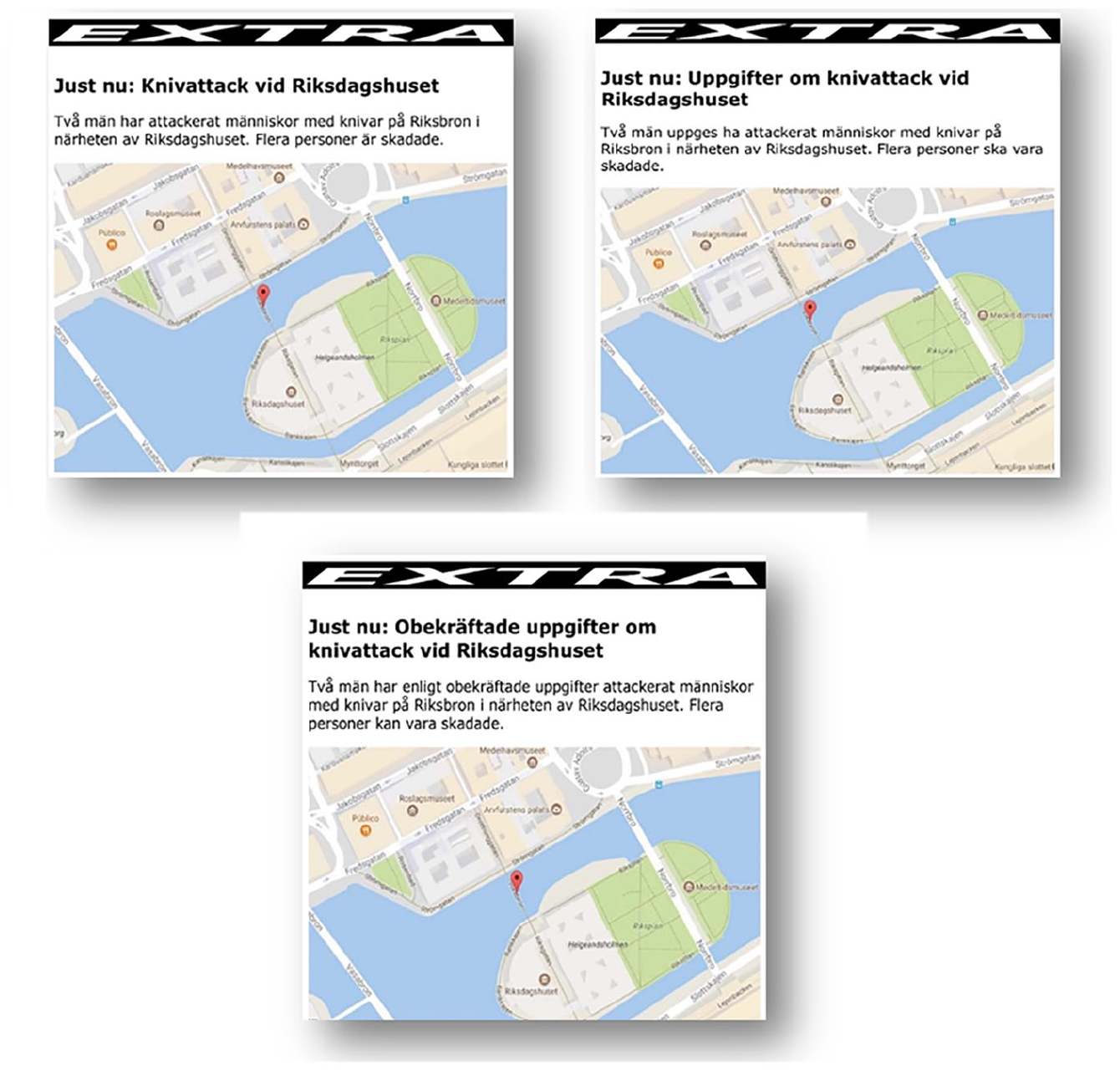
Three levels of disclaimers.
Comparisons Between the Disclaimer Conditions.
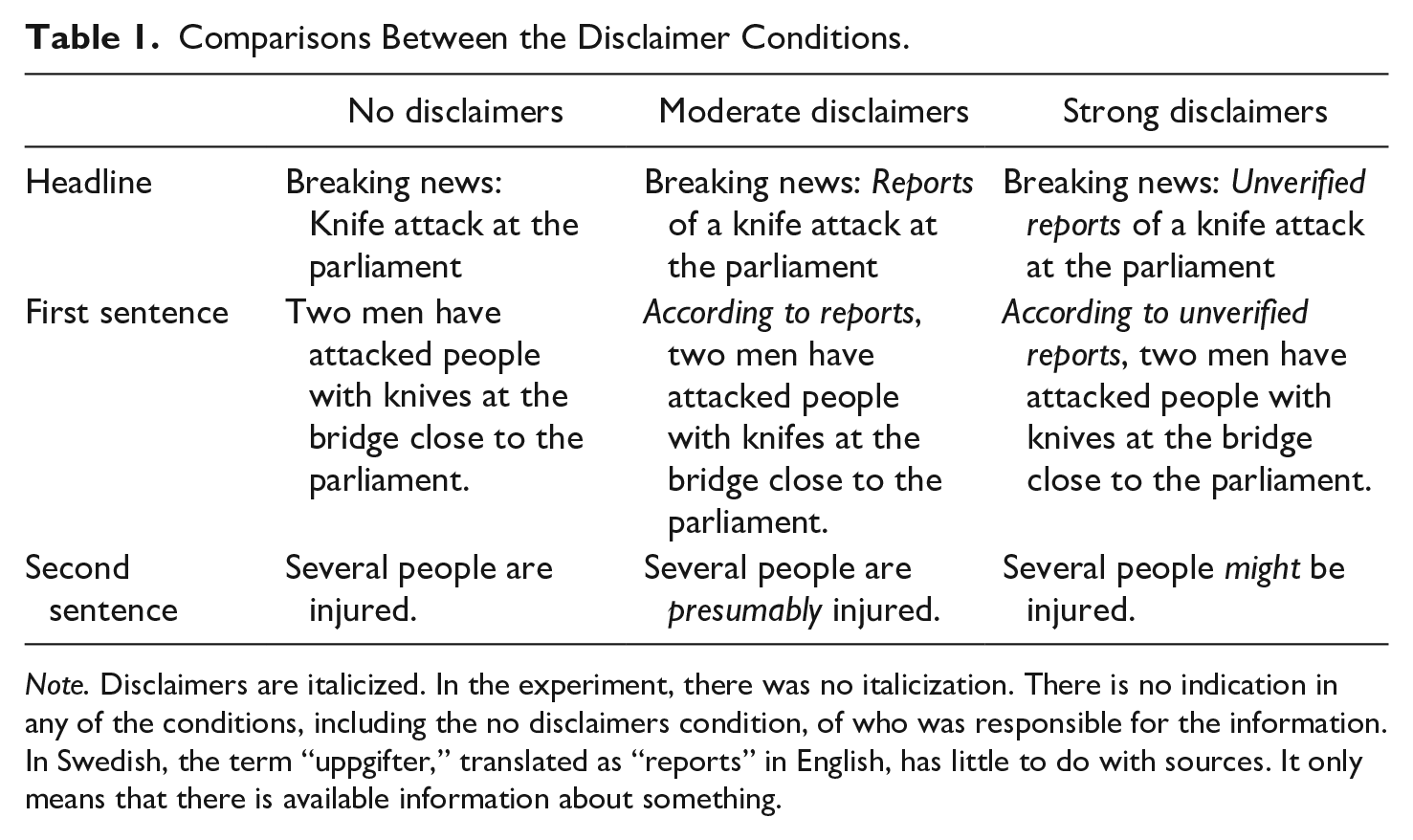
Note. Disclaimers are italicized. In the experiment, there was no italicization. There is no indication in any of the conditions, including the no disclaimers condition, of who was responsible for the information. In Swedish, the term “uppgifter,” translated as “reports” in English, has little to do with sources. It only means that there is available information about something.
If participants were assigned to the crisis condition, they read another news article before being exposed to news about the knife attack. The article described a large terrorist attack with several causalities that occurred in central Stockholm, Sweden. 2 The news story left no doubt that the attack had actually happened—it included no disclaimers. As Figure 2 shows, the design of the story is similar to real-world news stories, and the scenarios bear a likeness with similar events that have happened across Europe recently.
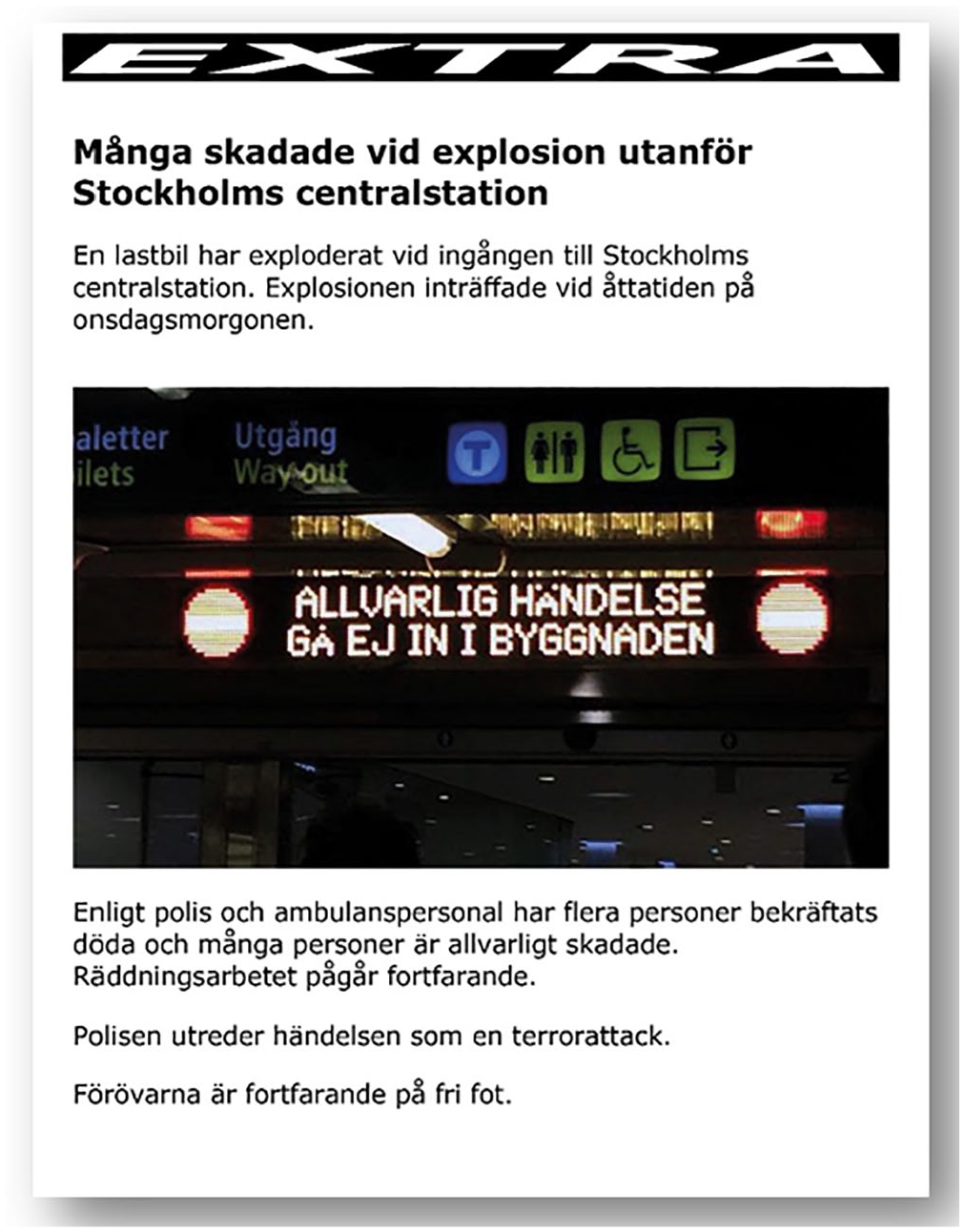
Crisis news story vignette.
Individuals assigned to the no-crisis condition did not read the story about the terrorist attack. Although this group might technically be thought of as a control condition, a more appropriate name is the breaking news only condition as individuals in the group did read about a possible knife attack. Before being exposed to the news stories, they read the following introduction: “You will now be given a news story/two news stories. Imagine you were to read this/these in real life and how you would react to it/them. Then, answer the questions that follow.”
Measures
Our key dependent variable is news report reliability, a measure of the perceived reliability of the story about the possible knife attack. Immediately after people finished reading the story, we asked two questions: “Thinking back to the news about the knife attack, how reliable do you think it is?” and “After reading the story about the knife attack, how sure are you that it happened?” In accordance with standard recommendations from survey research (e.g., Alwin & Krosnick, 1991), both questions had five response options (“1” = not reliable/sure at all, “2,” “3,” “4,” and “5” = very reliable/sure). The high correlation between the two measures (r = .74) and the high Cronbach’s alpha (α = .85) indicate that they are measuring the same concept. Therefore, we have created a two-item, additive index based on them. The measure has been recoded to range from 0 to 1 with higher values indicating higher perceived news reliability.
We created independent variables based on the experimental conditions participants were assigned to. From the conditions of the crisis context factor, we created one dummy variable, the crisis context. The baseline (the excluded category) is the condition in which participants did not read about the explosion outside Stockholm Central Station. This group only read about the possible knife attack and were consequently in the breaking news only condition. As we posit a linear effect of the disclaimer factor to test the breaking news hypothesis, we have contrast coded the conditions accordingly (no disclaimers = 1, moderate disclaimers = 2, strong disclaimers = 3). To examine the effect of the disclaimer factor in more detail, we created an alternative coding where we generated the following two dummy variables: moderate disclaimers and strong disclaimers. The no disclaimers condition is the baseline. To study whether a crisis context influences how disclaimers affect perceptions about the reliability of news, we created interaction variables between the experimental factors.
To assess how well participants recognized the disclaimers, we asked the following question: “Do you remember the headline of the knife attack story?” The response options were “Knife attack at the Parliament,” “Reports of a knife attack at the Parliament,” “Unverified reports of a knife attack at the Parliament,” and “Don’t remember.” The correct response option varied depending on which condition participants had been assigned to. For example, the correct response for individuals assigned to the strong disclaimers condition was “Unverified reports of a knife attack at the Parliament.” The correct response was coded as 1 and all other responses as 0. The order of the response options was randomized.
We also posed the following factual question about the location of the possible knife attack: “Do you remember where in Stockholm the knife attack supposedly happened?” The response options were “At the Parliament,” “At Slussen” (A mass-transit hub and traffic intersection), “At Dramaten” (The Royal Dramatic Theatre), and “Don’t remember.” The correct response, at the Parliament, was coded as 1 and all other responses as 0. In addition, we measured how many seconds individuals spent reading the knife attack story. The questions about facts and the measure of time spent reading are used to examine the proposed theoretical mechanism.
Participants
We recruited the survey experiment participants through a large online panel, the Citizen Panel, which is maintained by the Laboratory of Opinion Research (2018) at the University of Gothenburg. From the approximately 60,000 panel members, we invited 3,247 individuals to the study, out of which 2,379 ultimately completed the study (a cooperation rate of 73%). The sample was prestratified on sex, age, and education to be representative of the general population. Of those who completed the study, 49% were female and 51% male. The age group composition was the following: 15% below 30 years, 17% between 30 and 39 years, 20% between 40 and 49 years, 18% between 50 and 59 years, 19% between 60 and 69 years, and 10% greater than or equal to 70 years. Twenty-seven percent of the sample had a college degree as their highest education. The study was conducted between December 2017 and January 2018.
Results
Effects of Disclaimers in Breaking News
First, we turn to the question of whether news consumers correctly perceive that news with disclaimers is less reliable. According to the breaking news hypothesis, we predict that they do because they are in a relatively normal news environment. In this analysis, we only focus on the almost 800 participants who did not read about a terrorist attack before the knife attack. The prediction is that the stronger the disclaimers, the lower the perceived reliability of the news content. Given the coding of the variables, the coefficient should be negative and statistically significant to support the hypothesis.
Column 1 in Table 2 indicates that there is support for the breaking news hypothesis. The coefficient shows that with a one-unit change in the independent variable (i.e., going from one condition to the next), the perceived reliability is reduced by .034 (SE = 0.11, t = −3.03, p = .003). As the difference between the no disclaimers condition and the strong disclaimers condition is 2 units, the average reduction in reliability is .068.
Disclaimer Conditions and Perceptions of News Report Reliability.
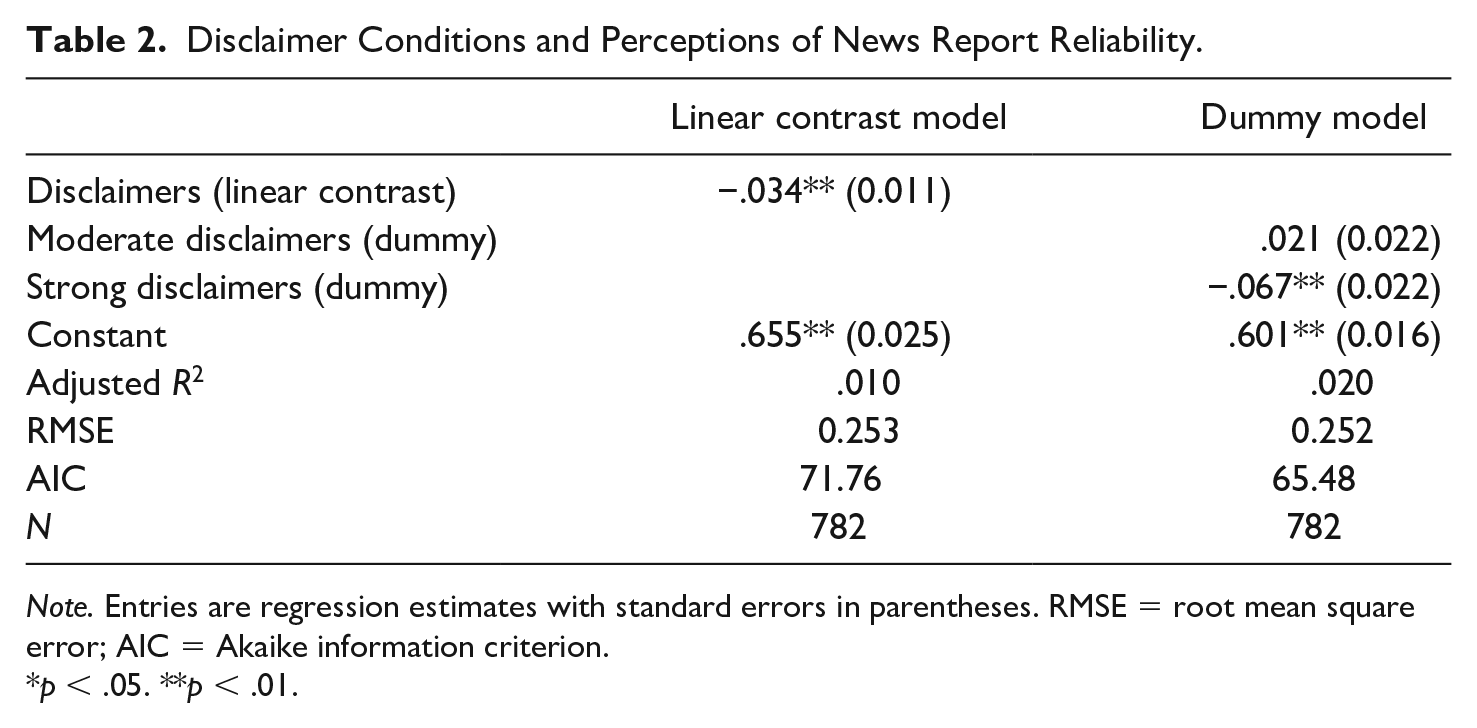
Note. Entries are regression estimates with standard errors in parentheses. RMSE = root mean square error; AIC = Akaike information criterion.
p < .05. **p < .01.
Our prediction is linear—hence the joint linear contrast coding—but we also examined separate effects of the disclaimer conditions by dummy coding the conditions. These results are presented in Column 2 of Table 2. In this analysis, there is no statistically significant difference between the no disclaimers condition and the moderate disclaimers condition (t = 0.95, p = .35). That is, there is little evidence that the journalistic practice of relying on moderate disclaimers (reports) makes a news story seem less reliable. However, when the disclaimers are strong (unverified reports), it influences perceptions of reliability (b = −0.067, SE = 0.022, t = −2.97, p = .003). The difference between the strong disclaimers condition and the moderate disclaimers condition is also statistically significant (p < .001).
The dummy model presented in Column 2 of Table 2 has a better fit than the linear contrast model in Column 1, according to the adjusted R2 (.020 vs. .010), the root mean square error (0.252 vs. 0.253), and the Akaike information criterion (64.48 vs. 71.76). Therefore, we believe that the dummy model is the more appropriate of the two.
This conclusion has consequences for how we should interpret the support for the breaking news hypothesis. Rather than full support, as the model in Column 1 suggests, we believe that it would be more accurate to say that it has mixed support. It is worth noting that a moderately strong disclaimer does not appear to have its intended effect. Another important point is that when news is presented as very unreliable (strong disclaimers), it does influence perceptions of reliability. So, in this relatively normal news environment, disclaimers can make a difference, but they need to be strong. Figure 3 illustrates the predicted values from Column 2 with corresponding 95% confidence intervals.
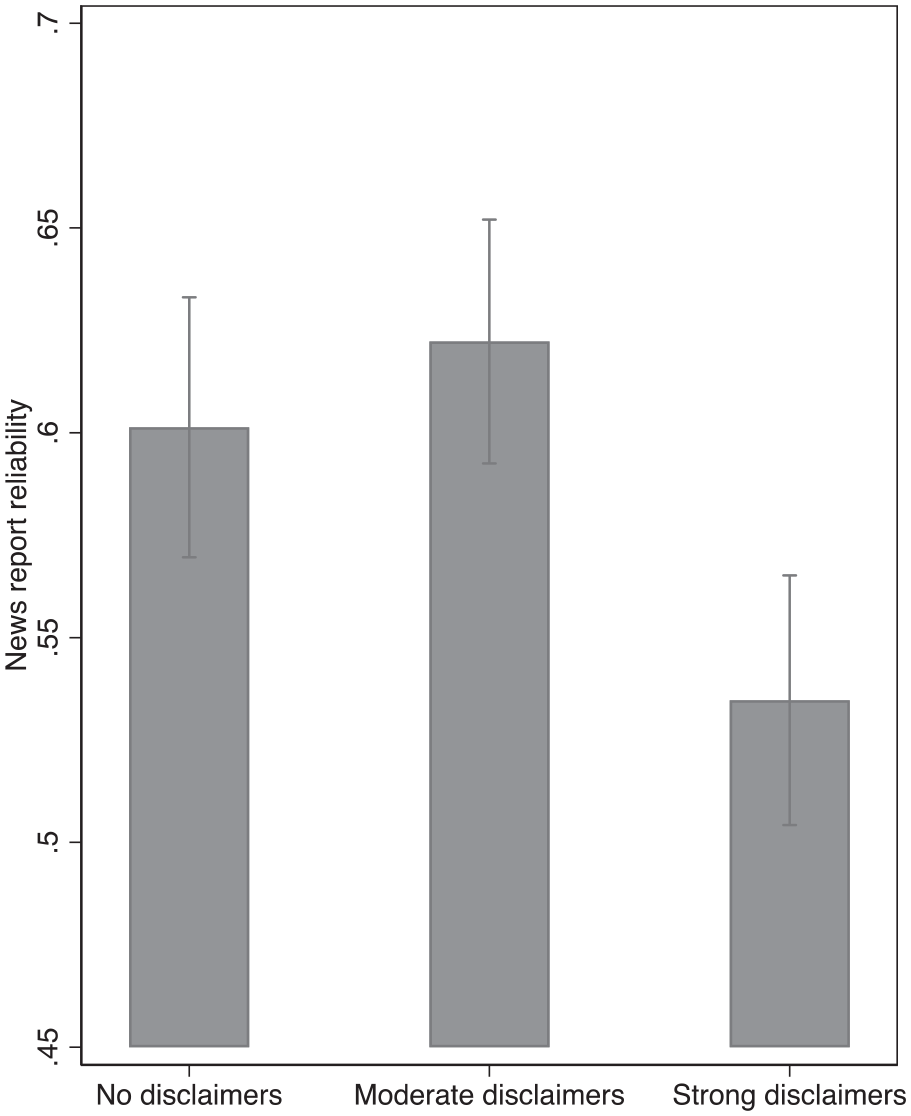
Perceptions of news report reliability by disclaimer conditions (N = 782).
Recognizing Disclaimers in the News
We asked respondents about the details in the knife attack story, which allowed us to further delve into how people perceive the content. The headline of the story explicitly stated the level of disclaimers, and the respondents’ ability to recall it varied depending on each condition. Of the individuals assigned to the no disclaimers condition, 62% remembered it correctly, but in the moderate disclaimers and the strong disclaimers conditions, only 31% and 28% remembered it correctly, respectively. It is important to note that a plurality (49%) of individuals assigned to the moderate condition appears to have thought that they had read a story with no disclaimers. Similarly, of the participants in the strong disclaimers condition, many thought that they had read a story with weaker disclaimers than they actually had (21% + 28% = 49%). This offers a possible explanation for the relatively small differences, or lack thereof, in perceptions of reliability among the disclaimers conditions. Many people ignore or discount disclaimers, and incorrectly assume the news story has happened, even when there are clear indications that they should be more cautious.
It is possible that the effect of the disclaimer conditions is stronger among those who correctly understood the disclaimers. To investigate this, we conducted an additional analysis where we differentiated between the effect of the disclaimer conditions on reliability perceptions by accurate recall. Figure 4 (on the left side of the graph) shows that, among those who did not see the disclaimer level, there are no meaningful differences between conditions in story reliability. This means that for people who did not register the accurate type of disclaimers level, the conditions mattered very little. This is an unsurprising result—if people do not register the disclaimer strength, then it should not influence their perceptions of reliability.
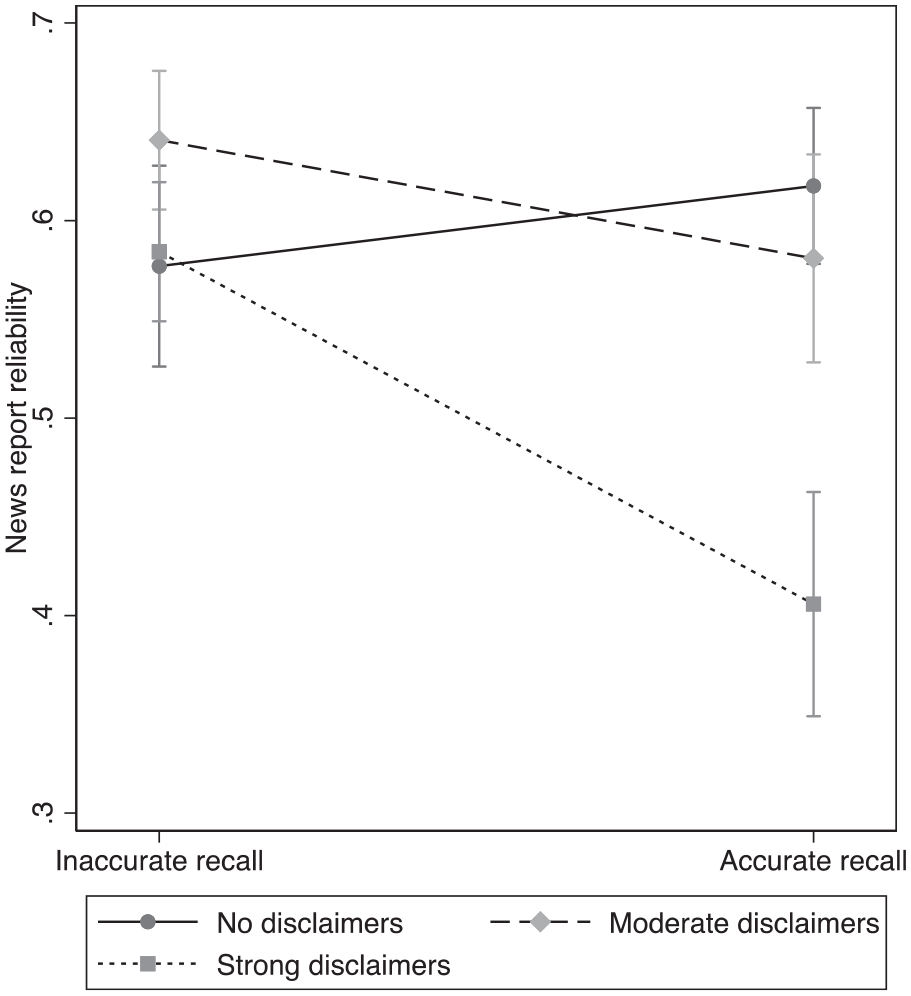
Perceptions of news report reliability by disclaimer conditions and recall of disclaimer levels (N = 781).
Remarkably, even among individuals who accurately recalled the disclaimers (Figure 4, on the right side of the graph), there is no evidence of a difference between the no disclaimers condition and the moderate disclaimers condition. Moderate disclaimers simply do not seem to work, even among those who actually notice them.
However, there is a stark difference between the strong disclaimers condition and the other two conditions (p < .001). In other words, when strong disclaimers are noted, which is far from always as Table 3 shows, this drastically reduces the perceived reliability of the news. Details on the model are presented in the Supplemental Table S1.
Recall of Knife Attack Headline (n = 782).
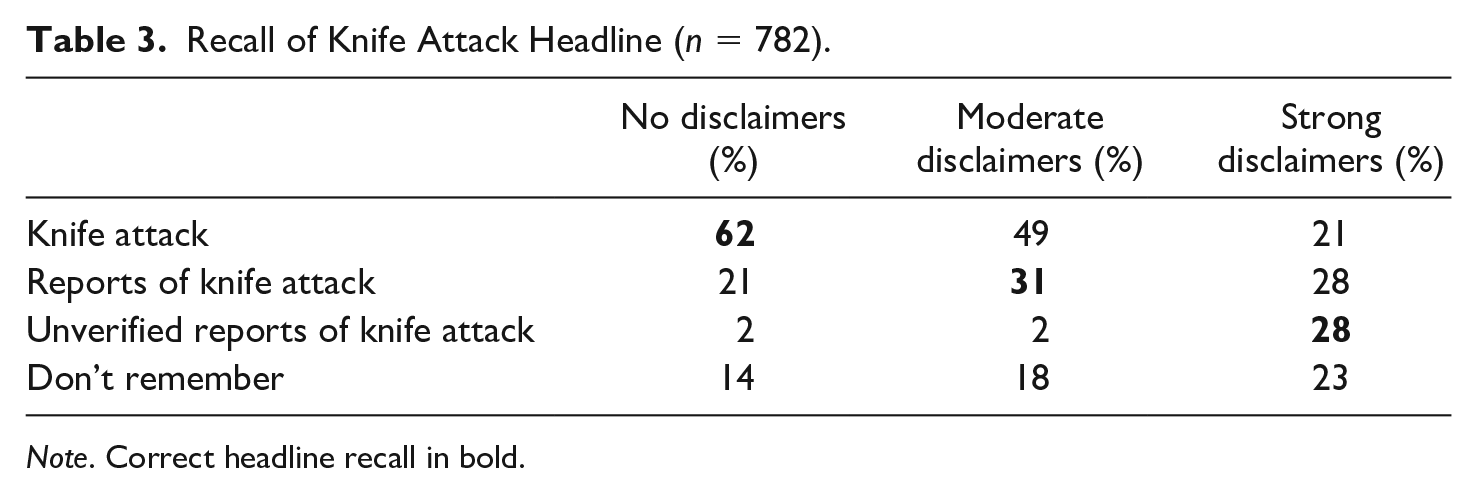
Note. Correct headline recall in bold.
Crisis Context and Disclaimers
With the second prediction, the crisis context hypothesis, we aim to examine whether people are less discerning of disclaimers when they are in the midst of a terrorist attack. We predicted that a crisis such as a terrorist attack would put people into a fight-or-flight mode, and in turn make disclaimers more difficult to perceive. This was tested by interacting the crisis context conditions variable (i.e., if people were assigned to a story about terrorist attacks or not) with the disclaimer conditions variable. For this hypothesis to be supported, the difference in perceptions of news report reliability would need to be significantly smaller in the crisis context compared with the smaller crisis context. The dependent variable remained the same as it was previously, that is, the perceived reliability of the knife attack story.
As before, we estimated two models, one with the disclaimer conditions as a linear contrast (Table 4, Column 1) and one with the disclaimer conditions dummy coded (Table 4, Column 2). There was support for the crisis hypothesis regardless of how the conditions were coded, which is shown by the statistically significant interaction terms. The dummy model (Column 2) has the better fit of the two models. Therefore, this model has been illustrated (see Figure 5) and discussed in more detail. The left side of Figure 5 shows what we have demonstrated above—strong disclaimers around a news story reduces perceptions of news reliability compared with stories with no disclaimers or moderate disclaimers. In support of the crisis hypothesis, this difference is reduced in a crisis context (b = 0.053, SE = 0.027, t = 1.99, p = .047). That is, when the knife attack story is preceded by the terrorist attack, the smaller difference in news reliability is statistically significant. As there was no difference in news reliability perceptions between the moderate disclaimers and no disclaimers in the breaking news only context, the analysis of a reduction associated with a terrorist attack becomes a moot point. There is no evidence of any statistically significant differences between disclaimer conditions among individuals assigned to the crisis condition.
Perceptions of News Reliability by Context and Disclaimers.
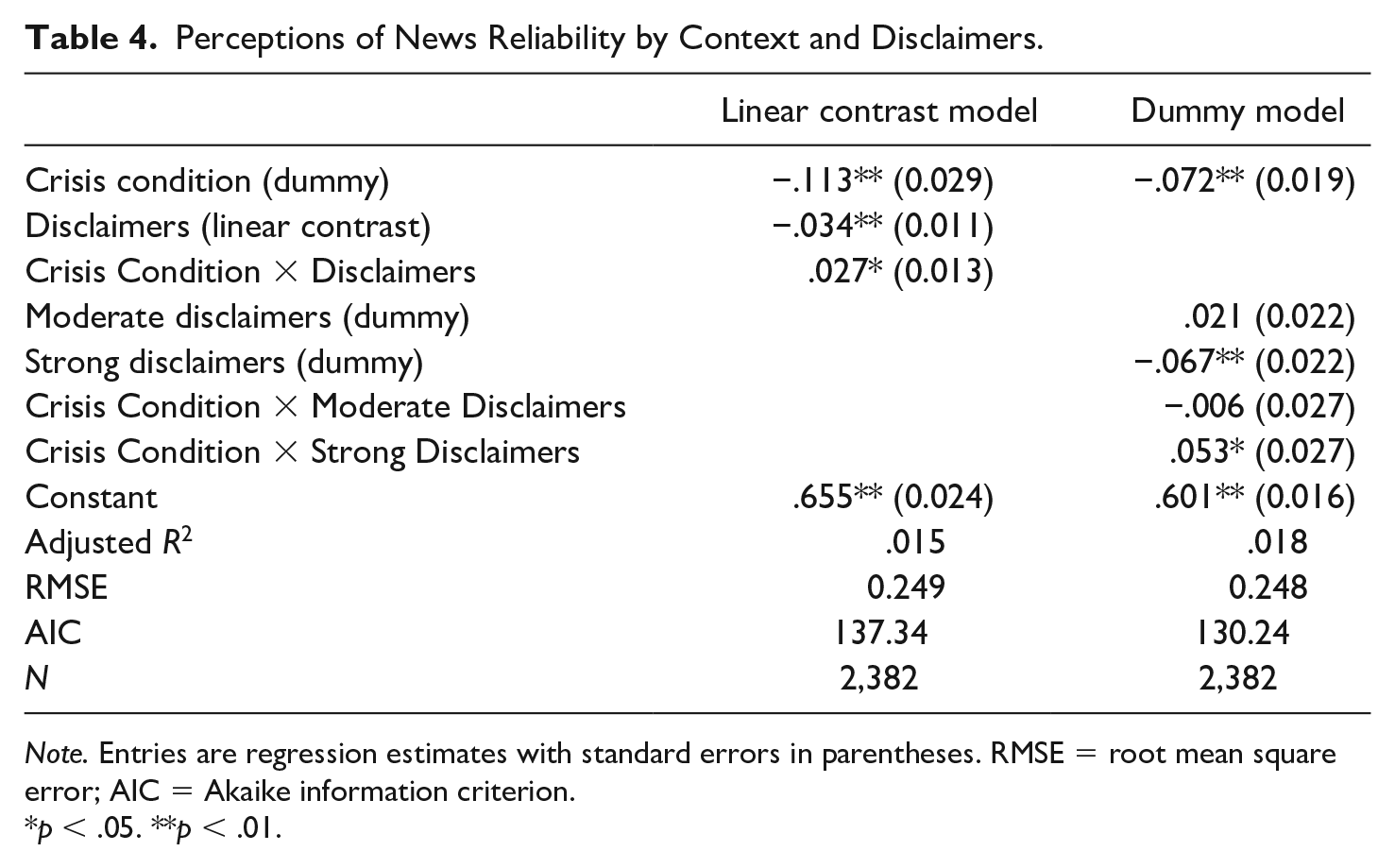
Note. Entries are regression estimates with standard errors in parentheses. RMSE = root mean square error; AIC = Akaike information criterion.
p < .05. **p < .01.
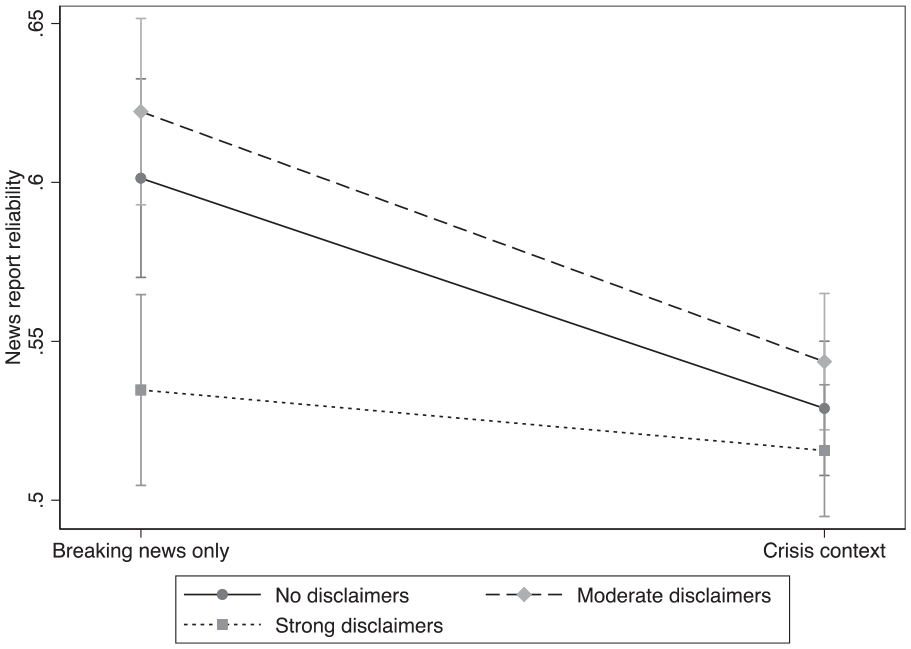
How the crisis context influences the effect of disclaimers on news report reliability (N = 2,382).
The proposed theoretical reason for the smaller difference in reliability perceptions is that individuals are processing more with the peripheral system, the quicker system, because they are in fight-or-flight mode. The data support this idea. First, people assigned to the crisis condition story took less time to read about the knife attack story. In fact, participants in the crisis group spent 2 s less on the knife attack story when compared with participants who did not read about a terrorist attack. See Supplemental Table S2 (Model 1) for the results. In the analysis, the dependent variable is time in seconds spent on the knife attack story. The crisis condition coefficient is b = −2.090 (SE = 0.210, t = −9.95, p < .001).
Second, individuals assigned to the crisis condition were less accurate in detecting the correct disclaimer level. On average, the correct recall was 40% in the breaking news only condition, but just 30% in the large crisis condition. The dependent variable is accurate recall of the disclaimer level in the knife attack story. It has been coded as 0 for incorrect recall and 1 for correct recall. The model was estimated with logit, and the coefficient is −0.42 (SE = 0.09, p < .05). See Supplemental Table S2 (Model 2).
Third, individuals assigned to the crisis condition were less accurate about where the knife attack had taken place. Of those who had not been exposed to a terrorist attack, 95% remembered correctly whereas the accurate recall was 88% in the crisis condition. The dependent variable, accurate recall of the location of the possible knife attack, is coded 1 for accurate and 0 for inaccurate. Logit regression was used to estimate the model. The coefficient is −0.86 (SE = 0.17, p < .05). More details are available in the Supplemental Table S2 (Model 3).
In sum, people who read about the terrorist attack (i.e., the crisis condition) before they read the story about the possible knife attack spent less time on the story and were less precise about the disclaimer level and the content of the story. All three pieces of evidence are indicative of more reliance on peripheral processing. 3
Conclusion and Discussion
Disclaimers in journalism can be viewed as a paradox. After all, the core of journalism ethics is to report what has happened, not what might have happened. This sentiment is shared by numerous media scholars, such as Kovach and Rosenstiel (2014) who write that “the discipline of verification is what separates journalism from entertainment, propaganda, fiction, or art” (p. 71). Thus, the use of disclaimers is possibly eroding journalism’s raison d’être and undermining a central promise to the audience. If news is understood as only possibly accurate, it challenges journalistic authority and media trust. The negative fallout from such consequences could be vast because it is through journalism that news and current affairs become widely held public knowledge (Carlson, 2017; Karlsson et al., 2016).
Although the motivation to be accurate is clear, it is impossible to deny the competing incentive of being fast. Our experiment suggests that the dilemma these opposing pressures create is particularly acute during a crisis where reporting needs to be both fast and accurate. In such situations, the need for speed—both seen as a normative demand to inform about a threatening event for those affected and as market strategy in contemporary news cycle—threatens the possibility of properly verifying information before it is published. Literature on journalism has often emphasized this problem (Hermida, 2015; Kovach & Rosenstiel, 2014; Rom & Reich, 2017; Rosenberg & Feldman, 2008).
We addressed the extent to which the use of disclaimers in news journalism, which is a common strategy used to deal with this dilemma, actually works. Disclaimers are words like “unverified” or “unconfirmed,” and they signal that the information might not be accurate. Do ordinary news consumers really understand these signals of uncertainty? If disclaimers actually work, then news stories that include them should be perceived as less reliable. For all the discussion about disclaimers among scholars and their widespread use in journalism, little prior evidence existed on this issue. Given the important function of journalism in a democratic society and its role during crises, where information may influence the risk of injuries and fatalities, this is naturally a relevant issue.
By drawing on results from a large experiment, this study shows that people often fail to reach the correct conclusions from disclaimers in the news. Instead, news consumers evaluate the reliability of a news story as almost the same, regardless of whether or not they include disclaimers. Part of the reason for this is that people do not fully recognize disclaimers. For disclaimers to have their intended effect, they need to forcefully indicate that the information is unreliable. More specifically, we found that strong disclaimers had an effect on news reliability whereas moderate disclaimers did not. Therefore, the hypothesis that disclaimers reduce reliability received mixed support.
With our second hypothesis, we theorized that people would be less likely to pay attention to disclaimers when they were in stressful situations, such in the aftermath of a large terrorist attack, because they would be put into a fight or flight mode. Individuals in this state tend to process information more quickly and therefore miss nuances and details (peripheral processing). In line with this prediction, we found that people in the crisis context were less affected by strong disclaimers. Additional evidence supported the proposed mechanism. For example, people in the crisis context read the story more quickly and were less accurate in their recall of news story facts.
These results have a number of implications, both for journalists and crisis communication practitioners. The results challenge the standard use of moderately strong disclaimers in news journalism, which have previously allowed for the publication of unverified information. According to our study, news organizations’ assumptions of the degree to which people can register uncertainty have been overestimated. News published with disclaimers might be a way to avoid external criticism, but disclaimers generally do not work as intended in relation to the audience unless they use strong disclaimers to clearly indicate a lower level of reliability.
Furthermore, our results indicate that the overstating of the audience’s cognitive capabilities is even worse when people are in a crisis environment. In these kinds of situations, it does not seem to matter whether or not the news includes disclaimers—reliability perceptions are apparently not influenced by them. Undoubtedly, journalists in crisis situations are faced with a difficult challenge as they need to navigate the public’s demand for important information while also facing uncertain information from multiple sources, something which continues to increase with the rise of social media. Although it is understandably tempting to use disclaimers in this type of news environment, journalists and editors should be aware that people probably do a poor job at registering them.
Journalists could of course also use other strategies to cope with uncertain information. One would be a more frequent use of corrections or perhaps a more active strategy in asking the audience for help in verifying uncertain information. At least among journalists and editors, there is a sentiment that technological developments have enabled them to publish corrections quickly, often with the help of a fact-checking public (Joseph, 2011). There is also evidence that clearly communicated fact-checking can alleviate some of the problems associated with misinformation (Amazeen et al., 2016). However, thus far, research does not suggest that corrections are a panacea. They can reduce the ill effects of errors under certain conditions, but, in general, the audience expects news to be accurate immediately and transparency as a strategy does not seem to be a solution to the dilemma (Karlsson et al., 2016).
The study also has implications for practitioners in the field of crisis communication. Journalists are not the only ones who have to deal with a media landscape in which unverified information is disseminated via a variety of news and social media platforms. Communication practitioners involved in crisis communication are also affected, both in terms of understanding how the public receives information and as communicators. Crisis communication practitioners should be aware that most people will not draw the correct conclusions from the disclaimers used in the news during crises, and their own crisis communication messages should be tailored, accordingly.
In the present study, we focused on the effects of disclaimers on the perceived reliability of single news items in the context of terrorist attacks, yet in future research, we believe that it would be fruitful to evaluate how disclaimers function in other types of stressful situations such as natural disasters or major accidents (Ulmer et al., 2019) and to address other consequences of disclaimers. For example, more research is needed on how disclaimers in news stories might affect the perceived credibility of the news organization behind them. A related issue worth exploring is if news sources are judged differently for using disclaimers depending on their prior reputation. In addition, besides experimental studies, there is a need to conduct systematic, descriptive studies on how widespread the use of disclaimers is in news media across the world.
Supplemental Material
Table_S1 – Supplemental material for Did It Really Happen? How the Public Interprets Journalistic Disclaimers
Supplemental material, Table_S1 for Did It Really Happen? How the Public Interprets Journalistic Disclaimers by Jacob Sohlberg, Bengt Johansson and Peter Esaiasson in Journalism & Mass Communication Quarterly
Footnotes
Declaration of Conflicting Interests
The author(s) declared no potential conflicts of interest with respect to the research, authorship, and/or publication of this article.
Funding
The author(s) disclosed receipt of the following financial support for the research, authorship, and/or publication of this article: This work was supported by the Swedish Civil Contingencies Agency and is part of the project on Crisis Communication and Trust in the Multi-Public Society. J.S. was also supported by Nordforsk (grant number 88043).

Supplemental Material
Supplemental material for this article is available online.
Notes
Author Biographies
References
Supplementary Material
Please find the following supplemental material available below.
For Open Access articles published under a Creative Commons License, all supplemental material carries the same license as the article it is associated with.
For non-Open Access articles published, all supplemental material carries a non-exclusive license, and permission requests for re-use of supplemental material or any part of supplemental material shall be sent directly to the copyright owner as specified in the copyright notice associated with the article.
