




Abstract
Studies into why young people choose to study journalism have often been informed by a belief in journalism’s inherent worthiness within civil society. However, as surveys show decreasing trust in journalism and increasing avoidance of news in many countries, this article asks whether young people are being put off studying journalism in part because of rising public cynicism around its societal worth. The research compares data sets across multiple countries to explore whether there is a statistical relationship between attitudes among 18- to 20-year-olds toward trust in news and interest in learning to produce it.
Introduction
As Hanusch et al. (2016) noted, why students choose to study journalism at university is still relatively underexplored by academics. Their own study, into the motivations of Australian journalism undergraduates across 10 universities, found students mostly hoped a journalistic career would bring them a “varied lifestyle and opportunities to express their creativity” and personal interests (Hanusch et al., 2016, p. 101).
This echoes similar studies that explore motivations for studying journalism (Carpenter et al., 2016; Hanna & Sanders, 2007, 2012; Hanusch & Mellado, 2014; Hovden et al., 2009; Jackson et al., 2019; Splichal & Sparks, 1994) which suggest that, while students may recognize the public service role of journalism as important, it is not their primary motivation for choosing to study the subject.
If the choice of journalism as practice-led study is primarily based on a young person’s creative desire to write, to enter a profession that promises more variety, or to pursue their own passion for talking about sport, games, fashion, and so on, then a decline in trust in the work of journalists should not matter—self-interests will trump altruistic goals. And yet, as this project found, across multiple countries, there has been a decline in the number of students wanting to study journalism between 2016 and 2021 and that decline broadly mirrors a decline in trust in journalism among young people.
Research by the Reuters Institute for the Study of Journalism (RISJ 1 ) shows both trust in and interest in news journalism declining markedly across all age groups between 2015 and 2022 in several countries, including the United Kingdom and the United States; a slower decline in trust and interest in some countries, including Germany and Australia; and conversely increased trust and interest in news in Finland and Norway. How far that “trust” data mirrors data on interest in studying journalism is the subject of this paper.
Increases in avoidance of news in many countries, measured in alternate years by the RISJ team, are also noted. Edgerly (2022) linked news avoidance to the decline in local news reporting in the United States, arguing that a shift to national news, particularly focused on political news, meant a corresponding decline in interest in all news. During the 2019 UK General Election, researchers found that 18- to 34-year-olds in the United Kingdom spent just 8 min a week on news websites (Fletcher et al., 2020). Young people express a desire to avoid combative national political news (Greenwood, 2018) and choose to limit their exposure to negative news to protect their mental health (RISJ & Craft, 2022, p. 35).
This avoidance of large areas of the mainstream news agenda contributes to a relevancy problem for the news industry in communicating with young people. It would be reasonable to question why any 18-year-old should want to study journalism at university, and yet thousands of them still choose to do so each year. Albeit rather fewer of them than 5 years ago in most of the countries studied for this research.
The project emerged from competitor analysis, which revealed a sharp decline in the number of students applying to study journalism at the undergraduate level (Figure 1). The decline seemed particularly pronounced because post-pandemic other courses reported seeing an application “bump” (Table 3). While there was a small upturn in 2021, applications to study Journalism in English universities were 43% below 2015’s figure, and the number of students who accepted an offer of a place on a journalism course had dropped by 41% over 6 years.
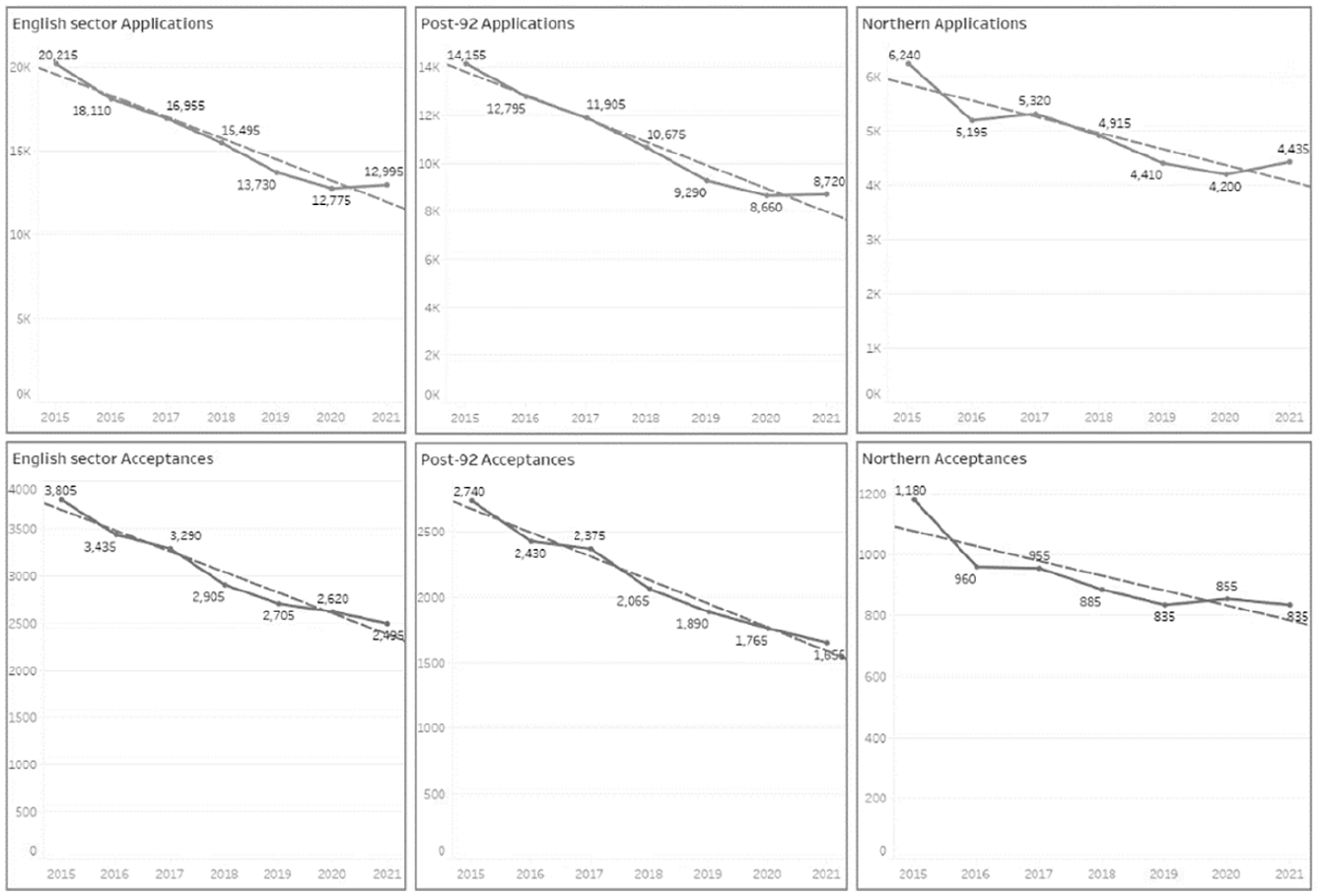
This First Data Pass, Gathered Via a Simple Extract of All Titles Featuring “Journalism” for UCAS Entry Showed a Decline in Applications to Journalism Courses at Many English Universities.
The data appeared to share some chronological patterns with another dataset being worked on at that time—the annual global survey of public trust in journalism carried out by the Reuters Institute for Journalism. Thus, the project set out to explore the research question: Does mapping of desire to study journalism at university reflect trends in trust in journalism among young people?
The project did not set out to say whether the two sets of data—desire to study journalism and trust in journalism—are definitively linked, only to pose that question within the context of studies into young peoples’ attitudes toward studying journalism at university. Clearly, more work needs to be done, including surveying students themselves on the issues raised, but that the data shows fewer young people across seven countries studying journalism in 2021 compared with 2016 or 2018, is of concern in itself.
Method
This paper results from research comparing two underexplored areas of data to identify whether there is a correlation between young people’s desire to study to be a journalist and their trust in the profession.
Data set 1 comprises extracts of young people’s (aged 18-20) responses to specific questions on their trust journalism taken from the RISJ’s annual survey. Data set two is comprised of multiple separate sets of data collected by public bodies within seven countries on applications to study journalism at the university undergraduate level. Both data sets compare results across the same countries.
The starting point had been to look at countries with the lowest and highest trust in news results in the RISJ 2021 report. Countries ranged from eleven with trust in news rated below 34% (the United States lowest at just 26%) to eight with the highest trust in news ratings (Finland highest at 69%). This was compared against six countries with the highest numbers of people saying they actively avoided the news (topped by Brazil at 54%), five with lowest figures for news avoidance (Japan lowest at 14%), and the five countries with the highest interest in news (Finland highest at 67%) and five reporting lowest interest in the news (United Kingdom lowest at 43%) to identify a cross-section of public engagement with news.
However, these figures represent trust and interest in news across all age groups in each country and in terms of validity it was important to look at how those figures might change when applied to the age group most likely to study journalism at university. Thus, the data sets for the age range 18 to 20 years were extracted from the RISJ surveys.
Two questions from the survey focused on trust (summarized as trust in “all” news and trust in “my” news) with both “all ages” results and the 18- to 20 age results (in bold text) used to provide comparison for that country. In all but a handful of instances, younger people were shown to be less trusting of the news, wherever it came from (Tables 1 and 2).
Trust in “All” News.
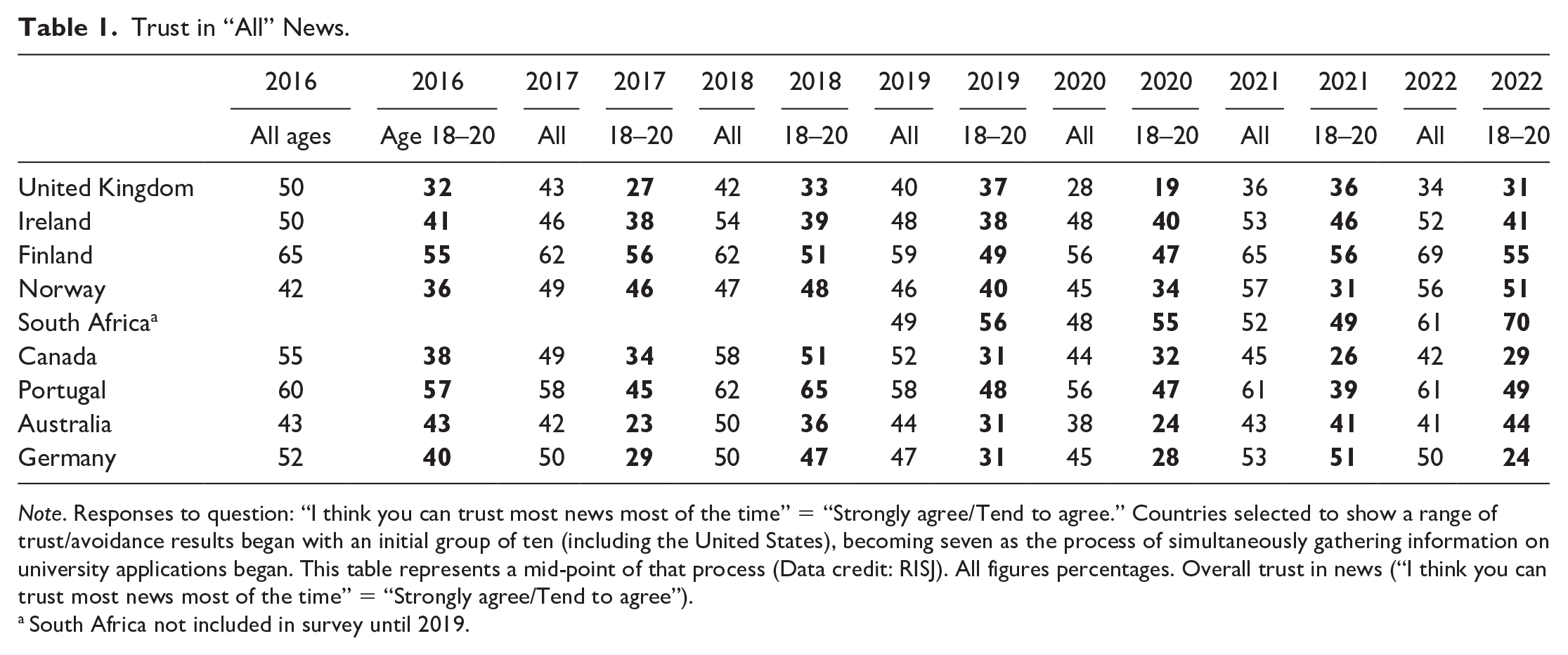
Note. Responses to question: “I think you can trust most news most of the time” = “Strongly agree/Tend to agree.” Countries selected to show a range of trust/avoidance results began with an initial group of ten (including the United States), becoming seven as the process of simultaneously gathering information on university applications began. This table represents a mid-point of that process (Data credit: RISJ). All figures percentages. Overall trust in news (“I think you can trust most news most of the time” = “Strongly agree/Tend to agree”).
South Africa not included in survey until 2019.
Trust in “My” News.
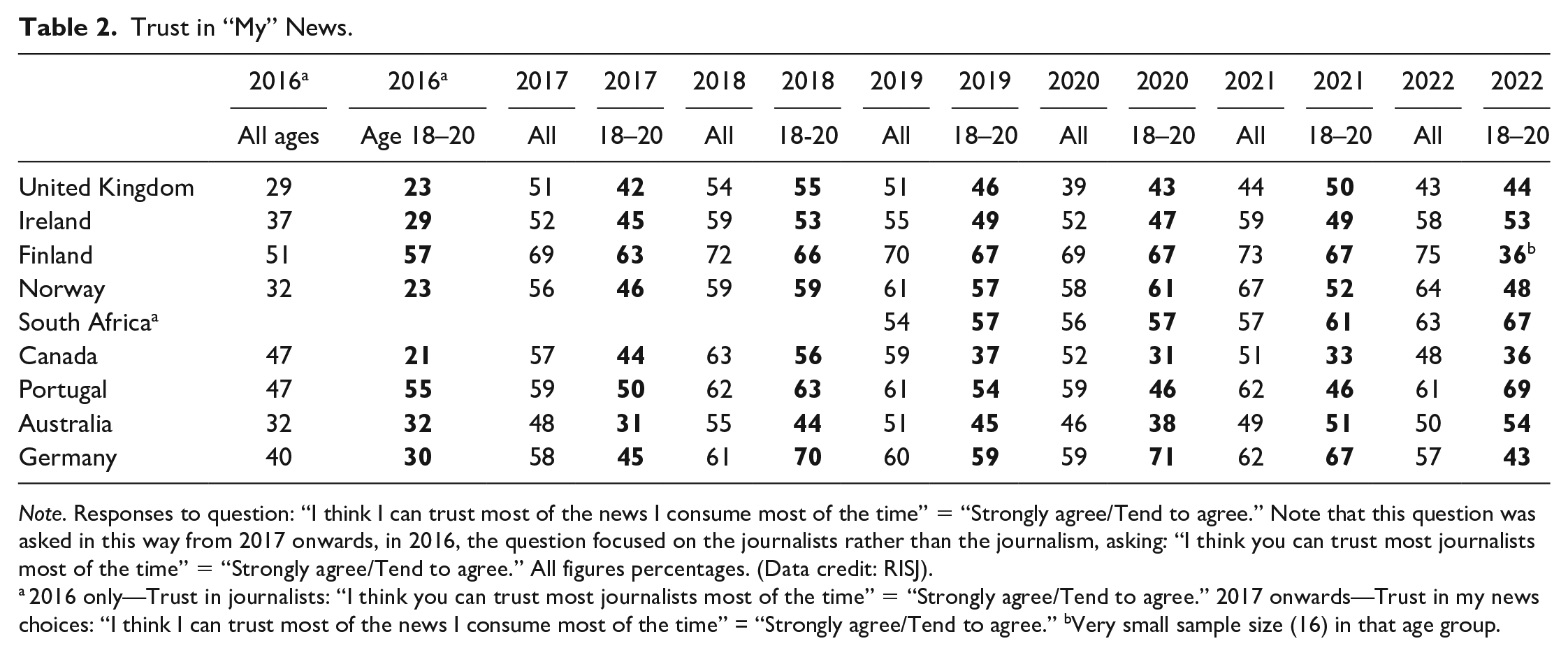
Note. Responses to question: “I think I can trust most of the news I consume most of the time” = “Strongly agree/Tend to agree.” Note that this question was asked in this way from 2017 onwards, in 2016, the question focused on the journalists rather than the journalism, asking: “I think you can trust most journalists most of the time” = “Strongly agree/Tend to agree.” All figures percentages. (Data credit: RISJ).
2016 only—Trust in journalists: “I think you can trust most journalists most of the time” = “Strongly agree/Tend to agree.” 2017 onwards—Trust in my news choices: “I think I can trust most of the news I consume most of the time” = “Strongly agree/Tend to agree.” bVery small sample size (16) in that age group.
Having identified countries that represented a cross-section of trust in news and journalism, the next stage was to identify which of those countries also produced verifiable, independent statistics on applications to study journalism at the undergraduate level. This proved more difficult as data on university applications and entrants is not collected in uniform ways.
Some countries originally considered for the project (the United States, Brazil, and Japan) did not collect data centrally but individual universities determined and recorded the student data they wanted to use and thus validity was weak. In other countries, data gathering was difficult because it was undertaken by different bodies. For example, split into public or private universities (South Africa) or collected only by some regional agencies (Canada), again undermining data validity to greater or lesser degrees.
It was possible to gather anecdotal evidence, for example, Salem University, in Massachusetts in the United States, where a slow decline over the last decade in applications to courses within the Media and Communications department was noted. Albeit Journalism was still seen as holding its own: “Robust within the new normal.” 2 This is supported by research by Cummins, Gotlieb, and McLaughlin whose 2018 and 2021 studies invited universities to submit their own data on enrolments to their communication courses. They found a 9.9% decrease between the years mostly accounted for by a decline within communications sequences, with the smaller journalism group seeing a 4.8% increase (Cummins et al., 2021, p. 75).
Eventually, a final grouping of seven countries was arrived at where the prospect of being able to use cross-country comparable student data was strongest, but which also reflected the highs and lows in terms of trust in and engagement with news according to the RISJ data. The countries thus selected were the United Kingdom, Ireland, Finland, Norway, Canada, Australia, and Portugal.
It should be stressed at this stage that the desire had been to gather information from Africa and Asia—the final list of countries studied was far more Eurocentric than intended. However, the lack of centralized data collection (Nigeria, Japan) or lack of response to requests for data access (South Africa) in the end proved too difficult to progress.
In establishing standardized sources of data for each country on interest in studying journalism at university, two parameters were considered—applications to study journalism and numbers of students engaged in studying journalism, with data mapped as far as possible to both parameters. How that was achieved is outlined in each country sub-section.
Finally, in attempting to compare patterns of trust in the news against patterns of interest in studying news, the numerical format of each set of data had to be converted to something that had equivalency. Basically, converting percentage results from the RISJ surveys to numerical results from organizations measuring applications or enrolled students. This last stage enabled the production of comparative pivot tables giving a visual representation of the data sets.
The United Kingdom
Data Standardization
In terms of data, several sets were used. Open data from UCAS 3 on university applications to courses with “Journalism” in the title and on students accepting a place to study, data from HESA 4 on numbers of students in their first year of studying subject areas including or related to Journalism, 5 and the RISJ data on trust/interest in news and news avoidance. 6
The HESA data is supplied by universities to HESA and shows numbers of students actually studying the subject at a fixed point in the first semester and therefore a reliable indicator of the number of students engaged in studying journalism (Figure 2).
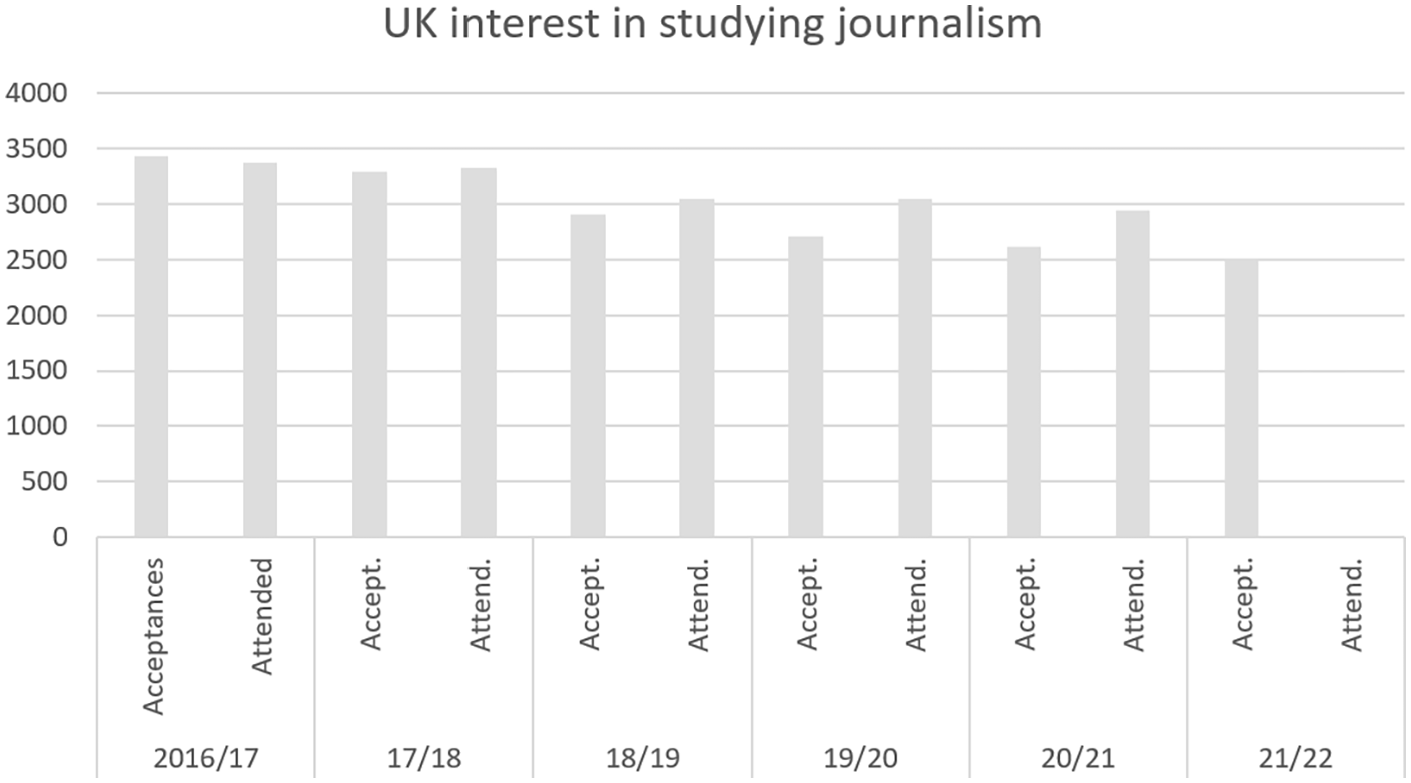
Figures on Acceptances of Offer of Place and Students in Study in Same Year (data credit: UCAS and HESA) Produced as a Graph Chart to Give a Clearer Visual Representation of Changes to Both Over the Period.
It should be noted that an additional complexity was the data year. The RISJ report deals with the previous calendar year, while the UCAS data is for applications that academic year and the HESA data represents numbers studying in the same academic year but who would have applied for their place the previous academic year.
By adding the data on young people’s trust in the news (Tables 1 and 2) to data on the numbers of applicants who had accepted an offer of a place on a course with Journalism in the title (Table 3) a “Trust v Want” pivot chart was developed as a visual representation of results across data sets (Figure 3). This then became the method used to analyze and compare similar data sets across the seven countries.
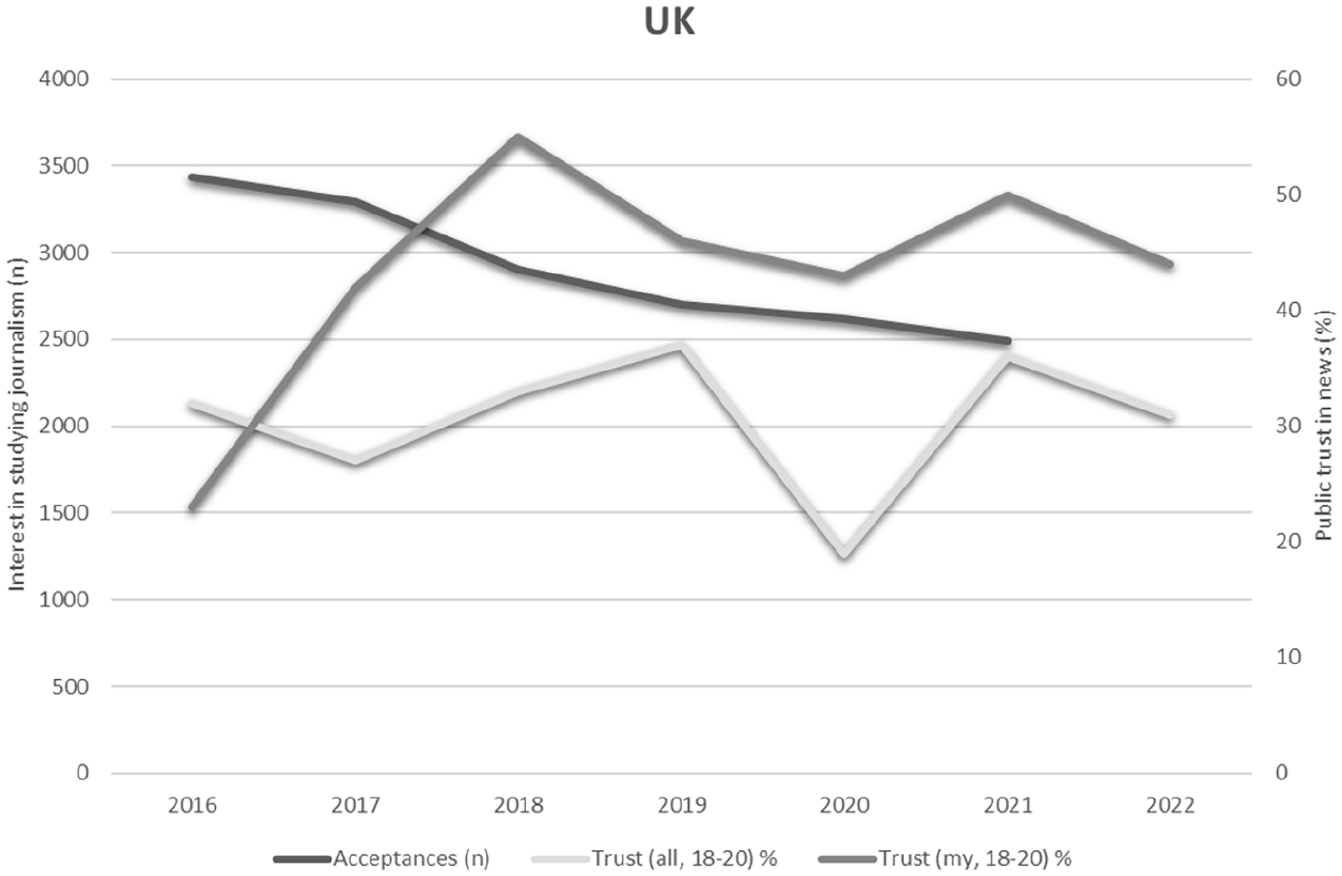
Showing University Applicants Who Had Accepted an Offer of an Undergraduate Place on a Course With Journalism in the Title as an Indication of Desire to Study the Subject, Alongside RISJ Survey Results for 18- to 20-Year-Olds on Their Trust in All News Sources Versus Their Trust in News Sources They Mostly Use.
Undergraduate “Headcount”—Students in First Year of Studying Journalism/Related Courses Compared to Other Subjects, Across the United Kingdom.
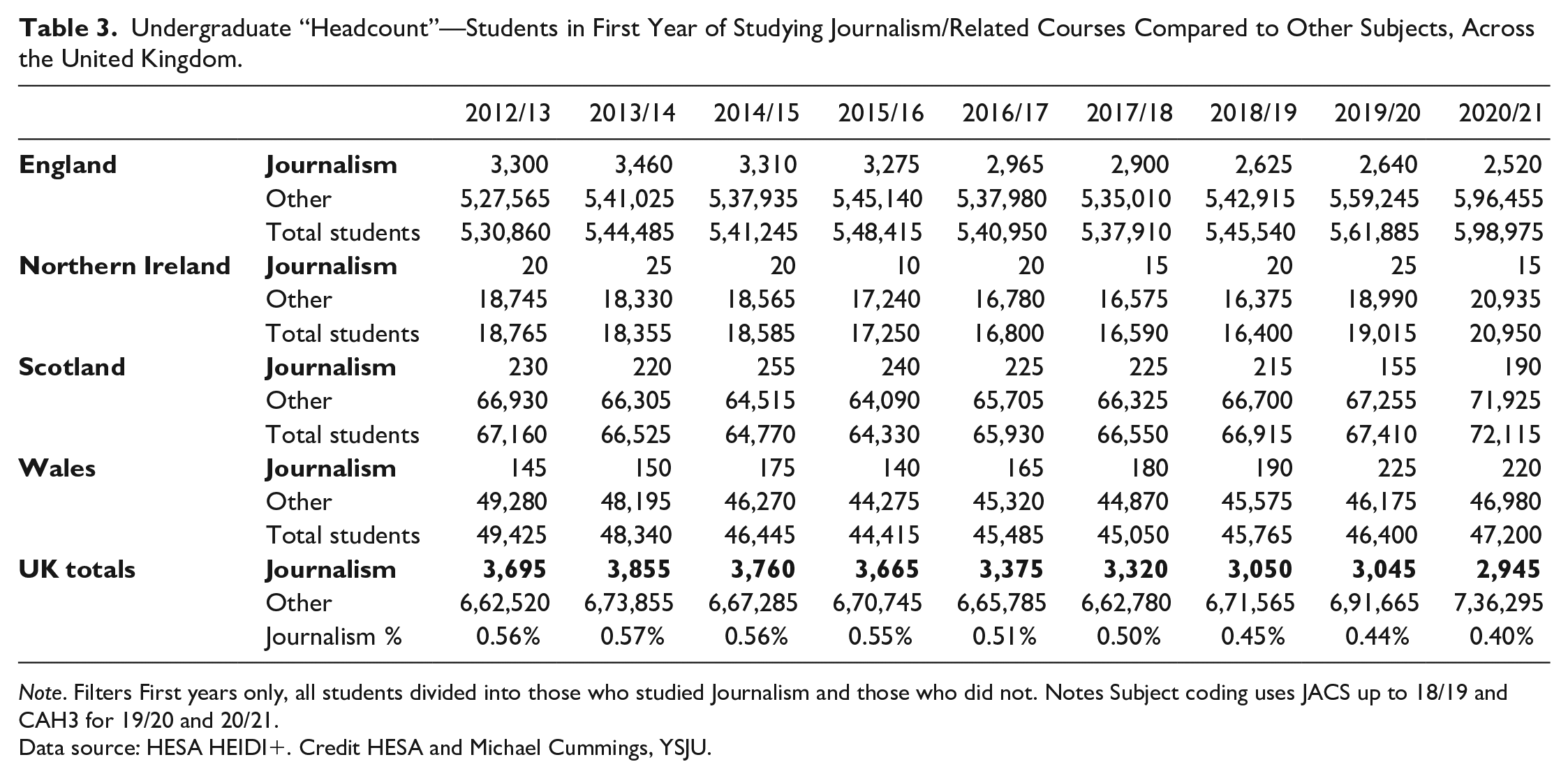
Note. Filters First years only, all students divided into those who studied Journalism and those who did not. Notes Subject coding uses JACS up to 18/19 and CAH3 for 19/20 and 20/21.
Data source: HESA HEIDI+ Credit HESA and Michael Cummings, YSJU.
U.K. Results
The data confirmed that the number of applicants to study journalism had declined each year since 2016, as had the number of applicants accepting an offer to study journalism. In the HESA data (Table 3), the number of students attending an undergraduate Journalism course has declined since 2013/14.
Clearly, it is possible for those numbers to “spike” again with demographic shifts (data for 2022 applications and acceptances was not available at the time of writing), but over the period studied fewer U.K. students were studying journalism at university. That reduction is more pronounced when looked at against increases in the overall student population. That is, there may be more young people in higher education but a decreasing percentage of them are studying journalism. Table 3 shows year-on-year decline in the percentage of students studying journalism, from 0.57% of all first-year students in 2013/14% to 0.40% in 2020/21.
It should be stressed that there are multiple factors that may be contributing to the reduction, including fewer journalism places on offer and a market shift toward universities expanding estate within the computing and health sciences fields while reducing places within humanities (British Academy, 2018). Concerns around job opportunities within news and media industries 7 or a lack of direct experience in journalism or media production at the secondary education level may also be factors affecting the decision to choose to study journalism that could be explored through follow-up surveys with students.
Nonetheless, the data collected for the United Kingdom demonstrates reducing numbers of young people studying journalism compared with other subjects, and a concurrent trend in reducing trust in news and journalism (albeit with notable uplifts in 2018 and 2021, addressed in the Discussion section).
Norway
Data Standardization
The application data from NUCAS 8 is analogous with UCAS in the United Kingdom and similarly includes duplicates in that students may apply to multiple courses and universities routinely make more offers than there are places to be filled—a process known as “overbooking.” 9
Thus, to increase validity in terms of tracking the number of students wanting to study journalism, the decision was made to only include first-choice applications specifically to Journalism courses. This resulted in eight courses being used as the dataset that had Journalism in the title (Journalism, Journalism TV and Radio, Print Journalism) but excluded courses that may include journalistic skills but were more broadly communication studies, such as Media and Communications or PR, Communications, and Media.
Norway Results
Norway which has seen all ages public trust in news significantly improve over the same period (46% in 2016 to 56% in 2022) has seen interest in studying journalism increase—albeit from a low base. In Norway, there were 744 first-choice journalism applications in 2019 and 1018 in 2021, with just 136 more places offered between the two years.
In addition, Norway also demonstrated a similar trend to the United Kingdom in a decline in the number of students studying journalism against all students, with around 10 1.7% journalism to the overall student population in 2016 against 0.82% in 2020 (Figure 4).
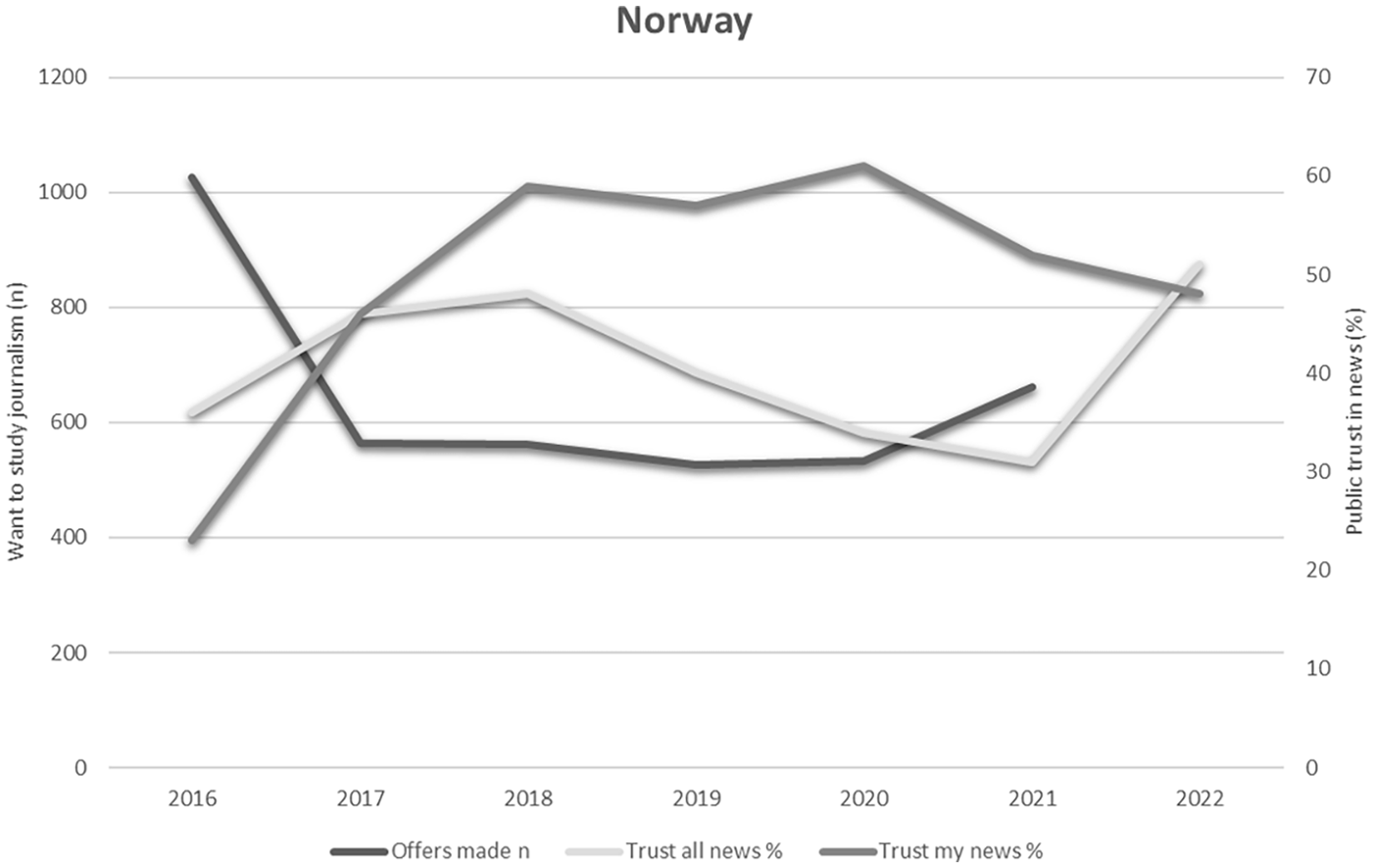
NUCAS/Samordna Opptak Figures for Journalism First-Choice Applicants Against JISC Results for 18-20-Year-Olds Trust in All/My News.
Finland
Data Standardization
The sector is split between what might be considered “traditional,” research-informed universities delivering undergraduate and postgraduate courses and regional “applied” universities, delivering more vocational courses informed by industry and local partners.
For simple comparison purposes, this research focused on the “traditional” universities delivering Bachelor's degrees, but that is not to imply any pedagogical hierarchy. 10 Only four traditional universities in 2016 and three in subsequent years offered Bachelor courses in subjects related to Journalism. 11
There was no central data source similar to HESA or NUCAS but universities do publicly report application data and extracts were used from the traditional universities’ reporting of the number of applications (as first preference choices) and offers of places accepted for all courses with Journalism in the title.
Finland Results
If the U.K. data showed declining trust in news and declining interest in studying journalism, while Norway’s figures broadly showed the converse, Finland, with the strongest trust in news might be expected to also show high interest in studying journalism. The trajectory shows trust in news increasing while numbers studying journalism declines.
Student numbers however were comparatively low. Overbooking meant that applications to study, for example, the Journalism and Communications course at Tampere University reported a peak of 393 applications in 2017, but only 60 students were offered places on the course that year, with places offered settling at just 36 in 2019.
That a country with higher than the global average trust in journalism and interest in news offers so few undergraduate opportunities to study journalism is interesting; however, the Finnish news industry is served by high numbers of graduates joining from other disciplines.
What is particularly interesting in the “trust” results is the drop in trust in “my” news among the young people surveyed against relatively stable results for trust in “all” news. As mentioned in the Discussion section, this may be a reflection of falling trust in social media as news sources but may also reflect stronger critical literacy—the Finish government has emphasized teaching media literacy in school 12 since 2004 (Kupiainen, 2019) and embedded it in post-2016 curricula (Figure 5).
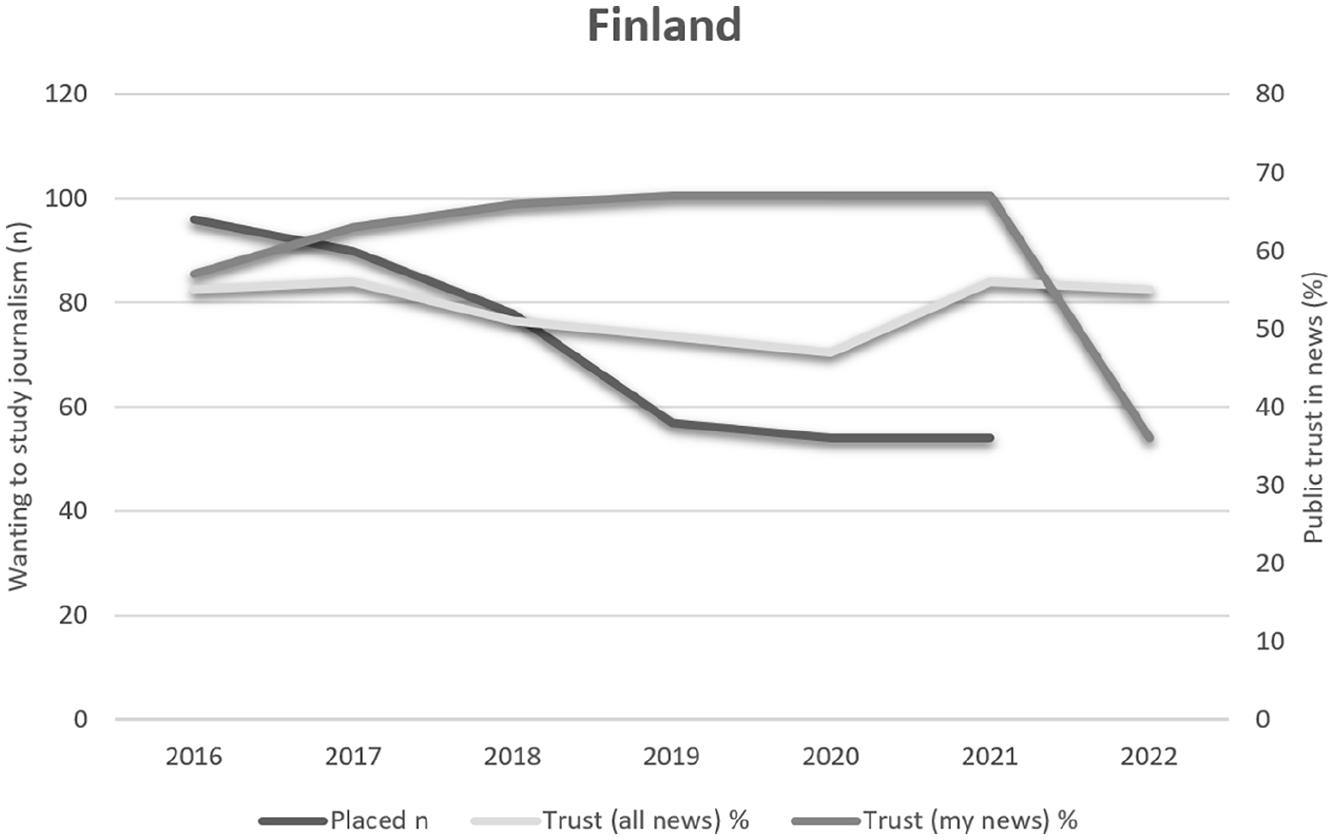
Figures Reported by the Four “Traditional” Universities Delivering Comparative Journalism Undergraduate Degrees for Offers Accepted (“Placed”) Applicants, Against JISC Trust in All/My News in 18-20 Age Group.
Ireland
Data Standardization
Northern Ireland figures fall within the U.K. data provided by UCAS and HESA (Table 3) while Ireland’s university undergraduate applications are handled by the CAO (Central Applications Office). While it was helpful to be able to access data from a single independent body in terms of validity, the subject category groupings proved a particular challenge.
Applicant data is published by the CAO according to top-level subject groups. Prior to 2019, these consisted of 17 subject classification groups, and Journalism was not separately identified within them. The CAO moved to use the international education classification framework ISCED 13 and ISCED-F subject classification system around 2019 which includes the sub-classification “(032) Journalism and information” 14 but is not separately publicly reported by the CAO. However, an extract of data from 2019 within the Journalism and information field was kindly produced by CAO staff for the purposes of this research.
Data is also collected by the HEA (the Higher Education Authority for Ireland) which also uses the ISCED-F system and, as with HESA data for the United Kingdom, covers numbers attending university. HEA data for the category “Journalism and reporting” was used prior to 2019 but can only show course enrolments, rather than applications to study journalism. The two sets of data—HEA pre-2019 and CAO post-2019 were used to produce the table.
Ireland Results
In Ireland, while the data shows upticks in both applications and offers to journalism courses in 2021, both are below 2018 figures: 513 first-choice journalism applications in 2018 and 347 in 2021, and 362 students enrolled in journalism courses in 2018, against 311 in 2021 (Figure 6).
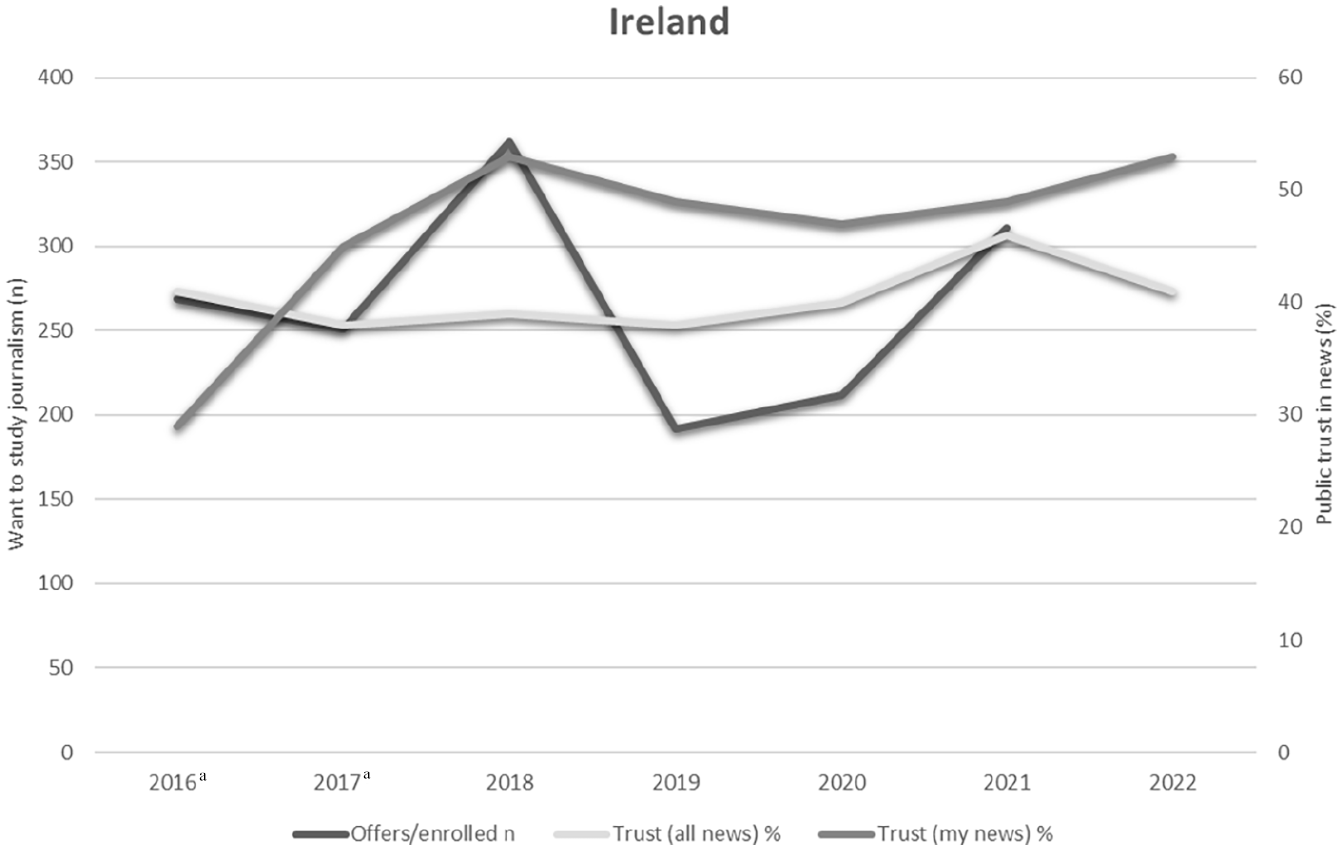
Data From HEA, CAO and RISJ Combined.
Australia
Data Standardization
The Universities Admissions Center processes and collects data on applications to universities and colleges across Australia. The same body also collects data on enrolments making it possible to track applications to study journalism through to students starting their journalism studies.
As with other countries, it was necessary to find a way of identifying comparable course data. In this case, data used refers to all BA/BA (Hons) courses listed under the subject classification code for Journalism and other courses which include Journalism in the title. 15
As with other countries, application data included multiples. Thus, the table below uses data on the number of applicants who made a course with journalism in its title their first preference during the admission stages, while “enrolled” represents students who took up an offer of a place on a journalism course and were studying on it on the March census date.
Australia Results
The Australia results are particularly interesting, showing rapidly falling numbers of students studying journalism but increasing (or returning) levels of trust in news, in particular in the “my” news sources young people use (Figure 7).
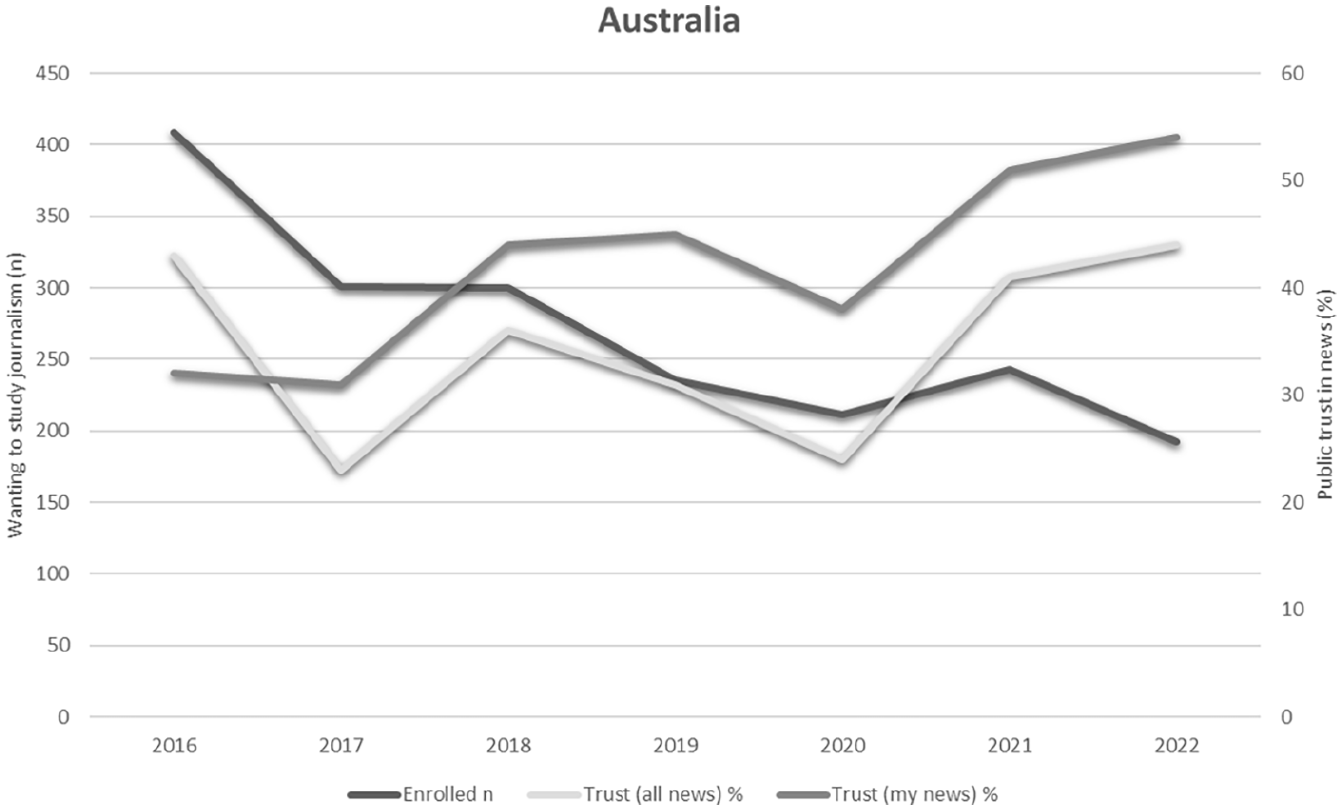
“Enrolled” Represents Students Who Took Up the Offer of a Place and Started Their Journalism Studies.
Portugal
Data Standardization
The Directorate General of Education Services (DGES) handles applications through several phases. The data used for this research was for phase one applications, representing students’ intended or first choice field of study and university course.
Individual course figures at each university were recorded and, within this data, it was possible to identify courses with Journalism in the title and collate those numbers. Numbers were low, however—just three courses using titles Journalism, Journalism and Communication and vice-versa.
Portugal Results
As with Australia, Portugal showed increasing trust in “my” news among young people but also showed increasing journalism student numbers. However, figures were low and the increase represents just 59 more students between 2016 and 2021 across the three courses (Figure 8).
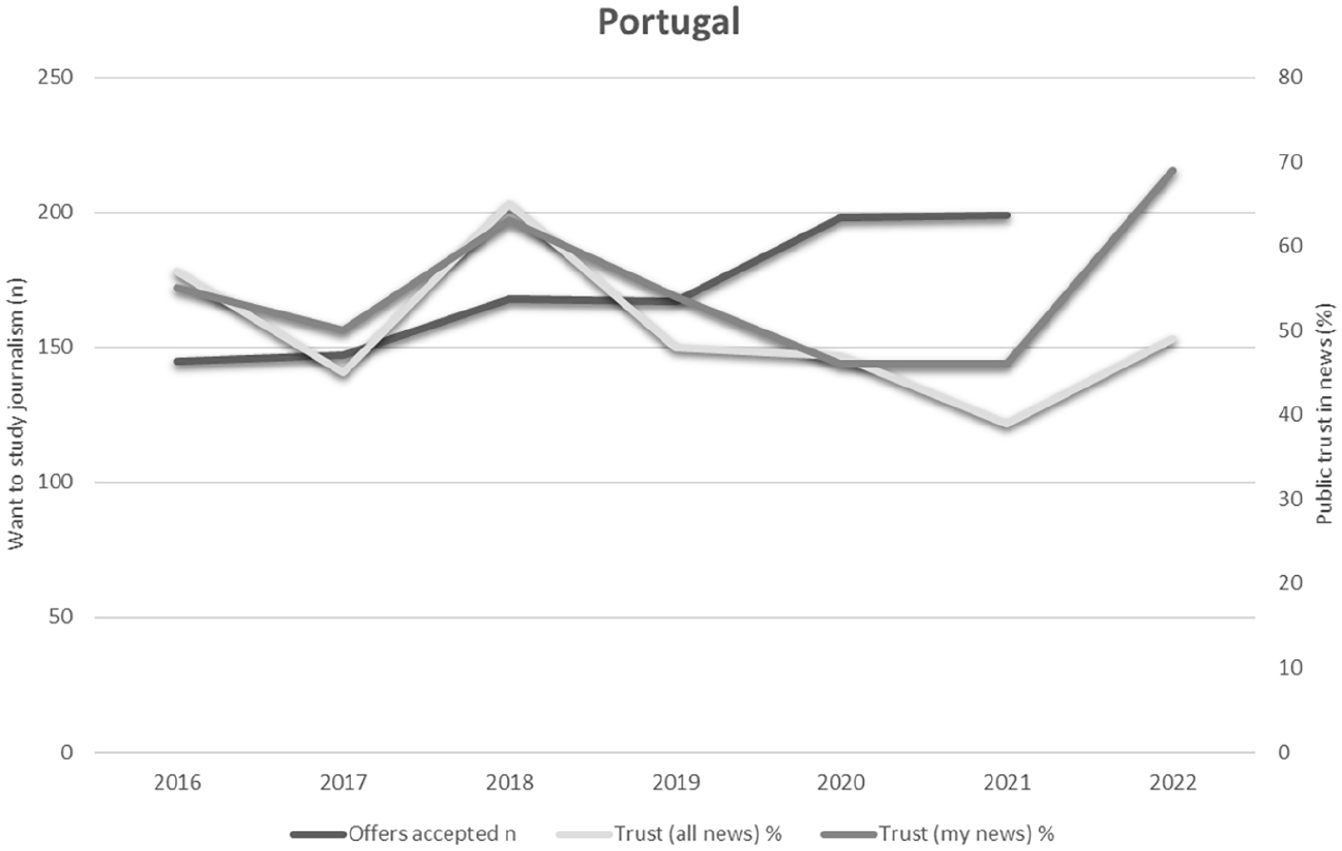
Portugal Had the Fewest Journalism Courses and Applications to Study the Subject Among the Countries Surveyed But the Data Does Reflect Interest in Journalism Rather Than a Broader Media Subjects Grouping.
Canada
Data Standardization
As in the United States, Germany, and Japan, students in Canada apply directly to their choice of individual universities and individual universities keep their own, private, records of applications, offers, and enrolments. However, Canada also has OUAC—the Ontaria Universities’ Application Center, which coordinates applications within the state and at a scale that makes it possible to look for trends.
The OUAC changed its subject groupings from a separate Journalism classification to the broader group of Communication and Journalism in 2017. However, universities choose which of the broad program groupings they think each of their courses sits under and, as the OUAC manager contacted noted: This list of programs changes annually—and sometimes even during the middle of the cycle. It is very difficult to compare apples to apples as the universities change the names of their programs and which program grouping they include it in.
Taking these caveats—only one state’s student data and lack of clarity on what proportion of the data represents courses with Journalism in the title, it was still possible to draw a similar comparative “Trust v Want” chart (Figure 9).
Canada Results
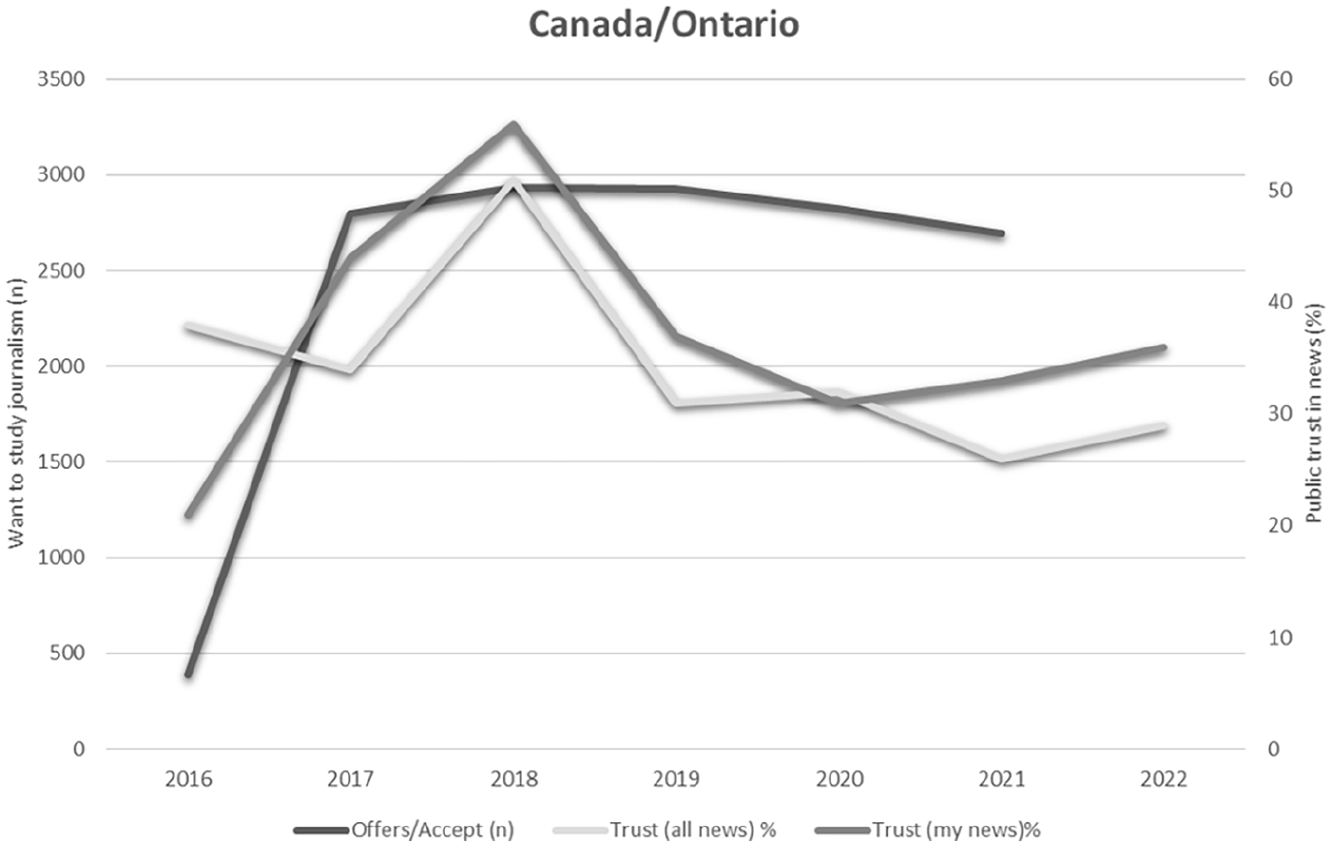
While the “Trust” Lines Represent 18-20-Year-Old Respondents to the RISJ Surveys Across Canada, the Offers Accepted, the “Want” Line, for Students Recorded as Confirming They Have Accepted an Offer Only Represents Ontario State.
Discussion and Further Research
The research underpinning this paper started with two sets of data—decreasing numbers of young people wanting to study journalism in the United Kingdom (Table 1) and decreasing overall trust in journalism in the United Kingdom (Table 2) and explored a hypothesis about whether they might be linked. That is, are fewer young people choosing to study journalism at a similar rate to their peers losing trust in the news? For the United Kingdom, that held true with fewer journalism students and fewer journalism students as a percentage of overall student numbers over the period and, while less clear, a trend toward declining trust in news among 18- to 20-year-olds.
By gathering analogous data on student applications across a number of other countries and comparing that data to surveys on trust in news within the same age group, it was possible to see similar trends. Falling numbers of young people wanting to studying journalism in four out of the seven countries (United Kingdom, Finland, Australia, Canada), with three countries showing increases since 2020 (Norway, Portugal, Ireland) but those increases reflect comparatively small changes in actual student numbers.
In addition, responses to the pandemic may have resulted in higher uptake in university places in 2020/21 (as noted in the United States by Cummins et al., 2021) while demographic changes in numbers of 18-year-olds can affect uptake in any given year. However, it should be noted that in the United Kingdom and Norway, where it had been possible to access data on the percentage of journalism students within the overall student population, that percentage had fallen.
However, a decline in the number of students studying journalism against other subjects may not necessarily mean a loss of interest in journalism as a subject.
As highlighted in the U.K. results section, reductions in the number of courses or places offered may be a factor (i.e., United Kingdom, Finland), as may concerns around job opportunities within journalism. Jobs in U.S. newsrooms fell by 26% between 2008 and 2020 (Pew Research Center, 2021), while a Georgetown University study (Carnevale & Wenzinger, 2022) projected a further 3% fall in between 2022 and 2031.
The inability of mainstream news media to reach young people in their pre-university lives may mean the question is not one of trust but of journalism’s relevance to young people.
Journalism earns its relevance to the world. Journalists are not owed attention. Just because we’ve been here for a couple of hundred years reporting what’s going on to our (mostly) impartial best doesn’t mean each successive generation has to listen to us. (Greenwood, 2018, p. 158)
That makes the “trust” results particularly important. While trust in “all” news by 18-20-year-olds largely followed a similar trajectory to all ages trust in a country (Table 1), trust in “my” news was much more variable and poses interesting questions about young people’s attitudes to the news that finds them via their own social media or app choices. As example, Australia which saw trust in “my” news see-saw between a 31% low in 2017 to 2022’s 54%, via 2018’s 44% and 2020’s 38%. An interesting next question would be to ask at what news stories were cutting through to that age group in Australia in years showing an upturn in trust?
What is particularly striking is that all seven countries showed a similar spike in 2018 in trust in “my” news. The reasons behind this warrant further investigation but, with Instagram the growth success story of 2018 16 and TikTok introduced to the international market toward the end of 2017, younger people’s enthusiastic adoption of the agency both socials offered for them to produce their own news and commentary may be key.
The data gathered through this project does suggest at least a visual link between perceptions of trust in news and interest in studying journalism. How strong that link is, and particularly whether it is recognized as existing by the young people themselves, requires further study.
Footnotes
Acknowledgements
The author is profoundly grateful to Kevin Keady, Statistician at the Central Applications Office, Galway, Ireland; Michael Cummings, Head of Business Insight & Analysis, at York St John University, York, England; Deanna Underwood, Manager Communications and Events, at Ontario Universities Applications Center, Guelph, Canada: Helen Tam, Research and Statistics Manager, at the Universities Admissions Center, Silverwater, Australia, and Dr Craig T Robertson, Postdoctoral Research Fellow at Reuters Institute for the Study of Journalism, Oxford, England, for their help and assistance in producing the data used in this study. Thanks also to HESA ( ) for granting permission to use data, and to Prof. Peg Dillon of Salem State University, MA., USA, for her contributions.
Declaration of Conflicting Interests
The author(s) declared no potential conflicts of interest with respect to the research, authorship, and/or publication of this article.
Funding
The author(s) received no financial support for the research, authorship, and/or publication of this article.