



Abstract
This paper reports findings from a UK-wide evaluation of Speak Out Stay Safe, a manualised child abuse and neglect (CAN) prevention programme delivered by the National Society for the Prevention of Cruelty to Children (NSPCC) to children aged 6–11 years. The study examined which groups benefit most, the immediate impact on children’s knowledge of CAN, and the retention of this knowledge and help-seeking attitudes over time. Three survey measures assessed children’s understanding of abuse types, readiness to seek help, and perceptions of school culture at baseline, immediately post-intervention, and six months later. Statistical analyses included paired and independent t-tests, MANCOVAs, and Chi-square tests. Children showed significant immediate improvements in identifying neglect, sexual, emotional, and physical abuse, with knowledge largely retained at six months. Older pupils demonstrated the strongest sustained gains, particularly in recognising trusted adults and understanding sexual and emotional abuse. Girls showed significantly higher awareness and differentiation across abuse types, especially those with lower initial knowledge. Future prevention programmes should focus in depth on the concept of neglect and sexual violence in particular as these were areas where children’s knowledge was lower, especially among boys and those in more deprived school settings.
Keywords
Introduction
Childhood exposure to abuse and neglect produces both immediate harm and long-term sequelae across physical, emotional, and developmental domains (Felitti et al., 1998; Finkelhor et al., 2007; Font & Berger, 2015; Font & Maguire-Jack, 2016; Gondek et al., 2021); preventing harm and promoting timely disclosure and help-seeking in early childhood are therefore public health and safeguarding priorities. There is growing interest in the potential for children to be supported to improve their knowledge and to learn skills to help them stay safe and avoid child abuse, neglect and bullying (Stanley et al., 2021). One part of this strategy involves universal school-based programmes addressing children’s experiences of bullying and maltreatment, with programmes having been developed and delivered in schools for over 30 years (Che Yusof et al., 2022; Gubbels et al., 2021; Xu et al., 2024).
While the relevance of these programmes for adolescents is widely acknowledged (UNESCO & United Nations Entity for Gender Equality and the Empowerment of Women, 2016), debate continues about their appropriateness for younger children in primary/elementary education. Targeting of programmes has been recommended (Stanley et al., 2015), but there is little understanding about whether these programmes can boost the knowledge of those children whose awareness and knowledge are lower than those of their peers. Moreover, while some programmes might appear promising in the immediate aftermath of delivery, there is less certainty about what makes for sustained impact. The diversity of children, their cognitive development, disability status, cultural and linguistic background, prior exposure to adversity, and access to supportive adults, also appear to moderate outcomes but is often under-examined in evaluation designs (Stanley et al., 2015)
In response to these gaps, this paper examines both the immediate and longer-term effects of educational and preventive interventions over time. The study is drawn from a UK-wide evaluation (Stanley et al., 2023) of a national school-based intervention, Speak Out Stay Safe (SOSS), developed and delivered by the National Society for the Prevention of Cruelty to Children (NSPCC) in the UK. Here, we explore the gains made from this short, low-cost intervention and consider which and for whom benefits were sustained, drawing out implications for future design and targeting of school-based programmes for this age group.
Background
Children are not a homogenous group, and school-based programmes cannot assume that age or gender alone determine how children learn about abuse and neglect, or how they seek help. Children’s experiences and learning trajectories are shaped by a wider set of intersecting factors, including developmental stage, school climate, socio-economic status, faith background and geographical location (Hoefnagels et al., 2021). A programme that succeeds in one community or school setting may require adaptation to achieve the same impact elsewhere, while children’s engagement with programme content can be influenced by family culture and circumstances, peer relationships, or the resources available in local services. This complexity highlights the need for evaluations to move beyond crude demographic categories when assessing programme effectiveness, and instead to ask what truly constitutes success for different groups of children in different contexts.
While there is a lack of robust evidence on school-based programmes addressing the full spectrum of harms as covered by the programme evaluated here, some evaluations that have measured change subsequent to programme delivery have been undertaken on programmes which include more than one type of harm or abuse for this age group (Celik, 2024). For instance, Kenny et al.’s (2022) US study of the Child Safety Matters (CSM) programme with minority children in low-income areas found significant gains in knowledge over time (up to five months) regardless of age or gender. Bright et al. (2022) randomised control trial of the CSM programme indicated that increased knowledge was retained up to seven months following the programme.
A rapid evidence review conducted for this study in 2018 (Stanley et al., 2021) found no studies that covered all forms of abuse included in the SOSS programme, although there was substantial evidence on school-based child sexual abuse (CSA) and bullying programmes. Two systematic reviews of CSA prevention programmes (Fryda & Hulme, 2015; Walsh et al., 2015) indicated that children’s knowledge of CSA increased across most evaluations, although older children made better gains in knowledge than younger children when outcomes were measured using surveys, but not when vignette-based measures were used. This suggests that measures used for testing gains in knowledge need to be tailored appropriately. For example, Barron and Topping’s (2013) evaluation of the Tweenees CSA prevention programme in Scotland found that older children possessed more knowledge at the start but that younger children gained more.
Nickerson et al.’s (2019) USA study of a CSA school programme for children age four to 12 indicated significantly improved knowledge and readiness to report, with younger children making significantly greater gains and girls scoring higher than boys. Yet retention was only measured one-week post-intervention, leaving important questions about long-term effectiveness unanswered. This reflects a wider problem: programme evaluations often report short-term gains and demographic differences, but rarely consider how these play out across time or in relation to children’s broader social environments. More recent evidence further highlights that abuse prevention needs to extend beyond classroom-based programmes for children. A systematic review by Russell et al. (2024) found that prevention programmes which actively engaged parents were more likely to reinforce children’s learning, support skill retention, and facilitate protective conversations beyond the classroom.
School-based evaluations of bullying and peer violence prevention provide additional insights. Systematic reviews show that such programmes are generally effective, with stronger results from interventions lasting less than one year and for children under the age of 10 (Jiménez-Barbero et al., 2016). Implementation fidelity and contextual factors, such as teacher enthusiasm, socio-economic inequalities across schools, leadership support, and curriculum integration, are identified as crucial enablers of success, while booster sessions are recommended to sustain knowledge (Swift et al., 2017). These findings reinforce the importance of moving beyond a “one size fits all” model and towards contextually attuned approaches that account for diversity among children, schools, and communities.
The evidence indicates that while school-based programmes can improve younger children’s knowledge and readiness to seek help, a deeper understanding of diversity among children is essential to their design and evaluation. Age and gender matter, but they are only part of a larger picture in which developmental, socio-economic, cultural, institutional, and geographical factors shape how children experience and retain programme learning. This study aims to identify the immediate and longer-term gains in children’s awareness of various forms of harm, and self-reported help seeking behaviour and to establish whether children with lower levels of knowledge than their peers can benefit from receiving a child abuse and harm school-based programme. The full evaluation results are available elsewhere (Stanley et al., 2023).
Our key research questions are: 1. Can knowledge of child abuse and harm be retained by children aged 5-11years over time from a relatively brief intervention? 2. Can educational school-based programmes succeed in boosting the knowledge of the children with the lowest levels of awareness?
Speak out Stay Safe
The Speak Out Stay Safe (SOSS) programme, designed for primary school children aged 5–11 by the NSPCC in the UK, aims to enhance children’s awareness and comprehension of various forms of child abuse, neglect and bullying. It encourages them to seek assistance from a trusted adult when needed. This programme is provided free of charge to all primary schools in the UK, with the latest uptake during the 2023/24 academic year being 22.8% of schools across the UK. In that year, it reached approximately 1.4 million children across 5605 schools, including 69 Special Educational Needs and Disabilities (SEND) deliveries as reported by NSPCC (NSPCC, 2024). At the time of this evaluation, delivery of SOSS in classrooms was facilitated by NSPCC staff and trained volunteers working in pairs. The brief, low cost programme (see Stanley et al., 2021) for information on the economic evaluation of SOSS) was offered to schools regularly with the goal of ensuring every child received it twice during their primary school years. It was delivered in two versions tailored for children aged 5–7 years and 7–11 years. The programme evaluated here included a presentation delivered either to classes or in a large assembly, lasting 20 minutes for younger children and 30 minutes for older ones. Older children also participated in a one-hour interactive workshop. Utilizing child-friendly elements such as films, animation, narrative, stickers, and discussions, SOSS (now available in an online format) educates children about various forms of abuse and neglect, including physical, sexual, emotional abuse and bullying, and provides information about Childline, NSPCC’s free telephone and online helpline for children. In the programme evaluated, the assembly for older children also addressed domestic abuse. In the interactive workshop, older children delved deeper into understanding abuse and why it is essential to have someone to confide in when worried. SOSS emphasizes children’s right to speak out, feel safe, and receive assistance if necessary. Most schools received the programme once every two or three years, at nil cost to the school, with an option to engage in fundraising activities afterwards, of which approximately 40% chose to participate, with funds raised being donated to NSPCC.
Methodology
This paper focuses on those children who received the intervention. We describe the immediate improvements in knowledge and changes to reported help seeking in both the immediate (2 weeks post-delivery of SOSS) and longer-term (6 months post-delivery of SOSS) and examine differences between groups of children. While the original evaluation (Stanley et al., 2021) used a matched comparison group, this study focused on the children receiving the intervention in order to highlight shifts in their knowledge and awareness.
The survey development process drew from a review of existing tools and measures (Stanley et al., 2021) which found a lack of tested measures suitable for children under 12 covering the full spectrum of violence and abuse addressed by SOSS. Consequently, the survey integrated a bespoke tool crafted by the research team (informed by existing tools such as the What If Situations Test (WIST) (Wurtele et al., 1998), alongside validated measures. The feasibility of the methods and tools was assessed through a pilot study involving six schools (Barter et al., 2022), leading to adjustments in the survey.
To ensure variation in schools, participating sites were selected through a quota-based sampling strategy spanning all four UK nations. This approach drew on factors highlighted in the Rapid Evidence Review (Barter et al., 2022) as likely to shape programme outcomes. Three dimensions were prioritised: levels of socioeconomic disadvantage within the student body, captured through the proportion of pupils eligible for free school meals; the presence or absence of a faith designation, reflecting the school’s religious ethos; and the geographical location of the school, distinguishing between urban areas and rural or semi-rural communities.
Participants
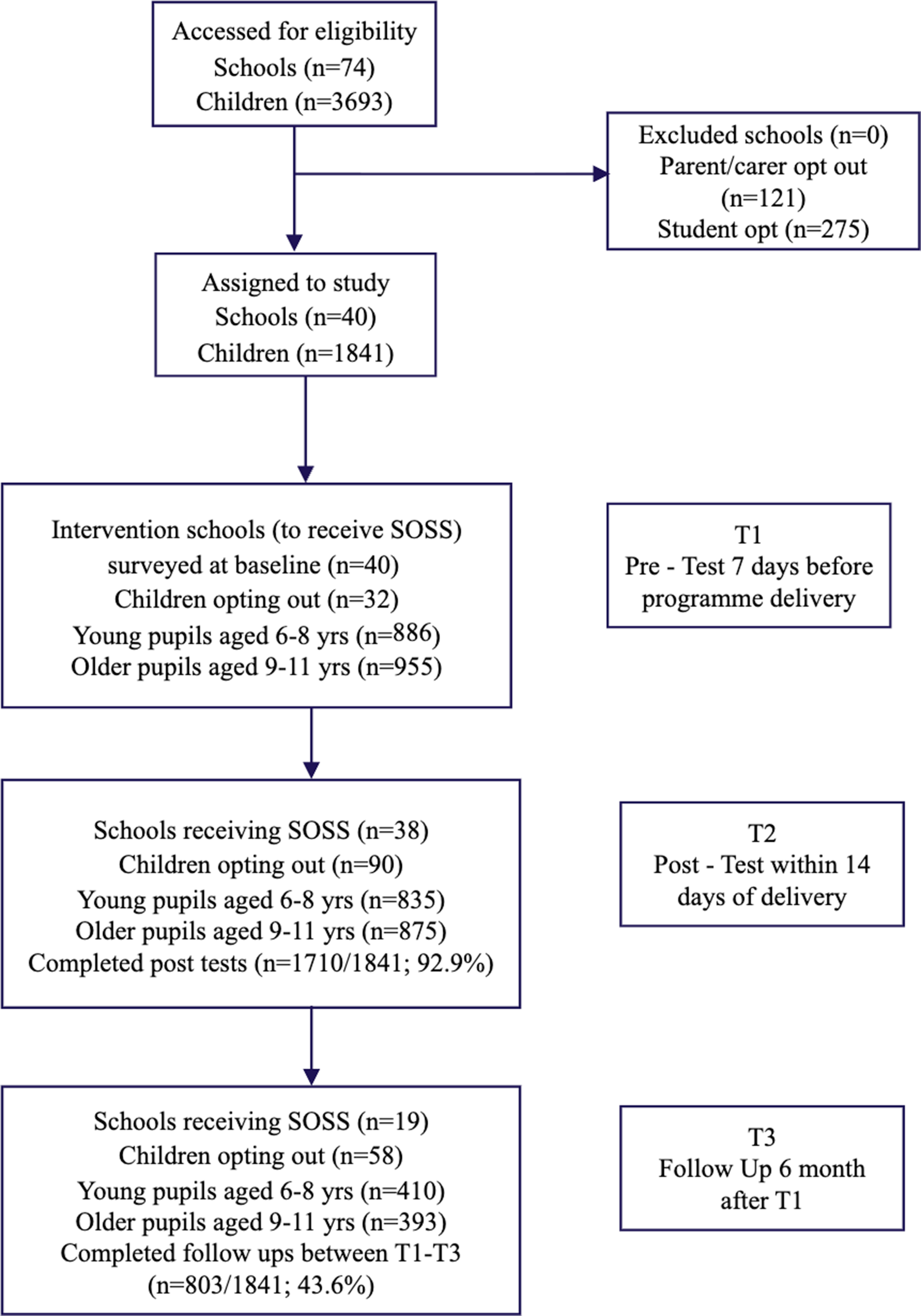
In each school in the study, one class of younger children aged 6-8 and one class of older children aged 9-11 participated. In total, 1841 children (886 younger aged children and 955 older aged children) completed the baseline survey prior to programme delivery. At Time 2, where data collection took place 2 weeks after receiving the programme, a total of 1710 children (835 younger aged children and 875 older aged children) completed the survey. At Time 3, six months after the delivery of the programme, due to Covid-19, data collection could only be completed in 19 of the original 40 intervention schools included (see the limitations section), with a total of 803 children (410 younger aged children and 393 older aged children) completing the survey. Figure 1 shows the participant flow through this study in line with Consolidated Standards of Reporting Trials (CONSORT) guidelines (Schulz et al., 2010).
Flow of Children through the Study
Procedure
Researchers conducted the survey with children during their classroom sessions. Children utilized hand-held digital tablets to complete the visually appealing survey at three different time-points: T1 (baseline pre-test), seven days prior to programme delivery; T2 (post-test), within 14 days following delivery; and T3 (follow-up), six months after the baseline assessment. Every school involved in the study received book vouchers valued at £200 as a mark of appreciation for facilitating the study.
Survey Design and Measures
The survey contained four measures, only three of which are relevant for this study. The three measures were: 1. A customized (bespoke) measure involved presenting children with a series of vignettes focused on different types of harm, followed by questions. These questions assessed children’s ability to identify whether a given scenario was harmful or not, their inclination to disclose, their capability to recognize a suitable trusted adult to confide in, and their understanding of various types of violence and abuse. The inquiry regarding different forms of violence and abuse was exclusively directed to older children. Both younger and older children’s readiness to disclose was gauged by inquiring whether they would confide in someone, while their ability to identify an appropriate trusted adult was examined by asking whom they would confide in from a list of potential individuals (eg friend, parent, classroom teacher). Two scenarios incorporated supplementary inquiries aimed at probing children’s attribution of responsibility for abuse (an example of this can be seen in the supplementary material). The reliability of the measure assessing children’s readiness to disclose remained consistent across age groups (α = 0.68 for younger children; α = 0.67 for older children), as did the measure assessing children’s capability to identify a trusted adult (α = 0.75 for younger children; α = 0.73 for older children). Additionally, children’s recollection of a helpline number (Childline) was evaluated. 2. The Children’s Knowledge of Abuse Questionnaire-Revised (CKAQ-R) (Tutty, 1995) assesses awareness of sexual abuse, with additional questions regarding bullying. The CKAQ-R comprises 24 true-false items, and an additional item concerning the acceptability of children sending a photograph of themselves in underwear was added by the research team to reflect more current experiences of being asked to send, or receiving sexual images (α = 0.88). 3. A shortened version of the Elementary Authoritative School Climate Survey (ASCS) (Cornell, 2015) was included for the older children. This comprised 11 items necessitating a binary response (yes/no), encompassing queries regarding children’s perceptions of their school environment and climate, as well as the expectation of receiving assistance from staff when encountering difficulties.
Children were provided with the option to skip or refrain from answering questions by selecting “I don’t want to answer” while progressing through the survey.
Analysis Conducted and Software
Survey data underwent thorough cleaning and scrutiny to identify any systematic missing data points. It was observed that younger children were more inclined to skip questions; nevertheless, overall, the frequency of missed questions remained within acceptable thresholds and decreased across the three time-points as children became more familiar with the survey content.
Individuals’ scores for the bespoke measure were combined across two dimensions: readiness to seek help and ability to identify an appropriate trusted adult. Additionally, scores for the CKAQ-R were combined to yield a total score of 25 (more details on the scoring and aggregation approach can be found elsewhere Stanley et al., 2021).
All children and schools were allocated identifiers, facilitating the matching of observations across the three time-points at both the school and child levels. Owing to the reduced sample sizes at T3 due to pandemic restrictions (see below), the decision was made to utilize individual children as the unit of analysis. Surveys were designed and delivered through Qualtrics XM and data was exported into SPSS for cleaning and preliminary data analysis (IBM Corp, nd. Qualtrics, 2018). R was used for the majority of our longitudinal analysis (R Core Team, 2020). Paired and clustered t-tests were subsequently employed to compare the scores of children at each of the three time-points. In addition to Multivariate Analysis of Covariance (MANCOVA) to test for differences between groups, chi-squared statistics were computed to measure the significance of the association between help seeking and attributing fault correctly among the older children.
Ethics
Our study took a hierarchical approach to eliciting consent. Consent was initially obtained from schools, followed by parents/carers using an opt-out approach, and subsequently from children who voluntarily opted into the study. In the classroom, children provided consent before completing the survey at each time-point, having been informed by their teacher about the survey’s purpose beforehand. Due to the sensitive nature of the survey questions, children were reassured that they could withdraw from the survey at any point. As the SOSS programme aims to promote children’s disclosure of abuse and harm, their involvement in the research alongside exposure to the programme was anticipated to potentially prompt disclosures. To address this, researchers developed a safeguarding procedure, resulting in the reporting of 35 instances of safeguarding disclosures or wellbeing concerns across 21 schools during the study period. Most of these disclosures/concerns were associated with older children, with half of them involving bullying (n = 13) or sibling violence (n = 5). The majority of these instances occurred during baseline data collection. Ethical approval for the study was obtained from the NSPCC Ethics Committee, as well as from ethics committees at (blinded for review).
Limitations
Although the majority of data had been gathered by March 2020, coinciding with the introduction of nationwide lockdown measures in the UK in response to the Covid-19 pandemic, subsequent data collection was significantly affected by school closures and restrictions in undertaking research. Following the reopening of schools in the UK in August–September 2020, remote data collection resumed, facilitated by schools’ electronic devices or traditional paper methods. Children were re-acquainted with the survey and guided through consent procedures via a brief video presentation recorded by the researcher who had previously visited the school and remained available remotely to assist teachers.
Sensitivity analysis was conducted to check differences in children’s responses to the survey, for pre- and post-lockdown periods. We employed a clustered comparison of means to examine any significant differences in scores between the children in the pre- and post-lockdown cohorts. With the exception of one survey item, which measured the ability to confide in a trusted adult among older children and showed a significantly higher score pre-lockdown with a small effect size (d = 0.277), no other differences were identified. As such, we have confidence that the findings across the pre- and post-lockdown cohorts at six months follow-up are comparable.
Results
In this section we will explore the sample characteristics and then present our findings under each of the research questions. We will then explore whether knowledge can be retained in the short and long term. Finally, we will present our multivariate analysis of variance for the group with the lowest scores at six months follow-up highlighting significant characteristics of this group.
Children’s Characteristics at Baseline (T1) N = 1841
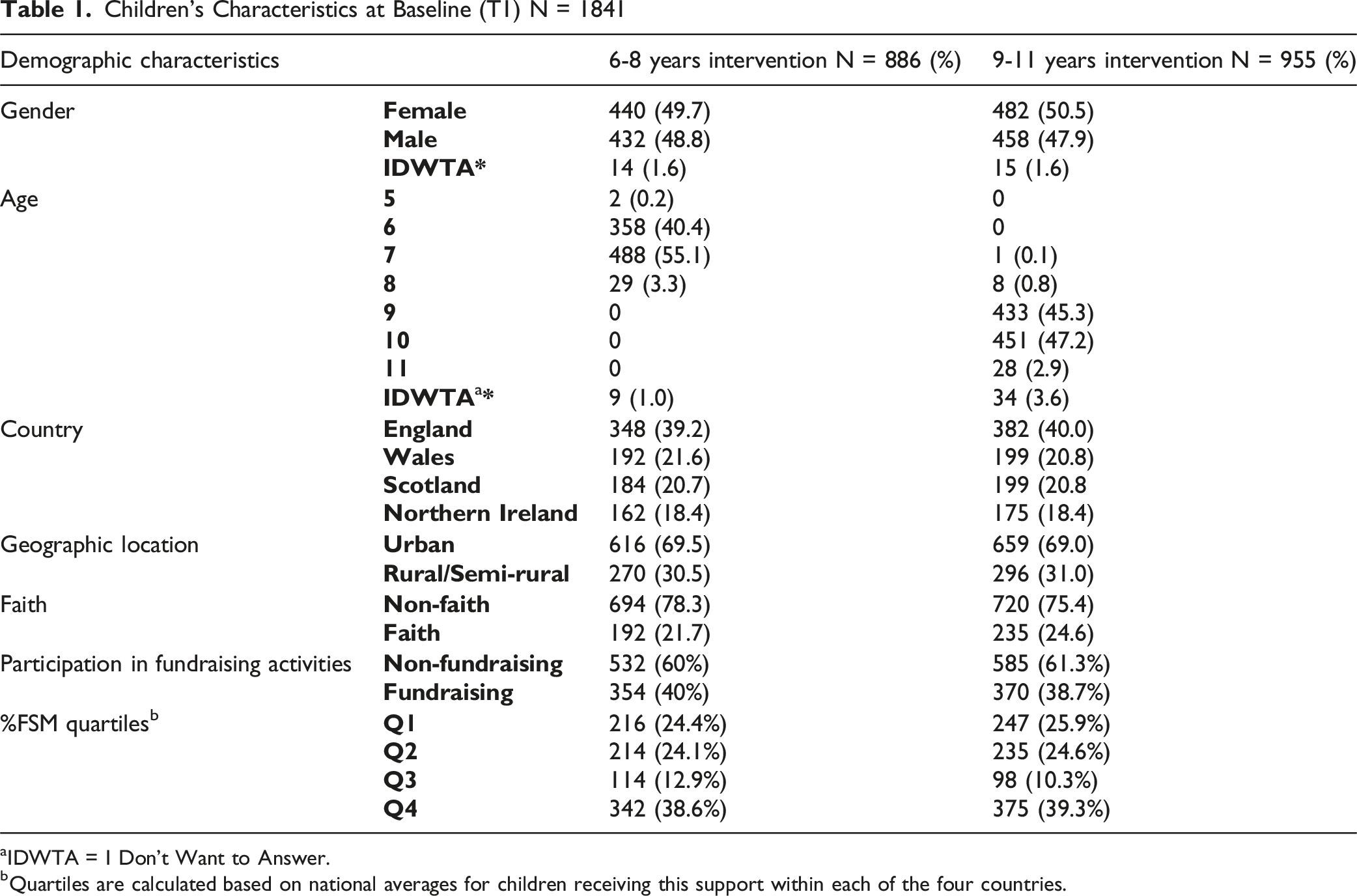
aIDWTA = I Don’t Want to Answer.
bQuartiles are calculated based on national averages for children receiving this support within each of the four countries.
Descriptive statistics comparing responses at times 1 and 2 on the percentage of children who chose to tell, attribute responsibility, identify a safe adult, knew the Childline number and accurately identifying each form of abuse and harm can be seen under Tables S1-S6 in the supplementary material.
Can Knowledge of Child Abuse and Harm Be Retained by Children Aged 5-11 years Over Time From a Relatively Brief Intervention?
Knowledge and Understanding: Identifying Different Forms of Abuse and Harm
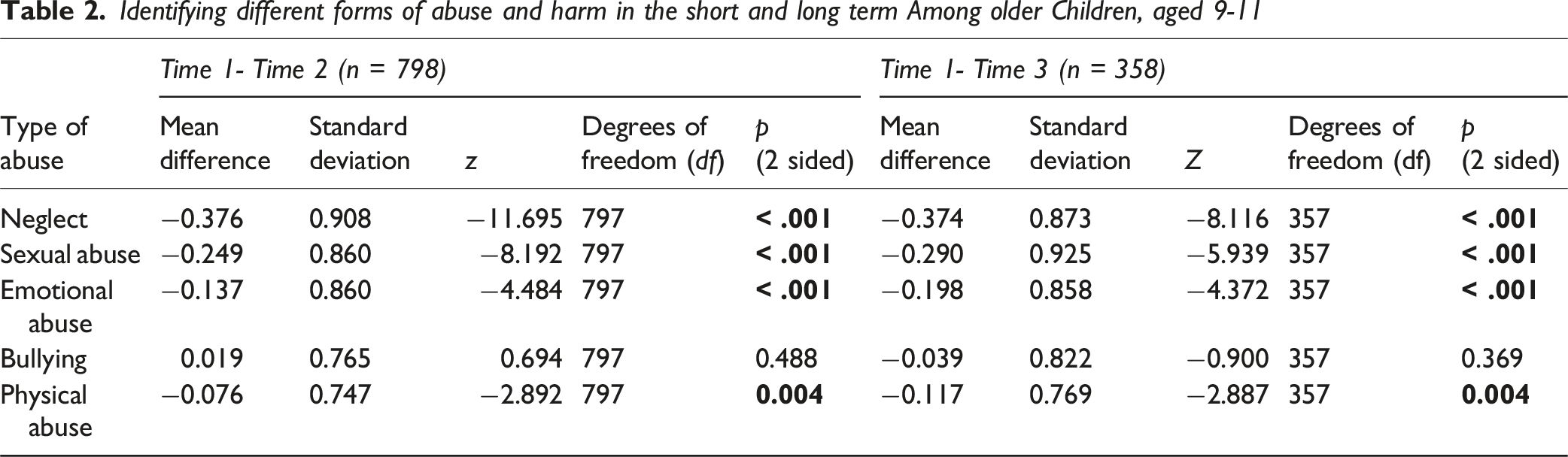
Identifying different forms of abuse and harm in the short and long term Among older Children, aged 9-11
Help-Seeking: Ability to Identify an Appropriate Trusted Adult
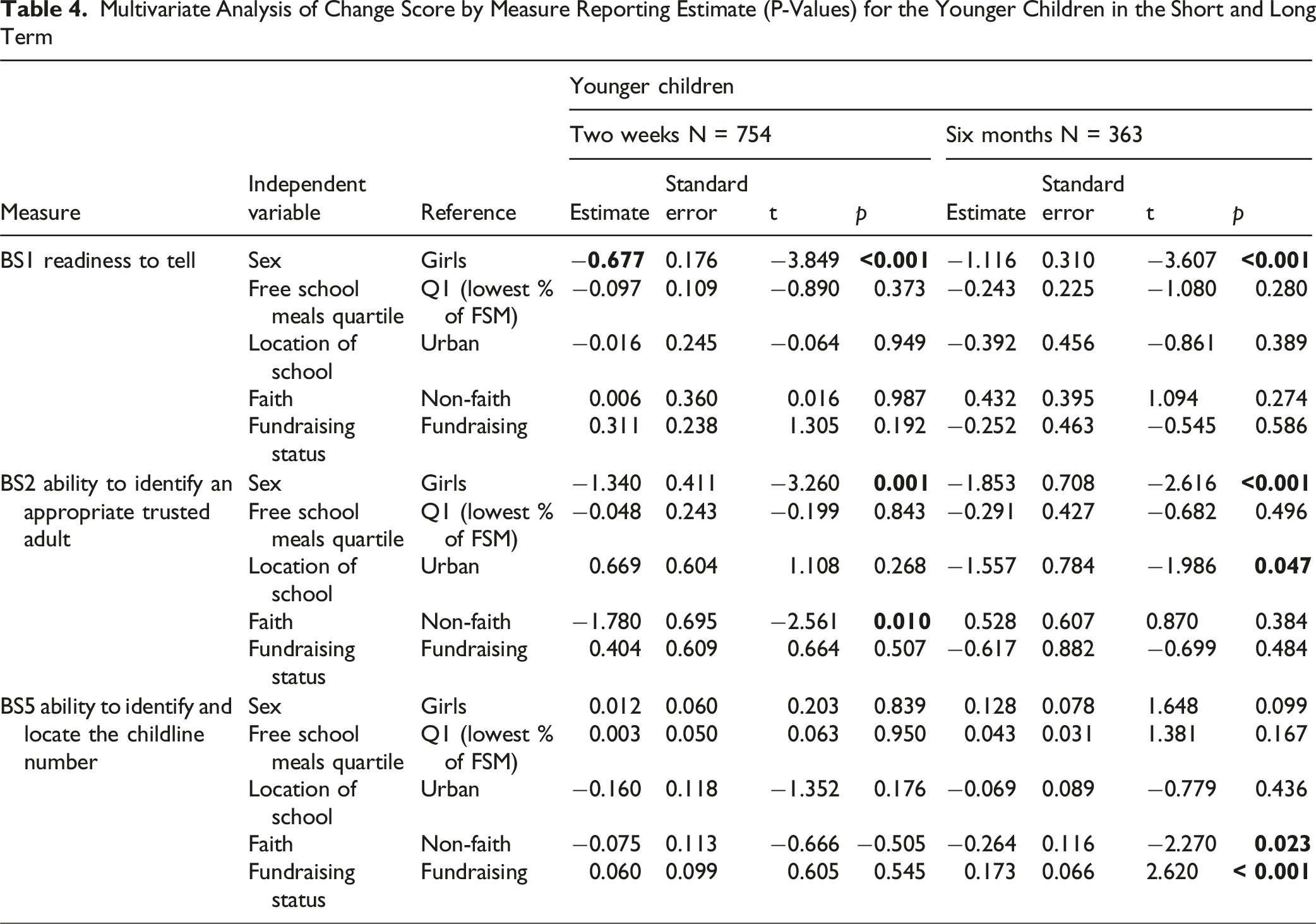
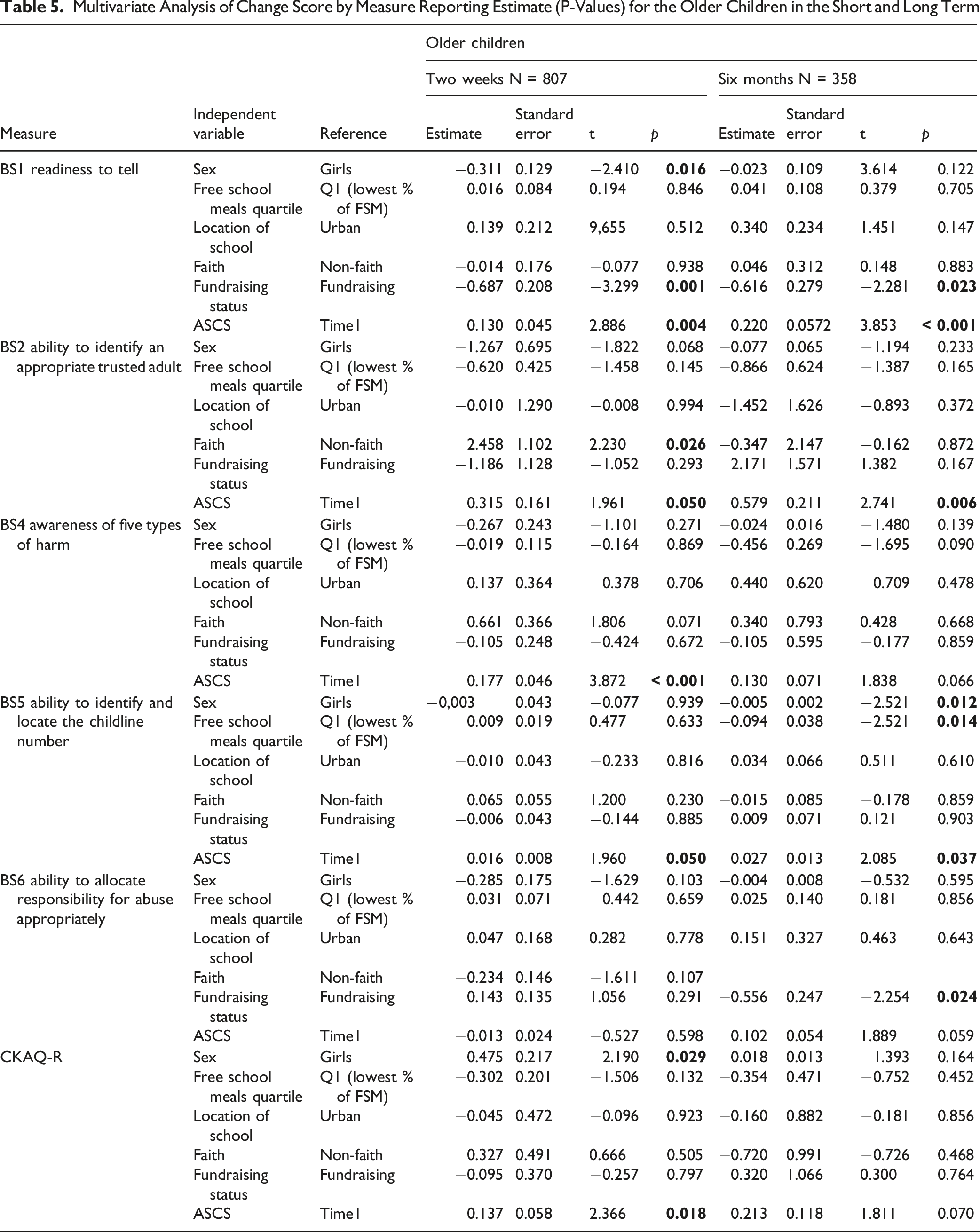
For both age groups of children who received SOSS there were immediate and statistically significant improvements at Time 2 in their ability to identify an appropriate trusted adult to confide in. This improvement was sustained six months later for older children, but not for children aged 6-8 years. Among children aged 6-8, girls were significantly more likely to show improvements both in the short and long term. Whereas for children aged 9-11, those attending schools with higher school climate scores were significantly more likely to identify an appropriate trusted adult at both time points.
Help-Seeking: Readiness to Tell
Paired t-Test
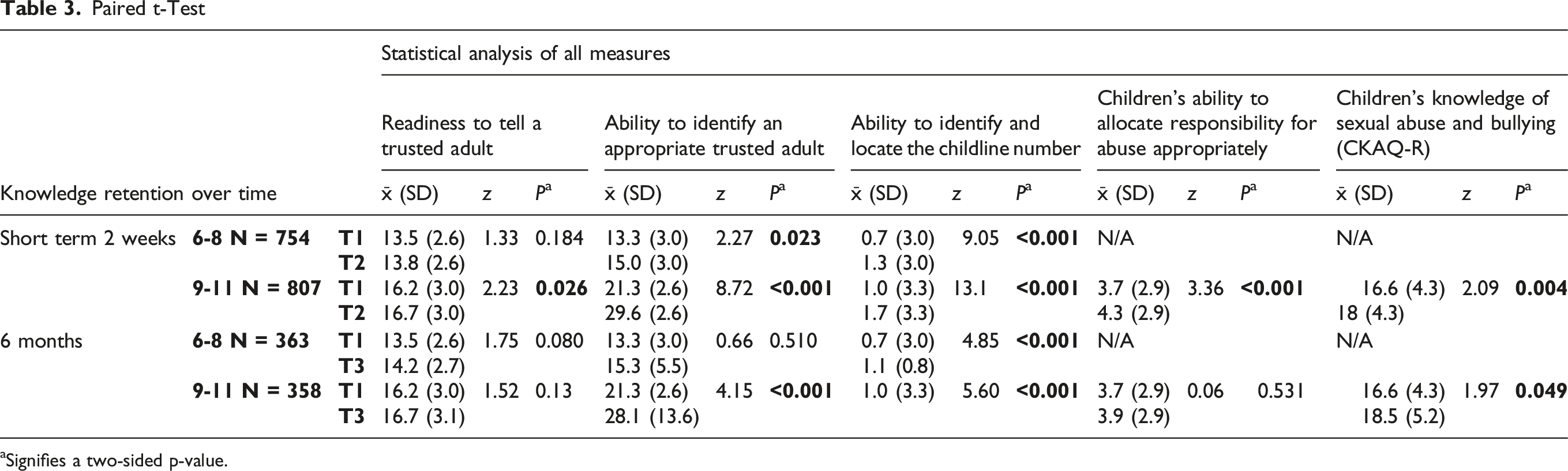
aSignifies a two-sided p-value.
Help-Seeking: Ability to Identify and Locate the Childline Number
Multivariate Analysis of Change Score by Measure Reporting Estimate (P-Values) for the Younger Children in the Short and Long Term
Multivariate Analysis of Change Score by Measure Reporting Estimate (P-Values) for the Older Children in the Short and Long Term
Knowledge and Understanding: Children’s Ability to Allocate Responsibility for Abuse Appropriately
Older children’s ability to allocate responsibility correctly for the harm experienced by a child was assessed via two questions in the survey. Two fault-attribution questions (for smacking and emotional abuse) made up this measure and were asked of every child aged 9-11 years, regardless of whether or not they would ‘tell’ for the associated scenario-based question. There was a statistically significant improvement in older children’s ability to allocate responsibility for abuse appropriately in the immediate aftermath of receiving SOSS. However, this improvement was not sustained over time (Table 3). Results from the multivariate analysis indicate that children in schools that took part in fundraising activities which may have increased their exposure to NSPCC material did significantly better at six months follow-up.
Pearson’s Chi-Square for Fault Attribution at T2 and T3

At T3, the older children who recognised the scenario presented in the question in relation to smacking as abusive, by choosing to tell, were able to attribute fault correctly compared with their peers who chose not to tell. This finding was statistically significant. The older children who chose to seek help (tell) following the ‘what if’ question relating to emotional abuse, were also significantly more likely to attribute fault correctly, based on their willingness to seek help (tell): showing an improvement in the immediate and long-term.
Knowledge and Understanding: Sexual Abuse
We primarily assessed knowledge and understanding of child sexual abuse via the CKAQ-R measure with older children aged 9-10 years only. Fewer children chose the “I don’t want to answer” option at T2, highlighting a decreased lack of knowledge or inhibition. However, there was still a minority of children who chose the ‘wrong’ response after participating in SOSS. This was as high as 30% of the children in response to the statement: “Even someone you like could touch you in a way that feels bad”. The CKAQ-R did not show any difference by gender at baseline but did at T2, with girls scoring significantly higher on their knowledge of sexual abuse and bullying shortly after receiving the intervention. There was an overall significant improvement immediately after receiving the programme, with girls more likely than boys to score higher on this measure. This overall improvement was sustained at six months with no gender differences (Tables 3 and 5). Children’s scores between T1 and T3 showed a small effect size (d = 0.346).
Can Educational School-Based Programmes Succeed in Boosting the Knowledge of the Children With the Lowest Levels of Awareness?
Children at Baseline With Lower Levels of Knowledge and Intention to Act
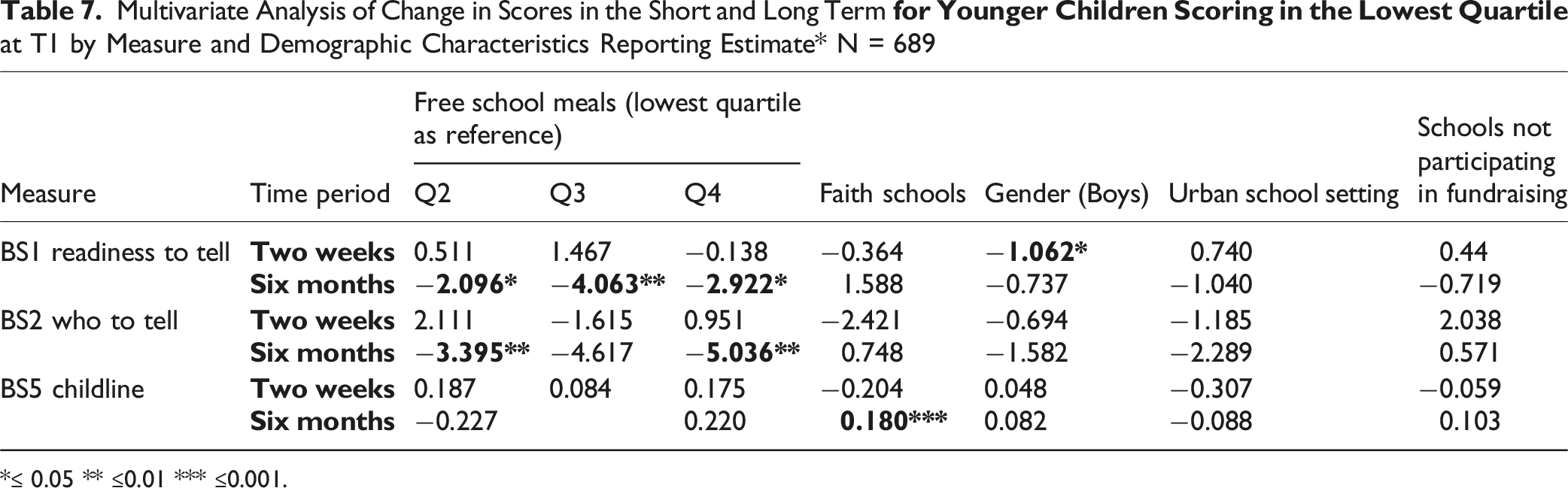
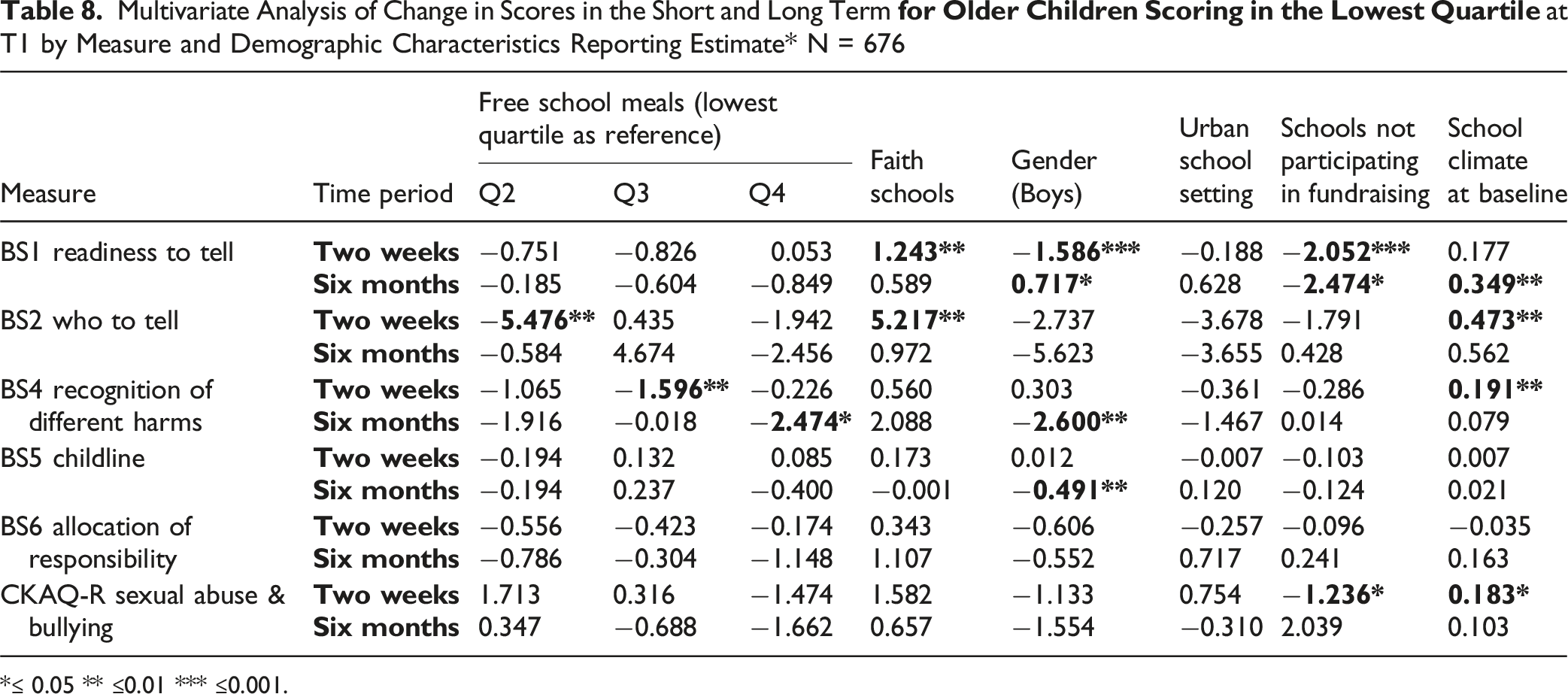
We compared the proportion of children in schools in each age group who were in the bottom quartile of scores for each of the measures at baseline, and whether they remained in this quartile at six months follow-up. The demographic characteristics of the younger and older children with lower levels of knowledge and intention to act show enduring trends across age groups. Lower scores in younger children (n = 689) were significantly associated with being male, eligible for FSMs, and attending urban schools. These younger children were less likely to report readiness to tell, identify or confide in a trusted adult, or know how to contact Childline. For older children (n = 676), similar associations emerged, whereby boys and those receiving FSMs consistently scored lower across measures of readiness to tell, identifying and confiding in a trusted adult, and correctly allocating responsibility for abuse. In addition, faith school attendance and non-participation in fundraising were linked to reduced awareness of the Childline number (Stanley et al., 2021). The findings from the older children further indicate that socioeconomic disadvantage and gender disparities extend into later primary years, with implications for targeted safeguarding education and equitable delivery of school-based programmes.
Multivariate Analysis of Change in Scores in the Short and Long Term
*≤ 0.05 ** ≤0.01 *** ≤0.001.
Multivariate Analysis of Change in Scores in the Short and Long Term
*≤ 0.05 ** ≤0.01 *** ≤0.001.
The most notable change was in the proportion of low-scoring children who could identify an appropriate trusted adult to tell, or had knowledge of the Childline number and where to find it: nearly a third of children aged 6-8 and a quarter of children aged 9-11 in the bottom quartile shifted into a higher quartile and sustained this improvement over time. Among the older low-scoring children (aged 9-11), boys scored significantly lower than their female peers at six months follow-up in their ability to recognise different forms of harm and identify and locate the Childline number despite no gender difference in the short term.
Some children aged 6-8 years who were low at baseline experienced statistically significant improvements in all dimensions of help-seeking between baseline and six months follow-up (p < 0.01). There are indications that SOSS may be responsible for improving some children’s ability to confide in a trusted adult, as SOSS aims to help some of those children who are the most reluctant to speak out to a trusted adult, by boosting their willingness to seek help. Similarly, some low scoring children aged 9-11 years also made statistically significant improvements between baseline and six months follow-up in all dimensions of help-seeking (p < 0.01).
Improvements in knowledge levels were sustained in children with low baseline scores over the six months. While children’s ability to correctly allocate responsibility for abuse (BS6) did not change, knowledge of sexual abuse and bullying improved significantly between baseline and immediately after receiving the intervention and at six months follow-up (CKAQ-R, p < 0.01). Short term improvement was evident in schools with higher school climate scores and among schools who participated in fundraising. Awareness of different types of abuse or harm also improved significantly (p < 0.01), particularly among low-scorers who were female, attended faith schools, or attended schools in the highest quartile of FSM. However, for boys in the lowest quartile of scores at baseline, they scored significantly lower than their female peers at six months follow-up.
Socioeconomic status (represented by free school meals) was consistently associated with knowledge retention in the long term for children scoring in the lowest quartile at baseline, particularly in their readiness to tell and understanding of “who to tell.” However, there are limited significant predictors for short-term changes. School type, faith school and urban setting, showed significant impacts on disclosure readiness and harm recognition, especially in the short term. School climate also emerges as a significant factor influencing disclosure readiness over time.
Discussion
The present study set out to address two critical research questions. First, can CAN knowledge be retained over time following a relatively brief intervention? Second, can such programmes succeed in improving the awareness of the minority of children whose baseline knowledge is notably lower than that of their peers? These questions are of practical and policy significance in the context of CAN awareness and disclosure, where schools play a central role in equipping children with the skills to recognise maltreatment and seek help.
Our findings indicate that a brief, school-based CAN intervention can produce sustained improvements in children’s knowledge of different abuse types and in their reported help-seeking readiness. Moreover, the intervention not only benefits the general student population but also supports those starting with the lowest baseline awareness, demonstrating its potential to reduce safeguarding knowledge disparities within school cohorts.
Among older children (9–11 years), awareness of neglect, sexual, emotional, and physical abuse significantly increased and these gains persisted at six months; consistent with global evidence indicating that school-based awareness programmes can enhance knowledge and protective behaviours, with retention over time (Che Yusof et al., 2022; Hoefnagels et al., 2021; McElearney et al., 2021). We have extended this evidence base by focusing on primary/elementary school aged children across the four nations of the UK. A positive school climate was associated with stronger immediate knowledge gains, although gains in ability to identify different forms of harm and abuse were not sustained at six months. However, improved ability to identify a trusted adult and increased knowledge of Childline were retained at six months by older children in our sample and these gains were significantly associated with higher school climate scores. This mixed picture aligns with mounting evidence that a supportive school environment underpins mental well-being and resilience, yet sustained improvement often requires ongoing reinforcement (Franco et al., 2022; Hansen & Barene, 2025; Leurent et al., 2021). Both age groups showed improvement in identifying trusted adults. However, sustained improvement was observed only among older children and younger girls, underscoring the importance of gender and age-responsive tailoring in safeguarding interventions, a finding echoed in broader literature on disclosure and self-efficacy (Che Yusof et al., 2022; Lu et al., 2023).
Older children showed initial improvement in attributing fault correctly, although these gains faded by six months, except in schools involved in NSPCC-linked fundraising activities, again suggesting that ongoing exposure and reinforcement enhance long-term conceptual understanding. This supports literature advocating for multi-component, whole-school designs to bolster retention (Lu et al., 2023; Podiya et al., 2025).
Importantly, children initially in the lowest scoring quartile made meaningful improvements, particularly in help-seeking competencies. Yet older boys in this group continued to lag behind girls at follow-up. This underscores the necessity for targeted strategies to close gendered safeguarding disparities, echoing findings that suggest socio-cognitive mechanisms and gender norms mediate engagement with CSA education (Che Yusof et al., 2022). Socioeconomic status also appeared to mediate gains for this group and this finding supports arguments for targeting intervention on areas where social and economic needs are high. School climate appeared to mediate immediate gains for this group; however, baseline measures of school climate were not consistently associated with sustained improvement over time. An exception emerged for readiness to tell, particularly among girls and those attending faith schools or participating in fundraising activities, where a more positive school climate seemed to support continued progress. Help-seeking behaviour, conceptualised here as readiness to tell, should not be viewed as a single event but rather as a dynamic, relational process that develops over time (Reitsema & Grietens, 2016). Each interaction reshapes the meaning of help-seeking, with the responses and characteristics of those receiving the request being just as pivotal as the child’s own words or actions (Hoefnagels et al., 2021; McElvaney et al., 2012). This underscores the importance of context and interactional dynamics in influencing whether, when, and how children seek help. Because school climate is dynamic rather than fixed, our findings suggest robust measurement requires repeated assessment over extended periods to capture change and continuity.
This study deliberately focuses on school-based awareness-raising programmes, which offer the advantage of broad reach across child populations but have also been critiqued for implicitly placing the onus of protection on children themselves by assuming that the key protective action is for children to “speak out.” In response to this critique, emerging evidence highlights the value of whole-school approaches that embed prevention across multiple domains of school life: programmes that integrate messages across school-wide policies, curriculum, staff development and engagement with families are posited can strengthen protective environments and support appropriate responses when children disclose harm (Gubbels et al., 2021; Russell et al., 2024). A notable example is the Keeping Safe whole-school child maltreatment prevention programme, which explicitly includes components aimed at children, parents and school staff to address maltreatment comprehensively rather than solely focusing on individual child disclosure (McElearney et al., 2018, 2021).
Under the Ofsted Education Inspection Framework in England, safeguarding and personal development remain critical inspection areas and pupils’ ability to identify trusted adults and routes for help is emphasised (Ofsted, 2023). The outcomes of SOSS are directly aligned with these skills. Calls for mandatory reporting by professionals, including teachers, further underscore the need for competent pupil education on abuse and help-seeking (Ferguson, 2025; Jay et al., 2022). Moreover, the shift toward earlier, developmentally appropriate teaching on healthy relationships and consent, highlighted by primary school abuse testimonies (Everyone’s Invited, 2024; Ferguson, 2025), reinforces the importance of embedding safeguarding across the curriculum.
Recommendations for Future Practice and Research
1. Schools should embed reinforcement mechanisms such as booster sessions, parental and staff engagement, and curriculum integration to sustain knowledge and behaviour gains over time. 2. Tailor interventions for boys whose knowledge and understanding remains low, to reduce inequity in safeguarding outcomes. 3. Improve teacher and school staff training on neglect and sexual abuse, developing more resonant, developmentally appropriate messaging to support deeper understanding. 4. Strengthen school climate efforts, enhancing relational, safety, and trust-building components, which support both immediate and long-term intervention effectiveness. 5. Extend evaluation follow-up periods beyond six months to assess whether knowledge and help-seeking behaviour translate into actual protective actions. 6. Longitudinal research that explores whether knowledge and understanding acquired before 12 can protect children into adolescence would be valuable. 7. Evaluate policy integration and cost-effectiveness, exploring system-wide implementation within statutory structures to scale safeguarding impact affordably and sustainably.
Conclusion
A brief intervention like SOSS can foster improvements sustained over the medium term in children’s safeguarding knowledge and practical help-seeking capacity, aligned with UK policy goals and inspection standards. To maximise impact and equity, incorporated strategies must reinforce learning, tailor content to under-served subgroups, and integrate interventions into the broader school safeguarding infrastructure so that messages are reinforced and change is sustained.
Supplemental Material
Supplemental material - Who Learns What? Sustained Knowledge Retention Six Months After Receiving a School Delivered Violence Awareness Programme Among Primary School Children in the UK
Supplemental material for Who Learns What? Sustained Knowledge Retention Six Months After Receiving a School Delivered Violence Awareness Programme Among Primary School Children in the UK by Zain Kurdi, Ugur Ozdemir, John Devaney, Nicky Stanley in Child Maltreatment.
Footnotes
Acknowledgments
Thanks to all the pupils in England, Wales, Scotland and Northern Ireland who took part in our evaluation, their teachers and school staff who actively engaged with us while undertaking the evaluation. Colleagues from the wider research team.

Funding
The authors disclosed receipt of the following financial support for the research, authorship, and/or publication of this article: This independent study was funded by the National Society for Prevention of Cruelty to Children (NSPCC), the JMCMRJ Sorrell Foundation and the Health Foundation.
Declaration of Conflicting Interests
The authors declared no potential conflicts of interest with respect to the research, authorship, and/or publication of this article.
Data Availability Statement
Data will be made available on request.
Supplemental Material
Supplemental material for this article is available online.
References
Supplementary Material
Please find the following supplemental material available below.
For Open Access articles published under a Creative Commons License, all supplemental material carries the same license as the article it is associated with.
For non-Open Access articles published, all supplemental material carries a non-exclusive license, and permission requests for re-use of supplemental material or any part of supplemental material shall be sent directly to the copyright owner as specified in the copyright notice associated with the article.
