




Abstract
Childhood exposure to domestic violence (CEDV) poses significant risks to children’s safety and wellbeing, yet its prevalence and impact on child protection outcomes remains understudied. This study examined administrative data for child protection investigations in Los Angeles County, California between January 2018 and March 2021 to determine the prevalence of CEDV safety concerns, associated case characteristics, and child protection outcomes (case openings and foster care placements). Results indicated that 5.9% of investigations had CEDV concerns and CEDV investigations represented 17.9% of placements. Investigations with CEDV concerns had higher co-occurring indicated safety concerns than investigations without, including substance abuse (31.1%) and mental health (14.2%). Investigation outcomes for those with CEDV concerns included the substantiation of more than one individual (36.6%), while 28.4% resulted in case openings (without placement) and 30.2% resulted in placements. The study underscores the importance of moving beyond punitive frameworks and exploring the use evidence-based service planning to address the complex needs of families affected by CEDV.
Keywords
Introduction
National estimates suggest that 16% of children in the United States are exposed to parental domestic violence at some point prior to adulthood (Finkelhor et al., 2015). Defined as witnessing or hearing an act of domestic violence or viewing the impact of those acts (Holden, 2003; Naughton et al., 2020), childhood exposure to domestic violence (CEDV) is associated with heighted risk for several negative health and developmental outcomes (Carpenter & Stacks, 2009; Lee et al., 2022; Savopoulous et al., 2023). For instance, CEDV is associated with an increased likelihood of subsequent internalizing symptoms such as anxiety and depression and externalizing symptoms such as aggression (Moylan et al., 2009). In a meta-analysis, Evans et al. (2008) found that the development of internalizing symptoms was more likely for girls exposed to domestic violence, while boys were more likely to develop externalizing symptoms. A more recent literature review also linked CEDV to an increased risk for poorer cognitive functioning and verbal skill development (Savopoulos et al., 2023). Isolating the exact impact of CEDV can be difficult, however, as CEDV often co-occurs with other forms of child maltreatment such as physical abuse and neglect (Finkelhor et al., 2015).
Given the potential harm resulting from CEDV and its frequent co-occurrence with other forms of abuse and neglect, child welfare systems in the United States often screen for CEDV as a safety threat and/or as a maltreatment type itself during investigations (Banks et al., 2008; Hazen et al., 2007; Victor et al., 2021). However, considerable variation exists in how states classify and respond to allegations of CEDV. For instance, in some states CEDV is not explicitly linked to a formal maltreatment type (Delaware Division of Family Services, 2019), but workers are instructed to screen for domestic violence on all referrals since exposure can pose a safety threat to children and thus should be considered in case planning. Conversely, many states either explicitly define CEDV as a form of maltreatment or construe CEDV as constituting a broader form of maltreatment such as psychological abuse, physical neglect, failure to protect, or improper supervision (Victor et al., 2021). As an example, the Florida Department of Children and Families (2024) both screens for domestic violence as a safety threat on each referral and also instructs workers to substantiate an allegation of Intimate Partner Violence Threatens Child when a child is present during an incident of domestic violence and faces present or impending danger as a result. In line with Florida, scholars have argued that exposure to domestic violence should only constitute maltreatment if a child was harmed by that exposure or likely could have been (Edleson, 2004; Kantor & Little, 2003), and a majority of states require harm or a threat of harm from CEDV prior to substantiation (Victor et al., 2021). Previous studies of substantiated referrals in a Midwestern state (Victor et al., 2019) and CPS reports in California (Rebbe et al., 2021) identified that Hispanic children had higher proportions, White children had lower proportions, and Black children had similar proportions of CEDV concerns compared to the respective CPS encounters without CEDV concerns.
Structured Decision Making (SDM) assessments are among the tools most used by workers during an investigation to screen for CEDV (Armstrong & Bosk, 2021). Listed on the California Evidence-Based Clearinghouse for Child Welfare (2023), SDM assessments are comprehensive tools designed to support caseworkers in assessing for a set of relevant dimensions of a family’s situation during an investigation. These tools include factors like the child’s physical and emotional health, a history of abuse or neglect and family dynamics including CEDV.
Identification of domestic violence during the investigation often has an impact on case workers’ substantiation decisions. For instance, when caseworkers identify CEDV as a relevant factor using structured risk and/or safety assessment tools they are more likely to substantiate a maltreatment report than when CEDV is not identified (Lawson, 2019; Rebbe et al., 2021; Victor et al., 2018). Findings vary, however, on whether the presence of CEDV impacts the decision to open a referral for in-home or out-of-home services. Victor et al. (2019) found that CEDV-related referrals were significantly less likely to be opened for either in-home or out-of-home services compared to referrals not involving CEDV. Similarly, using data from the Second National Survey of Child and Adolescent Well-Being, Lawson (2019) reported that CEDV-related referrals were less likely to result in out-of-home placement when exposure co-occurred with other forms of maltreatment, while no association was detected when CEDV was the only concern. Rebbe et al. (2021) found that maltreatment reports involving the co-occurrence of neglect and CEDV were considerably more likely to be opened for in-home services compared to reports of neglect alone, but – in line with Lawson (2019) – co-occurring neglect and CEDV reports were far less likely to result in placement. It is challenging to discern if these differences are the result of jurisdictional variations to handling CPS investigations with CEDV or dissimilar measures of CEDV in CPS data.
Less research has been carried out on the within-group features of CEDV-related referrals that are associated with formal case opening or placement. Examining substantiated CEDV-related referrals from a large Midwestern child welfare agency, Victor et al. (2019) found that having more than one child named on a referral increased the likelihood of formal case opening. So, too, did the presence of other forms of abuse or neglect with co-occurring physical neglect, physical abuse, and substance-related harms the most likely to result in a referral being opened for services. Children’s race and gender was not significantly associated with case openings. Also of note, approximately half of CEDV-related referrals opened for services involved substantiated allegations against both parents indicating that survivors of domestic violence were likely often held accountable for child maltreatment on the basis of their own victimization.
The practice of holding nonoffending caregivers responsible for harm caused by the perpetrator of domestic violence constitutes use of a failure to protect paradigm (Kantor & Little, 2003). This paradigm rests on the assumption that adult survivors of domestic violence have not taken steps to keep their children safe when they had the power to do so. Prior research suggests that child welfare systems expect survivors to separate from abusive partners and refrain from any contact, and consider the decision not to separate as constituting a failure to protect their children (Armstrong & Bosk, 2021; Henry et al., 2020). Child welfare workers enforce that expectation despite evidence that separation considerably increases the risk of homicide for the survivor and their children (Adhia et al., 2019). The use of the failure to protect paradigm by child welfare systems in cases involving domestic violence exposure has also been widely criticized as harmful given the potential to disrupt the child’s attachment bond with the survivor of domestic violence which is a key factor in promoting resilience following CEDV (Cameranesi et al., 2020; Edleson, 2004; Nixon et al., 2007; Victor et al., 2021). Child-parent separation has also been found to increase children’s likelihood of self-harm (Astrup et al., 2017), psychiatry morbidity (Seijo et al., 2016), and physical inflammatory burden (Liu et al., 2021), risks that should likewise be accounted for when considering placement into foster care.
Current Study
Given wide variation in child welfare practice and policy across the United States (Rebbe, 2018; Victor et al., 2021), additional research is needed to understand whether and how particular policy-practice contexts influence the rate at which CEDV-related referrals are substantiated, how often these referrals are opened for services, and what features of CEDV-related referrals make them more or less likely to opened for services or result in the placement of children in out-of-home care. For instance, after observing a high volume of substantiated maltreatment referrals linked to CEDV in Ontario, Canada, Black et al. (2024) questioned whether provincial policy on CEDV should be reformed to reduce the potential for unnecessary child welfare involvement. Similar studies in the United States can support child welfare administrators, policy makers, and advocates in evaluating the impact of particular policy and practice contexts related to CEDV and whether there is inequity in practice across certain groups.
To that end, we examine CEDV-investigations in Los Angeles County, California. The Los Angeles County Department of Children and Family Services (LA-DCFS) is responsible for ensuring the safety of the nearly 2,000,000 children (under age 18) who call the county home (U.S. Census Bureau, 2022) and is the largest child protection agency in the U.S. In 2023, LA-DCFS screened child abuse and neglect referrals for more than 93,000 children (California Child Welfare Indicators Project, 2024). In LA, the agency provides guidance on the assessment of CEDV in policy 0070-537.10 which includes the definition of domestic violence as “a pattern of behaviors used by one partner to maintain power and control over another partner in an intimate relationship” and procedure includes completing the SDM safety assessment tool. Further the policy includes considerations for keeping the child with the parent experiencing the domestic violence, stating that investigators should not “assume there is a failure to protect.” Similar to worries in other jurisdictions, a recent report by the Pritzker Center for Strengthening Children and Families (2021) raised concerns that maltreatment related to domestic violence was a primary driver of formal case openings in the county. The report authors also cautioned that caseworkers’ use of a failure-to-protect framework might be causing further trauma to children due to separation from the nonoffending parent who is also a survivor of domestic violence.
Given that the Pritzker Center report used qualitative data from key informants, this study took a quantitative approach using administrative data to explicate the extent to which CEDV is identified as a concern in CPS investigations. Specifically, the current study aimed to address the following research questions: (1) How many CPS investigations have identified CEDV as a concern and what are the subsequent CPS outcomes? (2) How do the case characteristics and co-occurring safety concerns differ between investigations where CEDV is identified as a safety concern by the CPS investigator and those without CEDV concerns? (3) What are the distributions of subsequent system outcomes (case opening, placement) by race/ethnicity for investigations with CEDV safety concerns? (4) For investigations with CEDV safety concerns, what are the predictors of case openings and placements?
Method
Data
Data for this study were administrative CPS records for Los Angeles County, which included data regarding CPS investigations, case openings, and foster care placement. Additionally, we linked to the administrative records the Structured Decision Making (SDM) safety assessment data. In Los Angeles and all California Counties, if a child abuse and neglect referral is screened in for an in-person investigation, caseworkers are required to compete the Structure Decision Making (SDM) Safety Assessment Tool. Both data sources were made available from the California Department of Social Services (CDSS) through ongoing data sharing agreements and state and university IRB approvals. Referrals were included if they were (1) received between January 1, 2018 through March 31, 2021, (2) were screened in for investigation, and (3) the SDM hotline and safety assessment tools were completed.
Measures
Youngest Child on Referral Demographics
Age
Four categories were used for the descriptive analysis: infant (age less than 1 year), aged 1–4 years, aged 5–12 years, and aged 13–17 years. For the regression models, a binary variable was used indicating that the youngest child was either an infant (1) or not (0).
Gender
As documented in records and coded as either male or female.
Race/Ethnicity
Combined category from primary race and ethnicity variables: Any race Hispanic, Non-Hispanic Asian/Pacific Islander, Non-Hispanic Black, Non-Hispanic Native American, Non-Hispanic White, and missing.
CPS Referral Characteristics
Reporter Type
The affiliation/role of the person who made the CPS referral was classified into 5 categories: law enforcement, education, medical, other professional, and non-mandated reporter (e.g., family member, neighbor).
Ranked Allegation
We first identified the most certain disposition (substantiated, inconclusive, unfounded) for the referral (for all children). For that most certain finding, we then hierarchically coded the maltreatment allegations by maltreatment severity (sexual abuse, physical abuse, severe neglect, general neglect, emotional abuse, all others) and selected the most severe.
Screening Priority
The response time assigned for the referral after being screened in for investigation as either emergent response (24 hours) or 5 days.
Prior CPS Report
A binary indicator if any child on the referral had previously been identified in any prior CPS report in California.
After COVID-19 Onset
A binary indicator if the referral was received after the onset of the COVID-19 pandemic, coded as March 16, 2020, as has been done in other studies based in California (Rebbe et al., 2023).
More Than One Child on Report
A binary indicator if more than one child was identified on the CPS report.
Investigation Assessments
CPS Investigation Finding
The highest level of investigation findings (substantiated, inconclusive, unfounded) for any child and allegation associated with the referral.
SDM Safety Threats
On the SDM Safety assessment tool completed by the CPS investigator within 2 working days of the first face to face contact with the family during the CPS investigation, 10 categories were included indicating that “a safety threat is present”, coded as binary flags: (1) sexual abuse and child’s safety is immediate concern; (2) caregiver does not meet the child’s immediate needs; (3) the physical living conditions are hazardous and immediately threatening to the health and/or safety of the child; (4) caregiver describes child in negative terms and child is a danger to self/others; (5) failure to protect: caregiver is unable or unwilling to protect child from serious harm or threatened harm; (6) caregiver’s explanation of the child’s injury is questionable/inconsistent and the injury suggests the child’s safety may be of immediate concern; (7) family refuses access to child or concern the family is about to flee; (8) caregiver may have previously maltreated a child and combined with current circumstances, child’s safety is of immediate concern; (9) other safety concern; and (10) caregiver caused or threatened to cause the child serious physical harm as indicated by 6 categories: (a) serious injury to the child; (b) caregiver fears they will maltreat the child; (c) threat to cause harm or retaliate against the child; (d) excessive discipline or physical force; (e) drug/alcohol-exposed infant; and (f) domestic violence likely to injure child. All 16 categories (10 categories and 6 physical harm) were included.
Co-Occurring SDM Caregiver Complicating Behaviours
If any of the safety threats were marked as present, the CPS investigator indicated if any of the following 5 behaviors were present in the household, which are identified on the safety tool as not constituting a safety threat on their own, but make safety more complicated for children and should be considered in case planning: (1) substance abuse; (2) domestic violence; (3) mental health; (4) developmental/cognitive impairment; (5) physical condition. All 5 complicating behaviors were coded as binary and included.
CEDV SDM Classification
Investigations were hierarchically coded as having CEDV indicated as a safety concern as either a present safety threat or as a caregiver complicating behavior on the SDM safety tool.
Number of Individuals Substantiated
For investigations that were substantiated, the number of individuals (alleged perpetrators) that were substantiated was identified, resulting in a three-category mutually exclusive variable: no substantiations, 1 individual substantiated, and more than 1 individual substantiated.
Subsequent System Outcomes
Mutually exclusive category coded with three outcomes for any child on the referral: out-of-home placement within 60 days of the referral (to allow for the investigation completion and potential court hearings), case opened beyond the CPS investigation within 45 days (the timeframe for CPS investigations in this jurisdiction is 30 days after the first face-to-face contact), and no placement or case opened.
Analysis
To address the first research question and visualize how CPS investigations flowed through the various stages of CPS outcomes, we constructed a Sankey diagram illustrating the number of CPS investigations received during the study period with a completed SDM hotline and safety assessment tools, how many had CEDV indicated as a concern on the safety tool, and for those with CEDV indicated as a concern, the counts by highest investigation finding, how many had a case opened within 45 days, and how many resulted in a placement within 60 days.
We analyzed the distribution of case characteristics by whether CEDV was identified on the safety SDM or not with chi-square analysis. We tallied and plotted the frequency of the safety threats and caregiver complicating behaviors indicated on the tool stratified by whether or not CEDV was identified as a safety concern on the SDM safety tool.
For cases where CEDV was identified as a safety concern on the SDM safety tool, we calculated and plotted the percentages of case outcomes by child race/ethnicity. We also ran modified Poisson regression models with a robust error variance (Zou, 2004) and adjusted for the characteristics as covariates for two outcomes: 1) case opening within 45 days and 2) placement within 60 days. Results are presented as risk ratios (RR) with 95% confidence intervals (CI). All analyses and data visualizations were performed using R Statistical Software (v.4.1.3; R Core Team, 2022).
Results
Figure 1 presents a Sankey diagram demonstrating the process flow from all CPS investigations with hotline and safety SDMs completed to ultimately the number with foster care placements within 60 days for any child on the report. Overall, there were 153,427 CPS investigations with completed SDM tools from January 1, 2018 through March 31, 2021 in Los Angeles County. Of those, 9026 (5.9%) had CEDV identified as a concern on the safety tool and 94.1% did not. Of the CPS investigations with CEDV indicated as a concern on the safety tool, more were classified as a safety threat (62.6%) than a complicating behavior (37.4%), 62.4% had an allegation substantiated, 35.7% were inconclusive, and 1.9% were unfounded. Of the investigations with a CEDV safety concern, 61.0% resulted in a case opening within 45 days and 29.2% resulted in an out-of-home placement within 60 days for any child on the referral. Case flow of CPS investigations in Los Angeles County.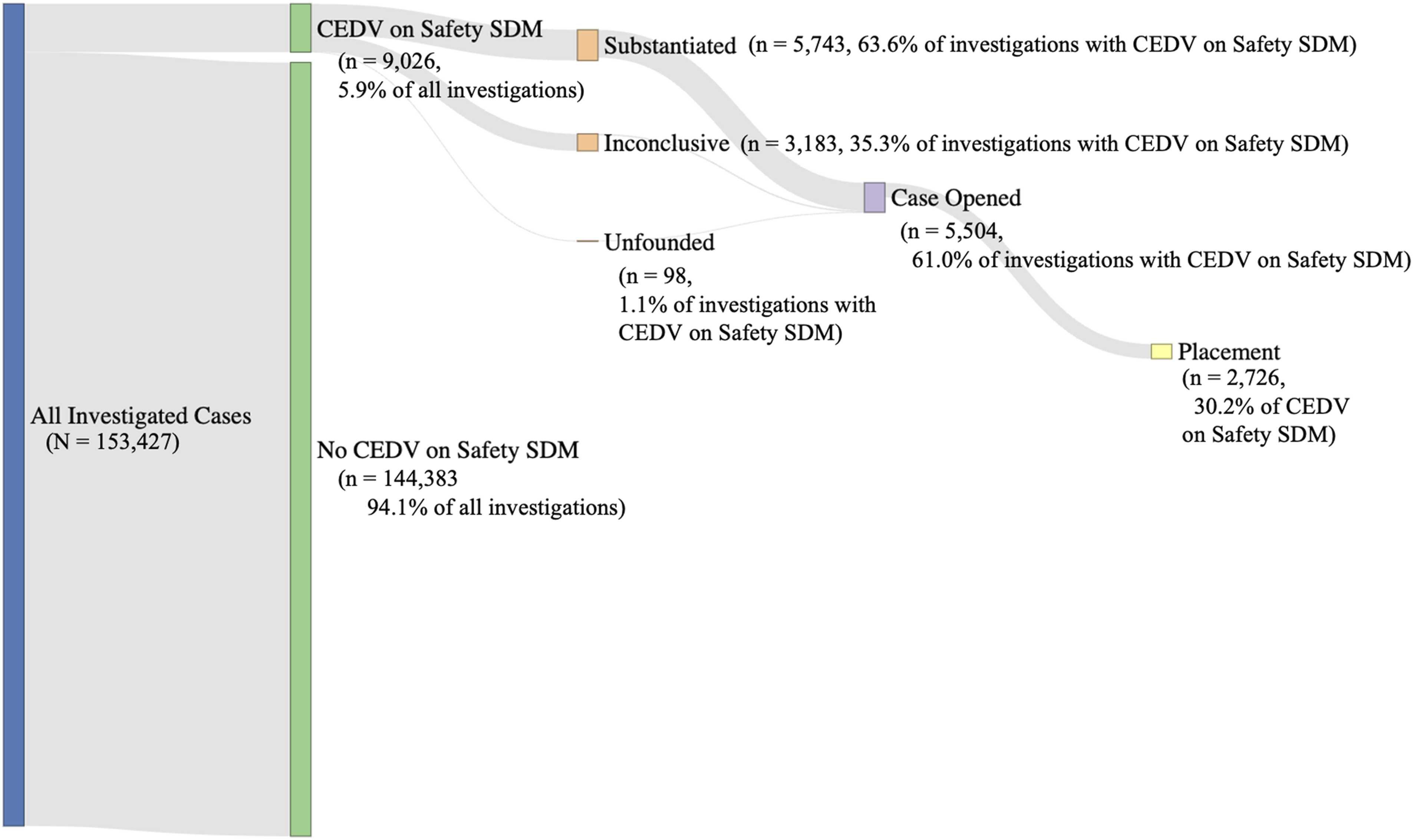
Distribution of Investigation Characteristics by CEDV Safety Concern Indication.
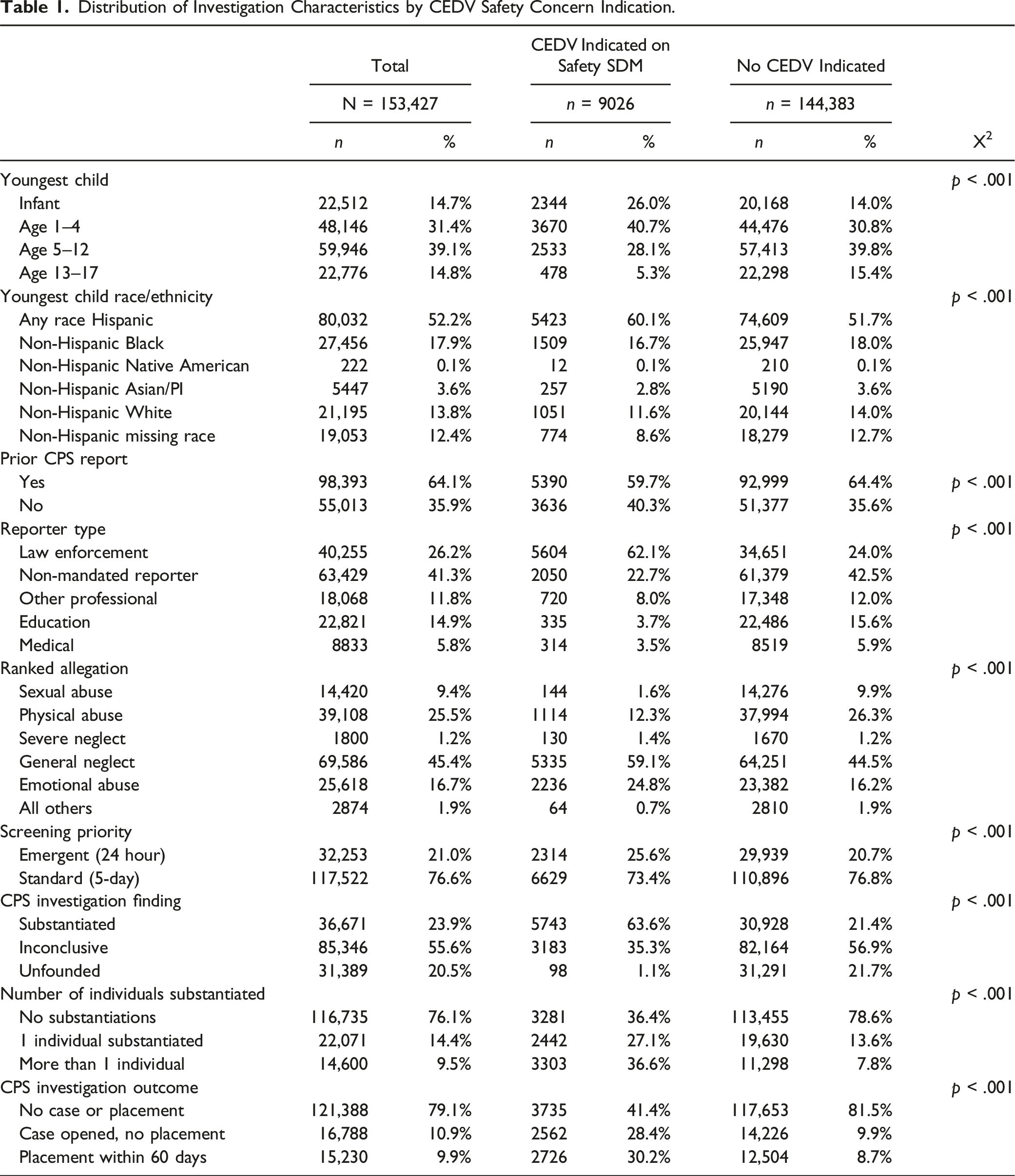
For all investigations, the youngest child on the referral was most frequently aged 5–12 years (39.1%), followed by aged 1–4 years (31.4%), aged 13–17 years (14.8%), and infants (14.7%). This contrasts with investigations with CEDV concerns where more than a quarter were infants (26.0%) and 40.7% were aged 1–4 years (p < .001). The most common reporter type was non-mandated reporter overall (41.3 %), but there were statistically significant differences by the indication of CEDV, where investigations with a CEDV concern had a larger share of law enforcement reporters (62.1%) and lower share of non-mandated reporters (22.7%) than for those without an indicated CEDV concern (p < .001). General neglect was the most common ranked allegation overall (45.4%), and statistically significant differences in the distribution were identified by the indication of a CEDV safety concern where a larger percentage of those with a CEDV concern had general neglect (59.1%) and emotional abuse (24.8%) than those without a CEDV safety concern (p < .001). More than half of all investigations had a prior CPS report (64.1%), but this percentage was higher for those without a CEDV concern (64.4%) than those with a CEDV safety concern (59.7%, p < .001). The most common investigation finding was inconclusive (55.6%), but for investigations with CEDV concerns, the most common investigation finding was substantiated (63.6%, p < .001). Relatedly, investigations with CEDV concerns had higher rates of more than 1 individual substantiated (36.6%) than those without CEDV concerns (7.8%, p < .001). Investigations with CEDV concerns had higher percentages resulting in the subsequent CPS system outcomes of case openings (61.0%) and out-of-home placements (30.2%) than investigations without CEDV concerns (23.3% and 8.7%, respectively, p < .001).
Figure 2 presents the percent of safety threats and caregiver complicating behaviors indicated for investigations stratified by whether or not CEDV was indicated on the safety SDM. Overall, every safety threat and caregiver complicating behaviors categories were endorsed at a higher rate for investigations where CEDV was indicated as a concern than investigations where CEDV was not indicated as a concern. The most common co-occurring concerns were substance abuse (31.1% for CEDV indicated, 4.1% not indicated), other safety threat (23.7%, 4.7%), mental health (14.2%, 2.3%), the safety threat of failure to protect (12.7%, 1.8%), and caregiver doesn’t meet child’s immediate needs (10.3%, 3.3%). Percent of co-occurring safety threats and caregiver complicating behaviors on SDM safety tool by CEDV indication.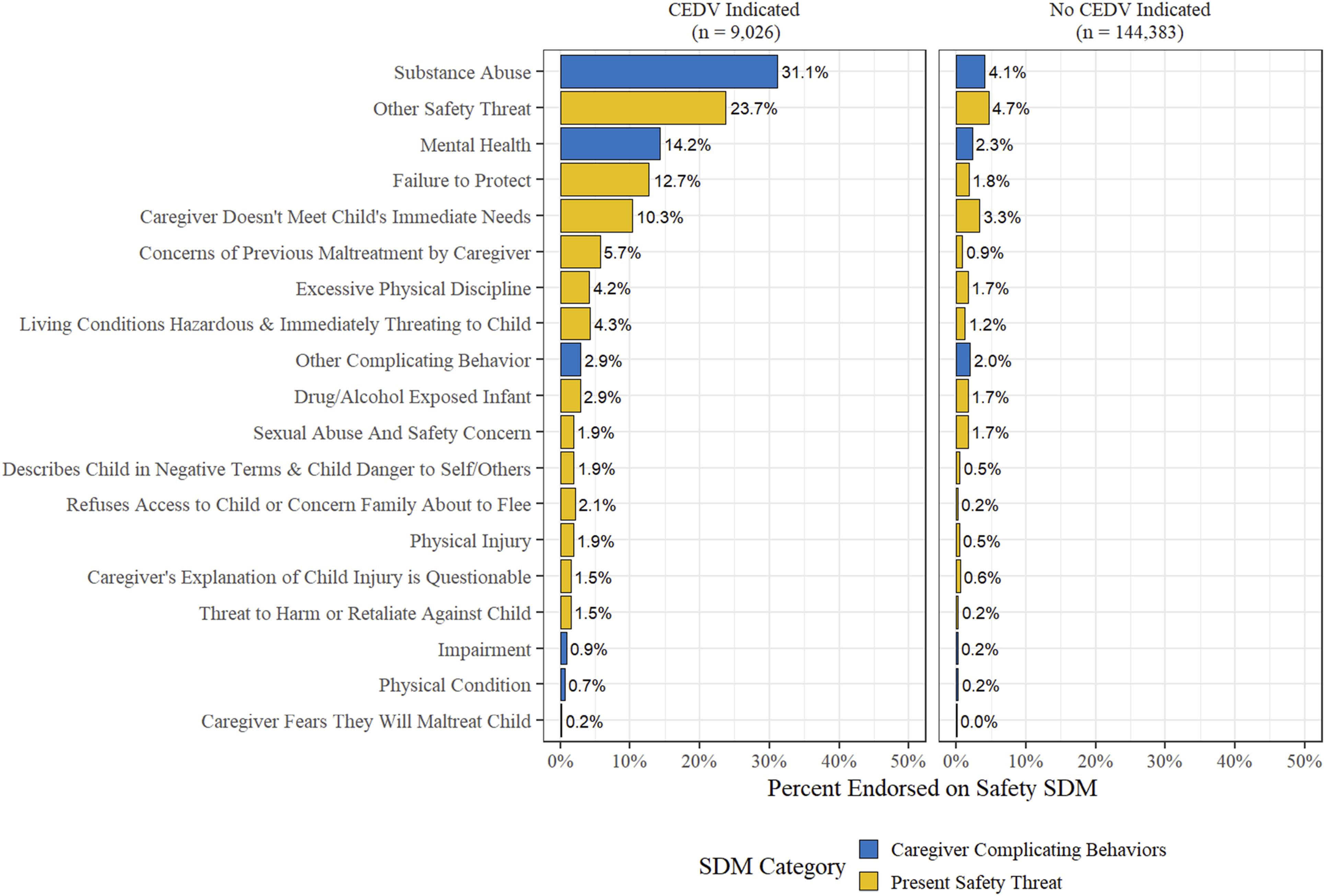
Figure 3 presents the percentages of case continuation outcomes by the youngest child’s race/ethnicity for investigations with a CEDV concern. Overall, 38.5% of investigations resulted in no placement or case opened, 31.5% had a case opened within 45 days (without a placement within 60 days), and 30.2% had any child placed in foster care within 60 days. Placements were the lowest for investigations where the youngest child’s race/ethnicity was Non-Hispanic Asian/Pacific Islander (23.0%) and correspondingly, the highest percentage of no placement or case opened (42.8%). The highest percentage of investigations resulting in placements was for those with Non-Hispanic Black children at 35.7% followed by those identified with Any Race Hispanic children (32.1%). Percent of subsequent system outcomes by child race/ethnicity for investigations with CEDV concern.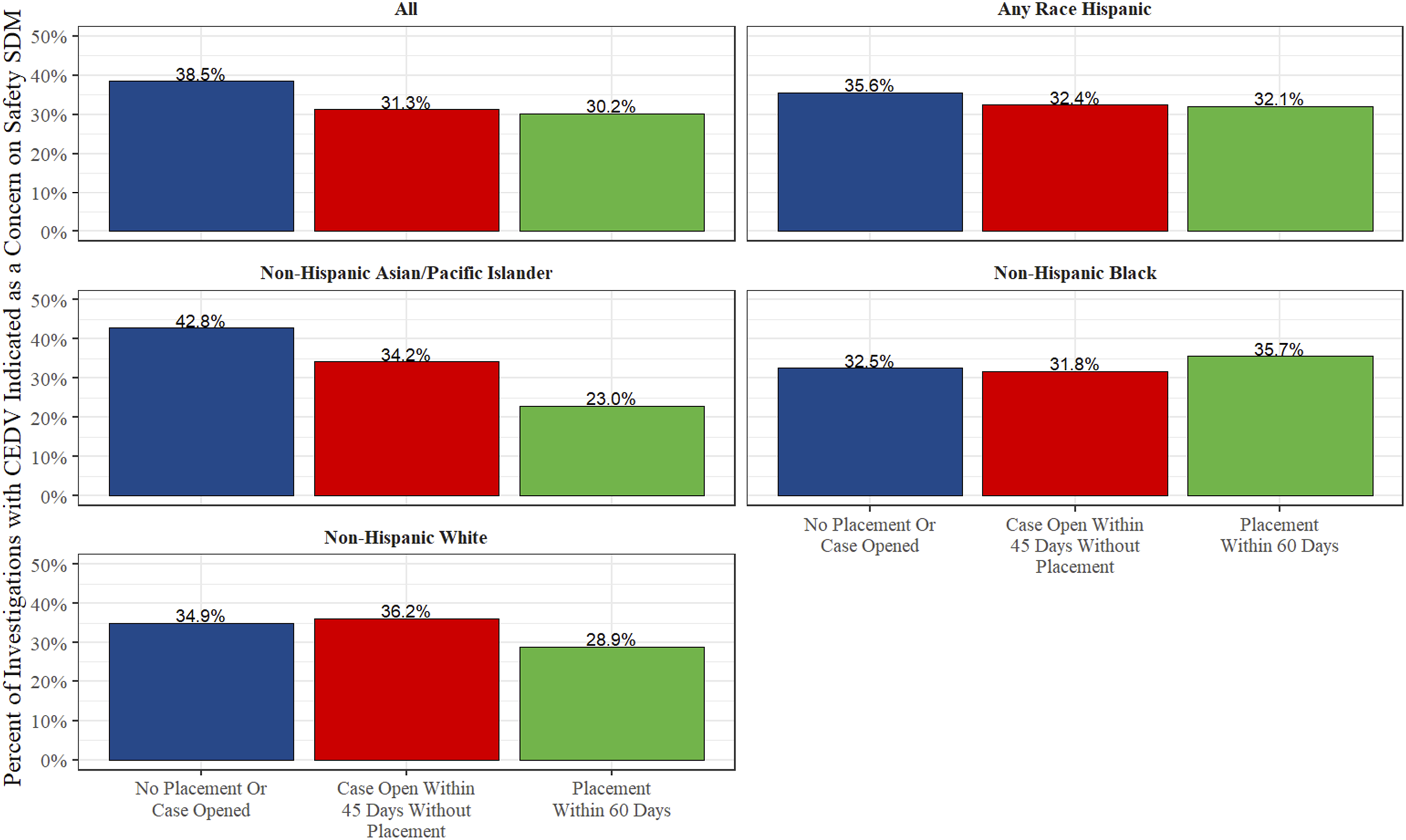
Figure 4 presents the risk ratios of the regression models for the outcomes of case opening within 45 days and placement within 60 days for the youngest child on the investigation for investigations with a CEDV concern. The strongest predictor of both case opening (RR: 2.11, CI: 2.04–2.18) and placement (RR: 3.12, CI: 2.90–3.35) was having more than 1 individual substantiated compared to one or no individual substantiated. The strongest predictors of placement were an emergent screening decision (RR: 1.51, CI: 1.43–1.60), a prior CPS report (RR: 1.44, CI: 1.35–1.53), substance abuse indicated as a complicating behavior (RR: 1.43, CI: 1.35–1.51), and the endorsement of the safety threat of failure to protect (RR: 1.40, CI: 1.32–1.48). These categories were also the strongest predictors of a case being opened. Risk ratios of regression models for case opening and placement outcomes for investigations with CEDV concern.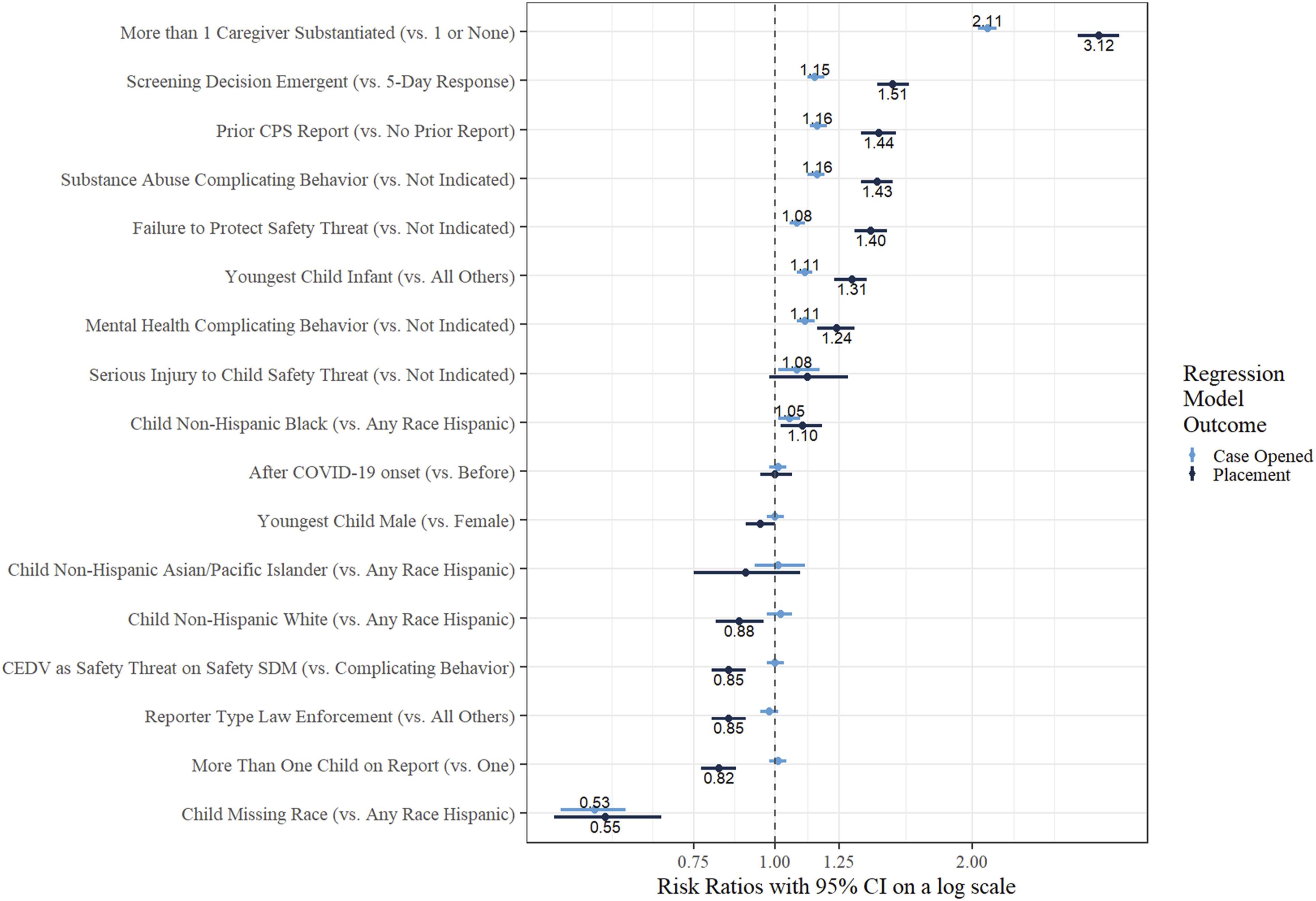
Investigations that were the result of a report from law enforcement had a lower risk of placement (RR: 0.85, CI: 0.80–0.90) compared to all other reporter types. However, there were no differences in the risk of a case being opened if the referral was made by law enforcement. Indications of a mental health complicating behavior and the safety threat of a serious injury to the child both increased the risk of both case openings and placements compared to these indicators not being endorsed.
Regarding family demographics, the youngest child being an infant increased the risk of both placement (RR: 1.31, CI: 1.23–1.38) and case openings (RR: 1.11, CI: 1.08–1.14). Reports with more than one child on the report had lower risks of placement (RR: 0.82, CI: 0.77–0.87), but not case openings than reports with just one reported child. Identified statistically significant differences by child race/ethnicity comprised of increased risk of case openings (RR: 1.05, CI: 1.01–1.09) and placements (RR: 1.10, CI: 1.02–1.18) for Black children, decreased risk of case openings (RR: 0.53, CI: 0.47–0.59) and placement (RR: 0.55, CI: 0.46–0.67) for children with missing race, and decreased risk of placement for non-Hispanic White (RR: 0.88, CI: 0.81–0.96) children compared to Hispanic children.
Discussion
The current study sought to understand the prevalence of CEDV as a safety concern on child welfare investigations in Los Angeles County, and to identify case characteristics associated with an increased likelihood of formal case opening and placement into foster care. We highlight several key findings here in the discussion and consider their implications for child welfare practice and policy related to CEDV.
Overall, our findings offered mixed support for the concerns raised in the Pritzker Center report (2021). Analysis of county-level child welfare records suggests that domestic violence is a relatively infrequent concern for case workers when removing a child from the home as CEDV was indicated as a safety concern in just 15.2% of case openings and 17.9% of removals. This stands in contrast to the concerns raised by the report’s authors that over half of opened cases were linked with CEDV. While it is unclear from the Pritzker Center report how their statistic was measured and calculated, it does state that those were related to “allegations” of CEDV, which contrasts with our measure of CEDV classified as a safety risk by the CPS investigator. In addition, domestic violence often co-occurred with other safety threats and complicating behaviors such as substance use and mental health, which makes it difficult to determine the unique influence of CEDV-related safety concerns on caseworkers’ decision-making.
In contrast, our findings lend support to the concerns raised in the Pritzker Report with respect to the use of a failure-to-protect approach to CEDV-related investigations. Substantiation of more than one individual on investigations involving CEDV was the strongest association with both formal case opening and foster care entry. Los Angeles County – like many child welfare systems – defines domestic violence as coercive control perpetrated by one intimate partner against another (LA County Department of Children and Family Services, 2022; Victor et al., 2021). In this conceptualization, only one partner is the perpetrator of domestic violence. Thus, to substantiate more than one individual suggests that caseworkers might be holding survivors of domestic violence accountable for maltreatment on the basis of their own victimization which comports with a failure-to-protect framework or punitive approach to CEDV-related cases in the child welfare system (Armstrong & Bosk, 2021). Additionally, caseworkers’ recording of failure-to-protect as an explicit safety concern was strongly associated with a child’s removal from the home on CEDV-related cases. Future research should further investigate the relationships between children and caregivers (e.g., father, stepmother, grandparent) with maltreatment allegations and substantiations to better explicate patterns of family dynamics and concerns of CEDV.
Studies from other jurisdictions suggest that workers often apply a failure-to-protect framework when survivors of domestic violence do not physically separate from an abusive partner, especially after prior instruction by caseworkers to do so (Armstrong & Bosk, 2021; Henry et al., 2020). While such a directive might appear to enhance the safety of children, mandating physical separation from an abusive partner often fails to recognize that such an act increases the fatality risk for both nonoffending parents and the children (Adhia et al., 2019). Mandated separation also does not account for the nature of domestic violence as coercive control with perpetrators of domestic violence often threatening to harm the survivor and the children if they were to leave, or for survivor’s concerns that the perpetrator will harm the children when unsupervised following separation (Humphreys & Thiara, 2003; Morrison, 2015; Shorey & Baladram, 2024).
Given this evidence, we agree with the authors of the Pritzker report on the need to move away from the use of failure-to-protect frameworks and toward models such as Safe and Together (Mandel & Wright, 2019) that direct caseworkers’ focus toward the perpetrator’s behavior and its impact on the family. Moving away from a failure-to-protect framework may be complicated, however, by state statutes that sanction this approach, as is the case in California (Mink, 2023). Fortunately, due to the federalist approach to child welfare in the United States, there are examples from other jurisdictions where state statute and agency policy are designed to protect children from harms associated with CEDV while not relying on a failure-to-protect framework (Victor et al., 2021). For instance, the state of Iowa makes clear that its definitions of child maltreatment are prohibited from being applied in a manner that blames the victim of a crime for not preventing harm against them. The Iowa Department of Health and Human Services (2023) states explicitly that the intent of this policy “…is to protect the victim of domestic violence from a founded or confirmed child abuse report for failure to protect children from exposure to or involvement in domestic violence instances” (p. 10). We would encourage other states to consider similar reforms to their statutes and policies.
Our findings also raise the issue of how to address complex service needs for child welfare-involved families as CEDV often co-occurred with other challenges such as such as parental substance misuse and mental health issues, results that are congruent with previous studies (Jarpe-Ratner et al., 2015; Victor et al., 2021). The complex and often chronic nature of domestic violence perpetration and the frequency with which it co-occurs with other complicating factors requires thoughtful and strategic service planning. A systematic review by Allen et al. (2022) found limited evidence that addressing domestic violence, substance misuse, and mental health issues simultaneously is an effective approach. An alternative might be the evidence-based service planning framework developed by Berliner et al. (2015) that encourages caseworkers to move beyond typical “kitchen sink” service prescription and instead use evidenced-based interventions which directly address the maltreating behavior. The evidence-based framework also emphasizes parsimony and sequencing, instructing workers to prioritize the most straightforward and effective interventions first, and then sequencing interventions based on evolving needs. We echo other scholars (Sokol et al., 2023) in calling for additional research into evidence-based service planning for complex needs among child welfare-involved families.
Families with indicated concerns of CEDV had higher rates of very young children (under age 5) in the home than cases without these concerns, with about a quarter including an infant. For cases where CEDV was indicated, families with the youngest children were more likely to have CPS intervention. This is unsurprising due to the developmental vulnerability of young children to the effects of domestic violence and their inability to seek help (Whitten et al., 2022). A number of promising programs are being tested in different jurisdictions to support families with similar specialized needs. For example, specialized CPS court programs like Safe Babies Court Team (Joseph et al., 2023) and Infant-Toddler Court Team (Casanueva et al., 2024) use a collaborative and trauma-informed approach to address the child safety concerns that led to CPS involvement for families with young children. An intervention being assessed to address the specific needs of families involved with CPS for CEDV-related reasons is Fathers for Change (Stover, 2013; Stover et al., 2020). This intervention aims to improve skills for healthier relationships and co-parenting. Future research should continue to assess the effectiveness of these targeted services and their applicability to families with concerns of CEDV.
In addition to specialized services provided through the child welfare system, our findings also suggest that training and collaboration with law enforcement may be particularly important as referrals from law enforcement professionals were the most likely to be substantiated. The Violence Intervention Program (VIP) for Children and Families in New Orleans could provide a promising framework for enhancing support for children exposed to domestic violence. The VIP model involved a collaboration between law enforcement, mental health professionals, and community organizations to address both the immediate and long-term impacts of violence (Osofsky, 2004). Key components of the program included education for police officers on the effects of violence on children, a 24-hour hotline for consultation, and referral for counselling supports. Mental health therapy and supportive counseling. Evaluation of the program indicated that after training law enforcement officers listened to children more often, exhibited greater sympathy to them, and were more likely to refer family members to counseling or other supportive services (Osofsky et al., 2004).
These findings also contribute to the complicated issue of race/ethnicity and CPS involvement. In line with previous studies (Rebbe et al., 2021; Victor et al., 2019), we found Hispanic children had a higher share of investigations with CEDV concerns than those without CEDV concerns. In the regression models, although they were some of the smallest effect sizes, Non-Hispanic Black children had an increased risk of both case openings and placements while Non-Hispanic White children had a lower risk of placement compared to Hispanic children. Congruent with our findings of the complex needs of families with CEDV concerns, it is possible that manifestations and conceptualizations of domestic violence differ by communities, neighborhoods, and CPS offices, in addition to the availability of services. While this study cannot address these possibilities, these are important areas for future research.
Limitations
Despite the strengths of this population-based study there are several limitations. First, these data are specific to investigations in Los Angeles, and therefore the generalizability of these findings is unknown. However, a strength is that Los Angeles County is the largest county in the U.S. with a racially and geographically diverse population. Second, our findings are reliant on the identification of CEDV in the SDM tool as a safety concern. It is unclear how CPS investigators interpret this measure or if there is variability across workers or offices. Given that there are no other quantitative measures in the CPS administrative data indicating concerns of CEDV, this study still provides new knowledge about domestic violence in CPS investigations, but the results should be interpreted with this limitation in mind. Third, our analysis did not categorize the relationship between the child and caregivers in the investigation, something future research should further explore. Fourth, this study relied on administrative data, which does not contain the full scope of information that CPS investigators consider during their assessments or other variables that have been found to impact CPS outcomes, such as family-level poverty measures, which limits our ability to provide recommendations.
Conclusion
These findings document both the infrequency with which domestic violence is present among CPS cases and removals and the complex nature of CEDV concerns among families interacting with CPS. While CPS is not the sole entity responsible for addressing domestic violence, it does play a crucial role in ensuring child safety when concerns of domestic violence are raised. Effective interventions, policy reforms that moves child welfare practice beyond a failure-to-protect framework, and increased collaboration with community partners are needed to promote the health and wellbeing of children exposed to domestic violence and their caregivers.
Footnotes
Declaration of Conflicting Interests
The author(s) declared no potential conflicts of interest with respect to the research, authorship, and/or publication of this article.
Funding
The author(s) disclosed receipt of the following financial support for the research, authorship, and/or publication of this article: This work was supported by First 5 LA, Heising-Simons Foundation, and Conrad N. Hilton Foundation.
