



Abstract
Children were at a greater risk of adverse experiences, including maltreatment, during the COVID-19 pandemic given the increased stress experienced by families and reduced visibility outside the home. Child maltreatment investigators witnessed the effects of the pandemic on maltreated children and offer valuable insight regarding children’s experiences during the pandemic. The objective of this study was to examine child maltreatment investigators’ perspectives of the impact of the COVID-19 pandemic on maltreated children and their families in Canada. Sixteen child maltreatment investigators were recruited from agencies across Canada that investigate or offer services to children suspected of having been maltreated. Three focus groups were conducted, which followed a semi-structured interview guide developed by the researchers. Thematic analysis resulted in five primary themes regarding maltreatment investigators’ perceptions of the pandemic’s effects on children, including child maltreatment during the COVID-19 pandemic, increased exposure to violent and traumatic events, stress and challenges faced by families, reduced access to services, and challenges and delays with maltreatment investigations. Child maltreatment investigators perceived that the pandemic profoundly impacted maltreated children and their families. It is critical to ensure children and parents have access to services during future emergencies.
Keywords
Introduction
From December of 2019 to December 2021, COVID-19 was associated with more than five million deaths globally (Johns Hopkins University, 2021). The virus has undoubtedly resulted in numerous adverse consequences for those infected, with some subgroups showing more vulnerability to the effects of COVID-19 than others, such as those with underlying medical concerns or those in rural areas (e.g., Shoaib et al., 2021). Throughout the course of the pandemic, public health measures have been implemented to protect vulnerable populations. However, just as particular groups were at a greater risk of adverse medical outcomes from COVID-19 infection, specific groups were also at greater risk from the associated public health restrictions (Cappa & Jijon, 2021). For example, one review highlighted a decline in children’s mental health during the pandemic (Marques de Miranda et al., 2020), while Lee (2020) reported on deleterious mental health consequences associated with school closures in children and adolescents. The outcomes of public health policies and restrictions during the pandemic have received less empirical evidence than the health outcomes associated with the virus.
In addition to concerns about children’s mental health, concerns about child maltreatment emerged shortly after COVID-19 pandemic restrictions took effect. There was an initial decrease in reports of child maltreatment (Baron et al., 2020; Stewart, 2020) followed by a subsequent increase in reports upon the resumption of in-person education in Fall, 2020 (Katz et al., 2021b; Stuart, 2021). Overall, vulnerable populations, such as children and adolescents who experience maltreatment, may be at an increased risk of experiencing sequelae from the pandemic and associated restrictions; however, research into the experiences of those youth, as well as the workers who advocate and assist them and their families, have received less empirical attention.
Maltreated Children’s Experience During the Pandemic
Extant research has highlighted concerns regarding potential increases in child maltreatment during lockdowns and underreporting of maltreatment, as a consequence of limited access to mandatory reporting professionals. Published data suggests children’s disclosures of maltreatment decreased with school closures and remote delivery, compared to previous years (Baron et al., 2020; Katz et al., 2021a; Katz et al., 2021b). Importantly, one study noted a reduction in reporting from schools and nurseries, a consequence of reduced visibility of children from school closures, despite increases in self and third-party reports of maltreatment, as well as increases in referrals from emergency departments (Rengasamy et al., 2021). Puls et al. (2021) examined rates of child maltreatment reports collected prior to the COVID-19 pandemic (2010–2017) during periods of routine school closures (e.g., summer and winter breaks); they found that routine school closures were associated with reductions in reporting of child maltreatment. Based on these findings, Puls et al. (2021) posited that underreporting of child maltreatment may be exacerbated during the pandemic as a result of social distancing measures and other factors increasing the risk of maltreatment.
There are a variety of potential explanations for why children were more vulnerable to maltreatment during the pandemic. For example, increased parental stress likely contributed to increased vulnerability. Parents experienced substantial changes to their daily routines and had to care for their children in the place of schools and daycares–a considerable challenge for parents who worked from home or outside of the home. Moreover, service availability decreased, as many community stores and services either closed or reduced their hours (Gassman-Pines et al., 2020). Exacerbating these factors, many families also experienced economic hardship as a result of job loss or reductions in employer insurance coverage (Patrick et al., 2020). Both job loss and parental stress resulting from the pandemic were associated with an increased risk of child maltreatment (Lawson et al., 2020). As Peltz et al. (2023) highlighted, parents reported losing their temper with their children more frequently during the pandemic, which was associated with stress due to job loss. Another study that found increased time at home was associated with an increase in reports of neglect postulated that parenting stress may have contributed to the increase in reports of neglect (Bullinger et al., 2021). As such, obtaining a deeper understanding of the impact of the pandemic on vulnerable children and adolescents is critical.
Investigators’ Perspectives of Maltreated Children During the COVID-19 Pandemic
Frontline workers, especially child maltreatment investigators, are uniquely positioned to interact with children who are suspected or substantiated victims of child maltreatment. For example, maltreatment investigators often play a key role in determining whether cases of child maltreatment should be substantiated (Stoddart et al., 2018). They spend a notable amount of time learning about and interacting with children and their families and are experienced in assessing a child’s risk (Stoddart et al., 2018). Therefore, they are likely to appreciate the extent of the impact of COVID-19 on vulnerable children via their interactions with them throughout the pandemic. Child maltreatment investigators often function as advocates for vulnerable children and families who can highlight the adversities children experience (Public Health Agency of Canada, 2012) and their role as advocates was arguably even more amplified during the pandemic, where children encountered additional stress resulting from COVID-19. Although some studies have examined the impact of the pandemic on frontline workers’ experiences (e.g., Giesbrecht et al., 2023; Williams et al., 2022), research examining frontline investigators’ reflections on maltreated children and youths’ experiences during the pandemic have been limited (Katz & Cohen, 2021).
Current Study
The present investigation examined child maltreatment investigators’ perceptions of maltreated children and youths’ (or those suspected of having been maltreated) experiences during the COVID-19 pandemic (subsequently referred to as having been maltreated). The overarching aim of the investigation was to capture child maltreatment investigators’ perspectives on the impact of the COVID-19 pandemic on maltreated children and their families. To our knowledge, this is the first study using qualitative methods to examine child maltreatment investigators’ perspectives of maltreated children’s experiences during the pandemic. Given that several studies have examined the effects of the pandemic on children quantitatively (e.g., Baron et al., 2020; Massiot et al., 2022; Rengasamy et al., 2021), we utilized focus groups with professionals who worked with maltreated children during the pandemic to elicit more in-depth, context dependent data from participants in an effort to supplement prior research. While other research examined data from legal, educational, and medical settings (Cappa & Jijon, 2021; Salt et al., 2021; Sidpra et al., 2020), and some has focused on the experiences of specific professionals (e.g., social workers, Abrams & Dettlaff, 2020; Baker et al., 2021), none, to our knowledge, have focused on various professionals who all work with maltreated children as part of their work and their perceptions of maltreated children’s experiences during the pandemic. This group of professionals can also share their perspectives of maltreated children who may have not had the opportunity to participate in research (e.g., children who may have been experiencing maltreatment that could not be substantiated or those living in group homes), which allows for additional reports about the experiences of maltreated children during the pandemic.
Method
This study was approved by the McGill University, Brock University, Thompson Rivers University, and University of Regina research ethics boards. In June 2021, approximately at the end of the third wave of COVID-19 in Canada, we conducted three focus groups with child maltreatment investigators across Canada (N = 16) to develop an in-depth understanding of frontline maltreatment investigators’ experiences. These focus groups aimed to provide insight into the impacts of COVID-19 and physical distancing measures on child maltreatment investigators and the children, youth, and families they serve and to inform revised guidelines for child maltreatment investigators in the event of future pandemics and national disasters.
Procedure
The aim of the study was to describe the situation maltreated children experienced during COVID-19 from the perspective of child maltreatment investigators. Invitations to participate in a focus group were sent to a total of 30 organizations, including all Child and Youth Advocacy Centres (CYACs) in Canada and other organizations that work with maltreated children (e.g., Children’s Aid Society), as well as the Department of Justice Canada. Recipients were invited to share the focus group invitation with colleagues who work with maltreated children.
Individuals interested in participating contacted the first author for scheduling information. After scheduling, participants were sent the study consent form and a demographic questionnaire to complete online using Qualtrics survey software. Sixteen child maltreatment investigators participated in the study. Existing research has supported the sufficiency of this sample size; for example, Guest et al. (2006) conducted a study with 60 interviews, finding that the majority of themes were present at six interviews, with saturation reached within twelve interviews. Using a dataset of 1147 interviews, Weller and colleagues (2018) found that in-depth probing with a sample as small as 10 was sufficient for collecting the most salient ideas. Our aim in the present study was to recruit participants with a specific common experience (i.e., child maltreatment investigation during the COVID-19 pandemic). Therefore, the focused research objective narrowed both the scope of inquiry and the sample size required to reach a data saturation point.
Three members of the research team conducted the focus groups. During the focus group introduction, the researchers reviewed the consent form and explained ground rules (i.e., expectations of confidentiality, Microsoft Teams etiquette). Participants were then given the opportunity to turn their cameras off and introduce themselves before the interview began. The majority of participants kept cameras on. One researcher primarily led the focus groups following the interview guide while the two other researchers were responsible for formulating follow-up questions. All participants received a $200.00 gift card in remuneration for their participation; those who wished to had the opportunity to donate the gift card to a CYAC of their choice. The focus groups ranged in duration from 121 minutes to 142 minutes. All focus groups were transcribed verbatim.
Participants
Participant Demographics.
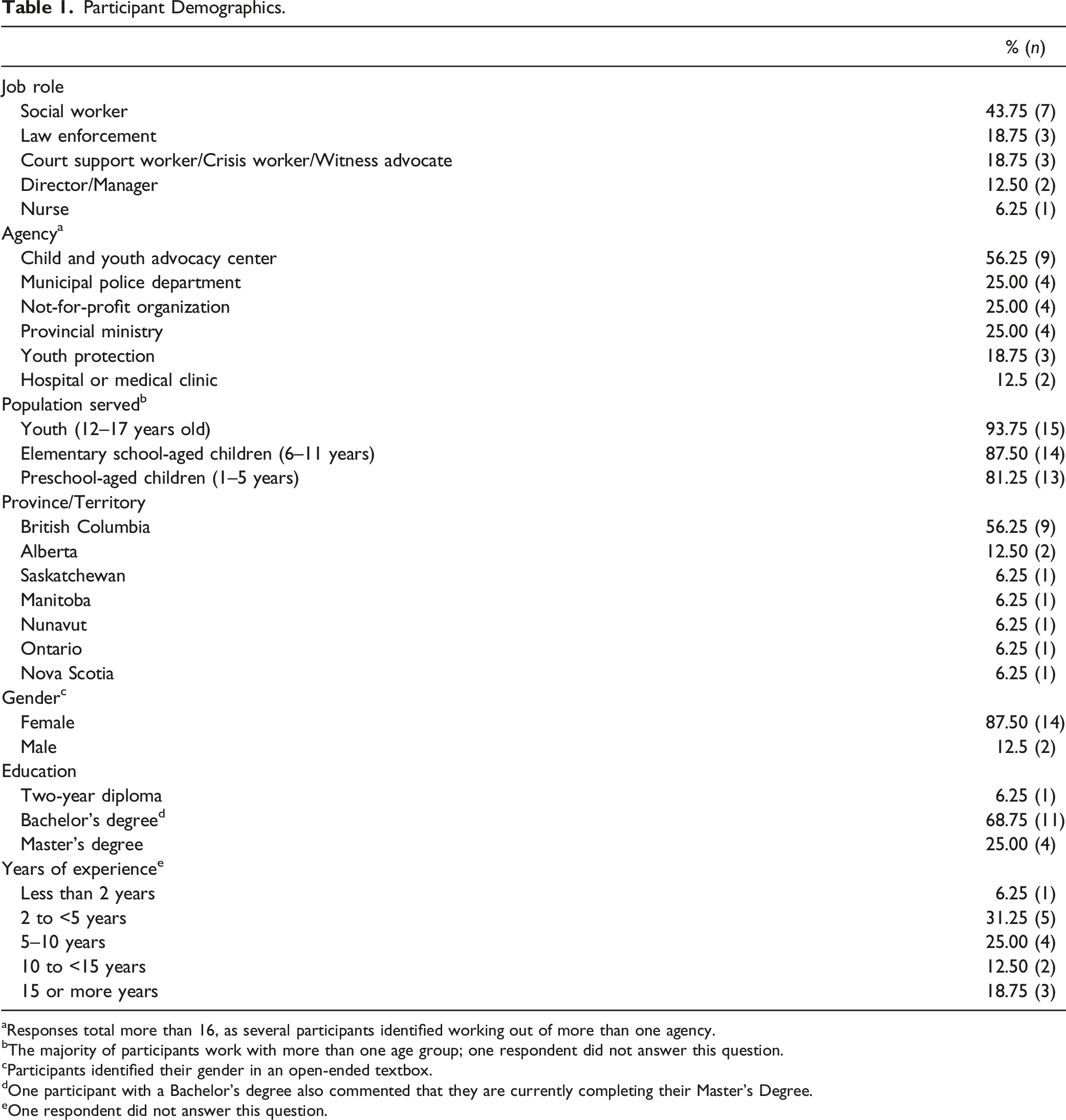
aResponses total more than 16, as several participants identified working out of more than one agency.
bThe majority of participants work with more than one age group; one respondent did not answer this question.
cParticipants identified their gender in an open-ended textbox.
dOne participant with a Bachelor’s degree also commented that they are currently completing their Master’s Degree.
eOne respondent did not answer this question.
Measures
Semi-structured Interview
A semi-structured interview guide of open-ended questions was developed by the research team using an approach described by Krueger and Casey (2014). The guide provided a structure for the focus groups while simultaneously allowing for context-dependent follow-up questions from researchers and for participants to build on each others’ responses by comparing their own experiences with other participants.
Analysis
We took a descriptive approach to data analysis. Focus group transcripts were thematically analyzed using the six-step process developed by Braun and Clarke (2006). This process began with the three researchers who facilitated the focus groups reviewing and familiarizing themselves with the transcripts prior to independently generating initial codes (Braun & Clarke, 2006; Saldaña, 2014). Transcripts were coded using an inductive, conventional (Hsieh & Shannon, 2005) or open coding (Benaquisto, 2008) approach with no preconceived codes. Subsequently, the researchers independently developed themes from the initial codes and organized the codes into emergent themes. The initial lists of potential themes and subthemes were put into a table and compared, working to develop and define the chosen thematic framework. In step four, the researchers met to review and refine their themes and sub-themes, as well as resolve any discrepancies before defining and naming the agreed-upon themes. Braun and Clarke (2006) explained that researchers may move between the steps while analyzing data and writing results rather than moving through the six steps in a linear process. As such, the authors then returned to the third step, which, after identifying themes, involves collecting all data relevant to each theme. The authors then completed the fifth step, coding all transcripts according to the agreed-upon thematic framework. In step six, data extracts supporting each theme and sub-theme were selected from the transcripts and agreed upon by the researchers for inclusion in the findings (Braun & Clarke, 2006; Saldaña, 2014). The research team met throughout analysis and writing to discuss the findings and to ensure agreement was reached in theme and subtheme identification. Given that the aim of the investigation was to capture child maltreatment investigators' perspectives on the impact of the COVID-19 pandemic on maltreated children and their families, the derived themes and subthemes were descriptive (Saldaña, 2014); for example, “increase in severity of child maltreatment” and “specific challenges for Indigenous families and communities.”
Findings
Thematic analysis of data from the three focus groups resulted in impacts identified by maltreatment investigators (i) of the pandemic on the children and families with whom they work and (ii) the personal and professional impact of the COVID-19 pandemic on child maltreatment investigators. This article reports findings relating to impacts on children and families; impacts experienced by investigators have been reported separately (Giesbrecht et al., 2023). Five broad themes relating to the impacts identified by maltreatment investigators of the pandemic on children and families were identified: child maltreatment during the COVID-19 pandemic; increased exposure to violent and traumatic events; pandemic-related stress and challenges for families, including specific challenges for Indigenous families and communities; increased barriers and reduced access to support services for children and families; and delays and challenges in legal and investigative processes of maltreatment.
Child Maltreatment during the COVID-19 Pandemic
A predominant area of concern discussed by participants was regarding child maltreatment. This theme included four subthemes related to children’s increased exposure to perpetrators, observed increases in the severity of maltreatment, reductions in reports of maltreatment (associated with school closures), and reduced public visibility of children (e.g., at schools, daycares, or activities in the community).
Children’s Increased Contact with Perpetrators
The pandemic prompted public health restrictions which resulted in individuals spending more time at home. Participants described this as a notable area of concern as children and perpetrators spent an increased amount of time together within the privacy of their homes, potentially leading to prolonged and repetitive exposure to abuse. For example, one participant, a police officer, mentioned that the pandemic “… really left these kids in abusive homes for extended periods of time” and continued on to say, “I would say we definitely saw because there was more of a prolonged time period that the accused had with the child, and they were stuck in that home setting, that rarely did it come across as one instance of abuse or sexual abuse.”
More specifically, maltreatment investigators described concerns about being able to visit homes to assess suspected cases of maltreatment as a result of positive cases of COVID-19 or families’ concerns about the virus. A corollary of these families’ concerns meant that maltreatment investigators’ access to the homes was limited unless there was an emergency situation. For example, when discussing how COVID-19 had impacted their investigations, a social worker mentioned: … it’s kind of given families a way to avoid going through the whole child protection process because they have used COVID as a way to say … “you can’t come into the house because I have an elderly person in the home, or I have symptoms so you know, you can’t come in.”
Increase in Severity of Child Maltreatment
Investigators also expressed concerns about increases in the severity of maltreatment and the severity of domestic violence that children were exposed to. Increased severity included more severe injuries to the victims of abuse. A social worker highlighted this, saying, “I do know from consulting with colleagues that in the more urban settings that there were definitely reports of more severe injuries, particularly for infants.”
Some maltreatment investigators went on to highlight that the severity of maltreatment was not solely in the context of more severe injuries but rather in the context of children experiencing numerous traumatic events concurrently. In addition to experiencing maltreatment, they were exposed to domestic violence, substance use difficulties, and mental health difficulties within their household. One participant succinctly highlighted this combination while also describing how they observed more situations that required emergency services, explaining that: … it was very rare that it was only ever domestic violence, which normally is rare but it like was not happening at all. It was domestic violence, mental health, addictions, all happening all the time, which usually it’s not quite the case with the types of phone calls we receive. And also the severity, some of the situations we’ve had to deal with this past year, have been … emergency situations involving police, EMS (counsellor).
Further, participants described the situations that children experienced in their households during the pandemic and noted how such severe situations were uncommon prior to the pandemic. A police officer discussed how the situations they were involved in: … definitely intensified and, likely, got to levels it would never have gotten to, had [children] been allowed to leave the home and be seen by other individuals. We did see some quite horrendous, I don’t know how to explain it, trappings and just full-on daily beatings, lockdowns into rooms, inability to get the food that they needed. No access to washrooms, no access to any sort of outside media outside the home, so truly locked in a jail cell in your own home… the abuse intensified to the point, because … I don't think the accused ever felt like they were ever going to get caught because there's no end in sight. And I can't imagine what the child felt at that point either, some of them being in there for likely several weeks at a time. So it truly [was] a jail sentence for them.
Reduction in Reporting during School Closures
Another concern shared by focus group participants involved reductions in reports of suspected child maltreatment that were associated with school closures. One participant endorsed this, saying, “… there’s been fewer reports … when school was cancelled, we definitely didn’t see that many reports because a lot of our reports come from the schools” (social worker).
In addition to fluctuations in reporting associated with school closures, it was also noted that school closures had a substantial impact on investigations of child maltreatment and as a result, on the potential for children to receive help. That is, on top of reporting suspected maltreatment, maltreatment investigators would also typically reach out to school staff (e.g., teachers, counsellors) for additional information or observations about a child. For example, a child protection worker described how school closures: … limited our ability … to really get in and assess because there weren't other people who could speak to … and fill in some of those blanks when we were looking at concerns…we typically would reach out to the school and say ‘hey, are you seeing anything?’ but children weren't in school. You know, if there were therapists or counselors in place, those have been shut down or have been done virtually.
However, maltreatment investigators discussed how the resumption of in-person learning at school was associated with an increase in reports of child maltreatment. One police officer reported: ….So when the kids went back to school in September, I think it was like around October that we had a huge influx of reporting again, and I think that just stems from maybe the kids going back to school and then finally feeling OK to be able to disclose to teachers and counselors…
A nurse also discussed the association between school resumption and reports to child protection, saying, “But certainly since kids have come back to school, our rate of disclosures to child protection from [Ministry] has gone way out the roof, and we’re seeing more and more.”
Altogether, participants reported concerns about the effects of school closures on child maltreatment primarily due to limitations on children’s opportunities to disclose to safe adults, fewer opportunities for professionals to recognize and report suspected maltreatment, as well as fewer informants being available during investigations.
Reduced Visibility of Children and Opportunities for Recognition of Maltreatment
In addition to concerns about reduced maltreatment reporting in schools, participants also discussed concerns about reduced visibility of children in contexts outside the school setting, such as in stores, extracurricular or after-school activities, or even in interactions with healthcare professionals during the pandemic. A police officer underscored this concern, describing how the lack of visibility of children contributed to the inability to recognize potential maltreatment: …there was no one who actually got to visually see these children and yet probably had concerns before we ever went into lockdown. And it was just forgotten about. It was almost like handing the accused their victims on a silver platter. They were basically told, “You can't leave the house, and no one's coming in to save you,” and the abuse that we saw was horrendous.
Increased Exposure to Violent and Traumatic Events
Child maltreatment investigators’ concerns about children’s exposure to violent and traumatic events was prominent throughout the focus groups. This theme included two specific subthemes about the increase in children’s exposure to domestic violence and about increases in their exposure to substance use and overdoses.
Increased Exposure to Domestic Violence
Domestic violence was also noted as a concern by participants, as they discussed how children were exposed to it more often as a result of remaining at home so frequently. They also reported increases in the occurrence of domestic violence as a problem, especially at the outset of the pandemic. A counsellor described: … we noticed that the calls that we did have coming in about domestic violence … there was no real in-between. It was either really a very intense, immediate situation that needed outside emergency services, or it would be the other end of the spectrum where it was kind of more support or safety planning.
Other participants explained that, overall, they were seeing “more instances of domestic violence.” A nurse explained, “… definitely between the domestic violence and a lot more kids witnessing than we’ve ever seen and reported before, some homicides.”
In addition to an increase in the frequency and severity of domestic violence that children were exposed to, investigators also discussed how victimization of the non-offending parent in the home could lead to negative effects for children in the home. As one police officer described: … definitely we were overwhelmed with the length of abuse, how long they'd be in that situation. And actually, the silence of the second caregiver. Really how they were put into that fight or flight mode and … the freeze. You know they just froze. They couldn't defend themselves and the domestic abuse rolled into child abuse or sexual abuse, and honestly, the other caregiver was just another prisoner in the home.
Substance use and Overdoses
Participants also highlighted concerns about children being exposed to substance use and overdoses. They discussed how parents were more often intoxicated while caring for their children as both the parents and children were home throughout the day. A social worker described this concern by saying, “… and alcohol use as well–a lot of pretty heavy intoxication while caring for kids, just as a way of coping.” It was also mentioned that children more often witnessed parental substance use and overdoses. For example, one social worker described her concern, saying: … I feel like we’ve seen more of parents using substances alone and overdosing. To the point where paramedics have to come and use some naloxone. And with their kids present because they have to be at home. So we have seen a lot more overdoses in front of children, whereas you know, other times maybe it would be when the kids were at school or maybe when they were with somebody else… or the parents would go out to a friend’s house or something like that, but we have seen a lot.
Other participants similarly described increases in substance use with children present in the home and emphasized increased frequencies in which overdoses or drug poisonings had occurred in front of children. One social worker highlighted how some children were even forced to intervene in order to help keep their parents alive. These discussions revealed some of the situations that children experienced during the pandemic that are likely to have negatively impacted them.
Pandemic-Related Stress and Challenges for Families
Focus group participants discussed areas of pandemic-related stress and challenges for families. Specifically, this theme included three subthemes, one broadly focusing on concerns about stress, isolation, and mental health challenges for children and families, another about the availability of services and supports available during the pandemic, and one about highlighting specific challenges for Indigenous families and communities.
Stress, Isolation, and Mental Health Challenges
Participants spoke about how the stress experienced by children and families as a result of COVID-19 seemed to compound the stress that many families were already experiencing before the pandemic. The discussion revealed that a substantial source of stress was isolation due to public health recommendations/restrictions and the closure of schools, as well as the stoppage of extracurricular activities. It was also reported that another source of stress, particularly for parents, was that their children were always home, and consequently, parents never received breaks. A nurse described how this increase in stress may have contributed to occurrences of domestic violence and child maltreatment: Stress after stress and it just imploded… the domestic violence went up, the child abuse [went up]. There was just so many added layers of stress that these families were already experiencing, and then you just put that in. It’s just a perfect storm, in my opinion.
A social worker also highlighted the increased isolation that families experienced, saying, “…I do know that isolation for families that are already very isolated has increased. …” A counsellor described how isolation was challenging for both the children, in not being able to see other children, and their parents, in not receiving a break from providing care for children: … The kids want to play together, it’s nice for them to get to meet other kids and see how other family units function. And it’s difficult on the moms too because they have no respite at all during the day, especially when they’re being encouraged to stay in the house and not go out.
Similarly, a police officer highlighted the isolation children were experiencing in schools with restrictions in place, and in terms of other opportunities for socialization, and how it is impacting their emotional wellbeing: …the isolation [is] huge because…we’re not reaching out to families and friends and doing as many activities as we would normally do in a non-COVID environment. That’s the same for them, and they’re even isolated within their schools and within the cohorts, and then even going to school somewhat remotely. So the impact for them and their emotional well-being is huge.
Related to this were maltreatment workers’ concerns regarding mental health challenges in families. This included discussions pertaining to children’s mental health and development, and pertaining to parents’ mental health as they also worried about their children’s health and development, in addition to caring for them, while also experiencing their own challenges amidst COVID-19. A counsellor highlighted these concerns, saying: …the parents, their mental health–I can’t imagine having to, you’re trying to start your life all over again, but you don’t get any respite from your children. It’s incredibly difficult to make an appointment and go and see someone. Trying to get them started in a new school. So not only worrying about just the fact that your kid is starting at a new school, but having to think about COVID, that school’s COVID procedures, and everything on top of it. Mental health for our parents in the home, has been, I can’t imagine. And we see how much the struggle is for them every day.
Some participants also noted an increase in the severity of mental health concerns during the pandemic and the potential danger as a result of the increase in severity. An intake worker provided an example of this, stating: … one thing that we’ve also seen an increase in is mental health [challenges] for sure. We’ve had people who haven’t had any psychiatric stuff and people who are coming in delusional, like almost burning their families down and houses. So it’s getting really, really… significant with mental health in the third wave.
Specific Challenges for Indigenous Families and Communities
Another subtheme described by participants was about specific challenges for Indigenous families and communities. This theme included two areas of concern, one about the specific challenges experienced by Indigenous families and communities related to the pandemic, and the other about losing Elders throughout the pandemic.
Family/Community Challenges
Child maltreatment investigators reported that COVID-19 differentially impacted Indigenous children and communities. For example, public health restrictions limited opportunities for connection and support within Indigenous communities, thereby also limiting integral cultural connections. A social worker mentioned: Indigenous families… having not been able to go back to reserve to be with family during COVID because of some of those provincial measures and things like that, so that's also been a big barrier for a lot of our families.
Furthermore, some participants also discussed how COVID-19 had resulted in challenges for these communities by limiting the resources and services available to them. Some participants highlighted that the size of a given community also influenced the availability of services throughout the pandemic. Participants explained that it is hard for investigators to connect Indigenous clients with services because smaller First Nations communities have access to fewer resources and services overall; this was further exacerbated by the pandemic. Professionals found that many services, including Indigenous-led services on First Nations lands, were temporarily shut down during the pandemic, resulting in fewer referral services overall and very limited options for culturally-relevant support services, particularly those from smaller Nations.
Losing Elders
When discussing the unique challenges presented to Indigenous communities, participants began discussing the loss of Elders throughout the pandemic and the impact on families. They described how this loss was particularly difficult for Indigenous families as the Elders are considered knowledge keepers and are revered by their communities. One social worker noted that, “we’ve lost so many predominant knowledge keepers in our communities that it’s been very, very hard on families. We’ve lost so many matriarchs of families.” Another social worker discussed a similar sentiment, saying: …with Elders passing away and knowledge keepers passing away, because it has truly affected First Nations Elders and First Nations people in general. So it’s been a very, very difficult, experience for many of our families.
Increased Barriers and Reduced Access to Support Services for Children and Families
Participating maltreatment investigators went on to discuss their concern about increased barriers and reduced access to support services for children and families. This theme encompassed two subthemes. The first entailed concerns about reductions of in-person support services and increases in barriers to service access. The second subtheme was characterized by concerns about reductions to, and challenges with, family visits and foster placements.
Barriers to Accessing Support Services
During the pandemic, many supports and services in the community were subject to temporary closures or were required to shift to remote or virtual delivery. This shift was also described as a factor contributing to the stress families experienced because some critical support services had been lost, and if the services had been made virtual, this transition also required families to adapt and learn how to access services virtually.
While some services transitioned to online delivery, the problem, as many participants noted, was that children and families were frequently unable to access services in the same manner online as they were when the services were in-person. For example, a court support worker explained that it was more challenging to refer parents who were experiencing domestic violence to shelters as the clients found pandemic-related restrictions and rules challenging: And that’s been a really big struggle because a lot of the transition homes were not allowing people to go in and out because of COVID issues. And it became a big problem because I’ve had definitely a few conversations where people have told me “You know, my choices are really to stay in this home or sleep on the street.”
Participants also lamented the loss of services, such as counselling and group programming for children who were exposed to domestic violence, that were not running during the pandemic or were only being offered virtually.
The increase in stress and mental health challenges experienced by many people during the pandemic also resulted in many services becoming overburdened, making it difficult to book appointments and find services accepting new clients. A social worker highlighted the critical role of some support services for families but that there was a lack of service providers, saying: …a lack of services providers [was] holding families up. We would normally be providing some level of in-home supports like homemaking or something like that. And we just don’t have access to that… something that would mitigate a lot of the risks.
Another social worker noted the importance of community support for children and families and the impact of the removal of those services: … many of our families have lost jobs, lost income supports. And then were perhaps formally being bolstered up by community supports such as respite services and in-home support workers, mental health clinicians, and addiction counsellors for parents. And then just to have all of that just suddenly gone.
Reductions and Challenges with Family Visits and Foster Placements
Another challenge that arose for children and families during the pandemic was a reduction or temporary stoppage in family visits for children currently residing in foster placements. Specifically, concerns were highlighted by participants about the potential detrimental impact on children when they missed in-person visits. Moreover, some participants also voiced concerns about the potential consequences of reducing visits on reunification of children with their families. For example, a child protection worker reported: One of the big things we noted here … was access between children and parents when everything shut down access stopped, so there was no way to facilitate other than virtual phone calls or FaceTiming. You know, for months children didn't have physical contact… with their parents…that's not in a child’s best interest, especially when the goal is reunification and that child's eventually going home, to have these huge gaps [in] contacts.
Other participants noted that visits were limited simply due to office closures or remote work, and thus there was a lack of personnel to supervise visits or provide transportation. Some participants also highlighted concerns about potentially vulnerable family members who may be exposed to health risks if visits were to take place. A social worker described both of these concerns: …access and transportation, we have social workers right now doing the transport for visits for families, we have a contract with our agency, and they've got their own struggles, and so again we're having to take on that role of transporting kids to visit and again some visits aren’t happening. Some parents have compromised health and so…we're kind of looking at, you know, who are we really centering here? Are we centering the foster parents or the children and can these bubbles kind of be extended to incorporate the parents and the foster parents? Yeah,… it's been a nightmare. It's not fair to the families and, at the end of the day, the children and families are the ones who are suffering the most without the access to the supports that they need…
Delays and Challenges in Legal and Investigative Processes of Maltreatment
Participants described the consequences of COVID-19-associated challenges and delays in investigations and legal proceedings. Three subthemes were identified from this theme; the first was related to the impact of using personal protective equipment (PPE) during investigations and when working with children. The second subtheme was associated with reductions in children’s safety as a result of delays in the legal process. Third, participants highlighted the challenges and benefits of virtual legal proceedings.
Impact of Personal Protective Equipment on Children and Investigations
PPE became widely used as a safety precaution for child maltreatment investigators and children to minimize the risk of COVID-19 infection. Despite the protective benefits of PPE, it was also an obstacle at times because PPE impeded nonverbal communication (e.g., facial expressiveness) and even reduced children’s willingness to talk to maltreatment professionals in some cases. For example, a police officer noted: …when we interview kids and having the kids wear the masks, it is a huge barrier to interviewing children because you lose all of your facial expressions and…the friendly smiles that we always give the kids…that’s lost somewhat…when our faces are covered up behind the masks.
Other participants echoed sentiments that PPE inhibited the building of connections and therapeutic relationships with children. Some service providers developed and implemented solutions. For example, one police department invested in: …Big rolling screens that could come into our interview rooms in order to give choices to the children whether they wanted to wear masks or not. Because we found that masks inhibited rapport and also made the children less likely to want to speak to us because they can't see our emotion and we can't gauge their emotion…
Safety Reductions for Children as a Consequence of Legal Delays
Throughout the pandemic, there were numerous delays in legal processes as a result of COVID-19 public health measures. At times, these delays resulted in children remaining in situations where they may have been exposed to abusers for prolonged periods before trials were scheduled. For example, one child and youth advocate noted: …so the Criminal Court and the [Family Court] don't talk to one another. So we saw a huge increase of parents like, let's say, a dad who’s being charged with an offense. The criminal matter is not moving because of the pandemic, so it's halted and he would go into [Family Court] and apply to have contact with their children, and because those two courts don't speak to one another.…if [police] didn't catch it or [the ministry] didn't catch it, or if it, if they weren't connected to a [CYAC] who would have caught that? Who would have been there to advocate for those families?…”
Beyond the potential risk resulting from delayed trials, some participants also highlighted the additional stress that children and adolescents may experience as a result of proceedings being delayed. A court support worker also commented on how youth are experiencing additional stress as some cases may even be withdrawn due to prolonged delays, saying: …it’s just dealing with all the stress youth are feeling because matters keep getting adjourned. Adjournments are common but when you keep hearing “oh, it’s adjourned because of COVID, or we can’t address this matter because of COVID,” you know, youth are really frustrated. And we have matters that are becoming very outdated and again, then that comes [with] a concern that these matters may just be withdrawn because it’s been so long.
Challenges and Benefits of Virtual Legal Proceedings
In addition to the aforementioned challenges and delays resulting from the pandemic, some legal proceedings were also conducted remotely using video conferencing. Although this adaptation allowed trials to proceed, it was also associated with unique challenges. For example, some children and youth were asked to testify from their homes, which caused some to feel additional stress. For example, one participant noted: … And I’ve had many youth who say, “but I don’t want to talk about this in my home. My home is my safe space” and all of a sudden, their home is becoming the place where they have to talk about what happened to them.
An additional challenge noted was that support available to children for in-person proceedings was not available for remote proceedings. A court support worker highlighted some of the supports that were absent for children in virtual legal proceedings: …when they testify from home, you typically don’t get the support of a support person in there with them. Or you know, the … service dog that we have on staff here, they also don’t get to utilize that support. So they lose out a bit more…when they’re asked to testify from home…”
Some participants also highlighted that while there are certainly challenges with remote legal proceedings, there are also some benefits with this adaptation. For instance, in a virtual setting, families no longer needed to organize or pay for transportation-related costs, and likely did not need to alter their schedule to the same degree as they previously needed to when traveling to the courthouse. This was succinctly highlighted by a court support worker, who said: … obviously it causes concerns in terms of not being able to have a support person or a support animal, [but] there’s been so many great benefits in terms of, if it’s a sentencing or a guilty plea and it’s happening online, you know, people don’t have to come all the way downtown, pay for parking…they can simply log on, call in. That has been honestly amazing.
Discussion
The current project leveraged focus groups to explore the perspectives of child maltreatment investigators on the effects of the COVID-19 pandemic on maltreated children and adolescents, and their families. Overall, the participants reported that the pandemic had a significant impact on maltreated youth and their families. More specifically, concerns regarding the impact of the pandemic on maltreated children were grouped under five overarching themes: (1) child maltreatment during the COVID-19 pandemic; (2) increased exposure to violent and traumatic events; (3) pandemic-related stress and challenges for families, including specific challenges for Indigenous families and communities; (4) increased barriers and reduced access to support services for children and families; and (5) delays and challenges in legal and investigative processes of maltreatment.
When discussing child maltreatment, participants reported concerns about children being in contact more frequently with abusive caregivers in the home as many in-person jobs were temporarily paused or made virtual as a result of public health restrictions, at the same time that contact with other supports outside of the home was limited. Moreover, participants noted reductions in maltreatment reports early in the pandemic and were concerned that maltreatment had not actually decreased, but rather was unreported. Other studies have found similar patterns in that there were fewer maltreatment allegations compared to typical years, which were hypothesized to be the result of school closures and reductions in children’s visibility (Baron et al., 2020; Katz et al., 2021a; Rengasamy et al., 2021). Baron et al. (2020) further hypothesized that a lack of visibility in other in-person social situations may have also contributed to fewer allegations of maltreatment.
Maltreatment investigators also noted that, when maltreatment was reported, there was an increase in the severity. For example, they described that children were often exposed to more severe violent and traumatic events in their homes and several noted that children required care from emergency medical services. Similarly, Swedo (2020) reported an increase in emergency department visits for child maltreatment during the pandemic compared to prior to the pandemic, and Sidpra et al. (2020) found increases in the incidence of abusive head trauma early in the pandemic, both suggesting an increase in maltreatment severity. Another study of a child advocacy center in France also found that reports of abuse were more severe during the pandemic than prior to its onset (Massiot et al., 2022). Although, when specifically examining physical abuse in the United States, other researchers found no increase in severity during the first six months of the pandemic compared to years prior (Kaiser et al., 2021). On one hand, it is possible that there were differences in children’s presentations and opportunities to seek help as a function of COVID-19 infection rates and public health restrictions in different areas. On the other hand, it is also possible that some children and their families sought services from sites that they may have not sought prior to the pandemic. That is, children may have presented more frequently at children’s advocacy centers rather than hospitals given the influx of COVID-19 patients or preparations for an influx of COVID-19 patients at many hospitals. This scenario would likely result in few measurable differences in maltreatment severity at hospitals, given that they would traditionally receive more severe cases. Yet, other sites (e.g., CYACs) would have unexpectedly received more severe cases, resulting in investigators perceiving increases in maltreatment severity. However, there is also converging evidence that there was a measurable increase in maltreatment severity throughout the pandemic, which verifies the reports of maltreatment investigators in our current study (see Huang et al., 2023 for a review).
Another notable concern identified by participants was increases in child and family stress. Isolation and mental health challenges were among the perceived reasons for increases in stress during the pandemic, in addition to reduced access to services. These findings are also in line with other studies that found negative impacts on family stress and mental health associated with the pandemic (see Meherali et al., 2021). Other studies reported increases in parental stress associated with an increased need for child care and loss of income/jobs, which increased the propensity for maltreatment or strained parent-child relationships and subsequently, increases in child stress (Gadermann et al., 2021; Peltz et al., 2023). Taken together, our findings along with those of other studies highlight the profound impact of the pandemic on vulnerable families. These results indicate an urgent need for planning alternative service delivery methods in the case of public health emergencies to ensure vulnerable families and children can continue to receive support, as child maltreatment investigators also reported on the negative impacts on families associated with support service interruptions.
Another concern noted in our findings demonstrated a potential corollary of excessive familial stress and conflict. That is, participants described how some children were exposed to traumatic situations (e.g., parental substance misuse, domestic violence), though they may not have been direct victims of abuse or maltreatment. Exposure to such situations, even in the absence of targeted child abuse, is likely to result in adverse psychological sequelae (Evans et al., 2008). During the COVID-19 pandemic, parental substance use was found to increase during periods of school/daycare closures and when homeschooling children (Deacon et al., 2021; Frank et al., 2023). Moreover, domestic violence was also estimated to have increased during the pandemic, most notably, shortly after public health restrictions were implemented (Kourti et al., 2021). In the current study, some participants postulated that pandemic-related stress (e.g., loss of income) may have served as an antecedent for parental substance misuse as a means of coping and in some instances, increases in domestic violence, similar to the hypothesis from Deacon et al. (2021). Other participants described how increases in domestic violence may have been caused by abusive caregivers spending more time in the home as a result of public health restrictions. Nonetheless, our findings and those from other studies (e.g., Deacon et al., 2021; Kourti et al., 2021) highlight the pandemic resulted in distinct increases in familial stress, which were likely compounded by reduced access to support services for vulnerable families.
Our findings also highlighted unique challenges for Indigenous communities in Canada. The first challenge was related to the impact of the pandemic and public health restrictions on Indigenous communities’ ability to connect with each other, which as many of our participants noted, is an essential tenet of many Indigenous cultures. Participants noted that the lack of connection within the communities, and with family members residing outside of the communities, was particularly distressing for the families that they worked with in Indigenous communities.
The second concern for Indigenous communities was about the loss of elders within the community. Elders play a central role within Indigenous communities as they are considered to hold substantial cultural and traditional knowledge that has been passed on by preceding Elders (Queens University, 2023). Other studies found similar challenges for Indigenous communities and Elders, albeit mainly about Elders needing to be isolated from others in the community to ensure their safety, which is in line with the aforementioned concern about lacking connections in the community (Mashford-Pringle et al., 2021). Moreover, Mashford-Pringle et al. (2021) highlighted that some Elders were concerned about disclosing any illnesses for fear of never being able to return to their community. Taken together, the pandemic and public health restrictions had a substantial impact on Indigenous communities.
Implications and Recommendations
Our study revealed that the pandemic had a considerable impact on children and families, mainly relating to their exposure to maltreatment and violence, and lack of access to support services. These results have a number of implications. First, they highlight the importance of developing a plan for future instances of public health emergencies or natural disasters to ensure continuity in the provision of support services. For example, it would be essential going forward to ensure therapy can be offered remotely to children and families, and advertise access points to families, particularly when public health measures are being implemented and families are isolated. Moreover, it will be critical to examine the effectiveness of virtual service delivery to determine if it is comparable to in-person services or inferior when used with children and adolescents to better understand how services can be adapted in the future.
The stress encountered during the pandemic also highlighted the role that parent mental health played in maladaptive parenting. These findings demonstrate the importance of offering public education regarding parental mental health, offering services for parents to manage their mental health, including self-directed parent skills programs which have been shown to be effective (Breitenstein et al., 2014; Sanders et al., 2007), and encouraging parents to use such services or programs.
Although numerous studies examined the effects of the pandemic on children using quantitative data (e.g., hospital data, reporting rates of child maltreatment, Baron et al., 2020; Rengasamy et al., 2021; Sidpra et al., 2020) and secondary reports of children’s wellbeing and experiences during the pandemic (e.g., parent reports, Lawson et al., 2020; Patrick et al., 2020; Peltz et al., 2023), few studies directly examined children’s self-reports of their experiences during the pandemic, and of those that did, many included only children who were accessing services (e.g., Sharma et al., 2021; Stewart et al., 2021). In the event of future public health emergencies or events that prompt prolonged isolation, it would be prudent to directly examine children’s experiences with representative samples potentially using schools and social media as recruitment platforms.
Lastly, study findings also highlight specific implications for Indigenous communities, which mainly surround the importance of ensuring interventions are consistent with their traditions/preferences. Moreover, as other research has reported, Indigenous representatives should have some involvement in public health decisions, particularly as they relate to their own communities (Mashford-Pringle et al., 2021).
Strengths and Limitations
This study offers novel and unique contributions to pandemic-related child maltreatment research. First, while some of our results confirm those from other studies (e.g., reductions in reports of maltreatment, increases in the severity of maltreatment reports; Baron et al., 2020; Swedo, 2020), our data built on these findings as the qualitative nature of our study allowed for maltreatment workers to share their perspectives with context. For example, maltreatment workers reported that children were exposed to their abusers for prolonged periods and highlighted one reason was due to difficulties with investigating cases, as some families did not agree to let investigators into their homes, with the justification that a vulnerable person lived in the home or someone in the home was infected with COVID-19. Furthermore, a recent review (Huang et al., 2023) indicated that only one other study reviewed child maltreatment workers’ perspectives of the pandemic; although, their data was collected in May, 2020 (Tener et al., 2021). Our study provides a more recent examination of child maltreatment workers’ perspectives of the effect of the pandemic on maltreated youth, with data being collected in June 2021. The second contribution of our study is that we report on maltreatment workers’ perspectives of how the pandemic impacted Indigenous youth and families. Third, examining the reports of maltreatment workers also allowed for the experiences of children who may not have been included in research (e.g., children experiencing maltreatment that could not be substantiated, children that did not access support or intervention services, children with parents who did not participate in research) to be shared. Lastly, our study included maltreatment workers from various locations throughout Canada, enhancing the generalizability of our study across geographic regions.
Despite the strengths of our study, it also included several limitations. The predominant limitation of our study is the small sample; although, studies from Guest et al. (2006) and Weller et al. (2018) suggest our sample size is sufficient. It is also possible that participants’ responses were influenced by social desirability bias and by the content of others’ responses. Finally, as with any qualitative study, it is also possible that the researchers may have been influenced by their own bias when interpreting data.
Conclusion
To our knowledge, this is the first study to qualitatively examine child maltreatment investigators’ perspectives on the impact of the pandemic on maltreated children and their families. Our study indicates that child maltreatment investigators perceived that the pandemic profoundly affected maltreated children and their families via unreported maltreatment and domestic violence, increases in stress associated with pandemic-related factors, and legal challenges. It will be essential for vulnerable children’s well-being to develop policies and safeguards to ensure continued access to services for future public health or other communal emergencies.
Footnotes
Acknowledgments
The authors would also like to acknowledge and thank Brooke McLardy from Oak Centre Child and Youth Advocacy Centre for partnering throughout the project.
Declaration of Conflicting Interests
The author(s) declared no potential conflicts of interest with respect to the research, authorship, and/or publication of this article.
Funding
The author(s) disclosed receipt of the following financial support for the research, authorship, and/or publication of this article: This project was funded by the Social Sciences and Humanities Research Council Partnership Engagement Grant – Special COVID-19 from SSHRC 1008-2020-0243.
