




Abstract
Youth suicidal ideation is a prevalent experience, particularly among youth exposed to maltreatment, with a variety of indicators such as youth statements of ideation. To better understand suicidal ideation, and the associations with youth mental health outcomes, a fruitful path may be through the study of the dimensions (e.g., severity, frequency) of maltreatment exposure. While there exists extensive work on methods to best operationalize casefile records of maltreatment, such work has not been undertaken for youth self-reports, which are an important indicator of youth functioning following exposure. To address the lack of clarity of how to best operationalize youth self-reports of maltreatment, a multiverse analytic approach was taken to operationalize severity and frequency in a sample of 471 8- to 17-year-old children in foster care. We examined differences across measurement models and the models’ associations with caregiver reports of youth suicidal ideation statements. Results indicate that the operationalizations used to define maltreatment resulted in differing measurement models that further differed in their associations with reports of youth suicidal ideation. This study highlights the importance of how researchers operationalize their data and the role dimensions of maltreatment have in further elucidating differential outcomes for youth exposed to maltreatment.
Keywords
Introduction
Suicidal ideation (i.e., thoughts of suicide) is a public health concern, as suicide is one of the leading causes of death in youth and more than one third of individuals with suicidal ideation go on to attempt suicide (Centers for Disease Control and Prevention, 2023; Nock et al., 2013). Suicidal ideation rates vary by age, with some recent estimates reporting prevalence rates ranging from 18.8% for adolescent-aged youth, 11% for children from 3- to 7-year-old, and between 13.2% and 22.8% for 11- to 12-year-old (Center for Disease Control and Prevention, 2019; Ivey-Stephenson et al., 2020; Whalen et al., 2015). A systemic review identified worse prevalence rates for youth in foster care finding that 24.7% of children in the foster system had suicidal ideation (Evans et al., 2017). Of note, Gabrielli et al. (2015) found that youth who resided in residential treatment centers reported more statements of suicidal ideation than youth who resided in traditional foster homes.
A research priority is to identify factors associated with suicidal ideation in youth to understand causes and triggers for experiencing these thoughts (Glenn & Nock, 2014). A few predictive risk factors have been identified, including exposure to childhood maltreatment and internalizing (e.g., depression) and externalizing (e.g., oppositionality) symptoms put children at elevated risk for suicidal ideation (Angelakis et al., 2020; Foley et al., 2006). Additionally, an examination of behaviors or thoughts that may be an indicator of suicidality (e.g., statements of suicidal ideation) can provide researchers the capability to further refine the methods utilized in the prevention, assessment, and treatment of suicidal ideation (Silverman et al., 2007). A final factor to consider is caregiver reports of youth suicidal ideation. Although caregiver reports of youth suicidal ideation may be an underestimate (Prinstein et al., 2011), their reports are a useful avenue to explore given that caregivers are the individuals who initiate therapeutic services for their youth when they are presenting for services related to suicidal ideation (Sayal, 2006).
Childhood Maltreatment
Childhood maltreatment is highly prevalent and is often conceptualized as being comprised of four types of abuse that occur in childhood: physical abuse (CPA), sexual abuse (CSA), emotional abuse (CEA), and parental neglect (Cicchetti & Toth, 2016; U.S. Department of Health & Human Services, 2021). Maltreatment is related to a variety of short- and long-term mental health sequalae, including suicidal ideation (e.g., Jaffe, 2017), and for youth in foster care, mental health sequalae are likely more pronounced given that the exposure to maltreatment was severe enough to warrant removal from their family of origin (Gypen et al., 2017). Research on childhood maltreatment typically focuses on the type of exposure; however, this is only one aspect of maltreatment as even within a given type, the actual experience can differ significantly. Additionally, exposure to maltreatment often consists of co-occurring types (i.e., poly-victimization; Finkelhor et al., 2011) making it difficult to truly examine outcomes of maltreatment exposure for a specific type. To understand the equifinality (i.e., the shared short- and long-term sequalae for each type of maltreatment) and multifinality (i.e., the differential outcomes exhibited within and between types of maltreatment) of childhood maltreatment, we must instead examine how dimensions of maltreatment (e.g., severity, frequency) differentially associate with childhood outcomes (Manly, 2005). Research has begun to provide insight to the measurement of severity and frequency, their associations with outcomes, and how these dimensions are associated with one another (e.g., English et al., 2005b; Jackson et al., 2014).
Severity of maltreatment is defined as the extent of probable or actual psychological or physical harm from acts of maltreatment (Litrownik et al., 2005). Litrownik et al. (2005) initial examination sought to find the preferred method of operationalizing severity when utilizing the Modified Maltreatment Classification system (MMCS; English & the LONGSCAN Investigators, 1997) to code casefile records. They compared severity scores both within maltreatment types (i.e., maximum severity) and across maltreatment types (i.e., mean, total), as a method of examining popular methodologies in the literature. Results indicated that all three operationalizations were viable; however, the maximum severity for each type was found to be the most robust operationalization. Since the initial work completed by Litrownik et al. (2005), another method of operationalizing severity has been developed: weighted severity. Using a modified MMCS for youth self-report, foster youth were asked to indicate their exposure to maltreatment across a variety of items indicative of maltreatment types (Jackson et al., 2014). Items that were positively endorsed were then multiplied by an adapted MMCS severity score of 1 (mild) to 3 (severe), summed, and averaged for each maltreatment type. The weighted severity was positively associated with externalizing symptoms and negatively associated with adaptive behaviors, though not associated with internalizing symptoms (Jackson et al., 2014).
Frequency was initially examined as the number of maltreatment allegations indicated by case files and was positively predictive of externalizing, depressive, and posttraumatic stress symptoms (English et al., 2005a). These findings have been validated in other studies (e.g., Vachon et al., 2015); however, these studies relied on casefile reports which have been found to be an underestimate of how frequent the maltreatment exposure was (Everson et al., 2008). There is variation in how frequency is measured when using youth self-report, including youth selecting from an ordinal scale or having the youth estimate how often certain events occurred and categorizing the exposure on a 5-point Likert scale (e.g., Jackson et al., 2014; Lombera et al., 2021). Jackson et al. (2014), using the ordinal scale, examined a summed frequency score across maltreatment types but did not find associations with the summed frequency and internalizing or externalizing symptoms.
Findings from these works indicate the complexity of operationalizing maltreatment dimensions as methodology can result in different outcomes (i.e., English et al., 2005a; Jackson et al., 2014). Adding to the complexity is that research has not thoroughly examined the differences in operationalizing dimensions of maltreatment based on youth self-report. Multiverse analytic approaches examine differences in outcomes based upon multiple operationalizations of the data. This approach helps reduce selective reporting by presenting a span of results based upon the different constructs used in the analyses rather than just one and highlights outcomes that may differ from one another based on how the researcher constructed their variables; multiverse analysis increases the transparency of the robustness or weakness of their findings depending on the investigators’ decisions (Steegan et al., 2016). By taking such an approach with the dimensions of maltreatment, we can gain further clarity of differences in outcomes and our endeavor of understanding the equifinality and multifinality following exposure by further delineating how differences in dimensions and their operationalizations are associated with youth outcomes.
Childhood Maltreatment and Suicidal Ideation
Research examining associations between childhood maltreatment and suicidal ideation has predominately focused on differences across types of maltreatment. A recent meta-analysis conducted by Angelakis et al. (2020) examined 79 studies consisting of community and clinical samples of individuals from ages 5- to 24-year-old (but not youths in foster care). The team found that exposure to CSA put an individual at 2.5-fold increased odds for suicidal ideation, while CPA, CEA, and cumulative exposure each put a child at 2-fold increased odds for ideation (Angelakis et al., 2020). Two studies have examined associations between dimensions of childhood maltreatment and suicidal ideation, beyond just type. In a study of youth residing in foster care from ages 9- to 11-year-old, the frequency of exposure, operationalized as the number of reports made, was the strongest predictor of children making statements of suicidal ideation as compared to maltreatment type and number of different types the child was exposed to (Taussig et al., 2014). Additionally, in a sample of 8-year-old children who have been exposed to maltreatment or were at risk of being exposed, CPA severity alone was related to 1.24-fold increased odds of suicidal ideation (Thompson et al., 2005). Across types of maltreatment, frequency, defined as the number of substantiated and unsubstantiated reports recorded in the case file, was related to 1.19-fold increased odds of suicidal ideation (Thompson et al., 2005).
These two studies (Taussig et al., 2014; Thompson et al., 2005) highlight the unique contribution that maltreatment frequency and severity have on a child’s experience of suicidal ideation, however, both studies have their limitations. Taussig et al. (2014) only examined maltreatment records for the past two years of the child’s life to control for inconsistent casefiles. Such a method fails to consider maltreatment from birth up until 7-year-old, at which time the impact of maltreatment may have a more deleterious impact on youth’s development (Cicchetti & Toth, 2016). Additionally, both studies operationalized frequency as the number of reports in a case file, however research indicates that self-reports of maltreatment differ from case files and report more frequent than what is presented in case files (Everson et al., 2008). Finally, Thompson et al. (2005) only examined associations within a specific type of maltreatment, which fails to account for poly-victimization and how the types co-occur with one another (Finkelhor et al., 2011). There is still a need for continued assessment beyond examining associations within a singular dimension or type of maltreatment and the use of case file reports of maltreatment. Dimensions of maltreatment are complex and interrelated. To not account for their relationships with one another prevents insight into if and how they differentially impact youth functioning (Manly, 2005). A clearer understanding of how to best operationalize the dimensions of severity and frequency within and across types of maltreatment, as well as how they are associated with youth outcomes, can illuminate the potential importance and utility of a dimensional approach to defining and operationalizing childhood maltreatment.
Measurement Models of Childhood Maltreatment
Latent variable measurement models have made it possible to examine multiple dimensions of maltreatment, including frequency and severity, while accounting for the degree to which both exposure dimensions within a single type and across types of maltreatment overlap (Gabrielli et al., 2017; Manly, 2005). Single latent factor models provide insight into the cumulative nature of maltreatment by lumping the maltreatment dimensions into a single construct (e.g., Gabrielle et al., 2017; Smith & Pollak, 2021), thus accounting for the role of poly-victimization. Such models have been used to observe associations between a maltreatment construct comprised of the severity and frequency of maltreatment and child mental health (Gabrielli et al., 2017). Multi-factor latent models allow researchers to examine differential associations between maltreatment dimensions and child outcomes, by splitting aspects of maltreatment that are distinct from one another (Smith & Pollock, 2021). For example, Brumley and colleagues (2019) found that a multifactor model comprised of nonsexual maltreatment and sexual maltreatment was the best fit for their data and was associated with adolescent risk taking and mental health; however, they only used dichotomous indicators of exposure and frequency of maltreatment by type, which may have impacted the final fit of their models.
Finally, bifactor models combine single and multiple factor models by accounting for a shared factor comprised of all the indicators in the model and specific factors comprised of a subset of the indicators in order to examine shared and specific associations. Bifactor models have been utilized to elucidate how family violence (i.e., harsh parenting and intimate partner violence) differentially predict youth mental health symptoms (Briggs-Gown et al., 2019) and how types of threat-specific maltreatment (i.e., witnessing domestic violence, CPA, CSA) differentially associate with youth internalizing, externalizing, and PTSD symptoms (Lombera et al., 2021). These studies show the utility of modeling latent constructs of maltreatment that are composed of the multiple dimensions of exposure and exemplifies how the operationalization of maltreatment dimensions impacts findings. Divergent results on best model fit for maltreatment may be due to researchers’ operationalization of the dimensions and the reporters they gathered maltreatment history from as studies utilized casefiles (e.g., McGuire et al., 2018) and others youth self-reports (e.g., Lombera et al., 2021). Additionally, the studies varied in how certain dimensions were operationalized, using dichotomous indicators (e.g., Brumley et al., 2019) rather than the MMCS’s definitions to develop constructs (e.g., Gabrielli et al., 2017; Lombera et al., 2021). To better understand these models and the operationalization of the dimensions, research is needed that compares different definitions of dimensions, their various indicators of fit when included in modeling, and the subsequent associations with youth outcomes, which can be accomplished through multiverse analyses (Steegan et al., 2016).
Current Study
The aims of the current study were 1). To examine differences in measurement models based on operationalizations of youth self-reported maltreatment and 2). To further examine how these different measurement models are associated with caregiver report of youth suicidal ideation statements in a sample of racially and ethnically diverse foster youth who are at greater risk of suicidal ideation (Evans et al., 2017; Ivey-Stephenson et al., 2020). Research has established connections between maltreatment severity and youth internalizing and externalizing symptoms (e.g., Jackson et al., 2014; Litrownik et al., 2005). Given that both internalizing and externalizing symptoms predict suicidal ideation (Foley et al., 2006), we hypothesized that severity will be positively associated with caregivers’ reports of youth suicidal ideation statements. There is a dearth in the literature on how different operationalizations of frequency are associated with youth outcomes. Summed counts of frequency, based on casefile records, are predictive of internalizing and externalizing symptoms (e.g., English et al., 2005a; Vachon et al., 2015); thus, we hypothesize that frequency will also be associated with youth suicidal ideation statements. We hypothesize that, compared to the two- and bifactor models, the one-factor model would produce the best fit statistics across the operationalizations of severity and frequency, as one-factor models have previously been used for this sample (e.g., Gabrielli et al., 2017).
Method
Participants
Data for the current study was drawn from SPARK study (i.e., Jackson et al., 2012), including 471 youth between the ages of 8 and 17 years (
Measures
Demographics
Descriptive Statistics for Demographic and Statement Variables (N = 471).
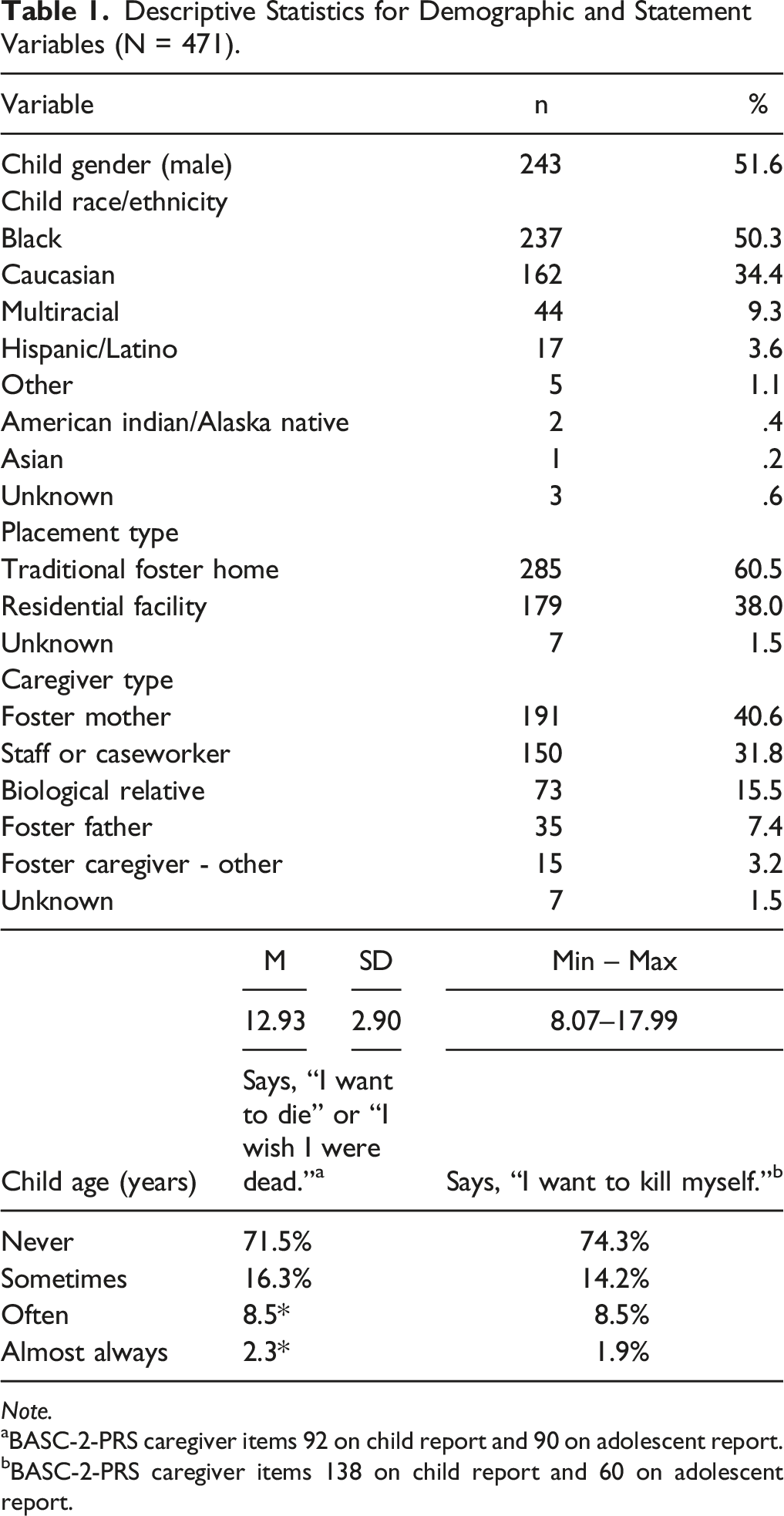
Note.
aBASC-2-PRS caregiver items 92 on child report and 90 on adolescent report.
bBASC-2-PRS caregiver items 138 on child report and 60 on adolescent report.
Maltreatment History
History of participants’ exposure to maltreatment was collected from youth self-report. The questions used to assess maltreatment histories were adapted from the MMCS to code casefile records. Youth were asked to report on the severity and frequency of four types of maltreatment across their lifetime including CPA (19 items; e.g., “IN YOUR LIFETIME, about how often did someone bite you?“), CSA (12 items; e.g., IN YOUR LIFETIME, about how often has someone forced you to look at their sexual parts?), CEA (15 items; e.g., “IN YOUR LIFETIME, about how often has anyone ever blamed you for their own problems?“), and neglect (22 items; for information on the development of these measures see Knight et al., 2000). Each item represented a specific experience of maltreatment that ranged in severity on a Likert scale from 0 (No presence) to 3 (Severe). For each endorsement of maltreatment exposure, youth rated the frequency on a Likert scale ranging from 0 (Never) to 4 (Almost Always). For neglect, items were reverse coded for frequency due to the items being word positively (e.g., “IN YOUR LIFETIME, how often did your parent(s) make sure you always went to school?“), to ensure that “Never” responses indicated frequent exposure to either physical or emotional neglect. Youth self-reports of neglect were only counted towards maltreatment experiences if the item the youth endorsed occurred “Often” or “Almost Always,” to produce a conservative estimate of how many youths experienced neglect. Kappa coefficients for the MMCS have been found to exceed .70 when examining the reliability between casefile codes (English, D. J., & the LONGSCAN Investigators, 1997). When compared to child protective service designations and the national incidence study maltreatment coding system (Sedlak, 1986), the MMCS was found to be the best estimator of childhood maltreatment experiences (Runyan et al., 2005).
Suicidal Ideation Statements
Caregivers reported on youths’ suicidal ideation statements on the second edition of the Behavior Assessment System for Children Parent Report Scales (BASC-2-PRS; Reynolds & Kamphaus, 2004). Suicidal ideation statements (i.e., Says, “I want to die” or “I wish I were dead.“, Says, “I want to kill myself.“) were rated by caregivers on a 4-point Likert scale ranging from 1 (never or don’t know) to 4 (almost always). These items are included as part of a composite internalizing problems score for the BASC-2- PRS, which has been established as a reliable construct (Reynolds & Kamphaus, 2004).
Procedures
The study protocol was approved annually by the University of Kansas’ Institutional Review Board and the foster care administration involved in legal guardianship of foster youth who were invited to participate. Eligible participants and their legal guardians, including the Division of Social Services and district judges, provided consent and assent prior to participation. All study measures, items, and response options were read aloud to participants via an audio computer-assisted self-interview (ACASI) program on a laptop computer in order to facilitate confidentiality through the use of headphones as well as control for varying reading abilities. The ACASI system asks questions in a step wise manner such that youth were only asked about the frequency of a maltreatment incident if they endorsed that it has happened in their lifetime. For the current study when youth endorsed that an item had occurred but stated that the frequency was “never” the frequency was marked as missing; this included .01% of incidents for CEA, .005% for CSA, and .006% for CPA. For more information on SPARK methodology, see Jackson et al. (2012) detailing recruitment efforts as well as consent and data collection procedures. While the larger study collected data from participants across three time-points, for the purposes of the current study only data at the first time point were used in the analyses.
Data Analysis
Descriptive statistics were conducted using SPSS version 28. Severity was operationalized as the maximum severity (i.e., the highest severity rating for each type across the items assessing for maltreatment) and as the weighted severity (i.e., positive item endorsements multiplied by the severity score, summed, and averaged). Frequency was operationalized three ways: 1) the highest self-report on questions assessing how often the indicated type of maltreatment occurred, 2) the average report across maltreatment items specific to type (to account for variability in youth exposure to different incidents of the type), and 3) the total summed frequency score for each maltreatment type (to examine both the frequency of items endorsed and the different events of maltreatment the youth were exposed to within each type).
All confirmatory factor analyses (CFA) and structural equation modeling (SEM) were conducted in Mplus version 8.8 (Muthén & Muthén, 1998-2017). CFA was utilized to establish baseline models (i.e., one-factor, two-factor, bifactor) for each operationalization of severity and frequency. For each model tested, means and variances of the latent factors were fixed at 0 and 1, respectively, as a means of freeing factor loadings for all indicators. To account for non-normality in the distribution of variables and to ensure the calculation of unbiased parameter and standard error estimates, models were developed using maximum likelihood estimators with robust standard errors (MLR) for continuous data and for categorical data weighted least square mean and variance adjusted (WLSMV). Missing data (2.1% total) was managed through full information maximum likelihood (FIML) for continuous operationalizations and pairwise deletion for categorical. Although the outcome variables of caregiver reports of youth suicidal ideation statements were positively skewed, the variables were not transformed as the bias of nonnormality in data does not exceed 10% for the worst cases (Lei & Lomax, 2005).
Multiple fit indices with recommended cutoffs were utilized to examine overall model fit: the chi-squared test statistic, root mean square error of approximation (RMSEA) < .05, comparative fit index (CFI) and Tucker-Lewis Index (TLI) > .95 and standardized root mean square residual (SRMR) < .05 (Browne & Cudeck, 1993; Hu & Bentler, 1998). Modification indices and standardized residuals were utilized to determine model modifications to improve baseline model fit. Correlating residual errors between indicators is used when there is a theoretical and meaningful reason as to why the indicators are related (Cole et al., 2007). The dimensions of maltreatment exposure are inherently tied to one another given that the item used to assess the severity also assessed the frequency of exposure. Based upon modification indices, each model varied in which residual correlations were. Model comparisons were carried out via chi-square and loglikelihood difference testing for nested models (Schreiber, 2017).
Results
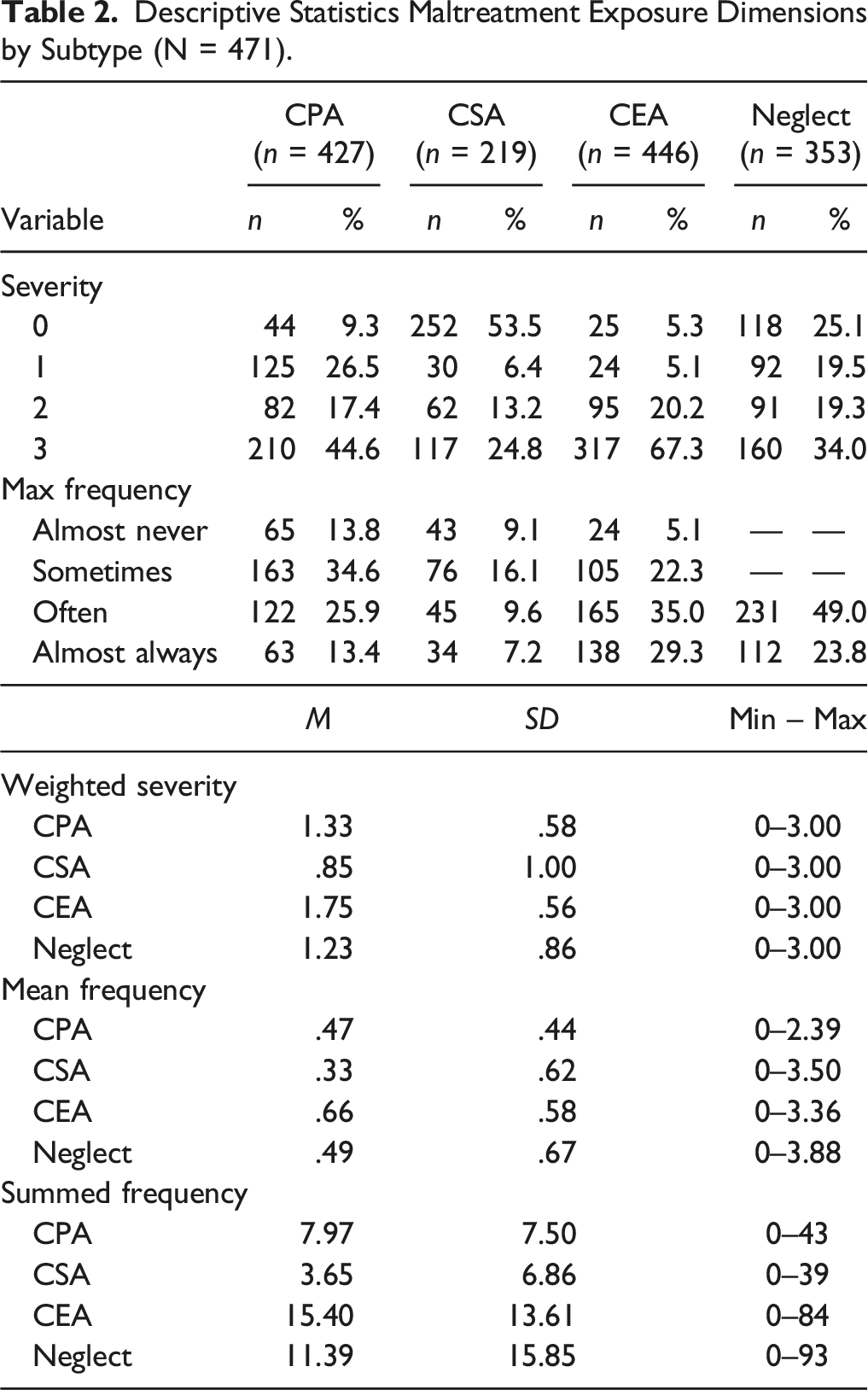
Descriptive Statistics Maltreatment Exposure Dimensions by Subtype (N = 471).
Measurement Models
Standardized Model Estimated Parameters for the Proposed Measurement Models Utilizing Max Severity.
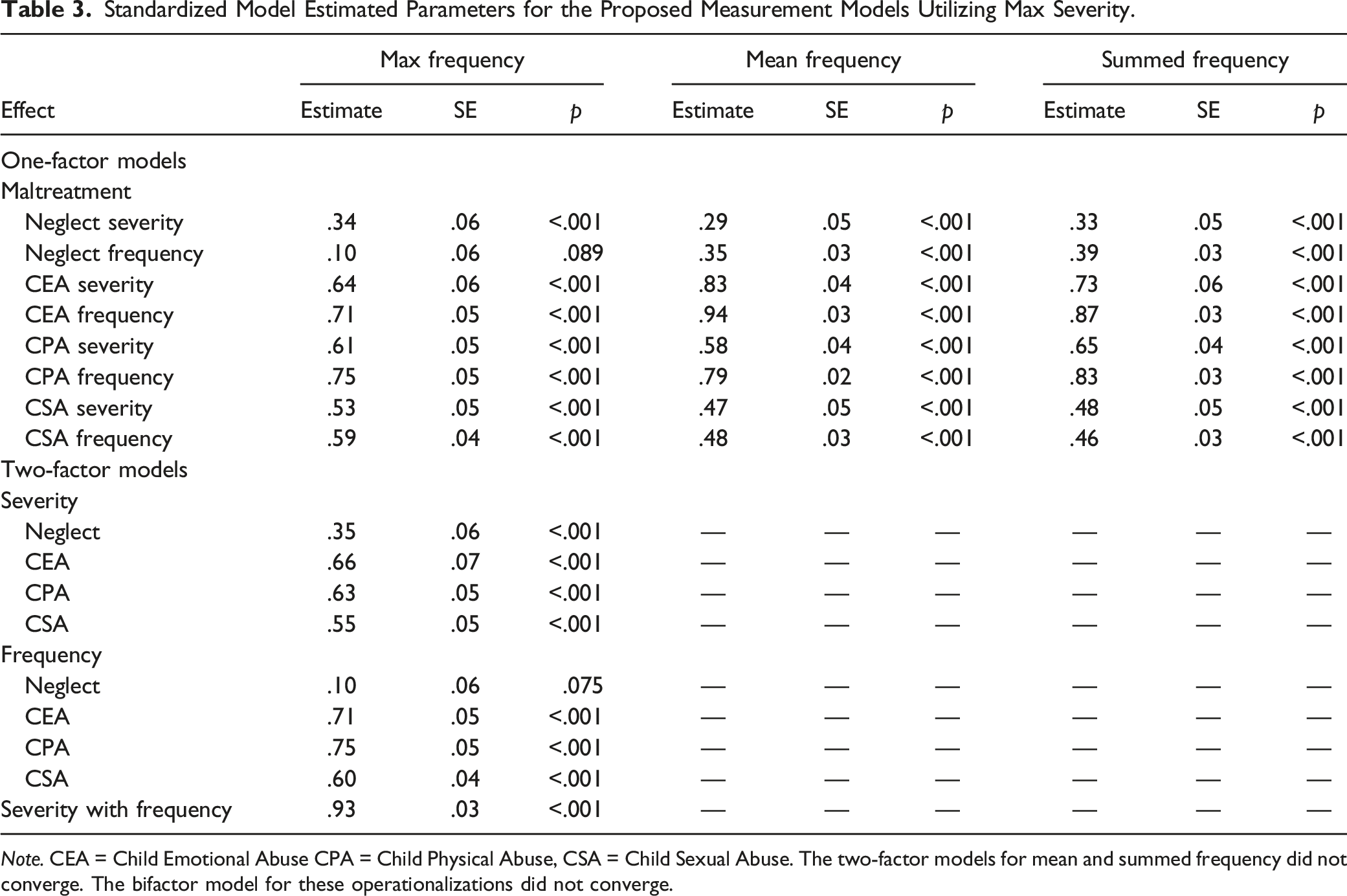
Note. CEA = Child Emotional Abuse CPA = Child Physical Abuse, CSA = Child Sexual Abuse. The two-factor models for mean and summed frequency did not converge. The bifactor model for these operationalizations did not converge.
Standardized Model Estimated Parameters for the Proposed Measurement Models Utilizing Weighted Severity.
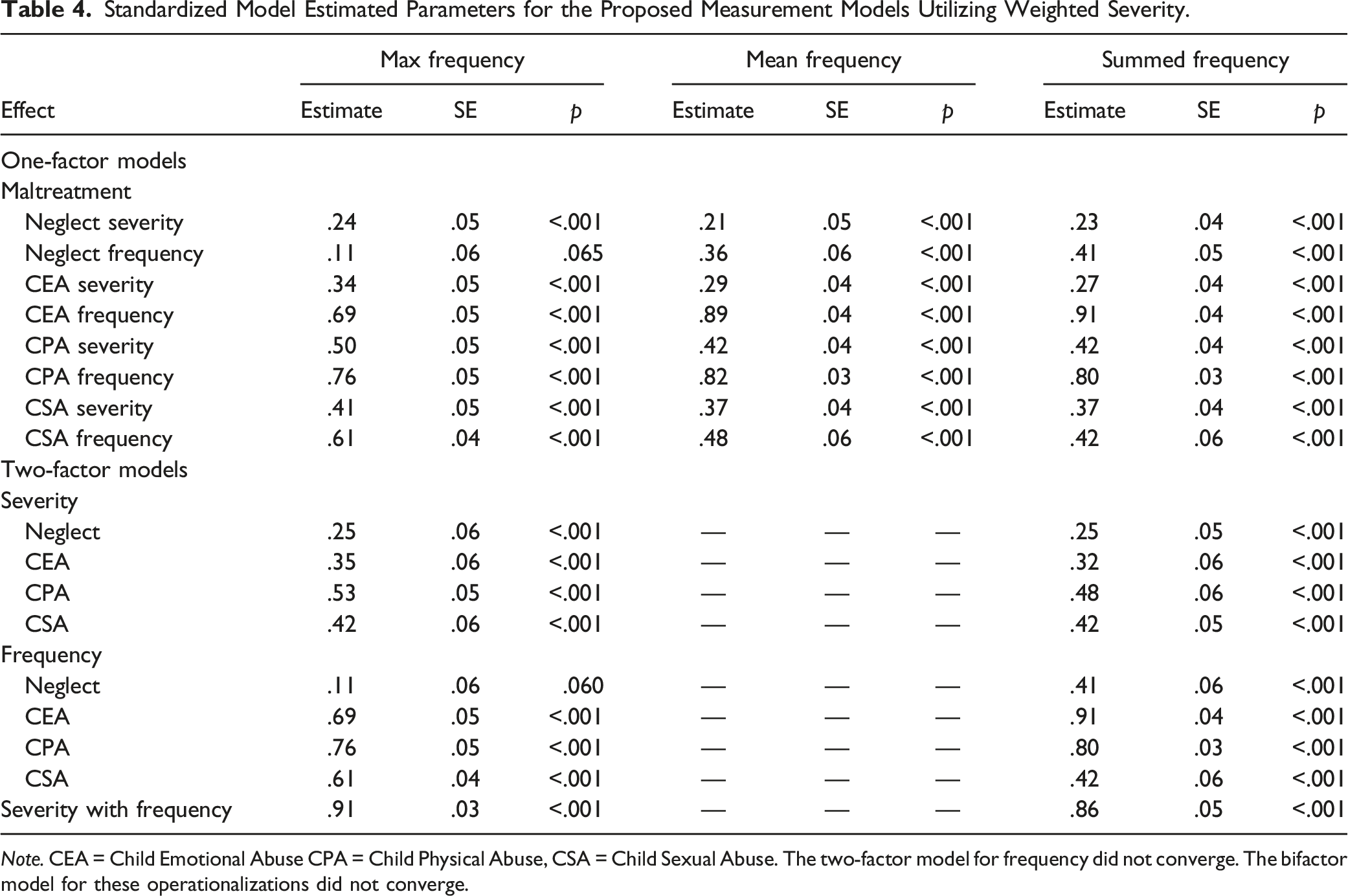
Note. CEA = Child Emotional Abuse CPA = Child Physical Abuse, CSA = Child Sexual Abuse. The two-factor model for frequency did not converge. The bifactor model for these operationalizations did not converge.
Structural Models
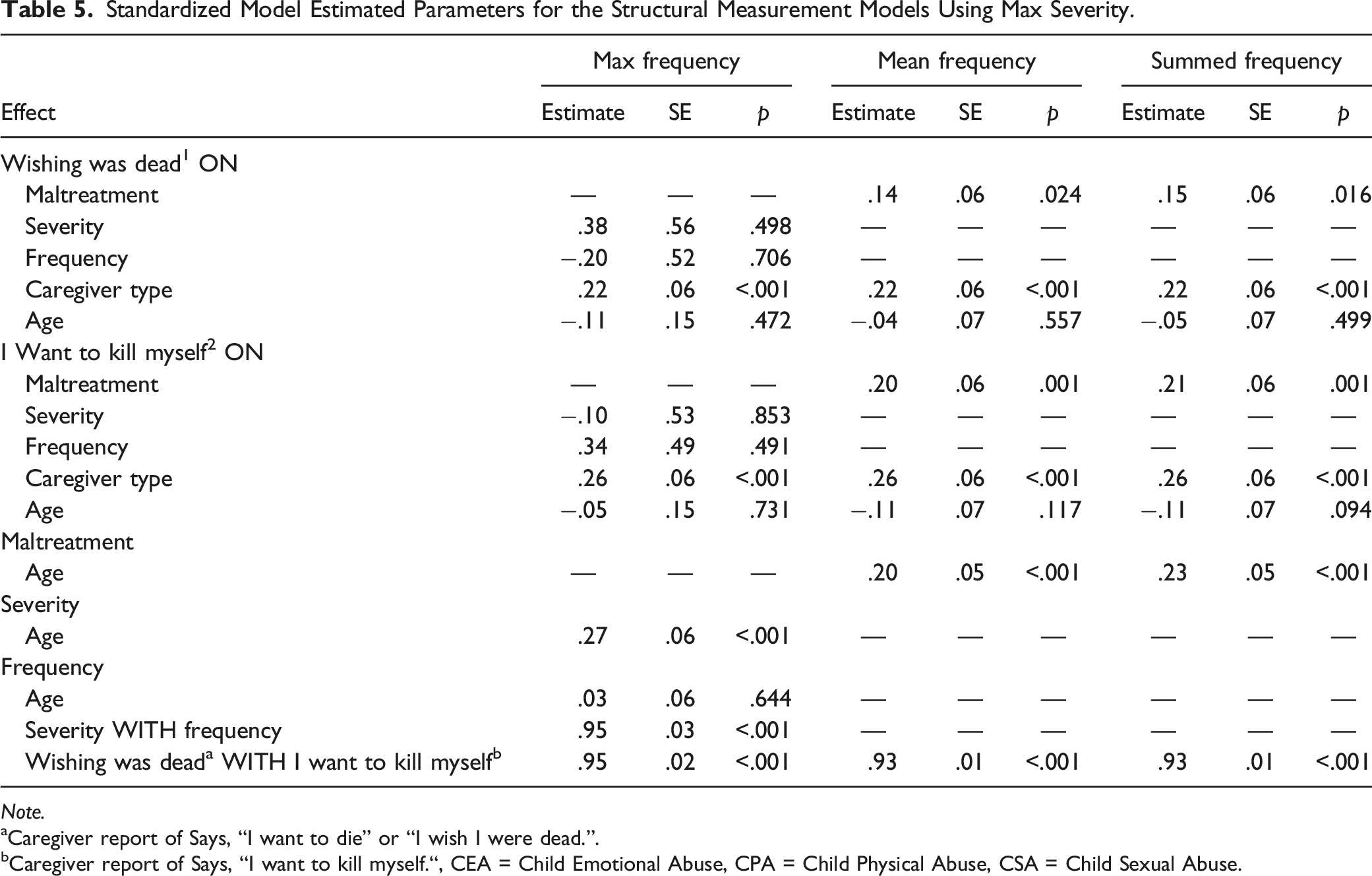
Standardized Model Estimated Parameters for the Structural Measurement Models Using Max Severity.
Note.
aCaregiver report of Says, “I want to die” or “I wish I were dead.”.
bCaregiver report of Says, “I want to kill myself.“, CEA = Child Emotional Abuse, CPA = Child Physical Abuse, CSA = Child Sexual Abuse.
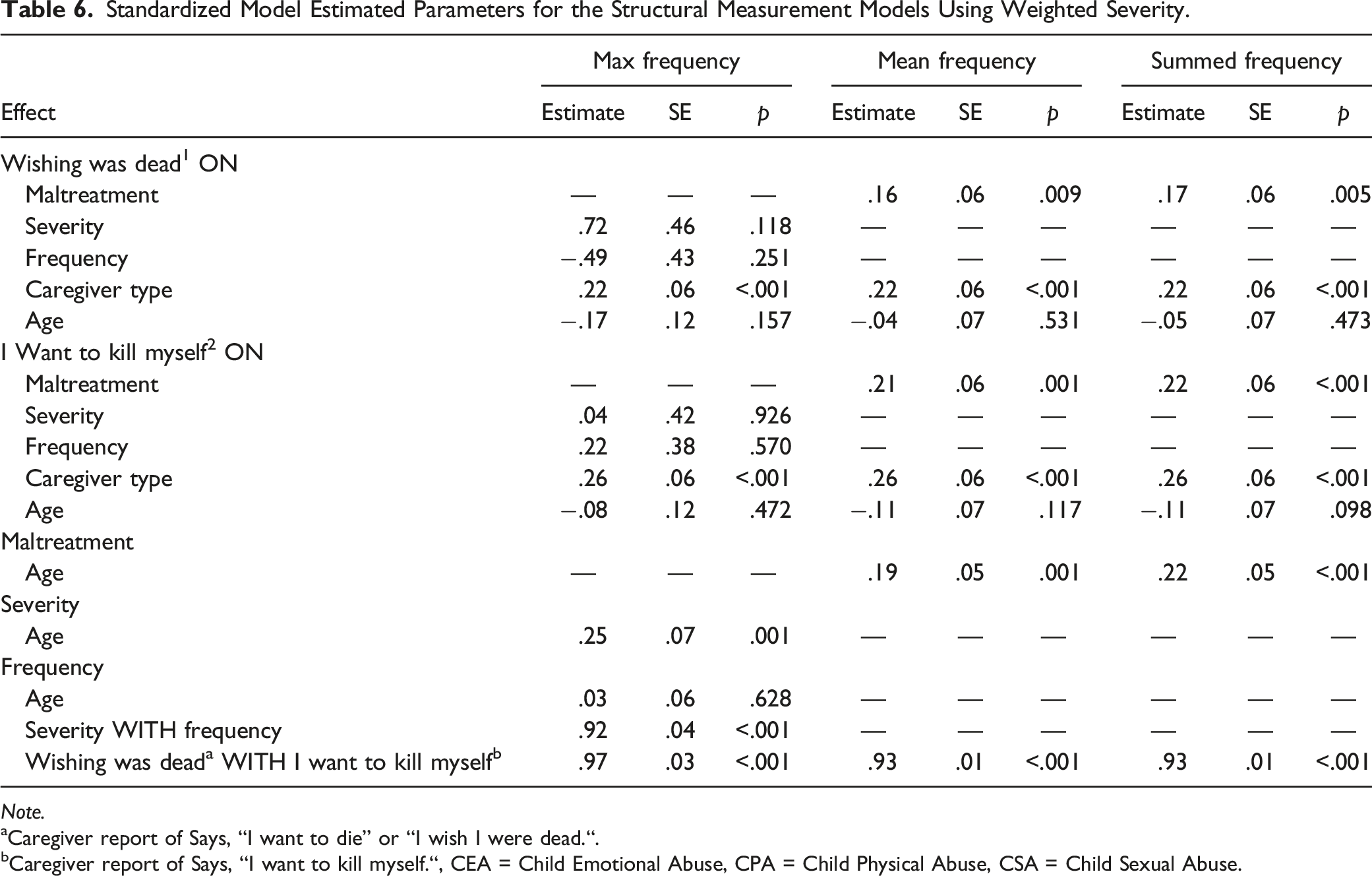
Standardized Model Estimated Parameters for the Structural Measurement Models Using Weighted Severity.
Note.
aCaregiver report of Says, “I want to die” or “I wish I were dead.“.
bCaregiver report of Says, “I want to kill myself.“, CEA = Child Emotional Abuse, CPA = Child Physical Abuse, CSA = Child Sexual Abuse.
Structural models were then tested for the models containing weighted severity, mirroring the work done on the models utilizing maximum severity. For maximum frequency and weighted severity, using the two-factor model structure, the model had overall good fit, RMSEA = .04, CFI = .992, TLI = .987, and SRMR = .09. For this model, there were no significant associations between the severity and frequency latent constructs and caregiver report of youth suicidal ideation statements. The fit indices for the model using the one-factor structure for mean frequency and weighted severity were adequate RMSEA = .05, CFI = .988, TLI = .983, and SRMR = .12. This model included two significant positive associations between the maltreatment construct and the caregiver reports. Maltreatment had a positive association with the statement I want to die β = .16, p = .009 and caregiver reports of youths saying, “I want to kill myself,” β = .21, p = .001. Finally, for the one-factor model structure using weighted severity and summed frequency, the overall fit was adequate RMSEA = .05, CFI = .989, TLI = .985, and SRMR = .11. Similarly, there was a significant positive association between maltreatment and statements of wanting to die β = .17, p = .005 and statements of wanting to kill themselves β = .22, p < .001.
Discussion
The current study was designed to expand upon existing research of childhood maltreatment by examining two dimensions (i.e., severity, frequency) of maltreatment and their potential differential associations with outcomes. To accomplish this aim, a multiverse analysis approach (Steegen et al., 2016) was taken that began by examining different operationalizations of frequency and severity, based upon youth self-report which has not been studied (e.g., Jackson et al., 2014) to the same extent as that of casefile reports of maltreatment dimensions (e.g., English et al., 2005a; English et al., 2005b). For the current study, an ordinal report of frequency was operationalized as the maximum, mean, and summed frequency by type of maltreatment as was completed by Litrownik et al. (2005) for severity. Severity was examined as both the maximum and the weighted average across youth endorsements as has been established in previous studies using youth self-reports (e.g., Jackson et al., 2014; Lombera et al., 2021).
Previous research that has examined measurement models of youth maltreatment experiences have found single, multi, and bifactor models to best represent their data (e.g., Brumley et al., 2019; Gabrielli et al., 2017; Lombera et al., 2021). These differences in model structures suggest that how researchers operationalize their dimensions, and which dimensions they include, can impact their results. To assess the influence of dimension operationalization on model selection, this study examined the three different model types before assessing associations with caregiver report of youth suicidal ideation statements. Our hypothesis that the one-factor would be the best fit was true for four of the six models, whereas two-factor models were found to have better fit when utilizing maximum frequency. Operationalizing frequency as the maximum value resulting in two-factor models and the summed and mean operationalizations resulting in one-factor models may be related to the scope of the definitions themselves. The maximum operationalization depends on one endorsement from the child whereas the summed and mean definitions take into account the full scope of the child’s experiences. Across the operationalizations, the bifactor models did not converge. A possibility for the lack of convergence, is that studies (e.g., Lombera et al., 2021) that have found the bifactor model to be of best fit utilized more than two dimensions.
Additionally, these discrepancies highlight the importance of how the operationalizations of the dimensions researchers assign to their variables, impact the differential outcomes seen in the maltreatment literature and are dependent upon how the dimensions are utilized with one another (e.g., Gabrielli et al., 2017; Lombera et al., 2021). These results highlight both the “split” and “lumping” aspects of maltreatment (Smith & Pollak, 2021) and with the use of multiple reporters and more dimensions (e.g., developmental timing), a model that combines these two approaches may be of better fit, as has been found in other work (e.g., Brumley et al., 2019). For certain CFA models, neglect had poor factor loadings which may be related to differences between threat (i.e., CPA, CSA, CEA) and deprivation (i.e., neglect) maltreatment subtypes (McLaughlin & Sheridan, 2016); when the shared variance of maltreatment is accounted for, neglect is no longer related with the threat maltreatment types in modeling.
When examining the associations between the structural models and caregiver reports of youth suicidal ideation statements, results continued to vary. The structural models using the two-factor solution for maximum frequency did not result in statistically significant associations between either construct of severity and frequency and the caregiver report of youth suicidal ideation statements. When using the one-factor structure for either the mean or summed frequency and both operationalizations of severity, maltreatment was found to positively associate with the statements even after controlling for the age of the child and the relationship of the caregiver to the child. Contrary to our hypotheses, the latent constructs of frequency and severity were not independently associated with suicidal ideation statements and associations were only found for the latent construct of maltreatment. A possible explanation for these discrepancies is that the one-factor models may be buffered against null findings from “lumping” the experiences and account for their shared variance. Additionally, extraneous factors such as trauma-specific attributions (e.g., self-blame), following exposure to maltreatment, may mediate the associations between the two-factor model and caregiver reports of youth suicidal ideation. For example, self-blame has been found to mediate the relationship between maltreatment and internalizing symptoms and suicidal ideation (e.g., Tanzer et al., 2020). Finally, youth who were exposed to less severe forms of maltreatment may have self-blame for their removal from their primary home or be unclear as to why they were removed, causing heightened distress (Mitchell & Kuczynski, 2010).
This study exemplifies the importance of considering how dimensions of maltreatment are operationalized in explaining differential outcomes following exposure to maltreatment. Researchers should consider the conceptualizations and operationalizations of their variables as the way in which we define our variables impacts our findings and interpretations. The use of dichotomous indicators to identify maltreatment type has been helpful in examining youth outcomes following maltreatment, and the use of dimensions may further delineate differences found in the research as well as provide the field with a more robust mechanism of thinking of maltreatment and the consequences that are associated with exposure (Lacey & Minnis, 2019; Manly, 2005). The knowledge gained by incorporating dimensions of maltreatment can help adapt existing treatment and assessment methods to address the variability of concerns following maltreatment exposure by assessing the unique impacts of severity and frequency of maltreatment on youth outcomes following exposure. Given youth in foster care who experience polyvictimization have worse outcomes, this study that accounts for varying dimensions of maltreatment exposure has important policy implications. For example, our findings can aid those working in the foster care system in providing assessments for the scope of the youths’ maltreatment exposure, beyond just type, and incorporate this information in developing appropriate services for youth and support for foster caregivers based on the youths’ exposure dimensions. This may include continued and thorough assessment of youth experiences of suicidal ideation that is continuous in scope, ensuring the youths’ therapeutic services include skills (e.g., distress tolerance) and safety planning throughout the treatment process, and safety planning in a culturally informed manner that focuses on protective factors to ensure continued support for the youth.
Strengths, Limitations, and Future Directions
The current study adds to the large body of research on childhood maltreatment that focuses on operationalization of maltreatment dimensions. We expanded upon current research by specifically looking at youth outcomes who reside in the foster care system. Foster youth pose a unique sample as they experience maltreatment severe enough to warrant removal from their homes, often experience placement instability, and are reliant upon caregivers who may know little of the youth’s maltreatment experience and current functioning (McGuire et al., 2018). Additionally, this study utilized a sample that is poly-victimized across their development and accounted for the shared variance of exposure whereas other studies have utilized only specific maltreatment types or only examined maltreatment exposure within certain spans of the youth’s life (e.g., Taussig et al., 2014; Thompson et al., 2005).
This study has a number of limitations that can be addressed in future research endeavors. We only used self-report of maltreatment experiences, which may be an underestimate of their exposure to neglect. Research has shown that casefiles tend to have more information on youth neglect experiences (e.g., Cooley & Jackson, 2022), indicating the need to utilize multiple informants in assessing youth maltreatment histories. Lombera et al. (2021) used an aggregate method to synthesize across reporters, however a trait-score approach has also been shown to have utility (Sierau et al., 2017), as such future work is needed to delineate the best method of accounting for multiple reporters of maltreatment. Additionally, this study used caregiver reports of youth suicidal ideation statements, which has been found to be an underestimate of suicidal ideation (e.g., Prinstein et al., 2011). For foster youth in particular, foster caregivers may not be the best respondents of youth internalized symptoms and suicidal ideation, as this knowledge relies upon a youth who feels that they can trust their caregiver with this information (Stott, 2013). However, the importance of caregiver reports of youth functioning are utilized in initiating therapeutic services for youth and as such provide additional insight as to the youth in therapy who experience suicidal ideation (Sayal, 2006). Future research should incorporate youth self-reports of suicidal ideation statements as well as other behaviors associated with suicidal ideation (Glenn & Nock, 2014).
Additionally, this study only utilized dimensions of severity and frequency, when research has indicated the importance of other dimensions such as developmental timing and chronicity of maltreatment exposure in understanding youth outcomes (Kaplow & Widom, 2007; McCrory et al., 2011). Because maltreatment dimensions are complex and interrelated, future studies need to utilize all the dimensions available to comprehensively identify equifinality and multifinality of youth following exposure to maltreatment. Additionally, the one- and two-factor models that were found may not be the best fit when accounting for multiple dimensions of maltreatment. A bifactor model and multifactor model were each found when researchers had more dimensions to develop measurement models (Brumley et al., 2019; Lombera et al., 2021). Thus, future studies should continue to examine how measurement models of maltreatment vary based on the number of maltreatment dimensions being modeled.
The current study only used caregiver’s report of suicidal ideation statements and youth report of maltreatment from the first timepoint. To truly understand youth suicidal ideation, future research should examine longitudinal changes in youth and caregiver reports of statements and behaviors as a means of understanding the temporal variability in youth suicidality as a means of improving prevention, assessment, and treatment (Glenn & Nock, 2014). Future research should monitor longitudinal exposure to maltreatment and the dimensions of the experience. Such work could be useful in understanding rates of revictimization through child development, the role new exposure dimensions have on youth outcomes, and the potential role of new perpetrators in new households the child is placed in.
Finally, an important factor not addressed by this paper is the youth’s cultural identities and their relationships with suicidal ideation. Research has shown that cultural identities such as race/ethnicity, gender identity, and sexuality, place adolescents at greater risk of experiencing suicidal ideation and behaviors (Ivey-Stephenson et al., 2020). Such differences for culturally diverse individuals, has led to the development of the Cultural Model of Suicide (Chu et al., 2010), that highlights specific cultural factors (e.g., minority stress) that may explain the increased risk. Future work can focus on elucidating the pathways between cultural factors, youths’ relationship with their cultural identities, and the potential relationships that exist between cultural identity and youths’ exposure to maltreatment. This work will help to further address issues of equifinality and multifinality in maltreatment research and may provide mechanisms of action that can leveraged in trauma-informed treatments for diverse youth exposed to childhood maltreatment.
Conclusion
Despite these limitations, this study is important towards furthering the field in understanding how to account for the complex experience of childhood maltreatment in research as to further understand outcomes for youth in foster care. Given the common experience of polyvictimization and repeated victimization for youth in foster care (McGuire et al., 2018), accounting for such complexity is imperative. We successfully operationalized youth self-reports of maltreatment severity and frequency. Cognizant of how the definitions we impose on our variables might impact findings, we were mindful of presenting all outcomes as a means of reducing reporting biases. With this knowledge, we as a field, can move towards delineating the deleterious impact maltreatment has on youths and understand how to best provide services to those in need.
Footnotes
Declaration of Conflicting Interests
The author(s) declared no potential conflicts of interest with respect to the research, authorship, and/or publication of this article.
Funding
The author(s) disclosed receipt of the following financial support for the research, authorship, and/or publication of this article: This work was supported by the by the National Institute of Mental Health [R01 Grant MH079252-03, 2011] awarded to Yo Jackson and by the National Institute of Child Health and Human Development [CMT32 Grant T32HD101390, 2023] awarded to Metzli Augustina Lombera.
Correction (December 2023):
This article has been corrected at 2 places to update the correct reference citation.
