



Abstract
Child welfare workers aim to promote the well-being and safety of children and are the link between the child welfare system and families. Families served by the child welfare system should expect similar service based on clinical factors, not based on their caseworker’s characteristics. Using secondary data analyses of the most recent Canadian Incidence Study of Reported Child Abuse and Neglect (CIS-2008) and multilevel modeling, this study examines whether child welfare worker characteristics, such as education level and field, age, and experience predict their perception of the risk of future maltreatment. A total of 1729 case-level investigations and 419 child welfare workers were included in this study. Several one-level logistic regression and two-level logistic regression analyses were run. The best-fit model suggests that caseworkers with a Master’s degree, more than 2 years of experience, and more than 18 cases were significantly more likely to perceive risk of future maltreatment. Further, the interaction between degree level and age also significantly predicted the perception of risk of future maltreatment. Results suggest that the perception of risk of future maltreatment may be influenced by caseworker factors, thus service to families may differ based on caseworker characteristics.
Introduction
Child welfare systems across various jurisdictions have a dual mandate of ensuring children’s safety and well-being (Trocmé et al., 2014). To fulfill this mandate, child welfare workers assess the risk of future maltreatment. The assessment of future risk of maltreatment is important for identifying interventions that can prevent or mitigate its occurrence (Knoke & Trocmé, 2004). Accurate risk assessments are considered critical to ensuring services are appropriately allocated to children and families in need. Child welfare workers assess risk of future maltreatment at various points of the service continuum including investigating reports of abuse or neglect, providing ongoing services to families, or working with a child or youth living in out-of-home care. This assessment is important to child and youth safety and well-being, as risk of future maltreatment is associated with an increased likelihood of future reports of maltreatment to the child welfare system, increased odds of substantiated maltreatment allegations, and more intensive child welfare interventions (Casanueva et al., 2015; King et al., 2018; Stoddart et al., 2018).
There is evidence that child characteristics (e.g., functioning and age), parenting characteristics (e.g., functioning), and socioeconomic status (Fuller & Zhang, 2017; Jedwab et al., 2017; Madigan et al., 2019; O’Donnell et al., 2015; White et al., 2015; Zhang et al., 2013) are associated with an increased risk of future maltreatment and recurrence. However, there is a dearth of literature about whether worker characteristics are associated with the perception of risk of future maltreatment. Given the consequential nature of the service provided by child welfare workers and the lack of knowledge about whether worker characteristics influence the assessment of the risk of future maltreatment, this study aims to narrow this knowledge gap and build the knowledge base.
Studies have shown that characteristics outside of the family play a role in how and what services child welfare workers provide to families (e.g., ongoing services; Hélie et al., 2014; Lwin et al., 2018). Therefore, using secondary data analysis of the most recent cycle of the Canadian Incidence Study of Reported Child Abuse and Neglect (CIS-2008; Trocmé et al., 2010), this study will use multilevel modeling to answer the research questions: (1) What child welfare worker factors predict their perception of significant risk of future maltreatment among child welfare workers across Canada? (2) How similar are perceptions of the significant risk of future maltreatment among child welfare workers across Canada?
Background
Child welfare in Canada
Numerous jurisdictions have adopted structured risk assessment tools to guide clinical judgment and assist in workers’ determination of future risk of maltreatment (Fallon et al., 2011; Knoke & Trocmé, 2004). In Canada, there were an estimated 235,842 child maltreatment–related investigations in 2008 (Trocmé et al., 2010). Seventy-four percent of these investigations focused on allegations of maltreatment (e.g., physical, emotional, sexual, and neglect) that may have already occurred, whereas 26% (n = 61,431 investigations, 10.19 investigations per 1000 children in the general population) of these investigations were concerns solely about the risk of maltreatment to a child (“risk-only” investigations; Trocmé et al., 2010). Risk-only investigations refer to situations where no specific incident of maltreatment was alleged to have occurred, but circumstances, such as caregiver substance abuse while caring for a child, suggest that there is a risk of future maltreatment (Trocmé et al., 2010). In 5% (n = 12,018 investigations, rate 2.00 per 1000 children in the general population) of these investigations, workers perceived that the child was at significant risk of future maltreatment, in 17% (n = 39,289 investigations, 6.52 investigations per 1000 children in the general population) of investigations, workers concluded that there was no identified significant risk of future maltreatment, and in 4% (n = 10,124) of investigations, workers were unsure whether the child was at significant risk of future maltreatment.
Theoretical foundation
The theoretical foundation for this study is the Decision-Making Ecology (DME; Baumann et al., 1997). The DME provides an ecological framework for the child welfare decision-making continuum, which suggests that decisions and thus service may be impacted by case (e.g., child and caregiver), decision maker (e.g., worker education and worker caseload), organization (e.g., organizational climate), and external factors (e.g., system legislation; Baumann et al., 2011). The DME has been tested with various child welfare decision points (e.g., ongoing services, substantiation, and out-of-home placement) and research suggests that workers’ decisions are associated with their characteristics (Fluke et al., 2010; Font & Maguire-Jack, 2015; Graham et al., 2015).
Literature Review
Child Welfare Worker Characteristics
There is a dearth of literature addressing whether worker characteristics are associated with their determination of risk of future maltreatment. Existing literature primarily utilizes case vignettes to assess whether child welfare worker characteristics predict their identification of the risk of future maltreatment. In a series of Canadian studies, Regehr, Bogo, et al. (2010), Regehr, LeBlanc, et al. (2010), and LeBlanc et al. (2012) examined the influence of assessor characteristics on the completion of risk assessment measures commonly used in the Ontario child welfare system. Results suggested that the assessment of future maltreatment was highly variable among participants (Regehr, Bogo, et al., 2010), and that when an assessor reported higher levels of critical incidents and traumatic stress in their personal history, they were less likely to determine that a child was at risk for future maltreatment (Regehr, LeBlanc, et al., 2010). Further, physiological stress responses, measured by salivary cortisol, were associated with the assessment of future risk of maltreatment (LeBlanc et al., 2012). When an assessor exhibited higher stress levels, their risk assessment was also higher (LeBlanc et al., 2012). Authors suggest that the risk assessment tool was influenced by assessor subjective and physiological stress responses and was thus susceptible to differences among individuals (LeBlanc et al., 2012).
Child welfare worker attitude toward the child welfare system may also impact their assessment of risk of future maltreatment. Davidson-Arad and Benbenishty have found that workers with a stronger preference for removing children from their caregiver of origin rated risk of maltreatment higher than child welfare workers with a lower preference for removal (Arad-Davidson & Benbenishty, 2008; Davidson-Arad & Benbenishty, 2010). When comparing the assessment of risk of future maltreatment in Ontario (n = 63), worker years of experience (3 years or less vs. more than 3 years) was not predictive of their assessment of the risk of future maltreatment (Sullivan et al., 2008). Taken together, there is minimal literature that addresses whether characteristics predict their perception of significant risk of future maltreatment.
Methods
Sampling
The Canadian Incidence Studies of Reported Child Abuse and Neglect (CIS) is the only cyclical study and source of nationally aggregated child welfare data (1993, 1998, 2003, and 2008). This study analyzed the data collected in 2008, the most recent cycle of the CIS (Trocmé et al., 2010). The CIS utilized stratified random sampling, which occurred in three stages: selection of a representative sample of child welfare organizations (N = 112); selection of cases sampled between October 1st and December 31st (N = 9933); and the identification of children who were subject of a maltreatment-related investigation (N = 15,980; Trocmé et al., 2010) (For a detailed report of CIS methodology, see Fallon et al., 2013). Included in the current study are two levels of data: (1) child/family/case characteristics (e.g., child age and caregiver functioning) and (2) child welfare worker characteristics (e.g., education level and education field). Data regarding children between zero and 15 years (n = 1729; level one) and workers (n = 419; level two) were included in the multilevel analyses. The overall participation rate in the CIS-2008 was 96% (Trocmé et al., 2010). In the CIS-2008, worker’s determination that a child is at “significant risk of future maltreatment” is collected for investigations considered “risk-only”—investigations that do not involve allegations of abuse or neglect but are concerns about the risk of future maltreatment.
Of the 235,842 estimated investigations in Canada in 2008, there were an estimated 61,431 risk-only investigations or 26% of all child welfare investigations (Trocmé et al., 2010). In risk-only investigations, child welfare workers are asked to identify whether, in their clinical opinion, there is significant risk of future maltreatment. In 63% (estimated 39,289 investigations) of the risk of harm investigations, workers indicated no risk of significant future maltreatment and in 19% (estimated 12,018 investigations) identified significant risk of future maltreatment. In the remaining 16% (estimated 10,124 investigations) of risk of harm investigations, workers did not know if there was significant risk of future maltreatment. Multilevel computation accounts for missing values via maximum likelihood estimation (Snijders & Bosker, 2012).
Data Collection Instruments
The CIS data collection instruments (maltreatment assessment form and worker information form) are completed by the investigating caseworker. The “maltreatment assessment form” contains information about the child (e.g., functioning and age), caregiver(s) (e.g., age, risk factors, and ethnicity), and case (e.g., referral source). Further, workers are asked to identify, in their clinical judgment, whether there is significant risk of future maltreatment to the child (dependent variable). In addition to completing the maltreatment assessment form, the investigating caseworker is invited to complete the “worker information form,” which collects demographic data about the assigned worker (e.g., education level and field, age, experience, caseload). Many of the variables collected in this dataset are categorical; however, variables that were not collected categorically (e.g., worker age) but could be recoded into a dichotomous variable were recoded to simplify the model. In our experience, multilevel models with these data that include categorical and continuous variables are too complex and result in models that do not converge, which may be a common issue in multilevel modeling (e.g., Snijders & Bosker, 2012).
Dependent variable
The investigating child welfare worker’s assessment of whether there is significant risk of future maltreatment (0 – no significant risk of future maltreatment; 1 – significant risk of future maltreatment).
Independent variables
Description of Variables.
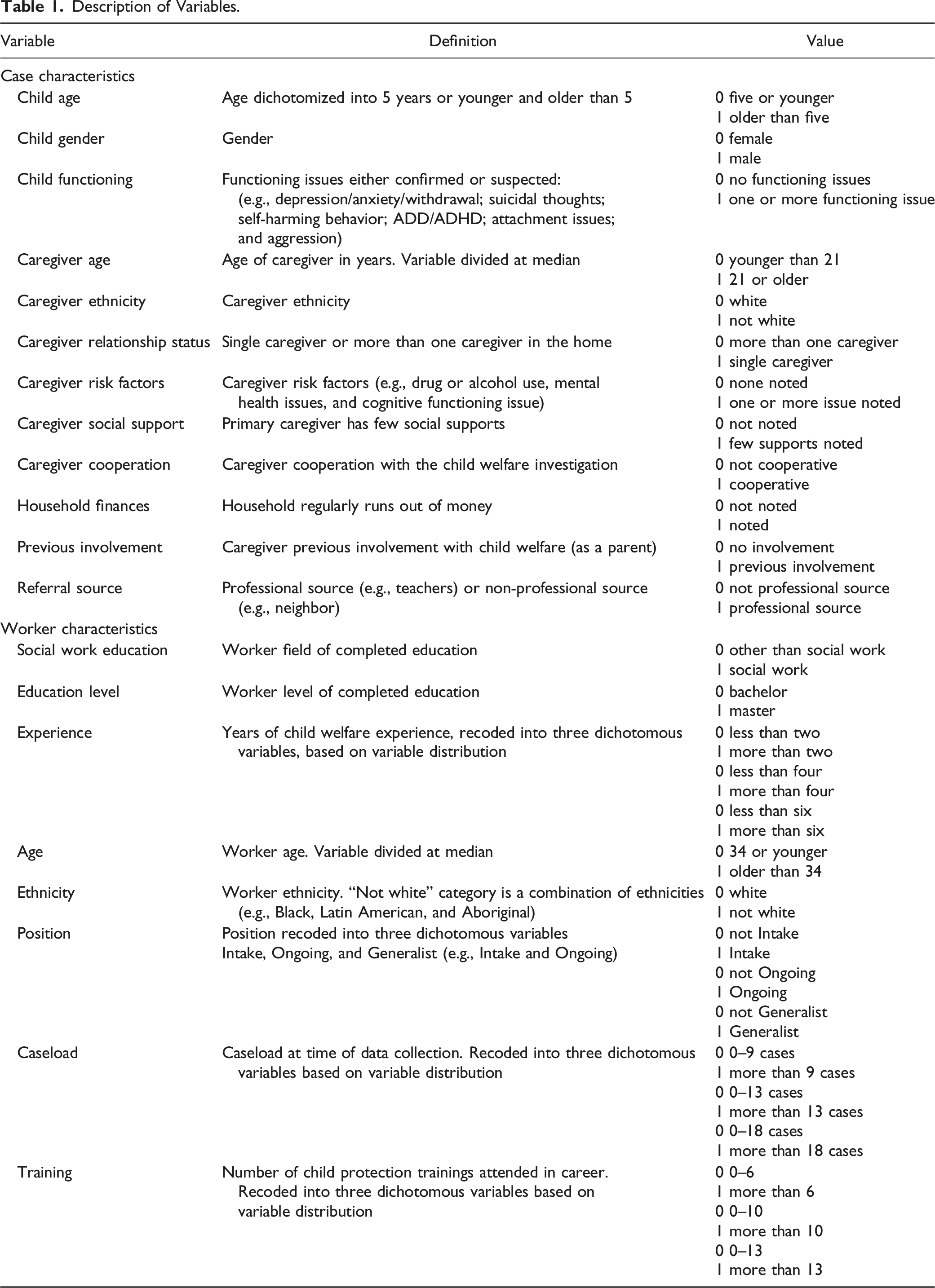
Analysis Plan
To answer the research questions, a series of univariate, bivariate, single-level logistic regression, and multilevel regression analyses were run. First, simple analyses were conducted to assess the relationship between dependent and independent variables. Single-level regression was then used to evaluate whether level one variables predicted the perception of risk of future maltreatment. Prior to including any fixed effects in the multilevel analyses, an empty two-level logistic regression model (regression without predictors and only random effects) was conducted to determine whether there is dependence in the data. Indeed, results indicated that there is dependence in the CIS-2008 data and that multilevel modeling would be more appropriate than single-level regression. A full (all level one and level two variables) two-level model was run, and then non-significant level one predictors were systematically removed to assess the impact on model fit. Next, non-significant level two variables were systematically removed from two-level analyses. Once the optimum model fit was established, several interaction effects (e.g., worker age x worker level and worker education field x worker caseload) were tested in the two-level model. The final two-level model includes significant level one independent variables, significant and non-significant level two independent variables, and one interaction variable. The final two-level model was built with a focus on developing a parsimonious model, which is ideal for multilevel modeling (e.g., Snijders, & Bosker, 2012), whereby the best (statistical) model fit takes precedence over leaving in non-significant, yet what may be theoretically relevant, independent variables. In the final model, however, we have non-significant independent variables but have also removed some non-significant variables—this was, however, based on the best statistical model fit.
To assess differences among workers’ perception of significant risk of future maltreatment, the Intraclass Correlation Coefficient (ICC) was calculated using the final two-level parsimonious model results. Model fit between single-level and two-level logistic regression, with and without fixed effects, was tested by assessing the difference between covariance parameter estimates. Independent variables were centered to reduce the impact of multicollinearity. Primary analyses were conducted using IBM SPSS version 25 and IBM SPSS Python Extension. Multilevel modeling was conducted using SAS version 9.5.
Results
Descriptive Statistics
Three-quarters of the children (n = 1363, 76%) were not perceived to be at significant risk of future maltreatment. The majority of participating child welfare workers had a university degree (any level) in social work (67%, n = 532) and 87% (n = 643) had a Bachelor’s degree (vs. Master). The average number of years in child welfare was 5.95 years (SD = 5.74). Fifty percent of child welfare workers had been working in child welfare for 5 years or less at the time of participating in the CIS-2008. Workers had a mean age of 35.78 years (SD = 9.29) and the majority identified as white (82%, n = 736). Just under half (44%, n = 401) of the workers were in the Intake (investigative) position, 11% (n = 104) were Ongoing Services Workers, and 37% (n = 340) were in a Generalist (e.g., Intake and Ongoing) position. The majority of workers (72%, n = 511) had a caseload of 18 or fewer cases and the mean caseload was 14.47 (SD = 8.62). Lastly, almost half of the participating workers (46%, n = 332) had attended more than 10 trainings during their tenure in child welfare.
The majority of level one variables (child, caregiver, and case) were significantly (bivariately) associated with workers’ risk of future maltreatment decision. However, child gender (X2 [2, n = 3121] = 3.58, p = .058) and the referral source (X2 [2, n = 3121] = .10, p = .741) were not significantly related to the dependent variable. While most level one variables were related to the identification of significant risk of future maltreatment, the majority of worker characteristics were not.
Worker years of experience (two and fewer years, more than 2 years: X2 [2, n = 2757] = .11, p = .732; four and fewer years, more than 4 years: X2 [2, n = 2757] = .06, p = .91; six and fewer years, more than 6 years: X2 [2, n = 2757] = .01, p = .91), position (Ongoing, Other than Ongoing: X2 [2, n = 2782] = .008, p = .927), caseload (0 to 18 cases, more than 18 cases: X2 [2, n = 2715] = 2.03, p = .153), and training (0 to six trainings, more than six trainings: X2 [2, n = 2811] = 2.26, p = .133; 0 to 10 trainings, more than 10 trainings: X2 [2, n = 2811] = .489, p = .485; 0 to 13 trainings, more than 13 trainings: X2 [2, n = 2811] = 3.01, p = .083) were not significantly related to the perception of significant risk of future maltreatment.
Multilevel Analyses
Results of the empty model suggested that the two-level model fit was significantly better than the one-level logistic regression, indicating that there is dependence in these data (X2 [n = 2815] = −14.38, p < .0001). As noted in the analysis plan, models including case (level one) and worker (level two) fixed effects were included in succeeding models. Several level one independent variables predicted workers’ perception of significant risk of future maltreatment in the final two-level parsimonious model. Specifically, younger children (between 0 and five; OR = .27, 95% CI [.17–.42]) and children with one or more functioning concerns (OR = 2.59, 95% CI [1.82–3.69]) were perceived to be at significant risk of future maltreatment more often than children older than five and those with no functioning concerns. Caregivers with one or more risk factor had more than five times the odds of their child being perceived to be at significant risk of future maltreatment than caregivers with no risk factors (OR = 5.06, 95% CI [3.33–7.69]). Further, caregivers with few social supports (OR = 3.15, 95% CI [2.17–4.58]), who ran out of money regularly (OR = 3.35, 95% CI [2.01–5.57]), and who had previous child welfare involvement (OR = 2.72, 95% CI [1.79–4.13]) had more than three and two times the odds of having children perceived to be at significant risk of future maltreatment than caregivers with adequate social supports, who did not run out of money regularly, and with no previous child welfare involvement. Caregivers who were not cooperative with the child welfare investigation were slightly more likely than cooperative caregivers to have a child perceived to be at significant risk of future maltreatment (OR = .36, 95% CI [.17–.73]).
Two-Level Logistic Regression.
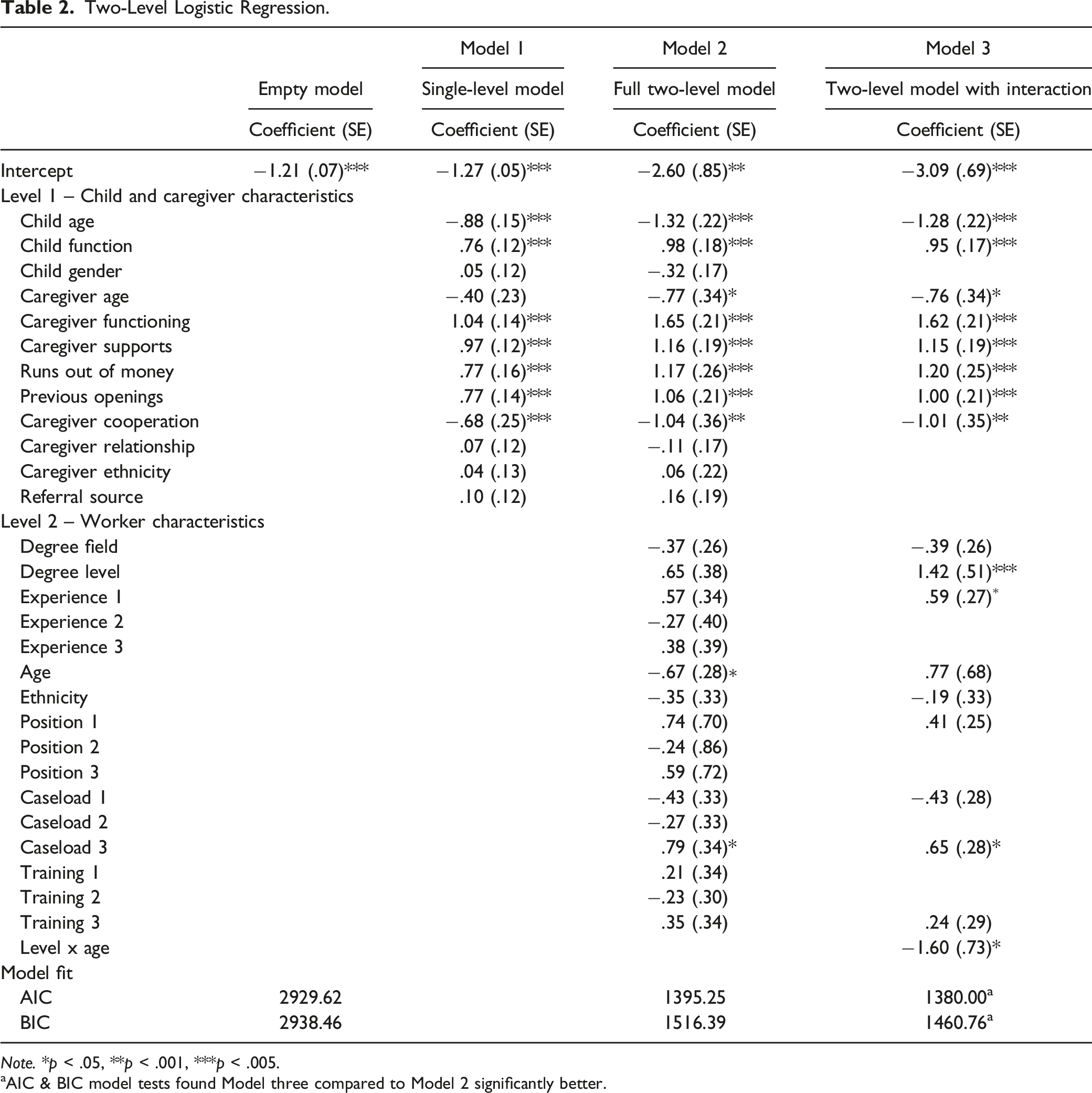
Note. *p < .05, **p < .001, ***p < .005.
aAIC & BIC model tests found Model three compared to Model 2 significantly better.
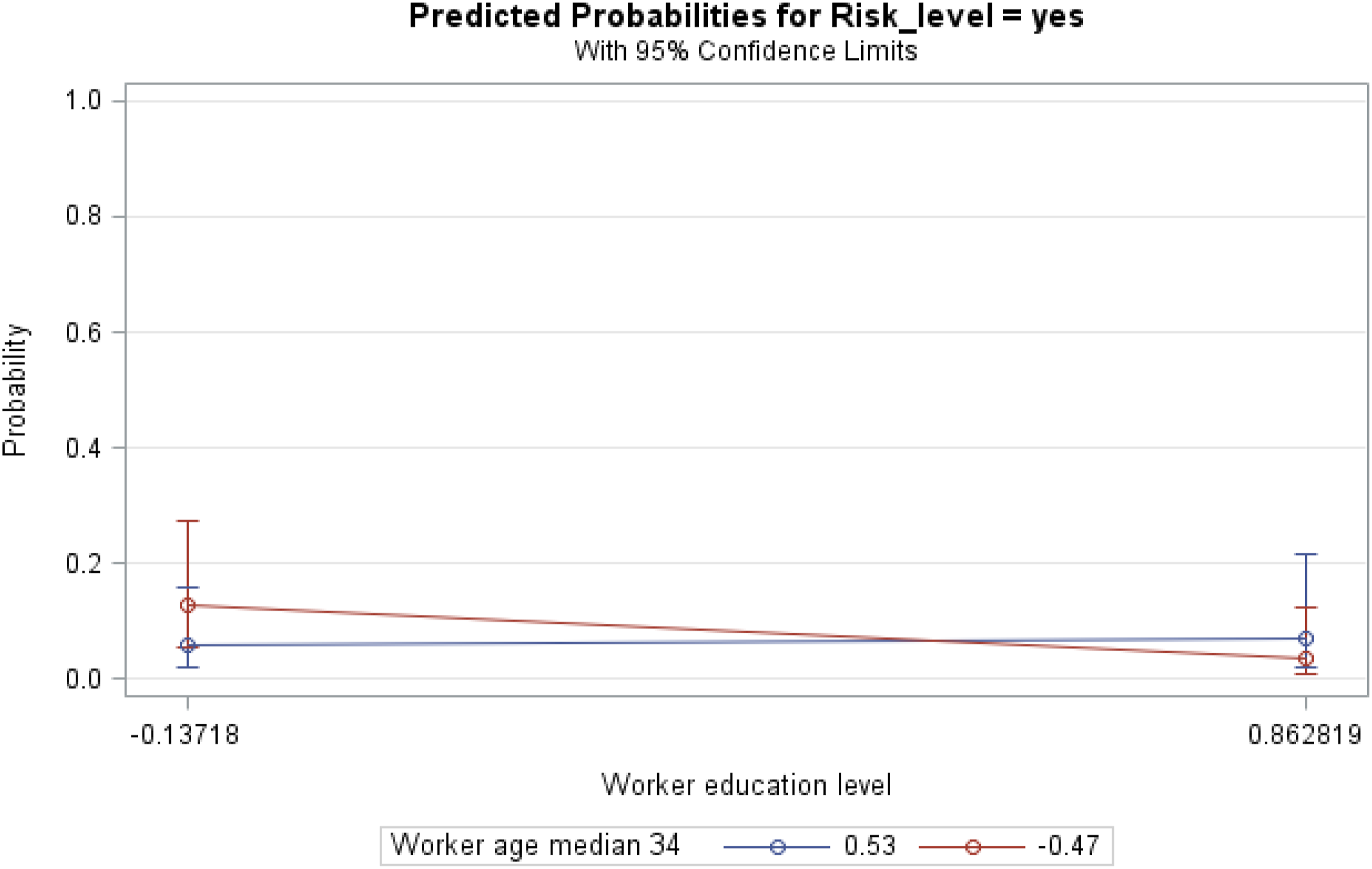
Significant interaction between worker age and education level.
The Intraclass Correlation Coefficient of the final two-level parsimonious model suggests that there is 30% variance among workers in their determination of significant risk of future maltreatment.
Discussion
There is a dearth of literature that examines whether child welfare worker characteristics predict the assessment of risk of future maltreatment. The DME (Baumann et al., 1997) and research that has explored child welfare service provision decisions suggest that child welfare worker characteristics, such as attitude, caseload, and personal experiences may play a role in their assessment of the risk of future maltreatment. Thus, the primary goal of this study was to assess whether worker characteristics predict their perception of significant risk of future maltreatment, and whether there are differences in their perception among Canadian child welfare workers. This is the first Canadian multilevel study to examine whether child welfare worker characteristics predict their perception of significant risk of future maltreatment. Findings of this study corroborate research at the case level and narrow the knowledge gap about worker characteristics in the perception of future risk of maltreatment.
Child and Caregiver Characteristics
Consistent with the wider body of literature, findings from this study suggest that child welfare workers are more likely to identify younger children are at risk of future maltreatment (Cheung et al., 2020; Chiang et al., 2020; Putnam-Hornstein et al., 2015). Further, children identified as having functioning concerns in this study were also more likely to be identified as at higher risk of future maltreatment. These findings are comparable with previous studies that indicate children with physical, emotional, or behavioral concerns are more likely to experience multiple maltreatment occurrences (Lwin et al., 2018; White et al., 2015; Zhang et al., 2013). Overall, the findings from this study and the body of literature suggest that a child’s level of dependency is directly correlated with the likelihood of experiencing future maltreatment.
As expected, results from this study suggest that caregiver characteristics are associated with workers’ perception of the significant risk of future maltreatment. This study found that caregivers with multiple risk factors (e.g., substance abuse and mental health issues) were significantly more likely to have a child perceived to be at significant risk of future maltreatment. These findings are consistent with the wider body of literature that suggest that caregivers with substance abuse (White et al., 2015) and mental health issues (Jedwab et al., 2017; O’Donnell et al., 2015), physical health problems (Chiang et al., 2020), and a disability (Zhang et al., 2013) are more likely to have a child identified at risk of future maltreatment.
Findings in this study that suggest caregivers with little social support are significantly more likely to have a child identified as at risk of future maltreatment, correspond with the wider literature (Hindley et al., 2006; White et al., 2015). Caregivers who have adequate helping systems, whether it be extended family or friends, may have access to financial and emotional support and resources (e.g., babysitting, drive to doctor, and school carpool) when required. This ultimately could support caregiver’s ability to provide effective care for their children and their own well-being, reducing the likelihood of future maltreatment.
A history of child welfare involvement was found to predict future involvement, which is consistent with the body of literature (Barth et al., 2006; Chiang et al., 2020; Dorsey et al., 2008; Lwin et al., 2018; Zhang et al., 2013). This area of study is debated, however, in the literature, and it has been argued that findings may be a result of parenting capacity (Hindley et al., 2006; Jedwab et al., 2017; O’Donnell et al., 2015) or surveillance (Wroe & Lloyd, 2020).
Child welfare workers who perceived caregivers as cooperating with child welfare services were less likely to have children identified as at future risk of maltreatment. These findings are consistent with previous studies. Cooperation, however, is operationalized differently across studies and this limits comparability; for instance, some studies define caregiver cooperation as showing interest and keeping appointments (Hindley et al., 2006). Future research should assess whether certain worker characteristics are associated with their perception of caregivers’ behavior and perceived cooperation with service.
Families living in poverty have long been disproportionately involved with the child welfare system (Hindley et al., 2006; King et al., 2018; Orsi et al., 2014). This study examined whether families regularly ran out of money, an indicator of socioeconomic hardship. As anticipated, caregivers who ran out of money regularly were significantly more likely to have a child perceived to be at significant risk of future maltreatment.
The lack of a significant association between risk of future maltreatment and caregiver ethnicity in this study is consistent with some of the knowledge base, as the body of literature does not reliably find one way or the other (Fuller & Zhang, 2017; Jedwab et al., 2017). This study is unique in its multilevel analysis, which takes into consideration data dependency and may impact the results in comparison to single-level regression analyses (Snijders & Bosker, 2012). Future analyses need to examine the role that ethnicity and race may or may not play in child welfare services. The associations found among child, caregiver, and case characteristics with the perception of significant risk of future maltreatment in this study are not surprising and well established in the literature. However, most of the research has been conducted in the United States. Findings from this study also correspond with the small body of Canadian literature (Fillippelli et al., 2021; Lwin et al., 2018). While this cross-sectional study cannot verify that worker’s perception of risk of future maltreatment was accurate, findings at the child, caregiver, and case level are consistent with the wider body of literature.
Worker Characteristics
Education
This is the first Canadian multilevel study to examine whether child welfare worker characteristics predict their perception of significant risk of future maltreatment. In the final model, four worker characteristics, including one interaction term, predicted their perception of significant risk of future maltreatment. First, workers with a Master’s degree (any field) were significantly more likely to perceive children at risk of future maltreatment than workers with a Bachelor degree (any field). While there is little research to compare this finding, we hypothesize that (1) additional education or (2) the perceived additional knowledge about the assessment of future risk of maltreatment may lead to an increase in the perception of significant risk of future maltreatment. It is believed that a Master-level education is more likely to lead to more effective service delivery (Social Work Licensure, 2020). Indeed, additional schooling and field practicums ideally result in more effective practice. There is, however, little evidence at this time to suggest that a Master’s degree better equips people for child welfare service (Lwin, 2018). Research, nevertheless, may need to examine educational experience differently. For example, critical thinking and ability to engage service users as a result of multiple field placements or graduate courses may be skills that are improved through a Master’s degree; however, the link has not yet been made. Further, perception of skill or knowledge may simply be higher in workers because they have a Master’s degree, which may in turn impact their identification of risk of future maltreatment. Scannapieco and Connell-Corrick (2003) found that supervisors consistently rated MSW workers higher in readiness for practice than their BSW, Bachelor of Arts (BA), or other Master of Arts (MA) colleagues. Upon closer examination, however, it was found that only supervisors with an MSW regularly rated workers with a MSW higher than individuals with a BSW or another BA degree. Our findings are related to those by Barbee et al. (2009), as results of matched sets of child welfare workers (N = 24) illustrated that those who attended a university-level specialized child welfare stream rated cases higher in risk level than workers who did not attend a specialized stream. To further the knowledge base, and eventually impact child welfare hiring and training protocol, research should assess the link between education level and field and their perception of risk of future maltreatment and whether this perception translates to recurrence with the child welfare system.
Experience
Second, findings from this study suggest that workers with more than two years of child welfare experience were significantly more likely to perceive risk of future maltreatment than workers with less than two years of experience. Converse to our findings, in one small study, child welfare worker experience level did not predict their assessment of risk (Sullivan et al., 2008). In studies that specifically did not examine the perception of risk of future maltreatment, findings about caseworker experience are mixed. Years of experience has also been found to be predictive of the substantiation decision (McConnell et al., 2011) and strength of family preservation attitude (Fluke et al., 2016). Conversely, Davidson-Arad and Benbenishty (2016) found no significant difference between years of experience and workers’ attitudes toward child welfare system issues or the decisions they make. Similarly, worker experience has not predicted the placement decision (Graham et al., 2015). It is hypothesized that workers with more experience attend to a greater number of risk factors, therefore perceive significant risk of maltreatment more often. However, because the body of literature on the perception of significant risk of future maltreatment is limited, it is difficult to assess whether indeed caseworker experience is likely to consistently play a role in their perception of risk. To fully understand the impact of experience on this perception, further research into whether and the level of experience that may impact the perception of risk of future maltreatment is required.
Caseload
Caseload size is the third main effect on workers’ perception of risk of future maltreatment, such that workers with more than 18 cases perceived children at risk of future maltreatment significantly more frequently than workers with less than 18 cases. Similar to other main effects, there is a dearth of literature. We, therefore, look to the literature that assesses the link between caseload and other child welfare service areas. Steen (2010) found that workers with higher caseloads were associated with increased case closure rates. Authors hypothesized that a high caseload may impact a worker’s ability to conduct a thorough investigation, thus reducing the likelihood of transferring a family to ongoing services. Conversely, Fallon (2005) found that workers with larger caseloads were significantly more likely to transfer a case to ongoing services. Graham et al. (2015) found that workload (caseload plus additional work demands) had the potential to result in workers being unable to adequately assess for risk of future maltreatment, therefore resulting in lower out-of-home care placement rates. What is unclear about the link between caseload and (overall) service is the direction of the relationship. We hypothesize that workers may have a high caseload because they are methodical and detailed about investigations resulting in a higher likelihood of perceiving risk of future maltreatment, but also a backlog of cases. This hypothesis corresponds to the previous finding, whereby workers with more experience may be detail oriented and assess for a wider number of risk factors. Alternatively, perhaps workers who are perceived to be more effective may be assigned more complex cases, and therefore more likely to have a higher caseload and families where there is a higher likelihood of the risk of future maltreatment. Case assignment strategies are not addressed in the literature; consequently, further evidence is needed.
Interestingly, child welfare worker ethnicity did not significantly predict their perception of the risk of future maltreatment. While the relationship between worker and service user has the potential to play a significant role in service delivery, few studies have explored this area, thus there is a knowledge gap. There is some evidence to suggest that worker ethnicity/race may play a role in their decision-making (Bosk, 2020; Jent, 2011). These research questions and methodologies, however, differ from the current study, which may impact their results. Further, the standardized tool used to assess risk of future maltreatment by many child welfare systems likely reinforces White colonial ways of doing things and does not permit cultural interpretations (Antwi-Boasiako et al., 2020). It is hypothesized here that while worker ethnicity does not predict perception of the risk of future maltreatment, worker ethnicity may play a nuanced role in service delivery, such as engagement between worker and service user. Future research that explicitly examines worker ethnicity and service delivery would build a more effective system.
Interaction effects
Last, several theoretically relevant interaction effects were tested (e.g., caseload x education level and education field x level); however, only one interaction, worker age and worker education level, significantly predicted the perception of risk of future maltreatment. Figure 1 suggests that worker education level and their age work together in predicting their perception of risk of future maltreatment, such that younger workers with a Bachelor degree and older workers with a Master degree perceive risk of future maltreatment more frequently than older workers with a Bachelor and younger workers with a Master degree. Again, the lack of previous studies limits our ability to situate the finding within the wider literature.
Intercorrelation coefficient
Last, the Intraclass Correlation Coefficient (ICC; 30%) corresponds to the percentage of variance that is related to risk of future maltreatment. The ICC is independent of the multilevel analyses. Findings here would suggest that there are differences among child welfare workers in their perception of significant risk of future maltreatment. Further, because only a limited number of worker characteristics significantly predicted perception of the risk of future maltreatment, it could be assumed that other characteristics such as worker attitude, previous trauma, use of research, for example, may play a role in this service area. While findings from this study suggest worker experiences may play a role in their determination of risk, a stronger body of knowledge about worker characteristics and experiences are required to support evidence-based recruitment and training policies. Taken together, findings suggest that worker characteristics and experiences play a role in their perception of risk of future maltreatment. As this is a cross-sectional study, it cannot be confirmed that the perception of risk of future maltreatment is correct; findings, however, indicate that, indeed, the Decision-making Ecology correctly suggests that caseworker characteristics play a role in the service that families receive. Importantly, assumptions in the field suggest that certain characteristics (social work and more experience) are more effective in the service they provide.
Limitations
While this study is methodologically unique and offers a strong depiction of what case and worker characteristics predict workers’ perception of significant risk of future maltreatment, there are limitations that must be considered. First, the identification of risk of future maltreatment is not evaluative and workers’ perception of risk of future maltreatment is not presumed to be accurate. Rather, we have learned that there are differences among worker’s perception of significant risk of future maltreatment, which are based on their personal characteristics. Second, the data collection tools are completed the by assigned worker and cannot be independently verified. Last, the ICC in a logistic regression should be interpreted with caution, as the probability, not frequency, of the dependent variable is calculated.
Conclusion
Child welfare practice is complex and requires an ability to identify the risk of future child maltreatment, which may include assessing child development, child and caregiver functioning and risk factors, and overall family functioning. There is evidence to suggest that child, caregiver, and case factors are related to future child maltreatment (e.g., Eastman et al., 2016; Helton, 2016; McWey et al., 2013). However, there is scant evidence that examines whether worker factors predict their identification of the risk of future child maltreatment. Thus, this study assessed how child, caregiver, case, and child welfare worker characteristics, such as degree level and age, predict workers’ perception of significant risk of future child maltreatment. Results indicate that workers make this decision differently based on their characteristics. This study is unique in both its subject of examination and analyses. It would be expected that child welfare workers’ decisions are in at least a small part dependent on their experiences and characteristics, as multilevel research in other child welfare decision points have shown. To further the field’s understanding and policy in child welfare worker onboarding and training, much more research is required. Indeed, the field needs to connect child welfare worker characteristics to both their decisions, but also to child and family outcomes. It is at this point that the field can grow and assure the field and service users that certain characteristics equip individuals for effective practice.
Footnotes
Declaration of Conflicting Interests
The author(s) declared no potential conflicts of interest with respect to the research, authorship, and/or publication of this article.
Funding
The author(s) received no financial support for the research, authorship, and/or publication of this article.
