



Abstract
This work investigates the performance of a novel hybrid piezo-electromagnetic energy harvester integrated with curved T-shaped and straight beams for efficient broadband vibration energy harvesting (VEH). The proposed system leverages the synergy between piezoelectric and electromagnetic transduction mechanisms while utilizing the unique dynamic properties of curved beams and magnetic nonlinearity to enhance energy harvesting efficiency across a wide frequency range. The developed hybrid harvester consists of two curved T-shaped beams with three piezoelectric patches and two straight cantilevers with one patch on each, with a magnet as a variable tip mass. Simulations were conducted to analyze stress distribution, modal behavior, and harmonic response under various vibrational conditions for T-shaped and curved T-shaped beams. The prototype was tested using a shaker and DAQ device for four different configurations of tip magnets with increasing mass and electromagnetic field density. The average voltage of 27.81 V for piezoelectric with average output power of 0.773 mW as well as energy density of 0.0101 Wm−3, and 0.014 V with average power output of 0.736 nW from electromagnetic energy harvester at 1 MΩ external load for the tip mass configuration M4 within the frequency range of 1–150 Hz was achieved. In contrast, the overall average voltage generated at M1, M2, and M3 configurations is 5.38, 9.78, and 15.25 V, respectively. The frequency average voltage (FAV) was calculated for all configurations of M1, M2, M3, and M4 as 6.19, 8.25, 9.94, and 11.37 V/Hz. The findings reveal that the hybrid piezo-electromagnetic energy harvester can effectively harvest energy from broadband vibrational sources, making it a promising solution for powering wireless sensors, wearable electronics, and other low-power devices in applications such as structural health monitoring, industrial automation, and smart infrastructure.
Introduction
The growing demand for self-powered devices in applications such as structural health monitoring, biomedical devices, and the Internet of Things (IoT) has driven extensive research into vibration energy harvesting (VEH) technologies (Jiang et al., 2024a). Traditional power solutions, such as batteries, are often impractical due to their limited lifespan, environmental concerns, and the need for frequent replacement or recharging (Liang et al., 2021). The best substitute for batteries is conventional VEHs, which often employ piezoelectric (Sharma et al., 2022), triboelectric (Thainiramit et al., 2020), electromagnetic (Ordoñez et al., 2021), and electrostatic (Yamane et al., 2022) transduction mechanisms. However, these designs face challenges in achieving high energy density and broadband operation due to their reliance on single transduction mechanisms and narrow resonant frequencies (Jiang et al., 2023, 2024c). Piezoelectric energy harvesters (PEHs) are widely studied for their high-power density and ease of integration into small-scale systems. However, their performance is often limited by narrow operational bandwidths and sensitivity to frequency variations in ambient vibrations (Yang et al., 2018). Triboelectrics have been extensively explored for their simple fabrication, high-output voltage, and adaptability to various materials and structures. Despite these advantages, their performance is often constrained by surface wear, low durability, stability issues, and degradation over time, particularly under long-term operation in dynamic environments. Furthermore, electromagnetics is widely investigated for its robustness and scalability in energy conversion applications. They efficiently generate power by inducing a current through a moving magnet-coil assembly.
However, their performance is typically limited by low energy density and narrow frequency responses, restricting their efficiency in harvesting ambient vibrations with varying frequencies (Luo et al., 2021). Various advanced techniques and innovative strategies have been proposed to address these limitations, such as frequency up-conversion (Halim et al., 2019; Liu et al., 2022; Zhang and Qin, 2019), multimodal arrays (Li et al., 2019; Sun et al., 2020), broadband (Ma et al., 2023; Yu et al., 2023), nonlinear effects (Huang, 2024; Pertin et al., 2022; Shim et al., 2022), dynamic amplification (Qian et al., 2019; Wang et al., 2017; Zhao et al., 2019), and hybrid energy harvesters (He et al., 2024; Hou et al., 2022; Zhu et al., 2022). Additionally, adaptive adjustment techniques, including centrifugal spring mechanisms (Liao et al., 2025; Mei et al., 2023) and variable stiffness mechanisms (Chen et al., 2023; Guo et al., 2022), have shown great potential in tuning the dynamic response of harvesters to match a wider range of excitation frequencies. Among these approaches, tunable bistable energy harvesters (Huang and Yang, 2021), leveraging magnetic nonlinearity, stand out as highly promising systems, offering advantages such as contactless restoring forces, convenient parameter tuning, and outstanding broadband performance (Jiang et al., 2021; Li et al., 2023a; Liu et al., 2023). Moreover, the integration of hybrid piezoelectric-electromagnetic vibration energy harvesting technology with magnetic nonlinearity has gained significant attention due to its potential to enhance energy conversion efficiency and broaden operational frequency ranges (Pertin and Guha, 2022; Zhang et al., 2024). By combining both piezoelectric and electromagnetic transduction mechanisms, this approach captures energy more effectively from complex and varying vibration scenarios (Farhan et al., 2024). The inclusion of magnetic nonlinearity introduces bistable or multi-stable dynamic characteristics, enabling the system to respond to low-frequency and high-amplitude vibrations while maintaining stability across wide frequency ranges in vortex-induced vibration (VIV) energy harvester (Huang and Zhong, 2023; Naseer and Abdelkefi, 2022). By integrating magnetostrictive and piezoelectric phases, magnetoelectric composites achieve strain-mediated coupling between magnetic and electric domains, significantly improving transduction efficiency. This synergy improves energy harvesting performance and provides greater flexibility in system design for real-world applications (Huang et al., 2024).
The proposed hybrid piezoelectric-electromagnetic vibration energy harvester (VEH) combines with magnetic nonlinearity to enhance energy harvesting efficiency and operational bandwidth. The structural design features curved T-shaped and straight beam systems integrated with piezoelectric patches and electromagnetic components, such as magnets and coils, to simultaneously capture mechanical vibrations. The inherent nonlinearity introduced by magnetic interactions induces multi-stable states, which allow the system to exhibit broadband response characteristics even under varying and low-frequency vibrations. This unique combination of elements synergistically optimizes energy conversion and adaptability to diverse operational conditions. The novelty of this study lies in integrating both curved T-shaped and straight beams within a single hybrid piezo-electromagnetic energy harvesting system. This configuration offers several advantages over traditional hybrid harvesters, as it enables broadband energy harvesting by combining beams with distinct natural frequencies, and it enhances output power through improved mode coupling and dynamic interactions. To the best of our knowledge, this is the first study to experimentally and numerically evaluate such a combined beam configuration within a hybrid VEH framework.
This article is organized into six sections, offering a thorough investigation of vibration energy harvesting techniques. The section outlines the Design and Working principle of the proposed energy harvester. The section Finite Element Analysis (FEA) focused on numerical analysis of the two proposed designs. The section Experimental analysis details the experimental setup, while section Results and discussion presents the research outcomes. The last section, summarizes the key conclusions of this research.
Design and working principle
Geometry and configuration
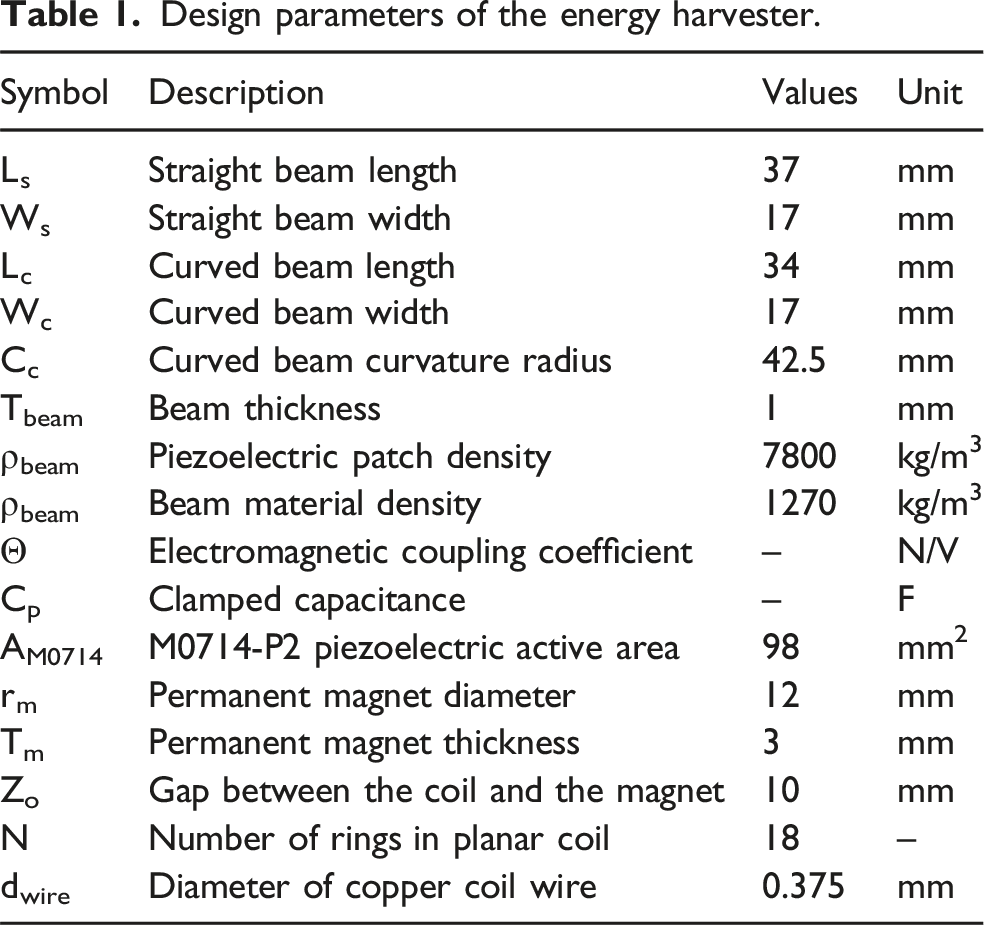
The proposed vibration energy harvester (VEH) employs a novel hybrid design that integrates piezoelectric and electromagnetic energy conversion mechanisms in two different configurations, as shown in Figures 1(a) and (b) of the energy harvester with and without magnetic nonlinearity. The energy harvester consists of two curved T-shaped and two straight cantilever beams designed to optimize energy harvesting efficiency from low as well as higher-frequency vibrations. The curved beam follows an arc-like profile, allowing it to undergo larger displacements to capture energy from low to medium-frequency vibrations. In contrast, straight beams favor energy harvesting from higher-frequency vibrations. The beams are designed with variable tip masses in the form of magnets, which also interact with stationary coils for electromagnetic induction (Dong et al., 2019; Ordoñez et al., 2021). The materials were selected for the development of this hybrid energy harvester, knowing that the materials play a pivotal role in determining the efficiency, durability, and energy conversion capability of vibration-based energy harvesters. The key components, such as piezoelectric layers, magnetic elements, and structural substrates, directly influence the system’s electromechanical coupling, resonant behavior, and power output. Materials such as Polyvinylidene Fluoride (PVDF), a flexible polymer-based piezoelectric material with lower piezoelectric constants than PZT but superior flexibility and mechanical robustness (Derakhshani et al., 2021; Wang et al., 2022), Barium Titanate (BaTiO3), and other lead-free ceramics are emerging alternatives that provide moderate piezoelectric performance while being environmentally friendly (Güçlü et al., 2023; Wang et al., 2015). A macro fiber composite (MFC) made of PZT 5J patch was selected for this research because it offers high piezoelectric coefficients as well as energy conversion efficiency with minimal strain. Materials like NdFeB (Neodymium-Iron-Boron) magnets are widely used due to their exceptionally high magnetic strength, smaller in size and lightweight (Olszewski et al., 2017; Yüksel, 2017). Stronger magnets enhance nonlinear effects and broaden the operational frequency range. Integration of composite piezoelectric materials, such as PZT, in a polymer matrix for improved mechanical flexibility without compromising electrical output can be used for higher efficiency. The design parameters used to develop the hybrid energy harvester are mentioned in Table 1. Hybrid vibration energy harvesting configuration (a) without magnetic nonlinearity and (b) with magnetic nonlinearity. Design parameters of the energy harvester.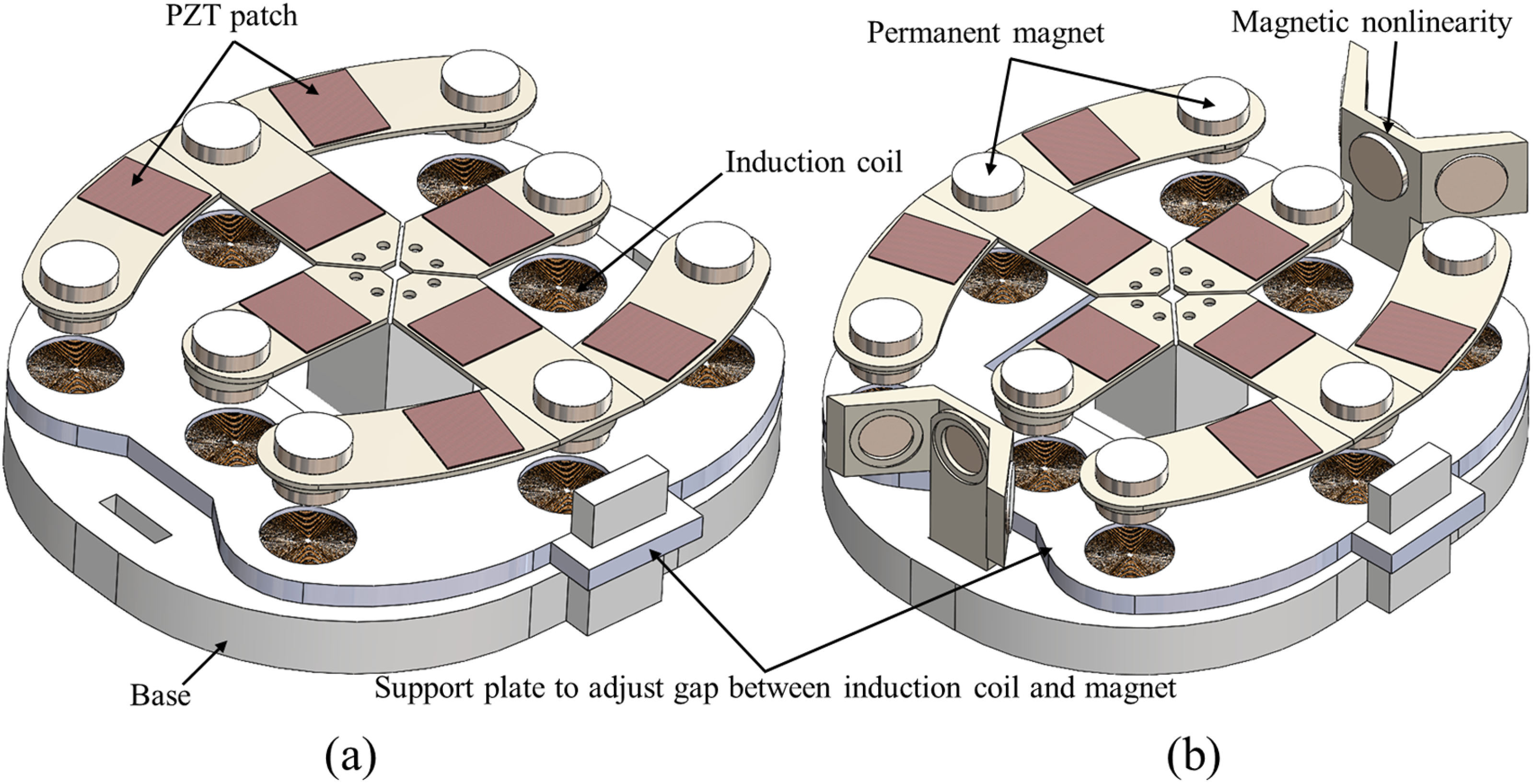
Working mechanism
When the beam is subjected to external vibrations, it undergoes mechanical deformation, causing strain in the piezoelectric material. This strain generates an electric charge due to the direct piezoelectric effect (Zhao et al., 2022). The curved T-shaped amplifies the beam’s displacement and introduces a new resonant mode of vibration, allowing it to capture more energy from low-frequency vibrations. The electromagnetic generator consists of magnets attached to the free end of the curved and straight beam, and coils are fixed at the structure’s base. The magnet moves relative to the coil as the beam vibrates, creating a changing magnetic flux. According to Faraday’s law of electromagnetic induction, this changing flux induces an electromotive force (EMF) in the coil, generating electrical energy (Sarker et al., 2021). Combining piezoelectric and electromagnetic mechanisms, the dual-mode energy harvesting approach ensures higher voltage output and greater adaptability to varying vibration sources (Iqbal et al., 2021). The harvester’s performance is further optimized by incorporating four different mass configurations (M1, M2, M3, and M4), which influence the system’s vibration characteristics and energy output. The number of magnets increased from 1 to 4 for M1 to M4 configurations to increase the tip mass and magnetic flux density.
The T-shaped curved beams exhibit geometric nonlinearities, even under relatively small deformations. These nonlinearities arise due to plane stretching as the beam deflects, its neutral axis stretches, introducing nonlinear stiffness. The relationship between load and displacement becomes nonlinear as the curvature grows (Chen et al., 2021). The curved T-shaped beam experiences different stiff responses in different directions due to asymmetry. Due to these nonlinearities, the system exhibits amplitude-dependent natural frequencies and multiple stable/unstable equilibrium points.
In linear systems, efficient energy harvesting is usually confined to a narrow resonance peak. However, nonlinearities in curved beams enable wider bandwidth as it flattens the frequency response curve, allowing effective operation over a broader range (Zhao et al., 2021).
Theoretical modeling
Piezoelectric energy harvesting
The hybrid energy harvester incorporates eight piezoelectric patches strategically mounted on the surfaces of the cantilever beams. These patches are made of high-performance piezoelectric material, such as PZT (Lead Zirconate Titanate), known for its strong piezoelectric effect (Suprapto et al., 2024). The patches are bonded to the curved T-shaped and straight beams to ensure efficient strain energy capture. At the free tip of each cantilever beam, the flat coil is integrated with cylindrical magnets. This mechanism complements the piezoelectric energy harvesting by converting mechanical vibrations into electrical energy through electromagnetic induction. The electrical output of the piezoelectric patch is governed by equation (1) (Hafizh et al., 2023; Xiao et al., 2015):
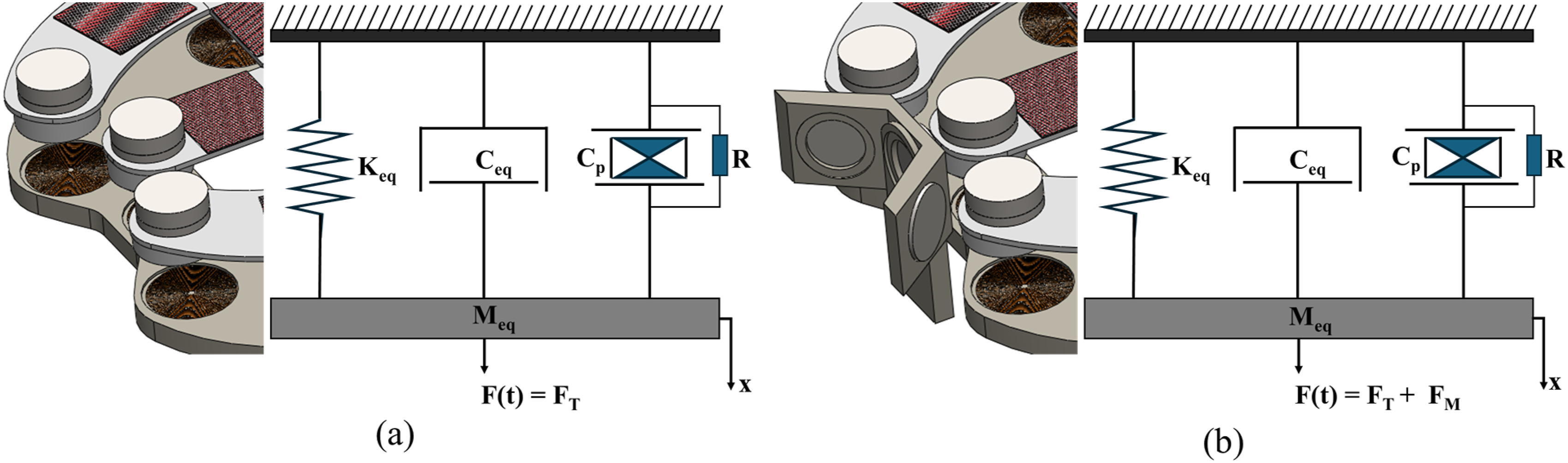
The generated current, I, can be represented by the following equation (2) (Muthalif et al., 2022): Analytical model of hybrid energy harvester (a) without magnetic coupling and (b) with repulsive magnetic coupling of force FM.
Electromagnetic energy harvesting
The induced voltage V
e
in the coil is derived from Faraday’s law of electromagnetic induction, which states that the voltage generated in a coil is proportional to the rate of change of magnetic flux through the coil, as expressed by equation (3) (Jiang et al., 2023):
The magnetic flux Φ(t) is defined with equation (4) (Su et al., 2024):
The magnetic flux density B
z
can be calculated based on the remanent flux density (B
r
) using equation (5) (Sarviha et al., 2024):
Finite element analysis
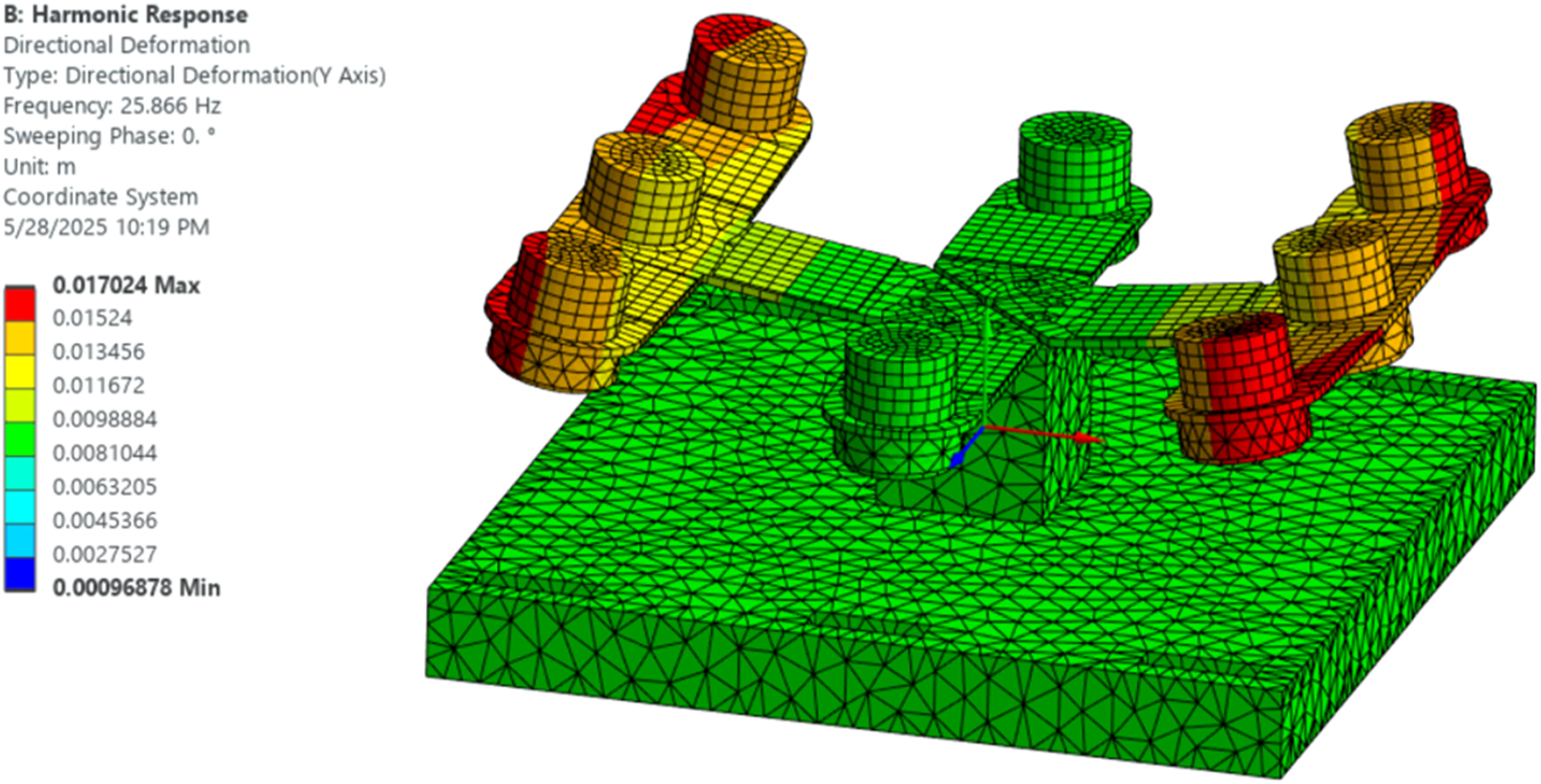
Finite element analysis (FEA) was performed using ANSYS software to simulate the energy harvesting performance of the two different designs of hybrid VEH, consisting of T-shaped and curved T-shaped with straight beams. The simulation of harmonic response results with 1 mm displacement showed that the curved T-shaped beam introduces multiple resonant modes at 27.65 and 38.84 Hz, enabling effective energy harvesting over a broad frequency range compared to T-shaped beams, as displayed in Figure 3(a) and (b). Due to their inherent geometry, curved designs are better suited to larger displacements than straight-beam designs. This is particularly advantageous in energy harvesting applications where low-frequency vibrations are prevalent. The ability to accommodate large displacements allows curved structures to capture more kinetic energy from such vibrations, converting it into electrical energy more efficiently. In contrast, T-shaped beams are well-suited for energy harvesting in scenarios where vibrations occur at a single resonance frequency at 25.87 Hz or within a narrow frequency range, as shown in Figure 4. Their uniform geometry and fixed end conditions allow them to resonate efficiently at specific resonance frequencies, making them ideal for applications where the vibration source is consistent and predictable. However, their effectiveness diminishes in environments with variable or broadband frequencies, as they lack the adaptability to respond to a broader range of vibrational inputs, leading to the non-occurrence of the second resonance frequency compared to curved T-shaped beams with the second resonance frequency at 38.84 Hz, as shown in Figure 3(b). Curved T-shaped beam’s mode shapes: (a) first resonance frequency at 27.65 Hz and (b) second resonance frequency at 38.84 Hz. Mode shape of the T-shaped beam at the first resonance frequency at 25.87 Hz.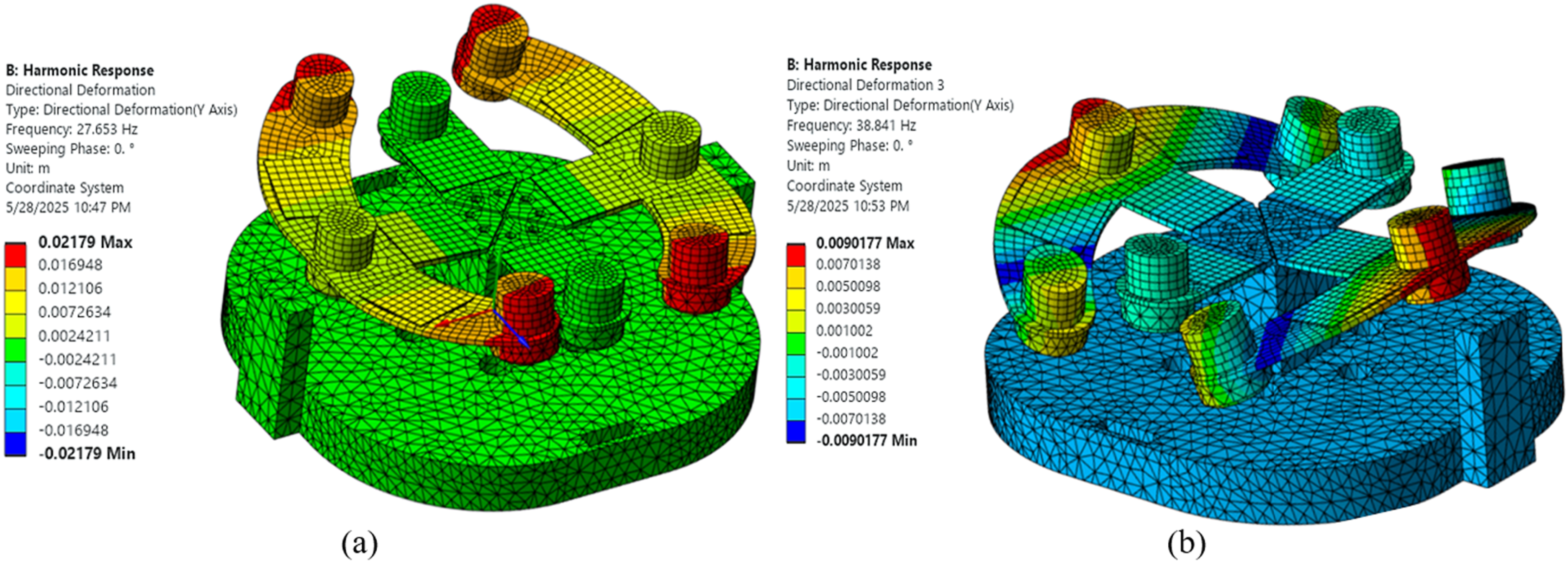
The nonlinear stiffness of curved beams, resulting from their unique geometry, allows them to respond to a wider range of frequencies. Unlike straight beams with a linear stiffness and resonating only at specific frequencies, curved beams show extra resonant modes to varying vibrational inputs. This nonlinearity enables them to harvest energy more effectively across a broader spectrum of frequencies, making them suitable for applications where the vibration frequency is not fixed or predictable. The FEA results show that the prototype incorporating curved T-shaped beams has demonstrated the ability to generate higher voltage outputs due to more modes of vibration than those with T-shaped beams within the same range of frequency. This is primarily due to the curved beam’s enhanced flexibility, broader frequency response, and better strain distribution, which collectively improve energy conversion efficiency. The higher voltage output makes curved T-shaped beam designs more attractive for real-world energy harvesting systems, where maximizing energy output is critical. Furthermore, the prototype utilizing curved T-shaped beams is more compact and smaller than T-shaped beams. The simulation results in Figure 5, supported by modal analysis in Figures 3 and 4, show that the curved T-shaped beam introduces additional resonant frequencies at 27.65 Hz, and 38.84 Hz, as well as straight beam at 62.5 Hz, which are absent in the T-shaped beam with resonant frequency at 25.65 Hz, and straight beam at 62.5 Hz. Considering all the advantages of curved T-shaped beam design, the prototype has been developed and tested in the laboratory. Output voltage versus frequency response curve from simulation.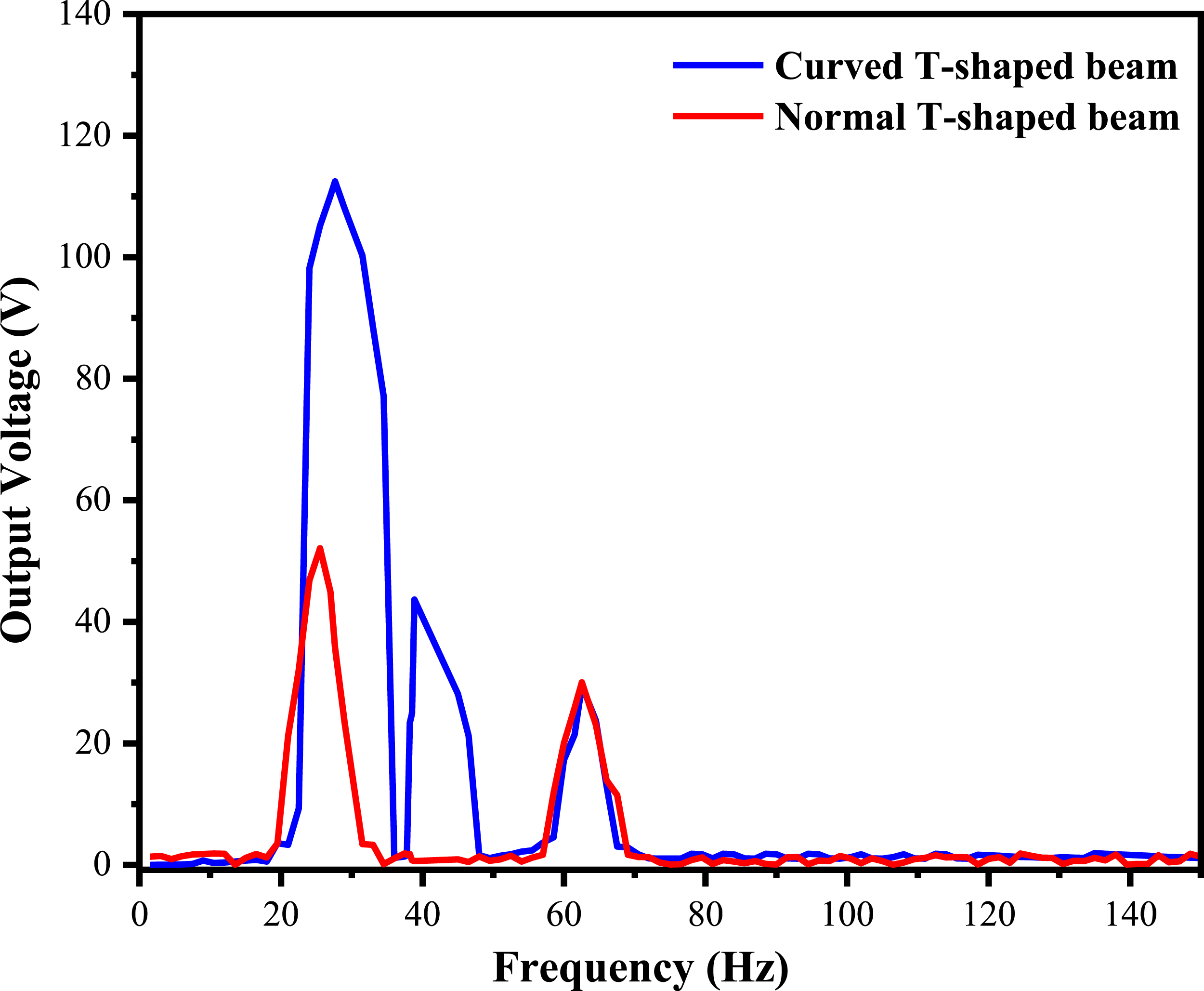
Experimental analysis
Fabrication
The hybrid vibration energy harvester (VEH) was constructed using 3D printing technology, with the beam fabricated from PLA (polylactic acid) material and integrated with a commercially available piezoelectric patch, M0714P2, with the capacitance of 11 ± 20% nF, and dimensions of 16 × 16 × 0.3 mm. It is a type of macro fiber composites (MFCs) made of PZT 5J material, which was acquired from Smart Materials Corp., and was firmly bonded to the beam using adhesive. Neodymium magnets, due to their excellent magnetic strength, and copper coils were incorporated into the design to enable electromagnetic induction, with the tip magnets specifically fitted into pre-designed holes at the free end of the beams. The side magnet used to create magnetic nonlinearity is placed 10 mm from the tip magnet in perpendicular orientation to each other. 3D printing was used to create all the components, as depicted in Figure 6, ensuring a cost-effective and customizable fabrication process, highlighting the prototype’s innovative approach to energy harvesting technology. Components design of the developed hybrid energy harvester.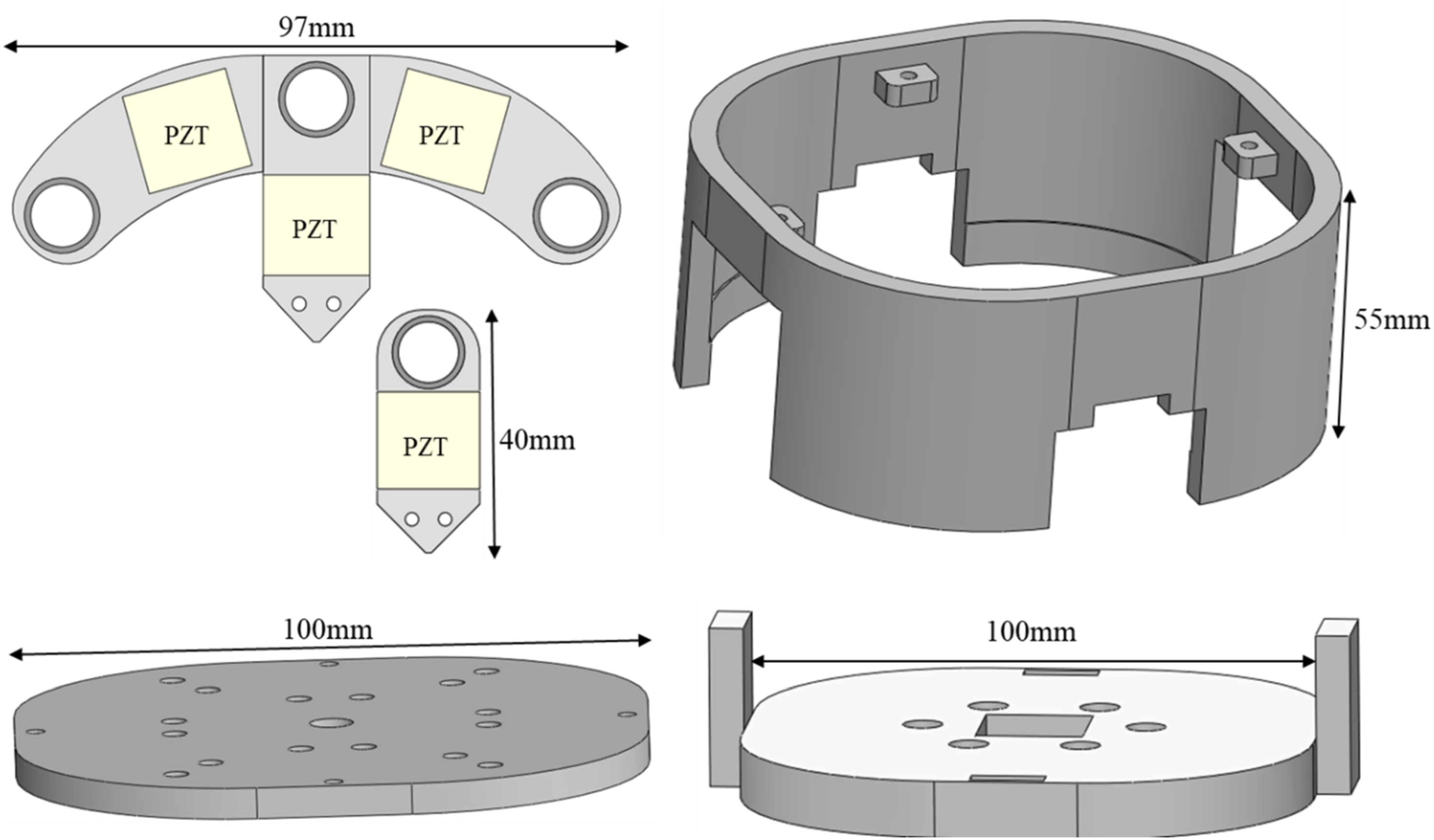
Testing setup
The developed prototype was tested under controlled sinusoidal vibrations to evaluate its performance across a wide frequency range. The experimental setup consisted of mounting the energy harvester prototype onto an electromagnetic shaker (DYN-400N model, from DynaLabs), which provided controlled harmonic base excitations across a range of frequencies and amplitudes. The experiments were conducted in the laboratory at room temperature with vibrational excitation frequencies ranging from 1 Hz to 150 Hz, as illustrated in Figure 7. This frequency range was selected to simulate real-world vibrational sources and assess the energy harvesting capabilities of the device under varying conditions (Bouhedma et al., 2022; Li et al., 2023b). The shaker was calibrated to ensure consistent and accurate vibration amplitudes, allowing for reliable measurement of the prototype’s response. A Dewesoft data acquisition (DAQ) device, SIRIUS®, with HS-ACC amplifier with 8 channels and internal input impedance of 1 MΩ was used to record voltage outputs from the piezoelectric and electromagnetic components during testing. Dewesoft’s dynamics signal analyzer was used for the data analysis, as illustrated in Figure 7. The SIRIUS® system offers high-resolution, low-noise signal acquisition with simultaneous sampling capability, ensuring accurate capture of transient and steady-state responses. Experimental setup of the hybrid energy harvester and the fabricated prototype.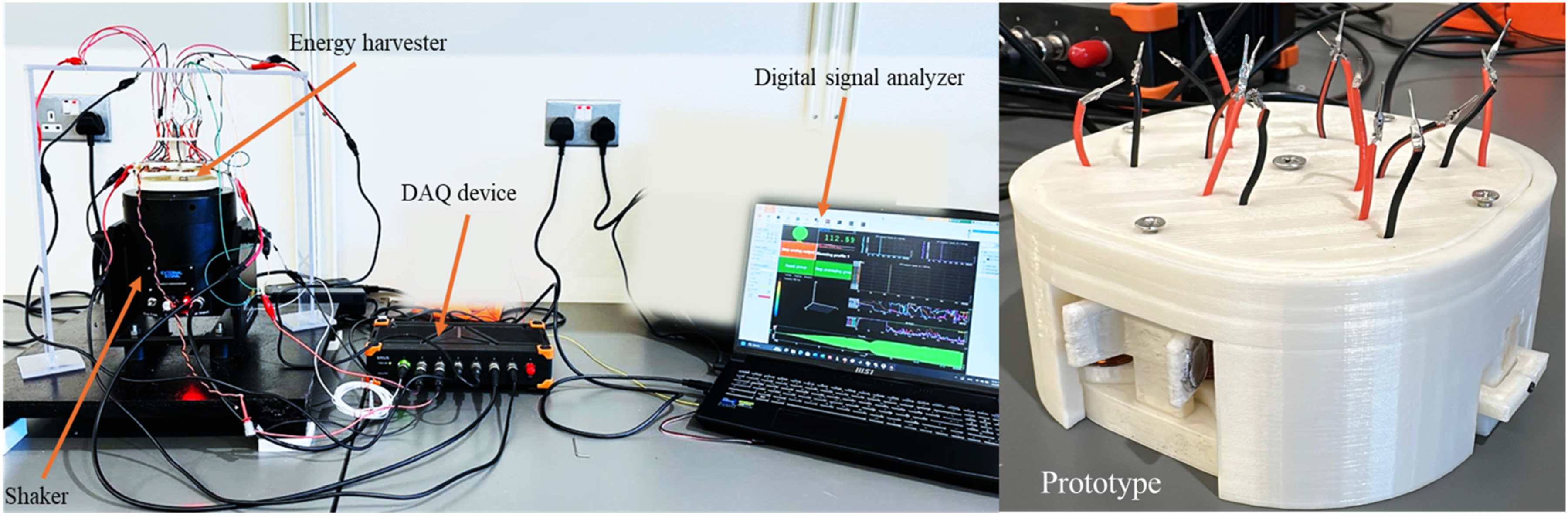
Results and discussion
Experimental results
The results show that the developed hybrid energy harvester demonstrated varying performance across four tip mass configurations (M1, M2, M3, and M4). The occurrence of multiple resonance frequencies shows the system’s behavior as broadband. The M4 configuration with eight piezoelectric patches achieved the maximum average voltage of 27.81 V with magnetic nonlinearity, while 26.85 V was achieved with the same system without magnetic nonlinearity, as depicted in Figure 8(a) and (b). The increase in bandwidth of the energy harvester with the magnetic nonlinearity has been noticed, which leads to an increase in output voltages (Ibrahim et al., 2017). Table 2 describes the experimental results of both systems, including resonance frequency, peak voltage, lower and upper cutoff frequencies, and bandwidth. The output voltage of the energy harvester from piezoelectric (a) with magnetic nonlinearity and (b) without magnetic nonlinearity. Experimental results of the hybrid energy harvester.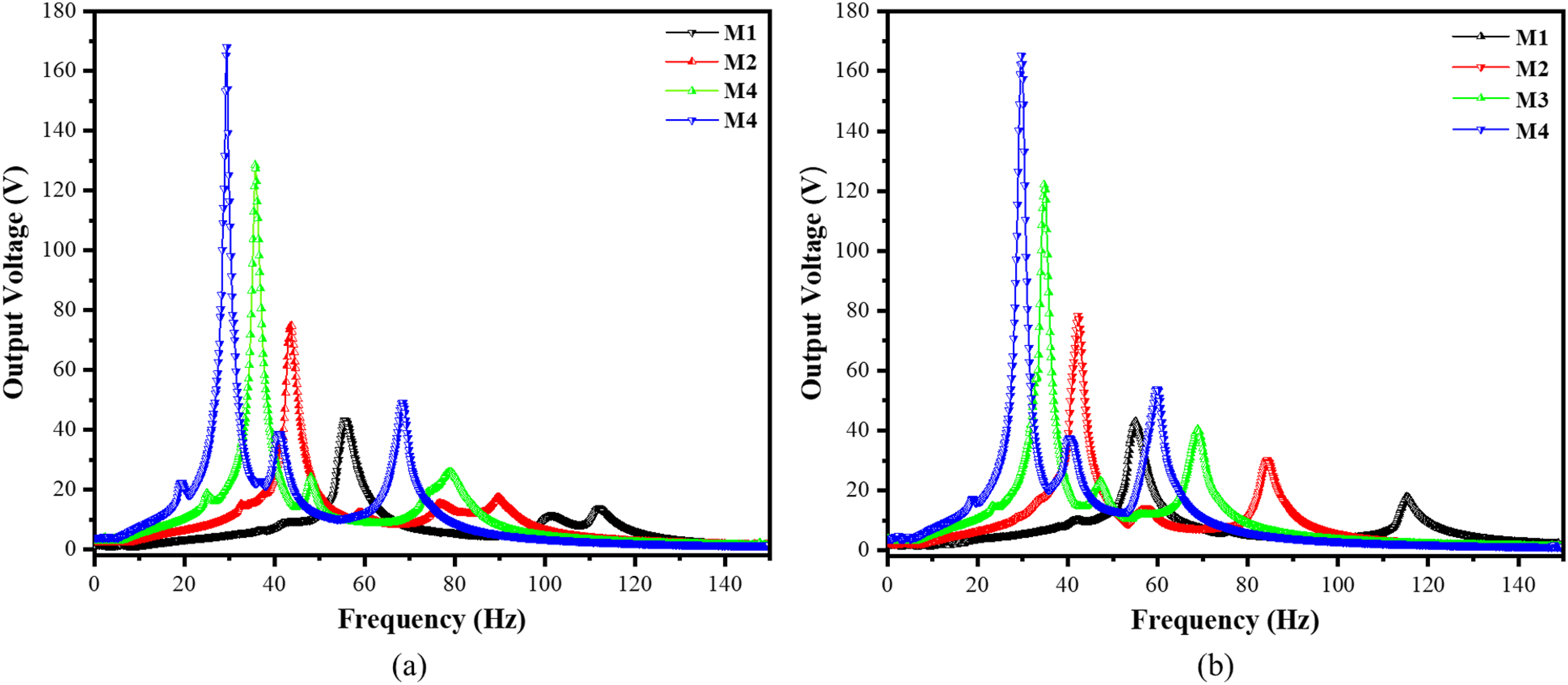
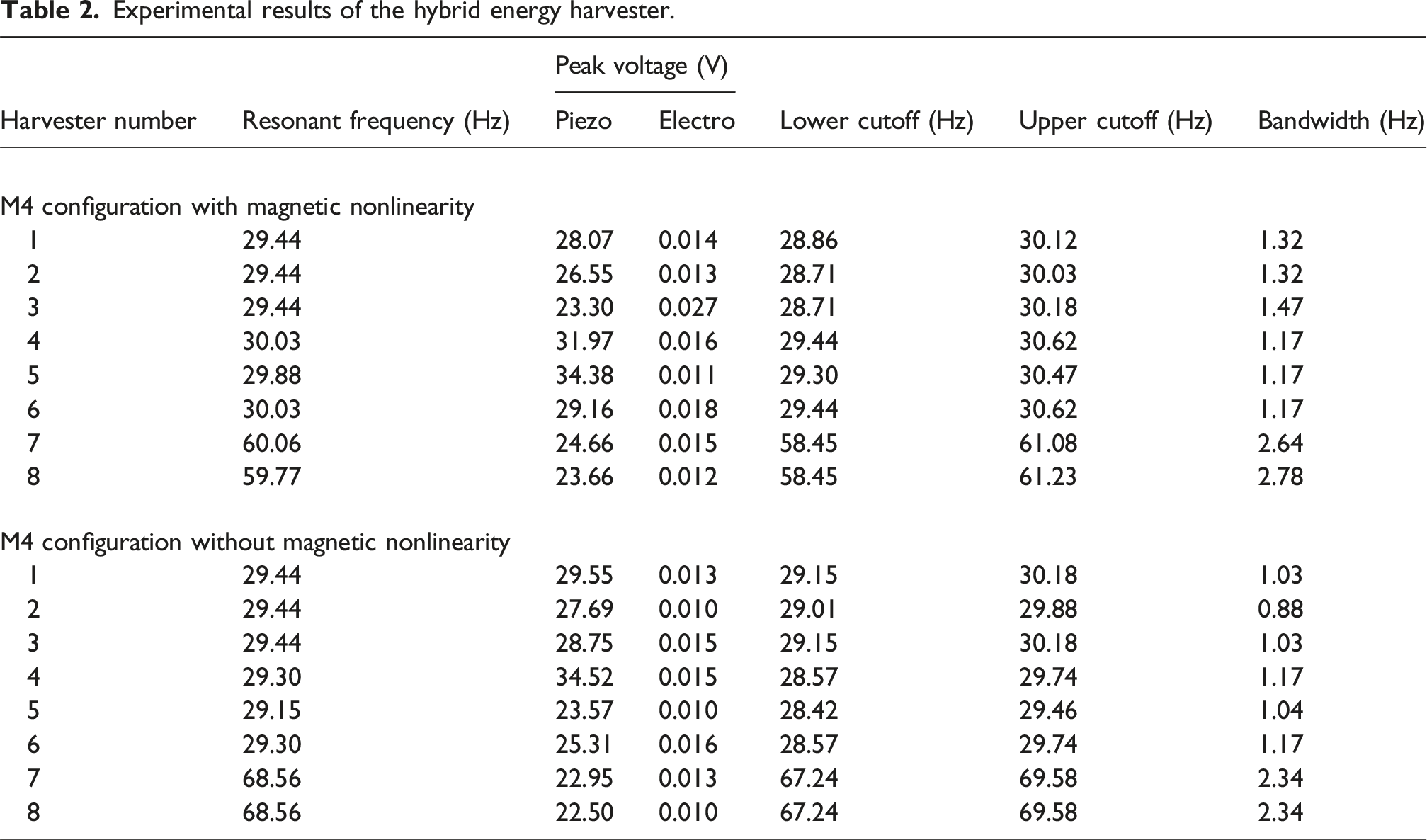
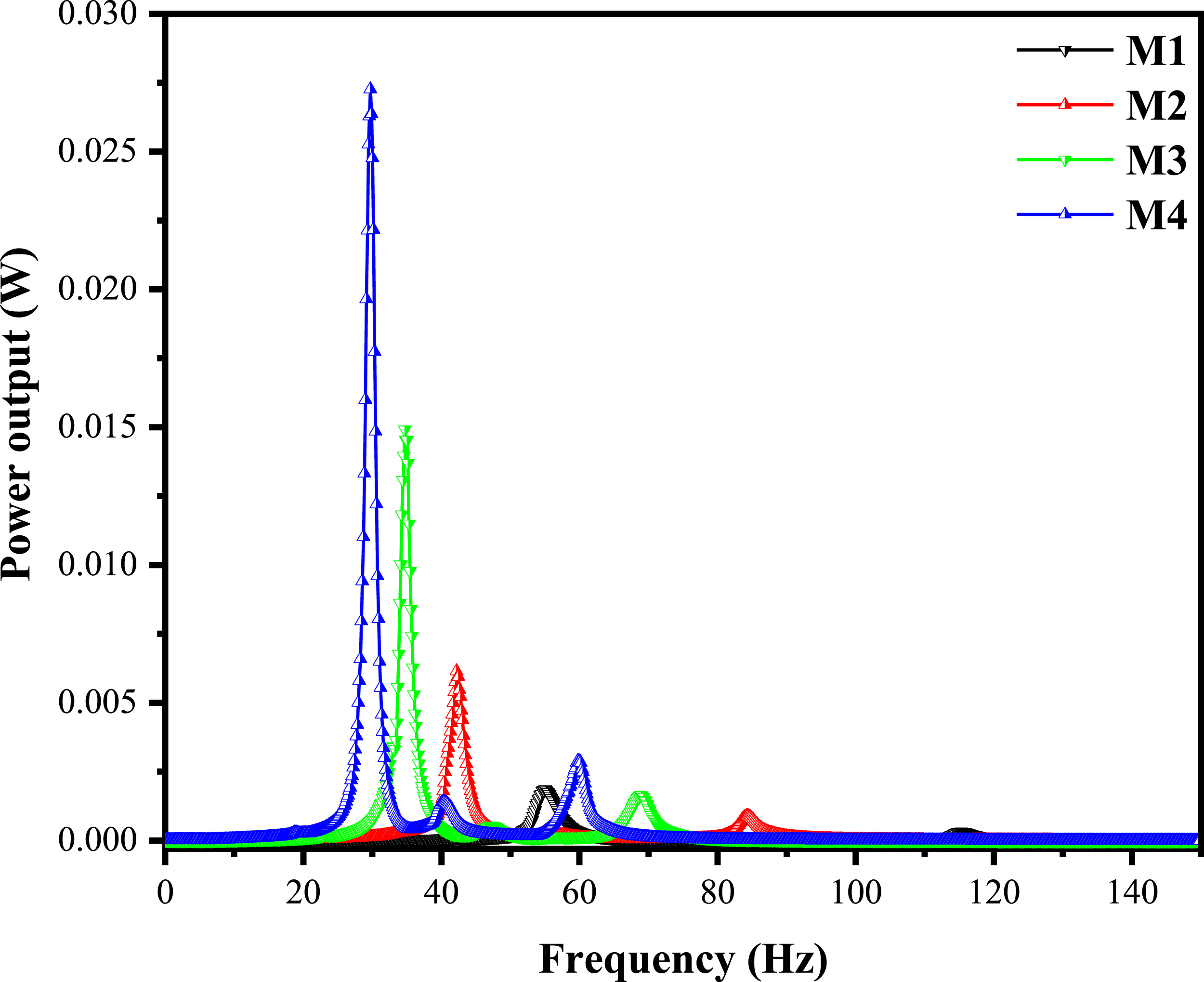
Figure 9(a) and (b) illustrates the output voltage versus frequency curves for the electromagnetic energy harvester configurations of M1, M2, M3, and M4. Among these, the M4 configuration, which incorporates eight electromagnetic energy harvesters, demonstrated the highest performance. With magnetic nonlinearity included, the M4 configuration achieved a maximum average voltage of 0.014 V, compared to 0.012 V without magnetic nonlinearity, maintaining a fixed gap of 10 mm between the coil and magnet. This improvement in voltage output shows the impact of magnetic nonlinearity on enhancing the system’s energy harvesting efficiency. The results also highlight the importance of optimizing the gap distance and incorporating nonlinear magnetic effects to maximize the performance of electromagnetic energy harvesters, particularly in configurations with higher complexity and greater energy harvesting potential. An overall average output power of 0.773 mW and an energy density of 0.0101 W/m3 at 1 MΩ external load and 0.736 nW from electromagnetic induction were achieved with the tip mass configuration M4. In comparison, the average output powers for configurations M1, M2, and M3 were 0.0289 × 10⁻³ mW, 0.957 × 10⁻³ mW, and 0.239 mW, respectively, as illustrated in Figure 10. Output voltage curve for electromagnetic energy harvester (a) with magnetic nonlinearity and (b) without magnetic nonlinearity. Power output verses frequency response curve of hybrid energy harvester.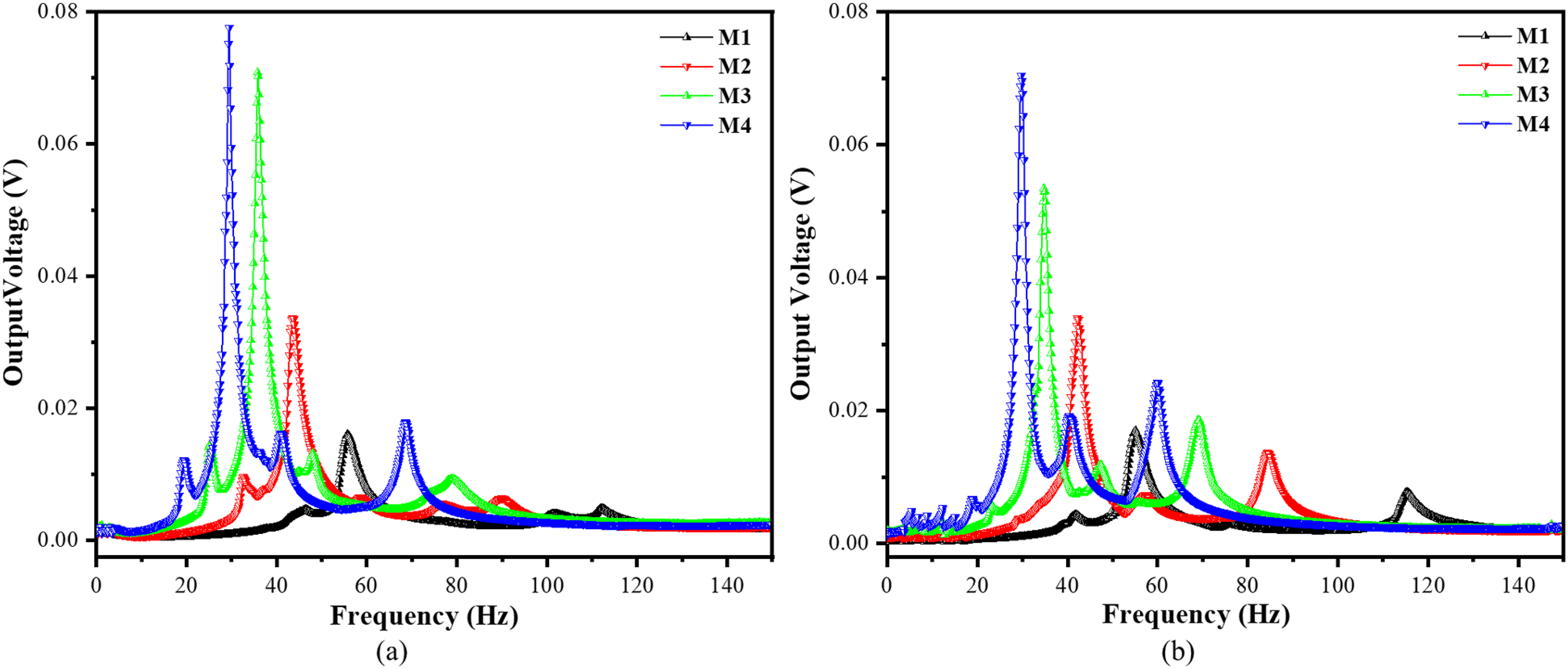
The frequency average value (FAV) for the combined (piezoelectric + electromagnetic) energy harvesting performance of the M1, M2, M3, and M4 configurations were calculated for both with and without magnetic nonlinearity. With magnetic nonlinearity, the FAV values were 6.19, 8.25, 9.94, and 11.37 V/Hz for M1, M2, M3, and M4, respectively. Without magnetic nonlinearity, the corresponding FAV values were slightly lower at 5.99, 8.13, 9.87, and 11.27 V/Hz, as illustrated in Figure 11. These results confirm that the harvester’s efficiency improves with a higher tip mass, with the M4 configuration achieving the highest FAV in both cases. This demonstrates that the M4 configuration is the most effective for energy harvesting across a broad frequency range. Additionally, including magnetic nonlinearity further enhances the system’s performance, as evidenced by the higher FAV values, highlighting its role in optimizing energy conversion efficiency. The frequency average value (FAV) was calculated in the frequency range of f1 = 0 to f2 = 150 Hz for generated voltage V
i
using equation (6), and the calculated values are presented in Table 3. Frequency average value (FAV) curve with and without magnetic nonlinearity. Frequency average value (FAV) of hybrid energy harvester with and without magnetic nonlinearity at the configuration of M4.
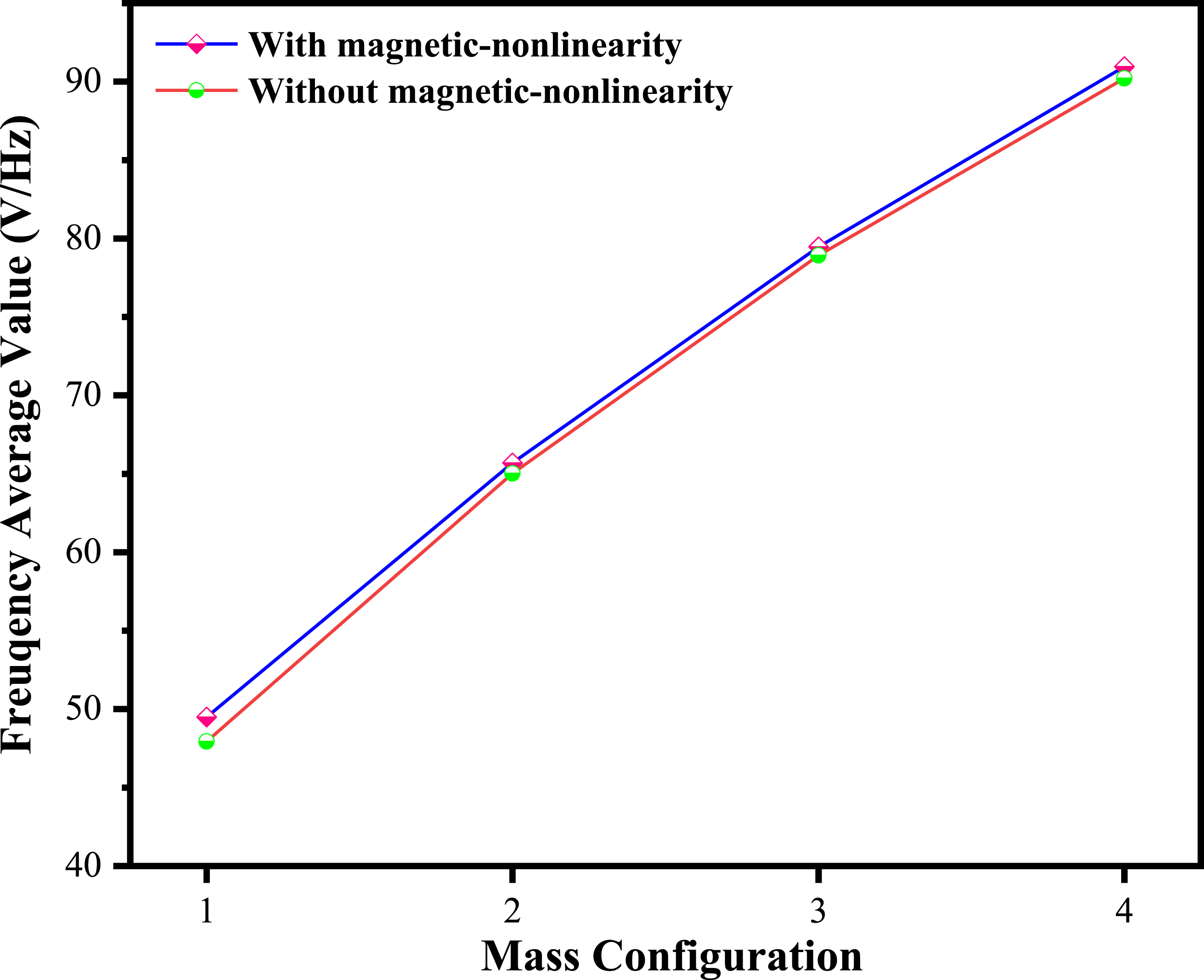
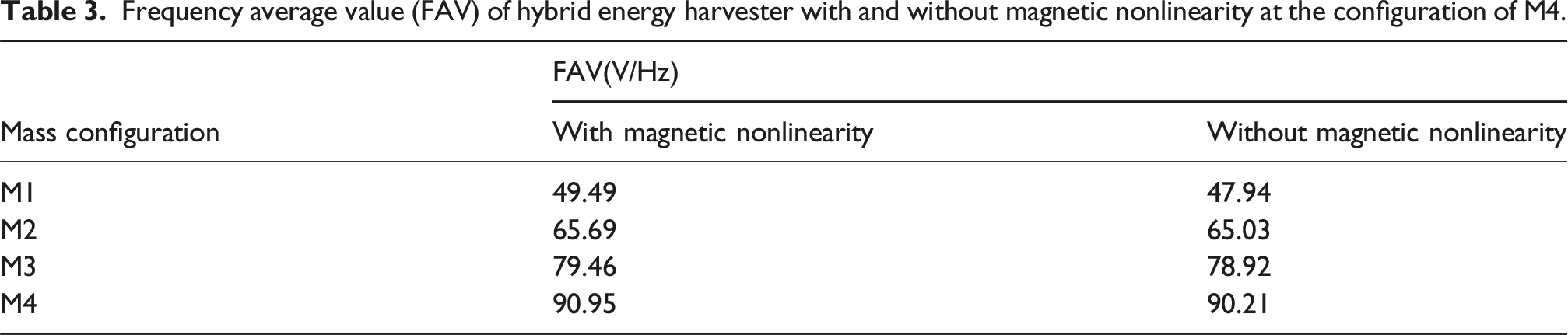
Figure 12 presents a frequency response graph alongside finite element analysis (FEA) mode shapes of curved T-shaped and straight beams operation of vibration energy harvester (VEH) in multi-resonance frequency, indicating the structure’s natural frequencies where vibration amplitude is maximized. The first mode primarily exhibits bending, while higher modes involve torsional and complex deformations. These insights help optimize the placement of piezoelectric patches and electromagnetic components, ensuring maximum energy conversion by targeting high-strain regions and leveraging multiple resonances for broadband energy harvesting. Performance of VEH in multi-resonance frequencies.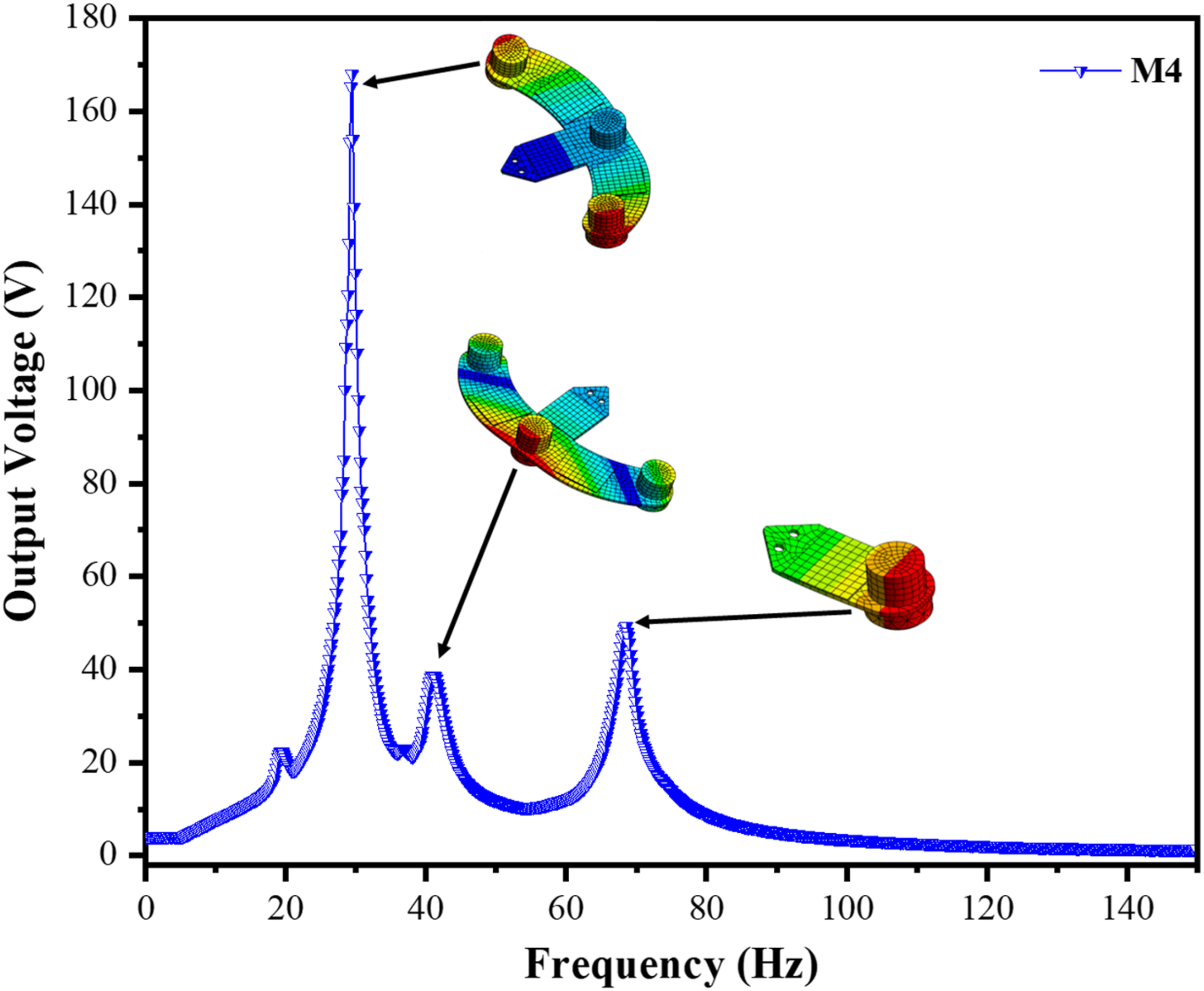
Comparative analysis
A comparative analysis of several recent studies on hybrid and T-shaped piezoelectric energy harvesters, it is evident that structural design and magnetic coupling significantly influence power output and operational bandwidth. For instance, the reversed tapered T-shaped beam (RTB) harvester demonstrated a peak power output of 4.6 mW with a 12.3%–28.3% reduction in fundamental resonance frequency compared to other T-shaped configurations, indicating the impact of beam tapering and PZT placement (Ibrahim et al., 2024). Similarly, in the study involving magnetic coupling, the addition of magnets increased the output from 0.21 mW to 0.64 mW, while also reducing the resonant frequency from 16.6 Hz to 15.3 Hz, demonstrating the influence of magnet spacing and interaction forces on performance (Zhang et al., 2022). Another T-shaped beam design featuring bimodal frequency response achieved a maximum power of 2.87 mW and improved bandwidth due to bidirectional coupling and geometric optimization (Jiang et al., 2024b). Additional relevant studies further highlight this trend including the innovative MEMS-based T-shaped piezoelectric harvester proposed by Nabavi and Zhang (2019), which provides a comprehensive benchmark for the current design. This MEMS harvester demonstrated a significant enhancement in energy conversion efficiency by over 4.8 times and a 36% reduction in resonant frequency compared to conventional straight-cantilever configurations. The design utilizes both the anchor and tip regions for stress generation, increasing output energy density while maintaining a compact footprint. Furthermore, the T-shaped piezoelectric energy harvesters demonstrate the potential of the design to operate effectively under low-frequency ambient vibrations. FEM simulation results showed a peak displacement of 2.47 mm and stress of 2.39 × 10⁸ N/m2 at a resonant frequency of 238.75 Hz under 1 g excitation, validating its suitability for energy harvesting in low-frequency environments (Uddin et al., 2016).
Compared to these, the present work focuses on the geometric optimization of a curved T-shaped beam, achieving competitive output performance while operating in the low-frequency domain. These comparisons reinforce the effectiveness of beam shape design in enhancing energy harvesting efficiency and validate the potential of the proposed configuration for low-frequency ambient vibration applications.
Conclusion
This study presents a novel curved T-shaped beam-based hybrid piezoelectric-electromagnetic VEH with enhanced energy harvesting capabilities and a broadened frequency range. The combination of theoretical modeling, FEA simulations, and experimental validation demonstrates the effectiveness of the proposed design. (1) The integration of curved T-shaped and straight cantilever beams, along with magnetic nonlinearity, enables the system to operate effectively across a broad frequency range. (2) Experimental results highlight the impact of tip mass variations, with the M4 configuration achieving the combined (piezoelectric + electromagnetic) average voltage output of 27.824 V, showcasing its superior performance at lower and higher frequencies. The piezoelectric harvester achieved a maximum average power output of 0.773 mW and an energy density of 0.0101 W/m3 as well as 0.736 nW for electromagnetic harvester at the configuration M4, validating its potential for low-power systems. (3) The frequency average value (FAV) analysis reveals a consistent improvement in energy harvesting efficiency with increasing tip mass, with the M4 configuration yielding the highest FAV of 11.37 V/Hz with magnetic nonlinearity and 11.21 V/Hz without magnetic nonlinearity. (4) The proposed system is highly effective in harvesting energy from broadband vibrational sources, making it ideal for powering low-power devices such as wireless sensors, IoT devices, and wearable electronics like fitness trackers to harvest energy from body movement vibration. (5) Potential applications include structural health monitoring, industrial automation, and smart infrastructure, where reliable and sustainable energy harvesting is critical. (6) Implementation strategies, for remote and harsh environments, by designing robust packaging to withstand temperature and extreme humidity. Uses frequency-tuned configurations (e.g., M1–M4) to match the vibration characteristics of the environment for optimal harvesting. Deploy the harvester on vibrating machinery or infrastructure. The harvester can directly power microcontrollers and RF modules like ZigBee or LoRa, reducing the need for battery replacement. A simple power management circuit with a capacitor or supercapacitor can be used for energy storage. (7) Using 3D printing technology for fabrication ensures cost-effectiveness, design flexibility, and scalability, making the harvester suitable for diverse applications.
Footnotes

Author contributions
Funding
The author(s) disclosed receipt of the following financial support for the research, authorship, and/or publication of this article: This work is supported through the Qatar University Graduate Assistantship Grant. Open Access publication funding is provided by the Qatar National Library (QNL).
Declaration of conflicting interests
The author(s) declared no potential conflicts of interest with respect to the research, authorship, and/or publication of this article.