




Abstract
A microperforated panel (MPP) often suffers from a limited absorption bandwidth and poor sound absorption in the low frequency range. The present study aimed to propose an MPP-panel-type resonator (PR) compound structure that can simultaneously widen the half-absorption bandwidth and improve the poor absorption at the low frequency range. A vibroacoustic model is developed and compared to finite element simulations to demonstrate its accuracy. The vibration characteristics of the compound structure and the surface impedance are analyzed to reveal the mechanism forming the absorption characteristics of an MPP-PR structure. It is found that backing an MPP with a panel-type resonator (PR) creates a low frequency absorption peak but followed by an absorption valley that decreases the absorption bandwidth. The analysis showed that the phase difference between velocity of air particles in perforation and the PR panel velocity dictates the absorption characteristics associated with the PR resonance. A multi-resonators panel-type resonator (MPR) is found that the absorption valley associated with the host panel resonance splits into multiple smaller amplitude absorption dips improving absorption performance. The proposed MPP-MPR compound structure demonstrated a relatively wider half-absorption bandwidth with improved low frequency absorption.
1. Introduction
MPPs are effective sound absorbers in the mid and high frequency range proposed by Maa (Maa, 1998) but typically suffers from poor absorption at the low frequency range and a limited absorption bandwidth.
Researchers have therefore tried to widen the absorption bandwidth by using multiple layers of MPP arranged in series (Bucciarelli et al., 2019; Sakagami et al., 2006; Yang et al., 2019). They have also proposed more compact configuration by arranging different MPPs in parallel (Mosa et al., 2019, 2020; Prasetiyo et al., 2016; Qian and Zhang, 2022) and also using turned double layer MPP (Zhao and Lin, 2022). Previous studies have tried to modify the backing air cavity into L-shaped cavities (Gai et al., 2017); coiled cavities (Prasetiyo et al., 2021; Wu et al., 2022); sub-cavities with different dimensions arranged in parallel (Guo and Min, 2015). Dividing backing cavities into sub-cavities are effectively arranging an MPP-cavity system with different Helmholtz resonant frequencies in parallel.
The addition of local resonators is a common approach to improve the low frequency absorption of MPP and one of which is the Helmholtz resonator (HR) (Park, 2013; Sanada and Tanaka, 2013) which can be tuned to a low frequency by changing its geometric parameters but suffers from a narrow absorption bandwidth. Hence, researchers have proposed the use of HRs with different resonant frequencies arranged in parallel or series with the MPP (Gai et al., 2016; Mahesh and Mini, 2021). Regardless of the arrangement, an additional HR contributes to an absorption peak near its resonant frequency. Apart from HR, researchers have investigated panel-type and membrane-type resonator backing MPP to improve the low frequency absorption (Gai et al., 2018; Zhao et al., 2016, 2018; Zhao and Fan, 2015; Zhu et al., 2018). Panels/membranes were tuned to a relatively low fundamental resonant frequency to achieve a low frequency absorption peak but the absorption mechanism was not investigated.
The MPPs are commonly assumed to be rigid, however, an unexpected absorption peak has been observed in experiments (Lee and Swenson, 1991). A previous study has developed a theoretical model that accounted for the acoustic-structural coupling (Takahashi and Tanaka, 2002) but the structural resonance was not considered. The effect of MPP structural resonance on sound absorption was later investigated by Lee et al. (Lee et al., 2005; Lee and Lee, 2007). These studies have demonstrated that the structural resonance of MPP generates an additional absorption peak which was not predicted by a rigid MPP analytical model. However, when the MPP structural resonance coincided with the absorption peak due to perforation, an absorption dip was observed. Researchers have further investigated the effect of adding local resonators on MPP, to form a metamaterial panel (Ren et al., 2019; Zhao et al., 2021), on the absorption characteristics at the absorption dip region. When the resonator’s resonant frequency coincided with the resonant frequency of MPP, the absorption valley associated with MPP structural resonance splits into two absorption dips with smaller amplitudes.
In summary, developing a wideband MPP absorber with improved low frequency absorption remains a challenge. Works that revolved around improvements to absorption characteristics of MPP are often discussed but the mechanism forming the absorption characteristics is not yet fully explored, limiting the way that such structures can be optimized to extend the low frequency absorption bandwidth. Therefore, the novelty in this study is to propose an MPP-MPR compound structure to simultaneously improve the poor absorption of MPP at low frequencies and widen the continuous half-absorption bandwidth. This study also investigates the mechanism forming the absorption characteristics associated with the local resonance of MPR, which, to the best of authors’ knowledge, has not been previously focused upon. In the present work, a fully coupled vibroacoustic model is developed based on the modal coupling method to predict the absorption characteristics of an MPP-MPR structure and its accuracy is verified by comparing theoretical results to those from finite element model. The theoretical and numerical results will be analyzed to explain the mechanism forming the absorption characteristics of the compound sound absorbing structure. The paper is arranged as follows. In Section 2, the vibroacoustic model developed will be presented. Next, the results obtained from the theoretical and numerical models are discussed in detail in Section 3 in which the bandwidth widening effect of an MPP-MPR structure will be studied. Finally, the conclusions will be presented in Section 4.
2. Analytical modelling of a coupled MPP-MPR vibroacoustic system
An analytical model of a coupled MPP-MPR vibroacoustic system is developed by extending the modal coupling method through the inclusion of the effect of MPP perforations and the sound radiation associated with MPP flexibility. The configuration used in this study is shown in Figure 1. The configuration of MPP-MPR structure investigated in this study consists of an MPP backed by cavity I,MPR and cavity II that is rigidly terminated.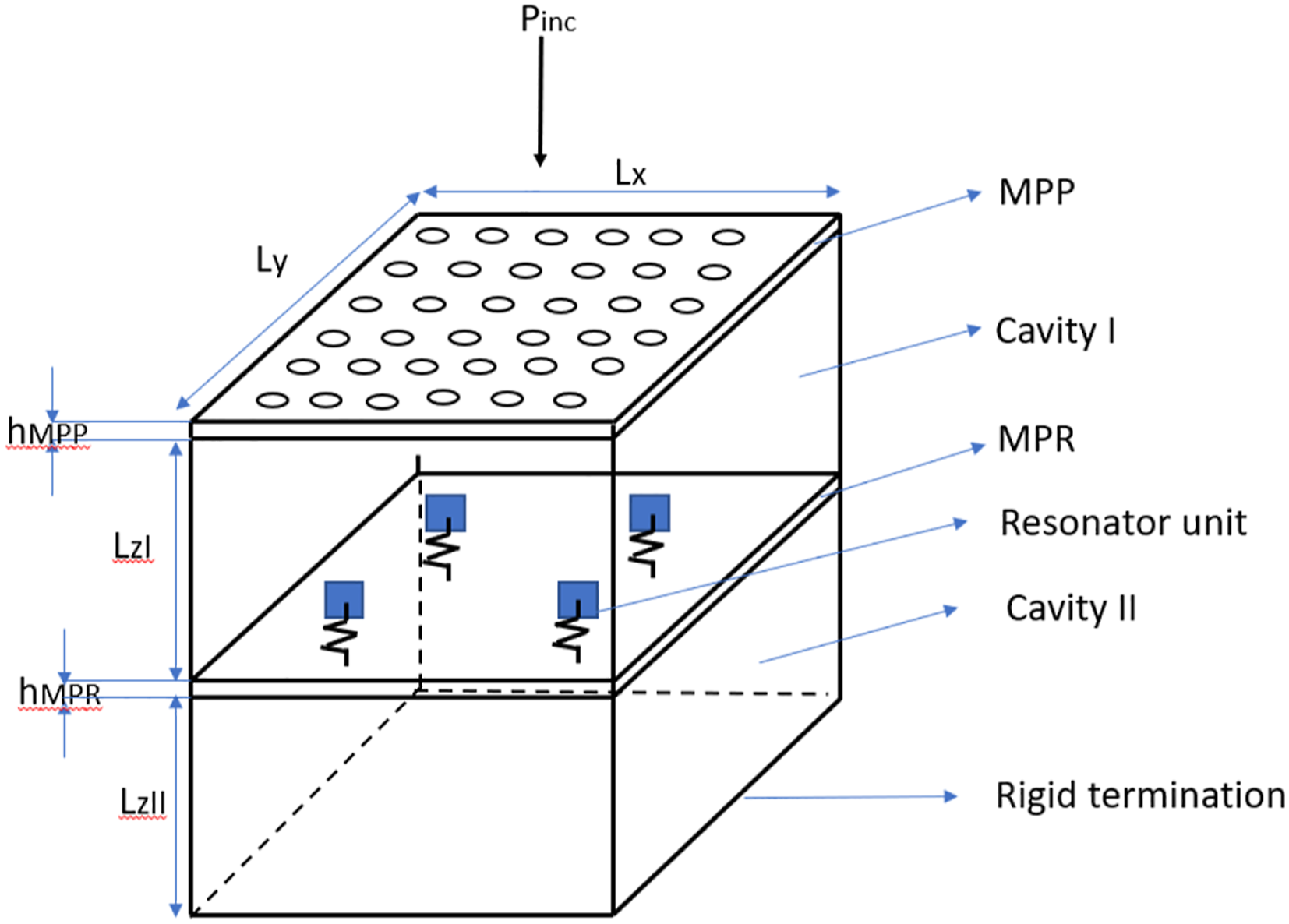
2.1. Modelling of a coupled MPP-MPR vibroacoustic system by the modal coupling method
The incident acoustic pressure wave is taken to be normal to the MPP. The pressure radiated “upward” due to structural sound radiation of MPP is neglected as it is commonly assumed to be negligible as compared to the incident pressure. Therefore, the backed pressure acting on the MPP,




The parameters of the plates and resonators are as follows:

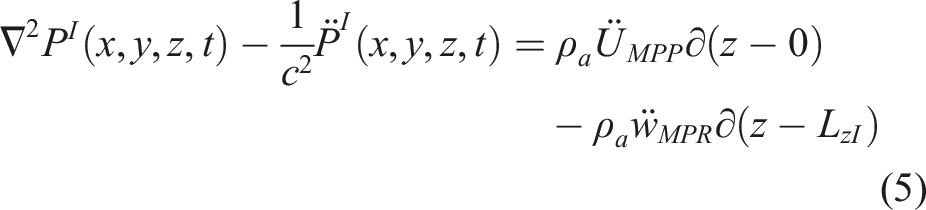



Rearranging equation (8) and substituting into equation (7)
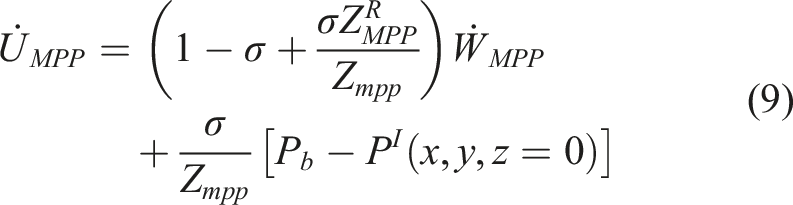
Here



Here




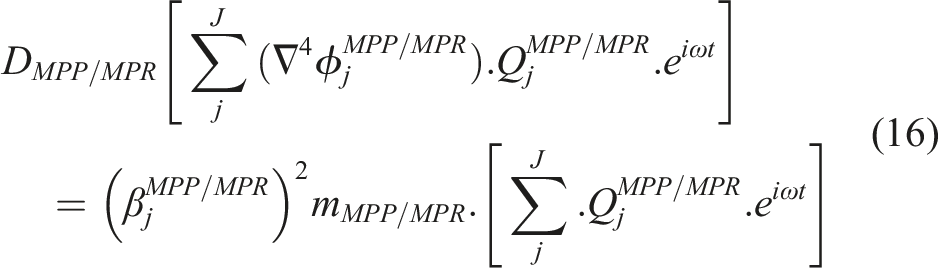

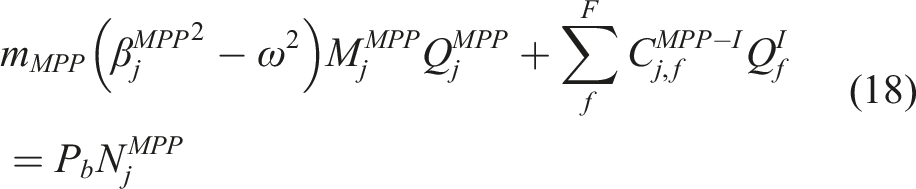
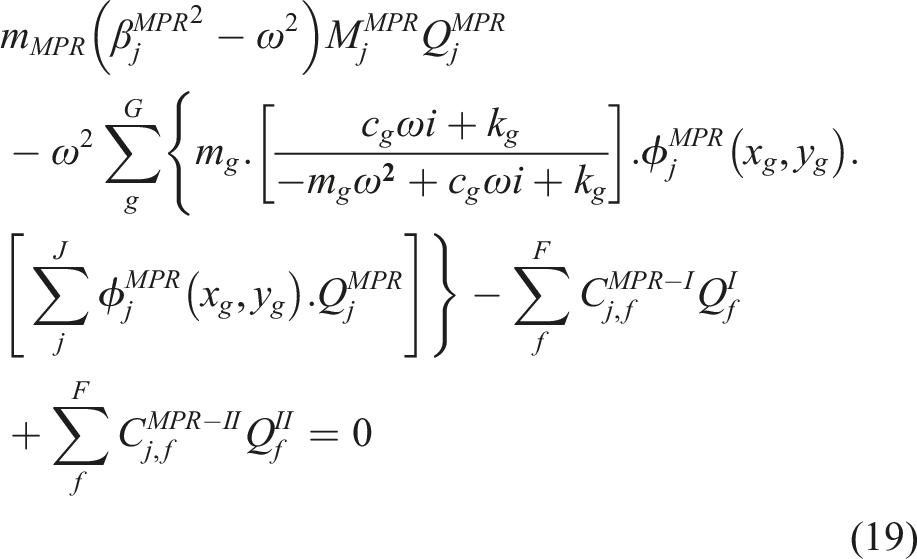
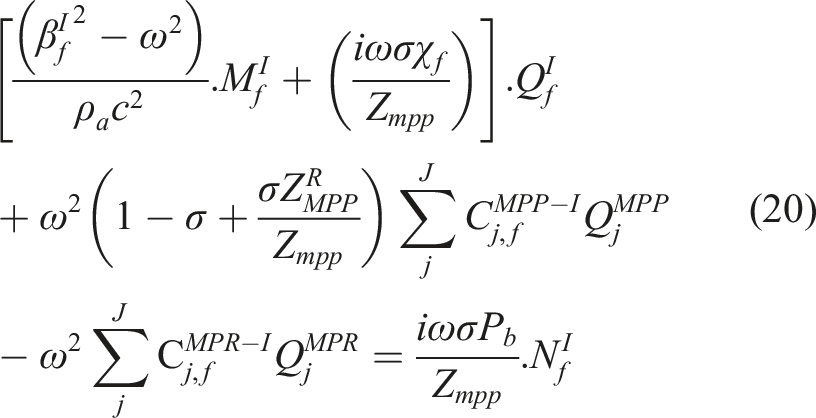




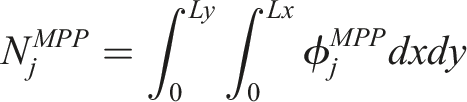



Equations (18–21) are solved for the complex modal amplitudes in structural and acoustic domains.
2.2. Sound absorption coefficient of the MPP-MPR compound structure
The acoustic impedance of MPP and MPR attributed to their structural flexibility are denoted as


The impedance of cavities by assuming the cavity is rigidly terminated which is expressed as


The specific surface impedance, The acoustic impedance connection of an MPP-MPR structure based on an electro-acoustic analogy.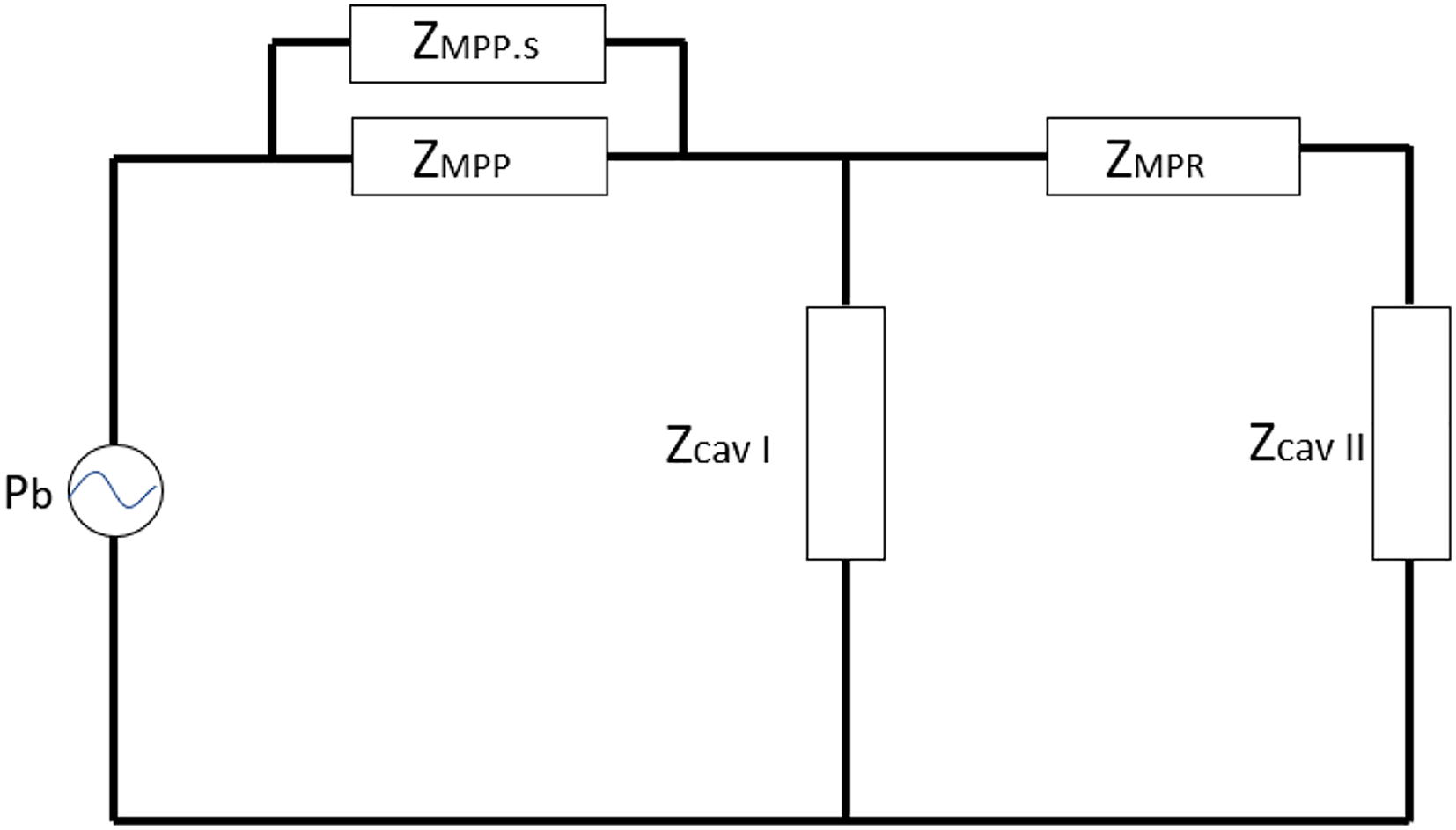

The absorption coefficient can then be calculated from equation (26)

The accuracy of this analytical model is verified by comparing the results obtained with peer reviewed papers which investigated the effect of MPP structural resonance on sound absorption (Lee and Lee, 2007) and backing a rigid MPP with a panel-type resonator to create a low frequency absorption peak (Zhao and Fan, 2015). Although the structure studied are not entirely the same, the current model predicted sound absorption characteristics which are highly in agreement with results in literatures.
2.3. Numerical model of the MPP-MPR compound structure
The analytical model is verified against the numerical model simulated in finite element software, ANSYS. The numerical model is configured by placing the MPP-MPR compound sound absorber in an impedance tube as depicted in Figure 3. The cavities are defined as acoustic regions while MPP and MPR are defined as structural regions. Radiation boundary is implemented on the left end of the impedance tube to simulate a non-reflecting boundary. A plane acoustic wave excitation is initiated from the left end of impedance tube. The thermo-viscous losses in MPP perforations are accounted by assigning “Thermo-Viscous BLI Boundary” boundary condition on acoustic domain in perforations. The fluid-structure interaction between the acoustic domain and MPP and MPR are accounted by assigning “Fluid Solid Interface” on surface of acoustic domain contacting with the structural domain. The MPP and MPR are set to have simply supported boundary conditions in this investigation. As for resonators unit, the mass element is simply rigid aluminum cubes and attached to MPR via spring similar to a lumped mass-spring-dashpot model. The resonators are only allowed to vibrate in transverse direction by restraining the vibration in other directions using “Frictionless” boundary on mass element surface. In practice, the mass can be prepared from any rigid material with the designated mass and the stiffness element can be made from elastomer with the designed cross-sectional area and length to achieve the desired resonant frequency. The absorption coefficient can be extracted and plotted directly in the post-processing step. The solving range is set to be from 100 Hz to 800 Hz with resolution of 10 Hz. In post-processing, the averaged pressure and averaged velocity on the surface of MPP is also extracted to calculate the surface impedance of the overall MPP compound sound absorber. (a) The configuration of numerical model set up in ANSYS to simulate the sound absorption performance of such a structure. (b) The side view of simulation configuration.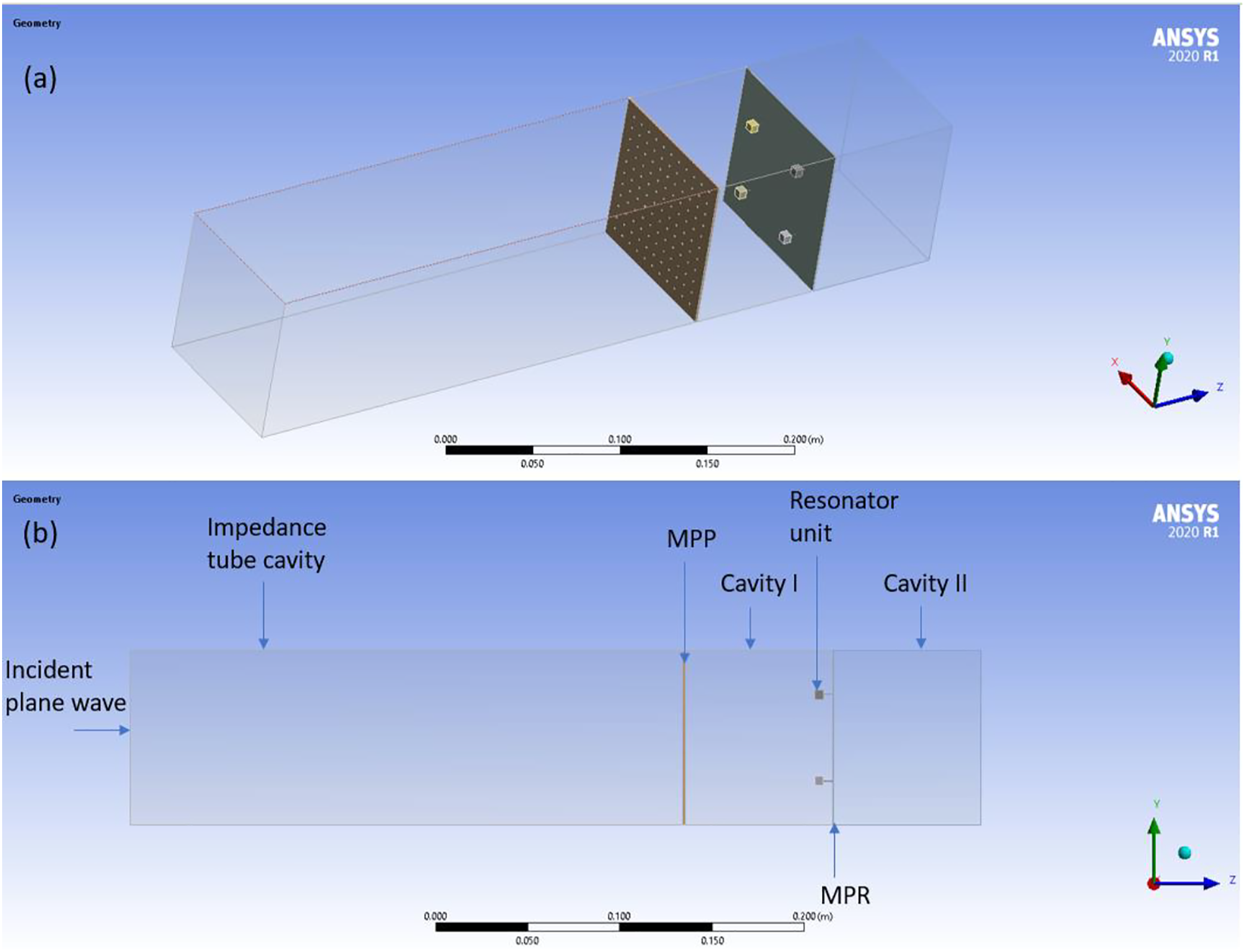
3. Absorption characteristics with the absorption mechanism analysis
3.1. The absorption characteristics of backing MPP with a panel-type resonator
In this section, an additional panel-type resonator (PR) is added to the back of the MPP to form an MPP-PR sound absorber in order to improve the poor sound absorption of MPP at the low frequency range. The use of an MPP-PR demonstrates the ability to create a low frequency absorption peak (Zhao et al., 2018). In this previous work, however, the mechanism forming the absorption characteristics were not studied. Therefore, the PR vibration and surface impedance of MPP-PR will be analyzed to explain the absorption mechanism associated with the PR vibration. Understanding the mechanism forming the absorption trend of an MPP-PR will enable to determine the weakness of this structure and propose modifications for improvement in the later section. The absorption peak associated with the Helmholtz resonance of MPP is called the perforation peak for clarity of this discussion.
The absorption characteristics of an MPP-PR structure is shown in Figure 4. The first absorption peak is attributed to the resonance of PR while the second and third absorption peaks are attributed to Helmholtz resonance of MPP and the structural resonance of MPP, respectively. The use of PR exhibits an additional low frequency absorption peak at around 280 Hz. In terms of half absorption bandwidth, application of PR demonstrates a bandwidth of 319 Hz as compared to 268 Hz in the case of rigid MPP without PR. The absorption coefficient of MPP with the application of PR calculated by the theoretical and finite element models. The MPP-PR structure has the following dimensions: 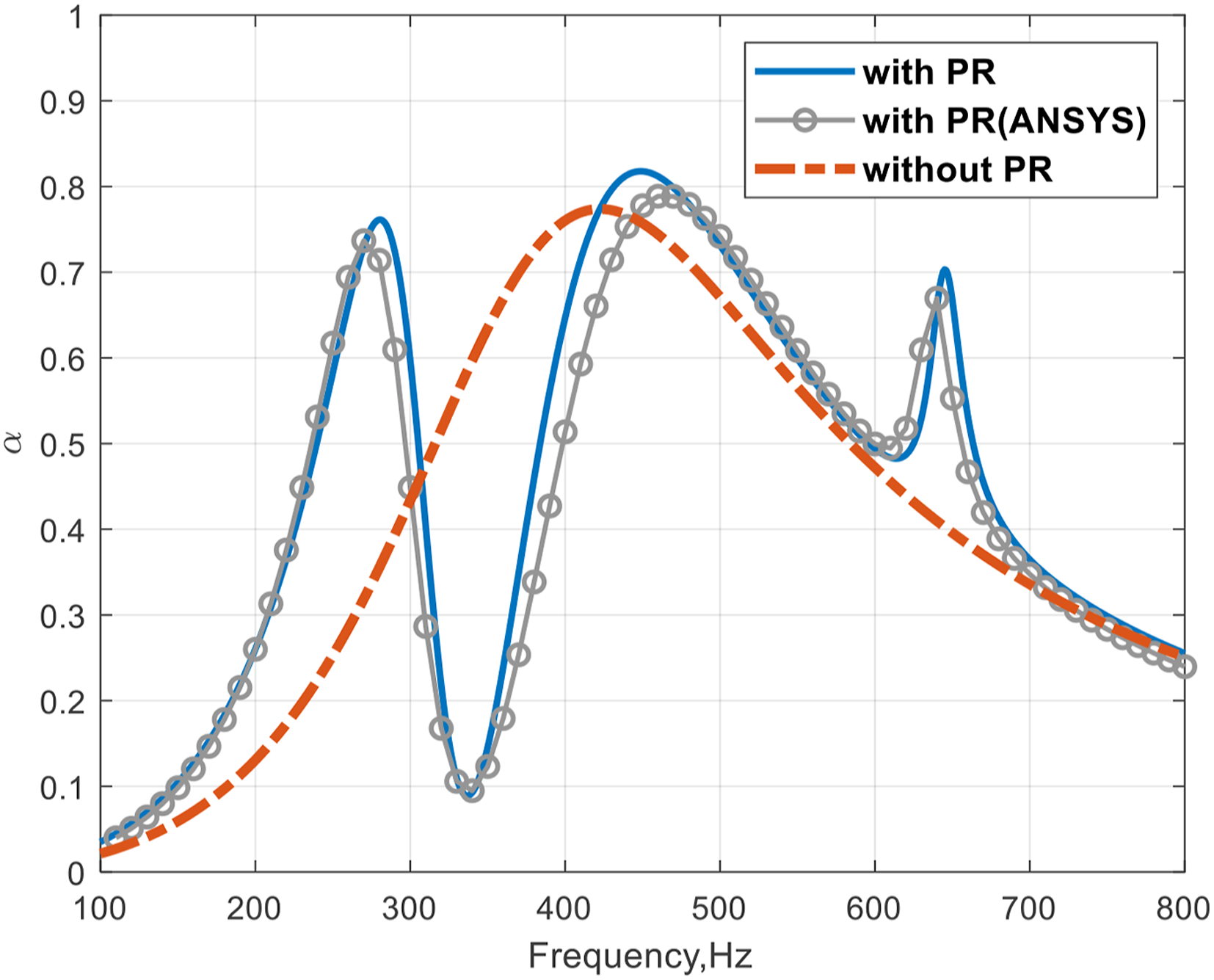
The air-frame relative velocity, (a) The magnitude of relative velocity between air particles and MPP spatially averaged velocity, 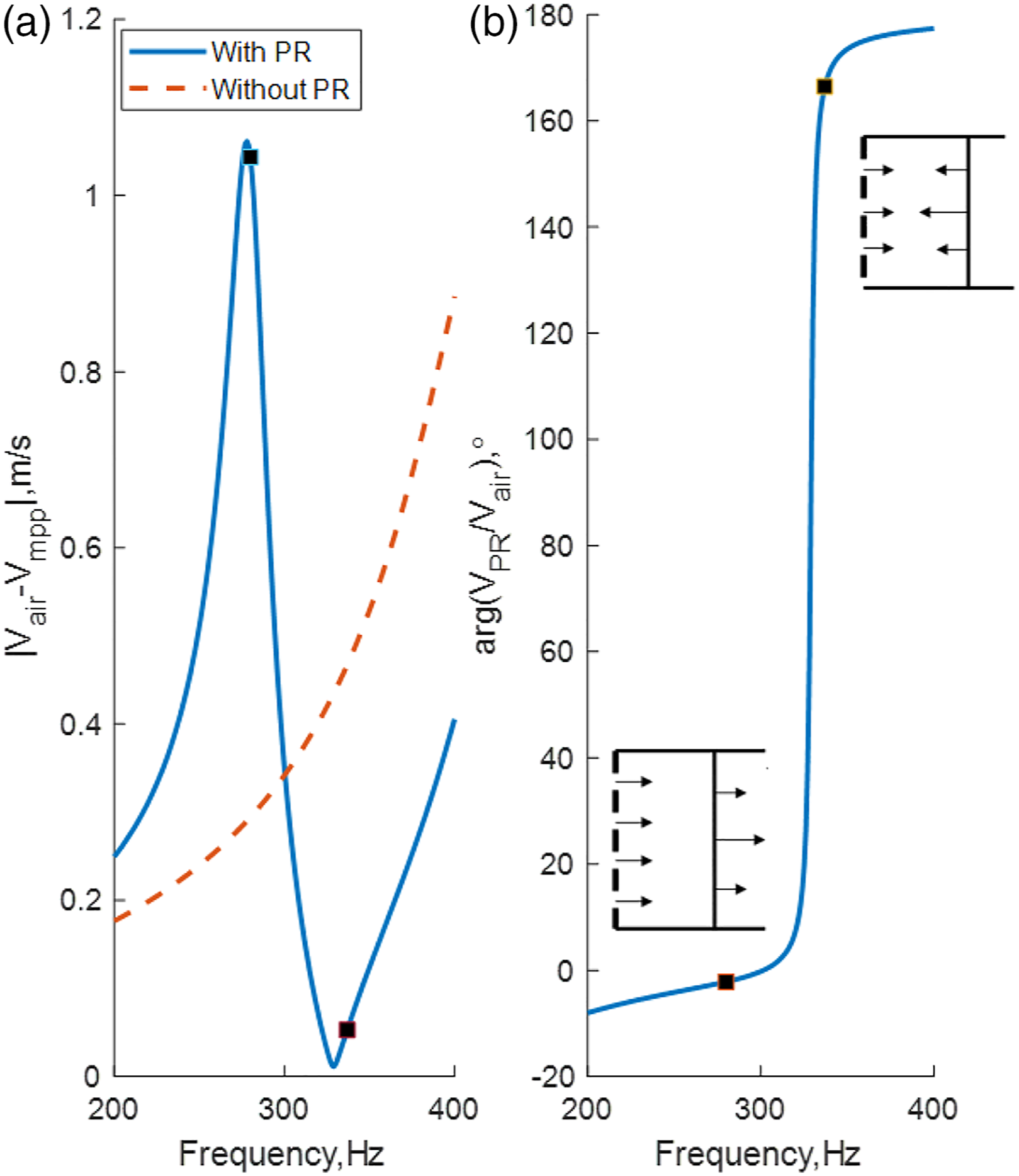
Although the application of PR can create a low frequency absorption peak, however, a significant absorption dip is still present. At the frequency corresponding to the absorption dip, the resonance of PR causes an approximately 180
The surface impedance is shown in Figure 6. The first peak in the resistance and reactance is associated with the resonance of PR, while the second peaks are attributed to the structural resonance of MPP. From the theoretical result obtained, the resistance is not greatly affected outside the resonant frequency range but the presence of PR increases the acoustic reactance significantly at frequencies below the PR resonance. The increase in reactance due to PR resonance fulfils the impedance matching condition in which the acoustic reactance crosses 0 at 280 Hz hence an absorption peak is observed. At a frequency that corresponds to the absorption dip, both the resistance and reactance are at the peak magnitude causing a severe impedance mismatch hence most of the acoustic wave is being reflected. Therefore, further modification of the surface impedance due to PR resonance is important to minimize the absorption dip, which will be proposed in the present study. The influence of PR structural resonance on the normalized acoustic surface (a) resistance and (b) reactance of the MPP-PR compound structure predicted by theoretical and finite element models. The peaks in resistance and reactance occur near the PR resonant frequency. The square marker corresponds to the frequency of absorption peak associated with structural resonance of PR.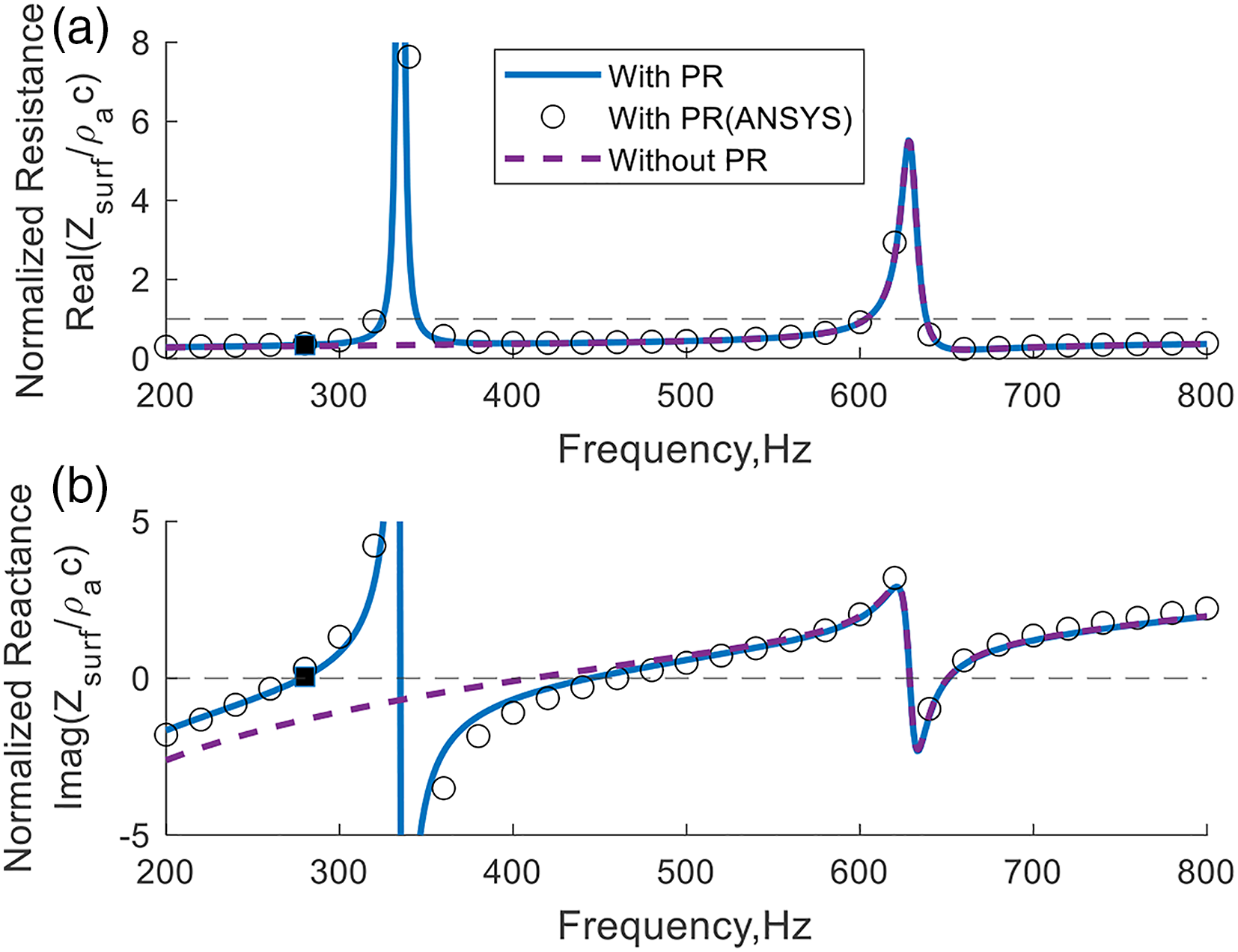
In summary, the absorption characteristics of an MPP-PR associated with the resonance of PR is affected by the phase difference between
3.2. Extending half-absorption bandwidth with the use of a multi-resonator panel-type resonator
In the previous section, backing a flexible MPP with PR exhibits better absorption characteristics in frequencies below 308 Hz; however, the absorption bandwidth is compromised. Hence, this section proposed the installation of resonator units on the PR to create a MPR as shown in Figure 1, to try to eliminate the large amplitude absorption valley. The absorption characteristics of MPP-MPR will be analyzed in this section to explain the effect of backing an MPP with an MPR. The symbol
The total resonator mass to panel mass ratio, resonator mass, stiffness, and its corresponding normalized resonant frequency of each resonator.

The absorption characteristics of MPP-MPR with different mass ratios calculated by the theoretical and finite element models are shown in Figure 7. An additional absorption peak is observed at frequencies around 360 Hz, which is attributed to the local resonance of resonator units. The presence of resonators split the original deep absorption valley at 340 Hz into two smaller amplitude absorption dips at frequencies around 300 Hz and 400 Hz, respectively. Different ratios of The sound absorption coefficient of an MPP backed by a single frequency MPR with different ratios of the total resonator mass to the panel mass.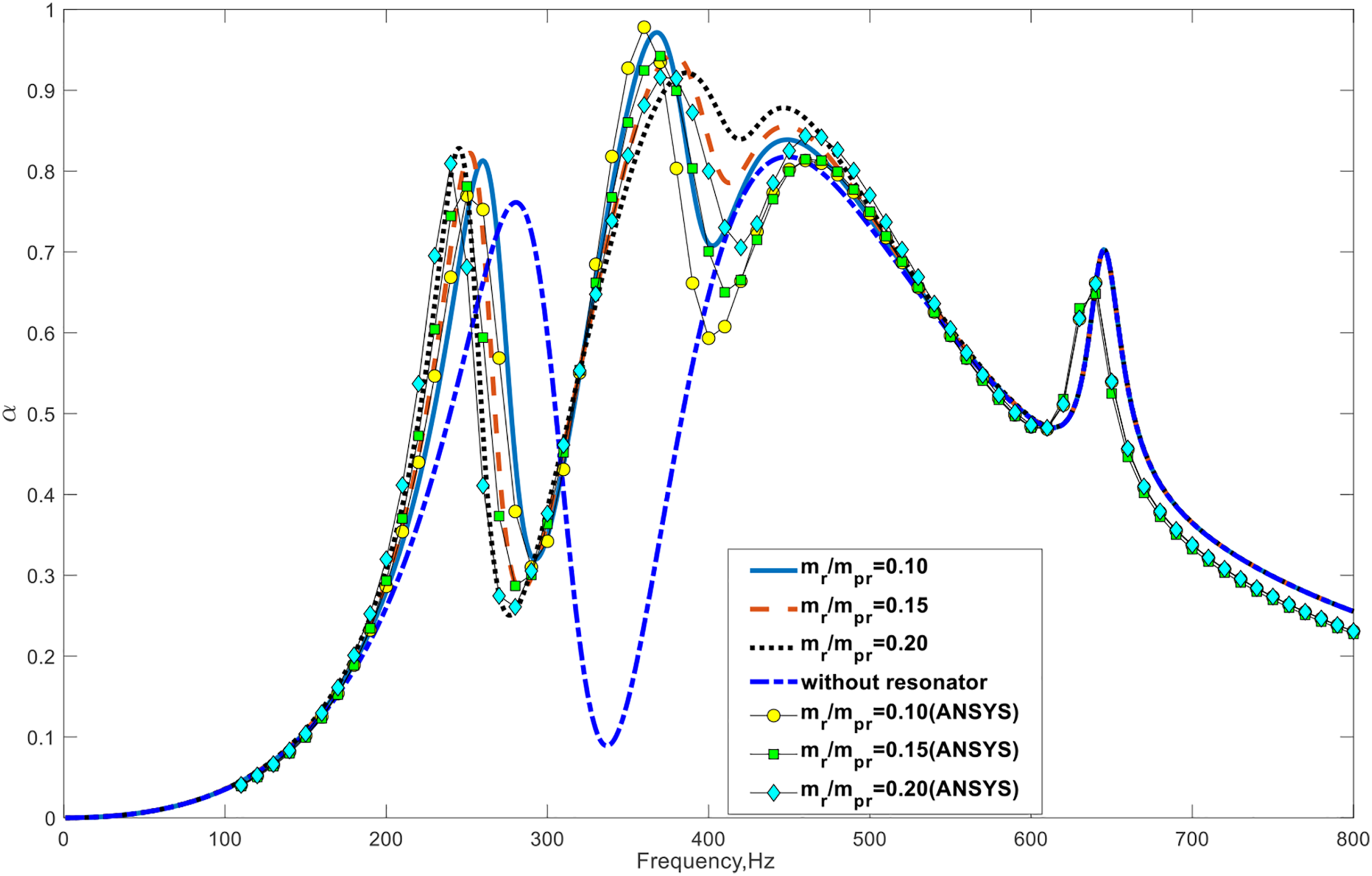
The difference between the (a) The magnitude of spatially averaged velocity of the host panel, 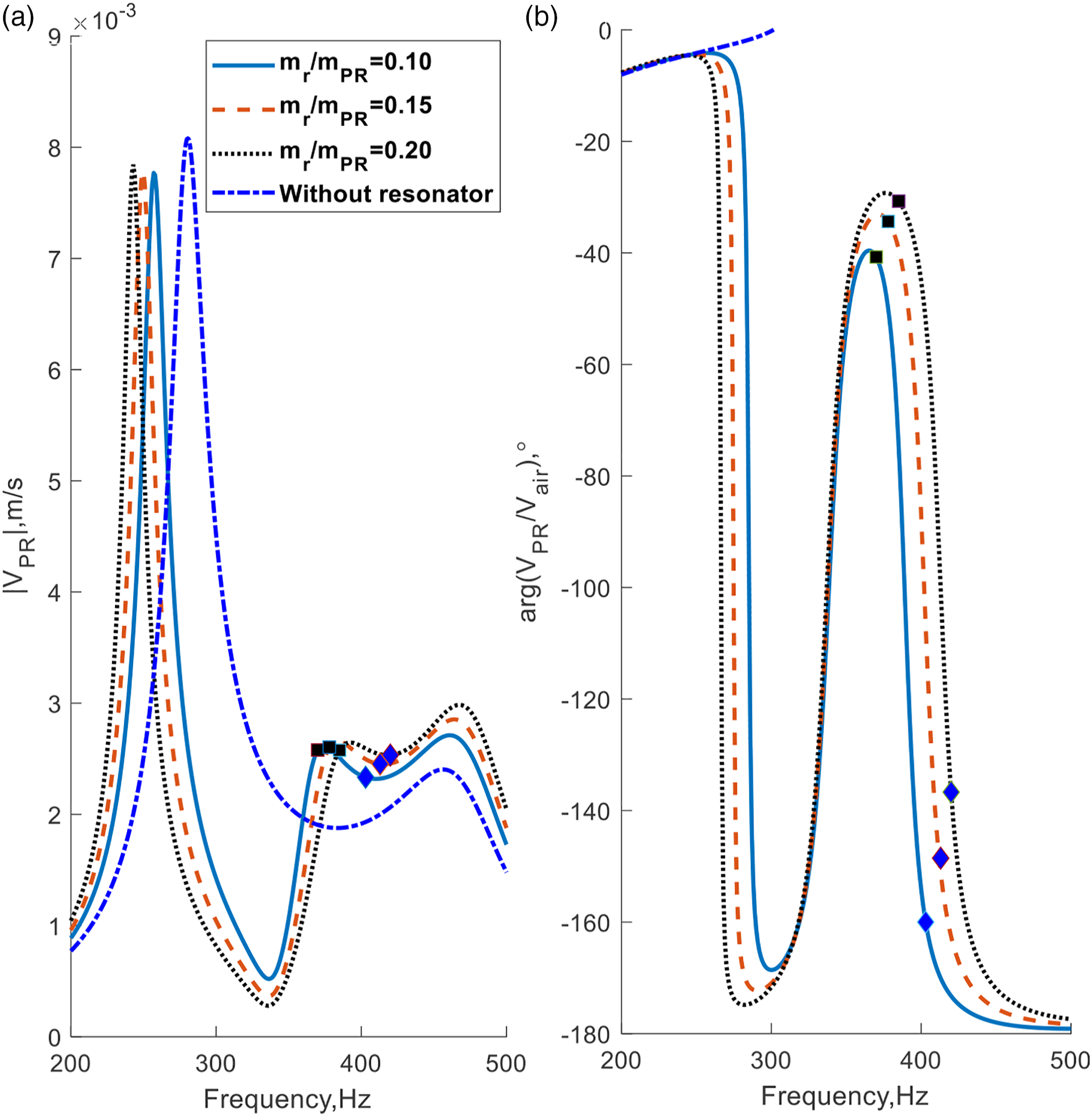
The surface impedance calculated from theoretical and finite element models is shown in Figure 9. The local resonance of resonators reduces The normalized acoustic surface (a) resistance and (b) the reactance of the different mass ratio under the influence of local resonance of MPR and the structural resonance of MPP.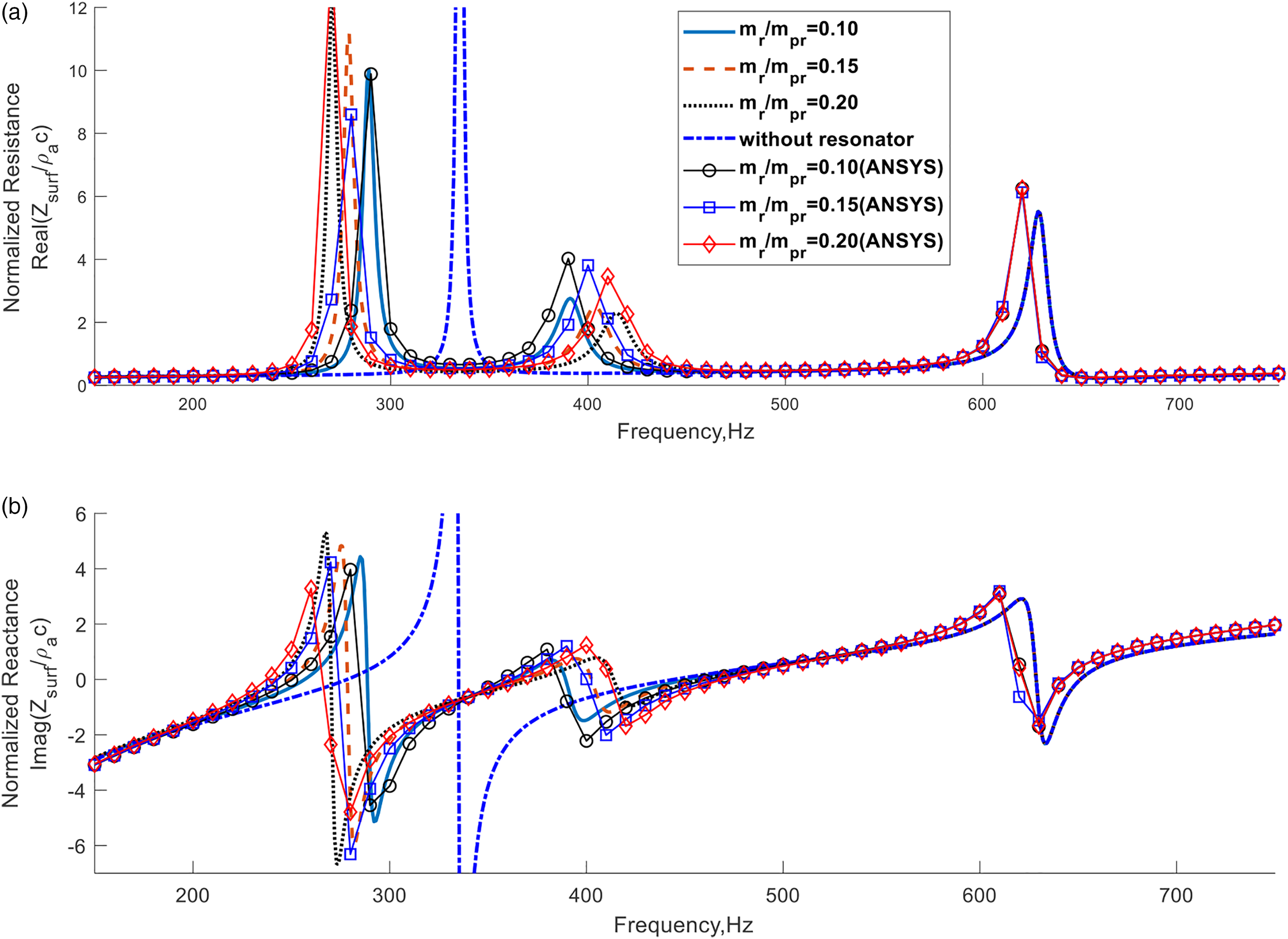
Despite improvements in the absorption dip region due to the presence of resonators, a notable absorption dip still exists at around 300 Hz. However, the frequency range where
In summary, MPP-MPR creates an additional absorption peak attributed to the local resonance of resonator units and splits the absorption valley into two smaller absorption dips. The local resonance of resonators modified the vibration characteristics and the phase of
3.3. Extending the half-absorption bandwidth with an MPR with multi-frequency resonators
Despite the improvement in the half-absorption bandwidth by MPP-MPR structure, an absorption dip of
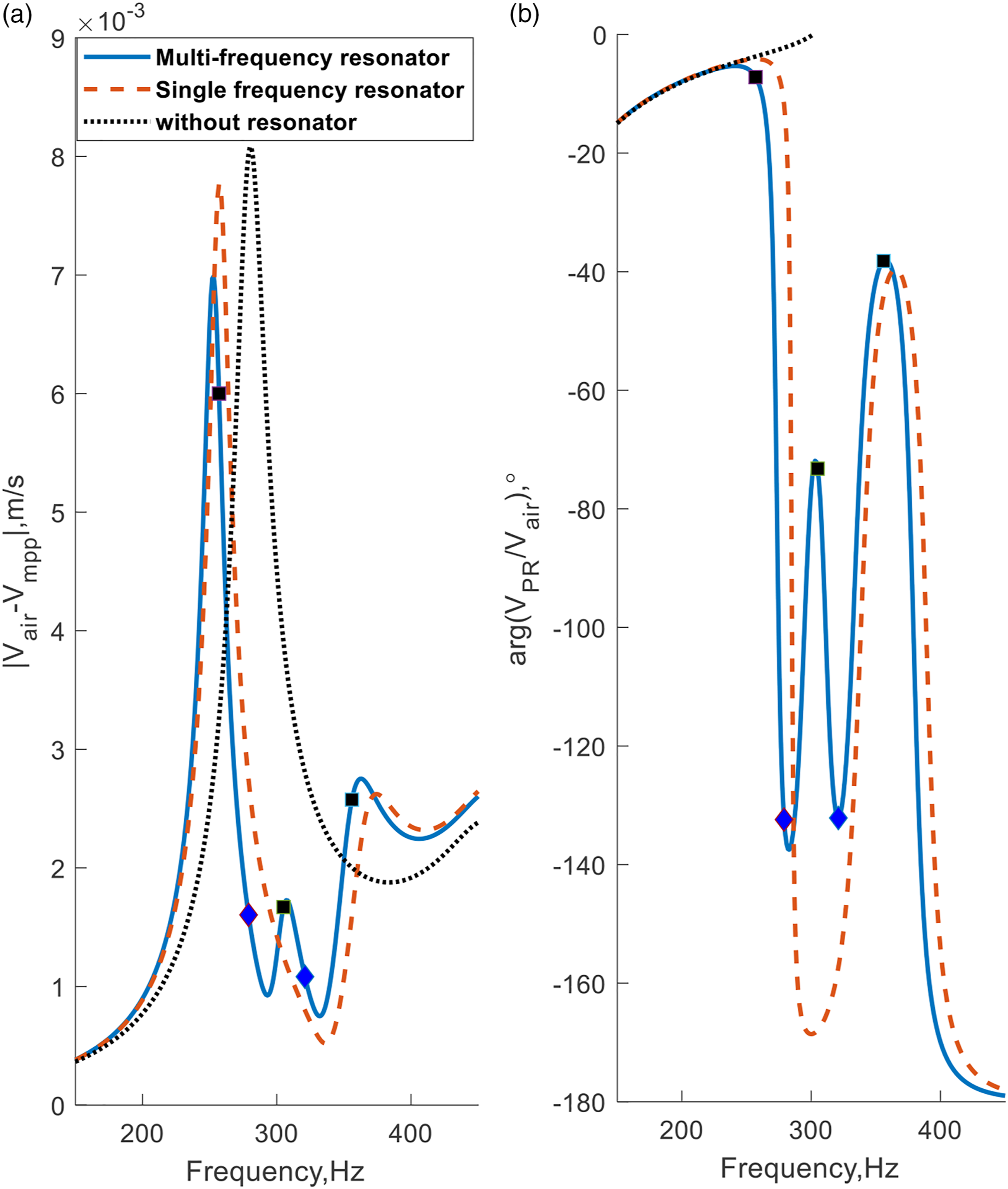
The absorption characteristics of MPP-mMPR is shown in Figure 10. The theoretical result has shown that an additional absorption peak is observed at around 300 Hz. The initial absorption valley at 300 Hz is further split into two smaller amplitude absorption dips. The The absorption characteristics of an MPP backed by single frequency or multi-frequency MPR with the ratio of total resonator mass to panel mass, (a) The magnitude of spatially averaged velocity of the host panel, 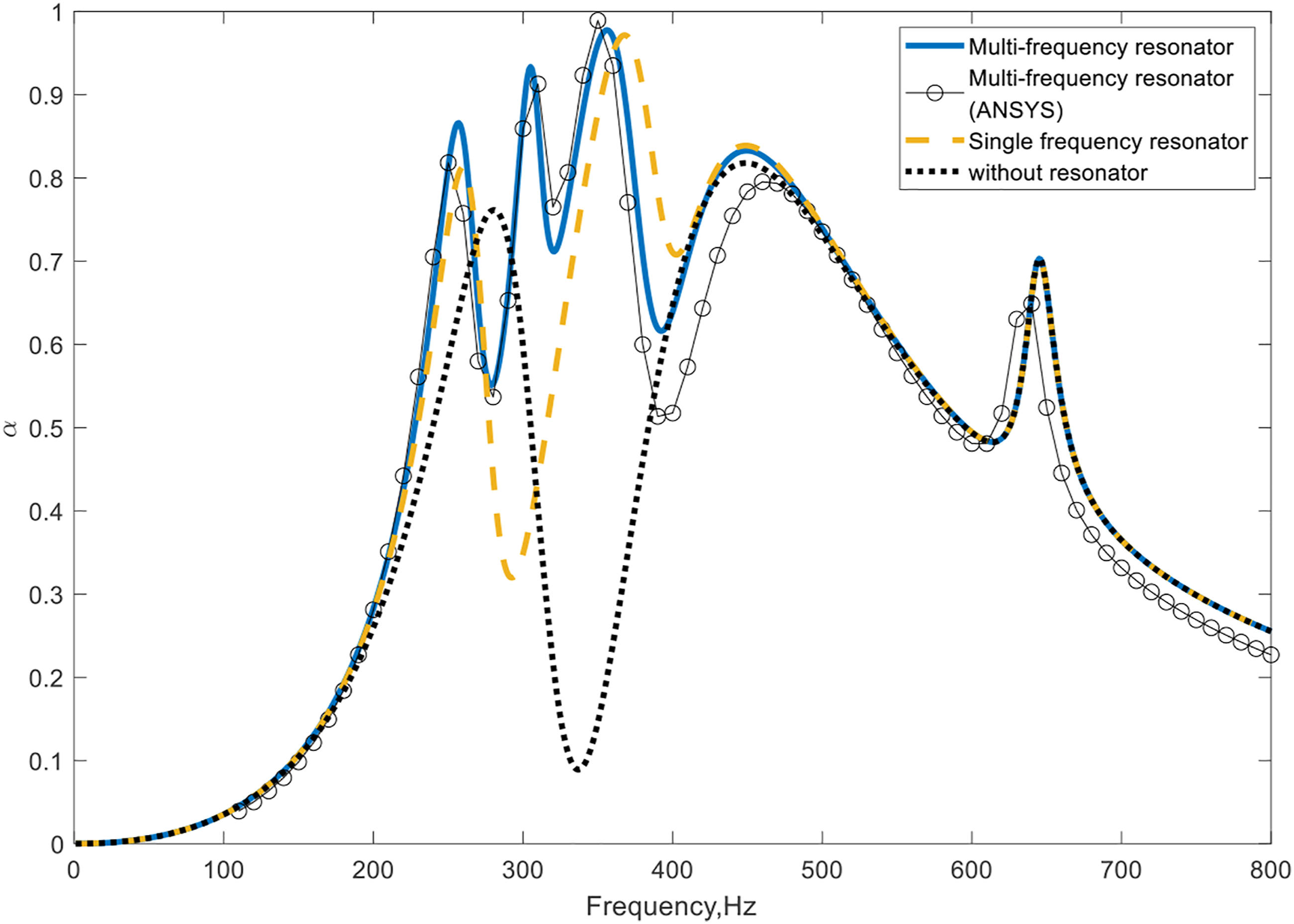
Every set of additional resonators is observed to split the original resistance and reactance peaks into two lower amplitude peaks as shown in Figure 12, bringing the peak amplitudes closer to the magnitudes of 1 and 0, respectively. Hence, the presence of resonators with different resonant frequencies is crucial in frequency-reshaping the surface impedance to improve the impedance matching condition in the low frequency range. The initial absorption dip at 300 Hz with The normalized surface acoustic (a) resistance and (b) reactance of the single frequency MPR or multi-frequency MPR under the influence of local resonance of MPR and structural resonance of MPP.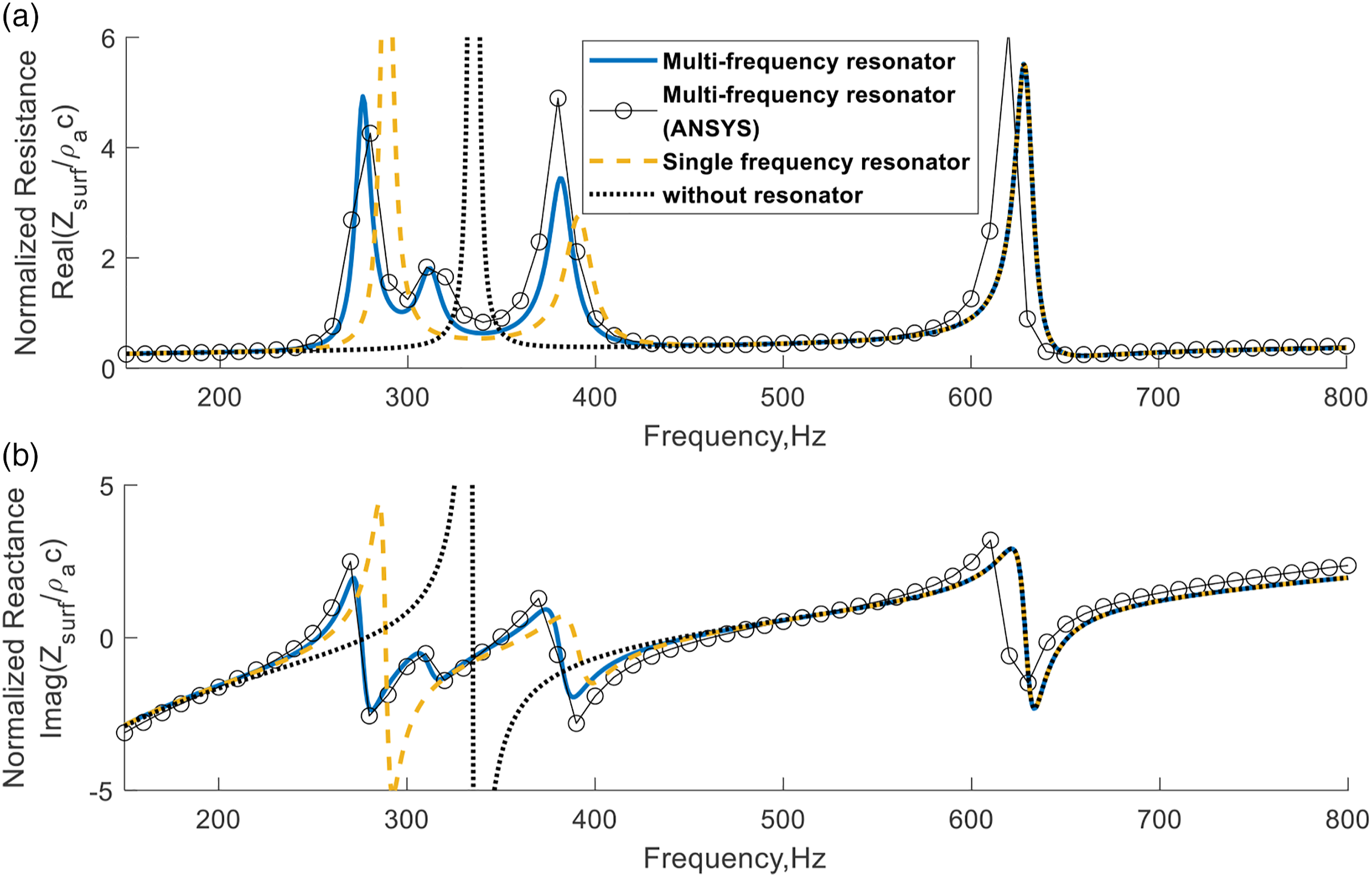
In summary, the major drawback of backing the MPP with a PR is the absorption valley associated with the panel resonance of PR, which has been addressed in the present study by proposing the mMPR. The absorption valley can thus be split into two smaller amplitude absorption dips with every set of resonators with different resonant frequency added. The results obtained from the discussions above contributes to a guideline in designing a compact broadband MPP-mMPR sound absorber with the improved low frequency sound absorption.
3.4. Effect of resonator mass ratio and damping ratio on overall sound absorption characteristics
The previous sections have discussed the effect of backing MPP with MPR and the absorption mechanism is revealed. Hence, a parametric study will be discussed in this section to investigate the effect of different resonator mass ratio and damping ratio of resonators on sound absorption characteristics of the overall MPP compound structure.
The effect of resonator mass ratio on absorption characteristics of MPP-MPR compound structure is depicted in Figure 13(a). The absorption peak at around 360 Hz is observed to be slightly decreasing with increasing mass ratio of resonators. The absorption peak at around 300 Hz is observed to have a notable decrease in amplitude and the absorption dip at around 280 Hz is significantly deteriorated with the increasing mass ratio of resonator. This observation is due to the fact that the peak associated with resonance of MPR is shifted to lower frequency with the increasing mass ratio of resonator. Thus, the resonators resonant frequency does not perfectly coincide with the absorption dip frequency causing a notable decrease of the absorption peak at around 300 Hz and the deterioration of absorption dip at around 280 Hz. The effect of (a) different total resonator mass to MPR panel mass ratio and (b) resonator damping ratio on the sound absorption characteristics of MPP-mMPR compound sound absorber.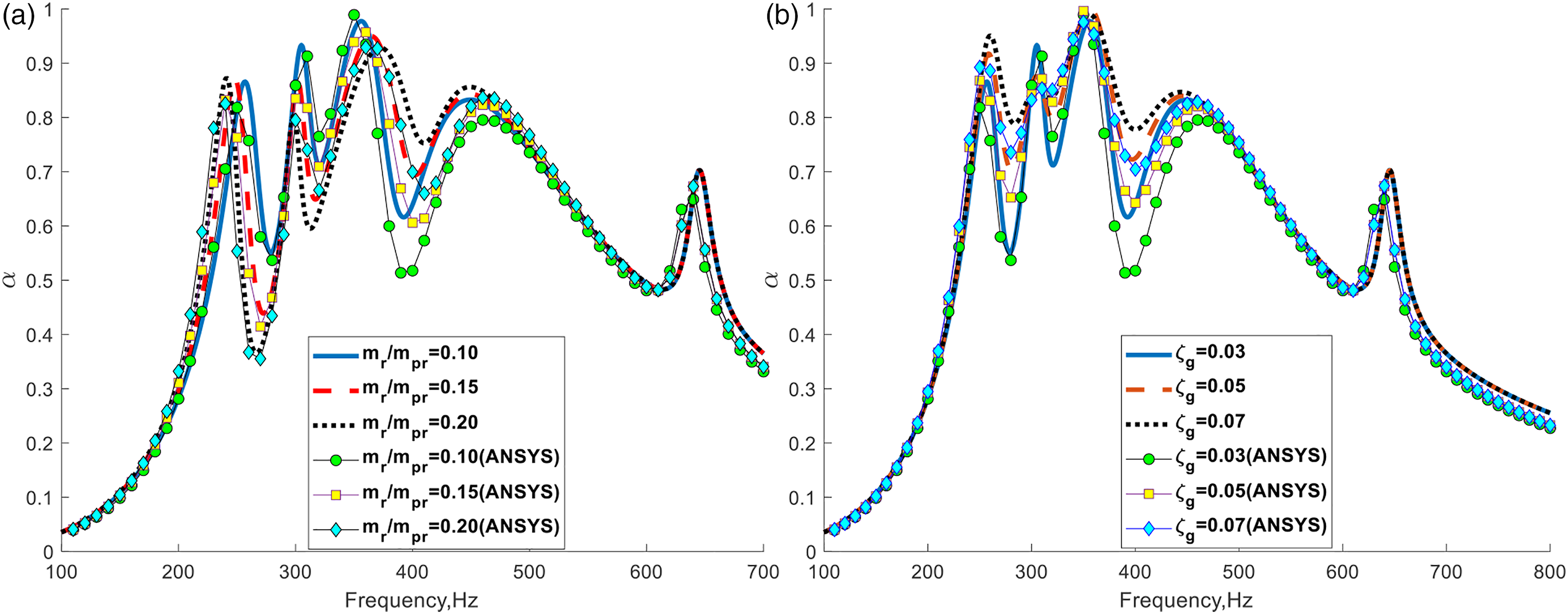
The effect of resonator damping ratio,
In summary, the absorption peak associated with MPR panel resonance is shifted with varying resonator mass ratio. The resonant frequency of the resonators needs to be designed accordingly to avoid a relatively deep absorption valley. The damping ratio of resonators can be appropriately set to significantly improve the sound absorption performance in the frequency range targeted by MPR by controlling the depth of absorption valley. This demonstrates that the low frequency sound absorption can be further improved if the damping of resonators can be precisely controlled.
4. Conclusions
In this study, an MPP-MPR compound sound absorbing structure has been proposed to widen the half-absorption bandwidth and improve the low frequency sound absorption which can be potentially used in applications requiring minimal acoustic reflection. A fully coupled vibroacoustic model based on the modal coupling method has been developed and its accuracy in predicting the sound absorption characteristics is verified by comparing the analytical results with results obtained from finite element modelling. The key findings from this study are summarized as follows: • Backing the MPP with a PR creates an absorption peak in the low frequency range followed by a wide and deep absorption valley, which greatly compromised the half-absorption bandwidth. The analysis showed that the absorption peak (dip) is attributed to the in phase (out of phase) relation between velocity of air particle and PR panel velocity, which can be regulated by adding resonators on PR. • It has been demonstrated that the absorption valley associated with MPR panel resonance can be split into two smaller amplitude absorption dips. The improvement is attributed to the local resonance of resonators that modifies the phase of the host panel velocity and reshapes the surface impedance in the MPR resonance region, which improves the overall absorption performance in that particular frequency range. • Resonators with different resonant frequencies can be used to further split the absorption dips to frequency-reshape the surface impedance, and significantly raise the absorption coefficient at the original absorption dip to a greater value to obtain a desired sound absorption performance.
Footnotes
Declaration of conflicting interests
The author(s) declared no potential conflicts of interest with respect to the research, authorship, and/or publication of this article.
Funding
The author(s) disclosed receipt of the following financial support for the research, authorship, and/or publication of this article: The authors acknowledge the support received from Ningbo Science and Technology Bureau - Ningbo Natural Science Foundation Programme (Project code 202003N4183) China.
