




Abstract
The free vibration behavior of a bidirectional functionally graded rotating micro-disk that is subjected to uniform transverse pressure and high-temperature thermal loading has been studied. The micro-disk is functionally graded along the radial and thickness directions. The problem is mathematically formulated using two distinct but interrelated steps within the framework of Kirchhoff plate theory and modified couple stress theory. The first step determines the time-invariant deformed configuration of the micro-disk under centrifugal, pressure, and thermal loading using minimum potential energy principle. The second step determines the free vibration behavior of the micro-disk in the neighborhood of the deformed configuration using Hamilton’s principle. The solutions of the governing equations for both these steps are obtained using the Ritz method. The mathematical model is successfully validated with various reduced problems. The numerical results for the first four axisymmetric bending vibration modes are presented to investigate the effects of wide range of parameters such as rotational speed, applied pressure, thermal loading, size-dependent thickness, volume fraction indices, and radius ratio. The mode shapes of vibration are illustrated through surface and contour plots.
Keywords
1. Introduction
Micro-size rotating disks are found in small-scale steam-turbines, gas-turbines, wind-turbines, pumps, compressors, etc. which are very common in various small-size devices and machines (Kim and Yoon (2016); Reale and Sannino (2021); Tran et al. (2020)) such as micro-CHP (combined heat and power) systems, Power MEMS (micro-electro-mechanical systems), micro-propulsion systems, micro-energy harvesters etc. Theoretical studies on mechanical behavior of micro-size components are mostly based on the modified couple stress theory (MCST) (Yang et al. (2002)). The present work investigates the axisymmetric free vibration behavior of bidirectional functionally graded (BFG) rotating micro-disks under transverse pressure and thermal loading based on MCST. It is known that functionally graded materials (FGMs) (Reddy and Chin (1998)) are suitable for high-temperature (above-ambient) thermal loading, and they are two-phase metal-ceramic composites for which the volumetric proportions of the constituents can be smoothly varied in any desired direction. With widespread applications of FGMs, research studies on functionally graded (FG) rotating disks involving classical theories have gained attention from the researchers. In this regard, some of the studies are found in Refs. Bayat et al. (2009); Tutuncu and Temel (2013); Zheng et al. (2016); Eldeeb et al. (2021) involving static behavior and in Refs. Kermani et al. (2016); Jalali et al. (2018) involving dynamic behavior. It is noted that the circular disk/plate geometries are of two categories: one with a central circular hole (called annular disk/plate) and the other without a central circular hole (called solid circular disk/plate).
The conventional continuum theory (called classical theory) is incapable to predict the small-size effect for micro- and nano-size components, which is experimentally verified through the following works: Lam et al. (2003); Liu et al. (2008); Lei et al. (2016); Li et al. (2019). On the other hand, various continuum-based non-classical theories contain additional length scale parameters to account for the size effect. The notable fundamental theories in this regard are couple stress theory (CST) (Mindlin and Tiersten (1962); Toupin (1962); Koiter (1964)), micro-polar theory (Eringen (1967)), surface elasticity theory (Gurtin and Murdoch (1978)), nonlocal elasticity theory (NET) (Eringen (1983)), and strain gradient theory (SGT) (Fleck et al. (1994); Fleck and Hutchinson (2001)). Based on CST, Yang et al. (2002) proposed MCST that involved only one material length scale parameter and thus simplified the treatment of size effect for micro-size structural elements. Some of the research works on micro- and nano-beams/plates based on various size-dependent theories are found in the following references: Tsiatas (2009); Akgöz and Civalek (2014); Akgöz and Civalek (2015a); Akgöz and Civalek (2015b); Abbaspour and Arvin (2020); Ashrafi et al. (2021); Numanoğlu et al. (2022); Jalaei et al. (2022).
In recent times, many research studies have been undertaken to study the mechanical behavior of circular plate-type structures based on MCST. Research works on static analysis of annular micro-plates were reported in Refs. Zhou and Gao (2014); Karttunen et al. (2017), whereas those involving free vibration analysis of solid circular micro-plates were reported in Refs. Wang et al. (2013); Jomehzadeh et al. (2011). Research works on static behavior of FG solid circular and annular micro-plates were reported in Refs. Nguyen et al. (2017); Ashoori and Vanini (2016); Reddy et al. (2016); Eshraghi et al. (2015); Ji et al. (2017), whereas those involving free vibration analysis of FG solid circular and annular micro-plates were reported in Refs. Eshraghi et al. (2015); Ji et al. (2017); Shojaeefard et al. (2017).
Research works involving rotating micro- and nano-size disks/plates are briefly described here. Based on the classical theory, Pei (2012) studied the damped free vibration of clamped-free annular rotating micro-disks under thermal loading for both axisymmetric and asymmetric modes. Based on the thin axisymmetric plate theory (APT) and SGT, static analysis of annular rotating micro-disks has been conducted by Danesh and Asghari (2014). Employing thin APT and SGT, static stress analysis of FG annular rotating nano-disks of variable thickness under thermal loading has been reported by Hosseini et al. (2016). Static stress and displacement analyses of FG annular rotating nano-disks under thermal loading have been presented by Shishesaz et al. (2017) based on thin APT and SGT. Based on the first-order shear deformation theory (FSDT) and MCST, Mahinzare et al. (2018a) investigated the axisymmetric free vibration of BFG solid rotating micro-plates, which were supported by the Winkler–Pasternak foundation and subjected to thermal loading. They assumed radial and asymmetric through-thickness material gradations and analyzed results for the first two modes each for clamped and hinged boundary conditions. Employing FSDT and MCST, Shojaeefard et al. (2018a) studied the axisymmetric free vibration and critical angular speed of BFG solid rotating micro-plates of non-uniform thickness with radial and asymmetric through-thickness material gradations. They analyzed results for clamped and hinged plates for the first three modes of vibration. Based on FSDT and MCST, Mahinzare et al. (2018b) studied the axisymmetric free vibration response of electro-elastic BFG rotating solid nano-plates considering material gradations in radial and thickness directions. Considering FSDT, and based on both MCST and NET, axisymmetric free vibration of magneto-elastic FG solid rotating nano-plates has been investigated by Shojaeefard et al. (2018b). Based on thin APT and SGT, Hosseini et al. (2019) conducted the static stress analysis of FG annular rotating nano-disks of variable thickness under thermo-mechanical loading. Based on the higher-order shear deformation theory (HSDT) and nonlocal SGT, Al-Furjan et al. (2020) investigated the free vibration and critical angular speed of clamped-free composite annular rotating micro-disks for both axisymmetric and asymmetric modes. Based on the Kirchhoff plate theory and MCST, Pal and Das (2020) investigated the free vibration response of BFG annular rotating micro-disks under thermal loading and considering radial and symmetric through-thickness material gradations. They presented results for both axisymmetric and asymmetric modes as well as for the torsional mode. In the above discussion, except Pal and Das (2020), all the works related to the free vibration of micro- and nano-disks/plates considered the prior effects of loading using the variation of external work through Hamilton’s principle. However, Pal and Das (2020) determined the effect of centrifugal and other loadings separately using minimum potential energy principle, and it has been incorporated into the dynamic problem through tangent stiffness of the deformed micro-disk.
It is evident that the free vibration behavior of BFG rotating micro-disks under combined effects of transverse pressure and thermal loading is not yet investigated. The present work attempts to bridge this research gap. The mathematical formulation is based on the Kirchhoff plate theory and MCST for axisymmetric bending of the micro-disk. The micro-disk is assumed BFG with gradations along the radial and thickness directions, and the temperature-dependence of the material properties is considered employing the Touloukian model. The analysis is based on two distinct but interrelated steps. In the first step, the deformed configuration of the micro-disk under combined centrifugal, pressure, and thermal loadings is determined employing the minimum potential energy principle. In the second step, the free vibration response of the deformed micro-disk is determined employing Hamilton’s principle and incorporating the tangent stiffness of the deformed micro-disk. The solutions of the governing equations are obtained using the Ritz method.
2. Mathematical formulation
An annular disk, as shown in Figure 1, having outer radius Schematic diagram of a rotating disk.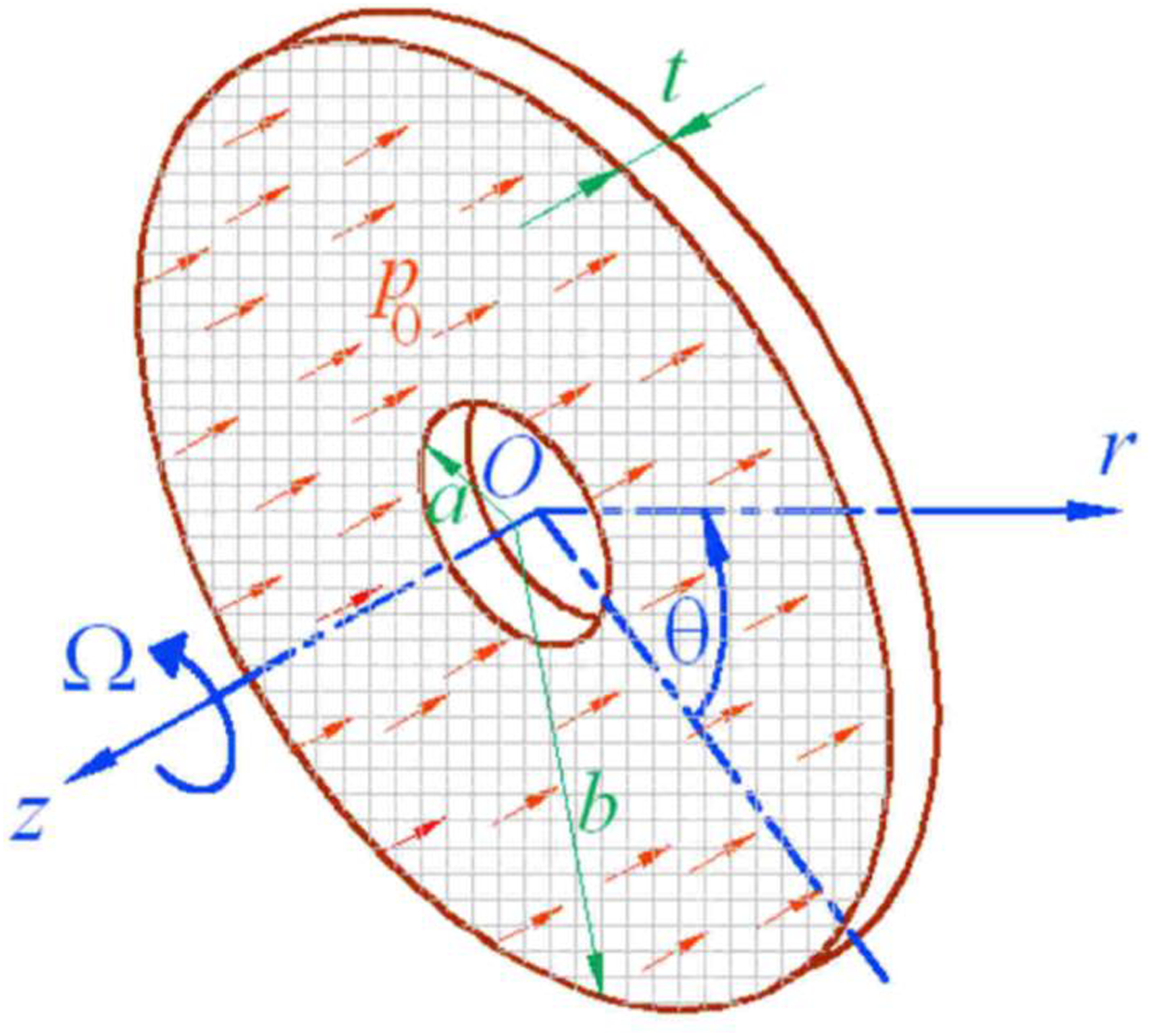
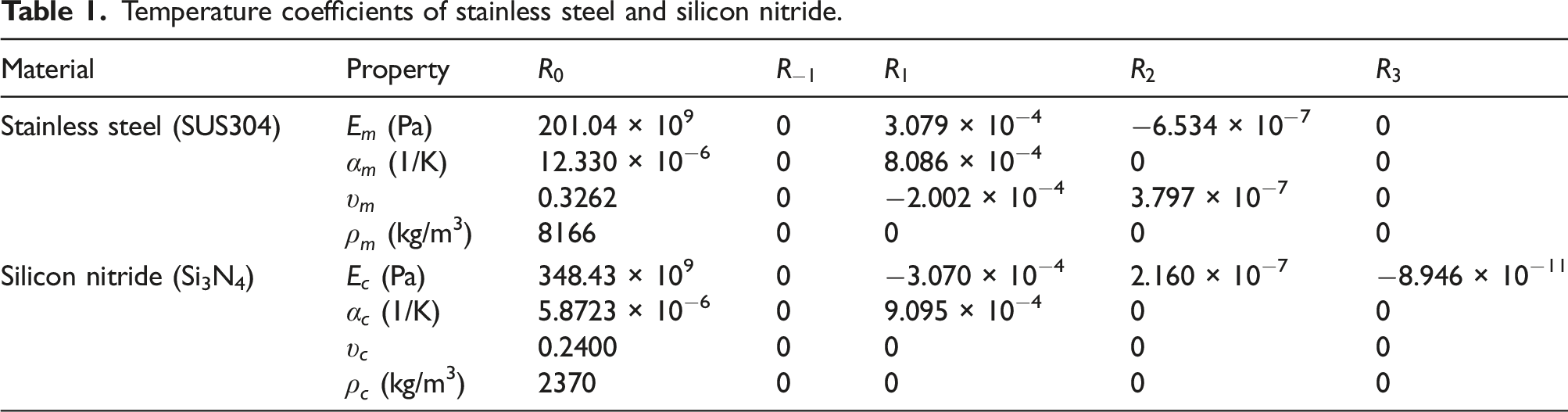
The material of the disk is functionally graded along the radial and thickness directions. Following the rule of mixture, any generic effective material property


Temperature coefficients of stainless steel and silicon nitride.
2.1. Derivation of strain, curvature, stress, and couple stress components
According to the Kirchhoff plate theory for axisymmetric bending, the displacement components 

The last term in the first relation of equation (4) appears due to von Kármán type non-linearity.
For any point 
Substituting equation (3) into equation (5), the non-zero components of the symmetric curvature tensor is obtained in terms of the mid-plane displacement as
Following MCST and incorporating the effect of thermal loading 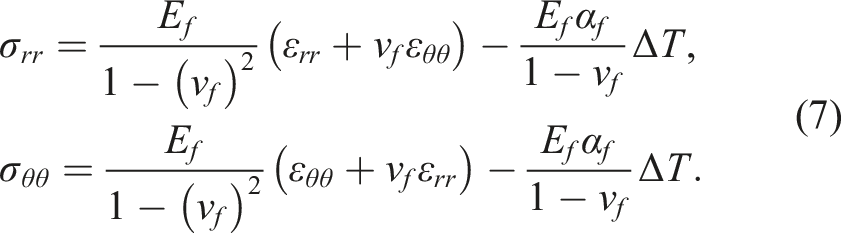

In equation (8),
2.2. Deformed configuration under centrifugal, pressure, and thermal loading
In the first step of the problem, the deformed configuration of the micro-disk under combined effects of time-invariant centrifugal loading due to constant angular speed, transverse pressure, and thermal loading is determined. The governing equations in this case are derived using minimum potential energy principle given as
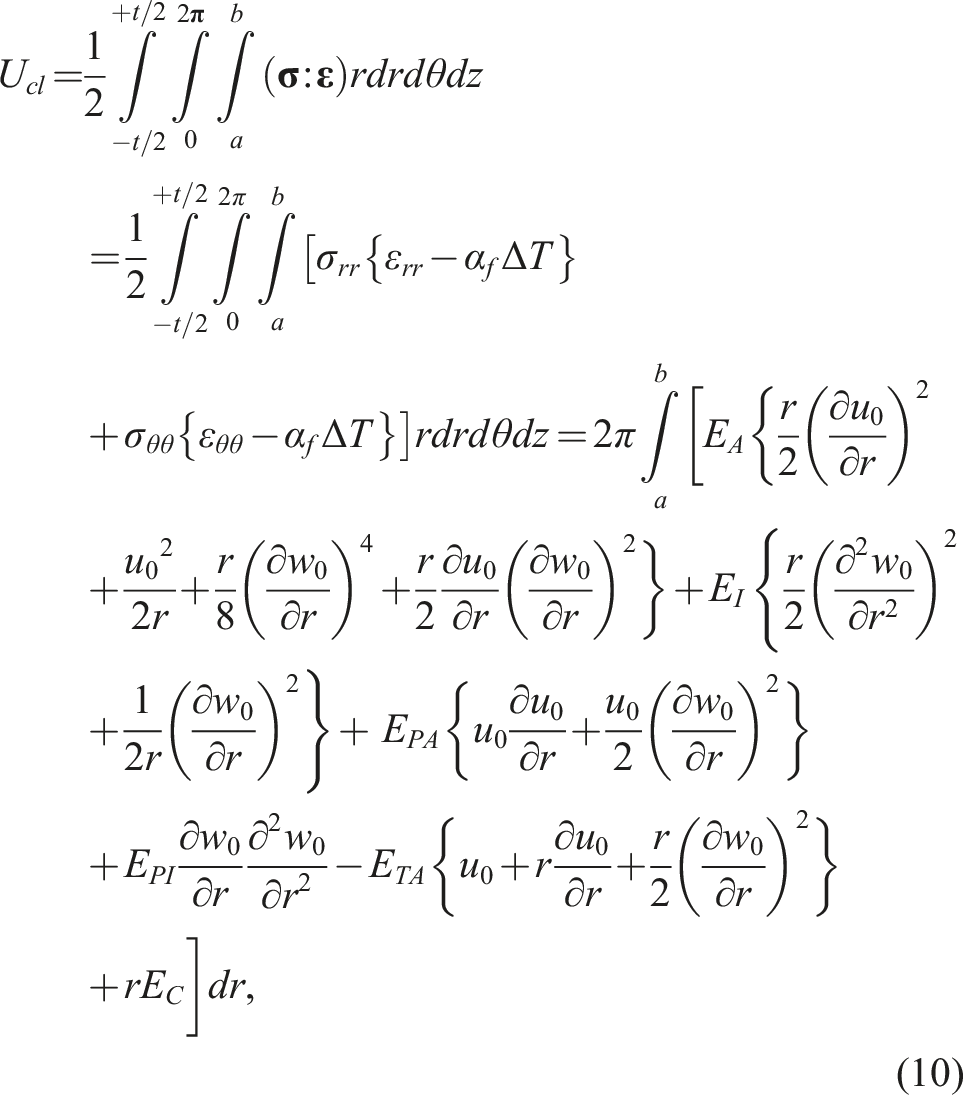
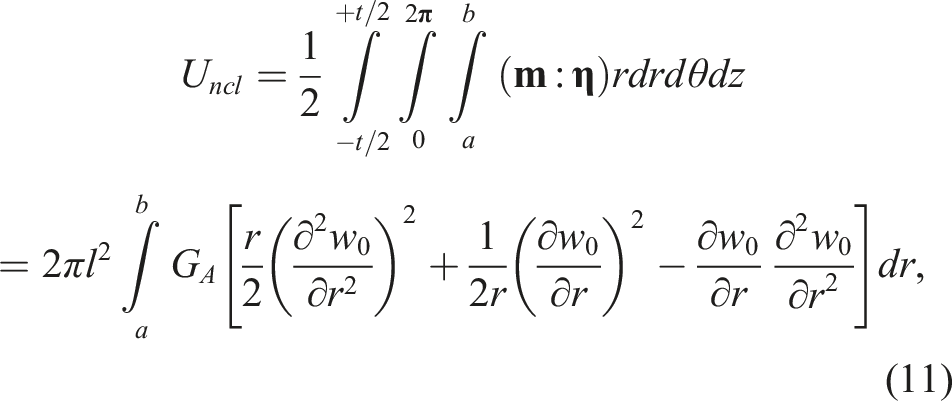

The set of stiffness coefficients 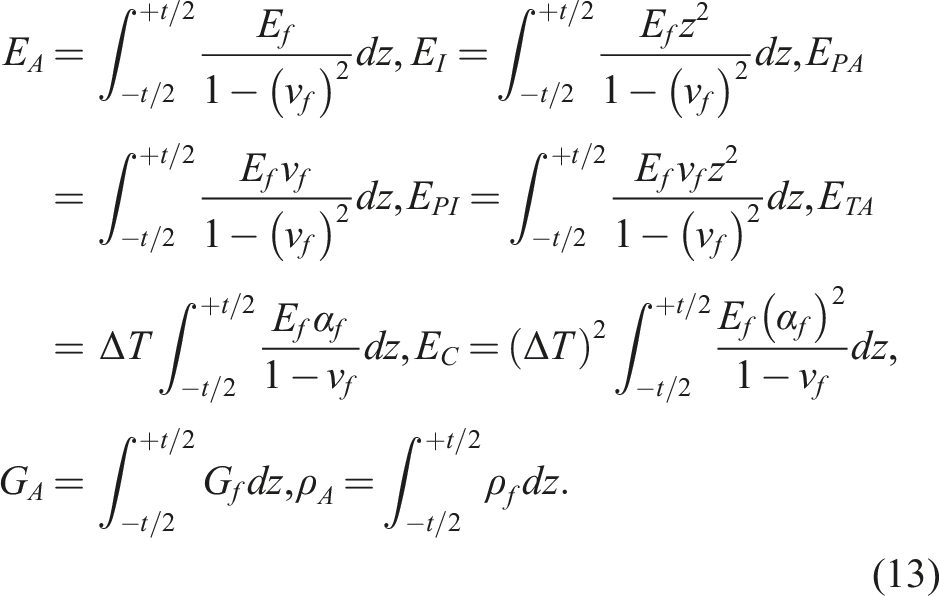
To derive the governing equations in algebraic form, following the Ritz method, each of the mid-plane displacements 
Here, 
Subsequently, the higher-order functions are numerically generated employing the Gram–Schmidt orthogonalization scheme.
Substituting equations (10)–(12) into equation (9), and employing the approximate displacement fields given by equation (14), the governing equations are obtained in algebraic form, which in matrix form is written as
Here,
2.3. Free vibration response of deformed micro-disk
In the second step of the problem, the small amplitude linear free vibration behavior in the neighborhood of the deformed configuration of the micro-disk is determined. In this case, the governing equations are derived employing Hamilton’s principle, which is given as follows
Here, 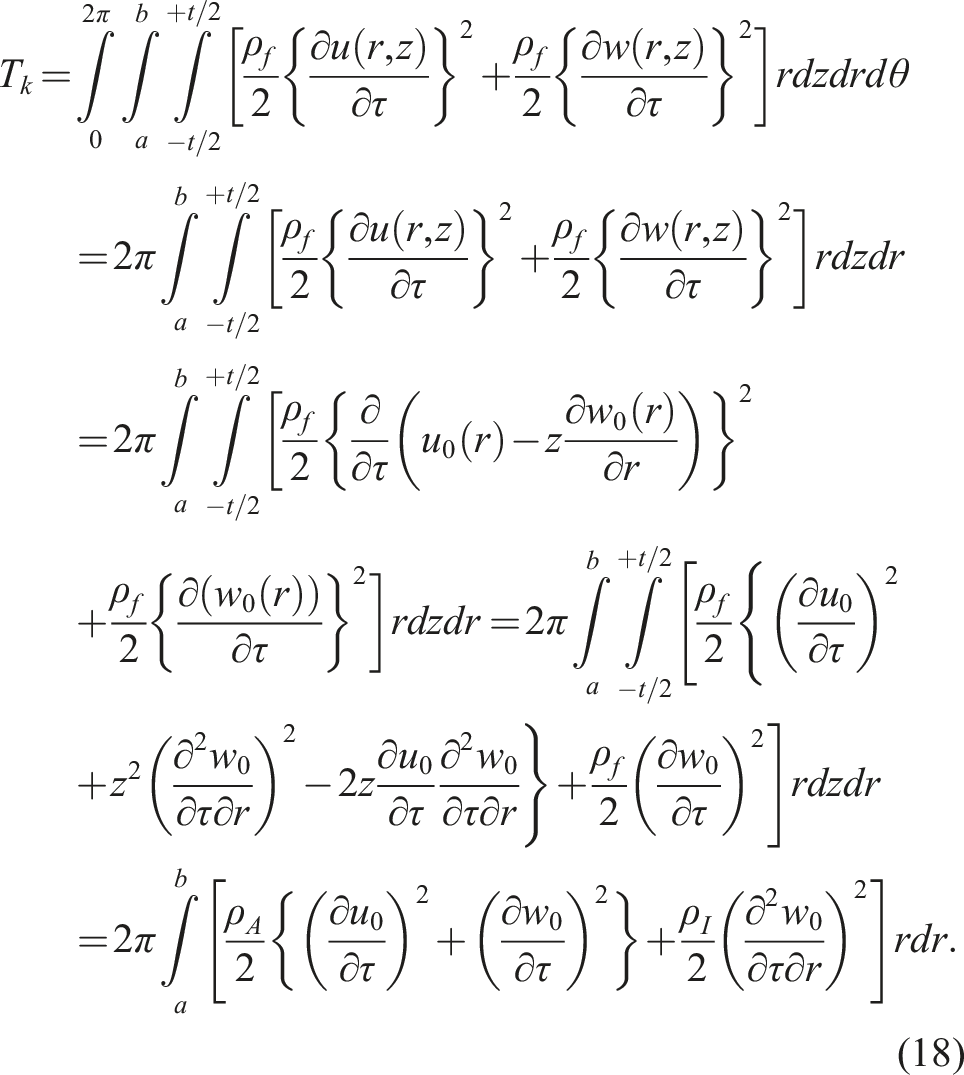
Here,
The dynamic displacement components are discretized using the Ritz method using the same set of functions 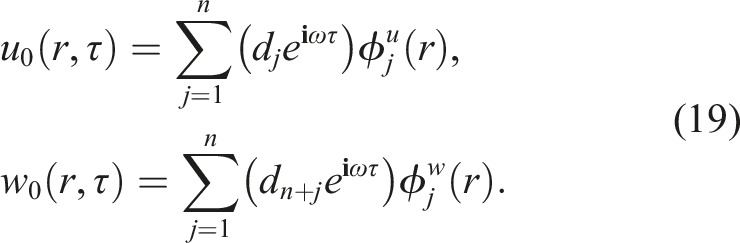
Here, it is considered that the vibratory motion is harmonic with
The tangent stiffness 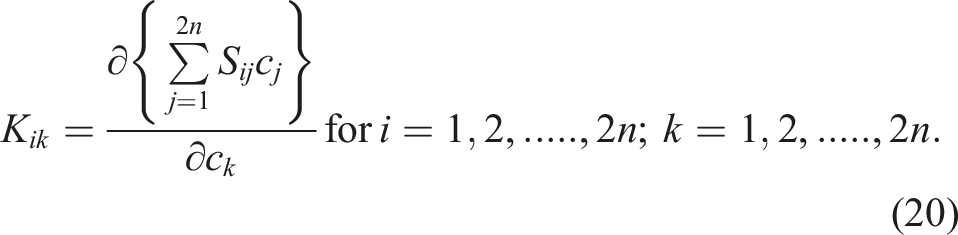
The tangent stiffness matrix consists of classical
Substituting equation (19) into equation (18) and using the tangent stiffness, the governing equations are derived, employing equation (17), as given below
3. Results and discussion
The numerical results are generated for stainless steel (metal) and silicon nitride (ceramic) FG composition. If not mentioned otherwise, the following values of the parameters are used:
The variation of the vibration frequency with rotational speed for the fundamental mode of a homogeneous Comparison of non-dimensional speed versus frequency behavior for the first mode of a homogeneous annular rotating disk under uniform transverse pressure.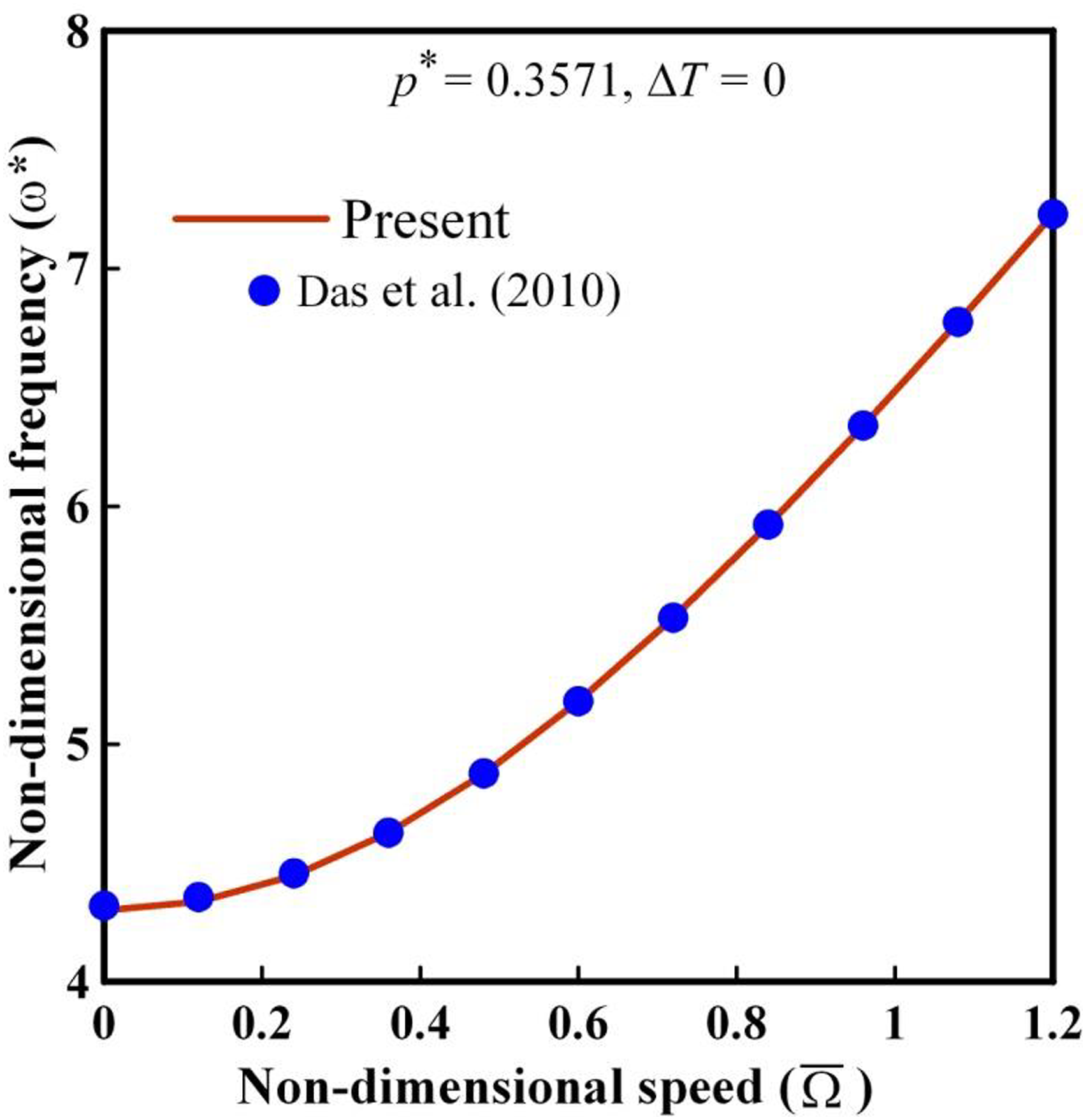
The non-dimensional load-deflection behavior of a thickness-FG Comparison of non-dimensional pressure versus deflection behavior of a thickness-FG annular clamped-free micro-plate.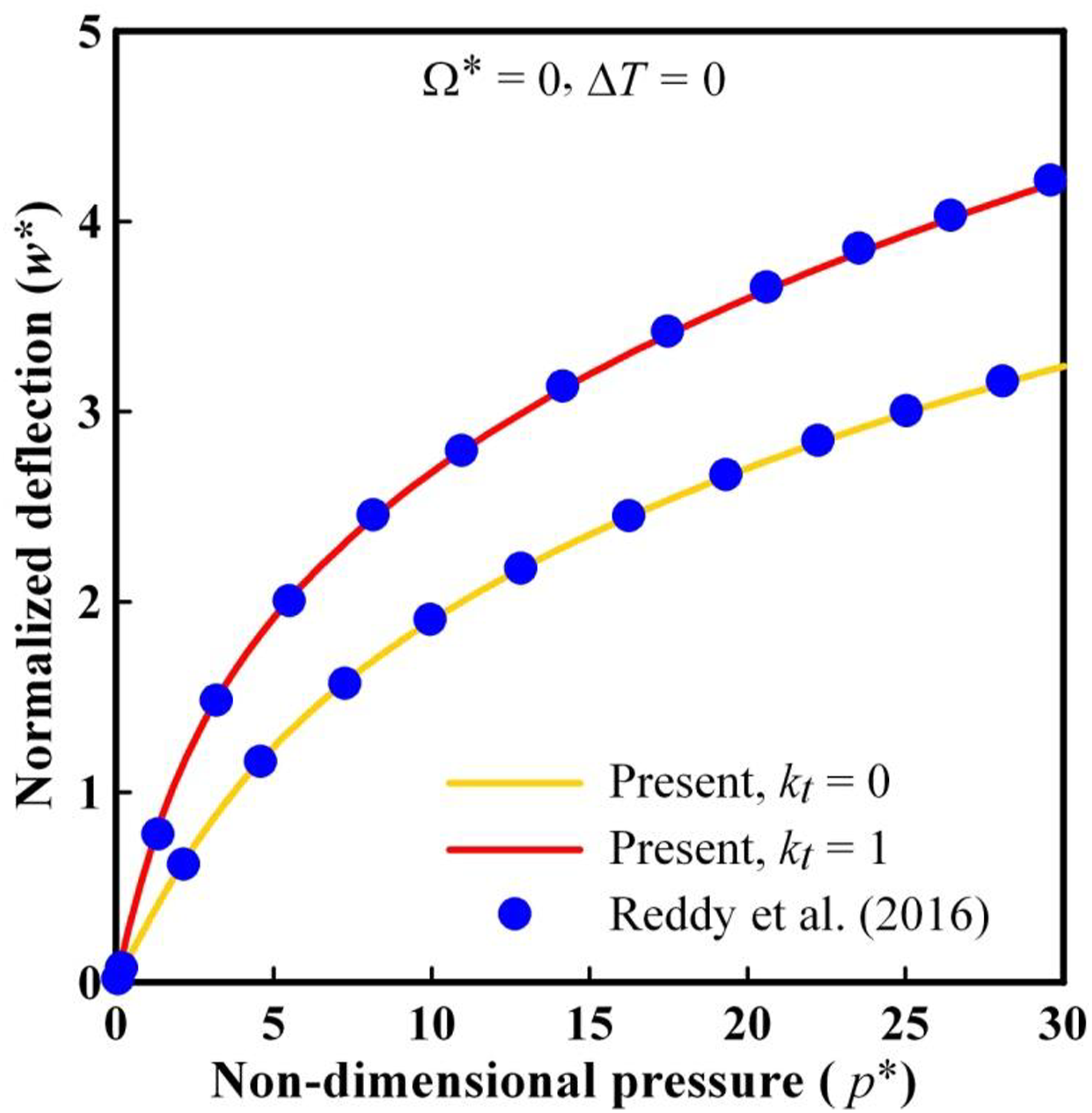
The variation of the vibration frequency with volume fraction index ( Comparison showing variation of non-dimensional vibration frequency with volume fraction index for the first two modes of a thickness-FG solid circular clamped micro-plate under thermal loading.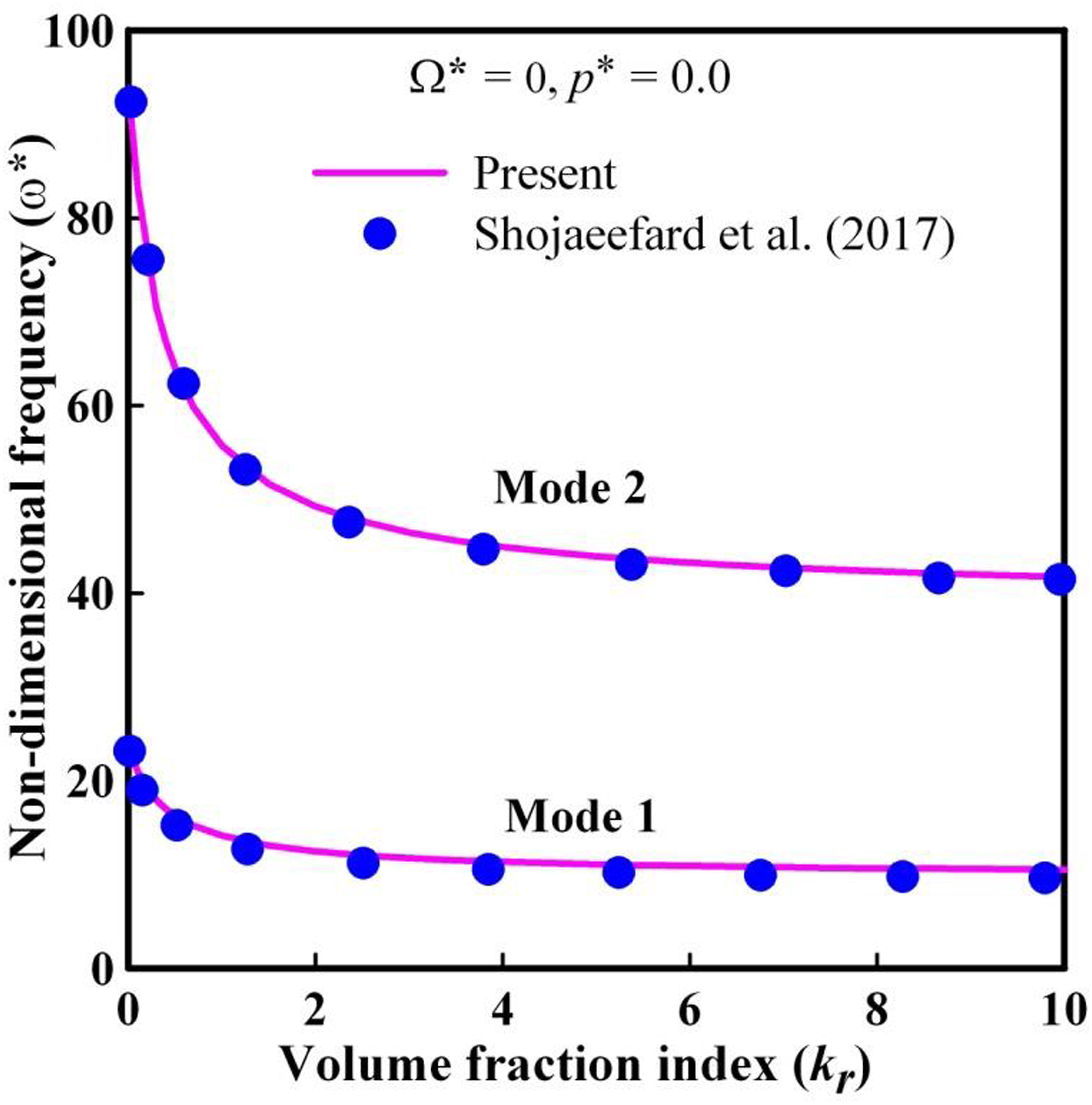
The centrifugal loading due to rotation and the thermal loading are in-plane in nature and do not induce any bending of the micro-disk. However, it is subjected to static bending due to applied transverse pressure. To illustrate this, the deflection-pressure curves in high-temperature environment are shown in non-dimensional plane in Figure 5 for different rotational speed where the normalized deflection is defined as Variation of transverse deflection with applied transverse pressure for different rotational speed under constant thermal loading.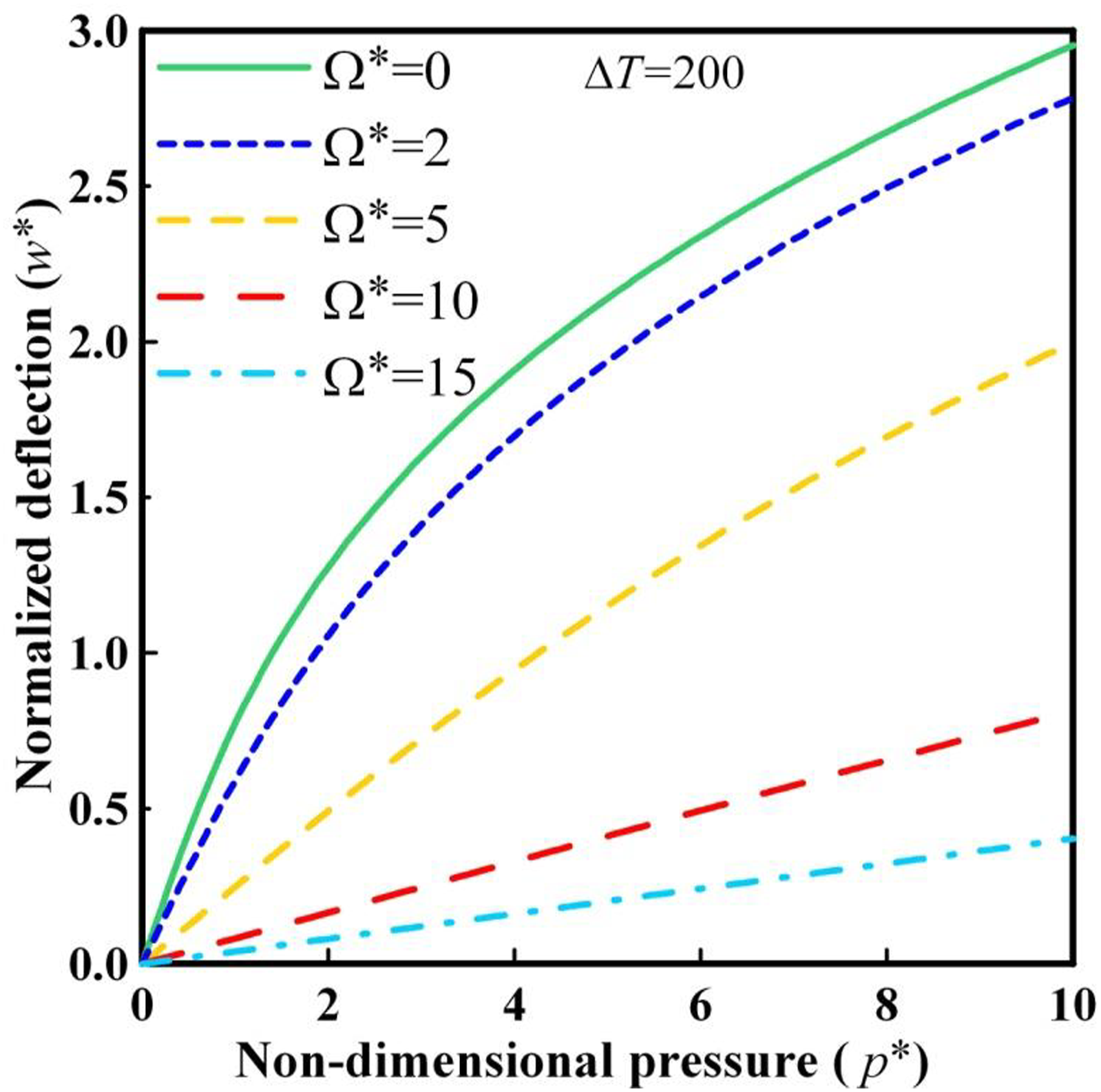
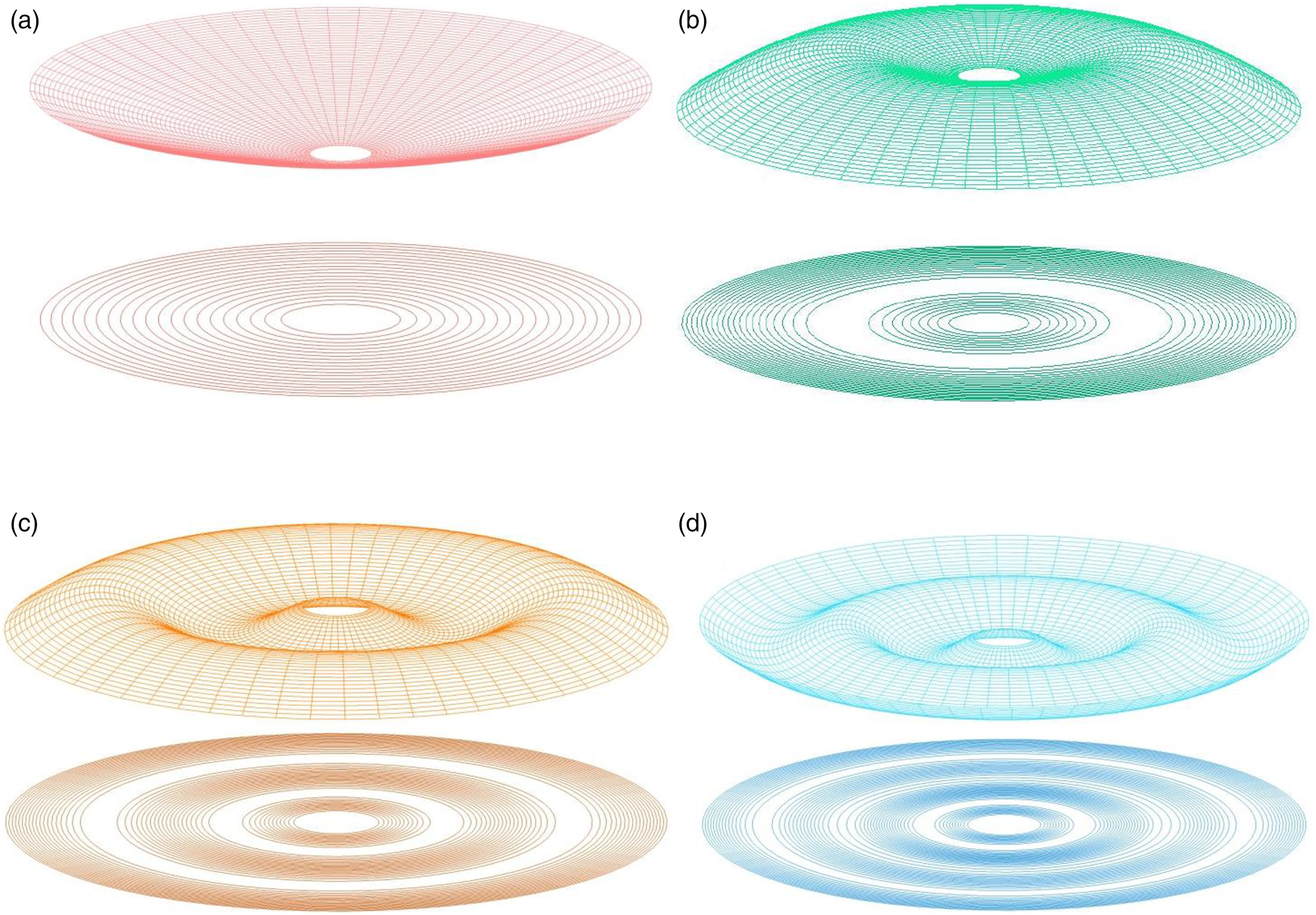
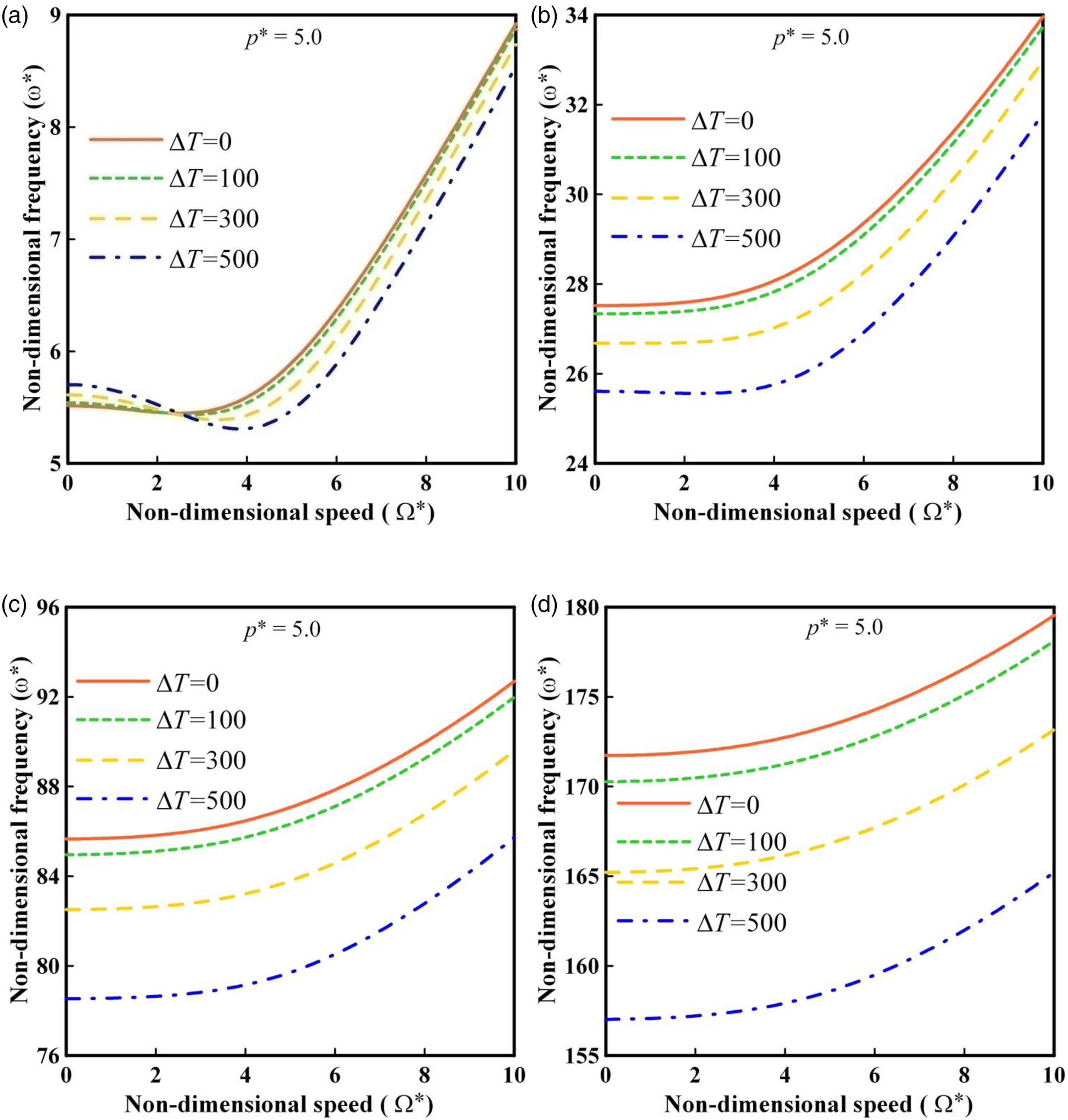
Figures 6(a)–(d) show the non-dimensional speed–frequency behavior in high-temperature environment for the first four modes, each for different transverse pressure. The frequencies are found to increase with speed because of centrifugal stiffening. However, exception to this occurs for the first and second modes (Figures 6(a) and (b)) at lower speed ranges for moderate and higher pressure values where the frequency remains constant or slightly decreases with speed. This clearly indicates softening type behavior for these modes at these loading conditions. Further, the increase in transverse pressure exhibits increasing frequency values for all the four modes, indicating enhanced geometric stiffening at higher pressure values. However, the effect of transverse pressure diminishes with increasing speed, and it almost ceases to exist at higher rotational speeds for higher modes of vibration. For visualization of the modes, Figures 7(a)–(d) illustrate the mode shapes and the corresponding contour plots of the first four axisymmetric bending vibration modes for Variation of vibration frequency with rotational speed for different transverse pressure under constant thermal loading: (a) first mode, (b) second mode, (c) third mode, and (d) fourth mode. Mode shapes and contour plots of the axisymmetric bending vibration modes: (a) first mode, (b) second mode, (c) third mode, and (d) fourth mode. Effect of size on the normalized modal deflection for the first four axisymmetric bending vibration modes. Variation of vibration frequency with rotational speed for different thermal loading under constant transverse pressure: (a) first mode, (b) second mode, (c) third mode, and (d) fourth mode.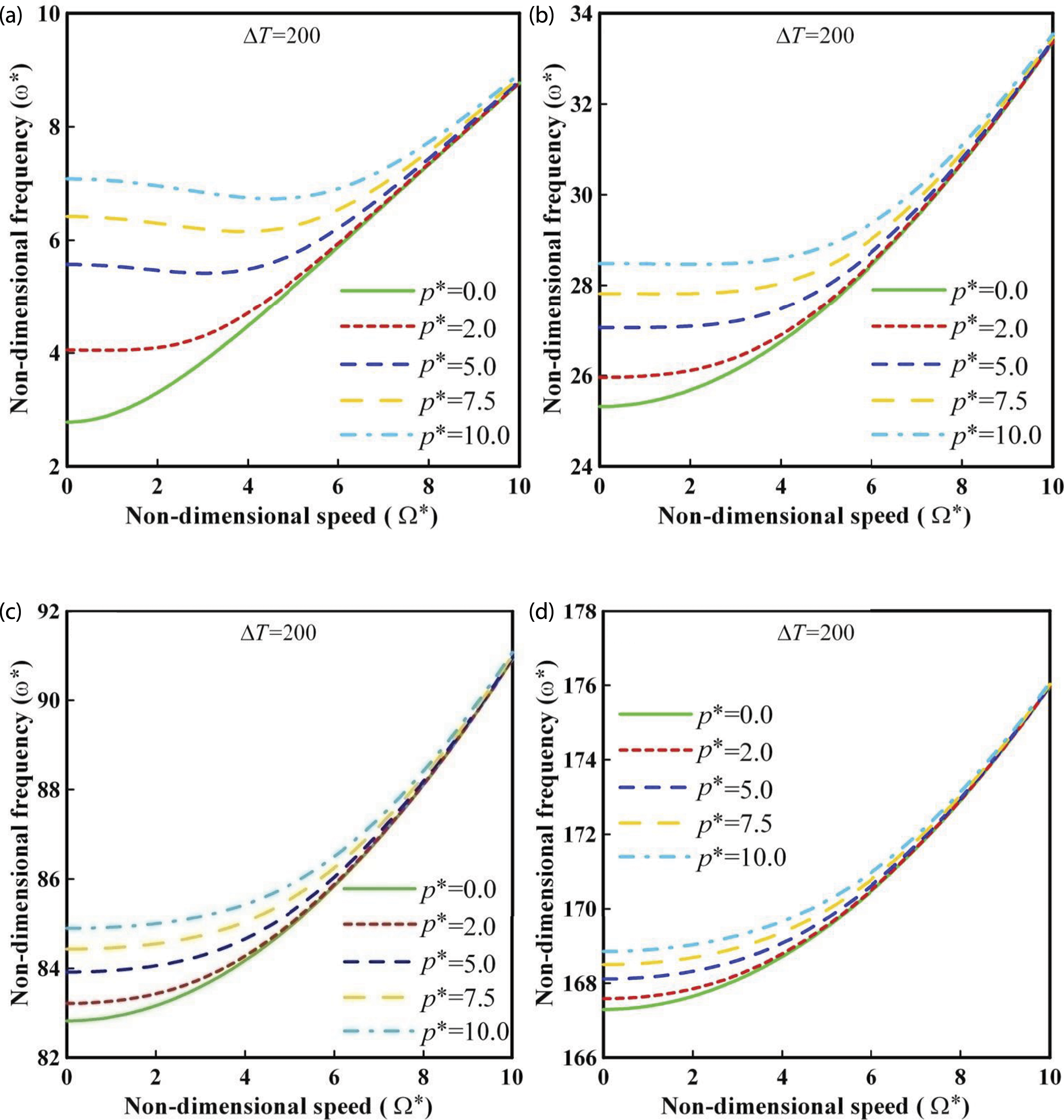
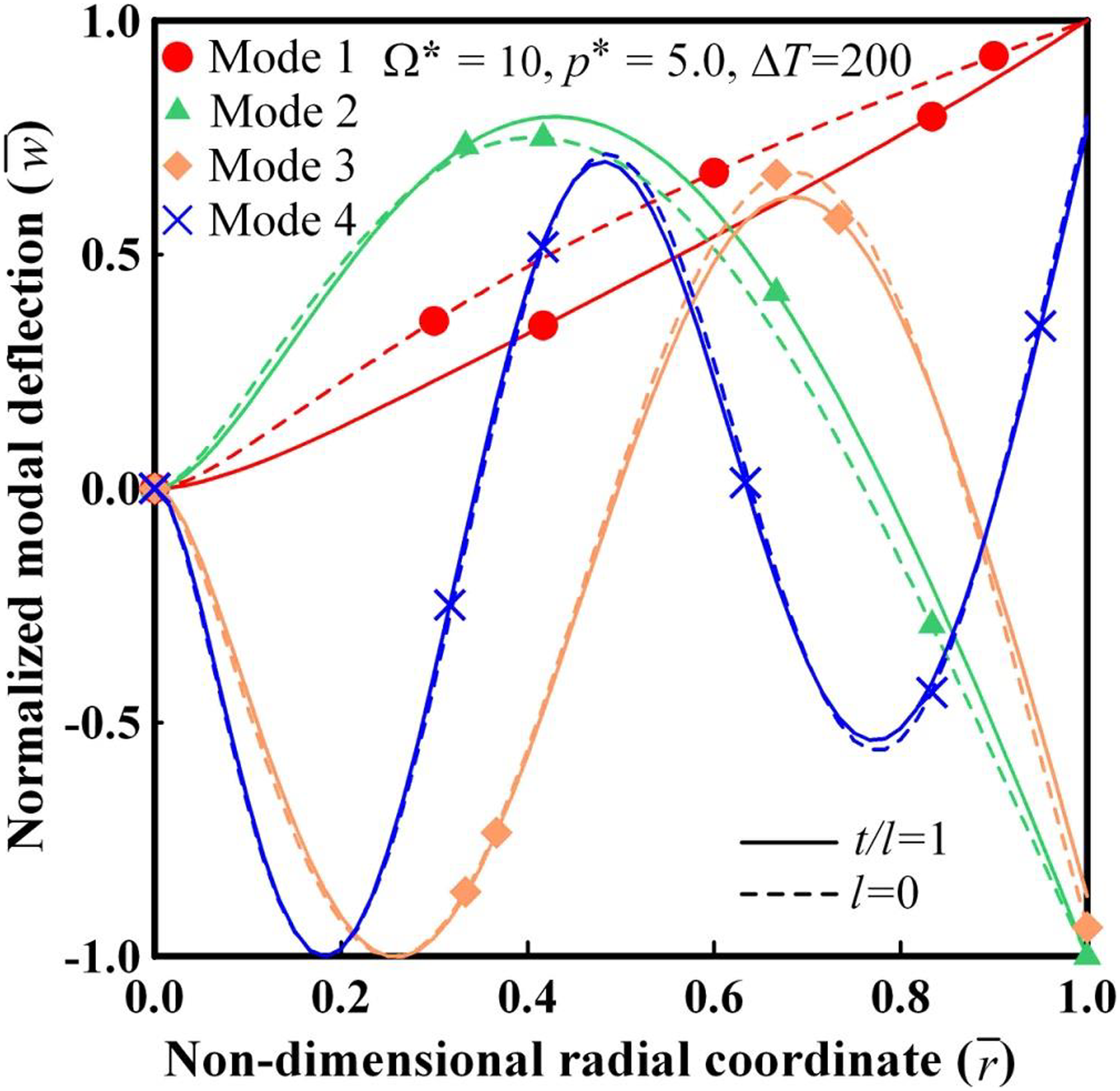
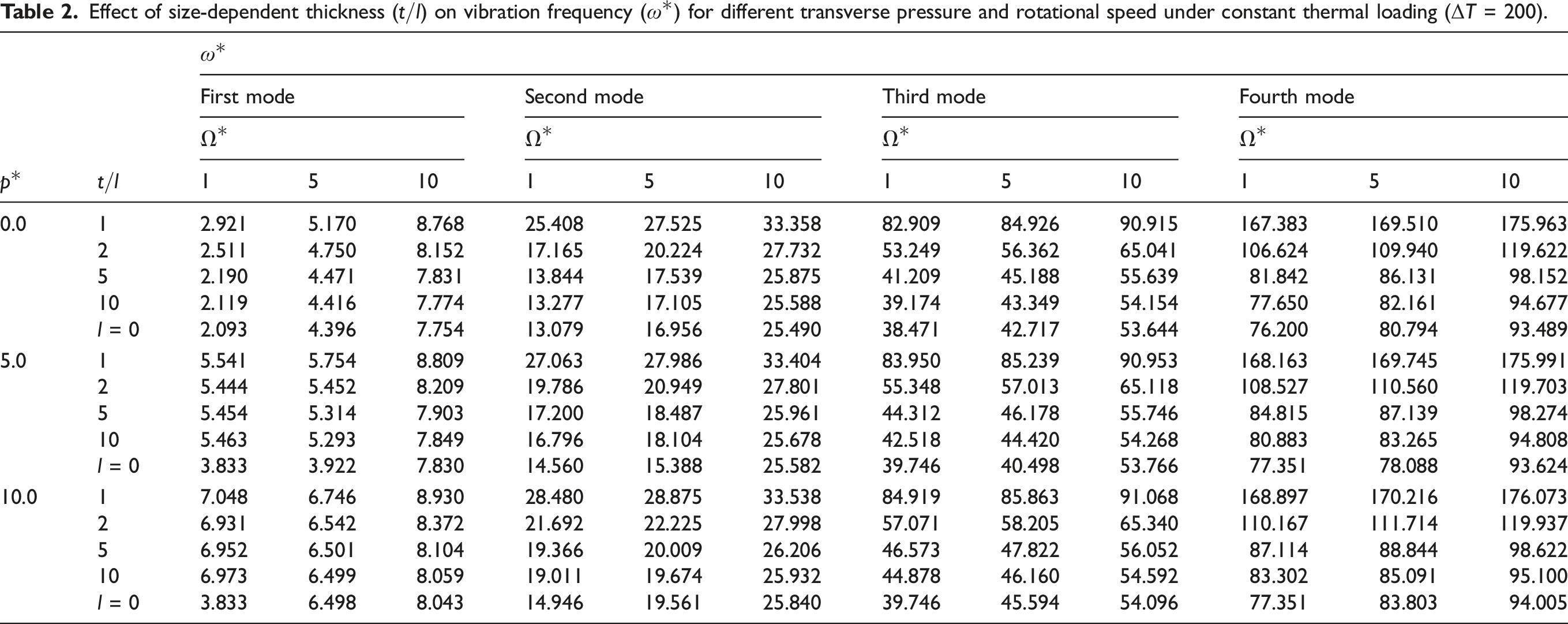
Effect of size-dependent thickness (
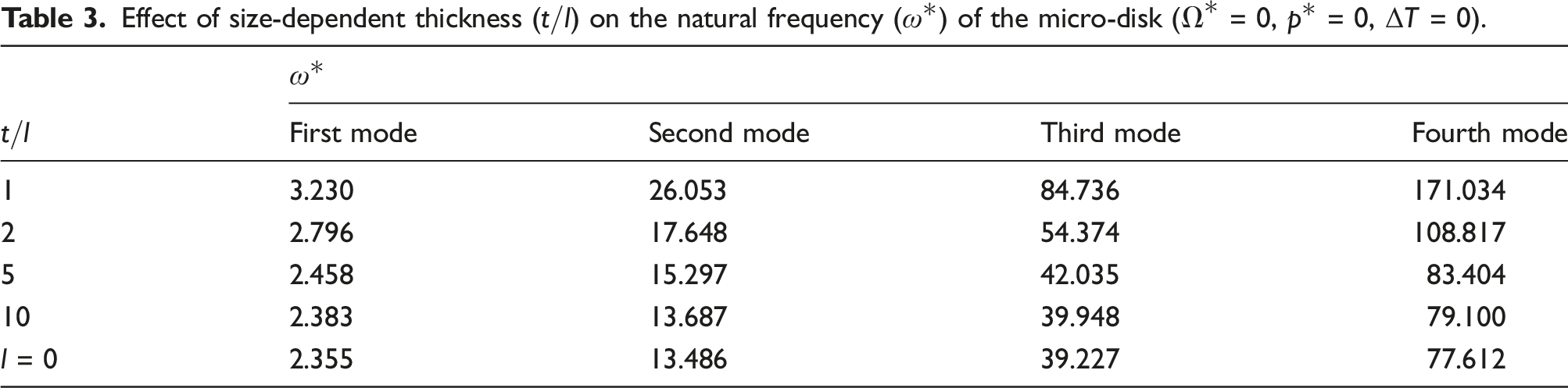
Effect of size-dependent thickness (
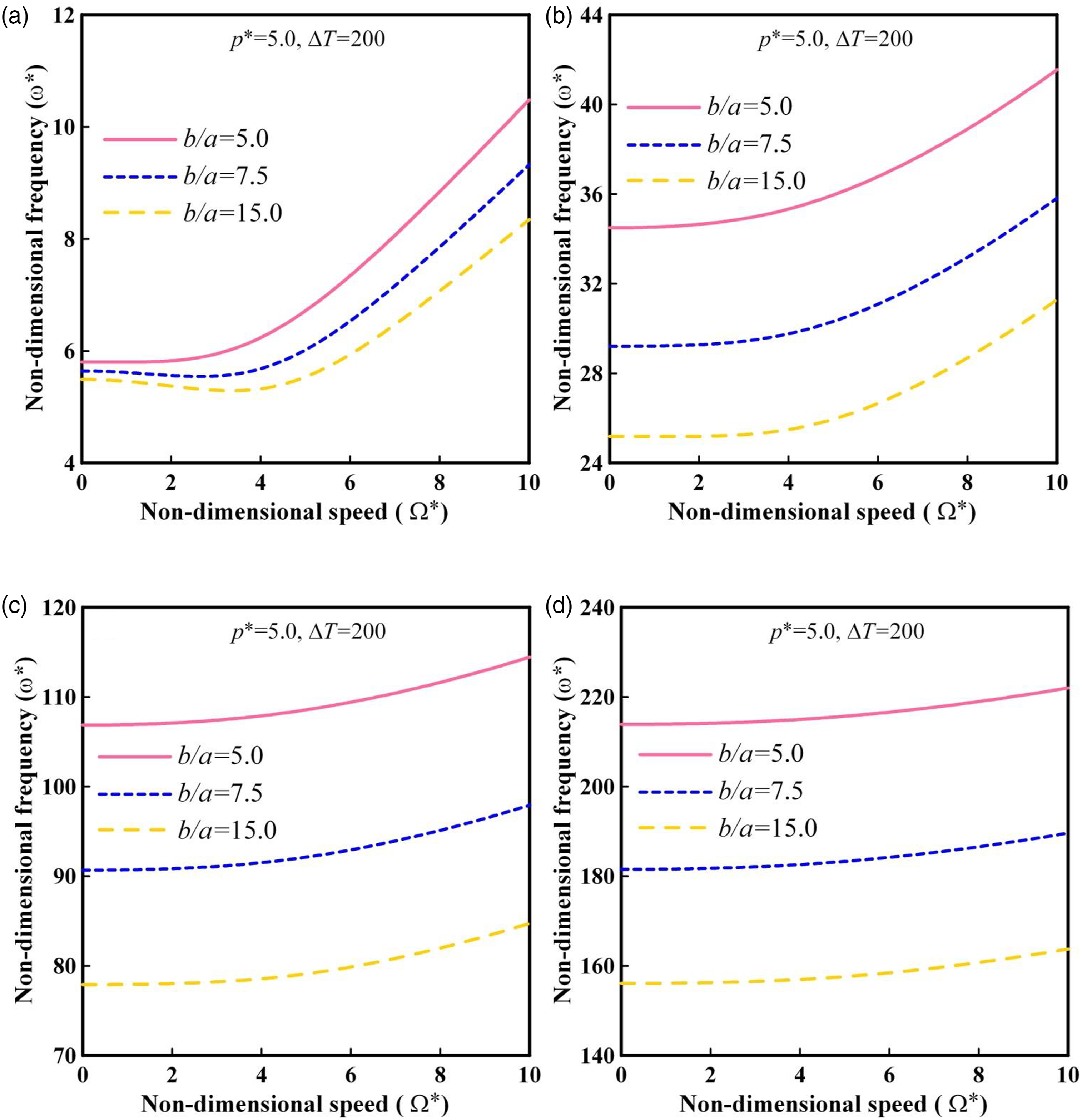
Figures 10(a)–(d) show the non-dimensional speed–frequency behavior at constant transverse pressure and thermal loading for the first four modes, each for different set of volume fraction indices. The frequencies are observed to increase with speed except for the first mode where they slightly decrease or remain constant with speed at lower speeds, and this is true for all the values of volume fraction indices considered. Further, the frequencies are found to decrease with increasing values of volume fraction indices. This is because increasing volume fraction indices leads to relative increase in volume proportion of the metal content, which is less elastic and lighter, compared to the ceramic phase. This effect of volume fraction indices becomes enhanced with increasing mode number. Figures 11(a)–(d) show the non-dimensional speed–frequency behavior at constant transverse pressure and thermal loading for the first four modes, each for different radius ratio. The frequencies are observed to increase with speed except for the first mode where they slightly decrease or remain constant with speed at lower speeds, and this true for all the values of radius ratio considered. As far as the effect of radius ratio is considered, it shows that the frequencies increase with decreasing radius ratio. This is because the decreasing radius ratio decreases the un-supported span of the disk which is clamped at the inner radius and thus making the disk stiffer for bending. The effect of radius ratio becomes enhanced with higher modes. Variation of vibration frequency with rotational speed for different volume fraction indices under constant transverse pressure and thermal loading: (a) first mode, (b) second mode, (c) third mode, and (d) fourth mode. Variation of vibration frequency with rotational speed for different radius ratio under constant transverse pressure and thermal loading: (a) first mode, (b) second mode, (c) third mode, and (d) fourth mode.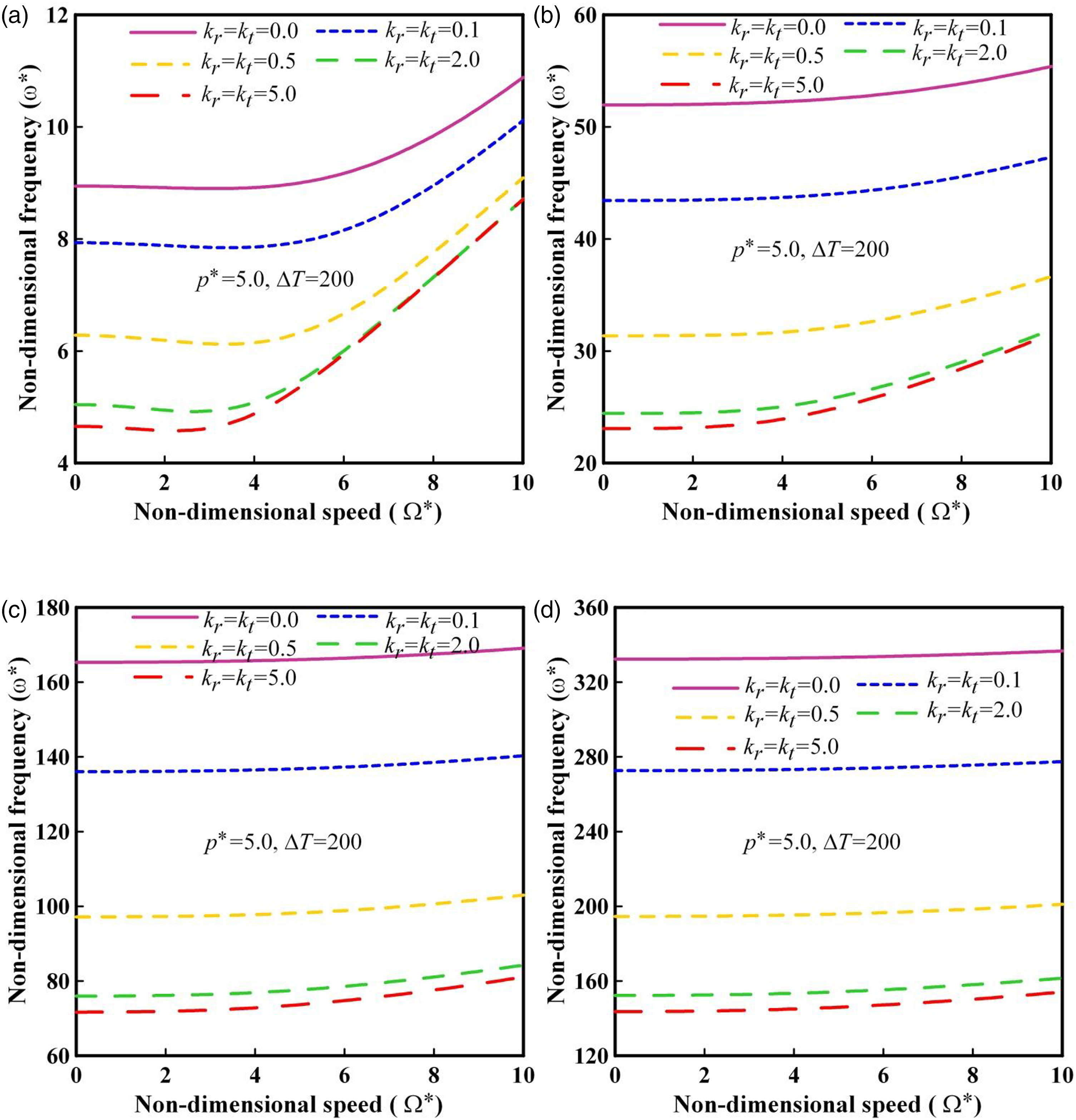
4. Conclusions
The free axisymmetric bending vibration behavior of a BFG rotating annular micro-disk has been studied based on the Kirchhoff plate theory and MCST. The micro-disk apart from being rotating with constant angular speed is subjected to uniform transverse pressure and thermal loading. The following conclusions are noted based on the presented results: (i) The transverse pressure leads to non-linear static bending of the micro-disk. (ii) The vibration frequency increases with the rotational speed, initially gradually and then rapidly indicating dominance of centrifugal stiffening. However, for the first and second modes, the frequency remains constant or slightly decreases with speed at lower speed ranges for moderate and higher pressure values indicating dominance of softening. (iii) The increase in pressure shows increasing vibration frequency for all the four modes because of enhanced geometric stiffening, though the effect of pressure is found to diminish with increasing speed. (iv) The thermal loading, in general, provides thermo-elastic degradation of the micro-disk, leading to decreasing frequency values at higher thermal loading. (v) The size effect is found to have significant influence where the reduced size-dependent thickness provides higher frequency values indicating strong size-dependent stiffening of the micro-disk. (vi) Increasing the volume fraction indices leads to decreased frequency values, and these parameters effect the frequency values to a large extent. (vii) Increasing radius ratio leads to significant decrease in the frequency values.
Footnotes
Acknowledgment
The authors gratefully acknowledge that the work reported in this paper is supported by National Doctoral Fellowship (NDF) awarded by All India Council for Technical Education (AICTE), India, under AICTE-NDF scheme-2018.
Declaration of Conflicting Interests
The author(s) declared no potential conflicts of interest with respect to the research, authorship, and/or publication of this article.
Funding
The author(s) received no financial support for the research, authorship, and/or publication of this article.

Appendix A
Total stiffness matrix
The sub-matrices of
The components of these sub-matrices are given below
The sub-matrices of
The components of these sub-matrices are given below
Load vector
The sub-vectors of
The components of these sub-vectors are given below
Appendix B
Tangent stiffness matrix
The sub-matrices of
The components of these sub-matrices are given below
Appendix C
Mass matrix
The sub-matrices of
The components of these sub-matrices are given below