




Abstract
Factor V Leiden (FVL) is the most common inherited risk factor for venous thromboembolism (VTE). The frequency of FVL in patients with VTE has been reported from different parts of Turkey. A meta-analysis was performed to estimate the risk of VTE associated with FVL in Turkish population. Published studies were retrieved from Pubmed and Science Citation Index/Expanded. We selected studies comparing the prevalence of FVL in patients with VTE with controls. The analysis was performed by the software comprehensive meta-analysis. The analysis consisted of 10 studies including 1202 patients with VTE and 1283 controls. The pooled frequency of FVL was significantly higher in patients with VTE (22.8%) than controls (7.6%). The pooled odds ratio (OR) was 3.4 (95% confidence interval [CI], 2.6-4.5). The study showed homogeneity (Q value, 9.955). No publication bias was observed in any comparison model. Our meta-analysis showed an association of FVL with VTE in Turkey.
Introduction
Factor V Leiden (FVL) causing activated protein C resistance is the most common inherited risk factor for venous thromboembolism (VTE).1,2 Factor V Leiden increases the thrombosis risk approximately by 7-fold. Heterozygosity for FVL causes 5- to 10-fold increased risk of VTE, whereas the risk of homozygosity is 80- to 100-fold higher than the normal population.1,2
The frequency of FVL mutation shows a geographic distribution. The high prevalence of FVL is seen in Middle East, Southern Europe, and Mediterranean region; however, it is not observed in some populations like Chinese.3–6 In several studies, the prevalence of FVL in Turkish people with VTE has been reported from different parts of Turkey. Factor V Leiden frequency in healthy Turkish population is 7.9% (range, 3.5%-15%). 7 We performed a meta-analysis to estimate the risk of VTE associated with FVL in Turkish population.
Materials and Methods
The data were compiled from Medline/Pubmed and Science Citation Index/Expanded databases. The keywords used for search were “factor V Leiden,” “factor V 1691 G-A,” “FVL,” “mutation,” “polymorphism,” “venous thrombosis,” “pulmonary embolism,” “Turkey,” and “Turkish population.”
Eligible studies fulfilled the following criteria: retrospective or prospective cohort case–control studies, with sufficient data to estimate an odds ratio (OR) with 95% confidence interval (CI), the study with 2 arms comparing patients with idiopathic VTE to those without VTE. For overlapping and republished studies by the same investigators, we selected the most recent ones with large sample sizes or available genotype data. Case reports and the studies including pediatric patients were excluded from the meta-analysis. Besides, patients with specific disease such as cancer, the Behcet disease, and the Crohn disease were excluded from the analysis (Figure 1).
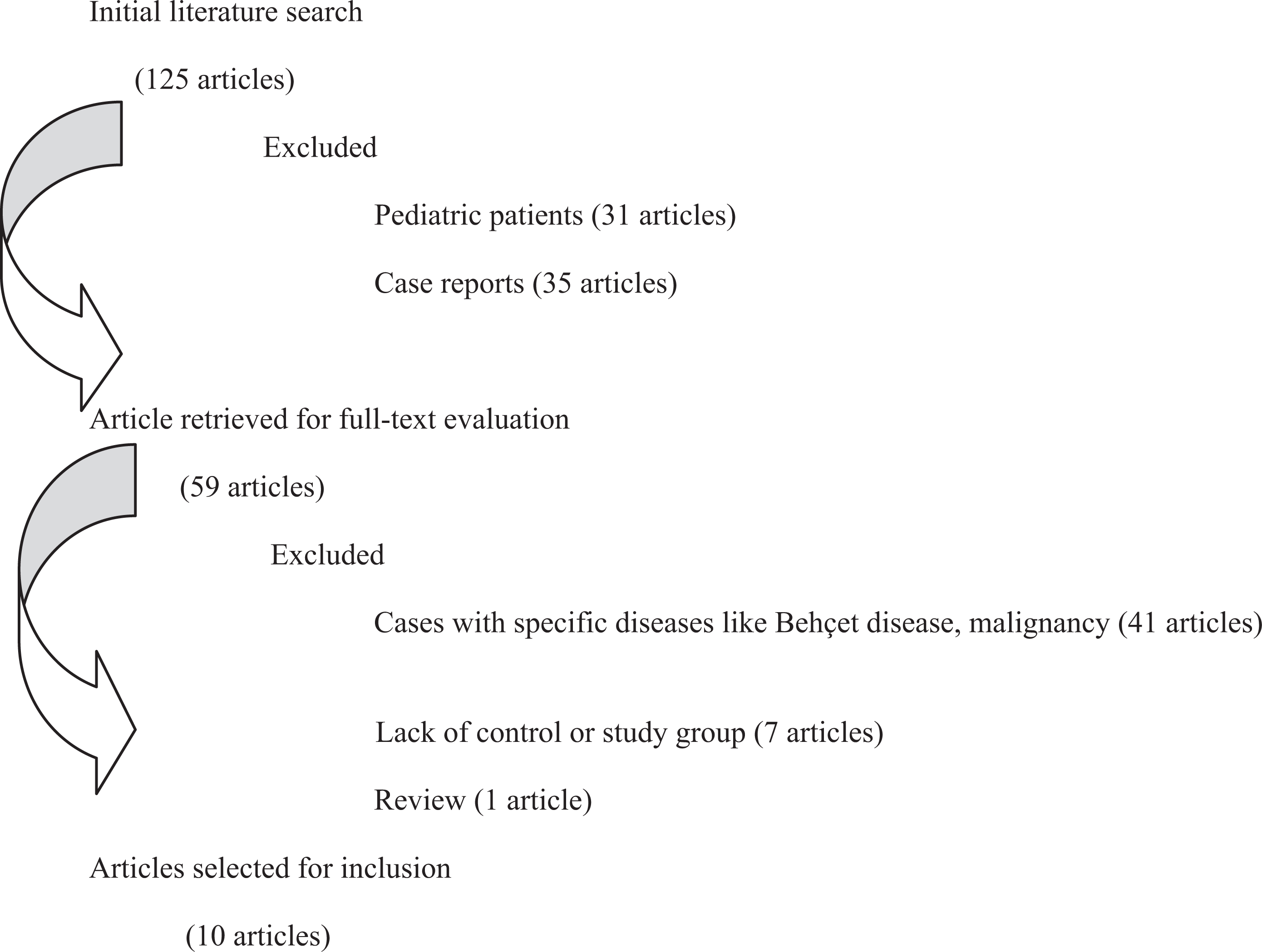
Summary of trial search and eligibility process.
Meta-analysis was performed to obtain a full and comprehensive summary of the related studies. The correlation coefficients (r) were combined using the fixed- and random-effects models. Heterogeneity of the studies was evaluated by the homogeneity test (Q). If homogeneity is found between the studies, the outcome of a fixed-effects model is performed. In the event of a heterogeneity, it is appropriate to use the result of a random-effects model. 8
Heterogeneity assumption was checked by the chi-square-based Q test. The pooled OR was calculated through the fixed-effects model. Begg funnel plot and Egger linear regression test were used to assess the potential publication bias of the literature. 9 P < .05 was considered the representative of statistically significant publication bias. The analyses were performed using the software Comprehensive Meta-Analysis, version 2.2 (Biostat, Englewood, NJ).
Results
A total of 10 studies10–19 including 1202 patients with VTE and 1283 control cases were involved in this meta-analysis. Table 1 summarizes the characteristics of each study. The pooled frequency of FVL was significantly higher in patients with VTE (22.8%) than the control participants (7.6%). The main results of meta-analysis and the forests of the studies are shown in Figure 2. When the homogeneity test was performed, the study was found to be homogeneous. Therefore, the fixed-effects model was used. The Q value was 9.955 (P = .354). The pooled OR was 3.4 (95% CI, 2.6-4.5; P < .0001). In addition, no evidence of the publication bias was observed in any comparison model. As shown in Figure 3, the plot of the 10 studies had a funnel image and therefore there was no publication bias. Possible publication bias was assessed by the rank correlation test and yielded P = .17, which reveals that there was no publication bias at the 95% CI. Besides, the Begg test (P = .21, with continuity correction) and the Egger test (P = .29) also revealed no publication bias at the 95% CI.
Characteristics of Study Participants
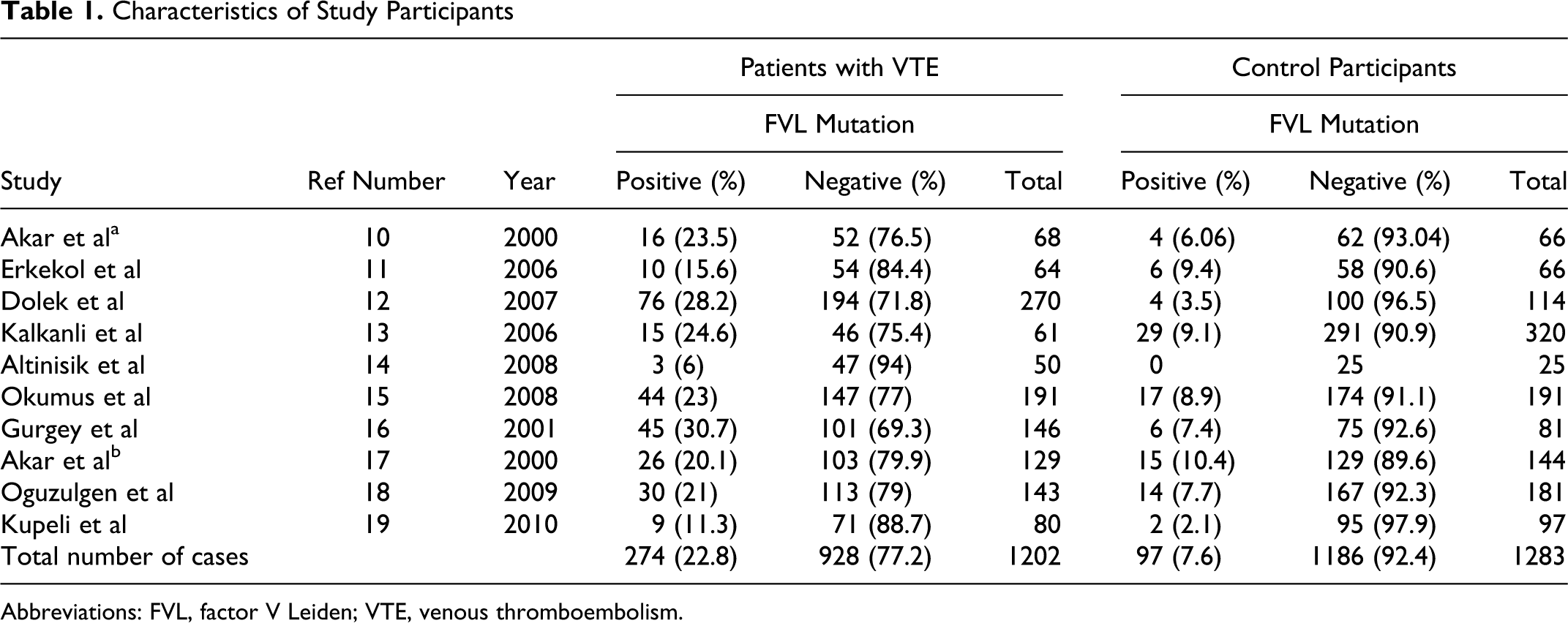
Abbreviations: FVL, factor V Leiden; VTE, venous thromboembolism.
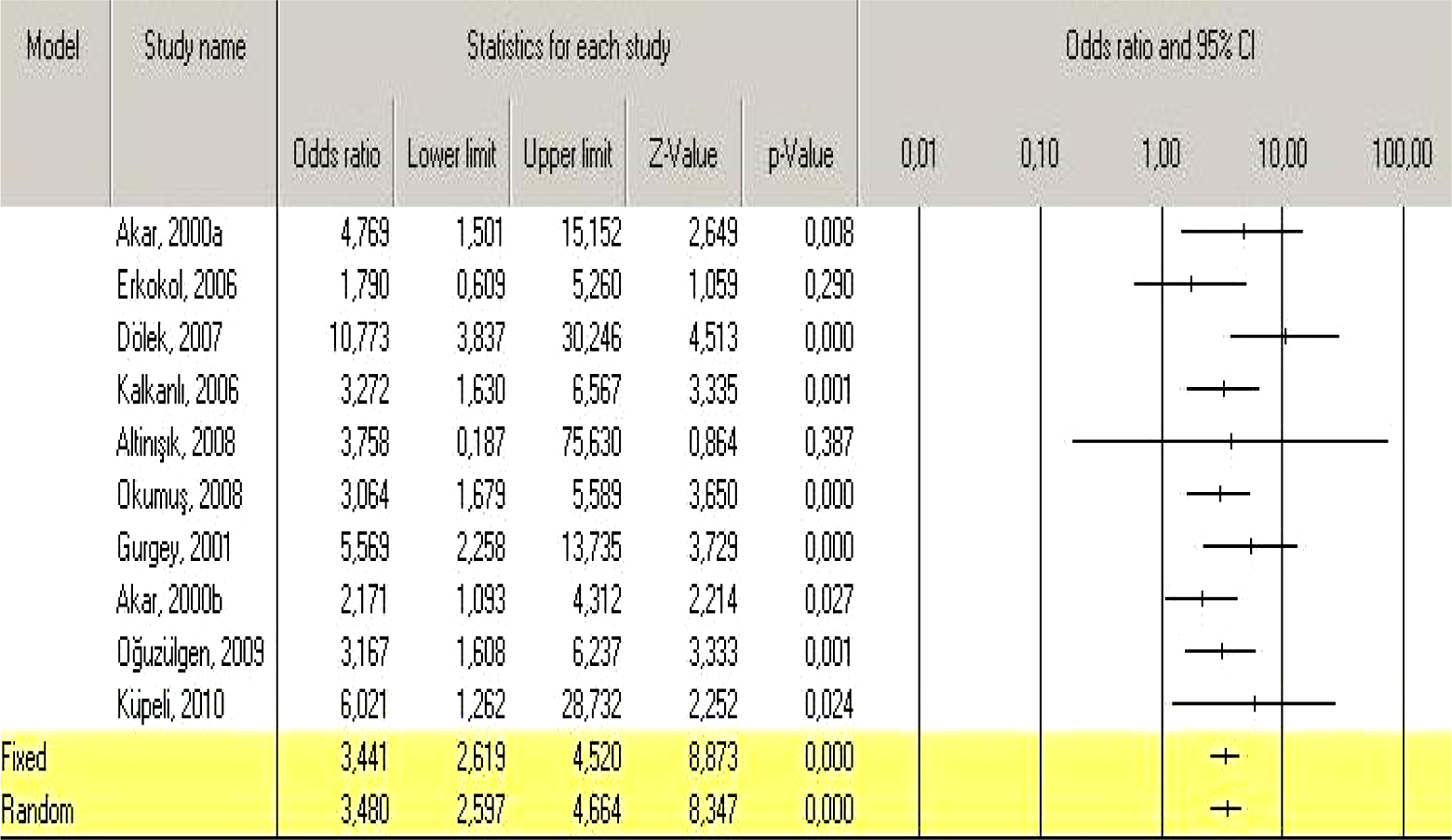
Results of meta-analysis based on a quality score (pooled estimate and 95% confidence intervals).
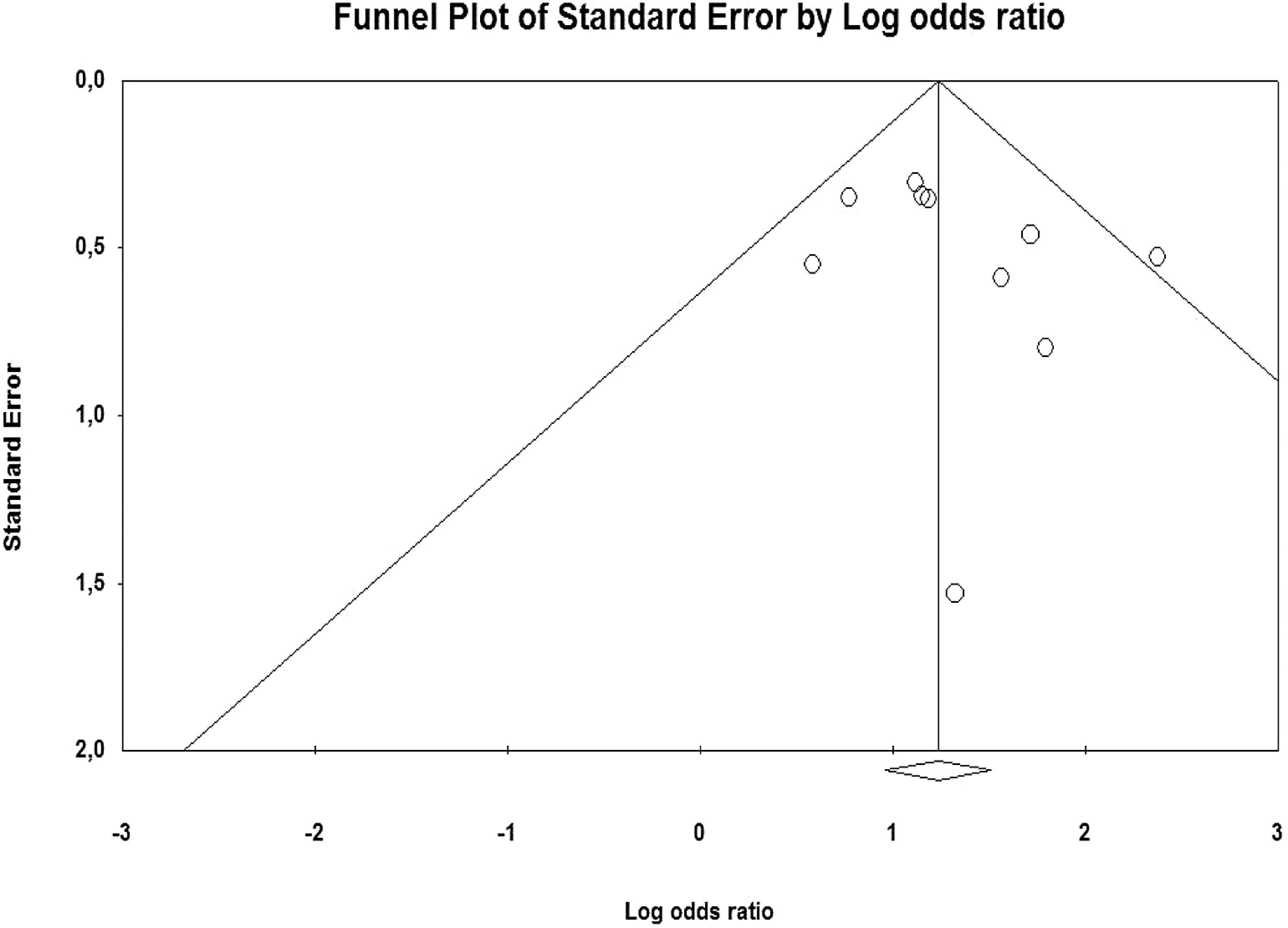
Funnel plot of 10 studies including log odds ratio.
Discussion
The frequency of FVL has been reported in different surveys carried out in many countries, depending on the geographical location and the ethnic background of the population. Its frequency is reported to be 2% to 15% and the highest prevalence rates are seen in Mediterranean countries.4,6 Factor V Leiden mutation has been estimated to be approximately 15 000 to 30 000 years ago during the Neolithic period. Lucotte and Mercier proposed that FVL in Europe was expanded from Turkey, Anatolia, which lies central to 3 continents and is at crossroads of several numbers of civilizations. 6 The prevalence of FVL in Turkish people with VTE and healthy Turkish population has been reported from different parts of Turkey.7,20 The existence of mutation in Anatolia is expected to be high. This situation has been recently supported by a study by Alakoc et al, indicating the presence of FVL in Urartians. 21
There exist limited information about why genetic diseases are present in a high frequency rather than not being eliminated by natural selection. 22 Most probably, the answer lies in the survival advantage caused by the mutation. Even a small increase in the frequency of FVL for 1 generation would have yielded a significant difference through hundreds of generations. 23
Turkish population seems to be a very good candidate to study the possible effects of FVL on VTE with its significantly high FVL. We therefore performed the meta-analysis of 10 eligible studies including 1202 cases and 1283 controls for a better evaluation of this association in Turkish population. When all studies were pooled together, our results demonstrated that FVL is associated with VTE development. Our meta-analysis also showed that pooled frequency of FVL in healthy Turkish people is 7.6%. As a conclusion, we can hypothesize that every individual with VTE should be screened for FVL whether or not carrying a risk factor.
Footnotes
The authors declared no potential conflicts of interest with respect to the research, authorship, and/or publication of this article.
The authors received no financial support for the research, authorship, and/or publication of this article.