




Abstract
Scientists are increasingly expected to participate in public engagement around prominent science and technology issues. However, scientists remain concerned that public engagement takes time away from conducting research. Little is known about the relationship between scientists’ productivity and their willingness to participate in different types of public engagement. Using a census survey of scientists from 30 U.S. land-grant universities (N = 5,208), we find that productive scientists are slightly more willing to participate in public scholarship than less productive scientists. In addition, social science consideration, institutional incentives, and self-efficacy are associated with a greater willingness to participate in public scholarship and informal science education.
Keywords
In recent decades, the importance of meaningful engagement between scientists and the general public regarding complex scientific issues has become increasingly apparent. The COVID-19 pandemic, for example, heightened the demand for the involvement of scientists in policy decisions using the best available science (e.g., Scheufele et al., 2020). As such, the COVID-19 pandemic provided a unique opportunity for scientists to engage with various publics across platforms to communicate about the science that was uprooting society and our way of life. However, the pandemic showcased many of the complexities that exist at the intersection of science and society and how difficult it can be to effectively communicate about controversial science or other risk issues. But engagement is also important when the stakes are (relatively) low, where scientists can interact with the public in ways that build relationships so that when the stakes do become high, there exists a foundation of trust to help bridge potential public/science divides (DeVasto & Creighton, 2018).
Despite the established importance of public engagement within the broader scientific community, scientists themselves hold varying perceptions of the importance of engaging with public audiences and report differences in their willingness to do so (e.g., Rose, Markowitz, & Brossard, 2020). A recurring concern is the perception of opportunity costs associated with participating in public engagement, namely, that public engagement takes time away from conducting research (Ecklund et al., 2012; Ho et al., 2020; Johnson et al., 2013). This concern is particularly salient for scientists who prioritize research to meet career expectations (Ecklund et al., 2012). However, growing evidence suggests that involvement in public engagement can result in positive scholarly outcomes for scientists, such as increased citations of their research (e.g., Liang et al., 2014; Luc et al., 2020). Limited research has systematically studied the possible objective relationship between research productivity and willingness to participate in public engagement activities.
Our study is the first to examine this question using a large sample of scientists from R1 land-grant universities in the United States. We chose this sample because tenure-track scientists at these institutions are likely to face tensions between expectations surrounding research and service to the public. This is due to the unique characteristics of institutions that are both R1 and land-grant universities. Given that R1 institutions are doctoral-granting universities that have very high levels of research activity (The Carnegie Classification of Institutions of Higher Education, n.d.), tenure-track scientists at these universities are expected to demonstrate excellence in research to qualify for tenure and promotion. Land-grant universities, on the other hand, are specifically committed to public service—with expectations that university research benefits state residents and industries. This commitment stems from the establishment of these universities, which were granted state property 1 for research purposes, hence the title “land-grant” (see Geiger & Sorber, 2013, for an overview of the origin of land-grant universities). Thus, faculty at institutions that are both R1 and land-grant universities may face a potential tension in allocating their time between research and service, thus driving a potential relationship between productivity and engagement.
With data from a census survey of scientists from 30 R1 land-grant universities in the United States, we systematically examine the relationship between scientists’ research productivity and their willingness to engage with the public. Productivity has been measured in a variety of ways including, most simply, the number of publications (e.g., Dundar & Lewis, 1998), as well as complicated approaches which consider citations, fields, author contributions, and salaries along with the number of publications (e.g., Abramo & D’Angelo, 2014). Public engagement literature has adopted these measures of productivity and impact, such as the average number of publications per year (e.g., Jensen et al., 2008) and the h-index that weights the number of citations per publication (e.g., Liang et al., 2014). We develop a measure of academic productivity that uses scientists’ self-reported number of publications and calculates field- and cohort-normalized productivity scores, given that the life cycle of publication quantity is influenced by academic age. 2 Furthermore, to uncover understudied factors that impact scientists’ willingness to engage with the public, we also include variables such as institutional incentives and scientists’ attitudes toward considering insights from social sciences research. By better understanding how these factors influence scientists’ willingness to engage with the public, we develop clearer insight into the ways in which scientists might be empowered to engage in the future as science issues become intertwined with public discourse.
Conceptualizing Public Engagement: Public Scholarship and Informal Science Education
There are many ways that public engagement has been conceptualized throughout the academic literature (see Weingart et al., 2021, for an overview) as well as from the perspective of scientists themselves (Calice et al., 2023). Thus, it is important to first clarify what we mean by public engagement in this study. Working from prior literature examining public engagement from the perspective of participation in different public engagement activities (see Rowe & Frewer, 2005, for an overview), we focus on two broad but non-exhaustive categories of public engagement activities: public scholarship and informal science education. Public scholarship refers to conversations and democratic decision-making related to scientific developments and policies among scientists, stakeholders, policymakers, media, and the public (Bao et al., 2023). These activities include participating in public meetings and deliberative forums, interviews with journalists, and writing opinion editorials in media outlets. Informal science education, on the other hand, includes but is not limited to engagement in events such as science cafés, science festivals, and open houses, or interacting with K–12 students. When participating in these informal science education activities, scientists are directly communicating with various publics to share scientific findings and to increase public excitement and appreciation for science. Unlike public scholarship activities, informal science education does not usually directly address the social and political contexts of science.
Various incentives at both the individual and institutional levels may influence scientists’ participation in public scholarship and informal science education-related activities. Public scholarship activities, for example, may be more accessible to scientists with a higher impact in their field, as they are likely better known and thus more often invited to speak to the media or to advise policymakers. In contrast, informal science education may depend more on institutional-level resources such as hosting a science festival event or maintaining relationships with local K–12 schools.
Factors That Influence Scientists’ Willingness to Engage With the Public
We particularly focus on understanding scientists’ willingness to engage with the public, rather than examining their past participation in engagement activities. Willingness is considered a precursor to behavior, hence there is often a strong association between willingness to engage and past participation in public engagement (e.g., Poliakoff & Webb, 2007). However, prior research has revealed varying and occasionally contradictory effects of certain characteristics of scientists on their willingness versus their past participation in public engagement. For instance, younger scientists are more willing to engage than their older colleagues (e.g., Dudo et al., 2018), yet older scientists engage more frequently in practice (e.g., Besley et al., 2013). Such discrepancies may be attributed to the possibility that opportunities for public engagement may disproportionately favor a subset of scientists who have established their academic reputation and publicity. Therefore, we aim at scrutinizing the willingness to engage, an aspect less influenced by the actual resources that scientists can access for engaging with the public. Understanding scientists’ willingness to engage with the public can also inform future allocation of resources to stimulate more actual participation in engagement among scientists.
Whether a scientist chooses to participate in public scholarship activities and/or informal science education depends on several factors that are generally well understood. First, existing pressures from universities and the scientific community may encourage, or in some cases require, scientists to engage with the public. At the same time, public engagement is sometimes seen as being in conflict with the priorities of scientists who consider research as more valuable to their careers (Ecklund et al., 2012), despite existing research that emphasizes the value of engagement.
Expectations of the Scientific Community
All scientists are likely to face expectations of participating in public engagement at some point in their careers. For example, a requirement of National Science Foundation (NSF) grants is that a research project contributes Broader Impacts, which are impacts of the research that increase social well-being through research, education, or engagement activities (National Science Foundation, 2020). Likewise, Horizon 2020, the European Commission’s largest-ever funding program for research and innovation, integrates public engagement into the European Union’s (EU) policy processes and calls for research proposals (European Commission, 2020). In addition, land-grant institutions commit to making research accessible to the public through an emphasis on “practical education” (Morrill Act, 1862). The NSF’s Broader Impacts, the Horizon 2020, and land-grant mission underscore how public interests should inherently be embedded in scientific research.
In addition to the normative expectation of public engagement by universities and the scientific community, empirical studies increasingly demonstrate how public engagement can benefit the research enterprise. This is especially evident in engagement with media actors. For example, scientific journal articles that are mentioned in newspapers gain more citations than those that are not (Phillips et al., 1991). Similarly, the promotion of journal articles on Twitter (and retweets by fellow scientists) significantly increases citations compared to academic articles without a Twitter presence (Luc et al., 2020). Mentions on Twitter are linked to higher research impact (h-index) among highly cited U.S. nano-scientists. In addition, mentions on Twitter amplify the positive effects of interactions with journalists and other non-scientists on nano-scientists’ research impact (Liang et al., 2014).
The Perceived Conflict Between Public Engagement and Research
The argument that public engagement is an opportunity cost is a common sentiment of scientists who see it as detracting from time that could be spent on research (Ecklund et al., 2012; Ho et al., 2020; Johnson et al., 2013). In one sense, public engagement activities can fulfill the category of public service in tenure and promotion decisions in the United States. However, public service notoriously weighs less heavily than research and teaching for tenure and promotion qualification (Alperin et al., 2019). Thus, the perceived opportunity cost of public engagement is in relation to what is understood as valuable for tenure and promotion. Given the lack of recognition or rewards for engagement activities, pre-tenure faculty sometimes receive the advice that they should postpone public engagement efforts until tenured (Calice et al., 2022). This suggests that there is pressure for scientists to focus on requirements for career success that might be biased against spending time on public engagement.
Although recent surveys show that the majority of faculty acknowledge that public engagement is part of their job (Hoffman et al., 2015; Rose, Holesovsky, et al., 2020), the extent to which scientists view engagement as someone else’s job (e.g., journalists and communication professionals) is significantly associated with less willingness to spend more time on public engagement (Besley et al., 2013). In addition, research excellence is often considered a prerequisite for public visibility to be accepted by colleagues, which has the effect of making public engagement a byproduct of scientists’ research excellence (Peters, 2013; Rödder, 2012). In this sense, research excellence might be considered a prerequisite for public engagement. Thus, we expect a positive relationship between research productivity and willingness to engage in public scholarship and informal science education separately:
Hypothesis 1 (H1): Scientists who are more productive in terms of research are more willing to engage in (a) public scholarship and (b) informal science education.
Are Early-Career Productive Scholars More Willing to Engage Compared to Senior Colleagues?
Research also shows differences in perceptions of public engagement among scientists as a function of career stage. For example, early-career scientists (i.e., pre-tenure scientists) are more likely than mid- and late-career scientists to reconcile research and public engagement activities (Calice et al., 2022). In other words, based on relatively recent data, early-career scientists tend to challenge the idea that public engagement is an opportunity cost, as they have a higher willingness to be involved in public engagement than those who have been in academia for a long time (Dudo et al., 2018; McCann et al., 2015). Scientists with younger academic age (i.e., the number of years since the respondent received their highest degree) are more likely to be motivated by enjoyment when participating in public engagement, compared to their senior counterparts (Martín-Sempere et al., 2008). Furthermore, academically younger scientists are generally more comfortable with new communication technologies that have enabled them to communicate with non-scientists directly via online platforms (Besley et al., 2018). One possible explanation for this increased comfort with and excitement about public engagement among early-career scientists may be that they can more easily perceive and experience the paybacks of engagement, based on greater publicity and research impact. This leads us to expect:
Hypothesis 2 (H2): Scientists with younger academic age are more willing to engage in (a) public scholarship and (b) informal science education.
With the aforementioned potential paybacks, it is plausible that academically younger scientists who are more productive would be more willing to participate in engagement activities than their less productive peers to increase their publicity and impact. However, the positive relationship between research productivity and willingness to engage with the public is likely less pronounced among academically older scientists. This may be due to less awareness of possible benefits from engagement on their research impact in the digital media environment. At the same time, tenured scientists have greater authority and flexibility to allocate time spent participating in research and engagement. Taken together, this evidence—some potentially in conflict with one another as well as with widely held beliefs about opportunity costs in faculty life—suggests that the influence of productivity on willingness may be more pronounced among younger academic cohorts compared to their older counterparts. Thus, we propose the following research question:
Research Question 1 (RQ1): How does academic age moderate the relationship between research productivity and willingness to engage in (a) public scholarship and (b) informal science education?
Potential Factors for Evaluating the Costs and Benefits of Public Engagement
Scientists’ willingness to engage with the public is also shown to depend on meso- and macro-level factors (Ho et al., 2020). Meso-level factors refer to institutional-level considerations, while macro-level factors pertain to relations with major societal stakeholders, including the public (Ho et al., 2020). Such factors include institutional incentives for engagement that may or may not be provided, as well as insights from social science research that contextualize the value of engagement. These factors provide scientists with food for thought to evaluate the importance, benefits, and costs related to public engagement.
Institutional Incentives
Institutional factors are gatekeepers for incentivizing or discouraging scientists’ participation in public engagement (Calice et al., 2022). Universities with a culture that endorses public engagement might provide more resources to support scientists’ access to and participation in engagement or reduce barriers to scientists engaging with the media. For example, the more university-level public relations (PR) professionals request content to promote research in news or university press releases, the more likely scientists participate in press releases and interviews with journalists (Marcinkowski et al., 2014). Universities can also cultivate a culture of public engagement by offering science communication training opportunities to improve engagement skills (Pearson et al., 1997). At the same time, scientists repeatedly express negative sentiment toward institutional barriers that restrict participation in engagement activities, specifically emphasizing how public engagement is rarely considered in annual performance reviews and/or tenure and promotion (e.g., Calice et al., 2022; Ecklund et al., 2012; Ho et al., 2020). While previous studies have examined how the norms of institutional culture are influenced by colleagues and institutional leaders (e.g., Besley et al., 2013; Poliakoff & Webb, 2007), the influence of institutional incentives for public engagement on willingness to engage, as documented in hiring contracts, tenure and promotion, and annual reviews, is not well understood. More importantly, scientists likely require a culture that supports engagement or clear expectations around engagement in order to positively influence their decision to participate or not (Bao et al., 2023; Marcinkowski et al., 2014). Thus, we anticipate that institutional incentives are positively associated with scientists’ willingness to participate in public engagement, proposing:
Hypothesis 3 (H3): Scientists who perceive greater institutional incentives are more willing to engage in (a) public scholarship and (b) informal science education.
Insights From Social Sciences Research
When it comes to macro-level factors, scientists’ willingness to engage with the public depends on their views of different relevant stakeholders (e.g., laypeople, journalists, etc.) and the socio-political contexts related to their research. Barriers to engagement might include the fear of being misrepresented in the media (Dudo, 2015; Peters, 2013) or receiving public backlash (Ho et al., 2020). On the other hand, scientists’ engagement may be motivated by a commitment to the public good (Besley et al., 2013). These macro-level factors are especially important in the context of science and technology innovations that are often seen as controversial, like CRISPR and artificial intelligence, and which have ethical, legal, and social implications that scientists alone cannot address. Consideration of such implications requires that scientists value the concerns laypeople have about these scientific issues (Jasanoff et al., 2015; Scheufele et al., 2021) and develop effective communication strategies to discuss these issues (Simis et al., 2016). Social sciences research is useful to inform scientists on how they might approach gaining these perspectives.
A growing body of social sciences research has addressed why public engagement with science is important for the general public and the scientific community, as well as how scientists can effectively communicate about science with the general public (e.g., Besley & Dudo, 2022). A foundation of this work is the understanding that individuals are cognitive misers, relying on heuristics (or mental shortcuts) as informational substitutes to form attitudes about unfamiliar science and technology issues (Scheufele, 2006). This attitude formation process highlights the importance of effective communication strategies. For instance, researchers have emphasized integrating the value dispositions of the public into science communication (Dietz, 2013; Lupia, 2013) and framing science in ways that are relevant to lay audiences (Nisbet & Scheufele, 2007). Scientists with a greater understanding of how their target audience thinks and behaves may be better able to avoid the pitfalls of miscommunication, develop more positive attitudes toward the public, and build their capacity to engage with the public. Thus, scientists should draw on social sciences research to ensure that they are heard in societal debates on scientific issues (National Academies of Sciences, Engineering, and Medicine, 2017).
Insights from social sciences research encompass multifaceted factors that are useful for scientists who want to meaningfully engage, such as information about how lay publics form their attitudes toward science, diverse values that the public bring to science research as well as effective communication strategies between scientists and lay publics. However, to the best of our knowledge, no empirical studies have examined the relationship between attitudes toward considering insights from social sciences research in science communication efforts and willingness to engage with the public, with one exception. In that study, scientists with more positive attitudes toward social sciences were less likely to hold knowledge deficit model attitudes 3 (Simis et al., 2016). By placing less emphasis on the knowledge deficit model, scientists acknowledge that public values should be considered in reaching trade-offs for addressing the social impacts of controversial science. We therefore propose the hypothesis:
Hypothesis 4 (H4): Scientists who have more positive attitudes toward considering insights from social sciences research when communicating about science with audiences are more willing to engage in (a) public scholarship and (b) informal science education.
Returning to Basics: Individual Capacity to Engage With the Public
We also recognize the value and importance of including factors previously determined to impact scientists’ willingness to engage with the public. There is a breadth of public engagement research that highlights the positive impacts of science communication training and self-efficacy on scientists’ willingness to participate in public engagement (e.g., Dudo, 2013; Dunwoody et al., 2009; Poliakoff & Webb, 2007). Prior research has widely used the theory of planned behavior (TPB) to examine factors that influence scientists’ willingness to participate in public engagement (e.g., Dudo, 2013; Poliakoff & Webb, 2007). Within the TPB framework, those scientists who are confident in their ability to participate in engagement activities or communicate with the public (i.e., have high self-efficacy) are more likely to participate or have greater intention to participate in engagement activities (Dudo, 2013; Poliakoff & Webb, 2007). Self-efficacy consistently shows significant effects on willingness to engage with the public, whereas evidence of the importance of other model factors, such as perceived norms among colleagues, is less robust in the literature (e.g., Besley et al., 2018).
Why do some scientists perceive higher levels of self-efficacy than others? Past participation in public engagement activities has been shown to be a potential determining factor for increasing self-efficacy (Peters, 2013), further evidenced by the high correlation between previous engagement experience and self-efficacy (Poliakoff & Webb, 2007). Scientists may also gain the skills to participate confidently in various public engagement activities with science communication training. The relationship between science communication training and willingness to engage can be mediated by a higher level of self-efficacy in participating in public engagement (Copple et al., 2020). Science communication training is diverse, ranging from one-time workshops to semester-long courses. Though current science communication training has been criticized for being skill-laden and relying on the knowledge deficit model (Besley et al., 2016; Dudo, 2015), studies show that more science communication training is associated with a higher willingness to engage with the public (e.g., Dudo, 2013) and can indirectly influence willingness to engage by enhancing self-efficacy (Copple et al., 2020). Therefore, we propose the following hypotheses:
Hypothesis 5 (H5): Scientists with more science communication training are more willing to engage in (a) public scholarship and (b) informal science education.
Hypothesis 6 (H6): Scientists with a higher level of self-efficacy are more willing to engage in (a) public scholarship and (b) informal science education.
Method
Data Collection and Screening
We used a census survey of all faculty from 73 U.S. land-grant universities (within 69 university systems). The sample of faculty included in the survey was developed by a group of research assistants who manually collected the names, affiliations, position titles, and email addresses of faculty across disciplines from the university websites. We then conducted a 20-minute online survey from May to July 2018 with four waves of contact, initially inviting 103,000 faculty for the first wave. No incentive was provided for survey completion. After the data collection, the research team manually removed 17 universities with a small number of participants (<20 responses) and 10 universities with an unrepresentative sample of participants (>10% difference in gender distribution between the reported faculty population and the sample). The final sample consisted of 10,706 eligible responses from 46 universities, with a response rate of 14% (following RR2, see American Association for Public Opinion Research, 2016).
This study chose a subsample of 30 R1 universities and excluded the remaining 16 non-R1 universities. As described in the introduction, R1 refers to doctoral universities with very high research activity. We assume that tenure-track scientists from these universities are more comparable in terms of teaching, research, and service expectations. In addition, since we focus on tenure-track scientists, we removed non-tenure-track scientists, faculty in the arts and humanities, and those in professional fields (e.g., business and law). The subsample for analysis includes 5,208 responses from 30 R1 universities, with a response rate of 15%.
Respondents were asked to identify one or more research fields in which they worked using a measure aligned with NSF standards. The research fields were grouped into (a) life sciences (N = 1,796)—agricultural and food sciences, biological sciences, and medical sciences; (b) physical sciences (N=1,247)—computer and information science and engineering, engineering, geosciences, and mathematical and physical sciences; and (c) social sciences (N = 2,295)—environmental research and education, education and human resources, and social, behavior, and economic sciences. Social sciences fields were prioritized over the other fields (i.e., if respondents selected a social sciences field, they were placed in that category), while life and physical sciences are non-exclusive (N = 130 overlap, see Appendix A for more details).
The dataset had a few multivariate outliers regarding age and academic age. For instance, the academic age of one faculty member was equal to their age due to a data entry error. In 19 cases, we either corrected the data based on publicly available records or recoded them as missing values.
Measures
Dependent Variables
Willingness to participate in public scholarship was measured using four items on a 5-point scale (1 = not at all willing to 5 = very willing), asking respondents’ willingness to: (a) meet with local, state, or federal policymakers, (b) participate in public meetings or other deliberative forums, (c) give an interview with a journalist, and (d) write a news article, press release, or op-ed. The four items were highly correlated and averaged into an index (M = 3.82, SD = 0.90, Cronbach’s α = .83).
Willingness to participate in informal science education was similarly assessed using five items measured on the same 5-point scale: (a) give a public lecture, (b) give a talk at a science pub or science café, (c) participate in a science festival, (d) work at an open house event at your institution, and (e) work with K–12 youth inside or outside the classroom. The five items were averaged to create a reliable index (M = 3.71, SD = 0.87, Cronbach’s α = .82). The correlation between willingness to participate in public scholarship and willingness to participate in informal science education is .62 (p ≤ .001).
Independent Variables
Academic age was calculated by the number of years since the respondent received their highest degree (M = 21.39, SD = 12.38).
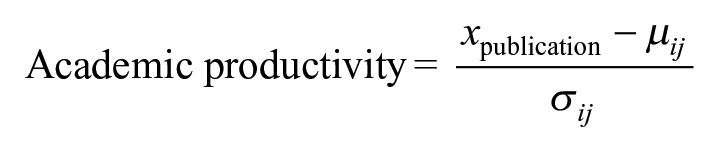
Academic productivity referred to the relative position regarding the number of publications against the average of publications for cohorts at universities in the same field. As introduced earlier, we proposed a method that standardized the number of publications against cohorts in the same field, thereby eliminating the confounding effects of academic age and field. This objective measure of productivity is a proxy for how scientists allocate time between research and other activities, indicating how productive a scientist is relative to others at a similar career stage in the same field. This allows for a more straightforward and unbiased interpretation of regression results.
To calculate standardized productivity scores for each participant, we first created five cohort groups based on academic age. To do so, we split academic age into four groups according to the promotion process: pre-tenure (≤6 years), pre-full professor (7–12 years), junior full professor (13–18 years), and full professor (≥19 years). The full professor group was split into two: mid-full professor (academic age ≥ 19 years and age ≤ 65 years old) and senior full professor (academic age ≥ 19 years and age > 65 years old). For example, a biologist with 5 years of experience after graduation was exclusively compared with pre-tenure cohorts (cohort i) in the field of biological sciences (field j). If a respondent chooses more than one field, we averaged the z-score across fields. We used participants’ self-reported number of publications and calculated field- and cohort-normalized productivity scores as such (M = −0.02, SD = 0.99):
Science communication training was captured by various training types and recoded into three groups, 0 = none, 1 = only attended short workshops/seminars, and 2 = took science communication course(s) through a university and/or attended multi-day workshops/seminars (M = 0.74, SD = 0.79).
Institutional incentive was measured by the proportion of engagement and/or outreach activities present in a scientist’s (a) hiring contract, (b) tenure dossier, and (c) annual review/performance, using a 3-point scale (0 = not a component to 2 = a large component). An index was made by averaging the three items (M = 0.83, SD = 0.49, Cronbach’s α = .81).
Insight from social sciences asked respondents to indicate their agreement, on a 5-point scale (1 = strongly disagree to 5 = strongly agree), with the statement “insight from social sciences research should be considered when communicating about science with audiences” (M = 4.00, SD = 0.78).
Self-efficacy asked respondents to rate whether they feel it difficult or easy to (a) explain scientific facts in a way that lay people can understand, (b) adjust to different kinds of lay people (e.g., children, politicians), and (c) deal with critical objections from an audience, using a 5-point scale (1 = extremely difficult to 5 = extremely easy). Responses were averaged to create an index (M = 3.48, SD = 0.78, Cronbach’s α =.74).
Control Variables
Finally, we controlled for respondents’ demographic and career differences that may influence scientists’ willingness to engage with the public, including their gender (62% male), field of study (34% life sciences, 24% physical sciences, and 44% social sciences), and extension appointment (12% yes). Prior research shows gender differences may influence scientists’ willingness to participate in engagement activities. For instance, female scientists are somewhat less willing to engage through the media than their male counterparts, though the gender differences in participating in some other activities are small (Besley et al., 2018). Having an extension appointment was also controlled for because public engagement is heavily weighted and explicitly incentivized for those with extension appointments (e.g., Foltz & Barham, 2009). Finally, research fields can influence the type of engagement activities that scientists participate in. For instance, researchers from humanities and social sciences tend to have more interactions with media than those from natural sciences, life sciences, and engineering (Peters, 2013), so we also controlled for the scientists’ research field (i.e., social, physical, or life sciences).
Analysis
We used hierarchical ordinary least squares (OLS) regression models to test the research hypotheses and questions. All independent variables were grouped in blocks and entered into the models based on the hypothesized order of causality (Cohen et al., 2003). To reduce the risk of Type I error caused by a large sample, we set our alpha level to establish a significance level at .01.
Results
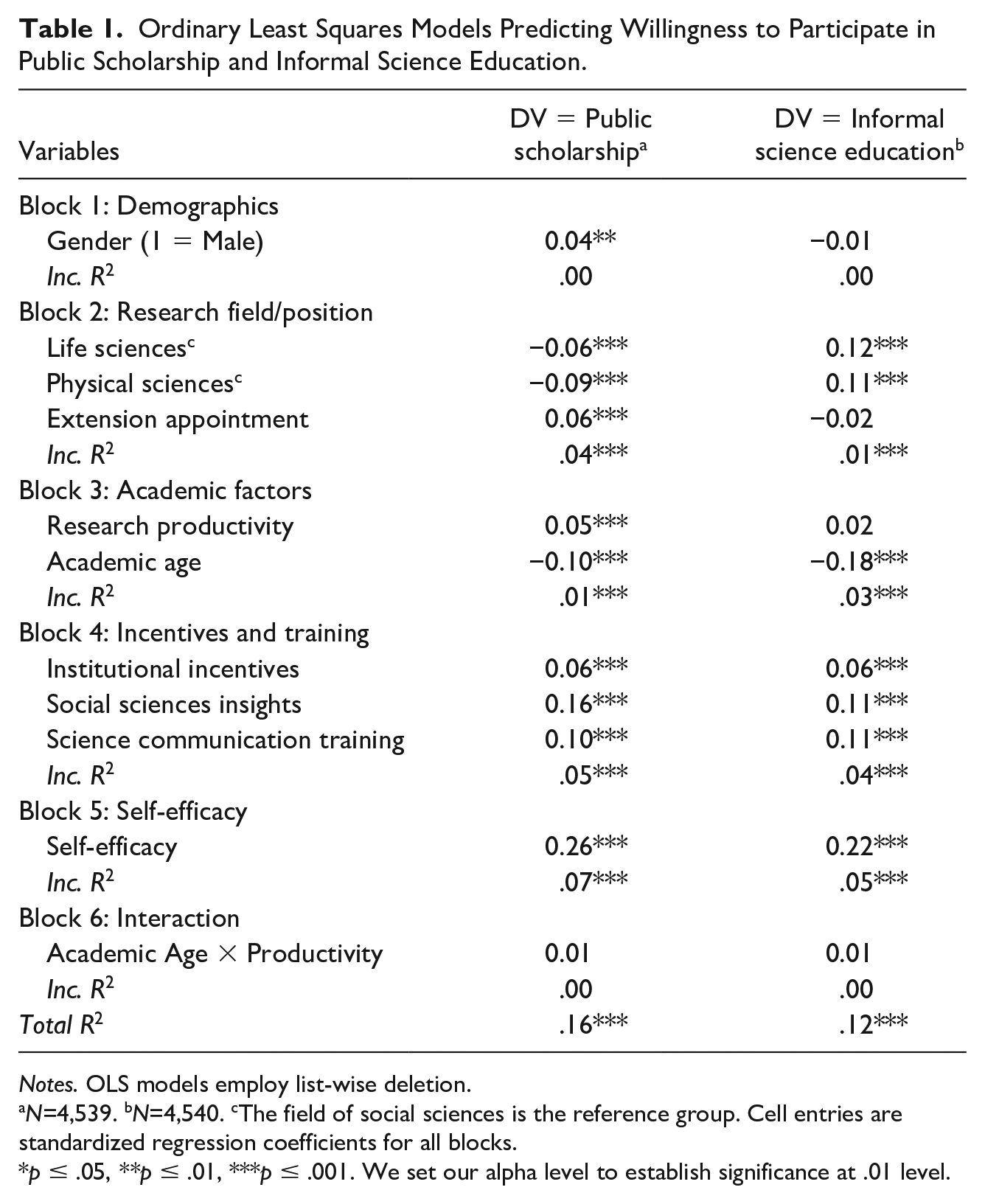
Table 1 presents the regression model predicting willingness to participate in public scholarship and informal science education, respectively. The model predicting willingness to participate in public scholarship explained 16% of the variance. Self-efficacy (7%) explained most of the variance, followed by institutional factors including institutional incentives, insights from social sciences, and science communication training (5%), and then by the scientists’ research field (4%), academic age, and productivity (1%). Before delving into a detailed interpretation of our findings, it is important to highlight that most variables exhibited small to medium effect sizes. Although they achieve statistical significance, these results should be approached with caution. Productive scientists (β = .05, p ≤ .001) were more willing to participate in public scholarship, supporting H1a. The lower a scientist’s academic age (β = −.10, p ≤ .001), the more willing they were to participate in public scholarship, supporting H2a. However, we did not find a moderating effect of academic age on the relationship between scientists’ research productivity and their willingness to participate in public scholarship (RQ1a). In addition, perceiving more institutional incentives (β = .06, p ≤ .001), attitudes toward considering insights from social sciences (β = .16, p ≤ .001), and having more science communication training (β = .10, p ≤ .001) were significantly and positively associated with willingness to participate in public scholarship. Thus, H3a, H4a, and H5a were supported. Likewise, scientists who perceived higher levels of self-efficacy (β = .26, p ≤ .001) were more willing to participate in public scholarship, supporting H6a. There were disciplinary differences among scientists in their willingness to engage in public scholarship. Compared to social scientists, life scientists (β = −.06, p ≤ .001) and physical scientists (β = −.09, p ≤ .01) were significantly less willing to engage in public scholarship, respectively. Those with extension appointments (β = .06, p ≤ .001) and male scientists (β = .04, p ≤ .01) were also more willing to engage in public scholarship.
Ordinary Least Squares Models Predicting Willingness to Participate in Public Scholarship and Informal Science Education.
Notes. OLS models employ list-wise deletion.
N=4,539. bN=4,540. cThe field of social sciences is the reference group. Cell entries are standardized regression coefficients for all blocks.
p ≤ .05, **p ≤ .01, ***p ≤ .001. We set our alpha level to establish significance at .01 level.
The regression model explained 12% of the variance in willingness to participate in informal science education. Similar to the model of willingness to participate in public scholarship, self-efficacy (5%) explained most of the variance, followed by incentives and training (4%), academic factors (3%), research field (1%), and demographics (0%). The relationships between independent variables and the dependent variable (willingness to participate in informal science education) were mostly consistent with the other regression model of willingness to participate in public scholarship, except for research productivity. Research productivity (β = .02, n.s.) was not significantly associated with willingness to participate in informal science education, failing to support H1b. Similar to public scholarship, academic age (β = −.18, p ≤ .001; H2b) was negatively associated with willingness to participate in informal science education. Regarding RQ1b, there were no significant interacting effects between academic age and research productivity on scientists’ willingness to participate in informal science education. The remaining hypotheses, from H3b to H6b, were all supported. We found positive associations between willingness to participate in informal science education and several factors, including institutional incentives (β = .06, p ≤ .001; H3b), attitudes toward considering insights from social sciences (β = .11, p ≤ .001; H4b), science communication training (β = .11, p ≤ .001; H5b), and self-efficacy (β = .22, p ≤ .001; H6b). Both life scientists (β = .12, p ≤ .001) and physical scientists (β = .11, p ≤ .001) showed more willingness to engage in informal science education than social scientists. In addition, having an extension appointment and gender were not significant factors influencing scientists’ willingness to participate in informal science education.
Discussion
Considering the increasingly important role that public engagement will play in science issues that directly affect society, this study examines what factors influence scientists’ willingness to participate in such engagement. We focus on two types of engagement activities, public scholarship and informal science education. These two types of engagement activities encompass both science-policy and non-policy contexts, toward which scientists may have different attitudes. Opposite from concerns about the opportunity cost of participating in public engagement, we find that productive scientists are slightly more willing to participate in public scholarship compared to less productive cohorts in the same field. However, we do not see the same relationship between research productivity and willingness to engage in informal science education. We also find that self-efficacy, attitudes toward considering insights from social sciences, science communication training, and institutional incentives are associated with increased willingness to engage in both public scholarship and informal science education. These findings shed light on how to address concerns regarding participating in public engagement, such as perceptions of opportunity costs, time constraints, and negative impacts on scientific reputation, to better prepare scientists to be able to meaningfully engage.
Before discussing our findings in detail, we highlight three limitations of our study. First, our cross-sectional data cannot confirm causality. While the proposed directional relationships between variables are theoretically grounded, these directions may have reciprocity bias. For example, willingness to participate in public engagement may drive scientists toward more science communication training. Thus, we must interpret the results cautiously to avoid overestimating possible causality. Second, our measures of public scholarship and informal science education are non-exhaustive in that other forms of engagement that may fall into these categories are not represented. For instance, other forms of informal science education, such as posting science videos on YouTube or collaborating with artists may be important to some scientists. Also, the factors predicting scientists’ willingness to engage with the public are non-exhaustive. Future studies may investigate other types of perceived benefits and risks related to public engagement. Third, our research productivity measure favors publication quantity over the quality of research conducted because it focuses on the number of publications compared to the average number of publications in the scientist’s cohort. Our approach specifically seeks to minimize the bias of academic age and discipline by standardizing the number of publications within the field and years of experience. However, this approach cannot estimate the quality of those publications through the number of citations, as a scientist’s h-index might suggest. Despite these limitations, capturing research productivity from a quantity perspective is sufficient to explore whether productive scientists view public engagement as an opportunity cost and how they allocate their time for research and public engagement.
Still an Opportunity Cost? Scientists With Higher Research Productivity Are Sometimes More Willing to Engage
One key contribution of this study is to extend public engagement research in terms of addressing the concern that public engagement represents an opportunity cost. Productive scientists are slightly more willing to participate in public scholarship (β = .05, p ≤ .001), but there is no such relationship between research productivity and willingness to engage in informal science education (β = .02, n.s.). This suggests that public engagement might not be viewed or approached as an opportunity cost. Yet, due to our findings’ small effect size, further research is needed. Our cross-sectional data cannot infer causality, but the link between scientists’ existing status in terms of research productivity and future willingness to engage with the public can still provide complementary evidence to previous studies. As discussed earlier, previous research has explored the subsequent benefits of increased scientific impact through participation in engagement activities (e.g., promotion on social media, see Liang et al., 2014; Luc et al., 2020). Our study provides evidence from the other direction, exploring how research productivity impacts scientists’ willingness to participate in the first place. Considering these findings together, there is a potential upward spiral connecting research productivity, willingness to participate in public scholarship, and consequent increases in scientific impact. The positive relationship between research productivity and willingness to participate in public scholarship resonates with expectations in grant proposals to include the broad societal impacts of scientific research. Productive scientists are also less concerned about public engagement possibly taking time away from research or with the potential that being a popular spokesperson of science might lead to sacrifices in their academic career and critiques from colleagues (Hartz & Chappell, 1997; Shermer, 2002). These trends suggest that productive scientists may have the ability to represent a shift in norms from earlier (anecdotal) norms. The new norms may consider a high commitment to public scholarship as rewarding, potentially incentivizing other scientists to be actively involved in debates about science and society. Notably, the non-significant relationship between research productivity and willingness to engage in informal science education may indicate that productive scientists may not weigh participation in informal science education as valuable for both their scientific and societal impact as compared to participation in public scholarship. Future research should examine the nuanced differences in scientists’ views toward different types of engagement activities.
Cross the Disciplinary Lines: Involving in More Diverse Types of Engagement Activities
Second, this study highlights disciplinary differences with regard to engagement preferences. Physical scientists (β = .11, p ≤ .001) and life scientists (β = .12, p ≤ .001) are somewhat more willing to participate in informal science education than social scientists, whereas social scientists are slightly more willing to participate in public scholarship than are physical scientists (β = −.09, p ≤ .001) and life scientists (β = −.06, p ≤ .001). These findings are consistent with previous cross-national data that researchers from humanities and social sciences fields tend to have more interactions with media than those from natural sciences, life sciences, and engineering (Peters, 2013). Such disciplinary differences support the reality that science is not monolithic (Yeo & Brossard, 2017). The future practice of public engagement may require scientists to be exposed and have access to a wide range of activities. Public engagement should not be exclusive, especially based on disciplinary differences. Bench scientists should pursue opportunities to interact with the media and include their work in the policymaking process, at the same time social scientists should be involved in educational engagement activities, such as science festivals.
New Incentives to Consider: Insights From Social Sciences Research and Institutional Incentives
Third, this study examines underexplored factors—attitudes toward considering insights from social sciences research and perceptions of institutional incentives—in accounting for scientists’ willingness to engage in public scholarship and informal science education. Social sciences research provides fruitful information regarding the value that the public brings to science research and effective communication strategies between scientists and the public, which is particularly important in societal discussions of controversial science. Interestingly, the effect size of attitudes toward considering social sciences insights when communicating science (β = .16, p ≤ .001) is a bit larger than science communication training (β = .10, p ≤ .001) in the regression model explaining willingness to engage in public scholarship, whereas the effect size is comparable in the context of willingness to engage in informal science education (β = .11, p ≤ .001 and β = .11, p ≤ .001, respectively). It is important to note that the measure of considering insights from social science research represents an attitude, not a self-reported or standardized measure of the actual use of social science in research or for decisions to engage with the public. Thus, these findings need to be cautiously interpreted and future research should use additional alternative ways to further validate the findings. Our findings echo scholars who call for science communication training to be grounded in social sciences research (Simis et al., 2016), which can potentially overcome drawbacks of existing training programs, such as being skill-laden and relying on the knowledge deficit model (Dudo, 2015). In addition, our finding suggests a positive relationship between valuing social sciences research and a greater willingness to engage with the public. This implies that including more insights from social sciences research should be considered for training future scientists. Regarding university-level incentives (i.e., the mention of engagement and/or outreach activities in hiring contracts, tenure dossier, and annual performance reviews), we find a significant, but relatively small effect on willingness to engage in public scholarship (β = .06, p ≤ .001) and informal science education (β = .06, p ≤ .001), as compared to the effect of attitudes toward considering insights from social sciences research and science communication training. Perhaps the small effect results from the fact that the majority of our sample considers public engagement a minor proportion of their hiring, tenure, and review dossiers.
Finally, returning to the influences of long-standing factors such as academic age and self-efficacy, our results are consistent with previous research. We find that scientists with younger academic age are more willing to engage with the public. However, it is still inconclusive whether or not there are generational differences. This could be due to life cycle effects—when faculty start out, they may be excited about participating in public engagement and then give up opportunities for engaging with the public at later stages of their career for different reasons. This calls for longitudinal studies to investigate whether there are generational changes that are aligned with broader social changes in endorsement of public engagement. Our finding also shows a strong association between self-efficacy and scientists’ willingness to participate in public engagement, consistent with prior research.
Conclusion
As Alan Leshner, CEO Emeritus of AAAS stated, “scientists must not shy away from engaging with the public . . . scientists must respond forthrightly to public concerns . . . there needs to be a conversation, not a lecture” (Leshner, 2015, p. 459). To examine factors that influence scientists’ willingness to engage with the public, this study focused on two non-exhaustive types of public engagement, public scholarship and informal science education. In addition, our study addresses the long-standing concern about public engagement as an opportunity cost, providing empirical evidence that productive scientists are more likely to engage in public scholarship than their less productive colleagues. In fact, our research suggests that productivity in scientific research and public engagement are mutually supportive rather than in tension with one another. Finally, we emphasize the importance of encouraging scientists to engage with the public through incentives that are grounded in social sciences research.
Footnotes
Declaration of Conflicting Interests
The author(s) declared no potential conflicts of interest with respect to the research, authorship, and/or publication of this article.
Funding
The author(s) disclosed receipt of the following financial support for the research, authorship, and/or publication of this article: This work was supported by the Morgridge Institute for Research.

Notes
Author Biographies
References
Supplementary Material
Please find the following supplemental material available below.
For Open Access articles published under a Creative Commons License, all supplemental material carries the same license as the article it is associated with.
For non-Open Access articles published, all supplemental material carries a non-exclusive license, and permission requests for re-use of supplemental material or any part of supplemental material shall be sent directly to the copyright owner as specified in the copyright notice associated with the article.
