



Abstract
Applying the risk information seeking and processing (RISP) model, this study investigates the sociopsychological factors associated with systematic processing. Results reveal interesting moderating effects for relevant channel beliefs and perceived information gathering capacity. These findings suggest that science communication surrounding the COVID-19 pandemic needs to attend to the target audience’s beliefs about specific information channels, as well as their ability to process relevant information. However, the unsupported hypotheses also call for scholarly attention on the applicability of the RISP model to non-Western cultural contexts.
Keywords
The COVID-19 pandemic has posed unprecedented challenges to public health and caused devastating economic and social disruptions (Kimberly, 2020). During this time of heightened uncertainty, the mass media cover the COVID-19 pandemic with fervor (Rochwerg et al., 2020), and the information environment is constantly evolving (Krause et al., 2020). Consequently, the public is confronted with an overabundance of information, which is known as a massive “infodemic” (World Health Organization, 2020). Misinformation, which is false and inaccurate information (Southwell et al., 2019), has proliferated at an alarming speed. As a result, the information landscape surrounding the COVID-19 pandemic has become misleading, unsettling, and confusing for the public (Baines & Elliott, 2020). Therefore, it is important to empower the audience to identify, consume, and internalize high-quality information (Vraga et al., 2020) to make informed decisions. With this goal in mind, this research hones in on information processing as a communication behavior that is crucial for attitude formation (Eagly & Chaiken, 1993). In particular, we focus on systematic processing, which involves careful scrutiny of information and likely leads to persistent attitude that is resistant to counter persuasion and potentially contributes to behavioral formation (Griffin et al., 2002).
The primary objective of this study is to examine variables that influence the information processing strategies that people employ toward information surrounding the COVID-19 pandemic. Specifically, we ground this research within the risk information seeking and processing (RISP) model (Griffin et al., 1999) to investigate how various sociopsychological factors motivate people to process information in a systematic manner. Furthermore, this study is based on a sample collected from mainland China, where the media landscape was particularly convoluted with misinformation at the early stage of the COVID-19 pandemic (Leng et al., 2021). Because the COVID-19 pandemic was largely in control in China at the time of data collection, participants were more likely to be able to reflect on their information processing strategies, instead of having to make quick decisions about preventive health behaviors in the midst of this public health crisis.
Literature Review
The RISP Model
The RISP model provides a comprehensive framework to explicate RISP behaviors. Building on the heuristic-systematic model (HSM; Eagly & Chaiken, 1993) and the theory of planned behavior (TPB; Ajzen, 1991), the RISP model delineates a set of cognitive and affective variables that influence information seeking and information processing. Here, information seeking is defined as a volitional process, and people may seek information in a routine or nonroutine way (Dunwoody & Griffin, 2015). Similarly, information processing also consists of two modes: systematic processing refers to active and analytical processing of risk information that requires considerable cognitive efforts and resources; heuristic processing denotes passive and superficial processing based on cognitive shortcuts such as simple decision rules (S. Chen & Chaiken, 1999).
By default, people as “lazy organisms” are inclined to invest the least amount of time and effort to scrutinize messages (Chaiken, 1980). However, these two patterns of information processing can also occur simultaneously (Eagly & Chaiken, 1993). Systematic processing is often endorsed as more desirable because it is more likely to lead to stable attitudes and behaviors, whereas heuristic processing may result in flawed decisions (Dunwoody & Griffin, 2015). Moreover, considering the fact that other components of this model (i.e., evaluation of information needs, reaction to social norms) hinge on people’s thorough elaboration of risk-related information, it seems more appropriate to apply the RISP model to examine systematic processing (Yang, Aloe, & Feeley, 2014). Therefore, this study is focused on identifying the sociopsychological variables that are associated with systematic processing of risk information related to the COVID-19 pandemic.
Information Insufficiency and Antecedent Variables
Based on the sufficiency principle of the HSM, which states that “people will exert whatever effort is required to attain a ‘sufficient’ degree of confidence that they have satisfactorily accomplished their processing goals” (Eagly & Chaiken, 1993, p. 330), information insufficiency is a central motive behind information seeking and processing. The RISP model argues that if sufficiency threshold is higher than one’s perceived current knowledge, systematic processing will ensue (Griffin et al., 1999). This positive relationship has been evidenced numerous times in existing literature (see, for example, Griffin et al., 2008; Kahlor et al., 2006).
The RISP model also specifies several antecedents to information insufficiency. Specifically, risk perception and affective response toward hazards will exert a synergistic influence on information insufficiency and subsequently affect information processing. Here, risk perception denotes people’s perception of the probability and severity of harm that may result from the risk, while affective response depicts people’s general feelings toward the risk (Griffin et al., 2004). Previous research has also shown that affective response may at times directly influence systematic processing (Griffin et al., 2008; Yang et al., 2019). In addition, informational subjective norms, the extent to which people sense expectations from important others that they should stay informed about a risk topic, also influence information insufficiency and subsequently activate systematic processing. Due to accumulating evidence that informational subjective norms often exert a direct impact on seeking and processing, Griffin et al. (2013) formally restated this variable as a central motivator in the RISP model, along with information insufficiency.
In this study, because risk perception and negative emotions are likely to run high during the COVID-19 pandemic, Chinese citizens may have high information insufficiency and subsequently engage in systematic processing when dealing with information about the pandemic. Oriented by a collectivistic culture, informational subjective norms are also likely to be closely related to information insufficiency and systematic processing (Yang, Kahlor, & Griffin, 2014). Because the aforementioned relationships have received wide support in the literature, we first hypothesize as follows:
Hypothesis 1 (H1): Risk perception (H1a), affective responses (H1b), and informational subjective norms (H1c) will be positively related to information insufficiency.
Hypothesis 2 (H2): Risk perception (H2a), affective responses (H2b), informational subjective norms (H2c), and information insufficiency (H2d) will be positively related to systematic processing.
Relevant Channel Beliefs
The RISP model introduces two additional factors that also influence information processing. Beliefs about channels of risk information, including their trustworthiness and usefulness, could affect the habitual information processing strategies that people employ (Griffin et al., 1999, p. S237). This conceptualization of relevant channel beliefs differs from the source credibility concept in dual-process theories because it depicts people’s general perception of media (e.g., media are accurate and responsible; Kosicki & McLeod, 1990), rather than perceived credibility of a specific information source. Here, the conceptualization of relevant channel beliefs in the RISP model is consistent with the notion of selective exposure (Festinger, 1957). That is, people are likely to choose media channels that provide information that is consistent with their existing beliefs because they view like-minded information as more credible and of higher quality (Metzger et al., 2015). Thus, related to risk topics, which typically require audiences to engage cognitive resources to make informed decisions, it makes sense that relevant channel beliefs will be positively associated with systematic processing. Given the mixed information environment surrounding the COVID-19 pandemic at its early stage, relevant channel beliefs warrant greater scholarly attention, especially as existing evidence on the explanatory power of this construct is inconsistent (Yang, Aloe, & Feeley, 2014).
In the COVID-19 context, exposure to fake news and misinformation erodes people’s trust in mainstream media, experts, and scientists, as well as policy makers (Ognyanova et al., 2020; van Dijck & Alinead, 2020), which may subsequently lead to risky health behaviors (Enders et al., 2020). Thus, it is important to evaluate how people’s beliefs about different information channels influence their information processing. During the pandemic, most Chinese people relied heavily on mass media channels, especially those operated by the central government, but social media also played an important role in information dissemination (Zhang et al., 2020). Here, relevant channel beliefs may be positively associated with systematic processing because “active processing is a strategy most useful for defending oneself against manipulation by powerful elites who work with or through the media” (Kosicki & McLeod, 1990, p. 78). Based on the RISP model, we expect individuals who perceive COVID-19 information in traditional media and social media as reliable and helpful to be more likely to engage in systematic processing, which leads to the next hypothesis:
Hypothesis 3 (H3): Relevant channel beliefs will be positively related to systematic processing.
Griffin et al. (2013) pointed out that relevant channel beliefs may moderate the relationship between information insufficiency and information seeking/processing. That is, when people are motivated by information insufficiency to engage in active information seeking and processing, they should be more likely to gather information from media channels they trust. Related to toxic chemicals in consumer products, for instance, Hwang and Jeong (2020) found that consistent with this proposition, the impact of information insufficiency on information seeking intentions was greater for people who had positive beliefs about four types of information channels—news media, social media, government, and interpersonal channels. In this research context, considering the wealth of information related to COVID-19, people are likely to engage in goal-directed and purposive systematic processing when they believe that traditional and social media channels can provide them with credible and trustworthy information. However, due to the lack of empirical evidence related to this moderation effect on systematic processing, we raise a research question to examine this relationship:
Research Question 1 (RQ1): Will relevant channel beliefs moderate the relationship between information insufficiency and systematic processing?
Perceived Information Gathering Capacity
Stemming from the concept of perceived behavioral control (Ajzen, 1991), perceived information gathering capacity refers to people’s perception of their own ability to gather and comprehend risk information (Dunwoody & Griffin, 2015). In particular, individuals with higher information processing capacity are more likely to engage in systematic processing, which is consistent with dual-process theories (Eagly & Chaiken, 1993). In this research context, navigating the complicated information environment surrounding the COVID-19 pandemic demands high information gathering capacity (Sørensen et al., 2012). Specifically, people need to exert cognitive resources and mental effort to distinguish useful information from misinformation or disinformation (Braasch & Graesser, 2020).
When the RISP model was proposed, Griffin et al. (1999) articulated that perceived information gathering capacity is also likely to moderate the relationship between information insufficiency and information seeking/processing. The rationale is that when sensing a need for information, people with higher information gathering capacity are more likely to engage in active seeking (i.e., nonroutine seeking) and processing (i.e., systematic processing) simply because they are more capable of doing so. Similarly, perceived information gathering capacity is also expected to moderate the relationship between relevant channel beliefs and information seeking/processing. That is, when facing the task of selecting the most trustworthy and useful information from a myriad of information channels, people with higher information gathering capacity are more likely to navigate the information channels efficiently and effectively. In other words, people need to engage in a cost-benefit analysis when processing risk information to determine what information channels are most likely to provide them with the best information, while at the same time require the least amount of effort (Chaffee, 1982).
However, only one study to date has examined this moderation effect on systematic processing (Yang & Liu, 2021), and it failed to find any significant result. It is possible that the research context of that study, which was the vaccine scandals in China, was not conducive to identifying this interaction effect. In particular, news surrounding the vaccine scandals was widely available and rudimentary in the Chinese media, which determined that people’s information processing style was unlikely to be contingent on their information gathering capacity. In this research context, we anticipate perceived information gathering capacity to moderate the relationship between information insufficiency/relevant channel beliefs and systematic processing. Specifically, when people are sufficiently motivated to deal with COVID-19 information, those who are more capable of dealing with statistics and health information are more likely to engage in systematic processing. This is consistent with the knowledge gap hypothesis (Tichenor et al., 1970). Similarly, as mentioned above, when there is a proliferation of information from multiple channels, people with higher information gathering capacity should be more equipped to deal with these information processing tasks. Thus, we hypothesize as follows:
Hypothesis 4 (H4): Perceived information gathering capacity will be positively related to systematic processing.
Due to limited empirical evidence on the role of perceived information gathering capacity as a moderator, we subsequently pose two research questions:
Research Question 2 (RQ2): Will perceived information gathering capacity moderate the relationship between information insufficiency and systematic processing?
Research Question 3 (RQ3): Will perceived information gathering capacity moderate the relationship between relevant channel beliefs and systematic processing?
To summarize, this research applies the RISP model to examine the sociopsychological variables associated with systematic processing of COVID-19 information, with a particular focus on the roles of relevant channel beliefs and perceived information gathering capacity as moderators. Because the information landscape surrounding the COVID-19 pandemic was particularly complex in China (K. Chen et al., 2020), we collect data from a sample of Chinese participants to evaluate our hypotheses and research questions, as illustrated in Figure 1.
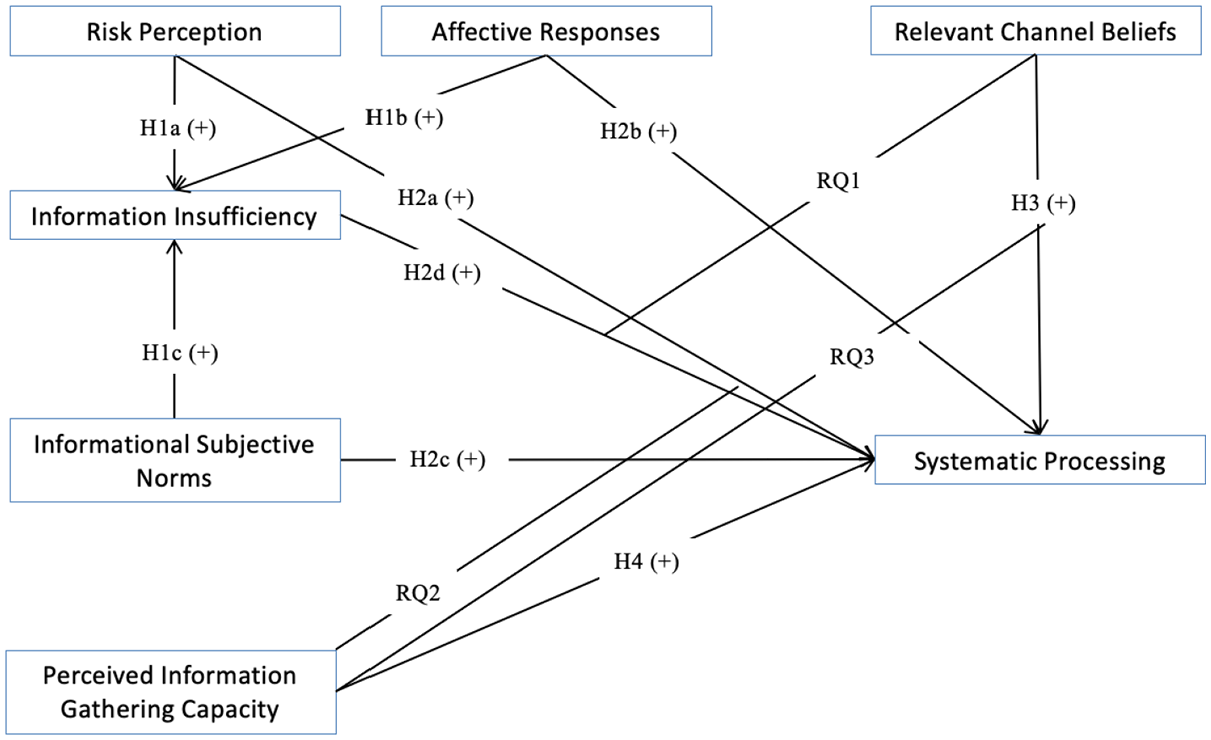
Conceptual model with hypotheses and research questions.
Method
Sample
Upon approval of the institutional review board (IRB) at the authors’ institution, data were collected through an online survey from November 11 to 30, 2020. The survey was operated using Qualtrics, and the median survey completion time was about 10 minutes. The survey was conducted in Chinese, and the instrument was translated and back-translated by the authors to ensure accuracy. Respondents (N = 519) were recruited from five Chinese universities, and they were offered course credit for participation. A vast majority of our sample were female (67.6%), and the average age was 23.32 years (SD = 4.15 years). 1
Measures
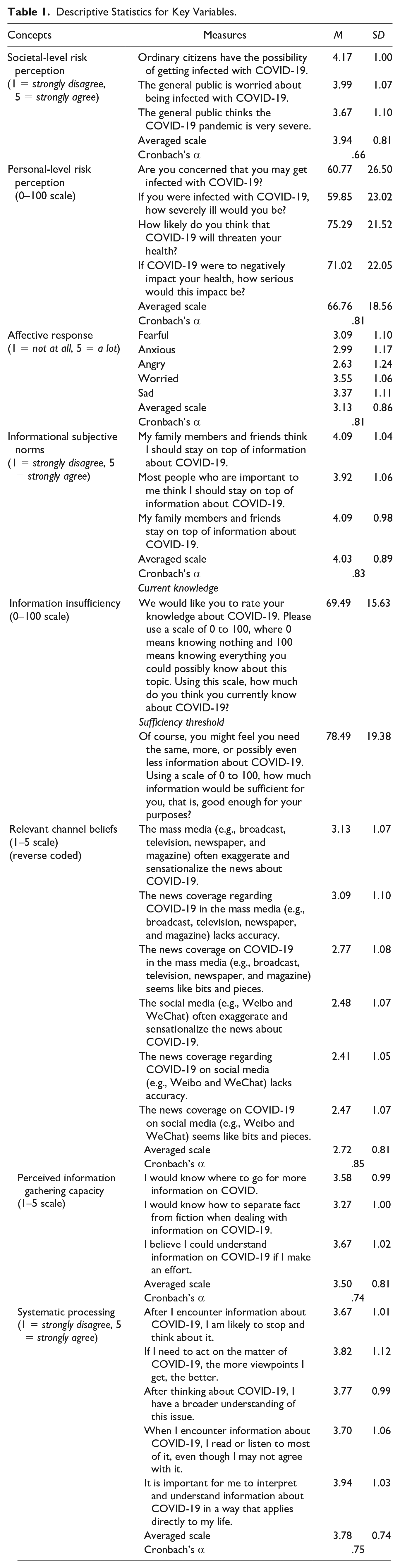
All measures for RISP-based variables were adapted from past research. Question wording, descriptive statistics, and reliability scores for calculated indices are shown in Table 1. Table 2 presents zero-order correlations among the key variables.
Descriptive Statistics for Key Variables.
Zero-Order Correlations Among Key Variables.
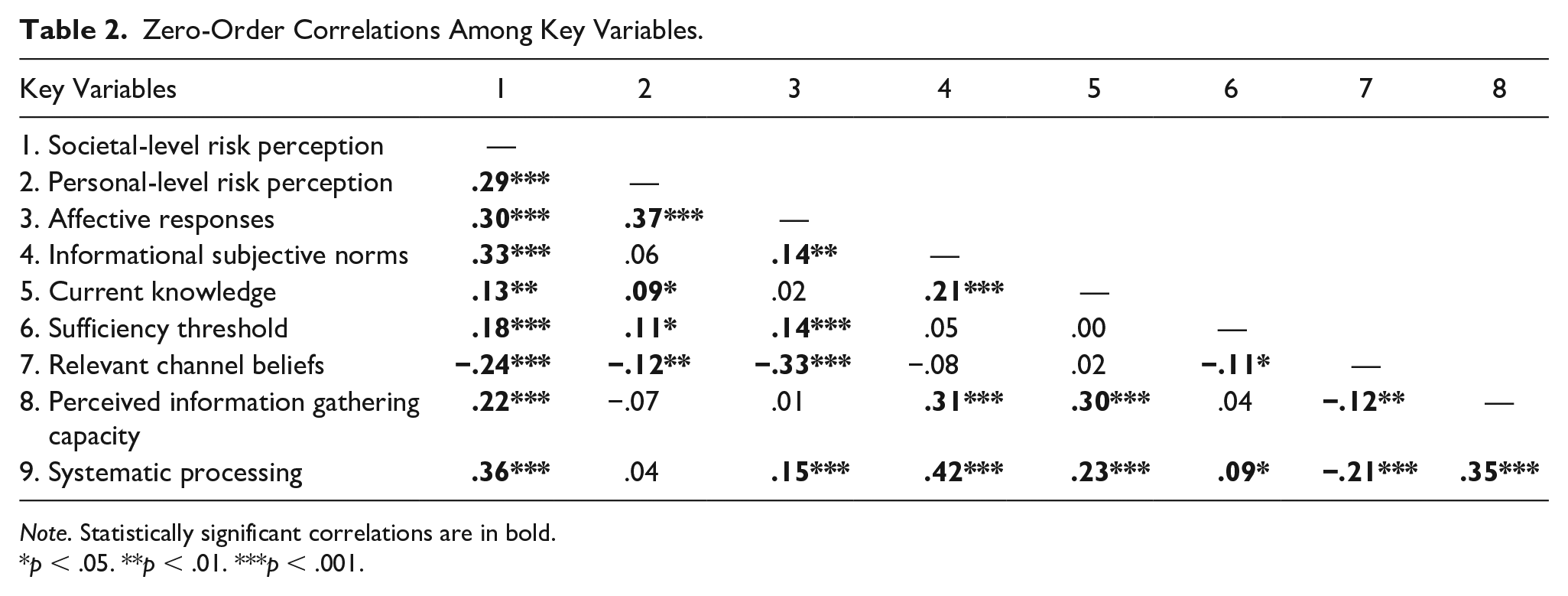
Note. Statistically significant correlations are in bold.
p < .05. **p < .01. ***p < .001.
Risk Perception
We assessed societal-level risk perception and personal-level risk perception separately because the COVID-19 pandemic poses significant threats to both social stability and individual health, and these two types of risk perception often diverge (Tyler & Cook, 1984). To measure risk perception at the societal level, respondents rated three items adapted from Yan and Wen (2020). Consistent with past RISP studies (Griffin et al., 2008), respondents also indicated their perceived likelihood and severity of being personally infected with COVID-19 on four items measured on a scale of 0 to 100. This measurement scale for personal-level risk perception was purposely designed to distinguish from societal-level risk measures. These two indices are correlated at r = .29, p < .001.
Affective Responses
Adapted from previous research (Nabi et al., 2018), five items were employed to measure negative affective responses. Respondents reported how they felt when they thought about the COVID-19 pandemic.
Informational Subjective Norms
Respondents indicated their perception of others’ expectations about their own information level about COVID-19. Consistent with previous research (Yang & Liu, 2021), we used three items to measure informational subjective norms.
Information Insufficiency
Consistent with past research (Griffin et al., 2008), a two-item strategy was employed to measure information insufficiency. For current knowledge, respondents evaluated how much they knew about COVID-19 using a scale from 0 (knowing nothing) to 100 (knowing everything). To measure information sufficiency threshold, respondents indicated how much knowledge they would need to achieve an adequate understanding of COVID-19 on the same scale.
Relevant Channel Beliefs
Six items adopted from previous research (Griffin et al., 2002; Yang & Liu, 2021) were used to measure respondents’ beliefs about whether COVID-19 information in traditional media and social media was accurate and consistent. 2
Perceived Information Gathering Capacity
We used three items derived from Griffin et al. (2008) to measure perceived information gathering capacity. These items deal with respondents’ perceived ability to process information systematically, such as being able to understand and scrutinize information.
Systematic Processing
To assess systematic processing, respondents rated five statements adapted from Griffin et al. (2008). These items measure the extent to which respondents carefully evaluated COVID-19 information.
Control Variables
Respondents’ prior experience with COVID-19 was measured with three items adapted from Zhang et al. (2020). These items assessed whether respondents, their acquaintances, and people living in their communities were ever diagnosed with COVID-19 (0 = no, 1 = yes). These items were summed to create an index for COVID-19 experience (M = 0.25, SD = 0.50).
Analysis
To test our hypotheses, we conducted hierarchical ordinary least squares regression, which allowed us to evaluate the relationship between the independent variables and the dependent variables by incrementally controlling for other variables (Cohen et al., 2003). Table 3 presents the regression results. To examine the three research questions, we utilized PROCESS macro Model 1 (Hayes, 2018) to test the moderation effects.
Standardized Regression Coefficients Predicting Sufficiency Threshold and Systematic Processing.
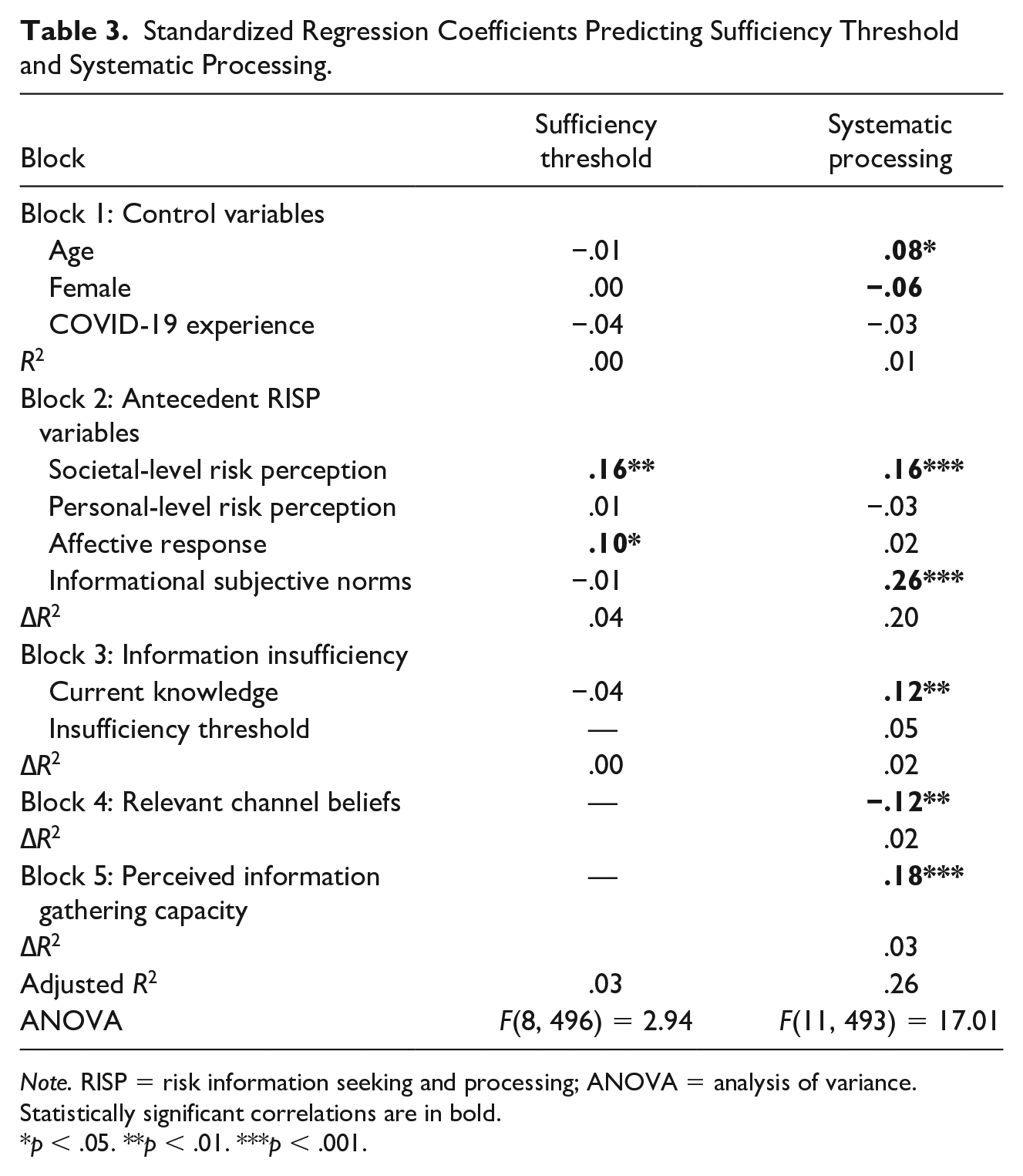
Note. RISP = risk information seeking and processing; ANOVA = analysis of variance. Statistically significant correlations are in bold.
p < .05. **p < .01. ***p < .001.
Results
The first set of hypotheses examined the relationship between information insufficiency and its antecedent variables. According to the regression results, societal-level risk perception had a positive relationship with sufficiency threshold (b* = .16, p = .001), but personal-level risk perception was not significantly related to sufficiency threshold (b* = .01, p = .78), so H1a received partial support. Affective responses were positively associated with sufficiency threshold (b* = .10, p = .04), supporting H1b. However, there was no significant relationship between informational subjective norms and sufficiency threshold (b* = −.02, p = .77), so H1c was not supported.
The second set of hypotheses were focused on the precursors of systematic processing. Results indicated that risk perception on the societal level was positively associated with systematic processing (b* = .16, p < .001), whereas personal-level risk perception was not significantly related to systematic processing (b* = −.03, p = .50), so H2a was partially supported. Moreover, we did not find any significant relationship between affective responses and systematic processing (b* = .02, p = .68), so H2b was not supported. However, respondents who perceived higher informational subjective norms were more likely to process COVD-19 related information systematically (b* = .25, p < .001), supporting H2c. Finally, those who perceived themselves to have more knowledge about the COVID-19 pandemic were more likely to engage in systematic processing (b* = .12, p = .01), but sufficiency threshold had no significant association with systematic processing (b* = .05, p = .25). Therefore, H2d was partially supported.
H3 stated that relevant channel beliefs would be positively related to systematic processing. As shown in Table 3, those who had more positive relevant channel beliefs were less likely to process COVID-19-related information in a systematic way (b* = −.12, p = .01), so H3 was not supported.
H4 was centered on the relationship between perceived information gathering capacity and systematic processing. Results indicated that those who thought they were more capable of gathering information were more likely to process information systematically (b* = .18, p < .001). Thus, H4 was supported.
RQ1 examined the interaction effect between information insufficiency and relevant channel beliefs on systematic processing. Results indicated that relevant channel beliefs moderated the relationship between information insufficiency and systematic processing (b = .00, SE = .00, p = .05). Figure 2 illustrates this moderation effect.
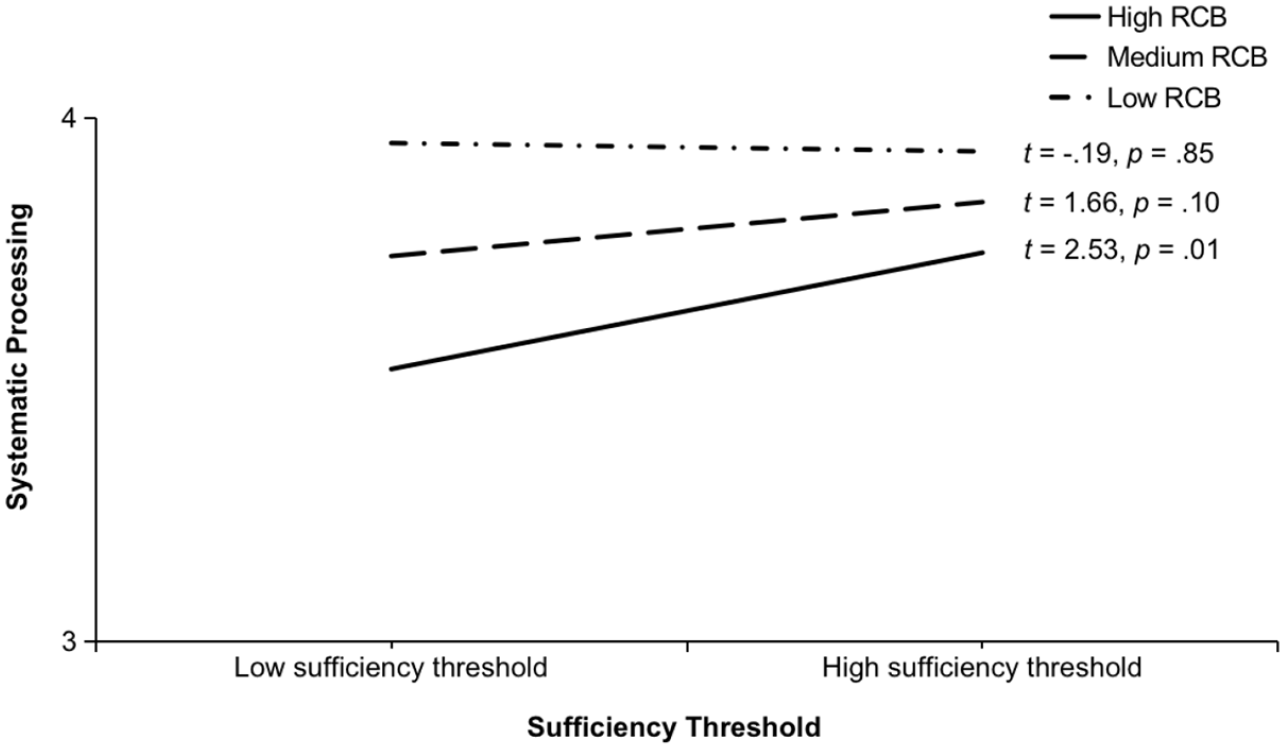
RCB moderates the relationship between information insufficiency and systematic processing.
RQ2 investigated the interaction effect between information insufficiency and perceived information gathering capacity on systematic processing. Results showed that capacity indeed moderated the relationship between information insufficiency and systematic processing (b = −.01, SE = .00, p = .002). Specifically, the positive relationship between information insufficiency and systematic processing was only significant among respondents who perceived low to moderate levels of information gathering capacity, but not among those with high perceived information gathering capacity. Figure 3 illustrates this moderation effect.
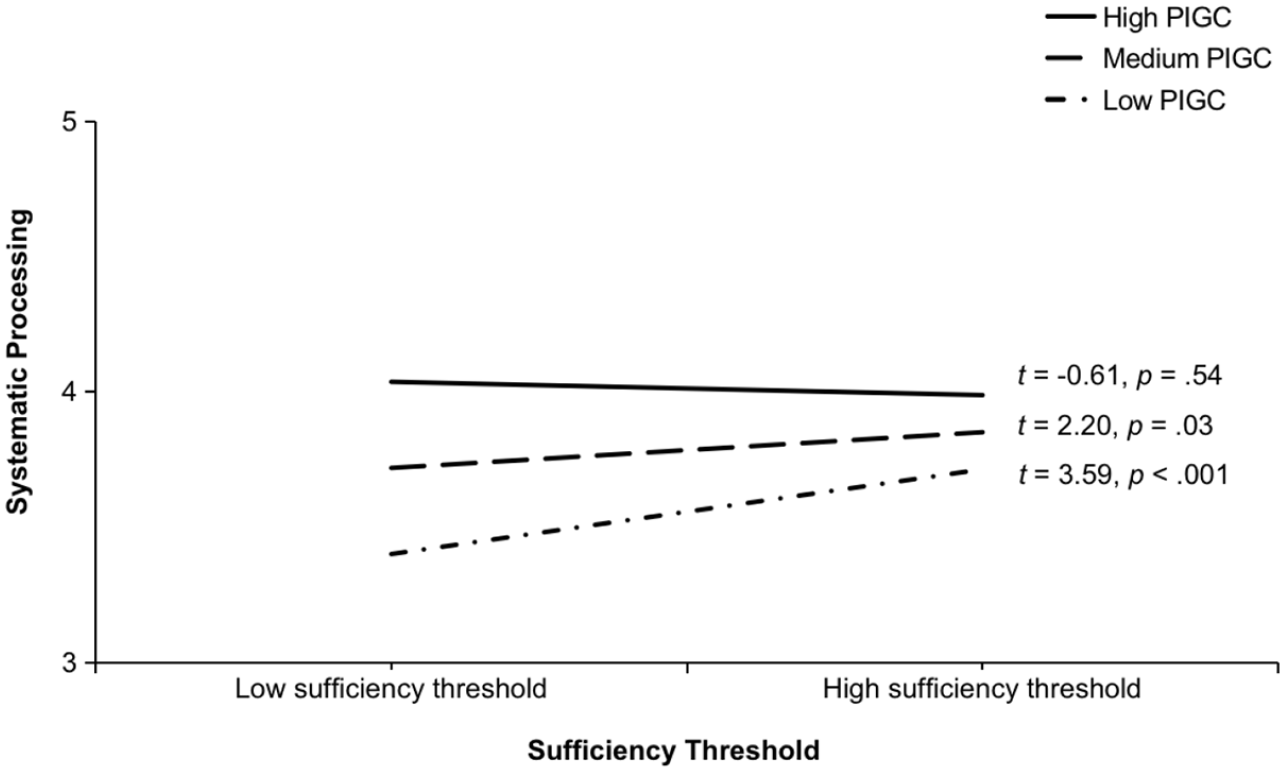
PIGC moderates the relationship between information insufficiency and systematic processing.
RQ3 was focused on the interaction effect between perceived information gathering capacity and relevant channel beliefs on systematic processing. Results indicated that information gathering capacity also moderated the relationship between relevant channel beliefs and systematic processing (b = .19, SE = .03, p < .001). That is, the negative relationship between relevant channel beliefs and systematic processing was only significant among respondents who perceived low to moderate levels of information gathering capacity, but not among those with high perceived information gathering capacity. Figure 4 illustrates this moderation effect.
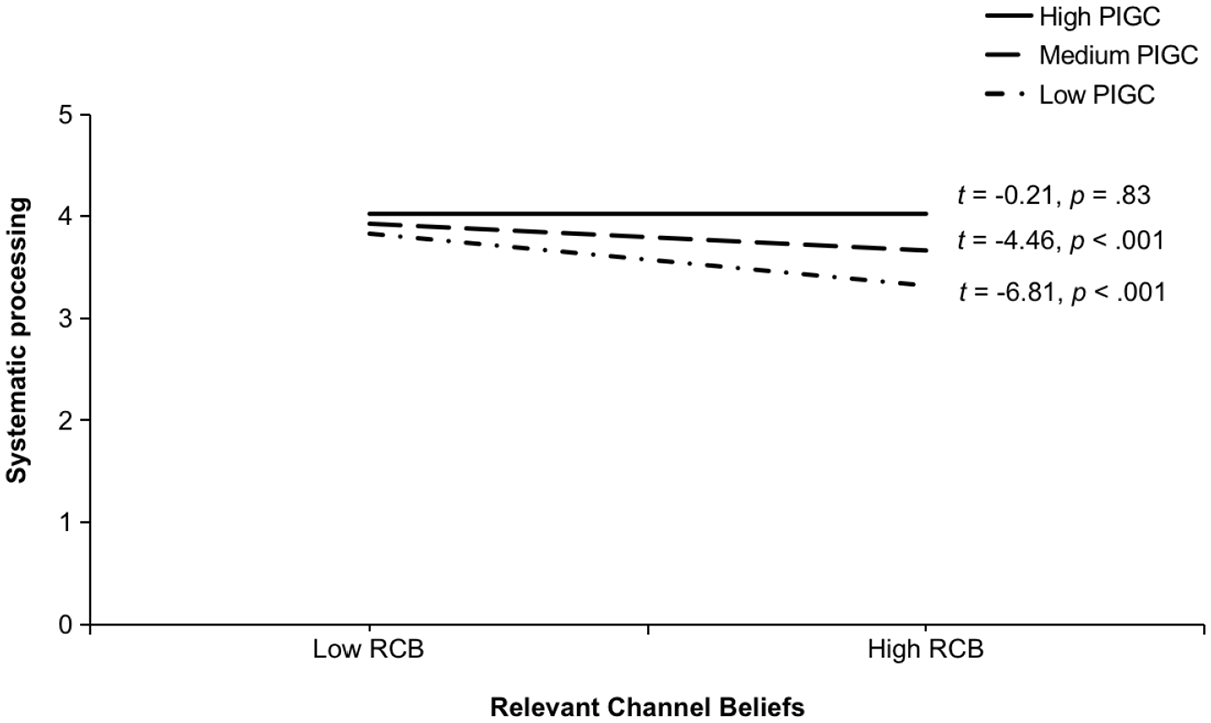
PIGC moderates the relationship between RCB and systematic processing.
Discussion
This study applies the RISP model to identify sociopsychological variables associated with systematic processing. Because the information landscape surrounding the COVID-19 pandemic was inundated with misinformation, especially in the early days of the coronavirus outbreak in China, we believe this is a worthwhile research endeavor. Contributing to the RISP literature, the results show an intricate interplay among information insufficiency, relevant channel beliefs, and perceived information gathering capacity as they are related to systematic processing. This finding is valuable because it may account for-unsupported relationship between information insufficiency and systematic processing due to the lack of evaluation of interaction effects (see, for example, Rickard et al., 2014; Yang et al., 2010). Nevertheless, some hypotheses based on the RISP model were not supported in this study, which suggests that the RISP model may be highly sensitive to the operationalization, sample, cultural context, and topic of different studies. In fact, a meta-analysis based on the RISP model also attests to this variability (Yang, Aloe, & Feeley, 2014).
To our knowledge, this study unveils for the first time an interaction effect between information insufficiency and relevant channel beliefs on systematic processing. Specifically, consistent with the central premise of the RISP model, information insufficiency was significantly related to systematic processing, but only among individuals who perceived COVID-19 information in traditional and social media as trustworthy and reliable. At the time of data collection, most Chinese people likely already experienced attention fatigue toward information related to the pandemic. Thus, only those who perceived information in the traditional media and social media as unsensationalized, comprehensive, and accurate were likely to engage in systematic processing when they sensed a need for information. This result also supports the situational theory of problem solving (Kim & Grunig, 2011), which argues that people will only invest communicative and cognitive efforts in the information they perceive to be worthwhile and conducive for problem solving. In particular, when people perceive the COVID-19 information they encounter in the media as reliable and accurate, they are more likely to process this information systematically because this is a worthwhile effort that will ensure greater judgmental confidence (Eagly & Chaiken, 1993). In contrast, when people perceive the information as inconsistent and sensationalized, they will not engage in systematic processing even when they sense information insufficiency. In particular, this finding reinforces that science communication surrounding the COVID-19 pandemic needs to be consistent to foster public trust (Limaye et al., 2020; Zhao et al., 2020).
We also found that perceived information gathering capacity moderated the relationship between information insufficiency and systematic processing. Interestingly, the positive relationship between information insufficiency and systematic processing was only significant among individuals who reported low to moderate levels of capacity. This finding illustrates the interplay between motivation and capacity in influencing information processing (Eagly & Chaiken, 1993). Specifically, accuracy motivation (i.e., information insufficiency) has a significant relationship with systematic processing when capacity is lower, but when capacity is high, these two variables are not significantly related. Reflecting on the mixed information environment surrounding the COVID-19 pandemic, it is possible that people with higher capacity can navigate the information landscape more effectively and know what information is worth their attention and time. In contrast, it is more important to motivate individuals who perceive themselves as having lower capacity to actively engage with relevant information by highlighting their information insufficiency. An important take-away from this finding is that when communicating about the COVID-19 pandemic to an audience that is likely to have lower information processing capacity (e.g., lower education, lower health literacy), it is important to highlight the potential gap between what they already know and the most up-to-date information.
In addition, perceived information gathering capacity also moderated the relationship between relevant channel beliefs and systematic processing. In particular, we found that the negative relationship between relevant channel beliefs and systematic processing was only significant among individuals who reported low to moderate levels of capacity. That is, among individuals who did not perceive themselves as having high information gathering capacity, those who trusted their information channels were less likely to process information systematically. This joint impact of low capacity and high trust on systematic processing is problematic because people tend to trust the media channels they habitually use (Johnson & Kaye, 2000), which can perpetuate the cycle of being exposed to low-quality information, processing the information with low cognitive effort, and reaching inferior decisions. This finding is also consistent with the core assumption of dual-process theories. That is, unless sufficiently motivated, people are typically “cognitive misers” who seek to satisfy their information processing goals through the most efficient way possible. Here, we see that people with lower capacity are more likely to absorb the information they encounter from channels they typically rely on without further scrutiny. Once again, this result highlights the importance of alerting the public, especially people with lower science and health literacy, to not blindly trust the information channels they habitually use. This issue is particularly salient because of the long duration of the COVID-19 pandemic, exacerbated by an information environment that was often redundant and contradictory.
Focusing on risk perception, our results show that only societal-level risk perception was positively related to information insufficiency and systematic processing. At the time of data collection, the COVID-19 pandemic was already under control in China, with only sporadic transmissions here and there, but the pandemic continued to be a salient issue in the media. Thus, it is not surprising that respondents reported higher societal-level risk perception and lower personal-level risk perception. Due to the agenda-setting function of media, it makes sense that individuals who perceived high societal-level risk about the pandemic would desire more information and process this information systematically. The clear distinction between these two levels of risk perception also supports the impersonal impact hypothesis (Tyler & Cook, 1984) and the influence of presumed influence hypothesis (Gunther & Storey, 2003). This finding also has important practical implications for science communication. Toward the end of a long battle against the COVID-19 pandemic, we see much fatigue among the public, and many people are letting their guard down when it comes to protective health behaviors. This finding demonstrates that even in a society that is relatively safe from the threat of COVID-19, when people are concerned about the pandemic as a societal-level risk, it is still possible to increase their need for information and motivate them to process relevant information systematically. Thus, science communication about a public health crisis such as the COVID-19 pandemic can highlight its societal impacts, such as disproportionately affecting vulnerable populations, damaging the economy, and decreasing social stability (McKibbin & Fernando, 2020). Even when people no longer perceive a high level of personal-level risks from the pandemic, these societal-level issues may elevate their risk perception and subsequently lead to systematic processing.
This interpretation of the result is also supported by the finding that informational subjective norms were positively related to systematic processing. Consistent with the social motivations proffered in the heuristic systematic model, people may be motivated to process information systematically to fulfill their need to defend their existing positions (i.e., defense motivation) or to maintain a favorable stature in their social group (i.e., impression motivation). Here, our results illustrate that for a societal risk like the COVID-19 pandemic, social motivations seem to trump accuracy motivation in influencing communication behaviors because information insufficiency is not a significant predictor of systematic processing. Echoing the practical implication above related to societal impacts, science communication about the COVID-19 pandemic needs to continue emphasizing the importance of community-level effort and creating positive social norms to enable informed decision-making and prosocial behaviors (Yue & Yang, 2021). This strategy is particularly important as the COVID-19 vaccination efforts are underway in the United States.
This study has several limitations. First, respondents were recruited from five universities in mainland China. This convenience sample limits the generalizability of this study, especially because most college students are more privileged than the rest of the Chinese population. Future research should recruit a more representative sample, although it is difficult to do so due to the large disparity between urban and rural populations in China (Wang et al., 2020). Second, in the age of media convergence (Nettleton et al., 2005), it may be more important to examine specific beliefs people associate with different information channels (Hwang & Jeong, 2020) and information sources, rather than a generic categorization of traditional media and social media, as operationalized in this study. Descriptive statistics in this study suggest that participants trusted information in traditional media more than information in social media. Even so, within these general categories, people may trust some sources and distrust others. The nonspecific measure of relevant channel beliefs may also account for the unsupported hypothesis related to this concept. Third, the reliability of societal-level risk perception is mediocre (Cronbach’s α = .66). Future research should continue to explore a better instrument to evaluate societal-level and personal-level risk perceptions. Finally, the one-time cross-sectional survey limits our ability to draw more conclusive remarks about the relationships identified in this study. This is particularly important because a single survey only captures a very limited fragment of perceptions during a yearlong pandemic.
Conclusion
The so-called “infodemic” surrounding the COVID-19 pandemic has presented an urgent need for science communication to disseminate accurate scientific information to the public in the midst of chaos and noise, while at the same time encourage ordinary citizens to scrutinize the information they encounter in order to reach informed decisions. This study makes an initial effort to investigate the roles of relevant channel beliefs and perceived information gathering capacity as moderators in the RISP model. Future theoretical pursuit based on the RISP model needs to continue to evaluate these moderation effects. Findings from this study suggest that science communication about the COVID-19 pandemic needs to pay particular attention to audiences that may have low capacity to process scientific information, yet maintain high trust in information channels on which they habitually rely. When it comes to strategic messaging, highlighting community-level impact of the COVID-19 pandemic may be particularly effective in getting people to process relevant information more systematically.
Footnotes
Declaration of Conflicting Interests
The author(s) declared no potential conflicts of interest with respect to the research, authorship, and/or publication of this article.
Funding
The author(s) received no financial support for the research, authorship, and/or publication of this article.
