




Abstract
We evaluated the short-term effects of transportation on efficacy beliefs and risk perceptions after exposure to a climate change documentary. Data were collected in randomized laboratory (N = 624) and online (N = 1,391) experiments. Participants watched one episode of Years of Living Dangerously or a control video. Regression analyses assessed whether narrative transportation and/or political affiliation were predictive of outcomes. Transportation and political affiliation were significantly associated with efficacy beliefs and risk perceptions (p < .001). A significant transportation by political party interaction for efficacy beliefs (p < .01) and risk perceptions (p < .01) indicated that cross-party differences could be mitigated by higher levels of transportation.
Introduction
Climate communication research suggests that climate change messages can affect risk perceptions, efficacy beliefs, and behavioral intentions (Beattie et al., 2011; Feldman & Hart, 2016; Hart & Feldman, 2016; Jacobsen, 2011; Roser-Renouf, Stenhouse, et al., 2014). However, despite communication efforts aiming to educate audiences about climate change effects, the issue remains a low priority for Americans (Ballew et al., 2019; “Is the Public Willing to Pay?,” 2018), and only a few registered voters (11%) have taken action to contact a government official about the issue over the last year (Leiserowitz et al., 2019). Furthermore, in the United States, climate change is a politically polarized issue where attitudes and behaviors split across partisan lines (Ballew, Bergquist, et al., 2020; Hart & Nisbet, 2012; Leiserowitz et al., 2019; Meyer, 2019; Stokes et al., 2015; Wike, 2016). For example, Leiserowitz et al. (2019) reported that less than 50% of liberal or moderate Republicans believe that climate change is mostly anthropogenic. For conservative Republicans, the percentage is even lower, at 21%. This is in contrast to 86% of liberal Democrats and 71% of moderate or conservative Democrats. Additionally, 38% of Republicans do not think that climate change is happening. Accompanying urgent calls for action from advocates and scientists, there has been a recent increase in mass media climate change programs. There is a need to understand how these programs can affect audiences, especially across political parties, and whether they can effectively inform or catalyze action. In this study, we assess how exposure to a climate change documentary can influence individuals’ climate-related efficacy beliefs and risk perceptions, two important antecedents of behavioral intentions.
Efficacy is an important determinant of behavior change (Ajzen, 1991; Bandura, 1977) and for the development of helping behaviors in social emergencies, such as climate change (Frantz & Mayer, 2009). Self-, collective, and response efficacies each have important implications for the formation of intentions. There is evidence that collective-efficacy, beliefs about whether or not one’s group is able to act and accomplish a task or goal together, indirectly influences intentions through its impact on self-efficacy, an individual’s beliefs about their own ability to perform a behavior (Jugert et al., 2016). Roser-Renouf, Maibach, et al. (2014) also demonstrated that response efficacy is an important factor for political activism. Similarly, in their work on the impacts of climate change news stories containing efficacy information, Hart and Feldman (2016) showed that self-efficacy, external efficacy, and response efficacy were all uniquely important for intentions for political participation. Like in Hart and Feldman’s study, O’Neill et al. (2013) demonstrated that climate change messages and imagery can affect efficacy beliefs, both positively and negatively. However, survey research indicates that efficacy beliefs are generally still low. Those who feel concerned about climate change may still feel like they lack the resources to take action (Bethune, 2020; Semenza et al., 2008). Nearly 40% of Americans lack interest in climate change, and over 50% feel helpless when they think about climate change (Leiserowitz et al., 2020). In a separate recent survey, more than 50% of respondents “didn’t know where to start” with regard to combatting climate change (Bethune, 2020). Given that self-, collective, and response efficacy are each important for the formation of intentions for political and advocacy behaviors, we are interested in assessing a climate change documentary’s impacts on efficacy beliefs collectively.
Risk perceptions are another important antecedent to behavioral intentions in theories of behavioral change (Janz & Becker, 1984; Lindsay & Strathman, 1997; Netemeyer et al., 1991). Like efficacy beliefs, perceptions of climate change risks to self are also still limited. Although 62% of Americans are worried about climate change, only 46% believe that climate change will harm them personally (Leiserowitz et al., 2019). This gap between general concern or perceptions about risks to others and perceived risk to self may contribute to low levels of action considering the role of risk perceptions in informing intentions (Anadu & Harding, 2000; Dillard et al., 2012; Janz & Becker, 1984; Netemeyer et al., 1991; O’Connor et al., 1999; Witte, 1992). Targeting and balancing these antecedents to behavior change will continue to be a critical need for empowering individuals to take action.
In the persuasion literature, narrative transportation has been found to influence risk perceptions (Cooper & Nisbet, 2016), knowledge (M. G. Kennedy et al., 2011), emotions, intentions, attitudes, and beliefs (Dal Cin et al., 2004; Green & Brock, 2000; Green et al., 2004; M. Jones & Peterson, 2016; van Laer et al., 2014). In Green and Brock’s Transportation Imagery Model of persuasion (2000), narrative transportation is theorized to be a mental process that occurs due to the interaction of attention, feelings, and imagery while experiencing a narrative. While knowledge may be important for elevating concern about climate change (Shi et al., 2016), narratives may be particularly suited to communicate about polarized issues because they may reduce counterarguing (Green & Brock, 2000; Moyer-Gusé, 2008). Narratives may also have greater effects on risk perceptions, intentions, information retrieval, and recall than fact-based or didactic communication alone (Shaffer et al., 2018). The Extended-Elaboration Likelihood Model proposes that the efficacy of narratives relates to absorption and that audiences are less likely to be critical when they are absorbed in the dramatic elements of a narrative (Moyer-Gusé, 2008; Slater & Rouner, 2002). This varies from the conventional Elaboration Likelihood Model, which proposes that issue involvement leads to more central processing, greater attention to message content, and cognitive responses to arguments (Petty et al., 1983). It should be noted that narratives and transportation can also lead to unintended outcomes, such as inaccurate reporting of disease and increased risk perceptions, that prevent positive health behaviors (M. G. Kennedy et al., 2011; Shaffer et al., 2018). This evidence suggests that engaging stories may be effective mechanisms for communicating about a variety of topics when aiming to affect attitudes and risk perceptions but that the content of the narrative should be carefully considered to avoid unintended responses.
Although studies of efficacy feature prominently in various literatures, such as scholarship on Social Cognitive Theory (Bandura, 1982, 1986) and entertainment education (Collins et al., 2003; Moyer-Gusé, 2008; Slater & Rouner, 2002), efficacy has received relatively little attention in the body of literature focusing on narrative transportation (van Laer et al., 2014). The investigation of narrative transportation in the climate change context is also limited, although there is evidence that narrative transportation can affect intentions (Bilandzic & Sukalla, 2019) and attitudes about characters in climate change stories and climate change policy support (M. Jones, 2014; M. Jones & Peterson, 2016). In the climate change setting, studies assessing the effects of feature films and documentaries, such as The Day After Tomorrow (DAT) and An Inconvenient Truth (AIT), show promise for feature film and documentary as a mode of climate communication (Sakellari, 2014). In one study, AIT improved climate change knowledge, concern, motivation, and empowerment in the short term, although participants did not watch the film in full (Beattie et al., 2011). In another study of a community sample of movie goers, intentions to perform behaviors that address climate change increased after viewing AIT (Nolan, 2010). In DAT, visualizations of climate impacts gained audience interest (Lowe et al., 2006) and increased concern about climate change (Leiserowitz, 2004). More recently, Goldberg et al. (2019) demonstrated that a video was more effective at increasing perceptions of the scientific consensus on climate change than the video transcript alone. The transcript was also more effective than a control condition. With the exception of Bilandzic and Sukalla (2019), who studied an ecodisaster science fiction film and show that narrative engagement affected intentions through guilt, these studies did not assess the relationship between narrative involvement in the film and the specific outcomes. Furthermore, given the disparity in climate change attitudes and beliefs across the political spectrum, and scholarship elucidating relationships between knowledge, credibility, motivated reasoning, and political identity (Ahern et al., 2016; Druckman & McGrath, 2019; Hart & Nisbet, 2012; Kahan, 2013) in reactions to climate change information (Kahan, 2013), assessing if and how mechanisms of engagement with a climate change narrative work across political parties is an important next step for scholarship in this area.
Hypotheses
The goal of this study is to assess how the mechanism of narrative transportation affects climate change–related risk perceptions and efficacy beliefs across partisan lines. We hypothesize as follows:
Hypothesis 1: Transportation will positively predict climate change efficacy beliefs and risk perceptions.
As previous literature has reported, transportation has positively increased risk perceptions in other contexts. We expect this to be similar in the climate change context and for this documentary where some risks of climate change are discussed. We also expect efficacy beliefs to be similarly affected where climate action is portrayed, given the proposition in the literature that transportation leads to story-consistent attitudes and beliefs (Dal Cin et al., 2004). Finally, we hypothesize as follows:
Hypothesis 2: Democrats will have a stronger relationship between narrative transportation and related outcomes.
This is because of the typical salience of climate change and other environmental issues for those on the more liberal end of the political spectrum (Ballew et al., 2018; Dunlap & McCright, 2008; B. Jones, 2019; McCright & Dunlap, 2011; Newport, 2018). On the other hand, scholarship on political polarization (Ballew, Pearson, et al., 2020; Gustafson et al., 2019; McCright & Dunlap, 2011), motivated reasoning (Kahan, 2013), credibility, political identity (Druckman & McGrath, 2019), and climate change suggest that the threshold for engagement in a climate change and climate action–focused narrative may be higher for Republican audiences, and it may also be more difficult to influence climate-related attitudes and beliefs. Additionally, a recent Pew survey shows that while 78% of Democrats think that climate change should be a top issue priority, only 21% of Republicans feel similarly (B. Kennedy & Johnson, 2020). We thus predict that, compared with Democrats, Republicans would be expected to have a weaker relationship between narrative transportation and outcomes.
Method
Study Design
Laboratory and online experiments were used to test the hypothesis that narrative transportation will lead to increased climate-related risk perceptions and self-efficacy and that the relationship between narrative transportation and outcomes differs across political affiliation. The experimental study designs were chosen as a means to establish causality. The laboratory experiment provides strong internal validity, and the online experiment, which was based on a nationally representative sample collected through Amazon’s MTurk panel and used the same methodology, provides generalizability.
Stimulus Materials
Three treatment videos in the laboratory study and four treatment videos in the online study were selected from the second season of the climate change documentary television series Years of Living Dangerously (Years), which aired on the National Geographic channel in the fall of 2016. The serial nature of this documentary, its presence on high-profile networks, celebrity hosts, and Emmy Award make it a unique and high profile climate change program. Each episode featured two intercut storylines and was hosted by two celebrity correspondents who interviewed characters and told stories about a number of social and scientific dimensions of climate change. The topics in the three episodes included solar energy use in the United States and India, with celebrity hosts Cecily Strong and David Letterman; carbon pricing in the United States and Canada and impacts of drought featuring locations in Africa, with celebrity hosts Nikki Reed and Aasif Mandvi; coal use in the United States and China, with celebrity hosts Sigourney Weaver and America Ferrera (five-arm study only); and energy use by the U.S. military and deforestation in the Amazon rainforest, with celebrity hosts Arnold Schwarzenegger and Gisele Bündchen. Each of these videos described or showed examples of actions or behaviors that audiences could do or adopt to participate in climate change solutions. While there was little instructional information about how to learn more or about how to get started participating in a particular type of behavior, the modeling of the behavior and narrative of the experience of characters’ participation in those behaviors or actions are mechanisms through which efficacy beliefs can be affected (observational learning; Bandura, 2001). Examples of the types of behaviors suggested or modeled in these episodes include protesting, community organizing, petitioning, interacting with nonprofit organizations, reducing meat consumption, and having challenging conversations with close family who disagree with one’s self on a topic. The specific episodes have been further described elsewhere (Bieniek-Tobasco et al., 2019).
The control video, Spillover, was produced and broadcast by the Public Broadcasting Service and discussed the transmission of infectious diseases from animals to humans. The control video was chosen because it was similar in length to the treatment videos (approximately 1 hour), similar in narrative pacing and look, and, although on a topic unrelated to the subject matter in Years, discussed a phenomenon that poses a risk to human health. None of the stimulus videos included commercials.
Laboratory Study Participants and Procedures
To be eligible for the laboratory study, participants were required to be 18 years of age or older and reside in the Washington, D.C., metropolitan area where the study was conducted. Participants were recruited through Craigslist, Facebook, flyers and promotional cards, tabling sessions at a local university, and direct outreach to local organizations. Eligible participants completed a prestimulus survey and were randomly assigned to watch one of four videos. The three treatment videos were episodes of Season 2 of Years. The control video titled Spillover: Zika, Ebola, and Beyond was about the spread of disease between animals and humans. After watching the assigned video, participants completed a poststimulus survey and a short survey 1 week post viewing. Participants received $50 for their participation in the study. In the lab study (N = 624), 473 participants watched an episode of Years and 151 watched the control video. Of those randomly assigned to watch Years, 181 participants saw the episode on solar power and coal use featuring locations in India and the United States; 159 participants watched the episode focusing on energy consumption by the U.S. military and deforestation in the Amazon rainforest; and 133 participants watched the episode focusing on carbon pricing in the United States and drought in Africa.
Online Study Participants and Procedures
As in the laboratory study, eligible participants in the online study completed a prestimulus survey and were randomly assigned to watch one of four Years episodes (one additional to the laboratory study) or a control video as described above. Participants were recruited through Amazon’s MTurk platform. To be eligible for the online study, participants were required to be age 18 years of age and reside within the United States. Participants selected into the study completed a prestimulus survey, were sent a link for a randomly assigned episode, and subsequent to viewing completed a poststimulus survey. Participants also completed a short survey 1 week post viewing. Participants were paid $2.01 to participate in this study. A description of participant characteristics is provided in Table 1.
Demographic Profile of Participants in Laboratory and Online Studies.
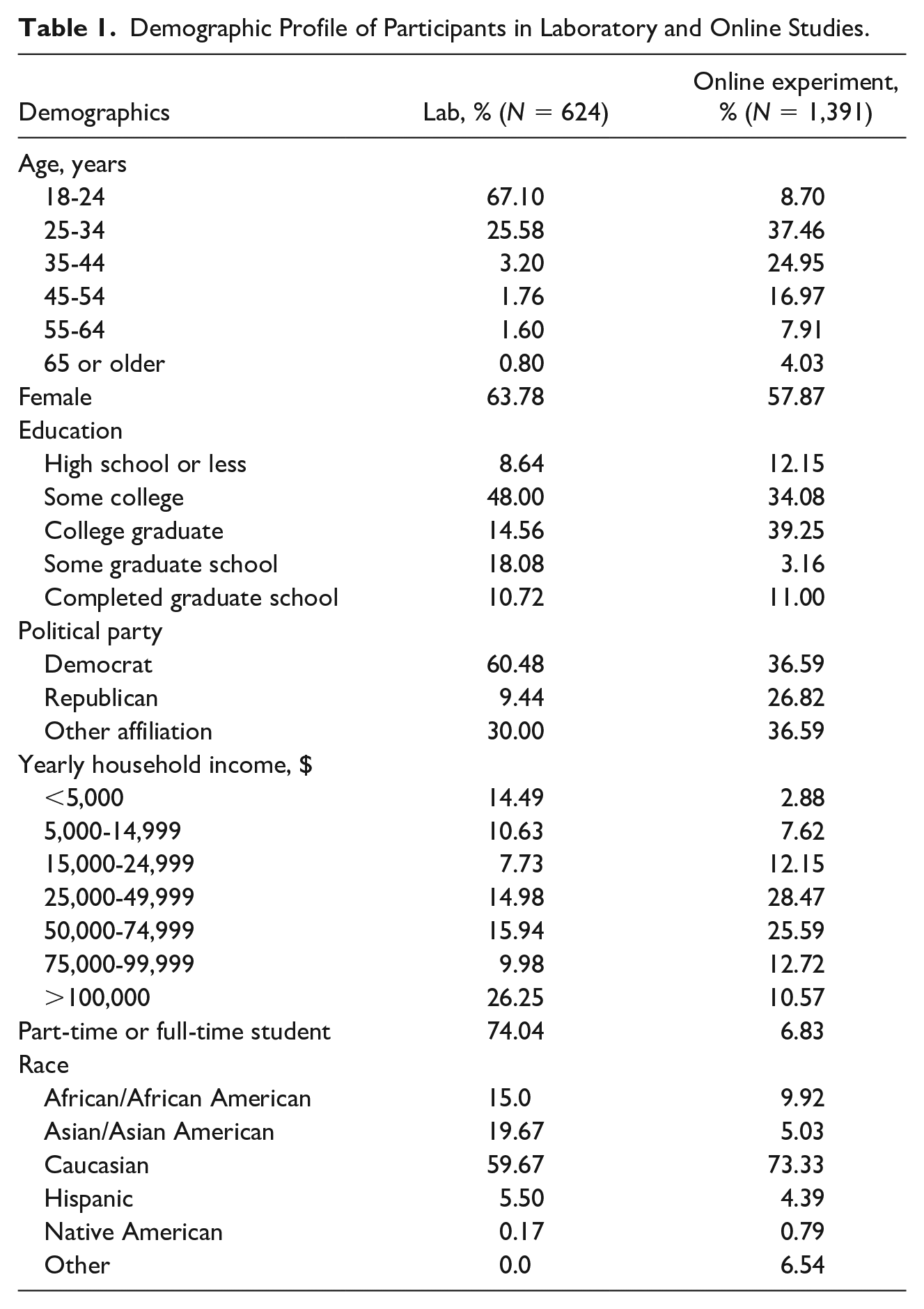
In the online study (N = 1,391), 1,120 participants watched an episode of Years and 271 watched the control video. Of those randomly assigned to watch Years, 281 participants saw the episode on solar power and coal featuring locations in India and the United States; 266 participants watched the episode on energy consumption by the U.S. military and deforestation in the Amazon rainforest; 295 participants watched the episode focusing on carbon pricing in the United States and drought in Africa. In the online study, 208 participants watched a fourth episode on coal and renewable energy in China and the United States.
Measures
Indices were generated by averaging scores of constituent variables for each of the three domains of risk perception, efficacy beliefs, and narrative transportation. All items were measured on a 5-point Likert-type scale (1 = strongly disagree to 5 = strongly agree). A table including the complete list of measures is provided in Supplemental Table S.1 (available online).
Risk Perception
Five variables were used to measure risk perception prestimulus (lab α = .72, online α = .85) and poststimulus (lab α = .76, online α = .88). Risk perception variables assessed perceived severity (three questions) and perceived susceptibility (two questions) to risks associated with climate change. Poststimulus questions were identical to prestimulus questions.
Efficacy Beliefs
Six variables were used to measure baseline efficacy beliefs in the lab study, and five were used in the online study (lab α = .81, online α = .93). The pre-stimulus efficacy index includes measures of self-efficacy (1), collective efficacy (2), and response efficacy (3). Three variables measured post-stimulus efficacy beliefs (lab α = .68, online α = .88). The post-stimulus questions measured self-efficacy (1), collective efficacy (1), and response efficacy (1).
Narrative Transportation
Finally, six narrative transportation questions assessing attentional focus and engagement, measured after exposure, were adapted for this study from Williams et al.’s (2011) Video Transportation Scale (lab α = .77, online α = .76).
Political Affiliation
In the lab study, one question assessed political affiliation. Participants were asked to select if they identified as Democrat, Republican, Independent, or No affiliation. Similarly, in the online experiment, one question assessed political affiliation, and participants were asked to select if they identified as Democrat, Republican, Independent, No Affiliation, Other, or Prefer Not to Answer. For both the lab and online analyses, affiliation categories were collapsed into Democrat, Republican, or Other, where Other was any response other than Democrat or Republican.
Statistical Analyses
Differences in outcomes of interest pre- and postexposure and between treatment and control groups on their difference scores between preexposure and postexposure measures were assessed by using t tests. We also assessed the relationships between narrative transportation, political affiliation, and risk perception, and efficacy outcomes through regression analyses in order to determine whether narrative transportation and political affiliation were predictive of risk perceptions and efficacy beliefs, two key antecedents to behavioral intentions (Bandura, 2001; Janz & Becker, 1984; Netemeyer et al., 1991). We controlled for the baseline values of the corresponding outcome variables in these analyses. With the within-subject and randomized design of the study, it was not necessary to control for background variables in analyses assessing differences between treatment and control video effects. All statistical analyses were completed using StataCorp’s Stata IC Version 13.1.
Results
Description of the Sample
Table 1 describes our samples. There were no significant demographic differences between treatment and control groups at baseline in the laboratory experiment. In the online experiment, there was a significant difference between control and treatment groups on two demographic variables, education (χ2 = 14.58, p = .050) and income (χ2 = 14.73, p = .040). The treatment group tended to have higher education and income compared with the control group. These two variables were not associated with the outcome, and so we did not control for these variables in regression analyses.
For the laboratory study, an attention check question was included in the postexposure measurements. The question asked participants to identify topical areas in the video they had watched. Although we are confident that participants completed the study given the laboratory environment, we assessed the attention check question and found that 3.7% of the participants responded incorrectly to the attention check question. The majority of these were for those who watched the control video. It is possible that the videos had minor overlap in topics of discussion that overlapped with the attention check question (discussion of events taking place in China), which contributed to this result. We conducted sensitivity analyses by removing these participants, and our results were not affected.
Hypothesis 1: Narrative Transportation, Efficacy, and Risk Perception
To assess differences across the treatment and control groups, we collapsed the treatment and control groups into a bivariate “treatment” variable where those who watched the three (lab) or four (online) Years videos constituted the treatment group. We first assessed whether there were significant differences across the various treatment videos on the two outcomes of interest (efficacy beliefs and risk perceptions) using analysis of variance. We identified some differences across the treatment videos, but we do not discuss those in detail here since our focus is the relationship between narrative transportation and the outcomes of interest and because we will still be able to assess global differences between those who saw Years videos and those who saw the control. However, we plan to detail and discuss the differences across various Years treatment episodes in an upcoming article. Collapsing the three or four treatment groups into one does create a difference in the number of participants across the treatment and control groups, but Levene’s test showed that nonhomogeneity of variances was not violated in the lab—efficacy beliefs: F(1, 617) = 0.10, p = .76; risk perceptions: F(1, 618) = 0.01, p = .93—or online—efficacy beliefs: F(1, 1389) = 0.034 p = .85; risk perceptions: F(4, 618) = 0.61, p = .43—studies when testing differences in the two outcomes of interest.
We first hypothesized that transportation will positively predict climate change efficacy beliefs and risk perceptions. Both efficacy beliefs and risk perceptions increased after exposure to the Years episodes in both the laboratory and online studies. In the lab study, the preexposure and postexposure increase in efficacy beliefs (t = −2.63, p < .01, Cohen’s d = .25) and risk perceptions (t = −3.99, p < .001, Cohen’s d = .38) was larger in the treatment arm than in the control arm (Table 2). The overall postexposure means for efficacy beliefs and risk perceptions for the laboratory study were 4.56 (N = 625, SD = 0.48) and 4.45 (N = 625, SD = 0.52), respectively. The same was true in the online study (tefficacy beliefs = −4.68, p < .001, Cohen’s d = .31; trisk perceptions = −5.92, p < .001, Cohen’s d = .38; Table 2). The overall postexposure means for efficacy beliefs and risk perceptions for the online study were 4.04 (N = 1,391, SD = 0.97) and 3.99 (N = 1,392, SD = 0.90), respectively. For both the laboratory and online studies, the difference between preexposure and postexposure efficacy beliefs and risk perceptions was also statistically significant for all political affiliations (Table 3).
Efficacy Beliefs and Risk Perception Change Comparison Across Study Arms.
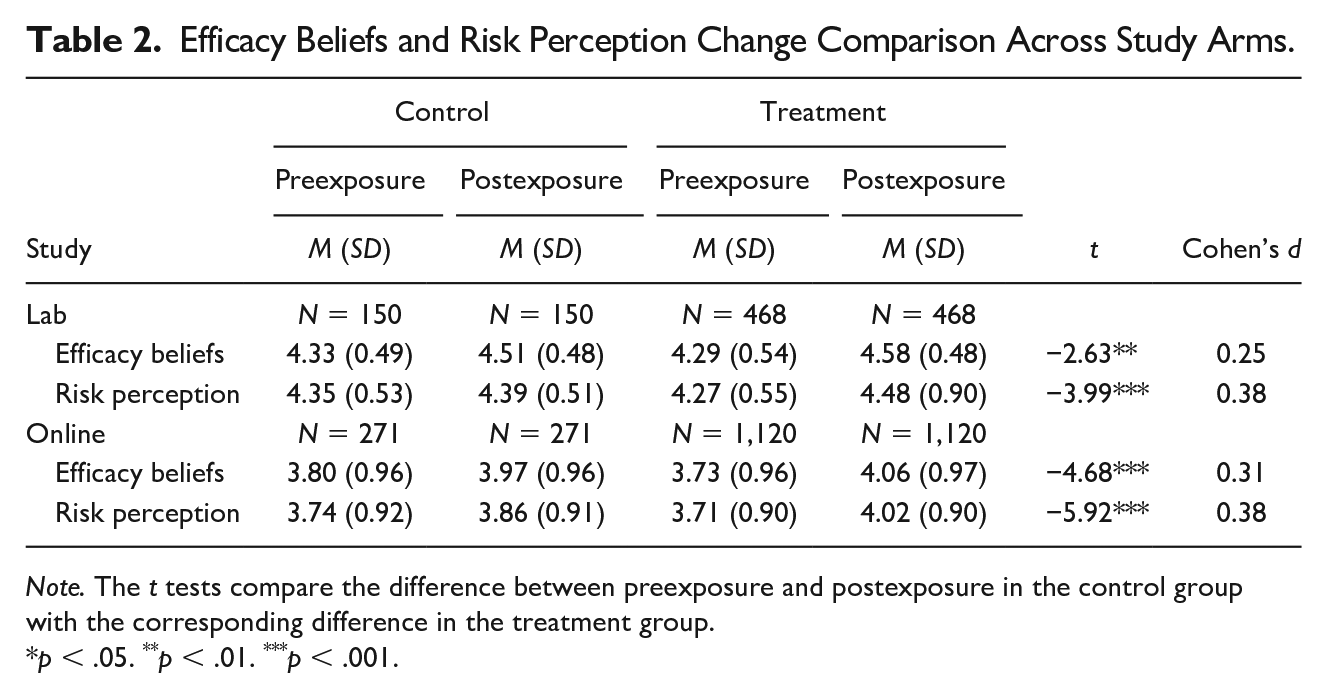
Note. The t tests compare the difference between preexposure and postexposure in the control group with the corresponding difference in the treatment group.
p < .05. **p < .01. ***p < .001.
Change in Efficacy Beliefs and Risk Perceptions.
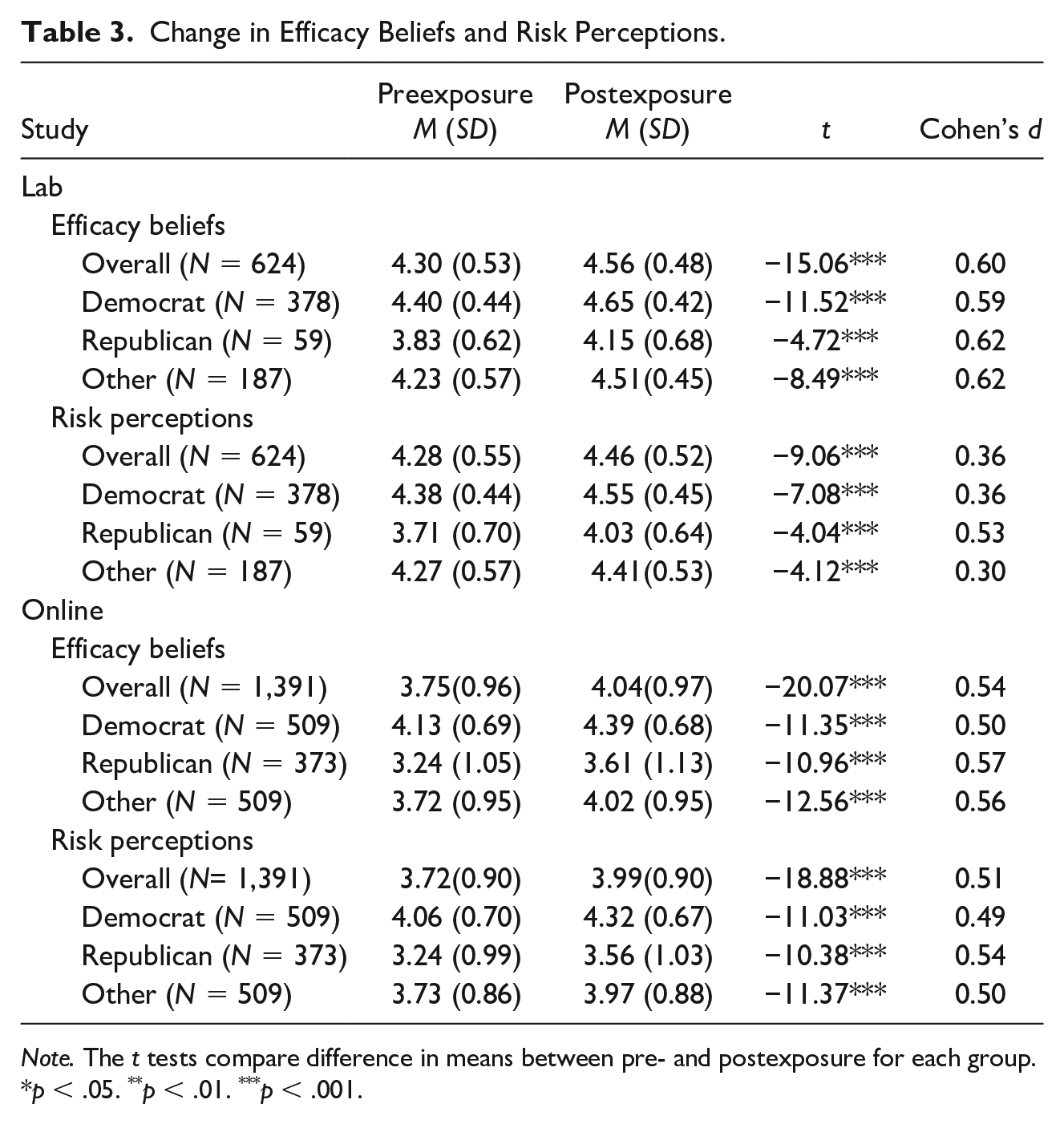
Note. The t tests compare difference in means between pre- and postexposure for each group.
p < .05. **p < .01. ***p < .001.
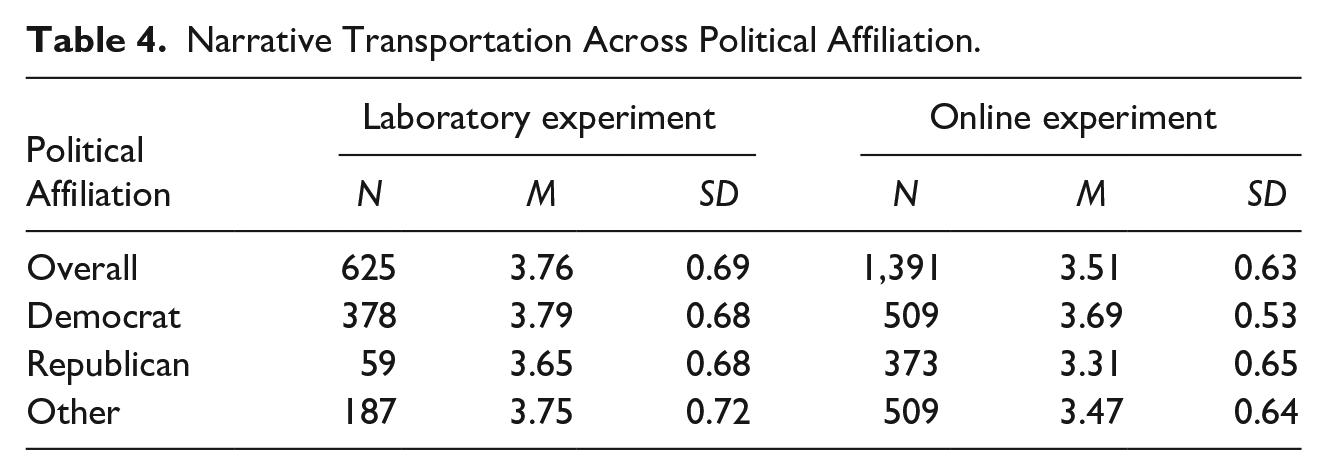
Table 4 shows mean narrative transportation levels in both experiments and across political affiliation. Overall mean narrative transportation was M = 3.76 (SD = 0.69) in the laboratory experiment and M = 3.51 (SD = 0.63) in the online experiment. Only the online study showed a significant difference in the overall narrative transportation levels between the treatment and control arms of the study (Mcontrol = 3.39, Mtreatment = 3.54, t = −3.91, p < .001; Table 5).
Narrative Transportation Across Political Affiliation.
Differences in Narrative Transportation Means Across Political Affiliations and Treatment Arms.
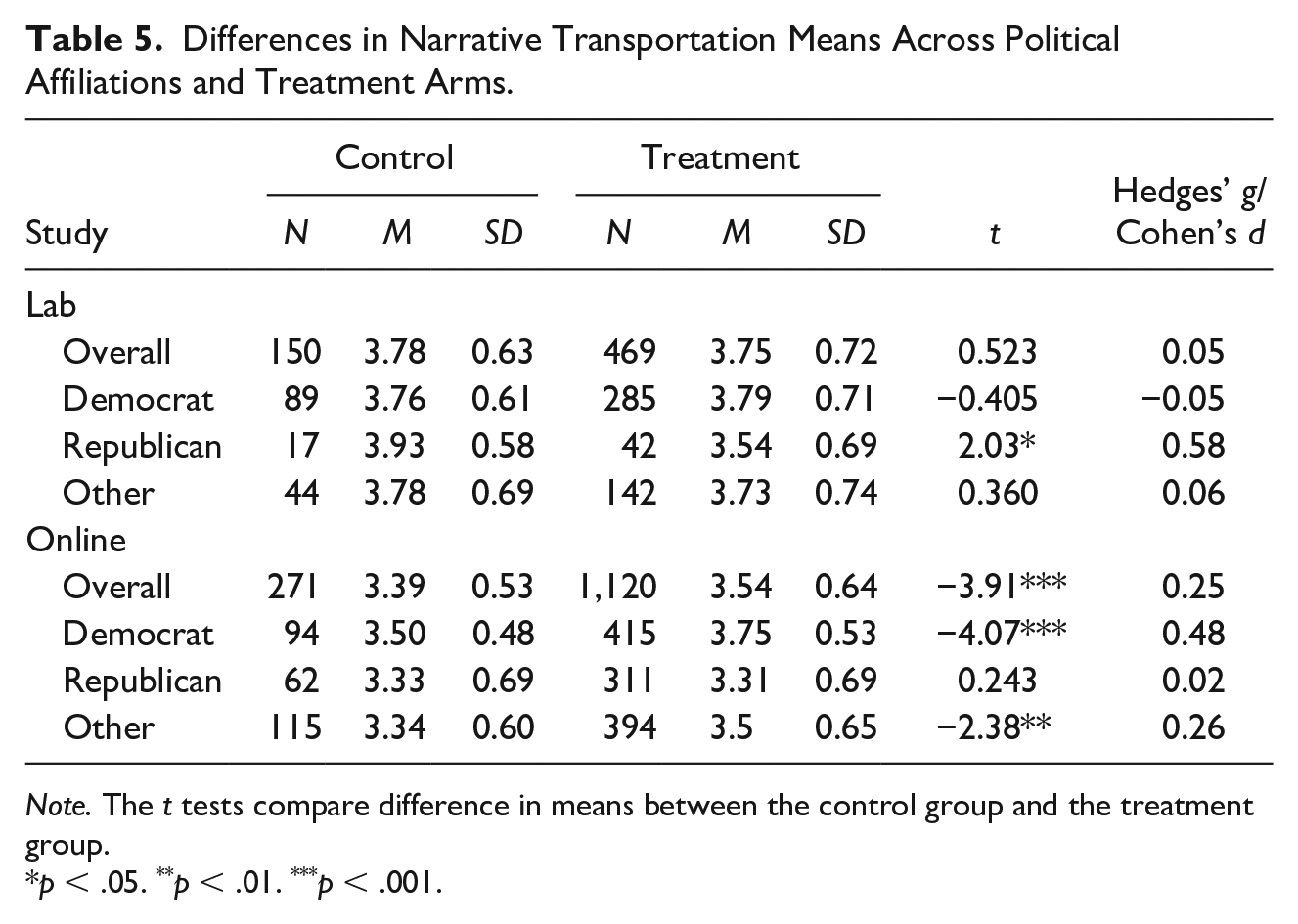
Note. The t tests compare difference in means between the control group and the treatment group.
p < .05. **p < .01. ***p < .001.
Finally, narrative transportation was a significant positive predictor of efficacy beliefs (βlab = .26, p < .01; βonline = .17, p < .001; Table 6) and risk perceptions (βlab = .32, p < .001; βonline = .22, p < .001; Table 7) in both the lab and online studies. Treatment was also a significant predictor of efficacy beliefs (βlab = .08, p < .01; βonline = .04, p < .01) and risk perceptions (βlab = .11, p < .001; βonline = .06, p < .001) in both the laboratory and online studies, where being in the treatment group resulted in higher postexposure efficacy beliefs and risk perceptions than being in the control group. Political affiliation significantly predicted efficacy beliefs and risk perceptions in the lab study, where being Republican predicted lower efficacy beliefs and being non-Democrat predicted lower risk perceptions. In the online study, political affiliation was not a significant predictor of efficacy beliefs or risk perceptions.
Regression and Interaction Analysis—Efficacy Beliefs.
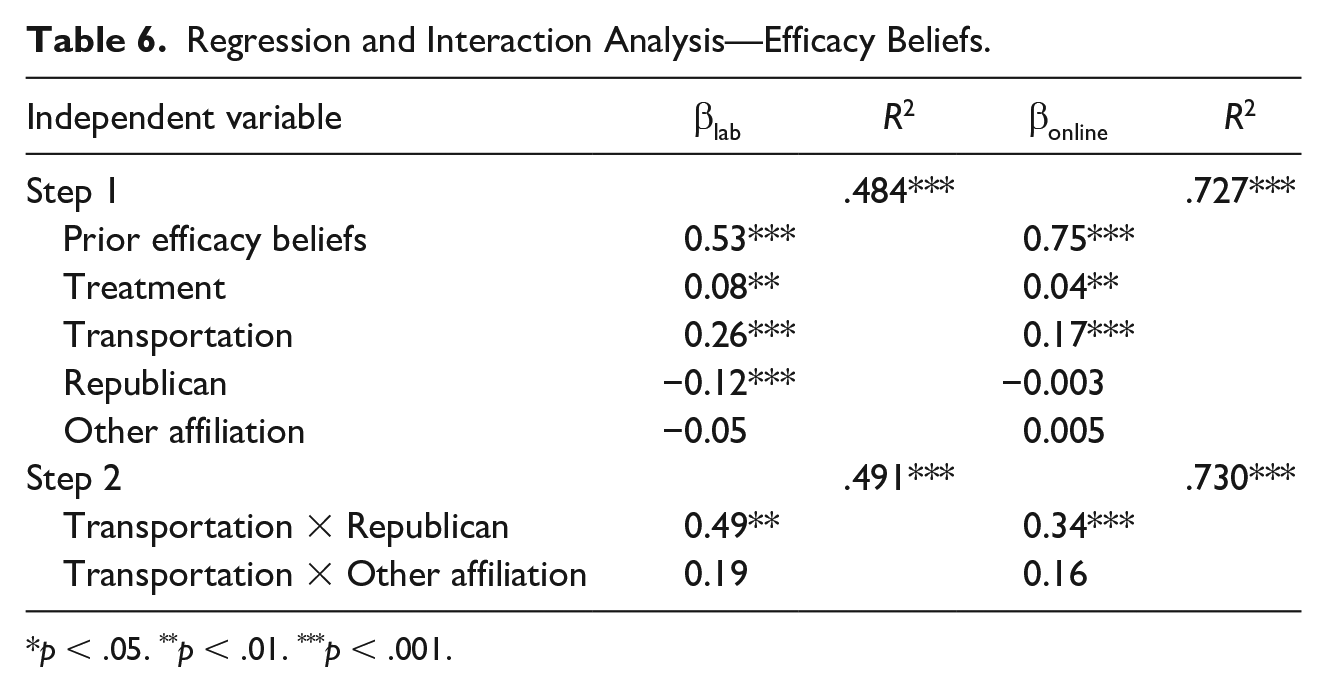
p < .05. **p < .01. ***p < .001.
Regression and Interaction Analysis—Risk Perceptions.
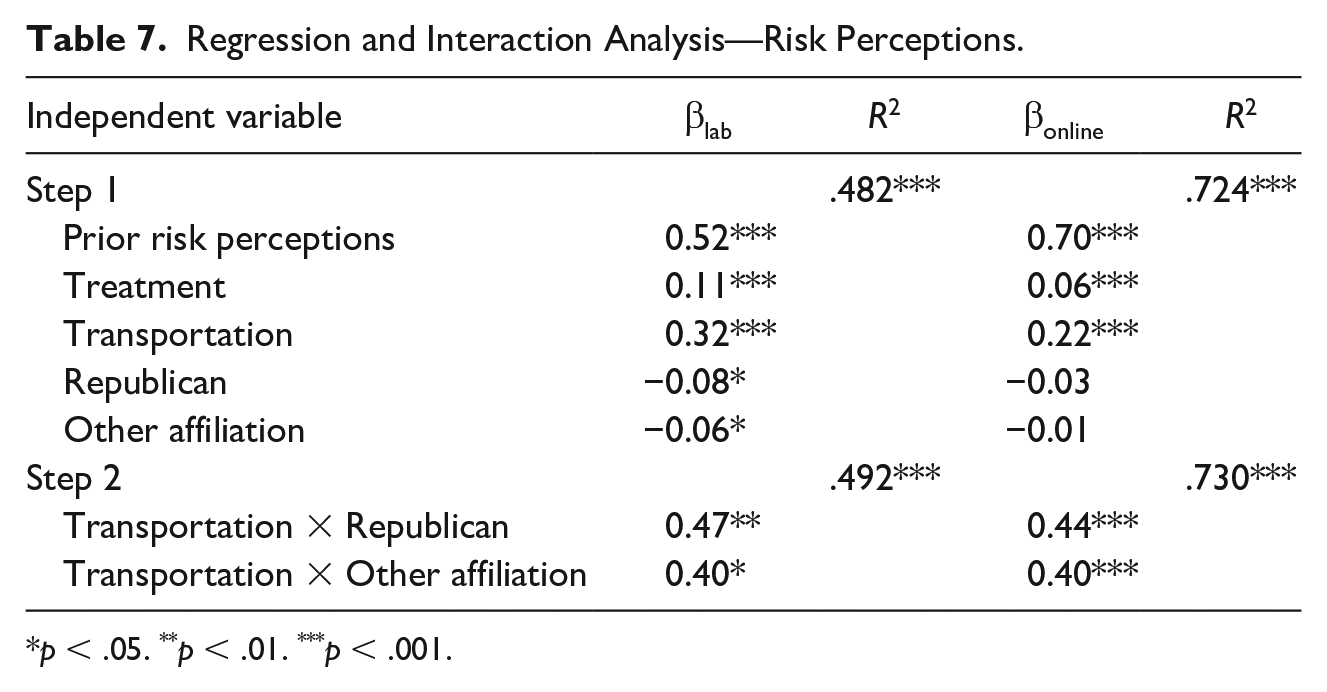
p < .05. **p < .01. ***p < .001.
Hypothesis 2: Narrative Transportation and Political Affiliation Interaction
Our second research question asked if the relationship between narrative transportation and the two outcomes, efficacy beliefs and risk perceptions, differs across political affiliations. We hypothesized that the relationship between narrative transportation and the outcomes would be greater for Democrats. Looking across political affiliation, transportation was significantly different across political affiliation in the online experiment (F = 48.78, p < .001), but not in the laboratory experiment (F = 1.35, p = .2596). Table 5 shows mean narrative transportation levels for the treatment and control arms of each of the studies across political affiliations.
In the lab study, only Republicans had a significant difference in narrative transportation levels between the treatment and control groups, with the control group having a higher mean level of narrative transportation (Mcontrol = 3.93, SD = 0.58; Mtreatment = 3.54, SD = 0.69; t = 2.03, p < .05). There were no significant differences in the levels of narrative transportation between political affiliations overall or in the treatment or control conditions in the lab study. In the online study, the treatment groups of Democrats and Other affiliation had higher levels of narrative transportation than the control group. There was no significant difference for Republicans. Kruskal–Wallis equality-of-populations rank test showed that, in the online study, narrative transportation levels differed significantly across political affiliation overall (χ2 = 83.435, df = 2, p < .001) and within the treatment group (χ2 = 78.847, df = 2, p < .001). The significant difference did not hold in the control condition. In the online treatment group, Democrats had the highest narrative transportation levels (M = 3.75, SD = 0.72), and Republicans had the lowest levels of narrative transportation (M = 3.31, SD = 0.65).
We hypothesized that political affiliation would moderate the relationship between narrative transportation and the two outcomes. Our hypothesis was that Democrats would have a stronger relationship between narrative transportation and outcomes because of the salience of the issue and the traditional alignment of the political left with proclimate beliefs (Pew Research Center, 2018; Stokes et al., 2015). Unexpectedly, the relationship between narrative transportation and the outcomes of interest was stronger for Republicans. The interaction analyses are shown in Tables 6 and 7, and the interaction graphs of predicted marginal means are shown in Figures 1 through 4.
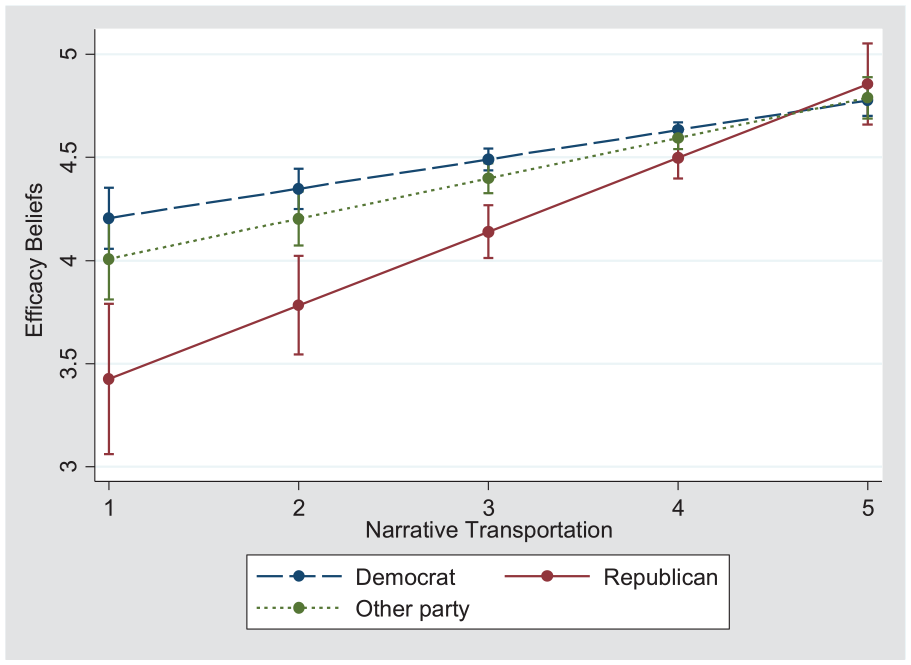
Interaction between narrative transportation and political affiliation in the prediction of efficacy beliefs (lab study).
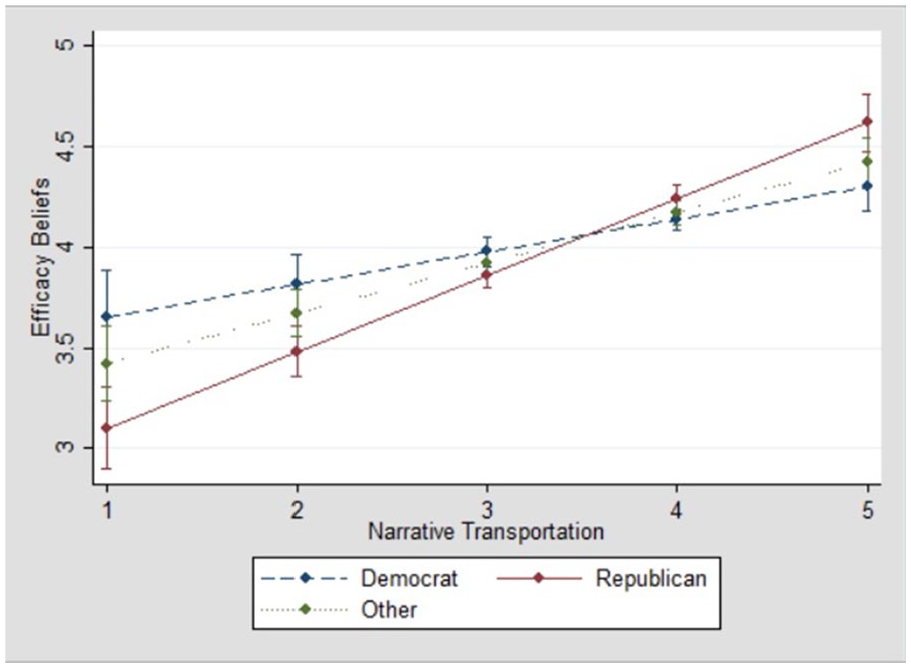
Interaction between narrative transportation and political affiliation in the prediction of efficacy beliefs (online study).
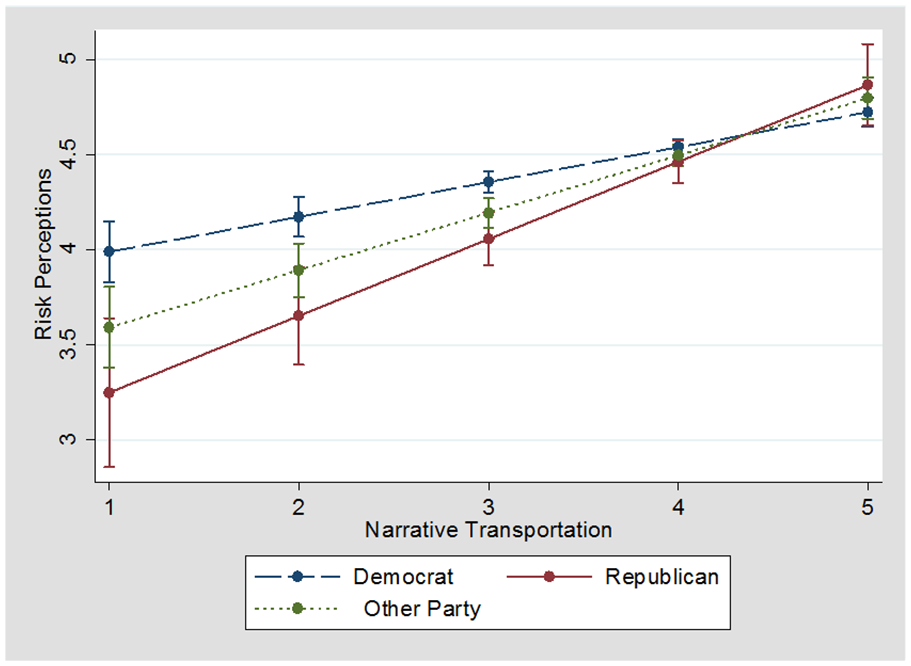
Interaction between narrative transportation and political affiliation in the prediction of risk perceptions (lab study).
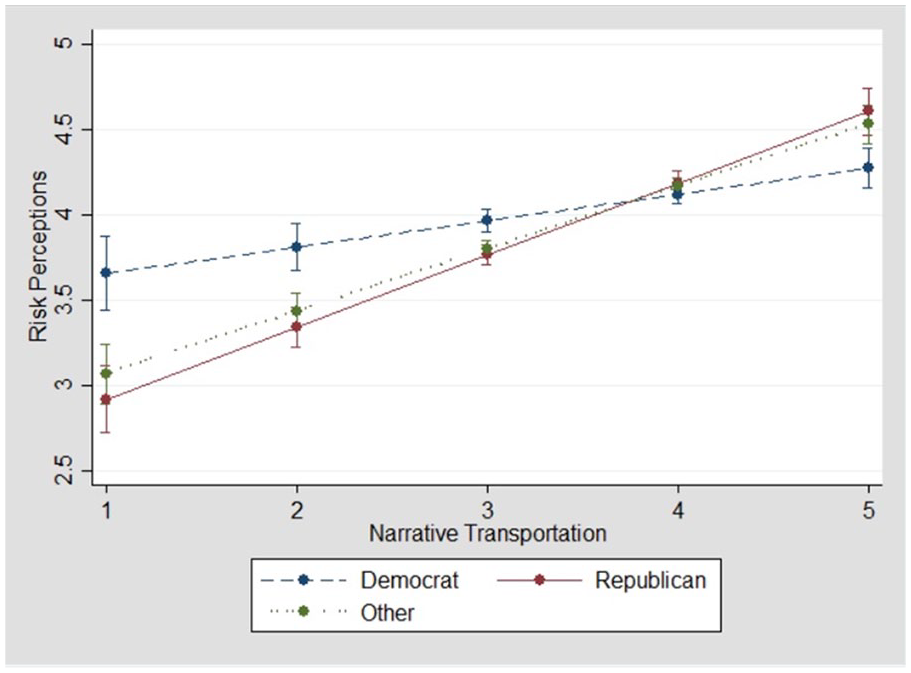
Interaction between narrative transportation and political affiliation in the prediction of risk perceptions (online study).
There was a significant interaction between narrative transportation and political affiliation in the prediction of efficacy beliefs in both the lab and online studies (βlab = .49, p < .01; βonline = .34, p < .001; Table 6). In graphs of estimated marginal means, Figures 1 and 2 show that there is a stronger relationship between narrative transportation and efficacy beliefs for Republicans than for Democrats and Others. As narrative transportation increases, differences in efficacy beliefs also appear to be eliminated. Put another way, the higher efficacy beliefs among Democrats existed at lower values of narrative transportation; when narrative transportation was high, both Democrats and Republicans tended to have similar efficacy beliefs.
There is a similar relationship for risk perceptions. However, for risk perceptions, the difference (compared with Democrats) is also exhibited in the Other affiliate group (βlab = .40, p < .05; βonline = .40, p < .001) in addition to Republicans (βlab = .47, p < .01; βonline = .44, p < .001; Table 7). As with efficacy beliefs, differences in risk perceptions between Republican and Democrats and the Other affiliate group and Democrats appear to be moderated and mitigated as narrative transportation increases (Figures 3 and 4).
Discussion
The primary purpose of this study was twofold: (1) to determine if the effects of climate change television programming on efficacy beliefs and risk perceptions are moderated through narrative transportation and (2) to determine if this relationship was moderated by political affiliation. The randomized study design allows us to draw causal inferences about the relationship between exposure to such film media and the outcomes of interest.
We observed significant differences in changes in efficacy beliefs and risk perceptions between the treatment and the control groups. Those who watched the Years had a greater increase in both climate change–related efficacy beliefs and risk perceptions compared with those who watched the control video. Additionally, in the online study, narrative transportation levels differed significantly across political affiliation overall and within the treatment group, but not in the control condition, which may indicate that the specific content of Years played a role in the differences in transportation across political affiliation.
In the laboratory study, Republicans experienced lower transportation levels in the treatment condition than in the control condition. The result is in the same direction but not statistically significant for the online study. However, in the online experiment, Years exposure led to higher levels of narrative transportation for Democrats and Other affiliations. These results indicate that Years was more engaging than the control video except for those who identified as Republican. Green and Brock (2000) and Slater and Rouner (2002) proposed that narrative transportation or absorption should lead to less counterarguing (Green & Brock, 2000; Slater & Rouner, 2002). Additionally, Green et al. (2004) argued that a message must lead to more felt transportation and enjoyment than an alternative in order to be effective (Green et al., 2004). A possible explanation for this result is that Republican participants experienced a greater level of counterarguing in response to the climate change message and content and thus overall lower narrative transportation levels. Alternatively, perhaps they enjoyed the video less or paid less attention because of the climate change focus and current polarization of the topic, and this may have led to lower levels of transportation.
The findings of a significant interaction between political affiliation and narrative transportation suggest that one way to reach people across different political affiliations in climate change messaging may be to increase the extent to which they are immersed and drawn into a particular story. In the significant interactions, Republicans and Other affiliates had more positive relationships between narrative transportation and the outcome, whereas we hypothesized that Democrats would have the stronger relationship. We know that boomerang effects are of concern in climate change communication (Hart & Nisbet, 2012), but narrative forms of messaging may provide opportunities to lower counterarguing (Dal Cin et al., 2004; Green et al., 2004; McQueen et al., 2011). In the context of climate change, transportation experienced from exposure to carefully developed, engaging and entertaining media may prevent boomerang effects. Narrative forms of climate change communication may offer a way to engage segments of the population that would not usually engage in climate change related media or dialogue. Another critical interpretation of these results is that narrative immersion may be a mechanism for mitigating existing differences in climate change attitudes and beliefs related to political polarization.
Further efforts should assess how transportation affects other climate-related attitudes and beliefs and if political affiliation moderates the relationship between narrative transportation and other climate-related beliefs such as the anthropogenic nature of climate change or understanding of the scientific consensus on climate change, an important gateway belief (Lewandowsky et al., 2013; van der Linden et al., 2015). While this study does not assess the effect of particular content in the videos, given the relationship between transportation and efficacy beliefs and risk perceptions, a careful look at how climate change narratives engage or disengage audiences across political affiliations is needed.
Because narrative transportation is a significant predictor of efficacy beliefs and risk perceptions, engaging audiences through narrative-based media may be a way to catalyze behavior change and, at a minimum, bolster antecedents important to developing intentions and ultimately behaviors. Additionally, narrative transportation appears to reduce political polarization in climate change attitudes in response to narrative climate change documentary films. These results also suggest that film makers and producers seeking to design climate change films should do so in a way that not only educates but also entertains such that the audience is immersed in the experience of the narrative at hand. This work supports the findings of other scholarship that has demonstrated that narrative transportation influences risk perceptions (Cooper & Nisbet, 2016) and establishes support for the influence of narrative transportation on climate change–related risk perceptions and efficacy beliefs across political affiliations.
Limitations
There are three primary limitations to this study to consider. The first is the contrived nature of the laboratory environment and online experiment. These settings meant that participants watched the videos in an environment and circumstance in which they normally would not consume media. The second limitation in this study is the reliance on self-reported responses. This may have also inflated the effects, although it is possible that effects could have also been diminished because choosing higher scores (or more positive scores) would have also minimized the detection of change between pre- and postexposure. Additionally, potential for social desirability bias was present in both the treatment and the control arms of the study. Future studies could address these limitations by conducting evaluations in more natural media–consuming environments.
The third limitation is that there was no formal attention check question included in the postexposure survey measurement in our online experiment sample. This could mean that it was possible for participants in the online study to not watch the full video and still complete the study, which could affect the validity of our results. However, other mechanisms were built into the data collection process to ensure that participants watched the video. Participants needed to enter a unique password in order to start the video. Participants were then required to view, or at least play, the video for a minimum amount of time (45 minutes) before they were able to proceed to the “post” survey measurements. Any person who did not complete both pre- and postsurveys, and thus play/watch the video for the minimum amount of time, was not included in the dataset. Thus, we used time spent on the task and completion of the follow-up survey as a proxy for watching the video. Finally, despite our inability to fully assess if specific participants in the online experiement watched the entirety of the exposure material, our results from the online experiment are consistent with our results from the laboratory experiment, which increases our confidence in the validity of the relationships described in this study.
Conclusions
The findings reported in this study showed that exposure to a climate change documentary series can affect people’s beliefs about climate change risks and the ability to do something about climate change through narrative transportation. It will also be important to look beyond antecedents of behavioral intentions to the assessment of these relationships in terms of measured behaviors that are particularly relevant for climate change—for example, political behaviors like voting, contacting government officials, and changing personal behaviors like diet.
Although climate change remains divisive across the U.S. political landscape, the results presented in this study indicate that entertaining and transportive climate change film or television may present opportunities to bridge gaps between political affiliations and limit the effects of polarization on some climate change attitudes and beliefs. Future studies should also seek to determine which elements of dramatic media can create changes that last beyond immediate post-exposure. Finally, it will be important to identify the specific aspects of film and television storytelling that facilitate the immersive experience and draw the audience into the narrative.
Supplemental Material
Supplementary_Information – Supplemental material for The Power of Being Transported: Efficacy Beliefs, Risk Perceptions, and Political Affiliation in the Context of Climate Change
Supplemental material, Supplementary_Information for The Power of Being Transported: Efficacy Beliefs, Risk Perceptions, and Political Affiliation in the Context of Climate Change by Ashley Bieniek-Tobasco, Rajiv N. Rimal, Sabrina McCormick and Cherise B. Harrington in Science Communication
Footnotes
Acknowledgements
This research was partially supported by a grant from the Children’s Investment Fund Foundation. The authors would like to thank and express their gratitude for the research assistants Laura Wagstaff, Madelyn Shafer, Amandeep Kaur, Hagere Yilma, Tiffany Daniels, and Ans Irfan, and study coordinator Hina Shaikh for their efforts in supporting early components of some of this work. The authors would finally like to thank the reviewers for their critical feedback and insightful comments, which helped to further improve the final form of this manuscript.
Declaration of Conflicting Interests
The author(s) declared no potential conflicts of interest with respect to the research, authorship, and/or publication of this article.
Funding
The author(s) disclosed receipt of the following financial support for the research, authorship, and/or publication of this article: The research was supported by an evaluation research grant from the Children’s Investment Fund Foundation.

Author Biographies
References
Supplementary Material
Please find the following supplemental material available below.
For Open Access articles published under a Creative Commons License, all supplemental material carries the same license as the article it is associated with.
For non-Open Access articles published, all supplemental material carries a non-exclusive license, and permission requests for re-use of supplemental material or any part of supplemental material shall be sent directly to the copyright owner as specified in the copyright notice associated with the article.
