




Abstract
Climate engineering (CE) is often said to bring about significant opportunities as well as risks. The pursuit of CE measures can be framed as either responsible or irresponsible, resulting in contentious and ambiguous communication. This article starts out from a notion of responsibility regarding subjects, objects, norms, and authorities. It will identify and analyze discursive patterns of responsibility across six expert arenas and provide a comparative mapping of these patterns. Better understanding controversy may help in finding common ground for designing research and policy strategies around CE. Taking on the challenges of communicating CE-related responsibilities would support CE governance.
Introduction
Of all the jobs in the world, Figueres’s may possess the very highest ratio of responsibility (preventing global collapse) to authority (practically none).
Christiana Figueres, a former Executive Secretary of the United Nations Framework Convention on Climate Change ([UNFCCC], 2015), succeeded in fostering the first international agreement on limiting global warming to “well below 2°C,” if possible below 1.5°C (p. 2). The agreement is praised by many as the world’s greatest climate policy success, because polluters are held accountable for drastically cutting their emissions. However, several climate policy analysts consider it very unlikely that the increase in global mean temperatures can be kept under 1.5°C or 2°C without using some methods of climate engineering (CE; Anderson & Peters, 2016; Parker & Geden, 2016). CE, also referred to as geoengineering, is commonly defined as “the deliberate large-scale manipulation of the planetary environment to counteract anthropogenic climate change” (Royal Society, 2009, p. 1). Its methods would influence earth’s climate system by either artificially removing carbon dioxide (CO2) from the atmosphere, through so-called CO2 removal (CDR), or reducing incoming sunlight to affect the global mean temperature, which is known as solar radiation management (SRM). These are the two main groups of CE methods, although there is a discussion on whether the classifications are appropriate (e.g., Boucher et al., 2014).
Against the background of an increasing number of statements that using CE may provide opportunities for limiting global warming, if environmental risks of CE are kept in check, the need to assess and govern CE opportunities and risks has become more and more pressing. Thus, approaches to technology assessment (TA), in general, and to responsible research and innovation, in particular (Schomberg, 2012), gain in significance, as do controversies on how to deal with global warming responsibly. In everyday language, “responsibility”/“responsible” and “irresponsibility”/“irresponsible” are commonly used, though with different meanings. In scientific theories, notions of responsibility are often more strictly defined most commonly as the accountability an actor is subjected to in order to reach a task under particular norms and circumstances (Kaufmann, 1992; Lenk, 2007b; Ott, 1998). Whereas the UNFCCC’s political responsibility is established by the commitment to the “stabilization of greenhouse gas concentrations in the atmosphere at a level that would prevent dangerous anthropogenic interference with the climate system” (UNFCCC, 1992, p. 9), the meaning of “responsible climate engineering” remains much more ambiguous.
This article shows that the various ways to shape meanings of “responsibility” render communication both vague and ambiguous. For example, “responsibility” appears as vague when a person or an organization is said to be responsible, yet without determining the circumstances and norms. “Responsibility” presents itself as ambiguous when it relates to either a political or a moral problem. Responsibility thus represents a fundamentally “polysemic” concept (Pellé & Reber, 2013) with contiguous meanings within a semantic field. This circumstance complicates argumentation and mutual understanding. For example, experimenters justified their maritime CE field trial by saying “that the natural process has been disrupted by humans already, [which] perhaps mak[es] remediation a human responsibility” (Buck, 2014, p. 2). In contrast, many scientists considered this particular experiment “both deceitful and irresponsible” (Zhang et al., 2015, p. 899) because of its nontransparent procedures. A “call for responsibility” (Kaufmann, 1992) goes unheard if responsibilities remain unclear. We will analyze competing responsibility claims from a discourse analytical perspective with regard to inherent interpretive schemes or frames (Keller, 2011). Therefore, we will not state whether CE “is” responsible or not but rather investigate how experts articulate responsibility issues.
This article provides insights from our research on how understandings of responsibility are conceived of and communicated by researchers, policy makers, policy advisors, and civil society actors engaged in assessing or governing CE. Employing a discourse analytical approach, we will compare divergent expert understandings of responsibility within and across arenas. We have investigated responsibility discourses in six arenas: science and engineering, social sciences and humanities (SSH), interdisciplinary research across widely separated fields, policy, science-policy interface, and civil society. We will reconstruct and compare the major patterns, looking at the diverse configurations of subjects (who?), objects (for what?), norms (based on what?), and authorities (to whom?) of responsibility.
To provide an analytic reference, we will develop a model of responsibility. We will then specify this model, which follows a sociology of knowledge approach to discourse (SKAD) analysis, to apply it to our corpus of expert documents and outline the resulting six responsibility patterns. In mapping responsibility as a multifaceted concept, we will display the diversity contained in the expert discourses, while limiting the complexity to six patterns. We will further show that the patterns are widely distributed over time, arenas, and technological categories. Our conclusions will focus on two points: that the responsibility discourse on CE is vague and ambiguous and that the needs perceived for governing CE research and deployment dominate the discussion about responsibility.
Responsibility Theory
Responsibility Issues in Science and Technology
The debate about the responsibility of researchers for human welfare has deep historical roots. The Hippocratic Oath formulated ethical principles for the appropriate conduct of medical doctors. Traditional engineering clubs conveyed guidance to young engineers with a codex including the formula “with great power goes great responsibility” (Fezandie, 1894, p. 217). Against the background of Nazi crimes and the threat of nuclear extermination, the Nuremberg Code of 1947 and, following the Russell-Einstein Manifesto of 1955, the Pugwash Conference on Science and World Affairs in 1957 marked milestones in the public articulation of responsibility concerns by scientists. The contemporary proposal of an “oath for earth scientists” addresses not only responsible scientific conduct but also human responsibility “to manage Earth systems with the future of humanity in the balance” (Ellis & Haff, 2009, p. 474). A lack of precautionary measures may have negative impacts if innovations are introduced, but hazards only become clear later on (Schomberg, 2013, p. 60).
Looking at CE discourses, one finds numerous references to responsibility. It is important to note that not all of them concern ethics or morality or even human actors:
CO2 is mainly responsible for the greenhouse effect (Intergovernmental Panel on Climate Change, 2013).
International policy acts irresponsibly by not mitigating greenhouse gas (GHG) emissions (Crutzen, 2006).
Paul Crutzen is responsible for questioning the taboo on CE research (Lawrence, 2006, p. 245).
Scientists are responsible for justifying CE as a possible Plan B against climate change.
Environmental NGOs (nongovernmental organizations) call CE field experiments irresponsible (ETC Group, 2007).
In the next section, we will outline our analytic frame that guides our investigation of CE-related responsibility claims.
Elements of a Responsibility Pattern
The communicative ambiguity of “responsibility” relates to the complexities of contemporary societies and the grand challenges they face. Whereas responsible actors can often be designated, scientific uncertainties in the identification of causes and effects as well as the societal and organizational distribution of responsibilities hinder personal attribution (Lenk, 2007a). For example, an actor could be in conflict with role responsibility for past actions (retrospective responsibility) or future actions (prospective responsibility). To fully grasp the concept of responsibility, one may ask who is responsible, for what, with what effect, based on which norm, against which authority, when, and how (Ropohl, 1996). Key aspects of “responsibility” are the following: Someone (subject) is responsible for something (object) regarding certain norms or values (norm) while being accountable to others (authority) (Lenk, 2007b; Ott, 1998). These four elements share unidirectional links (e.g., the subject is responsible for the object, not the other way around) and, combined, constitute a certain type (Figure 1). None of these elements exists a priori. They all appear as grammatical subjects, objects, and so on in everyday communication. However, the communicative acts create what they denote (Bublitz, 2003, p. 55); for example, the subject “geoengineers” exists because of its discursive construction.
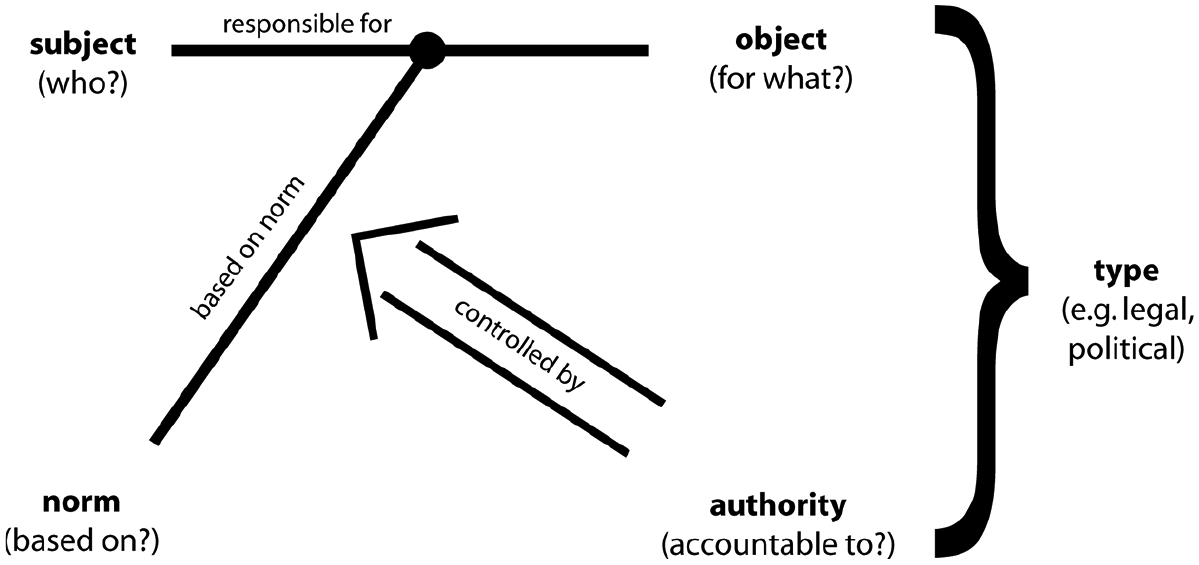
Elements of the general responsibility concept.
A responsible subject can be an individual or a collective subject such as a social group, organization, or state. In interconnected scientific, economic, or political processes, individual responsibility cannot always be attributed (Doorn, 2011; Lenk, 2007a). With regard to CE research, development, and deployment, it is very unlikely that an actor will ever be solely responsible. It is more likely that multiple actors with more or less clearly shared responsibilities will be held accountable—a situation that would be complicated by responsibility diffusion.
An object of responsibility is the aim a subject has to fulfil. The object is, at least in part, an outcome of the subject’s action or inaction. The responsible action aims at, for example, the well-being of another person or the integrity of nonhuman life. The object can be abstract, such as “peace” or “prosperity.” It can also be a failed objective, something the subject is made responsible for. Thus, the conduct of research or a deployment decision can be objects of responsible CE.
A norm of responsibility determines why a subject is responsible for an object. A norm provides the basis for responsible action. Unlike its usage in ordinary language, responsibility is not a norm in itself but only with reference to another norm or value (Ott, 1998). Responsibility norms can be implicit or explicit. They can be of ethical, political, or legal origin, as expressed in the dictums “Do no harm,” “Respect the dignity of all human beings,” or “Obey the law” (see “type” below). If the object is “responsible research,” for example, the norm can relate to strict observance of scientific standards or the pursuit of science toward societal needs.
An authority oversees the compliance with a particular responsibility norm. Such supervision may be conducted through legal, political, or ethical judgments. The authority may be equipped with (soft or hard) power to enforce the compliance with norms or principles, be it family and friends, organizations, states, or people affected by the responsible action in question. As to CE research, it can be assessed by scientists with appropriate expert knowledge or by the political authorities in charge of security and safety protection.
Every pattern of responsibility can be characterized as a certain type that is constituted by the configuration of the four elements: subject, object, norm, and authority. A type can account for prospective or retrospective responsibility because of its orientation toward future or past events. Another important distinction refers to causal and normative responsibility, depending on whether the focus is on causes and effects or judgments based on a norm (Lenk, 1992). Since this article is concerned with human actors rather than causalities, all responsibility patterns to be investigated are normative in one way or another. In real-world situations, types may overlap—for example, if after a car accident investigators look for technical malfunctions, human failures, environmental incidents, or a combination thereof.
We have applied our model of responsibility to discourse analysis. Considering the relatively new and far-reaching discussion about CE technologies, we have used the model as a structuring tool to make key aspects in the controversies around responsibility visible, without precluding interpretations of the real-world discourses.
State of the Art in Discourse Analysis of Climate Engineering
Up to 2016, the number of social science studies on CE was almost equal to the number of natural science studies—621 documents in SSH to 773 documents in science, technology, engineering, and mathematics (STEM). 1 Accounting for a broad approach to discourse research, the number of analyses on CE has grown rapidly in the past 5 years. CE-related research on discourses, framings, and public opinions has been done with particular emphasis on metaphors (Buck, 2011; Nerlich & Jaspal, 2012), argumentation maps (Betz & Cacean, 2011), argumentation analysis (Uther, 2014), science communication (Kahan et al., 2012), a new type of engineering persona (Matzner, 2015), scientific story lines (Anshelm & Hansson, 2014; Matzner, 2013), and public awareness surveys (Mercer et al., 2011; Pidgeon et al., 2012). An overview of studies on discourse, framing, and public opinion is visualized in Figure 2.
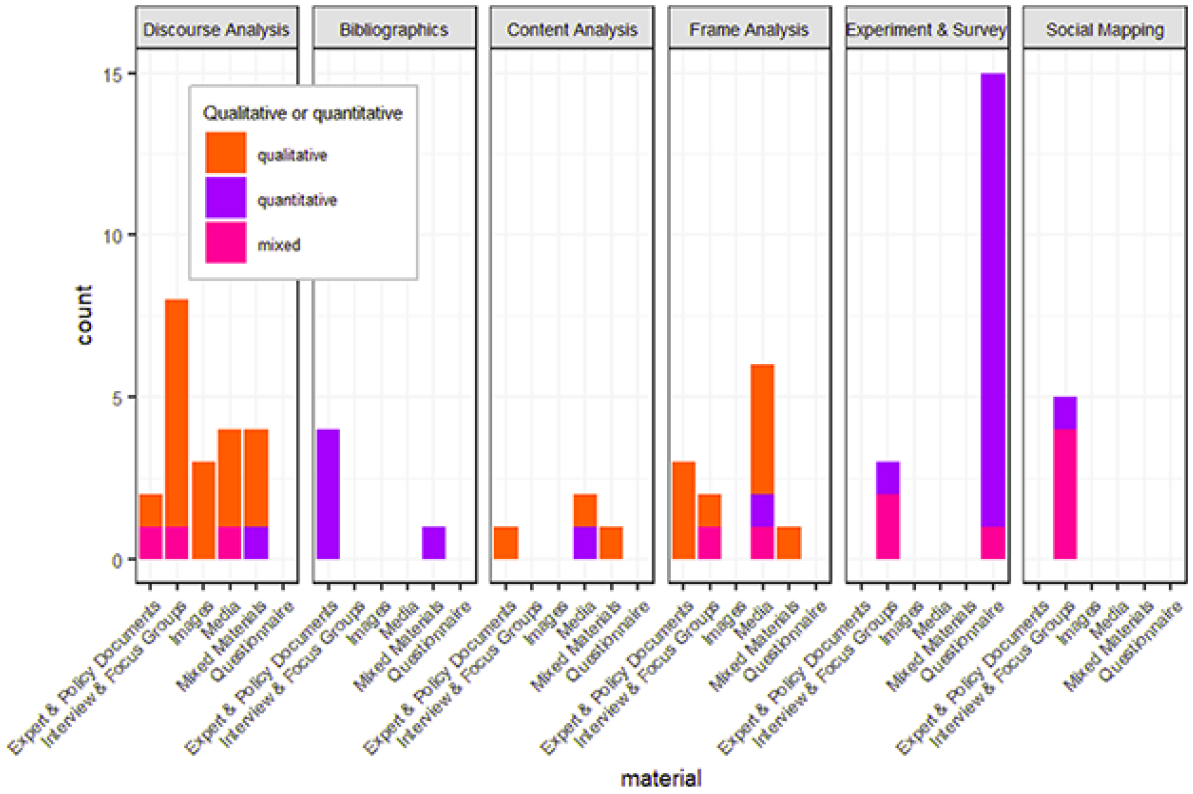
Overview of discourse, argument, and public opinion research.
Questions of responsible research, development, and deployment of CE technologies have not been the focus of discourse research so far. Expert communication over CE was investigated by Huttunen and Hildén (2014), but not with a focus on the communication of responsibility. Our study on responsibility discourses—mainly qualitative discourse analysis of expert and policy documents complemented by bibliographic comparisons—will fill this gap. Our research answers the question, “How do discourses of CE construct ‘responsibility’?”
Method and Data
Whereas some discourse analyses of science and technology target the language used in science communication (Tillery, 2010), our analysis aims at the knowledge that is produced and translated in communication among experts. We have applied SKAD by Reiner Keller (2008, 2011) to a corpus of CE texts by experts broadly conceived. While many analyses of CE documents follow a frame analytical approach (e.g., Huttunen & Hildén, 2014; Luokkanen et al., 2014), with SKAD we saw the opportunity to bridge the analysis of everyday communication and traditions of sociology of knowledge (Keller, 2011). Employing the sources Google, Google Scholar, the Geoengineering Google Group, and Twitter, we used broad search terms (geoengineering) as well as technology-specific ones (air capture). All abstracts were read to categorize the documents. We have built up a comprehensive corpus of expert texts on CE, ranging from 1965 to 2016. Documents (except from news media or social media) were included in our corpus if they were written by experts—broadly conceived, in particular, researchers, decision makers, and strategists from civil society—with a clear focus on CE technologies. The documents were collected from any publication year and language, but, for practical reasons, the analysis could be realized only in English and German. Most documents originated in the United States, the United Kingdom, and Germany. We sorted our documents into six main expert arenas plus subarenas: science (scientific papers and scientific reviews/commentaries in the disciplinary areas of STEM), SSH (i.e., different social science disciplines, law, philosophy, and economics), interdisciplinary studies (by STEM and SSH scholars), science-policy (e.g., scientific policy advice), policy (i.e., official policy making), and civil society (including NGOs and think tanks). 2 We believe that different kinds of experts articulate and deliberate on vital questions of CE-related responsibility in research and governance in these arenas. Arenas—some would also conceive of them as social worlds (Clarke, 2005)—do not fully determine actions or meanings, but they structure the ways in which institutional rationales, social realities, and conflicts are shaped.
Rather than looking at argumentative frames or general views on CE (e.g., Huttunen & Hildén, 2014; Porter & Hulme, 2013; Uther, 2014), we have focused on discursive configurations of responsibility (i.e., articulations of subjects, objects, norms, and authorities). In addition, we have identified types of responsibility, such as prospective and retrospective, normative, and causal responsibility. We built a sample of 72 documents randomized according to the year and arena of the publications, which we read and examined closely (see the full list of documents used as data in the online Supplemental Material).
For the empirical analysis, we chose the four elements of responsibility (subject, object, norm, and authority) and type (Figure 1) as starting codes, and we inductively built subcodes for every main code. With open qualitative coding of the corpus, we created a tree of codes and subcodes. Three coders participated who discussed and refined the coding in an iterative process that served to resolve any disagreements. After coding and refining the code tree in further rounds, we drew code maps for the 72 documents, whenever a document contained at least two or three main codes, to draw a relational map. In the code mapping process, it became clear that responsibilities were rarely ascribed by statements such as who is responsible for what, under which norm, and controlled by which authority. In fact, many code maps offered at least two or three clear connections among the subcodes. Some offered up to 15 subcodes, whereas a few documents did not allow drawing a map at all, because there were no codeable connections.
We found references to responsibility in both explicit and implicit phrasings. Explicit references are those that directly include the word “responsibility” as a noun, an adjective, or an adverb. Preston (2011), for example, talks of “our ducking of responsibility” (p. 468). Implicit meanings require more interpretive work than explicit ones. Implicit references to responsibility are framed by word choice and are often indicated by modal verbs (“must” or “should”) or their synonyms (“have to”). Other stand-ins for responsibility include a range of related concepts, such as “liable” (Secretariat of the Convention on Biological Diversity, 2012) or “accountable” (Bronson, 2010). As a result, passages with implicit references to responsibility were much more frequent than explicit ones.
A philosophical elaboration on how to approach CE responsibly usually has to be well argued, sufficiently comprehensive, and plausibly explained. The concepts or at least elements of responsible CE that we found in the documents are much more fragmented. A single document often contains more than one code relation, whether complete or not. In the 72 documents, we thus obtained 199 code relations in total. Only three code relations were found that had clear links between subject, object, norm, authority, and type (S-O-N-A-T), for example, as articulated by the following argument: States and governments are responsible for research governance under norms of responsible research within an international research framework seen as supporting political responsibility (Schütte, 2014). Twenty-nine of the code relations contained four elements (e.g., S-O-N-A or S-O-N-T), 68 contained three elements, and 99 contained two elements.
Similar to Huttunen and Hildén (2014), we clustered and condensed related maps. We performed several attempts to cluster the maps and reduce complexity with quantitative, semiquantitative, and qualitative clustering methods. 3 Eventually, we found six clusters by interpreting the semiquantitative intermediate results, whereas one cluster contained two subclusters. The six responsibility patterns identified do not align with the six arenas investigated (Figure 4). We drew maps to illustrate the six condensed clusters. These cluster maps can be seen as “ideal types” of discursive positions or knowledge configurations (Keller, 2011), which we will present in the next section. The resulting theory-laden maps do not “represent” the views of single actors from the discourse but help us understand how relevant patterns of responsibility emerge in the discourse. Furthermore, we tested the cluster attribution of every text with its metadata of arena, publication year, and SRM-CDR classification. Our results only show tendencies in absolute values, because a small N hindered statistically valid results. For example, texts that support Pattern A have the tendency to come from the early years, are likely to be about CE in general (rather than a specific technology), and are usually not from the policy or science-policy arena (see Results section “responsibility patterns and their metadata”). The documents represented in the six clusters allow for formulating certain tendencies with regard to their metadata (arena, publication year, SRM-CDR classification).
Results
In the following section, we will provide the results of our analysis of the responsibility patterns. First, we will explain the responsibility patterns based on the previously presented model. Second, we will analyze the patterns with regard to time, expert arena, and type of technology.
The Identified Responsibility Patterns
The clustering process of documents, codes, and maps enabled us to identify six responsibility patterns (Figure 3):
A. Humankind manages the planet.
B. The global north polluted the planet.
C. Humankind has to mitigate its emissions.
D. Scientists are responsible for research (governance) (with two subpatterns).
E. Governments are responsible for research governance.
F. International bodies should be responsible for deployment governance.
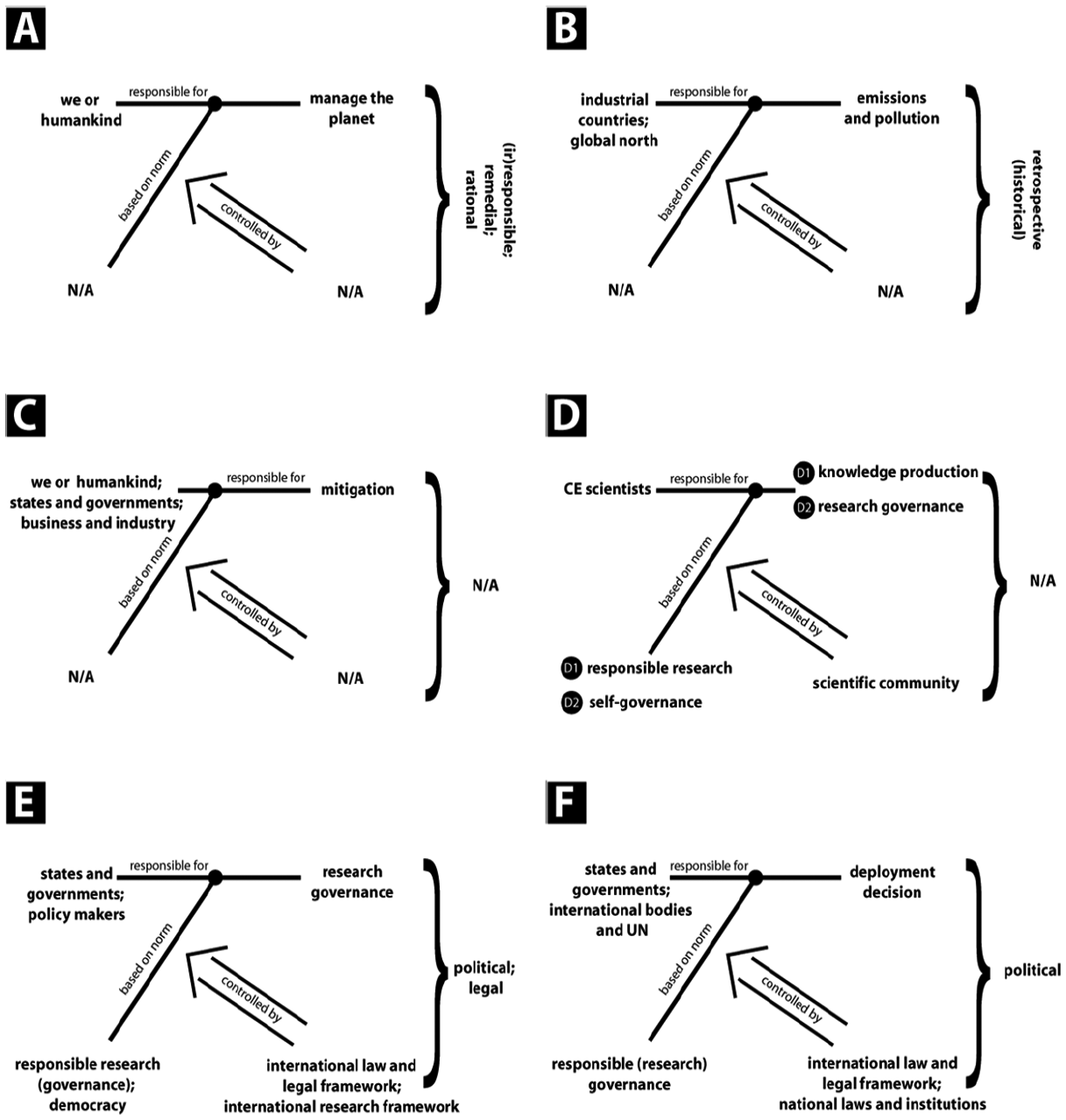
Responsibility patterns A-F.
Every pattern describes a meaningful relation of subjects, objects, norms, and authority. Whereas the responsibility pattern of, for example, planetary management (A) can be found in various texts, the authors use the pattern in different contexts: descriptions of human management, claims for better planetary management, or criticisms of particular management approaches. In general, responsibility patterns can be interpreted from one of these standpoints: (I) description of a status quo, (II) projection of a desired state, or (III) critique of the current state.
Pattern A: Humankind Manages the Planet
This responsibility pattern is characterized by a general subject of “we” (e.g., Keith, 2000, p. 277) or “humankind” (e.g., Preston, 2011, p. 461) and the object of planetary management. Norms and controlling institutions are not addressed in this pattern.
This responsibility pattern suggests that humans, as a general subject, already manage planet Earth. The notion of the Anthropocene—which authors in CE discourses often refer to—implies that humans have massively altered the earth (e.g., by deforestation, channeling rivers, or changing the composition of the atmosphere), equaling these alterations to management. Paul Crutzen (2002) considered scientists and engineers responsible for “guid[ing] society towards environmentally sustainable management during the era of the Anthropocene” (p. 23). Management is sometimes perceived as remediation of a past climate state (Asilomar Scientific Organizing Committee, 2010). However, the idea of remediation as “turning the clock back” has been criticized by modeling studies that demonstrate the uniqueness of every climate state (e.g., in GeoMIP experiments that cancel CO2-forcing with SRM, thus eventually creating a new climate; see Kravitz et al., 2011).
The object of this pattern is much contested. A few texts state that humans have to “accept responsibility to manage the planetary environment” (Cicerone, 2006, p. 222). Representing a minority position, Brad Allenby’s proposal of earth system engineering and management embraces the idea of rationally managing the planet. It assumes “the responsibility for what we as a species are already doing” but goes beyond a retrospective responsibility by assigning the future task to “develop the capability to do so more rationally and ethically” (Allenby, 2000, p. 15). However, for Allenby, CE does not fit well into earth system engineering and management because the uncertainties of CE and the idea to “fix” the climate are not features of responsible, rational, and long-term management (Allenby, 2012).
Some texts criticize the idea of managing the planet as irresponsible. They reject the underlying assumption that CE may provide feasible and desirable management tools. If humanity managed the planet, it would be burdened with the “responsibility for making it hospitable” (Preston, 2011, p. 461). In the same vein, “managing the planet” sometimes becomes “saving the environment,” as in portrayals of civil society groups responsible for anti-CE grassroots activism (Bronson, 2012).
For proponents of the “Good Anthropocene,” such as the Breakthrough Institute, this pattern is an affirmative description of the status quo, whereas opponents value this pattern negatively.
Pattern B: The Global North Polluted the Planet
This pattern addresses industrialized countries and the global north in general as the responsible subject. These countries are responsible for the object of emissions and pollutions for planet Earth. This pattern is grounded on a normative basis of historic liability and therefore retrospective.
The pattern criticizes that the most advanced industrial countries from the global north are responsible for the largest share of global GHG emissions. The global north is the subject of pollution that harms life on Earth. The most developed economies are hence responsible for the present-day climate crisis. To our knowledge, the vast majority of CE experts are in line with this statement. However, we found that only a fraction of the sampled documents highlights this fact, and most of them come from civil society organizations (Figure 4). Almost half of the texts recognize that such retrospective responsibility weighs on decisions made today: “The same folks who geoengineered us into this mess in the first place” were now also responsible for deployment decisions regarding CE (ETC Group, 2009, p. 5). In this case, the ETC Group specifically points to the industrials in advanced countries: “energy, chemical, forestry and agribusiness companies” (ibid.).
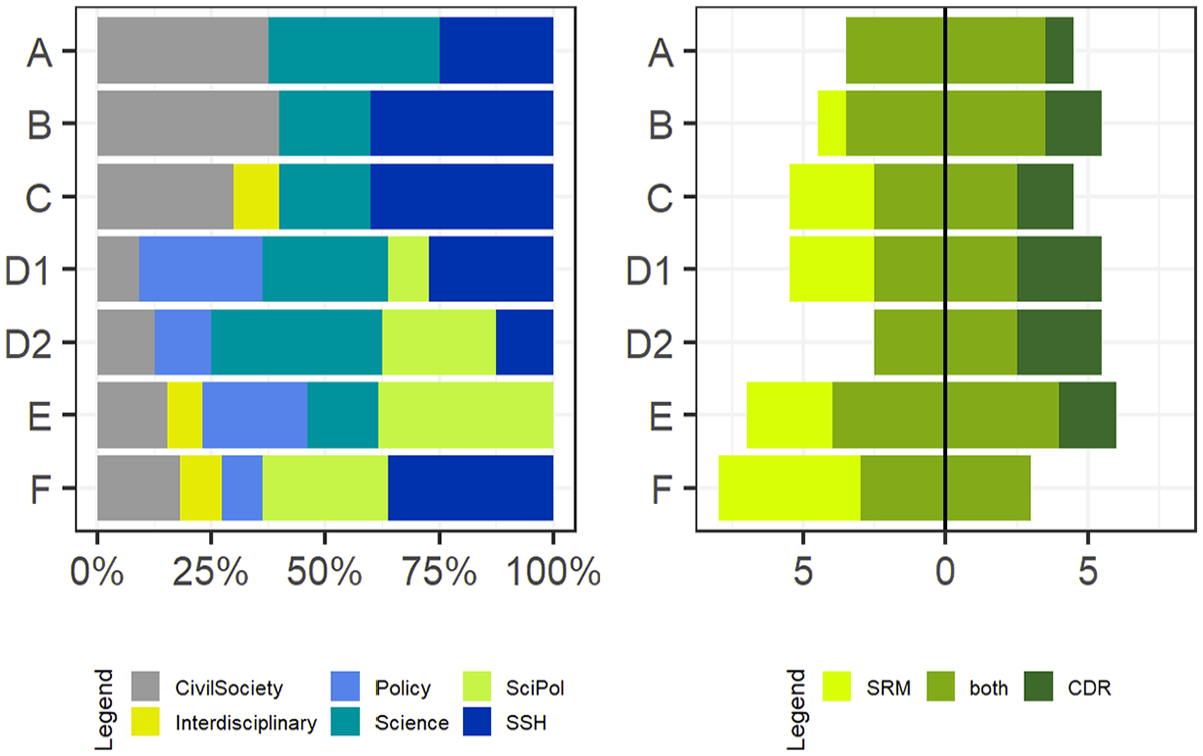
Responsibility patterns in documents by expert arenas and by solar radiation management–carbon dioxide removal classification.
The global south—which itself is hardly represented by authors in the expert discourse (Biermann & Möller, 2019)—is usually perceived as the “victim (and therefore object) of emissions.” A common argument states that industrial countries caused emissions and pollution, which are in turn responsible for exacerbating the climate situation in the global south (Friends of the Earth et al., 2016, p. 7). Some civil society texts frame the collective responsibility of the global north as a moral obligation. The Greenpeace UK blog (2009), for instance, purports that “we have collectively, as a society, failed to take on the fossil fuel interests.” Especially, NGOs and other civil society actors have employed a pattern of blaming the global north for its historic failure. The pattern of pollution induced by the global north is usually used in a critical vein.
Pattern C: Humankind Has to Mitigate Its Emissions
Here, the subject is either humanity in general or states, their governments or industries. The object of mitigating GHG emissions reflects the top priority of climate policy to date. This pattern shows no clear normative and institutional basis.
Against the background of a potentially novel climate policy option in CE, mitigation is usually considered the more responsible approach. The responsibility pattern of mitigation appears to be the logical consequence of GHG emissions and therefore of Pattern B. (To make the connection to Pattern B even clearer, four out of the 10 texts in Pattern C and five of the authors can also be found in Pattern B.)
All authors of the documents analyzed in this pattern are of Western origin (mostly the United States or European Union), representing the arenas of sciences, SSH, or civil society. The responsible subjects are generalized as “we or humankind,” or collective actors as in “states and governments,” and “business and industry.” The think tank Climate Analytics (2015) directly holds policy makers responsible for managing the planet by “providing unmistakable ambitious targets by 2025 and 2030” (p. 5). What stands out is that rarely any of the code relations in these maps articulate toward whom (authority) the subject is responsible. An exception is Rayfuse et al. (2008, p. 314), where states and governments, which are responsible for mitigation, should be accountable within an international legal framework.
None of the texts deny the need for improved mitigation efforts. However, authors debate if CE could be a reasonable supplement for mitigation or if (“traditional”) mitigation should be the only strategy to be pursued. Pattern C describes a policy goal that ought to be achieved soon.
Pattern D: Scientists Are Responsible for Research (Governance)
The responsibility of scientists spans from responsible research to selected tasks in CE governance. Responsible research usually means that scientists care for the consequences of their research, follow (self-imposed) guidelines, and proceed in a multidisciplinary manner. Responsible research and research governance are closely related yet not congruent. Therefore, we separated knowledge production and scientific research governance into two subpatterns.
D1: Scientists Are Responsible for Scientific Knowledge Production
In Pattern D1, the subject of scientists is held responsible for the object of knowledge production. The need for knowledge is often paired with the desire for impact assessment of CE methods. This subject-object relation is grounded on the norm of responsible research. The scientific community itself controls the knowledge production.
Scientists predominantly (but not exclusively) use climate models to investigate possible benefits and risks of CE. Their research is considered responsible as long as it is kept indoors and confined to computer simulations. Furthermore, Horton (2015) and Baughman et al. (2012) value impact assessment to inform policy makers about the responsibility of CE research. Scientists would know best how to validate, prove, and communicate their knowledge.
Scientific knowledge, as communicated in this discourse, helps “understand fundamental climate consequences” (Bala et al., 2011, p. 928) but does not provide the tools to predict the various consequences of real-world CE deployment in particular regions. The knowledge demand that D1 brings about is predominantly formulated by policy makers and policy advisors. Because of historical precedents, scientists should also evaluate the “consequences of ‘just’ researching such technologies” before even starting the research (Hulme, 2012, p. 697).
D2: Scientists are Responsible for Research Governance
In contrast to D1’s focus on scientific knowledge production, D2 emphasizes scientists’ responsibility for exerting some form of research governance. Since only marginal, usually technology-specific national or international regulation of CE research has been set up to date, scientists themselves are in charge of governing their research. This does not deny the need for developing an (inter)national research framework, but, especially against the background of a lacking framework, researchers have to consider guidelines such as codes of conduct. Furthermore, some scientists argue for an “allowed zone” (Wood & Ackerman, 2013, p. 468) for laboratory and field research, where scientists have to show that the experiment in question fits within the allowed zone.
D2 also includes a critique of scientific self-governance. Bronson (2010) states that “a vague governance framework [with] options such as ‘self-regulation,’ ‘voluntary standards’ or ‘codes of practice’” may be difficult to uphold beyond a mere “veneer of respectability” (p. 9). D1 and D2 overlap insofar as that scientists are positioned as responsibility subject and the scientific community as a self-regulating instance. Self-governance is presented as the norm according to which responsible research and knowledge production should be pursued. This is coherent with the authorship of D2-texts, which are primarily written by scientists. The two subpatterns can be distinguished by issues of knowledge production and usage (D1) and issues of research governance (D2).
Pattern D as a whole is usually not meant as a critique. Speakers communicate Pattern D1 to describe what they think science is best at, whereas Pattern D2 holds that scientists should at least in part be accountable for self-governance—a position predominantly defended by scientists themselves (Figure 4).
Pattern E: Governments are Responsible for Research Governance
In Pattern E, states, governments, and policy makers (subject) are responsible for research governance (object) based on a particular set of norms, and accountable to international law and research guidelines. Some texts consider this a political responsibility (Hartmann et al., 2013; Rickels et al., 2011). Others emphasize that democracy constitutes a norm on which this responsibility pattern is based (E. T. Burns et al., 2016; Climate Geoengineering Governance, 2015).
Bracmort and Lattanzio (2013) stress the negative consequences that a ban or restriction on CE research could have: It would curb the agency of “those actors most likely to test, assess, and deploy the technologies responsibly” (p. 8). Government-regulated research governance is necessary to avoid CE falling “in the hands of the least transparent and least trustworthy actors” (ibid.).
Pattern E is the responsibility pattern containing the most science-policy texts (five out of 13, see Figure 4). Policy advisors appear to be aware of the different responsibility patterns that exist or need to be acknowledged in CE research and (research) governance. The pattern is used as a description of a desired state where governments accept the responsibility for regulating CE.
Pattern F: International Bodies Should Be Responsible for Deployment Governance
Pattern F describes how international bodies are the subject for responsible deployment governance. The object of a deployment decision has to be controlled by an international legal framework and international institutions.
Research and development need to be evaluated in terms of “feasibility and desirability” (Lane, Bickel 2013, p. 20). Based on responsible research governance and deployment standards, states and governments can decide whether CE measures may be explored and used in practice. National authorities must heed the information provided by research teams before making a deployment decision (Rickels et al., 2011, p. 95). The German Federal Government, for example, has clearly stated twice that it would not deploy any CE technology without adequate TA (Deutscher Bundesregierung, 2012, 2018).
Most documents hold states and governments accountable to an international legal framework (e.g., Rickels et al., 2011), but some also point to national laws as an important authority (e.g., Hester, 2013). Others think that an “independent global technical body” (African Academy of Sciences, 2012, p. 9) should be responsible for deployment decisions. Likewise, CE research should be governed by international bodies such as the Intergovernmental Panel on Climate Change (Barrett, 2008, p. 53).
Pattern F points at a gap in CE regulation. Many voices articulate their concern that a deployment decision should be regulated long before a CE technology is readily available.
Distribution of Responsibility Patterns Regarding Time, Arena, and Technology
We summarized our metadata analyses in Figures 4 and 5, whereas the numbers indicate the absolute count of texts across Patterns A to F compared with the metadata of arena, technology category, and time. Expert arenas, as defined to sort corpus and sample, are identified by kinds of professional practice and modes of speech. For instance, in the arena of science, scientific papers tend to avoid normative statements, while scientific commentaries or editorials allow for normative and political judgments. We found a balanced representation of responsibility patterns in scientific documents, mostly in editorials. A clearer tendency could be found in science-policy reports that highlight the need for governmental research governance (E) and an international CE regime (F). Policy documents often demand scientific knowledge production (D1) while highlighting the need for research governance (D2, E). Civil society actors repeatedly criticize governance approaches (A), ongoing GHG emissions (B), and insufficient mitigation (C) (Figure 4).
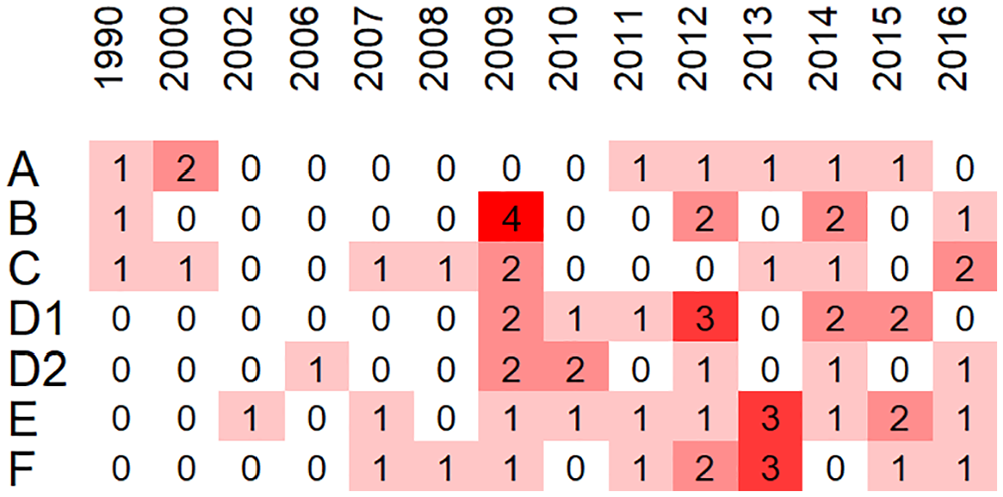
Responsibility patterns in documents over publication year.
All documents analyzed were organized into three categories: SRM (e.g., injecting reflective particles into the upper atmosphere), CDR (e.g., sequestering CO2 from ambient air), or both (i.e., documents discussing SRM and CDR, or CE in general). Most patterns have no clear preference for either SRM or CDR. Pattern D2 on scientific self-regulation has more occurrences in documents about CDR that might reflect the history of numerous CDR-field experiments. An international governance regime (F) seems more likely to be requested in SRM documents. This can be attributed to the different characteristics of SRM and CDR, namely, SRM tends to generate more transboundary effects, as is the case with global stratospheric particle injection affecting all regions on earth (Figure 4).
Responsibility patterns only correspond to a minor degree with the publication years of the respective documents. Planetary management (A) was an early idea that was repeated and criticized after 2011. Discussions about scientific self-governance (D1/D2) appear more frequently after 2009. This is plausible in light of the intensified research efforts and the need for research governance (Figure 5).
In summary, responsibility patterns exhibit certain tendencies concerning arena, SRM-CDR classification, and publication year. However, the analysis displays a relatively diverse discourse, a feature that might change over the coming years.
Discussion and Conclusion
We presented six patterns of responsibility that we had identified in CE discourses across six expert arenas: (A) humankind manages the planet, (B) the global north polluted the planet, (C) humankind has to mitigate its emissions, (D) scientists are responsible for research and research governance, (E) governments are responsible for research governance, and (F) international bodies should be responsible for deployment governance. Hereby, we could hardly detect conceptualizations that are characteristic for one particular arena.
The analysis of the six patterns helps us understand CE-related responsibility issues, including wider implications to be discussed in the following three subsections.
Vagueness, Diversity, and Polysemy of Responsibility
Our analysis has shown that responsibility is an important reference in the CE discourse. However, patterns of responsibility are often implicit, vague, and diverse. One explanation for this is that responsibility is a “polysemic” concept (Pellé & Reber, 2013) with multiple but related meanings within a word field. It often occurs that some actors pick a particular meaning from the word field of responsibility to build an argument, while others refer to another meaning to formulate an opposite argument. One may argue that CE is either a responsible or an irresponsible response to climate change, due to its cooling effects, on the one hand, or its environmental risks, on the other (Barben, 2015, p. 208). Our results correspond to ambiguities found in CE reports that display a “mix of openness and attempts at bridging across positions, with carefully drawn battle lines” (Markusson, 2013, p. 31). The debate over responsible research, development, and deployment of CE has not led to a common understanding yet. A broadly shared middle ground exists for strengthening mitigation policy, a cautious treatment of CE field experiments, a need for research governance, and refraining from early deployment of CE technologies. Apart from that, some actors push for more research and early development, while others would like to see CE under rigorous regulation, or even banned.
We conclude—in line with Bellamy et al. (2013)—that a debate on which norms should be applied to climate change and in particular to CE research and policy has to be “opened up.” We identified normative positions, such as “planetary protection” or “democratic governance,” that are crucial for understanding what “responsible CE” may mean. As our research showed, discourse participants often neglect to declare on what normative grounds their assignments of responsibility are built.
Responsibility and Governance of Climate Engineering
Based on an in-depth reading of the documents, we found that compared with discussions on notions of responsibility, CE experts discuss issues of governance in a much more nuanced manner. Calls for governing CE (e.g., “A charter for geoengineering,” 2012; Pasztor, 2017) are more vocal than those for responsible research and decision making (e.g., Hubert & Reichwein, 2015). Proposals for CE governance from social sciences (W. C. G. Burns & Nicholson, 2016), science commentaries (Caldeira & Keith, 2010), and policy advice (Royal Society, 2009) are numerous. Although some governance proposals are vague, they are often more focused than responsibility arguments.
As our research has shown, three out of six responsibility patterns (D, E, F) directly relate to governance. Furthermore, planetary management (A), responsibility for historic emissions (B), and insufficient mitigation efforts (C) address some governance issues and shortcomings. Consequently, framings of responsibility take place in a wider context of risk, uncertainty, and governance considerations. One reason for the vagueness and indeterminacy in the responsibility discourse could lie in the overshadowing significance of pressing governance issues—for example, the regulation of CE patenting or of transboundary effects. Responsibility claims are subsequently framed as governance issues. Patterns E and F also link these responsibility-to-governance claims with a political type of responsibility, despite the fact that there is no elaborate de facto governance of CE in place (yet). Interestingly, Patterns E and F lack a correlation with moral responsibility, which means that there is no accounting for ethically irresponsible governance in the responsibility-to-governance claims.
The sociologist Franz-Xaver Kaufmann (1992) recognized a “call for responsibility” where responsibility is used as a panacea. Such a call often indicates a lack of governance. Since the early modern period, philosophers of the state (e.g., Hobbes and Rousseau) recognized the need for directing actions where a government’s power ends. Contemporary governance theory (overview in Offe, 2008) comes with a much broader and less top-down view on deliberation and decision making. However, responsibility is still of auxiliary value, especially where governance does not regulate human agency. From this point of view, the lack of a more nuanced debate about responsibility and CE is surprising. Developing further ideas of responsible research, development, public engagement, and possible deployment could help CE evolve with social consciousness, in a situation where appropriate governance is not yet in place.
The dynamics, pervasiveness, and ambiguity of new and emerging science and technology motivated the establishment of various forms of TA, such as parliamentary TA, constructive TA (Rip et al., 1995), real-time TA and anticipatory governance (Barben et al., 2008), and responsible research and innovation (Owen et al., 2013). Taking on the challenges of communicating CE-related responsibilities would support these efforts. Future research on CE-related responsibility discourse may further clarify relationships among changes in responsibility patterns, socio-technical configurations of CE research and governance, and in global and regional climate change impacts.
Supplemental Material
Appendix – Supplemental material for Climate Engineering as a Communication Challenge: Contested Notions of Responsibility Across Expert Arenas of Science and Policy
Supplemental material, Appendix for Climate Engineering as a Communication Challenge: Contested Notions of Responsibility Across Expert Arenas of Science and Policy by Nils Matzner and Daniel Barben in Science Communication
Footnotes
Acknowledgements
The authors thank Vanessa Erat and Stefanie Bauer for their valuable research assistance as well as Judith Kreuter and Barbara Grimpe for their helpful comments on an earlier draft version. We would also like to extend our thanks to the editor and two anonymous reviewers for their feedback.
Declaration of Conflicting Interests
The author(s) declared no potential conflicts of interest with respect to the research, authorship, and/or publication of this article.
Funding
The author(s) disclosed receipt of the following financial support for the research, authorship, and/or publication of this article: This work was funded by the Priority Program 1689 (“Climate Engineering: Risks, Challenges, Opportunities?”) of the German Research Foundation (DFG), Project CE-SciPol2 (“Responsible Research and Governance at the Science-Policy Nexus of Climate Change”).

Notes
Author Biographies
References
Supplementary Material
Please find the following supplemental material available below.
For Open Access articles published under a Creative Commons License, all supplemental material carries the same license as the article it is associated with.
For non-Open Access articles published, all supplemental material carries a non-exclusive license, and permission requests for re-use of supplemental material or any part of supplemental material shall be sent directly to the copyright owner as specified in the copyright notice associated with the article.
